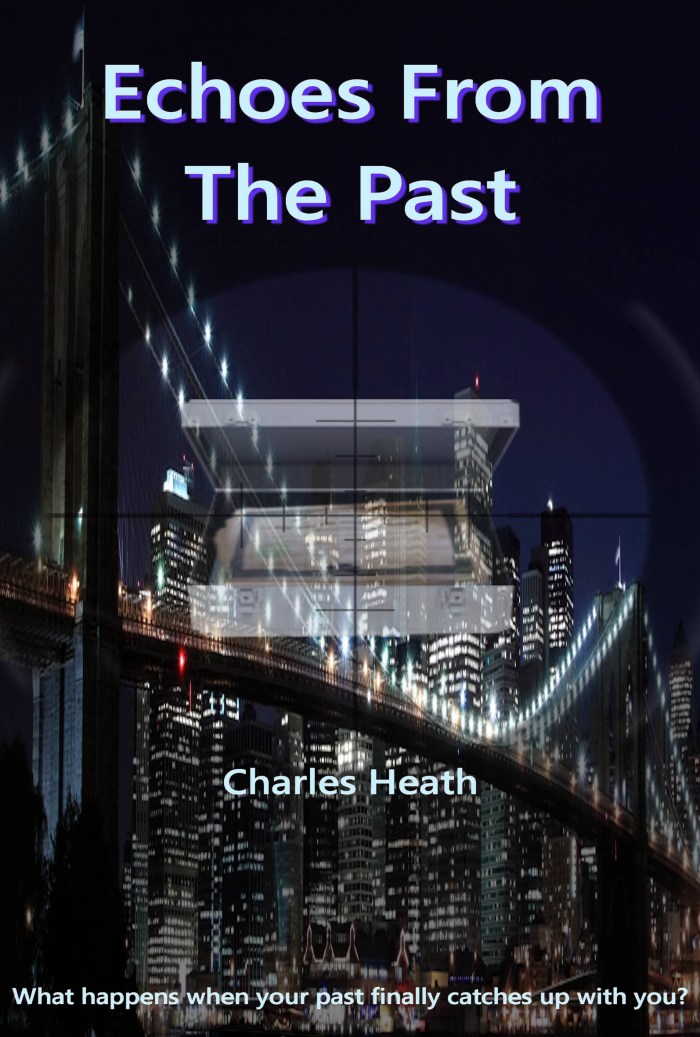
The novel ‘Echoes from the past’ started out as a short story I wrote about 30 years ago, titled ‘The birthday’.
My idea was to take a normal person out of their comfort zone and led on a short but very frightening journey to a place where a surprise birthday party had been arranged.
Thus the very large man with a scar and a red tie was created.
So was the friend with the limousine who worked as a pilot.
So were the two women, Wendy and Angelina, who were Flight Attendants that the pilot friend asked to join the conspiracy.
I was going to rework the short story, then about ten pages long, into something a little more.
And like all re-writes, especially those I have anything to do with, it turned into a novel.
There was motivation. I had told some colleagues at the place where I worked at the time that I liked writing, and they wanted a sample. I was going to give them the re-worked short story. Instead, I gave them ‘Echoes from the past’
Originally it was not set anywhere in particular.
But when considering a location, I had, at the time, recently been to New York in December, and visited Brooklyn and Queens, as well as a lot of New York itself. We were there for New Years, and it was an experience I’ll never forget.
One evening we were out late, and finished up in Brooklyn Heights, near the waterfront, and there was rain and snow, it was cold and wet, and there were apartment buildings shimmering in the street light, and I thought, this is the place where my main character will live.
It had a very spooky atmosphere, the sort where ghosts would not be unexpected. I felt more than one shiver go up and down my spine in the few minutes I was there.
I had taken notes, as I always do, of everywhere we went so I had a ready supply of locations I could use, changing the names in some cases.
Fifth Avenue near the Rockefeller center is amazing at first light, and late at night with the Seasonal decorations and lights.
The original main character was a shy and man of few friends, hence not expecting the surprise party. I enhanced that shyness into purposely lonely because of an issue from his past that leaves him always looking over his shoulder and ready to move on at the slightest hint of trouble. No friends, no relationships, just a very low profile.
Then I thought, what if he breaks the cardinal rule, and begins a relationship?
But it is also as much an exploration of a damaged soul, as it is the search for a normal life, without having any idea what normal was, and how the understanding of one person can sometimes make all the difference in what we may think or feel.
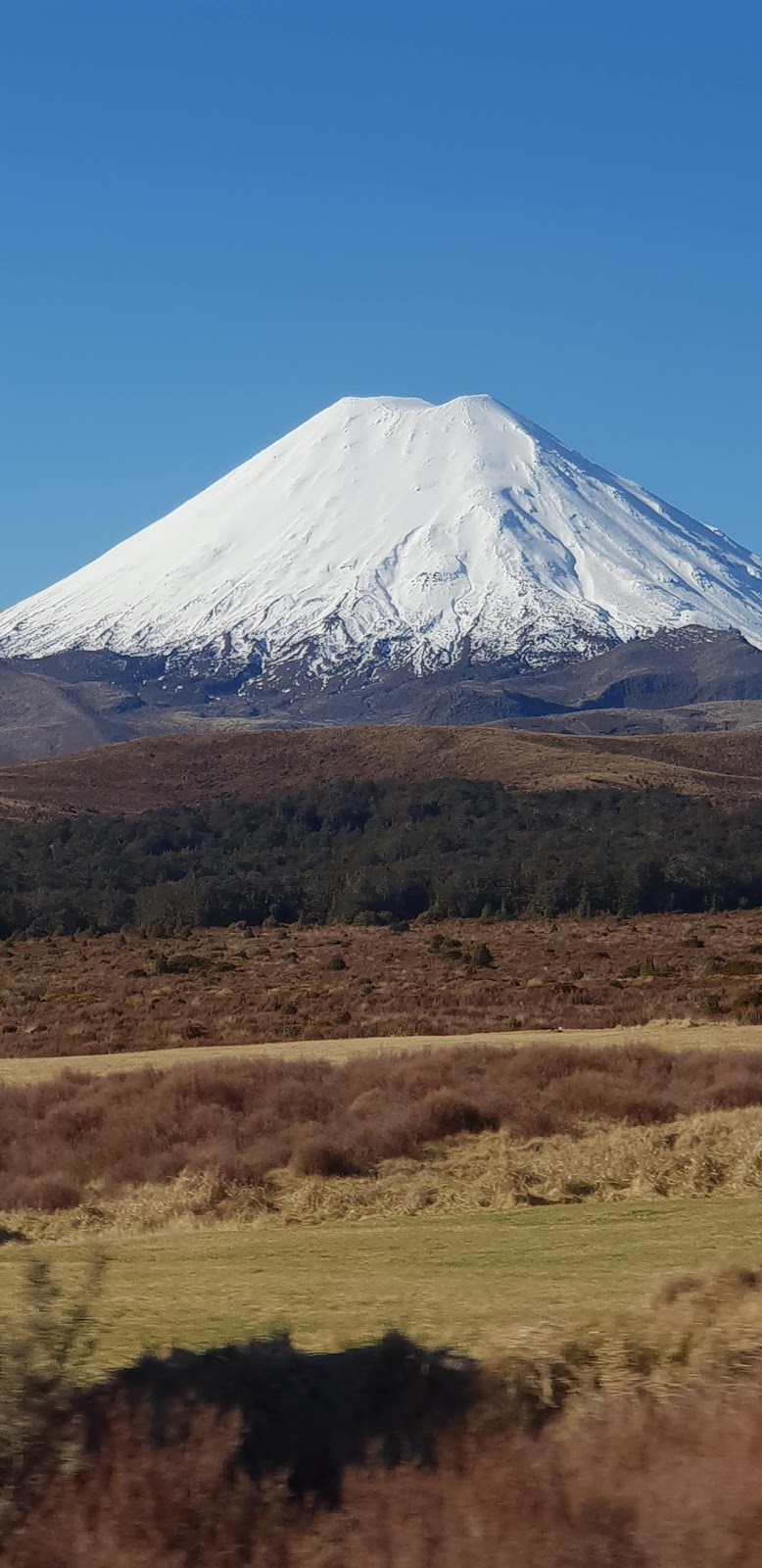
Mount Ngauruhoe is apparently still an active volcano, has been for 2,500 years or so, and last erupted on 19th February 1975, and reportedly has erupted around 70 times since 1839.
The mountain is usually climbed from the western side, from the Mangatepopo track.
This photo was taken in summer from the Chateau Tongariro carpark.
In late autumn, on one of our many visits to the area, the mountain was covered with a light sprinkling of snow and ice.
On our most recent visit, this year, in winter, it was fully covered in snow.
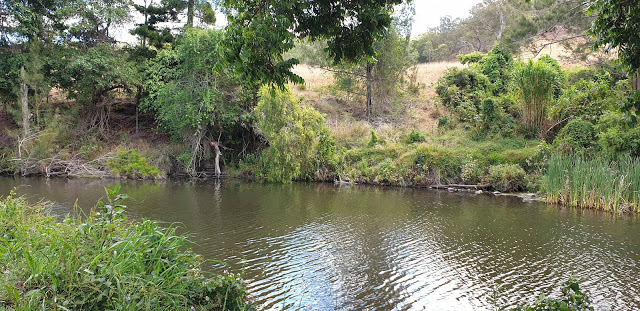
O’Reilly’s Canungra Valley Vineyards located on Lamington National Park Road, Canungra, Queensland, is a 15-acre vineyard with the 163-year-old historic homestead ‘Killowen’ set up with dining rooms and long verandahs, and extensive grounds that are next to the Canungra creek where it is possible to find Platypus and turtles while partaking in a picnic.
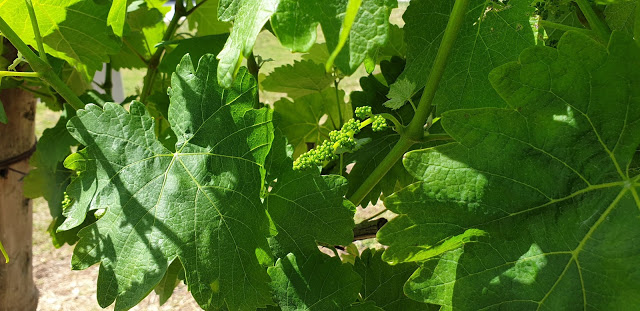
There are about 6,000 vines of the (white) Semillon, Verdelho and (red) Chambourcin, Shiraz and Petit Vedot varieties.
We visited there in December when the vines were just starting to produce fruit.
That fruit is usually harvested in February and then turned into wine. The setting for picnics is, on a warm Summer’s day is idyllic, where you can wade in the creek, or go looking for a platypus. We did not see one there the day we visited but did spend some time sitting beside the creek.
Hotel dining can be a very expensive experience, but if you are there as one of those bucket list fulfillments like we were, then it’s not unusual to go the whole nine yards.
Since the stay coincided with my birthday, the first day was set aside to have dinner at the Chinese restaurant upstairs and was one of those sublime experiences. Of course, it had to be Peking Duck, expensive champagne, and several cocktails.
Oddly enough, breakfast wasn’t included in the room rate, but that seems to be normal for a lot of hotels. It can be if you want to pay upfront, but we don’t always have breakfast, particularly if we have dinner the night before.
Or can be bothered getting out of bed the next morning because quite often the breakfast hours do go with staying in bed.
During this stay, we decided to have breakfast one morning, cereal, bacon and eggs, coffee, toast, you know, the usual stuff.
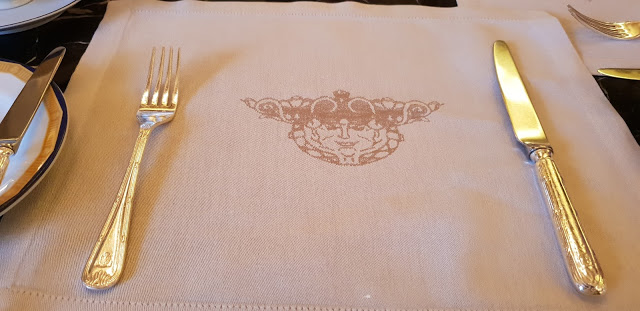
No paper placemats here and the silverware was just that, silverware. This was going to be full on old world charm.
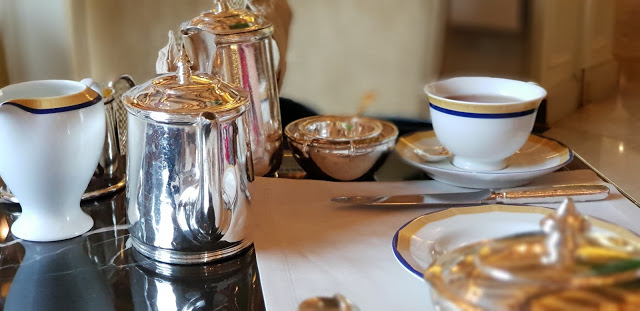
Coffee served from a silver coffee pot, fine bone china from Staffordshire, not Thailand, tea service for milk and sugar, condiments all in a row. The only disappointment, I don’t think the eggs were free-range.
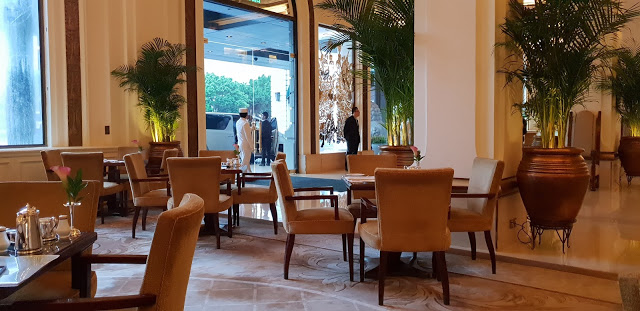
And, when the conversation dries up, there’s always a steady stream of people coming and going through the front door, and the doorman is always at the ready to open the door.
WE went once for lunch, and yes, we had to go to the famous Afternoon Tea, for which you had to book or stand in a very long line. We booked and discovered preference was given to those who were staying at the hotel.
Out came the silver tea service, and one could imagine that this was the same as what it had been a hundred years ago. I had tea, after all, it was afternoon tea!
The cakes were interesting, there were quarter sandwiches rather than finger sandwiches, and though I’m not a fan of fruit scones, I’m always up for something different. After it, it’s probably not a good idea to go out for dinner too.
It is an amazing coincidence that both times we have flown into New York, it is the day after the worst snow storms.
The first time, we were delayed out of Los Angeles and waited for hours before the plane left. We had a free lunch and our first introduction to American hamburgers and chips. Wow!
I had thought we had left enough time with connections to make it in time for New Year’s Eve, like four to five hours before. As it turned out, we arrived in New York at 10:30, and thanks to continual updating with our limousine service, he was there to take us to the hotel.
The landing was rough, the plane swaying all over the place and many of the passengers were sick. Blankets were in short supply!
We made it to the hotel, despite snow, traffic, and the inevitable problems associated with NYE in New York, with enough time to throw our baggage in the room, put on our anti cold clothes, and get out onto the streets.
We could not go to Times Square but finished up at Central Park with thousands of others, in time to see the ball drop on a big screen, exchange new year’s greetings, and see the fireworks.
Then, as luck would have it, we were able to get an authentic New York hotdog, just before the police moved the vendor on, and our night was complete.
The second time we were the last plane out of Los Angeles to New York. After waiting and waiting, we boarded, and then started circling the airport waiting for takeoff permission. We stopped once to refuel, and then the pilot decided we were leaving.
This time we took our eldest granddaughter, who was 9 at the time, and she thought it was an adventure. It was.
When we landed, we were directed to an older part of the airport, a disused terminal. We were not the only plane to land, at about one in the morning, but one of about four. The terminal building filled very quickly, and we were all waiting for baggage. The baggage belts broke so there were a lot of porters bring the baggage in by hand.
One part of the terminal was just a sea of bags. To find ours our granddaughter, who, while waiting, sat on top of the cabin baggage playing her DSI until the announcement our bags were available, walked across the top of the bags till she found them. Thankfully no one was really looking in her direction.
Once again we kept our limousine service updated, and, once we knew what terminal we were at, he came to pick us up. This time we arrived some days before NYE, so there was not so much of a rush. We got to the hotel about 3:30 in the morning, checked in, and then went over the road to an all-night diner where we ordered hamburgers and chips.
It is an amazing coincidence that both times we have flown into New York, it is the day after the worst snow storms.
The first time, we were delayed out of Los Angeles and waited for hours before the plane left. We had a free lunch and our first introduction to American hamburgers and chips. Wow!
I had thought we had left enough time with connections to make it in time for New Year’s Eve, like four to five hours before. As it turned out, we arrived in New York at 10:30, and thanks to continual updating with our limousine service, he was there to take us to the hotel.
The landing was rough, the plane swaying all over the place and many of the passengers were sick. Blankets were in short supply!
We made it to the hotel, despite snow, traffic, and the inevitable problems associated with NYE in New York, with enough time to throw our baggage in the room, put on our anti cold clothes, and get out onto the streets.
We could not go to Times Square but finished up at Central Park with thousands of others, in time to see the ball drop on a big screen, exchange new year’s greetings, and see the fireworks.
Then, as luck would have it, we were able to get an authentic New York hotdog, just before the police moved the vendor on, and our night was complete.
The second time we were the last plane out of Los Angeles to New York. After waiting and waiting, we boarded, and then started circling the airport waiting for takeoff permission. We stopped once to refuel, and then the pilot decided we were leaving.
This time we took our eldest granddaughter, who was 9 at the time, and she thought it was an adventure. It was.
When we landed, we were directed to an older part of the airport, a disused terminal. We were not the only plane to land, at about one in the morning, but one of about four. The terminal building filled very quickly, and we were all waiting for baggage. The baggage belts broke so there were a lot of porters bring the baggage in by hand.
One part of the terminal was just a sea of bags. To find ours our granddaughter, who, while waiting, sat on top of the cabin baggage playing her DSI until the announcement our bags were available, walked across the top of the bags till she found them. Thankfully no one was really looking in her direction.
Once again we kept our limousine service updated, and, once we knew what terminal we were at, he came to pick us up. This time we arrived some days before NYE, so there was not so much of a rush. We got to the hotel about 3:30 in the morning, checked in, and then went over the road to an all-night diner where we ordered hamburgers and chips.
The Golden Mask Dynasty Show was located at the OCT Theatre in Beijing’s Happy Valley.
The theatre was quite full and the seats we had were directly behind the VIP area; as our guide told us, we had the best seats in the house.
The play has 20 different dance scenes that depict war, royal banquets, and romance. There are eight chapters and over 200 actors, and throughout the performance we were entertained by dancers, acrobats, costumes, lighting, and acoustics.
The story:
It is of romantic legend and historical memories, the Golden Mask Queen leads her army in defeating the invading Blue Mask King’s army, and afterwards the lands return to a leisurely pastoral life until the Queen forges a ‘mysterious tree’. When the tree has grown, the Queen has a grand celebration, and releases the captured Blue soldiers, much to the admiration of the Blue Mask King. This is followed by monstrous floods, and to save her people, and on the advice from the ‘mysterious tree’, the Queen sacrifices herself to save her people. The Queen then turns into a golden sunbird flying in the sky blessing the people and that of the dynasty.
Billed as the best live show in China, described as a large scale dramatic musical, “The Golden Mask Dynasty” it lived up to its reputation and was thoroughly enjoyed by all.
It was not just singing dancing and acrobatics, it had a story and it was told so that language and cultural issues aside, it worked. There was a narration of the story running beside the stage, but it was hard to divide attention between what was happening, and what was being related.
Then came the peacock dance, with live peacocks
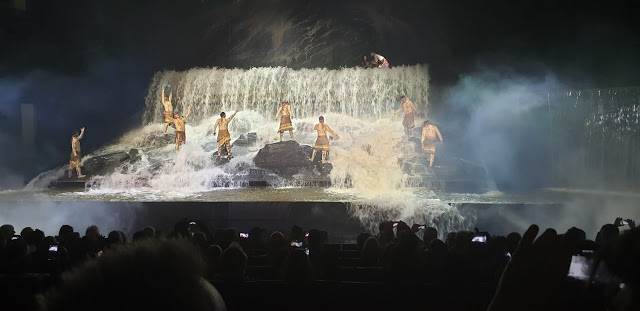
And this was followed by a waterfall, well, I don’t think anyone in that audience could believe what they were seeing.
I know I was both astonished and in awe of the performance.
What a way to finish off our first day in Beijing.
Oh, sorry, that high was dented slightly when we had to go back to our room.
My phone, being smart and all, has been creating a notification that tells me I have some memories stored on it for this day a year ago, or two years, or many years.
The pictures it is showing are of our trip to Coffs Harbour one year, and Melbourne another year.
It serves as a reminder, but I wonder if those that came up with the idea might have considered that some people might not want to be reminded of events and places in the past.
Like now, when we are forced to stay at home and not travel because of the pandemic. More and more this pandemic is impinging on us living what we might call normal life, thinking nothing of getting on a plane and going someplace else, other than home.
Of course, there are those who wrap this desire up in a package called ‘human rights’ and then go out to protest the fact we cannot do these things, failing to realise in their selfishness that we are in a pandemic, the virus hasn’t gone away, and it takes very little to create a second, or third, or even a fourth wave.
Perhaps I’m old enough to understand that rights aren’t been trampled, and it’s just a matter of prevention is better than cure. Now, that prevention has managed to make our country safe enough to travel we are being offered incentives to travel within our own country, and in a small measure revive the economy.
I don’t think I will be. Not yet, anyway. Not until there is a larger roll out of the vaccine, and we don’t have the sporadic fires caused by people coming back from overseas. And of course there are the variants that the current vaccines are not so effective against.
So, enough of the bad news.
The good news, we can now travel if we want to.
And until then, it’s not a bad thing my smartphone is going to keep sending me gentle reminders of what it was like in another lifetime.
The novel ‘Echoes from the past’ started out as a short story I wrote about 30 years ago, titled ‘The birthday’.
My idea was to take a normal person out of their comfort zone and led on a short but very frightening journey to a place where a surprise birthday party had been arranged.
Thus the very large man with a scar and a red tie was created.
So was the friend with the limousine who worked as a pilot.
So were the two women, Wendy and Angelina, who were Flight Attendants that the pilot friend asked to join the conspiracy.
I was going to rework the short story, then about ten pages long, into something a little more.
And like all re-writes, especially those I have anything to do with, it turned into a novel.
There was motivation. I had told some colleagues at the place where I worked at the time that I liked writing, and they wanted a sample. I was going to give them the re-worked short story. Instead, I gave them ‘Echoes from the past’
Originally it was not set anywhere in particular.
But when considering a location, I had, at the time, recently been to New York in December, and visited Brooklyn and Queens, as well as a lot of New York itself. We were there for New Years, and it was an experience I’ll never forget.
One evening we were out late, and finished up in Brooklyn Heights, near the waterfront, and there was rain and snow, it was cold and wet, and there were apartment buildings shimmering in the street light, and I thought, this is the place where my main character will live.
It had a very spooky atmosphere, the sort where ghosts would not be unexpected. I felt more than one shiver go up and down my spine in the few minutes I was there.
I had taken notes, as I always do, of everywhere we went so I had a ready supply of locations I could use, changing the names in some cases.
Fifth Avenue near the Rockefeller center is amazing at first light, and late at night with the Seasonal decorations and lights.
The original main character was a shy and man of few friends, hence not expecting the surprise party. I enhanced that shyness into purposely lonely because of an issue from his past that leaves him always looking over his shoulder and ready to move on at the slightest hint of trouble. No friends, no relationships, just a very low profile.
Then I thought, what if he breaks the cardinal rule, and begins a relationship?
But it is also as much an exploration of a damaged soul, as it is the search for a normal life, without having any idea what normal was, and how the understanding of one person can sometimes make all the difference in what we may think or feel.
We have been to Paris a number of times over the years.
The last time we visited Paris we brought the two eldest grandchildren. We took the Eurostar train from St Pancras station direct to Disneyland, then took the free bus from the station to the hotel. The train station was directly outside Disneyland.
We stayed at the Dream Castle Hotel, rather than Disneyland itself as it was a cheaper option and we had a family room that was quite large and breakfast was included every morning. Then it was a matter of getting the free bus to Disneyland.
We spent three days, time which seem to pass far too quickly, and we didn’t get to see everything. They did, however, find the time to buy two princess dresses, and then spent the rest of the time playing dress-ups whenever they could.
In Paris, we stayed at the Crown Plaza at Republique Square.
We took the children to the Eiffel Tower where the fries, and the carousel at the bottom of the tower, seemed to be more memorable than the tower itself. The day we visited, the third level was closed. The day was cold and windy so that probably accounted for the less than memorable visit. To give you some idea of conditions, it was the shortest queue to get in I’ve ever seen.
We traveled on the Metro where it was pointed out to me that the trains actually ran on rubber tires, something I had not noticed before. It was a first for both children to travel on a double-decker train.
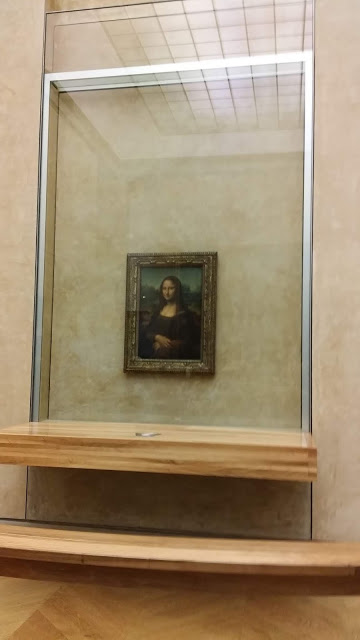
The same day, we went to the Louvre.
Here, it was cold, wet and windy while we waited, Once inside we took the girls to the Mona Lisa, and after a walk up and down a considerable numkber of stairs, one said, “and we walked all this way to see this small painting”.
It quickly became obvious their idea of paintings were the much larger ones hanging in other galleries.
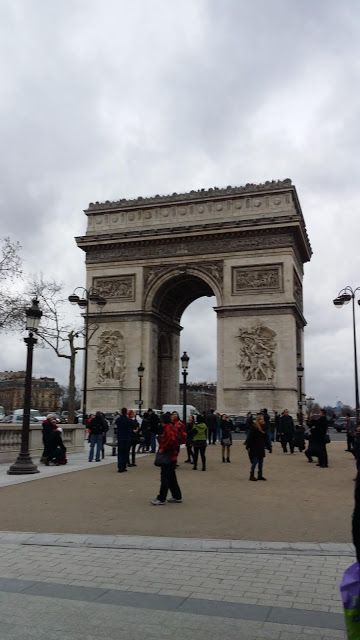
We also took them to the Arc de Triomphe.
We passed, and for some reason had to go into, the Disney shop, which I’m still wondering why after spending a small fortune at Disneyland itself.
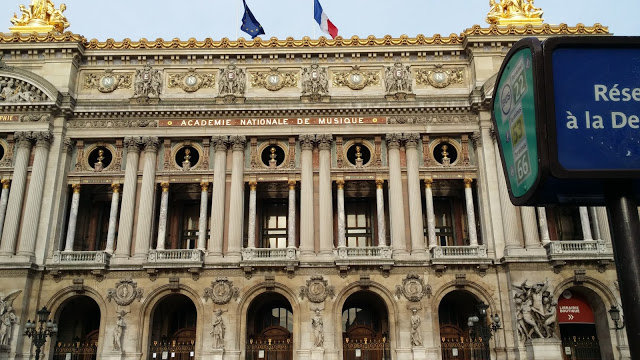
Next on the tour list was the Opera House.
where one of the children thought she saw the ghost and refused to travel in one of the elevators. At least it was quite amazing inside with the marble, staircases, and paintings on the roof.
Sadly, I don’t think they were all that interested in architecture, but at the Opera House, they did actually get to see some ballet stars from the Russian Bolshoi ballet company practicing. As we were leaving the next day we could not go and see a performance.
Last but not least was Notre Dame with its gargoyles and imp[osing architecture.
All in all, traveling with children and experiencing Paris through their eyes made it a more memorable experience.
The first we visited Paris was at the end of a whirlwind bus tour, seven countries in seven days or something like that. It was a relief to get to Paris and stay two nights if only to catch our breath.
I remember three events from that tour, the visit to the Eiffel Tower, the tour of the night lights, not that we were able to take much in from the inside of the bus, and the farewell dinner in one of the tour guides specially selected restaurants. The food and atmosphere were incredible. It was also notable for introducing us to a crepe restaurant in Montmartre, another of the tour guide’s favorite places.
On that trip to Paris, we also spent an afternoon exploring the Palace of Versailles.
The next time we visited Paris we flew in from London. OK, it was a short flight, but it took all day. From the hotel to the airport, the wait at the airport, departure, flying through time zones, arrival at Charles De Gaulle airport, now there’s an experience, and waiting for a transfer that never arrived, but that’s another story.
I can’t remember where we stayed the first time, it was somewhere out in the suburbs, but the second time we stayed at the Hilton near both the Eiffel Tower and the Australian Embassy, notable only because the concierge was dating an Australian girl working in the Embassy. That was our ticket for special treatment, which at times you need to get around in Paris.
It was the year before 2000 and the Eiffel Tower was covered in lights, and every hour or so it looked like a bubbling bottle of champagne. It was the first time we went to Level 3 of the Tower, and it was well worth it. The previous tour only included Level 2. This time we were acquainted with the fries available on the second level, and down below under the tower.
This time we acquainted ourselves with the Metro, the underground railway system, to navigate our way around to the various tourist spots, such as Notre Dame de Paris, The Louvre, Sacre-Coeur Basilica, and Les Invalides, and, of course, the trip to the crepe restaurant.
We also went to the Louvre for the express purpose of seeing the Mona Lisa, and I came away slightly disappointed. I had thought it to be a much larger painting. We then went to see the statue of Venus de Milo and spent some time trying to get a photo of it without stray visitors walking in front of us. Aside from that, we spent the rest of the day looking at the vast number of paintings, and Egyptian artifacts in the Museum.
We also visited the Opera House which was architecturally magnificent.
The third time we visited Paris we took our daughter, who was on her first international holiday. This time we stayed in a quaint Parisian hotel called Hotel Claude Bernard Saint Germain, (43 Rue Des Ecoles, Paris, 75005, France), recommended to us by a relation who’d stayed there the year before. It was small, and the elevator could only fit two people or one person and a suitcase. Our rooms were on the 4th floor, so climbing the stairs with luggage was out of the question.
It included breakfast and wifi, and it was quite reasonable for the four days we stayed there.
It was close to everything you could want, down the hill to the railway station, and a square where on some days there was a market, and for those days when we were hungry after a day’s exploring, a baguette shop where rolls and salad were very inexpensive and very delicious.
To our daughter we appeared to be experienced travelers, going on the Metro, visiting the Louvre, going, yes once again, to the crepe restaurant and the Basilica at Montmartre, Notre Dame, and this time by boat to the Eiffel Tower. We were going to do a boat rode on the Seine the last time but ran out of time.
We have some magnificent photos of the Tower from the boat.
Lunch on one of the days was at a restaurant not far from the Arc de Triomphe, where our daughter had a bucket of mussels. I was not as daring and had a hamburger and fries. Then we went to the center of the Arch and watched the traffic.
Our first time in Paris the bus driver got into the roundabout just to show us the dangers of driving in an unpredictable situation where drivers seem to take huge risks to get out at their exit. Needless to say, we survived that experience, though we did make a number of circuits.