Over the years, I have traveled extensively and kept journals, with the idea that one day all of those places would become locations in books. Notebooks filled with odd characters, people and incidents observed, and whole tracts of stories written when the on the spot inspiration has been a driving force.
All of this is the basis of the first three novels, Sunday In New York, set, of course, in New York, probably my favorite city in the world, “Echoes From The Past’ equally set in New York, Brooklyn Heights and Philadelphia. The third, The Devil You Don’t, travels through Europe, starting in Geneva, moving to Rome, then Sorrento, and then to Venice.
Now, my passion to write is fuelled by travel and fine dining. When I take a break from these, I get to torment my three wonderful grandchildren whom I actively encourage to read as much as they can, and more recently to also write.
As for almost every other writer, I would not be able to do any of this without my wife who has put up with my moodiness, the times when I'm locked away in a room trying to push out another 2,000 words, and yet despite everything still puts up with me.
I wish I could say the same for our cat. Alas, I am still trying to work out how to be his friend!
With my attention elsewhere, I walked into a man who was hurrying in the opposite direction. He was a big man with a scar running down the left side of his face from the eye socket to the mouth, and he was wearing a black shirt with a red tie.
That was all I remembered as my heart almost stopped.
He apologised as he stepped to one side, the same way I stepped, as I also muttered an apology.
I kept my eyes down. He was not the sort of man I wanted to recognise later in a lineup. I stepped to the other side, and so did he. It was one of those situations. Finally getting out of sync, he kept going in his direction, and I went towards the bus, which was now pulling away from the curb.
Getting my breath back, I just stood riveted to the spot watching it join the traffic. I looked back over my shoulder, but the man I’d run into had gone. I shrugged and looked at my watch. It would be a few minutes before the next bus arrived.
Wait, or walk? I could also go by subway, but it was a long walk to the station. What the hell, I needed the exercise.
At the first intersection, the ‘Walk’ sign had just flashed to ‘Don’t Walk’. I thought I’d save a few minutes by not waiting for the next green light. As I stepped onto the road, I heard the screeching of tyres.
A yellow car stopped inches from me.
It was a high-powered sports car, perhaps a Lamborghini. I knew what they looked like because Marcus Bartleby owned one, as did every other junior executive in the city with a rich father.
Everyone stopped to look at me, then the car. It was that sort of car. I could see the driver through the windscreen shaking his fist, and I could see he was yelling too, but I couldn’t hear him. I stepped back onto the sidewalk, and he drove on. The moment had passed, and everyone went back to their business.
My heart rate hadn’t come down from the last encounter. Now it was approaching cardiac arrest, so I took a few minutes and several sets of lights to regain composure.
At the next intersection, I waited for the green light, and then a few seconds more, just to be sure. I was no longer in a hurry.
Next, I heard what sounded like a gunshot. A few people looked around, worried expressions on their faces, but when it happened again, I saw it was an old car backfiring. I also saw another yellow car, much the same as the one before, stopped on the side of the road. I thought nothing of it, other than it was the second yellow car I’d seen.
At the next intersection, I realised I was subconsciously heading towards Harry’s new bar. It was somewhere on 6th Avenue, so I continued walking in what I thought was the right direction.
I don’t know why I looked behind me at the next intersection, but I did. There was another yellow car on the side of the road, not far from me. It, too, looked the same as the original Lamborghini, and I was starting to think it was not a coincidence.
Moments after crossing the road, I heard the roar of a sports car engine and saw the yellow car accelerate past me. As it passed by, I saw there were two people in it, and the blurry image of the passenger was a large man with a red tie.
Now my imagination was playing tricks.
It could not be the same man. He was going in a different direction.
In the few minutes I’d been standing on the pavement, it had started to snow; early for this time of year, and marking the start of what could be a long, cold winter. I shuddered, and it was not necessarily because of the temperature.
I looked up and saw a neon light advertising a bar, coincidentally the one Harry had ‘found’ and, looking once in the direction of the departing yellow car, I decided to go in. I would have a few drinks and then leave through the back door if there were one.
One Day, One Stopover, One Iconic Spot: Why the National Mall (and Its Monumental Heart) Is the Only Place You Need to Visit in Washington, D.C.
You’ve just landed at Reagan National (or Dulles) with a 12‑hour layover. The clock is ticking, the luggage is on the carousel, and you’ve got just one day to soak up the capital before you’re back on a plane. Do you try to cram a museum, a neighbourhood, a restaurant tour…?
No. There’s a single, unforgettable destination that will give you a cinematic snapshot of what makes Washington, D.C. the “city of monuments.” It’s the National Mall – the 2‑mile green artery that stitches together the country’s most recognisable memorials, museums, and views of the Capitol dome. In a single, well‑planned stroll, you’ll feel the pulse of American history, snap photos worthy of Instagram’s “Explore” page, and still have time to grab a bite that feels authentically D.C.
Below is a step‑by‑step guide that turns a tight layover into a memorable, low‑stress adventure, complete with transport tips, timing hacks, and a few insider nuggets that most tourists miss.
1. Why the Mall Beats All Other Options
What the Mall Offers
Why It Beats the Alternatives
All‑in‑one historic timeline – From the 1790‑era Capitol to the 1963 Lincoln Memorial.
No need to hop between neighborhoods; you get a full story in a single walk.
Free and open 24/7 – No ticket lines, no reservation headaches.
Perfect for unpredictable layover times and sudden gate changes.
Iconic photo backdrops – The Washington Monument framed by cherry blossoms (spring) or the Reflecting Pool at sunset.
Guarantees you’ll leave with an Instagram‑ready image.
Proximity to transit – Metro, Circulator, and bike‑share stations within a 10‑minute ride from any airport.
Saves precious minutes and reduces the stress of traffic.
Quick bite options – Food trucks, cafés, and the historic “Kennedy Center Café.”
No need to hunt for a restaurant far away.
In short, the Mall condenses the “must‑see” of the nation’s capital into an easily navigable, free‑of‑cost experience that works with any schedule.
2. From Airport to Mall – The Fastest, Most Reliable Routes
From
Best Transit Option
Estimated Travel Time
Cost (2024)
Reagan National (DCA)
Metro – Yellow Line to Mt. Vernon Square → walk 10 min
20–25 min (including security exit)
$2.50 (S‑Tap)
Washington Dulles (IAD)
Metro – Silver Line to L’Enfant Plaza → walk 5 min
45–55 min (including shuttle to Metro)
$5.00 (S‑Tap)
Baltimore/Washington Intl (BWI)
Amtrak/Marriott Shuttle to Union Station → Metro Red Line to Smithsonian**
55–65 min
$9.00 (Amtrak) or $6.00 (MTA)
Pro tip: Grab a SmarTrip card (or use contactless payment) before you land – the vending machines at the airport terminals are open 24 h and you’ll avoid the “no‑change” queues. If your layover is under 6 hours, the Metro is the most reliable way to dodge traffic snarls during rush hour.
3. The Perfect Mall Itinerary – 6 Hours, Zero Stress
Goal: Hit the three most iconic sites, snap the best photos, and still have time for a local bite and a quick restroom break.
Time (approx.)
Location
What to Do
Why It Matters
0:00 – 0:30
Arrival at Metro
Exit the station, follow signs to the National Mall (southbound direction).
Gives you a familiar “first‑look” orientation.
0:30 – 1:30
U.S. Capitol & Capitol Visitor Center
Stand under the dome, peek into the Visitor Center (free exhibit on the building’s art & history).
The Capitol’s dome is the visual anchor of the city—great for a “welcome to D.C.” photo.
1:30 – 2:30
Washington Monument & Jefferson Memorial (quick walk)
Walk east along the Mall; stop at the base of the Washington Monument for a photo with the towering obelisk. If time permits, sprint across the Reflecting Pool to the Jefferson Memorial (about 5 min each way).
The Monument is the perfect backdrop for “one‑day‑in‑DC” shots; Jefferson adds a quieter, reflective moment.
2:30 – 3:30
Lincoln Memorial & World War II Memorial
Climb the steps to the Lincoln Memorial, read the inscription, then wander to the WWII Memorial.
The view of the Reflecting Pool framed by the Washington Monument is a classic postcard scene.
3:30 – 4:15
Lunch Break – Food Trucks & Museum Cafés
Head to the Food Truck Pavilion at 12th St. & Constitution Ave. (try the half‑smoked “Half‑Smoked” DC specialty or a falafel wrap). If you crave a sit‑down, the Smithsonian Castle Café offers salads and coffee.
Eating on the Mall lets you stay in the flow; the half‑smoked is a local legend.
4:15 – 5:15
Smithsonian “Quick‑Hit” Museum – Choose ONE**
Option A: National Museum of American History – see the Star‑Spangled Banner & the First Ladies’ Inaugural Gowns. Option B: National Air and Space Museum – iconic aircraft, the Apollo 11 command module.
Choose based on personal interest; both are free and have concise “highlights” tours.
5:15 – 5:45
Reflect & Photo Session at the Mall
Walk back westward, stop at the Tidal Basin (if it’s cherry‑blossom season) or the Martha Washington Library gardens for a calm final snapshot.
The final walk lets you absorb the space and capture a leisurely “good‑byes” picture.
5:45 – 6:00
Return to Metro
Retrace steps to the nearest station, board the train back to the airport.
Gives a buffer for security lines and boarding.
Total Time: ~6 hours (including transit). Adjust the museum stop to fit your exact layover length – you can even skip it entirely if you’re cutting it close.
4. Insider Tips to Turn an Ordinary Walk Into a Memorable Experience
Time Your Visit for Light – The best natural light for photos is early morning (7‑9 am) or golden hour (around 5:30‑6 pm). If your layover lands in this window, you’ll get soft shadows on the monuments and a more tranquil crowd.
Use the “Free Audio Guides” – The National Park Service offers a free downloadable audio tour (search “NPS National Mall audio tour”). It adds context without needing a museum guide.
Capture the “Reflection” – Position yourself at the Washington Monument looking north toward the Capitol; the line of trees on the Mall creates a natural frame.
Stay Hydrated – There are water fountains along the Mall (most are filtered), but bring a reusable bottle; the city’s climate can be unexpectedly humid in summer.
Watch the Flag‑Changing Ceremony – Every hour on the hour at the Lincoln Memorial (except during special events) a small group of NPS staff changes the flags. It’s a quick, solemn ritual that adds a genuine touch of reverence.
Avoid the “Tourist Traps” – Skip the souvenir stand on Pennsylvania Ave. Instead, grab a locally roasted coffee from Compass Coffee – they have a kiosk at 10th St. near the Mall.
Cash‑less Payments – All food trucks accept contactless cards. If you’re a frequent traveller, load your credit card onto Apple/Google Pay for even faster transactions.
5. What to Pack (or Not Pack) for a One‑Day Mall Sprint
Must‑Have
Why
SmarTrip card
Seamless Metro access.
Lightweight backpack (≤ 7 lb)
Holds water, snack, a compact umbrella (weather‑dependent).
Portable charger
You’ll likely snap dozens of photos.
Comfortable walking shoes
The Mall’s brick pathways are uneven in spots.
Travel‑size sunscreen
Even on overcast days UV can be strong.
A small notebook (optional)
Jot down quick observations for a post‑trip blog.
Leave behind: Heavy luggage (store it in the airport’s Luggage Storage at DCA – $8 per day) and bulky camera gear (a good smartphone lens kit works perfectly).
6. The Takeaway: One Spot, Infinite Impressions
If you have just one day and one place to make your Washington stopover unforgettable, the National Mall delivers everything a visitor could crave:
Historical gravitas: Walk where presidents were inaugurated and presidents were honored.
Visual drama: Monumental architecture set against open sky and reflective water.
Cultural diversity: From world‑class museums to street‑food vendors, all within a few blocks.
Ease of access: A quick Metro ride, free entry, and a well‑marked path.
In a city built on symbolism, the Mall is the ultimate shorthand for “America.” Even if you’re only there for a few hours, the experience feels like a condensed, living history lesson—one you’ll remember long after the plane lands.
So next time your itinerary shows a brief layover in D.C., set your watch, grab a SmarTrip, and head straight to the Mall. The monuments are waiting, and the story they’ll tell you in just a few walking miles is worth every second of your stopover. Safe travels, and happy snapping!
50 photographs, 50 stories, of which there is one of the 50 below.
They all start with –
A picture paints … well, as many words as you like. For instance:
And the story:
…
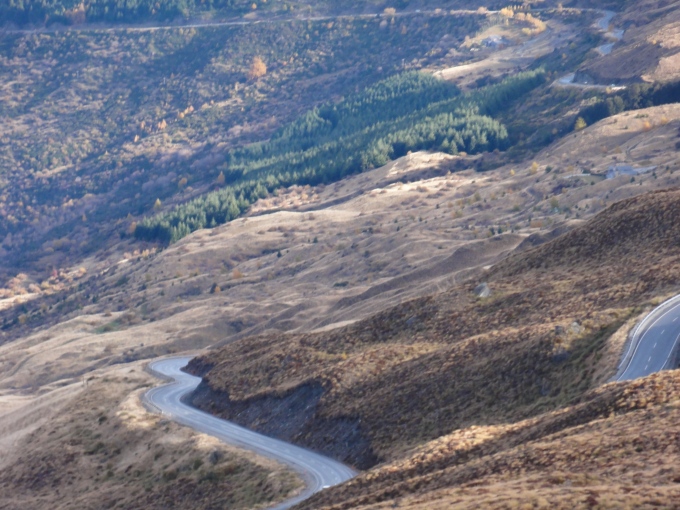
It was once said that a desperate man has everything to lose.
The man I was chasing was desperate, but I, on the other hand, was more desperate to catch him.
He’d left a trail of dead people from one end of the island to the other.
The team had put in a lot of effort to locate him, and now his capture was imminent. We were following the car he was in, from a discreet distance, and, at the appropriate time, we would catch up, pull him over, and make the arrest.
There was nowhere for him to go.
The road led to a dead-end, and the only way off the mountain was back down the road we were now on. Which was why I was somewhat surprised when we discovered where he was.
Where was he going?
“Damn,” I heard Alan mutter. He was driving, being careful not to get too close, but not far enough away to lose sight of him.
“What?”
“I think he’s made us.”
“How?”
“Dumb bad luck, I’m guessing. Or he expected we’d follow him up the mountain. He’s just sped up.”
“How far away?”
“A half-mile. We should see him higher up when we turn the next corner.”
It took an eternity to get there, and when we did, Alan was right, only he was further on than we thought.”
“Step on it. Let’s catch him up before he gets to the top.”
Easy to say, not so easy to do. The road was treacherous, and in places, just gravel, and there were no guard rails to stop a three-thousand-foot fall down the mountainside.
Good thing then, I had the foresight to have three agents on the hill for just such a scenario.
Ten minutes later, we were in sight of the car, still moving quickly, but we were going slightly faster. We’d catch up just short of the summit car park.
Or so we thought.
Coming quickly around another corner, we almost slammed into the car we’d been chasing.
“What the hell…” Aland muttered.
I was out of the car and over to see if he was in it, but I knew that it was only a slender possibility. The car was empty, and no indication of where he had gone.
Certainly not up the road. It was relatively straightforward for the next mile, at which we would have reached the summit. Up the mountainside from here, or down.
I looked up. Nothing.
Alan yelled out, “He’s not going down, not that I can see, but if he did, there’s hardly a foothold and that’s a long fall.”
Then where did he go?
Then a man looking very much like our quarry came out from behind a rock embedded just a short distance up the hill.
“Sorry,” he said quite calmly. “Had to go if you know what I mean.”
I’d lost him.
It was as simple as that.
I had been led a merry chase up the hill, and all the time he was getting away in a different direction.
I’d fallen for the oldest trick in the book, letting my desperation blind me to the disguise that anyone else would see through in an instant.
It was a lonely sight, looking down that road, knowing that I had to go all that way down again, only this time, without having to throw caution to the wind.
Day 271 – Making the reader feel like they’re part of the story
…
Creating the Illusion of Reality: What James Clavell Can Teach Us About Immersive Fiction
“The goal of writing any novel is creating the illusion you are reading reality and you are part of it.” — James Clavell
When you open James Clavell’s monumental Asian Saga—whether you’re dodging assassins in feudal Japan with Shōgun or navigating the cutthroat corporate boardrooms of 1960s Hong Kong in Noble House—you aren’t just reading a book. You are living somewhere else. You smell the rotting vegetation of the jungle, you taste the bitter green tea, and you feel the suffocating tension of cultural collision.
Clavell, a master storyteller who survived a Japanese prisoner-of-war camp, understood something fundamental about the human psyche: our brains are hardwired for stories, but they only surrender to them when the illusion of reality is absolute.
How do you achieve this literary magic trick? How do you pull a reader out of their cozy armchair and drop them squarely into a fictional world, making them believe, if only for a few hundred pages, that it is real?
Let’s unpack Clavell’s profound philosophy and explore how writers can use it to craft unforgettable, immersive fiction.
1. Sensory Grounding: Making the Unreal Tangible
The quickest way to shatter the illusion of reality is through a sterile landscape. If your characters are walking through a room that has no specific smell, texture, or temperature, the reader’s brain wakes up and remembers: I am looking at ink on paper.
Clavell was a master of sensory immersion. He didn’t just tell you a character was angry; he described the “bile rising in the throat” or the “sweat freezing on the back of the neck.”
Sight and Colour: Go beyond the basic colour wheel. Describe the bruised purple of a twilight sky or the dull, oily sheen of a newly cleaned katana.
Sound and Silence: What does the silence sound like? Is it heavy, oppressive, or ringing with the distant hum of cicadas?
Smell: Olfactory memory is the strongest trigger in the human brain. Use it. The scent of woodsmoke, cheap gin, damp wool, or fear-sweat will anchor a reader instantly.
The Takeaway: To make a reader feel like they are part of the scene, bombard their senses. Make your fictional world physically real to them.
2. Radical Authenticity in Detail (Even in Made-Up Worlds)
Whether writing historical fiction, fantasy, or sci-fi, the secret to believability is specificity. Clavell spent years researching Japanese culture, maritime navigation, and political machinations before writing Shōgun. Because he understood the precise terminology of sailing a 17th-century ship and the rigid, life-or-death etiquette of the samurai, the world felt unshakeable.
Readers can smell a bluff from a mile away. If you are writing about a futuristic dystopia, you don’t need a 50-page info-dump on how the ray guns work, but you do need to know how the characters maintain them, what they cost on the black market, and how the metal feels when it gets hot.
Research deeply: Know ten times more about your setting than you actually put on the page. That iceberg of knowledge gives your writing weight.
Use jargon naturally: Let characters use the language of their profession or world without stopping to explain every little term to the reader. This treats the reader like an insider, pulling them deeper into the illusion.
3. Psychological Realism: Flawed Humans, Not Plot Puppets
You can have the most meticulously researched setting in the world, but if the people moving through it feel like cardboard cutouts, the illusion shatters.
Clavell’s characters—like John Blackthorne or Dirk Struan—are gloriously flawed. They are driven by base survival instincts, petty jealousies, profound loyalties, and blinding prejudices. They make terrible mistakes, misread situations, and suffer the consequences.
To make the reader feel like they are part of the story, the internal life of your characters must mirror the messy reality of human consciousness:
Conflicting desires: People rarely want just one thing. They want to do the right thing, but they also want to survive; they love someone, but they also resent them.
Subjective perception: No character sees the world objectively. A nervous character will interpret a falling leaf as an ambush; a confident one will see it as a sign of renewal. Filter the world through the psychological state of your POV character.
4. Stakes That Matter (Life, Death, and Identity)
In reality, choices have consequences. If a novel is going to feel real, the reader must feel that the characters have skin in the game.
In Clavell’s novels, the stakes are almost always existential. It’s not just about winning an argument; it’s about honour, survival, empire-building, or avoiding a brutal execution. When the stakes are high, the reader leans in. Their heart rate increases. They forget to check their phones.
Even in contemporary or quiet literary fiction where the stakes aren’t life-or-death physical combat, the emotional stakes must feel catastrophic to the protagonist. If heartbreak feels like the end of the world to the character, the writer must make it feel like the end of the world to the reader.
The Ultimate Goal: Empathy Through Immersion
Why do we chase this illusion? Why do writers spend years bleeding over manuscripts, and why do readers devour them?
Because, as James Clavell suggests, great fiction offers a radical form of expansion. It allows us to live a thousand lives instead of just one. When a novel successfully creates the illusion of reality, the reader stops being a passive observer and becomes an active participant. They sit in the samurai’s council room; they stand on the deck of the rolling galleon; they feel the crushing weight of the decision.
As writers, our job isn’t merely to tell a story. It is to build a doorway, step through it ourselves, and leave it wide open for the reader to follow.
What about you? What is the last novel that successfully tricked your brain into believing it was real? Let us know in the comments below!
Revenge is a dish best served cold – or preferably so when everything goes right
Of course, it rarely does, as Alistair, Zoe’s handler, discovers to his peril. Enter a wildcard, John, and whatever Alistair’s plan for dealing with Zoe was dies with him.
It leaves Zoe in completely unfamiliar territory.
…
John’s idyllic romance with a woman who is utterly out of his comfort zone is on borrowed time. She is still trying to reconcile her ambivalence after being so indifferent for so long.
They agree to take a break, during which she disappears. John, thinking she has left without saying goodbye, refuses to accept the inevitable and calls on an old friend for help in finding her.
After the mayhem and being briefly reunited, she recognises an inevitable truth: there is a price to pay for taking out Alistair; she must leave and find them first, and he would be wise to keep a low profile.
But keeping a low profile just isn’t possible, and enlisting another friend, a private detective and his sister, a deft computer hacker, they track her to the border between Austria and Hungary.
What John doesn’t realise is that another enemy is tracking him to find her too. It could have been a grand tour of Europe. Instead, it becomes a race against time before enemies old and new converge for what will be an inevitable showdown.
This story is now on the list to be finished so over the new few weeks, expect a new episode every few days.
The reason why new episodes have been sporadic, there are also other stories to write, and I’m not very good at prioritizing.
But, here we are, a few minutes opened up and it didn’t take long to get back into the groove.
Things are about to get complicated…
“You’re not a target. Yet.”
“Severin?”
“A loose end who was a rather bad blunt instrument, like his friend Maury. They learned of a plan to steal some military secrets, tried to stop it and in the end almost destroyed 12 months of painstaking undercover work. O’Connell had it within his grasp, and therefore in safe hands when those two wrecked a perfectly good retrieval. Four potential agents dead and then there’s you, persistent I will admit, and one other, Jennifer, I believe her name is.”
“But you don’t have O’Connell, do you?”
“My, you have been working hard. My first mistake was to trust O’Connell. My second was to underestimate you, Jackson. I don’t intend to make a third. You don’t trust me, do you?”
Was it possible I’d get some version of the truth?
“Apparently he didn’t for some reason.”
“You found him. Jan said you were being all secretive. There was something you found in that flat in Peaslake.”
“No. He told me that in the alley.”
I sensed he knew way more than I did, but I had a missing piece, and he was going to play nice to get it. The thing is, I didn’t know what that was. Not the whole truth from me.
“Yes. Of course, he did.”
“Perhaps it was self-preservation, not that it did much since someone did shoot him.”
“Not with the intention of killing him. It was all arranged.”
“You knew he would be at that alley?”
“One of three escape routes. Neither of us anticipated you would be good enough to follow him. Severin got lucky with you, probably why he made you the lead.”
Severin hadn’t said as much when he told the group before the exercise began, that I would take point. I thought it was simply because in the prior five tests, I’d only failed one. Everyone else had varying results.
“Have you seen the CCTV footage of the explosion?”
“Several times. It must have been harrowing for you to relive that and see how close you came.”
“It did. But it did afford a view that I missed while preoccupied. McConnell and the wife of the scientist I believe stole the formulas.”
“Yes, Anna. What do you make of her?”
“From a single glimpse?”
“A good agent doesn’t need much to form an opinion. As you know, that opinion could be the difference between life and death.”
He was starting to sound like Severin. He said we had to be able to judge a book by its cover and make the right decision based on it. What did I think of Anna?
“Capable, determined. She survived an explosion that might well have been directed at her. Not your average scientist’s wife. “
“Did you check her out?”
“Not yet. I had this thing with Severin.”
“What did he want?”
“I don’t know. Jan killed him before he could tell me.”
“A guess?”
“He wanted to come in from the cold before he ended up like Maury. He knew his days were numbered. It also means that he knew something that someone didn’t want to be repeated. You, perhaps? I mean, you can help make the connection. Your idea for Jan to get his confidence?”
“Hers. She’s a good agent, so don’t worry about her. Find O’Connell. When you do, you will find Anna, and perhaps, a copy of that USB.”
“And if I don’t?”
“Then the department has lost five million pounds.”
This story is now on the list to be finished so over the new few weeks, expect a new episode every few days.
The reason why new episodes have been sporadic, there are also other stories to write, and I’m not very good at prioritizing.
But, here we are, a few minutes opened up and it didn’t take long to get back into the groove.
Things are about to get complicated…
With Jan safely in custody, probably for about 15 minutes when Dobbin discovered she was in police hands, Jennifer and I were free to chase up O’Connell and maybe we would also find Anna.
It was a long shot at best.
But we had to find out more about Anna Jacovich. For that, we would have to go back to the office and talk to Joanne. I told Jennifer what I intended to do and dropped her at the safe house for some much-needed rest before we went after O’Connell.
Then, back in the car, I called the number I had for Joanne.
“Sam.”
“Memorised my number?”
“I like to know who’s calling before I answer.”
“Then this isn’t a restricted line?”
“Restricted enough.”
“I found your little toy?”
Did I hear a sigh?
“You know the world we live in Sam, trust no one not even your mother. Hard for me to trust or not trust her, she passed away when I was seven. Monica said you were good. What can I do for you?”
“A full workup on Anna Jacovich. I’m coming into the office now, and will be there in about half an hour.”
“No pressure then?”
“Not at all.”
“Try not to irritate security this time.”
I’m sure I saw a grim expression on the face of the soldier that had been there the last time I tried to run the gauntlet, and then disappointment when my card worked. I signed in and put the name of the department I was visiting down as Research.
When he asked for a name, I gave him Joanne’s. No doubt he would call her long before I got to her.
She met me at the second level of defence and then took me to a room where two folders sat at opposite ends of a table, two desk lamps shining light down on them. The rest of the room was in darkness.
When she shut the door, I said, “Please tell me there in;t a firing squad in black camouflage just waiting to shoot me.”
She smiled. “If it was more sensitive information, I’d let you read it, then have you shot. Not today.
That was a relief. Oddly, I believed that she would if the circumstances warranted it. Joanne was scary, nor scary than Jan. It’s the quiet ones you had to worry about.”
We sat.
“Read. Then I’ll answer questions.”
For the ten minutes, it took me to discover that Anna was a biochemist herself, and had worked in a not-so-secret government laboratory that had been unmasked with disastrous results, adding another dimension to the problem. I was beginning to think she might be the one who created the monster and had set her husband up to take the blame.
If that was the case, she was never going to pass it on to O’Connell or sell it to him, other than to take the money and run. If that was the case, Severin knew it was her all along, and how dangerous she was.
But and there was a big but in all of this. She needed an accomplice to get to England, which was O’Connell. Now he was no longer needed…
Yes, she would also need both Severin and Maury off her tail, and that had been taken care of.
Jan? Unless I completely misread her, it was not possible she could be the accomplice; she was doing what Dobbin requested. Or had she? Dobbin did say she was able to make executive decisions on the fly.
“The threat isn’t O’Connell. He’s just a pawn.”
“Not just a pretty face then?”
“I never regard my face as pretty.”
She shook her head. “It’s Anna. She played Severin and Maury, she played Dobbin, and she played Dobbin’s little toy soldier, O’Connell. Or Quigley I believe his real name is. I hesitate to say O’Connell played you.”
“Call a dog a dog, Joanne. If I had more experience and more information I might have seen that. You can’t keep people in the dark, and then expect miracles.”
“I’m the messenger, Sam.”
“I’ve been known to shoot messengers, just because I can.”
“Save your bullets for the bad guys.”
“How do I know you and Monica are not the bad guys?”
Another shake of the head. “OK. You’ve passed the scepticism test, Sam. Now put it away. We have to work together on this. It’s a condition for continuing to work on the case.”
“And if I don’t?”
“I don’t need to answer that. But, I get it. You’re a self-starter and will keep at it, with or without us. I can see why people like you. To me, your just another dangerous amateur.”
There were words I could say, but judging by the reek of self-aggrandisement, it would not penetrate the thick hide.
I smiled. “Not noted for your charm then.”
“No. Where is Jan?”
“Who?”
“Don’t play games, Sam. They don’t become you. You went to see Severin, but he ended up dead, and she shot him. Why?”
“You read this file?” I picked it up and dropped it on the table.
She was the sort that read the first page, the preamble, and the last page, the result or desired result.
“I did.”
“Then you know why, as for Jan, if you know I was there when Severin was shot, you’d know where Jan is.”
“She disappeared into the trees. And no doubt in the wind. You should know she’s a trained MI5 assassin on loan to Dobbin.”
Who was now in jail somewhere pending the Detective Inspectors leisure, unless she filed a report. If she did, she would be out now, and looking for O’Connell and Anna.
“Then how should I know?”
She shrugged. “I thought I’d ask. I’m not sure I like having to peel away the layers of this story one by one.”
“Be more forthcoming.” I stood. I had what I needed. “If that’s all, I’ll go on with the job.”
“O’Connell?”
“He’s probably dead by now, but I have to find him, one way or another.”
It was in darkness. I was sure I had left several lights on, especially over the door, so I could see to unlock it.
I looked up and saw that the globe was broken.
Instant alert.
I went to the first hiding spot for the gun, and it wasn’t there. I went to the backup, and it wasn’t there either. Someone had found my carefully hidden stash of weapons and removed them.
Who?
There were four hiding spots, and all were empty. Someone had removed the weapons. That could only mean one possibility.
I had a visitor, not necessarily here for a social call.
But, of course, being the well-trained agent I’d once been and not one to be caught unawares, I crossed over to my neighbour and relieved him of a weapon that, if found, would require a lot of explaining.
Suitably armed, it was time to return the surprise.
There were three entrances to the villa: the front door, the back door, and a rather strange escape hatch. One of the more interesting attractions of the villa I’d rented was its heritage. It was built in the late 1700s by a man who was, by all accounts, a thief. It had a hidden underground room, which had been in the past a vault but was now a wine cellar, and it had an escape hatch by which the man could come and go undetected, particularly if there was a mob outside the door baying for his blood.
It now gave me the means to enter the villa without my visitors being alerted, unless, of course, they were in the vicinity of the doorway inside the villa, but that possibility was unlikely. It was not where anyone could anticipate or expect a doorway to be.
The secret entrance was at the rear of the villa, behind a large copse, two camouflaged wooden doors built into the ground. I moved aside some of the branches that covered them and lifted one side. After I’d discovered the doors and rusty hinges, I’d oiled and cleaned them, and cleared the passageway of cobwebs and fallen rocks. It had a mildew smell, but nothing would get rid of that. I’d left torches at either end so I could see.
I closed the door after me and went quietly down the steps, enveloped in darkness till I switched on the torch. I traversed the short passage, which turned ninety degrees about halfway to the door at the other end. I carried the key to this door on the keyring, found it and opened the door. It too had been oiled and swung open soundlessly.
I stepped into the darkness and closed the door.
I was on the lower level under the kitchen, now the wine cellar, the ‘door’ doubling as a set of shelves which had very little on them, less to fall and alert anyone in the villa.
Silence, an eerie silence.
I took the steps up to the kitchen, stopping when my head was level with the floor, checking to see if anyone was waiting. There wasn’t. It seemed to me to be an unlikely spot for an ambush.
I’d already considered the possibility of someone coming after me, especially because it had been Bespalov I’d killed, and I was sure he had friends, all equally as mad as he was. Equally, I’d also considered it nigh on impossible for anyone to find out it was me who killed him because the only people who knew that were Prendergast, Alisha, a few others in the Department, and Susan.
That raised the question of who told them where I was.
If I were the man I used to be, my first suspect would be Susan. The departure this morning, and now this was too coincidental. But I was not that man.
Or was I?
I reached the start of the passageway that led from the kitchen to the front door and peered into the semi-darkness. My eyes had got used to the dark, and it was no longer an inky void. Fragments of light leaked in around the door from outside and through the edge of the window curtains where they didn’t fit properly. A bone of contention upstairs in the morning, when first light shone and invariably woke me up hours before I wanted to.
Still nothing.
I took a moment to consider how I would approach the visitor’s job. I would get a plan of the villa in my head, all entrances, where a target could be led to or attacked, and where there would be no escape.
Coming in the front door. If I were not expecting anything, I’d just open the door and walk in. One shot would be all that was required.
Contract complete.
I sidled quietly up the passage, staying close to the wall, edging closer to the front door. There was an alcove where the shooter could be waiting. It was an ideal spot to wait.
Crunch.
I stepped on some nutshells.
Not my nutshells.
I felt it before I heard it. The bullet with my name on it.
And how the shooter missed, from point-blank range, and hit me in the arm, I had no idea. I fired off two shots before a second shot from the shooter went wide and hit the door with a loud thwack.
I saw a red dot wavering as it honed in on me, and I fell to the floor, stretching out, looking up where the origin of the light was coming and pulled the trigger three times, evenly spaced, and a second later I heard the sound of a body falling down the stairs and stopping at the bottom, not very far from me.
Two assassins.
I’d not expected that.
The assassin by the door was dead, a lucky shot on my part. The second was still breathing.
I checked the body for any weapons and found a second gun and two knives. Armed to the teeth!
I pulled off the balaclava; a man, early thirties, definitely Italian. I was expecting a Russian.
I slapped his face, waking him up. Blood was leaking from several slashes on his face when his head had hit the stairs on the way down. The awkward angle of his arms and legs told me there were broken bones, probably a lot worse internally. He was not long for this earth.
“Who employed you?”
He looked at me with dead eyes, a pursed mouth, perhaps a smile. “Not today, my friend. You have made a very bad enemy.” He coughed, and blood poured out of his mouth. “There will be more …”
Friends of Bespalov, no doubt.
I would have to leave. Two unexplainable bodies, I’d have a hard time explaining my way out of this mess. I dragged the two bodies into the lounge, clearing the passageway just in case someone had heard anything.
Just in case anyone was outside at the time, I sat in the dark, at the foot of the stairs, and tried to breathe normally. I was trying not to connect the dots that led back to Susan, but the coincidence was worrying me.
A half-hour passed, and I hadn’t moved. Deep in thought, I’d forgotten about being shot, unaware that blood was running down my arm and dripping onto the floor.
Until I heard a knock on my front door.
Two thoughts: it was either the police, alerted by the neighbours, or it was the second wave, though why would they be knocking on the door?
I stood and immediately felt a stabbing pain in my arm. I took out a handkerchief and turned it into a makeshift tourniquet, then wrapped a kitchen towel around the wound.
If it were the police, this was going to be a difficult situation. Holding the gun behind my back, I opened the door a fraction and looked out.
No police, just Maria. I hoped she was not part of the next ‘wave’.
“You left your phone behind on the table. I thought you might be looking for it.” She held it out in front of her.
When I didn’t open the door any further, she looked at me quizzically and then asked, “Is anything wrong?”
I was going to thank her for returning the phone, but I heard her breathe in sharply and add, breathlessly, “You’re bleeding.”
I looked at my arm and realised it was visible through the door, and not only that, the towel was soaked in blood.
“You need to go away now.”
Should I tell her the truth? It was probably too late, and if she were any sort of law-abiding citizen, she would go straight to the police.
She showed no signs of leaving, just an unnerving curiosity. “What happened?”
I ran through several explanations, but none seemed plausible. I went with the truth. “My past caught up with me.”
“You need someone to fix that before you pass out from blood loss. It doesn’t look good.”
“I can fix it. You need to leave. It is not safe to be here with me.”
The pain in my arm was not getting any better, and the blood was starting to run down my arm again as the tourniquet loosened. She was right, I needed it fixed sooner rather than later.
I opened the door and let her in. It was a mistake, a huge mistake, and I would have to deal with the consequences. Once inside, she turned on the light and saw the pool of blood just inside the door and the trail leading to the lounge. She followed the trail and turned into the lounge, turned on the light, and no doubt saw the two dead men.
I expected her to scream. She didn’t.
She gave me a good, hard look, perhaps trying to see if I was dangerous. Killing people wasn’t something you looked the other way about. She would have to go to the police.
“What happened here?”
“I came home from the cafe and two men were waiting for me. I used to work for the Government, but no longer. I suspect these men were here to repay a debt. I was lucky.”
“Not so much, looking at your arm.”
She came closer and inspected it.
“Sit down.”
She found another towel and wrapped it around the wound, retightening the tourniquet to stem the bleeding.
“Do you have medical supplies?”
I nodded. “Upstairs.” I had a medical kit, and on the road, I usually made my own running repairs. Another old habit I hadn’t quite shaken off yet.
She went upstairs, rummaged, and then came back. I wondered briefly what she would think of the unmade bed, though I was not sure why it might interest her.
She helped me remove my shirt and then cleaned the wound. Fortunately, she didn’t have to remove a bullet. It was a clean wound but it would require stitches.
When she’d finished, she said, “Your friend said one day this might happen.”
No prizes for guessing who that friend was, and it didn’t please me that she had involved Maria.
“Alisha?”
“She didn’t tell me her name, but I think she cares a lot about you. She said trouble has a way of finding you, gave me a phone and said to call her if something like this happened.”
“That was wrong of her to do that.”
“Perhaps, perhaps not. Will you call her?”
“Yes. I can’t stay here now. You should go now. Hopefully, by the time I leave in the morning, no one will ever know what happened here, especially you.”
It wasn’t such an outlandish idea, as much as it was hard to prove it was possible. That is, of course, traversing very long distances in a very short amount of time.
Yes, space is a vacuum, and stuff floats, and can be propelled quickly, just not quickly enough that it would not take a long time to get to the edge of our known universe, given our current technology.
And time wasn’t something we wanted to spend getting there and back
Now, out of thin air, a rather quaint but inapplicable expression to describe where we were now, we had two myths shattered, that we were alone in the universe, and that we were at the limit of how fast we could go.
I got the distinct impression the people we just met had the answers. We just had to find them, well, catch up with them first, and ask them if they would share.
Whilst we were standing by the ‘Ionosphere’, I summonsed both Chalmers and the duty scientist to my day room, to prepare for the update from number one, whom I had advised earlier to relay over the secure channel.
…
But before I got the time to brief them on my theory, number one reported in.
“Firstly, there had been only one casualty and as far as we can tell. Everyone was affected by what appears to be a short stoppage of the life support systems which virtually put everyone to sleep. All of the major systems are back on line, except for the propulsion unit, which, it seems the override cut in when the ship exceeded the maximum speed. The chief engineer is rebooting the controlling computer system which should fix the problem. No one, not even the designers of the propulsion unit, or the ship itself, expected it would ever exceed the maximum design speed, an error that the chief engineers will be taking up with the manufacturers if and when they get home.”
“We can assume then the ship will be able to resume its voyage.”
“Yes sir. I’ve advised the Captain we’ll be standing off until they advise everything is back online.”
“Any explanations as to what happened?”
The Captain of the ‘Ionosphere’ spoke, “One of the scientists discovered what could only be described as an anomaly, with the same sort of properties a black hole has, though it was not a black hole. We headed towards it and then suddenly we were being pulled into it, though there was no discernable hole on the viewer. We tried to escape it, and apparently failed. The last thing I remember, or anyone else for that matter, was the ship going dark, like everything had stopped. Until I was woken by your officer. I cannot explain how we got here, except to say that under normal circumstances, it would take many months to travel the same distance.”
“Did you see any other ships about?”
“We were the only people in that quadrant, as far as I was aware.”
Number one came back at that point, “The sensor log shows there might have been something out there, though it didn’t define what it was. I’m sending a download of the log over as we speak for analysis. One possibility though, based on the information we’ve been using to follow the ship that kidnapped the Captain, is that there is similar energy readings recorded just before the jump.”
Chalmers was first to speak, “When you say jump, what exactly does that mean?”
“We have been looking at the log, and it’s recorded a jump that started near Jupiter, to where we are now. Based on my understanding of astrophysics, and given the short time frame, the only logical explanation is that they were sucked into a sort of black hole, or a rupture in time/space. Whatever caused it, it’s in the realm of science fiction.”
“So was the notion that there was another intelligent life out here, and yet we have found that not to be the case. Whoever these people are, I suspect they have conquered the ability to travel long distances, very quickly, especially if they are, as they said, from another galaxy.”
“You have met other life?” The captain of the ‘Ionosphere’ seemed surprised.
“Yes. They attacked one of our freighters on its way to Venus and stole the plutonium rods needed to keep the base there going. They also kidnapped our Captain, and we were in pursuit of their vessel when we discovered your ship drifting. And it’s my theory your ship may have been dragged into a vortex left behind as they move from location to location. A theory my people will be working on, unless they come up with a better explanation.”
Number one came back, “I’ve just been advised by the Chief Engineer, everything is back online, and we’re no longer needed. I’ll make sure the data transfer is complete and we’ll depart. Anything else?”
“No.”
The transmission complete, I turned to the two scientists. “Soon as you get the data, find out what happened. When we run into these other people, I need to know the right questions to ask them.”
“The odds are we won’t understand,” Chalmers said.
“I thought it was universally acknowledged that if we did find intelligent life out here, the one universal language would be science.”
“That was true based on what we knew before today. Now we know there’s intelligent life out here, everything has changed.”
“Then buckle up for the ride of your life. I want answers sooner rather than later.”
For those who are wondering what this is a photograph of, it is a tree bordered stream that runs along a long valley that runs from outside Canungra, in Queensland, to the Lamington National Park.
It’s near a place we like to stay for a few days when we want to get away from everything, and I mean everything. There is no television, and cell phone reception is awful if not non existent.
So, you can see the benefits.
Sitting at the table on the veranda overlooking the fields, and this stream, you have time to just think, or not, about what it might have been like before the settlers came.
What is was like when the explorers we seeking new places to live, and they chanced upon this valley. It it was me back then, I would have followed the stream.
But, as for a story…
I have read a great many stories for the explorers of this country, and the hazardous nature of their treks.
What seemed to be the most common theme was crossing from south to north, that is from Melbourne to the Northern most tip of Queensland, or from Adelaide to the Northern Territory. In both cases they would have to traverse a very dry, very hot outback where the sight of a stream, or river, like above, would have been very welcome.
For some, it became an impossible quest, and stuck in the desert, they eventually perished. That in itself, the trials and tribulations of an early explorer would make a great story.
Australia is a very fertile country around the coastal regions, but one you start venturing inland, it is dry, dusty and almost uninhabitable. Unless there’s water from rivers, streams, or underground, or mining settlements, there is very little else to see.
The exceptions to this are Uluru and Kakadu National Park, in the Northern Territory, Shark Bay and The Pinnacles in Western Australia, MacKenzie Falls in Victoria, The Simpson Desert, the Boodjamulla (Lawn Hill) National Park, and the Carnarvon Gorge in Queensland, to name a few.