Trying to pick up the pieces

I can see how it is that a writer’s life is one that, at times, has to be shut off from the outside world.

It’s a bit hard to keep a stream of thoughts going when in one ear is some banal detective show, and in the other, a conversation that you have to keep up with.  I know how hard it is because I’ve tried doing three things at once, and failed miserably in all three.

So, out I slink to the writing room and start by re-reading the previous chapters, to get back into the plot.  I should remember where I am, and get straight to it, but the devil is in the detail.

Going back, quite often I revise, and a plotline is tweaked, and a whole new window is opened.  God, I wish I didn’t do that!

Then I get to the blank page, ready to go, and…

The phone rings.

Damn.  Damn.  Damn.

Phone answered, back to the blank page, no, it’s gone, got yo go back, blast, another revision, and back to the blank page.

Half an hour shot to pieces.

The phone rings again.

Blast scam callers.  I nearly rip the cord out of the wall.

All through this the cat just watches, and, is that a knowing smile?

It can’t be, I’ve just learned that cats can’t smile, or make any sort of face.

I’m sure his thoughts are not a vague or scrambled, or wrestling with the ploys of several stories on the go, getting locations right, getting characters to think and do their thing with a fair degree of continuity.

The cat’s world is one of which chair to lie on, where is that elusive mouse be it real or otherwise, and is this fool going to feed me, and please, please, don’t let it be the lasagna.  I am not that cat!

Unlike other professions, it’s a steady, sometimes frustrating, slog where you can’t just walk away, have a great time, and come back and pick up where you left off.  Stories have to be written from beginning to end, not a bit here and a bit there.

It’s a bit like running a marathon.  You are in a zone, the first few miles are the hardest, the middle is just getting the rhythm and breathing under control, and then you hope you get to the end because it can seem that you’ve been going forever and the end is never in sight.

But, when you reach the end, oh, isn’t the feeling one of pure joy and relief.

Sorry, not there yet.

And no comment is required from the cat gallery, thankyou!


A to Z Challenge – K is for: Knowledge can be dangerous…

K2020

It was, perhaps, the saddest week of my life.

It started with a phone call, then a visit by two police officers.  It was about my parents, but the news could not be imparted over the phone, only in person.  That statement alone told me it was very bad news, so I assumed the worst.

The two police officers, standing at the front door, grim expressions on their faces, completed the picture.  The news, my parents were dead, killed in a freak car accident.

At first, it didn’t sink in.  They were on their way back from another of their extensive holidays, one of many since my father had retired.  I’d seen them probably six months out of the last five years, and the only reason they were returning this time was that my mother needed an operation.

They hadn’t told me why, not that they ever told me very much any time since the day I’d been born, but that was who they were.  I thought them eccentric, being older when I’d come along, and others thought them, well, eccentric.

And being an only child, they packed me off to boarding school, then university, and then found me a job in London, and set me up so that I would only see them weekends if they were home.

I had once wondered if they ever cared about me, keeping me at arm’s length, but my mother some time ago had taken me aside and explained why.  It was my father’s family tradition.  The only part I’d missed was a nanny.

It most likely explained why I didn’t feel their passing as much as I should.

A week later, after a strange funeral where a great many people I’d never met before, and oddly who knew about me, I found myself sitting in the sunroom, a glass of scotch in one hand, and an envelope with my name on it, in the other.

The solicitor, a man I’d never met before, had given it to me at the funeral.   We had, as far as I knew an elderly fellow, one of my father’s old school friends, as the family solicitor, but he hadn’t shown at the funeral and wasn’t at home when I called in on my way home.

It was all very odd.

I refilled the glass and took another look at the envelope.  It was not new, in fact, it had the yellow tinge of age, with discoloration where the flap was.  The writing was almost a scrawl, but identifiable as my father’s handwriting, perhaps an early version as it was now definitely an illegible scrawl.

I’d compared it with the note he’d left me before they had embarked on their last adventure, everything I had to do while caretaking their house.  The last paragraph was the most interesting, instructing me to be present when the cleaning lady came, he’d all but accused her of stealing the candlesticks.

To be honest, I hadn’t realized there were candlesticks to steal, but there they were, on the mantlepiece over the fire in the dining room.  The whole house was almost like being in an adventure park, stairs going up to an array of rooms, mostly no longer used, and staircase to the attic, and then another going down to the cellar.  The attic was locked and had been for as long as I could remember, and the cellar was dank and draughty.

Much like the whole house, but not surprising, it was over 200 years old.

And perhaps it was now mine.  The solicitor, a man by the name of Sir Percival Algernon Bridgewater, had intimated that it might be the last will and testament and had asked me to tell him if it was.  I was surprised that Sir Percival didn’t have the document in question.

And equally. so that the man I knew as his solicitor, Lawerence Wellingham, didn’t have a copy of my father’s last will and testament either.

I finished the drink, picked up the envelope, and opened it.

It contained two sheets of paper, the will, and a letter.  A very short letter.

“If you are reading this I have died before my time.  You will need to find Albert Stritching, and ask him to help you find the murderer.”

Even the tenor of that letter didn’t faze me as it should have, because at this point nothing would surprise me.  In fact, as I  unfolded the document that proclaimed it was the will, I was ready for it to say that whole of his estate and belongings were to be left to some charity, and I would get an annual stipend of a thousand pounds.

In fact, it didn’t.  The whole of his estate was left to my mother should she outlive him, or in the event of her prior decease, to me.

I had to put all of those surprises on hold to answer a knock on the door.

Lawerence Wellingham.

I stood too e side, let him pass, closed the door, and followed him into the front room, the one my mother called the ‘drawing room’ though I never knew why.

He sat in one of the large, comfortable lounge chairs.  I sat in the other.

I showed him the will.  I kept the other back, not knowing what to make of it.

“No surprise there,” Wellingham said.

“Did you have any idea what my father used to do, beyond being, as he put it, a freelance diplomat?”

I thought it a rather odd description but it was better than one he once proffered, ‘I do odd jobs for the government’.

“I didn’t ask.  Knowledge can be dangerous, particularly when associated with your father.  Most of us preferred not to know, but one thing I can tell you.  If anyone tries to tell you what happened to your parents was not an accident, ignore them.  Go live your life, and keep those memories you have of them in the past, and don’t look back.  They were good people, Ken, remember them as such.”

We reminisced for the next hour, making a dent in the scotch, one of my father’s favorite, and he left.

Alone again, the thoughts went back to the second note from my father.  That’s when the house phone rang.

Before I could answer it, a voice said, “My name is Stritching.  Your father might have mentioned me?  We need to talk.”


© Charles Heath 2020

Inspiration, maybe

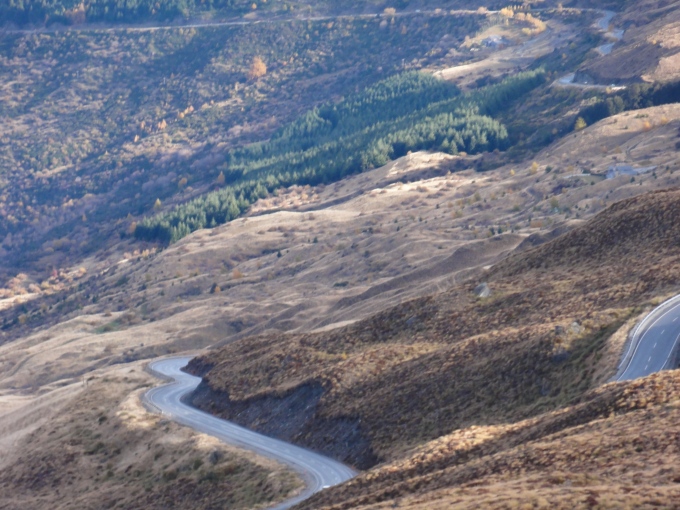
A picture paints … well, as many words as you like.  For instance:

lookingdownfromcoronetpeak

And the story:


It was once said that a desperate man has everything to lose.

The man I was chasing was desperate, but I, on the other hand, was more desperate to catch him.

He’d left a trail of dead people from one end of the island to the other.

The team had put in a lot of effort to locate him, and now his capture was imminent.  We were following the car he was in, from a discrete distance, and, at the appropriate time, we would catch up, pull him over, and make the arrest.

There was nowhere for him to go.

The road led to a dead-end, and the only way off the mountain was back down the road were now on.  Which was why I was somewhat surprised when we discovered where he was.

Where was he going?


“Damn,” I heard Alan mutter.  He was driving, being careful not to get too close, but not far enough away to lose sight of him.

“What?”

“I think he’s made us.”

“How?”

“Dumb bad luck, I’m guessing.  Or he expected we’d follow him up the mountain.  He’s just sped up.”

“How far away?”

“A half-mile.  We should see him higher up when we turn the next corner.”

It took an eternity to get there, and when we did, Alan was right, only he was further on than we thought.”

“Step on it.  Let’s catch him up before he gets to the top.”

Easy to say, not so easy to do.  The road was treacherous, and in places just gravel, and there were no guard rails to stop a three thousand footfall down the mountainside.

Good thing then I had the foresight to have three agents on the hill for just such a scenario.


Ten minutes later, we were in sight of the car, still moving quickly, but we were going slightly faster.  We’d catch up just short of the summit car park.

Or so we thought.

Coming quickly around another corner we almost slammed into the car we’d been chasing.

“What the hell…” Aland muttered.

I was out of the car, and over to see if he was in it, but I knew that it was only a slender possibility.  The car was empty, and no indication where he went.

Certainly not up the road.  It was relatively straightforward for the next mile, at which we would have reached the summit.  Up the mountainside from here, or down.

I looked up.  Nothing.

Alan yelled out, “He’s not going down, not that I can see, but if he did, there’s hardly a foothold and that’s a long fall.”

Then where did he go?

Then a man looking very much like our quarry came out from behind a rock embedded just a short distance up the hill.

“Sorry,” he said quite calmly.  “Had to go if you know what I mean.”


I’d lost him.

It was as simple as that.

I had been led a merry chase up the hill, and all the time he was getting away in a different direction.

I’d fallen for the oldest trick in the book, letting my desperation blind me to the disguise that anyone else would see through in an instant.

It was a lonely sight, looking down that road, knowing that I had to go all that way down again, only this time, without having to throw caution to the wind.

“Maybe next time,” Alan said.

“We’ll get him.  It’s just a matter of time.”


© Charles Heath 2019

Find this and other stories in “Inspiration, maybe”  available soon.

InspirationMaybe1v1


A to Z Challenge – J is for: Jump now…

J2020

It was 2 am, the ideal time to assemble a team that would be clandestinely boarding a vessel.

Dark and moonless, it was fortuitous rather than planned, and, dressed in black from head to toe, it was hard to see the others in the inky darkness.  At least something was on our side.

Up until this point, we’d had nothing but bad luck, though I was more of the opinion we had a traitor in our midst because some of the events could not have any other explanation.

It had caused me to be far more selective in who I gave details of the mission to.

Each of the four team members had arrived and let themselves into the shed.  It was not far from the ocean, and a small pier where there was a landing craft waiting.  From there, it would be a half-hour trip out to the ship in question, where, if we got close enough, we would either have to go over the side and swim, or pull alongside, but either way we’d have to go up a rope.

A lot depended on the crew member we had recruited getting a rope overboard, and given the luck we had so far, if there was a flaw in the plan, that was it.

Aside from the four people sitting in front of me, there were only three others privy to what was about to happen.  Now, with recent events, it was hard to imagine that one of them could betray us. That’s why I hadn’t completely told them what they were about to do, just that they needed to be prepared to get wet.

“I’m sure, now we’re here, you can tell us what’s going on.”  Robert was the most trusted of my team and my best friend.

“And why all the hush-hush,”  Linda added.  She had been amused at the secrecy and my explanation.

I was never very good at spinning a story.  She knew that but had not questioned why.

“It’s been touch and go for the last week.  It’s why we’ve all been on standby, with this last-minute call out.  We’ve been waiting for a particular ship to leave port, and now it has.  So, without further ado, let’s get to it.  A boat ride, just enough time to gather the courage to the sticking point, and then with any luck we won’t have to go into the water and swim, but a short shimmy up a rope.  I hope you’ve all been working out.”

The boat ride was in silence.  I’d worked with this group before and they were not big on talking.  Aside from the fact that noise traveled over water, and since we had a specially silenced motor on the boat, there was not going to be any unnecessary conversation.

We could see the ship once we reached the headland, and aside from it’s running lights, there were lights where I presumed the bridge was, and several in the crew quarters.  Closer again, I got the impression it was not moving, or if it was, it was very slow.  It was hard to tell in the darkness.  That same darkness aided our approach.

When we were within several hundred yards I could see that the ship was not moving, and, in fact, had the anchor out.

That was not expected.  Were they waiting for us?  Had they discovered the cream member who was working with us?  We’d know soon enough if there was no rope in the designated point, not far forward of the stern, a spot where we could maneuver the boat under the hull curvature.

The driver piloted the boat slowly to the designated point and the rope was there.  He would stay with the boat and wait.  The four of us would go up and collect what we came for.

I watched the three go up the rope before me, waiting for the last to stop at the top and then go over the side onto the deck.  It took nearly a minute before I got the signal it was clear to follow.

It had been too easy.

I went up the rope slowly, slower than the others, something else other than the object of the exercise on my mind.  Not three days before I had a conversation with my boss, telling him that I’d been doing the job too long and that it was time to retire.  Approaching forty wasn’t exactly retirement age, but in this job, lasting that long was almost a miracle.  The places I’d been, the sights I’d seen, and the people I’d met.  And how many lives I’d used up.

It was a dangerous thing, thinking about anything other than the job when you’re on the job.

I reached the top and pulled myself over the railing and onto the deck.  A little off balance it took a moment to stand.  By then it was too late.

Two of the three other members of the team were sitting by the superstructure, heads on their heads, two members of the crew were watching them, guns at the ready, and Linda had one pointing at me.

“I can’t imagine how MacIntyre thought he was going to convince Petra to defect.  Or how this charade of a rescue attempt was ever going to work.”

I put my hands up.  Not entirely unexpected.  “It was not the mission objective.”

“What…”

I was surprised that she had made her move so early.  If it was my operation, I would wait until we were well into the superstructure, heading to the cabin where Petra would be waiting, and then make the move.

Three seconds, three shots, two guards taken out, and Linda incapacitated.  She would not be moving or fighting back any time soon.  The Petra came out of the shadows, and I collected Linda’s gun and stood near her, just in case Petra missed the target.

Petra cut the two other’s bindings, and said, “get to the side and jump now.”

Linda looked up at me.  “What now?”

I shrugged.  “Time for us to leave.”  I gave Petra a nod, and she went over to the side, took one look back at Linda, shook her head, then jumped.

“You’re just going to leave me here?”

“If it were up to me, I’d shoot you, but MacIntire is getting a little soft in his old age.  But yes, I’m leaving you here.  Now, I really must go.”

I took a last look at Linda, who realized that if she moved it would only worsen her injury, and jumped, not exactly my preferred way of leaving the ship.

The boat came up alongside me and two hands dragged me on board, at the same time we could hear the sound of the anchor chain being pulled up, and the propellers creating a wash as the ship started moving.

Job done, and not one that pleased me.  “Let’s go home,” I told the driver, “it’s past my bedtime.”


© Charles Heath 2020

A to Z Challenge – I is for: I don’t think so…

I2020

I think I drew the short straw.

The Superintendent came out of his office and cast an eye over the available detectives, stopping firstly at Plunkett, the current star, the Detective with the best resolution rate, then, after a shake of the head, looked at me.

I was trying to hide.

“Samuels?”

Obviously, it didn’t work.  Another dead-end case was beckoning.

When I stepped into his office he told me to shut the door.  I declined to sit.

He slid a file across the desk and sat back.  “This shouldn’t take long.  Open and shut.”

I knew what open and shut meant.  The last open and shut case cost a detective his job.  It was how the Superintendent got rid of what he called the ‘chaff’.

I picked up the file and opened it.  A man sprawled on the kitchen floor, a bullet between the eyes.  It certainly didn’t look spur of the moment or a lucky shot.

“The man had a history of domestic violence and the wife had enough, acquired a gun and when he pushed her too far.  All she’s guilty of is illegal weapons charges.”

And quite possibly murder.

“I want it wrapped up by the end of the week.”

Dismissed.  I felt like I was back in school.  “I’ll do my best.”

No surprise that Plunkett had noticed our byplay, and that he should comment, “What important work has the Super set you on, then?”

There was no doubting the sarcasm and the condescending tone.  It had also gained the attention of the other members of the squad.  I could feel all eyes on me.

Stage one, the Superintendent gives the ‘dismissal’ case.

Stage two, Plunkett starts the humiliation.

“I’m sure you’re well aware of which case it is.  After all, you have a hand in case allocation, being the senior detective.”

A small change in facial expression, definitely not the answer he was expecting. He opened his mouth to retort, then shut it again.

I simply walked past him, adding in a lower voice, “Thanks for the open and shut case, by the way.”

I had hoped that all but ignoring him would fire him up.  Mercifully it didn’t, he picked up a sheet of paper from his desk and walked out.  The others went back to work.  I had no friends there.

When quiet settled over the room, I opened the file.  There were a number of documents and witness statements.  The previous detective, Robert Jackson, now working in a distant police station where there was very little crime, had come to the conclusion that was a justifiable homicide.

It fitted the facts if you didn’t read between the lines.

I started with the autopsy and the death was straightforward.  A bullet in the head, shot at close range, not a lucky shot, but it was deliberate.

The forensic team had gone over the scene, and those people in the house at the time, the victim’s wife, Imelda Archer, two children Jennifer and Dale, and the wife’s mother, Wendy O’Donnell, all said the same thing, that he deserved to die, and no, they hadn’t seen who did it, but, on the other hand, none of the three had witnessed Imelda do it, only that she had been arguing with her husband, then a gunshot, and then silence.

There were the facts that the wife tested positive for gunshot residue, and the murder weapon had not been found.  It was, at best, circumstantial but compelling evidence.

The building’s residents had been canvassed, and aside from the usual, ‘It’s none of my business’, there was the odd, ‘don’t know them’ or ‘he got what he deserved’.   Most corroborated the time of the shot that fitted the time of the death.  Some offered the opinion that they’d often heard loud and heated arguments coming from the apartment, and later seeing Imelda with lacerations and bruising.

Outside the building, among those canvassed, only one said they heard another bang, one that was thought to be a car backfiring because it was half an hour earlier than the actual shot.  The previous detective discounted it as being relevant to the case.

As a matter of interest, Detective Jackson had run a background check on Archer, to see if he had any enemies, of which there were many but all had alibis, and friends who mostly had little good to say about his wife.  Not unexpected in such a situation.

He did the same for Imelda, and her friends corroborated the story about the brutal husband, and how it was in their opinion if she did it, it would be justifiable.

I read Jacksons notes, his final report and his recommendations, and they echoed the very words the Superintendent had told me.

Sticking points were the earlier bang, which corroborated Imelda’s statement when said she had not shot her husband but had threatened him with a gun she had got from a ‘friend’, whom she refused to name, about a half-hour before she found the body on the kitchen floor.  She didn’t admit to firing a bullet, but it was possible she had.

A gun in the hand of an inexperienced, and agitated shooter was a dangerous weapon, and a shot could go almost anywhere.  I doubted, given the distance she said she was standing away from the victim, she could have hit him.

She said the gun had gone missing when she put it in a drawer after the husband left.

That meant that there were possibly two weapons, or it could be the same one used on both occasions.

Forensics had looked for a bullet in the wall, considering there may have been a first shot, one fired by Imelda when she threatened her husband earlier, if that was, in fact, what happened, but none had been found.

Nor was there any testimony that anyone had seen the husband leaving the flat, or any other movement or sounds from the apartment in the half-hour leading up to the time of death.

This was not an open and shut case.

Then there was another forensic report, still in the envelope with the word ‘copy’ on it, still unopened.  It was dated the day after the last entry by the first investigating detective.

Why hadn’t it been opened?  Had Jackson believed it was just a copy of the first original report.  It didn’t feel like anything more than a single sheet, whereas the first was ten pages and evidently came in a larger envelope.

I opened the envelope and pulled out the single page.  It had a single paragraph and a note that said ‘just thought I’d check if there was a match between the gun residue on Imelda Archer’s hand and the gunshot wound on the victims head.  They do not match.’  The report concluded that there had been two shots fired, one by Imelda that wasn’t fired from the same gun that killed her husband.

“So?”

I looked up to see the Superintendent standing in front of my desk.

“Is it an open and shut case?”

“I don’t think so.”  I handed him the sheet of paper from the previously unopened envelope and watched him read it.

“Sloppy.  Very, very sloppy.”  He glared at me.  “Find the killer.”


© Charles Heath 2020

Inspiration, maybe

A picture paints … well, as many words as you like.  For instance:

lookingdownfromcoronetpeak

And the story:


It was once said that a desperate man has everything to lose.

The man I was chasing was desperate, but I, on the other hand, was more desperate to catch him.

He’d left a trail of dead people from one end of the island to the other.

The team had put in a lot of effort to locate him, and now his capture was imminent.  We were following the car he was in, from a discrete distance, and, at the appropriate time, we would catch up, pull him over, and make the arrest.

There was nowhere for him to go.

The road led to a dead-end, and the only way off the mountain was back down the road were now on.  Which was why I was somewhat surprised when we discovered where he was.

Where was he going?


“Damn,” I heard Alan mutter.  He was driving, being careful not to get too close, but not far enough away to lose sight of him.

“What?”

“I think he’s made us.”

“How?”

“Dumb bad luck, I’m guessing.  Or he expected we’d follow him up the mountain.  He’s just sped up.”

“How far away?”

“A half-mile.  We should see him higher up when we turn the next corner.”

It took an eternity to get there, and when we did, Alan was right, only he was further on than we thought.”

“Step on it.  Let’s catch him up before he gets to the top.”

Easy to say, not so easy to do.  The road was treacherous, and in places just gravel, and there were no guard rails to stop a three thousand footfall down the mountainside.

Good thing then I had the foresight to have three agents on the hill for just such a scenario.


Ten minutes later, we were in sight of the car, still moving quickly, but we were going slightly faster.  We’d catch up just short of the summit car park.

Or so we thought.

Coming quickly around another corner we almost slammed into the car we’d been chasing.

“What the hell…” Aland muttered.

I was out of the car, and over to see if he was in it, but I knew that it was only a slender possibility.  The car was empty, and no indication where he went.

Certainly not up the road.  It was relatively straightforward for the next mile, at which we would have reached the summit.  Up the mountainside from here, or down.

I looked up.  Nothing.

Alan yelled out, “He’s not going down, not that I can see, but if he did, there’s hardly a foothold and that’s a long fall.”

Then where did he go?

Then a man looking very much like our quarry came out from behind a rock embedded just a short distance up the hill.

“Sorry,” he said quite calmly.  “Had to go if you know what I mean.”


I’d lost him.

It was as simple as that.

I had been led a merry chase up the hill, and all the time he was getting away in a different direction.

I’d fallen for the oldest trick in the book, letting my desperation blind me to the disguise that anyone else would see through in an instant.

It was a lonely sight, looking down that road, knowing that I had to go all that way down again, only this time, without having to throw caution to the wind.

“Maybe next time,” Alan said.

“We’ll get him.  It’s just a matter of time.”


© Charles Heath 2019

Find this and other stories in “Inspiration, maybe”  available soon.

InspirationMaybe1v1


A to Z Challenge – G is for: Going once, going twice…

G2020

It was the small town that we had visited once, some years ago, that had enticed me back.

Those had been happier times, times when the stench of money hadn’t overtaken sensibility, and who we really were.

Not that I had changed all that much, except for the upper west side apartment, and posh car to go with it, but what had disappointed me was the change in Liz, the woman I thought once as the love of my life.

Without the trappings of wealth, she was the kindest, most thoughtful and generous person I knew, but that had changed when I became the recipient of an inheritance that beggared belief.  We both made a promise from the outset that it would not change us, but unfortunately, it did.

And that was probably the main reason why I was standing outside an old fixer-upper house on several acres overlooking the ocean.

I’d asked Liz to come, but she was having a weekend away in Las Vegas with her new friends, or as one of the ladies rather salaciously said, a what happens in Vegas stays in Vegas kind of weekend.

Charmaine had told me about the house, one that she had admired for a long time, but didn’t have the means to buy it.

Charmaine was a painter, a rather good one, and both Liz and I had met her on a weekend away upstate, and I’d bought one of her landscapes to hang in our new apartment.  Liz hated it, but I think that had more to do with the painter than the painting, and that was because Charmaine had flirted with me, and that, I had observed over time, was how she was with everyone.

She called it her sales technique.  After all, it had worked on me.

I listened to the auctioneer go through the rules of the action and then move on to a physical description of the property.  I’d been to several viewings and got a good idea of what was needed if I was to buy it.  It had good foundations and had suffered from a lack of TLC.  It was how the auctioneer summed up.

When he called for the first bid, I felt a hand slip into mine, and a glance sideways showed it to be Charmaine.  I had asked her along for support but she had something else to do, but it appeared now, she hadn’t.

“So,” she whispered next to my ear, “you were serious about this place?”

I had been dithering, not being able to make my mind up, but Liz, in the end, made the decision for me.  I’d overheard a snippet of conversation with one of her new friends, and, to be honest, I’d been surprised.

“Perhaps it was time to find a hideaway.”

“Things that bad?”

I shrugged.  “Maybe I’m writing too much into it.  At any rate, I needed an excuse to get out of town, and being here was as good as any.”

The first bid came in at 450,000.   I knew the reserved was about 700,000, and I was prepared to 850,000.  But I was hoping to spend less than that because the renovations would be about 250,000.

“We could go and have a picnic.  It’ll certainly cost less than buying this place.”

“I’m here now.”

Holding hands was just one of Charmaine’s ‘things’, and I had never written anything into what might have been called a relationship of sorts.  We were not lovers, and the conversation had never been steered in that direction, but I did find myself gravitated towards her when Liz was off doing her thing with her friends.  To be honest, I just liked the idea of a picnic and watching Charmaine paint her landscapes.

I raised the bid to 500,000.  Another from the previous bidder, 550,000.  Another at 600,000.  It seems there were three bidders for the property.  The other sixteen people attending were observers, probably locals interested in how this would help their property value.

I went 625,000 when the auctioneer changed the increment after a lack of bidding.  It was countered, moving to 650,000.  Another at 657,000, and then the first bidder went to 700,000, the reserve.

“You do realize the other bidders are friends of the owner and are there to push the price up?” Charmaine whispered in my ear.

I’d heard of it happening, but I’d not suspected it until she mentioned it.

“Going once, going twice at 700,000.”  The auctioneer looked at me.  “I’ll accept 10,000 increments.”

I nodded.  710,000.  It quickly moved to 800,000, after I bid 790,000.

The auctioneer looked at me expectantly.  “810,000, sir?”

That was more than I wanted to spend though an elbow in the ribs was the clincher, and when I declined, there was an air of disappointment.

“Going once, going twice, all done at 800,000?”  A look around the crowd confirmed we were all done, and the gavel came down.

“Looks like we’re going on a picnic,” she said.  “I’d expect a call in an hour or so.”

Two things happened that weekend, both of which surprised me.  The first, Charmaine was right, I did get a call, and finished up with a hideaway in the country, overlooking the ocean.  The second, Liz didn’t come back from Las Vegas.  She had apparently found someone new, someone more exciting, or so she said.

I guess I was disappointed but not overly concerned.  She had changed and I had not and if the truth be told, we were drifting apart.  We parted amicably, sold the apartment, and moved on, each in a different direction.

I had a new residence, and renovations to take my mind off the break-up, and when I told Charmaine, she was just said she didn’t believe we were that perfect match.  And in the light of my new status, I could now ask her to come and stay in the spare bedroom, a lot better, I said, than the one person tent she had been using, an offer she readily accepted.

Until, a year later, it became something more than that.


© Charles Heath 2020

A to Z Challenge – F is for: Follow that cab…

F2020

Nothing ever good comes from eavesdropping.

Or, so my mother said, once, with such feeling that I suspect she had some experience of having done so. It might explain the enmity between her and her older sister, the aunt we never saw.

Except all that changed when I received an odd email from a woman who claimed to be that very aunt.

We had all been warned about scams that came from dubious sources online, and this initially struck me as one. I would need more information before I answered.

That meant poking the bear, that is, asking my mother about her sister.

And coming right out with the words she hoped she’d never heard.

“Aunt Guenivere sent me an email, asking if we could meet. It seems she wants to meet the nephew she hasn’t seen since I was born. What happened to you two?”

It brought a look of total hatred in return.

“You would be wise not to respond. That woman is just plain evil.”

“You do realize that a statement like that makes it even more imperative that I should meet her. If you’re not going to tell me what happened, I’m sure she will.”

“Then if you must, you must.”

It wasn’t resignation but suppressed rage. Whatever had happened, it was something she believed no one would believe her, or understand, least of all me.

With that, she stood, and walked out of the room, leaving me with the ominous feeling that it would be the last time I saw her.
After verifying that my so-called aunt was Aunt Guenivere, I arranged a meeting in a public place, a tea room in the next town to where I lived. And it wasn’t going to be hard to recognize her, she would just an older version of my mother.

I knew this because I had found a photograph of my mother and her two sisters, all of who looked very much alike. I’d know about the younger sister, she had died in an accidental car crash many years before, and what my mother regarded as a wasted life.

I saw her about the same time she saw me.

And she just made it to the table when her cell phone rang. She smiled, put a hand up and asked for a moment, and then went back outside. I watched her walk up and down, slowly at first, but I could see the conversation was getting heated.

After a few minutes, I went outside to see if I could be of any assistance.

Apparently not. One look was enough, and I knew what it meant. At least her sister and my mother shared the same facial expressions when angry.

Then the conversation ended. I thought, for a moment, she was going to throw the phone on the ground, and only just managed to stop herself.

Instead, she came over and said. “I’m sorry but something has come up and I have to go. I’ll call you.”

With that, she waved down a taxi, one stopped, and she jumped in.

Another pulled in behind her taxi and on the spur of the moment, and said with a flourish, “Follow that cab.”

The driver turned to look at me, and then said, “You’re kidding.”

I held up a hundred dollar note and said, seriously, “This is yours if you don’t lose them.”

Incentive enough.

It was a lot easier to follow that taxi than I thought. We caught up and the first set of lights and then proceeded to miss every second intersection as if the universe knew I needed to keep her in sight.

All the way to the upper west side and a very expensive apartment block. I paid the cabbie and jumped out, just in time to see a very familiar figure join my aunt.

My father.

And they didn’t look like people who didn’t know each other, or who were at war.

They remained outside the apartment block, and I could see my father had arrived by cab, and it was waiting for him.

I got as close as I could, hidden effectively behind the bushes that lined the building entrance. They were speaking loudly, which surprised me

“What the hell were you thinking,” he said, not angrily, but I could tell he was agitated.

“I was thinking it was time someone told him the truth.”

What truth?

“You know what Evelyn thinks of that, and I do too. You made an agreement.”

“I’ve changed my mind. After all, he is my son, not hers.”


© Charles Heath 2020

A to Z Challenge – E is for: Endless flight

E2020

It had been billed as the longest commercial flight in the world.  London to Sydney.

Previous times it had been flown, it was devoid of passengers and cargo, except for a few reporters and airline staff; not more than about 20.

The plane, state of the art, was capable of flying twenty-one hours straight.  We would only need Nineteen and a half.  It was the first flight of its kind, and we were the first to participate in what was being touted as history-making.

I was on board only because I’d won a competition.  To be honest, I couldn’t believe my luck.

I guess it was the same for the other 287 of us on board.  With baggage and cargo included, oh, and not forgetting fuel, I guess our biggest concern was getting off the ground.

It wasn’t long before that fear had been dispelled, though for a moment more than one of us thought we might not get into the air.  There were collective sighs of relief when we finally lurched into the air.

Once the seat belt sign went off, the First Officer spoke to the passengers, more or less telling us we were going to make history and to sit back and enjoy the in-flight service.

I guess it was ironic that as someone who didn’t like flying I was in this plane.  The thing is, I didn’t expect to win the competition.  But, I was on board for the experience and was going to make the most of it.  I’d brought half a dozen crossword books.

I woke from an uneasy sleep about two hours before I e plane was due to land.  The cabin lights had come on, and breakfast was about to be served.

Everyone else was in varying states of awareness.  Some hadn’t slept at all, which was what usually happened to me, and they looked like I felt.  Bleary-eyed and half awake.

I looked at the flight path in the headrest in front of me, and it said we had about an hour and fifty minutes, and from the outset, precisely on time.  We’d had headwinds and tailwinds but neither had any lasting effect on our arrival time.

Something else did.  After breakfast had been cleared away, and we were all getting ready for the last hour of the flight, word came through from the flight deck that we had to go into a holding pattern due to a problem on the ground.

The first question on everyone’s mind, did we have enough fuel.  The Captain, this time, allayed that fear.

But, I was sitting over the wing where I could see the engine.  I was not an expert but I thought I’d heard a murmur, the sort an engine made where the fuel supply was running out.

Perhaps not.  Perhaps it was my overwrought imagination after not enough proper sleep.

Another half-hour passed, and I could feel a change in the plane’s flight.  I was now listening and waiting and interpreting.  The Captain said the problem was resolved and we were cleared to land.

That’s when the engine outside my window stuttered, if only for a fraction of a second.

Fortunately, we were well into our descent, and I could see the ground below.  Now, going through some low cloud, the ride became bumpy, and I was sure it was covering the more frequent stuttering of the engine, and once, I was not the only one to hear it.

As the wheels went down and clunked into place, I think the engine stopped, though I couldn’t be sure, because there was little or no change in the plane’s flight other than a slight change in the plane’s speed but not its rate of descent, and none of us would have been any wiser had the pilot, in his usual calm manner, not told us there was a small problem with one of the engines but there was no problem with landing, and we would be on the ground in ten minutes.

In fact, the landing was, as any other I’d been on, flawless, even though I was sure I heard a slight stutter in the other ending, but by that time we were on the ground.

The only difference between this and any other landing was the accompaniment of several emergency services trucks, and the fact we were not going to a gate.  Instead, we were taken to a bay not far from the runways, and then calmly taken off the plane.

From the ground, just before being loaded onto a bus, I could see the plane, and it looked the same as it had any other time.

What did bother me was several words spoken by what looked to be an engineer.  He said, “That plane was literally flying on vapor.  What you’re seeing is 228 of the luckiest people in the world.”

If ever there was an excuse to buy a lottery ticket…


© Charles Heath 2020

AtoZ Challenge – C is for: Can I help you?

C2020

I had once said that Grand Central Station, in New York, was large enough you could get lost in it.  Especially if you were from out of town.

I know, I was from out of town, and though I didn’t quite get lost, back then I had to ask directions to go where I needed to.

It was also an awe-inspiring place, and whenever I had a spare moment, usually at lunchtime, I would go there and just soak in the atmosphere. It was large enough to make a list of places to visit, or find, or get a photograph from some of the more obscure places.

Today, I was just there to work off a temper. Things had gone badly at work, and even though I hadn’t done anything wrong, I still felt bad about it.

I came in the 42nd street entrance and went up to the balcony that overlooked the main concourse. A steady stream of people was coming and going, most purposefully, a few were loitering, and several police officers were attempting to move on a vagrant. It was not the first time.

But one person caught my eye, a young woman who had made a circuit of the hall, looked at nearly every destination board, and appeared to be confused. It was the same as I had felt when I first arrived.

Perhaps I could help.

The problem was, a man approaching a woman from out of left field would have a very creepy vibe to it, so it was probably best left alone.

Another half-hour of watching the world go by, I had finally got past the bad mood and headed back to work. I did a wide sweep of the main concourse, perhaps more for the exercise than anything else, and had reached the clock in the center of the concourse when someone turned suddenly and I crashed into them.

Not badly, like ending up on the floor, but enough for a minor jolt. Of course, it was my fault because I was in another world at that particular moment.

“Oh, I am sorry.” A woman’s voice, very apologetic.

I was momentarily annoyed, then, when I saw who it was, it passed. It was the lost woman I’d seen earlier.

“No. Not your fault, but mine entirely. I have a habit of wandering around with my mind elsewhere.”

Was it fate that we should meet like this?

I noticed she was looking around, much the same as she had before.

“Can I help you?”

“Perhaps you can. There’s supposed to be a bar that dates back to the prohibition era here somewhere. Campbell’s Apartment, or something like that. I was going to ask…”

“Sure. It’s not that hard to find if you know where it is. I’ll take you.”

It made for a good story, especially when I related it to the grandchildren, because the punch line was, “and that’s how I met your grandmother.”