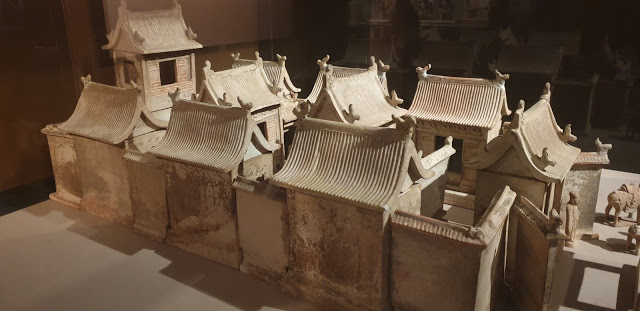
Searching for locations: The Forbidden City, Beijing, China

Now we’re walking to the Forbidden City, and it seems like we’re walking for miles and we’re practically exhausted before we get started on the main tour.  I’m not sure if we received a map of the city, but one is certainly needed so that you can navigate the many features, buildings, and walkways.

There are tour groups everywhere in the large courtyard outside the gate, most likely getting a lecture on the last of the Chinese emperors about that time Sun Yat-Sen proclaimed the new China around 1912.  We were no exception, and it was an interesting way to spend the time waiting to get in.  It was a tale of intrigue, interwoven with a 3-year-old emperor, and a scheming concubine who becomes the Emperor’s favorite, enough to bear him a son and successor.

Bribery and corruption at its best.

But its history runs something like this:

The Forbidden City is was once the imperial and state residence of the Emperor of China, as well as the center of government, from the Ming Dynasty to the Qing Dynasty, or 1420 to 1924.

It was built from 1406 to 1420 when the Yongle Emperor moved the capital from Nanking to Beijing and consists of about 980 buildings, and 8,886 bays of rooms (not the 9,999 as prescribed in myth) and covers 180 acres.  Over the 14 years, a million workers used whole logs of wood from the jungles of southwestern China, marble from quarries near Beijing, specially made golden bricks from Suzhou

Since 1925 it has been a museum and is the largest number of preserved wooden structures in the world.

The city is surrounded by a wall 7.9 meters high, and a moat that is 6 meters deep and 52 meters wide.  A tower sits at each of the four corners.  Each side has a gate, the north is called the Gate of Divine Might, the south is called the Meridian gate.  East and west are called East Glorious Gate and West Glorious Gate respectively.

But, back in the courtyard, we are ready to go in and follow the tour guide who has switched from her amplified microphone to a whisper device we all wear in our ears.  She talks and we listen.

We all make it through and regroup on the other side. This is where the fun begins because we are about to meet a large percentage of the 80,000, they let for the day.

It seems to me they have all arrived at the same time, although by the time we get to the entrance gate, it is very well organized, bags are scanned, people are scanned, and you’re in.

After crossing one of the seven Golden Water bridges, you begin to get some idea of the size and scope of the City, and in the distance, the first of the buildings, The Gate of Supreme Harmony.  On a hot day, that could be a long and thirsty walk.

From there it is one pagoda after another with buildings that surround the edge of the whole Forbidden City, as does the moat.

By the time we get to the second courtyard, it was time to have ice cream as a refresher.  Others head up to another exhibit, and it’s just too many stairs for us.

After this, it’s a walkthrough another courtyard, heading up and down some more stairs, we go and see the museum, with priceless relics from past emperors.

There are areas like the outer courtyard, the inner courtyard, yet another courtyard, and the gardens where the concubines walked and spent their leisure time.  It is not far from the emperor’s wives living quarters, though there’s precious little left of the furniture, other than a settee and two rather priceless so-called Ming dynasty vases.

We get into the bad habit of calling all of the vases Ming dynasties.  Above is one of the inner courtyards there were living quarters, and that tree is over 300 years old.

Out through some more alleyways and through an entrance that led to the area where the concubines lived, very spacious, bright, and filled with trees, plants, and walkways through rocky outcrops.

The whole area was made up of living quarters and waterways, rocks and paths, all very neatly set out, and it looked to be a very good place to live.

This is an example of the living quarters, overlooking the gardens

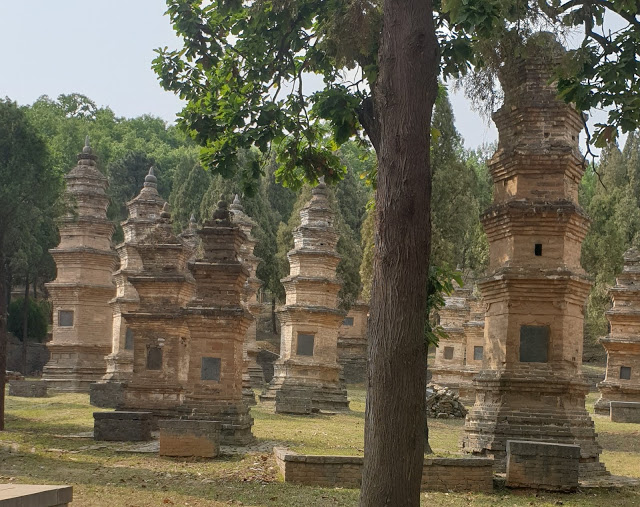
And there were several pagodas

From there its a quick exit out the northern entrance, and another longish walk to our bus, which arrives at the meeting point shortly after we do.

That done, the Beijing tour guide has completed her section of our China experience, and we’re ready to move onto the next.

Searching for locations: The Great Wall of China, near Beijing, China

This is in a very scenic area and on the first impression; it is absolutely stunning in concept and in viewing.

As for the idea of walking on it, well, that first view of the mountain climb when getting off the bus, my first question was where the elevator is?  Sorry, there is none.  It’s walk on up or stay down the bottom.

Walk it is.  As far as you feel you are able.  There are quite a few who don’t make it to the top.  I didn’t.  I only made it to the point where the steps narrowed.

But as for the logistics, there’s the gradual incline to the starting point, and what will be the end meeting place.  From there, it’s a few steps up to the guard station no 7, and a few more to get up to the start of the main climb.  The top of the wall is guard station no 12.

Ok, those first few steps are a good indication of what it’s was going to be like and it’s more the awkwardness of the uneven heights of the steps that’s the killer, some as high as about 15 inches.  This photo paints an illusion, that it’s easy.  It’s not.

If you make it to the first stage, then it augers well you will get about 100 steps before you both start feeling it in your legs, particularly the knees, and then suffering from the height if you have a problem with heights as the air is thinner.  And if you have a thing with heights, never look down.

This was from where we stopped, about a third of the way up.  The one below, from almost at the bottom.  One we’re looking almost down on the buildings, the other, on the same level.

It requires rest before you come down, and that’s when you start to feel it in the knees, our tour guide called it jelly legs, but it’s more in the knees down.  Descending should be slow, and it can be more difficult negotiating the odd height steps, and particularly those high ones.  You definitely need to hang onto the rail, even try going backward.

And, no, that rail hasn’t been there as long as the wall.

While you are waiting for the guide to return to the meeting place at the appointed time, there should be time to have some jasmine tea.  Highly refreshing after the climb.

Searching for locations: The Great Wall of China, near Beijing, China

This is in a very scenic area and on the first impression; it is absolutely stunning in concept and in viewing.

As for the idea of walking on it, well, that first view of the mountain climb when getting off the bus, my first question was where the elevator is?  Sorry, there is none.  It’s walk on up or stay down the bottom.

Walk it is.  As far as you feel you are able.  There are quite a few who don’t make it to the top.  I didn’t.  I only made it to the point where the steps narrowed.

But as for the logistics, there’s the gradual incline to the starting point, and what will be the end meeting place.  From there, it’s a few steps up to the guard station no 7, and a few more to get up to the start of the main climb.  The top of the wall is guard station no 12.

Ok, those first few steps are a good indication of what it’s was going to be like and it’s more the awkwardness of the uneven heights of the steps that’s the killer, some as high as about 15 inches.  This photo paints an illusion, that it’s easy.  It’s not.

If you make it to the first stage, then it augers well you will get about 100 steps before you both start feeling it in your legs, particularly the knees, and then suffering from the height if you have a problem with heights as the air is thinner.  And if you have a thing with heights, never look down.

This was from where we stopped, about a third of the way up.  The one below, from almost at the bottom.  One we’re looking almost down on the buildings, the other, on the same level.

It requires rest before you come down, and that’s when you start to feel it in the knees, our tour guide called it jelly legs, but it’s more in the knees down.  Descending should be slow, and it can be more difficult negotiating the odd height steps, and particularly those high ones.  You definitely need to hang onto the rail, even try going backward.

And, no, that rail hasn’t been there as long as the wall.

While you are waiting for the guide to return to the meeting place at the appointed time, there should be time to have some jasmine tea.  Highly refreshing after the climb.

Searching for locations: Hutongs, Beijing, China

What are Hutongs?

In Beijing Hutongs are formed by lines of traditional courtyard residences, called siheyuan.  Neighborhoods were formed by joining many hutongs together. These siheyuan are the traditional residences, usually occupied by a single or extended family, signifying wealth, and prosperity. 

Over 500 of these still exist.Many of these hutongs have been demolished, but recently they have become protected places as a means of preserving some Chinese cultural history.  They were first established in the Yuan Dynasty (1279-1368)Many of these Hutongs had their main buildings and gates built facing south, and lanes connecting them to other hutongs also ran north to south.

Many hutongs, some several hundred years old, in the vicinity of the Bell Tower and Drum Tower and Shichahai Lake are preserved and abound with tourists, many of which tour the quarter in pedicabs.

The optional tour also includes a visit to Shichahai, a historic scenic area consisting of three lakes (Qianhai, meaning Front Sea; Houhai, meaning Back Sea and Xihai, meaning West Sea), surrounding places of historic interest and scenic beauty and remnants of old-style local residences, Hutong and Courtyard.  

First, we had a short walk through the more modern part of the Hutong area and given some free time for shopping, but we prefer just to meander by the canal.  

There is a lake, and if we had the time, there were boats you could take.

With some time to spare, we take a quick walk down one of the alleyways where on the ground level are small shops, and above, living quarters.

Then we go to the bell and drum towers before walking through some more alleys was to where the rickshaws were waiting.
The Bell tower

And the Drum tower. Both still working today.

The rickshaw ride took us through some more back streets where it was clear renovations were being made so that the area could apply for world heritage listing.  Seeing inside some of the houses shows that they may look dumpy outside but that’s not the case inside.

The rickshaw ride ends outside the house where dinner will be served, and is a not so typical hose but does have all the elements of how the Chinese live, the boy’s room, the girl’s room, the parent’s room, the living area, and the North-south feng shui.

Shortly after we arrive, the cricket man, apparently someone quite famous in Beijing arrives and tells us all about crickets and then grasshoppers, then about cricket racing.  He is animated and clearly enjoys entertaining us westerners.

I’m sorry but the cricket stuff just didn’t interest me.  Or the grasshoppers.

As for dinner, it was finally a treat to eat what the typical Chinese family eats, and everything was delicious, and the endless beer was a nice touch.

And the last surprise, the food was cooked by a man.

Searching for locations: Hutongs, Beijing, China

What are Hutongs?

In Beijing Hutongs are formed by lines of traditional courtyard residences, called siheyuan.  Neighborhoods were formed by joining many hutongs together. These siheyuan are the traditional residences, usually occupied by a single or extended family, signifying wealth, and prosperity. 

Over 500 of these still exist.Many of these hutongs have been demolished, but recently they have become protected places as a means of preserving some Chinese cultural history.  They were first established in the Yuan Dynasty (1279-1368)Many of these Hutongs had their main buildings and gates built facing south, and lanes connecting them to other hutongs also ran north to south.

Many hutongs, some several hundred years old, in the vicinity of the Bell Tower and Drum Tower and Shichahai Lake are preserved and abound with tourists, many of which tour the quarter in pedicabs.

The optional tour also includes a visit to Shichahai, a historic scenic area consisting of three lakes (Qianhai, meaning Front Sea; Houhai, meaning Back Sea and Xihai, meaning West Sea), surrounding places of historic interest and scenic beauty and remnants of old-style local residences, Hutong and Courtyard.  

First, we had a short walk through the more modern part of the Hutong area and given some free time for shopping, but we prefer just to meander by the canal.  

There is a lake, and if we had the time, there were boats you could take.

With some time to spare, we take a quick walk down one of the alleyways where on the ground level are small shops, and above, living quarters.

Then we go to the bell and drum towers before walking through some more alleys was to where the rickshaws were waiting.
The Bell tower

And the Drum tower. Both still working today.

The rickshaw ride took us through some more back streets where it was clear renovations were being made so that the area could apply for world heritage listing.  Seeing inside some of the houses shows that they may look dumpy outside but that’s not the case inside.

The rickshaw ride ends outside the house where dinner will be served, and is a not so typical hose but does have all the elements of how the Chinese live, the boy’s room, the girl’s room, the parent’s room, the living area, and the North-south feng shui.

Shortly after we arrive, the cricket man, apparently someone quite famous in Beijing arrives and tells us all about crickets and then grasshoppers, then about cricket racing.  He is animated and clearly enjoys entertaining us westerners.

I’m sorry but the cricket stuff just didn’t interest me.  Or the grasshoppers.

As for dinner, it was finally a treat to eat what the typical Chinese family eats, and everything was delicious, and the endless beer was a nice touch.

And the last surprise, the food was cooked by a man.

“Trouble in Store” – Short stories my way: Actions have consequences

It’s time for the policewoman to arrive.

There is such a thing as pure dumb luck.

If she did not walk through the door when she did then Jack would have walked away.

From the policewoman’s perspective:


She crossed the street from the corner instead of remaining on the same side of the street as she did every other night.  When she reached the other sidewalk, she was about 20 yards from the nearest window of the store.

As she crossed, she got a better view of the three people in the store and noticed the woman, or girl, was acting oddly as if she had something in her hand, and, from time to time looked down beside her.

A yard or two from the window she stopped, took a deep breath, and then moved slowly, getting a better view of the scene with each step.

Then she saw the gun in the girl’s hand, and the two men, the shopkeeper and a customer facing her, hands up.

It was a convenience store robbery in progress.

She reached for her radio, but it wasn’t there.  She was off duty.  Instead, she withdrew, and called the station on her mobile phone, and reported the robbery.  The officer at the end of the phone said a car would be there in five minutes.

In five minutes there could be dead bodies.

She had to do something, and reached into her bag and pulled out a gun.  Not her service weapon, but one she carried in case of personal danger.


Guns are dangerous weapons in the hands of professional and amateur alike.  You would expect a professional who has trained to use a gun to not have a problem but consider what might happen in exceptional circumstances.

People freeze under pressure.  Alternately, some shoot first and ask questions later.

We have an edgy and frightened girl with a loaded gun, one bullet or thirteen in a magazine, it doesn’t matter.  It only takes one bullet to kill someone.

Then there’s the trigger pressure, light or heavy, the recoil after the shot and whether it causes the bullet to go into or above the intended target, especially if the person has never used a gun.

The policewoman, with training, will need two hands to take the shot, but in getting into the shop she will need one to open the door, and then be briefly distracted before using that hand to steady the other.

It will take a lifetime, even if it is only a few seconds.

Actions have consequences:


The policewoman crouched below the window shelf line so the girl wouldn’t see her, and made it to the door before straightening.  She was in dark clothes so the chances were the girl would not see her against the dark street backdrop.

Her hand was on the door handle about to push it inwards when she could feel in being yanked hard from the other side, and the momentum and surprise of it caused her to lose balance and crash into the man who was trying to get out.

What the hell…

A second or two later both were on the floor in a tangled mess, her gun hand caught underneath her, and a glance in the direction of the girl with the gun told her the situation had gone from bad to worse.

The girl had swung the gun around and aimed it at her and squeezed the trigger twice.

The two bangs in the small room were almost deafening and definitely disorientating.

Behind her, the glass door disintegrated when the bullet hit it.

Neither she nor the man beside her had been hit.

Yet.

She felt a kick in the back and the tickling of glass then broke free as the man she’d run into rolled out of the way.

Quickly on her feet, she saw the girl had gone, and wasted precious seconds getting up off the floor, then out the door to find she had disappeared.

She could hear a siren in the distance.  They’d find her.


If the policewoman had not picked that precise moment to enter the shop, maybe the man would have got away.

Maybe.

If he’d been aware of the fact he was allowed to leave.

He was lucky not to be shot.

Yet there were two shots, and we know at least one of them broke the door’s glass panel.


Next – the epilog

© Charles Heath 2016-2020

“Trouble in Store” – Short stories my way: Adding a catalyst

Just when there’s enough complication in the story, we could leave it there with the current three protagonists and see what happens.

But I like mayhem.

So rather than another customer, it’s time to add a complication; an off duty policeman, or more to the point, policewoman.  A beat cop, if they still exist.

Her back story in a sentence or so:

It had been another long day at the office for Officer Margaret O’Donnell, or, out in the streets, coping with people who either didn’t know or didn’t care about the law.

People who couldn’t cross the road where there were crossings and lights to protect them, silly girls shoplifting on a dare, and boys who thought they were men and could walk on water.

The one they scraped of the road would never get to grow up, and his mother, well, she was not doing another call on a family to give them the bad news.

That was her day.  So far.

What is she doing near the shop?  She lives around the corner.  Perhaps she knows the reputation of the shopkeeper or perhaps not.  It’s not relevant, then, as it is a place she avoids.

Now, she may not have the option.  She sees the shop is still open, past the usual closing time.

Let’s continue:

She came around the corner into the street where she lived and saw the lights were on in the corner store.

She looked at her watch and saw it was ten minutes to midnight.  Long past closing time.  She looked through the window but from the other side of the road and could only see three heads and little else.

Damn, she thought, I’m going to have to check it out.  There were rumors, and she hoped they were not true.

Meanwhile, back in the shop how are the others faring?

The shopkeeper is in an invidious position, he can’t supply the kids with the drugs and get them out, not in front of the customer.

The fact the girl has a gun makes the situation almost impossible.  What would happen if he suggests the customer leave?  Without him, the situation would be simpler.

Alphonse had only a few moments to sum up the situation, and the sum of those deliberations was the remove the only problem, the customer.

He could still salvage this:

The shopkeeper changed his expression to one more placatory, and said quietly to the girl, ‘Look, this is not this chap’s problem.’  He nodded in the direction of the customer.  ‘I’m sure he’d rather not be here, and you would glad of one less distraction.’

He could see she was wavering, she was not holding the gun so steadily, and the longer this dragged on, the more nervous and unpredictable she would become.

And in the longer game, the customer would sing his praises no matter what happened after he left.

The girl looked at Jack.  The shopkeeper was right.  If he wasn’t here this could be over.  But there was another problem.  It didn’t look like Simmo was in any shape to get away.  In fact, this was looking more like a suicide mission.

She waved the gun in his direction.  ‘Get out now, before I change my mind.’

As the gun turned to the shopkeeper, Jack wasn’t going to wait to be asked twice and started sidling towards the door.

What happens next?


And the story for this section, with a few minor changes:


It had been another long day at the office for Officer Margaret O’Donnell, or, out in the streets, coping with people who either didn’t know or didn’t care about the law.

People who couldn’t cross the road where there were crossings and lights to protect them, silly girls shoplifting on a dare, and boys who thought they were men and could walk on water.

The one they scraped of the road would never get to grow up, and his mother, well, she was not doing another call on a family to give them the bad news.

That was her day.  So far.  For now, she was glad to be getting home, putting her feet up, and forgetting about everything until the next morning when it would start all over again.

Coming around that last corner, the home stretch she called it, she was directly opposite the corner shop, usually closed at this hour of the night.  It was not.  The lights were still on.

She looked at her watch and saw it was ten minutes to midnight, and long past closing time.  She looked through the window but from the other side of the road and could only see three heads and little else.

Damn, she thought, I’m going to have to check it out.  There were rumors, and she hoped they were not true.


The shopkeeper changed his expression to one more placatory, and said quietly to the girl, ‘Look, this is not this chap’s problem.’  He nodded in the direction of the customer.  ‘I’m sure he’d rather not be here, and you would glad of one less distraction.’

He could see she was wavering, she was not holding the gun so steadily, and the longer this dragged on, the more nervous and unpredictable she would become.

And in the longer game, the customer would sing his praises no matter what happened after he left.

The girl looked at Jack.  The shopkeeper was right.  If he wasn’t here this could be over.  But there was another problem.  It didn’t look like Simmo was in any shape to get away.  In fact, this was looking more like a suicide mission.

She waved the gun in his direction.  ‘Get out now, before I change my mind.’

As the gun turned to the shopkeeper, Jack wasn’t going to wait to be asked twice and started sidling towards the door.


Next:  Actions have consequences


© Charles Heath 2016-2020

In a word: Light

Yes, I see the lighthouse, what’s it doing all the way out there?  The thing is, these places are sometimes so remote, I start thinking I should rent one for 6 months and then, without any distractions, I’ll get the blasted book finished.

Until there’s a shipwreck, of course!

Light is of course light, duh.  Turn on the switch and let there be light.

Hang on, didn’t someone else say that, millennia ago?  Someone famous?  It’s on the tip of my tongue.

No! It’s not cyanide…

So, whilst we need it to see everything, it has another meaning…

My, that’s a light load your carrying today, which means not very heavy.

Or, that’s a light-coloured jumper, which means pale.

Oh, and did you light the fire?

And, after you light the fire, do you light out to a safe haven in light traffic because really it was arson, and you got a light sentence the last time enabling you to do it again.

If you are trying to rob someone, then it was a kilo light.

And after a long hard struggle, did you light upon the correct answer?

This is not to be confused with another similar word, lite.

It seems this is only used for describing low-calorie drinks and food, such as lite beer, which seems to me to be a lazy way of not using light

Still, there’s not much other use of the word except as a suffix -lite, but then you’d have to mention -lyte as well.

The message here – just use the damn word light and be done with it.


In a word: Light

Yes, I see the lighthouse, what’s it doing all the way out there?  The thing is, these places are sometimes so remote, I start thinking I should rent one for 6 months and then, without any distractions, I’ll get the blasted book finished.

Until there’s a shipwreck, of course!

Light is of course light, duh.  Turn on the switch and let there be light.

Hang on, didn’t someone else say that, millennia ago?  Someone famous?  It’s on the tip of my tongue.

No! It’s not cyanide…

So, whilst we need it to see everything, it has another meaning…

My, that’s a light load your carrying today, which means not very heavy.

Or, that’s a light-coloured jumper, which means pale.

Oh, and did you light the fire?

And, after you light the fire, do you light out to a safe haven in light traffic because really it was arson, and you got a light sentence the last time enabling you to do it again.

If you are trying to rob someone, then it was a kilo light.

And after a long hard struggle, did you light upon the correct answer?

This is not to be confused with another similar word, lite.

It seems this is only used for describing low-calorie drinks and food, such as lite beer, which seems to me to be a lazy way of not using light

Still, there’s not much other use of the word except as a suffix -lite, but then you’d have to mention -lyte as well.

The message here – just use the damn word light and be done with it.


Searching for locations: We’ve just arrived in Beijing International Airport, China

Instead of making a grand entrance, arriving in style and being greeted by important dignitaries, we are slinking in via an airplane, late at night. It’s hardly the entrance I’d envisaged. At 9:56 the plane touches down on the runway.  Outside the plane, it is dark and gloomy and from what I could see, it had been raining.  That could, of course, simply be condensation.

Once on the ground, everyone was frantically gathering together everything from seat pockets and sending pillows and blankets to the floor.  A few were turning their mobile phones back on, and checking for a signal, and, perhaps, looking for messages sent to them during the last 12 hours. Or perhaps they were just suffering from mobile phone deprivation.

It took 10 minutes for the plane to arrive at the gate. That’s when everyone moves into overdrive, unbuckling belts, some before the seatbelt sign goes off, and are first out of their seats and into the overhead lockers.  Most are not taking care that their luggage may have moved, but fortunately, no bags fall out onto someone’s head. The flight had been relatively turbulent free.

When as many people and bags have squeezed into that impossibly small aisle space, we wait for the door to open, and then the privileged few business and first-class passengers to depart before we can begin to leave. As we are somewhere near the middle of the plane, our wait will not be as long as it usually is.  This time we avoided being at the back of the plane.  Perhaps that privilege awaits us on the return trip.

Once off the plane, it is a matter of following the signs, some of which are not as clear as they could be.  It’s why it took another 30 odd minutes to get through immigration, but that was not necessarily without a few hiccups along the way. We got sidetracked at the fingerprint machines, which seemed to have a problem if your fingers were not straight, not in the center of the glass, and then if it was generally cranky, which ours were, continue to tell you to try again, and again, and again, and again…That took 10 to 15 minutes before we joined an incredibly long queue of other arrivals,

A glance at the time, and suddenly it’s nearly an hour from the moment we left the plane.

And…

That’s when we got to the immigration officer, and it became apparent we were going to have to do the fingerprints yet again.  Fortunately this time, it didn’t take as long.  Once that done, we collected our bags, cleared customs by putting our bags through a huge x-ray machine, and it was off to find our tour guide.


We found several tour guides with their trip-a-deal flags waiting for us to come out of the arrivals hall.  It wasn’t a difficult process in the end.  We were in the blue group.  Other people we had met on the plane were in the red group or the yellow group.  The tour guide found, or as it turned out she found us, it was simply a matter of waiting for the rest of the group, of which there were eventually 28.Gathered together we were told we would be taking the bags to one place and then ourselves to the bus in another.  A glance in the direction of the bus park, there were a lot of busses.

Here’s a thought, imagine being told your bus is the white one with blue writing on the side.

Yes, yours is, and 25 others because all of the tourist coaches are the same.  An early reminder, so that you do not get lost, or, God forbid, get on the wrong bus, for the three days in Beijing, is to get the last five numbers of the bus registration plate and commit them to memory.  It’s important.  Failing that, the guide’s name is in the front passenger window.

Also, don’t be alarmed if your baggage goes in one direction, and you go in another. In a rather peculiar set up the bags are taken to the hotel by what the guide called the baggage porter.  It is an opportunity to see how baggage handlers treat your luggage; much better than the airlines it appears.


That said, if you’re staying at the Beijing Friendship Hotel, be prepared for a long drive from the airport.  It took us nearly an hour, and bear in mind that it was very late on a Sunday night.

Climbing out of the bus after what seemed a convoluted drive through a park with buildings, we arrive at the building that will be our hotel for the next three days.  From the outside, it looks quite good, and once inside the foyer, that first impression is good.  Lots of space, marble, and glass.  If you are not already exhausted by the time you arrive, the next task is to get your room key, find your bags, get to your room, and try to get to be ready the next morning at a reasonable hour.

Sorry, that boat has sailed.

We were lucky, we were told, that our plane arrived on time, and we still arrived at the hotel at 12:52.  Imagine if the incoming plane is late.

This was taken the following morning.  It didn’t look half as bland late at night.

This is the back entrance to Building No 4 but is quite representative of the whole foyer, made completely of marble and glass.  It all looked very impressive under the artificial lights, but not so much in the cold hard light of early morning.

This the foyer of the floor our room was on.  Marble with interesting carpet designs.  Those first impressions of it being a plush hotel were slowly dissipating as we got nearer and nearer to the room.  From the elevator, it was a long, long walk.

So…Did I tell you about the bathroom in our room?

The shower and the toilet both share the same space with no divide and the shower curtain doesn’t reach to the floor.  Water pressure is phenomenal.  Having a shower floods the whole shower plus toilet area so when you go to the toilet you’re basically underwater.

Don’t leave your book or magazine on the floor or it will end up a watery mess.

And the water pressure is so hard that it could cut you in half.  Only a small turn of the tap is required to get that tingling sensation going.

It’s after 1:30 before we finally get to sleep.

As for the bed, well, that’s a whole other story.