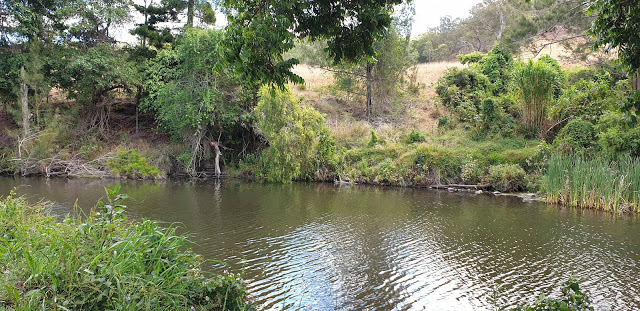
O’Reilly’s Canungra Valley Vineyards located on Lamington National Park Road, Canungra, Queensland, is a 15-acre vineyard with the 163-year-old historic homestead ‘Killowen’ set up with dining rooms and long verandahs, and extensive grounds that are next to the Canungra creek where it is possible to find Platypus and turtles while partaking in a picnic.
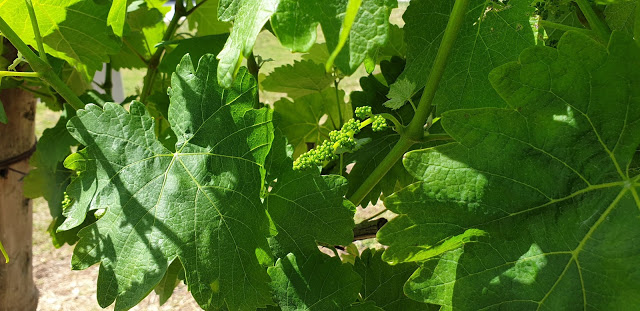
There are about 6,000 vines of the (white) Semillon, Verdelho and (red) Chambourcin, Shiraz and Petit Vedot varieties.
We visited there in December when the vines were just starting to produce fruit.
That fruit is usually harvested in February and then turned into wine. The setting for picnics is, on a warm Summer’s day is idyllic, where you can wade in the creek, or go looking for a platypus. We did not see one there the day we visited but did spend some time sitting beside the creek.
O’Reilly’s Canungra Valley Vineyards located on Lamington National Park Road, Canungra, Queensland, is a 15-acre vineyard with the 163-year-old historic homestead ‘Killowen’ set up with dining rooms and long verandahs, and extensive grounds that are next to the Canungra creek where it is possible to find Platypus and turtles while partaking in a picnic.
There are about 6,000 vines of the (white) Semillon, Verdelho and (red) Chambourcin, Shiraz and Petit Vedot varieties.
We visited there in December when the vines were just starting to produce fruit.
That fruit is usually harvested in February and then turned into wine. The setting for picnics is, on a warm Summer’s day is idyllic, where you can wade in the creek, or go looking for a platypus. We did not see one there the day we visited but did spend some time sitting beside the creek.
O’Reilly’s Canungra Valley Vineyards located on Lamington National Park Road, Canungra, Queensland, is a 15-acre vineyard with the 163-year-old historic homestead ‘Killowen’ set up with dining rooms and long verandahs, and extensive grounds that are next to the Canungra creek where it is possible to find Platypus and turtles while partaking in a picnic.
There are about 6,000 vines of the (white) Semillon, Verdelho and (red) Chambourcin, Shiraz and Petit Vedot varieties.
We visited there in December when the vines were just starting to produce fruit.
That fruit is usually harvested in February and then turned into wine. The setting for picnics is, on a warm Summer’s day is idyllic, where you can wade in the creek, or go looking for a platypus. We did not see one there the day we visited but did spend some time sitting beside the creek.
Or to be more precise, the homestead at what is now O’Reilly’s vineyard, where there is a pleasant lawn out back running down to the river for picnics, an alpaca farm next door, and the homestead plays host to functions and wine tastings
My interest was that we had assumed there was a restaurant, and we were going to have lunch. There might be one, but not the day we visited, it was just cafe food or a picnic available.
I was more interested in the old homestead because it was a fine example of the homesteads built in the ‘outback’.
…
Today we are having lunch in the Platypus room, in the O’Reilly’s vineyard farmhouse, which, if you close your eyes and let your imagination run free, could see it as the master bedroom of a homestead.
Certainly, the building is old, made completely of timber, inside and out, with the traditional high ceilings to keep the heat at bay.
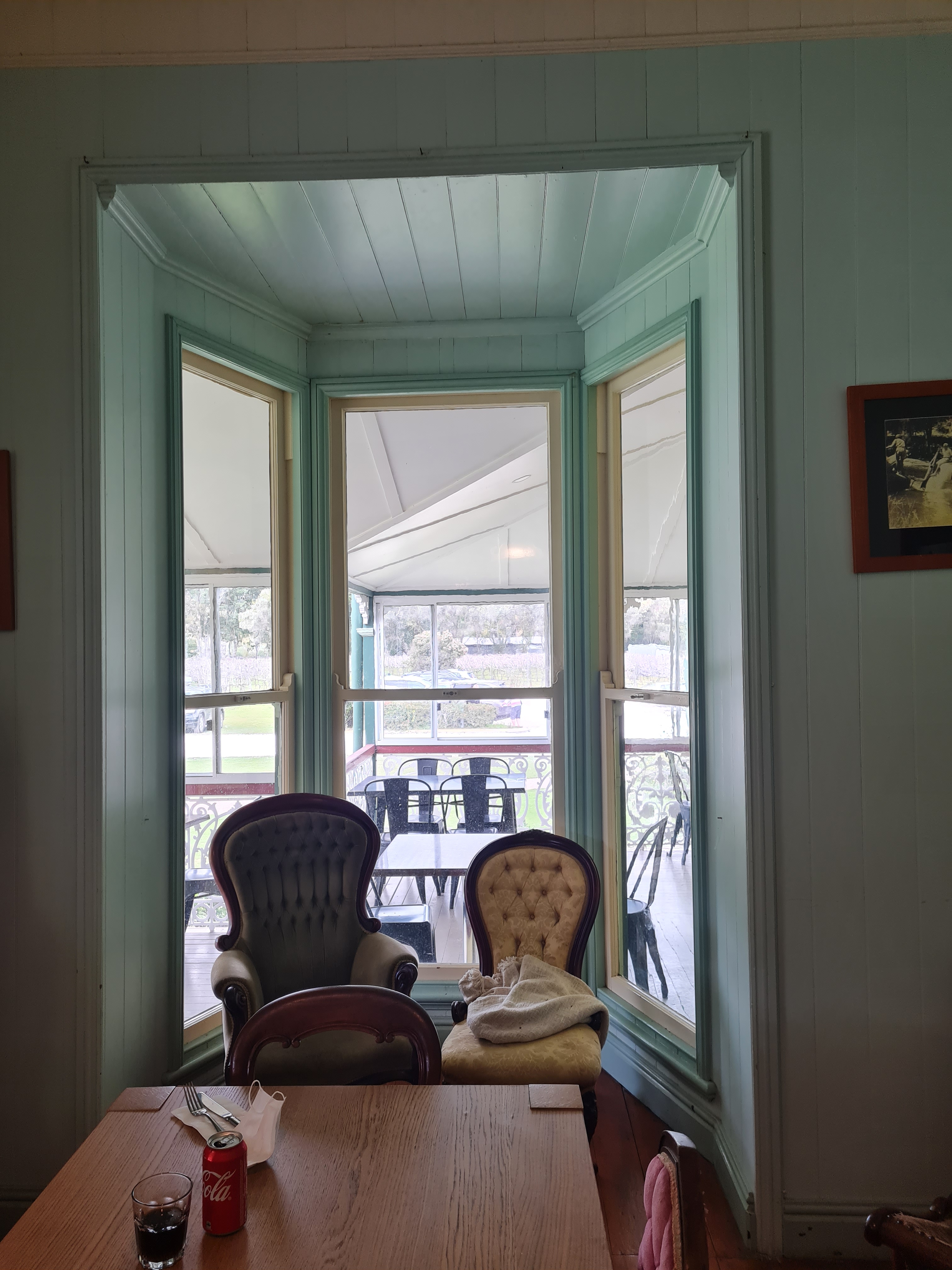
At one end, a large bay window, which would be ideal to sit and view the outside, past the sweeping verandah. There is a small lawn and a rotunda, but beyond that what might have been extended gardens, is the vineyard.
The homestead is in an ideal position midway between the main road and the river, has the traditional surrounding verandah, and shows signs of being extended on almost all sides.
On the other side of the wide corridor that leads you to the bar, and, coincidentally, down the centre of the house, is a smaller bedroom, also used as a dining room, and ubiquitously named the library.
It may be small but it does have a fireplace, which the assumed master bedroom does not, but now I’m thinking that room might have been the morning room.
Behind the room, we’re in is another bedroom, or perhaps this might be the master because it does have a fireplace and is quite large. And a name, the Ambassador room. Now it serves as the pickup place for picnic baskets.
There is another room on the opposite side of the corridor called the Drawing Room but is not open to the public. But, going into the room with the fireplace adjacent to it, you can sell the aroma of pizzas, so it’s probably an extension of the kitchen, and, walking around the outside that side of the house proves it to be the case.
After all, they do catering for weddings and need a very large food preparation area which I discovered runs down the whole of that side of the house.
At the end of the corridor I’d the bar and spare space, and running off that and behind that is where there is a large dining area, perhaps prior to COVID, the restaurant.
It’s not hard to imagine that area as a very large entertaining area, either for very large dinner parties, or dancing.
As for the food, it’s either a picnic basket or pizzas. We chose the latter, not realising the bases were not homemade, but bought in.
The toppings however were both plentiful and tasty. It could have been hotter, because it was a cold day, and it was cold in the room.
As for something to do other than taste the wine, and buy a few bottles, you can get up close to the vines, which, at this time of the year gave been pruned back and look quite dead, look at or walk an alpaca, even feed it, or all of them, or go down to the river and see if you can spot a Platypus.
Perhaps next time we’ll have a picnic down by the river.
Or to be more precise, the homestead at what is now O’Reilly’s vineyard, where there is a pleasant lawn out back running down to the river for picnics, an alpaca farm next door, and the homestead plays host to functions and wine tastings
My interest was that we had assumed there was a restaurant, and we were going to have lunch. There might be one, but not the day we visited, it was just cafe food or a picnic available.
I was more interested in the old homestead because it was a fine example of the homesteads built in the ‘outback’.
…
Today we are having lunch in the Platypus room, in the O’Reilly’s vineyard farmhouse, which, if you close your eyes and let your imagination run free, could see it as the master bedroom of a homestead.
Certainly, the building is old, made completely of timber, inside and out, with the traditional high ceilings to keep the heat at bay.
At one end, a large bay window, which would be ideal to sit and view the outside, past the sweeping verandah. There is a small lawn and a rotunda, but beyond that what might have been extended gardens, is the vineyard.
The homestead is in an ideal position midway between the main road and the river, has the traditional surrounding verandah, and shows signs of being extended on almost all sides.
On the other side of the wide corridor that leads you to the bar, and, coincidentally, down the centre of the house, is a smaller bedroom, also used as a dining room, and ubiquitously named the library.
It may be small but it does have a fireplace, which the assumed master bedroom does not, but now I’m thinking that room might have been the morning room.
Behind the room, we’re in is another bedroom, or perhaps this might be the master because it does have a fireplace and is quite large. And a name, the Ambassador room. Now it serves as the pickup place for picnic baskets.
There is another room on the opposite side of the corridor called the Drawing Room but is not open to the public. But, going into the room with the fireplace adjacent to it, you can sell the aroma of pizzas, so it’s probably an extension of the kitchen, and, walking around the outside that side of the house proves it to be the case.
After all, they do catering for weddings and need a very large food preparation area which I discovered runs down the whole of that side of the house.
At the end of the corridor I’d the bar and spare space, and running off that and behind that is where there is a large dining area, perhaps prior to COVID, the restaurant.
It’s not hard to imagine that area as a very large entertaining area, either for very large dinner parties, or dancing.
As for the food, it’s either a picnic basket or pizzas. We chose the latter, not realising the bases were not homemade, but bought in.
The toppings however were both plentiful and tasty. It could have been hotter, because it was a cold day, and it was cold in the room.
As for something to do other than taste the wine, and buy a few bottles, you can get up close to the vines, which, at this time of the year gave been pruned back and look quite dead, look at or walk an alpaca, even feed it, or all of them, or go down to the river and see if you can spot a Platypus.
Perhaps next time we’ll have a picnic down by the river.
All the worries we thought we might have in getting from Lake Louise to Calgary, in the end, it was just like driving to work, only a little longer.
When we left the Fairmont, the car had two frozen bottles of water and a frozen donut, left in the car for the two days we were there, so hiding in the garage might not be a good idea.
At the garage where we refueled, it was so cold I could barely clean the windows and glad to get back into the warmth inside the car.
Thankfully as we got closer to Calgary, it got warmer.
We bypass the city going to the airport, but, as it turns out, we would not have had much time to look around anyway.It’s nice to go to an airport and actually find the car rental returns first go with adequate signing to get there.
Returning the car took a few extra minutes because we were at the end of a dozen or so others who turned up at the same time. All good, they remembered giving us a half full petrol tank.
At the check-in, it is very smooth sailing, the kiosk working and once the booking reference was entered, it spat out the desired number of boarding passes and baggage tags.
Then to baggage drop, through customs where I managed to lose my jacket, which is amazing that you would be allowed to leave anything behind.
So…
We have an hour and a half to kill, so a long soda and two long island teas settle the pre-flight nerves if we had any to start with.
Time to consider the vagaries of the flight.
Today we’re on an Airbus a320, and we are seated in the very last row, row 33. It’s always a bad thing to look up planes on seatguru.com, because it has painted them as the worst on the plane.
What’s the downside, sometimes the seat pitch is less than further up the plane, the seats don’t recline and you get the seat in front in your face, and you get the constant flushing of the toilets. And my major bugbear there’s no overhead luggage space.
What’s the reality?
To begin with, the seats recline, but not very much. We’ll wait till the plane is cruising before judging how far the seats recline in front of us.
The seat pitch is good and it doesn’t feel like were cramped into a small space, but again this is relative to what happens with the seat in front.
Overhead baggage space, none whatsoever, so if you don’t get on first you are basically screwed. We were almost first to the rear of the plane so I suspect others also know about the lack of overhead bin space.
Being at the read most part of the plane affords you a view of how the baggage handlers treat your baggage, and it’s interesting, to say the least. They smile a lot, so I suspect that a few bags might get the ‘treatment’.
Enough already.
We’re now backing out of the bay ready to leave.
We’re getting endless announcements in foreign languages so when next I fly with Air Canada I should at least learn French.
Or not…
Ah, the smell of kerosene floods our end of the plane. So much for air quality, which so it happens is being covered in the safety video at the exact same time.
Or to be more precise, the homestead at what is now O’Reilly’s vineyard, where there is a pleasant lawn out back running down to the river for picnics, an alpaca farm next door, and the homestead plays host to functions and wine tastings
My interest was that we had assumed there was a restaurant, and we were going to have lunch. There might be one, but not the day we visited, it was just cafe food or a picnic available.
I was more interested in the old homestead because it was a fine example of the homesteads built in the ‘outback’.
…
Today we are having lunch in the Platypus room, in the O’Reilly’s vineyard farmhouse, which, if you close your eyes and let your imagination run free, could see it as the master bedroom of a homestead.
Certainly, the building is old, made completely of timber, inside and out, with the traditional high ceilings to keep the heat at bay.
At one end, a large bay window, which would be ideal to sit and view the outside, past the sweeping verandah. There is a small lawn and a rotunda, but beyond that what might have been extended gardens, is the vineyard.
The homestead is in an ideal position midway between the main road and the river, has the traditional surrounding verandah, and shows signs of being extended on almost all sides.
On the other side of the wide corridor that leads you to the bar, and, coincidentally, down the centre of the house, is a smaller bedroom, also used as a dining room, and ubiquitously named the library.
It may be small but it does have a fireplace, which the assumed master bedroom does not, but now I’m thinking that room might have been the morning room.
Behind the room, we’re in is another bedroom, or perhaps this might be the master because it does have a fireplace and is quite large. And a name, the Ambassador room. Now it serves as the pickup place for picnic baskets.
There is another room on the opposite side of the corridor called the Drawing Room but is not open to the public. But, going into the room with the fireplace adjacent to it, you can sell the aroma of pizzas, so it’s probably an extension of the kitchen, and, walking around the outside that side of the house proves it to be the case.
After all, they do catering for weddings and need a very large food preparation area which I discovered runs down the whole of that side of the house.
At the end of the corridor I’d the bar and spare space, and running off that and behind that is where there is a large dining area, perhaps prior to COVID, the restaurant.
It’s not hard to imagine that area as a very large entertaining area, either for very large dinner parties, or dancing.
As for the food, it’s either a picnic basket or pizzas. We chose the latter, not realising the bases were not homemade, but bought in.
The toppings however were both plentiful and tasty. It could have been hotter, because it was a cold day, and it was cold in the room.
As for something to do other than taste the wine, and buy a few bottles, you can get up close to the vines, which, at this time of the year gave been pruned back and look quite dead, look at or walk an alpaca, even feed it, or all of them, or go down to the river and see if you can spot a Platypus.
Perhaps next time we’ll have a picnic down by the river.
All the worries we thought we might have in getting from Lake Louise to Calgary, in the end, it was just like driving to work, only a little longer.
When we left the Fairmont, the car had two frozen bottles of water and a frozen donut, left in the car for the two days we were there, so hiding in the garage might not be a good idea.
At the garage where we refueled, it was so cold I could barely clean the windows and glad to get back into the warmth inside the car.
Thankfully as we got closer to Calgary, it got warmer.
We bypass the city going to the airport, but, as it turns out, we would not have had much time to look around anyway.It’s nice to go to an airport and actually find the car rental returns first go with adequate signing to get there.
Returning the car took a few extra minutes because we were at the end of a dozen or so others who turned up at the same time. All good, they remembered giving us a half full petrol tank.
At the check-in, it is very smooth sailing, the kiosk working and once the booking reference was entered, it spat out the desired number of boarding passes and baggage tags.
Then to baggage drop, through customs where I managed to lose my jacket, which is amazing that you would be allowed to leave anything behind.
So…
We have an hour and a half to kill, so a long soda and two long island teas settle the pre-flight nerves if we had any to start with.
Time to consider the vagaries of the flight.
Today we’re on an Airbus a320, and we are seated in the very last row, row 33. It’s always a bad thing to look up planes on seatguru.com, because it has painted them as the worst on the plane.
What’s the downside, sometimes the seat pitch is less than further up the plane, the seats don’t recline and you get the seat in front in your face, and you get the constant flushing of the toilets. And my major bugbear there’s no overhead luggage space.
What’s the reality?
To begin with, the seats recline, but not very much. We’ll wait till the plane is cruising before judging how far the seats recline in front of us.
The seat pitch is good and it doesn’t feel like were cramped into a small space, but again this is relative to what happens with the seat in front.
Overhead baggage space, none whatsoever, so if you don’t get on first you are basically screwed. We were almost first to the rear of the plane so I suspect others also know about the lack of overhead bin space.
Being at the read most part of the plane affords you a view of how the baggage handlers treat your baggage, and it’s interesting, to say the least. They smile a lot, so I suspect that a few bags might get the ‘treatment’.
Enough already.
We’re now backing out of the bay ready to leave.
We’re getting endless announcements in foreign languages so when next I fly with Air Canada I should at least learn French.
Or not…
Ah, the smell of kerosene floods our end of the plane. So much for air quality, which so it happens is being covered in the safety video at the exact same time.
All the worries we thought we might have in getting from Lake Louise to Calgary, in the end, it was just like driving to work, only a little longer.
When we left the Fairmont, the car had two frozen bottles of water and a frozen donut, left in the car for the two days we were there, so hiding in the garage might not be a good idea.
At the garage where we refueled, it was so cold I could barely clean the windows and glad to get back into the warmth inside the car.
Thankfully as we got closer to Calgary, it got warmer.
We bypass the city going to the airport, but, as it turns out, we would not have had much time to look around anyway.It’s nice to go to an airport and actually find the car rental returns first go with adequate signing to get there.
Returning the car took a few extra minutes because we were at the end of a dozen or so others who turned up at the same time. All good, they remembered giving us a half full petrol tank.
At the check-in, it is very smooth sailing, the kiosk working and once the booking reference was entered, it spat out the desired number of boarding passes and baggage tags.
Then to baggage drop, through customs where I managed to lose my jacket, which is amazing that you would be allowed to leave anything behind.
So…
We have an hour and a half to kill, so a long soda and two long island teas settle the pre-flight nerves if we had any to start with.
Time to consider the vagaries of the flight.
Today we’re on an Airbus a320, and we are seated in the very last row, row 33. It’s always a bad thing to look up planes on seatguru.com, because it has painted them as the worst on the plane.
What’s the downside, sometimes the seat pitch is less than further up the plane, the seats don’t recline and you get the seat in front in your face, and you get the constant flushing of the toilets. And my major bugbear there’s no overhead luggage space.
What’s the reality?
To begin with, the seats recline, but not very much. We’ll wait till the plane is cruising before judging how far the seats recline in front of us.
The seat pitch is good and it doesn’t feel like were cramped into a small space, but again this is relative to what happens with the seat in front.
Overhead baggage space, none whatsoever, so if you don’t get on first you are basically screwed. We were almost first to the rear of the plane so I suspect others also know about the lack of overhead bin space.
Being at the read most part of the plane affords you a view of how the baggage handlers treat your baggage, and it’s interesting, to say the least. They smile a lot, so I suspect that a few bags might get the ‘treatment’.
Enough already.
We’re now backing out of the bay ready to leave.
We’re getting endless announcements in foreign languages so when next I fly with Air Canada I should at least learn French.
Or not…
Ah, the smell of kerosene floods our end of the plane. So much for air quality, which so it happens is being covered in the safety video at the exact same time.
All the worries we thought we might have in getting from Lake Louise to Calgary, in the end, it was just like driving to work, only a little longer.
When we left the Fairmont, the car had two frozen bottles of water and a frozen donut, left in the car for the two days we were there, so hiding in the garage might not be a good idea.
At the garage where we refueled, it was so cold I could barely clean the windows and glad to get back into the warmth inside the car.
Thankfully as we got closer to Calgary, it got warmer.
We bypass the city going to the airport, but, as it turns out, we would not have had much time to look around anyway.It’s nice to go to an airport and actually find the car rental returns first go with adequate signing to get there.
Returning the car took a few extra minutes because we were at the end of a dozen or so others who turned up at the same time. All good, they remembered giving us a half full petrol tank.
At the check-in, it is very smooth sailing, the kiosk working and once the booking reference was entered, it spat out the desired number of boarding passes and baggage tags.
Then to baggage drop, through customs where I managed to lose my jacket, which is amazing that you would be allowed to leave anything behind.
So…
We have an hour and a half to kill, so a long soda and two long island teas settle the pre-flight nerves if we had any to start with.
Time to consider the vagaries of the flight.
Today we’re on an Airbus a320, and we are seated in the very last row, row 33. It’s always a bad thing to look up planes on seatguru.com, because it has painted them as the worst on the plane.
What’s the downside, sometimes the seat pitch is less than further up the plane, the seats don’t recline and you get the seat in front in your face, and you get the constant flushing of the toilets. And my major bugbear there’s no overhead luggage space.
What’s the reality?
To begin with, the seats recline, but not very much. We’ll wait till the plane is cruising before judging how far the seats recline in front of us.
The seat pitch is good and it doesn’t feel like were cramped into a small space, but again this is relative to what happens with the seat in front.
Overhead baggage space, none whatsoever, so if you don’t get on first you are basically screwed. We were almost first to the rear of the plane so I suspect others also know about the lack of overhead bin space.
Being at the read most part of the plane affords you a view of how the baggage handlers treat your baggage, and it’s interesting, to say the least. They smile a lot, so I suspect that a few bags might get the ‘treatment’.
Enough already.
We’re now backing out of the bay ready to leave.
We’re getting endless announcements in foreign languages so when next I fly with Air Canada I should at least learn French.
Or not…
Ah, the smell of kerosene floods our end of the plane. So much for air quality, which so it happens is being covered in the safety video at the exact same time.