I’m not perfect…

I was told a long time ago I wasn’t perfect, and it didn’t bother me. Then.

But it’s true. I don’t always get it right, sometimes I get annoyed and say things in the heat of the moment that perhaps shouldn’t be said, and sometimes I can be ‘difficult’.

I’ll be the first in line to say my blog isn’t perfect, in fact sometimes it bothers me some of the bits and pieces that go up because I doubt if they’re interesting, at the time, to anyone but me.

Perhaps it’s because I chose to be a writer.

It’s a hard slog at the best of times. Getting ideas, carving out time to write, having to live a normal life as distinct from that of living in a garret, on your own, writing that next great Nobel prize for literature, or is it a Pulitzer?

I don’t get that, I don’t have that, and I don’t want that.

For those of us living on that ‘edge’ of finding time to write, maintain a blog, keep up with social media, do the daily chores and watch some television, something has to give.

So, I’m not getting any writing done if I’m working on the blog, or I’m on social media. If I’m doing the blog, something else has to be sacrificed.

Mostly it’s my blog. My blog is about writing stuff, visiting places that have been or will be used in stories, and once, a recalcitrant cat who sadly has passed on. It also has running episodic stories, usually four different at a time.

It also had about 2,000 past posts. When I don’t get the time to do my blog, which has been mostly for the last three months off and on, I sometimes repackage or repeat past posts, just to keep it ticking over, much like a scoreboard.

It is also a tool for advertising my books and stories, and what’s coming (if only I stopped using social media) and these are repeated every four or five days. It’d the equivalent of advertising because I can’t afford other advertising. If this is an annoyance, I’m sorry.

And just so everyone knows, I will always keep writing, not because I want to become the next James Patterson, though it would be nice, I write because I want to, and it pleases me when someone reads something I write, and they like it. It is the greatest compliment of all, and I believe in encouragement. It’s why I spend a lot of that social media time highlighting other writers so they can build a following.

After all, we are all in the same boat, it would just be nice if we were all rowing in the same direction.

Memories of the conversations with my cat – 3

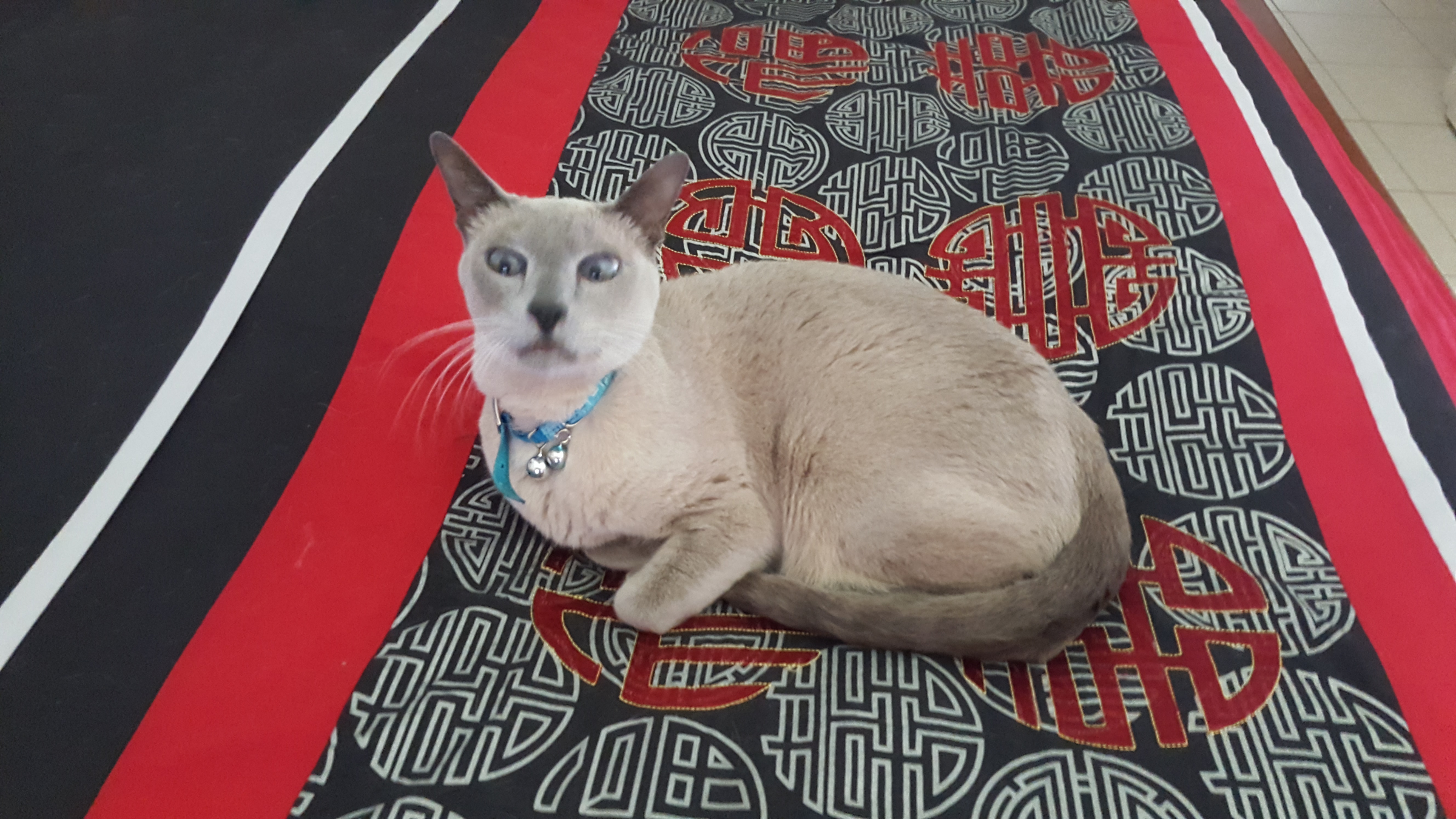
As some may be aware, but many not, Chester, my faithful writing assistant, mice catcher, and general pain in the neck, passed away some months ago.

Recently I was running a series based on his adventures, under the title of Past Conversations with my cat.

For those who have not had the chance to read about all of his exploits I will run the series again from Episode 1

These are the memories of our time together…

20160902_123201

This is Chester.  Back on the bed.

Another argument lost, another smug ‘I’ve got the better of you, again’ look.

Time to move on, pick a battle I think I can win.

Food.  There’s the old wives tale, that cats love fish, and it’s true to a certain extent.

Chester doesn’t believe fish live in cans or plastic packets, despite how it’s dressed up.  Fresh fish, he’s into it, but there always seems to be a measured reluctance to eat something out of a can.

I think he regards us humans with disdain when our food comes out of a can or packet.

He refuses to eat the leftovers!

Then there’s chicken, or its more expensive neighbor, turkey.

He loves turkey.

I’m sure he’d eat quail and spatchcock too, but no, he’s a cat, and cats have to get used to eating chicken.  We’ve had this discussion, one too many times.

And just for good measure, I told him if he thinks he’s coming to Italy with us, he’d better get used to the idea of eating pasta.

Of course, always with the last word, he said, quite nonchalantly, ‘then you’d better call me Garfield’.

Grrrrrrr.

The cinema of my dreams – I always wanted to write a war story – Episode 26

For a story that was conceived during those long boring hours flying in a steel cocoon, striving to keep away the thoughts that the plane and everyone in it could just simply disappear as planes have in the past, it has come a long way.

Whilst I have always had a fascination with what happened during the second world war, not the battles or fighting, but in the more obscure events that took place, I decided to pen my own little sidebar to what was a long and bitter war.

And, so, it continues…


Mayer realized something was terribly wrong when they reached the outskirts of Weimar and passed through the checkpoint on the outskirts of the city.

It was the sixth such checkpoint and each time the Standartenfuhrer told the sentries that they were escorting a valuable prisoner, and being mere German Army soldiers, most of the Obergefreiter rank, and not willing to argue with an SS Colonel.

Then he remembered there was a large Government building in the city and assumed that was where they were talking to him.

Except they were either lost or taking the long way to get there because they were taking back streets.  When he asked why, he was told to be quiet, or they would silence him.

When they reached the outskirts of the city on the other side, still heading south, he knew something else was going on.  It was then he started to think that these men might not necessarily be Nazi’s.  After all, there had to be other people who were sickened by the atrocities that were going on, particularly to the labor from the camps.

He understood the need for labor, just not the way his superiors went about getting it.

They passed through the next checkpoint without any questions and soon caught up to a convoy of trucks with what looked like prisoners in the back.

It was the first time he had seen either of the two officers look worried.

Then a soldier on a motorcycle turned around and came back to check on the vehicle and its occupants.  He flagged them to the side of the road, got off his bike and there was no mistaking the itchy trigger finger on the gun he was loosely holding.

In front of their car, the last truck in the convoy turned a corner and disappeared.

“Where are you going?” the motorcyclist asked.

Mayer noticed he was not army but SS of a lower rank Scharfuhrer, and though of a lower rank, there was still the superiority of just being SS.

The Standartenfuhrer looked the soldier up and down and then opened the door to the car and got out.  He took two steps towards the cyclist.

“Do you know who you are addressing Scharfuhrer, what is your name?  I will take this insubordination to your superior officer.”

Mayer had seen similar men in his unit back at Nordhausen, including one, when in a hotel having lunch heard one of a group of army soldiers being rowdy.  He singled the loudest of them, told him to be less noisy and the soldier laughed at him.

The next thing he remembered was the other solders carrying their dead leader out of the hotel.  The Standartenfuhrer had shot him, on the same charge, insubordination.  Would this Standartenfuhrer do the same?

He had learned that day the SS, especially the higher-ranked officers, didn’t tolerate anything, and as one, he was expected to do the same.

“Sir.  It is my job to ask questions, as you are fully aware.  I was given orders, and I obey those orders.”  Suddenly the man was less confident.

“I understand that.  It is of no concern to you where we are going, only that it is on urgent and classified Reich business.  It is of no concern to anyone but the Oberfuhrer I report to, and I will have to report to him on why I was delayed.  You name Scharfuhrer?”

“I have no wish to delay you, sir.”  He saluted, got back on his motorcycle and left, speeding up to catch up to the rest of the convoy.

The Standartenfuhrer got back in the car.

“That was close,” the driver said.  In English.

Mayer was proficient in English as his father had told him that it would stand him in good stead one day.  He just omitted to tell anyone he worked with, or when he was recruited.  They had asked, and he thought it wisest to say no.

Now, these two men were speaking English.  It was not unknown for SS officers to speak English, as well as several other languages like Dutch, French and Italian. He had a little French, and less Italian.

“Who are you?” Mayer asked again but sticking to German.

The Standartenfuhrer glared at his driver.

“This is the point where it depends on how you answer the next question whether we execute you here, or we continue.  Bear in mind that if you tell us a lie, you will be shot.”  The Standartenfuhrer also spoke in German.

The English Mayer decided was to correct to be from an Englishman, only a German who had learned it as a second language, and definitely as an SS officer.  Perhaps these two were charged with interrogating English prisoners, though that didn’t explain why they had taken him.

All of a sudden, he had a very bad feeling about this kidnapping.  It was a kidnapping, and these men were taking him to a different location, perhaps to torture him.  He had heard rumors, but since it came from a fellow SS officer, he considered it to be true.

“The question?” he stammered, nerves getting the better of him.

“Do you want to get out of Germany?”

What?  IT wasn’t [possible that anyone could know that.  He’d only admitted that sentiment to one person, and he knew he could trust them not to tell anyone.  OR could he?

And, was this a trick question.  If he answered no, it meant they could charge him with crimes against the Reich for having the blueprints of the V2 rocket?  And if he said yes, would they execute him here on the side of the road?

There was no answer that wouldn’t see him shot.

So better to say he was fed up with the conditions he’d been working under, get shot, and never return.

“Yes.”  Of course, there was a pertinent question to add to that reply, “How did you know?”

“You had the plans and specifications outside the bunker.  An executable offense.  I believe you do not like the idea of the German High Command using these rockets as weapons.”

“Most of us on the project do not, but we have to do as we are told.  For obvious reasons.”

“So far so good,” the Standartenfuhrer switched back to English.  “We know you speak English, in fact we know quite a lot about you.  As you’ve obviously guessed, we are not going to and interrogation site, but further south to Italy where there is an escape route set up by the resistance.”

“Who do you work for?”

“OSS.  We are probably worse off than you in that if we get caught, we will be shot as spies.  But, so far we’ve had good luck, except for that nosy motorcyclist.  I expect he will not keep his mouth shut and report us.”

“You won’t get that far.  With petrol rationing, this car is going to run out long before we get to the border.”

“Don’t you worry about the details.  That’s our job.  You just sit back, do as we ask, and everything should be alright.  Very few people question an SS officer of my rank.” 

He looked at his driver. 

“Now, let’s get the hell out of here before that nosy fool comes back with reinforcements.”


© Charles Heath 2020

The cinema of my dreams – I always wanted to write a war story – Episode 25

For a story that was conceived during those long boring hours flying in a steel cocoon, striving to keep away the thoughts that the plane and everyone in it could just simply disappear as planes have in the past, it has come a long way.

Whilst I have always had a fascination with what happened during the second world war, not the battles or fighting, but in the more obscure events that took place, I decided to pen my own little sidebar to what was a long and bitter war.

And, so, it continues…

Rolf Mayer had always had a dream to travel to other planets, and when he heard that the government was putting together a team of scientists with the express intention of building rockets, he gathered up his few belongings and traveled to Pennemunde to join the group being led by Werner von Braun.

At first, he had been turned away, but a chance meeting with von Braun changed his fortune.  

But, when Adolf Hitler came to power, it seemed that quest to reach the other planets became a quest to build a military weapon that would devastate an enemy city.  He had expressed his opposition to the project, but that was silenced when some Nazi party officials came from Berlin to give those scientists with reservations an ‘attitude readjustment’.

From then on all of the scientists knew when their allegiances lay and that there would be no time for traveling to the stars, even though, secretly, he drew on the experience and knowledge of the rockets they were building and testing to design his own rocket.  One day.

Then, as if only weeks had passed, the war had been declared, and the scientists had to work harder on creating a weapon which, in its first instance became known as the V1 flying bomb.  V, of course, stood for vengeance.

Later, when the enemy had bombed Pennemunde out of existence they moved to Nordhausen.  This place was different, underground where it could not be bombed, but there was something rather sinister about it.  Slave labor, prisoners from a local concentration camp were forced to work there, and the souls that he saw were not fit for work, or for anything else.

At Nordhausen, they worked on the V2 rockets, rockets in the true sense of the word, and it was abhorrent to him that they should be used for wholesale murder rather than their true purpose.  A promotion to Haupsturnfuhere in the SS and making him responsible for the horrific crimes being committed against humanity was the last straw.

He had enough information to create his own rocket based on the success of the V2, and it was time to leave, get away from this place before it killed him too.  There was only one problem, the real SS was watching, everyone and everything.  They trusted no-one, not even their own fellow officers.

Mayer was one of the scientists lucky enough to get a billet to the town nearby.  It was quiet enough, but he believed everyone living there knew what was going on, and worse, they knew about the concentration camp and the evil that went on inside.  Worse still, he knew everyone was watching everyone else, and reporting back to the SS anything out of the ordinary, including newcomers.

One such man came into the town, dressed as Obersturnfurer with one other SS officer in a car.  Everyone knew how impossible it was to get fuel, or if you had a car, a permit to use it except for essential services, or if it was requisitioned.

They were SS, so no one questioned why they were there.  But that didn’t mean that whispers of their presence didn’t filter around the town.  Just the very mention of the SS gave most people cold shivers.

Mayer heard about the two mysterious visitors when he arrived downstairs where he was lodging.  

“They were asking about the people staying here and wanted to see their papers.  I think they’re looking for someone, someone from the factory.”

“Nonsense.  They’re probably here to see some of their friends up at the camp.”

With that, he dismissed the visitors from his mind and went up to his room.  He unlocked the door and went in.  A moment later he realized his room had been thoroughly searched, and the mess left as a warning.  Had someone told the SS of his discontent.  He hadn’t said as much, but attitude and body language would have told a different story.

Then the door closed behind him with a bang, and the moment a hand touched his shoulder he jumped in fright.

There’s been a man behind the door.

“I suggest you do not speak or do anything that might bring attention to us.  Am I clear?”

Mayer nodded.

“Good.”

Another man, dressed in the uniform of a SS Standartenfuhrer, stepped out of the shadows in front of him holding a folder, the folder that contained his drawings and specifications for a more advanced V2 rocket,

Condemning evidence of him being a traitor to the Reich unless he could put a different spin on it.  He waited to see what the Standartenfuher had to say.

“This is damning evidence of your traitorous behavior.  We received information that you were stealing secrets from the Reich?  For whom, Mayer?  The British or the Americans?”

“I did not steal anything.  I work on the plans here in my spare time, away from that place.”  He realized the moment he said it, it might not be the best idea to be critical of anything, because it was always taken as a criticism of the Reich itself.

“Are you displeased with your working environment.  No one else has raised such issues.”

“No, no,” he added hastily, “it was not what I meant.  It’s just difficult to think clearly on problems when we’re under so much pressure.”

The Standartenfuhrer shook his head.  “Enough Mayer.  You are coming with us to explain yourself.”

“You need to clear this….”

“We don’t need anyone’s permission, Mayer.  We walk out of here, into the car, and not a word to anyone.  Any trouble I will not hesitate to shoot you.  Understand?”

Mayer nodded.

This wasn’t good.  Arrested by the SS.  There could be only one outcome.  It wouldn’t matter what he said, it would be the cells and then the firing squad.  He’d heard the rumors.

The other SS officer went first, the Mayer, then the Standartenfuhrer, down the stairs and past the owner of the boarding house.  The Standartenfuhrer stopped, and said, “This man’s papers, now.”

The owner stepped back into a room and came out a minute later and handed the Standartenfuhrer the document.

“No one is to be told what happened here.  Not unless you want us to come back and arrest your family.”

“Yes sir,” the owner said, very scared.

The proceeded to the car, got in, Mayer in the back with the Standartenfuhrer, and they drove off.  Only two people saw the whole event, and because it was by the SS, they were not going to tell anyone.

“Where are we going?” Mayer asked.

“Headquarters.  You will be wise to sit, be quiet and say nothing under any circumstances.”

Headquarters was in Berlin, at least that’s where he went to be made an officer of the SS, as a Hauptsturmfuhrer to give him the necessary authority to take charge of certain aspects of the production process of the V2 rockets.

And that included work on improving the guidance system.

But, he noticed they were not going north, but south.

© Charles Heath 2020

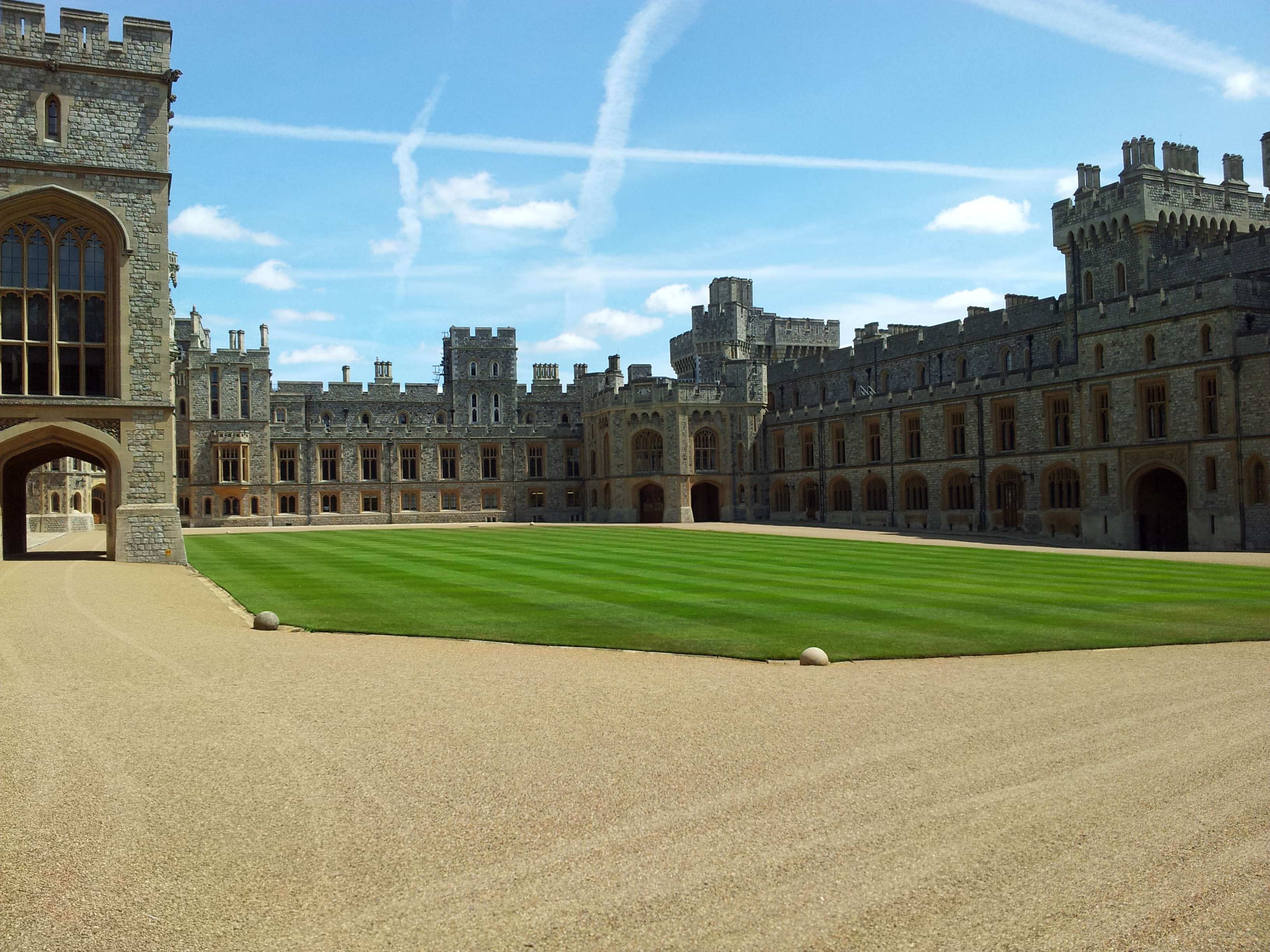
Searching for locations: Windsor Castle, London, England

A fine day, on this trip a rarity, we decided to take the train to Windsor and see the castle.

This is a real castle, and still in one piece, unlike a lot of castles.

Were we hoping to see the Queen, no, it was highly unlikely.

But there were a lot of planes flying overhead into Heathrow.  The wind must have been blowing the wrong day, and I’m sure, with one passing over every few minutes, it must annoy the Queen if she was looking for peace and quiet.

Good thing then, when it was built, it was an ideal spot, and not under the landing path.  I guess it was hard to predict what would happen 500 years in the future!

2013-06-30 12.09.56

I’m not sure if this was the front gate or back gate, but I was wary of any stray arrows coming out of those slits either side of the entrance.

You just never know!

2013-06-30 13.58.11

An excellent lawn for croquet.  This, I think, is the doorway, on the left, where dignitaries arrive by car.  The private apartments are across the back.

2013-06-30 13.58.00

The visitor’s apartments.  Not sure who that is on the horse.

2013-06-30 14.07.25

St George’s Chapel.  It’s a magnificent church for a private castle.  It’s been very busy the last few months with Royal weddings.

2013-06-30 12.12.29

The Round Tower, or the Keep.  It is the castle’s centerpiece.  Below it is the gardens.

2013-06-30 13.59.57

Those stairs are not for the faint-hearted, nor the Queen I suspect.  But I think quite a few royal children and their friends have been up and down them a few times.

2013-06-30 12.13.04

And well worth the effort to reach the bottom.

2013-06-30 14.00.40

Any faces peering out through the windows?

The cinema of my dreams – I always wanted to write a war story – Episode 24

For a story that was conceived during those long boring hours flying in a steel cocoon, striving to keep away the thoughts that the plane and everyone in it could just simply disappear as planes have in the past, it has come a long way.

Whilst I have always had a fascination with what happened during the second world war, not the battles or fighting, but in the more obscure events that took place, I decided to pen my own little sidebar to what was a long and bitter war.

And, so, it continues…


While waiting for Carlo and Chiara to return with the villagers, and taking some time to consider the plan that had almost formed in my mind, I went back to my room, which, I was guessing was once used for wine storage, because now that I had taken a moment to stop and consider my surroundings, I could smell the aroma of spilled wine.

With a little more light, I could see the arches within which the bottles would be stacked.  I’d also noticed while I’d been outside, that there were vines everywhere, albeit in bad shape as the people who tended them had either left, or been taken away, or shot.

Red grapes if I was not mistaken, though I had no idea what the variety might be.

If the war dragged on much longer, it would do a lot of damage to the wine-growing districts, and I doubted, when the Germans were here, they had any interest in tending the vines, but just drink the wine, and then probably not with the appreciation it deserved.

That had certainly been the case up at the castle before fate turned against me.  Perhaps that was where all of the wine from this cellar had been taken for safekeeping, once the locals thought the Germans had gone forever.  Maybe that was the reason why Leonardo spent so much of his time at the castle, the free wine.

Jack had returned from what I assumed was an inspection of our new quarters and was sitting on the ground next to me.  I wondered what he made of everything he had seen.  It was certainly not a dog’s life being caught in the middle of a war.  

“It’s a fine mess we’re in,” I said to him, and he looked back with uncomprehending eyes.  I would have to brush up on my German.  Or maybe Italian.  It only just occurred to me that he was probably someone’s dog from around here.  We’d only run into each other a few miles away.

“Yes, and I’m sure if you spoke English you could tell me a thing or two.  But, alas, you can’t, so a piece of advice.  Try to keep out of trouble, and by that, next time I go out, you might want to stay here.”

I shrugged.  Things must be bad; I’m talking to a dog.

Martina stopped outside the entrance.  “I heard voices.  Who are you talking to?”

“The dog.  He’s the only one who’s making any sense at the moment.”

“Are you sure he’s not a German spy.  Or, in fact, it’s a he?”

“You probably know as much as I do.  Anything happening?”

“Carlo’s back with a dozen or so of those who want to stay alive.  Chiara has a few more.  The rest have other places to hide if they need to.  We’ve told them to expect a raid.  Leonardo and a few of his men have been out looking for you and told everyone that you are a German spy and that he’ll pay them a lot of money for information about where you are or who’s hiding you.  He doesn’t understand everyone hates him, they always have.”

“Good to know if I run into him, he won’t be happy to see me.”

“This plan of yours?”

“Wallace will be getting edgy about the men he sent out, those men we ambushed at Chiara’s place.  It depends on who he sends, and where they go, but I was thinking we could prepare another ambush at Chiara’s.  All we have to do is wait because I’m sure they’ll get there eventually.”

“And if I know Leonardo, he’ll send them straight to my farm.  He knows that both Carlo and I, and the other two you’ve met were the other four who refused to join him in going up to the castle to make peace.  It seems he’s made a bad choice.”

“Wallace didn’t.  He needs someone like Leonardo to find us.  You’re probably right.  I was thinking Carlo and I could go.  No sense sending all of us, and if anything happens, there will be someone left to carry on.”

“You don’t sound too confident.  You are a soldier, aren’t you?”

“In a manner of speaking.  But I was not trained to be a commando, and not necessarily on the front line, or in this case behind enemy lines.”

“You’re not one of those rich kids whose father bought a commission, so you didn’t have to fight?”

Interesting the ideas foreigners had about elements of the army.  I was not sure if that was done anymore, at least not in this war.

“I have poor parents, that is if they have survived the bombs falling on London.  Refused to give in to Hitler’s aggression.”

I tried to convince them to go to the countryside, just to be safe, but one of the places they thought of going, had also been bombed, so as far as they were concerned, nowhere in England was safe.

“But yes, they did teach me how to shoot, and I know my way around several different types of gun.”  My mind flicked to the sniper rifle and the damage that could do.  

I’d be definitely taking that with me.

I saw her turn her head, and then heard the sound of new arrivals.  Chiara had returned.

“Time’s up for planning.”

I told the dog to stay, but as usual, he ignored me.  We went back into the main cavern where a dozen more people were settling in various places along one wall.  They looked as though they’d packed for a reasonably long stay.

But what worried me was the way they looked at me.  Those rumors Leonardo spread, I was hoping no one believed him.  Above the sound of voices, I could hear Marina speaking to them in Italian, hopefully, to tell them I was not a threat.

I found Carlo. 

“I have a small job to do.  After our last exercise at Chiara’s my old commander will no doubt send someone down to the village to seek answers, and I’m hoping you’ll come with me so we can convince them of the error of their ways.”

He smiled.  There was no mirth in it, and I knew I didn’t have to say anything more.

I saw movement coming from a group of people, and among them the boy I’d met earlier, Enrico.  He had jumped up off the floor when he saw me and came over.

“What are we going to do now.  I mean, we’re not going to sit here and do nothing.”

Boyish enthusiasm.  He had not been shot at yet, and to him, it was all a bit of a game.  I remembered back to the start of the war, and the number of boys who lied about their age, hardly waiting for the war to be declared.  They had no idea what a real war was, and if they had known, they would not have been so recklessly enthusiastic.

“You’re going to stay here and protect your family and all the others here.”

“No.  I want to be useful, fight the bastards.”

Carlo gave him one of his dark stares.  “You will stay here and help others if anything goes wrong.  Out there,” he pointed towards the entrance, “out there, if you’re not careful, you will die.”

Martina had seen him talking to us and came over.

“Enrico, we’ve talked about this.  Go back to your family.”

A last pleading look in case we changed our minds, then he reluctantly returned to his group.

Carlo handed me the sniper rifle and a pistol, a luger, probably captured from a German earlier, when they were in occupation.

“Good luck,” Martina said.

© Charles Heath 2019-2020
Questions, sometimes without answers

#Creative Writing, #Blog, #Writing

At what point does a writer become a journalist?

Quite often journalists become writers because of their vast experience in observing and writing about the news, sometimes in the category of ‘truth is stranger than fiction’.

I did journalism at University, and thought I would never get to use it.  I had to interview people, write articles, and act as an editor.  The hardest part was the headlines.

How much does that resemble the job of coming up with a title for your book?

Well, several opportunities arose over the last few months to dig out the journalist hat, put it on, and go to work.

Where?

Hospital.  I’ve had to go there a few times more in the last few months than I have in recent years.

And I’d forgotten just how hospitals are interesting places, especially the waiting room in Emergency.

After the second or third visit, I started to observe the people who were waiting, and ran through various scenarios as to the reason for their visit.  None may have been true, but it certainly was an exercise in creative writing, and would make an excellent article.

Similarly, once we got inside the inner sanctum, where the real work is done, there is any number of crises and operations going on, and plenty of material for when I might need to include a hospital scene in one of my stories.

Or I could write a volume in praise of the people who work there and what they have to endure.  Tending the sick, injured and badly injured is not a job for the faint hearted.

Research, if it could be called that, turns up in the unlikeliest of places.  Doctors who answer questions, not necessarily about the malady, nurses who tell you about what it’s like in Emergency on nights you really don’t want to be there, and other patients and their families, all of whom have a story to tell, or just wait patiently for a diagnoses and then treatment so they can go home.

We get to go this time about four in the morning.  Everyone is tired.  More people are waiting.  Outside it is cool and the first rays of light are coming over the horizon as dawn is about to break.

I ponder the question without an answer, a question one of the nurses asked a youngish doctor, tossed out in conversation, but was there a more intent to it; what he was doing on Saturday night.

He didn’t answer.  Another crisis, another patient.

I suspect he was on duty in Emergency.

The cinema of my dreams – I always wanted to write a war story – Episode 23

For a story that was conceived during those long boring hours flying in a steel cocoon, striving to keep away the thoughts that the plane and everyone in it could just simply disappear as planes have in the past, it has come a long way.

Whilst I have always had a fascination with what happened during the second world war, not the battles or fighting, but in the more obscure events that took place, I decided to pen my own little sidebar to what was a long and bitter war.

And, so, it continues…

Wallace wasn’t the most patient of men, and after planning what seemed, to him, as the easiest of operations, was beginning to think otherwise.

First of all, he had underestimated Atherton.  It was part of the plan to have London send him out, having, himself raised suspicions about the allegiances of the men who were in the castle.  They were, of course, British, but only he knew of their allegiance to the Reich.  That’s why he’s organized for Johannsson to be sent, and then for Jackerby to ‘stage’ a battle to consolidate London’s impression that it was being held by them, for the express purpose of repatriating defectors the allies.

Nothing, of course, could be further than the truth.  Since their arrival, only a few had been processed, just to keep London’s suspicions at bay, but the truth was, about a dozen more had been repatriated back to the Reich.

Wallace had ordered Johansson to make sure Atherton never made it to the castle, and Johansson, in turn, had given the responsibility to the resistance members, to take care of the problem, telling them Atherton was suspected of being a German spy.

Getting the local resistance on side proved to be a good idea, as it was they whom the defectors were expecting to meet when they arrive in the village.  And, as far as he was aware, Leonardo and his men had no idea who they were really working with.

Not that it would matter for much longer.  All he had to do was collect the Reich Marshall, and then he and his men were to escort him back to Germany.  He had the Fuhrers signed orders in his pocket.

There was only one wrinkle in the carefully planned operation.  The man who could recognize the defector was missing.

And, then a second wrinkle, the men he sent to find the lovesick fool were taking a long time to find a single man, though he was beginning to think there was something else going on, something that Leonardo hadn’t told him.

Johansson had said he didn’t believe all of the resistance members had signed on, even though Leonardo had told him they had.  Otherwise, how could Atherton disappear?  It was not likely that any of the villagers would harbor any soldier whatever side he said he was on.  

It was time to find out what Leonardo hadn’t told them.

He had sent Jackerby to fetch the man.  That was something else he didn’t quite understand.  Why were Leonardo and his men staying at the castle?  Didn’t they have homes in the village?  And didn’t they want to keep at arms’ length from whoever was running the castle in order to display neutrality?

Johansson had also told him he thought Leonardo was not the smart sort of person it would take to run a resistance operation, and that he believed there were some others still in the village who were once members, and who could also become a problem.  One of the reasons why Leonardo was at the castle was the fact he reported the radio provided by London had become inoperable, and the only other one was now at the castle, his main reason for being there.

He heard Leonardo long before he saw him.  A large bear-shaped man with a booming voice, a man who liked his wine in vast quantities, and had no qualms about emptying the cellar of the castle at any opportunity.  This late in the day, there would be fewer bottles.

Jackerby came into the room first, followed by Leonardo.

“You want me to stay?” Jackerby asked.

“By the door.”

Leonardo stopped by the table and then leaned on it.  “What this about?”

It was hardly a conciliatory tone, but Wallace ignored it.

“You tell me that all of the resistance members are here, but that’s not quite the truth is it?”

“Are you calling me a liar?”  

Belligerent, too, Wallace thought, but that would be the wine talking. 

“I could have you shot, so I suggest you use a more respectful tone.  You heard the question, now I want an answer.”

To emphasize the point, he took out his handgun and put it on the table where Leonardo could see it.  He could see Leonardo look at it, then back at him.

“Some of them didn’t have the stomach for it.  When you arrived here, most of us realized the fight was over.  Only I could see how we could be useful to our allies.”

“How many didn’t, as you say, have the stomach for it?”

“Three or four.  Women and a gardener, nothing that would cause anyone a problem.”

Nothing that would cause anyone a problem.  Johansson was right, the man was a fool.

“Well, it seems they are a problem, and you are going to fix it for me.  We don’t need problems, Leonardo.”

“I don’t understand.  They were on our side.”

“Seems they are not any longer.  We are expecting a high-value defector, and it seems that the Germans have recruited them to foil our operation.”

“The Germans?  There are no Germans here.”

“It seems I was mistaken about Atherton’s allegiance.  It appears he’s working with the Germans and is now actively working with those women and the gardener and causing us problems.  We’ve lost a man, and the three others we sent after him are overdue coming back.  I need you to go down to the village and find out what’s going on.”

“Isn’t that your job.  You have the soldiers and the guns.”

“We have orders to stay in the castle and wait for the defector to arrive.  That leaves you and your men.  Besides, you should be able to move more freely and unsuspected among your own people, and therefore make it easier than it would be for us to find this Atherton.  And when you find him, I want you to bring him to me alive.  Am I clear?”

It was clear to Wallace but it was not clear to Leonardo, he would do as he was told.  Or perhaps he should shoot him as an example to the next man, who no doubt would do his bidding.

“Yes.”

“Now would be a good time to get going, don’t you think?”

Leonardo was going to say something to him, Wallace could almost see the cogs turning in his head, but in the end, shrugged.

“Is there a reward for this Atherton then?”

Wallace nodded.  “Just bring him to me alive, and we’ll discuss it then, but I’m sure something can be arranged.”  He should have guessed Leonardo’s measured reluctance was all in aid of putting a price on Atherton’s head.

When they finally left the castle, he would make sure Leonardo got what he deserved.


© Charles Heath 2019

You can research anywhere, even in a, er, waiting room

Watching the doors that lead to the consulting rooms is about as exciting as watching pigeons standing on a window ledge.

But…

When you have little else to do while waiting to see the doctor, it can take on new meaning, especially if you don’t want to be like 95% of the others waiting and be on their mobile phones.

What you basically have is a cross-section of people right in front of you, a virtual cornucopia of characters just waiting to stay in your next novel, of course with some minor adjustments.  It’s the actions and traits I’m looking for, and since it is a hospital, there’s bound to be some good ones.

It’s a steady drip of patients getting called, and it seems like more are arriving than being seen, and those that are being called have arrived and barely got to sit down, whilst a steady core has been waiting, and waiting, and waiting…

Everyone reacts differently to waiting.

A lady arrives, walking tentatively into the waiting area.  It’s reasonably full so the first thing she does is look for a spot where she doesn’t have to sit next to anyone else.  I’m the same, nothing worse if you sit next to a talker, and getting their life history.

Another sits, looking like they’re going to read, they brought a book with them, but it sits on her lap.  The phone comes out, a quick scan, then it remains in hand.  Is she expecting a call or text wishing her luck?  It’s not the oncology clinic so she doesn’t have cancer.  Hopefully.  The fact she brought a book tells me she’s been here before and knows a 9:00 appointment is rarely on time.

As we are discovering.

A couple arrives, maybe a mother and daughter, maybe a patient and her support person.  Both of them don’t look very well do it’s a toss-up who is there to see the doctor.

Next is a man who could easily pass as living on the street.  It’s probably an injustice to say so, but his appearance is compelling, and I’m not the only one.  He sits and the person next to him gets up, apparently looking for something, then moves subtly to another seat.  Someone else nearby wrinkles her nose.  Two others look in his direction and then whisper to each other.  No guesses what the subject is.

More arrive, fewer seats, some are called, but everyone notices, and avoids, the man.

The sign of the door where the stream of patients are going, says no entry staff only, and periodically a staff member comes striding out purposely, or sedately, clutching a piece of all-important paper, the sign of someone who knows where they’re going, on an important mission.  Names are being called from this door and various other sections of the room, requiring you to keep one ear open.

It seems all hospitals are branches of the United Nations, medical staff, and particularly doctors, are recruited from all over the world, and it seems to be able to speak understandable English is not one of the mandatory requirements, and sometimes the person calling out the name, has a little difficulty with the pronunciation.

Perhaps like the UN, we need interpreters.  No, most of the names are recognizable until there is a foreign name that’s unpronounceable, or a person with English as a second language calls an English name.  It makes what could be an interminable wait into something more interesting.

And then there are the people who have names that are completely at odds with their nationality.  They are lucky enough to have the best of a number of cultures, and perhaps a deeper level of understanding where others do not.  I’m reminded never to judge a book by it’s cover.

When there is a lull in arrivals and call-ups, there’s the doctor in consult room 2.  He’s apparently the doctor with no patients and periodically he comes out to look in his pigeonhole, or just look over the patients waiting, and more importantly checking the door handle when not delivering printouts to the consulting room next door.

He’s a doctor with no patients, get my drift.  Well, that joke fell very flat, so, fortunately, he comes out, a piece of paper in hand, and calls a name.  His quiet period is over.  Someone else will have to look at the door handle.

But we’re still waiting, waiting.

It’s been an hour and four minutes, and a little frustrating.  Surely when you check-in they should give you an estimated waiting time, or better still how many patients there are before you.

I guess its time to join the rest and pick up the mobile phone.

The good news, I only got to type one word before my name was called.  By a person who could pronounce it correctly.

The doctor, well that’s another story.

The cinema of my dreams – I always wanted to write a war story – Episode 22

For a story that was conceived during those long boring hours flying in a steel cocoon, striving to keep away the thoughts that the plane and everyone in it could just simply disappear as planes have in the past, it has come a long way.

Whilst I have always had a fascination in what happened during the second world war, not the battles or fighting, but in the more obscure events that took place, I decided to pen my own little sidebar to what was a long and bitter war.

And, so, it continues…


When we arrived back at the underground site Martina was waiting, and it was clear she was extremely annoyed.  Word, somehow, had filtered back of what just happened.

“Are you totally mad?” she snarled.  “You know what’s going to happen now?”

I had a good idea but chose not to speak.

“They got what they deserved,” Carlo said.  “They found the missing man that you left on the side of the road, by the way, and it was lucky we were there when they found him.  Whether they believed it was an accident or not, they were heading to Chiara’s, and we had to do something about that.”

“And you didn’t think that might have consequences?”

I think all of us had considered what would happen as a result of what could only be described as an ambush.  And, while I thought, as no doubt the others had also, it might lead to retribution killings, it might not.  Wallace could not afford to be seen acting like the Germans, who certainly would have lined up a dozen villagers and shot them and might not do anything.

But, when he realised I was involved, and that the so-called remnants of the resistance could and were willing to cause him trouble, he would have to do something about it.  Especially with a high-value defector coming his way.

“Wallace certainly can’t do anything about it, other than come and ask questions.  He can’t afford to be seen acting as anything but a British officer.”

“But he could get Leonardo and his men to do it for him.”

“Surely he wouldn’t kill the same people he’s lived with all his life.”

“Leonardo’s allegiance’s go to anyone who hands him a free meal ticket.  Until the so-called British arrived at the castle, it was fine to be the resistance because he was being paid handsomely for his help.  When the Germans left the castle, he considered his job was over, and we all went our different ways, hoping the war was over for us.  Of course, that was only wishful thinking.  Even when the British turned up at the castle, with the express intention of capturing and repatriating to England any Germans who wanted to defect, his advice was to let them do what they want.”

“What changed?”

“The man in charge, Wallace you call him, sent out a message for those who had been in the resistance to come up to the castle to talk.  Leonardo thought it might be an opportunity to get back on the payroll.  Carlo and I and several others didn’t go.  There they were told they would be paid for each defector they collected and brought to the castle.”

“Didn’t he think that might be a little suspicious since it was just as easy for Wallace to send his own people to collect them, and not have to pay anything?”

“Now that we know they are Germans masquerading as British, it makes sense.  But Leonardo is little more than a fool and greedy.  He doesn’t care who pays so long as they pay.  I suspect he has no idea who he’s working for, or what happens to the people he collects.  Anyone who opted out of the new arrangement seems to have disappeared.”

“Many?”

“Three that we know of.  They’re probably locked in the dungeons with the others you saw there.”

“How come he hasn’t come after you?”

“Too much trouble, and possibly because it’s a fight he can’t necessarily win.”

“He might not have a choice now.  Wallace is going to have to do something about us, simply because he can’t let the defectors fall into our hands, and especially now that we know that’s why he’s here.”

“Then if it’s a fight he’s looking for, then we’ll have to give him one.”

“On that, I just had a thought on how we might be able to even up the odds a little, but I have to give it a bit more thought.”  

An idea came to me, one that might just work because I was counting on the fact Wallace would have to do something and depending on… “In the meantime, we have to do something about the rest of the villagers, just in case I’m wrong about Wallace.  How many people are left in the village?”

“About twenty.  All the rest scattered when the Germans came the first time, and half of those that remained were killed for one reason or another.  The previous commander of the castle frequently lost it when any of us refused to co-operate.”

“Then send Carlo out to round them up and put them somewhere safe.”

“There are no safe places anymore,” Carlo said, “None that they don’t know about.”

“What about here?”

“It’s the only place we have left that no one knows about.”

“Well, you don’t have much of a choice.”

Martina was not happy.  Her isolated resistance effort was steadily becoming a large-scale attack, not the sort of operation she had intended.  But I don’t think it would have stayed that way for very long, given Carlo’s actions.

She turned to Carlo.  “Go and round them up and bring them here.”

“And if they refuse?”

“Then we’ve done all we can for them.  But tell them that it’s a distinct possibility they will die if they stay where they are.  Take Chiara, and hurry.  I doubt it will be very long before the castle finds out what happened to their men.”

Carlo and Chiara grabbed a weapon each and left.  When they returned, it would be to formulate a plan to take down Wallace and the others at the castle, hopefully before the defector arrived.

That plan that was evolving in my mind didn’t exactly involve the villagers, but the three or four remaining members I was now working.  Leonardo might not know of all of them, or even if he did, one of them would be Wallace’s first calling point.  It just depended on who he sent.

And if I was a betting man, and if he knew that one of his men was ‘seeing’ Chiara, then that’s where they would go.

The only question to be asked at this point, would we be too late to take advantage of an opportunity to reduce the odds?

© Charles Heath 2019