Writing about writing a book – Day 21 continues

I’m still working on Bill’s backstory, and how he got mixed up in the war, and as a general background to his situation, and life before Davenport.

This is still in his own words:


But whether we were stupid or naive, or completely mad, we were all eager to get into battle, filled with the sort of hate only Army propaganda films could fill you with.  They were our enemy, and they deserved to concede or die.

A fresh face in a hardened platoon, I was eager to get on with it.  They looked knowingly, having seen it all before.  No idea of the reality, and no time to tell us.  Have a few beers to celebrate, and then, the next morning, go out on patrol.  No problem.

There was camaraderie, but it was subdued.  We walked single file, the seasoned campaigners in front and at the rear, treading carefully, demanding quiet, and a general cautiousness.  In the middle of nowhere, where only the sound of rain, or the animals and birds for company, we were naive enough to think this was going to be a doddle.

Then it happened, six hours out, and just before we reached a small clearing.  I thought to myself it was odd there should be such a clear space with jungle all around it.  There must be a reason.

There was.

We had walked into an ambush, and everyone hit the ground.  I was bringing up the rear with another soldier, a veteran not much older than myself whose name was Scotty, a little farther back from the main group.  Bullets sprayed the undergrowth, pinging off trees and leaves.  I buried my face in the dirt, praying I would not die on my first patrol.

We became separated from the others, lying in a hollow, with no idea how far away help was.  He was muttering to himself.  “God, I hate this.  You can never see the bastards.  They’re out there, but you can never bloody well see them.”  Then he crawled up the embankment, gun first.

He let off a few rounds, causing a return of machine-gun fire, spattering the dirt at the top.  Next thing I knew he was sliding down the hill with half his face shot away.  Dead.  I threw up there and then.  What an initiation.

Then one of the enemy soldiers came over the hill to check on his ‘kill’.  I saw him at the same time he saw me and aimed my gun and shot.  It was instinct more than anything else, and I hadn’t stopped to think of the consequences.  He fell down, finishing up next to me, staring at me from black, lifeless eyes. 

Dead. 

I’ll never forget those lifeless eyes.  I just got up and ran, making it back to the rest of the group without getting hit.  No one could explain how I made it safely through the hail of gunfire, from our side and theirs.

Back in the camp later, the veterans remarked on how unlucky Scotty was and how lucky I was to shoot one of the enemies, and not be killed myself.  They all thought it was worth a celebration.

Before we went out the next day to do it all again.

I spent the night vomiting, unable to sleep, haunted look on his face, one I finally realized that reflected complete astonishment.


There will be more, as the story develops.


© Charles Heath 2016-2020

In a word: Port

So, I wonder if it’s true, any port in a storm, except perhaps Marsailles

Or, if you are a lothario type sailor, you would have a girl in every port.

Yes, the most common definition of a port is a place where ships dock.

And, while talking of ships we don’t call the sides left and right, we call them port and starboard.  Just in case you didn’t know, port is the left side of the ship when facing forward.

And of course, ships have portholes, ie windows, traditionally round and rather small.


It could be an alcoholic drink, imbibed mostly after dinner with coffee and cigars, though no one seems to smoke cigars any more.

There is still coffee, for now.  No doubt sometime in the future someone will link it to death and dying, and it will fall out of favour, like sugar, weedkillers and asbestos.

The best port seems to come from Portugal, strange about that.


You can port a program (app in phone speak) from one platform to another, which basically means from Android to Apple IOS, but not without a reasonable amount of work.

It can also be an outlet plug on a computer that accepts cables from other devices (USB) and many years ago, a printer port, and a serial port.


In certain places in the world a port is a child’s schoolbag, a definition I was not aware of until we moved to a different state.

I’m still having a problem with it 30 years on.

Conversation with my cat – 82

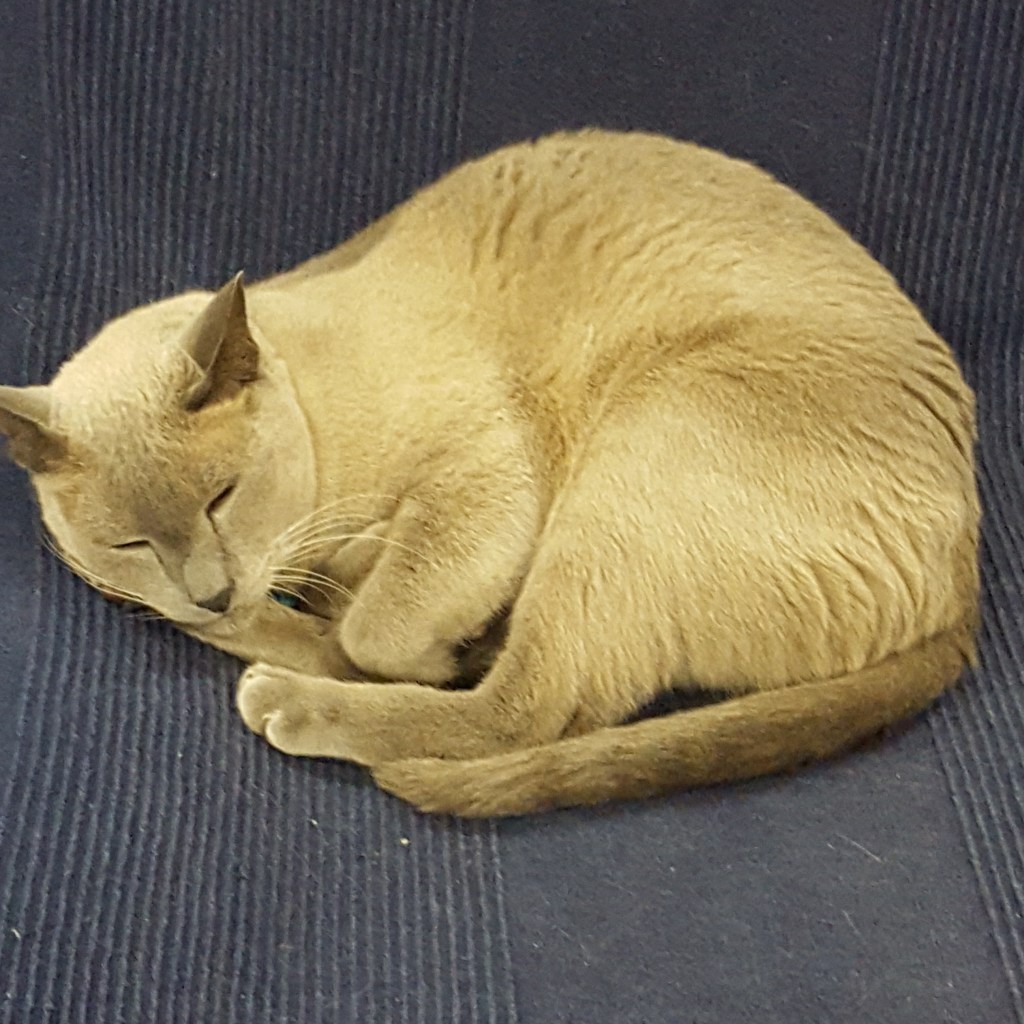
This is Chester.

It’s been a long summer, and it’s not only the heat that’s been bothering him.

It’s been school holidays, and along with many households where it’s not possible for parents to go on holidays, it falls to the grand parents to mind children. It’s a job I take seriously, and also a time to be spent with them before they grow up and disappear into the adult world.

Chester, however, only sees it from a cat’s point of view. To him, they’re trouble, but perhaps not without reason. They did torment him something terrible when they were young.

Of course, what he fails to realise is that children when young don’t quite understand animal etiquette, that is they should be treated with care.

But, I said in their defence, when you were a kitten you were an absolute monster, sinking your claws into everything, ruined lounge chairs and curtains, unravelled balls of wool, and, this was the cruncher, refused to chase mice.

Of course, as usual, when the arguement goes against him, those eyes close, and he pretends he’s asleep. It doesn’t fool me. But once that happens, no one scores any points.

And something else I’ve noticed, his memory is fading.

Of course, I didn’t tell him that they don’t officially go back till Wednesday, so he’s in for a surprise tomorrow morning.

More on the January update…

There is more going on on the story front, and just to keep my mind active, or tortured, as the case may be, there are a number of other stories I’m working on.

In particular, there is the story with the description, what happens after an action-packed start.

Quite a lot. In the third section of the story, episodes 31 to so far 44, we have flown into northern Nigeria, and then crossed into the Democratic Republic of the Congo, in search of two men being held to ransom.

Previous attempts to rescue them had failed, this one had to succeed. It’s a matter of dealing with local militias who are tricky to deal with and then get out of the country after affecting the rescue.

At times, while writing it, looking at a map and using google earth to see what it is like, I felt like I was there looking down the barrel of a gun, and then, in the helter-skelter of getting to the evacuation point, I’m sure my heart rate had lifted considerably.

Right now, they’re about to get on the plane, back in Nigeria, but there’s a wrinkle, the kidnappers and the army are not happy and are sending troops in by helicopter.

Just imagine this …

A DC3 versus a very maneuverable helicopter. Stay tuned.

Next is the surveillance story where nothing is as it seems, which in the espionage business is nothing unusual. Nor is the fact you cannot trust anyone.

It starts out as a routine surveillance operation until a shop front explodes a moment or two after the target passes it. In the ensuing mayhem, the target reappears, now in fear of his life, and our main character tracks him to an alley where he is murdered before his eyes.

Soon after the two men whom our main character is working for appearing and start asking questions that make our main character think that they had perpetrated a hit on him, and decides that something is not right.

From there, the deeper he probes, the more interesting the characters and developments. Who was the target? What was he doing that got him killed? What did he have that everyone wants?

I’m about to start on the next phase of this story…

Then there is what I call comic light relief, the writing of stories inspired by photographs I’ve taken. Some, however, have exceeded the 1,000-word limit that I’ve set, only because I want to explore the story more, and some are spread over a number of stories.

The first book of stories, 1 to 50 are to be published next month. Currently, I’m working on number 93 of the second volume of stories, but number 88 is my favorite so far, simply because it involves a starship.


A matter of life and … what’s worse than death? – Episode 25

For a story that was conceived during those long boring hours flying in a steel cocoon, striving to keep away the thoughts that the plane and everyone in it could just simply disappear as planes have in the past, it has come a long way.

Whilst I have always had a fascination with what happened during the second world war, not the battles or fighting, but in the more obscure events that took place, I decided to pen my own little sidebar to what was a long and bitter war.

And, so, it continues…

Rolf Mayer had always had a dream to travel to other planets, and when he heard that the government was putting together a team of scientists with the express intention of building rockets, he gathered up his few belongings and traveled to Pennemunde to join the group being led by Werner von Braun.

At first, he had been turned away, but a chance meeting with von Braun changed his fortune.  

But, when Adolf Hitler came to power, it seemed that quest to reach the other planets became a quest to build a military weapon that would devastate an enemy city.  He had expressed his opposition to the project, but that was silenced when some Nazi party officials came from Berlin to give those scientists with reservations an ‘attitude readjustment’.

From then on all of the scientists knew when their allegiances lay and that there would be no time for traveling to the stars, even though, secretly, he drew on the experience and knowledge of the rockets they were building and testing to design his own rocket.  One day.

Then, as if only weeks had passed, the war had been declared, and the scientists had to work harder on creating a weapon which, in its first instance became known as the V1 flying bomb.  V, of course, stood for vengeance.

Later, when the enemy had bombed Pennemunde out of existence they moved to Nordhausen.  This place was different, underground where it could not be bombed, but there was something rather sinister about it.  Slave labor, prisoners from a local concentration camp were forced to work there, and the souls that he saw were not fit for work, or for anything else.

At Nordhausen, they worked on the V2 rockets, rockets in the true sense of the word, and it was abhorrent to him that they should be used for wholesale murder rather than their true purpose.  A promotion to Haupsturnfuhere in the SS and making him responsible for the horrific crimes being committed against humanity was the last straw.

He had enough information to create his own rocket based on the success of the V2, and it was time to leave, get away from this place before it killed him too.  There was only one problem, the real SS was watching, everyone and everything.  They trusted no-one, not even their own fellow officers.

Mayer was one of the scientists lucky enough to get a billet to the town nearby.  It was quiet enough, but he believed everyone living there knew what was going on, and worse, they knew about the concentration camp and the evil that went on inside.  Worse still, he knew everyone was watching everyone else, and reporting back to the SS anything out of the ordinary, including newcomers.

One such man came into the town, dressed as Obersturnfurer with one other SS officer in a car.  Everyone knew how impossible it was to get fuel, or if you had a car, a permit to use it except for essential services, or if it was requisitioned.

They were SS, so no one questioned why they were there.  But that didn’t mean that whispers of their presence didn’t filter around the town.  Just the very mention of the SS gave most people cold shivers.

Mayer heard about the two mysterious visitors when he arrived downstairs where he was lodging.  

“They were asking about the people staying here and wanted to see their papers.  I think they’re looking for someone, someone from the factory.”

“Nonsense.  They’re probably here to see some of their friends up at the camp.”

With that, he dismissed the visitors from his mind and went up to his room.  He unlocked the door and went in.  A moment later he realized his room had been thoroughly searched, and the mess left as a warning.  Had someone told the SS of his discontent.  He hadn’t said as much, but attitude and body language would have told a different story.

Then the door closed behind him with a bang, and the moment a hand touched his shoulder he jumped in fright.

There’s been a man behind the door.

“I suggest you do not speak or do anything that might bring attention to us.  Am I clear?”

Mayer nodded.

“Good.”

Another man, dressed in the uniform of a SS Standartenfuhrer, stepped out of the shadows in front of him holding a folder, the folder that contained his drawings and specifications for a more advanced V2 rocket,

Condemning evidence of him being a traitor to the Reich unless he could put a different spin on it.  He waited to see what the Standartenfuher had to say.

“This is damning evidence of your traitorous behavior.  We received information that you were stealing secrets from the Reich?  For whom, Mayer?  The British or the Americans?”

“I did not steal anything.  I work on the plans here in my spare time, away from that place.”  He realized the moment he said it, it might not be the best idea to be critical of anything, because it was always taken as a criticism of the Reich itself.

“Are you displeased with your working environment.  No one else has raised such issues.”

“No, no,” he added hastily, “it was not what I meant.  It’s just difficult to think clearly on problems when we’re under so much pressure.”

The Standartenfuhrer shook his head.  “Enough Mayer.  You are coming with us to explain yourself.”

“You need to clear this….”

“We don’t need anyone’s permission, Mayer.  We walk out of here, into the car, and not a word to anyone.  Any trouble I will not hesitate to shoot you.  Understand?”

Mayer nodded.

This wasn’t good.  Arrested by the SS.  There could be only one outcome.  It wouldn’t matter what he said, it would be the cells and then the firing squad.  He’d heard the rumors.

The other SS officer went first, the Mayer, then the Standartenfuhrer, down the stairs and past the owner of the boarding house.  The Standartenfuhrer stopped, and said, “This man’s papers, now.”

The owner stepped back into a room and came out a minute later and handed the Standartenfuhrer the document.

“No one is to be told what happened here.  Not unless you want us to come back and arrest your family.”

“Yes sir,” the owner said, very scared.

The proceeded to the car, got in, Mayer in the back with the Standartenfuhrer, and they drove off.  Only two people saw the whole event, and because it was by the SS, they were not going to tell anyone.

“Where are we going?” Mayer asked.

“Headquarters.  You will be wise to sit, be quiet and say nothing under any circumstances.”

Headquarters was in Berlin, at least that’s where he went to be made an officer of the SS, as a Hauptsturmfuhrer to give him the necessary authority to take charge of certain aspects of the production process of the V2 rockets.

And that included work on improving the guidance system.

But, he noticed they were not going north, but south.

© Charles Heath 2020
In a word: state

I think it’s stating the obvious, we are expressing something definitively and clearly.  I stated my case, but it was not good enough to save me from the hangman’s noose.

Or, they stated their case, but with an unforgiving government, it didn’t save them from being deported.

Or maybe not, maybe a state is a territory or nation under one government, though sometimes we might think that governance is not all that great

But it could also mean a subdivision within a single country, like the 52 states of the US, and the 5 states in Australia

And woe betide you if you become a state-less person, it means living in the international transit lounge for the rest of your life.

Or it might be how I feel at the time, you know, I’m not in a fit state of mind to be writing this post, or that I might be agitated, with someone else saying ‘he’s in a state’, or having said something quite odd, it might be said that my state of mind is clouded by grief.

If I was an important person, such as a king or prince, and had the unfortunate luck of dying, I could lie in state, though I could never understand why you’d want to hang around after you died.


Writing about writing a book – Day 21

I’m back to writing Bill’s backstory, and how he got mixed up in the war, and a few other details which will play out later on.

This will be some of it, in his own words:


I think I volunteered for active duty in Vietnam.

It was either that, or I had been volunteered by my prospective father in law.  I was serving under his command in an Army Camp for some time, and unbeknownst to me for a time, I had been dating his daughter.

The daughter of a General.  It was like that old adage, ‘marrying the bosses daughter’.  Only this boss was the bastard of all bastards.  When he found out, my life became hell.  He told me, as a Corporal, I was far beneath his expectations of the right man for his daughter.  He thought she would be better off with a Colonel.

Then I got my orders.  I was to join the latest batch of nashos on their way to the latest theatre of war.  But before that, Ellen, a woman with a mind of her own, and sometimes daring enough to defy her father, said we should get married, and I being the young fool I did, in a registry office, the day before I left for the war.

I promised to be faithful, as all newly married men did, and that I would come back to her.  We had all heard the stories coming out of South East Asia, where the war was not going so well, for us, or the Americans, and that this was a last-ditch effort.

When we landed, we were greeted by the men leaving.  They were glad to be going home.  And some of the stories, I chose not to believe them.  Nothing could be as bad as they painted it.

Could it?


I’d been trained for war.  I could handle a weapon, several actually, and or I could if I had to kill the enemy.  After all, it was my job.  I was defending Queen and country.

I was a regular soldier, not a nasho.  Not one of the mostly terrified boys who’d hardly reached anything approaching manhood, some all gung-ho, others frightened out of their minds.  As a regular soldier, this was where I was supposed to be.

But being sent to a war to fight, and having to fight, I soon discovered were two very different things.  On the training ground, even training with live ammunition, being shot at, mortared, and chased through the jungles of North Queensland, it was not the same, on the ground in Saigon.

It was relentlessly hot, steamy, raining, and fine.  Or dry and dusty.  But in any of the conditions, it was uncomfortable being hot all the time.  During the day, and during the night.

Then we were sent out to join various units.  Mine was north, where, I wasn’t quite sure, where the motley remains of the group were bolstered by us, new people.  Morale was not good, as we arrived in the torrential rain in an air transport that had seen better days, and notable for two events, the fact we were shot at several times and taking out the first casualty before we arrived, and the near-crash landing when we did.

I soon learned the value of the statement, ‘any landing you walk away from is a good one’.


Yes, seems like a good start to a bad end.  More on this tomorrow while I’m in the mood.


© Charles Heath 2016-2018

In a word: Dry

We all know what this means, without moisture, in other words not wet.

It could also mean dull factually, as in reading some non-fiction books, and quite often those prescribed as mandatory reading at school.

You could also have a dry sense of humour, where you have to be on your game to understand, or get, the humour.

It could also describe boredom by saying that it’s like watching paint dry.

For those who like a bit of a tipple, the last place you want to go is a dry bar, where no alcohol is served.

Perhaps this should be mandatory for weddings and funerals, places where feelings often run very high and do not need the stimulus of half a dozen double Scotches.

And speaking of alcohol and cider in particular, you can have it sweet, dry, or draft. Many people prefer dry, sometimes the drier the better, especially wine, and oddly martinis.

Aside from whether they are shaken or stirred.

But the most fascinating version of dry is dry cleaning. Just how can you ‘dry’ clean clothes?

Would that be what they call an oxymoron?

Was it just another surveillance job – Episode 25

I’m back home and this story has been sitting on a back burner for a few months, waiting for some more to be written.

The trouble is, there are also other stories to write, and I’m not very good at prioritizing.

But, here we are, a few minutes opened up and it didn’t take long to get back into the groove.

Chasing leads, maybe


Jan hailed a taxi and had it drop us off a block from her building.  It was agreed that we would not just arrive out the front and trust to luck that everything would be fine.

I had a feeling that Nobbin would have come to the same conclusion I had, that it was possible the USB might be in the neighbor’s flat.  I’m sure Josephine hadn’t thought of that possibility.  Severin had, but I suspect he might not know of the cat.

Nor would Nobbin.

We did a circuit of the building before going in.  There were no suspicious cars, nr anyone lurking in the shadows.  If we had surveillance, it was really good, or there was none.  I preferred to think the latter option was right.  After all, neither Nobbin nor Severin knew exactly where I was.

Jan unlicked the front door and we went into the brightly lit foyer.

During the day there was a concierge sitting at the desk.  At night, it was empty.  The building manager couldn’t afford 24-hour security, beyond the bright lights, and camera in each quadrant recording the comings and goings of residents.  I’m not sure how Josephine got in, but I would have like to have the time to go through the old footage to check on O’Connell in the past, and Josephine, if she came through the front door, recently.

I glanced at the monitor, at present on screen saver mode, then followed Jan to the elevator lobby.

She pressed the button to go up, and the doors to the left-hand elevator opened.  We stepped in, she pressed the floor button, the doors closed, and we slowly went up.

It hesitated at the floor, jerked up about an inch or two, then a click signified it was level and the doors opened.

I could see her door from the elevator.  As we got closer, I could see it was open, ajar by about half an inch.  There was no tell-tale strip of light behind the opening so it could mean someone was in her flat searching by torchlight, or there was no one there.

After a minute waiting to see if there was a moving light somewhere in the flat, it remained dark.

Standing behind me, I could see she had pulled a gun out of her handbag and had it in one hand ready to use.  She could have used it any time since we first met, but she hadn’t.  

I pushed the door open slowly, and thankfully it didn’t make a creaking sound.  Wide enough to walk in, I took a few tentative steps into the first room.  There was little light, and my eyes took a while to adjust to the darkness.  

I could feel her going past me, further into the room, and with the gun raised and in two hands to steady the shot.  She took more steps, slowly towards the passage leading to her bedroom, I assumed, as it was a reverse copy of that next door, O’Connell’s.

There was no one in this part of the flat, and she had disappeared up the corridor and into her room.  Nothing there either.

“Clear,” she called out.

I stepped back to close and lock the door.  At the same time, she switched on the main room light and for a second it was almost blinding.

When my sight cleared, I could see the signs of a search, furniture tipped over, books dragged from the shelves, other items tossed on the floor, one of which was a vase, now broken into a number of pieces.

“Looks like they were in a hurry,” she said.

“Or frustrated.”  I could see clear marks of an item that had been thrown against the wall and dented the plasterwork.  The broken shards of the ornament were on the ground beneath the indentation.

I heard her sigh when she saw the broken pieces.

“Not the best way to treat a genuine Wedgewood antique.”

She disappeared into the bedroom again, and I could hear her calling the cat, Tibbles.  Interesting name for a cat.

I didn’t hear it answer back.  It was probably traumatized after the breaking and the smashing of crockery.

I had a quick look in places I thought the cat might hide, but it was not in any of them.  And, oddly enough, no traces of cat hair.  Usually, cats left fur wherever they lay down.  At least one cat I knew did that.  

She came back empty-handed. 

“I think it’s done a runner,” she said.  “He’s not in the usual place he hides, nor under the bed, or under the covers, as he sometimes does, usually when I’m trying to sleep.”

“Well, it was a good idea.  We might have to search outside.  The cat was allowed to go outside?”

“He’d escape, yes, but no.  O’Connell thought if he got out, he’d get run over.  It’s a reasonably busy road outside.”

“Better out there than in here, though.  Open windows?”

She did a quick check, but none were open.

“Did O’Connell ever come in here?”

“Once or twice, but he only dropped in if he was going away to ask if I would look after the cat, or when he came back.  Never further than the front door.”

“Knowing who is was, now, do you think he might have come in and hidden the USB in here?”

“He might, but there isn’t anywhere I could think he could put it.”

“But that doesn’t mean he didn’t.”

Both of us heard the scratching sound at the front door, not the sort made by a cat trying to get in, but by someone using a tool to unlock the door.

Someone was trying to break in.

© Charles Heath 2019-2020

The January update…

So, where am I in the greater scheme of things?

Still scribbling frantically.  January is usually the time of the year we go jetting off to somewhere exotic, or, rather, somewhere very cold because here it is usually 36 degrees centigrade plus 100 percent humidity, day after day after day.

Well, this is me, stuck in the endless heat, slowly melting away.

And writing.

I have had a few great ideas springing out of the void, while I’m trying very hard not to think about how hot it is, or how recalcitrant Chester can be when he is hot.  What I don’t get is that in winter he will sit on top of the fire where it is about 2000 degrees and yet in 34-degree heat, he complains.

But enough about the cat…

With one of my stories, back in WW2, I’ve finally got to the back story of the man on the run from the Reich, a rocket scientist seeking a better life.  He is heading for the castle in southern Italy, not knowing that there’s a bunch of Nazi’s waiting for him to send him back home.

Of course, there is a hero, but he’s with the resistance and doesn’t know who the high-value target is that he’s supposed to save.

Where it is now, the scientist is stuck at Brenner Pass in the forest freezing and waiting for the Germans to find him.  Or not.

It’s still a work in progress, but the last episode is here:  http://bit.ly/2R6Dgiu

On another front, there is the Treasure story, one that I’ve been meaning to write ever since I read Stevenson’s Treasure Island.  My characters are not quite as colorful, but…

Our intrepid searchers are now up to the part where they’re trying to work out which part of the Florida coastline matches their map, and that’s no mean feat.

Especially when there are others, two groups in fact, who are also trying to find it.

This will all play out over the next few episodes but for the latest:

http://bit.ly/2RiseIa

Yes, there are two other stories, but I’ll let you know about them later.