Searching for locations: Lake Louise, Canada

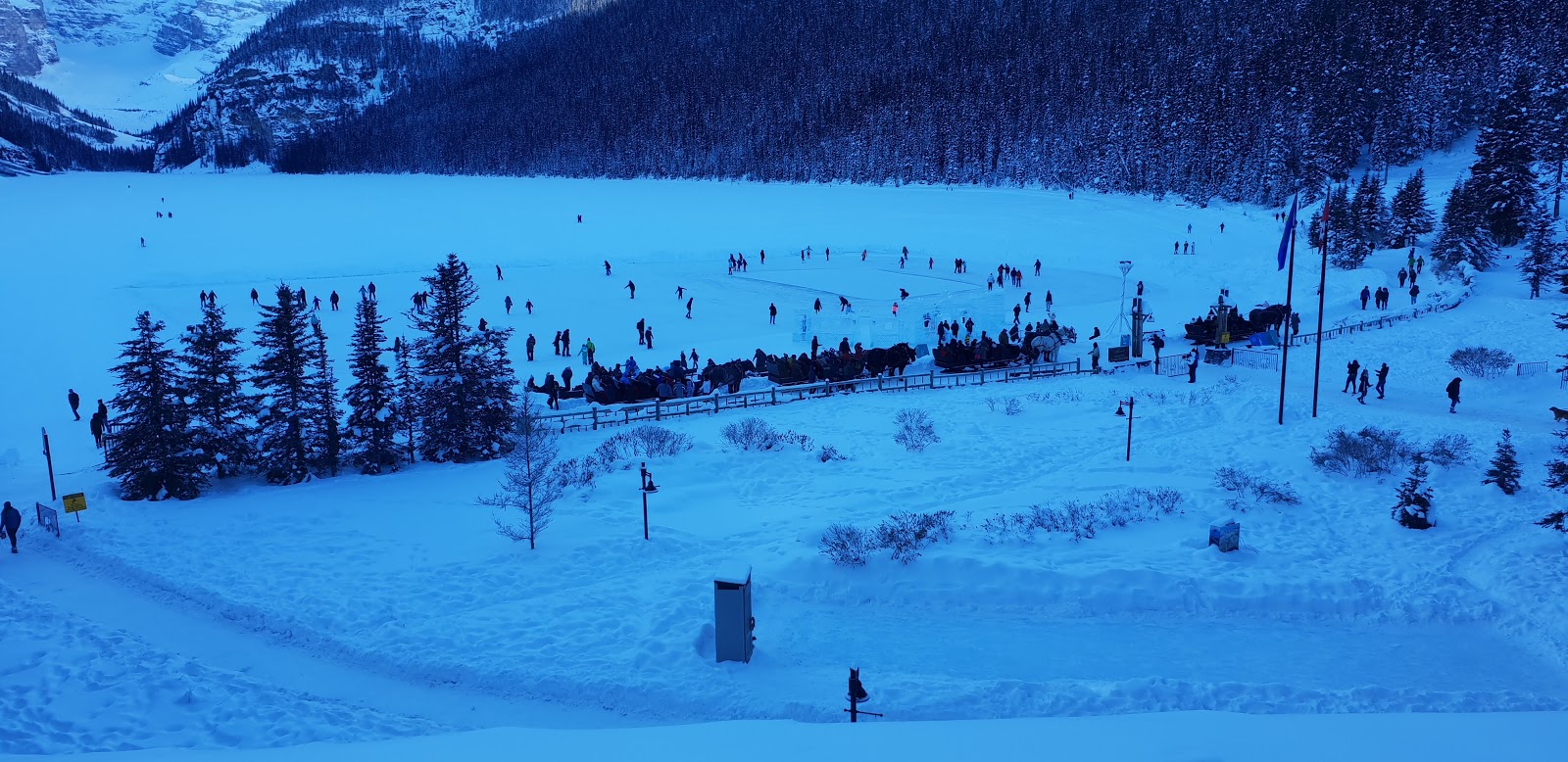
A sleigh ride wasn’t the first activity that came to mind, but that first day we saw the sleighs lining up and thought it might be a bit of a lark.

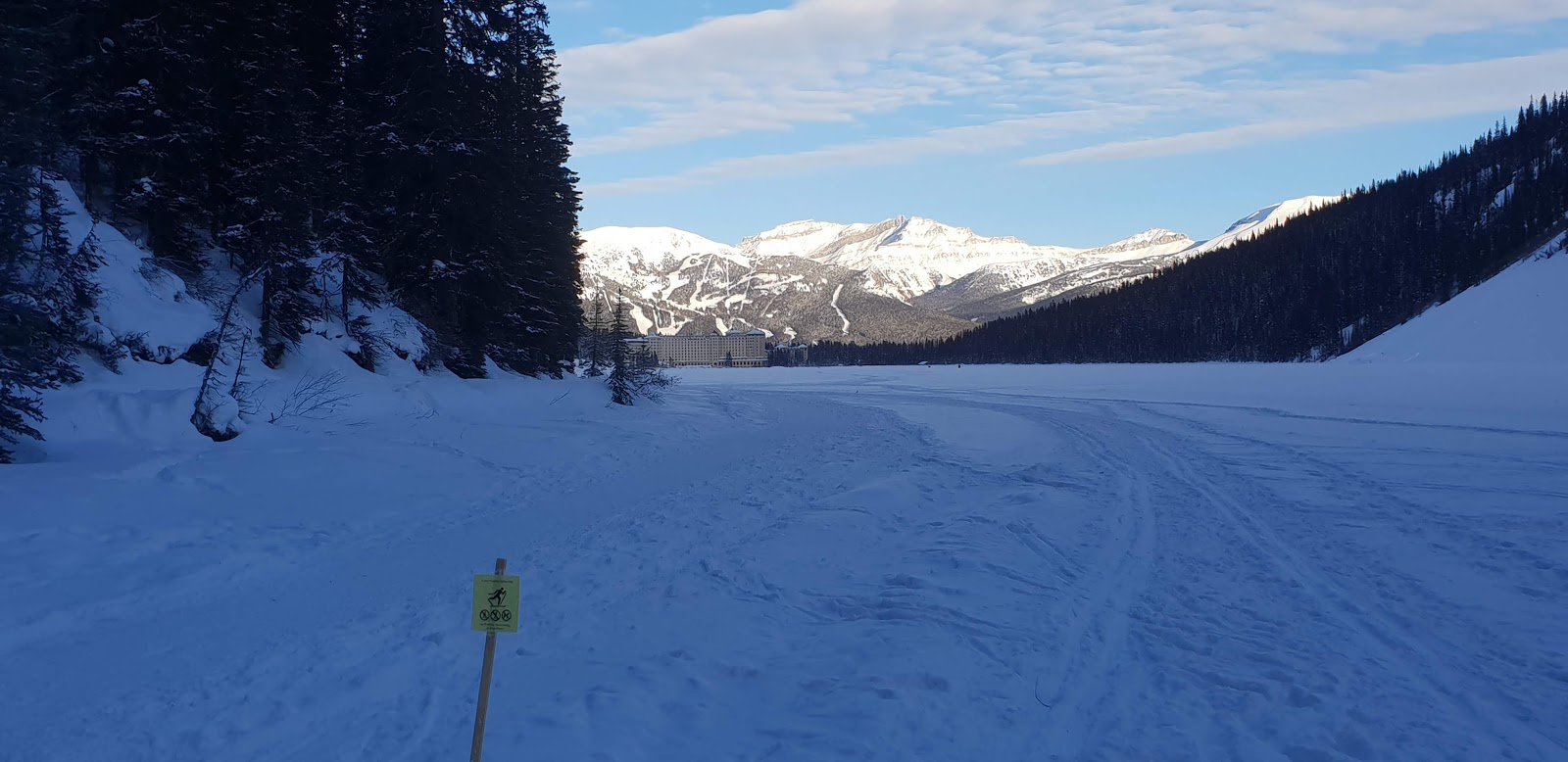
It was New Year’s Eve and we booked a 2pm sleigh ride.  I figured any later we’d probably freeze to death.  The ride was for about 45 minutes, out around the edge of the lake and back.

Rides were on the hour and sometimes run at night.

We arrived at the departure point about 15 minutes before the ride and watched those who had been on the ride before come back looking somewhat frozen.  The only covering you had provided was a red blanket.

Wisely we put on many layers of clothing, hats, and gloves.

We managed to get a seat for ourselves where the maximum per seat was three.  The blanket wasn’t the thickest.

It was cold, and according to my phone, about minus 15 degrees Fahrenheit.  You could feel it, and it was lucky we were not moving fast.

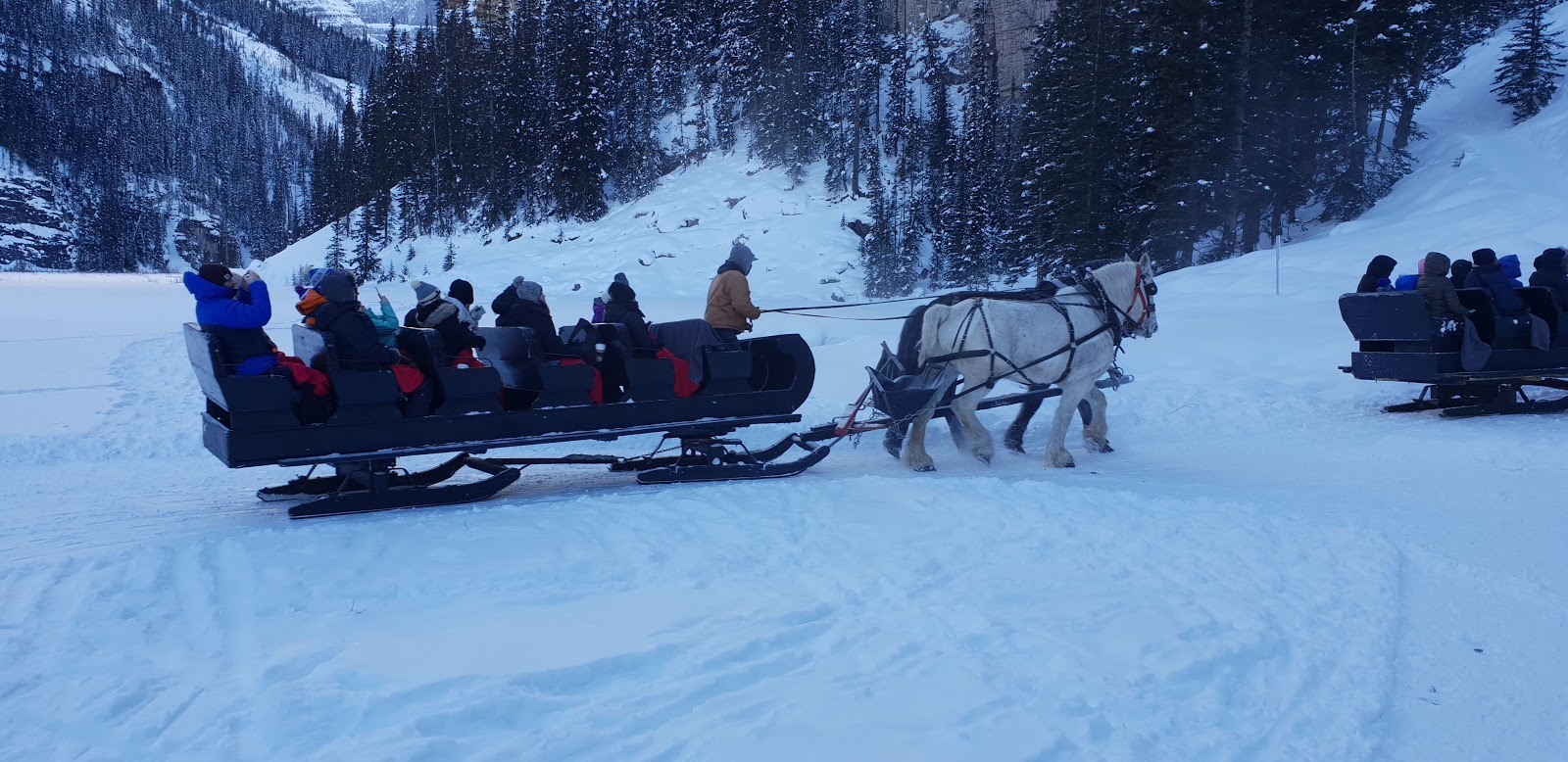
 At the halfway point, we went out onto the lake to turn around.  It gave us a chance to take a photo of the sleigh, and the horses pulling it.  I felt sorry for the horses out in the cold.

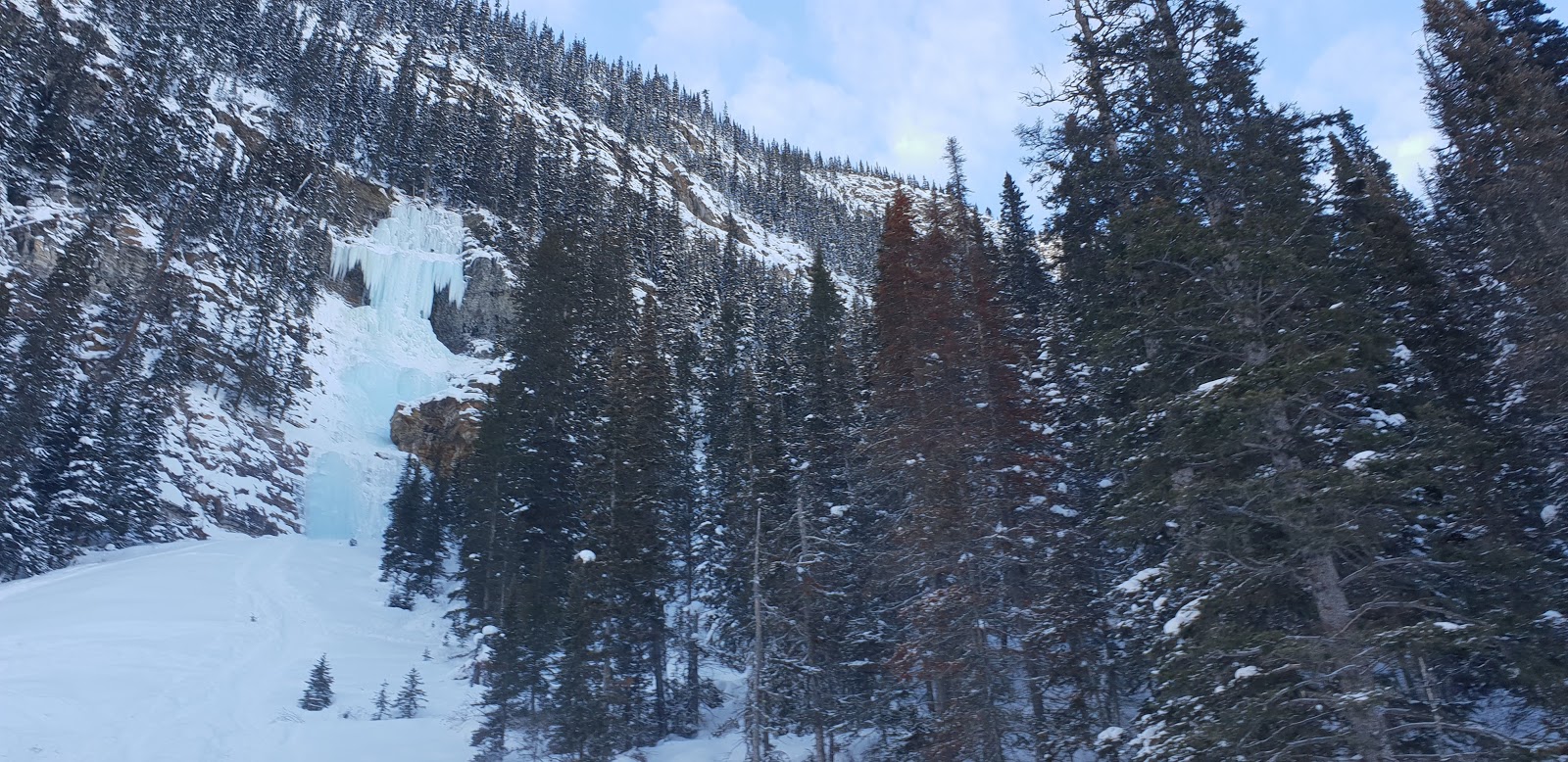
As we turned around, we got to see a frozen waterfall.

Writing about writing a book – Day 22

More of Bill’s backstory, and, if it’s possible, I’m beginning to like this guy.

I suspect, for him as well as many others, it wasn’t easy, but in war zones, it’s either hot or cold, but never any pleasant in any weather conditions, and perhaps if there was a possibility of a fine, balmy, day, there would be no time to enjoy it.


Sleep was difficult. 

Sleep was always difficult, if not impossible. 

Whilst I had lived in barracks, in the tropics as part of my training and acclimatization, it was nothing like this.  Nothing could have prepared me for the endless, oppressive heat.

It started from the day the plane had landed on the tarmac at Saigon airport, the crew opened the door to the cabin, and we walked down the stairs.  The heat came from above, and from the tarmac below.  We were soaked in sweat by the time we reached the buildings.

And it was difficult not to be exhausted, even if you were lucky enough to get a few hours sleep.  That constant feeling of exhaustion was the biggest enemy, and what caused many of the unnecessary deaths.  In the end, for many, it was just too much.  For me, it was training that kept me alive, because of that little voice in my head that kept me vigilant.

That and a keen sense of self-preservation.

Our platoon was still recovering from the shock of seeing the death of two of our mates the previous day.  Although in the camp only a week, already it felt like a year.  We’d been sent out on a patrol, trying to find a group of the enemy who was responsible for cutting one of the supply lines, and it hadn’t taken long for us to realize we didn’t really know if it was the Viet Cong or the people we were supposed to be protecting.  They all looked the same to me, and we had to rely on our South Vietnamese Army liaison to ensure we didn’t shoot the wrong people.

After an eventless day, if you discounted the rain, the heat, and the scares, the Lieutenant ordered us to make camp, just before darkness set in.  We had not seen the enemy, and, as I was finally getting to understand, we probably wouldn’t until they were prepared to show themselves.

At that moment of maximum unpreparedness, when our attention was diverted, and after a long and debilitating day, they chose to attack.

I had no doubt they had been tracking us, and for quite some distance.  I had that effect of hair standing up on the back of my neck.  It actually saved me from getting shot.

The attack killed three of our men and shattered our confidence.

No one slept that night, either from fear the attackers would return, or because we were just plain terrified.  I volunteered for guard duty.  It was easier to be up and about instead of on a camp stretcher staring at the roof of the tent waiting for the inevitable.

Seeing our mates killed so horrifically, before our eyes, had the desired effect.  In the beginning, we expected it to be a walk in the park, with some hoping that we would just stumble around in the jungle for a week or so, then go back to the camp for a well-earned rest.  None had counted on the reality of war, or the fact some of us might die.  Some were even hoping they would not have to shoot their gun.

All of those illusions had now gone after three months had passed, and as reality set in.

Some had sobbed openly, such was their preparedness.  I had to say, I was a little more prepared, but had hoped for a little more time before the battle.  And it surprised me how calm I was when all around me it was chaos.


“Bastards,” Killer muttered.

We called him ‘Killer’ because it was the nickname the Army had given him.  We were sharing the guard duty and had spoken briefly over the watch, but up till then, the silence had stretched over an hour or so.  It didn’t take long for anyone to realize he was a man of few words.

He’d been in the regular army for years and asked for the posting.  He’d made Sergeant several times, only to lose those same stripes for fighting, usually after R&R and a bout of heavy drinking.  Now assigned to our platoon to lend his experience, the conscripts were expecting him to ‘look after’ them.  Other than myself and the Lieutenant, he was the only other regular soldier.  Unfortunately for them, he hated both conscripts and the Viet Cong in varying degrees, and depending on his mood there was little tolerance left for the rest of us.

“The people who sent us here or the people trying to kill us?” I asked before I realized I’d spoken.

I didn’t hear the reply, the skies opening up with another torrential downpour that lasted for about five minutes, and going as fast as it came.  When the sun finally came up, it would make the atmosphere steamy, hot, and unbearable.  It was quite warm now, and I was feeling both uncomfortable, and fatigued.

Killer looked just as stoic as he had before the rain.  He looked at me.  “Damn weather.  Worse than home.”

“Scotland?”

“Scapa Flow, Kirkwall.  I should have been an engineer on ships like my father, but I was too stupid.  Joined the Army, finished up here.  What’s your excuse?”

“Square peg in a round hole.  The army seems to handle us in its stride.”  It was more or less the truth.  I joined the Army to get away from my parents.

“That it does.  That it does.”

The rain came and went, during which the rest of the camp roused and went about its business.  It had been a long night for some, still getting over the shock of the attack, and the ever-pervading thought the enemy was still out there, biding their time.  It would be, for them, a waiting game, waiting for the conditions to wear us down, and lose concentration as inevitably we would.

Certainly, by the time we were relieved from sentry duty, I felt I was in no condition to match wits with a donkey, let alone the enemy on his own home ground.  When I stumbled over to the mess area and looked at the tired and haggard looks on the faces of the platoon, I realized that went for all of us.

Killer and I managed to get about an hour’s rest before the call came to move out, rain or no rain, and after a breakfast to make anyone ill, we left.  For hours it rained.  No one spoke as we strained to listen over the rain spattering on the undergrowth, all the time expecting the unexpected.  That was the benefit of the surprise attack; we no longer took for granted we would be safe.

Water gathered in pools along the trail, hiding any chance of seeing landmines.  Rainwater and sweat ran into our eyes, making it difficult to see.  Water leaked everywhere, making it very uncomfortable.  This was not a war; this was utter stupidity.

I was about to remark on the futility of it all to the Lieutenant, who had taken the lead, when one second he was talking to me and the next he crashed to the ground, a sniper’s bullet killing him instantly.   Someone yelled “Contact” and we hit the ground, bullets flying all around us. 

Too late, I thought, as I felt the hit of what seemed to be a large rock, then the searing pain in my leg, just as I hit the ground…


© Charles Heath 2016-2020
In a word: While

How long is a piece of string?

Yes, that’s the meaning of the word while.

Simply because I want you to wait here while I go down the shops.

How long will that be?

I don’t know.  A while.  Anything from half an hour to a lifetime.

Then there’s another way of using the word:  While I do this can you do that.

This is more definite but still ambiguous.  How long will that be?

As long as it takes.  Anything from half an hour to a lifetime.

it is by definition, a period of time.

Then it gets more ambiguous, in that the arrangements say in place while he is alive.

Being a murder mystery writer and reader, it becomes a sufficient reason to kill a wealthy relative to get their inheritance.  But, if murder is not in mind, then it can be anything from a half-hour to a lifetime!

Less of an enigma is this use of the word:  I’m going the while away the time playing computer games.

At least you know how long that’s going to be, i.e. till you get bored.

This is not to be confused with the word wile, which means to use a cunning or devious means to get someone to do your bidding.

We’ve all heard of feminine wiles.  Granddaughters are experts in using them, I can personally attest to that.

There are other meanings but these are no longer used in modern English.

What happens after the action-packed start – Part 46

Our hero knows he’s in serious trouble.

The problem is, there are familiar faces and a question of who is a friend and who is foe made all the more difficult because of the enemy, if it was the enemy, simply because it didn’t look or sound or act like the enemy.

Now, it appears, his problems stem from another operation he participated in, and because of it, he has now been roped into what might be called a suicide mission.

It took longer, as everything does when you’re in a hurry.
 
The plane was loaded, the fuel truck had just disconnected the final hose, and was leaving the field, and Davies was firing up the engines.
 
Everyone was on board and strapped in.  I gave my thanks to the Colonel and shut the door before joining Davies in the cockpit.
 
Looking at her cool, calm demeanor gave me confidence.  If anyone could get us out of here in one piece, she could.
 
I put the headphones on and put on the seat belt, just as she revved the engines, saw the wave from the ground crewman who removed the wheel chocks, and we started moving.
 
15 minutes to spare.  Would it be enough?
 
The Colonel had said that it was possible the helicopter might be one of those belonging to the air force and might have missiles that could shoot us down.  Not a good thought.  At the very least it would have a cannon, and if the bullets hit us, it could make an awful mess of the fuselage.
 
He didn’t have any good news though.
 
I was hoping it would just be a commercial helicopter with a couple of thugs with handguns shooting at us.
 
At the top of the runway, she didn’t waste time going to full throttle, and we started rumbling down the runway.  Unfortunately, the wind had changed and to take off we had to initially fly towards Congo airspace before turning towards our destination.
 
Then we lifted off and started gaining altitude.
 
Then I heard Davies mutter, “Fuck.”
 
Trouble.  I saw what elicited the curse.  The helicopter, heading towards us.
 
“Military,” she added.
 
Not that I had any idea what I was looking for, but it didn’t seem to have rockets, but it did have a cannon barrel under the fuselage.
 
“Brace yourself,” she said.  “We’re about to get on the roller coaster.”
 
Still climbing we were getting closer, and I could just see the cannon move.  If it was shooting rounds, they didn’t hit us, not from such a distance, but they were getting closer because we were still flying towards them.
 
Then, suddenly, she turned the planes to the right and down, a plunge so quick that my stomach was in my mouth.  I hate to think what it would be like for those in the back.
 
Aside from the fact my hearing was blocked by the headphones, I could still hear several mini-explosions coming from behind me.
 
Another curse, rather longer this time, from Davies and she twisted the plane back in the opposite direction, and heading around towards the airfield again, much lower down this time, with the helicopter in hot pursuit.
 
Now we couldn’t see it, but it would have a good view of our engines and tail.
 
If any of the bullets hit, we’d be in big trouble.
 
I was bracing myself for disaster.
 
Davies was coaxing the plane upwards, but it seemed sluggish.
 
Nothing happened.
 
“Gun’s jammed.” She said.  “If you don’t maintain your equipment…”
 
That statement was cut off by a huge explosion and turning as far as I could in my seat I just saw the remnants of a firewall, what was once a helicopter.
 
“Ground to air rocket.  The Colonel must have some interesting toys at his disposal.”  Davies sounded very relieved.
 
I started breathing again.
 
“Are we damaged?”  It was a valid question.  The plane seemed like it was flying awkwardly.
 
“I’d say so., Those explosions.  Cannon fire hitting the fuselage.  Probably took out some controls, or failing that, since there’s still maneuverability, probably just a few holes creating drag.”
 
She was a matter of fact like, but that was more because she was fighting the controls to keep us moving in the right direction.
 
Away from trouble.
 
“Go check it out,” she said.
 
At the head of the cabin, I saw the problem, a row of neat holes carved from one window through to halfway along the fuselage, going down.  We’d be lucky if one of the bullets hadn’t struck one of the wires that drove the flaps/
 
There was a hell of a noise from the air coming in through the holes.  
 
By the second window, slumped forward, was Shurl.  There was blood and blood spatter on the floor.  Monroe came up to me and yelled in my ear.
 
“Damned good flying, and only one casualty.  We were incredibly lucky.  Shurl wasn’t quick enough to get on the floor.  Other than that, we’re still in the air, and I’m guessing someone shot the helo down?”
 
“Ground to air missile.  Any sooner, that would have been us.  Try and sit back, rest, and enjoy the in-flight service.  Oh, and a prayer or two might help.”

© Charles Heath 2020

Past conversations with my cat – 87

20160903_163858

This is Chester.  He was looking very benign before he left.

Now I can’t find him.

Anywhere.

He’s in none of the usual hiding spots.

He’s not hiding under any of the beds.

He’s not hiding in any of the cupboards.

I’m worried.


He’s planning something.  It might be my demise.  I’m still trying to figure out what he could gain from my death.  Not having to listen to me reading chapters of my books?

That, to him, might be a blessing.

I found a magazine on the floor open at an article entitled, ‘Ways to check if your spouse is trying to kill you’.

It’s got me doubly worried now.

I saw him on the kitchen bench near my coffee cup.

How hard could it be for him to dip his paw into some poison or other and then put it in my coffee cup?

That expressionless expression gives him away.

It’s what he’s not saying that’s telling me everything.

Behind that bland face, there’s the heart of a plotter, plotting something bigger than blowing up parliament by Guy Faulks.

I’m going to keep a very close eye on him.  Very, very close.

When I find where he’s hiding.

Writing about writing a book – Day 21

I’m back to writing Bill’s backstory, and how he got mixed up in the war, and a few other details which will play out later on.

This will be some of it, in his own words:


I think I volunteered for active duty in Vietnam.

It was either that, or I had been volunteered by my prospective father in law.  I was serving under his command in an Army Camp for some time, and unbeknownst to me for a time, I had been dating his daughter.

The daughter of a General.  It was like that old adage, ‘marrying the bosses daughter’.  Only this boss was the bastard of all bastards.  When he found out, my life became hell.  He told me, as a Corporal, I was far beneath his expectations of the right man for his daughter.  He thought she would be better off with a Colonel.

Then I got my orders.  I was to join the latest batch of nashos on their way to the latest theatre of war.  But before that, Ellen, a woman with a mind of her own, and sometimes daring enough to defy her father, said we should get married, and I being the young fool I did, in a registry office, the day before I left for the war.

I promised to be faithful, as all newly married men did, and that I would come back to her.  We had all heard the stories coming out of South East Asia, where the war was not going so well, for us, or the Americans, and that this was a last-ditch effort.

When we landed, we were greeted by the men leaving.  They were glad to be going home.  And some of the stories, I chose not to believe them.  Nothing could be as bad as they painted it.

Could it?


I’d been trained for war.  I could handle a weapon, several actually, and or I could if I had to kill the enemy.  After all, it was my job.  I was defending Queen and country.

I was a regular soldier, not a nasho.  Not one of the mostly terrified boys who’d hardly reached anything approaching manhood, some all gung-ho, others frightened out of their minds.  As a regular soldier, this was where I was supposed to be.

But being sent to a war to fight, and having to fight, I soon discovered were two very different things.  On the training ground, even training with live ammunition, being shot at, mortared, and chased through the jungles of North Queensland, it was not the same, on the ground in Saigon.

It was relentlessly hot, steamy, raining, and fine.  Or dry and dusty.  But in any of the conditions, it was uncomfortable being hot all the time.  During the day, and during the night.

Then we were sent out to join various units.  Mine was north, where, I wasn’t quite sure, where the motley remains of the group were bolstered by us, new people.  Morale was not good, as we arrived in the torrential rain in an air transport that had seen better days, and notable for two events, the fact we were shot at several times and taking out the first casualty before we arrived, and the near-crash landing when we did.

I soon learned the value of the statement, ‘any landing you walk away from is a good one’.


Yes, seems like a good start to a bad end.  More on this tomorrow while I’m in the mood.


© Charles Heath 2016-2020

The story behind the story: A Case of Working With the Jones Brothers

To write a private detective serial has always been one of the items at the top of my to-do list, though trying to write novels and a serial, as well as a blog, and maintain a social media presence, well, you get the idea.

But I made it happen, from a bunch of episodes I wrote a long, long time ago, used these to start it, and then continue on, then as now, never having much of an idea where it was going to end up, or how long it would take to tell the story.

That, I think is the joy of ad hoc writing, even you, as the author, have as much idea of where it’s going as the reader does.

It’s basically been in the mill since 1990, and although I finished it last year, it looks like the beginning to end will have taken exactly 30 years.  Had you asked me 30 years ago if I’d ever get it finished, the answer would be maybe?


My private detective, Harry Walthenson

I’d like to say he’s from that great literary mold of Sam Spade, or Mickey Spillane, or Phillip Marlow, but he’s not.

But, I’ve watched Humphrey Bogart play Sam Spade with much interest, and modeled Harry and his office on it.  Similarly, I’ve watched Robert Micham play Phillip Marlow with great panache, if not detachment, and added a bit of him to the mix.

Other characters come into play, and all of them, no matter what period they’re from, always seem larger than life.  I’m not above stealing a little of Mary Astor, Peter Lorre or Sidney Greenstreet, to breathe life into beguiling women and dangerous men alike.


Then there’s the title, like

The Case of the Unintentional Mummy – this has so many meanings in so many contexts, though I image back in Hollywood in the ’30s and ’40s, this would be excellent fodder for Abbott and Costello

The Case of the Three-Legged Dog – Yes, I suspect there may be a few real-life dogs with three legs, but this plot would involve something more sinister.  And if made out of plaster, yes, they’re always something else inside.

But for mine, to begin with, it was “The Case of the …”, because I had no idea what the case was going to be about, well, I did, but not specifically.

Then I liked the idea of calling it “The Case of the Brother’s Revenge” because I began to have a notion there was a brother no one knew about, but that’s stuff for other stories, not mine, so then went the way of the others.


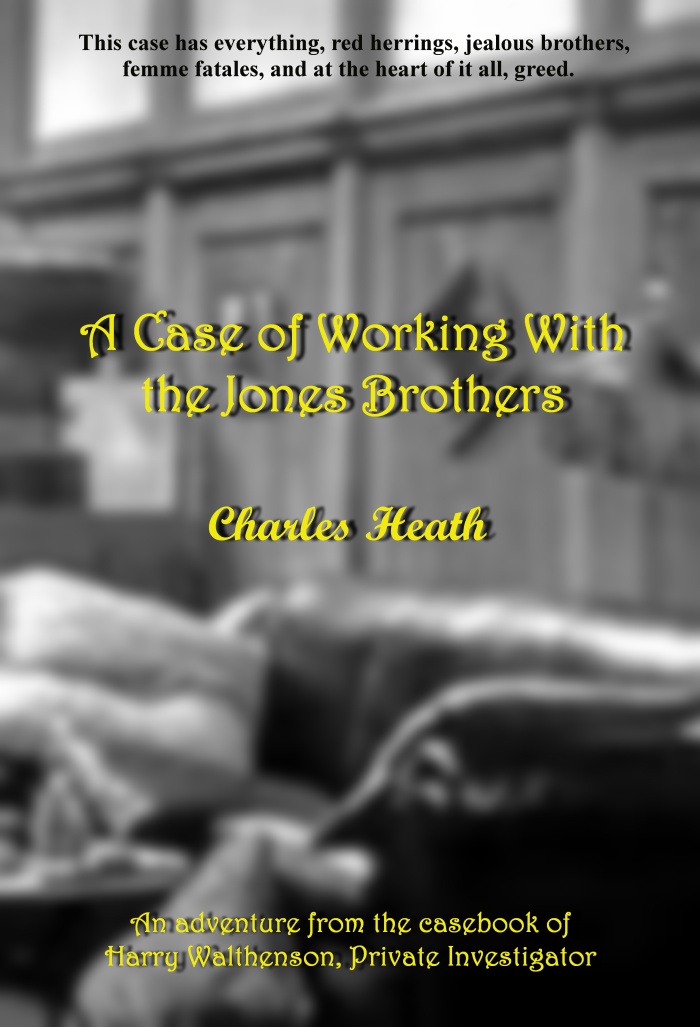
Now it’s called ‘A Case of Working With the Jones Brothers’, finished the first three drafts, and at the editor for the last.

I have high hopes of publishing it in May 2020.  It even has a cover.


PIWalthJones1

Writing about writing a book – Day 19

I’m still working on the sequence of flashbacks for the story, filling out the back story to how Bill became associated with a man called Colonel Davenport.

It is important to remember that while Davenport may have begun with good intentions, it was not difficult to go slowly mad given the conditions.  This character, Davenport, runs a multitude of operations within the war zone, turning a huge profit and setting up a business for when the war ended.

Bill meets his Davenport’s cronies and then the man himself.  Life is not what it seems, and working for him is not a guarantee of safety, so Bill not only has to watch out for the enemy but also those with whom he also works.


Part 3 – In the Service of Davenport

Davenport and punishment

Busted mission, the first threat to Davenport

Manilow’s death – and how he got there

More on Manilow, the night before his death

Taken to rendezvous with Davenport’s boss

Identify Davenport by ‘sniveling morons’

Sniper – killing Ellen’s father – set up

Sniper – Killing Ellen’s father, execution

Planes and death


Bill gets to meet an interesting cast of characters, not the least of which is Davenport’s right-hand men, and a very unlucky lad who was supposed to see through his tour in the command station far from the war zone, and who is connected to a person close to him.

He was also unwittingly involved in a murder, one set up by Davenport, and one designed to keep his silence.


Part 4 – The Lead up to Capture, and in a POW camp

The object that Davenport is seeking

After R & R revoked, retrieved by Davenport for the last mission

Capture by Cho’s forces, delivered by Davenport’s men

In the POW Camp, and the arrival of Cho

Day of Rescue from Cho

Ellen and Jacobson after rescue in the hospital


Bill’s safety may have been assured had he simply toed the line, but, while on a secret mission with Davenport’s men, he sees an opportunity to take some evidence of Davenport’s activities, as an act of self-preservation.

Of course, he doesn’t reckon with the ruthlessness of Davenport and ends up in a camp where Bill is handed over to the chief interrogator, a friend of Davenport’s.  There is no doubt what Cho’s mission is.

But, like all seemingly simple plans, it doesn’t go the way Davenport wants, Bill does not talk, and is eventually rescued.


Part 5 – Post Rescue and Transworld

Employment at Transworld, then first interrogation via Collins

In hospital immediately after being shot

Davenport in my hospital room, post being shot

Recognize Jorgenson


Davenport discovers Bill was rescued, and that is has lost his memory of all the time in his service, so just in case Bill does, one day, remember, he will be there to get the answers, and the missing information.

It is almost a story within a story, and maybe one day will be published as such.

At least now I have some idea of how to work the much larger story into the flashbacks, as a prelude to what happens to Bill once he realizes who is behind everything that is happening at Transworld.


© Charles Heath 2015-2020

A story inspired by Castello di Brolio – Episode 35

For a story that was conceived during those long boring hours flying in a steel cocoon, striving to keep away the thoughts that the plane and everyone in it could just simply disappear as planes have in the past, it has come a long way.

Whilst I have always had a fascination with what happened during the second world war, not the battles or fighting, but in the more obscure events that took place, I decided to pen my own little sidebar to what was a long and bitter war.

And, so, it continues…


Leonardo was a happy man.

It was quite a by coincidence that they had run into Chiara, and it hadn’t taken long to break her.  He had thought of taking her to the castle to let Jackerby extract the information, but he was tired of them telling him what to do.

He would get the information, and then act, taking the ringleaders of the remnants of the resistance back to the castle, and expect to get that well-earned pat on the back for a job well done.

He’d said he would take care of the rabble, and he had.

Until Wallace had asked him where Atherton was.

And there was that small problem of Carlo, too, though he was not going to mention that in his report to Jackerby.

Francesco had softened the three leaders of the resistance up before taking them to the castle, taking particular pleasure in attending to Martina himself.  The three could barely walk and were almost dragged up to the castle.

The first question Jackerby asked was why he had beaten them when he’d expressly been told to bring them to the castle alive and in a fit state to be questioned.  None of the three was in any sort of state to do anything other than collapse.

Jackerby’s men took them to the dungeons.

The second question Jackerby asked was where Atherton was.

“That was basically the whole point of the exercise,” he yelled at Leonardo, who, by this time was getting annoyed himself.

“He’s still out there, and you can be assured he will be causing us trouble.  Those three you dragged back, whilst a nuisance, hardly compare to what Atherton can do.”

“There’s only one of him.  There’s no way he’s going to be able to break into this castle, by himself, and do anything.”

Jackerby shook his head.  It would not matter what he said, Leonardo was just a fool, a petty little thug who quite rightly had been ostracised by the rest of the village.  And when this exercise was over and Mayer was recaptured, he was going to take extreme pleasure in killing Leonardo and his followers.

“Go get something to eat, rest, then get back out there.  I want Atherton found.  Surely there is nowhere left where he can hide.”

There was a dozen, or more, places, Leonardo thought but he wasn’t going to tell Jackerby that.  Instead, he had made up his mind to do as Jackerby asked, rest, then take a few hours the check all the entrances and exits to the castle before going back out to find Atherton.

Or at least that was what he was going to tell Jackerby.

In reality, he had had enough of these interlopers, and it was time he removed them from the castle.  It was time he took over.  The war was not going to end any time soon according to his sources further north, and there were worse places than a castle to hole up in until the war ended.  Especially considering how much wine was being stored in the cellars.


Wallace was in the dining room and had been in the middle of lunch when Leonardo came back.  Rather than talk to him, he sent Jackerby to deal with it.

Johannsen was sitting at the other end of the table, contemplating the wine.  It was not a good idea to be drinking wine in the middle of the day when trouble could arrive from any number of quarters.

In fact, he was surprised that the other resistance hadn’t made an all-out attack on them.  It seemed unlikely to him that those that hadn’t followed Leonardo up the hill, were of little consequence.

If anything, and of his experience of the resistance in France, one resistance fighters was worth 10 or more enemy soldiers.  They had a reason to fight, for their country, and liberation for the Nazis.

Of course, Leonardo and his men were oblivious to the fact that they were working for the Germans, not the British, but to them, he thought, anyone other than an Italian was worth working for if they were prepared to pay.

Leonardo and his men were mercenaries.  Guns for hire.  They didn’t care who they worked for.  But there was something else.  Leonardo hated the villagers, and it wasn’t difficult to convince him they needed to be kept in line and report any newcomers to the castle.

Adding the reward was a bonus.

“Atherton’s not going to come and present himself at the front door, you know that,” he said to Wallace.

Then he decided to have some wine.  It’s not as if the war would be arriving any time soon.

“You know him best.  A fighter, an organizer, or office boy.”

“Paper pusher, by all accounts.  I’m not sure why Thompson would send him other than he was desperately out of good agents.  You saw how much resistance he put up.”

“Jackerby seems to think there’s more to him.”

“Jackerby sees shadows where there are none.  Where did you say he came from?”

“North Africa.”

“Then he’s had too much sun.”

“A little advice then.  I wouldn’t say that to his face.”

© Charles Heath 2020

In a word: Over

It’s over!  What is?  Well, almost anything.

A relationship, a bad day, a friendship, a long, monotonous lecture, and dinner.

It’s basically the light at the end of the tunnel, when it’s not the 6:32 express from Clapton, entering the other end of that same tunnel.

You could go over the top, which means, in one sense, over and above the expected, or way beyond the expected but not in a good way.

You could go over the waterfall in a leaky boat.  Not advisable, but sometimes a possibility, if someone fails to tell you at the end of the rapids there is a waterfall.  Just make sure it’s not the same as Niagara falls.

Still, someone has gone over Niagara in a barrel.

Then we could say that my lodging is over the garage, which simply means someone built it on top of the garage.

Branches of trees quite ofter grow over the roofs of houses, until a severe storm brings them down and suddenly they are in your house, no longer over it.

You can have editorial control over a newspaper

In a fight, the combatants are equally trying to shout over the top of each other

And sometimes, when trying to paint a different picture to what is real, you could say the temperature is sometimes over 40 degrees centigrade when you know for a fact it is usually 56 degrees centigrade.  No need for the literal truth here or no one will come.

Then you could say I came over land, assuming that you took a car, or walked when in actual fact you came by plane.  And yes, the whole flight was, truthfully, over land.

I don’t accept my lot in fife, nor do I want a small lot on which to build my mansion!

But the oddest use of the word over is when we describe, in cricket, the delivery of 6 balls.

I’ve listened to cricket commentary, and aside from trying to pronounce the names of the players, if you were unfamiliar with the game, being told this ball was outside leg stump, one of  several deliveries, the last of which was the end of the over.  If the delivery hit the stumps, it is then a wicket, and the batsman is out.

Wow!