Searching for locations: The Castello di Brolio, Gaiole in Chianti, Tuscany – The Old Castle

The castle is located in the southern Chianti Classico countryside and has been there for over ten centuries, and owned by the Ricasoli family since 1141.

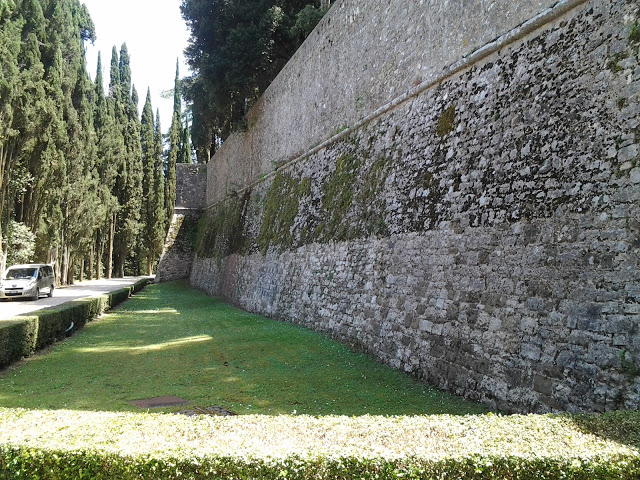
Like any good castle, it has strong defences, and I was looking for a moat and drawbridge, but it looks like the moat has become a lawn.


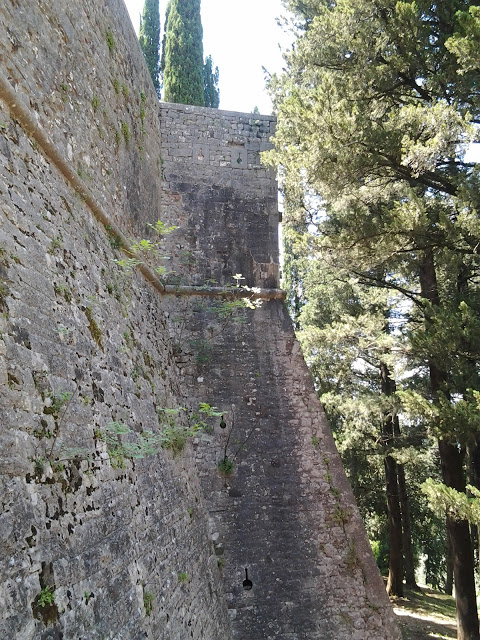
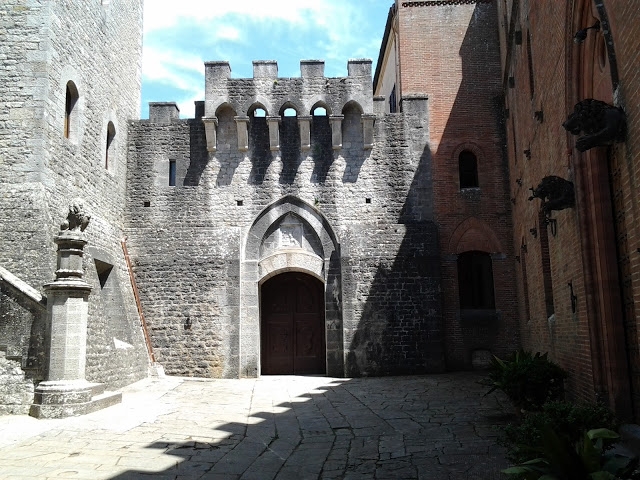
The very high walls in places no doubt were built to keep the enemy out

The castle has been destroyed and rebuilt many times over the last 900 years.  It was part of the Florentine defenses, and withstood, and succumbed to many battles with Siena, which is only 20 km away.  More recently, it still bears the scars of artillery fire and bombing in WW2.

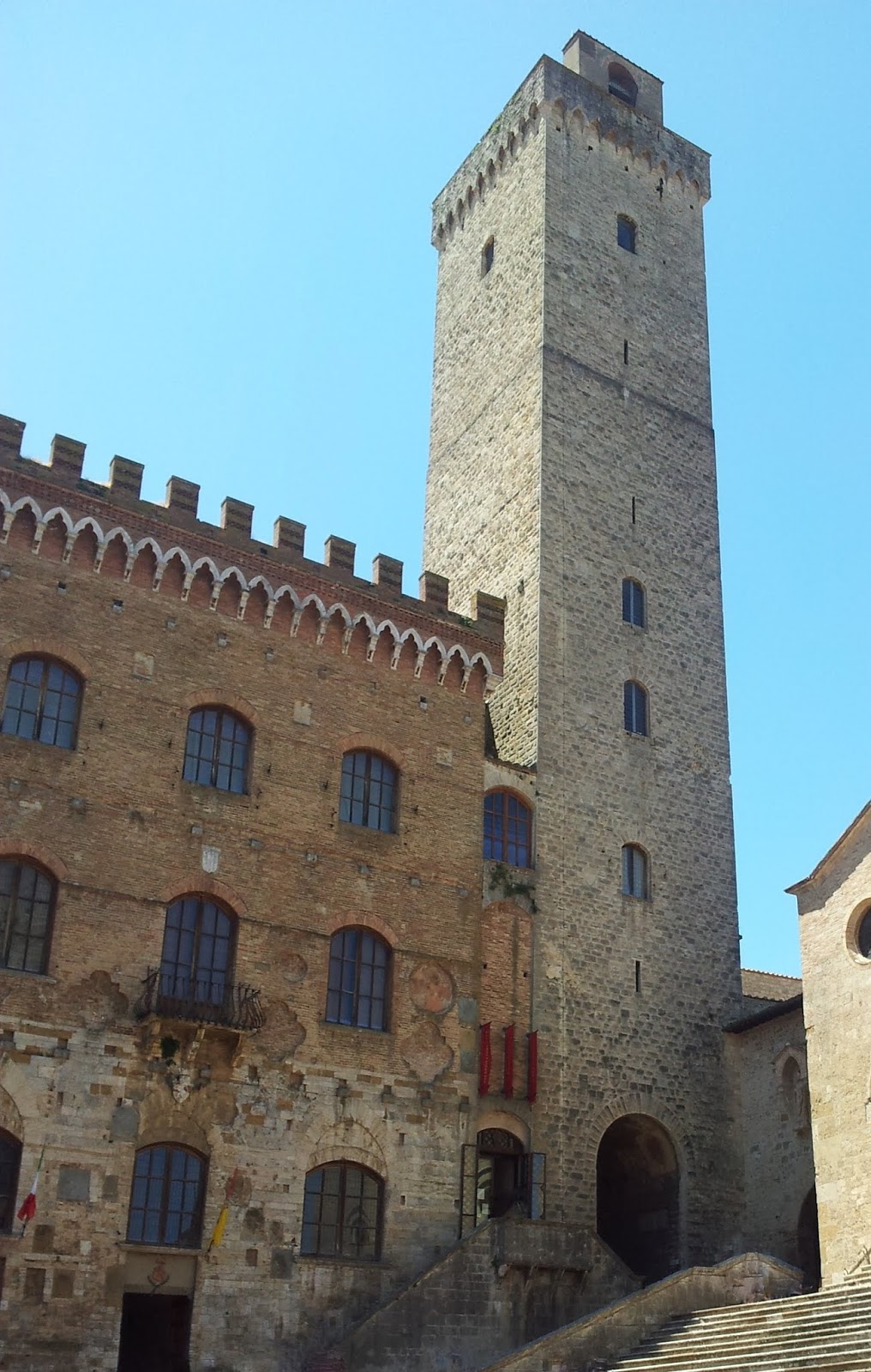
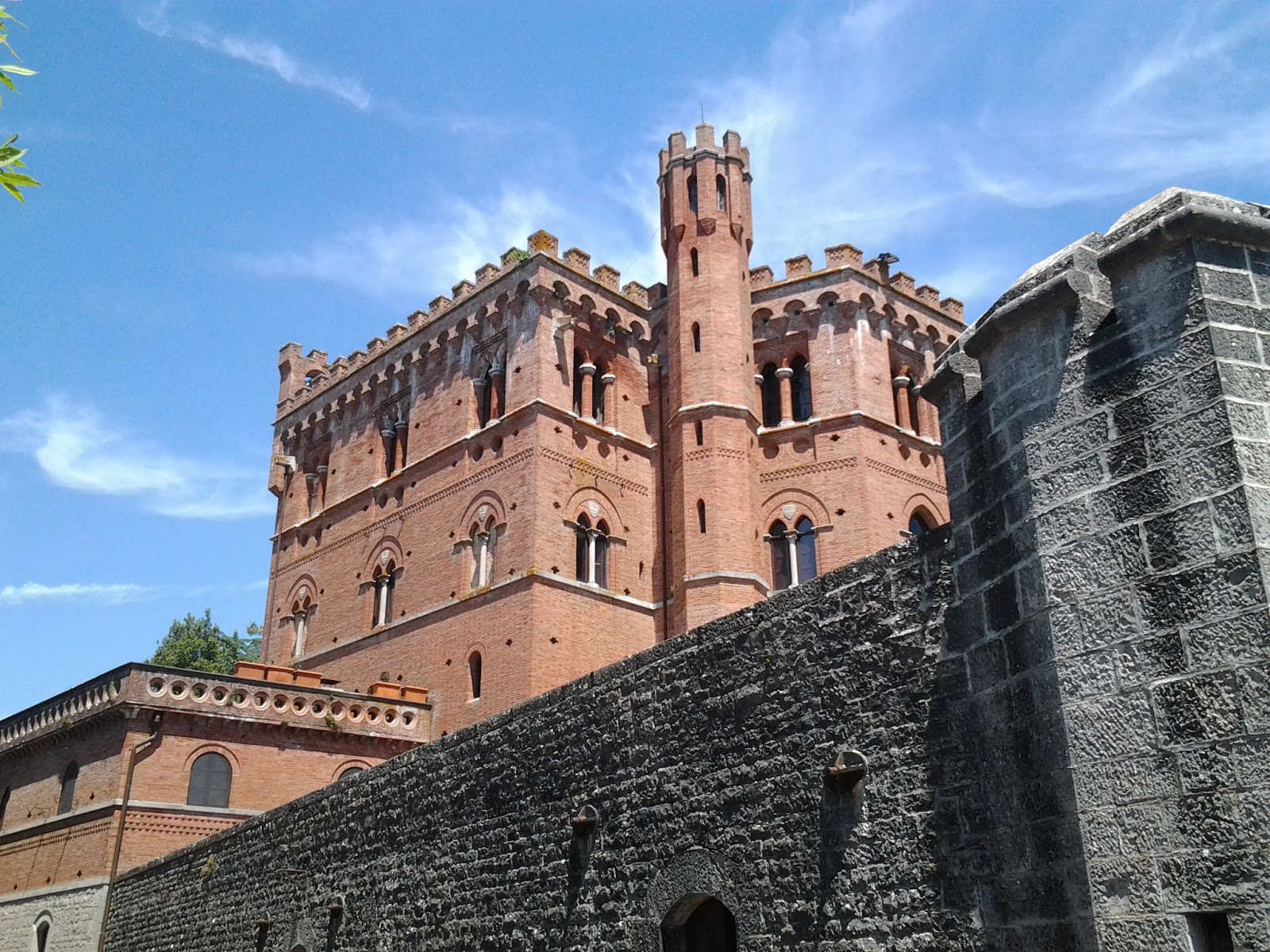
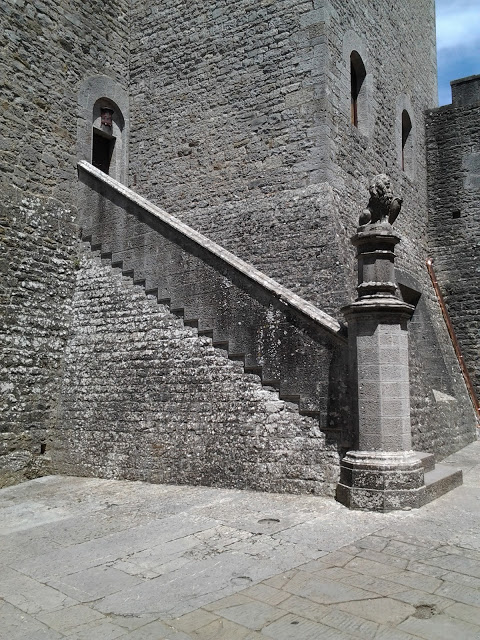
The room at the top of this tower would have an excellent view of the countryside.

Here you can see the old and the new, the red brick part of the rebuilding in the 1800’s in the style of an English Manor

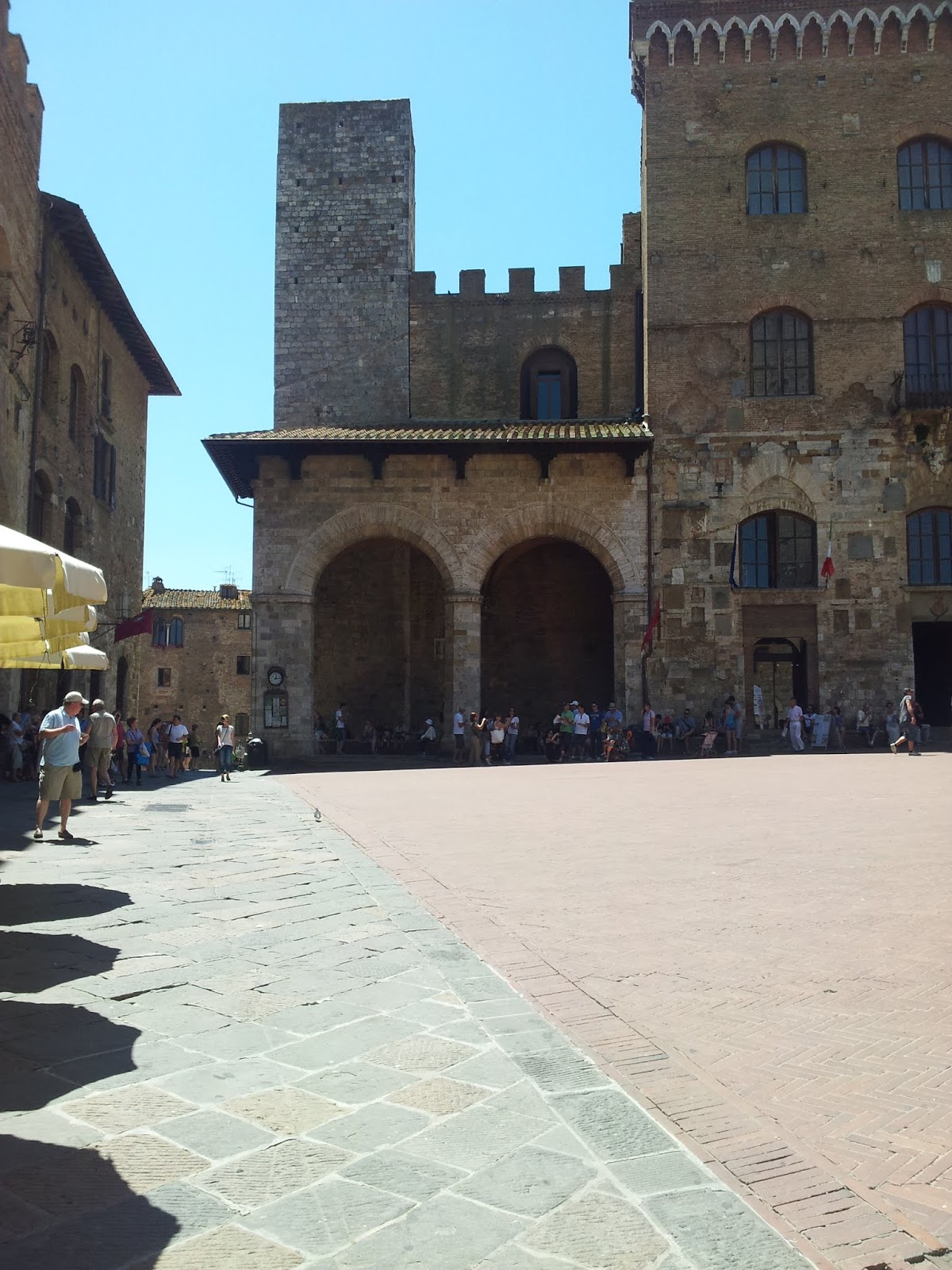
We did not get to see where that archway led.

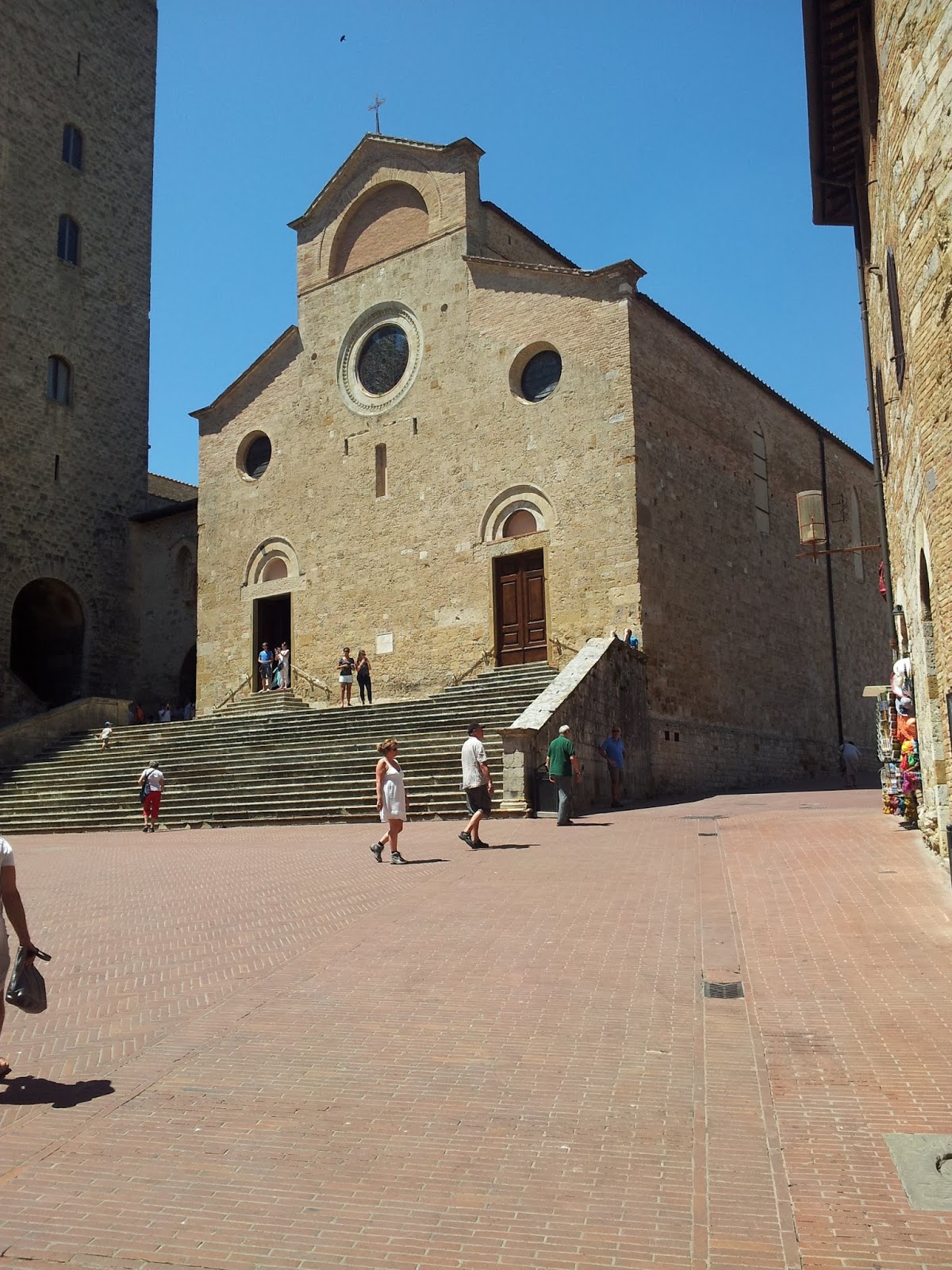
Nor what was behind door number one at the top of these stairs.  Rest assured, many, many years ago someone wearing armor would have made the climb.   It would not pass current occupational health and safety these days with a number of stairs before a landing.

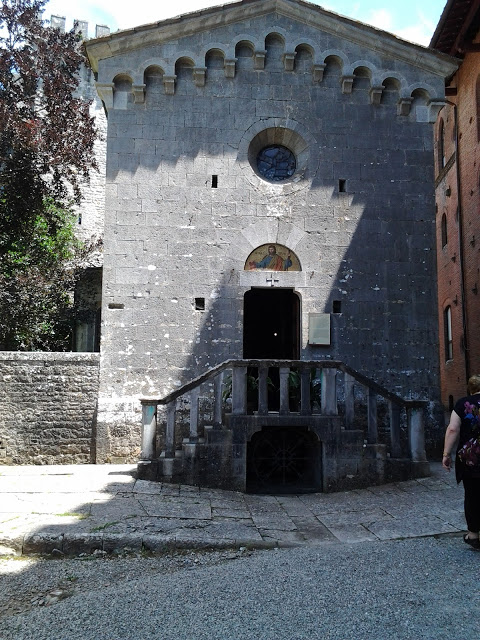
Cappella di San Jacopo.  Its foundations were laid in 1348.

Renovated in 1867-1869, it has a gabled façade preceded by a double stone staircase.  The interior, with a crypt where the members of the Ricasoli family are buried, has a nave divided into three spans with cross vaults.

The 1,200 hectares of the property include 240 hectares of vineyards and 26 of olive groves, in the commune of Gaiole.

In a word: Wall

There’s nothing like ‘hitting the wall’.  It’s a rather quaint expression used when you have used up all your energy and there’s nothing left.  A lot of sportspeople are very familiar with this expression.

But it doesn’t have anything to do with hitting a real wall, you know the sort, made out of plaster, or bricks, or timber.  Some people hit the wall in this case too, and soon find out what it’s like to have a broken hand.

There’s wall street, you know the one, it has a bull in it, and it’s in New York, down that end of the city where the Twin Towers used to be.  It’s rumoured lots of ‘jiggery-pokery’ goes on there.

Try stonewalling, you know, give answers to questions that don’t answer the questions, or find something else to do and put off being questioned.  I’m not sure, however, that’s how Stonewall Jackson got his name.

We can climb the walls, metaphorically speaking, but it is something we don’t actually do when we’re bored.

And, I’m sure everyone has heard of the Great Wall of China.  Even those who travel in space have seen it, from a long, long way away.  I’ve tried walking along it, and up it, yes, parts of it go up the sides of mountains, and it’s challenging.  Maybe you should try it sometime.

Perhaps a few others, just to finish with, like

I got hit by a wall of water – yep, watch out for them tidal waves

There’s a wall between us, nope, not gonna talk to you

His stomach wall is failing, which means he’s in very bad shape, and

He couldn’t get through the wall of players, oh, well, maybe we’ll win the FA cup final next year!

In a word: Prior

Of course, prior means gone before, as in past history, or perhaps only a few moments ago; it happened prior to my arrival on the scene.

But it can also mean, quite confusingly, to something in the future, when trying to get out of a meeting by saying I’ve got a prior appointment.

If you are an aficionado of American police dramas then you will be well acquainted with the prior, meaning a previous criminal conviction.


And for something quite different, a prior is a priest of sorts, who to me were named as such in the middle ages.  A prior is below an Abbot and is head of a house of friars.  By the way, the most notable friar I know is Friar Tuck

A prior could also be a magistrate in the medieval republic of Florence.


It is not to be doubly confused with Pryer or Prier

Someone who pries into another’s business, the most notable prier, the woman across the road from Samantha, in Bewitched.


A twitter biography

Every year I come back to revisit this, and each year it becomes a harder issue to deal with.  All that’s recently changed is the number of characters you can use

I’ve been trawling the endless collection of twitter descriptions provided by their users, noting that there is a restriction of 280 characters.

How do you sum yourself up in 280 characters?

I don’t think I can, so we tend to put down a few catchphrases, something that will draw followers.  I’m thinking the word ‘aspiring’ will be my catchword.

I’m aspiring to be a writer, or is that author?  Is there a difference, like for instance, one publishes ebooks on Amazon, one publishes hard copies in the traditional manner?

Is there a guide to what I can call myself?

Quite simply put, but in more than 140 characters, married happily, two wonderful children, three amazing grandchildren, and a wealth of experience acquired over the years.

Actually, that sounds rather boring, doesn’t it?

Perhaps it would be better if I was a retired policeman, a retired lawyer, a retired sheriff, a retired private investigator, a retired doctor, someone who had an occupation that was a rich mine of information from which to draw upon.

Retired computer programmers, supermarket shelf stackers, night cleaners, accounts clerks and general dogsbody s don’t quite cut the mustard.

I have also become fascinated with the expression ‘killer biography’.  Does it mean that I have to be a ‘killer’?

Better than the self-confession above.  Should we try to embellish our personal history in order to make it more appealing?

It’s much the same as writing about daily life.  No one wants to read about it, people want to be taken out of the humdrum of normalcy and be taken into a world where they can become the character in the book.

And there you have it, in a nutshell, why I write.


In a word: Hair

You comb it every day, or brush it, it can be tangled, fine, smooth and silky or shiny.

It can fall out, you can have none, it can be red, brown, black, blonde, white, and a million shades in between.

Yes, it’s hair.

It can be pesky stuff, especially from animals who tend to moult and leave it everywhere.  We have a cat and well know the foibles of hair loss.

You can get it cut, get it coloured, trimmed, permed by a hairdresser in a salon, where lots of subjects are discussed, and even movies have been made around salons.

I haven’t been within a hairsbreadth of either living or dying, but I’m sure someone has.  That hairsbreadth is not very wide, and I’d rather have bullets, arrows or fists missing by that margin.

You can be in another’s hair, that is, being a pest.

There’s the hair of the dog, supposedly a hangover cure.

And, going to scary places will make your hair stand on end.


This is not to be confused with the word heir which means something completely different, namely it described the legatee or inheritor of the family fortune.

Or not.  Ages ago, only sons were seen as heirs, and that was even more prevalent among royal families.  It also applied to heirs when it came to titles, and the family wealth and property, which went to the eldest son.

It makes a good plotline for many a murder mystery.

Also, let’s be clear, there is also an heiress and an heirloom.


Then there is another, hare, which is a cousin of the rabbit and considered a pest.

I’m not quite sure how someone came up with the descriptor harebrained, which has nothing to do with the hare.

It could mean to run quickly and usually in a careless manner.

In a word: Second

It would be very interesting if duelling was still allowed.  There are a few people I’d like to stand toe to toe with, take ten paces, then test my ability to shoot with an old style flint duelling pistol.

What’s this got to do with anything?

It’s where our word of the day comes in.  If I lose my nerve, or I know my opposite number is a better shot, my second would have to stand in my place.

It’s,  if anything, an older use of the word.

Of course, it mainly means, on one hand, coming second in a race or a competition, not exactly the place you really want to be, simply because no one really remembers who came second.

It plays host to a plethora of statements using second as part of the saying, such as,

Second rate, second hand, even if it had more than one owner, second best.

But then there’s a few more that mean something else like a second look, mainly because you didn’t trust your eyes, second nature, it’s been drilled into you (a rather painful idiom if it truly was) and second sight, though this might not necessarily be a verifiable attribute.

And, of lesser note, I’m not necessarily sure I’m second to none.

On the other hand, and pardon the pun using this definition, it also describes a length of time, very short in fact, and it takes 60 of them to make a minute.

Hang on, it’ll only take a second.  Yes, we often use the word in vain.  I doubt there is any one of us who could do anything useful in a second.

In a word: Dry

We all know what this means, without moisture, in other words not wet.

It could also mean dull factually, as in reading some non-fiction books, and quite often those prescribed as mandatory reading at school.

You could also have a dry sense of humour, where you have to be on your game to understand, or get, the humour.

It could also describe boredom by saying that it’s like watching paint dry.

For those who like a bit of a tipple, the last place you want to go is a dry bar, where no alcohol is served.

Perhaps this should be mandatory for weddings and funerals, places where feelings often run very high and do not need the stimulus of half a dozen double Scotches.

And speaking of alcohol and cider in particular, you can have it sweet, dry, or draft. Many people prefer dry, sometimes the drier the better, especially wine, and oddly martinis.

Aside from whether they are shaken or stirred.

But the most fascinating version of dry is dry cleaning. Just how can you ‘dry’ clean clothes?

Would that be what they call an oxymoron?

In a word: Bore, or is that boar

I’ve had the ubiquitous pleasure of being called one, and that is, a bore.

Probably because I spend so much time telling people about the joys and woes of being a writer.

You can be a tedious bore, cooking could be a bore, and then you could bore someone to death, and then you will bore the responsibility of, yes, doing just that.

Would it be murder or manslaughter?

But, of course, there are other meanings of the word, such as, on my farm I have a bore.

No, we’re not talking about the farmhand, but where artesian water is brought to the surface, in what would otherwise be very arid land.

Or, could be the size of a drill hole, and in a specific instance the measurement of the circular space that piston goes up and down.  And if you increase the size of the bore, the more powerful the engine.

Or it could refer to the size of a gun barrel, for all of you who are crime fiction writers.

But, let’s not after all of that, confuse it with another interpretation of the word, boar, which is basically a male pig.

It could also just as easily describe certain men.

Then there is another interpretation, boor, which is an extremely rude person, or a peasant, a country bumpkin or a yokel.

I’ve only seen the latter in old American movies.

There is one more, rather obscure interpretation, and that is boer, which is a Dutch South African, who at the turn of the last century found themselves embroiled in a war with the British.

In a word: Saw or Sore or Soar

In the first or is the second instance of the word Sore, we all know this malady can sometimes fester into something a lot worse.

Or that a person could be a sore loser

Or after spending an hour on the obstacle course, they come off very sore and sorry.  I never quite understood why they should be sorry because no one ever apologises to inanimate object.  Or do they?

Or perhaps he was sore at his friend for not telling him the truth.

Then, there’s another meaning, saw, which can mean the past tense of seeing, that is, I saw them down by the pool.

I could also use a saw, you know, that thing that custs through wood, steel, plastic, almost anything.  And yes, it’s possible someone might actually saw through a loaf of bread.

There are hand saws, electric saws, band saws, coping saws, even a bread knife, all of these have one thing in common, a serrated edge with teeth of different sizes, designed to cut, smoothly or roughly depending on the size.

Add it to bones, and you have Captain Kirk’s description of his medical officer on the Enterprise.  I’m not sure any doctor would like to be addressed as saw-bones.

But then, confusingly in the way only English can do, there’s another word that sounds exactly the same, soar

This, of course, means hovering up there in the heavens, with or without propulsion or oxygen.

Yes, it’s difficult to soar with eagles when you work with turkeys.  I’ve always liked this expression though most of the time people don’t quite understand what it means.


In a word: Dog

Yes, it’s that little or big furry thing that’s also known as man’s best friend, a dog.

But the word has a number of other meanings, like a lot of three-letter words.

It can also mean to follow someone closely.

If you are going to the greyhound racing, you could say you’re going to the dogs, or it could mean something entirely different, like deteriorating in manner and ethics.

Then there are those employers who make their workers work very hard, and therefore could be described as making them work like a dog.

Some might even say that it is a dog of a thing, i.e. of poor quality.

There’s a dogleg, which could aptly name some of those monstrous golf course holes that sometimes present the challenge of going through the wood rather than around it.

Tried that and failed many times!

A dog man used to ride the crane load from the ground to the top, an occupation that would not stand the test of occupational health and safety anymore.

And of course, in a battle to the death, it’s really dog eat dog, isn’t it?