Another night of stargazing…

And this is what I found:
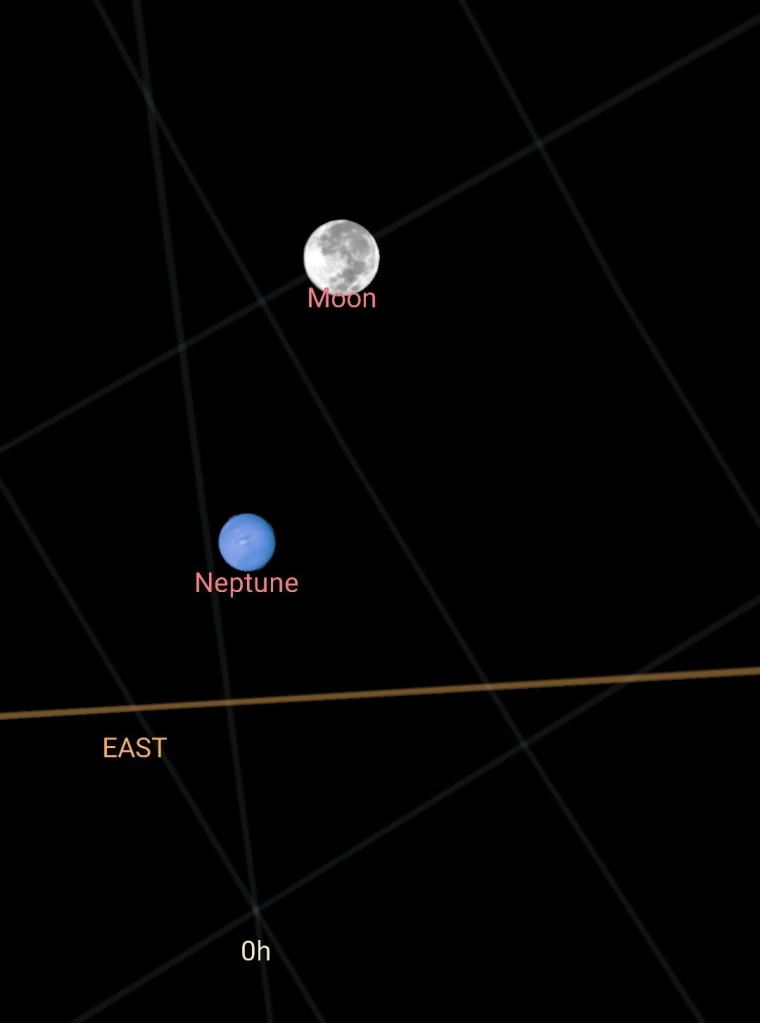
Neptune.

It got me thinking.

Why did we name the planets after mythological gods?

I did a little digging and found that the Romans named the five closest planets to the sun after their most important gods, this one, named after the god of the sea, which to the Romans was Poseidon, but in translation, Neptune, and matbe because it was ‘blue’.

Of course, we all know about King Neptune.

We also know about Poseidon, which was the fictional ship that got hit by a tidal wave, and was turned into a blockbuster movie.

But in terms of science fiction, which is not what I write, but I seem to spend a lot of time watching, it strikes me that seeing the moon, we could assume that the moon could be a stopping off point on a trip to the pouter planets.

I’m always surprised at the ingenuity of ‘Sci Fi’ writers in how they can turn what is scientifically impossible to live on but not necessarily impossible to get there (after a long sleep), into a place where we can destroy with equal rapaciousness as our own planet.

If I was going to write something, perhaps it would be about turning the planet into a holiday resort, staffed by robots…

Uh oh, that’s reminiscent of another ‘Sci Fi’ series. I’ll let you guess what it is.
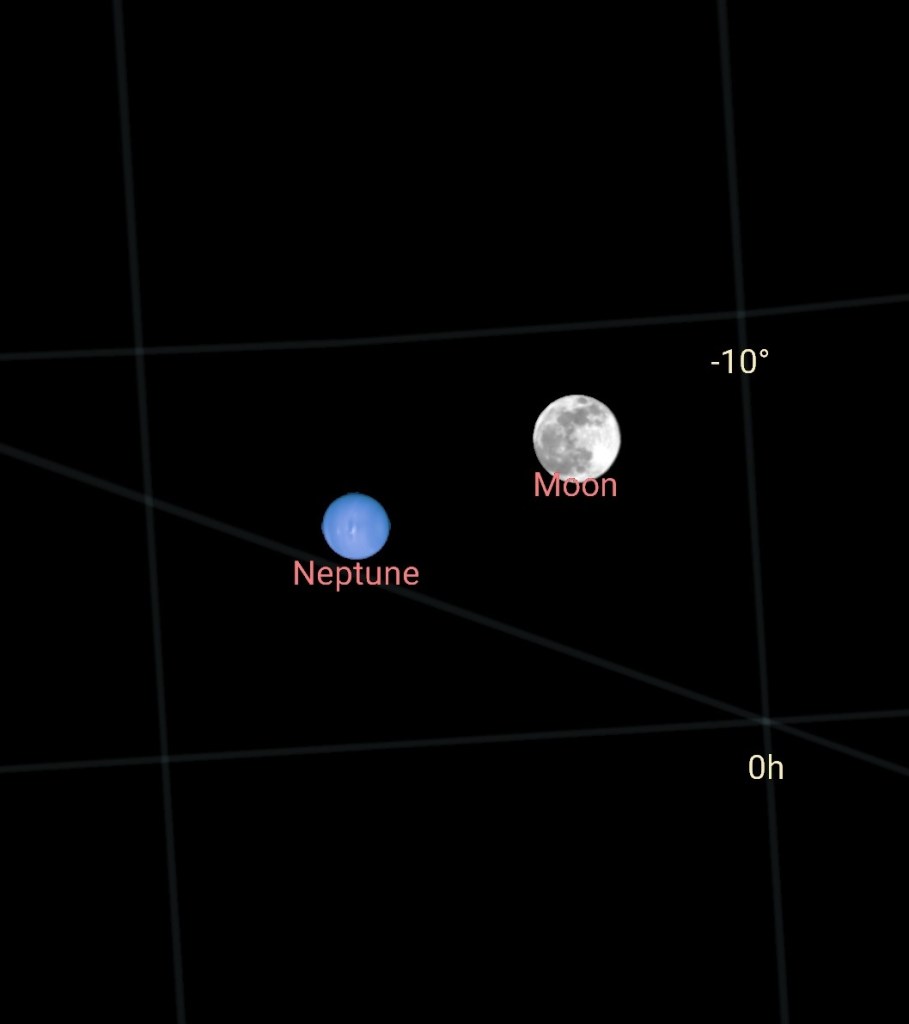
Back to that starship…

And, getting out of the elevator, this time no erratic behaviour but still not filling me with confidence, I step onto the bridge.

The forward screen has changed.

It seems we are going to Neptune via the moon.

The Captain is on the bridge, obviously coming out of his day room on the news that the Chief Engineer had fixed everything.

“Ah, number one, we’ve hung around here long enough.”

He walked back to his chair and sat.

I decided to remain behind the navigator. I could see that the co-ordinated had been entered for Neptune, so the moon was not going to be a stop off.

The Chief engineer’s voice came over the tannoy. “Ready when you are, Captain.”

I forgot, for a moment, that the Chief and the Captain had served before, and someone had mentioned the fact the Captain had asked for him to be assigned to this ship.

“Mr Jacobs, take us out, slowly, and try not to bump into anything this time.”

In a rather rather sheepish tone, Mr Jacobs said, “Taking the ship out carefully, sir.”

It was hard to tell if the ship was moving, but the tell tale sign was the movement of the objects on screen. And the fact I could see through the side windows as we moved forwards, leaving the dock superstructure behind.

Also on the screen I could see the movements of other vessels, several freighters waiting to leave, and one coming in, but standing off until we departed.

Then, suddenly, we were in clear space.

Jacobs turned to the Captain, expecting the next order.

“Let’s take it easy. Level one, when your ready.”

Jacobs was ready, even eager to get this ship under way. It had performed faultlessly in trials, now we were going to put it through it’s paces.

“Level one, as you wish.”

He pushed the button, there was a moment when nothing happened, then with just the slightest movement inside the bridge, we were under way.

Next stop, Neptune.

© Charles Heath 2020

Another night of stargazing…

And this is what I found:

Neptune.

It got me thinking.

Why did we name the planets after mythological gods?

I did a little digging and found that the Romans named the five closest planets to the sun after their most important gods, this one, named after the god of the sea, which to the Romans was Poseidon, but in translation, Neptune, and matbe because it was ‘blue’.

Of course, we all know about King Neptune.

We also know about Poseidon, which was the fictional ship that got hit by a tidal wave, and was turned into a blockbuster movie.

But in terms of science fiction, which is not what I write, but I seem to spend a lot of time watching, it strikes me that seeing the moon, we could assume that the moon could be a stopping off point on a trip to the pouter planets.

I’m always surprised at the ingenuity of ‘Sci Fi’ writers in how they can turn what is scientifically impossible to live on but not necessarily impossible to get there (after a long sleep), into a place where we can destroy with equal rapaciousness as our own planet.

If I was going to write something, perhaps it would be about turning the planet into a holiday resort, staffed by robots…

Uh oh, that’s reminiscent of another ‘Sci Fi’ series. I’ll let you guess what it is.
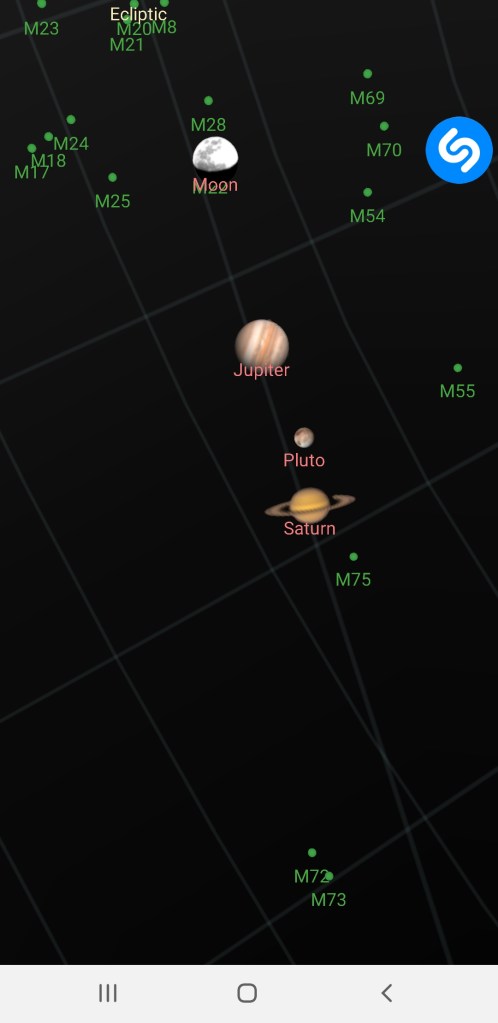
Not only did the stars come out at night…

So did some of the planets:

I was in the front yard of my son’s house when I was taking in the clear night sky when I saw a bright shining object that is usually a planet.

Out of curiosity, I fired up Google Sky and pointed in the direction of the shiny object, and, lo and behold, it was the planet Jupiter, with a couple of others to go with it.

Not all of the planets lining up, though.

And I don’t think they regard Pluto as a planet yet.

And, the moon was there, but not quite as bright as it usually is.

I did go searching for the other planets, but, quite oddly, found the sun, even though my phone was pointing towards the ground. Phones, it seems, have X-Ray vision.

I might make this a nightly thing till I find all the planets, and I might even try it during the day.