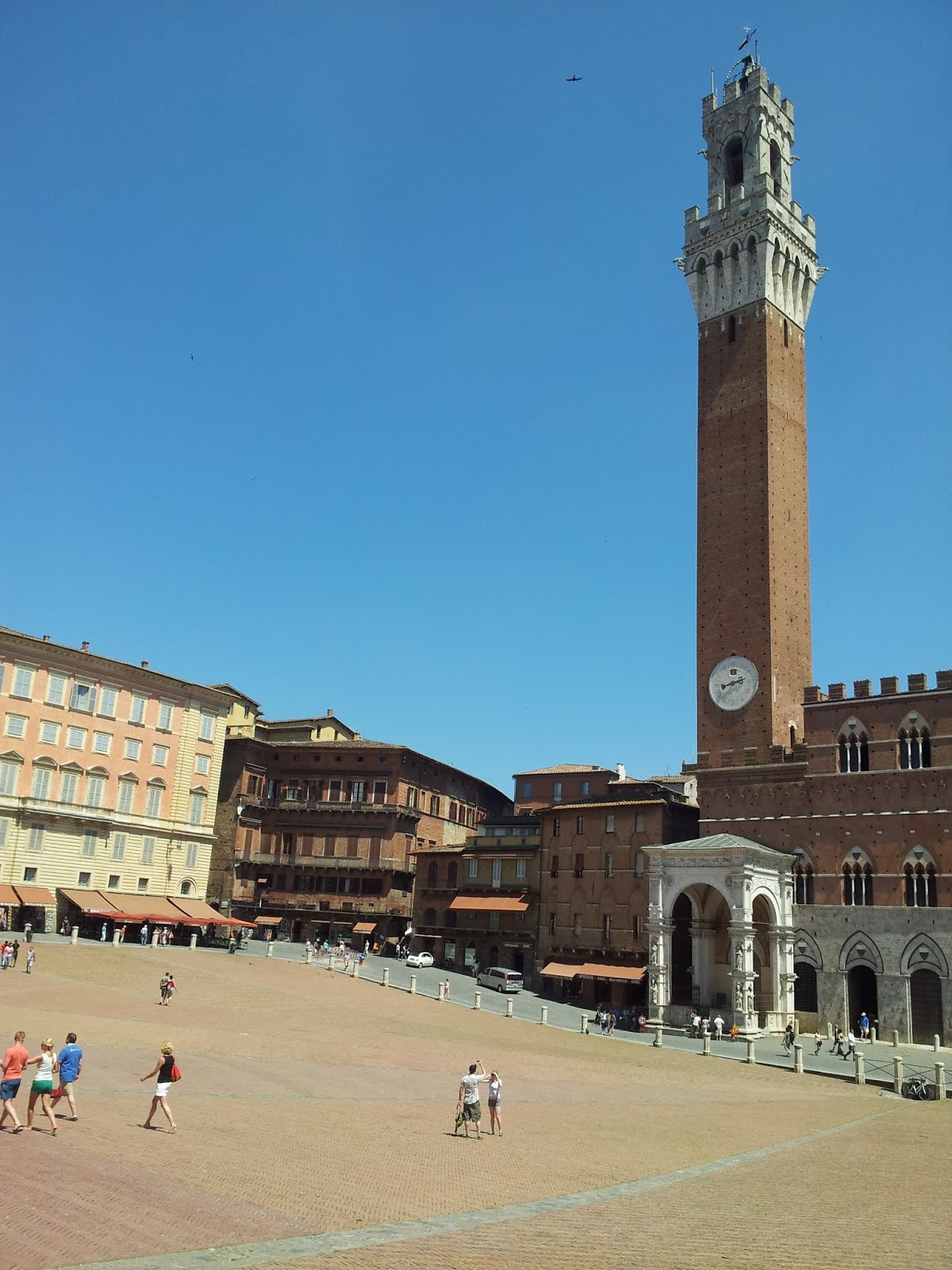
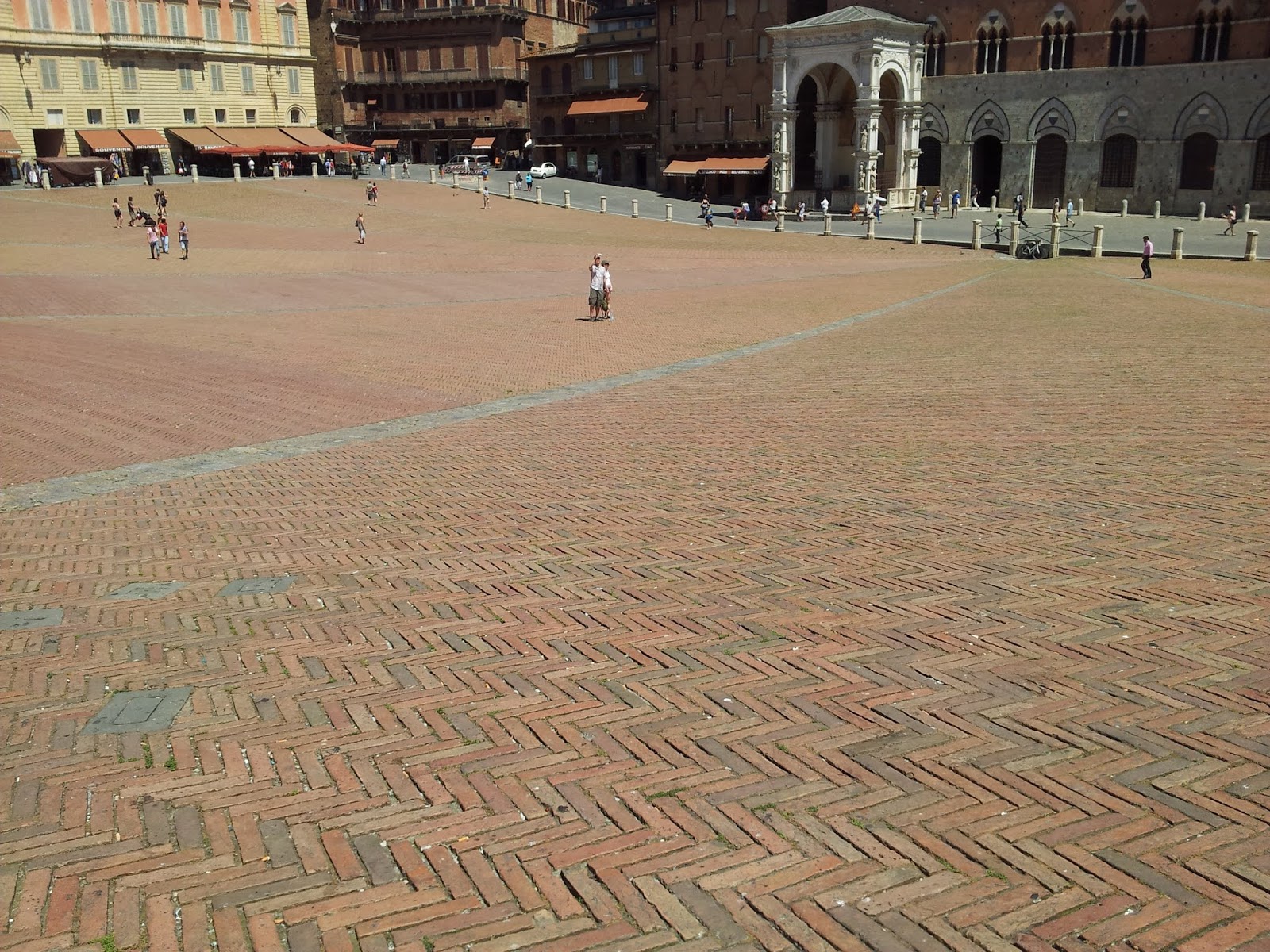
Searching for locations: The Piazza del Campo, Siena, Tuscany, Italy

The Piazza del Campo is one of the greatest medieval squares in Europe.

It is shaped like a shell.

This is where the Palazzo Publico and the Torre del Mangia are.

At 102 meters (334 feet), the bell tower is the city’s second-tallest structure.

When it was built in 1848 it was the exact same height of the Duomo to show that the state and church had equal amounts of power.

Around the edges of the Piazza are a lot of restaurants, where you can sit in the shade, have a plate of pasta and sip on a cold limonata.

Writing about writing a book – Day 12

Today, I’ve decided on doing a little research, and this means giving the internet and Google a good workout.

I need some information about the Vietnam War.

So, as a start, I type in the words ‘Vietnam War’ into Google.

This returns: About 699,000,000 results (0.83 seconds)

Wikipedia says “The Vietnam War, also known as the Second Indochina War, and in Vietnam as the Resistance War Against America or simply the American War, was a conflict that occurred in Vietnam, Laos, and Cambodia from 1 November 1955 to the fall of Saigon on 30 April 1975”

OK, so this gives me the broadest outline.  What I need is details, so it’s a matter of where to start.  This means to start with, when did troops get sent from both Australia and the United States for service.  It seems the US sent troops from 1964 to 1969, and Australia between August 1965 and March 1966.  This gives me a starting point, because our main character is Australian, and somehow gets seconded to the Americans.

January 1972, the war ends.

Now we need to know

  •  where the bases were
  • where the battle zones were
  • methods of transportation
  • what happened to prisoners of war
  • rest and recreation points
  • CIA involvement (which will no doubt be impossible to find evidence)
  • what happened to soldiers injured in battle

It’s a list that will get longer and may require a reading list, and first-hand accounts.

It looks like it’s going to be a long day.

Timelines, deadlines, and disasters

Unfortunately, I’m not one of those people who work well to timelines, so the very thought of using something like Microsoft Project to get my writing into some sort of timeframe, with deadlines, seemed, to me, to be a bit extreme.

Say for instance the major deadlines for a writing project are

  1.  Write an outline, with as much detail as possible, with an overarching plot, characters, key points in the novel, and scouting for locations
  2. Writing.  This could be broken down into chapters, but more practicable would be sectioned, each consisting of a number of chapters.
  3. Editing, planning for one, two or three, or more edits
  4. Proofreading
  5. Send to editor

Clearly if I was going to take this approach, then I would have to allocate hours of the day specifically for writing and doing all those other writer chores in less time, and with fewer distractions.

And, it might work for a more dedicated author.

But…

I did make a new years resolution that I would try and do things differently this year.

Except…

I set a goal to restart editing of my next novel on 1st Feb. I thought, setting it so far into the year it would be easy.

It would give me the time to clear up all the outstanding, get in the way, distractions, and be free to finally finish it.

No such luck.  I never found the time to do the planning.

And there’s always something else to do, other than what we’re supposed to be doing.

For me it was going away, spending long, sleepless hours flying from one side of the world to the other had fuelled my imagination more than I expected and I now have three more stories that need either a continuing plot outline or be written as ideas come to me.

If only I could focus on one story at a time.

So…

I’ve re-jigged the timetable and set a goal to finish playing with these other stories by the end of the month, so come the first of March, I can resume work on the next book to be published.

Or not.

The year so far, a movie to remember

It’s three days old and I have managed to fit in a couple of movies and start writing the second Walthenson novel.

Guess what was the most important event…

I have been seeing the trailers for Little Women for a while and knew it was going to be a new version of Louisa Alcott’s novel.

To me, it was the American attempt of writing a Jane Austen story with an American slant.

To my surprise, actually not really a surprise, I remember seeing the original version many, many years ago and was quite taken with it, certainly enough to go out and buy the book.

I guess being of English extract, it seems odd to me that I should be interested in American novels, particularly those of the 19th century.  My thoughts often ran to nature and American heroes like Davy Crocket and places like the Alamo.

Certainly, there was any number of stories about the civil war.

But, most of my impressions of Americana came from Hollywood, the wild west, and John Wayne, who was, to me, larger than life.

History dripped from the storylines of many of the 12940’s and 1050’s films that had people like Humphrey Bogart.  My favorite, of course, The Maltese Falcon

But I digress…

Little women was brilliant and taking my two granddaughters one 13 and the other 16, their appreciation of the film was quite interesting, if not very positive.  In a theatre that was filled with a lot of people over the age of 40, it surprises me more teens don’t come along and see what ‘real’ films are like.

Unfortunately, we are inundated with cartoon characters, comic book heroes and remakes of remakes, the sort of rubbish that makes money, but does little for educating a teenage mind.

Perhaps this film should be made mandatory viewing for every teenager.


In a word: Bug

Being a computer programmer, this word had a particular meaning for me, where a part of the programme did something other than expected.

Like unexpectedly stopping and freezing the screen.  Some very famous programs and operating systems used to have a lot of these ‘bugs’.

More familiarly for all of us, a bug is an unwanted insect pest like a fly, or an ant, though there’s a host of those pesky ‘bugs’.

You could bug someone by hanging around and asking inane questions.

You could also bug someone by surreptitiously planting a microphone on them, or somewhere in their house, car, or office.

A person could have a bug, meaning there’s some germ or bacteria they’ve picked up that makes them very ill, like a cold, or pneumonia.  Or, more than likely, it’s a bug going around.  School children are particularly susceptible.

And if you like reading books you might have caught the reading bug.

You could tell someone to bug off, that is, to go away.

I might want to bug out, as in disappear, especially if there was someone I didn’t want to see.

“The Things We Do For Love” – Coming soon

Is love the metaphorical equivalent to ‘walking the plank’; a dive into uncharted waters?

For Henry the only romance he was interested in was a life at sea, and when away from it, he strived to find sanctuary from his family and perhaps life itself.  It takes him to a small village by the sea, s place he never expected to find another just like him, Michelle, whom he soon discovers is as mysterious as she is beautiful.

Henry had long since given up the notion of finding romance, and Michelle couldn’t get involved for reasons she could never explain, but in the end both acknowledge that something happened the moment they first met.  

Plans were made, plans were revised, and hopes were shattered.

A chance encounter causes Michelle’s past to catch up with her, and whatever hope she had of having a normal life with Henry, or anyone else, is gone.  To keep him alive she has to destroy her blossoming relationship, an act that breaks her heart and shatters his.

But can love conquer all?

It takes a few words of encouragement from an unlikely source to send Henry and his friend Radly on an odyssey into the darkest corners of the red light district in a race against time to find and rescue the woman he finally realizes is the love of his life.

The cover, at the moment, looks like this:

lovecoverfinal1

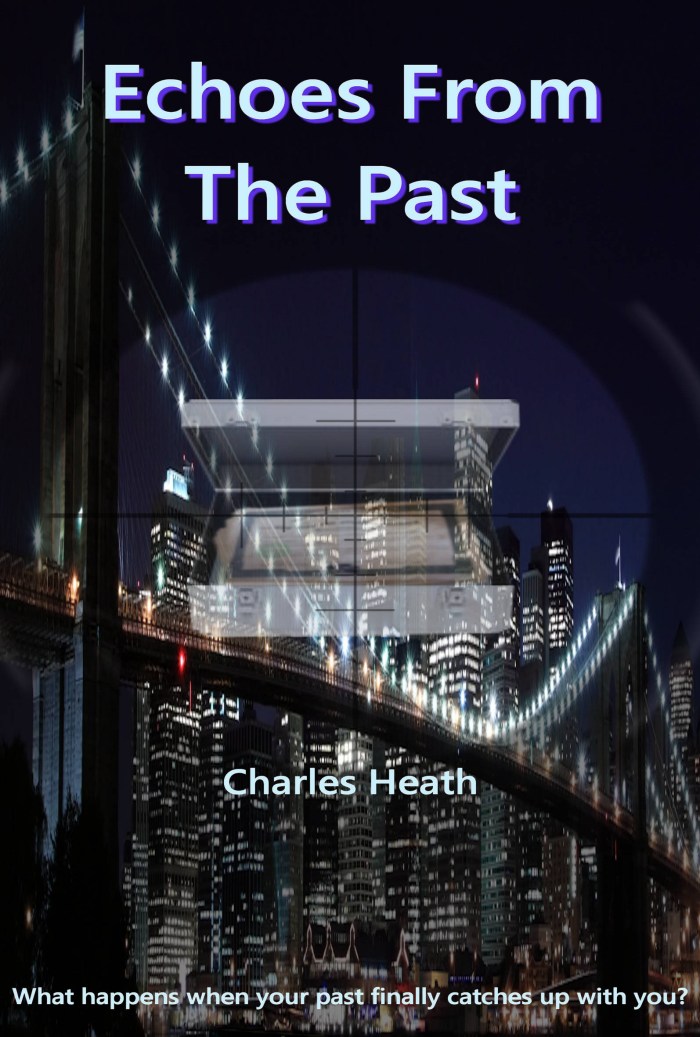
“Echoes From The Past”, buried, but not deep enough

On special, now only $0.99 for the next few weeks.


What happens when your past finally catches up with you?

Christmas is just around the corner, a time to be with family. For Will Mason, an orphan since he was fourteen, it is a time for reflection on what his life could have been, and what it could be.

Until a chance encounter brings back to life the reasons for his twenty years of self-imposed exile from a life only normal people could have. From that moment Will’s life slowly starts to unravel and it’s obvious to him it’s time to move on.

This time, however, there is more at stake.

Will has broken his number one rule, don’t get involved.

With his nemesis, Eddie Jamieson, suddenly within reach, and a blossoming relationship with an office colleague, Maria, about to change everything, Will has to make a choice. Quietly leave, or finally, make a stand.

But as Will soon discovers, when other people are involved there is going to be terrible consequences no matter what choice he makes.

https://amzn.to/2CYKxu4

newechocover5rs


The thing about ‘must read’ lists

And that is, you don’t have to read any of the books on it.

Who really cares if you do or if you don’t?

It’s just a list of books that a particular writer, journalist, or editor puts together simply because they liked them and think you might also.

And sometimes weight of sales numbers will dictate popularity, and therefore some basis to any particular list.

Of course, this doesn’t work if all you read is comics or romance books like Mills and Boon.  Hey, that’s fine.  You’re reading and this is one of the most important aspects of life, to read, and sometimes, to learn.

I know that my life changed dramatically when I read books, lots of different sorts of books.  I’ve never recommended anyone read the dry, dusty tomes about neurosis for psychiatry, or a history of the Roman Empire simply because of it something I was interested in after I saw the film, Ben Hur.

In a similar manner when we go to school, the curriculum sometimes dictates we read certain books, whether this is to give us an understanding of life centuries before, or that there is some deeper, more sinister, meaning to it all, but some of those books I had to read, back then, the meaning was lost on me.

But should I not read them?  I know most of the kids in the class didn’t because they considered reading a waste of time.  There were more important things to do like chase girls and play a sport.  And torment the teachers.  From what I hear, little has changed.

But the point here is, in my case, I’m just giving you the drum on what I read to improve my literary understanding, of life, and of the world, and perhaps in a small way, help with my writing.  After all, writers must read, particularly in their genre so they have some idea of what readers want.

But again that two-word phrase ‘Must read’ is an unfortunate and often misused heading.  We do it all the time.  Ten films you ‘must-see’, ten things you ‘must-have’, ten places you ‘must go’ usually before you die.

It amuses me to see books with a 1000 somethings you must do before you die.  I will no doubt be well and truly dead before I get halfway through even one of those lists, that is, if I actually took any notice of them.

But, what’s more interesting is that I like to see how many I haven’t done, which is probably the reason why we buy the book, usually off the sale table.

Just one of many reading lists – part 3

**Please don’t assume that you have to, nor would I ever expect you to,  read any or all of these books.  You don’t.**

Everyone, it seems, will publish what they call the top 100 books that you should read. Some are voted on, some belong to the opinion of the editor of the book review section of a newspaper, and, as you know, there are a lot of newspapers, a lot of editors, and a lot of opinions.

I’m not a newspaper, I’m not an editor, but I have a list, based on personal experience, and many, many years of reading.

It’s in no particular order.

41.  The Hound of the Baskervilles by Sir Arthur Conan Doyle, as well as a host of other Sherlock Holmes stories

42.  The Secret Agent by Joseph Conrad, one of Conrad’s later political novels, set in London in 1886 and deals with anarchism and espionage.  In those days spies were called anarchists.

43.  The Ipcress File by Len Deighton, introducing us to Harry Palmer, who was personified by Michael Caine and led to Horse Under Water, and Funeral in Berlin.  More of Len Deighton later on in the list

44.  The Remorseful Day by Colin Dexter introducing the somewhat enigmatic detective, Morse, his first name not revealed for a long time but oddly, Endeavour.  John Thaw brought him to life

45.  Crime and Punishment by Fyodor Dostoevsky, hard to pronounce and even harder to read, but perhaps worth it in the end.  By the time I read this I was wishing for a Russian writer had could use an economy of words

46.  Dr. Zhivago by Boris Pasternak wasn’t it.  A vast and lengthy dissertation on lost love, I felt very sad for Zhivago in the end.  I saw a stage play of the same name, and I’m sorry, but it’s a few hours of my life I will never get back

47.  Casino Royale, the first of the James Bond novels by Ian Fleming.  I have to say these are among my favorite spy books.  I must say I preferred the new James Bond in Casino Royale, though Sean Connery still rules!

48.  The Day of the Jackal by Frederick Forsythe, a fascinating story about an assassin

49.  Anything written by John Le Carre, but in particular, the George Smiley collection.  Finally unmasking his nemesis the Russian spymaster made it all so satisfying.

50.  The Bourne Identity by Robert Ludlam, inspiring a long series by both Ludlam and Eric Lustbader makes entertaining reading, but the first, the man who did not know who or what he really was, was excellent.  Matt Damon didn’t harm his persona either.

51.  Murder Must Advertise by Dorothy Sayers, whose detective is Lord Peter Whimsey, a 1933 mystery novel that’s eighth in the series

52.  Gorky Park by Martin Cruz Smith.  You have to admit that his Russian detective Arkady Renko is up against it when his investigation goes in a direction that uncovers corruption and dishonest in his superiors

53.  The Way of All Flesh by Samuel Butler, a semi-autobiographical novel written between 1987 and 1884, and published in 1903.  The story of the Pontifex family.

54.  Howards End by E. M. Forster, first published in 1910, is an interesting insight into the behavior of the, and between the classes, with the Schlegels acting as the catalyst.

55.  Washington Square by Henry James, originally published as a serial, and covers the conflict between daughter and father.  I must say I prefer The Ambassadors to Washington Square.

56.  Ulysses by James Joyce, a day in the life of an ordinary man, Leopold Bloom, why could it not be the 7th June rather than the 16th, for obvious reasons

57.  The Go-Between by L. P. Hartley is a view of society at the end of the Victorian period through the eyes of a young boy.  I read this while still at school and had no clue why, but later, when I read it again, I understood the meaning

58.  Atonement by Ian McEwan, I saw the film and then read the book.  Never a good idea.  Basically, a young girl makes a bad mistake and tries to atone for it.

59.  Gone With The Wind by Margaret Mitchell, the War and Peace of Americal novels, and as long by comparison.  The only book written by Mitchell, and the second most read book by Americans.  The film was interesting but awfully long.

60.  The English Patient by Michael Ondaatje, with a man with severe burns and the effect he had on three others.  Colin Firth is villain one day and hero the next, this time in the cinematic version, an out and out cad.

More to come…
 

In a word: Quick

Go get your stuff and be quick about it.

I’ve tried on many occasion to be quick, but it’s like my shoes have lead soles, or it’s like walking through water.

Perhaps I should just stop finding excuses and admit it’s old age and I am slowing down!

I’m guessing that in using the expressing the quick and the dead, I’ve got one foot in the grave.

But when you use the word quick it generally means moving fast or doing something at a rapid rate.

It could also refer to someone who picks up knowledge rapidly, that is to say, that boy is quick, maybe quick as a flash.

I’ve been cut to the quick. An interesting expression which basically means you’ve been hurt very badly.

It also makes reference to the more sensitive side to us, hence the above expression.

It has a more literal meaning, referring to the quick, under your fingernails, and you know how much that hurts when you cut the nail too short, or remove the nail from the quick.

And like most of us, I’ve been caught more than once in metaphorical quicksand.

It doesn’t pay to go near or test out what real quicksand is, but if you have to, make sure you tie yourself to an anchored rope first.