Short story writing – Revision

I have reworked the second part of the story though this part needed a few less changes than the first.

This is the new second section:


It had been another long day at the office for Officer Margaret O’Donnell, or, out in the streets, coping with people who either didn’t know or didn’t care about the law.

People who couldn’t cross the road where there were crossings and lights to protect them, silly girls shoplifting on a dare, and boys who thought they were men and could walk on water.

The one they scraped of the road would never get to grow up, and his mother, well, she was not doing another call on a family to give them bad news for a while.  Someone else could deal with the problem next time.

That was her day.

So far.

At the end of the day she was glad to be getting home, putting her feet up, and forgetting about everything until the next morning when it would start all over again.

Coming around that last corner, the home stretch she called it, she was directly opposite the corner shop, usually closed at this hour of the night. 

It was not.  The lights were still on.

She looked at her watch and saw it was ten minutes to midnight, and long past closing time.  She looked through the window, but from the other side of the street she could only see three heads and little else.

Damn, she thought, I’m going to have to check it out. 

She was aware of the rumors, from her co-residents and also her colleagues down at the station, rumors she hoped were not true.


Jack exchanged a look with the shopkeeper, who in return gave him a slight shrug, as if to say he ‘we tried and failed’.

And she was clearly scared of something, and it looked to him like it might be the shopkeeper.  He had no idea what happened before he burst into the shop, but from the tenseness in the air, it had nothing to do with the boy on the floor.

He could see the girl was not strung out on drugs, in fact she did not like a user at all.  If she had been, Jack was positive they’d both be on the floor, dead, or almost dead.

Another rumor just coming back to him, this was apparently not the first time the store had been robbed, but by the time the police arrived, the would be robbers were gone.

What was different this time?

Was it the fact the girl was just the unfortunate partner of a boy who was on drugs, and had found herself in a dangerous position, one that couldn’t be dealt with or explained away to the advantage of the shopkeeper.

Beth, his wife, had told him she didn’t like nor trust the shopkeeper and that her friend in the same apartment block had told her he had been seen selling drugs to youths who hung around just before he closed.  She had warned him it would not be safe, but he had ignored her.

It was a bit late to tell her she might be right.

He took a half step towards the door, judging the distance and time it would take to open the door and get out.

Too far, and he would be too slow, and that his reward for running would be a bullet in the back.

Perhaps another half step when she wasn’t looking.


The girl had long enough to think about her situation.  This was only going to end one of two ways, and she knew it.  No amount of ‘thinking’ was going to make it any better, only worse.

The shopkeeper changed his expression to a more placatory one, and said quietly to the girl, “Look, this is not this chap’s problem.”  He nodded in the direction of the customer.  “I’m sure he’d rather not be here, and you would glad of one less distraction.”

He could see she was wavering.  She was not holding the gun so steadily, and the longer this dragged on, the more nervous and unpredictable she would become.

And in the longer game, the customer would sing his praises no matter what happened if he could get him out of the shop alive and well.

This could still be a win-win situation.


The girl looked at Jack.  The shopkeeper was right.  If he wasn’t here this could be over, one way or another.

But there was another problem.  It didn’t look like Simmo was in any shape to get away.  In fact this was looking more like a suicide mission.

She waved the gun in his direction.  ‘Get out now, before I change my mind.’

As the gun turned to the shopkeeper, Jack wasn’t going to wait to be asked twice and started sidling towards the door.


Officer Margaret O’Donnell crossed the street from the corner instead of remaining on the same side of the street as she did every other night.  When she reached the other sidewalk, she was about 20 yards from the nearest window of the store.

As she crossed, she got a better view of the three people in the store, and noticed the woman, or girl, was acting oddly, as if she had something in her hand, and, from time to time looked down beside her.

A yard or two from the window she stopped, took a deep breath, and then moved slowly forward, getting a better view of the scene with each step.

Then she saw the gun in the girl’s hand, and the two men, the shopkeeper and a customer, facing her, hands out where they could be seen.

It was a convenience store robbery in progress.

She reached for her radio, but it wasn’t there.  She was off duty.  Instead, she withdrew, and called the station on her mobile phone, and reported the robbery.  The officer on the end of the phone said a car would be there in five minutes.

In five minutes there could be dead bodies.

She had to do something, and reached into her bag and pulled out a gun.  Not her service weapon, but one she carried in case of personal danger.


The policewoman crouched below the window shelf line so the girl wouldn’t see her, and made it to the door before standing up.  She was in dark clothes so the chances were the girl would not see her against the dark street backdrop.

Her hand was on the door handle about to push it inwards when she could feel it being yanked hard from the other side, and the momentum and surprise of it caused her to fall forward, losing balance, and crash into the man who was trying to get out.

What the hell…

A second or two later both were on the floor in a tangled mess, her gun hand caught underneath her, and a glance in the direction of the girl with the gun told her the situation had gone from bad to worse.

The girl had swung the gun around and aimed it at her and squeezed the trigger.  It was the second of two successive shots, the mini explosions  in the small room almost deafening, and definitely disorientating.

Behind her the glass door disintegrated when the bullet hit it.

Neither she or the man beside her had been hit.

Yet.

She felt a kick in the back and the tickling of glass then broke free as the man she’s run into rolled out of the way.

Quickly on her feet, she saw the girl had gone, those precious few seconds taken to get up off the floor and get out the door was long enough for the girl to disappear, as if into thin air.

She could hear a siren in the distance.


© Charles Heath 2016
A story page by page – PI Walthenson

How thrilled Harry Walthenson, Private Detective, had been to see his name painted on the translucent glass window in the door to his office.  Located in Gramercy Park, in an old building full of atmosphere, he had a space renovated to resemble that of Spade and Archer in a scene right out of the Maltese Falcon.  His desk had an antique phone like those used in the 1930’s, and a lamp that cast eerie shadows at night.  Along one wall was a couch, his bed for more nights than he wanted to remember, and on the other a filing cabinet, waiting for the big case files.

Up till now it had been missing cats and dogs.  Then, everything changed…

Starts at episode 1 – The Wrong Place, The Wrong Time

http://tinyurl.com/PIWalthenson01

To read the latest episode:  http://tinyurl.com/PIWalthenson59


My Website:  http://charles-heath.com

My blog:  https://aloysius5.wordpress.com/


Enjoy


PS  Please leave a comment, make a suggestion, or join in the conversation

Short Story Writing – The end of the story

The stage is set for the big finale, though I’m not quite sure how ‘big’ it’s going to be.

Jack is ready to go having been given the green light by the girl with the gun.  It seems collateral damage is not on the agenda for her, though he does admit to himself she is between that proverbial rock and hard place.

The store keeper still has a plan, shaky at best, to regain hold of the situation, once the customer is out of the shop.  Nervy or not, he doesn’t think she had the capability to pull the trigger.  He knows what sort of person it takes to do that, and she isn’t one of them.

The policewoman is not sure what to expect but thinks that surprise is on her side, and whatever is going on, she will be able to resolve it.  She has her weapon drawn and ready to use.  She had yet to shoot anyone with it

The girl is at the point of no return, that point where she had nothing left to lose.  Anything she had before was gone, destroyed by the choices she’d made.  No one ever handed out a manual on how you should live your life, or provide a list of people you should avoid, and her father’s prophetic words the last time they men came home with a thud, ‘your life is defined by the choices you make’.

She was not going to jail so it was going to be death or glory.


Now read on:


Jack had heard there were moments where, in a split second, your whole life flashes before your eyes.  His did, and what he saw he didn’t like.

But, then, neither was he very happy about the fact he was nearly out the door before the policewoman on the other side crashed into him and sent him sprawling to the floor.

That was about the same fraction of a second he heard the gun go off, twice, or so he thought, and knew he was a dead man, waiting for the bullet.

Another fraction of a second passed as the policewoman tried to unravel the mess they’d become, and in that moment in time felt the tugging at his sleeve and then, as if in slow motion, the sound of the glass door disintegrating behind him.


Annalisa was quite prepared to let the customer go.

She kept one eye on the shopkeeper and one on the customer, sidling towards the door.  The gun was ready to shoot the first person who made a wrong move.

Or so she told herself.  It was getting heavy in her hand, she was shaking almost uncontrollable now, and was getting more and more frightened of the consequences.  She didn’t think, if she aimed, she could hit the side of a barn let alone a person standing ten feet away from her.

The customer reached the door.

At exactly the moment he put his hand 0on the door handle to open the door, another person was pushing the door, trying to make their way in.

With force.

She saw the blue cap, guess it was the police, though she hadn’t heard the siren, but also guessed the shopkeeper might have a silent alarm.

Damn.

One shot, instantly in the direction of the door, not necessarily ailed at the two people now collapsing to the floor in a tangled mess, but at the door itself.

The impact, yet another guess, might shatter the glass and make it easier to escape.

After one more job.

The hell with Simmo.  He’d dragged her down the rabbit hole far enough.  Simmo knew her first name, that she had rich parents, but nothing else.  Besides, he was in such bad shape she didn’t think he’d recover.

The shopkeeper had no idea who she was, it was the first time she’d been to his shop, and now, after a few weeks with Simmo, not ever her mother would recognize her.

She swiveled the gun and aimed it at the shopkeeper and pulled the trigger.,  One less dealer in the city was good news not bad.

She saw it hit, not exactly where, but it caused him to twist and start falling to the ground, at the same time letting out a very loud scream.  Panic or anger?

She wasn’t waiting to find out.

A last glance at Simmo, now down for the count, she ran for the door, past the two on the floor, what she could now see was a policewoman with her weapon drawn, but unable to use it.

She crashed through the remainder of the glass shards put into the street and ran.

In the distance she could hear a police car coming, siren blaring.  A warning if there was ever one to run harder, up the road, down an alley, out into another street, then down into the subway.

Gone.


It took fifteen seconds to disentangle herself from the customer, pushing him away, and getting to her feet, weapon aimed.

At nothing but air.

The girl had gone, and then she had the vague recollection of a shadow passing her as she was facing the other way getting to her feet.

And running out the door.

Five more valuable seconds as her brain processed this piece of information, before it issued the command to go out the door and see which way she went.

Another ten seconds to get out the door, and see the police car coming from the same direction she had earlier, screeching to a halt outside the shop, a car door opening, and an officer getting out.

Margaret was guessing at the driver to drive down the road where she guessed the girl had run, managing to yell breathlessly at the office getting out, “She’s gone that way,” and pointing.

The officer relayed the message and closed the door as the car sped off.

“What happened?”

“Shots fired by a woman, more a girl, in the process of a robbery.”

She ran back inside the officer following.

The customer had moved to a corner and was standing, testing his limbs, with an expression that said he was amazed he was still alive.

“Over behind the counter.  She shopkeeper.  He was standing there.”

The policeman rounded the end of the counter and looked down.  “He’s here.  It’s not looking good.”

Margaret didn’t hear him.  She was calling an ambulance.


Next:  The whole story, first draft


Short story writing – Actions have consequences

It’s time for the policewoman to arrive.

There is such a thing as pure dumb luck.

If she did not walk through the door when she did then Jack would have walked away.

From the policewoman’s perspective:


She crossed the street from the corner instead of remaining on the same side of the street as she did every other night.  When she reached the other sidewalk, she was about 20 yards from the nearest window of the store.

As she crossed, she got a better view of the three people in the store, and noticed the woman, or girl, was acting oddly, as if she had something in her hand, and, from time to time looked down beside her.

A yard or two from the window she stopped, took a deep breath, and then moved slowly, getting a better view of the scene with each step.

Then she saw the gun in the girl’s hand, and the two men, the shopkeeper and a customer, facing her, hands up.

It was a convenience store robbery in progress.

She reached for her radio, but it wasn’t there.  She was off duty.  Instead, she withdrew, and called the station on her mobile phone, and reported the robbery.  The officer on the end of the phone said a car would be there in five minutes.

In five minutes there could be dead bodies.

She had to do something, and reached into her bag and pulled out a gun.  Not her service weapon, but one she carried in case of personal danger.


Guns are dangerous weapons in the hands of professional and amateur alike.  You would expect a professional who has trained to use a gun to not have a problem, but consider what might happen in exceptional circumstances.

People freeze under pressure.  Alternately, some shoot first and ask questions later.

We have an edgy and frightened girl with a loaded gun, one bullet or thirteen in a magazine, it doesn’t matter.  It only takes one bullet to kill someone.

Then there’s the trigger pressure, light of heavy, the recoil after the shot and whether it causes the bullet to go into or above the intended target, especially if the person has never used a gun.

The policewoman, with training, will need two hands to take the shot, but in getting into the shop she will need one to open the door, and then be briefly distracted before using that hand to steady the other.

It will take a lifetime, even if it is only a few seconds.

Actions have consequences:


The policewoman crouched below the window shelf line so the girl wouldn’t see her, and made it to the door before straightening.  She was in dark clothes so the chances were the girl would not see her against the dark street backdrop.

Her hand was on the door handle about to push it inwards when she could feel in being yanked hard from the other side, and the momentum and surprise of it caused her to lose balance and crash into the man who was trying to get out.

What the hell…

A second or two later both were on the floor in a tangled mess, he gun hand caught underneath her, and a glance in the direction of the girl with the gun told her the situation had gone from bad to worse.

The girl had swung the gun around and aimed it at her and squeezed the trigger twice.

The two bangs in the small room was almost deafening, and definitely disorientating.

Behind her the glass door disintegrated when the bullet hit it.

Neither she or the man beside her had been hit.

Yet.

She felt a kick in the back and the tickling of glass, then broke free as the man she’s run into rolled out of the way.

Quickly on her feet, she saw the girl had gone, and wasted precious seconds getting up off the floor, then out the door to find she had disappeared.

She could hear a siren in the distance.  They’d find her.


If she had not picked that precise moment to enter the shop, maybe the man would have got away.

Maybe.

Is she had been aware of the fact he was allowed to leave.

He was lucky not to be shot.

Yet there were two shots, and we know at least one of them broke the door’s glass panel.


Next – the epilog

Short story writing – Adding a catalyst


Just when there’s enough complication in the story, we could leave it there with the current three protagonists and see what happens.

But I like mayhem.

So rather than another customer, it’s time to add a complication; an off duty policeman, or more to the point, policewoman.  A beat cop, if they still exist.

Her back story in a sentence or so:

“It had been another long day at the office for Officer Margaret O’Donnell, or, out in the streets, coping with people who either didn’t know or didn’t care about the law.

People who couldn’t cross the road where there were crossings and lights to protect them, silly girls shoplifting on a dare, and boys who thought they were men and could walk on water.

The one they scraped of the road would never get to grow up, and his mother, well, she was not doing another call on a family to give them bad news.

That was her day.  So far.”

What is she doing near the shop?  She lives around the corner.  Perhaps she knows the reputation of the shopkeeper or perhaps not.  It’s not relevant, then, as it is a place she avoids.

Now, she may not have the option.  She sees the shop is still open, past the usual closing time.

Let’s continue:

She came around the corner into the street where she lived and saw the lights were on in the corner store.

“She looked at her watch and saw it was ten minutes to midnight.  Long past closing time.  She looked through the window but from the other side of the road and could only see three heads and little else.

Damn, she thought, I’m going to have to check it out.  There were rumors, and she hoped they were not true.”

Meanwhile, back in the shop how are the others faring?

The shopkeeper is in an invidious position, he can’t supply the kids with the drugs and get them out, not in front of the customer.

The fact the girl has a gun makes the situation almost impossible.  What would happen if he suggests the customer leave?  Without him the situation would be simpler.

Alphonse had only a few moments to sum up the situation, and the sum of those deliberations was the remove the only problem, the customer.

He could still salvage this:

“The shopkeeper changed his expression to one more placatory, and said quietly to the girl, ‘Look, this is not this chap’s problem.’  He nodded in the direction of the customer.  ‘I’m sure he’d rather not be here, and you would glad of one less distraction.’

He could see she was wavering, she was not holding the gun so steadily, and the longer this dragged on, the more nervous and unpredictable she would become.

And in the longer game, the customer would sing his praises no matter what happened after he left.

The girl looked at Jack.  The shopkeeper was right.  If he wasn’t here this could be over.  But there was another problem.  It didn’t look like Simmo was in any shape to get away.  In fact this was looking more like a suicide mission.

She waved the gun in his direction.  ‘Get out now, before I change my mind.’

As the gun turned to the shopkeeper, Jack wasn’t going to wait to be asked twice and started sidling towards the door.”

What happens next?


And the story for this section, with a few minor changes:


It had been another long day at the office for Officer Margaret O’Donnell, or, out in the streets, coping with people who either didn’t know or didn’t care about the law.

People who couldn’t cross the road where there were crossings and lights to protect them, silly girls shoplifting on a dare, and boys who thought they were men and could walk on water.

The one they scraped of the road would never get to grow up, and his mother, well, she was not doing another call on a family to give them bad news.

That was her day.  So far.  For now she was glad to be getting home, putting her feet up, and forgetting about everything until the next morning when it would start all over again.

Coming around that last corner, the home stretch she called it, she was directly opposite the corner shop, usually closed at this hour of the night.  It was not.  The lights were still on.

She looked at her watch and saw it was ten minutes to midnight, and long past closing time.  She looked through the window but from the other side of the road and could only see three heads and little else.

Damn, she thought, I’m going to have to check it out.  There were rumors, and she hoped they were not true.


The shopkeeper changed his expression to one more placatory, and said quietly to the girl, ‘Look, this is not this chap’s problem.’  He nodded in the direction of the customer.  ‘I’m sure he’d rather not be here, and you would glad of one less distraction.’

He could see she was wavering, she was not holding the gun so steadily, and the longer this dragged on, the more nervous and unpredictable she would become.

And in the longer game, the customer would sing his praises no matter what happened after he left.

The girl looked at Jack.  The shopkeeper was right.  If he wasn’t here this could be over.  But there was another problem.  It didn’t look like Simmo was in any shape to get away.  In fact this was looking more like a suicide mission.

She waved the gun in his direction.  ‘Get out now, before I change my mind.’

As the gun turned to the shopkeeper, Jack wasn’t going to wait to be asked twice and started sidling towards the door.


Next:  Actions have consequences


© Charles Heath 2016

Short story writing – Revision

Like all stories as they progress they go through a number of rewrites, and sometimes because of what follows.

This is the rewrite of the first section of the short story I’m undertaking, adding some new details:


Jack was staring down the barrel of a gun.

He had gone down to the corner shop to get a pack of cigarettes.

He had to hustle because he knew the shopkeeper, Alphonse, liked to close at 11:00 pm sharp.  His momentum propelled him through the door, causing the customer warning bell to ring loudly as the door bashed into it, and before the sound had died away, he knew he was in trouble.

It took a second, perhaps three, to sum up the situation. 

Young girl, about 16 or 17, scared, looking sideways at a man on the ground, then Alphonse, and then Jack.  He recognized the gun, a Luger, German, relic of WW2, perhaps her father’s souvenir, now pointing at him then Alphonse, then back to him.

Jack to another second or two to consider if he could disarm her.  No, the distance was too great.  He put his hands out where she could see them.  No sudden movements, try to remain calm, his heart rate up to the point of cardiac arrest.

Pointing with the gun, she said, “Come in, close the door, and move towards the counter.”

Everything but her hand steady as a rock.  Only tell tale sign of stress, the bead of perspiration on her brow.  It was 40 degrees Fahrenheit in the shop.

Jack shivered, and then did as he was told.  She was in the unpredictable category.

“What’s wrong with your friend?”  Jack tried the friendly approach, as he took several slow steps sideways towards the counter.

The shopkeeper, Alphonse, seemed calmer than usual, or the exact opposite spoke instead, “I suspect he’s an addict, looking for a score.  At the end of his tether, my guess, and came to the wrong place.”

Wrong time, wrong place, in more ways than one Jack thought, now realizing he had walked into a very dangerous situation.  She didn’t look like a user.  The boy on the ground, he did, and he looked like he was going through the beginnings of withdrawal.

 “Simmo said you sell shit.  You wanna live, ante up.”  She was glaring at Alphonse. 

The language, Jack thought, was not her own, she had been to a better class of school, a good girl going through a bad boy phase. Caught in a situation she was not equipped to deal with.


© Charles Heath 2016

Short story writing – Point of view

Point of view / Perspective


If this story was being written the first person the only perspective or point of view would be that of the narrator.

Since we need to have a number of perspectives it is better done in the third person so we can change between characters and try to understand their motivation.

We might look at first person perspective for each of characters later.

The second of the protagonists is the girl with the gun.  How did she get it?  How did the situation deteriorate so quickly?   What is she going to do?

This is a short story and we need to know something about her, so we have to get to the heat of the matter quickly, so let’s start with: “Her mother said she would never amount to anything, and here she was, with a broken drug addict coming apart because she had been cut off from her money, dragged into coming to this shop to leverage drugs from his dealer at the end of a gun.

It was her fault, Jerry said, and made her feel responsible, much the same as her parents and everyone else in her life.”

One of life’s losers or just a victim?  This theme can go in any direction.

Then a moment to reflect on why she was here:  “Why had she agreed to go with Jerry?  In that moment when she picked up the gun off the floor she realized it was not out of responsibility or fault, it was out of fear.”

That gives us the why, he had obviously tried to make her feel responsible and when that failed, he threatened her.  But now there’s a bigger issue, the gun and a situation spiraling out of control.  The thing is, she has the gun and the power to walk away or make matters worse.

The problem was, she has outed the shopkeeper as a dealer in front of someone who had not known.  That now made him a victim as much as she was.

“She looked at the two men facing her, a shopkeeper who was a dealer and a customer scared shitless.  As much as she was.  Her gun hand was shaking.”

The scene is set, something has to give.

Time for the shopkeeper to weigh in.

“I have no idea what you are talking about.  Please, put the gun down before someone gets hurt.”

It’s a typical response from a man who realizes he’s in trouble, and is trying to make time while he thinks of how to rescue himself from a potentially dangerous situation.

Time to change the perspective again and explore the shopkeeper.

“If only Jack hadn’t come in when he did.  He would have the gun, called the police, and brazened his way out of trouble.  Who would the police believe a pair of addicts or a respectable shopkeeper?

Now he had to deal with the fallout, especially if the girl started talking.”


Next, actions have consequences, building the tension.


This section rewritten, moving from Jack as the narrator to the girl, and then to the shopkeeper:


Annalisa looked at the two men facing her, a shopkeeper who, despite his protestations, was a dealer and a customer scared shitless.

The poor bastard was not the only one.  This was meant to be simple, arrive at the shop just before closing, force the shopkeeper to hand over the shit, and leave.  Simple.

Except …

The shopkeeper told them to get out.  Simmo started ranting waving the gun around, then collapsed.  A race for the gun which spilled out of his hand, she won.

He was getting the stuff when the customer burst into the shop.

Shit, shit, shit, shit, she thought.

Why had she agreed to go with Jerry?  It was her fault, Jerry said, and made her feel responsible for his problems, much the same as her parents and everyone else in her life.

Her mother said she would never amount to anything, and here she was, with a drug addict coming apart because she had been cut off from her money, dragged into coming to this shop to pick up his score from his dealer at the end of a gun.

She heard a strange sound come from beside her and looked down.  Simmo was getting worse, like he had a fever, and was moaning.


The shopkeeper saw an opportunity.  “Listen to me, young lady, I have no idea what you are talking about.  Please, put the gun down before someone gets hurt.  Your friend needs medical help and I can call an ambulance.”

The girl switched her attention back to him.  “Shut up, let me think.  Shit.”

The storekeeper glanced over at the customer.  He’s been in once or twice, probably lived in the neighborhood, but looked the sort who’d prefer to be anywhere but in his shop.  More so now.  If only he hadn’t burst in when he did.  He would have the gun, called the police, and brazened his way out of trouble.  Who would the police believe a pair of addicts or a respectable shopkeeper?

Now he had to deal with the fallout, especially if the girl started talking.


© Charles Heath 2016


Short Story Writing – Setting the scene

I used to like writing short stories, somewhere between two and five thousand words, but, in the end, it was too much hard work.

No chance of getting into stride with a location description, no real chance of giving a background to a character, it was simply a case of diving straight in.

But …

I’ve been thinking about writing a short story, starting it with a short succinct sentence that will set the tone.

Something like:  “Jack was staring down the barrel of a gun”

What them?

Should he start analyzing what sort of gun it was, did it have a light trigger, was the person holding it shaking, a man or a woman, or a child?

Location, in a house, a disused factory, a shop, a petrol station, the side of the road.

So, where was Jack?

Something like:  “He had gone down to the corner shop to get a pack of cigarettes.”

For himself or someone else?  Is it day, is it night, or somewhere in between?

Something like:  “He had to hustle because he knew the shopkeeper, Alphonse, liked to close at 11:00 pm sharp, and came through the door, the sound of the bell ringing loudly and the door bashed into it.”

So, Jack’s state of mind, he is in a hurry, careless coming through the door, not expecting anything out of the ordinary.

How would you react when you saw a gun, pointed at Alphonse until the sound of the door warning bell attracted the gunman’s attention?

Is it a gunman?

Something like:  “It took a second, perhaps three, to sum up the situation:  a young girl, about 16 or 17, scared, looking sideways at a man on the ground, Alphonse, and then Jack.  A Luger, German, a relic of WW2, perhaps her father’s souvenir, now pointing at him.”

The punch line:  Cigarettes can kill in more ways than one.

The revelation:  The corner store also supplied the local drug addicts.


The revised start is now:


Jack was staring down the barrel of a gun.

He had gone down to the corner shop to get a pack of cigarettes.

He had to hustle because he knew the shopkeeper, Alphonse, liked to close at 11:00 pm sharp.  His momentum propelled him through the door, causing the customer warning bell to ring loudly as the door bashed into it, and before the sound had died away, he knew he was in trouble.

It took a second, perhaps three, to sum up the situation:  a young girl, about 16 or 17, scared, looking sideways at a man on the ground, Alphonse, and then Jack.  He recognized the gun, a Luger, German, relic of WW2, perhaps her father’s souvenir, now pointing at him then Alphonse, the back to him.

Another second or two to consider if he could disarm her.  No, the distance was too great.

“Come in, close the door, and move towards the counter.”

Everything but her hand steady as a rock.  Only tell-tale sign of stress, the bead of perspiration on her brow.  It was 40 degrees Fahrenheit in the shop.

Jack shivered and then did as he was told.  She was in the unpredictable category.

“What’s wrong with your friend?”  Jack tried the friendly approach.

“He’s an addict, looking for a score.  At the end of his tether, my guess, and came to the wrong place.”

Wrong place, Jack thought.  Wrong place for what?

“Simmo said you sell shit.  You wanna live, ante up.”  She was glaring at Alphonse. 

The language was not her own, she had been to a better class of school, a good girl going through a bad boy phase.

She didn’t look like a user.  The boy on the ground, he did.  Going through the beginnings of withdrawal. 


Next time, we will look at point of view.


© Charles Heath 2016-2018

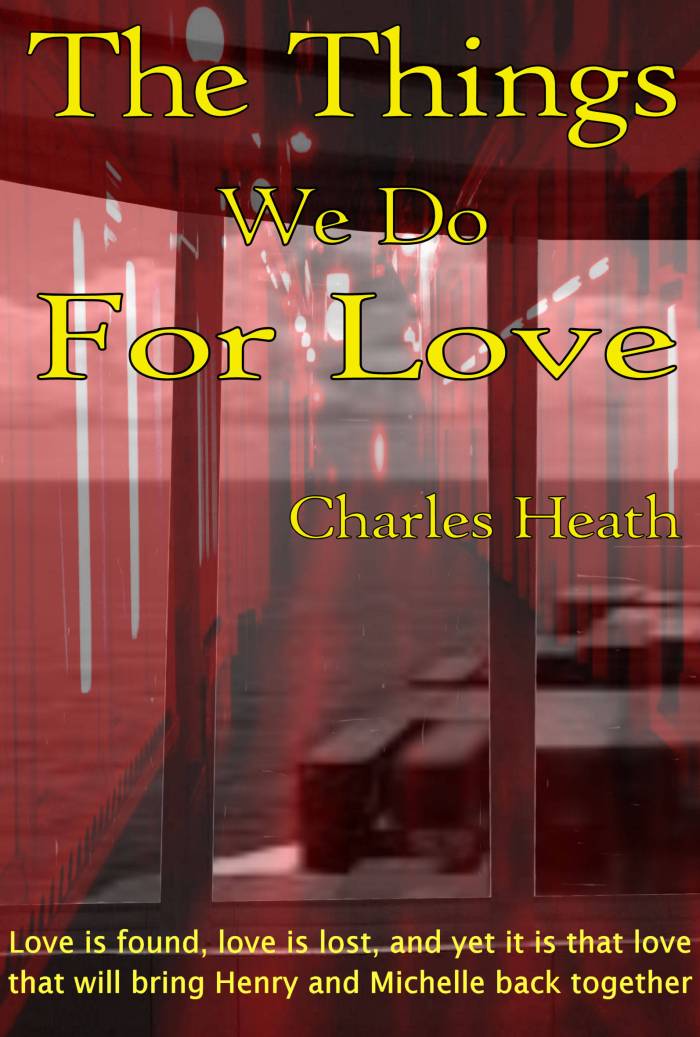
The Things We Do For Love

Like Sunday in New York, this is another attempt at writing a romance novel.  I’m one of those deluded fools who believes in happy endings.

I guess that was a ‘spoiler’!

This is the description I’m currently working with.


Is love the metaphorical equivalent to ‘walking the plank’; a dive into uncharted waters.

For Henry the only romance he was interested in was a life at sea, and when away from it, he strived to find sanctuary from his family and perhaps life itself.  Tonbright, a small village by the sea, is one such a place, but he never expected to find another, Michelle, whom he soon discovers is as mysterious as she is beautiful.

Henry had long since given up the notion of finding romance, and Michelle couldn’t get involved for reasons she could never explain, but in the end both acknowledge that something had happened.  Plans were made, plans were revised, and hopes were shattered.

A chance encounter causes Michelle’s past to catch up with her, and whatever hope she had of having a normal life with Henry, or anyone else, is gone.  To keep him alive she has to destroy her blossoming relationship, an act that breaks her heart, and shatters his.

But can love conquer all?

It takes a few words of encouragement from an unlikely source to send Henry and his friend Radly on an odyssey into the darkest corners of the red light district in a race against time to find and rescue the woman he finally realizes is the love of his life.


The cover, at the moment looks like this:

lovecoverfinal1


Strangers We’ve Become

This is the sequel to ‘What Sets Us Apart’ and a continuation of the story of David and Susan, and their relationship which, as always, seems to be teetering on the edge of a precipice.

Following is a preliminary description for the book, and it will most likely change by the time it is published.


How well do you know your partner?

David had just moved heaven and earth to rescue his wife, Susan, from her evil father.

After a short re-acquaintance in Greve, Italy, they return to London where Susan becomes immediately immersed in her new role as Lady Featherington.  It was a life she was destined to inherit, but for David he is still not quite sure if he is ready for it.

A trip to Russia to confirm a suspicion, David meets with an old acquaintance, and becomes the target of an assassin. In the fallout from this, he discovers a secret Susan is hiding from him, one that could cause an end to their marriage.

How could she change so much in such a short time?

Reunited with Alisha, they join forces to find out why, discovering once again that Prendergast is running his own agenda, and Susan’s new bodyguards are not what they seem.


At the moment the cover is still under construction!