A new way of doing things

Well, welcome to the new world.

Perhaps in a lot of things, we should have been there a long time ago, but I suspect complacency and laziness has a lot to do with some of the issues.

Like washing your hands. It’s usually hell on earth to get a child to do anything and you have to be at them and at them to do anything.

I’m not sure about social distancing, but I’ve long wanted people in the supermarket to stop leaning over me to get stuff off the shelves when they could wait one minute longer.

Or being crowded into a restaurant where you can practically eat off the plate of the person at the next table. I like the distance, and the privacy it brings.

I’m also a fan of the new click and collect phenomenon where I don’t have to go out to get something I want; just get it delivered.

Of course, there’s still the necessity to go to a shop and physically see an item before you buy it, in my case clothes and shoes, but online sales for a lot of things are so much better, especially books and magazines.

I guess future traffic jams won’t be cars but delivery trucks.

I like the idea of working from home. Aside from having to face time with colleagues every now and then, if you don’t have to be in an office, then give it up. It will reduce pressure on roads, public transport, and reduce the concentration of the population in one place. You might even get to work on time, and get something to eat before you arrive!

As long as they get the internet right, which in this country is a pretty big if.

And perhaps now people will stop blaming 5g for the COVID virus.

Perhaps this homeschooling thing might work as well, as over the last few weeks I’ve seen it in action, and in most cases it works. Of course the isolation of students could be a problem, and there is always a need for face time for teachers and other students for interaction with contemporaries, but perhaps a compromise could be found.

Among the negatives in a time like this is the fear of using public transport, a fear no one is taking lightly, leading to children having to be taken to and brought home from school, and the fact there are potentially 800 cars needed to do it.

I used to leave home 30 mins before school end and was first in the pickup queue. Now I leave 45 minutes before and the closest I can get in nearly a mile from the school. And the traffic is a dangerous hazard in the main street, blocking driveways, bus stops, and lanes. It’s basically a mess, and it cannot continue without more organization.

Or we find a cure, or at the very least, a vaccine.

But there’s another problem. The anti-vaxxers. Everywhere in the world, it seems, not more than 50% of the population will get vaccinated, so it means that we may NEVER get past where we are now.

And the very worst problem that this new world has sprung on us, we may never travel again. Anywhere.

Perhaps we really do need a miracle.

Searching for locations: The Erqi Memorial Tower, Zhengzhou, China

A convoluted explanation on the reasons for this memorial came down to it being about the deaths of those involved in the 1923 Erqi strike, though we’re not really sure what the strike was about.

So, after a little research, this is what I found:

The current Erqi Tower was built in 1971 and was, historically, the tallest building in the city. It is a memorial to the Erqi strike and in memory of Lin Xiangqian and other railway workers who went on strike for their rights, which happened on February 7, 1923.

It has 14 floors and is 63 meters high. One of the features of this building is the view from the top, accessed by a spiral staircase, or an elevator, when it’s working (it was not at the time of our visit).

There seems to be an affinity with the number 27 with this building, in that

  • It’s the 27th memorial to be built
  • to commemorate the 27th workers’ strike
  • located in the 27th plaza of Zhengzhou City.

We drive to the middle of the city where we once again find traveling in kamikaze traffic more entertaining than the tourist points

When we get to the drop-off spot, it’s a 10-minute walk to the center square where the tower is located on one side. Getting there we had to pass a choke point of blaring music and people hawking goods, each echoing off the opposite wall to the point where it was deafening. Too much of it would be torture.

But, back to the tower…

It has 14 levels, but no one seemed interested in climbing the 14 or 16 levels to get to the top. The elevator was broken, and after the great wall episode, most of us are heartily sick of stairs.

The center square was quite large but paved in places with white tiles that oddly reflected the heat rather than absorb it. In the sun it was very warm.

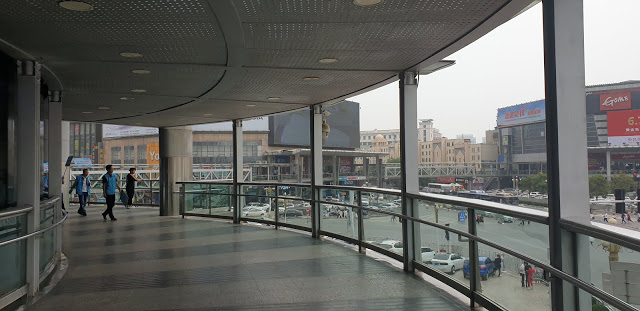
Around the outside of two-thirds of the square, and crossing the roads, was an elevated walkway, which if you go from the first shops and around to the other end, you finish up, on the ground level, at Starbucks.

This is the Chinese version and once you get past the language barrier, the mixology range of cold fruity drinks are to die for, especially after all that walking. Mine was a predominantly peach flavor, with some jelly and apricot at the bottom. I was expecting sliced peaches but I prefer and liked the apricot half.

A drink and fruit together was a surprise.

Then it was the walk back to the meeting point and then into the hotel to use the happy house before rejoining the kamikaze traffic.

We are taken then to the train station for the 2:29 to our next destination, Suzhou, the Venice of the East.

Whatever happened to free websites?

There’s nothing more certain that a favourite web site you go to and use often, sooner or later starts charging a subscription ‘fee’.

I remember when the NANOWRIMO site had been updated, and the changes look good.  At that moment the site was free, but you do get a lot of emails and requests to purchase products, which I think is a reasonable way to raise money for keeping the site free.

But, how long is this going to last before a ‘fee’ is introduced, and then a ‘fee’ to enter your book?

It’s the airline principle, once it was a flat charge for the ticket, now you pay for this tax, that tax, fuel tax, baggage tax, tax on the tax, and then if that’s not enough, a charge for the food and water.  Soon it will be a charge for toilets, and then the air you breathe.

It’s inevitable, and once these charges start they don’t stop and only get higher with each passing year.

A lot of the sites I use are free.  Some have since started to charge and have put up a firewall to stop you getting any free information.

I’m not a rich author, so sadly I have to discontinue using these sites.

Perhaps the problem is that the owner of the site has come up with a good idea, thousands of people sign up, and suddenly a small web site becomes a big one, and hosting costs suddenly go through the roof.

Like airlines, it’s the user that pays.

Often I see or get an email from, various people with what looks to be a useful site.  Some start out by giving you a month free to have a look and use the facilities.  In some cases they are quite good, in other, well, there’s a dozen others like it that are still free.

But, after a month, you have to pay.  What gets me with some of them, they are asking somewhere between 50 and 100 US dollars a month, you heard that right, a month, which you can basically double that for me after the exchange rate and a dozen bank fees.

Sometimes there are different levels, but basically, if you look at the fine print, the lowest level set, which gives you very little, is set low deliberately.  Say it’s 10 dollars a month.  It’s no different to the free version except they probably don’t have annoying ads and advertise, what for many, is non-existent 24/7 help (via an email, no guarantee they look at it more than once a week, if at all).  Money for jam for the site owner, as the saying goes.

Why can’t there be a more reasonable option?

But I get it.  Everyone wants to get rich quick, it’s an objective that’s built into all of us, but it seems I missed the inoculation given the day after you’re born.

I also get it that these people worked hard on coming up with the web sites and facilities, and they deserve a reward for that hard work, but to me it would make more sense if they sold the service for 10 dollars or even 20 dollars a month if the systems were available and they worked.  And flowing from that wouldn’t 20,000 sales at 20 dollars, be better than 2000 at a 100 dollars?

The same seems to go for the so-called decent web site hosts, like WordPress, Wix and GoDaddy.  The free option is good but just for show and tell, but I’m sure they deliberately nobble it so it’s slow and kludgy just the sort of attributes that turn potential visitors off.

I thought if I paid a monthly charge for Wix, and reading the inclusions for what my site could do over the free one was very persuasive, so I signed up.  The site was no better than it was before and half the options that were on the list weren’t available, and still aren’t.  But I suspect if I paid them 100 plus dollars a month or more for their premium package I’d get it.

But, to pay for it I would have to be selling a million books a month, and I doubt, no matter how good my web site is, it wouldn’t attract that kind of business.

Not one of the basic packages, read affordable for me, has the ability to allow downloads after sales.  You can’t even have a sales page where you can actually sell books to people like you were a bookshop.  That’s in all of the premium packages, so they say, and that costs far too much.

GoDaddy were by far the worst, telling me if I signed up to the 60 dollars a month package I could have sales and downloads.  I tried to add it to the web page, which I might add was as difficult to create as all hell, and when it didn’t work, rang up to ask why I couldn’t have downloading after sales and was met with silence.

No, that’s not available at the moment, I was told, and not likely in the future.  What am I paying all this money for?  I don’t have a GoDaddy site any more.  I had a Wix site that I paid for, and I don’t have that any more.  They don’t offer anything useful, and they too, make it virtually impossible to create a useful site, so it sits out there in the ether with disappointment written all over it.

Perhaps others have had better luck, or things have changed in the last few years but I won’t be going back.

Maybe one day someone might understand the needs of the majority who can afford to pay exorbitant monthly charges but just not as much as we are expected to, for very little in return.

What’s that saying, hope springs eternal.

PS Sorry about the rant!

Searching for locations: The Henan Museum, Zhengzhou, Henan Province, China

The Henan Museum is one of the oldest museums in China.  In June 1927, General Feng Yuxiang proposed that a museum be built, and it was completed the next year.  n 1961, along with the move of the provincial capital, Henan Museum moved from Kaifeng to Zhengzhou.

It currently holds about 130,000 individual pieces, more of which are mostly cultural relics, bronze vessels of the Shang and Zhou Dynasties, and pottery and porcelain wares of the various dynasties.

Eventually, we arrive at the museum and get off the bus adjacent to a scooter track and despite the efforts of the guide, there’s no stopping them from nearly running us over.

We arrive to find the museum has been moved to a different and somewhat smaller building nearby as the existing, and rather distinctively designed, building is being renovated.

While we are waiting for the tickets to enter, we are given another view of industrial life in that there is nothing that resembles proper health and safety on worksites in this country, and the workers are basically standing on what looks to be a flimsy bamboo ladder with nothing to stop them from falling off.

The museum itself has exhibits dating back a few thousand years and consist of bronze and ceramic items.  One of the highlights was a tortoiseshell with reportedly the oldest know writing ever found.

Other than that it was a series of cooking utensils, a table, and ceramic pots, some in very good condition considering their age.


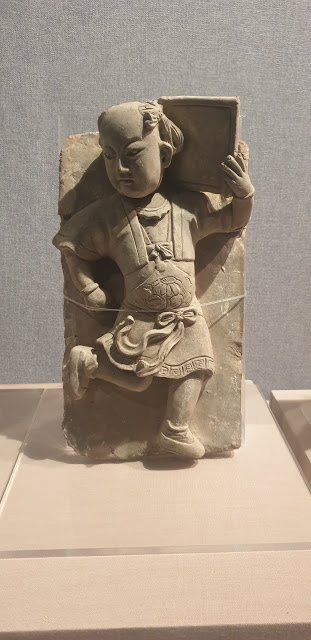
There were also small sculptures

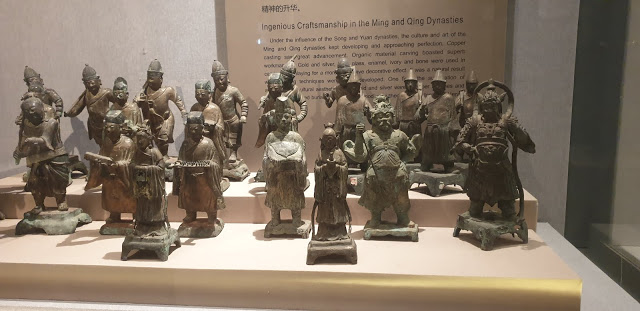
an array of small figures

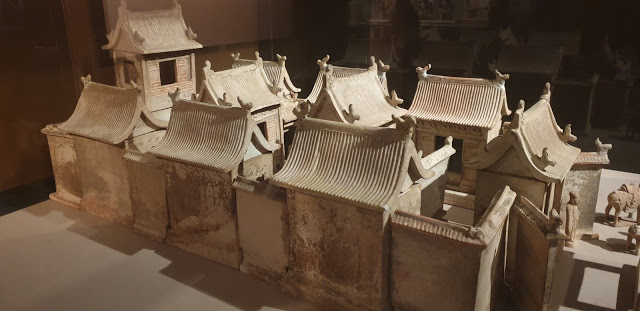
and a model of a settlement

20 minutes was long enough.

The thing about ‘must read’ lists

And that is, you don’t have to read any of the books on it.

Who really cares if you do or if you don’t?

It’s just a list of books that a particular writer, journalist, or editor puts together simply because they liked them and think you might also.

And sometimes weight of sales numbers will dictate popularity, and therefore some basis to any particular list.

Of course, this doesn’t work if all you read is comics or romance books like Mills and Boon.  Hey, that’s fine.  You’re reading and this is one of the most important aspects of life, to read, and sometimes, to learn.

I know that my life changed dramatically when I read books, lots of different sorts of books.  I’ve never recommended anyone read the dry, dusty tomes about neurosis for psychiatry, or a history of the Roman Empire simply because of it something I was interested in after I saw the film, Ben Hur.

In a similar manner when we go to school, the curriculum sometimes dictates we read certain books, whether this is to give us an understanding of life centuries before, or that there is some deeper, more sinister, meaning to it all, but some of those books I had to read, back then, the meaning was lost on me.

But should I not read them?  I know most of the kids in the class didn’t because they considered reading a waste of time.  There were more important things to do like chase girls and play a sport.  And torment the teachers.  From what I hear, little has changed.

But the point here is, in my case, I’m just giving you the drum on what I read to improve my literary understanding, of life, and of the world, and perhaps in a small way, help with my writing.  After all, writers must read, particularly in their genre so they have some idea of what readers want.

But again that two-word phrase ‘Must read’ is an unfortunate and often misused heading.  We do it all the time.  Ten films you ‘must-see’, ten things you ‘must-have’, ten places you ‘must go’ usually before you die.

It amuses me to see books with a 1000 somethings you must do before you die.  I will no doubt be well and truly dead before I get halfway through even one of those lists, that is, if I actually took any notice of them.

But, what’s more interesting is that I like to see how many I haven’t done, which is probably the reason why we buy the book, usually off the sale table.

Searching for locations: Vancouver, Canada – 2

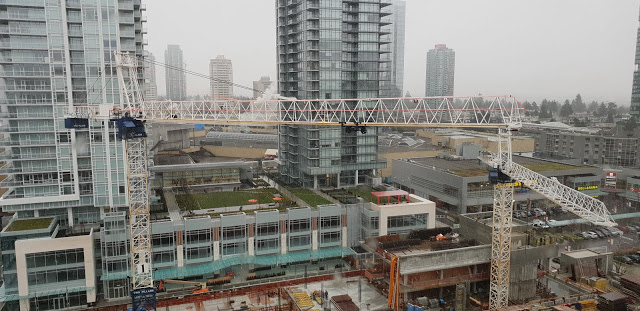
This morning we wake up to rain.  Or so we thought.  Taking a closer look out the window of our room on the 16th floor, we notice the rain is speckled with snowflakes.  As the morning progressed the snow got harder until there were flurries.

 Later we discover this is called wet snow by the local Vancouverians, and whilst they winge a lot over the endless rain, to them rain is infinitely better than snow.

To us, by the afternoon, it was almost blizzard conditions, with lots of snow.  Then the only thing is that it does not accumulate on most of the ground so there are no drifts to play in.

Because the weather is so dismal we decided not to go into Vancouver to do some sightseeing because the clouds were down to the ground and then the snow set in.

Another interesting fact is that construction workers do not go off the job if it’s raining, or worse when it is snowing.  Our room overlooks a new apartment complex under construction and the workers battled on through what seemed like appalling conditions.

At four in the afternoon, the Maple Leafs are playing the Ohio Blue Jackets, in Ohio.  It is a game we expect they will win.  Sparks is the goalkeeper, not Anderson, they’re playing back to back games and Anderson’s starting tomorrow.

They win, four goals to two.  

Just before darkness falls, about four thirty, the snow stops and there is a little rain, which melts the snow.

Time to go up to the executive lounge to get some snacks and coffee, then sleep because the next day we’re taking on the Trans Canada highway from Vancouver to Kamloops.

The forecast is for snow, more snow, and just for a change, more snow.

The importance of book reviews

Self-published authors are fully aware that perhaps the easiest part of the writing journey is the actual writing.  Well, compared to the marketing aspect I believe it is.

I have read a lot of articles, suggestions, and tips and tricks to market the book to the reading public.  It is, to say the least, a lot harder to market eBooks than perhaps their hard or paper-back relatives.

This is despite the millions of eReaders out there.

Then there is that other fickle part of the publishing cycle, the need for reviews.

Proper reviews of course.

As we are learning, reviews can be bought.  And Amazon is out there seeking what it calls unverified reviews and the reviewers and it had brought with it very strict control over who can leave a review, especially on Amazon.

Another site where reviews are taken seriously is the Goodreads website where I have established a presence, and expect in due course, some reviews.

But, all the advice I have seen and read tells me that reviews should not be paid for, and that reviews will come with sales.  It might be a difficult cycle, more reviews mean more sales, etc.

And getting those first sales …

Therein lies the conundrum.  It is a question of paying for advertising or working it out for ourselves.  I guess if I were to get more sales, I could afford the advertising … yes, back on the merry-go-round!

And yet, the harder the road, the more I enjoy what I do.  It is exhilarating while writing, it is a joy to finish the first draft, it is an accomplishment when it is published, but when you sell that first book, well, there is no other feeling like it.

Searching for locations: The Pagoda Forest, near Zhengzhou City, Henan Province, China

The pagoda forest

After another exhausting walk, by now the heat was beginning to take its toll on everyone, we arrived at the pagoda forest.

A little history first:

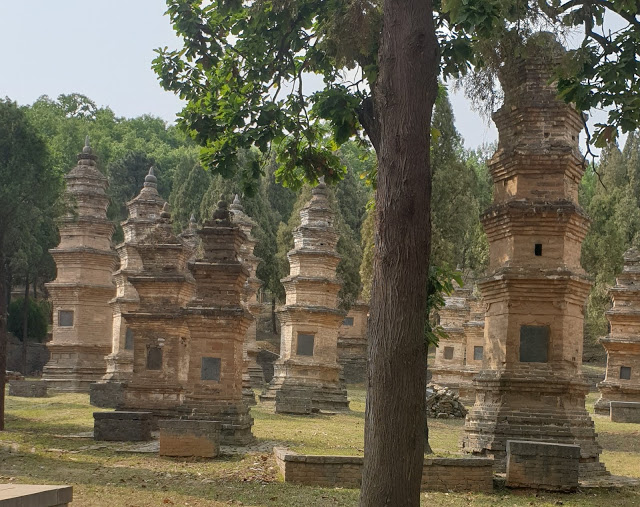
The pagoda forest is located west of the Shaolin Temple and the foot of a hill.  As the largest pagoda forest in China, it covers approximately 20,000 square meters and has about 230 pagodas build from the Tang Dynasty (618-907) to the Qing Dynasty (1644-1911).

Each pagoda is the tomb of an eminent monk from the Shaolin Temple.  Graceful and exquisite, they belong to different eras and constructed in different styles.  The first pagoda was thought to be built in 791.

It is now a world heritage site.

No, it’s not a forest with trees it’s a collection of over 200 pagodas, each a tribute to a head monk at the temple and it goes back a long time.  The tribute can have one, three, five, or a maximum of seven layers.  The ashes of the individual are buried under the base of the pagoda.

The size, height, and story of the pagoda indicate its accomplishments, prestige, merits, and virtues. Each pagoda was carved with the exact date of construction and brief inscriptions and has its own style with various shapes such as a polygonal, cylindrical, vase, conical and monolithic.

This is one of the more recently constructed pagodas

There are pagodas for eminent foreign monks also in the forest.

From there we get a ride back on the back of a large electric wagon

to the front entrance courtyard where drinks and ice creams can be bought, and a visit to the all-important happy place.

Then it’s back to the hotel.

The cinema of my dreams – I always wanted to go on a treasure hunt – Episode 36

Here’s the thing…

Every time I close my eyes, I see something different.

I’d like to think the cinema of my dreams is playing a double feature but it’s a bit like a comedy cartoon night on Fox.

But these dreams are nothing to laugh about.

Once again there’s a new installment of an old feature, and we’re back on the treasure hunt.


“How long have you been working on this?”

“A week. Lying in bed is boring, so I decided to look at everything I’ve got again, and then again. There were some old maps of the coastline stored with the treasure maps, so I think my father was trying to find the actual location his treasure maps were based on and came up against the same problem. Physical landmarks on the treasure maps are no longer there, and if you didn’t know any better, I would think you were looking in the wrong place.”

“So, in actual fact, what you’re saying now is that your father had no idea where the treasure was buried, that he was just producing maps for the Cossatino’s’ to sell.”

That, of course, could be looked at from a different angle, one that I wasn’t going to suggest right then because Boggs was not ready to hear it. I think the real maps Boggs had found with eh treasure maps were the basis for the treasure maps, that is, his father had to give them real-life elements to keep the punters interested.

“No, not necessarily. I think he knew it was somewhere along this coastline give or take a hundred miles, because of its proximity to the Spanish Maine, but essentially you’re right. He probably had no idea.”

So, he hadn’t come to the same conclusion I had. Yet.

And if I could come to that conclusion, surely Cossatino also would, after all, he was the one who got Boggs senior to make the maps. Why all of a sudden did he think that there was a real treasure map. It couldn’t be simply because Boggs had said there was one. He’d have to know that anything Boggs junior found was an invention commissioned by him,

Or hadn’t Vince told his father what he was doing? Surely the father would have told the son about the treasure map scam.

As for Benderby, senior could base his assumption of the fact that he’d found some old coins off the coast nearby that could be part of the trove. Alex then may have decided to usurp his father’s search with one of his own, conveniently forgetting the treasure maps were an invention of the Cossatino’s. IT was a tangled web of lies deceit and one-upmanship, one that was going to leave a trail of human wreckage in its wake.

Boggs and I were two of the first three. We had lived to tell about it, Frobisher was the first casualty.

But what I suppose was more despairing was how taken Boggs was with the notion that the treasure was real, hidden out there somewhere, and that his father had ‘the’ map. I was loath to label him delusional, but his pathological desire to prove his father’s so-called legacy was going to not end well, especially when we found nothing.

And, yet, I had to admire the lengths he had gone to, to prove his case. Even now, looking at the overlaid maps, there was no guarantee we’d find anything, but at first look, the evidence was compelling.

Except I had a feeling Boggs had something up his sleeve. I had to ask the question. “Where did you get the idea of matching the treasure map to the real map?”

“My father’s journal. It was tossed in the bottom of a box of his other stuff. There are about ten boxes stacked in the shed, stuff my mother just couldn’t be bothered sorting through after he disappeared. Again, boredom pushed me into going through everything over and over just in case I missed something.”

He reached in under the mattress of his bed and pulled out an old leather-bound notebook. It had a strap that bound it together, and by the look of it had extra papers inserted or glued to pages, as well as papers at the start and back of the volume, making it look about twice the original size.

He handed it to me. The leather was old, cracked, and had that distinctive aroma of the hide. I loosened the strap and the top cover opened. The first page was a newspaper cutting, a small piece about some old coins being found about a hundred yards offshore by some surfers. Were these the same coins that Benderby had claimed were part to the trove?

“Benderby was getting that antiquarian that was murdered to identify some coins,” I said after a quick glance through the article.

“I spoke to one of the surfers the other day,” Boggs said. “He told me he came off his board on a big wave and as he was going down saw something glinting on the seabed. He managed to pull up three coins. There were more but he had to come up for air. When he went down again, he realized he’d been dragged away by the current.”

Tides and currents along this part of the coast were particularly bad, and the undertow, at times could get surfers and swimmers alike into a lot of trouble. I’d been caught out once in a dinghy myself, finishing up ten miles further down the coast that I expected to be.

“Then, I take it he can’t remember the exact spot so he could go back.”

“He tried, but alas no. Said he sold the coins to old man Benderby for a hundred apiece and told him approximately where he thought the others were, but nothing’s been found since.”

Not that Benderby would tell anyone if he did. But it explained where the coins came from that he gave to Frobisher.

“Except we can assume that it’s off our coastline somewhere, right?”

“Five miles of coastline to be precise. He and his mate always had a few reefers before they went out, made the ride more interesting he said. He could have been off the coast of Peru for all he knew.”

Surfers, drugs and a colorful story.

“It explains why Benderby and a team of divers have been out in his new boat,” Boggs added, “probably trying to either find the location or line up landmarks on his map from the seaward side at the same time. But he doesn’t know what we know.”

What did we know? I leafed through a few more pages of the diary, but the scrawled notes were almost illegible. I picked up various words, like a marina, underground river, dry lakebed, but none of it made any sense.

“Which map did we give to Alex?”

Boggs went over to a drawer in the wardrobe and leafed through the papers in it and pulled out one and gave it to me. Like the rest it showed the shore, the hills, the lake, and two what looked to be rivers flowing into the sea. Each of the maps had those same features but in different places.

I didn’t want to say it, but it seemed to me we were playing a very dangerous game. The maps might look different in some respects, but the chances were, if Alex was smart enough to hire an expert, that we might run across him out there, and, to be honest, he would be the last person I’d want to see.

“You do realize our paths are going to cross at some point.”

“Maybe, maybe not.”

A shiver went down my spine, an omen I thought. Boggs has something up his sleeve, and I really didn’t want to know.

Not right then.


© Charles Heath 2020

Searching for locations: Driving in ice and snow, Canada

This morning started with a visit to the car rental place in Vancouver.  It reinforced the notion that you can be given the address and still not find the place.  It happened in Washington where it was hiding in the back of the main railway station, and it happened again in Vancouver when it was hidden inside a hotel.

We simply walked straight past it.  Pity there wasn’t a sign to let people know.

However…

We went in expecting a Grand Jeep Cherokee and walked out with a Ford Flex, suitable for three people and four large suitcases.  It actually seats 7, but forget the baggage, you’d be lucky to get two large suitcases in that configuration.

It is more than adequate for our requirements.

Things to note, it was delivered with just over a quarter of a tank of gas, and it had only done about 11,000 km, so it’s relatively new.  It’s reasonably spacious, and when the extra seats are folded down, there is plenty of baggage space.

So far, so good.

We finally leave the hotel at about half-past ten, and it is raining.  It is a simple task to get on Highway 1, the TransCanada Highway, initially, and then onto Highway 5, the Coquihalla Highway for the trip to Kamloops.

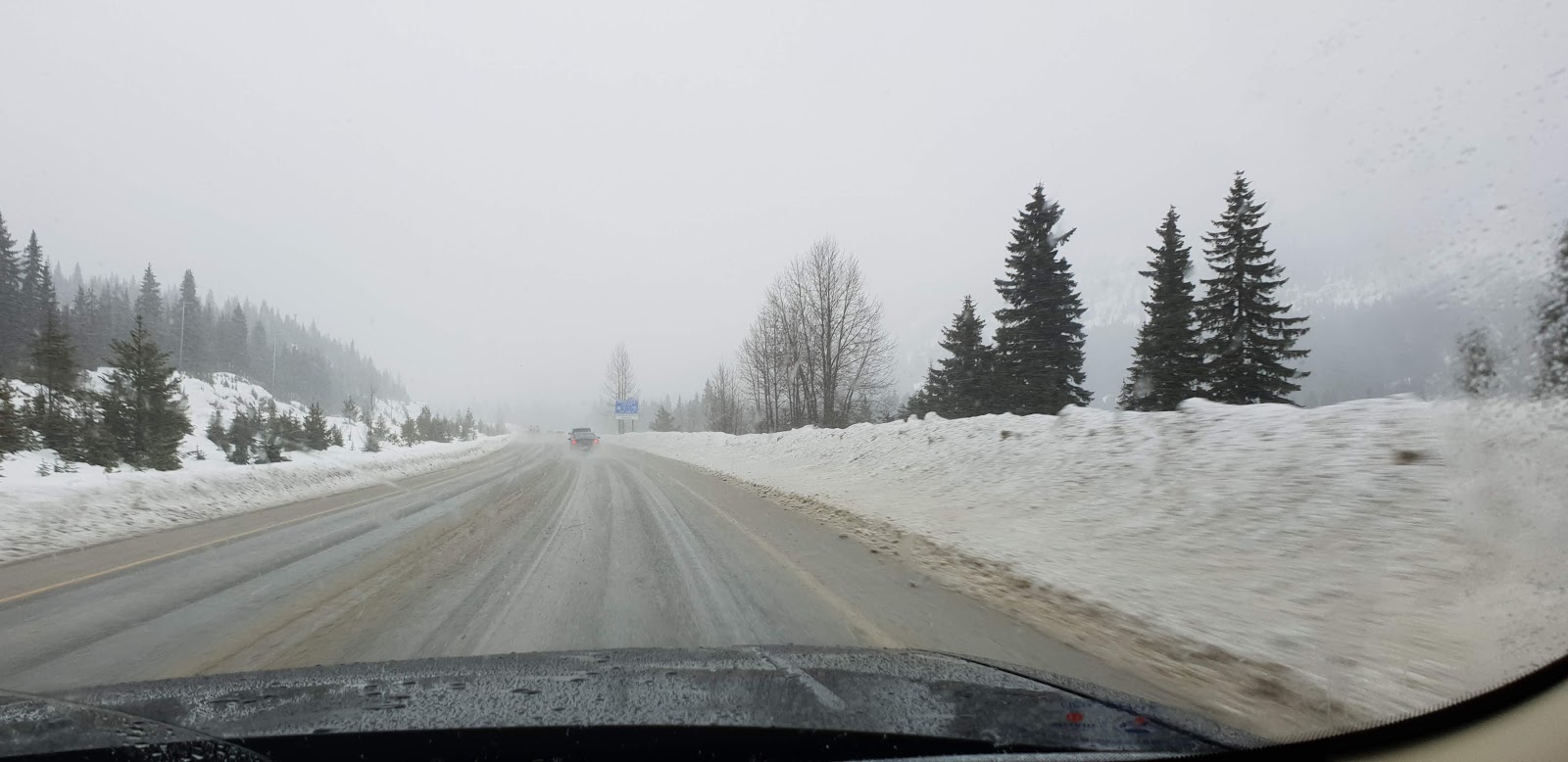
It rains all the way to the top of the mountain, progress hampered from time to time by water sprays from both vehicles and trucks.  The rain is relentless.  At the top of the mountain, the rain turns into snow and the road surface to slush.  It’s 0 degrees, but being the afternoon, I was not expecting it to turn to ice very quickly.

On the other side of the mountain, closer to Kamloops, there was sleet, then rain, then nothing, the last 100kms or so, in reasonably dry conditions.

Outside Kamloops, and in the town itself, there was evidence of snow recently cleared, and slushy roads.  Cars in various places were covered in snow, indicating the most recent falls had been the night before.

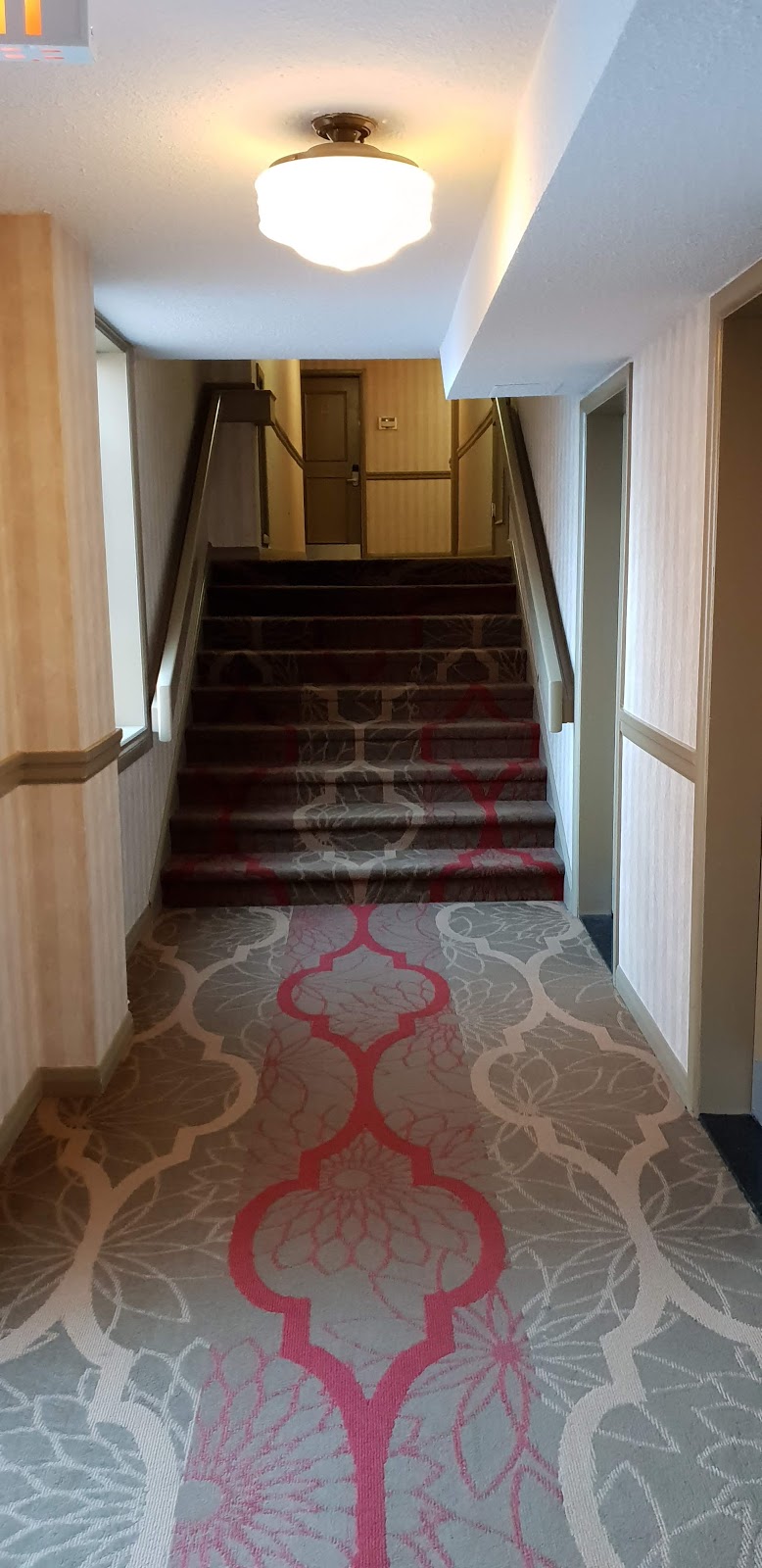
We’re staying at the Park Hotel, a heritage building, apparently built in the later 1920s.  In the style of the time, it is a little like a rabbit warren with passages turning off in a number of directions, and showing it is spread across a number of different buildings.

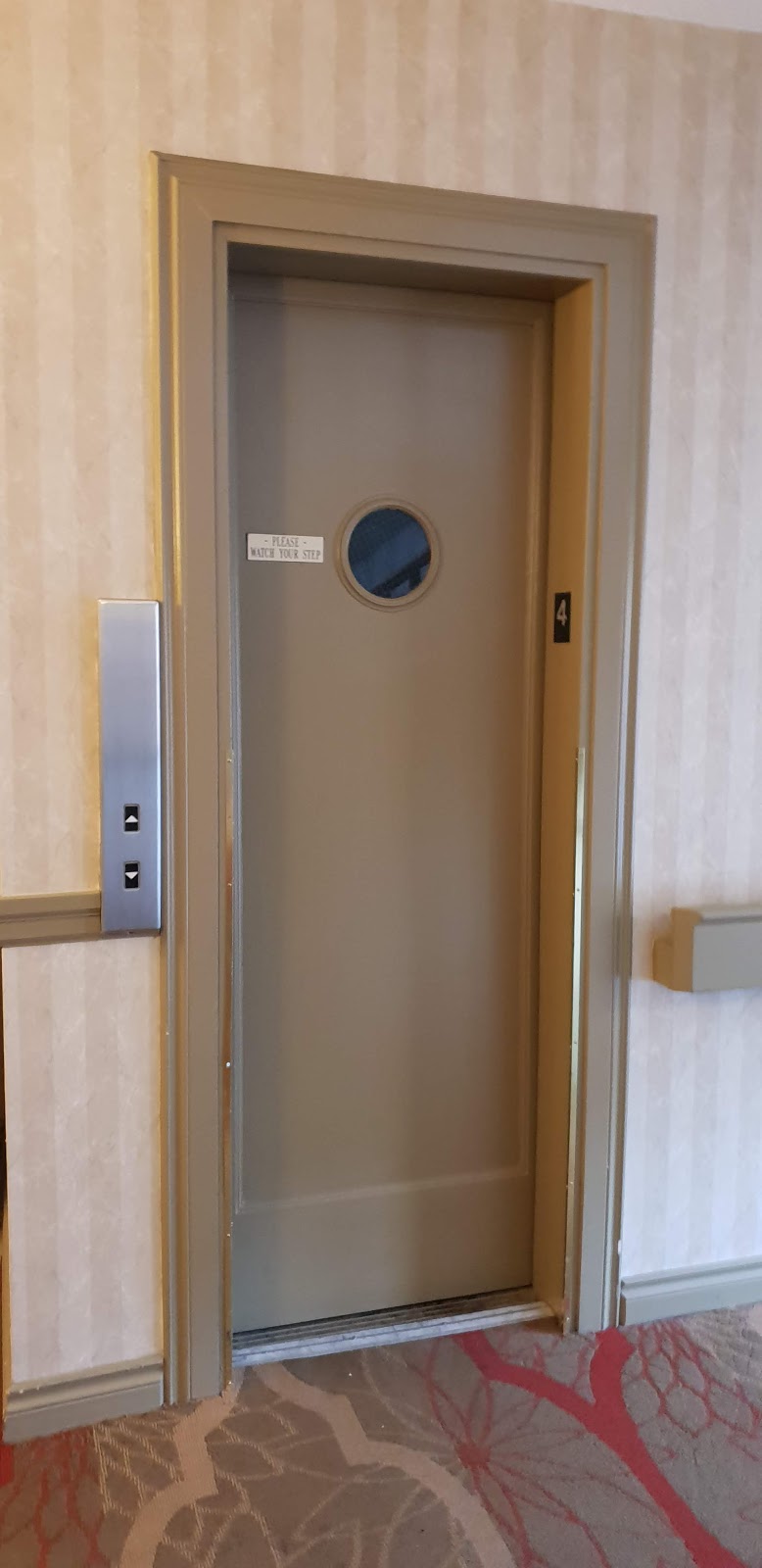
It has the original Otis elevator that can take a maximum of four passengers, and a sign on the wall that says “no horseplay inside the elevator” which is a rather interesting expression that only someone of my vintage would understand.  And, for those without a sense of humor, you definitely couldn’t fit a horse in it to play with.

The thing is, how do you find a balance between keeping the old world charm with modern-day expectations.  You can’t.  Some hotels try valiantly to get that balance.  Here, it is simply old world charm, which I guess we should be grateful for because sooner rather than later it’s going to disappear forever.

In my writer’s mind, given the importance of the railways, this was probably a thriving place for travelers, and once upon a time, there were a lot more hotels like this one.