Memories of the conversations with my cat – 16

As some may be aware, but many not, Chester, my faithful writing assistant, mice catcher, and general pain in the neck, passed away about 2 years ago, and I still miss him.

This is my way of remembering him.

For those who have not had the chance to read about all of his exploits, I will run the series again from Episode 1

Character development

20161008_135142

This is Chester, he thinks he is an expert on people

He has meandered in checking out what I’m doing, or maybe he’s here because the room is cooler.

He gives me the ‘What are you doing’ look.

It doesn’t matter how many times I’m a writer, it’s like talking to a brick wall.

I say I’m working on developing a new character.

Name?

I’m thinking of John.

A shake of the head and the eyes roll.  Can you be a little more inventive, like, well, Chester?

Predictable.  How about Xavier?

Would you call your kid Xavier?  He’s going to have a very rough time of it at school.  Unless this character has a tortured soul.

Good point.  How about William?

Bill, that’s what you get in the mail.  Another shake of the head.  You’re not very good at this, are you?

Apparently not.  Haven’t you got some mice to catch?

He yawns, then curls up on the seat.  Wake me when you’ve got some better ideas.

Maybe not.  I’ve come up with a name, Daniel, and I don’t care what he thinks.

For now.

“Trouble in Store” – Short stories my way: Actions have consequences

It’s time for the policewoman to arrive.

There is such a thing as pure dumb luck.

If she did not walk through the door when she did then Jack would have walked away.

From the policewoman’s perspective:


She crossed the street from the corner instead of remaining on the same side of the street as she did every other night.  When she reached the other sidewalk, she was about 20 yards from the nearest window of the store.

As she crossed, she got a better view of the three people in the store and noticed the woman, or girl, was acting oddly as if she had something in her hand, and, from time to time looked down beside her.

A yard or two from the window she stopped, took a deep breath, and then moved slowly, getting a better view of the scene with each step.

Then she saw the gun in the girl’s hand, and the two men, the shopkeeper and a customer facing her, hands up.

It was a convenience store robbery in progress.

She reached for her radio, but it wasn’t there.  She was off duty.  Instead, she withdrew, and called the station on her mobile phone, and reported the robbery.  The officer at the end of the phone said a car would be there in five minutes.

In five minutes there could be dead bodies.

She had to do something, and reached into her bag and pulled out a gun.  Not her service weapon, but one she carried in case of personal danger.


Guns are dangerous weapons in the hands of professional and amateur alike.  You would expect a professional who has trained to use a gun to not have a problem but consider what might happen in exceptional circumstances.

People freeze under pressure.  Alternately, some shoot first and ask questions later.

We have an edgy and frightened girl with a loaded gun, one bullet or thirteen in a magazine, it doesn’t matter.  It only takes one bullet to kill someone.

Then there’s the trigger pressure, light or heavy, the recoil after the shot and whether it causes the bullet to go into or above the intended target, especially if the person has never used a gun.

The policewoman, with training, will need two hands to take the shot, but in getting into the shop she will need one to open the door, and then be briefly distracted before using that hand to steady the other.

It will take a lifetime, even if it is only a few seconds.

Actions have consequences:


The policewoman crouched below the window shelf line so the girl wouldn’t see her, and made it to the door before straightening.  She was in dark clothes so the chances were the girl would not see her against the dark street backdrop.

Her hand was on the door handle about to push it inwards when she could feel in being yanked hard from the other side, and the momentum and surprise of it caused her to lose balance and crash into the man who was trying to get out.

What the hell…

A second or two later both were on the floor in a tangled mess, her gun hand caught underneath her, and a glance in the direction of the girl with the gun told her the situation had gone from bad to worse.

The girl had swung the gun around and aimed it at her and squeezed the trigger twice.

The two bangs in the small room were almost deafening and definitely disorientating.

Behind her, the glass door disintegrated when the bullet hit it.

Neither she nor the man beside her had been hit.

Yet.

She felt a kick in the back and the tickling of glass then broke free as the man she’d run into rolled out of the way.

Quickly on her feet, she saw the girl had gone, and wasted precious seconds getting up off the floor, then out the door to find she had disappeared.

She could hear a siren in the distance.  They’d find her.


If the policewoman had not picked that precise moment to enter the shop, maybe the man would have got away.

Maybe.

If he’d been aware of the fact he was allowed to leave.

He was lucky not to be shot.

Yet there were two shots, and we know at least one of them broke the door’s glass panel.


Next – the epilog

© Charles Heath 2016-2020

The Perils of Travelling: Every plane trip is, well, different

The course of plane travel can run like clockwork, or rapidly come apart at the seems.

Every time you go to the airport, it can become an adventure.  Checking in, battling the airline’s kiosk, printing and attaching bag labels, going to bag drop, remembering that every airline does it differently.

Hong Kong airport is huge and there are endless boarding gates.  Being dropped off in the zone that belongs to the airline you’re flying is simple.  The next step is to find the aisle letter where your flight is checking in and then do the automated boarding pass and baggage label.

If it’s international travel which it is today, there’s the added stress of negotiating immigration and the duty-free stores.  We followed the rules, got there early, had the usual problems at the kiosk requiring the assistance of two Cathay Pacific staff, and finally made it to the initial departure concourse.

Next, there’s the temptation of overpriced airport food if you’re hungry which we are not.  But we have a McCafe coffee to satisfy a caffeine fix before the flight.

The shops are all expensive at the initial departure concourse, so we decide to see if there are other shops near our departure gate.  To get to our particular departure gate we descend to the train and get off at the 40-80 station.  It’s a short journey, and once back up on the concourse level we find a collection of more affordable shops where we buy every man and his dog a selection of sweets.

From there it’s a couple of travellators, which sounds rediculously short, but are, in reality, very, very long, to our gate and we get there ten minutes before boarding is supposed to commence.
Today we are traveling on an Airbus A350-900, a relatively new plane so you would think there couldn’t be anything wrong with it.  We had the same plane coming to Hong Kong and was, literally, plain sailing.

We find a seat in the gate lounge and wait along with everyone else.  I’m still surprised at the number of able-bodied people who take the disabled seats for the sake of being closer to the start of the line and worse was a woman who not only took up one of the seats but also another for her cabin baggage which was extensive.

Boarding starts late, and routinely for the first and business, and disabled passengers.  The rest now start to line up in the economy line.  Some people haven’t moved, perhaps they know something we don’t.

We eventually join the line and go through initial formalities while waiting.  And waiting.  As the minute’s tick by nothing is happening other than what appears to be growing consternation by the gate staff.  The tipping point for immediate concern is when the previously boarded passengers begin to come back through the boarding gate.

One of those who had been on board came our way and said there was a problem with the plane.  They were told it was due to technical difficulties the official non-scary description for your plane Is broken.  Because of consternation among the queued economy passengers, there was an official announcement that advised of the technical difficulties, and boarding would be delayed.

We all sit back down, but this time there were a number of disabled and elderly people who needed seats, and our able-bodied lady and her baggage didn’t move.  Shame on her.  We are lucky that where we were in the waiting line it was adjacent to nearby seats putting us closer to the head of the line when it reformed.

Now we were able to watch the other passengers jockeying for position to race to be first in the economy class boarding queue the second time around.  I think they realize they have the same seat if they are at the front of the line or the back.  Because we were all asked to sit down, those at the front of the queue would now find themselves at the end if they’d decided to sit and wait.

After a delay of about an hour and a half, we are finally boarding.  The worst aspect of this delay is losing our slot in the departures and I’m guessing this was going to have an effect on our actual takeoff time.  It appears to be the case.  Boarding does not take very long and shortly after the doors are closed we’re pushing back from the gate.

From there, it becomes a chess game when we get a slot.  We are in a queue of planes waiting their turn, and before the main runway planes are separated into two queues, and we are in the second.  Since we are the only one, I suspect we’re in the delayed take-off queue, and sit watching four or so other planes take off before we finally get on the runway.

All around us, planes seem to be going by and taking off while we wait, and wait, and wait…

On the plane, we discover one of the toilets is out of action so perhaps that was the technical difficulty.  It’s not full so one toilet down will have little effect. 

Leaving in the early afternoon will get us into Brisbane late at night.  It was meant to be around 11 pm, but with the delays, and possibly making up time in flight, it will now be after midnight when we arrive.  Fortunately, we have a 24-hour airport.

The flight from HongKong to Brisbane is without event.  Lunch after takeoff, then a few hours later, an hour or so before landing, we have dinner.  Both of us are not hungry.

We land after midnight, tired but glad to be home.  I guess it could have been worse.

Memories of the conversations with my cat – 9

As some may be aware, but many not, Chester, my faithful writing assistant, mice catcher, and general pain in the neck, passed away some months ago.

Recently I was running a series based on his adventures, under the title of Past Conversations with my cat.

For those who have not had the chance to read about all of his exploits I will run the series again from Episode 1

These are the memories of our time together…

20160921_071506

This is Chester.   He’s undercover.

I’ve asked him to investigate the mouse problem, and this is how he responds.

Hiding in the ‘grass’.

Waiting, watching, ever wary.

Those mice will not see him coming.

I try to tell him that hiding on the chair, whilst the mice are on the floor doesn’t make much sense.

We’ll just have to wait and see.

Just one of many reading lists – part 3

**Please don’t assume that you have to, nor would I ever expect you to,  read any or all of these books.  You don’t.**

Everyone, it seems, will publish what they call the top 100 books that you should read. Some are voted on, some belong to the opinion of the editor of the book review section of a newspaper, and, as you know, there are a lot of newspapers, a lot of editors, and a lot of opinions.

I’m not a newspaper, I’m not an editor, but I have a list, based on personal experience, and many, many years of reading.

It’s in no particular order.

41.  The Hound of the Baskervilles by Sir Arthur Conan Doyle, as well as a host of other Sherlock Holmes stories

42.  The Secret Agent by Joseph Conrad, one of Conrad’s later political novels, set in London in 1886 and deals with anarchism and espionage.  In those days spies were called anarchists.

43.  The Ipcress File by Len Deighton, introducing us to Harry Palmer, who was personified by Michael Caine and led to Horse Under Water, and Funeral in Berlin.  More of Len Deighton later on in the list

44.  The Remorseful Day by Colin Dexter introducing the somewhat enigmatic detective, Morse, his first name not revealed for a long time but oddly, Endeavour.  John Thaw brought him to life

45.  Crime and Punishment by Fyodor Dostoevsky, hard to pronounce and even harder to read, but perhaps worth it in the end.  By the time I read this I was wishing for a Russian writer had could use an economy of words

46.  Dr. Zhivago by Boris Pasternak wasn’t it.  A vast and lengthy dissertation on lost love, I felt very sad for Zhivago in the end.  I saw a stage play of the same name, and I’m sorry, but it’s a few hours of my life I will never get back

47.  Casino Royale, the first of the James Bond novels by Ian Fleming.  I have to say these are among my favorite spy books.  I must say I preferred the new James Bond in Casino Royale, though Sean Connery still rules!

48.  The Day of the Jackal by Frederick Forsythe, a fascinating story about an assassin

49.  Anything written by John Le Carre, but in particular, the George Smiley collection.  Finally unmasking his nemesis the Russian spymaster made it all so satisfying.

50.  The Bourne Identity by Robert Ludlam, inspiring a long series by both Ludlam and Eric Lustbader makes entertaining reading, but the first, the man who did not know who or what he really was, was excellent.  Matt Damon didn’t harm his persona either.

51.  Murder Must Advertise by Dorothy Sayers, whose detective is Lord Peter Whimsey, a 1933 mystery novel that’s eighth in the series

52.  Gorky Park by Martin Cruz Smith.  You have to admit that his Russian detective Arkady Renko is up against it when his investigation goes in a direction that uncovers corruption and dishonest in his superiors

53.  The Way of All Flesh by Samuel Butler, a semi-autobiographical novel written between 1987 and 1884, and published in 1903.  The story of the Pontifex family.

54.  Howards End by E. M. Forster, first published in 1910, is an interesting insight into the behavior of the, and between the classes, with the Schlegels acting as the catalyst.

55.  Washington Square by Henry James, originally published as a serial, and covers the conflict between daughter and father.  I must say I prefer The Ambassadors to Washington Square.

56.  Ulysses by James Joyce, a day in the life of an ordinary man, Leopold Bloom, why could it not be the 7th June rather than the 16th, for obvious reasons

57.  The Go-Between by L. P. Hartley is a view of society at the end of the Victorian period through the eyes of a young boy.  I read this while still at school and had no clue why, but later, when I read it again, I understood the meaning

58.  Atonement by Ian McEwan, I saw the film and then read the book.  Never a good idea.  Basically, a young girl makes a bad mistake and tries to atone for it.

59.  Gone With The Wind by Margaret Mitchell, the War and Peace of Americal novels, and as long by comparison.  The only book written by Mitchell, and the second most read book by Americans.  The film was interesting but awfully long.

60.  The English Patient by Michael Ondaatje, with a man with severe burns and the effect he had on three others.  Colin Firth is villain one day and hero the next, this time in the cinematic version, an out and out cad.

More to come…

Searching for locations: Castello di Monterinaldi, Tuscany, Italy

As part of a day tour by Very Tuscany Tours, we came to this quiet corner of Tuscany to have a look at an Italian winery, especially the Sangiovese grapes, and the Chianti produced here.

And what better way to sample the wine than to have a long leisurely lunch with matched wines.  A very, very long lunch.

But first, a wander through the gardens to hone the appetite:

2013-06-18 11.56.18
2013-06-18 11.56.32
2013-06-18 11.56.51

And a photo I recognize from many taken of the same building:

2013-06-18 11.57.26

Then a tour of the wine cellar:

2013-06-18 11.50.08
2013-06-18 11.52.08

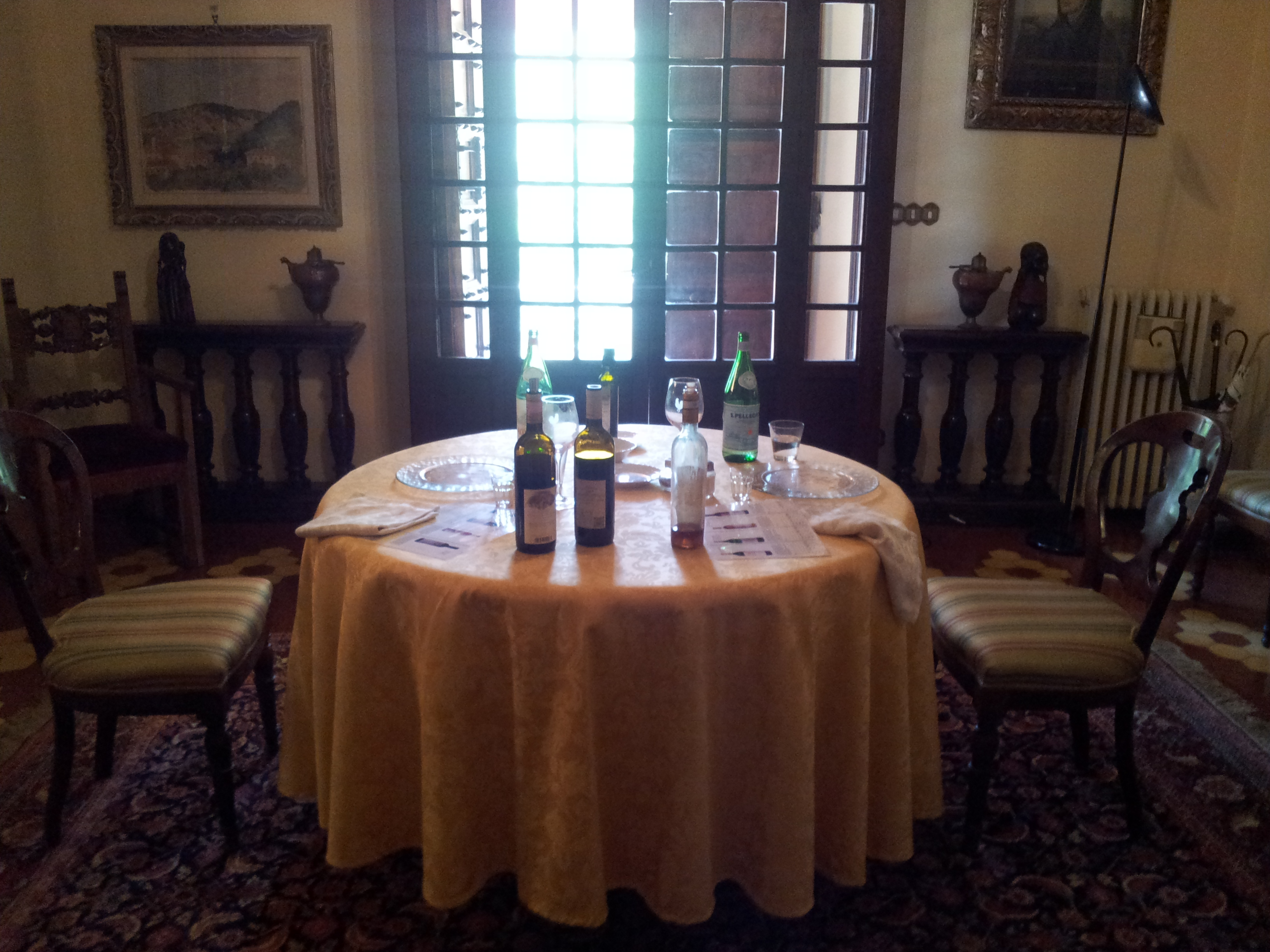
Then on to the most incredible and exquisite lunch and wine we have had.  It was the highlight of our stay in Tuscany.  Of course, we had our own private dining room:

2013-06-18 13.22.40

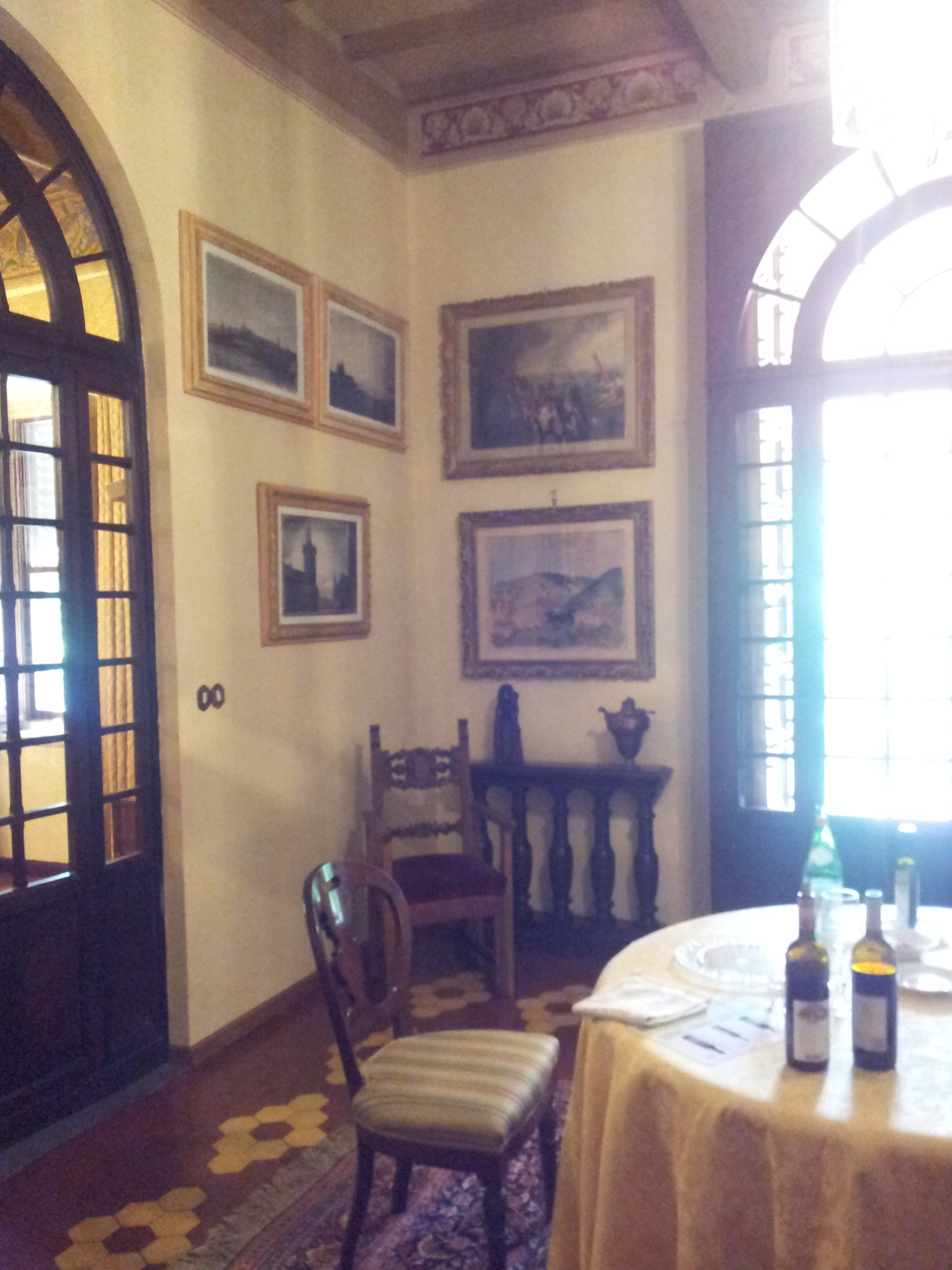
And time to study the paintings and prints on the walls while we finished with coffee and a dessert wine.

2013-06-18 13.23.15

And of course, more wine, just so we could remember the occasion.

My grandchildren have just started working

It’s hard to believe that both the 17 year old and the 14 year old have just both got jobs and started on their path of working for the next 50 to 60 years.

They seem quite amused at the thought, and not without reason, and are not really considering the idea. Not yet, anyway.

The novelty is still quite new, and it has a sense of excitement, but this will no doubt wear off in the coming months. After all, as new workers, they only have to do between 3 and 5 hour shifts.

I guess the fact they have decided to work at such a young age reminded me of my experience, way back when I was 15.

Unhlike them, who will be afforded to opportunity to remain in school to the end, Year 12, and possibly the chance to go to University, in my case we did not have the money to continue education beyond Year 10, and there was no question of ever going to University. Only the rich could afford that, and we were anything but rich.

Instead, I guess hating school helped facilitate my departure, and the notion that I would have to pay my own way, forced me into working.

Of course, it helped living in a small country town, and my father having a job that brought him in contact with everyone who was an anyone, and thus got offers to work in whatever profession I chose.

I ended up in the Post Office, what I considered as the easiest of jobs, originally employed as a telegram delivery boy, and mail collector from the post boxes scatted about the town. As you can imagine, there were not many telegrams to deliver, so other duties included sorting mail, and then mail delivery. Yes I because a postman!

Then, after a few months, I became the night switchboard operator, and with a host of other operators, had some of the most interesting and varied conversations imaginable.

It was a bit of a wrench when we finally moved from the country town back to the city.

When we did, my father bought a small business, and for a year of so, I became a shop assistant.

That lasted for a year or two, until I was 17. Realising that a lack of education was going to make it difficult to ever get a good paying job, I took the opportunity to go back to night school while I had the chance, and it necessitated finding another job to help pay for it.

That was packing books for a wholesale bookseller, part of a small team hidden away in the basement of a very old building. It might not be the best paying job, or the best working conditions, but I suspect it was the universe telling me something.

That job, and being surrounded by books started me off on a journey of reading, and eventually writing.

I’m not perfect…

I was told a long time ago I wasn’t perfect, and it didn’t bother me. Then.

But it’s true. I don’t always get it right, sometimes I get annoyed and say things in the heat of the moment that perhaps shouldn’t be said, and sometimes I can be ‘difficult’.

I’ll be the first in line to say my blog isn’t perfect, in fact sometimes it bothers me some of the bits and pieces that go up because I doubt if they’re interesting, at the time, to anyone but me.

Perhaps it’s because I chose to be a writer.

It’s a hard slog at the best of times. Getting ideas, carving out time to write, having to live a normal life as distinct from that of living in a garret, on your own, writing that next great Nobel prize for literature, or is it a Pulitzer?

I don’t get that, I don’t have that, and I don’t want that.

For those of us living on that ‘edge’ of finding time to write, maintain a blog, keep up with social media, do the daily chores and watch some television, something has to give.

So, I’m not getting any writing done if I’m working on the blog, or I’m on social media. If I’m doing the blog, something else has to be sacrificed.

Mostly it’s my blog. My blog is about writing stuff, visiting places that have been or will be used in stories, and once, a recalcitrant cat who sadly has passed on. It also has running episodic stories, usually four different at a time.

It also had about 2,000 past posts. When I don’t get the time to do my blog, which has been mostly for the last three months off and on, I sometimes repackage or repeat past posts, just to keep it ticking over, much like a scoreboard.

It is also a tool for advertising my books and stories, and what’s coming (if only I stopped using social media) and these are repeated every four or five days. It’d the equivalent of advertising because I can’t afford other advertising. If this is an annoyance, I’m sorry.

And just so everyone knows, I will always keep writing, not because I want to become the next James Patterson, though it would be nice, I write because I want to, and it pleases me when someone reads something I write, and they like it. It is the greatest compliment of all, and I believe in encouragement. It’s why I spend a lot of that social media time highlighting other writers so they can build a following.

After all, we are all in the same boat, it would just be nice if we were all rowing in the same direction.

Memories of the conversations with my cat – 3

As some may be aware, but many not, Chester, my faithful writing assistant, mice catcher, and general pain in the neck, passed away some months ago.

Recently I was running a series based on his adventures, under the title of Past Conversations with my cat.

For those who have not had the chance to read about all of his exploits I will run the series again from Episode 1

These are the memories of our time together…

20160902_123201

This is Chester.  Back on the bed.

Another argument lost, another smug ‘I’ve got the better of you, again’ look.

Time to move on, pick a battle I think I can win.

Food.  There’s the old wives tale, that cats love fish, and it’s true to a certain extent.

Chester doesn’t believe fish live in cans or plastic packets, despite how it’s dressed up.  Fresh fish, he’s into it, but there always seems to be a measured reluctance to eat something out of a can.

I think he regards us humans with disdain when our food comes out of a can or packet.

He refuses to eat the leftovers!

Then there’s chicken, or its more expensive neighbor, turkey.

He loves turkey.

I’m sure he’d eat quail and spatchcock too, but no, he’s a cat, and cats have to get used to eating chicken.  We’ve had this discussion, one too many times.

And just for good measure, I told him if he thinks he’s coming to Italy with us, he’d better get used to the idea of eating pasta.

Of course, always with the last word, he said, quite nonchalantly, ‘then you’d better call me Garfield’.

Grrrrrrr.

An unfortunate side-effect of a pandemic

As writers, we put ourselves in the shoes of many different people.

We have extraordinary lives, sometimes more than one, but never more than the regulatory nine.

We get shot at, manage to run into cars and miraculously bounce off with only a few scratches, fall off three-story balconies, and sometimes get in the way of stray, and almost perfectly aimed bullets.

Near-death, almost dead, mostly dead, but always, somehow, we come back to life.

But, in reality, this rarely happens.  You get shot; you often die.  You get hit by a car, or, worse, a bus, you quite often die.

You certainly do not get back up again, leap out of hospital beds, and chase after bad guys.

So, what does any or all of these things feel like in reality?

In my case, I have no idea, other than what I have read, and what I’ve been told by experts it might be like.

But what if…

…you are facing what might be certain death?

It’s not a realistic statement, is it?  You can’t possibly know when and how you’re going to die.

So, let’s factor in a possibility, and let’s call it Covid-19.

What do we know about it?  It is a killer if you have respiratory problems, heart problems, in fact, any sort of problem with organs, and, if you have a weakened immune system.

And, it is far more dangerous if you have any of these conditions and are over the age of 60.

I’m 69.

I have psoriatic arthritis and use methotrexate which is an immunosuppressive medicine

It means, in not so many words, I have a compromised immune system.  That’s the doctor’s polite way of saying I’m in deep trouble if I get Covid-19.

So…

I now have to face what is most like man’s worst fear: death.

I fit into a category where I have a 40% chance of survival.

There is no cure, there are vaccines but they might also kill me even though the odds are very slim, so really it is simply a matter of the body fighting off the virus itself, and, more or less, wait and see.

To say I’m scared of what might happen is an understatement.

In this country, up till now, we have managed to avoid a disaster, but with the new variant, everyone is all but saying that in a short time that will change … for the worse.

I hope not.

I do not want to have a first-hand experience of what it like to die.