Looking back at the photo archive…

I came across this:

This is like so many roads off in what is known as the Gold Coast hinterland, that tract of land between the ocean and the mountain range that runs along the eastern side of the country, known as the Great Dividing Range.

This is the road that runs behind where friends of ours live, and runs on down into a valley where a river runs, and when the rains come down, floods.

It’s hard to imagine that a few hundred years ago all of this would have been tropical jungle, and intrepid explorers would be making their way north or west, just to see what was there.

I imagine in another 100 years, all of this will be gone, given over to housing, shopping malls, and factories, and anything that resembles country living will have been moved out to far beyond the mountain range and towards the what is called the ‘red’ centre.

Or there is a reckoning with mother nature, and if there is, I know who I’d put my money on.

Past conversations with my cat – 97

20161008_135142

This is Chester

Still hiding away.

Like any wise, old, skeptical cat, he’s not believing the good news.

We do not have a COVID 19 case in our house. Of course, we had to wait an agonizing 24 hours before we got the good news by phone.

It shows that our testing labs are getting through the tests, of which I heard in the news there were about 4,000, with only 10 or so new cases countrywide.

Queensland had none overnight, so if our case had been positive, we would have been in the news for al; the wrong reasons.

So, after broadcasting the news, that is, walking up and down the passage saying it was safe to come out, there’s still no sign of him.

But…

I have a cunning plan.

I bought a can of his absolute favorite food.

Come dinner time I’m putting it out.


Of course, food trumps fear every time.

He walks past me on his way to the tasty treats, the tail movements indicating he is not a happy cat.

The things I have to suffer at the hands of you humans, he mutters.

So, I say casually, we have guests for dinner.

He stops, turns his head in that dismissive manner of his.
What else can you do to me?

COVID 19, Grandchildren, I suppose you’re going to let me outside.

Do you want to go outside?

With COVID 19 lurking on every corner?

It’s under control.

Right. I’ve been watching TV. You do realize there’s good news and fake news, and there’s more of the latter than the former.

So, he’s going with the confuse the poor human with blather.

It’s working. I say, Go back into hiding. I was quite enjoying the silence.

After dinner, he says, ending the conversation with the angry tail swish. Yes, we are not amused.

In a word: Ghost

Have you seen one?  I haven’t.  Yet.

I’ve stayed in a few places where ghosts were purported to be roaming the passages at night, but apparently not the night I was staying.

And that’s something else that I have a problem with, why is it ghosts only come out at night, or is that just the perception I have hot from reading up on the subject.

Maybe my view of ghosts is somewhat stilted, after all, I think my first introduction to ghosts was watching The Centerville Ghost, a movie I saw on t.v. when I was very young.

You have to admit Hollywood’s perception of ghosts is quite interesting.


But…

Do you think they are real?  Do I think they are real?

I think I would have to be presented with some fairly solid evidence they exist, but perhaps not to the point of meeting one.

There are, it seems countless examples of ethereal forces, you know, wind blowing where there’s no wind or draught outside, room temperatures dropping for no apparent reason, knocking, rattling of chains, strange noises like low moaning.


And yet…

There are hotels you can stay in such as the Chelsea Hotel in New York, where it’s possible to run into Sid Vicious.

Sorry, not staying there any time soon.

Then there’s the Hollywood Roosevelt Hotel in Los Angeles where it’s possible to run into Marylin Monroe, who lived in room 229.

That could be an interesting encounter.

Another is the Westin St Francis in San Francisco where the actress Virginia Rappe died while attending a party held in Fatty Arbuckle’s room, Arbuckle’s room, who was later accused of assaulting and murdering her, and whose career tanked after the incident.

Her ghost is seen moving about the hotel tearing her hair out.  It seems all of the spectral activity occurs on the 12th floor.


Good to know if I decide to stay there.  I wonder if they have a 13th floor?

Perhaps in too old to be running the gamut of paranormal experiences, the old heart is not as strong as it used to be.

In a word: Brevity

Now, brevity is something that I have not been able to fully wrap my head around.

The dictionary explains Brevity as

‘concise and exact use of words in writing and speech’

So…

I remember working with a writer a long time ago who explained certain authors styles, and for James A Michener of Hawaii fame, he said Michener wrote sentences instead of words, paragraphs instead of sentences, pages instead of paragraphs and chapters instead of pages.

It was a little harsh considering I’d just read the book and had liked it, despite its length and the time it took.

But some time later I realized he was not criticizing Michener, but trying to tell me, in his, what I came to discover, interesting way, that I should strive to write more compactly.

I then came across a book by Brian Callison which was exactly that, the concise version, a story that fitted into about 200 pages.

That too was a good book and it took me a day to read it, and by his use of that economy of words, it read quickly.

Of course, I have tried over the years to emulate both styles, and to a certain degree, failing, because I think I have created my own style which is somewhere in between.

Still, when editing, it is always in the back of my mind that I should be

Using words instead of sentences

Using sentences instead of paragraphs

Using paragraphs instead of pages, and

Using pages instead of chapters.

The chapters, he said, with an air of amusement, will always take care of themselves.


I’ve been reading a lot

And at times wish I hadn’t.

Having been a journalist in a previous lifetime, and one that always believed that the truth mattered, it didn’t take long to realise that journalists should never let the truth get in the way of a good story.

Newspapers, and all other forms of media, will only write what they believe will sell, or what they think the public wants to read. The truth, sadly, is not the first thing on the readers mind, only that someone is to blame for something they have no control over, and it doesn’t matter who.

And the more outlandish the situation, the more the public will buy into it.

This, I guess, is why we like reading about celebrities and royalty, not for the good they might do, but the fact they stumble and make mistakes, and that somehow makes us feel better about ourselves.

Similarly, if the media can beat up a subject, like the corona-virus, and make it worse that it is, then people will lap up the continuing saga, as it relates to them, and will take one of two stances, that they believe the horror of it, and do as they’re asked, or disbelieve it because nothing can be that bad, and ignore it and the consequences of disobedience. knowing the government will not press too hard against the non compliers simply because of domocracy issues it will stir up.

That is, then the media will get a hold of this angle and push it, and people will start to think disobedience is a good thing not a bad.

So, our problems of trying to get a fair and balanced look at what the coronavirus is all about is nigh on impossible. We are continuously bombarded with both right and wrong information, and the trouble is, both sides are very plausibly supported by facts.

And that’s the next problem we have in reporting. We can get facts to prove anything we want. It;s called the use and abuse of statistics, and was an interest part of the journalism degree I studied for. We were told all about statistics, good and bad, and using them to prove the veracity of our piece.

I remember writing a piece for the tutor extolling the virtues of a particular person who was probably the worst human since Vlad the Impaler, using only the facts that suited my narrative. I also remember the bollocking he gave me for doing so, but had to acknowledge that sometimes that would happen.

Integrity of reporting only went as far as the editor, and if the editor hated something, you had to hate it too. This is infamously covered in various texts where newspaper publishers pick sides, and can influence elections, and governments. It still happens.

So, the bottom line is, when I;m reading an article in the media, I always take it with a grain of salt, and do my own fact checking, remembering, of course, not just to fact check to prove the bias one way of the other, but the get a sense of balance.

We have state elections coming up where I live, but it does not sink to the personal sniping level as it does in the US, we haven’t sunk that low yet, but we haven;t got past the sniping about all the wrongs and failed promises of the govern,ment of the day, or the endless tirade against the opposition and how bad a job they did whenb they were previously in government.

You can see, no one is talking about what they’re going to do for us, no one is telling us what their policies are. It’s simply schoolyard tit for tat garbage speak. What happened to the town hall meeting, a long and winding speech encompassing the policies, what the government plans to do for its people in the next three years, and then genuinely answer questions?

Perhaps we should ban campaigning, and just get each party to write a book about what they intend to do, and keep them away from the papers, the TV, and any other form of media, in other words, don’t let them speak!

And don’t get me started about the drivel they speak in the parliament. Five year olds could do a better job.

OK, rant over.

Well, I just walked aboard my spaceship, and…

For all of those who have seen Star Trek over the years, they will know the command issued to get under way is ‘make it so’.

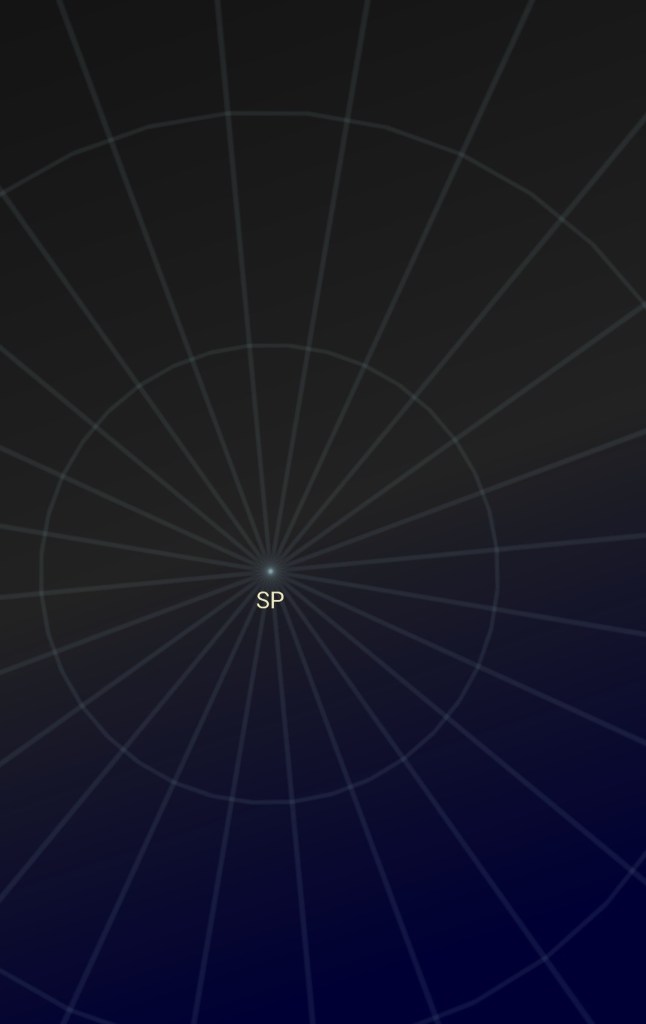
Right after we have a look ‘on screen’ where we’re headed:

I’m not sure where SP is, so that’s not the destination. On being asked the question by the helmsman (I think they’re the one who steers the ship) where are we going?, I think we’ll just head ‘somewhere out there’, accompanied by a grand gesture that covers the viewer.

Of course, as you can imagine, the helmsman might not have an imagination, so we’re going to have to narrow it down a little:

So, we say we’re off to the moon. In this class of ship, though, that will probably take about an hour, but it does give us time to think further on where we’d like to go.

Then, like all trips into outer space, time seems to fly, and we’re being requested a new destination.

OK, let’s go and check out some of the planets.

Saturn, and try to keep away from the space junk, and then, I think, Pluto, and yes, I hear you, Pluto isn’t a planet.

What’s M75 you ask. I haven’t a clue.

Leaving a legacy…

I’ve been reading a few blog posts off and on today, and one that caught my eye was about leaving a legacy.

This I presumed to be ‘something to be remembered by’.

I have always suspected that when I pass on, the memory will not linger very long, except when someone, in the years ahead, pulls out a an old photo, and says, “Who’s this old man?”

I’m sure the answer would hover somewhere between “You don’t really want to know,” to “He’s the eccentric side of the family.”

The thing is, I’ve discovered that children in this family seem to have an insatiable appetite for discovering information about their forebears. It also seems to be that the school they go to makes a big deal about the children learning genealogy, and get an assignment either in year 5 or year 6 where they have to trace their forebears back as far as they can.

I have to say I’ve always been curious, but never really did anything about it, except go back a few generations, i.e. those people we could remember, and, yes, we had eccentric aunts and uncles, grandmothers, and grandfathers.

But my older brother, he got the bug, and went into genealogy in a big way, got himself a university degree, and then takes a trip or two overseas every year delving into the murky past of the Heaths and the Auhls.

The Heaths apparently came from Dorset in England, and the Auhls, somewhere in Germany. He told me, but I’ve forgotten, but I do have a file somewhere that tells me.

And being in Australia, it’s like gold if you have a forebear who was a convict, but unfortunately we didn’t, though I recently learned one of our forebears who came out to Tasmania, was a pseudo Luddite (he was arraigned as guilty by association, but he was no Luddite) in the 1860’s.

But finding a legacy somewhere amongst all those relatives is no mean feat, because it seems none of us were famous, and I haven’t broken the mold, or at least not yet. I might still get to be a (famous?) writer or blogger.

So I am sitting here wondering what the real definition of legacy is, if it can’t apply to wealth or fame. Could it be the next generation of Heaths, the grandchildren? Could one call them a legacy? We will no doubt eventually leave them behind to continue, and maybe one of them will be famous.

The youngest has a desire to be an artist, and she is quite good at drawing, The middle granddaughter wants to be a scientist, and is doing well at school. Of course, there are the middle years, where boys are not yet a distraction, so who knows what the future will bring. As for the eldest, being 16 going on 17 is just too hard.

How could you possibly know at 16 or 17 what it is you want to be? When I was that age I had a choice of being academic, ie maths and science, or hand’s on, a carpenter, sheet metal worker or mechanic.

I did work as a builder for a while, but moved to night switchboard operator/postman, shipping clerk, services manager, and then computer programmer, which none of my learning while at school had any bearing on, except perhaps for maths.

So I’m guessing my legacy was my children, and their legacy is their children, and so on.

As for fame, I don’t think it’s all it’s cracked up to be.

From typewriters to computers to distraction

I first started writing by longhand, still do, in fact, then graduated to my mother’s portable typewriter, right down to the sticking keys and overused ribbon, then moved upwards into the electric world having a pair of IBM electric typewriters I bought from one of the places I worked as second-hand cast-offs.

Just remembering those days gives me the shudders, from the tangled ribbons and messy hands to using carbon paper, how many times before they were useless?

Then the age of the electric typewriter went the same way as the manual ones, simply because I could no longer buy ribbons for my IBM Selectric, so it, too, had to go the way of the dinosaurs.

It was a good thing, then, that computers and word processing software started at about the same time.   Word Perfect, to begin with, and then, in the early days of Windows, Word, and others.  Sometimes it was easier just to use the text editor, and for convenience, it’s often by choice to get ideas down, quick and dirty.

This was before the days of the internet, where you physically had to do something about finding inspiration.  And that, sometimes, was more difficult that it seems.  I do not have a writing room with large windows looking out on a rural or urban panorama.  The window looks onto a fence, and the house next door.

So much for my dream of owning a castle and having a writing room on the second or third level, with astonishing views.

Which leads me to today.  Enough with the reminiscing.  I have all the tools I need to get on with the job, but that isn’t enough to switch on the brain and start typing perfect prose.  I have to go in search of some inspiration.

It’s just that in that short distance, from, say, the couch where you were reading the latest blog posts in the WordPress reader, and the writer’s chair, your preparation for writing ends up getting confused at some of the blogger’s points because it’s hard to find anything relevant that backs up their assertions, or how things work for them.

I guess success form anyone’s standpoint, is what worked for them.  In relaying that to others, two things come to mind.  It worked for them, but in telling a million others, and they all take the same approach, no, sorry, it ain’t going to work no how.  The other, there’s usually a fee attached to gain the knowledge, and, yes, the same proviso applies.  If everyone does it, it ain’t going to work no how.

But, there you are, my attention has been distracted, and unless I’m about to indulge in writing a version of how to achieve success myself, which I haven’t so I’m not, I’m off track, with an out of balance mindset, and therefore unable to write.

Perhaps I should not read blog posts, but the newspapers.

Or not, because they all have an editorial policy that leans either and one way or another, which means their views are not necessarily unbiased.

I was a journalist once and hated the idea of having to toe the editorial line.  Or as luck would have it, never let the truth get in the way of a good story.  It lends to the theory that you can never quite believe anything the media tells you, which is a very sorry place to be when there are no external influences you can trust.

I’m coming around to thinking that it’s probably best left to the dark hours of the night when you would think all the distractions are behind you.  After all, isn’t that what daytime is for?

Except that’s when the ghosts come out to play.

I think.

Was that the lounge room door opening?

Another photo from the archives

I thought since it is Spring here, we could do with a breath of fresh air and colour that comes with the change if season

Living in Queensland, Winter never quite seems to be as cold as it is in the southern states, which are closer to Antarctica.

We have had a relatively mild winter this year and I didn’t have to light the fire once, though we did use the reverse cycle sir conditioning.

But, from now the temperature will be rising as well as the humidity and will hang around until April next year.

Normally this would mean that a large proportion of the population would be planning their summer holidays, but with Covid restrictions, we may not be allowed to leave our state, or only visit states that have no or few cases like us, and definitely no overseas travel.

For people who like to travel, this is a bitter pill to swallow, and especially so for all those retirees who have worked all their lives, and decided to wait until retirement to see their own country and the world at large.

To me, the adage ‘don’t put off until tomorrow what you can do today’ seemed appropriate and we decided once the kids were old enough, we would travel far and wide while we could.  It was a wise decision because neither of us are as agile as we used to be.

Seems we were the lucky ones.

Now we are content to see our own country which no doubt will be able to manage Covid to the extent that life might return to a form if normal sooner rather that later.

And if it doesn’t, then I have enough to amuse myself at home. I’m sure we are all familiar with the expression ‘spring cleaning’. We have decided to clean house, and do some renovating.

And it’s a surprise when cleaning out those cupboards, drawers, and boxes, the stuff you’ve accumulated over many, many years. Last I heard, we were taking about getting a large skip, so I suspect this culling is going to be savage.

But, just to be clear, no books will be thrown out!

Are we in the midst of an apocalypse?

I never thought I’d be sitting down and thinking about mortality.

It comes up, of course, every time you go to a funeral, but it’s not like this, not when anyone you know can get a disease that has no cure, and it can kill you.

I’m looking at a continuous update of the destruction it’s doing to human life all over the planet, some 27,115,490 people have contracted the virus, and 885,600 people have died.

As a proportion of the earth’s population, it’s probably nothing, but to each and every family member of those who contract it and who eventually die, they are not a statistic, they are someone loved and cherished.

It horrifies me that some people can make light of it.

If doubly horrifies me when they start talking about acceptable losses, or worse, it didn’t kill as many people we thought it would.

The thing is, this virus hasn’t finished with us yet.  It’s still out there, there are people with it, and don’t know they’ve got it and they can spread it as easily as spreading soft butter on a slice of bread.

And yet, there are people out there who claim their freedom is more important than dying,  Tell that to those who have lost loved ones.  Tell that to a child who has lost a father, a mother, a bother, a sister, a friend, or as the virus is more selective, a grandparent, or someone whose health was tenuous for a variety of reasons.

They just don’t get it.

I’m guessing that in some countries where guns are a way of life, and the population is inured to the countless deaths caused by those guns, a virus doesn’t impact them.  They say they are more likely to be killed by the flu, or a cow falling out of the sky on them.

Perhaps the saner of us could pray for a rainstorm of cows when they gather to protest against gun control.  It would make a better headline that we see each morning, the ever-increasing infections, and worse, deaths.

There is no cure, despite what some people will say.  There won’t be a cure, because it’s not the virus we have to remove, it’s the practices that cause those viruses.  We have to find and remove the cause, whether it’s bats, exotic animals, of countries creating biological warfare weapons.

And here’s a tip from a thriller writer who’s been trying to wrap his head around all of the available conspiracy theories, the one I like the most is; the country that magically finding a cure in less than the accepted time-frame is more than likely the country was the one who created it.