An excerpt from “If Only” – a work in progress

Investigation of crimes don’t always go according to plan, nor does the perpetrator get either found or punished.

That was particularly true in my case.  The murderer was very careful in not leaving any evidence behind, to the extent that the police could not rules out whether it was a male or a  female.

At one stage the police thought I had murdered my own wife though how I could be on a train at the time of the murder was beyond me.  I had witnesses and a cast-iron alibi.

The officer in charge was Detective Inspector Gabrielle Walters.  She came to me on the day after the murder seeking answers to the usual questions when was the last time you saw your wife, did you argue, the neighbors reckon there were heated discussions the day before.

Routine was the word she used.

Her Sargeant was a surly piece of work whose intention was to get answers or, more likely, a confession by any or all means possible.  I could sense the raging violence within him.  Fortunately, common sense prevailed.

Over the course of the next few weeks, once I’d been cleared of committing the crime, Gabrielle made a point of keeping me informed of the progress.

After three months the updates were more sporadic, and when, for lack of progress, it became a cold case, communication ceased.

But it was not the last I saw of Gabrielle.

The shock of finding Vanessa was more devastating than the fact she was now gone, and those images lived on in the same nightmare that came to visit me every night when I closed my eyes.

For months I was barely functioning, to the extent I had all but lost my job, and quite a few friends, particularly those who were more attached to Vanessa rather than me.

They didn’t understand how it could affect me so much, and since it had not happened to them, my tart replies of ‘you wouldn’t understand’ were met with equally short retorts.  Some questioned my sanity, even, for a time, so did I.

No one, it seemed, could understand what it was like, no one except Gabrielle.

She was by her own admission, damaged goods, having been the victim of a similar incident, a boyfriend who turned out to be a very bad boy.  Her story varied only in she had been made to witness his execution.  Her nightmare, in reliving that moment in time, was how she was still alive and, to this day, had no idea why she’d been spared.

It was a story she told me one night, some months after the investigation had been scaled down.  I was still looking for the bottom of a bottle and an emotional mess.  Perhaps it struck a resonance with her; she’d been there and managed to come out the other side.

What happened become our secret, a once-only night together that meant a great deal to me, and by mutual agreement, it was not spoken of again.  It was as if she knew exactly what was required to set me on the path to recovery.

And it had.

Since then we saw each about once a month in a cafe.   I had been surprised to hear from her again shortly after that eventful night when she called to set it up, ostensibly for her to provide me with any updates on the case, but perhaps we had, after that unspoken night, formed a closer bond than either of us wanted to admit.

We generally talked for hours over wine, then dinner and coffee.  It took a while for me to realize that all she had was her work, personal relationships were nigh on impossible in a job that left little or no spare time for anything else.

She’d always said that if I had any questions or problems about the case, or if there was anything that might come to me that might be relevant, even after all this time, all I had to do was call her.

I wondered if this text message was in that category.  I was certain it would interest the police and I had no doubt they could trace the message’s origin, but there was that tiny degree of doubt, whether or not I could trust her to tell me what the message meant.

I reached for the phone then put it back down again.  I’d think about it and decide tomorrow.

© Charles Heath 2018-2020

I looked out the back door and saw this…

Spring turning into summer

I have to say the sight of pure blue skies again means that the warm/hot weather is back, time to switch the air conditioner from heating to cooling, and to stock up the refrigerator.

Since last year we bought a new fridge, one with the ice maker and cold water outlet so we don’t have to make ice the laborious way, and run out right at the wrong moment.

It’s also going to be excellent weather for writing now that I’ve almost cleaned up my writing room, and almost put away all of the books in the shelves which now adorn all four walls.

Last count there was over 3,000 books available to read, and I have written my own library program in Microsoft Access, simply because there are also over 10,000 fiction and non fiction eBooks in my library and I needed to keep track of them somehow.

There are quite a few books on how to write, writing propoer grammar (which sometimes is not my strong point) and endless dictionaries and thesauruses. There’s even half a dozen crossword dictionaries, because I usually spend an hour being distracted by the Times crossword and the New York Times crossword.

I’m still trying to work out how to do the cryptic crosswords.

But, with that all out of the way for the day it’s time to get back to the writing desk. The words are not going to write themselves, are they?

An excerpt from “Betrayal” – a work in progress

It could have been anywhere in the world, she thought, but it wasn’t.  It was in a city where if anything were to go wrong…

She sighed and came away from the window and looked around the room.  It was quite large and expensively furnished.  It was one of several she had been visiting in the last three months.

Quite elegant too, as the hotel had its origins dating back to before the revolution in 1917.  At least, currently, there would not be a team of KGB agents somewhere in the basement monitoring everything that happened in the room.

There was no such thing as the KGB anymore, though there was an FSB, but such organisations were of no interest to her.

She was here to meet with Vladimir.

She smiled to herself when she thought of him, such an interesting man whose command of English was as good as her command of Russian, though she had not told him of that ability.

All her knew of her was that she was American, worked in the Embassy as a clerk, nothing important, who life both at work and at home was boring.  Not that she had blurted that out the first tie she met, or even the second.

That first time, at a function in the Embassy, was a chance meeting, a catching of his eye as he looked around the room, looking, as he had told her later, for someone who might not be as boring as the function itself.

It was a celebration, honouring one of the Embassy officials on his service in Moscow, and the fact he was returning home after 10 years.  She had been there one, and still hadn’t met all the staff.

They had talked, Vladimir knew a great deal about England, having been stationed there for a year or two, and had politely asked questions about where she lived, her family, and of course what her role was, all questions she fended off with an air of disinterested interest.

It fascinated him, as she knew it would, a sort of mental sparring as one would do with swords, if this was a fencing match.

They had said they might or might not meet again when the party was over, but she suspected there would be another opportunity.  She knew the signs of a man who was interested in her, and Vladimir was interested.

The second time came in the form of an invitation to an art gallery, and a viewing of the works of a prominent Russian artist, an invitation she politely declined.  After all, invitations issued to Embassy staff held all sorts of connotations, or so she was told by the Security officer when she told him.

Then, it went quiet for a month.  There was a party at the American embassy and along with several other staff members, she was invited.  She had not expected to meet Vladimir, but it was a pleasant surprise when she saw him, on the other side of the room, talking to several military men.

A pleasant afternoon ensued.

And it was no surprise that they kept running into each other at the various events on the diplomatic schedule.

By the fifth meeting, they were like old friends.  She had broached the subject of being involved in a plutonic relationship with him with the head of security at the embassy.  Normally for a member of her rank it would not be allowed, but in this instance it was.

She did not work in any sensitive areas, and, as the security officer had said, she might just happen upon something that might be useful.  In that regard, she was to keep her eyes and ears open, and file a report each time she met him.

After that discussion she got the impression her superiors considered Vladimir more than just a casual visitor on the diplomatic circuit.  She also formed the impression the he might consider her an ‘asset’, a word that had been used at the meeting with security and the ambassador.

It was where the word ‘spy’ popped into her head and sent a tingle down her spine.  She was not a spy, but the thought of it, well, it would be fascinating to see what happened.

A Russian friend.  That’s what she would call him.

And over time, that relationship blossomed, until, after a visit to the ballet, late and snowing, he invited her to his apartment not far from the ballet venue.  It was like treading on thin ice, but after champagne and an introduction to caviar, she felt like a giddy schoolgirl.

Even so, she had made him promise that he remain on his best behaviour.  It could have been very easy to fall under the spell of a perfect evening, but he promised, showed her to a separate bedroom, and after a brief kiss, their first, she did not see him until the next morning.

So, it began.

It was an interesting report she filed after that encounter, one where she had expected to be reprimanded.

She wasn’t.

It wasn’t until six weeks had passed when he asked her if she would like to take a trip to the country.  It would involve staying in a hotel, that they would have separate rooms.  When she reported the invitation, no objection was raised, only a caution; keep her wits about her.

Perhaps, she had thought, they were looking forward to a more extensive report.  After all, her reports on the places, and the people, and the conversations she overheard, were no doubt entertaining reading for some.

But this visit was where the nature of the relationship changed, and it was one that she did not immediately report.  She had realised at some point before the weekend away, that she had feelings for him, and it was not that he was pushing her in that direction or manipulating her in any way.

It was just one of those moments where, after a grand dinner, a lot of champagne, and delightful company, things happen.  Standing at the door to her room, a lingering kiss, not intentional on her part, and it just happened.

And for not one moment did she believe she had been compromised, but for some reason she had not reported that subtle change in the relationship to the powers that be, and so far, no one had any inkling.

She took off her coat and placed it carefully of the back of one of the ornate chairs in the room.  She stopped for a moment to look at a framed photograph on the wall, one representing Red Square.

Then, after a minute or two, she went to the mini bar and took out the bottle of champagne that had been left there for them, a treat arranged by Vladimir for each encounter.

There were two champagne flutes set aside on the bar, next to a bowl of fruit.  She picked up the apple and thought how Eve must have felt in the garden of Eden, and the temptation.

Later perhaps, after…

She smiled at the thought and put the apple back.

A glance at her watch told her it was time for his arrival.  It was if anything, the one trait she didn’t like, and that was his punctuality.  A glance at the clock on the room wall was a minute slow.

The doorbell to the room rang, right on the appointed time.

She put the bottle down and walked over to the door.

A smile on her face, she opened the door.

It was not Vladimir.  It was her worst nightmare.

© Charles Heath 2020

An excerpt from “If Only” – a work in progress

Investigation of crimes don’t always go according to plan, nor does the perpetrator get either found or punished.

That was particularly true in my case.  The murderer was very careful in not leaving any evidence behind, to the extent that the police could not rules out whether it was a male or a  female.

At one stage the police thought I had murdered my own wife though how I could be on a train at the time of the murder was beyond me.  I had witnesses and a cast-iron alibi.

The officer in charge was Detective Inspector Gabrielle Walters.  She came to me on the day after the murder seeking answers to the usual questions when was the last time you saw your wife, did you argue, the neighbors reckon there were heated discussions the day before.

Routine was the word she used.

Her Sargeant was a surly piece of work whose intention was to get answers or, more likely, a confession by any or all means possible.  I could sense the raging violence within him.  Fortunately, common sense prevailed.

Over the course of the next few weeks, once I’d been cleared of committing the crime, Gabrielle made a point of keeping me informed of the progress.

After three months the updates were more sporadic, and when, for lack of progress, it became a cold case, communication ceased.

But it was not the last I saw of Gabrielle.

The shock of finding Vanessa was more devastating than the fact she was now gone, and those images lived on in the same nightmare that came to visit me every night when I closed my eyes.

For months I was barely functioning, to the extent I had all but lost my job, and quite a few friends, particularly those who were more attached to Vanessa rather than me.

They didn’t understand how it could affect me so much, and since it had not happened to them, my tart replies of ‘you wouldn’t understand’ were met with equally short retorts.  Some questioned my sanity, even, for a time, so did I.

No one, it seemed, could understand what it was like, no one except Gabrielle.

She was by her own admission, damaged goods, having been the victim of a similar incident, a boyfriend who turned out to be a very bad boy.  Her story varied only in she had been made to witness his execution.  Her nightmare, in reliving that moment in time, was how she was still alive and, to this day, had no idea why she’d been spared.

It was a story she told me one night, some months after the investigation had been scaled down.  I was still looking for the bottom of a bottle and an emotional mess.  Perhaps it struck a resonance with her; she’d been there and managed to come out the other side.

What happened become our secret, a once-only night together that meant a great deal to me, and by mutual agreement, it was not spoken of again.  It was as if she knew exactly what was required to set me on the path to recovery.

And it had.

Since then we saw each about once a month in a cafe.   I had been surprised to hear from her again shortly after that eventful night when she called to set it up, ostensibly for her to provide me with any updates on the case, but perhaps we had, after that unspoken night, formed a closer bond than either of us wanted to admit.

We generally talked for hours over wine, then dinner and coffee.  It took a while for me to realize that all she had was her work, personal relationships were nigh on impossible in a job that left little or no spare time for anything else.

She’d always said that if I had any questions or problems about the case, or if there was anything that might come to me that might be relevant, even after all this time, all I had to do was call her.

I wondered if this text message was in that category.  I was certain it would interest the police and I had no doubt they could trace the message’s origin, but there was that tiny degree of doubt, whether or not I could trust her to tell me what the message meant.

I reached for the phone then put it back down again.  I’d think about it and decide tomorrow.

© Charles Heath 2018-2020

Back to that starship…

And, getting out of the elevator, this time no erratic behaviour but still not filling me with confidence, I step onto the bridge.

The forward screen has changed.

It seems we are going to Neptune via the moon.

The Captain is on the bridge, obviously coming out of his day room on the news that the Chief Engineer had fixed everything.

“Ah, number one, we’ve hung around here long enough.”

He walked back to his chair and sat.

I decided to remain behind the navigator. I could see that the co-ordinated had been entered for Neptune, so the moon was not going to be a stop off.

The Chief engineer’s voice came over the tannoy. “Ready when you are, Captain.”

I forgot, for a moment, that the Chief and the Captain had served before, and someone had mentioned the fact the Captain had asked for him to be assigned to this ship.

“Mr Jacobs, take us out, slowly, and try not to bump into anything this time.”

In a rather rather sheepish tone, Mr Jacobs said, “Taking the ship out carefully, sir.”

It was hard to tell if the ship was moving, but the tell tale sign was the movement of the objects on screen. And the fact I could see through the side windows as we moved forwards, leaving the dock superstructure behind.

Also on the screen I could see the movements of other vessels, several freighters waiting to leave, and one coming in, but standing off until we departed.

Then, suddenly, we were in clear space.

Jacobs turned to the Captain, expecting the next order.

“Let’s take it easy. Level one, when your ready.”

Jacobs was ready, even eager to get this ship under way. It had performed faultlessly in trials, now we were going to put it through it’s paces.

“Level one, as you wish.”

He pushed the button, there was a moment when nothing happened, then with just the slightest movement inside the bridge, we were under way.

Next stop, Neptune.

© Charles Heath 2020

What makes a character – 1 – The beginnings of a writer

My characters are many, a diverse group of people that are based on people I know, people I’ve known, people I’ve met, or seen, or interacted with. Some of them make up a single character with several traits.

Some are like me, but most are people I would have like to have been rather than the dull as ditchwater person I am. No-one wants to read about dull people, they want someone larger than life, someone who can do the impossible, or at the very least, the improbably.

I’ve always wanted to be someone else. For a long time I never liked who I was, and, to a certain extent, I still don’t. That was a result of the early stages of my life, those years the form who we are going to be.

And, had you asked me 50 years ago whether I would be the person I am now, I’d probably laugh and say it would be impossible. Yet here I am, and it’s nothing like what I thought I would be.

But, for now, lets look at the traits that live in some of my characterisations.

For instance, to understand the influences people have on us, I use my father, a man always voted for a particular political party, and that alone was an influence on who I would vote for when I got old enough, after listening for years his reasons for hating the opposition. For years he aired his grievances, which, at the time, he believed were real and caused by that opposition party.

Politics can be very polarising. There’s also a saying, throw enough mud, some of it sticks. That, of course applied to a great many things. Another was only the rich could afford a University education, and for years I believed that. It was, he said, how the rich kept their influence over, and suppress the poor.

It was a similar case with religion, another polarising topic, and my family were Protestants and therefore didn’t like other religions such as Catholics. It didn’t strike me till much later in life why this was so. But as a child we were sent to Sunday school and, irregularly, to church services of the Presbyterian faith.

Then there were our relatives, none of whom we ever really met. I knew we had relatives, my fathers parents because for a while we used to visit them every month or so where my father would cut their lawn, and my mother had a mother, he father had died not long after I’d been born.

My father had a lot of brothers and a sister. My mother had a brother and a sister. She also had an aunt that I’m sure I met several times before she died. But these are fleeting memories. We saw my father’s brothers and sister rarely, so rarely now I don’t remember them. The same applied to my mother’s sister, of whom I got the impression she was immensely jealous of.

I never understood why. Not then, any way.

But as for my mother’s mother, our grandmother, she was a likable soul who lived in the country, and she never came to see us, we went to see her, but those visits were long after we stopped seeing my father’s parents.

At the time we were young, she lived in the country, and we had to drive there which took time we didn’t seem to have.

Later in my pre teens my brother and I used to stay at her house for a week or two during the school holidays. It was a very large house on a large block, very old with high ceilings and large rooms, and we always had lots to eat, and delicious food at that, and we couldn’t understand why we didn’t have the same with our parents.

Of course there was a reason for that too, but this only became clear a few years ago when my brother started collecting information for a family history. My brother hunted down all of the relatives that were still alive and began to learn why we never saw them. It was not because of them, but because of my parents.

One stark revelation was that nearly all of them were better off than we were.

So here was my early childhood in equally stark reality.

It would be easy to blame parents for everything, but that’s the easy way out, and probably what every child who felt they were deprived of a proper life would do. More than likely, for years, that’s exactly how I felt, and, equally, the reason why I withdrew into a whole different world, or worlds, of my own.

I might not have put words on paper, but in my mind stories were beginning and evolving, stories that I told others to hide what I really was, and what I felt.

And for something different

This month is nearly over, and once again, I don’t feel like I’ve got much further on than the end of the last month.

September has all but disappeared.

What were my expectations? 

I had set a list of projects for the month, more episodes for the three continuing stories, and a start to the next episodic story, ‘motive, means, and opportunity’, though for this story I have brought together all the writing I’ve been doing in past weeks.

Then there is the completion of ‘the things we do for love’ and at the moment, there are three chapters to be completed.  I didn’t get to ‘strangers we’ve become’ at all, which is particularly disappointing.

It would be easy to blame COVID 19, but that’s not the problem.  I’ve been home and had the time, but there have been a number of distractions, and ideas for new stories that seem to divert my attention from what I should be doing.

It’s not writers block.  It’s not laziness.  It seems that I just don’t want to work on them, and that might be because there are problems with the narrative, and I’m just not ready to address them.

What has got my attention then?

I’m not sure how or why, but something triggered the idea of passing through a portal into another time, in the past.  I think I might have been looking for photographs to write another photo/story, and I came across a covered bridge, and that led to looking for photographs of ghost towns.  What topped it off, there was an old western in black and white, High Noon, which provoked a whole lot of memories of many westerns I’d seen in the past.

What other reason do you need to write your won story?

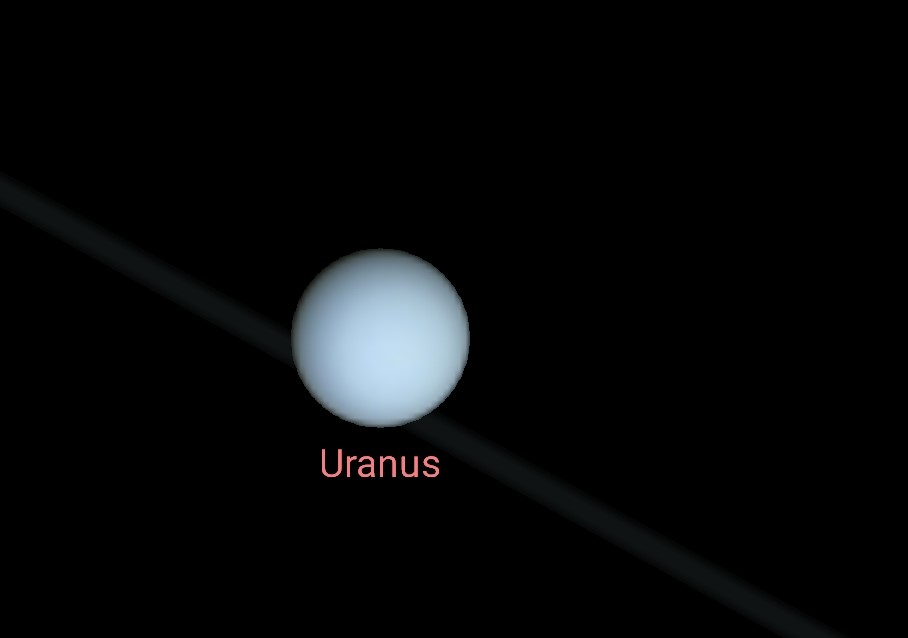
Then, when visiting my grandchildren, we just happened to do some star gazing, using Google Sky Map, picking out the planets.  Somehow I managed take a photo, and looking at it, took me back to the days of Star Trek, and the many series, which sort of gave me an idea for another story.

Equally, I’m always on the lookout for photo opportunities that I can use to write short stories, and these continue apace, the latest, number 129.  These are being formed into anthologies, stories 1 to 50, and stories 51 to 100.  The first has been assembled into book form, and is awaiting the editors first reading and report.  I’m still working on the second.

Perhaps some of the time has been spent keeping up with Twitter, where over the last six months, and more recently, sales of my books on Amazon have been increasing.  Not to best seller numbers, but people are reading my stories, and the reviews have been very good.

It has, of course, pushed me to work harder on marketing and that had consumed some of my time, which unfortunately takes me away from writing.  It sometimes feels like a self defeating exercise, but it is the same for all of us.

Oh, and something else that cropped up this month, my brother has been digging into out family history, and around the middle of the month he found some interesting revelations about some family members, including a pseudo luddite, and then later on, when chasing down the places that we, as a family, lived, and this brought out some very interesting information about our father.

I’m discovering for what I’d always assumed was an ordinary man, he had done a lot of very interesting things in his life, and not only that, I’ve been fictionalising the story.  I have potted pieces written over various stages, and, one day, it might come together as a sort of biography.  It is astonishing just how much you don’t know about your family, until much later on, at least for some of us.  Our relatives have always been a mystery to me, and it’s fascinating as each one is brought to life with a new detail here and there.

Looking back on what I’ve just written, perhaps the passing of the month had been more productive that I first thought.  It just seems like nothing major has happened.

What do we know about life?

Our view of life, love, relationships, and marriage come from our own experiences. This is basically the same for all of us for everything that happens to us through life, as young children, at school, at work, at leisure, and, as we grow as a person.

Our ideas about life will come from the experiences of having our children, watching over our children as they grow up, from our relatives, both our own and those acquired by marriage or relationships, and from our friends.

No two life experiences will be exactly the same. There will be similarities but differences which may or may not give us a different perspective, whether that might be for the better or for the worse. Not everything that will happen to us will be good, or bad, but just an experience that we will remember or forget, take notice of or ignore, helps us grow, or cause us pain.

There will be the experiences we have when interaction with others that are outside our family sphere but haling an influence on us directly or indirectly, like politicians, doctors, government officials, and police. There will also be experiences involving those at work that we interact with in a professional manner, and others, who have influence in ways that sometimes can be unimaginable.

These interactions will influence our feelings, thoughts, and how we react and behave, the highs and lows of having children and grandchildren, interactions with aunts, uncles, our parents. Equally there will be moments of despair, of losing a job or missing out on a promotion, of dealing with people in the workplace that make life difficult, dealing with relatives who are not very nice, in short all of those interactions with all these people around you, and more.

Yes, your life is steered by all of these influences, and your views are often coloured by any or all of these people. They make up the sum of who you are, who you will be, and what you want to be. Those dreams will seem, sometimes, within your grasp, but quite often they will seem as far from your grasp as touching the moon.

But all of this, while it makes up who you are, will also make up who your characters are in a story.

They will be people you know, people you’ve met, people you’ve interacted with, people you’ve seen.

Over a series of posts I’ll try to describe some of my influences, and then refine them into the characters and locations of my stories.

Using Hollywood as a source of inspiration

I’m not one for writing Western, I’ll leave the honours for that to Louis L’Amore, whose acquaintence I made when I saw How The West Was Won on the big screen, then read the book.

That led to reading a few more by Zane Grey, but it was not in the reading of the stories, but in the visual splendour of the west depicted in these films that made the actors almost secondary.

But my interest in watching Westerns had been fuelled by the fact my parents watched them on TV, though back on those days, they were in black and white, and starred John Wayne, Gary Cooper, Alan Ladd and, later on, Clint Eastwood among a great may others.

But the mainstay of my interest in the archetypal Western centred on John Wayne whose movies may have almost the same plot line, just a substitution of actors and locations.

Often it was not so much that John Wayne was in it, but the actors he surrounded himself with, like Dean Martin, Ricky Nelson, Walter Brennan, and Robert Mitcham, all of whom made the experience all the better.

Films like The Sons of Katie Elder, True Grit, Rio Bravo, and El Dorado.

Who can forget the vast open spaces, the dry dusty stresses lines with wooden buildings and endless walkways that substituted for footpaths. Bars in hotels, rooms overlookinf street, havens for sharpshooters, when bad guys outnumbers the good guys, and typically the sherrif who always faced insurmountable odds.

Or the attacks staged by Indians who were routinely killed, in fact there was not one film I saw where they ended up winning any battle. Only in recent years did they get a more sympathetic role, one film that comes to mind Soldier Blue, which may have painted then as savages, but a possible reason why they ended up so.

But for those without Indians, there were plenty of others whose intentions were anything but for the good of the settlers.

A lot of films ended in the classic gun fight. High Noon, 3:10 to Yuma are two, or where the story led to gun fights between good and bad in unlikely places like El Dorado or Rio Bravo.

There are countless others I could name, like Shane, or became to be called, the spaghetti westerns with Clint Eastwood, or last but not least, The Magnificent Seven, or Once Upon a time in the west.

All have contributed to a picture in my mind of how the American West was, fearsome men, beleaguered sheriffs, people with good intentions, and those driven by greed and power. All of this playing out in the harshest of conditions where life and death could be determined by a wrong word or a stray bullet.

And let’s not forget the role of the guns, Colt, Winchester, Remington. And Smith and Wesson, and the gunslingers of the day. Some were good, most according to the film world were bad.

So, against the lifelong interest of watching and reading about the archetypal view of the old West, shall I attempt to put pen to paper. Thank God it will be a work of fiction, because I don’t think there’s many who knew what it was really like.

An excerpt from “Betrayal” – a work in progress

It could have been anywhere in the world, she thought, but it wasn’t.  It was in a city where if anything were to go wrong…

She sighed and came away from the window and looked around the room.  It was quite large and expensively furnished.  It was one of several she had been visiting in the last three months.

Quite elegant too, as the hotel had its origins dating back to before the revolution in 1917.  At least, currently, there would not be a team of KGB agents somewhere in the basement monitoring everything that happened in the room.

There was no such thing as the KGB anymore, though there was an FSB, but such organisations were of no interest to her.

She was here to meet with Vladimir.

She smiled to herself when she thought of him, such an interesting man whose command of English was as good as her command of Russian, though she had not told him of that ability.

All her knew of her was that she was American, worked in the Embassy as a clerk, nothing important, who life both at work and at home was boring.  Not that she had blurted that out the first tie she met, or even the second.

That first time, at a function in the Embassy, was a chance meeting, a catching of his eye as he looked around the room, looking, as he had told her later, for someone who might not be as boring as the function itself.

It was a celebration, honouring one of the Embassy officials on his service in Moscow, and the fact he was returning home after 10 years.  She had been there one, and still hadn’t met all the staff.

They had talked, Vladimir knew a great deal about England, having been stationed there for a year or two, and had politely asked questions about where she lived, her family, and of course what her role was, all questions she fended off with an air of disinterested interest.

It fascinated him, as she knew it would, a sort of mental sparring as one would do with swords, if this was a fencing match.

They had said they might or might not meet again when the party was over, but she suspected there would be another opportunity.  She knew the signs of a man who was interested in her, and Vladimir was interested.

The second time came in the form of an invitation to an art gallery, and a viewing of the works of a prominent Russian artist, an invitation she politely declined.  After all, invitations issued to Embassy staff held all sorts of connotations, or so she was told by the Security officer when she told him.

Then, it went quiet for a month.  There was a party at the American embassy and along with several other staff members, she was invited.  She had not expected to meet Vladimir, but it was a pleasant surprise when she saw him, on the other side of the room, talking to several military men.

A pleasant afternoon ensued.

And it was no surprise that they kept running into each other at the various events on the diplomatic schedule.

By the fifth meeting, they were like old friends.  She had broached the subject of being involved in a plutonic relationship with him with the head of security at the embassy.  Normally for a member of her rank it would not be allowed, but in this instance it was.

She did not work in any sensitive areas, and, as the security officer had said, she might just happen upon something that might be useful.  In that regard, she was to keep her eyes and ears open, and file a report each time she met him.

After that discussion she got the impression her superiors considered Vladimir more than just a casual visitor on the diplomatic circuit.  She also formed the impression the he might consider her an ‘asset’, a word that had been used at the meeting with security and the ambassador.

It was where the word ‘spy’ popped into her head and sent a tingle down her spine.  She was not a spy, but the thought of it, well, it would be fascinating to see what happened.

A Russian friend.  That’s what she would call him.

And over time, that relationship blossomed, until, after a visit to the ballet, late and snowing, he invited her to his apartment not far from the ballet venue.  It was like treading on thin ice, but after champagne and an introduction to caviar, she felt like a giddy schoolgirl.

Even so, she had made him promise that he remain on his best behaviour.  It could have been very easy to fall under the spell of a perfect evening, but he promised, showed her to a separate bedroom, and after a brief kiss, their first, she did not see him until the next morning.

So, it began.

It was an interesting report she filed after that encounter, one where she had expected to be reprimanded.

She wasn’t.

It wasn’t until six weeks had passed when he asked her if she would like to take a trip to the country.  It would involve staying in a hotel, that they would have separate rooms.  When she reported the invitation, no objection was raised, only a caution; keep her wits about her.

Perhaps, she had thought, they were looking forward to a more extensive report.  After all, her reports on the places, and the people, and the conversations she overheard, were no doubt entertaining reading for some.

But this visit was where the nature of the relationship changed, and it was one that she did not immediately report.  She had realised at some point before the weekend away, that she had feelings for him, and it was not that he was pushing her in that direction or manipulating her in any way.

It was just one of those moments where, after a grand dinner, a lot of champagne, and delightful company, things happen.  Standing at the door to her room, a lingering kiss, not intentional on her part, and it just happened.

And for not one moment did she believe she had been compromised, but for some reason she had not reported that subtle change in the relationship to the powers that be, and so far, no one had any inkling.

She took off her coat and placed it carefully of the back of one of the ornate chairs in the room.  She stopped for a moment to look at a framed photograph on the wall, one representing Red Square.

Then, after a minute or two, she went to the mini bar and took out the bottle of champagne that had been left there for them, a treat arranged by Vladimir for each encounter.

There were two champagne flutes set aside on the bar, next to a bowl of fruit.  She picked up the apple and thought how Eve must have felt in the garden of Eden, and the temptation.

Later perhaps, after…

She smiled at the thought and put the apple back.

A glance at her watch told her it was time for his arrival.  It was if anything, the one trait she didn’t like, and that was his punctuality.  A glance at the clock on the room wall was a minute slow.

The doorbell to the room rang, right on the appointed time.

She put the bottle down and walked over to the door.

A smile on her face, she opened the door.

It was not Vladimir.  It was her worst nightmare.

© Charles Heath 2020