“Do you believe in g..g..ghosts…?”, a short story

Inside the old building, it was very quiet and almost cold.

Strange, perhaps, because outside the temperature was bordering on the record hottest day ever, nearly 45 degrees centigrade.

The people who’d built this building nearly a hundred years before must have known how to keep that heat at bay, using sandstone.

Back then, the sandstone would have looked very impressive, but now after many years of being closed off and left abandoned, the outside was stained by modern-day pollutants giving it a black streaky look, and inside layers of dust, easily stirred up as we walked slowly into the main foyer.

It was huge, the roof, ornate, with four huge chandelier lights hanging down, and wood paneling, giving way to a long counter with brass serving cages highlighting its former use; a bank.

In its day it would have conveyed the power and wealth so that its customers could trust the money to. Of course, that was before the global economy, online banking, and a raft of the new and different institutions all vying for that same money.

Then it was a simple choice of a few, now it was a few thousand.

“How many years had this been closed up?” I asked.

“Close to twenty, maybe twenty-five. It was supposed to be pulled down, but someone got it on the heritage list, and that put an end to it. “

Phil was the history nut. He’s spent a month looking into the building, finding construction plans, and correspondence dating back to before and during the construction.

Building methods, he said, that didn’t exist today and were far in advance of anything of its type for the period. It was the reason we were standing in the foyer now.

We were budding civil engineers, and the university had managed to organize a visit, at our own risk. The owner of the building had made sure we’d signed a health and safety waiver before granting access.

And the caretaker only took us as far as the front door. He gave us his cell number to call when we were finished. When we asked him why he didn’t want to come in with us, he didn’t say but it was clear to me he was afraid of something.

But neither of us believed in ghosts.

“You can see aspects of cathedrals in the design,” Phil said. ” You could quite easily turn this space into a church.”

“Or a very large wine cellar.” I brought a thermometer with me, and inside where we were standing it was the ideal temperature to store wine.

Behind the teller cages were four large iron doors to the vaults. They were huge, and once contained a large amount of cash, gold, and whatever else was deemed valuable.

They were all empty now, the shelves and floor had scattered pieces of bank stationery, and in a corner, several cardboard boxes, covered in even more dust.

Behind the vaults were offices, half-height with glass dividers, the desks and chairs still in place, and some with wooden filing cabinets drawers half-open.

Others had benches, and one, set in the corner, very large, and looked like the manager’s office. Unlike the other office which had linoleum tiles, this one had carpet. In a corner was a large mirror backed cabinet, with several half-empty bottles on it.

“Adds a whole new meaning to aged whiskey, don’t you think.” Phil looked at it but didn’t pick it up.

“I wonder why they left it,” I muttered. The place had the feel of having been left in a hurry, not taking everything with them.

I shivered, but it was not from the cold.

We went back to the foyer and the elevator lobby. They were fine examples of the sort of caged elevators that belonged in that time, and which there were very few working examples these days.

The elevators would have a driver, he would pull back an inner and outer door when the car arrived on a floor, and close both again when everyone was aboard.

Both cars were on the ground floor, with the shutter doors closed, and when I tried to open one, I found it had been welded shut. The other car was not sitting level with the floor and the reason for that, the cable that raised and lowered it was broken.

Restoring them would be a huge job and would not be in their original condition due to occupational health and safety issues.

The staircase wound around the elevator cage, going up to the mezzanine floor or down to the basement.

“Up or down?” He asked.

“Where do you want to go first?”

“Down. There’s supposed to be a large vault, probably where the safety deposit boxes are.”

And the restrooms I thought. Not that I was thinking of going.

As we descended the stairs it was like going down into a mine shaft, getting darker, and the rising odor of damp, and mustiness. I suspect it would have been the same back when it was first built being so close to the shoreline of the bay, not more than half a mile away.

The land this building and a number of others in a similar style, was built on was originally a swamp, and it was thought that the seawater still found its way this far inshore. But the foundations were incredibly strong and extensive which was why there’d been no shifting or cracking anywhere in the ten-story structure.

At the bottom, there was a huge arch, with built-in brass caging with two huge gates, both open. It was like the entrance to a mythical Aladdin’s cave.

There was also an indefinable aura coming from the depths of that room. That, and a movement of cold air. Curiously, the air down there was not musty but had a tinge of saltiness to it.

Was there a natural air freshener effect coming from somewhere within that vault.

“Are we going in?”

I checked my torch beam, still very bright. I pointed it into the blackness and after a minute checking, I said, “We’re here, so why not.”

We had to walk down a dozen steps then pass under through the open gates into the room. There was a second set of gates, the same as the first, about thirty feet from the first, and, in between, a number of cubicles where customers collected their boxes.

Beyond the second set of gates was a large circular reinforced safe door high enough for us to walk through.

This cavernous space stretched back quite a distance, and along the walls, rows, and rows of safety deposit boxes, some half hanging out of their housing, and a lot more stacked haphazardly on the floor.

I checked a few but they were all empty.

I shivered again. It felt like there was a presence in the room. I turned to ask Phil, but he wasn’t there. I hadn’t heard him walk away, and there were only two sets of footprints on the floor, his and mine, and both ended where I was standing.

It was as if he had disappeared into thin air.

I called out his name, and it echoed off the walls in the confined space. No answer from him.

I went further into the room, thinking he might have ventured towards the end while my back was turned, but he hadn’t. Nor had he left because there were only footprints coming in, not going out.

I turned to retrace my steps and stopped suddenly. An old man, in clothes that didn’t belong to this era, was standing where Phil had last been.

He was looking at me, but not inclined to talk.

“Hello. I didn’t see you come down.”

Seconds later the figure dissolved in front of me and there was no one but me standing in the room.

“Joe.”

Phil, from behind me. I turned and there he was large as life.

“Where were you?”

“I’ve been here all the time. Who were you just talking to?”

“There was an old man, standing just over there,” I said pointing to somewhere between Phil and the entrance.

“I didn’t see anyone. Are you sure you’re not having me on?”

“No. He’s right behind you.” The old man had reappeared.

Phil shook his head, believing I was trying to fool him.

That changed when the man touched his shoulder, and Phil shrieked.

And almost ran out of the room. It took a few minutes for him to catch his breath and steady the palpitating heart.

“Are you real?” I asked, not quite sure what to say.

“To me, I am. To anyone else, let’s just say you are the first not got faint, or run away.”

“Are you a ghost?” Phil wasn’t exactly sure what he was saying.

“Apparently I am and will be until you find out who killed me “

Ok, so what was it called, stuck in the afterlife or limbo until closure?

“When?”

“25 years ago, just before the bank closed. It’s the reason why it’s empty now.”

“And you’re saying we find the killer and you get to leave?”

“Exactly. Now shoo. Go and find him.”

We looked at each other in surprise, or more like shock, then back to the man. Only he was no longer there.

“What the…” Phil sail. “It’s time to go.”

“What about the man and finding his killer?”

“What man? We saw nothing. We’re done here.”

I shrugged. Phil turned to leave, but only managed to take three steps before the gates at the entrance closed with a loud clang.

When he crossed the room to stand in front, he tried pulling them open.

“Locked,” he said. Flat, and without panic, he added, “I guess it looks like we have a murder to solve.”

© Charles Heath 2019-202
A Private Investigator’s tale lends itself to being a serial

The write a private detective serial has always been one of the items at the top of my to-do list, though trying to write novels and a serial, as well as a blog, and maintain a social media presence, well, you get the idea.

But I made it happen, from a bunch of episodes I wrote a long, long time ago, used these to start it, and then continue on, then as now, never having much of an idea where it was going to end up, or how long it would take to tell the story.

That, I think is the joy of ad hoc writing, even you, as the author, have as much idea of where it’s going as the reader does.

It’s basically been in the mill since 1990, and it finally came to an end last year.


Now it’s time for the second book or the second case.

It’s starting off with Harry’s father going missing, but it has more sinister consequences, perhaps relating to an event that occurred to Harry during his first case.

The first episode will appear very soon.


But some information to get your heads back into the PI world,

My private detective, Harry Walthenson

I’d like to say he’s from that great literary mold of Sam Spade, or Mickey Spillane, or Phillip Marlow, but he’s not.

But, I’ve watched Humphrey Bogart play Sam Spade with much interest, and modeled Harry and his office on it.  Similarly, I’ve watched Robert Micham play Phillip Marlow with great panache, if not detachment, and added a bit of him to the mix.

Other characters come into play, and all of them, no matter what period they’re from, always seem larger than life.  I’m not above stealing a little of Mary Astor, Peter Lorre or Sidney Greenstreet, to breathe life into beguiling women and dangerous men alike.


Then there’s the title, like

The Case of the Unintentional Mummy – this has so many meanings in so many contexts, though I image back in Hollywood in the ’30s and ’40s, this would be excellent fodder for Abbott and Costello

The Case of the Three-Legged Dog – Yes, I suspect there may be a few real-life dogs with three legs, but this plot would involve something more sinister.  And if made out of plaster, yes, they’re always something else inside.

But for mine, to begin with, it was “The Case of the …”, because I had no idea what the case was going to be about, well, I did, but not specifically.

The first case is called ‘A case of working with the Jones’ brothers’, which of course didn’t follow the original title concept.

The second will fall into place once a few episodes have been written.


Hang in there, it’s not long to wait now.


Back to the movies…again

It’s not as if we have nothing better to do but …

Who’s not a sucker for a kick-ass CIA movie, well sort of …

To be honest the premise that a 9-year-old could blackmail a battle-hardened soldier used to taking out bad guys, sounded a little silly.

But..

Hang on, it is a kids movie after all, and it surprised me how many people had come to see it. And it wasn’t all young children, but quite a few teenagers as well.

Was it worth the nearly two hours viewing time?

Yes.

There could be less ads at the start before the movie started but I guess they keep the movies affordable. And allow you to run up to a half-hour late.

So, back to the movie.

It had everything you’d expect, unexpurgated violence, schmaltz, and the inevitable rescue of the 9-year-old and her mother from the bad guys at the end. It might have been predictable, but it was a gentle, and sometimes humorous, journey to get there.

I’m not sure I could write a story along those lines, but I might give it a try. I’m beginning to realize that sometimes there are different ways to tell the same stories.

And for once in what could be called a high action movie, it was a relief to find the dialogue not riddled with endless expletives.

All it takes is a cast who make it reasonably believable, and are not there just to collect a paycheck, or being cardboard cutouts with CGI going off all around them.

I’ll certainly be seeing it again when it hits the DVD stores in which no doubt I’ll get to see the nuances I missed the first time around.

Star Wars, Star Wars, and more Star Wars

To get ourselves into the mood to go and see the final episode of Star Wars, the rise of Skywalker, we sat down and watched all of the previous eight episodes.

Despite the fact our viewing of Star Wars, like everyone else, started with Episode Four, many, many years ago, this time around we started with Episode One.

Now, when this second set of three episodes started, we didn’t go to the cinema to see them. I think at the time, we’d heard a lot of negative comments about them, centered around a character called Jar Jar Binks, and that was enough.

I did hear sometime later some fans had created a version of the movie with that character completely edited out. I’m still yet to find it.

But, this time we started with One, and it didn’t take long to get tired of Binks, and his appearances were a perfect time to get coffee, drinks or a snack.

It was also interesting to see the origins of ObiOne Kenobi, who had been an older version called Ben Kenobi in Four. And we got to see the Clone Wars, another myth in Four brought to reality in Two and Three.

Lets hope, in reality, we never come to see the likes of robots fighting wars on the scale these movies present.

Additionally, we got to see, in the first three, the birth of Leia and Luke, how they came to be separated, and how they finished up where they were at the start of Four. It was just a shame Padme never lived to see them.

The first three episodes were hard work in the viewing, but they filled in the back story for the next three, how Anakin Skywalker became Darth Vader, and how the Senate Leader, who was secretly a Sith, became the charred looking, gravelly-voiced Emperor.

But after seeing the first two of the third series, something became obvious. Jedi were not born Jedi, they were just ordinary people who had that life force that gave them their powers running strong in their being. Annikin was one. Rae is another. I’m not sure about Ben Solo who had one Jedi parent. That was never fully explained.

That should mean, despite all this rambling by the Emperor and others that the Jedi are extinct, that’s completely and utterly wrong. It’s a large universe and there have to be many, many candidates.

This means that Star Wars could run forever.

A bit like Yoda, really. Interesting that he can still move mountains even after death. I guess a Jedi doesn’t die, well not in the sense that we do. But, then, how could you kill off a cute character like Yoda?

So, eight down, we have only one to go. It should run to the formula. The good Jedi faces off against the bad Jedi and good triumphs over evil. Planets are destroyed by Deathstars, Deathstars are destroyed by single fighters, and we have the awards ceremony at the end with much singing and dancing.

I’ll let you know once I’ve seen it. I will not be reading a recap of the movie before going.

Writing about writing a book – Day 13 supplemental

I was going to say ‘Captain’s log supplemental’ and add a stardate, but the analogy might get lost because not everyone is a Star Trekker.

Needless to say, there’s always more to say about an event, especially when the mind is casting about for ideas to add or enhance a story.

It comes down to, does art imitate life, or does life imitate art?  It’s an interesting question because, in this instance, art will be imitating, to a certain extent, life.

Perhaps what is lost in the telling is the inability of newly divorced people in working out where the boundaries are, whether or not they are entitled to know about the other person’s private life, and how that will make them feel.

I’m guessing when a marriage breaks down, there’s always a cause, and while the word amicable gets bandied around a lot, it’s said, but quite often not meant.

Does mummy have a boyfriend?

Does daddy have a girlfriend?

What generally happens is the children are the only ones who know what’s really happening to each of the parents, because they get transported between the two, as neither parent would want to be seen stopping the other from seeing them/

Of course, where the children are grown up and leading their own lives, the situation should be a lot easier.

But, where does this fit in with the story I hear you asking.


Marriages fall apart for many reasons.  In the story, Bill acknowledges that it is largely his fault, and one suspects it’s probably an undiagnosed case of PTSD that back in the sixties and seventies was not really understood.

It led to both he and Ellen leading individual but separate lives whilst keeping up appearances for the sake of their children.  There’s no doubting who brought them up, Ellen, and who had the greater influence over them, although, for the sake of this story, both couldn’t wait to leave home and live somewhere else.

They do, and together.  They are not married and do not have children.  They were not the cause of the breakup, and fortunately, neither of the girls blame one or the other parent.

But that doesn’t mean, over the years, that either parent hasn’t tried to use them to glean information about the other.  It is how Bill discovered, some time ago, that Ellen had ‘a special friend’.

Yet, neither of the daughters have seen him, and not surprisingly, he had made sure that Bill has never seen him.  It’s for a particular reason, one that will become obvious later in the story.  It is, I think, a rather clever twist.

Also, Ellen is not a bad person and certainly wasn’t bad to Bill, perhaps more long-suffering.  She did stay with him for a long time, mainly for the children, but also because she genuinely cared for Bill.

And Bill had not had another woman friend, not until he discovers his feelings towards Jennifer and even then, he keeps that to himself, even when he really doesn’t have to.

Sigh.

Time to return to my fictional world.

What happens after the action packed start – Part 34

Our hero knows he’s in serious trouble.

The problem is, there are familiar faces and a question of who is a friend and who is foe made all the more difficult because of the enemy, if it was the enemy, simply because it didn’t look or sound or act like the enemy.

Now, it appears, his problems stem from another operation he participated in, and because of it, he has now been roped into what might be called a suicide mission.

I had hoped we’d land in daylight, but I could see the benefits of arriving at the landing strip after darkness had fallen, and a more primitive form of landing lights had been used.

Less interest from the local people and no bright lights lighting up the runway.

The only lights I could see from the air were the primitive landing lights, fires burning in used fuel drums, and a glimmer of light emanating from two of the buildings set back from the airstrip.

It did worry me, probably more than it should, that the pilots would be landing a plane of this size in virtually a paddock, flying by the seat of their pants, and all credit to them if they got the plane on the ground.  I guessed they’d flown into more than one hot spot around the world, and at least at this one, they were not being shot at.

Their turn around would be quick, just enough time to take on a small amount of fuel and then leave.  No one had said if it would be a fuel tanker or by drums and hand pumps.

The plane had a short distance to go from the end of the runway to what might be called terminal buildings.  The moment the engines were cut, there was a flurry of movement, and after the fuselage door was quickly opened by the co-pilot, then the rear access ramp lowered and standing at the end, once it hit the ground, I could see a tanker and a Land Rover heading towards the rear of the plane, with only small headlamps on.

Monroe had joined me.  Behind me was a hive of activity as the team moved the crates of camera equipment to the end of the ramp, and then the individual packs.  Jacobi was escorted down on the ground by his two-man guard.

“Is this necessary,” he asked as he passed by me

I ignored him.

The Range Rover stopped just by the bottom of the ramp, and two men got out, one I assumed was Colonel Chiswick, former British Army, came over to train the local soldiers, and didn’t go home, and the other a Ugandan soldier with Sergeant stripes.  Perhaps this was one of their airfields feeding supplies and troops for border patrol duties.

Monroe went down first, and I followed.

Chiswick came up to me, holding out a hand.  “James, I presume?”  I shook it.

I nodded towards Jill, “And Monroe.”

“Welcome to nowhere in particular.”

In the distance, another three Range Rovers were heading towards the plane and then stopped within easy distance of the ramp to easily facilitate the moving of the camera equipment into the rear.  Drivers of the cars ushered them, taking their packs and putting them in the back.

I saw a meaningful look pass between Jacobi and Chiswick.  They knew each other.  No surprises there.  If Chiswick was running this base, then he’d have to know about Jacobi whom we knew had friends in all the high places on every side of the fence.

Another car pulled up, a jeep.  “For your man to get to the base.  I gather he has his instructions?”

Mobley nodded, threw his pack in the back, and the jeep drove off.

“Nice night,” Chiswick said, finally, “Glad it’s not raining, or it would have been a rather sticky landing.”

“How long before the plane leave?”

“About an hour.  Don’t worry.  Planes come and go here all the time, so no one really cares much.”

The crates, packs and other men were loaded and taken away.  Monroe had a final word to the pilot, now down on the ground and supervising the fuel loading, then joined me in the Colonel’s car.

“You’ll be leaving just before first light.  Best to get away before the villagers stir.  There will be one or two curious souls, but they’re harmless.  The soldiers here have been informed that you are here for a training exercise, nothing unusual as we get squads from all over from time to time.  As I said, your arrival will have caused little interest.”

From the locals.  It was anyone else other than the locals I was worried about. 

“Excellent.”


There was not much else to talk about in the few minutes it took to get to the compound at the back of the so-called terminal buildings.  It consisted of about ten large barracks, an administration building, and what looked to be a mess.

Pale lights were showing from one of the barracks, and seeing the cars parked out the front, I assumed this was where we would stay until we departed.

The Colonel didn’t get out of the car.  “We’ll be leaving at 04:00 tomorrow morning.  Make sure you’re ready to go.”

“You’re coming too?”

“Bamfield asked me.  Wants to make sure you had someone who knows the lie of the land.”

“I thought you’d delegate that to a few of the soldiers.”

“No.  Can’t have them involved in an incursion or there will be trouble.  This is an off the book’s operation.  Looking forward to it, actually.  There are a few people over there I’d like to have a talk to if we get the time.”

I shrugged.  Just one more problem to deal with.  The Colonel didn’t strike me as being a talker, but a man who let actions define who he was.  And just because Bamfield vouched for him didn’t mean he might be not be working on his own retirement fund.

© Charles Heath 2019-2020

In a word: Air

Yep, another of those interesting little words that mean more than it appears.

Aside from the fact it is the air that we breathe, it can also be used to describe music.

It can be a breath of fresh air, though it’s hard to say where in this ever increasingly polluted atmosphere than we could literally draw one, except on a mountain top, where conversely it would be hard to breathe at all.

Have the air sucked out of us, well, that literally isn’t possible unless some madman comes up with a weird sort of vacuum cleaner, but that might be an episode for the X-Files.

He had an air about him, or her, as the case might be, which might refer to a sort of deference or manner.   There again that air might be one of boredom, which is what a lot of students seem to have in class.

Sorry, been a teacher, and know well the expressions on their faces.  Had one myself once, and finished up on the end of a chalkboard eraser.  Yep, in the good old day’s teachers used to chuck stuff at us recalcitrant students to get our attention, and not undergo a storm of protest from irate parents.

These days those same parents would most likely air their grievance, opinion, or view to the headmaster.

I’m guessing that same headmaster would be wishing those same parents to vanish into thin air, though I’m not sure how that would be possible.

And lastly, television stations air shows.

Weird, eh, how such a simple word can be used in so many contexts.

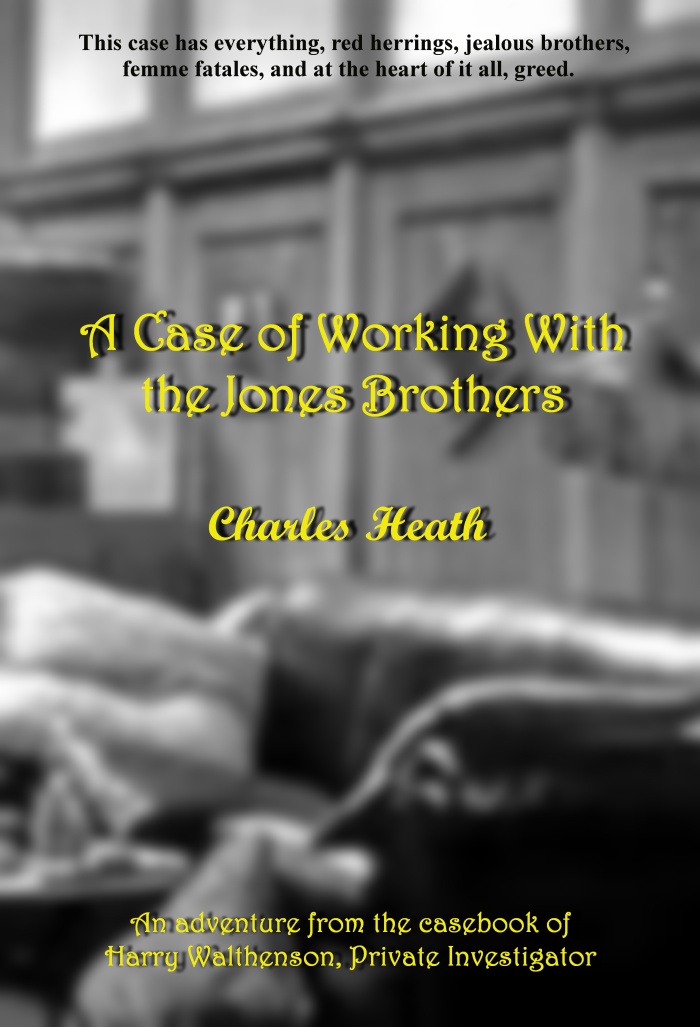
The first case of PI Walthenson – “A Case of Working With the Jones Brothers”

This case has everything, red herrings, jealous brothers, femme fatales, and at the heart of it all, greed.

See below for an excerpt from the book…

Coming soon!

PIWalthJones1


An excerpt from the book:


When Harry took the time to consider his position, a rather uncomfortable position at that, he concluded that he was somehow involved in another case that meant very little to him.

Not that it wasn’t important in some way he was yet to determine, it was just that his curiosity had got the better of him, and it had led to this: sitting in a chair, securely bound, waiting for someone one of his captors had called Doug.

It was not the name that worried him so much, it was the evil laugh that had come after the name was spoken.

Doug what?  Doug the ‘destroyer’, Doug the ‘dangerous’, Doug the ‘deadly’; there was any number of sinister connotations, and perhaps that was the point of the laugh, to make it more frightening than it was.

But there was no doubt about one thing in his mind right then: he’d made a mistake.  A very big. and costly, mistake.  Just how big the cost, no doubt he would soon find out.

His mother, and his grandmother, the wisest person he had ever known, had once told him never to eavesdrop.

At the time he couldn’t help himself and instead of minding his own business, listening to a one-sided conversation which ended with a time and a place.  The very nature of the person receiving the call was, at the very least, sinister, and, because of the cryptic conversation, there appeared to be, or at least to Harry, criminal activity involved.

For several days he had wrestled with the thought of whether he should go.  Stay on the fringe, keep out of sight, observe and report to the police if it was a crime.  Instead, he had willingly gone down the rabbit hole.

Now, sitting in an uncomfortable chair, several heat lamps hanging over his head, he was perspiring, and if perspiration could be used as a measure of fear, then Harry’s fear was at the highest level.

Another runnel of sweat rolled into his left eye, and, having his hands tied, literally, it made it impossible to clear it.  The burning sensation momentarily took his mind off his predicament.  He cursed and then shook his head trying to prevent a re-occurrence.  It was to no avail.

Let the stinging sensation be a reminder of what was right and what was wrong.

It was obvious that it was the right place and the right time, but in considering his current perilous situation, it definitely was the wrong place to be, at the worst possible time.


It was meant to be his escape, an escape from the generations of lawyers, what were to Harry, dry, dusty men who had been in business since George Washington said to the first Walthenson to step foot on American soil, ‘Why don’t you become a lawyer?” when asked what he could do for the great man.

Or so it was handed down as lore, though Harry didn’t think Washington meant it literally, the Walthenson’s, then as now, were not shy of taking advice.

Except, of course, when it came to Harry.

He was, Harry’s father was prone to saying, the exception to every rule.  Harry guessed his father was referring to the fact his son wanted to be a Private Detective rather than a dry, dusty lawyer.  Just the clothes were enough to turn Harry off the profession.

So, with a little of the money Harry inherited from one of his aunts, he leased an office in Gramercy Park and had it renovated to look like the Sam Spade detective agency, you know the one, Spade and Archer, and The Maltese Falcon.

There’s a movie and a book by Dashiell Hammett if you’re interested.

So, there it was, painted on the opaque glass inset of the front door, ‘Harold Walthenson, Private Detective’.

There was enough money to hire an assistant, and it took a week before the right person came along, or, more to the point, didn’t just see his business plan as something sinister.  Ellen, a tall cool woman in a long black dress, or so the words of a song in his head told him, fitted in perfectly.

She’d seen the movie, but she said with a grin, Harry was no Humphrey Bogart.

Of course not, he said, he didn’t smoke.

Three months on the job, and it had been a few calls, no ‘real’ cases, nothing but missing animals, and other miscellaneous items.  What he really wanted was a missing person.  Or perhaps a beguiling, sophisticated woman who was as deadly as she was charming, looking for an errant husband, perhaps one that she had already ‘dispatched’.

Or for a tall, dark and handsome foreigner who spoke in riddles and in heavily accented English, a spy, or perhaps an assassin, in town to take out the mayor.  The man was such an imbecile Harry had considered doing it himself.

Now, in a back room of a disused warehouse, that wishful thinking might be just about to come to a very abrupt end, with none of the romanticized trappings of the business befalling him.  No beguiling women, no sinister criminals, no stupid policemen.

Just a nasty little man whose only concern was how quickly or how slowly Harry’s end was going to be.

© Charles Heath 2019


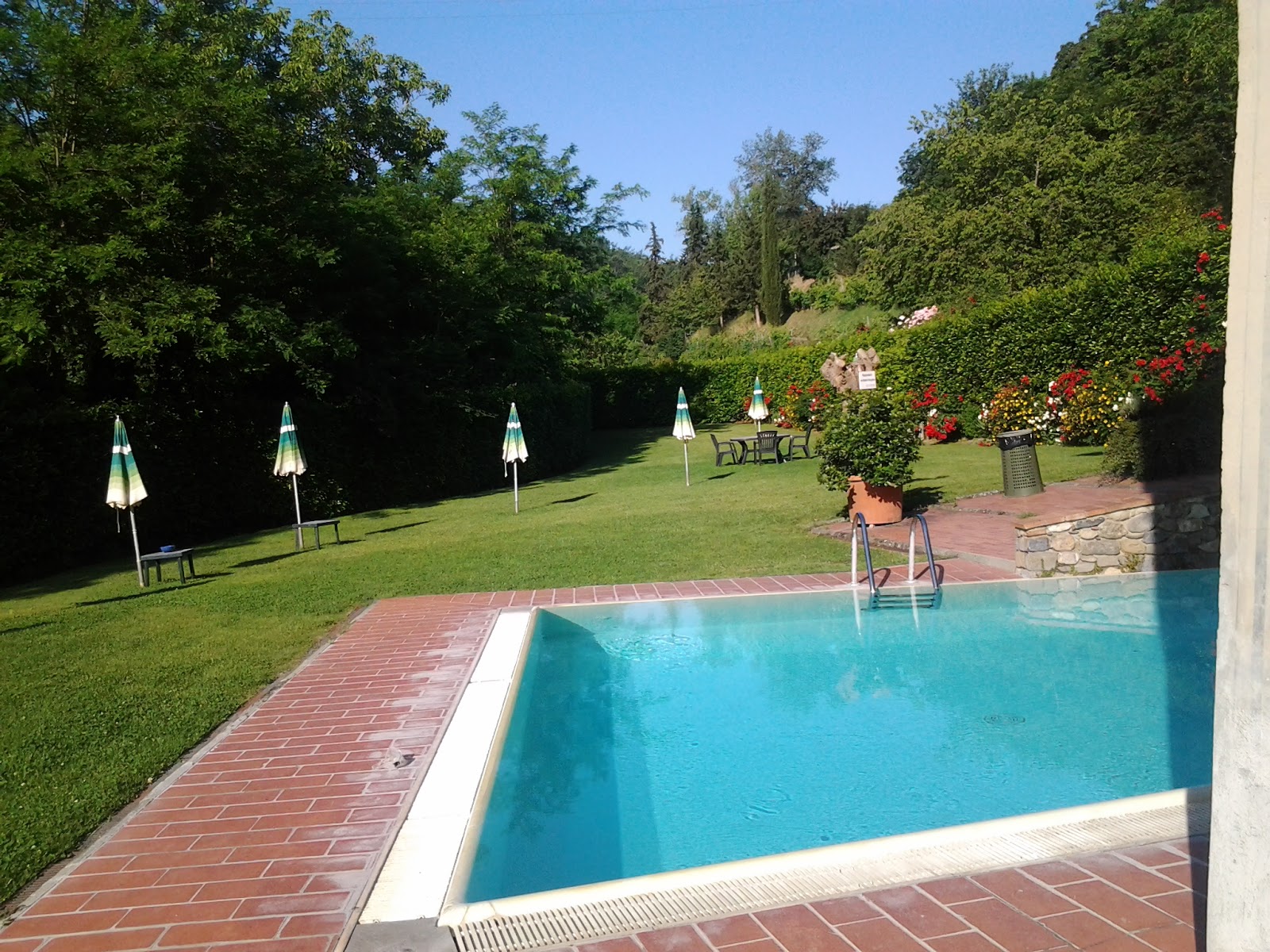
Searching for locations: Greve-in-Chianti, Tuscany, Italy

When we first planned to stay in Tuscany for a few days, we wanted to be in a central area.  We had thought of staying in Florence and making daily treks, but the tour operator we selected told us it would be better if we stayed closer to Arezzo.

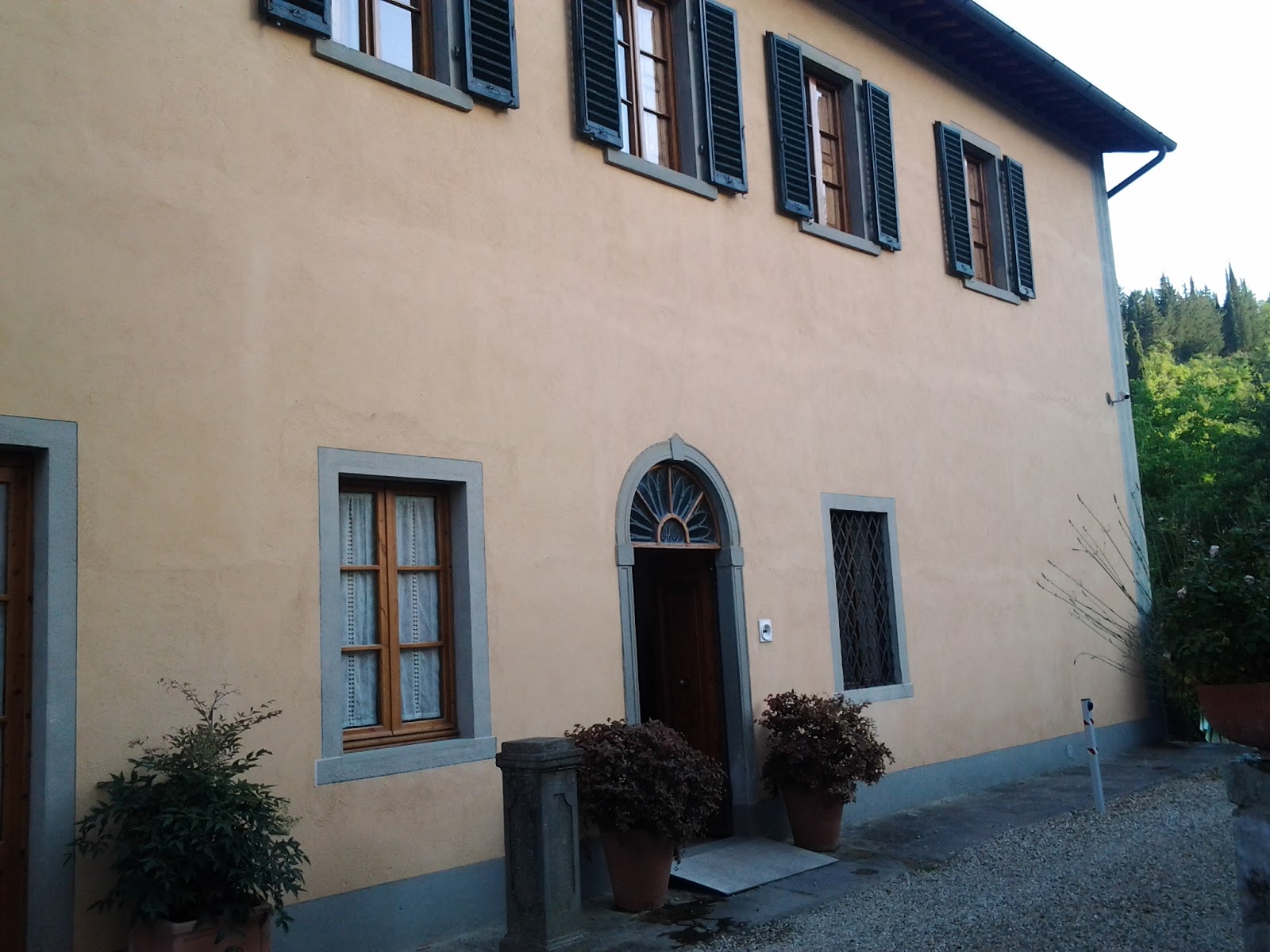
We picked Greve in Chianti, and a place called Antico Pastificio, we booked a standard apartment with two bedrooms, and it was about as authentic Italian you could get.  The building we stayed in was the yellow pasta factory, and the apartment named ‘Iris’.

It was only steps away from the main square, shops, restaurants, and at the opposite end, the quaint ringing of church bells at various times during the day.

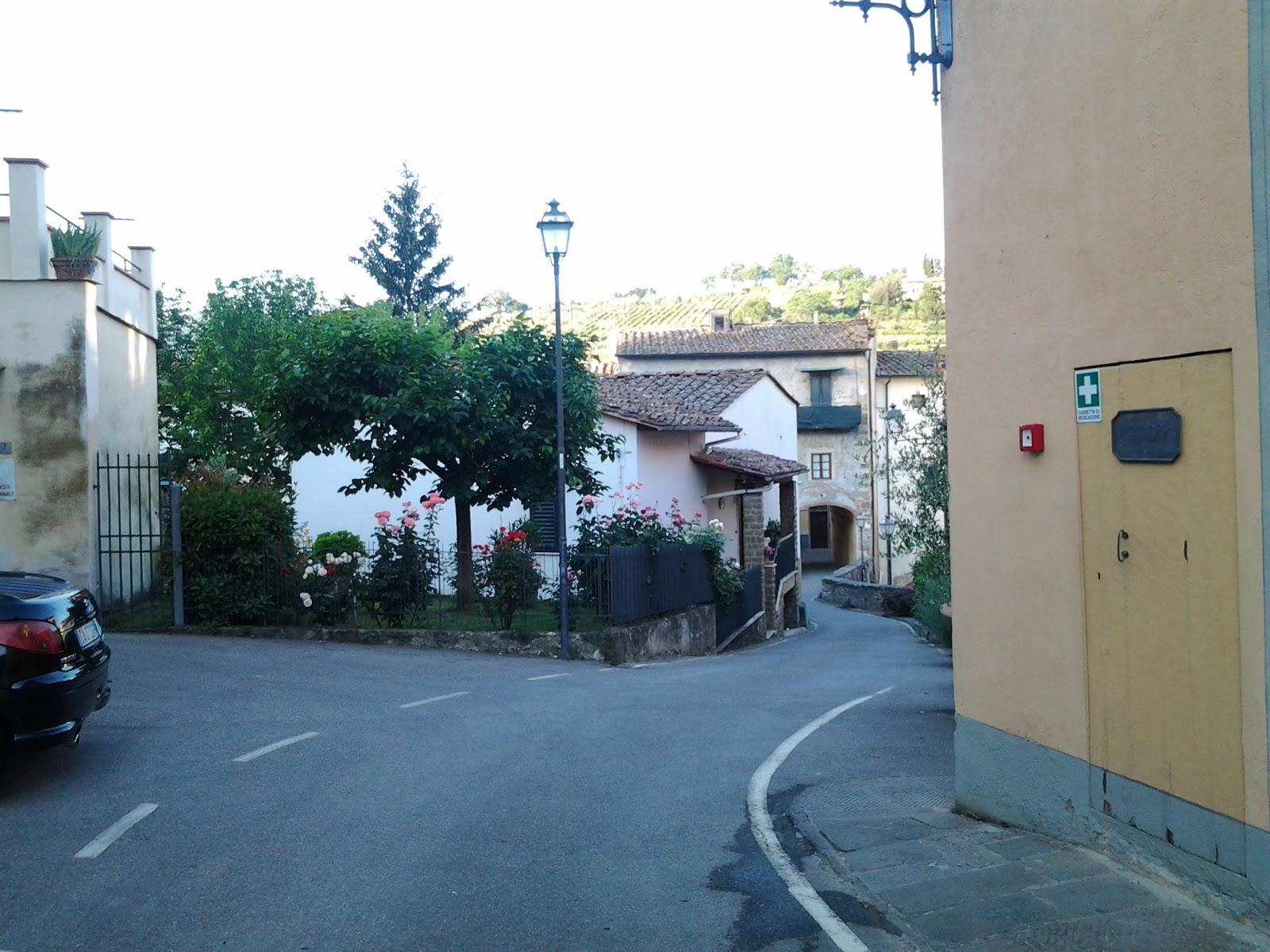
Gaining access was through a very narrow arch which required some deft driving and then up the road.  There were villas and two large apartment blocks.

You can just see the archway at the end of the road.

This was the entrance to our room,

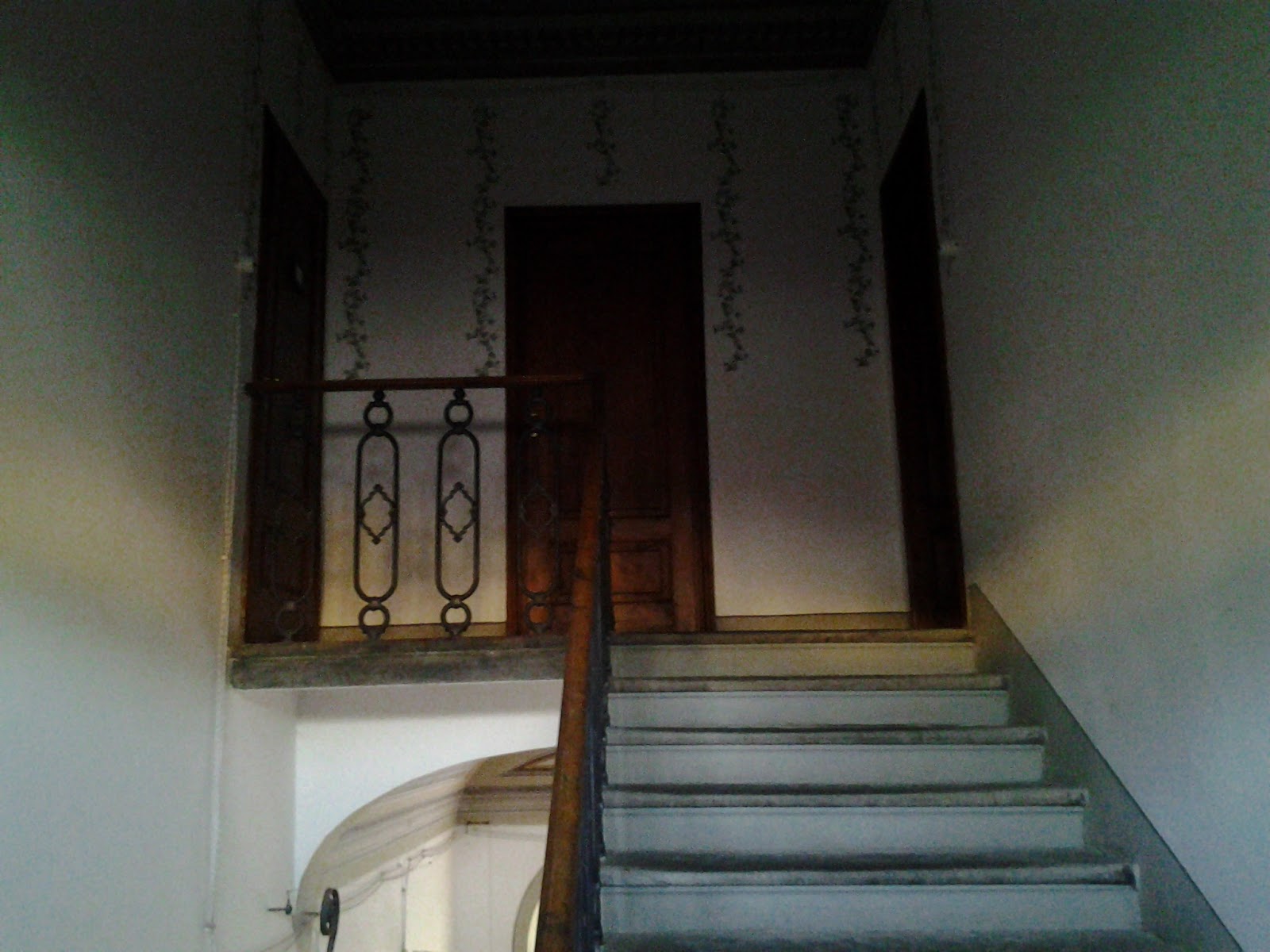
along a passage and up the stairs, turning left at the top.

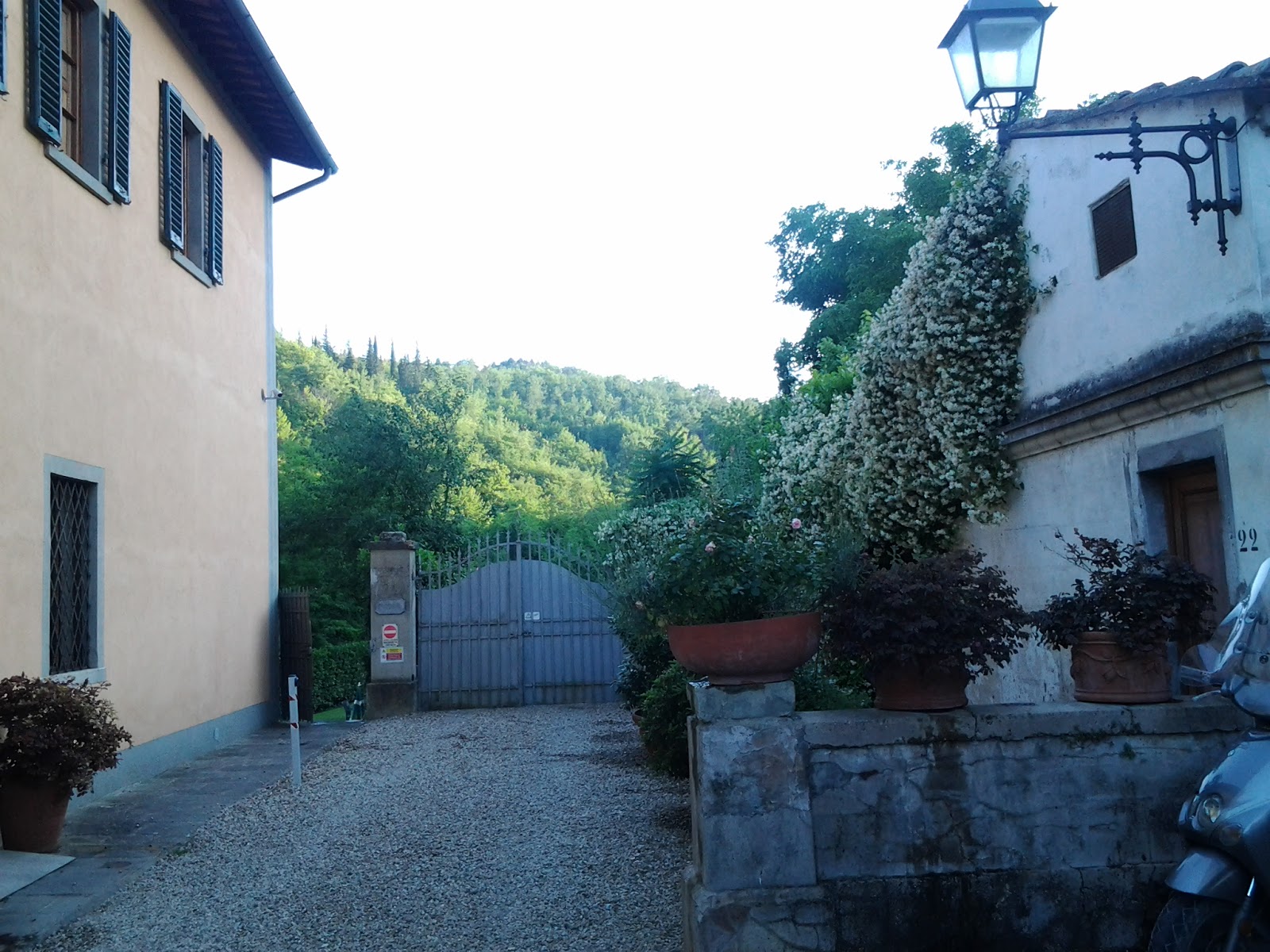
Going straight ahead through the gate to the car park,

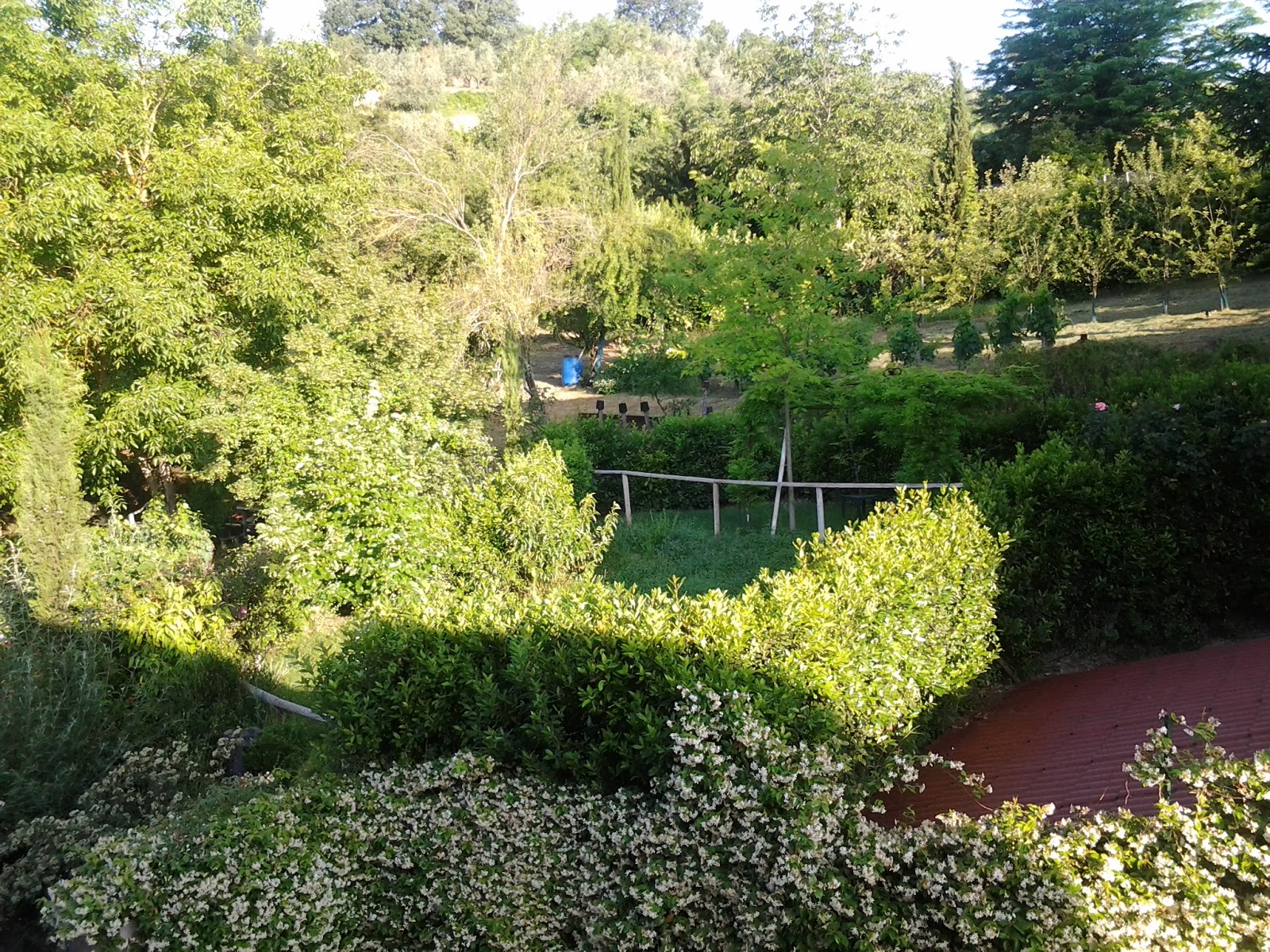
and access to the grounds behind the buildings.

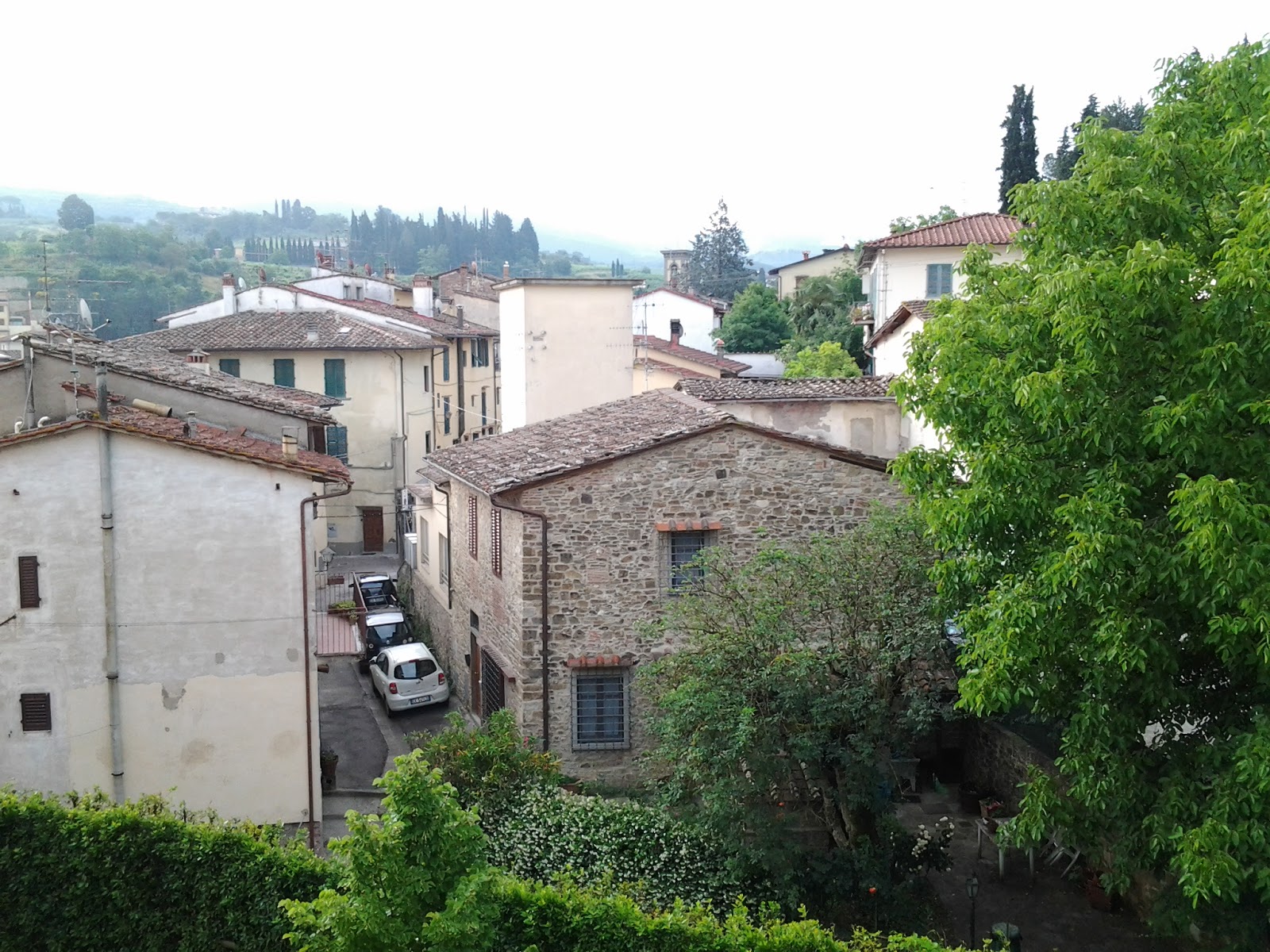
This was the view from the lounge/living room.  The days were hot, and on several evenings it rained, breaking the heat and making the evenings sitting by the window cool and refreshing.

And the last view is looking towards the town piazza and the church


© All photographs Charles Heath 2015-2020


Writing about writing a book – Day 13 extra

There’s nothing worse than an interrogation by children, particularly when they are brutally honest.  To make matters worse, I had two inquisitors, and it was clear they had spent some time before getting in the car to organize a coordinated plan of attack.

But, first, a little history.

Back in happier times, in other words before the eventual separation and divorce, we were known as nanna and poppy. I was, most of the time, referred to as grumpy poppy, and the two, girls adored their nanna.

She always had a way with children, and, it was also the case, with our own two sons.  They preferred her to me, for obvious reasons, I had to be bad cop all the time.

When we separated, and this was an eventuality that we both agreed on, and it was, I thought, quite amicable.  There was no underlying reason, like one or other of us cheating, but that we had, over time, simply drifted apart because we had separate ideas about life.

Since I was the nonpreferred grandparent, I decided to see less of the children and allow them more time to be with their nanna.  Sometimes we appeared together, like at birthdays and Christmas, but normally I kept my distance.

No one seemed to complain about my absences, least of all my own children, which spoke volumes, to me, about what they thought of me.

Now, out of the blue, I get this call to pick up my granddaughters from school. It was not as if their nanna was as so overloaded with things to so, so it seemed to me it was some sinister plot, but to what end, I could hardly imagine.

I’d find out soon enough.

The girls were waiting in the drop zone and got in the car.  It didn’t phase them that it was me, and I had thought they may have a problem since I was in a different car. But they seemed to know what to look for.

There was silence until we exited the school grounds, they went to a church primary school and perhaps they didn’t want to risk God’s judgment on me.

The older child fired the first salvo, “Nanna says you have a girlfriend.”

Ok, not the first question I was expecting.

Then the younger girl followed up with the second salvo, “is she going to become our new nanna?”

To them, these were serious questions.  But had they been inspired by their current nanna, and they were to get answers.  She’d know I wouldn’t lie to them.

I stopped at the traffic lights.

“If your nanna saw me with a friend having lunch the other day, then it’s quite possible it may have looked like that, but, no, I don’t have a girlfriend, and for what it’s worth, I’m not ready to embark on that journey again for a while.  As for the other question, there will never be a new or any other sort of nanna other than the one you have already.”

Speech timed to perfection.  The lights changed to green.

I let that sink in and then after a minute asked a question of my own.  “How come your nanna is not picking you up today?”

I notice the two give each other a look and wonder how young does a child have to be to understand what a lie is or be able to keep a secret.

“We were told that you would be collecting us today, that’s all.”

A question then for whoever is at home when I drop them off.

I notice a rather prolonged look from the younger girl, perhaps searching for a truth of her own in my expression, or that she was trying to read my thoughts.  Whatever she saw, she asked, “Do you still go to work?”

“In a manner of speaking.  I work for myself these days.”

“With computers?”

“Not anymore.  I thought I might try writing a novel.  Before, there never seemed to be enough time in a day to do anything, but now things are a little easier.”

Then the older girl chimed in, “Nanna says that it’s a bit late for you to become a writer.”

Yes, I can see it now, the rest of the family sitting around the dinner table saying that I’d finally lost my marbles doing what I always wanted to rather than what I had to.

And my ex had always said I would be wasting my time from the very first time I’d mentioned it to her.  So much for confiding your hopes and dreams in your so-called lifelong partner who is supposed to support you.  I know I had supported her through various career changes, no matter what the consequences.

“What do you think I should do?”

It would be interesting to get their perspective.

“If you don’t have a real job, how do you pay the bills?”

A practical question.  Just the sort my ex would have posed if she was here.

“You’d be surprised what you can do when you put your mind to it.  I manage.”

There was no doubt a dozen other questions to be asked, but the capacity for a child to remember was about three or four.  And then they had to remember my answers so they could relay them.

Hopefully, the interrogation was over.