Top 5 sights on the road less travelled – Sydney

Beyond the Icons: Five Hidden Sydney Gems on the Road Less Travelled

Sydney is one of the world’s most beautiful cities, but let’s be honest: once you’ve seen the Opera House sails sparkle and crossed the Harbour Bridge, you might feel like you’ve checked the box.

But for the traveller yearning for authenticity—the one who prefers the local pub to the tourist trap, and a hidden bush track over a crowded promenade—Sydney holds secrets. If you’re touring New South Wales and looking to uncover the true soul of the Harbour City, you need to drive past the postcards.

Here are the top five things to do in Sydney on the road less travelled, reserved for those willing to venture just slightly off the beaten track.


1. Trace Ancient History at Ku-ring-gai Chase National Park

While the Royal National Park gets most of the glory (and the weekend crowds), the vast, stunning wilderness of Ku-ring-gai Chase, located in the north, often slips under the radar for international visitors. This is the perfect spot for a Sydney day trip that feels like a true escape from urban life.

Why it’s on the road less travelled: This park is not just known for its phenomenal bushwalking and sprawling waterways; it is a repository of irreplaceable history. Ku-ring-gai is home to some of the most significant and well-preserved Aboriginal rock art and engraving sites in the Sydney basin.

The Must-Do: Head to the captivating West Head Lookout, which offers panoramic, uninterrupted views across the juncture of the Hawkesbury River, Broken Bay, and Barrenjoey Headland. On your way back, stop and walk the short loop trail at the Basin Track to view Aboriginal engravings of marine life and human figures, remnants of the Guringai people who have called this land home for millennia.


2. Harbour Views Without the Crowds: The Hermitage Foreshore Walk

Everyone knows the walk from Bondi to Coogee, but Sydney’s most exquisite harbour views are often found on the quieter paths along the Eastern Suburbs. The Hermitage Foreshore Walk, connecting Nielsen Park to Rose Bay, is the perfect example of secluded city beauty.

Why it’s on the road less travelled: This 1.8 km track meanders through lush, protected rainforest, leading you to tiny, secret beaches that feel utterly remote, despite being minutes from million-dollar homes. You get postcard-perfect views of the Sydney Harbour Bridge and Opera House—but from across the water, framed by trees and exclusive little coves.

The Must-Do: Pack a picnic and stop at Milk Beach, a glorious sliver of sand that is largely inaccessible except via this track or boat. It is one of the most romantic spots in Sydney, ideal for watching the yachts sail by without the presence of tour buses or selfie sticks.


3. Step Back in Time (and Ruin): Cockatoo Island

Located right in the middle of Sydney Harbour, Cockatoo Island is a UNESCO World Heritage site and one of the world’s most unique islands. It’s an industrial ghost town, a former prison, shipyard, and reformatory school, offering a fascinatingly gritty contrast to the polished surrounding suburbs.

Why it’s on the road less travelled: While easily accessible by ferry from Circular Quay, most tourists jump off at Taronga Zoo or Manly. Those who make the short trip to Cockatoo Island find a raw, sprawling historical site where the massive industrial machinery and sandstone penal buildings have been left largely intact.

The Must-Do: Take a self-guided audio tour that delves into the island’s dark convict past and its role in building Australia’s naval strength. For the truly adventurous, book a waterfront glamping tent or apartment for the night. Waking up on a silent, historical island, watching the sun rise over the harbour, is an experience few visitors ever get to claim.


4. Explore Inner West’s Industrial Transformation: The Tramsheds

Sydney’s Inner West is famous for its hipster cafes and vintage shops, but the Tramsheds in Forest Lodge offer a specific culinary and architectural experience that screams “local.”

Why it’s on the road less travelled: This is not a standard food court; it’s a beautifully restored Rozelle Tram Depot, built in 1904. The massive, soaring industrial space, complete with old tram tracks and repurposed steel infrastructure, now houses a selection of artisanal retailers, high-quality restaurants, and providores focusing on local Australian produce.

The Must-Do: Skip the chain restaurants and grab lunch at a specialist venue like Bodega 1904 or pick up fresh seafood. The atmosphere is buzzing but intimate, giving you a real feel for Sydney’s industrial heritage fused seamlessly with modern dining culture. It’s a perfect pitstop for lunch if you are driving through the Inner West towards the city.


5. Discover the Tranquil Waters of Pittwater via Ferry

For a Sydney experience that truly requires a sense of adventure (and a slightly longer drive north), head to Church Point or Palm Beach and leave the car behind to explore the hidden waterways of Pittwater.

Why it’s on the road less travelled: Pittwater is Sydney’s serene northern counterpart to the bustling Harbour. It is edged by protected national parks and sprinkled with tiny, virtually car-less communities only accessible by private ferry or water taxi. This area feels less like Sydney and more like a secluded holiday destination.

The Must-Do: Catch the little commuter ferry from Church Point across to Scotland Island or The Basin (part of Ku-ring-gai Chase). The Basin offers brilliant, calm, lagoon-like swimming and excellent walking tracks leading to lookouts over the pristine water. This ferry journey itself is a charming slice of local life—you’ll be sharing the trip with residents doing their grocery runs and kids heading home from school.


Your Sydney Adventure Starts Now

Sydney’s iconic sights are worth the visit, but the true brilliance of the city lies just beyond the tourist trails. By taking the road less travelled, you don’t just observe Sydney; you immerse yourself in its history, its wild geography, and its genuine, local spirit.

So, ditch the guidebook, fire up the GPS, and go find the hidden beaches and industrial ruins that the locals try to keep secret.


Have you discovered a hidden Sydney gem that should be on this list? Share your favourite off-the-beaten-path spot in the comments below!

What I learned about writing – People who tell you they can help, generally won’t

I’ve been investigating, another word, perhaps, for research!

On how to become an overnight success.

It’s a mistake, I know, because everyone is different, everyone has their own way of doing things, and success comes for different people in different ways, quite often not able to be replicated by others.

What’s the expression, you had to be there.

I read success stories, I read what these people did to get 1,000 extra Twitter followers in a day, a week, or five minutes, sold thousands of copies of their books in a month, from absolutely nothing, and/or have the formula for success.

All you have to do is part with, hang on, yesterday it was $495.00, but today only, just for you, it’s $69.95.

Read the fine print, this might not work for you.  And, generally, who reads the fine print.

I read about other authors using book promotion services, yes we had 250,000 twitter followers just aching to buy you book.

Read the fine print, it depends on a whole lot of factors whether it sells or not.  You could be ‘lucky’.  Most authors are not.

What’s the answer?

I think it’s at the bottom of the abyss, where I’m in free-fall heading rapidly towards.

If I happen to find the answer and become ultra successful, I’ll be happy to share it for nothing.  It’s not going to affect my sales, not once I’m established.

It’s just taking that first step.

Perhaps I need to believe that hard word and perseverance will work.

I’m also sure there are 101 ways to taking that first step, and someone out there knows one, or two, and someone else, knows another.  It’s just finding those people who do know, and who are willing to share, not for $495, not for $69.95, but because they want to do it to help others.

And maybe, just maybe, all those who gain the benefit their wisdom will buy their books.

Hang on, perhaps that’s number one on the list of 101 ….

Harry Walthenson, Private Detective – the second case – A case of finding the “Flying Dutchman”

What starts as a search for a missing husband soon develops into an unbelievable story of treachery, lies, and incredible riches.

It was meant to remain buried long enough for the dust to settle on what was once an unpalatable truth, when enough time had passed, and those who had been willing to wait could reap the rewards.

The problem was, no one knew where that treasure was hidden or the location of the logbook that held the secret.

At stake, billions of dollars’ worth of stolen Nazi loot brought to the United States in an anonymous tramp steamer and hidden in a specially constructed vault under a specifically owned plot of land on the once docklands of New York.

It may have remained hidden and unknown to only a few, if it had not been for a mere obscure detail being overheard …

… by our intrepid, newly minted private detective, Harry Walthenson …

… and it would have remained buried.

Now, through a series of unrelated events, or are they, that well-kept secret is out there, and Harry will not stop until the whole truth is uncovered.

Even if it almost costs him his life.  Again.

Top 5 sights on the road less travelled – Shanghai

Shanghai Unveiled: 5 Offbeat Adventures Beyond the Usual Tourist Trail

Shanghai. The name itself conjures images of glittering skyscrapers, historic Bund architecture, and bustling shopping streets. It’s a city of undeniable grandeur, a futuristic metropolis steeped in a fascinating past. Most visitors flock to the Oriental Pearl Tower, wander through Yu Garden, or stroll along Nanjing Road. And while these experiences are certainly iconic, they only scratch the surface of what this incredible city has to offer.

What if you’ve seen the postcard views? What if you crave a deeper connection, a glimpse into the everyday magic and quirky corners that locals cherish? You’ve come to the right place. Pack your sense of adventure, because we’re about to explore the roads less travelled in Shanghai, uncovering five unique experiences that will show you a different side of the “Pearl of the Orient.”


1. Immerse Yourself in Urban Art at M50 Creative Park (Moganshan Road 50)

Just a short walk from the Suzhou Creek, M50 is Shanghai’s answer to New York’s SoHo or London’s Shoreditch. Once a series of derelict industrial buildings and textile mills, this sprawling complex has been cleverly repurposed into a vibrant hub for contemporary art.

Why it’s off the beaten path: While known to art enthusiasts, M50 isn’t on the typical tourist itinerary. It’s not a single attraction but a collection of galleries, studios, and workshops, requiring a willingness to wander and discover.

What makes it special: You’ll find everything from cutting-edge installations and abstract paintings to photography exhibitions and quirky design shops. Many artists work on-site, offering a chance to see them in action or even purchase unique pieces directly. The raw, industrial backdrop provides a stark contrast to the sleek art, creating a unique atmosphere. Grab a coffee, chat with a gallerist, and let the creative energy inspire you.

Pro Tip: Look out for street art and graffiti that constantly change on the exterior walls, adding another layer to the artistic experience. Weekdays are generally quieter if you prefer a more contemplative visit.


2. Step Back in Time at the Shanghai Propaganda Poster Art Centre

Tucked away in the basement of a nondescript apartment building in the former French Concession, this private museum is a fascinating, if somewhat clandestine, journey into China’s revolutionary past.

Why it’s off the beaten path: Blink and you’ll miss the subtle entrance! There are no grand signs, and finding it often feels like you’re on a secret mission. It’s certainly not listed in every guidebook.

What makes it special: This veritable treasure trove houses an incredible collection of original propaganda posters from the early days of the People’s Republic of China, through the Cultural Revolution, and beyond. The posters are vibrant, historically significant, and incredibly rare. They offer a unique, visual narrative of a pivotal era, showcasing the artistic styles and political messages that shaped a nation. It’s a poignant and thought-provoking experience, often leaving visitors with a deeper understanding of modern Chinese history.

Pro Tip: Be prepared to ring a doorbell at the address (Room B, 868 Huashan Road) and navigate a residential complex. Photography is usually allowed without flash in most areas, but always double-check.


3. Dive into Local Life at a Bustling Wet Market

Forget souvenir shops; for a true taste of authentic Shanghai life, head to a local wet market. These vibrant, sensory-overload hubs are where locals buy their fresh produce, meat, fish, and unique regional ingredients.

Why it’s off the beaten path: This isn’t a “sight” in the traditional sense, but an immersive cultural experience. It can be loud, a little messy, and overwhelming for some, but that’s precisely its charm.

What makes it special: The sheer energy is infectious. Watch vendors expertly butcher meat, bargain over piles of colourful fruits and vegetables, and marvel at the exotic array of seafood, some of which you’ve probably never seen before. It’s a kaleidoscope of sights, sounds, and smells, offering an unfiltered glimpse into the daily routines of Shanghai residents. You might even discover some incredible street food stalls outside the market selling freshly made noodles, dumplings, or steamed buns.

Pro Tip: Go in the morning when the markets are most active and the produce is freshest. Popular options include the Wulumuqi Road Wet Market or smaller ones nestled in local neighbourhoods around the former French Concession. Be respectful, don’t block aisles, and be open to new sensory experiences!


4. Find Serenity at Longhua Temple & Pagoda

While Yu Garden’s classical beauty draws crowds, the Longhua Temple offers a more contemplative and authentic Buddhist experience. Located a bit further south, it’s Shanghai’s oldest and largest Buddhist complex, boasting a history that dates back nearly 1,800 years.

Why it’s off the beaten path: It requires a short Metro ride out of the absolute city centre, making it less convenient for quick tourist dashes. This results in fewer crowds and a more peaceful atmosphere.

What makes it special: The temple complex features several grand halls, each housing impressive statues of Buddha and various deities, as well as beautifully manicured gardens. The most striking feature is the magnificent 7-story Longhua Pagoda, an elegant brick and wood structure that is one of the few examples of ancient pagoda architecture remaining in Shanghai. Explore the grounds, listen to the rhythmic chanting of monks, and watch locals offer prayers, giving you a sense of ancient spirituality amidst the modern urban sprawl.

Pro Tip: Visit during a Buddhist festival for a more lively experience with special ceremonies and offerings, but avoid it if you prefer quiet reflection. The Vegetarian Restaurant within the temple grounds offers a delicious and authentic temple-fare lunch.


5. Ride the Local Ferry for Unbeatable Skyline Views (Without the Price Tag)

Forget expensive Huangpu River cruises! For a truly local and incredibly cheap experience with equally stunning views of Shanghai’s iconic skyline, hop on one of the regular commuter ferries.

Why it’s off the beaten path: Most tourists are directed to the fancier cruise ships. The local ferries are simply a means of transport for residents crossing the river, making them a genuine “road less travelled” experience.

What makes it special: For just a few yuan, you can glide across the Huangpu River, enjoying panoramic vistas of both the historic Bund on the Puxi side and the futuristic Pudong skyline (Oriental Pearl Tower, Shanghai Tower, Jin Mao Tower) on the other. It’s an unpretentious, unhurried way to soak in the city’s breathtaking architecture, rub shoulders with locals, and feel the pulse of Shanghai’s daily life, all while getting incredible photo opportunities.

Pro Tip: Take the ferry from the Bund (near Chenyi Square) to Pudong, especially around sunset, for the most dramatic views as the city lights begin to twinkle. You can pay with a Shanghai Public Transportation Card or exact change (usually 2-3 RMB).


Shanghai is a city that constantly reinvents itself, but its true magic often lies just beyond the well-trodden paths. By venturing into these less-explored corners, you’ll not only discover hidden gems but also gain a richer, more authentic understanding of this dynamic metropolis. So, next time you’re in this incredible city, dare to take the road less travelled – you might just find your new favourite Shanghai memory.

What hidden gems have YOU uncovered in Shanghai? Share your tips in the comments below!

An excerpt from “Mistaken Identity” – a work in progress

The odds of any one of us having a doppelganger are quite high. Whether or not you got to meet him or her, or be confronted by them was significantly lower. Except of course, unless you are a celebrity.

It was a phenomenon remarkable only for the fact, at times, certain high-profile people, notorious or not, had doubles if only to put off enemies or the general public. Sometimes we see people in the street, people who look like someone we knew, and made the mistake of approaching them like a long lost friend, only to discover an embarrassed individual desperately trying to get away for what they perceive is a stalker or worse.

And then sometimes it is a picture that looms up on a TV screen, an almost exact likeness of you. At first, you are fascinated, and then according to the circumstances, and narrative that is attached to that picture, either flattered or horrified.

For me one turned to the other when I saw an almost likeness of me flash up on the screen when I turned the TV on in my room. What looked to be my photo, with only minor differences, was in the corner of the screen, the newsreader speaking in rapid Italian, so fast I could only translate every second or third word.

But the one word I did recognize was murder. The photo of the man up on the screen was the subject of an extensive manhunt. The crime, the murder of a woman in the very same hotel I was staying, and it was being played out live several floors above me. The gist of the story, the woman had been seen with, and staying with the man who was my double, and, less than an hour ago, the body had been discovered by a chambermaid.

The killer, the announcer said, was believed to be still in the hotel because the woman had died shortly before she had been discovered.

I watched, at first fascinated at what I was seeing. I guess I should have been horrified, but at that moment it didn’t register that I might be mistaken for that man.

Not until another five minutes had passed, and I was watching the police in full riot gear, with a camera crew following behind, coming up a passage towards a room. Live action of the arrest of the suspected killer the breathless commentator said.

Then, suddenly, there was a pounding on the door. On the TV screen, plain to see, was the number of my room.
I looked through the peephole and saw an army of police officers. It didn’t take much to realize what had happened. The hotel staff identified me as the man in the photograph on the TV and called the police.

Horrified wasn’t what I was feeling right then.

It was fear.

My last memory was the door crashing open, the wood splintering, and men rushing into the room, screaming at me, waving guns, and when I put my hands up to defend myself, I heard a gunshot.

And in one very confused and probably near-death experience, I thought I saw my mother and thought what was she doing in Rome?

I was the archetypal nobody.

I lived in a small flat, I drove a nondescript car, had an average job in a low profile travel agency, was single, and currently not involved in a relationship, no children, and according to my workmates, no life.

They were wrong. I was one of those people who preferred their own company, I had a cat, and travelled whenever I could. And I did have a ‘thing’ for Rosalie, one of the reasons why I stayed at the travel agency. I didn’t expect anything to come of it, but one could always hope.

I was both pleased and excited to be going to the conference. It was my first, and the glimpse I had seen of it had whetted my appetite for more information about the nuances of my profession.

Some would say that a travel agent wasn’t much of a job, but to me, it was every bit as demanding as being an accountant or a lawyer. You were providing a customer with a service, and arguably more people needed a travel agent than a lawyer. At least that was what I told myself, as I watched more and more people start using the internet, and our relevance slowly dissipating.

This conference was about countering that trend.

The trip over had been uneventful. I was met at the airport and taken to the hotel where the conference was being held with a number of other delegates who had arrived on the same plane. I had mingled with a number of other delegates at the pre conference get together, including one whose name was Maryanne.

She was an unusual young woman, not the sort that I usually met, because she was the one who was usually surrounded by all the boys, the life of the party. In normal circumstances, I would not have introduced myself to her, but she had approached me. Why did I think that may have been significant? All of this ran through my mind, culminating in the last event on the highlight reel, the door bursting open, men rushing into my room, and then one of the policemen opened fire.

I replayed that last scene again, trying to see the face of my assailant, but it was just a sea of men in battle dress, bullet proof vests and helmets, accompanied by screaming and yelling, some of which I identified as “Get on the floor”.

Then came the shot.

Why ask me to get on the floor if all they were going to do was shoot me. I was putting my hands up at the time, in surrender, not reaching for a weapon.

Then I saw the face again, hovering in the background like a ghost. My mother. Only the hair was different, and her clothes, and then the image was going, perhaps a figment of my imagination brought on by pain killing drugs. I tried to imagine the scene again, but this time it played out, without the image of my mother.

I opened my eyes took stock of my surroundings. What I felt in that exact moment couldn’t be described. I should most likely be dead, the result of a gunshot wound. I guess I should be thankful the shooter hadn’t aimed at anything vital, but that was the only item on the plus side.

I was in a hospital room with a policeman by the door. He was reading a newspaper, and sitting uncomfortably on a small chair. He gave me a quick glance when he heard me move slightly, but didn’t acknowledge me with either a nod, or a greeting, just went back to the paper.

If I still had a police guard, then I was still considered a suspect. What was interesting was that I was not handcuffed to the bed. Perhaps that only happened in TV shows. Or maybe they knew I couldn’t run because my injuries were too serious. Or the guard would shoot me long before my feet hit the floor. I knew the police well enough now to know they would shoot first and ask questions later.

On the physical side, I had a large bandage over the top left corner of my chest, extending over my shoulder. A little poking and prodding determined the bullet had hit somewhere between the top of my rib cage and my shoulder. Nothing vital there, but my arm might be somewhat useless for a while, depending on what the bullet hit on the way in, or through.

It didn’t feel like there were any broken or damaged bones.

That was the good news.

On the other side of the ledger, my mental state, there was only one word that could describe it. Terrified. I was looking at a murder charge and jail time, a lot of it. Murder usually had a long time in jail attached to it.

Whatever had happened, I didn’t do it. I know I didn’t do it, but I had to try and explain this to people who had already made up their minds. I searched my mind for evidence. It was there, but in the confused state brought on by the medication, all I could think about was jail, and the sort of company I was going to have.

I think death would have been preferable.

Half an hour later, maybe longer, I was drifting in an out of consciousness, a nurse, or what I thought was a nurse, came into the room. The guard stood, checked her ID card, and then stood by the door.

She came over and stood beside the bed. “How are you?” she asked, first in Italian, and when I pretended I didn’t understand, she asked the same question in accented English.

“Alive, I guess,” I said. “No one has come and told what my condition is yet. You are my first visitor. Can you tell me?”

“Of course. You are very lucky to be alive. You will be fine and make a full recovery. The doctors here are excellent at their work.”

“What happens now?”

“I check you, and then you have a another visitor. He is from the British Embassy I think. But he will have to wait until I have finished my examination.”

I realized then she was a doctor, not a nurse.

My second visitor was a man, dressed in a suit the sort of which I associated with the British Civil Service.  He was not very old which told me he was probably a recent graduate on his first posting, the junior officer who drew the short straw.

The guard checked his ID but again did not leave the room, sitting back down and going back to his newspaper.

My visitor introduced himself as Alex Jordan from the British Embassy in Rome and that he had been asked by the Ambassador to sort out what he labelled a tricky mess.

For starters, it was good to see that someone cared about what happened to me.  But, equally, I knew the mantra, get into trouble overseas, and there is not much we can do to help you.  So, after that lengthy introduction, I had to wonder why he was here.

I said, “They think I am an international criminal by the name of Jacob Westerbury, whose picture looks just like me, and apparently for them it is an open and shut case.”  I could still hear the fragments of the yelling as the police burst through the door, at the same time telling me to get on the floor with my hands over my head.

“It’s not.  They know they’ve got the wrong man, which is why I’m here.  There is the issue of what had been described as excessive force, and the fact you were shot had made it an all-round embarrassment for them.”

“Then why are you here?  Shouldn’t they be here apologizing?”

“That is why you have another visitor.  I only took precedence because I insisted I speak with you first.  I have come, basically to ask you for a favour.  This situation has afforded us with an opportunity.  We would like you to sign the official document which basically indemnifies them against any legal proceedings.”

Curious.  What sort of opportunity was he talking about?  Was this a matter than could get difficult and I could be charged by the Italian Government, even if I wasn’t guilty, or was it one of those hush hush type deals, you do this for us, we’ll help you out with that.  “What sort of opportunity?”

“We want to get our hands on Jacob Westerbury as much as they do.  They’ve made a mistake, and we’d like to use that to get custody of him if or when he is arrested in this country.  I’m sure you would also like this man brought into custody as soon as possible so you will stop being confused with him.  I can only imagine what it was like to be arrested in the manner you were.  And I would not blame you if you wanted to get some compensation for what they’ve done.  But.  There are bigger issues in play here, and you would be doing this for your country.”

I wondered what would happen if I didn’t agree to his proposal.  I had to ask, “What if I don’t?”

His expression didn’t change.  “I’m sure you are a sensible man Mr Pargeter, who is more than willing to help his country whenever he can.  They have agreed to take care of all your hospital expenses, and refund the cost of the Conference, and travel.  I’m sure I could also get them to pay for a few days at Capri, or Sorrento if you like, before you go home.  What do you say?”

There was only one thing I could say.  Wasn’t it treason if you went against your country’s wishes?

“I’m not an unreasonable man, Alex.  Go do your deal, and I’ll sign the papers.”

“Good man.”

After Alex left, the doctor came back to announce the arrival of a woman, by the way she had announced herself, the publicity officer from the Italian police. When she came into the room, she was not dressed in a uniform.

The doctor left after giving a brief report to the civilian at the door. I understood the gist of it, “The patient has recovered excellently and the wounds are healing as expected. There is no cause for concern.”

That was a relief.

While the doctor was speaking to the civilian, I speculated on who she might be. She was young, not more than thirty, conservatively dressed so an official of some kind, but not necessarily with the police. Did they have prosecutors? I was unfamiliar with the Italian legal system.

She had long wavy black hair and the sort of sultry looks of an Italian movie star, and her presence made me more curious than fearful though I couldn’t say why.

The woman then spoke to the guard, and he reluctantly got up and left the room, closing the door behind him.
She checked the door, and then came back towards me, standing at the end of the bed. Now alone, she said, “A few questions before we begin.” Her English was only slightly accented. “Your name is Jack Pargeter?”

I nodded. “Yes.”

“You are in Rome to attend the Travel Agents Conference at the Hilton Hotel?”

“Yes.”

“You attended a preconference introduction on the evening of the 25th, after arriving from London at approximately 4:25 pm.”

“About that time, yes. I know it was about five when the bus came to collect me, and several others, to take us to the hotel.”

She smiled. It was then I noticed she was reading from a small notepad.

“It was ten past five to be precise. The driver had been held up in traffic. We have a number of witnesses who saw you on the plane, on the bus, at the hotel, and with the aid of closed circuit TV we have established you are not the criminal Jacob Westerbury.”

She put her note book back in her bag and then said, “My name is Vicenza Andretti and I am with the prosecutor’s office. I am here to formally apologize for the situation that can only be described as a case of mistaken identity. I assure you it is not the habit of our police officers to shoot people unless they have a very strong reason for doing so. I understand that in the confusion of the arrest one of our officers accidentally discharged his weapon. We are undergoing a very thorough investigation into the circumstances of this event.”

I was not sure why, but between the time I had spoken to the embassy official and now, something about letting them off so easily was bugging me. I could see why they had sent her. It would be difficult to be angry or annoyed with her.

But I was annoyed.

“Do you often send a whole squad of trigger happy riot police to arrest a single man?” It came out harsher than I intended.

“My men believed they were dealing with a dangerous criminal.”

“Do I look like a dangerous criminal?” And then I realized if it was mistaken identity, the answer would be yes.

She saw the look on my face, and said quietly, “I think you know the answer to that question, Mr. Pargeter.”

“Well, it was overkill.”

“As I said, we are very sorry for the circumstances you now find yourself in. You must understand that we honestly believed we were dealing with an armed and dangerous murderer, and we were acting within our mandate. My department will cover your medical expenses, and any other amounts for the inconvenience this has caused you. I believe you were attending a conference at your hotel. I am very sorry but given the medical circumstances you have, you will have to remain here for a few more days.”

“I guess, then, I should thank you for not killing me.”

Her expression told me that was not the best thing I could have said in the circumstances.

“I mean, I should thank you for the hospital and the care. But a question or two of my own. May I?”

She nodded.

“Did you catch this Jacob Westerbury character?”

“No. In the confusion created by your arrest he escaped. Once we realized we had made a mistake and reviewed the close circuit TV, we tracked him leaving by a rear exit.”

“Are you sure it was one of your men who shot me?”

I watched as her expression changed, to one of surprise.

“You don’t think it was one of my men?”

“Oddly enough no. But don’t ask me why.”

“It is very interesting that you should say that, because in our initial investigation, it appeared none of our officer’s weapons had been discharged. A forensic investigation into the bullet tells us it was one that is used in our weapons, but…”

I could see their dilemma.

“Have you any enemies that would want to shoot you Mr Pargeter?”

That was absurd because I had no enemies, at least none that I knew of, much less anyone who would want me dead.

“Not that I’m aware of.”

“Then it is strange, and will perhaps remain a mystery. I will let you know if anything more is revealed in our investigation.”

She took an envelope out of her briefcase and opened it, pulling out several sheets of paper.

I knew what it was. A verbal apology was one thing, but a signed waiver would cover them legally. They had sent a pretty girl to charm me. Perhaps using anyone else it would not have worked. There was potential for a huge litigation payout here, and someone more ruthless would jump at the chance of making a few million out of the Italian Government.

“We need a signature on this document,” she said.

“Absolving you of any wrong doing?”

“I have apologized. We will take whatever measures are required for your comfort after this event. We are accepting responsibility for our actions, and are being reasonable.”

They were. I took the pen from her and signed the documents.

“You couldn’t add dinner with you on that list of benefits?” No harm in asking.

“I am unfortunately unavailable.”

I smiled. “It wasn’t a request for a date, just dinner. You can tell me about Rome, as only a resident can. Please.”

She looked me up and down, searching for the ulterior motive. When she couldn’t find one, she said, “We shall see once the hospital discharges you in a few days.”

“Then I’ll pencil you in?”

She looked at me quizzically. “What is this pencil me in?”

“It’s an English colloquialism. It means maybe. As when you write something in pencil, it is easy to erase it.”

A momentary frown, then recognition and a smile. “I shall remember that. Thank-you for your time and co-operation Mr. Pargeter. Good morning.”

© Charles Heath 2015-2021

Writing a book in 365 days – 324

Day 324

Writing is my passion. Words are the way to know ecstasy. Without them, life is barren

Beyond the Blank Page: The Soul-Stirring Ecstasy of Words

There are some truths that reside so deeply within us, they become the very architecture of our being. For me, one such truth burns with an undeniable intensity: Writing is my passion. It’s not just a hobby, a job, or even a skill; it is an intrinsic part of who I am, a fundamental impulse as vital as breathing.

From the quiet hum of an idea taking root to the frantic dance of fingers across a keyboard, the act of shaping thoughts into tangible form is where I find my truest self. It’s the thrill of discovery, the meticulous craft, the joyous agony of chasing the perfect phrase. Each sentence is a step, each paragraph a journey, and the finished piece, a new world brought into existence. This isn’t merely an urge; it’s a calling, a constant whisper from the muse that demands to be heard and translated.

But it’s more than just the act of writing; it’s what words themselves represent. For me, words are the way to know ecstasy. They are not just symbols on a page; they are vessels of emotion, architects of understanding, and bridges between disparate souls. There’s an almost alchemical magic in finding the exact verb that electrifies a scene, the precise adjective that paints a vivid image, or the perfectly structured sentence that unlocks a complex idea.

That moment when the right words click into place, when a jumbled thought suddenly unfurls into crystalline clarity, is nothing short of pure bliss. It’s a connection to something larger than myself – a universal language of human experience, memory, and imagination. Through words, we can travel across centuries, inhabit different lives, understand profound sorrow and boundless joy. They are the keys to unlocking empathy, the tools for building dreams, and the threads that weave the rich tapestry of human history and culture. The sheer power and beauty contained within a carefully chosen lexicon can make my spirit soar.

Conversely, the thought of a life without words, a world where expression is stifled, where stories are unwritten, and ideas remain trapped and untranslated, fills me with a profound sense of despair. Without them, life is barren. Imagine a landscape devoid of color, a symphony without sound, a conversation without meaning. That, to me, is a life without the richness that words provide.

It would be a silent, desolate existence, stripped bare of the nuances that define our humanity. How would we learn? How would we connect? How would we express love, grief, or triumph? Our history would be lost, our future unimaginable. The very essence of what makes us sentient, feeling beings would be muted, leaving behind only the hollow echo of what could have been.

So, yes, writing is my passion. But it’s because words are so much more than tools; they are the very lifeblood of meaning, connection, and transcendence. They are my anchors and my wings, the echoes of my soul, and the path to ecstasy. And for that, I am eternally grateful for every letter, every sentence, every story waiting to be told.

What about you? What are your words? What do they mean to you?

In a word: Pause

Yes, when you are going at it like a bat out of hell, it might be an idea to take a pause and regroup.

That being a pause as an interruption to an activity.

In music, it’s a mark over a note.

Perhaps it’s a good idea to pause recording a TV show while the ads are on.  Networks don’t like it, but it makes the show make more sense without the distractions of advertisements, sometimes quite inane, or annoying.

What I just said, might give pause to my opposite number in this debate.

Have you been in a conversation, someone says something quite odd, and there’s a pregnant pause?

How did the word pregnant get into the conversation?  That, of course, usually means something significant will follow, but rarely does.  But it can also be a conversation killer where no one says anything.

Is that a wide eye in awe moment?  You did WHAT?

Then there is the word pours, sounds the same but is completely different.

In this case, the man pours water from the bucket on the plants.

Or my brother pours cold water on my plans.  Not literally, but figuratively, making me think twice about whether it would work or not.  Usually not.

Or a confession pours out of a man with a guilty conscience.  AKA sings like a bird.  Don’t you just love these quaint expressions?  It reminded me of a gangster film back in Humphrey Bogart’s day.

It never rains but it pours?  Another expression, when everything goes wrong.  A bit like home renovations really.

Really, it means to flow quickly and in large quantities, ie. rain pours down.

And if that isn’t bad enough, what about paws?

Sounds the same again, but, yes it’s what an animal has as feet, especially cats, dogs, and bears.

One use of it, out of context, of course, is ‘get your paws off me!’

And one rabbit paw might be good luck, but having two rabbit pows, I might win the lottery.

If only….

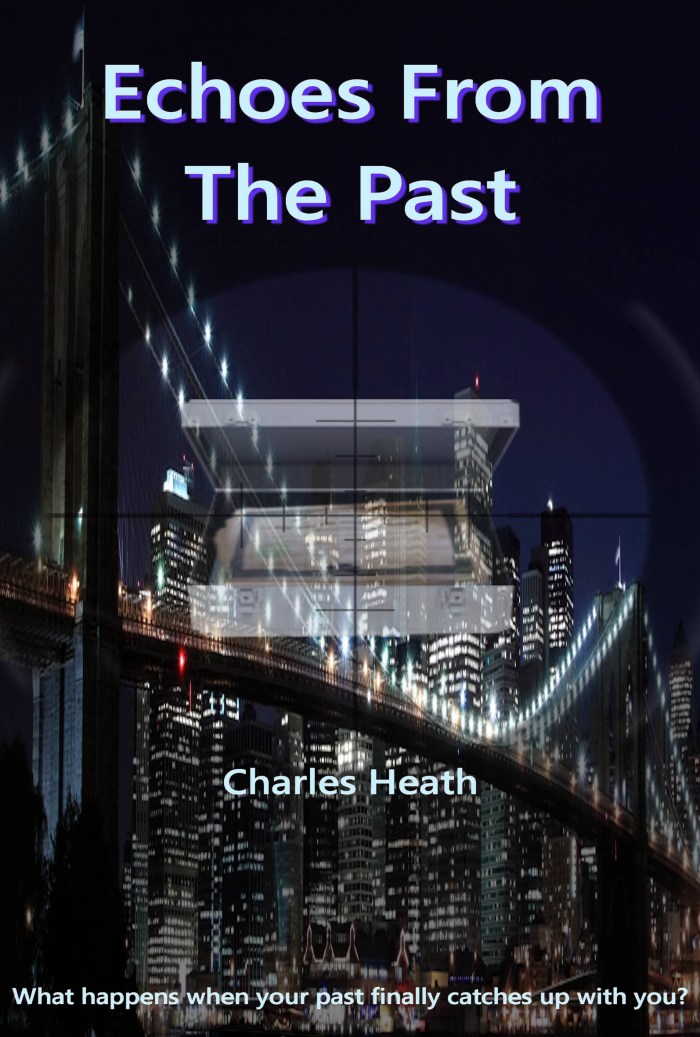
The story behind the story – Echoes from the Past

The novel ‘Echoes from the past’ started out as a short story I wrote about 30 years ago, titled ‘The birthday’.

My idea was to take a normal person out of their comfort zone and led on a short but very frightening journey to a place where a surprise birthday party had been arranged.

Thus the very large man with a scar and a red tie was created.

So was the friend with the limousine who worked as a pilot.

So were the two women, Wendy and Angelina, who were Flight Attendants that the pilot friend asked to join the conspiracy.

I was going to rework the short story, then about ten pages long, into something a little more.

And like all re-writes, especially those I have anything to do with, it turned into a novel.

There was motivation.  I had told some colleagues at the place where I worked at the time that I liked writing, and they wanted a sample.  I was going to give them the re-worked short story.  Instead, I gave them ‘Echoes from the past’

Originally it was not set anywhere in particular.

But when considering a location, I had, at the time, recently been to New York in December, and visited Brooklyn and Queens, as well as a lot of New York itself.  We were there for New Years, and it was an experience I’ll never forget.

One evening we were out late, and finished up in Brooklyn Heights, near the waterfront, and there was rain and snow, it was cold and wet, and there were apartment buildings shimmering in the street light, and I thought, this is the place where my main character will live.

It had a very spooky atmosphere, the sort where ghosts would not be unexpected.  I felt more than one shiver go up and down my spine in the few minutes I was there.

I had taken notes, as I always do, of everywhere we went so I had a ready supply of locations I could use, changing the names in some cases.

Fifth Avenue near the Rockefeller center is amazing at first light, and late at night with the Seasonal decorations and lights.

The original main character was a shy and man of few friends, hence not expecting the surprise party.  I enhanced that shyness into purposely lonely because of an issue from his past that leaves him always looking over his shoulder and ready to move on at the slightest hint of trouble.  No friends, no relationships, just a very low profile.

Then I thought, what if he breaks the cardinal rule, and begins a relationship?

But it is also as much an exploration of a damaged soul, as it is the search for a normal life, without having any idea what normal was, and how the understanding of one person can sometimes make all the difference in what we may think or feel.

And, of course, I wanted a happy ending.

Except for the bad guys.

Get it here:  https://amzn.to/2CYKxu4

newechocover5rs

Third son of a Duke – The research behind the story – 6

All stories require some form of research, quite often to place a character in a place at a particular time, especially if it is in a historical context. This series will take you through what it was like in 1914 through 1916.

Navigating the Stratified Seas: Port Visits and Entertainment on Orient Line Voyages to Australia, 1910-1915

Abstract: This paper examines the arrangements for port visits and onboard entertainment for passengers travelling on Orient Line ships, such as the Orama, between Tilbury, England, and Australia from approximately 1910 to 1915. Focusing on the distinct experiences afforded by the three classes of travel – First, Second, and Third Class – it argues that the opportunities for shore excursions and the nature of leisure activities were profoundly shaped by the rigid social hierarchies of the Edwardian era. While First Class passengers enjoyed extensive freedom and curated luxury, Second Class experienced comfortable but less opulent arrangements, and Third Class passengers faced significant restrictions and basic provisions, reflecting their primary role as emigrants rather than tourists. Through analysis of contemporary brochures, travel accounts, and maritime historical records, this paper illuminates the stratified reality of long-distance sea travel during a pivotal period of global migration and imperial connection.

Keywords: Orient Line, Orama, Ocean Liner, Class System, Port Visits, Onboard Entertainment, Australia, 1910-1915, Maritime History, Social History.


1. Introduction: The Orient Line and the Journey to Australia

The early 20th century marked a zenith for ocean liner travel, particularly on the long-haul routes connecting Europe with distant corners of the British Empire. Among the most significant of these was the journey from Tilbury, England, to Australia, a lifeline for trade, mail, and, critically, emigration. The Orient Steam Navigation Company, commonly known as the Orient Line, was a prominent player on this route, operating a fleet of robust and increasingly luxurious vessels. Between 1910 and 1915, a period immediately preceding the transformative impact of World War I, ships like the Orama (launched 1911) and her “O-class” sisters (e.g., OtwayOrvietoOrsovaOrmonde) represented the cutting edge of passenger comfort and efficiency for their time.

These voyages, spanning six to eight weeks, presented both a logistical challenge and a social microcosm. Passengers, ranging from wealthy colonial administrators and holidaymakers to middle-class professionals and thousands of assisted emigrants, shared the same vessel but inhabited vastly different worlds within its hull. This paper seeks to explore the lived experience of these travellers specifically through two key lenses: the arrangements for visiting intermediate ports like Toulon and Naples, and the provision of entertainment for the duration of the voyage. Crucially, this examination will be conducted through the prism of the three distinct classes of travel, revealing how deeply embedded social stratification was in every aspect of the journey. The central argument is that the Orient Line, like other contemporary shipping companies, meticulously designed its services – both ashore and afloat – to cater to, and reinforce, the prevailing class distinctions of Edwardian society.

2. The Orient Line Fleet and the Three-Tiered Society at Sea

The Orient Line, established in 1877, earned a reputation for reliability and comfort on its Australia run. The “O-class” liners such as the 12,976-ton Orama were designed for this specific route, featuring robust construction, good speed (around 17 knots), and capacity for a diverse range of passengers. By the second decade of the 20th century, these ships typically carried around 400 First Class, 200 Second Class, and 700-800 Third Class passengers, alongside substantial cargo and mail (Isherwood, 1971; Greenway, 1986).

The differentiation between classes was stark, reflecting the societal structures onshore.

  • First Class (Saloon): Occupying the prime spaces of the ship, usually amidships, First Class passengers were typically the affluent elite: colonial administrators on leave, wealthy tourists, business magnates, and officers of the armed forces. They enjoyed expansive private cabins, often with en-suite facilities, and access to lavish public rooms including grand dining saloons, smoking rooms, music rooms, libraries, and dedicated promenade decks. Their journey was primarily one of luxury and social engagement.
  • Second Class: Positioned often in the stern or forward sections, Second Class catered to the burgeoning middle class: professionals, skilled tradespeople, government officials of a lower rank, and families with some means. While not as opulent as First Class, Second Class accommodations were considered comfortable and respectable, often featuring two- or four-berth cabins and access to their own dining saloon, smoking room, and drawing room. Their experience blended comfort with a more modest budget.
  • Third Class (Steerage/Intermediate/Tourist Third): The vast majority of passengers in Third Class were emigrants seeking new lives in Australia, often travelling on assisted passages. Their accommodation was basic and communal, typically comprising dormitories or large cabins with four to eight berths, often tiered. Public spaces were limited to a common dining room and designated deck areas. Privacy was minimal, and the focus of the journey was utilitarian – safe passage to their destination. This class also sometimes included seasonal workers or individuals travelling on the tightest budgets. The strict separation of classes was maintained through separate entrances, stairways, and designated deck areas, ensuring minimal interaction between the different social strata (Kent, 1999).

3. Arrangements for Visiting Ports: Toulon, Naples, and Beyond

The voyage from Tilbury to Australia involved numerous port calls, crucial for coaling, taking on provisions, mail, and allowing passengers a brief respite from shipboard life. Typical European calls included Gibraltar, Toulon, and Naples, before transiting the Suez Canal and making further stops in places like Colombo, Fremantle, Adelaide, Melbourne, and Sydney (Orient Line, 1910 Brochure). However, the arrangements and opportunities for going ashore varied dramatically by class.

3.1. First Class: Freedom, Luxury, and Curated Experiences

For First Class passengers, port calls were a highlight, offering opportunities for cultural immersion and luxury shopping. Upon arrival in ports like Toulon or Naples, Orient Line brochures advertised the availability of tenders to ferry passengers ashore. In these major European cities, First Class passengers enjoyed considerable freedom:

  • Guided Excursions or Independent Exploration: They could choose to join organised tours, often arranged by local agents in conjunction with the shipping line, which would include visits to prominent landmarks, museums, and historical sites. For instance, in Naples, tours would likely have included Pompeii, Vesuvius, or the National Archaeological Museum. Alternatively, they were free to arrange their own excursions, hire private carriages or early automobiles, or simply wander and shop.
  • Luxury and Comfort Ashore: It was common for First Class travellers to patronise high-end hotels for a meal or refreshments ashore, or to engage in shopping for souvenirs, local crafts, and luxury goods. The ship’s purser or a dedicated shore excursion officer would provide detailed information, maps, and recommendations.
  • Convenience: The ship’s staff would often handle arrangements for currency exchange and local transport, ensuring a seamless experience. The relatively short duration of port calls (often 6-12 hours) meant that efficiency was prized, and First Class passengers had the means to maximise their time ashore.

3.2. Second Class: Supervised Tours and Modest Exploration

Second Class passengers also had opportunities to go ashore, but their experience was typically more structured and budget-conscious.

  • Group Excursions: While some independent exploration was permitted, Second Class passengers were more likely to participate in organised group excursions, which were cheaper and offered a convenient way to see the main sights. These tours would often use public transport or hired charabancs (early buses) rather than private vehicles.
  • Limited Spending: Their shore activities generally involved more modest shopping and dining experiences. The ship’s information desk would still provide guidance, but the emphasis was on practical, affordable options.
  • Supervision and Time Constraints: While not as restricted as Third Class, Second Class passengers were generally expected to adhere to clearer time limits for returning to the ship, and their movements might be more informally overseen by the ship’s officers or tour guides.

3.3. Third Class: Restrictions, Supervision, and Labour

For Third Class passengers, particularly the large contingents of assisted emigrants, shore leave was a far more limited, and often non-existent, prospect in many ports.

  • No Shore Leave or Limited Access: In many instances, especially in European ports like Toulon or Naples, Third Class passengers were simply not permitted to disembark (Gardiner, 2013). This policy was driven by several factors: concerns about passengers overstaying their leave, potential health risks from crowded European cities, and the practicalities of managing hundreds of individuals with limited resources and often few funds. The primary objective for these passengers was to reach Australia.
  • Supervised Shore Leave (Rare): If shore leave was granted, it was heavily supervised and highly restrictive. Passengers might be allowed brief, organised walks near the dock area, often under the watchful eye of a ship’s officer or emigration agent. The focus would be on stretching legs and fresh air, rather than sightseeing or shopping.
  • Ship Duties: In some cases, male Third Class passengers might even be expected to assist with coaling operations or other duties if required, or at least remain on board while the ship was provisioned. Their time in port was seen less as leisure and more as part of the operational requirements of the voyage.
  • Sanitary Concerns: Concerns about infectious diseases also played a role. Allowing hundreds of individuals from the often-crowded Third Class areas to mix freely in foreign ports, and then return to the enclosed environment of the ship, was a significant public health consideration, especially given the lengthy quarantine regulations that awaited them in Australia.

In essence, while First Class passengers viewed ports like Toulon and Naples as gateways to European culture and leisure, Third Class passengers often saw them as mere waypoints, with little to no direct engagement beyond the ship’s rail.

4. Onboard Entertainment: Filling the Long Days at Sea

The long duration of the Tilbury-Australia voyage necessitated a wide array of entertainment and diversion to combat boredom and maintain passenger morale. As with port visits, the nature and quality of these activities were starkly differentiated by class.

4.1. First Class: The Social Calendar and Exclusive Amenities

First Class entertainment was sophisticated, organised, and aimed at fostering a vibrant social atmosphere among the elite.

  • Formal Social Events: Evenings were often dominated by formal dinners, followed by dances in the main saloon or music room. Fancy dress balls, often with themes, were popular events, offering a chance for passengers to showcase their wardrobes and wit.
  • Concerts and Lectures: Passenger talent shows, often featuring amateur musicians and singers from amongst the First Class, were common. Professional entertainers might also be carried on certain voyages. Lectures on topics of general interest, often delivered by learned passengers or the ship’s officers, provided intellectual stimulation.
  • Games and Sports: Deck games were a staple of daytime entertainment. Orama and her sisters would have designated deck space for quoits, shuffleboard, deck tennis, and cricket. Indoor games such as bridge, chess, and whist were played in dedicated card rooms or the smoking room. A gymnasium might be available, albeit basic by modern standards.
  • Reading and Writing: Extensive libraries, well-stocked with fiction, non-fiction, and daily newspapers (often printed onboard from wireless news bulletins), provided quiet recreation. Writing rooms were also provided for correspondence.
  • Fine Dining and Bar Service: Dining was an event in itself, with multiple courses, excellent wine lists, and attentive steward service. Smoking rooms, often panelled in rich woods, provided a masculine retreat where gentlemen could socialise over cigars and brandies.

4.2. Second Class: Comfortable Diversions and Self-Organised Fun

Second Class entertainment provided a comfortable, if less opulent, experience, often relying more on passenger initiative.

  • Deck Games: Similar deck games to First Class (quoits, shuffleboard) were available, though perhaps on less expansive or dedicated areas of the deck.
  • Communal Activities: Card games and board games were popular in the Second Class drawing room or lounge. Informal dances might be held, often with music provided by a passenger playing the piano.
  • Library and Reading: A smaller, but still respectable, library was available, along with writing facilities.
  • Less Formal Socialising: While Second Class had its own social hierarchy, events tended to be less formal and more spontaneous than in First Class. The focus was on comfortable interaction within a more modest communal setting.
  • Cinema: By 1910-1915, some liners were beginning to experiment with early cinematic presentations, which might have been offered to Second Class passengers as a special treat.

4.3. Third Class: Basic Provisions and Self-Directed Leisure

For Third Class passengers, the concept of “entertainment” was largely self-directed and utilitarian, focusing on making the long journey passable.

  • Deck Space: The primary form of recreation was access to dedicated open deck space, where passengers could walk, gather, and enjoy the fresh air. Children, in particular, would spend much of their time here.
  • Communal Areas: Indoor common rooms were generally sparse, serving primarily as dining halls. These spaces might double as areas for conversation, card games, or reading (if passengers brought their own books or could borrow from the ship’s limited supply, often aimed at improving literacy).
  • Emigrant Focus: The ship’s purser or a doctor might occasionally give informational talks about life in Australia, but these were educational rather than entertaining. The focus for many was on preparing for their new lives, with time spent discussing future prospects, learning English, or simply coping with the novelty and challenges of sea travel.
  • Limited Organised Activities: Formal organised entertainment was rare. There were no dedicated music rooms or ballrooms. Any singing or dancing would be spontaneous and informal, often generated by the passengers themselves. The ship’s crew had minimal interaction with Third Class passengers beyond basic service and enforcement of rules, meaning very little staff-led entertainment was provided.
  • Religious Services: For all classes, but particularly for Third Class, where morale could be a concern, Sunday religious services were often held, led by a ship’s officer or passenger if a chaplain was not onboard.

The distinct offerings underscored the Orient Line’s understanding of its market segments: First Class was sold on luxury and social prestige, Second Class on comfortable respectability, and Third Class on an affordable, if arduous, passage to a new life.

5. Conclusion: A Microcosm of Edwardian Hierarchy

The experience of travelling on an Orient Line vessel like the Orama between Tilbury and Australia from 1910 to 1915 was a microcosm of Edwardian social hierarchy. The arrangements for visiting ports such as Toulon and Naples, and the provision of onboard entertainment, were meticulously stratified, reflecting the rigid class distinctions of the era.

First Class passengers enjoyed unparalleled freedom, luxury, and curated experiences, both ashore and afloat. Their port visits were opportunities for sophisticated cultural engagement or independent exploration, facilitated by the ship and its agents. Onboard, a vibrant social calendar of formal events, games, and fine dining ensured a journey of ultimate comfort and diversion. Second Class passengers experienced a respectable and comfortable passage, with more structured but still enjoyable opportunities for shore excursions and a range of social activities, albeit on a less grand scale. Their options were a balance between convenience and budget.

In stark contrast, Third Class passengers, predominantly emigrants, faced significant restrictions. Shore leave in European ports was often denied or severely limited, a policy driven by logistical, health, and social control concerns. Onboard, entertainment was minimal and largely self-directed, reflecting the pragmatic and utilitarian nature of their voyage. Their journey was about purpose and passage rather than leisure.

This deep differentiation was not merely about cost; it was an ingrained social philosophy that permeated every aspect of ocean travel. The Orient Line, like its contemporaries, successfully navigated the dual demands of mass migration and luxury tourism by compartmentalising its services, ensuring that each class received an experience commensurate with its social standing and economic contribution. As the world teetered on the brink of significant change with the onset of World War I, these stratified voyages represented an enduring, yet soon to be challenged, model of global connectivity.