Searching for locations: Rome, Italy

We visited Rome in August

It was hot.

It was verrrry hot.

We flew into Rome’s Leonardo da Vinci-Fiumicino airport after a rather bumpy flight from London.  Unlike most other airports the plane parked at a satellite terminal and after we disembarked we had to catch a train to the main terminal.

The most notable memory of this airport was my daughter’s discovery of a salami shop.

We had booked a transfer to take us to the hotel the Roma Corso Trieste Mercure in Via Gradisca from the airport.  It was a white air-conditioned van and so far we had avoided the heat.

One of the rooms had a faulty air conditioning an absolute must as the rooms were very hot without it and necessitated a room change which was done quickly and efficiently.

The hotel was in the suburbs and without a car we were dependent on public transport.  According to the reception staff, there was a bus stop nearby, and a longer walk to the tram or light railway.  The bus seemed to be the best option as it would take us to the central terminal near the railway station, where all tour buses also operated from, and particularly the open-top buses that went to all the major tourist attractions.

That first day basically was given over to travelling, arriving by plane and settling into the hotel, thus we didn’t get to feel the force of the heat.  That came the next day.

After a walk around the hotel precinct to get our bearings and see what shops and restaurants were available, on returning to the hotel we were faced with the limited choices of room service or to go out for dinner.

My daughter and l go for a long walk up Via Nomentana to find several shops and a restaurant.  We went into the restaurant and sat down.   We waited for 10 minutes and got no service nor did anyone come and ask us if we wanted to order food so instead we left somewhat disappointed and go next door to what seems to be the Italian version of a delicatessen and order sandwiches and beer.   I bought a half dozen cans of Moretti beer two of which I drank on the way home.

It was still very hot even at eight at night and the sandwiches are delicious.  It just might be by that time we were starving and anything would have tasted great.

The next morning we are up and ready to chance the weather and some history.  Breakfast at the hotel is limited but very good.

We were going to use public transport and I’d studied up on the Internet.

Travelling on the bus required pre-purchase of tickets which could be bought in certain shops and locally when exploring the area near the hotel, l found a tobacconist.

Next, we needed to understand how to use the tickets. There was no one on the bus who could help so when l tried to scan the tickets and it failed, l gave up.  We had the same issue each day and in the end, the tickets never got used.

The trip to central Rome by bus took about 15 minutes.  In the morning it was reasonably cool and showed us a little of suburban Rome.  We also saw the trams but we would not be able to use them because our hotel not on a direct route.

That first full day we decided to go and see the Vatican.

Not understanding buses and which one we needed to get to the Vatican, we took a taxi.

Wow.  It was the metaphorical equivalent of driving over the edge of a cliff with a daredevil.  It was quite literally terrifying.

Or maybe we just didn’t know that this was probably the way people drove in Rome.

Shaken but delivered in one piece we found ourselves in the square opposite St Peters Basilica.

The square is impressive, with the statues atop a circular colonnaded walkway.  The church is incredible and took a few hours to take in and to top off the day, we did a tour of the Vatican museum which took the rest of the afternoon.

Then it was back to the delicatessen for more sandwiches and beer, and an interesting discussion with several elderly Italian ladies, of which I did not understand one word.

The second full day we decided to use one of the open-top bus tours and eventually decided on the hop on hop off tour simply because the bus was at the central transport terminal for trains and buses and it was getting hotter.

Our first stop was the Colosseum.  There were other monuments nearby, such as the Arch of Constantine, but as the heat factor increased we joined the queue to go into the Colosseum and gladly welcomed the shade once we got inside.

The queue was long and the wait equally so, but it was worth the wait.  It would be more interesting if they could restore part of it to its former glory so we could get a sense of the place as it once was.  But alas that may never happen, but even so, it is still magnificent as a ruin.

Outside in the heat, it was off to the ruins which were a longish walk from the Colosseum, taking Via Sacra, not far from the Arch of Constantine.  This day in the walkway there were a number of illegal vendors, selling knockoff goods such as handbags and watches, and who, at the first sight of the police, packed up their wares in a blanket and ran.

Included in these ruins were The Roman Forum, or just a few columns remaining, the Palatine Hill, Imperial Fori, including the Forum of Augustus, the Forum of Caesar, and more specifically the Forum of Trajan.  It was, unfortunately very hot and dusty in the ruins the day we visited.

We walked all the way to the Foro Romano and the Septimus Severo Arch at the other end of the ruins, past the Temple of Caesar.

I found it very difficult to picture what it was like when the buildings were intact, so I bought a guide to the ruins which showed the buildings as ruins and an overlay of how they would have looked.  The buildings, then, would be as amazing as the Colosseum, and it would have been interesting to have lived back then, though perhaps not as a Christian.

I lost count of the number of bottles of water we bought, but the word ‘frizzante’ was ringing in my ears by the end of the day.  Fortunately, the water did not cost a lot to buy.

At the end of the day, we caught the hop on hop off bus at the Colosseum and decided not to get off and see any more monuments but observe them from the bus.  The only one I remember seeing was Circo Massimo.  Perhaps if we’d know it was going to be twice as hot on the bus, yes, there was no air-conditioning; we may have chosen another form of transport to get back to the hotel.

The third and last day in Rome we decided to go to the Trevi Fountain, see the pantheon and walk up the Spanish Steps.  We spent most of the morning in the cool of a café watching the tourists at the fountain.  By the time we reached the top of the Spanish Steps, we were finished.

Customer feedback is not always what it seems

I was going to write more about the waiting game, where it is the peak hour for shoppers and there’s only two cash registers open, or the bank tellers at lunchtime …

On and on.  Nothing will change except for some of us, an increase in grey hair.

Time to move on, and get off my soapbox.

Perhaps we could delve into the online world of customer complaints.

It’s an interesting place,  when I want to buy something, or see something that is too good to be true, I hit the computer, dial-up google, and go into investigative mode.

But, here’s the thing,

The only people who go online, by and large, are there to complain. Yes, there are a few positives, like out of five stars, then the numbers show up for four stars, three stars, etc.

You get the impression that the owner of the product or service had written several 5-star good reports to counterbalance the negativity, which sometimes all belabor the same point.

For a long time, when I saw the bad reports and very few good reports I thought the product was no good, but recently, when talking to someone whose product was for sale, and had a few bad reviews, they said if a customer is satisfied, why did they need to file a report.  People had expressed their good opinion but had not added a review.

That might well be the case.

As an example, I looked at several river cruises in Europe, and the operators.  I then went online to check the customer ratings because these river cruises are very expensive, so you need to know you’re getting value for money.

Nearly all of the reviews were bad, but lacked any credible numbers.  I’m sure more than 46 people have been on those river cruises, considering how popular they are.

But, those that were on the site were critical of the food, the hygiene of the staff, the inability to get more than 1 ‘free’ drink with lunch or dinner, and substitute boats that were terrible.

Against this, however. is the word of mouth reports we have had from many people and is they are excellent.  So the theory of satisfied customers not bothering to add a review holds up.

Food and wine were the heart of this cruise, as well as cabin comfort, and the last thing you need is to be sick for the duration of the cruise.

I have to say, after going on the internet, I was put off.

Perhaps I might revise my policy of looking for information on the internet.  It seems that it sometimes can be quite misleading.

Searching for locations: The Castello di Brolio, Gaiole in Chianti, Tuscany, Italy

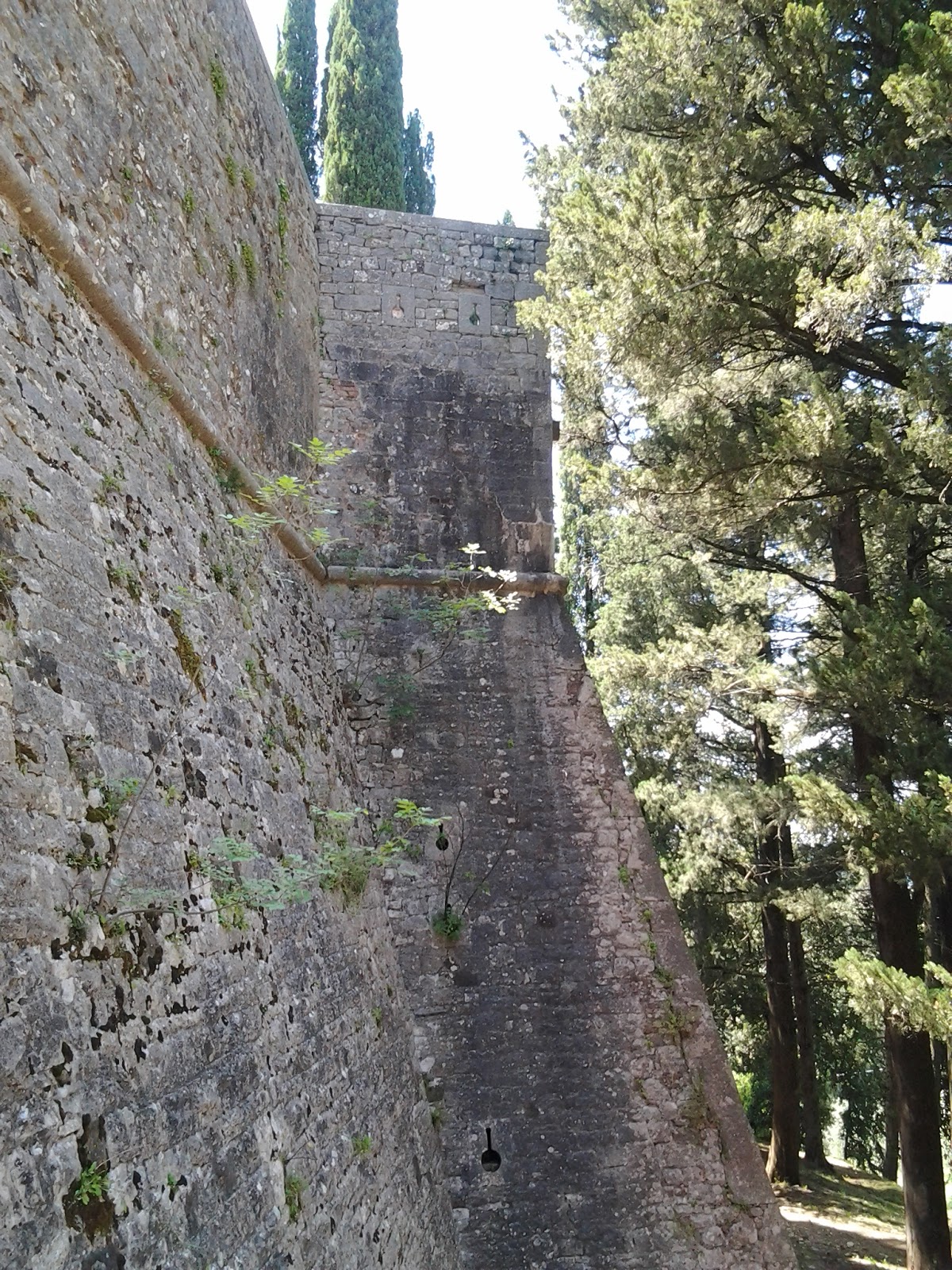
The castle is located in the southern Chianti Classico countryside and has been there for over ten centuries, and owned by the Ricasoli family since 1141.

Like any good castle, it has strong defences, and I was looking for a moat and drawbridge, but it looks like the moat has become a lawn.

The very high walls in places no doubt were built to keep the enemy out

The castle has been destroyed and rebuilt many times over the last 900 years.  It was part of the Florentine defences, and withstood, and succumbed to many battles with Siena, which is only 20 km away.  More recently, it still bears the scars of artillery fire and bombing in WW2.

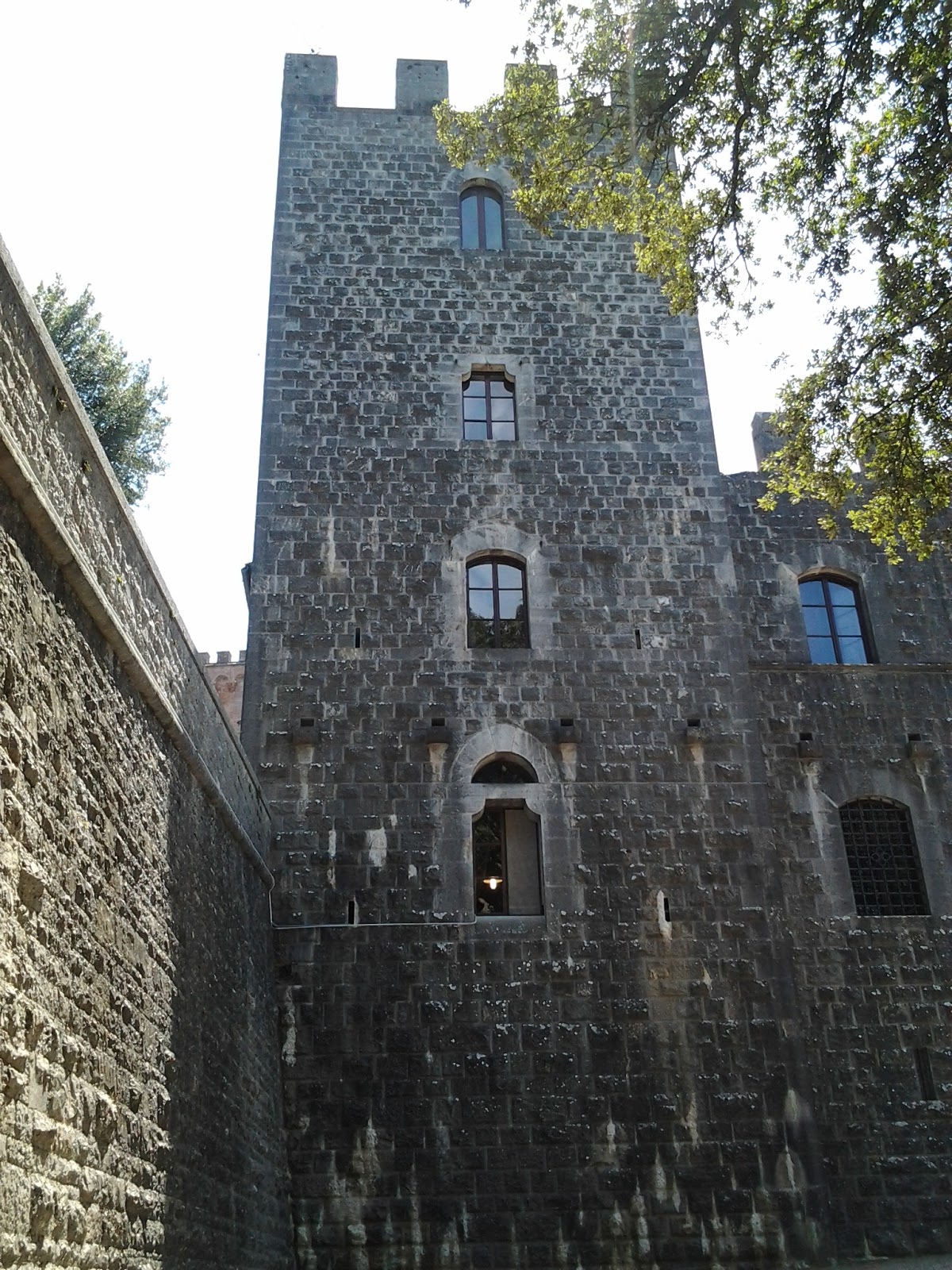
The room at the top of this tower would have an excellent view of the countryside.

Here you can see the old and the new, the red brick part of the rebuilding in the 1800’s in the style of an English Manor

We did not get to see where that archway led.

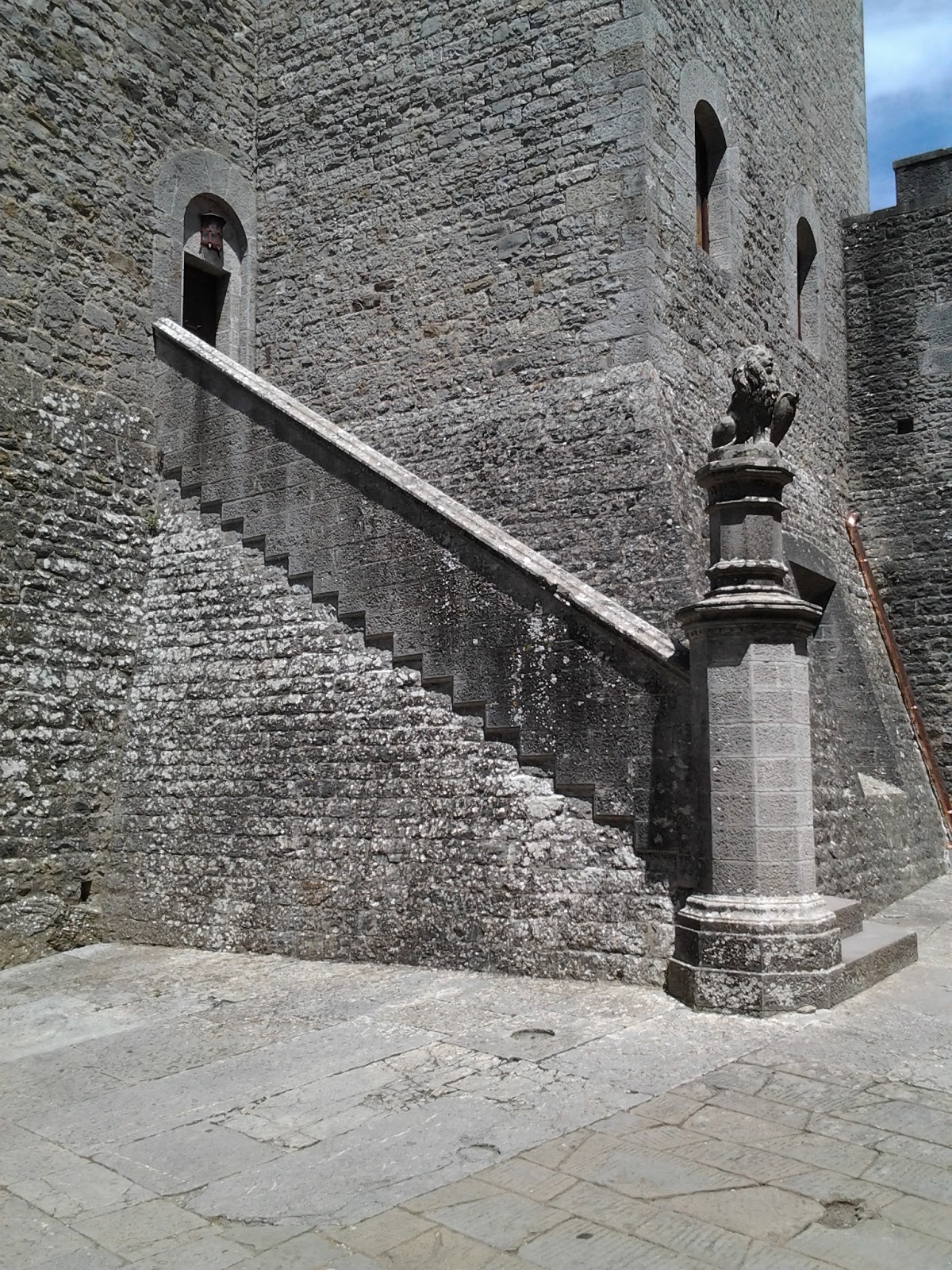
Nor what was behind door number one at the top of these stairs.  Rest assured, many, many years ago someone wearing armour would have made the climb.   It would not pass current occupational health and safety these days with a number of stairs before a landing.

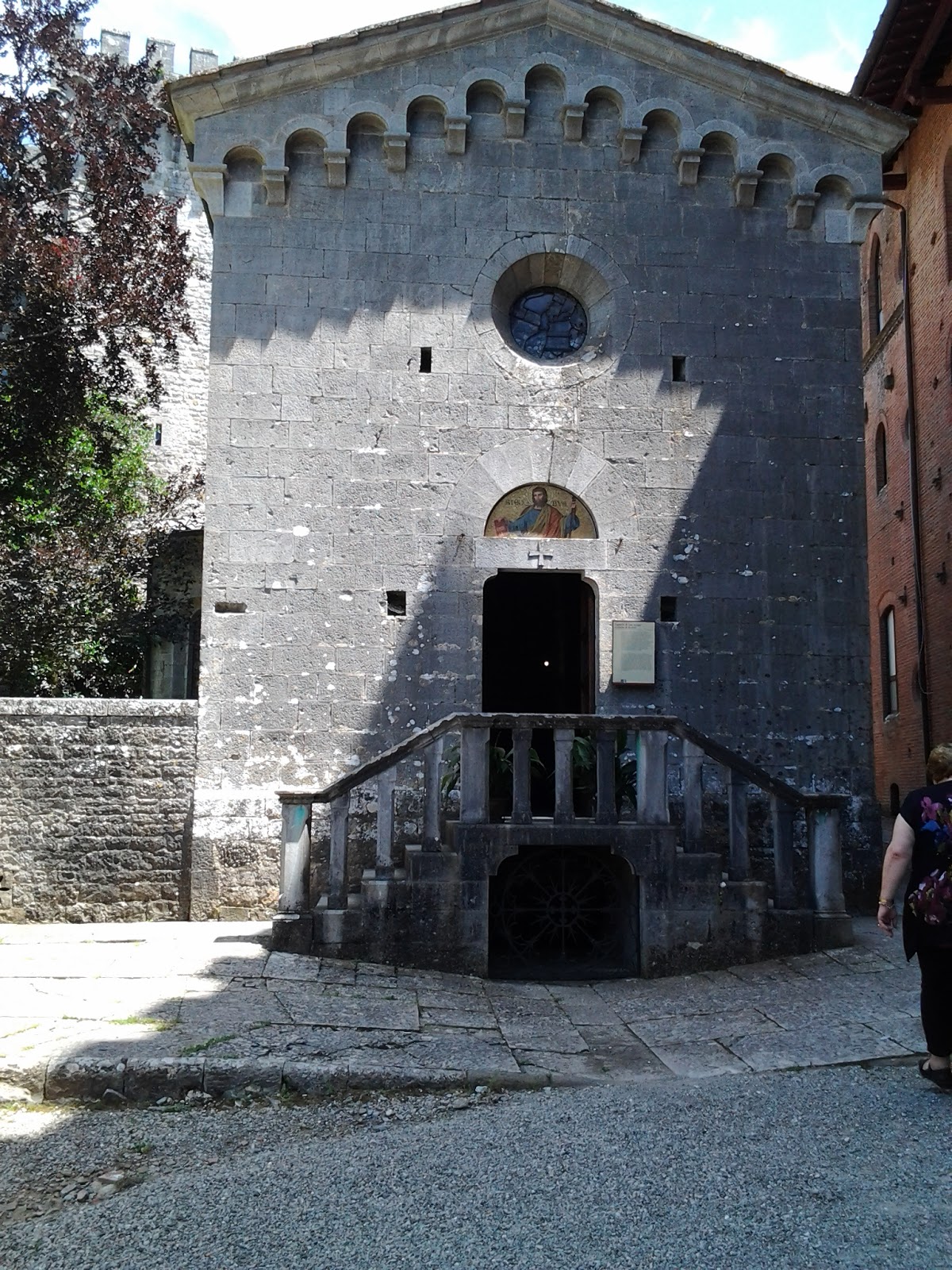
Cappella di San Jacopo.  Its foundations were laid in 1348.

Renovated in 1867-1869, it has a gabled façade preceded by a double stone staircase.  The interior, with a crypt where the members of the Ricasoli family are buried, has a nave divided into three spans with cross vaults.

The 1,200 hectares of the property include 240 hectares of vineyards and 26 of olive groves, in the commune of Gaiole.

Searching for locations: San Gimignano, Italy

We have visited this town on a hill, famous for its fourteen towers, twice.  The first time we stayed in a hotel overlooking the main piazza, and the second time, for a day visit, and return to a little restaurant tucked away off the main piazza for its home cooking.

No cars are allowed inside the town and parking is provided outside the town walls.  You can drive up to the hotel to deliver your baggage, but the car must return to the carpark overnight.

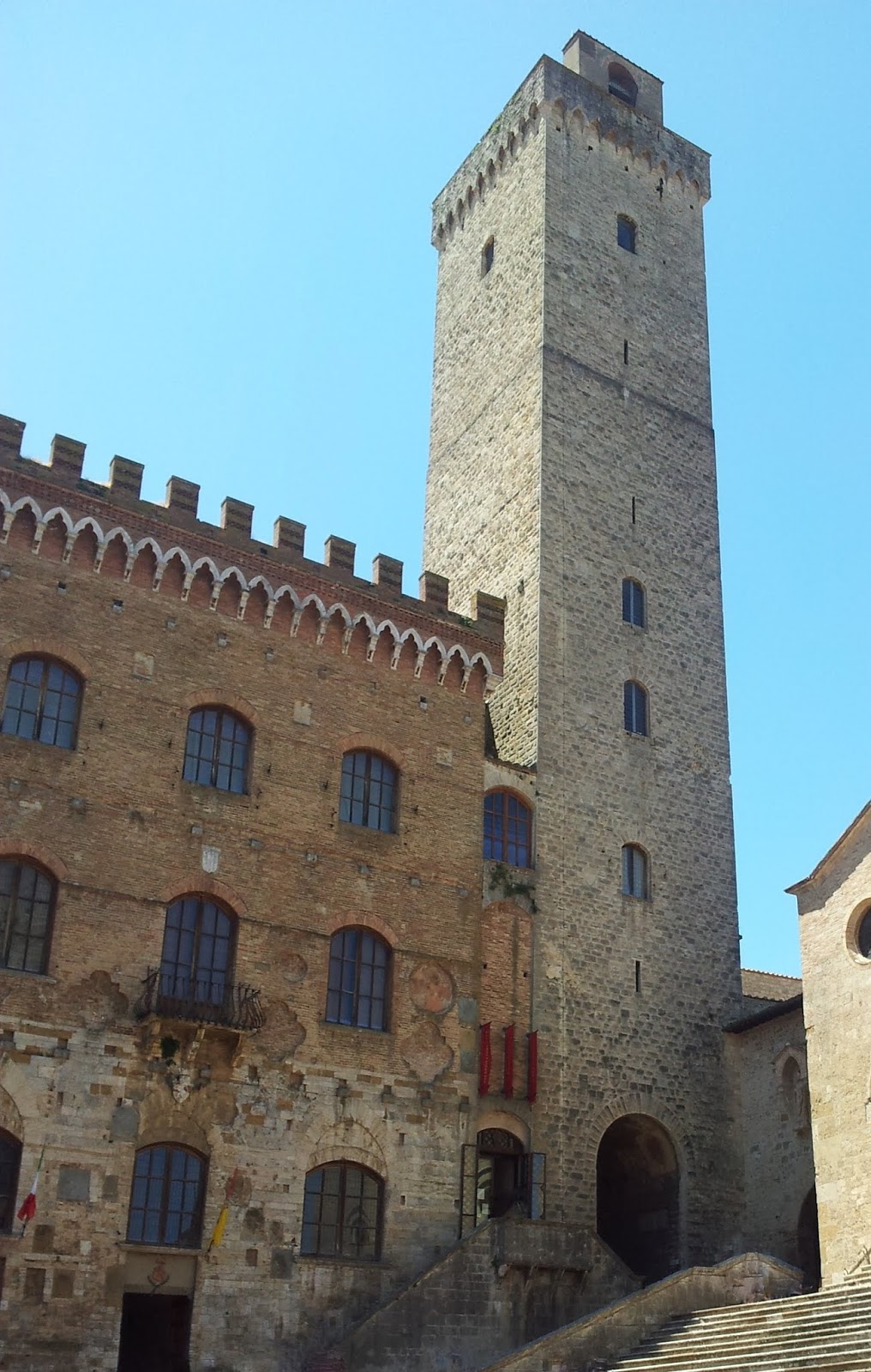
This is one of the fourteen towers

I didn’t attempt to climb to the tower, which you can do in some of them, just getting up the church steps was enough for me.  Inside the building was, if I remember correctly, a museum.

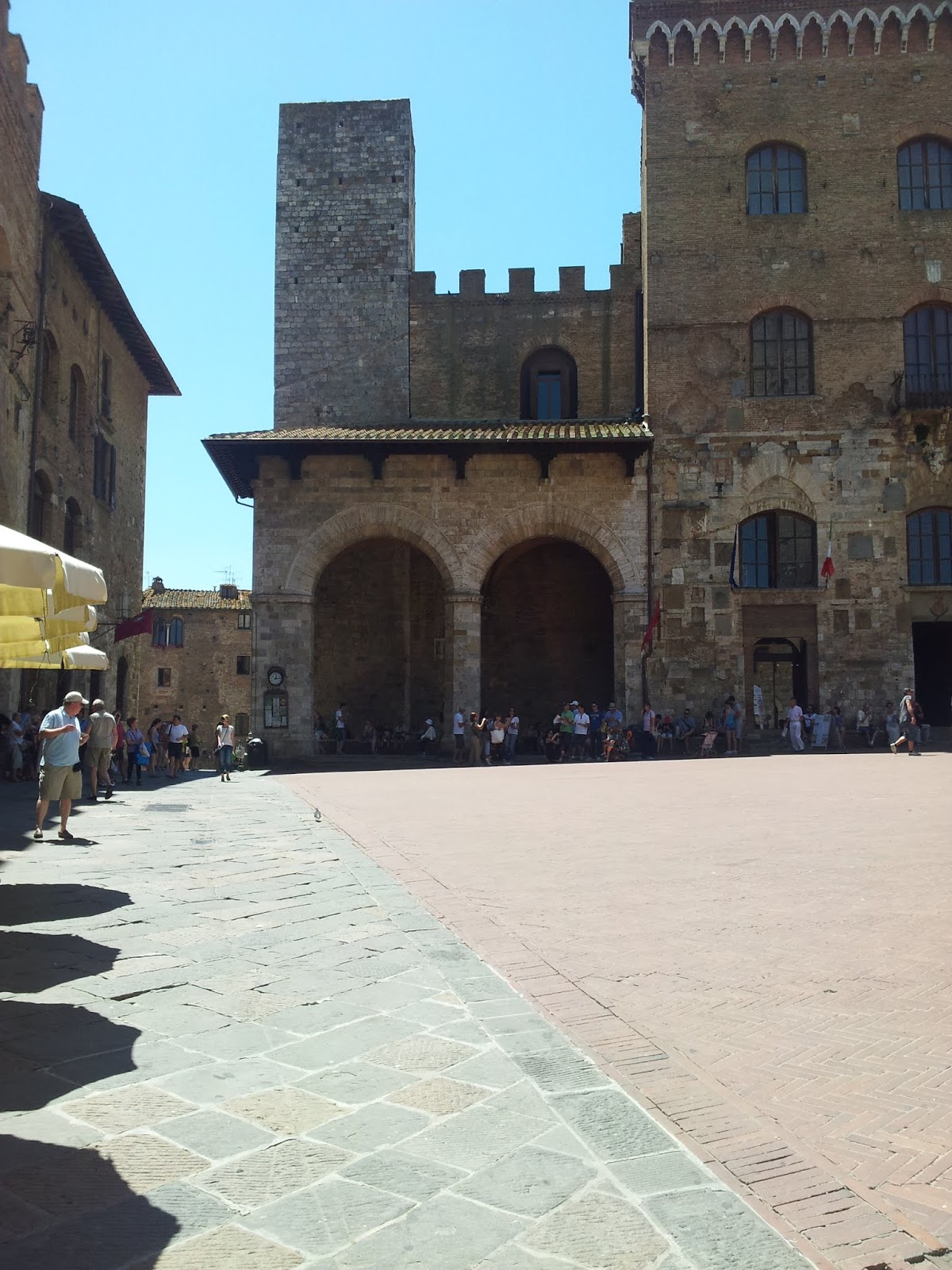
Looking up the piazza towards some battlements, and when you reach the top and turn left, there is a small restaurant on the right-hand side of the laneway that had the best wild boar pasta.

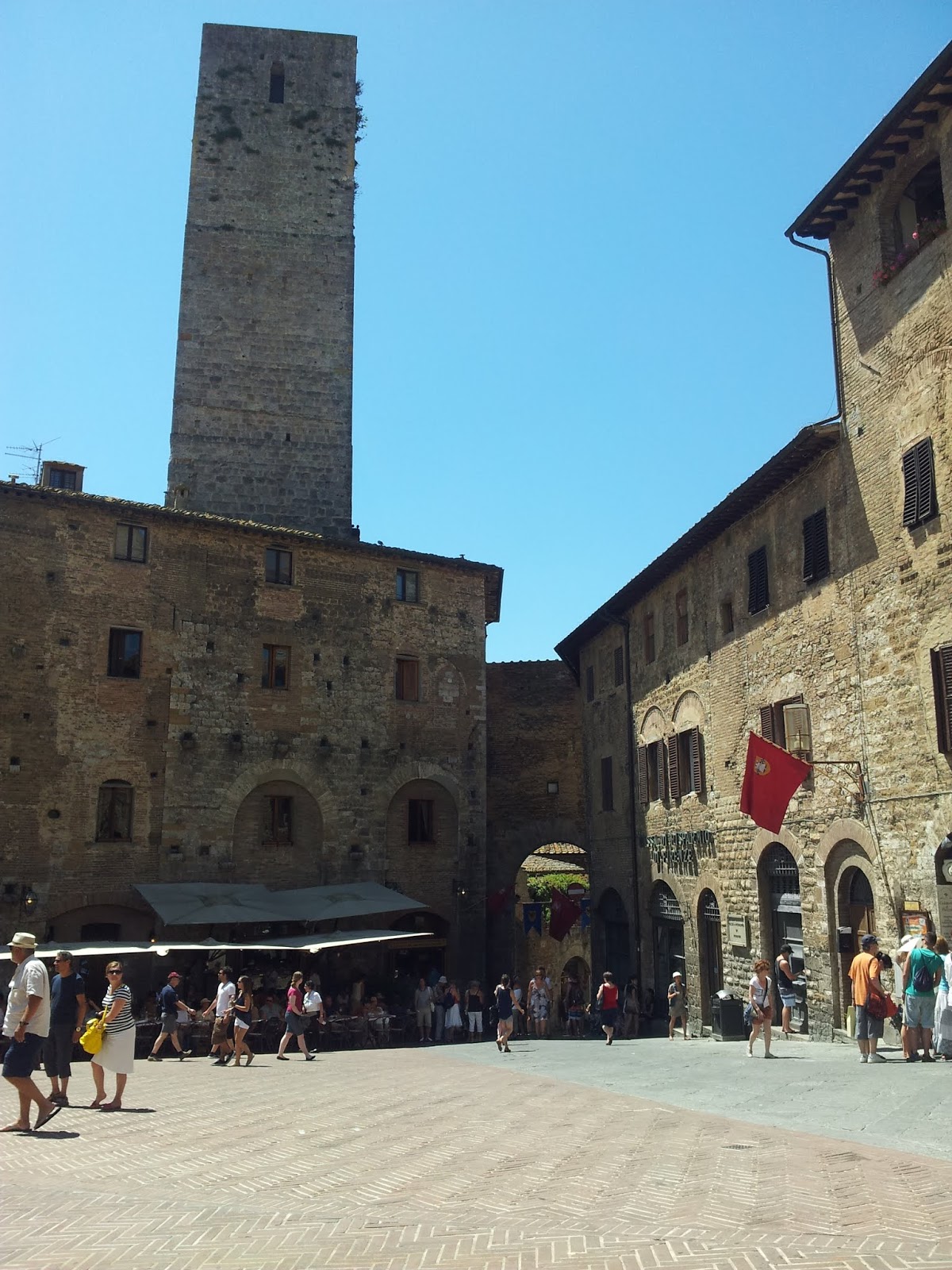
Another of the fourteen towers, and through the arch, down a lane to the gated fence that surrounds the town.  The fortifications are quite formidable and there are several places along the fence where you can stand and look down the hill at the oncoming enemy (if there was one).

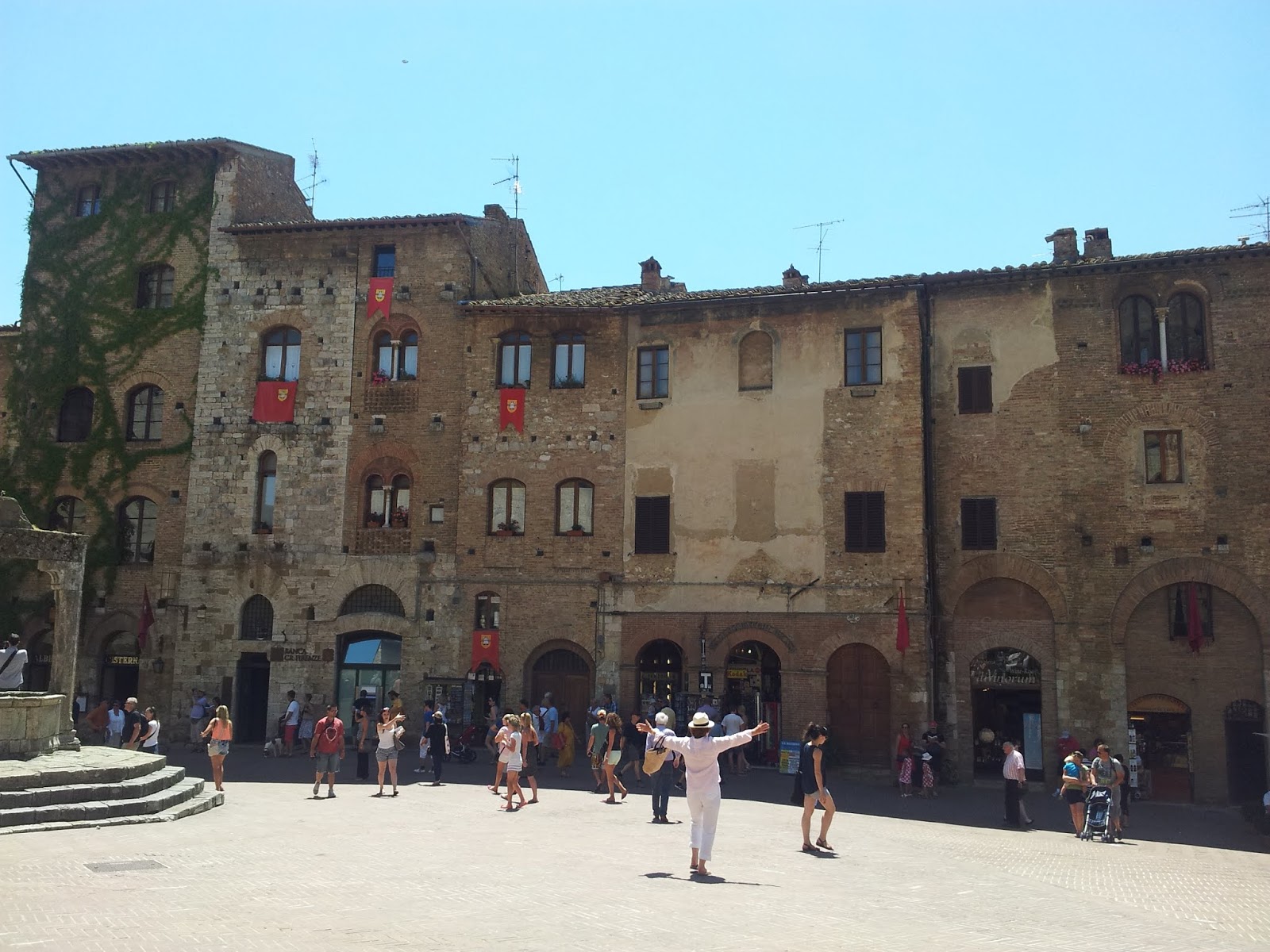
Part of the main piazza which is quite large, and on the right, the wishing well where my wish for a cooler day was not granted.

Officially, the Piazza della Cisterna is the most beautiful square of the town, San Gimignano.  The well was built in 1273 and enlarged in 1346 by Podestà Guccio dei Malavolti.

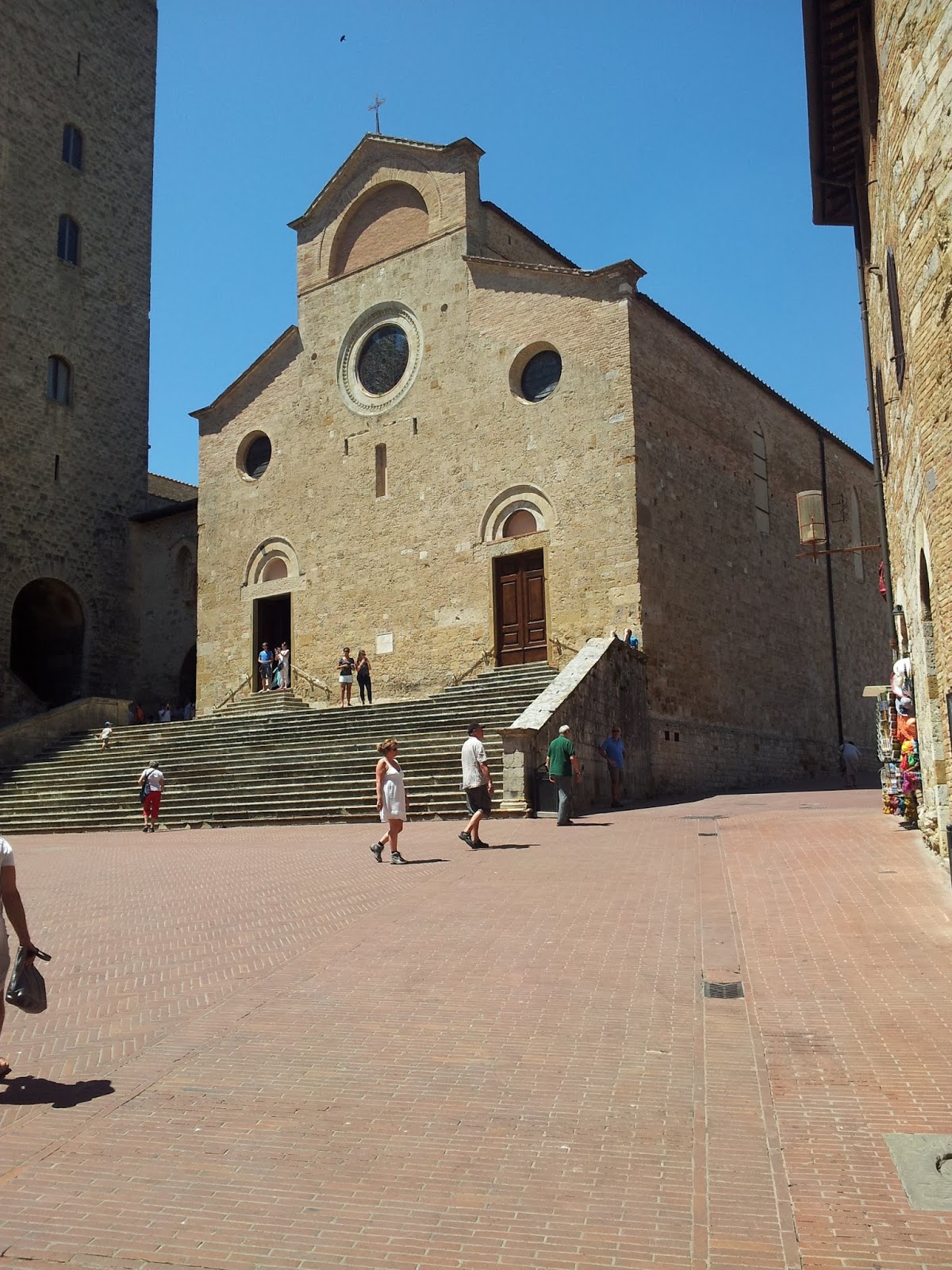
And not to be outdone by any other the other old towns, there is an old church, one of several.  It is the Collegiate Church or the Duomo di San Gimignano, a monument of Romanesque architecture built around 1000 and enlarged over time.

Next door is the Museum of Sacred Art.

And I guess it’s rather odd to see television aerials on top of houses that are quite literally about a thousand years old.  I wonder what they did back then for entertainment?

I’ve been working on a bucket list

It’s amazing how quickly life goes by and there are a lot of things I haven’t yet done.

Does it really matter, you ask?

Perhaps not, but now seems to be an appropriate time, past the age of 60, to take stock.

We have achieved a lot in the last 15 or so years once the children had grown up and could look after themselves.

Unlike a lot of more modern couples who are doing the travelling in their 20’s and 30’s then having children, we chose to do it the other way around.

To me it seemed easier to deal with teenagers when we were in our 40’s rather than our 60’s.  With the benefit of hindsight I can truthfully say we were right.

We were older and wiser when we travelled and more aware of the dangers around us, sometimes overlooked or ignored by a youthful devil may care attitude.

But, in saying that ….

No, I don’t think I’ll be getting to see Mt Kilimanjaro, observing the wild animals in the Serengeti, climbing Mt Everest, or seeing the ancient pyramids.

Which is a sad state of affairs given the world has changed so much in recent years and has pretty much ruled out going to a lot of places, and in particular, the middle east.

Given the state of the world, it is getting more dangerous to go to such places as Africa, Russia and Egypt.  Even places like Bangkok and Athens and other parts of Greece can be relatively unsafe.  But, whilst I have no intention of going to Thailand, I still want to go to the Greek Islands, and,

Santorini is at the top of my travel bucket list.

We’ve been to London.  We’ve been to Paris and Euro Disney.  We’ve been to Rome and seen the ancient ruins.  We’ve been to Vienna, Schonbrunn palace, and, particularly for us, a visit to Swarovski crystal world, near Innsbruck, we’ve been to Salzburg, and been on the Sound of Music tour.

We’ve been to Florence and loved it, we’ve been to Venice and loved that too, and we’ve spent a few days in the heart of Tuscany, and want to go back for longer, much longer.

In fact, that’s the second item on the travel bucket list.

We’ve also been to Singapore and Hong Kong, at first out of necessity as an airline stopover, but the we went back to see the city and tourist, and non tourist attractions.

I will not forget staying at the Hong Kong Conrad hotel as a Diamond Hhonors member.  Oh, the memories.

We’ve also stayed on the French Riviera, in a time share apartment in Antibes where every morning when out back you had a view of the shimmering Mediterranean, if the sun was out.

Nice, Cannes, Monte Carlo, the billionaires yachts in Antibes harbor, Monte Carlo and ‘that’ casino, taking the same drive along the coast as Grace Kelly did in To Catch a Thief, and feeling like James Bond arriving for a new adventure, minus the half million dollar sports car.

But, now, crashing back to earth with a very hard thump ….

Travel in the future is looking difficult for both of us, not only financially but from a health aspect.  We are both not as sprightly as we used to be.

Yet given the restraints and if it is at all possible, aside from the Greek Islands and Tuscany, the next items on the list are:

Germany, visiting both Berlin, from a cold war aspect, the Brandenburg gate springs to mind, and Munich at the time of the Octoberfest.  As a beer drinker that is also high on the bucket list.

Scotland, more so since we’ve started watching Outlander, and besides being a beer drinker, I am also partial to a good Single Malt, the Whiskey trail.

Ireland, because my wife’s previous name was Murphy and at some point in the long distant past some relatives emigrated to Australia, and she would like to visit the country of her forebears.

But with the current state of the world, our health issues, and that all important requisite money, or the lack of it, perhaps it’s time to visit other parts of our own country.

Perhaps it’s time to do a culinary trip, particularly down south.  It’s practical and achievable and safe.

And it’s a big country.

It’s been an interesting day

Today we have been delving into the past in a way that makes history interesting.

Also, it’s another way to get young children to take an interest in the past, seeing that is often very difficult to part them from their ipads, smartphones and computer games.

It is part of a weekend devoted to history.

First up is a ride on an old steam train, the engine dating back to the 1950s, as is some of the carriages. Now, for someone like me who is only two years younger, it doesn’t seem that old, but to them, it’s a relic.

And for the youngest of our grandaughters who tells me that this will be her first ride in a train, any train, it’s going to be vastly different from her next ride on a train.

I don’t think it went faster than about 30, whether that’s miles an hour or kilometres, so we had time to take in the bushland, the river crossings and the smell of the coal-generated smoke.

And the biggest treat was for them to climb up into the engine cabin to see who drives it, and how it all works.

I try to tell them this is a far cry from the 300kph bullet trains in China that we recently travelled on. This ride was rattly, noisy, and we were barely able to sit still, whereas on the bullet trains you hardly knew you were moving and was so smooth and silent you didn’t know you were moving until you looked out the window.

Tomorrow we’re going to a historical township, built out of digging for gold in the area. It will be of significance to the elder granddaughter as she is working on a project on Eureka, where there was a watershed between the miners and the authorities.

History, in my opinion, cannot be taught entirely by books, there must be visual and active participation in simulated events for them to get a better understanding. That, and then writing about it in the way historical fiction often brings moments in history alive.

We are all looking forward to tomorrow!

It felt like being lost in the wilderness

Except I was in the heart of suburbia.

Yes, in our city we have parks surrounded by housing, but when you’re in the middle of them, the sounds of suburbia are gone, and in their place the rustling of the leaves, and the sound of wildlfe scurrying across the forest floor.

It’s been dry for a few weeks now, and no rain on the horizon, so everything is quite dry.  That made it easier to hear any animals, and, we came across a wallaby, and I’m not sure who scared who.

For the children, it was an experince because usually when you live in large cities, there are no animals except for cats and dogs.  Of course, if there are any cats on the loose, the animals suffer because of the cat’s predetorial nature.

A wallaby is a bit large for a cat to take down, but that doesn’t man it might be  able to get a hold of a ring tail possum, or any of it’s relatives.

There are supposed to be koalas, but we didn’t see any.  Koalas and suburbia don’t mix, and they are frequently hit by cars, firstly because they can be quite small and un-noticable, and secondly no one has told the koalas about cars so they think they’re just walking across an opening in the forest.

Next we find a lizard, almost camouflaged by the log it’s stranding on.  Not much further along, we find another lizard, green this time, not quite the colour of the forest floor, and we get some great photos.

Of course the writer in me is always on the lookout for something to write into a story, and plots were running thick and fast, a plane crash in the jungle and trying to find a way out, looking for a rebel camp, being separated from the rest of the group on a trek, one tree looks the same as the next, and the next, etc.

Perhaps i should just soak in this little part of natural forest, because before long, some crooked councillor will change the zoning for an equally corrupt businessman to build shoddy apartment blocks on it, each making a killing, and leaving the poor residents to clean up the mess.

Oop, I thinks that’s already happened…

What the hell time is it anyway, and why should I care?

And why is a coyote baying?

Oh, that’s right, were in Canada, and the ice hockey channel is running in the background while I’m trying to work.

it’s an interesting concept, the movement through time zones, and how it is possible to live the same day for nearly two days, as close as I’m going to get the ‘Groundhog Day’.

It’s not something that I’ve considered when writing stories because usually we are grounded in one particular time zone, or if we’re travelling, we just go from one chapter to the next, each a different location, and the reader is no wiser.

Except the editor is and pulls me up when it appears I think it’s during the day, when in reality it’s really 3am.

But, just to illustrate my point, the following is what I wrote last Christmas, and boy was it confusing at times.


Alright, we’ve arrived in Lake Louise from Kamloops, and there’s been a time change.  Being from Australia, we lost or gained so many hours I don’t know whether I’m coming or going.

Yes, I left on the 26th December, travelled around half the planet, and it’s still the 26th, after a stopover in Shanghai where it was the 27th.

Can someone tell me what the hell is going on?

Today it is the 30th.  Yesterday was my wife’s birthday in Australia and we got a number of calls on the 29th, which was amusing, to say the least.

Now, we’ve gone from Kamloops to Lake Louise, and apparently now that we are in Alberta, it’s an hour later.

The rental car we’re driving didn’t get it, and we’re still an hour behind.

My phone didn’t get it, but it is understandable because I didn’t connect it to the Canadian network to give us an internet connection because it will cost money.

It did on my wife’s phone which is connected to the network and it’s the only device we have that tells the correct time.

And why do we really need to know what time it is?

So we make the plane the day after tomorrow, from Calgary to Toronto.

I never realized that time was so important, and I wonder how people who travel the world remain sane with all the changes to the time zones.


Just how do road warriors get on?

A writer’s experience – this will go in a book

New York is amazing place, filled with a multitude of experiences that often you have to go looking for, or, as in the case of the Brooklyn Diner, stumble over when out for a walk around the block, a very large block I might add.

This is one of those surprise discoveries.

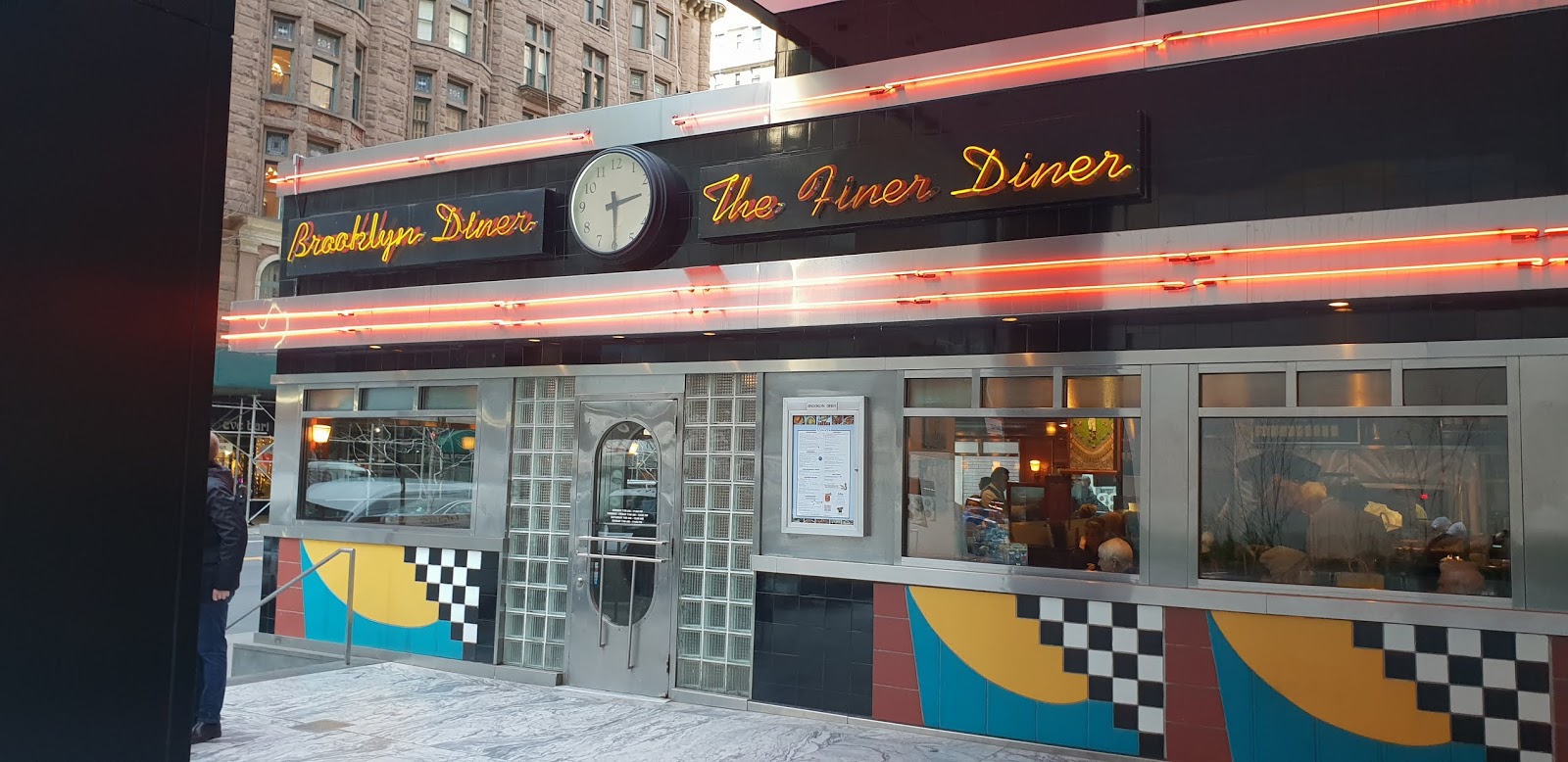
On an early morning walk, I discovered the Brooklyn Diner, a small restaurant tucked away in a street not far from Columbus Circle, perhaps a piece of history from the American past.

After all, if you’re going to take in the sights, sounds, and food of a country what better way to do it than visiting what was once a tradition.

This one was called the Brooklyn Diner.  It had a combination of booths and counter sit down, though the latter was not a very big space, so we opted for a booth.

The object of going to a Diner is the fact they serve traditional American food, which when you get past the hot dogs and hamburgers and fries, takes the form of turkey and chicken pot pies among a variety of other choices.

Still looking for a perfectly cooked turkey, something I’ve never been able to do myself, I opted for the Traditional Turkey Lunch, which the menu invitingly said was cooked especially at the diner and was succulent.  I couldn’t wait.

We also ordered a hamburger, yes, yet another, and a chicken pot pie, on the basis the last one I had in Toronto was absolutely delicious (and cooked the same way since the mid-1930s)

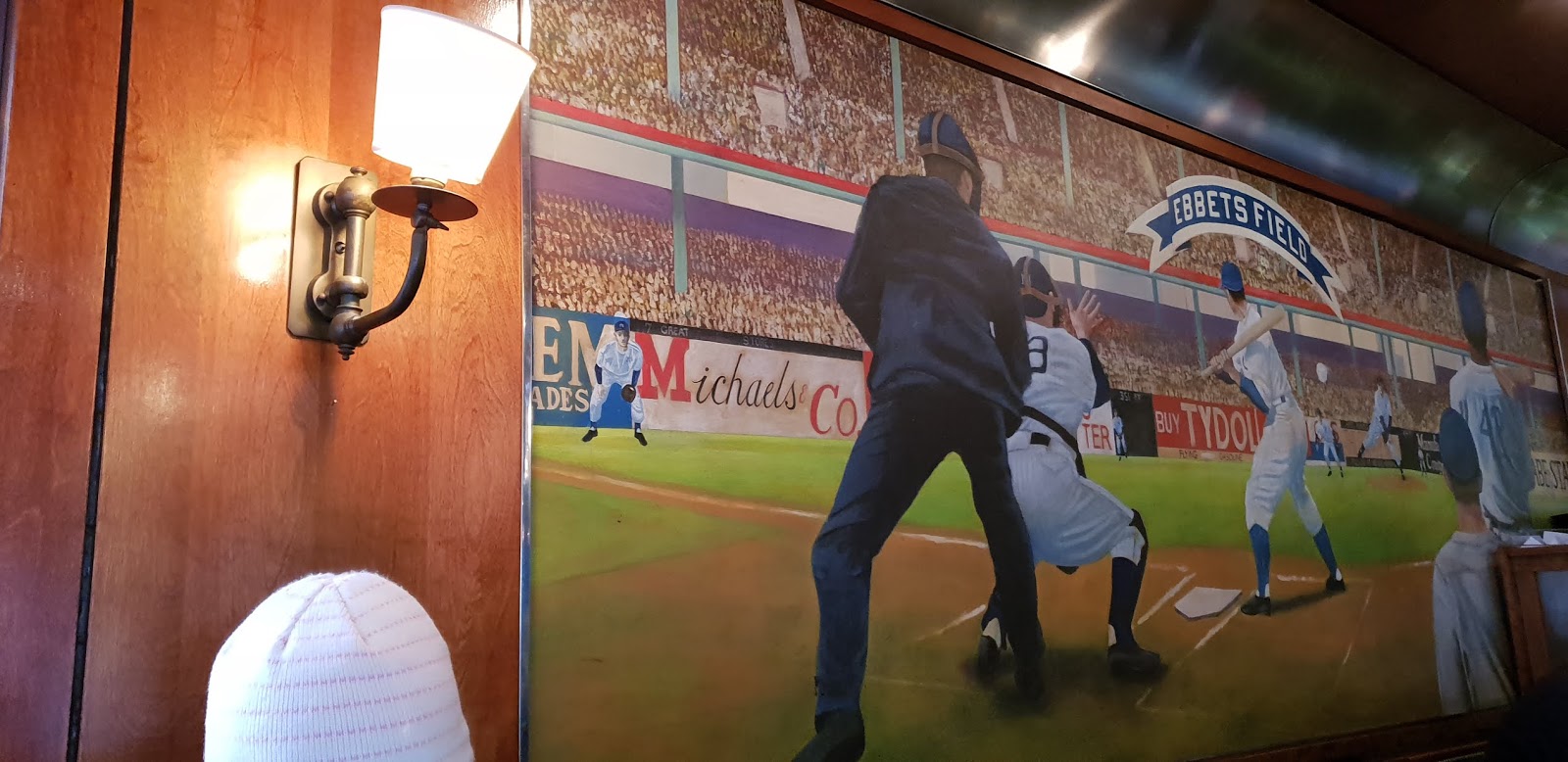
While waiting we got to look at a slice of history belonging to another great American tradition, Baseball, a painting on the wall of the Brooklyn Dodgers at Ebbets field, long since gone from their home.

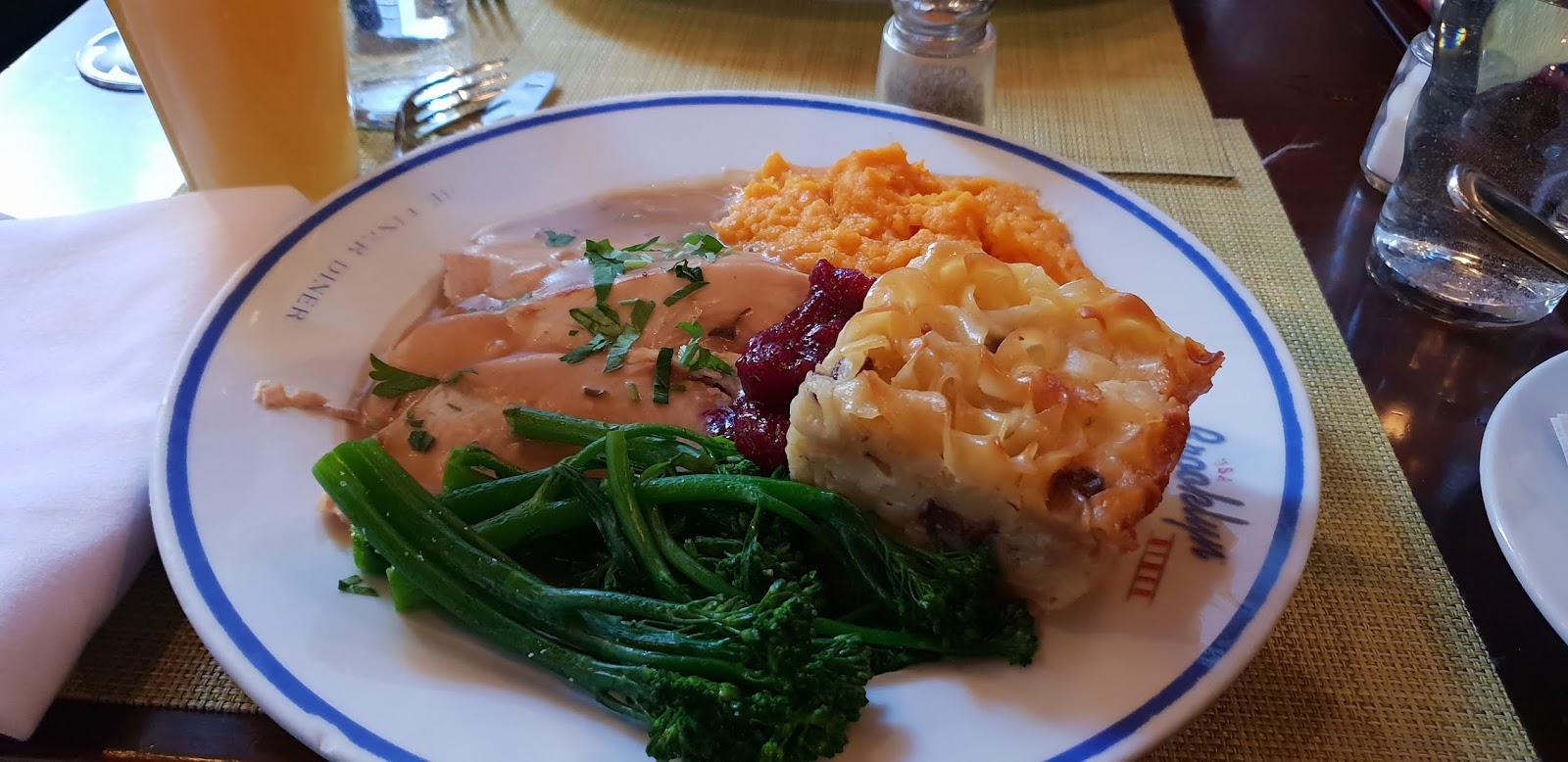
The Turnkey lunch looked like this

which didn’t seem to be much, and had this odd pasta slice on the plate, but the turkey was amazing and lived up to the menu description.

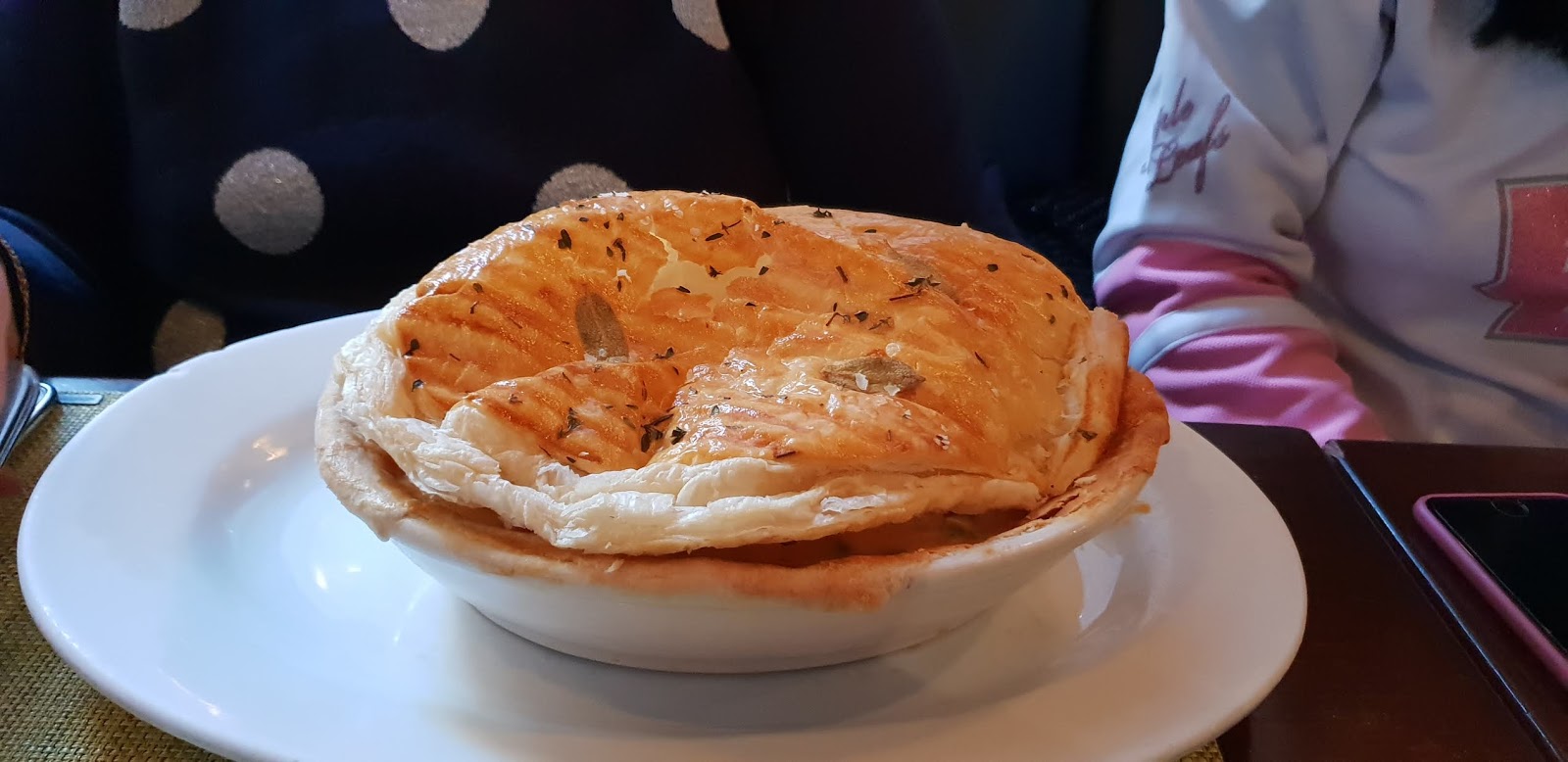
The Chicken Pot Pie looked like this

And looked a lot larger in reality than the photo shows.

But, sadly while it was not bad, it was a little dry, and could possibly do with using the more succulent thigh part of the chicken.

All of this was washed down by Long Island Ice Teas and Brooklyn Lager.

AS for the Diner experience, it’s definitely a 10 out of 10 for me.

“The Kingston Flyer” – Researching can be fun

These days it’s getting harder and harder to find ghosts of the past.

It’s surprising when you read how many steam locomotives existed in the days of steam, and how few remain, and even then, if those that remain, how many actually still work.

It makes writing historical fiction all that much harder.

Some years ago I had an idea I might write a story that involved a steam train, and, since we travelled to New Zealand almost once a year, decided it was time to pay the train a visit.  That year, the train was still running, and it was an experience.

Try drinking a cup of team, on the train, without spilling it.  We couldn’t but it was not the train that was the problem, it was the tracks it ran on.

Now, although I read somewhere it might make a comeback, the last visit we made, the trains were firmly ensconced in their shed, and not looking remotely like moving.

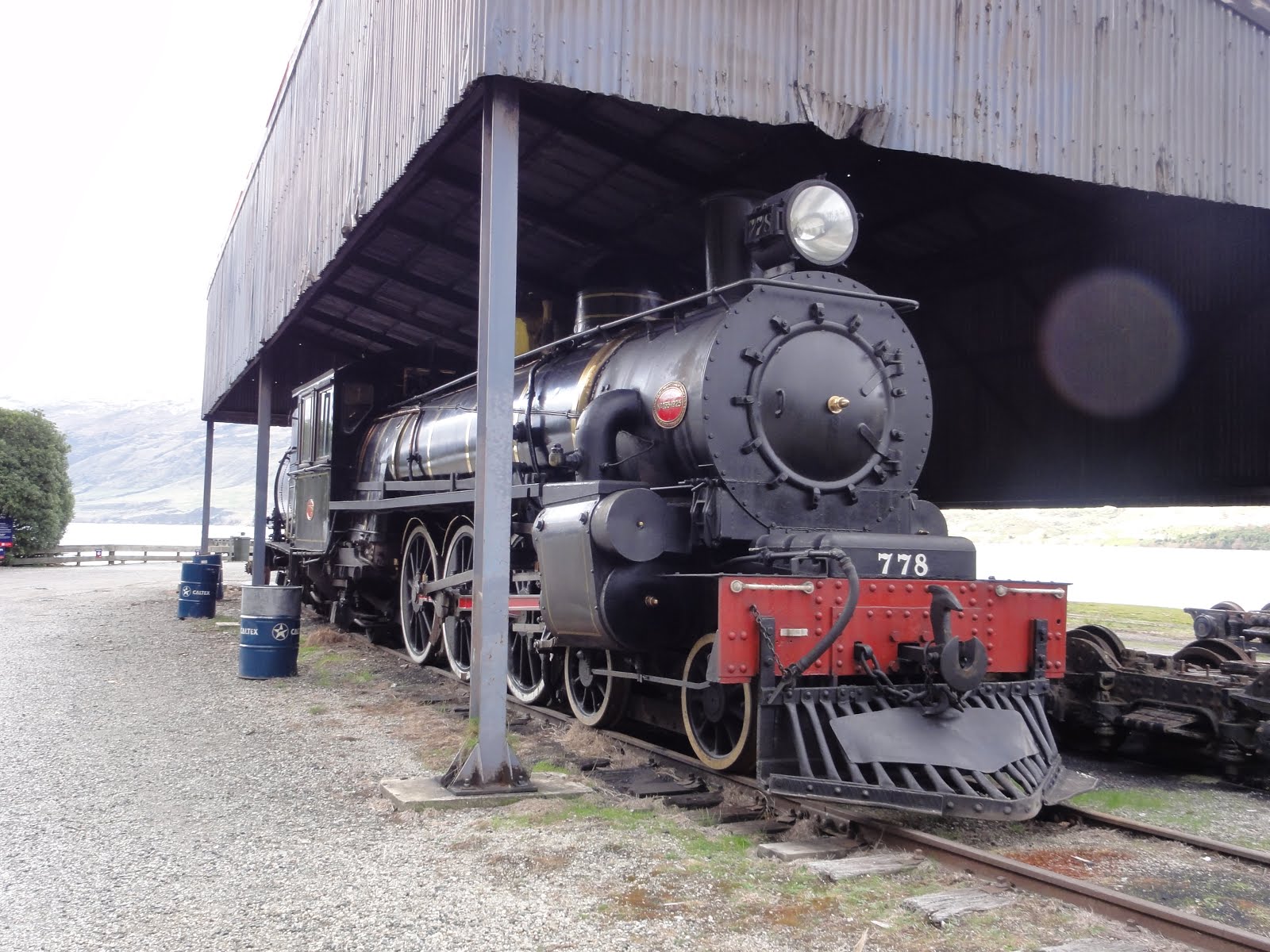
These photos are from the last time we visited.

The Kingston Flyer was a vintage train that ran about 14km to Fairlight from Kingston, at the southern end of Lake Wakatipu, and back.

This tourist service was suspended in December 2012 because of locomotive issues.

However, before that, we managed to go on one of the tours, and it was a memorable trip.  Trying to drink a cup of tea from the restaurant car was very difficult, given how much the carriages moved around on the tracks.

The original Kingston Flyer ran between Kingston, Gore, Invercargill, and sometimes Dunedin, from the 1890s through to 1957.

There are two steam locomotives used for the Kingston Flyer service, the AB778 starting service in 1925, and the AB795 which started service in 1927.

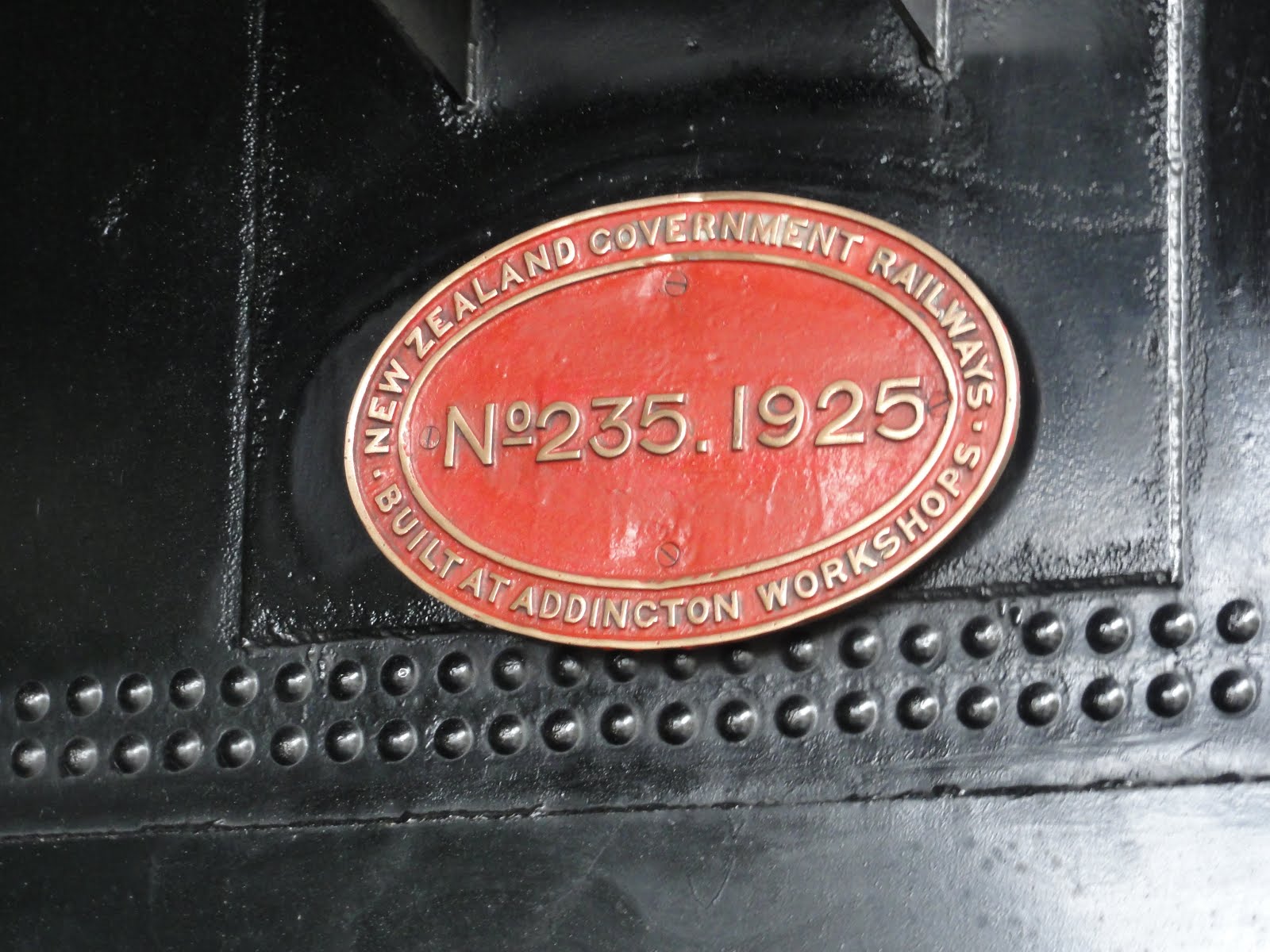
The AB class locomotive was a 4-6-2 Pacific steam locomotive with a Vanderbilt tender, of which 141 were built between 1915 and 1927 some of which by New Zealand Railways Addington Workshops.

No 235 is the builder’s number for the AB778

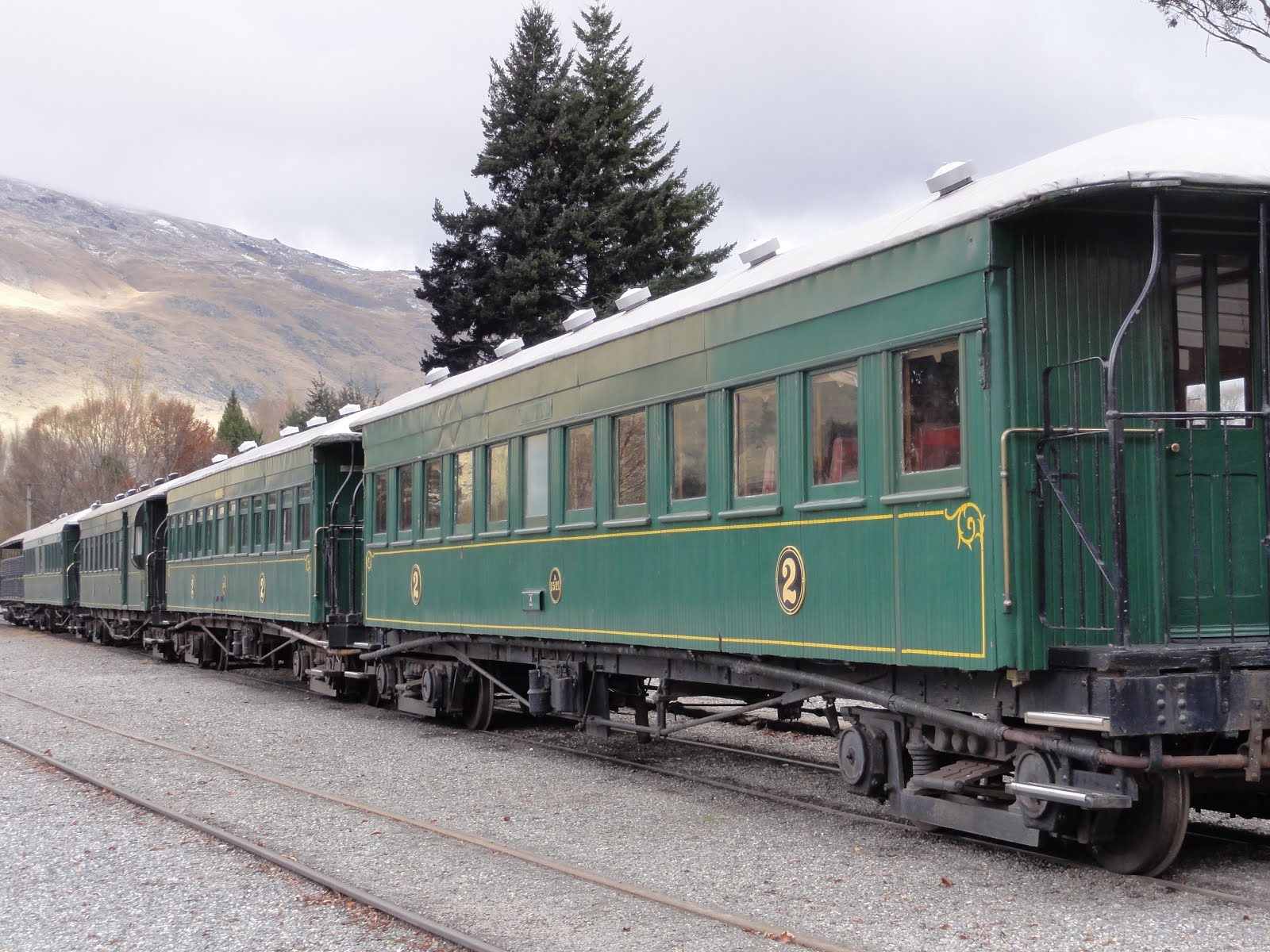
There were seven wooden bodied passenger carriages, three passenger coaches, one passenger/refreshments carriage and two car/vans.  The is also a Birdcage gallery coach.  Each of the rolling stock was built between 1900 and 1923.  They were built at either of Addington, Petone, or Hillside.

I suspect the 2 on the side means second class

The passenger coach we traveled in was very comfortable.

This is one of the guard’s vans, and for transporting cargo.

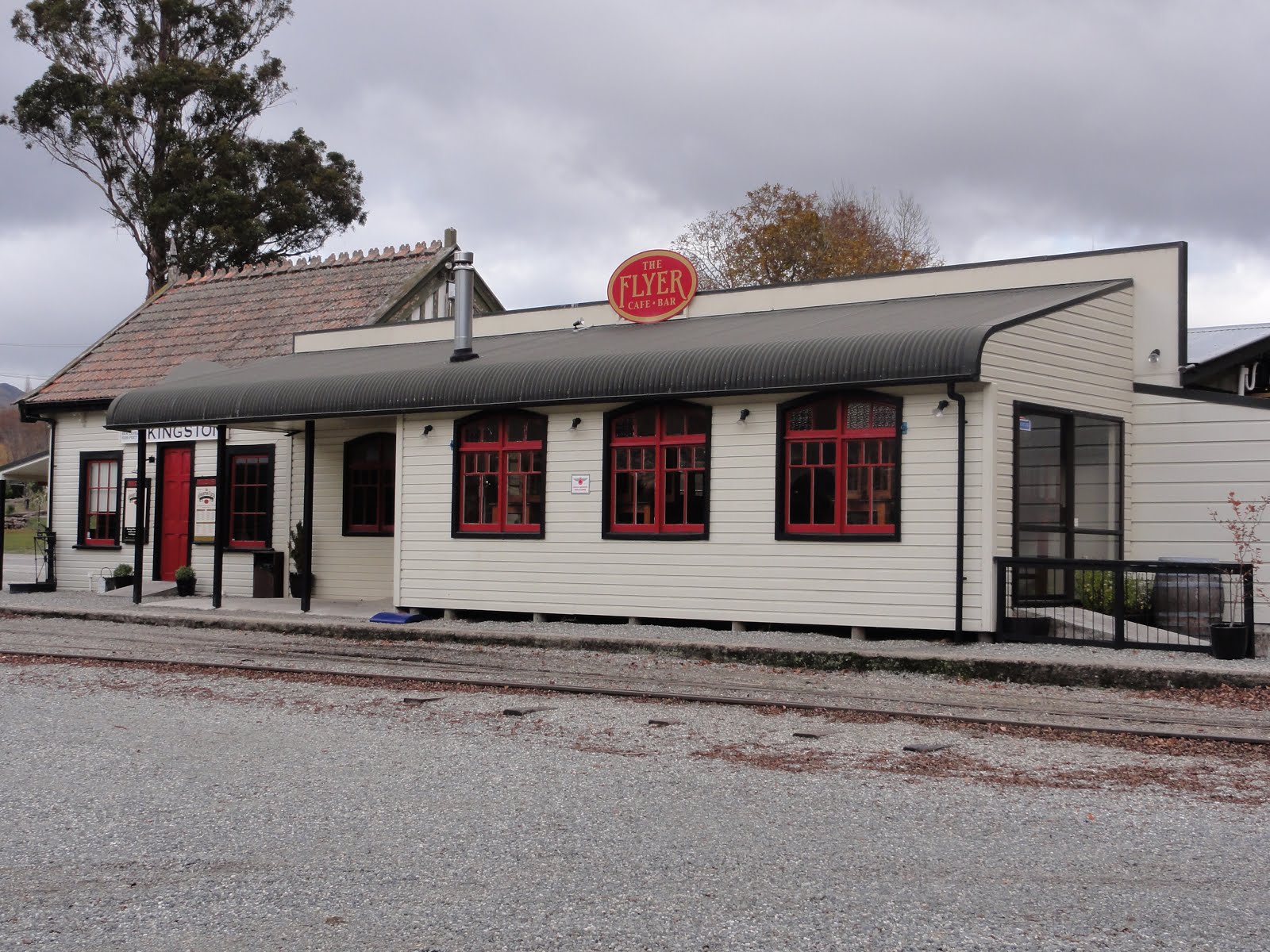
The Kingston Railway Station

and cafe.