Searching for locations: Arezzo, Italy

There’s nothing like being a few days early or a few days late for a major festival.

We have the dubious honor of being able to both without thinking. I guess this is why you should try to plan your holiday around events, if possible.

We love Italy.

We’ve been a number of times, but the last visit was the best. Of course, it was not without a lot of hiccups just getting there, but in the end, later than we expected, actually about five minutes before they closed Florence airport, we made it.

So, little did we know there was such a thing as Calcio Fiorentino an early form of football and rugby that originated in 16th-century Italy and thought to have started in the Piazza Santa Croce in Florence. But we were in Florence, at the right time, and even got to see the procession through the streets of Florence.

You can read more about the game and rules at https://en.wikipedia.org/wiki/Calcio_Fiorentino

We were not so lucky in Siena where we were about a week early for the Palio di Siena which was to take place on 2nd July.

Nor were we in Arezzo at the right time for the Saracen Joust which was held on the penultimate Saturday in June. It is held at the Piazza Grande in the heart of Arezzo and is one of the most beautiful piazzas in Tuscany.
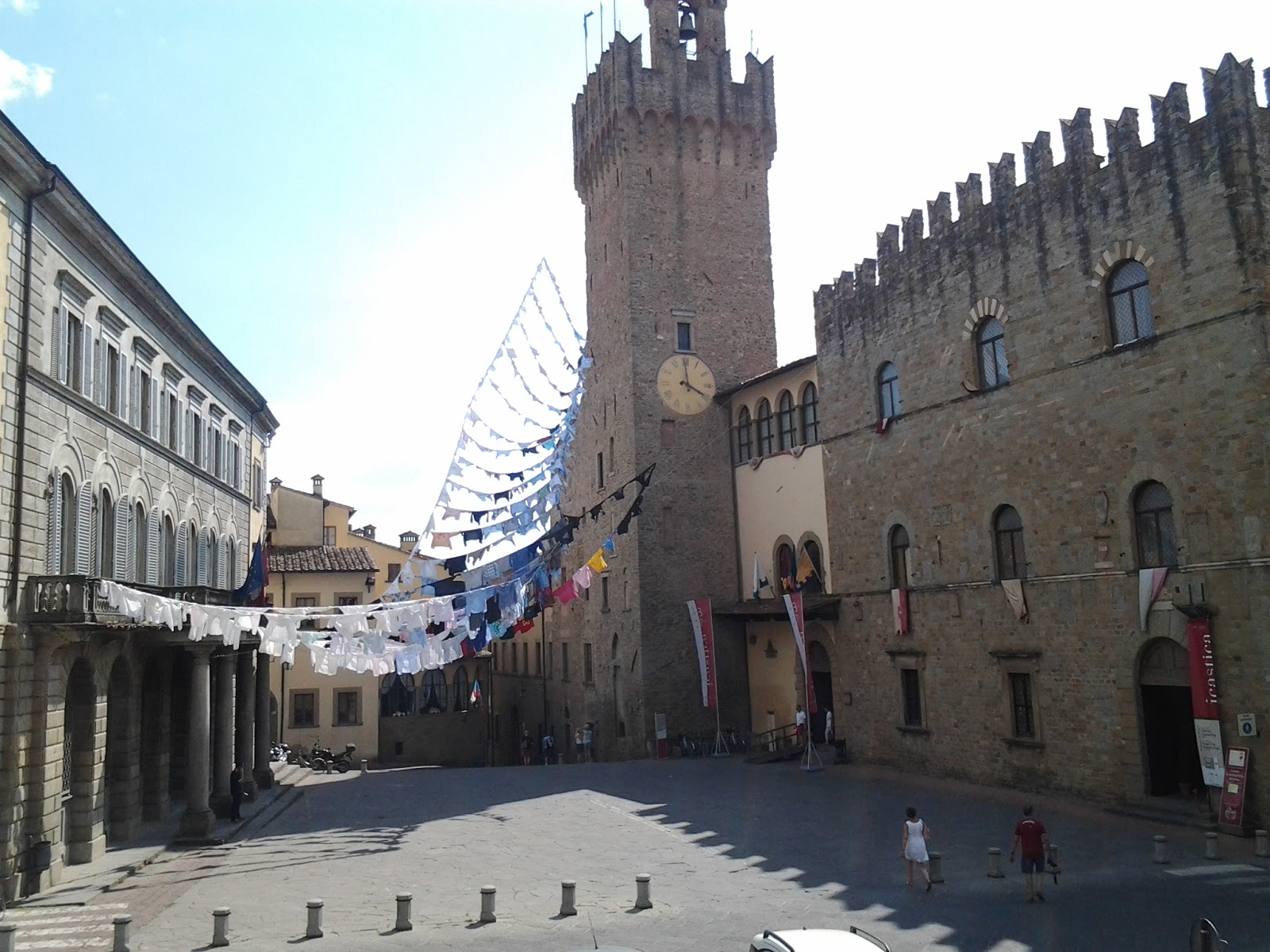
The Piazza Della Liberta and the Town Hall tower

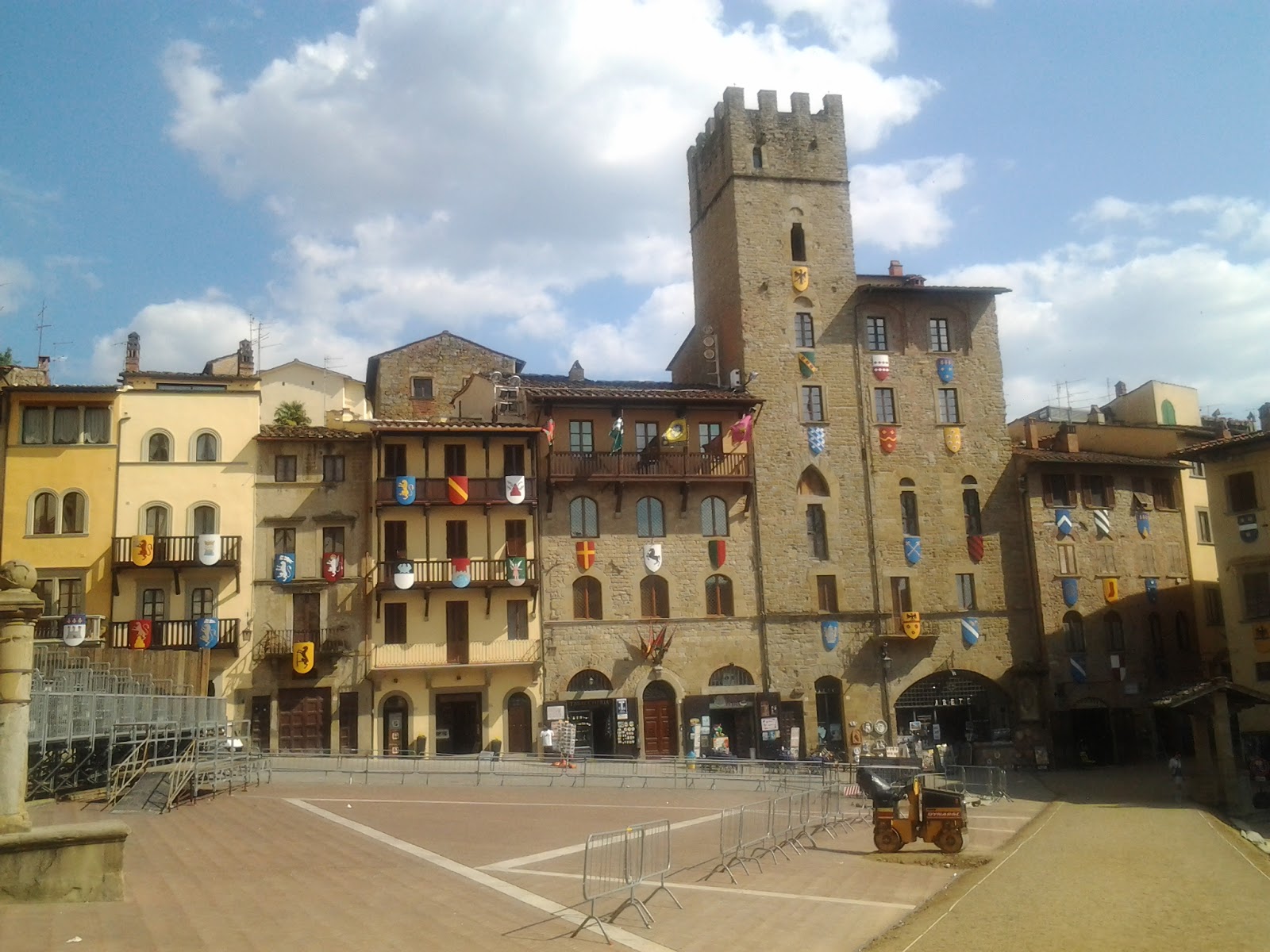
The Piazza Grande, also known as Piazza Vasari, is said to be situated on the site of the ancient Roman Forum.  Here, it is being set up for the coming Joust.
A different view of Arezzo Cathedral | Cattedrale dei Santi Pietro e Donato

Searching for locations: San Gimignano, Italy

We have visited this town on a hill, famous for its fourteen towers, twice.  The first time we stayed in a hotel overlooking the main piazza, and the second time, for a day visit, and return to a little restaurant tucked away off the main piazza for its home cooking.

No cars are allowed inside the town and parking is provided outside the town walls.  You can drive up to the hotel to deliver your baggage, but the car must return to the carpark overnight.

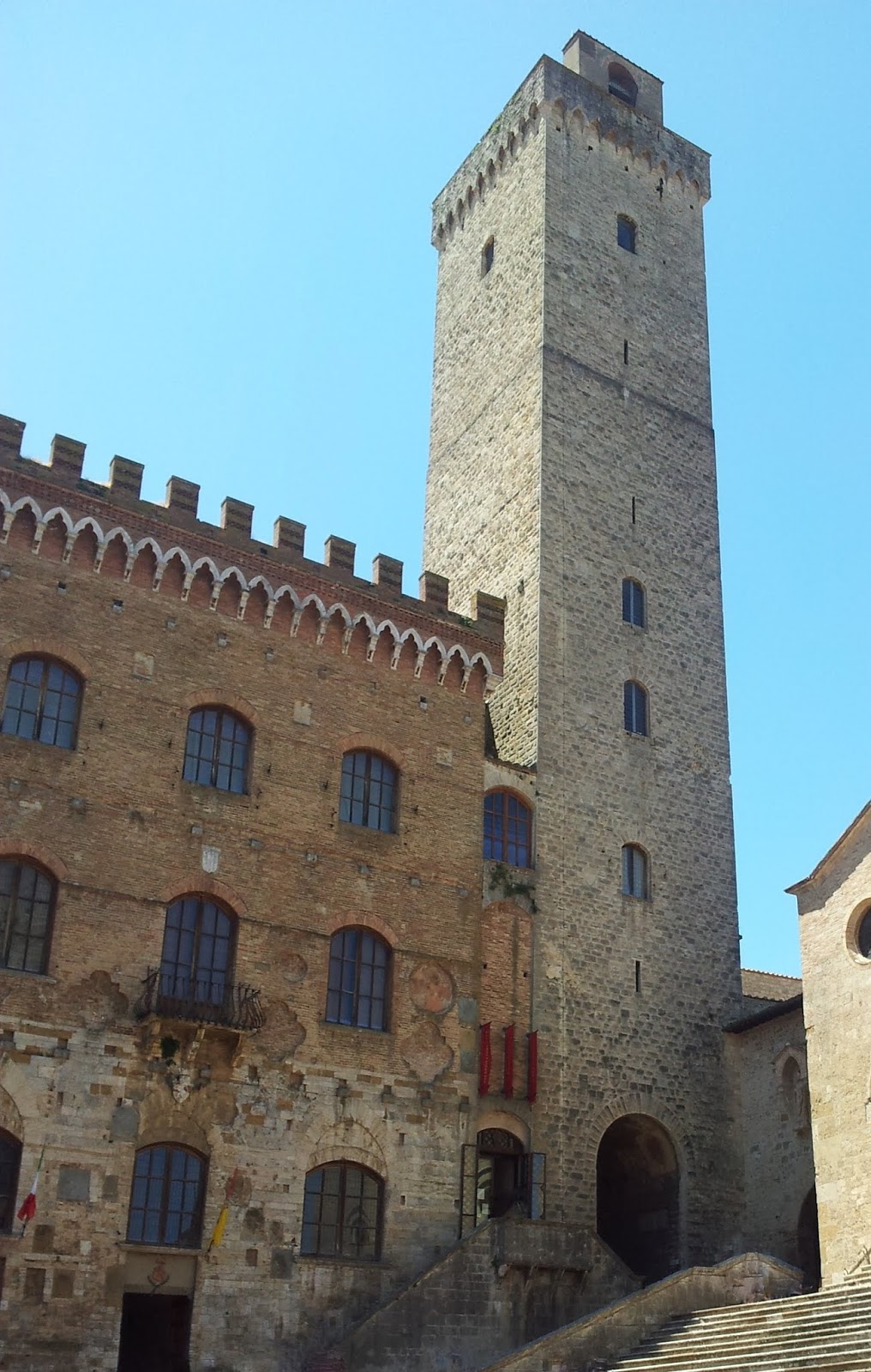
This is one of the fourteen towers

I didn’t attempt to climb to the tower, which you can do in some of them, just getting up the church steps was enough for me.  Inside the building was, if I remember correctly, a museum.

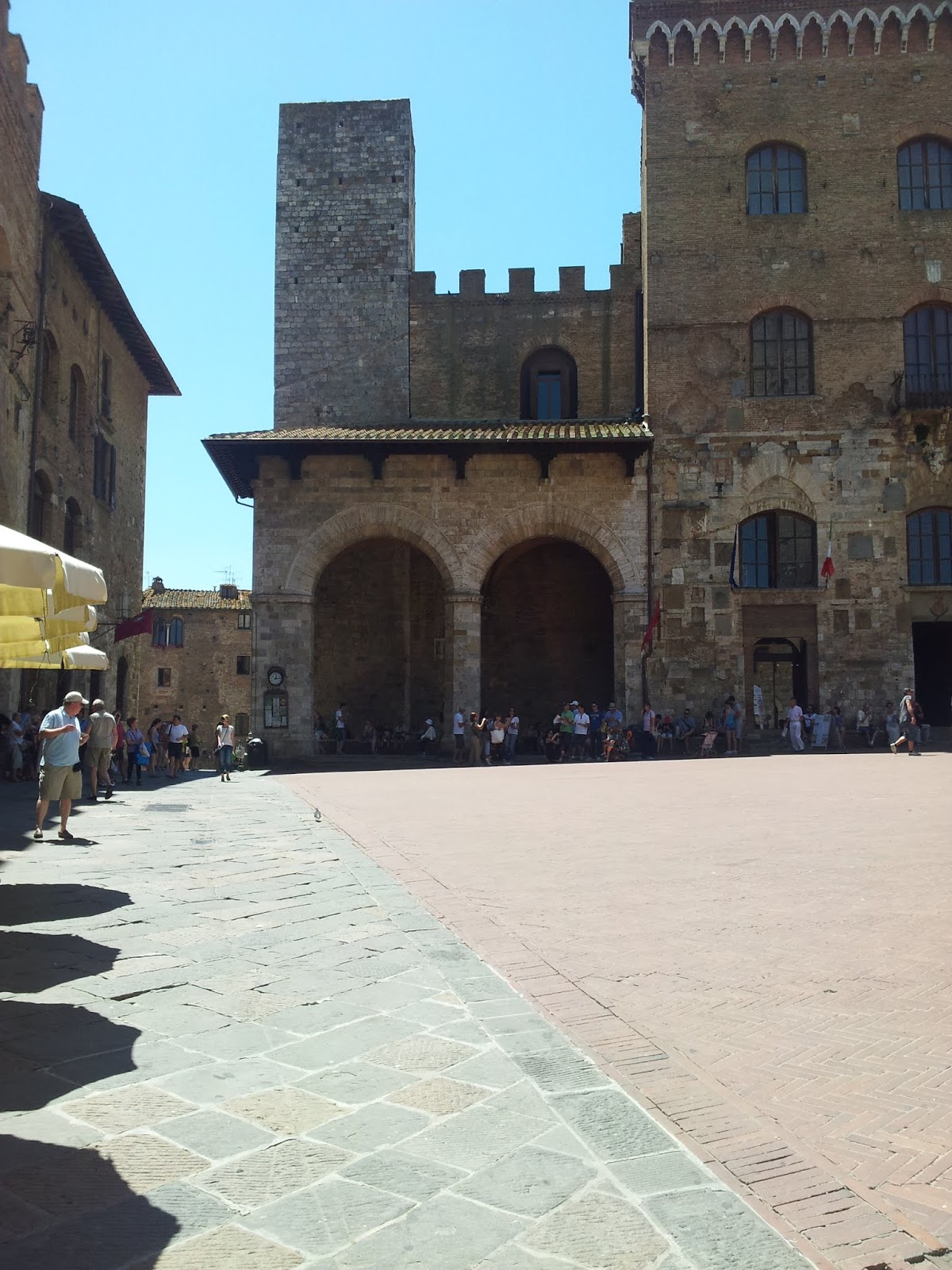
Looking up the piazza towards some battlements, and when you reach the top and turn left, there is a small restaurant on the right-hand side of the laneway that had the best wild boar pasta.

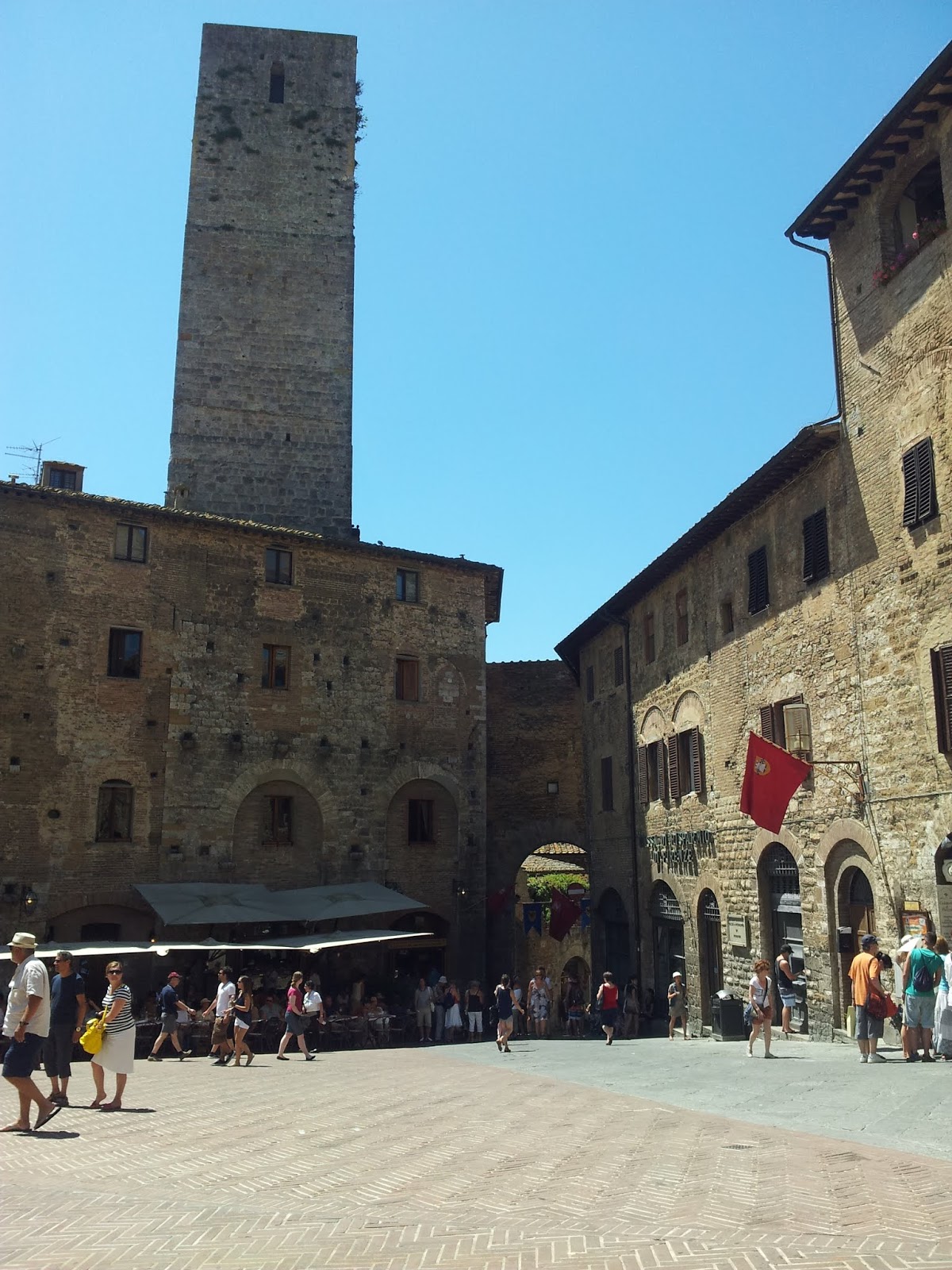
Another of the fourteen towers, and through the arch, down a lane to the gated fence that surrounds the town.  The fortifications are quite formidable and there are several places along the fence where you can stand and look down the hill at the oncoming enemy (if there was one).

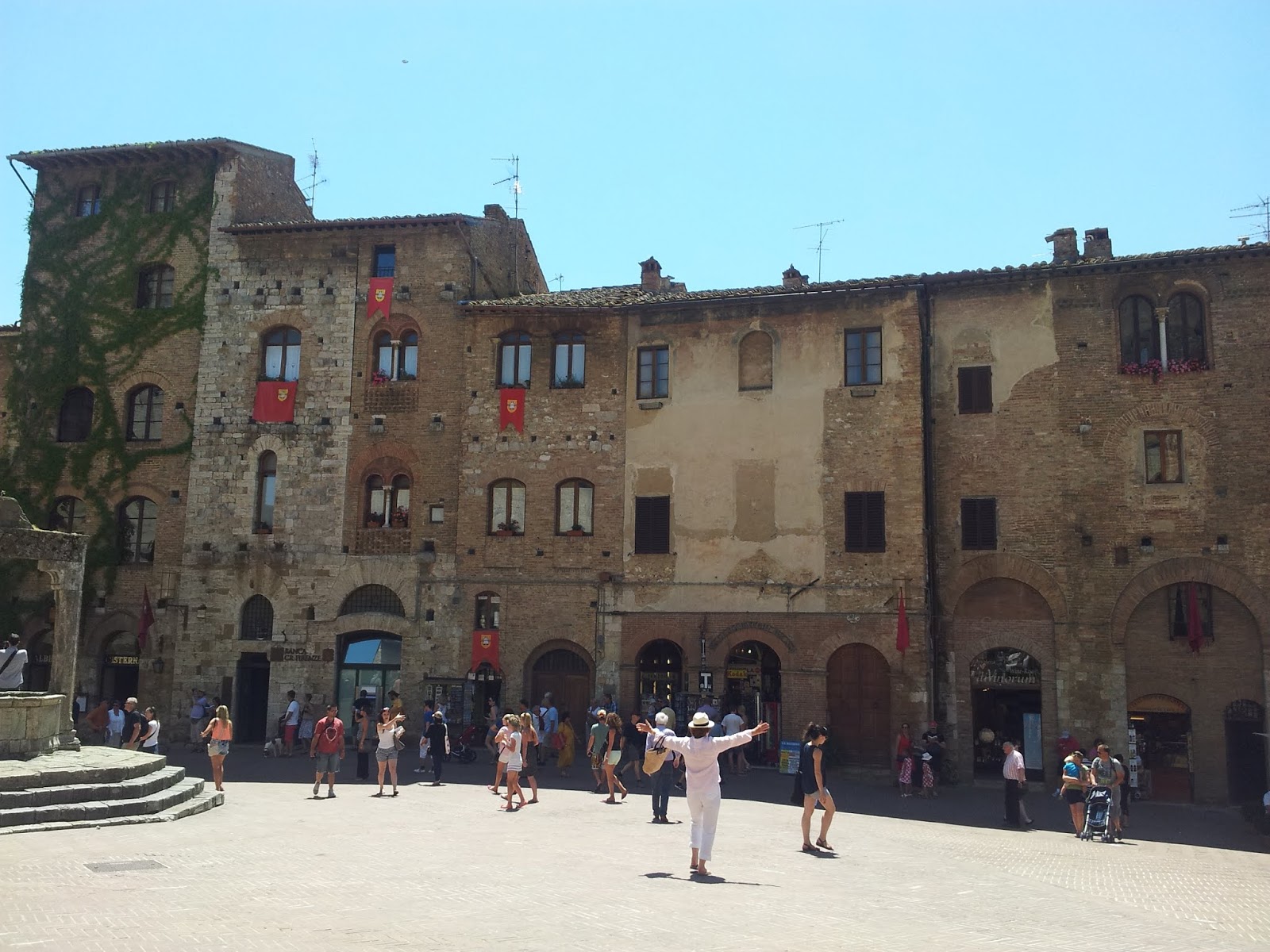
Part of the main piazza which is quite large, and on the right, the wishing well where my wish for a cooler day was not granted.

Officially, the Piazza della Cisterna is the most beautiful square of the town, San Gimignano.  The well was built in 1273 and enlarged in 1346 by Podestà Guccio dei Malavolti.

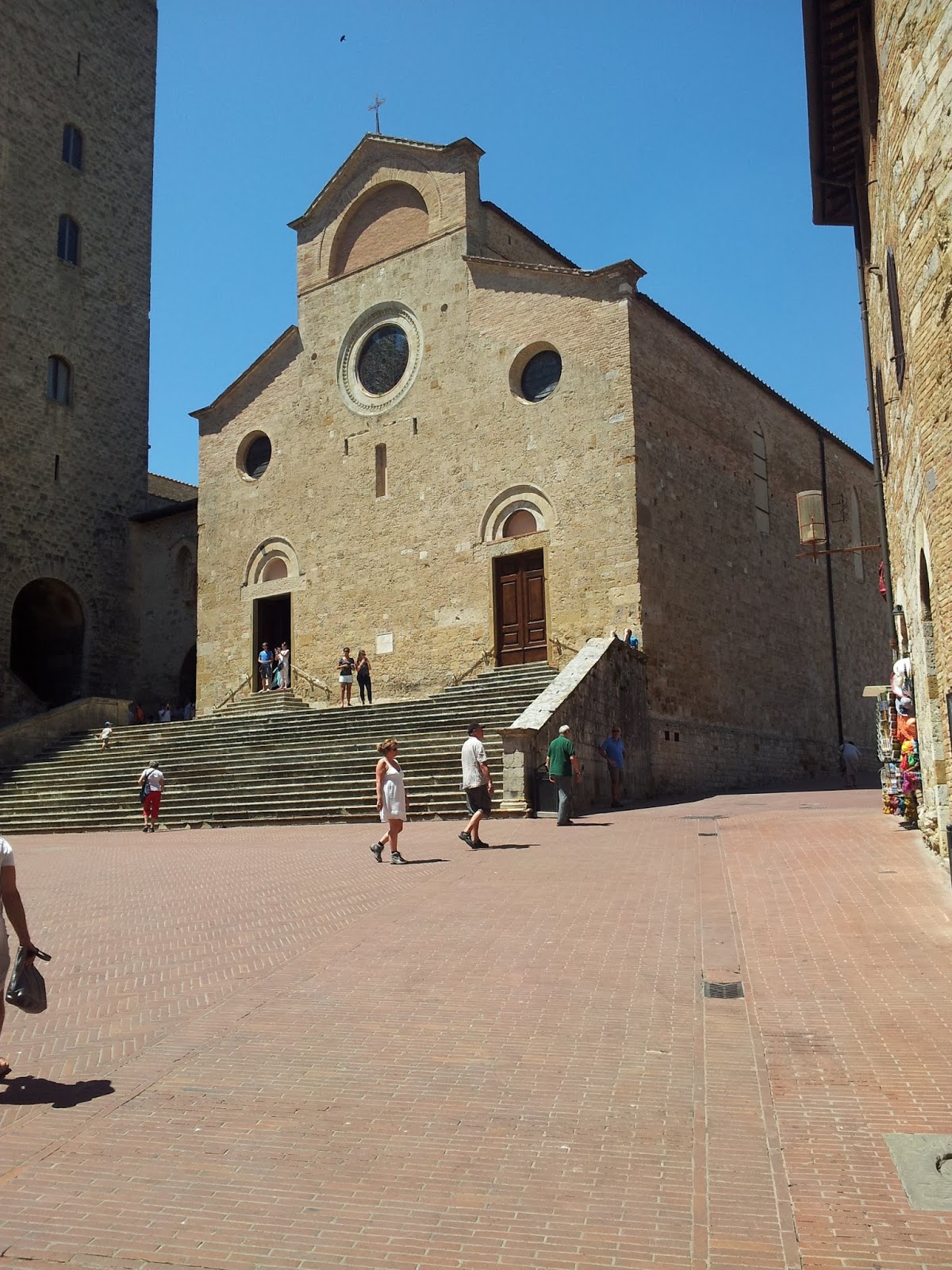
And not to be outdone by any other the other old towns, there is an old church, one of several.  It is the Collegiate Church or the Duomo di San Gimignano, a monument of Romanesque architecture built around 1000 and enlarged over time.

Next door is the Museum of Sacred Art.

And I guess it’s rather odd to see television aerials on top of houses that are quite literally about a thousand years old.  I wonder what they did back then for entertainment?

Searching for locations: San Gimignano, Italy

We have visited this town on a hill, famous for its fourteen towers, twice.  The first time we stayed in a hotel overlooking the main piazza, and the second time, for a day visit, and return to a little restaurant tucked away off the main piazza for its home cooking.

No cars are allowed inside the town and parking is provided outside the town walls.  You can drive up to the hotel to deliver your baggage, but the car must return to the carpark overnight.

This is one of the fourteen towers

I didn’t attempt to climb to the tower, which you can do in some of them, just getting up the church steps was enough for me.  Inside the building was, if I remember correctly, a museum.

Looking up the piazza towards some battlements, and when you reach the top and turn left, there is a small restaurant on the right-hand side of the laneway that had the best wild boar pasta.

Another of the fourteen towers, and through the arch, down a lane to the gated fence that surrounds the town.  The fortifications are quite formidable and there are several places along the fence where you can stand and look down the hill at the oncoming enemy (if there was one).

Part of the main piazza which is quite large, and on the right, the wishing well where my wish for a cooler day was not granted.

Officially, the Piazza della Cisterna is the most beautiful square of the town, San Gimignano.  The well was built in 1273 and enlarged in 1346 by Podestà Guccio dei Malavolti.

And not to be outdone by any other the other old towns, there is an old church, one of several.  It is the Collegiate Church or the Duomo di San Gimignano, a monument of Romanesque architecture built around 1000 and enlarged over time.

Next door is the Museum of Sacred Art.

And I guess it’s rather odd to see television aerials on top of houses that are quite literally about a thousand years old.  I wonder what they did back then for entertainment?

Searching for locations: The apartments at Greve in Chianti, Tuscany, Italy

When we first planned to stay in Tuscany for a few days, we wanted to be in a central area.  We had thought of staying in Florence and making daily treks, but the tour operator we selected told us it would be better if we stayed closer to Arezzo.

We picked Greve in Chianti, and a place called Antico Pastificio, we booked a standard apartment with two bedrooms, and it was about as authentic Italian you could get.  The building we stayed in was the yellow pasta factory, and the apartment named ‘Iris’.

It was only steps away from the main square, shops, restaurants, and at the opposite end, the quaint ringing of church bells at various times during the day.

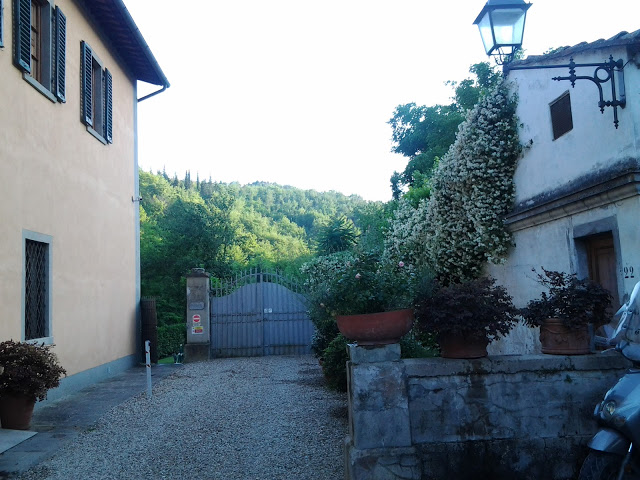
Gaining access was through a very narrow arch which required some deft driving and then up the road.  There were villas and two large apartment blocks.

You can just see the archway at the end of the road. 
This was the entrance to our room,

 along a passage and up the stairs, turning left at the top.

 Going straight ahead through the gate to the car park, 

and access to the grounds behind the buildings.

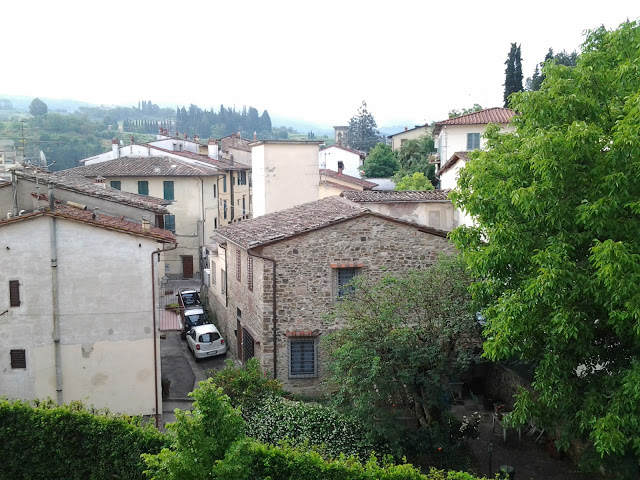
This was the view from the lounge/living room.  The days were hot, and on several evenings it rained, breaking the heat and making the evenings sitting by the window cool and refreshing.

 And the last view is looking towards the town piazza and the church

Searching for locations: The apartments at Greve in Chianti, Tuscany, Italy

When we first planned to stay in Tuscany for a few days, we wanted to be in a central area.  We had thought of staying in Florence and making daily treks, but the tour operator we selected told us it would be better if we stayed closer to Arezzo.

We picked Greve in Chianti, and a place called Antico Pastificio, we booked a standard apartment with two bedrooms, and it was about as authentic Italian you could get.  The building we stayed in was the yellow pasta factory, and the apartment named ‘Iris’.

It was only steps away from the main square, shops, restaurants, and at the opposite end, the quaint ringing of church bells at various times during the day.

Gaining access was through a very narrow arch which required some deft driving and then up the road.  There were villas and two large apartment blocks.

You can just see the archway at the end of the road. 
This was the entrance to our room,

 along a passage and up the stairs, turning left at the top.

 Going straight ahead through the gate to the car park, 

and access to the grounds behind the buildings.

This was the view from the lounge/living room.  The days were hot, and on several evenings it rained, breaking the heat and making the evenings sitting by the window cool and refreshing.

 And the last view is looking towards the town piazza and the church

Searching for locations: Somewhere in Tuscany, Italy, a hilltop town

It’s a town we visited in Italy when on a private tour.  Of course, I wrote it down on a notepad app on my phone at the time, and, yes, not long after that, an accidental reset lost all the data.

Now, I have no idea with the name of the town is, just that it was a picturesque stopover in the middle of a delightful private tour of Tuscany.

2013-06-20 10.12.54

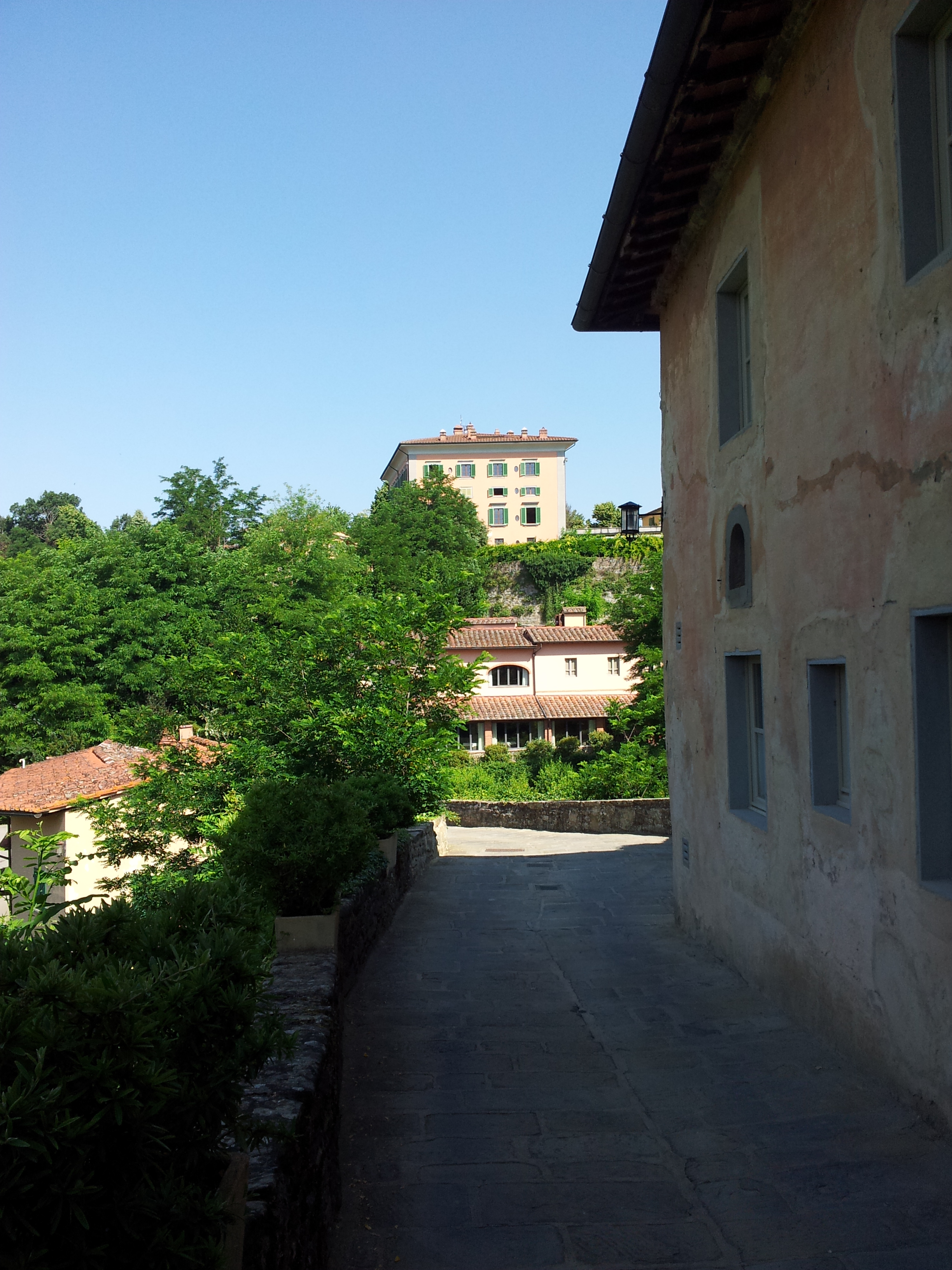
There are narrow laneways that I suspect no one 300 hundred years ago planned for cars

2013-06-20 10.17.36

Narrower walkways that lead to very dark places


Walkways on the side of the hills that look down on the picturesque valleys

2013-06-20 10.15.27

And rather interesting hillsides, some of which provided inspiration for Leonardo da Vinci

2013-06-20 10.15.48

Or maybe it was this landscape, though it is difficult to see what could be found as inspiration in such a bland hillside

2013-06-20 10.15.55

A lot of houses, some of them quite large, nestled in amongst the trees

2013-06-20 10.17.41 (2)

Gardens, of sorts, balcony’s, not so big, and hidden doorways

2013-06-20 10.17.53 (2)

Even not so secret passageways between houses.

All in all, it was an interesting visit, and it made me wonder what it would be like to live here, all crowded together, rather than living on our relatively isolated quarter-acre blocks.

Searching for locations: Somewhere in Tuscany, Italy, a hilltop town

It’s a town we visited in Italy when on a private tour.  Of course, I wrote it down on a notepad app on my phone at the time, and, yes, not long after that, an accidental reset lost all the data.

Now, I have no idea with the name of the town is, just that it was a picturesque stopover in the middle of a delightful private tour of Tuscany.

2013-06-20 10.12.54

There are narrow laneways that I suspect no one 300 hundred years ago planned for cars

2013-06-20 10.17.36

Narrower walkways that lead to very dark places


Walkways on the side of the hills that look down on the picturesque valleys

2013-06-20 10.15.27

And rather interesting hillsides, some of which provided inspiration for Leonardo da Vinci

2013-06-20 10.15.48

Or maybe it was this landscape, though it is difficult to see what could be found as inspiration in such a bland hillside

2013-06-20 10.15.55

A lot of houses, some of them quite large, nestled in amongst the trees

2013-06-20 10.17.41 (2)

Gardens, of sorts, balcony’s, not so big, and hidden doorways

2013-06-20 10.17.53 (2)

Even not so secret passageways between houses.

All in all, it was an interesting visit, and it made me wonder what it would be like to live here, all crowded together, rather than living on our relatively isolated quarter-acre blocks.

Searching for locations: Castello di Monterinaldi, Tuscany, Italy

As part of a day tour by Very Tuscany Tours, we came to this quiet corner of Tuscany to have a look at an Italian winery, especially the Sangiovese grapes, and the Chianti produced here.

And what better way to sample the wine than to have a long leisurely lunch with matched wines.  A very, very long lunch.

But first, a wander through the gardens to hone the appetite:

2013-06-18 11.56.18
2013-06-18 11.56.32
2013-06-18 11.56.51

And a photo I recognize from many taken of the same building:

2013-06-18 11.57.26

Then a tour of the wine cellar:

2013-06-18 11.50.08
2013-06-18 11.52.08

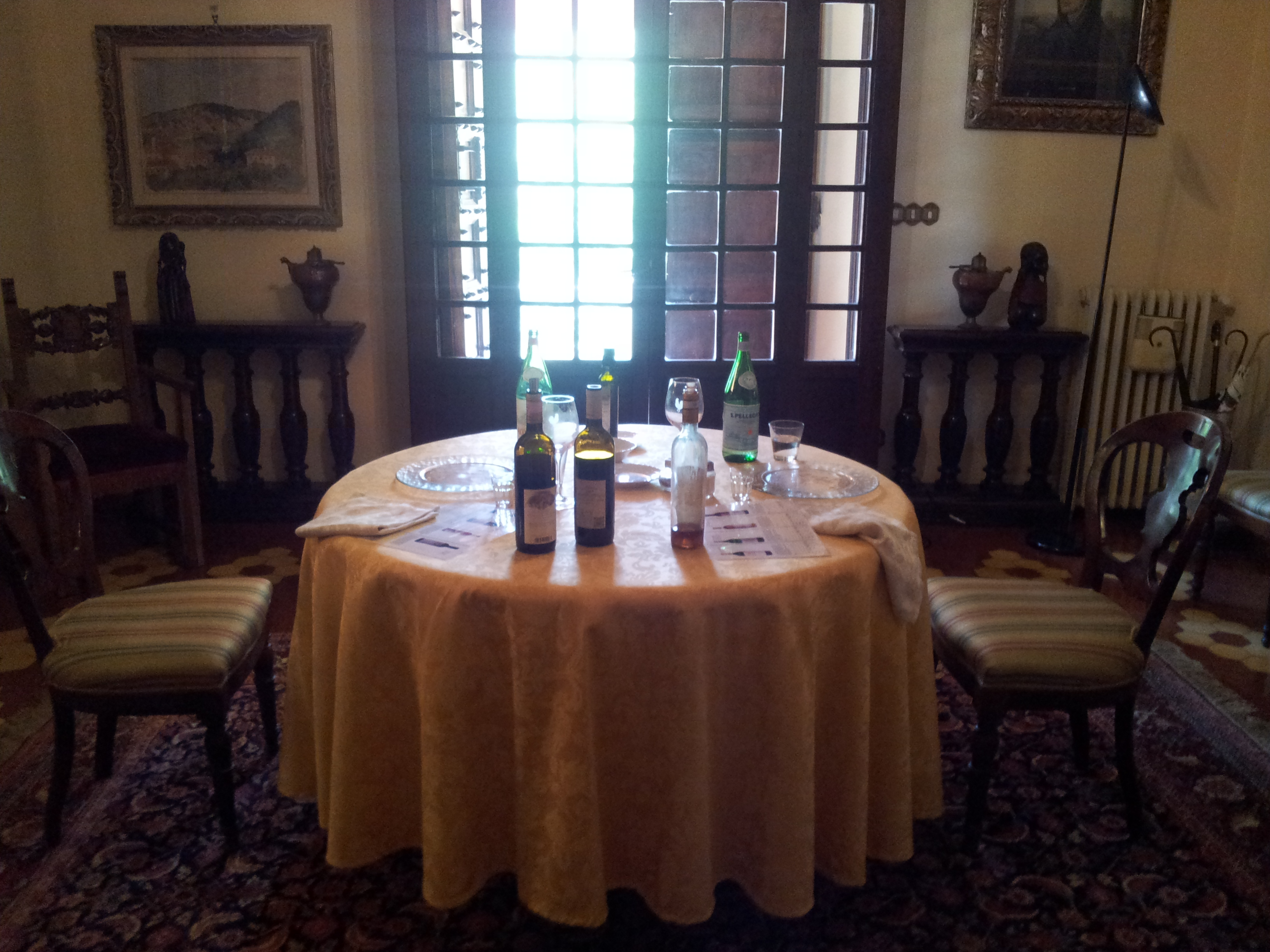
Then on to the most incredible and exquisite lunch and wine we have had.  It was the highlight of our stay in Tuscany.  Of course, we had our own private dining room:

2013-06-18 13.22.40

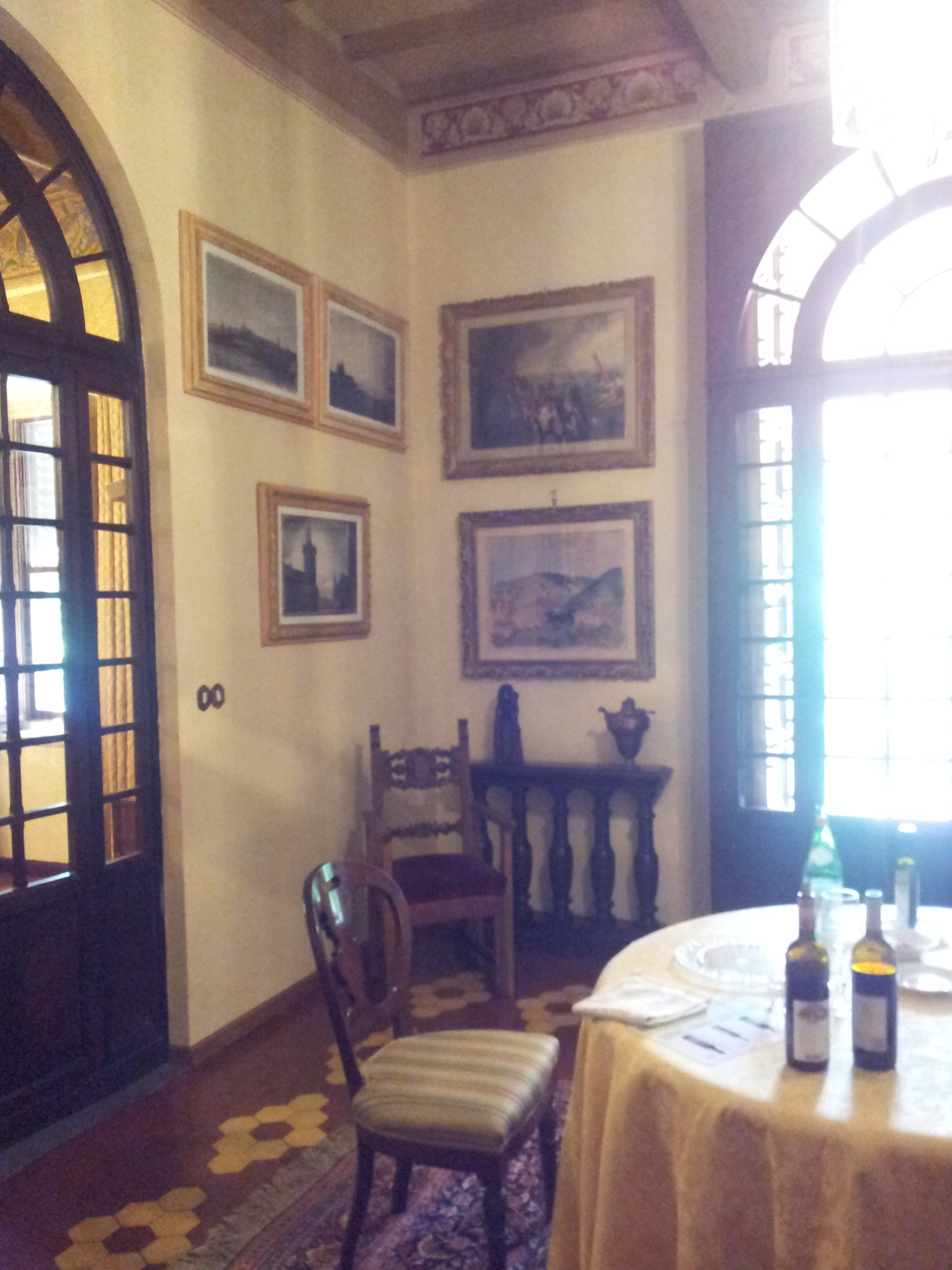
And time to study the paintings and prints on the walls while we finished with coffee and a dessert wine.

2013-06-18 13.23.15

And of course, more wine, just so we could remember the occasion.

Searching for locations: Castello di Monterinaldi, Tuscany, Italy

As part of a day tour by Very Tuscany Tours, we came to this quiet corner of Tuscany to have a look at an Italian winery, especially the Sangiovese grapes, and the Chianti produced here.

And what better way to sample the wine than to have a long leisurely lunch with matched wines.  A very, very long lunch.

But first, a wander through the gardens to hone the appetite:

2013-06-18 11.56.18
2013-06-18 11.56.32
2013-06-18 11.56.51

And a photo I recognize from many taken of the same building:

2013-06-18 11.57.26

Then a tour of the wine cellar:

2013-06-18 11.50.08
2013-06-18 11.52.08

Then on to the most incredible and exquisite lunch and wine we have had.  It was the highlight of our stay in Tuscany.  Of course, we had our own private dining room:

2013-06-18 13.22.40

And time to study the paintings and prints on the walls while we finished with coffee and a dessert wine.

2013-06-18 13.23.15

And of course, more wine, just so we could remember the occasion.

In a word: Dear

Yes, it’s that simple word that we use to call someone affectionately.

Or sometimes, with a little accent on the word; yes, dear and no, dear.

In other words, it’s a person regarded with deep affection.

It can also mean expensive, by saying, that’s a bit dear, isn’t it, when we’re really saying it’s way overpriced.

I can’t remember how many times I’ve said something is ‘too dear’ to the children.

Grannies tend to use the expression, ‘be a dear and…’, to get you do do something for them.

Friends, sometimes tongue in cheek, will say, ‘oh dear, I’ve upset you’, when that was exactly what they meant to do.  Friends you say?  Yes, friends indeed.

And then we always start a letter (always?  Who writes letters any more?) with

Dear John (oops, not one of THOSE letters)

Dear Sir/Madam

Of course, instead of swearing, you could simply say ‘Oh dear, you’ve let us down again!’.

And when you lose your job, which is happening a lot at the moment, it is said it would cost you dear, though sometimes it would be more appropriate to use the adverb, dearly.

It is not to be confused with the word deer which is an animal, the males of which have antlers.

There are a number of different types of deer, such as reindeer and elk.  In Canada, they are called caribou.

In Robin Hood’s day, killing deer brought you very harsh punishment.

And one of my favourite meats is venison, meat from a deer, which are farmed in New Zealand along with sheep.