Queenstown Gardens are not far from the center of Queenstown. They are just down the hill from where we usually stay at Queenstown Mews.
More often than not we approach the Gardens from the lakeside during our morning walk from the apartment to the coffee shop. You can walk alongside the lake, or walk through the Gardens, which, whether in summer or winter, is a very picturesque walk.
There’s a bowling club, and I’m afraid I will never be that sort of person to take it up (not enough patience) and an Ice Arena, where, in winter I have heard players practicing ice hockey.
I’m sure, at times, ice skating can also be done.
There is a stone bridge to walk across, and in Autumn/Winter the trees can add a splash of color.
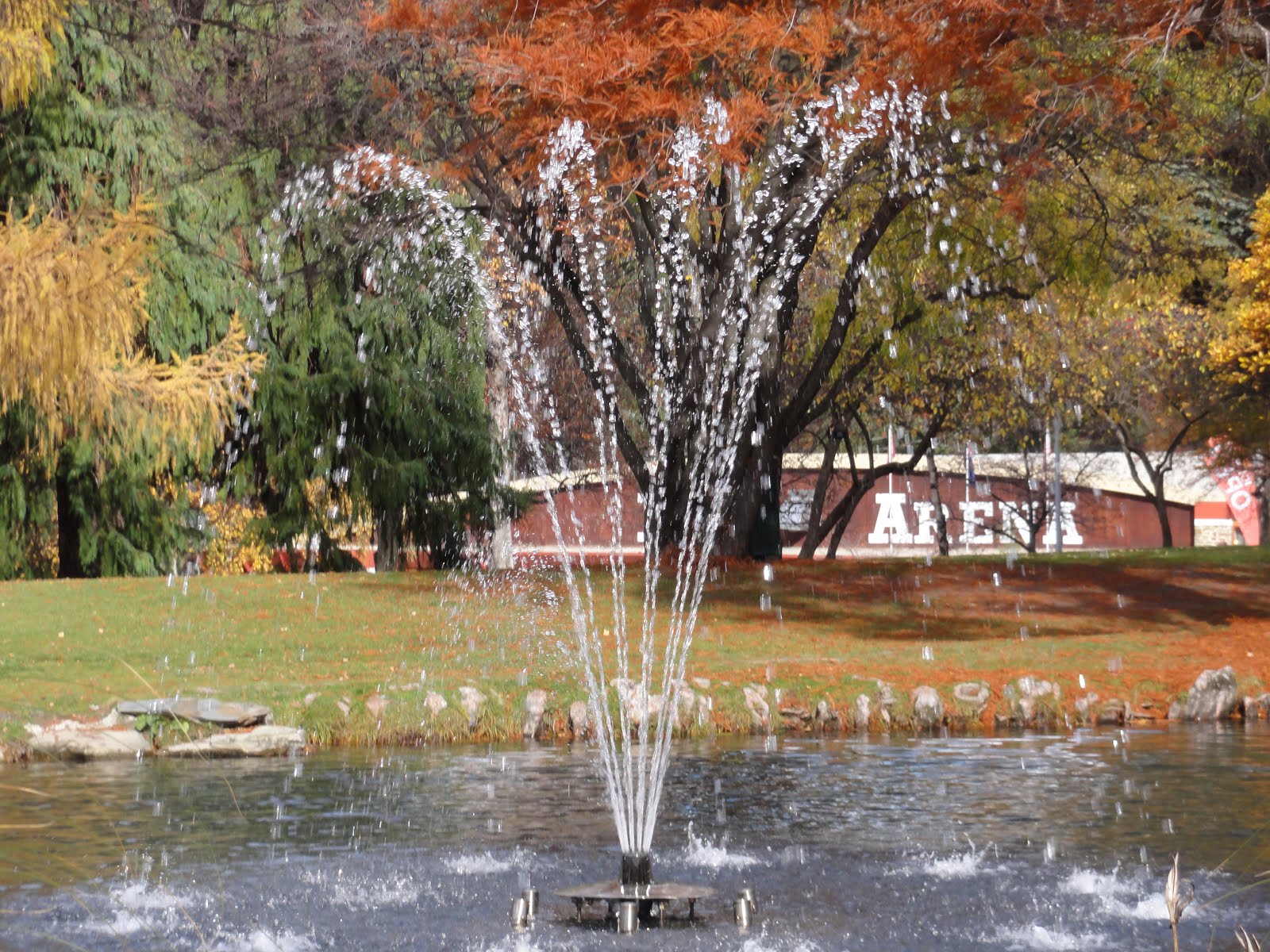
There is a large water feature with fountain, and plenty of seating around the edge of the lake, to sit and absorb the tranquility, or to have a picnic.
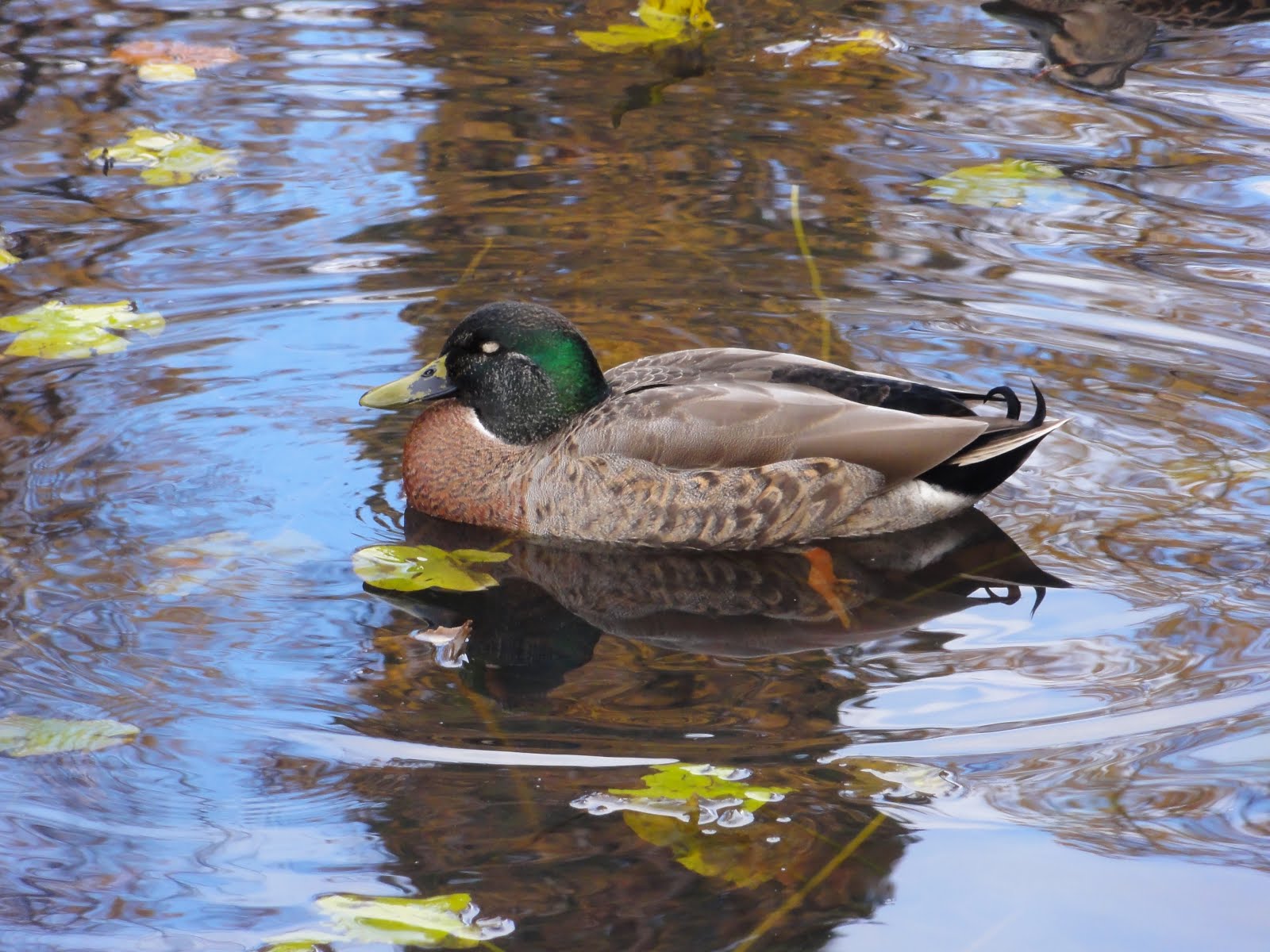
There are ducks in the pond
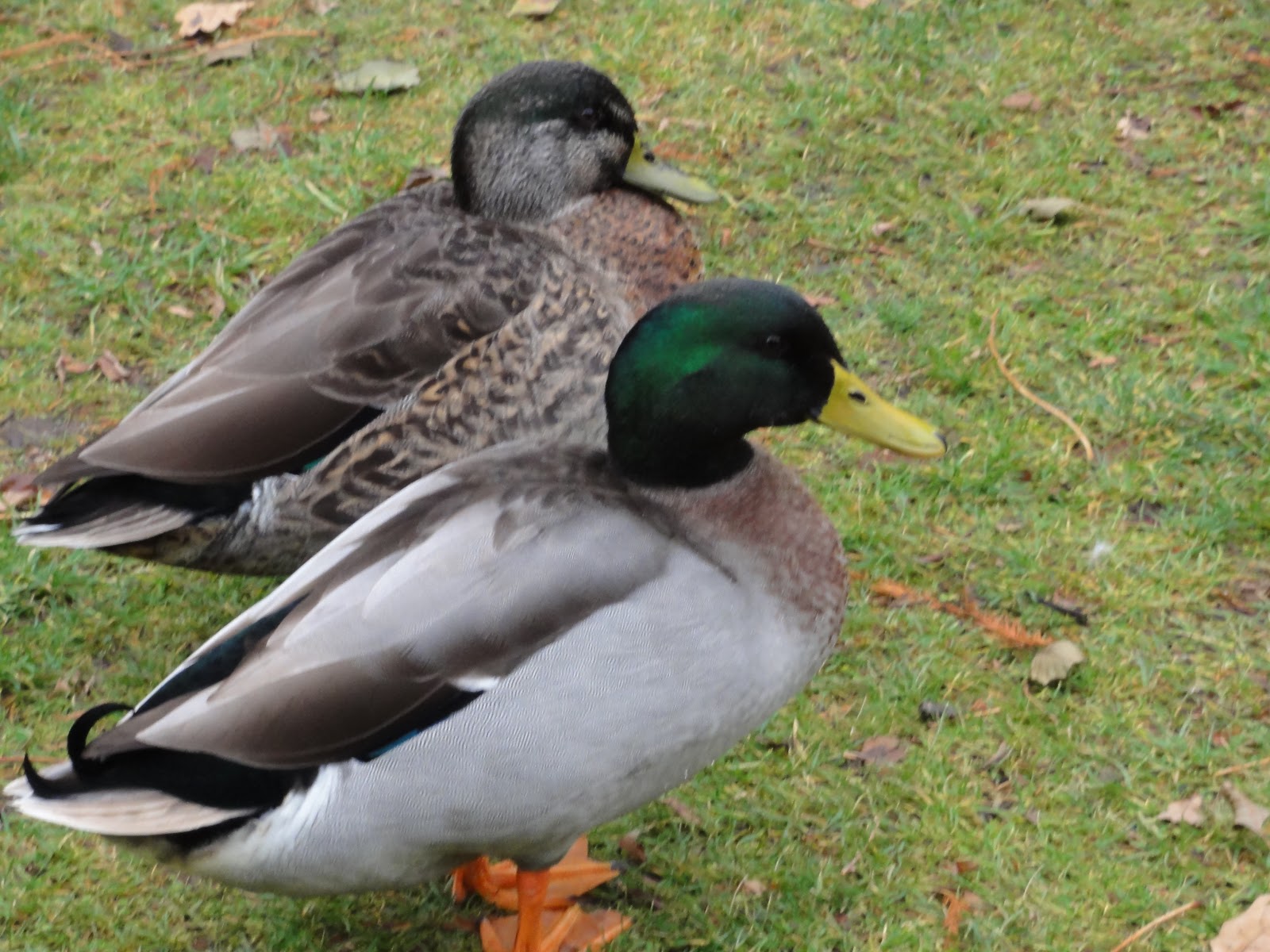
and out of the pond
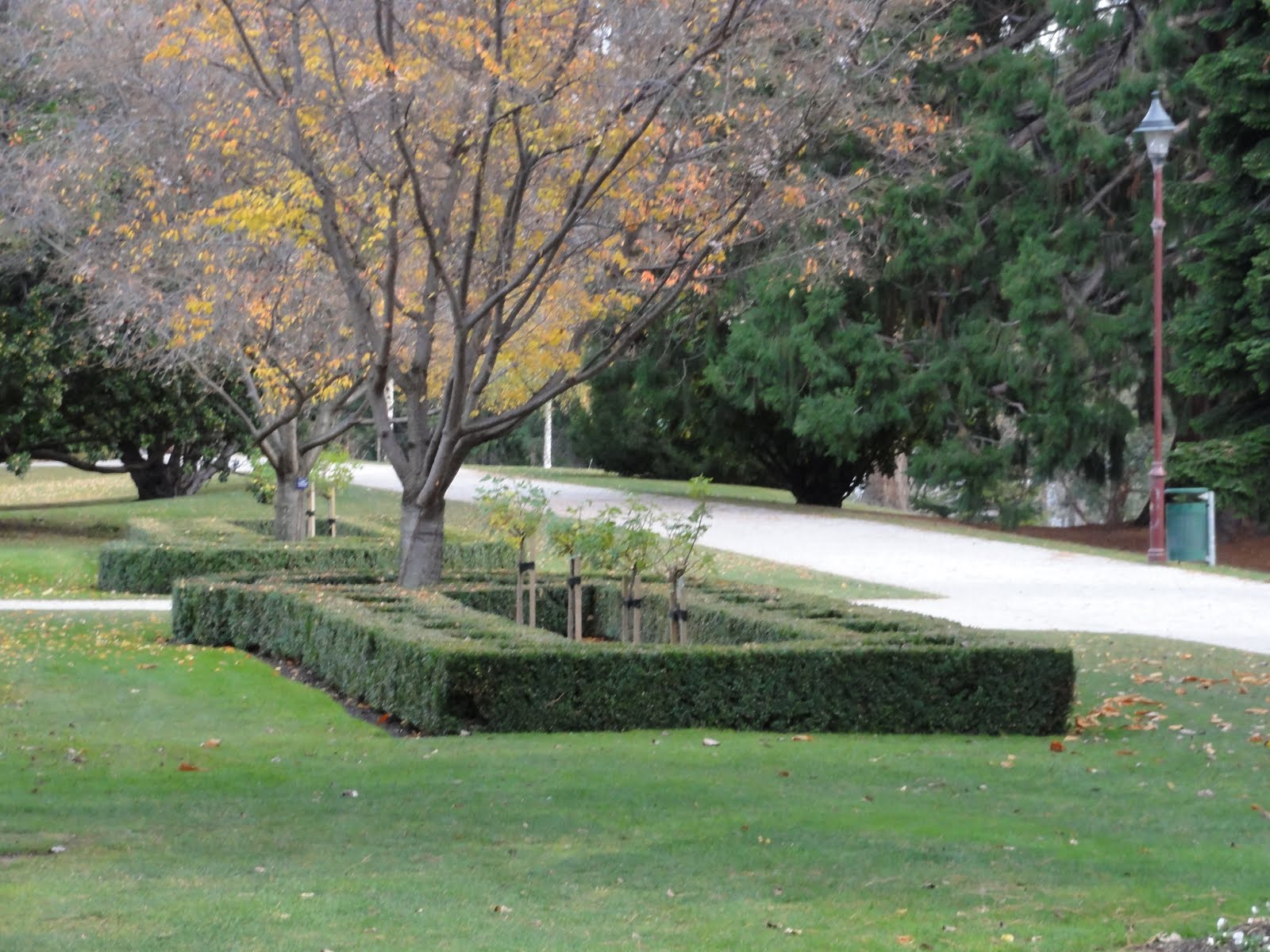
and plenty of grassed areas with flower beds which are more colorful in summer. I have also seen the lawns covered in snow, and the fir trees that line the lake side of the gardens hang heavy with icicles.
Huka Falls is located in the Wairakei Tourist Park about five minutes north of Taupo on the north island of New Zealand.
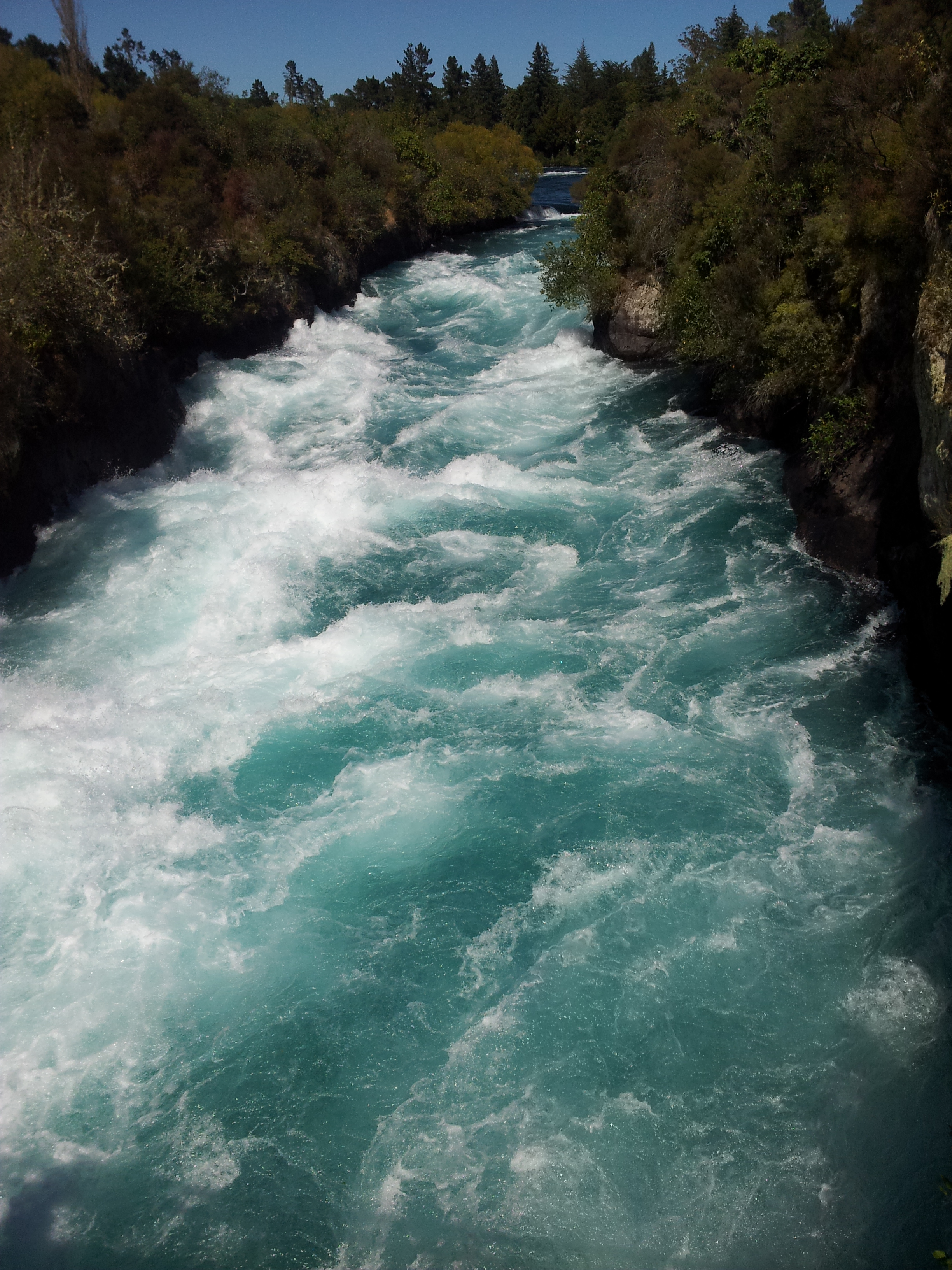
The Waikato River heading towards the gorge
The water heading down the gorge, gathering pace
until it crashes over the top of the waterfall at the rate of about 220,000 liters per second. It also makes a very loud noise, so that when you are close to it, hearing anything but the falls is impossible.
Huka Falls is located in the Wairakei Tourist Park about five minutes north of Taupo on the north island of New Zealand.
The Waikato River heading towards the gorge
The water heading down the gorge, gathering pace
until it crashes over the top of the waterfall at the rate of about 220,000 liters per second. It also makes a very loud noise, so that when you are close to it, hearing anything but the falls is impossible.
This is something you don’t see every day of the week, or once in a lifetime, perhaps.
We arrived at the Hilton Auckland hotel somewhere between one and two in the morning after arriving from Australia by plane around midnight.
Sometimes there is a benefit in arriving late, and, of course, being a very high tier HHonors guest, where the room you book is upgraded.
This stay we got one hell of a surprise.
We got to spend the night in the Presidential Suite.
The lounge and extra bathroom.
Looking towards the private bathroom.
A bathroom fit for a King and a Queen
And the royal bed
There was a note to say that we should keep the blinds closed for privacy and that a ship would be arriving in the port, but I did not expect it to be literally fifty feet from our balcony.
This is something you don’t see every day of the week, or once in a lifetime, perhaps.
We arrived at the Hilton Auckland hotel somewhere between one and two in the morning after arriving from Australia by plane around midnight.
Sometimes there is a benefit in arriving late, and, of course, being a very high tier HHonors guest, where the room you book is upgraded.
This stay we got one hell of a surprise.
We got to spend the night in the Presidential Suite.
The lounge and extra bathroom.
Looking towards the private bathroom.
A bathroom fit for a King and a Queen
And the royal bed
There was a note to say that we should keep the blinds closed for privacy and that a ship would be arriving in the port, but I did not expect it to be literally fifty feet from our balcony.
Nearly every city has a high building, a tower, or a large Ferris wheel.
London had the London eye Paris has the Eiffel tower The Galata in Istanbul The CN Tower in Toronto The towers of San Gimignano Pisa has a leaning tower
We’ve managed to see all of the above bar the Galata in Istanbul. One day we might get there.
But, on this side of the world, there are two, the Sydney Tower, and the Sky Tower in Auckland, which we just visited recently.
It’s not a tall tower, but it definitely gives great vies of Auckland, particularly to the north
The mountain in the background at the top of the photo is of a volcano on Rangitoto Island. When we were visiting, there were reports that it might become active again.
To give a height perspective, it didn’t seem all that far down to the apartment building and gardens nearby.
Nearly every city has a high building, a tower, or a large Ferris wheel.
London had the London eye Paris has the Eiffel tower The Galata in Istanbul The CN Tower in Toronto The towers of San Gimignano Pisa has a leaning tower
We’ve managed to see all of the above bar the Galata in Istanbul. One day we might get there.
But, on this side of the world, there are two, the Sydney Tower, and the Sky Tower in Auckland, which we just visited recently.
It’s not a tall tower, but it definitely gives great vies of Auckland, particularly to the north
The mountain in the background at the top of the photo is of a volcano on Rangitoto Island. When we were visiting, there were reports that it might become active again.
To give a height perspective, it didn’t seem all that far down to the apartment building and gardens nearby.
I’m sure a lot of people have considered the prospect of whale watching. I’m not sure how the subject came up on one of our visits to New Zealand, but I suspect it was one one of those tourist activity leaflets you find in the foyer of motels, hotels, and guesthouses.
Needless to say, it was only a short detour to go to Kaikoura and check out the prospect.
Yes, the ocean at the time seemed manageable. My wife has a bad time with sea sickness, but she was prepared to make the trip, after some necessary preparations. Seasickness tablets and special bands to wear on her wrist were recommended and used.
The boat was large and had two decks, and mostly enclosed. There were a lot of people on board, and we sat inside for the beginning of the voyage. The sea wasn’t rough, but there was about a meter and a half swell, easily managed by the boat while it was moving.
It took about a half hour or so to reach the spot where the boat stopped and a member of the crew used a listening device to see if there were any whales.
That led to the first wave of sickness.
We stopped for about ten minutes, and the boat moved up and down on the waves. It was enough to start the queasy stomachs of a number of passengers. Myself, it was a matter of going out on deck and taking in the sea air. Fortunately, I don’t get seasick.
Another longish journey to the next prospective site settled a number of the queasy stomachs, but when we stopped again, the swell had increased, along with the boat’s motion. Seasick bags were made available for the few that had succumbed.
By the time we reached the site where there was a whale, over half the passengers had been sick, and I was hoping they had enough seasick bags, and then enough bin space for them.
The whale, of course, put on a show for us, and those that could went out on deck to get their photos.
By the end of the voyage, nearly everyone on board was sick, and I was helping to hand out seasick bags.
Despite the anti sickness preparations, my wife had also succumbed. When we returned and she was asked if the device had worked, she said no.
But perhaps it had because within half an hour we were at a cafe eating lunch, fish and chips of course.
This activity has been crossed off the bucket list, and there’s no more whale watching in our traveling future. Nor, it seems, will we be going of ocean liners.
Perhaps a cruise down the Rhine might be on the cards. I don’t think that river, wide as it is in places, will ever have any sort of swell.
I’m sure a lot of people have considered the prospect of whale watching. I’m not sure how the subject came up on one of our visits to New Zealand, but I suspect it was one one of those tourist activity leaflets you find in the foyer of motels, hotels, and guesthouses.
Needless to say, it was only a short detour to go to Kaikoura and check out the prospect.
Yes, the ocean at the time seemed manageable. My wife has a bad time with sea sickness, but she was prepared to make the trip, after some necessary preparations. Seasickness tablets and special bands to wear on her wrist were recommended and used.
The boat was large and had two decks, and mostly enclosed. There were a lot of people on board, and we sat inside for the beginning of the voyage. The sea wasn’t rough, but there was about a meter and a half swell, easily managed by the boat while it was moving.
It took about a half hour or so to reach the spot where the boat stopped and a member of the crew used a listening device to see if there were any whales.
That led to the first wave of sickness.
We stopped for about ten minutes, and the boat moved up and down on the waves. It was enough to start the queasy stomachs of a number of passengers. Myself, it was a matter of going out on deck and taking in the sea air. Fortunately, I don’t get seasick.
Another longish journey to the next prospective site settled a number of the queasy stomachs, but when we stopped again, the swell had increased, along with the boat’s motion. Seasick bags were made available for the few that had succumbed.
By the time we reached the site where there was a whale, over half the passengers had been sick, and I was hoping they had enough seasick bags, and then enough bin space for them.
The whale, of course, put on a show for us, and those that could went out on deck to get their photos.
By the end of the voyage, nearly everyone on board was sick, and I was helping to hand out seasick bags.
Despite the anti sickness preparations, my wife had also succumbed. When we returned and she was asked if the device had worked, she said no.
But perhaps it had because within half an hour we were at a cafe eating lunch, fish and chips of course.
This activity has been crossed off the bucket list, and there’s no more whale watching in our traveling future. Nor, it seems, will we be going of ocean liners.
Perhaps a cruise down the Rhine might be on the cards. I don’t think that river, wide as it is in places, will ever have any sort of swell.
The Kingston Flyer was a vintage train that ran about 14km to Fairlight from Kingston, at the southern end of Lake Wakatipu, and back.
This tourist service was suspended in December 2012 because of locomotive issues.
However, before that, we managed to go on one of the tours, and it was a memorable trip. Trying to drink a cup of tea from the restaurant car was very difficult, given how much the carriages moved around on the tracks.
The original Kingston Flyer ran between Kingston, Gore, Invercargill, and sometimes Dunedin, from the 1890s through to 1957.
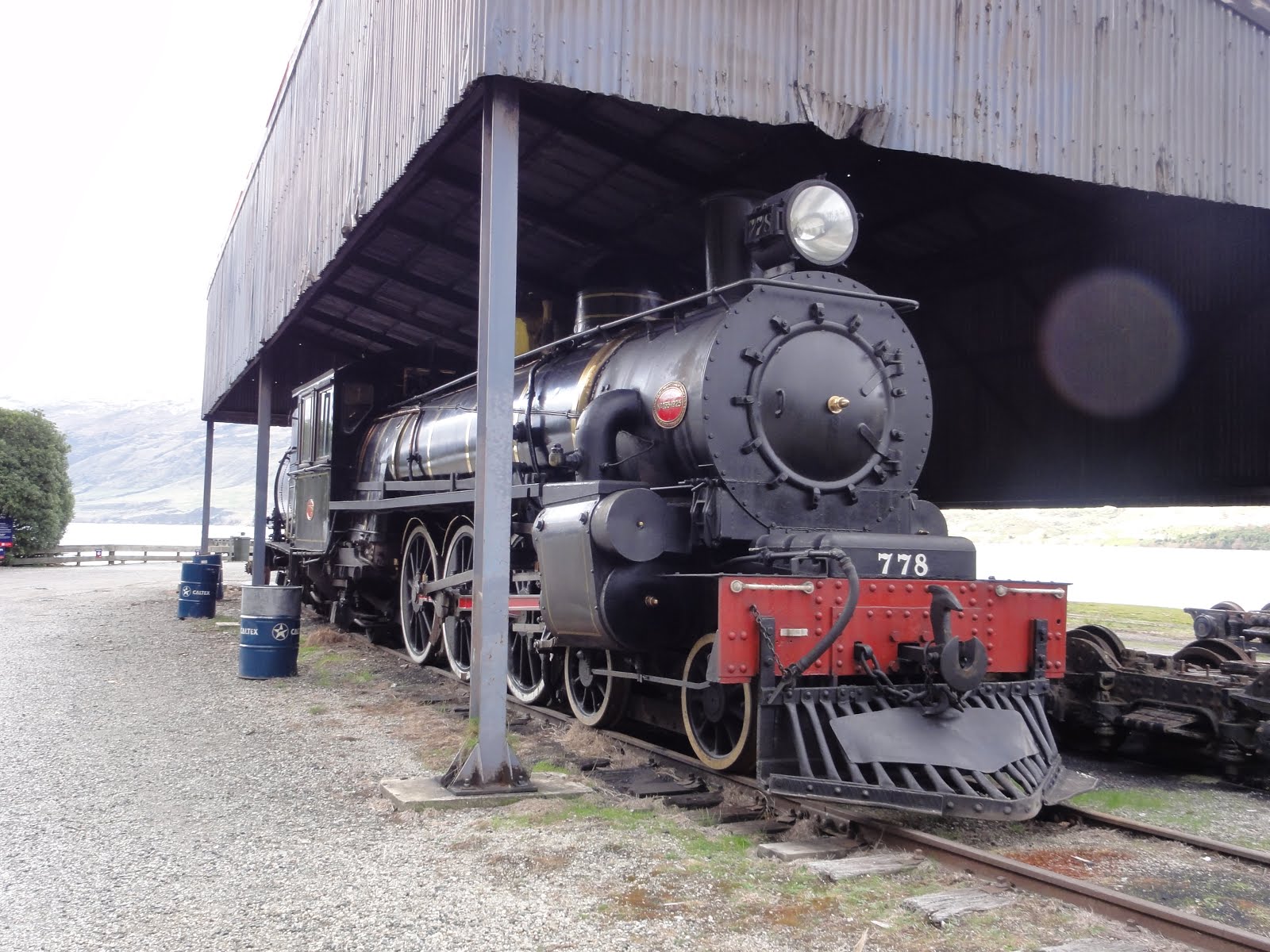
There are two steam locomotives used for the Kingston Flyer service, the AB778 starting service in 1925, and the AB795 which started service in 1927.
The AB class locomotive was a 4-6-2 Pacific steam locomotive with a Vanderbilt tender, of which 141 were built between 1915 and 1927 some of which by New Zealand Railways Addington Workshops.
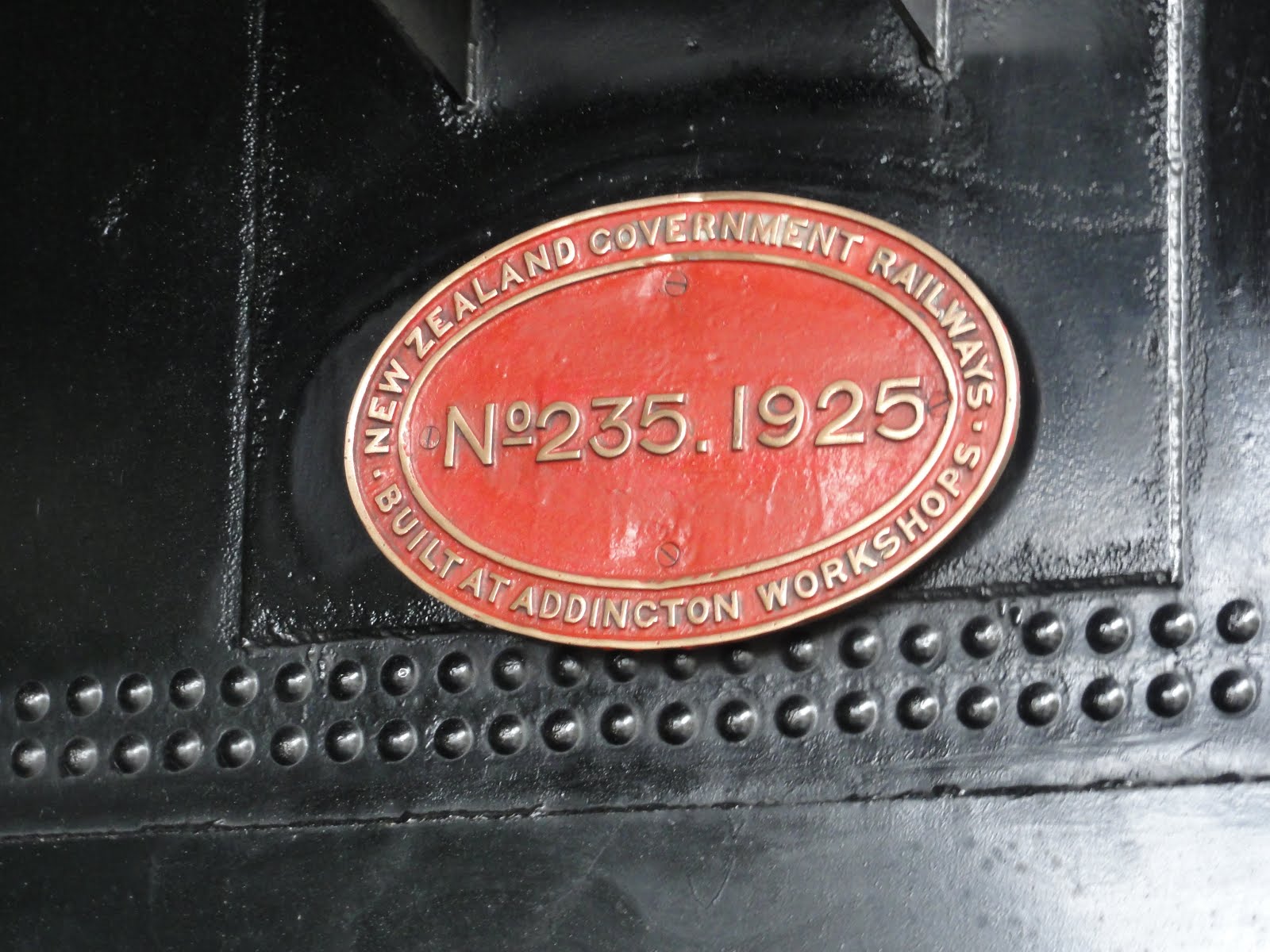
No 235 is the builder’s number for the AB778
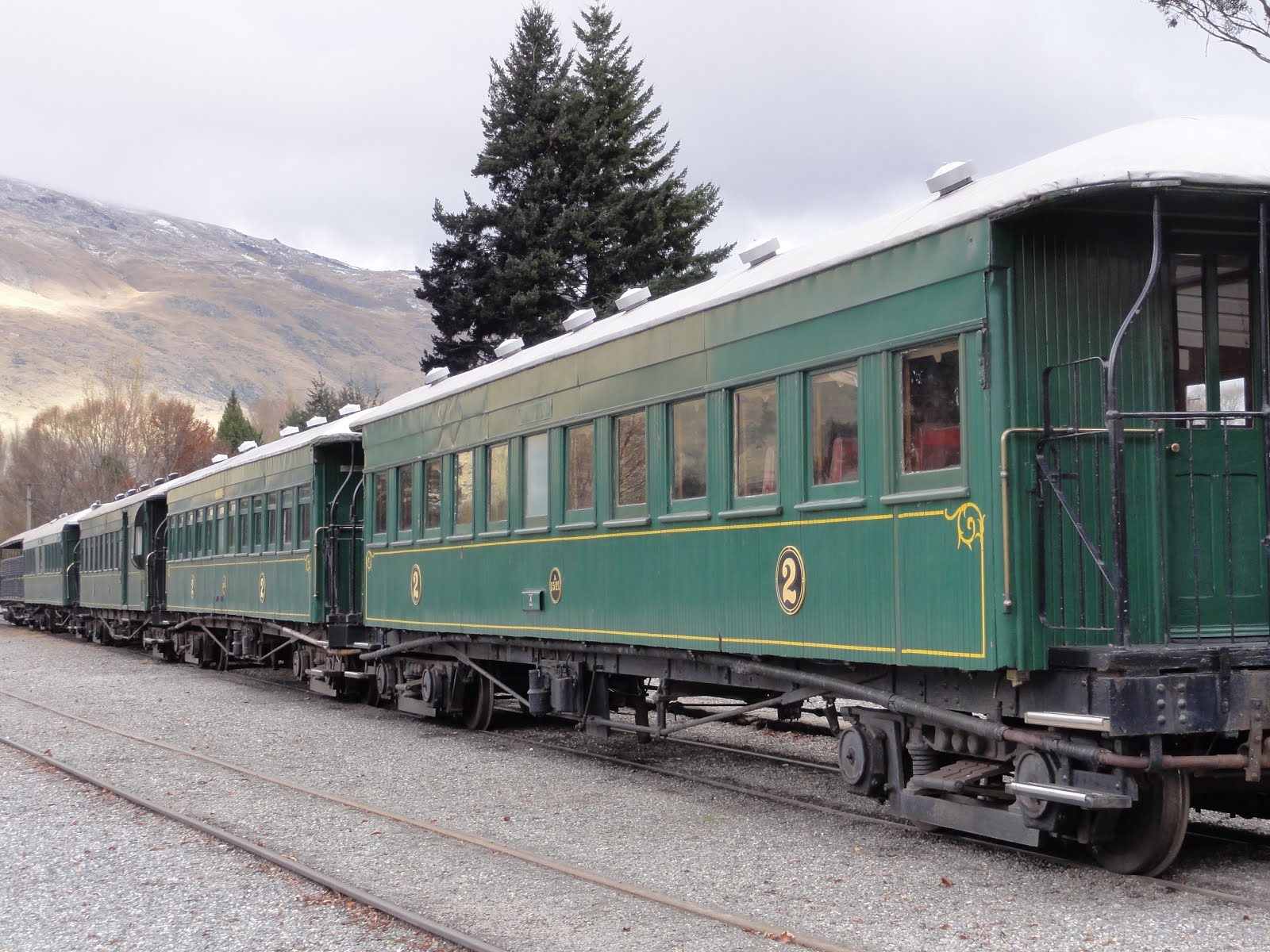
There were seven wooden bodied passenger carriages, three passenger coaches, one passenger/refreshments carriage and two car/vans. The is also a Birdcage gallery coach. Each of the rolling stock was built between 1900 and 1923. They were built at either of Addington, Petone, or Hillside.
I suspect the 2 on the side means second class
The passenger coach we traveled in was very comfortable.
This is one of the guard’s vans, and for transporting cargo.
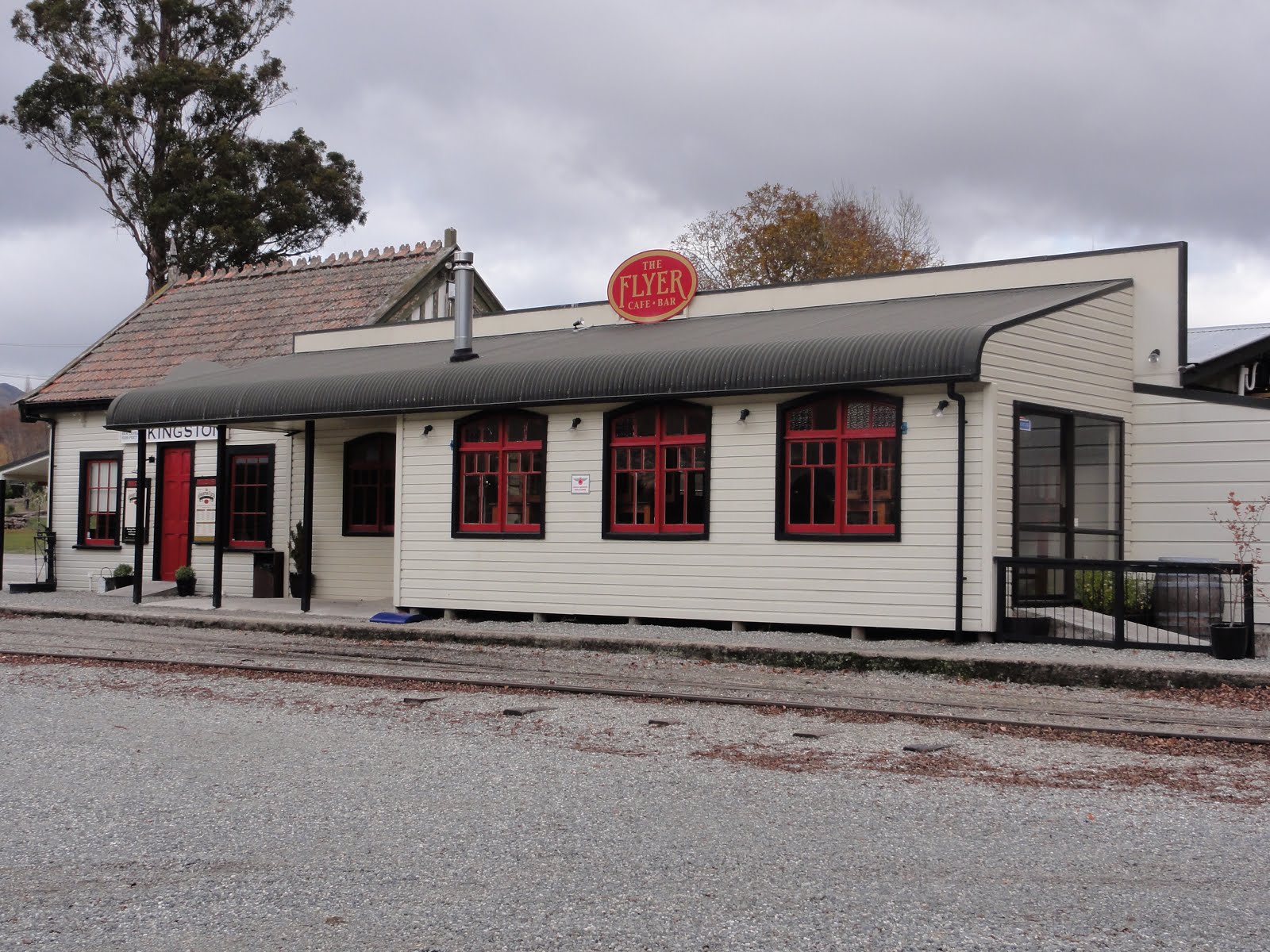
The Kingston Railway Station
and cafe.
A poster sign advertising the Kingston Flyer
The running times for the tourist services, when it was running.