A photograph from the inspiration file – 10

It was a relic from the past, put back together by a dedicated group of volunteers who had not wanted the last vestiges of the past to disappear.

Train enthusiasts, the called themselves.

They’d put together a steam locomotive, five carriages, a restaurant car, and the conductor’s car. The original train might have been twice to three times as long, but these days, the tourist market rarely filled the train.

I was one of a group who made it their mission to visit and rate every vintage train, not only in this country, but all over the world. It was a sad state of affairs when I first began, with locomotives and carriages dropping out of the system due to lack of funds, but more disheartening, the lack of government assistance in keeping it’s heritage alive.

It seemed money was short, and there were better things to spend it on, like two brand new 737-800 jets just to ferry the prime minister and government officials around. Just think of what that quarter of a billion dollars could have bought in heritage.

But it is what it is.

What I had before me was one of the most recent restorations to check out, and on first glance, it was remarkable just how lifelike and true to age it was.

Of course, I was of an age that could remember the old railway carriages, what were called red rattlers because of the ill fitting windows that went up and down, allow fresh air, or in days gone by, smoke from the locomotive hauling the train. I had not travelled during the last glorious years of steam, but the carriages had lived on briefly before the advent of the sterile aluminum tin cans with uncomfortably hard seats.

These carriages were built for comfort, and my first experience had been a five hour trip from Melbourne to Wangaratta, in Victoria, on my way to Mt Buffalo Chalet, a guesthouse owned by the Railways.

That too had been a remarkable old chalet style guest house with a room and all the dining included. I always left after the week having put on weight. Breakfast, morning tea, lunch, afternoon tea, and dinner, every day, and high tea on Sunday.

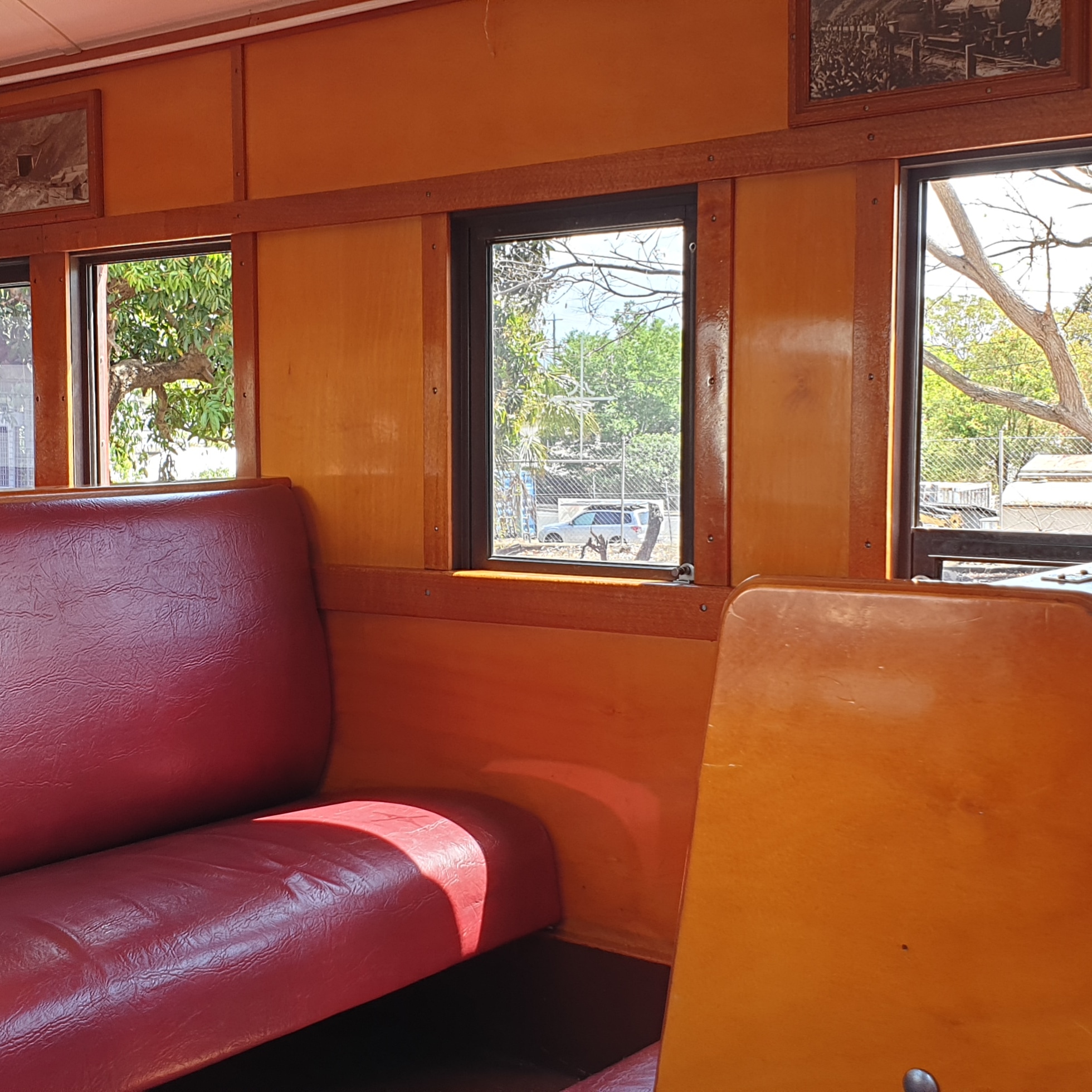
But this carriage, the polished wood that had shellac rather than varnish, highlighting the timber’s grain, the leather seats with generous padding, the curved ceilings with hanging lights, windows the could be opened and closed, allowing fresh air to circulate.

There was also a carriage with the passageway, and five or six separate compartments, each sitting six passengers. I remembered these well, having quite often ridden in one to work for some years when the country trains still ran.

It was always remarkable how a sight or a scent could trigger such memories.

For this carriage on this train, it used to ply the Gympie to Brooloo branch line from about 1915 onwards.

That was the history. It only went as far as Amamoor these days, it was still long enough to capture the sensation of riding the rails back in what is always referred to as the good old days, even if they were not.

Now for the ride….

…

© Charles Heath 2021

A photograph from the inspirational file – 9

…

I remeber once being told that if you shoot for the moon, you’ll land in the clouds, if you shoot for the tree tops, you’ll finish up back where you started from.

It was a silly analogy, but I always remembered it when I looked up at the sky and saw clouds.

That was back in those hazy carefree days just after you were finished with school and you had your whole life in front of you. Your parents were there as the safety net, and were still proud of your scholastic achievements, and were not in too much of a hurry to hustle you out of the house.

But what happened when there’s a recession that came upon everyone without any warning.

Stocks plummeted, people lost their life’s savings, those with mortgages and loans suddenly finding that along with unemployment came no income, no ability to pay the bills, and therefore lost everything.

Although I never said it, I was thinking what good was an education when the whole world had gone to hell in a handbasket.

Two things I remember from back then, which in the context of disaster, wasn’t all that long ago. Firstly, my father making us children go camping from before we could walk, and with it, to survive with nothing but the clothes on our backs, and our wits.

It had happened to him, as a member of am expedition in Africa in his younger days, thinking that he might become the next great explorer, or archeologist, and finishing up getting lost, even though he asserted the other members had deliberately left him behind.

And secondly, that it was essential that we forge working relationships with any and all those who were like minded, such as those who wanted to be saved, not those who expected everyone else to so the work. It was obvious he had met a lot of those type of people too.

It served us well.

When nations began turning on each other, when essential resources like electricity and fuel stopped being distributed and rationed, when food suddenly became scarce, that’s when the real trouble started. My father said, at the outset, what would happen, and was glad our mother was not there to see it.

Then, when neighbours attacked neighbours once food became scarce, it was time to leave. The pity of it was, he died defending us, even after offering up some of the food we had stored away, but that had not appeased a hungry or angry mob.

His last words, “Go to where we said we would go, and remember everything I’ve taught you” were etched in my brain, and my brother and I did as he asked.

But, even knowing where we had to go, and how to get there, a plan of action made many years before, and trialled in recent years with success, nothing in the past could have prepared us for the journey.

It was, literally, time to shoot for the moon.

—

© Charles Heath 2021

Searching for locations: Lake Louise, Canada – 2

A sleigh ride wasn’t the first activity that came to mind, but that first day we saw the sleighs lining up and thought it might be a bit of a lark.

It was New Year’s Eve and we booked a 2pm sleigh ride.  I figured any later we’d probably freeze to death.  The ride was for about 45 minutes, out around the edge of the lake and back.

Rides were on the hour and sometimes run at night.

We arrived at the departure point about 15 minutes before the ride and watched those who had been on the ride before come back looking somewhat frozen.  The only covering you had provided was a red blanket.

Wisely we put on many layers of clothing, hats, and gloves.

We managed to get a seat for ourselves where the maximum per seat was three.  The blanket wasn’t the thickest.

It was cold, and according to my phone, about minus 15 degrees Fahrenheit.  You could feel it, and it was lucky we were not moving fast.

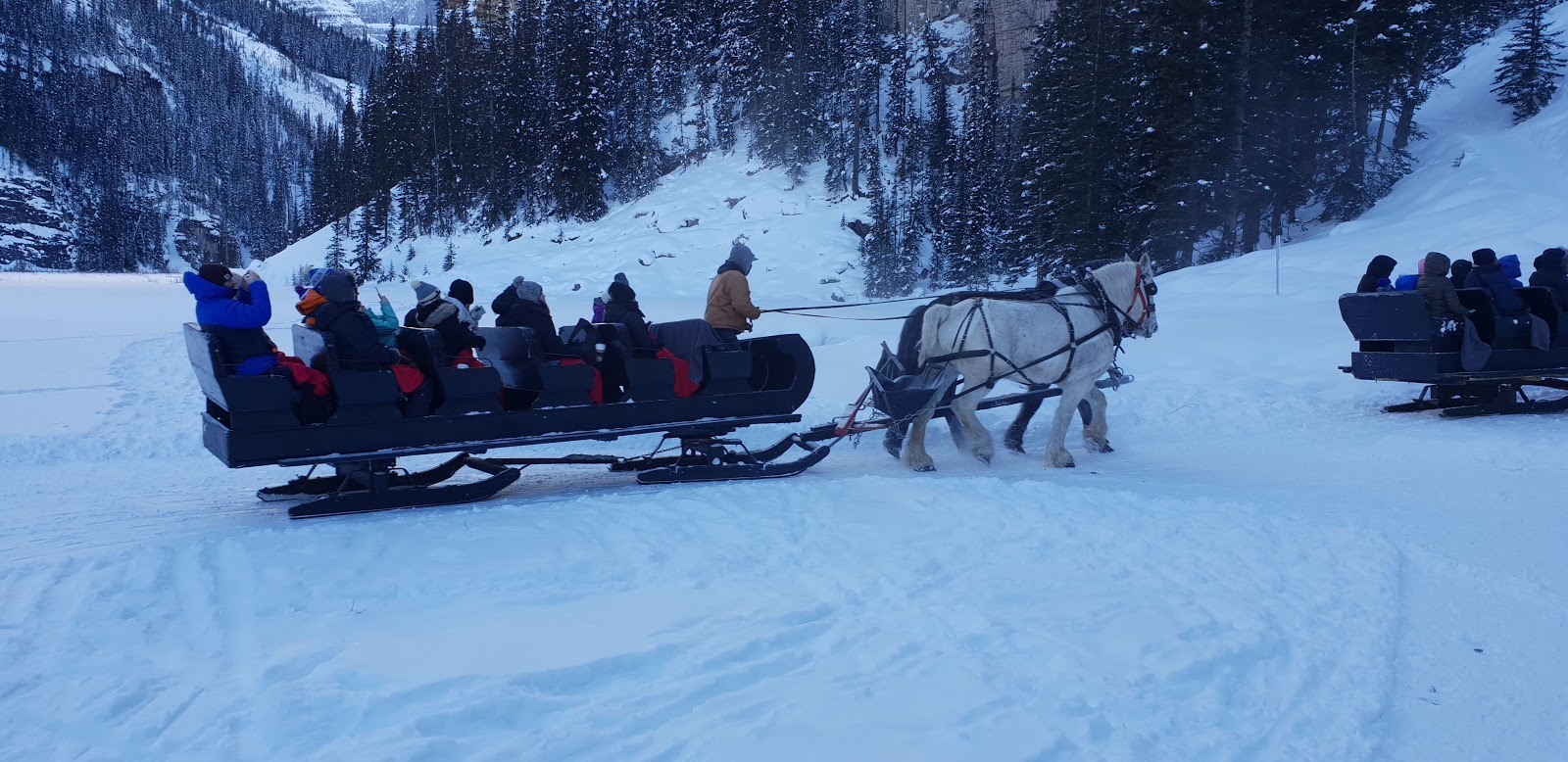
 At the halfway point, we went out onto the lake to turn around.  It gave us a chance to take a photo of the sleigh, and the horses pulling it.  I felt sorry for the horses out in the cold.

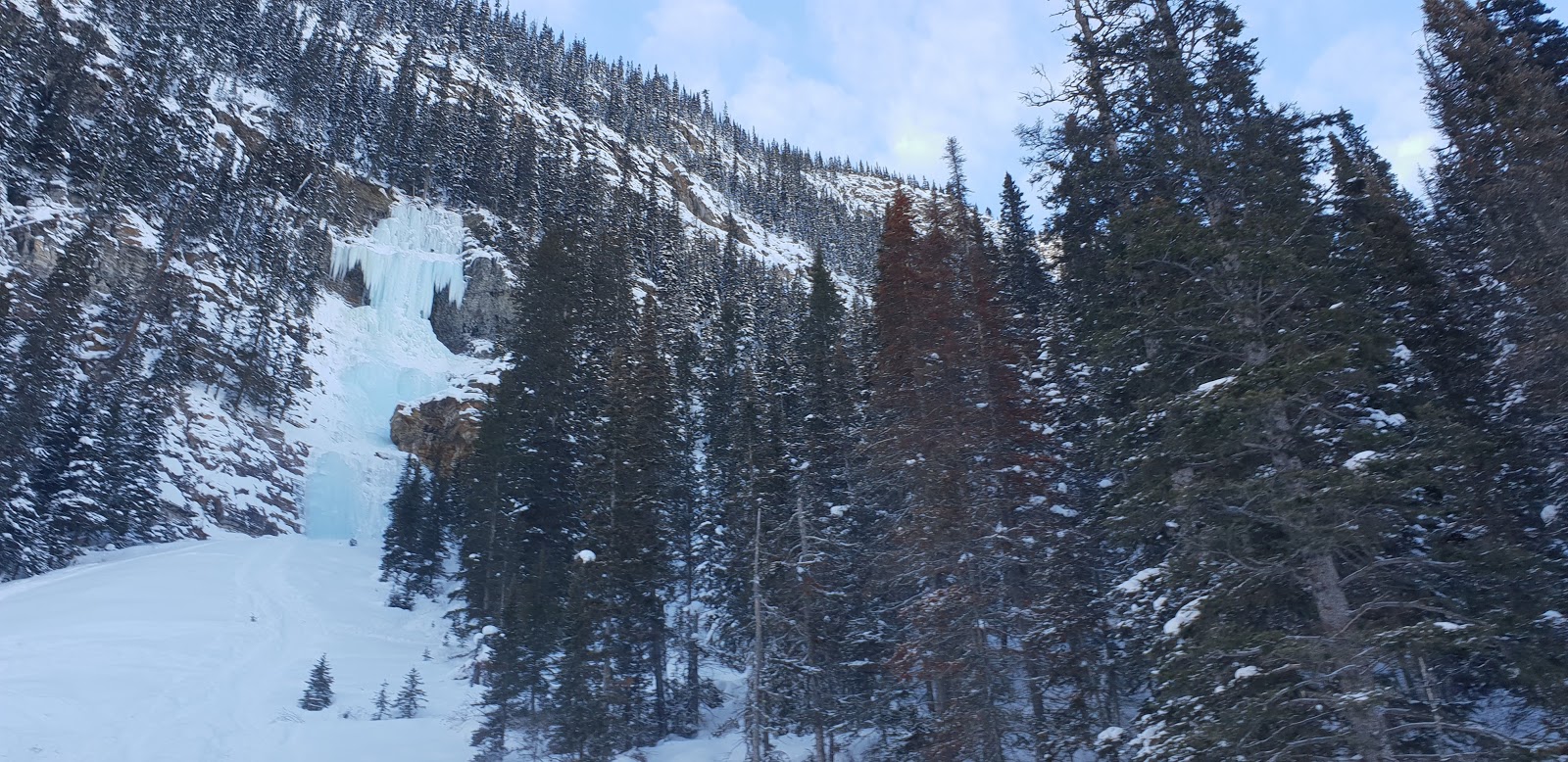
As we turned around, we got to see a frozen waterfall.

Searching for locations: Lake Louise, Canada – 2

A sleigh ride wasn’t the first activity that came to mind, but that first day we saw the sleighs lining up and thought it might be a bit of a lark.

It was New Year’s Eve and we booked a 2pm sleigh ride.  I figured any later we’d probably freeze to death.  The ride was for about 45 minutes, out around the edge of the lake and back.

Rides were on the hour and sometimes run at night.

We arrived at the departure point about 15 minutes before the ride and watched those who had been on the ride before come back looking somewhat frozen.  The only covering you had provided was a red blanket.

Wisely we put on many layers of clothing, hats, and gloves.

We managed to get a seat for ourselves where the maximum per seat was three.  The blanket wasn’t the thickest.

It was cold, and according to my phone, about minus 15 degrees Fahrenheit.  You could feel it, and it was lucky we were not moving fast.

 At the halfway point, we went out onto the lake to turn around.  It gave us a chance to take a photo of the sleigh, and the horses pulling it.  I felt sorry for the horses out in the cold.

As we turned around, we got to see a frozen waterfall.

Searching for locations: Lake Louise, Canada

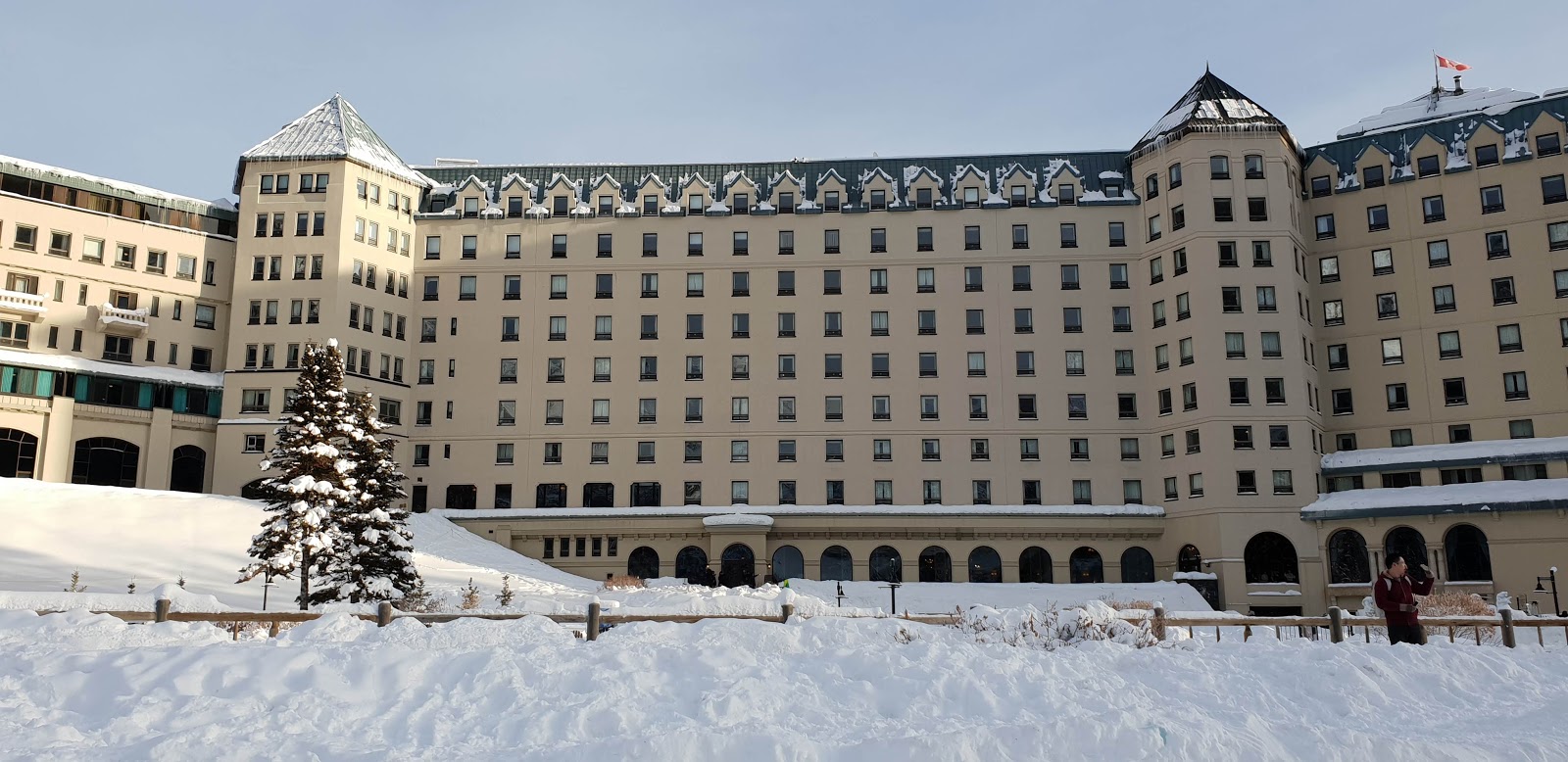
I was not sure what I was expecting to see when we first arrived at the Fairmont Hotel at Lake Louise, Alberta, Canada.

I’d seen endless photographs both in Winter and in Summer, and the problem with photos is that they never quite prepare you for reality.

That’s not to say that our first impression was of incredible scenery, it was of the front door if it could be called that, where we pulled up in the car, and then, if the sub-zero temperatures, a mad rush to get the baggage out, and get into the warmth of the foyer, which was almost the size of several football fields, and then some.

Check-in was quick and easy, and then to our room on the first floor.  I had hoped to be higher up but, being a corner room, when we got there, the views could not be more majestic.

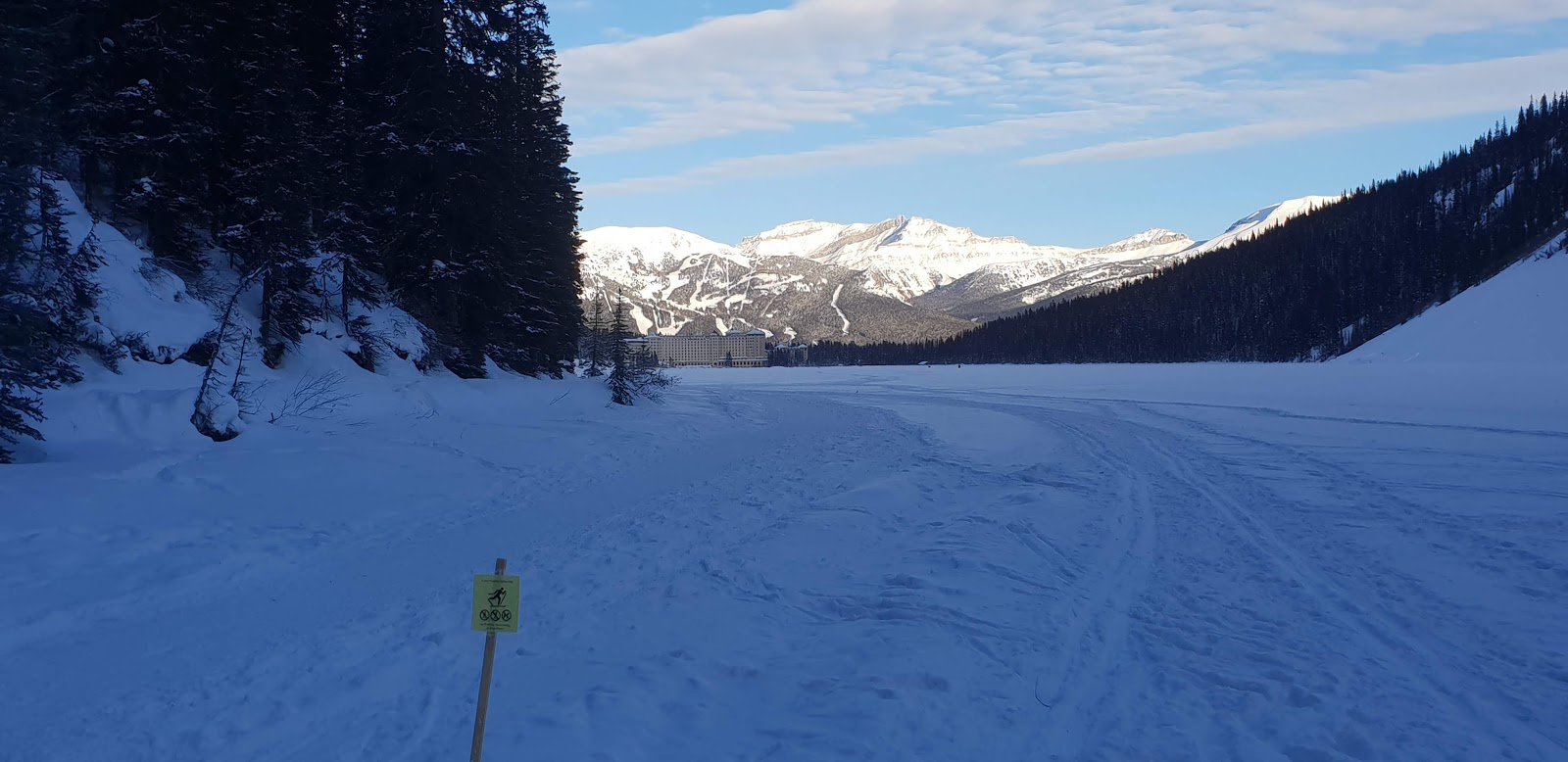
I could not believe there were people who were willing to take a sleigh ride in the minus degree temperatures.  Don’t let the sunny aspect fool you, it’s freezing cold, literally, outside.

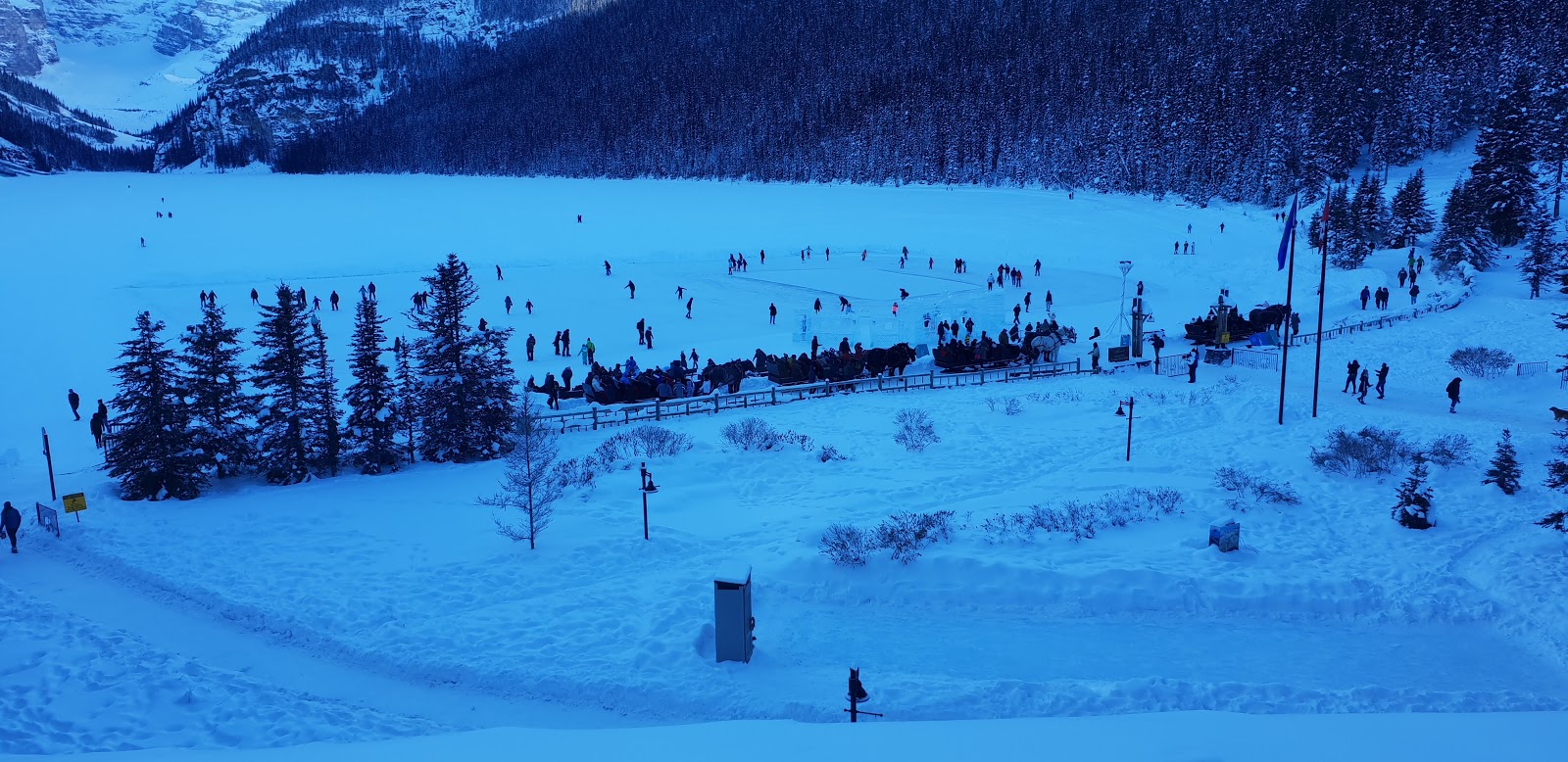
The lake had frozen over, and a closer look showed there was a skating rink an ice castle, and a hockey rink as well.  People were skating, and walking over the frozen surface of the lake.

No skating, or walking, on thin ice here.

Venturing outside into the cold, you have to be rugged up, and definitely, have both a hat and gloves.  It was minus six degrees.

There’s this amazing hotel, just like you would see in the movies

A frozen lake where you’re half expecting to open up and a huge spaceship, or something else, come out

Mountainsides to climb, but only if you are stark staring mad.  And, of course, if you don’t freeze to death before you get there.

Our room, believe it or not, is on the extreme right-hand side, just above the first roofline.

Tomorrow we will venture further out onto the lake.

Tonight, it’s dinner in the main restaurant.

A photograph from the inspiration file – 6

For those who are wondering what this is a photograph of, it is a tree bordered stream that runs along a long valley that runs from outside Canungra, in Queensland, to the Lamington National Park.

It’s near a place we like to stay for a few days when we want to get away from everything, and I mean everything. There is no television, and cell phone reception is awful if not non existent.

So, you can see the benefits.

Sitting at the table on the veranda overlooking the fields, and this stream, you have time to just think, or not, about what it might have been like before the settlers came.

What is was like when the explorers we seeking new places to live, and they chanced upon this valley. It it was me back then, I would have followed the stream.

But, as for a story…

I have read a great many stories for the explorers of this country, and the hazardous nature of their treks.

What seemed to be the most common theme was crossing from south to north, that is from Melbourne to the Northern most tip of Queensland, or from Adelaide to the Northern Territory. In both cases they would have to traverse a very dry, very hot outback where the sight of a stream, or river, like above, would have been very welcome.

For some, it became an impossible quest, and stuck in the desert, they eventually perished. That in itself, the trials and tribulations of an early explorer would make a great story.

Australia is a very fertile country around the coastal regions, but one you start venturing inland, it is dry, dusty and almost uninhabitable. Unless there’s water from rivers, streams, or underground, or mining settlements, there is very little else to see.

The exceptions to this are Uluru and Kakadu National Park, in the Northern Territory, Shark Bay and The Pinnacles in Western Australia, MacKenzie Falls in Victoria, The Simpson Desert, the Boodjamulla (Lawn Hill) National Park, and the Carnarvon Gorge in Queensland, to name a few.

One day I might get to see them.

Searching for locations: Lake Louise, Canada

I was not sure what I was expecting to see when we first arrived at the Fairmont Hotel at Lake Louise, Alberta, Canada.

I’d seen endless photographs both in Winter and in Summer, and the problem with photos is that they never quite prepare you for reality.

That’s not to say that our first impression was of incredible scenery, it was of the front door if it could be called that, where we pulled up in the car, and then, if the sub-zero temperatures, a mad rush to get the baggage out, and get into the warmth of the foyer, which was almost the size of several football fields, and then some.

Check-in was quick and easy, and then to our room on the first floor.  I had hoped to be higher up but, being a corner room, when we got there, the views could not be more majestic.

I could not believe there were people who were willing to take a sleigh ride in the minus degree temperatures.  Don’t let the sunny aspect fool you, it’s freezing cold, literally, outside.

The lake had frozen over, and a closer look showed there was a skating rink an ice castle, and a hockey rink as well.  People were skating, and walking over the frozen surface of the lake.

No skating, or walking, on thin ice here.

Venturing outside into the cold, you have to be rugged up, and definitely, have both a hat and gloves.  It was minus six degrees.

There’s this amazing hotel, just like you would see in the movies

A frozen lake where you’re half expecting to open up and a huge spaceship, or something else, come out

Mountainsides to climb, but only if you are stark staring mad.  And, of course, if you don’t freeze to death before you get there.

Our room, believe it or not, is on the extreme right-hand side, just above the first roofline.

Tomorrow we will venture further out onto the lake.

Tonight, it’s dinner in the main restaurant.

A photograph from the inspiration file – 6

For those who are wondering what this is a photograph of, it is a tree bordered stream that runs along a long valley that runs from outside Canungra, in Queensland, to the Lamington National Park.

It’s near a place we like to stay for a few days when we want to get away from everything, and I mean everything. There is no television, and cell phone reception is awful if not non existent.

So, you can see the benefits.

Sitting at the table on the veranda overlooking the fields, and this stream, you have time to just think, or not, about what it might have been like before the settlers came.

What is was like when the explorers we seeking new places to live, and they chanced upon this valley. It it was me back then, I would have followed the stream.

But, as for a story…

I have read a great many stories for the explorers of this country, and the hazardous nature of their treks.

What seemed to be the most common theme was crossing from south to north, that is from Melbourne to the Northern most tip of Queensland, or from Adelaide to the Northern Territory. In both cases they would have to traverse a very dry, very hot outback where the sight of a stream, or river, like above, would have been very welcome.

For some, it became an impossible quest, and stuck in the desert, they eventually perished. That in itself, the trials and tribulations of an early explorer would make a great story.

Australia is a very fertile country around the coastal regions, but one you start venturing inland, it is dry, dusty and almost uninhabitable. Unless there’s water from rivers, streams, or underground, or mining settlements, there is very little else to see.

The exceptions to this are Uluru and Kakadu National Park, in the Northern Territory, Shark Bay and The Pinnacles in Western Australia, MacKenzie Falls in Victoria, The Simpson Desert, the Boodjamulla (Lawn Hill) National Park, and the Carnarvon Gorge in Queensland, to name a few.

One day I might get to see them.

Searching for locations: Vancouver to Kamloops, Canada

This morning started with a visit to the car rental place in Vancouver.  It reinforced the notion that you can be given the address and still not find the place.  It happened in Washington where it was hiding in the back of the main railway station, and it happened again in Vancouver when it was hidden inside a hotel.

We simply walked straight past it.  Pity there wasn’t a sign to let people know.

However…

We went in expecting a Grand Jeep Cherokee and walked out with a Ford Flex, suitable for three people and four large suitcases.  It actually seats 7, but forget the baggage, you’d be lucky to get two large suitcases in that configuration.

It is more than adequate for our requirements.

Things to note, it was delivered with just over a quarter of a tank of gas, and it had only done about 11,000 km, so it’s relatively new.  It’s reasonably spacious, and when the extra seats are folded down, there is plenty of baggage space.

So far, so good.

We finally leave the hotel about half-past ten, and it is raining.  It is a simple task to get on Highway 1, the TransCanada Highway, initially, and then onto Highway 5, the Coquihalla highway for the trip to Kamloops.

It rains all the way to the top of the mountain, progress hampered from time to time by water sprays from both vehicles and trucks.  The rain is relentless.  At the top of the mountain, the rain turns into snow and the road surface to slush.  It’s 0 degrees, but being the afternoon, I was not expecting it to turn to ice very quickly.

On the other side of the mountain, closer to Kamloops, there was sleet, then rain, then nothing, the last 100kms or so, in reasonably dry conditions.

Outside Kamloops, and in the town itself, there was evidence of snow recently cleared, and slushy roads.  Cars in various places were covered in snow, indicating the most recent falls had been the night before.

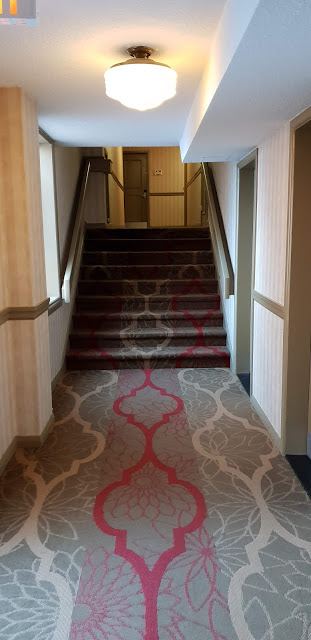
We’re staying at the Park Hotel, a heritage building, apparently built in the later 1920s.  In the style of the time, it is a little like a rabbit warren with passages turning off in a number of directions, and showing it is spread across a number of different buildings.

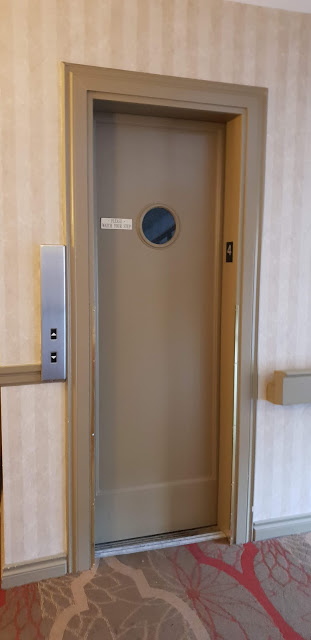
It has the original Otis elevator that can take a maximum of four passengers, and a sign on the wall that says “no horseplay inside the elevator” which is a rather interesting expression that only someone of my vintage would understand.  And, for those without a sense of humor, you definitely couldn’t fit a horse in it to play with.

The thing is, how do you find a balance between keeping the old world charm with modern day expectations.  You can’t.  Some hotels try valiantly to get that balance.  Here, it is simply old world charm, which I guess we should be grateful for because sooner rather than later it’s going to disappear forever.

In my writer’s mind, given the importance of the railways, this was probably a thriving place for travelers and once upon a time, there were a lot more hotels like this one.

A photograph from the inspiration file – 4

This is

A rainy day.

Not much of a revelation when it’s winter, but why is it when you have to go somewhere in a hurry, the universe knows, and tries to throw everything at you so you don’t get there on time?

I like to be punctual.

I’m one of those people who leave home to get to the airport hours before I have to because I know, from past experience, that if you leave at the time where you’d make it with an hour to spare, you would get stuck in the mother of all traffic jams.

I know this to be true.  It’s happened more than once to me,

If you’re not in a hurry, you get the best run you’ve ever had.  I know that’s true too, because that’s what happens most times.

It’s like when at work you’re in a hurry to get a photocopy.  The machine knows if you’re stressed and picks that particular moment to break down.  That use to happen to me more times that I’d had hot dinners.

Sorry, I needed to use that expression, which generally means a lot.  That photocopy machine, back in the days when they were huge and almost a new fad, my task every Tuesday was to copy a 3 page shipping report, 300 odd times.  Not once did I get a clean run, not in the two years it was my job.

But…

Back to the weather.

My day to pick up one of the grandchildren from the railway station.  It’s not far from our house, on any other day it would take about ten minutes, but since this is after 3 pm, I have the other school traffic to contend with, the tradies going home, and late afternoon shoppers getting dinner.

It never used to be like that.  The road was a single lane that used to be blocked by floods when it rained, there was no shopping centre, and no new estates.  In 30 years everything has arrived, the road expanded to two lanes either side, and almost continual traffic jams.

There’s a story there somewhere, but for the moment I have to take on the traffic.  Maybe once I get to the station I might have time to consider it.