A new way of doing things

Well, welcome to the new world.

Perhaps in a lot of things, we should have been there a long time ago, but I suspect complacency and laziness has a lot to do with some of the issues.

Like washing your hands. It’s usually hell on earth to get a child to do anything and you have to be at them and at them to do anything.

I’m not sure about social distancing, but I’ve long wanted people in the supermarket to stop leaning over me to get stuff off the shelves when they could wait one minute longer.

Or being crowded into a restaurant where you can practically eat off the plate of the person at the next table. I like the distance, and the privacy it brings.

I’m also a fan of the new click and collect phenomenon where I don’t have to go out to get something I want; just get it delivered.

Of course, there’s still the necessity to go to a shop and physically see an item before you buy it, in my case clothes and shoes, but online sales for a lot of things are so much better, especially books and magazines.

I guess future traffic jams won’t be cars but delivery trucks.

I like the idea of working from home. Aside from having to face time with colleagues every now and then, if you don’t have to be in an office, then give it up. It will reduce pressure on roads, public transport, and reduce the concentration of the population in one place. You might even get to work on time, and get something to eat before you arrive!

As long as they get the internet right, which in this country is a pretty big if.

And perhaps now people will stop blaming 5g for the COVID virus.

Perhaps this homeschooling thing might work as well, as over the last few weeks I’ve seen it in action, and in most cases it works. Of course the isolation of students could be a problem, and there is always a need for face time for teachers and other students for interaction with contemporaries, but perhaps a compromise could be found.

Among the negatives in a time like this is the fear of using public transport, a fear no one is taking lightly, leading to children having to be taken to and brought home from school, and the fact there are potentially 800 cars needed to do it.

I used to leave home 30 mins before school end and was first in the pickup queue. Now I leave 45 minutes before and the closest I can get in nearly a mile from the school. And the traffic is a dangerous hazard in the main street, blocking driveways, bus stops, and lanes. It’s basically a mess, and it cannot continue without more organization.

Or we find a cure, or at the very least, a vaccine.

But there’s another problem. The anti-vaxxers. Everywhere in the world, it seems, not more than 50% of the population will get vaccinated, so it means that we may NEVER get past where we are now.

And the very worst problem that this new world has sprung on us, we may never travel again. Anywhere.

Perhaps we really do need a miracle.
After the anger, the serenity

I wanted to write a bit about how my day was going, and then I got angry.  It was a slow fuse because most of what I was angry about I’d been reading this morning.

And, yes, it’s about COVID 19, it’s about political leaders, those in power and those in opposition.

Listing to our opposition leader, briefly before I turned him off to watch a rerun of McHale’s Navy, it annoyed me that he had no answers to offer, only criticism.

Unfortunately, he’s not alone in the world.

Political leaders tended to blame everyone else for a pandemic that was not prepared for, totally unexpected and looking like it’s going to be a huge disaster, not just here but everywhere.

Oh, God, I’m back on my soapbox.

Forgive me.

I’ll shut up about it now.


It’s cold today, about 14 degrees Celsius, when it’s usually 27 degrees Celsius.  The sun is letting us down, and I suppose I should be grateful that we are not suffering from an ice age.

To be honest, I was seriously considering lighting the log fire.  Instead, we have reverse cycle air-conditioning, which is probably, in the long run, cheaper.

Have you seen how much it costs to buy wood?

But…

That could have made it difficult to write.

Not to come up with inspiration, but literally write, because my office is colder than a chiller room.  My beer in storage out here is colder than it is in the fridge.  Well, that sounded better in my head than on paper, but you get what I mean.

So, instead of writing, we sat down and binge-watched Sweet Magnolias, a light-hearted series from Netflix, and is of the same vein as Chesapeake Shores, etc, and more the sort of program I’d expect from Hallmark.

It was good.  It hooked me.

Three sets of lives intertwined in a largeish town in middle America perhaps.  I heard Charleston mentions so perhaps it was in South Carolina.

The good thing about it?  Not one mention of COVID 19.

Just good old-fashioned heartache, and trials and tribulations of trying to live your life, bumping up against the obstacles life throws up at you.

The town was called serenity, so there’s a pun in there somewhere.

It’s going to be warmer tomorrow so maybe I’ll get some writing done then.

An editorial of sorts

I always wanted to write an editorial.

A long time ago when I spent time at a newspaper, I wondered what it was like to get to write what essentially was an opinion piece.  Did it have to tow the newspaper owners’ point of view?

I was idealistic then.  I believed in freedom of the press, and that cornerstone of democracy, freedom of speech.

I did not realize then that freedom of speech also meant the freedom to spread ‘plausible’ lies, dressed up to be the truth, to achieve a particular result.  In just one instance, and editorial, and the editorial line of a newspaper had the opportunity to influence an election, favoring one party over another.

With age came wisdom?  Perhaps it was more cynicism because now I tend not to believe anything I read in the papers, when I deign to buy a paper which isn’t often, or read online, or listen to on the television or radio.

What happened to factual reporting?

What happened to opinion pieces being labeled as such so that we know that it is not a representative opinion, just the columnists?

What we all tend to forget is that everyone makes mistakes.  Whether they’re deliberate, or stupid, they happen, and they can cause a large number of casualties, or cost a lot of money.

What’s lost in all the screaming and yelling is the fact we should be looking for answers so that it doesn’t happen again, not blame every man and his dog, or those in opposition, for everything that is wrong in the world, and, quite likely, your own mistake.

What’s also lost is the truth.

In every ten tons of rubbish that are coming out of the media, so-called reported directly from the horse’s mouth, there are just a few grains of truth.  That’s what we should be listening to.

But, drowned out in all the lies, half-truths, and outrageous statements that on the surface doesn’t make any sense, we get to a point where we no longer know what the truth is.

Or do we?

We all have one thing in spades, common sense.

Unfortunately, we sometimes suspend it, because we all have our biases and idiosyncrasies, and beliefs and these can sometimes get it not the way.  Now is not the time to forget that common sense or the fact we should be using it to filter out what is not relevant and get to what is.

And what is relevant?

You.

You matter.

Your life matters.

The life of others, whether you like them or not, those lives also matter.

And when we all realize we are in this together, and then rise above the petty and stupid lies and fear-mongering that is being peddled, will the world, yes, the whole world, finally overcome the worst assault on it ever devised.

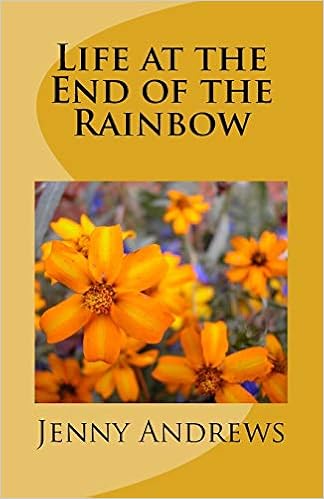
A book review, “Life at the end of the Rainbow” by Jenny Andrews

Life at the end of the Rainbow, by Jenny Andrews

https://amzn.to/2Xbl4ZX

Poetry is like art, its beauty is in the eye of the beholder.

But, while art can be very subjective, poetry often has a special meaning, to both the writer and then the reader.  In turn, for each of us readers, a poem will have a different meaning, some will see what it represents, and others may not.

And, whilst I have not read a lot of poetry over the years, that changed recently when I subscribed to several blogs and discovered this whole new class of literature.

This view was strengthened when I came across a volume of poems by Jenny Andrews, titled Life at the End of the Rainbow.

For me, each poem is an insight into an extraordinary life, where the author sometimes lays bare those raw emotions, which, at times, we will find ourselves drawing parallels.

In a sense, I think we have all been to this mythical place called, The End of the Rainbow, and sometimes need a gentle reminder that it took a lot of ups and downs to get there.

This is, to my mind, a remarkable piece of work.

I, for one, can’t wait to see what the next stage of the journey will be.


Just how many things do you take for granted?

There is a saying ‘you don’t know what you’ve got till it’s gone’.

For a long time, in days before the current technological age, I didn’t really understand what that meant.

Until now.

How many times, in the last few days have I heard the question, “Where’s my mobile phone?”.

It seems we can lose almost anything else but, without the phone, we are completely lost.

The same now applies to all of our household appliances.

The other day I heard, “We aren’t able to do very much because the microwave oven is broken.”

How did we manage in the days before we had such devices?

I know my grandmother had a wood stove and cooked everything, bread, roasting meat, cooking fish, vegetables, cakes, puddings, even make a cup of tea.  And the kitchen was always the coziest part of the house in winter.

I don’t think I ever had a cup of coffee at her house, but I have a lot of memories of some amazing food.  No such thing as electric kitchen appliances, or a microwave oven, not in that house.

We had the same experience ourselves when one of the fridge/freezer units broke down, and severely restricted as to what we could store.  Why that should have affected what we ate is a little puzzling, but apparently, if it was not in the freezer, we didn’t have it.

Something else I didn’t realize was the fact no matter how full the freezer was, we always seemed to be buying more food, to the point where it wouldn’t fit, so we were eating newly bought food over what was being stored.

Perhaps, in having all these conveniences, and gadgets at hand, that’s the problem.  We take so many things for granted and live a life that is centered around convenience.

What would happen if those conveniences were taken away?

Certainly, for me, I know, what it’s like to lose the use of a kitchen appliance and having to improvise, but I’m not sure how I would react if we had a real catastrophe.

I try not to think about what it would be like to lose electricity altogether, just a short blackout is enough to frighten us into almost panic because any lengthy outage is bound to affect food stored in those electric appliances.

But, I haven’t lost my phone yet.  Come very close, and that was scary enough.

Let’s hope it never happens.

Every now and then we all get a chance to stop and reflect on life

Funerals are by definition sad occasions.  It is a time to reflect on the life of the deceased, a time when everyone who knew them to come together to celebrate their life.

It is also usually a time when the whole family comes together, like births and weddings, and can take an interesting turn given the right set of circumstances.

And, depending on how old you are at the time, you could start reflecting on your own mortality, and how much or how little time you have left, and, quite possibly, what it is you have or haven’t done with your life.

Perhaps the question should be, are you going to put off till tomorrow what you can do today.

The sad fact is, we all do.  We all believe we will have plenty of time to get things done, with a motto of, old enough to know better and young enough not to care.

What happens when you die at 44?

It’s one of those questions that we face when attending the funeral of the daughter of one of my in-laws.

It’s a well-known fact that a great many of us look forward to retirement, and having reached that age, generally in the mid to late 60s, that we will be settled in our life, all major commitments completed, we will be in reasonably good health, our children will be old enough to look after themselves, and we have an adequate retirement plan to see us through to old age.

Until then, we sacrifice a great deal, spending our time either working or helping our children on their way to an equally successful life.

There never seems to be time for those holidays overseas or doing those things near and dear to us, putting it off till ‘tomorrow’.

No one realizes ‘tomorrow’ never comes.


It’s still a strange world

I’m getting to the point where I don’t want to turn on the tv anymore.

I get it. We’re in the middle of a pandemic, and everyone wants to get back to work, but is it worth the cost of lives?

It raises the question, how much is a single life worth?

Apparently, to some, nothing. We see various countries rebelling against the so-called notion we should be social distancing, staying at home, and stopping the spread of the coronavirus.

It seems some countries, and a section of their population, just don’t care.

And the pity of it is, all those that do the right thing will inevitably forgive those that break the rules, even if they spread the disease because of their foolhardiness.

Our citizens will die, but we will be reluctant to call them murderers. They will find some way to hold the more sensible nations to ransom, simply because they have something we all need, something we turned over to them because we were naive. In a sense we still are.

Consumerism and capitalism, and dare I say it, greed, at its very worst.

But, the alternatives, fascism, communism, and dictatorships is unpalatable.

Something else we have discovered because of this world pandemic is our own stupidity in considering that a global economy was the way to go. All of a sudden everything we had moved to China, and elsewhere offshore, has come back to bite us. No whitegoods, no clothes, everything but food. At least we haven’t sold all of that down the river. Yet.

This is one hell of a wake-up call.

We need to address that self-sufficiency we no longer have. We need to bring back manufacturing, we need, in other words, to become self-sufficient again. No matter what the cost. It seems ems that in sending away everything meant that we sent away out national pride as well.

Made in Australia is something of a hollow joke. Now we get labels that no longer say, Made in Autraliaits now what percentage is made in this country, and that isn’t a lot.

I suspect it’s the same for a lot of so-called western countries, including the United States.

This isn’t going to be the first or the last time this sort of problem will happen. ln fact, it’s only going to get worse. The thing is, are we going to learn from it?

Yes, we need to fit into the rest of the world but, no, we don’t need to sell our souls to do it.

We need to do something about it, now, while we can. This pandemic might just have a silver lining, if only we recognize the opportunity for what it is.


Searching for locations: The Castello di Brolio, Gaiole in Chianti, Tuscany – The Old Castle

The castle is located in the southern Chianti Classico countryside and has been there for over ten centuries, and owned by the Ricasoli family since 1141.

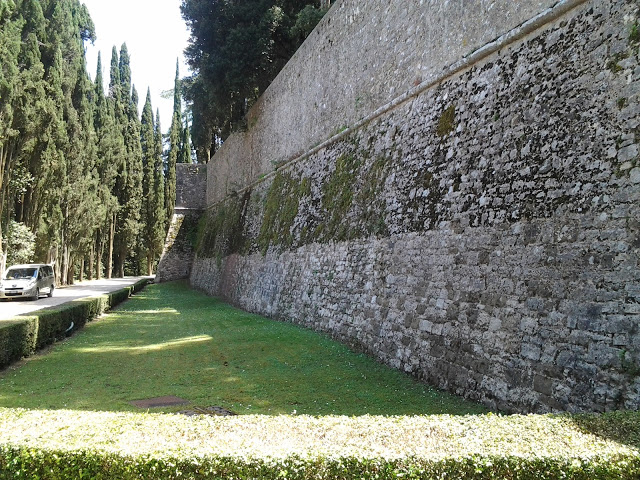
Like any good castle, it has strong defences, and I was looking for a moat and drawbridge, but it looks like the moat has become a lawn.


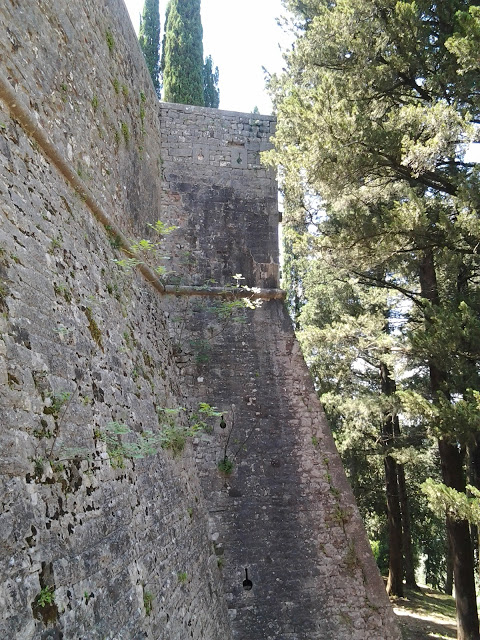
The very high walls in places no doubt were built to keep the enemy out

The castle has been destroyed and rebuilt many times over the last 900 years.  It was part of the Florentine defenses, and withstood, and succumbed to many battles with Siena, which is only 20 km away.  More recently, it still bears the scars of artillery fire and bombing in WW2.

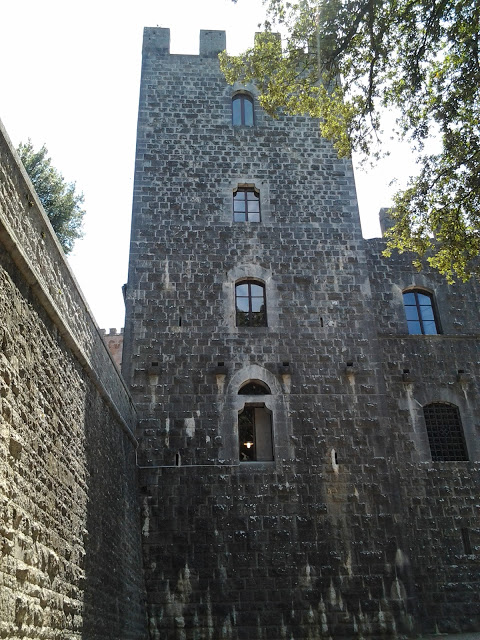
The room at the top of this tower would have an excellent view of the countryside.

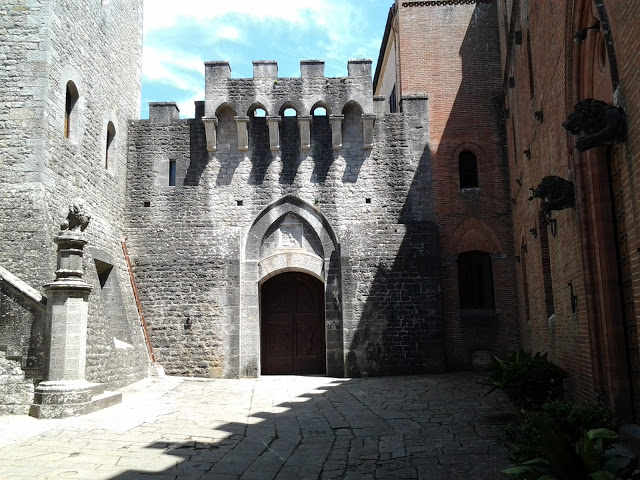
Here you can see the old and the new, the red brick part of the rebuilding in the 1800’s in the style of an English Manor

We did not get to see where that archway led.

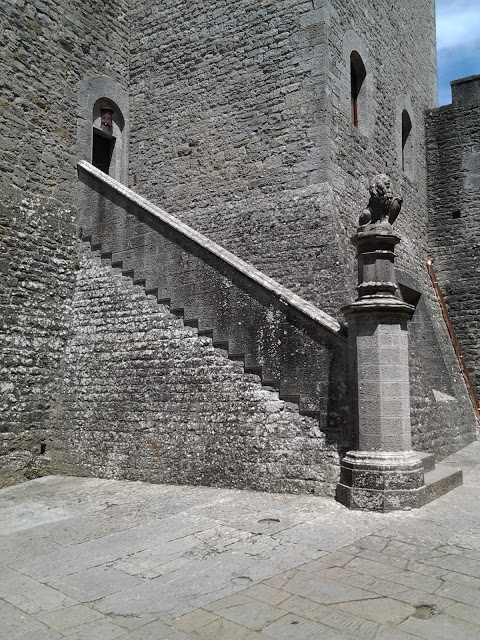
Nor what was behind door number one at the top of these stairs.  Rest assured, many, many years ago someone wearing armor would have made the climb.   It would not pass current occupational health and safety these days with a number of stairs before a landing.

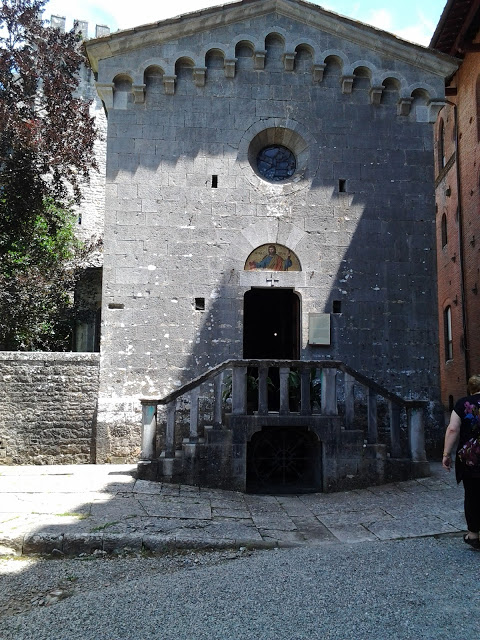
Cappella di San Jacopo.  Its foundations were laid in 1348.

Renovated in 1867-1869, it has a gabled façade preceded by a double stone staircase.  The interior, with a crypt where the members of the Ricasoli family are buried, has a nave divided into three spans with cross vaults.

The 1,200 hectares of the property include 240 hectares of vineyards and 26 of olive groves, in the commune of Gaiole.

There are so many things I haven’t done

Does it really matter, you ask?

Perhaps not, but now seems to be an appropriate time, past the age of 65, to take stock.

We have achieved a lot in the last 15 or so years once the children had grown up and could look after themselves.

Unlike a lot of more modern couples who are doing the traveling in their 20’s and 30’s then having children, we chose to do it the other way around.

To me, it seemed easier to deal with teenagers when we were in our 40’s rather than our 60’s.  With the benefit of hindsight, I can truthfully say we were right.

We were older and wiser when we traveled and more aware of the dangers around us, sometimes overlooked or ignored by a youthful devil may care attitude.

But, in saying that ….

No, I don’t think I’ll be getting to see Mt Kilimanjaro, observing the wild animals in the Serengeti, climbing Mt Everest, or seeing the ancient pyramids.

Which is a sad state of affairs given the world has changed so much in recent years and has pretty much ruled out going to a lot of places, and in particular, the middle east, and because of COVID 19, just about everywhere else.

But, if it is ever possible before I die, I still want to go to the Greek Islands, and, Santorini is at the top of my travel bucket list.

We’ve been to London.  We’ve been to Paris and Euro Disney.  We’ve been to Rome and seen the ancient ruins.  We’ve been to Vienna, Schonbrunn Palace, and, particularly for us, a visit to Swarovski crystal world, near Innsbruck, we’ve been to Salzburg, and been on the Sound of Music tour.

We’ve been to Florence and loved it, we’ve been to Venice and loved that too, and we’ve spent a few days in the heart of Tuscany, and want to go back for longer, much longer.

In fact, that’s the second item on the travel bucket list.

We’ve also been to Singapore and Hong Kong, at first out of necessity as an airline stopover, but then we went back to see the city and tourist, and non-tourist attractions.

I will not forget staying at the Hong Kong Conrad hotel as a Diamond Hhonors member.  Oh, the memories.

We’ve also stayed on the French Riviera, in a timeshare apartment in Antibes where every morning when out back you had a view of the shimmering Mediterranean if the sun was out.

Nice, Cannes, Monte Carlo, the billionaire’s yachts in Antibes harbor, Monte Carlo and ‘that’ casino, taking the same drive along the coast as Grace Kelly did in To Catch a Thief, and feeling like James Bond arriving for a new adventure, minus the half-million-dollar sports car.

But, now, crashing back to earth with a very hard thump ….

Travel in the future is looking difficult for both of us, not only financially but from a health aspect.  We are both not as sprightly as we used to be.

Yet given the restraints and if it is at all possible, aside from the Greek Islands and Tuscany, the next items on the list are:

Germany, visiting both Berlin, from a cold war aspect, the Brandenburg gate springs to mind, and Munich at the time of the Octoberfest.  As a beer drinker that is also high on the bucket list.

Scotland, more so since we’ve started watching Outlander, and besides being a beer drinker, I am also partial to a good Single Malt, the Whiskey trail.

Ireland, because my wife’s previous name was Murphy and at some point, in the long distant past some relatives emigrated to Australia, and she would like to visit the country of her forebears.

But with the current state of the world, our health issues, and that all-important requisite money, or the lack of it, perhaps it’s time to visit other parts of our own country.

Perhaps it’s time to do a culinary trip, particularly down south.  It’s practical and achievable and safe.

And it’s a big country.

A book review, “Life at the end of the Rainbow” by Jenny Andrews

Life at the end of the Rainbow, by Jenny Andrews

https://amzn.to/2Xbl4ZX

Poetry is like art, its beauty is in the eye of the beholder.

But, while art can be very subjective, poetry often has a special meaning, to both the writer and then the reader.  In turn, for each of us readers, a poem will have a different meaning, some will see what it represents, and others may not.

And, whilst I have not read a lot of poetry over the years, that changed recently when I subscribed to several blogs and discovered this whole new class of literature.

This view was strengthened when I came across a volume of poems by Jenny Andrews, titled Life at the End of the Rainbow.

For me, each poem is an insight into an extraordinary life, where the author sometimes lays bare those raw emotions, which, at times, we will find ourselves drawing parallels.

In a sense, I think we have all been to this mythical place called, The End of the Rainbow, and sometimes need a gentle reminder that it took a lot of ups and downs to get there.

This is, to my mind, a remarkable piece of work.

I, for one, can’t wait to see what the next stage of the journey will be.