In a word: Over

It’s over!  What is?  Well, almost anything.

A relationship, a bad day, a friendship, a long, monotonous lecture, and dinner.

It’s basically the light at the end of the tunnel, when it’s not the 6:32 express from Clapton, entering the other end of that same tunnel.

You could go over the top, which means, in one sense, over and above the expected, or way beyond the expected but not in a good way.

You could go over the waterfall in a leaky boat.  Not advisable, but sometimes a possibility, if someone fails to tell you at the end of the rapids there is a waterfall.  Just make sure it’s not the same as Niagara falls.

Still, someone has gone over Niagara in a barrel.

Then we could say that my lodging is over the garage, which simply means someone built it on top of the garage.

Branches of trees quite ofter grow over the roofs of houses, until a severe storm brings them down and suddenly they are in your house, no longer over it.

You can have editorial control over a newspaper

In a fight, the combatants are equally trying to shout over the top of each other

And sometimes, when trying to paint a different picture to what is real, you could say the temperature is sometimes over 40 degrees centigrade when you know for a fact it is usually 56 degrees centigrade.  No need for the literal truth here or no one will come.

Then you could say I came over land, assuming that you took a car, or walked when in actual fact you came by plane.  And yes, the whole flight was, truthfully, over land.

I don’t accept my lot in fife, nor do I want a small lot on which to build my mansion!

But the oddest use of the word over is when we describe, in cricket, the delivery of 6 balls.

I’ve listened to cricket commentary, and aside from trying to pronounce the names of the players, if you were unfamiliar with the game, being told this ball was outside leg stump, one of  several deliveries, the last of which was the end of the over.  If the delivery hit the stumps, it is then a wicket, and the batsman is out.

Wow!

In a word: Light

Yes, I see the lighthouse, what’s it doing all the way out there?  The thing is, these places are sometimes so remote, I start thinking I should rent one for 6 months and then, without any distractions, I’ll get the blasted book finished.

Until there’s a shipwreck, of course!

Light is of course light, duh.  Turn on the switch and let there be light.

Hang on, didn’t someone else say that, millennia ago?  Someone famous?  It’s on the tip of my tongue.

No! It’s not cyanide…

So, whilst we need it to see everything, it has another meaning…

My, that’s a light load your carrying today, which means not very heavy.

Or, that’s a light-coloured jumper, which means pale.

Oh, and did you light the fire?

And, after you light the fire, do you light out to a safe haven in light traffic because really it was arson, and you got a light sentence the last time enabling you to do it again.

If you are trying to rob someone, then it was a kilo light.

And after a long hard struggle, did you light upon the correct answer?

This is not to be confused with another similar word, lite.

It seems this is only used for describing low-calorie drinks and food, such as lite beer, which seems to me to be a lazy way of not using light

Still, there’s not much other use of the word except as a suffix -lite, but then you’d have to mention -lyte as well.

The message here – just use the damn word light and be done with it.


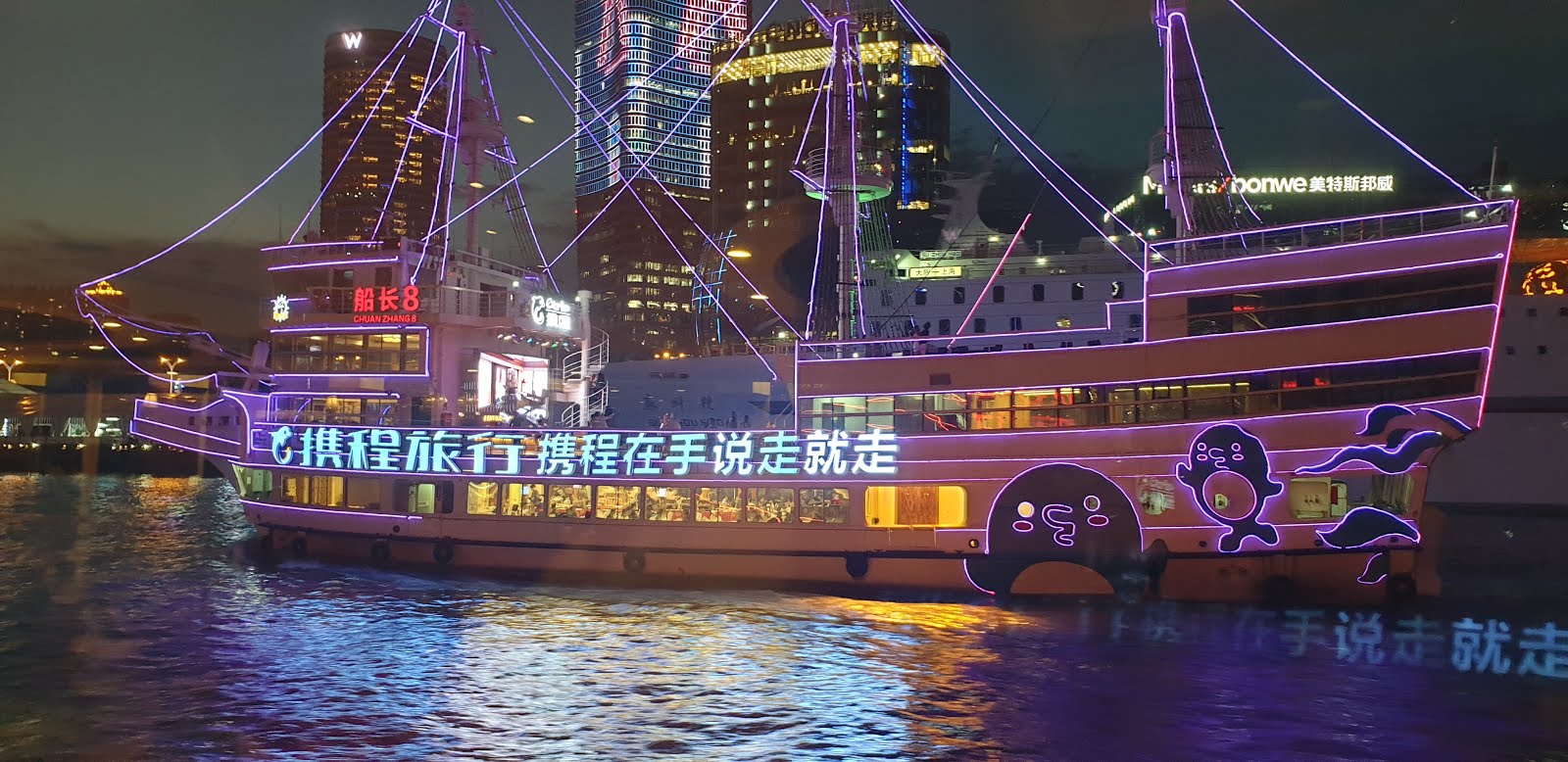
Searching for locations: Shanghai, China, by night.

When we arrive at the embarkation site we find at least 100 buses all lined up and parked, and literally thousands of Chinese and other Asians streaming through the turnstiles to get on another boat leaving earlier than ours.

Buses were just literally arriving one after the other stopping near where we were standing with a dozen or so other groups waiting patiently, and with people were everywhere it could only be described as organized chaos.

Someone obviously knew where everyone was supposed to go, and when it was our turn, we joined the queue.  There were a lot of people in front of us, and a lot more behind, so I had to wonder just how big the boat was.

We soon found out.

And it was amusing to watch people running, yes, they were actually running, to get to the third level, or found available seating.  Being around the first to board, we had no trouble finding a seat on the second level.

I was not quite sure what the name of the boat was, but it had 3 decks and VIP rooms and it was huge, with marble staircases, the sort you could make a grand entrance on.  The last such ornate marble staircase we had seen was in a hotel in Hong Kong, and that was some staircase.

But who has marble staircases in a boat?

We’re going out across the water as far as the Bund and then turn around and come back about 30 to 40 minutes.   By the time everyone was on board, there was no room left on the third level, no seats on the second level nor standing room at the end of the second level where the stairs up to the third level were.

No one wanted to pay the extra to go into the VIP lounge.

We were sitting by very large windows where it was warm enough watching the steady procession of the colored lights of other vessels, and outside the buildings.

It was quite spectacular, as were some of the other boats going out on the harbor.

All the buildings of the Bund were lit up

And along that part of the Bund was a number of old English style buildings made from sandstone, and very impressive to say the least.

On the other side of the harbour were the more modern buildings, including the communications tower, a rather impressive structure.

I had to go to the rear of the vessel to get a photo, a very difficult proposition given here was no space on the railing, not even on the stairs going up or down.  It was just luck I managed to get some photos between passengers heads.

And, another view of that communications tower:

There was no doubt this was one of the most colourful night-time boat tours I’ve ever been on.  Certainly, when we saw the same buildings the following day, they were not half as spectacular in daylight.

I never did get up to the third level to see what the view was like.

Searching for locations: The Forbidden City, Beijing, China

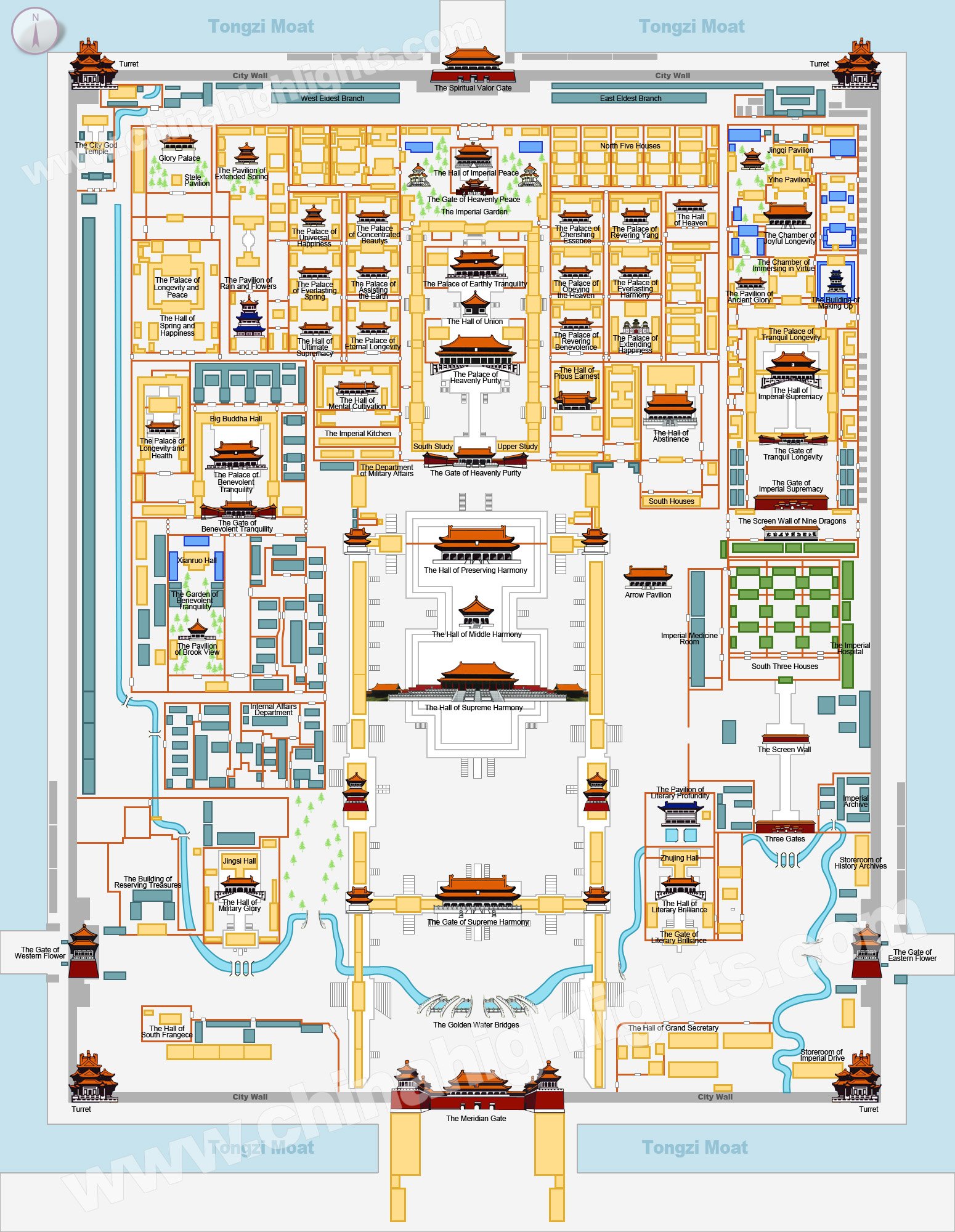
Now we’re walking to the Forbidden City, and it seems like we’re walking for miles and we’re practically exhausted before we get started on the main tour.  I’m not sure if we received a map of the city, but one is certainly needed so that you can navigate the many features, buildings, and walkways.
There are tour groups everywhere in the large courtyard outside the gate, most likely getting a lecture on the last of the Chinese emperors about that time Sun Yat-Sen proclaimed the new China around 1912.  We were no exception, and it was an interesting way to spend the time waiting to get in.  It was a tale of intrigue, interwoven with a 3-year-old emperor, and a scheming concubine who becomes the Emperor’s favorite, enough to bear him a son and successor.

Bribery and corruption at its best.

But its history runs something like this:

The Forbidden City is was once the imperial and state residence of the Emperor of China, as well as the center of government, from the Ming Dynasty to the Qing Dynasty, or 1420 to 1924.

It was built from 1406 to 1420 when the Yongle Emperor moved the capital from Nanking to Beijing and consists of about 980 buildings, and 8,886 bays of rooms (not the 9,999 as prescribed in myth) and covers 180 acres.  Over the 14 years, a million workers used whole logs of wood from the jungles of southwestern China, marble from quarries near Beijing, specially made golden bricks from Suzhou

Since 1925 it has been a museum and is the largest number of preserved wooden structures in the world.

The city is surrounded by a wall 7.9 meters high, and a moat that is 6 meters deep and 52 meters wide.  A tower sits at each of the four corners.  Each side has a gate, the north is called the Gate of Divine Might, the south is called the Meridian gate.  East and west are called East Glorious Gate and West Glorious Gate respectively.

But, back in the courtyard, we are ready to go in and follow the tour guide who has switched from her amplified microphone to a whisper device we all wear in our ears.  She talks and we listen.

We all make it through and regroup on the other side. This is where the fun begins because we are about to meet a large percentage of the 80,000, they let for the day.

It seems to me they have all arrived at the same time, although by the time we get to the entrance gate, it is very well organized, bags are scanned, people are scanned, and you’re in.

After crossing one of the seven Golden Water bridges, you begin to get some idea of the size and scope of the City, and in the distance, the first of the buildings, The Gate of Supreme Harmony.  On a hot day, that could be a long and thirsty walk.

From there it is one pagoda after another with buildings that surround the edge of the whole Forbidden City, as does the moat.

By the time we get to the second courtyard, it was time to have ice cream as a refresher.  Others head up to another exhibit, and it’s just too many stairs for us.

After this, it’s a walkthrough another courtyard, heading up and down some more stairs, we go and see the museum, with priceless relics from past emperors.

There are areas like the outer courtyard, the inner courtyard, yet another courtyard, and the gardens where the concubines walked and spent their leisure time.  It is not far from the emperor’s wives living quarters, though there’s precious little left of the furniture, other than a settee and two rather priceless so-called Ming dynasty vases.

We get into the bad habit of calling all of the vases Ming dynasties.  Above is one of the inner courtyards there were living quarters, and that tree is over 300 years old.

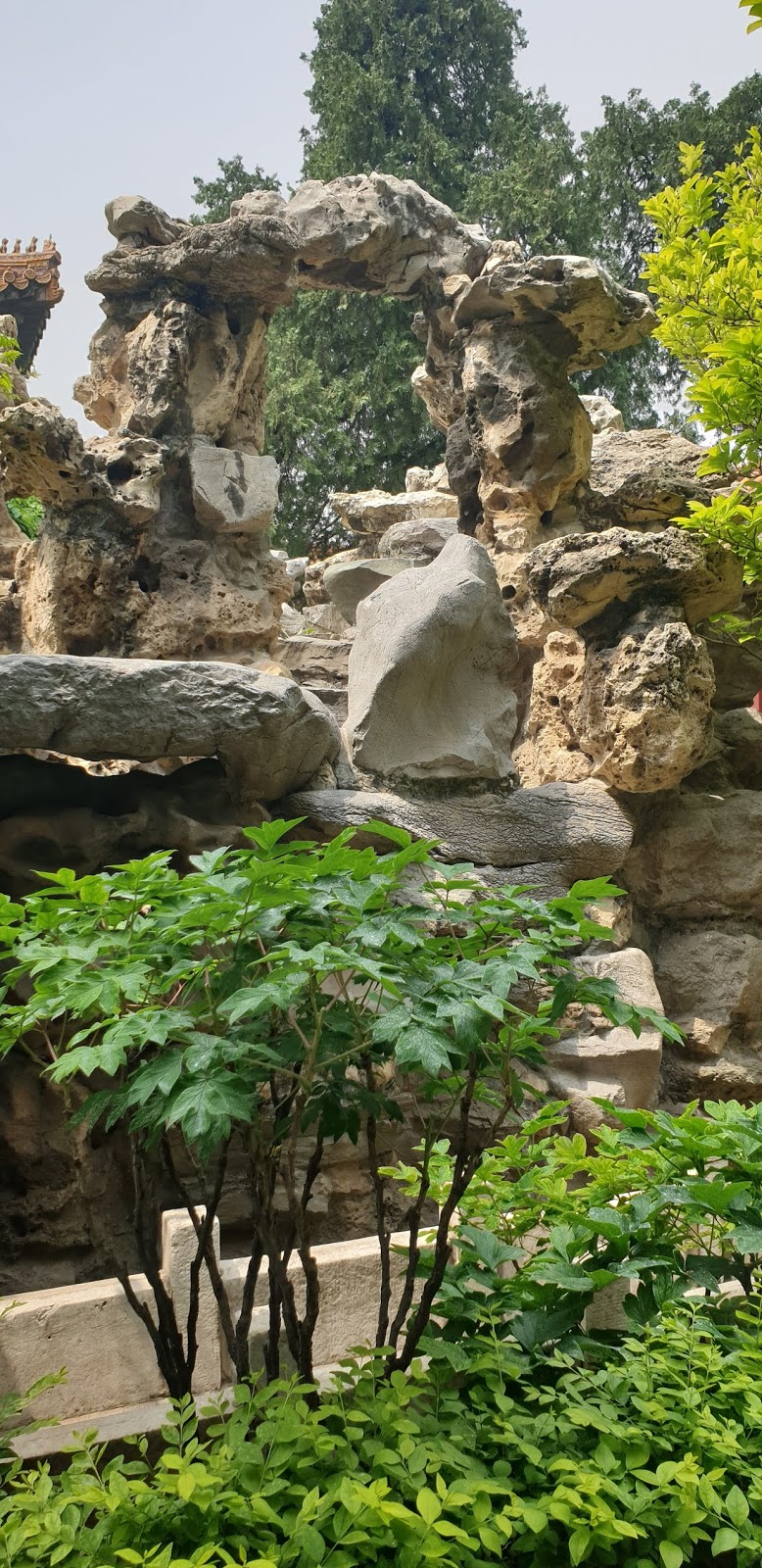
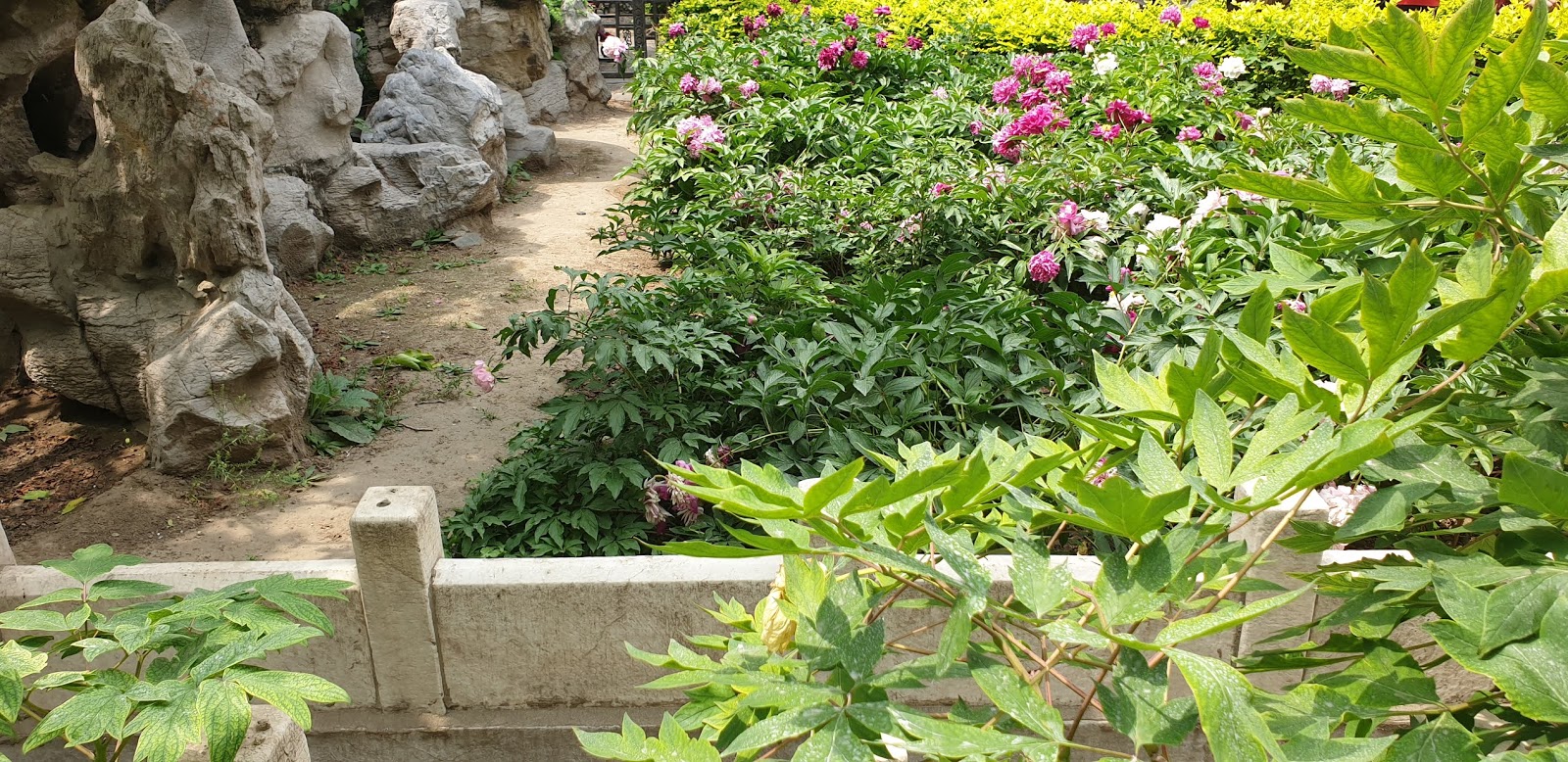
Out through some more alleyways and through an entrance that led to the area where the concubines lived, very spacious, bright, and filled with trees, plants, and walkways through rocky outcrops.
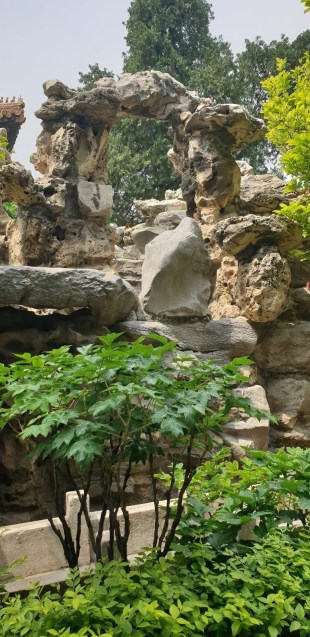
The whole area was made up of living quarters and waterways, rocks and paths, all very neatly set out, and it looked to be a very good place to live.

This is an example of the living quarters, overlooking the gardens
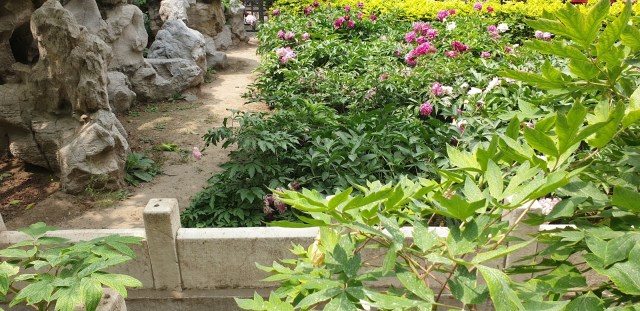
And there were several pagodas

From there its a quick exit out the northern entrance, and another longish walk to our bus, which arrives at the meeting point shortly after we do.

That done, the Beijing tour guide has completed her section of our China experience, and we’re ready to move onto the next.

So now I’m off the soapbox, back to the end of June report

Sorry, I just went off my head, just before…

It’s the problem with having the news channel on all day, listening to constant bad news.

That’s why, I suppose, it’s up to us writers to create something good, and with a happy ending.

I’ll be honest, I like happy endings.  You know, where the good guys win and the bad guys lose, emphatically.

My latest book, nearly through the 6th editing, and closer to publication than it was a month ago, has a happy ending, but not before a great deal of angst.

A bit like real life these days.

But there are other stories, with twists and turns, some predictable, others out of left field, but, still remembering that you can’t just pull a twist out of nowhere, it has to have hooks set up previously, but not necessarily discernable by the reader.

Until that moment when they realize, ok, so that’s why that piece of unrelated information was dropped back there in Chapter Three.  Of course, they don’t realize the author went back to Chapter Three much later and added it when he or she decided on this new twist.

A recommendation perhaps not to write by the seat of your pants, just the flying.

So…

I’ve finished one story, with 47 episodes.

Another is sitting at 33.

One that I’m particularly enjoying writing is at Episode 55, but I have 6 already planned, which is unusual for me, but it’s how excited I am about it.  I even know basically how it’s going to finish.

Another, my foray into WWII is going along, not quite as quickly as I hoped, but there’s a lot of research required, and thankfully there seems to be enough information about what I need to know about that period about on the internet and in books.

IT’s a part of writing that makes it difficult sometimes because you want to write, but it has to be plausible, and sometimes I’m ferreting about for a week, sometimes two, just to get the facts straight.

I’m also cognizant of the fact NANOWRIMO is coming, and it will sneak up on me.  To do it requires a plan of sorts because 50,000+ words don’t just write themselves, especially over a period of 30 consecutive days.  It requires discipline to write about 2,000 words a day.

Other than that, I have two other books to finish editing and two others that need finishing.

Ugh!

Maybe I should give up social media for a few months……….

In a word: well

At first, you would think this word has something to do with your health.

You’d be right.  “Are you well?” or “Are you well enough?”

Of course, it can cause some confusion, because how do you measure degrees of wellness.

Reasonably well, very well, not well, or just well.  Not a good descriptive word for the state of your health, maybe.

How about what if the team played well.  Not health this time, but a standard.

There’s ordinary, mediocre, as a team, brilliantly, and then there’s well.

It seems it can be used to describe an outcome.

Well, well.

Hang on, that’s something else again.

What about, then, we use the word to describe a hole in the ground with water at the bottom.

Or not if it is a drought.

A lot of people get water from a well, in fact in the olden days that was a common sight in a village.

What about those environment destroyers, oilmen.  They have oil wells, don’t they?

And when I went to school, there were ink wells on every desk.

Messy too, because I was once the ink monitor.

But if the well’s dried up?

It becomes a metaphor for a whole new bunch of stuff.

OR what about a stairwell?

And at the complexity of it all, for such a small word, tears well up in my eyes.

Searching for locations: Coffs Harbour, NSW, Australia

We have stayed in two different types of accommodation in Coffs Harbour, New South Wales, Australia, as a timeshare owner who can trade their week for a week anywhere in the world.

Both are resorts, but different sorts of resorts.  The first was a typical RCI resort, where everything is laid back and relaxing, with all the amenities one can expect from a resort.

The other, this one, the Wyndham in Coffs Harbour, is very different, and you notice it when you walk in the front door.  You are virtually assaulted by hard-nosed timeshare sales staff who really don’t take no for an answer, and then when you finally escape, ring you every day to make an appointment.

I left the phone off the hook.

Aside from that, the place is excellent, the accommodation very good, and the situation one of the best with what could be called a private beach.  There are also a number of bushwalks that cater to old people like me.

As you can see, lakes and greenery, and even a putting green.

20161030_141653

And in places, they try very hard to hide the ugly multi-story buildings in amongst the trees

20161030_141706

It is only a short walk to the ‘private beach’ and it is sufficiently long enough for a morning walk before breakfast.  You could even try to catch some fish for breakfast, though I’m not sure if anyone actually caught anything

20161030_142237

Or you can just stare out to sea

20161030_142225

And, back in the room, this is the view we had from our verandah

20161030_134910 - Copy

When you ask the right (or wrong) question…

These are what can dumfound the strongest man, and terrify the most resolute woman.

Simple sentences of words placed in a particular order that designed to elicit a response.

Of course, no one tells you that your life may depend upon the answer you give.

So, when a man is asked a simple question like, ‘do I look good in this dress’, there are so many wrong answers that no matter what he says, the marriage, relationship, romance is over.

Similarly, that simple question, ‘how do you feel’, can be like opening the floodgates, or met with stony silence, or, more than likely, met with a dismissive ‘I feel good’.

There are questions asked in examination papers, the sort that is based on the year’s work, or what was supposedly covered in study groups.  As children, these questions hold varying amounts of terror, if you have failed to study.

There are questions asked at job interviews, and sometimes these don’t quite make any sense. For instance, ‘If you were in a store serving a customer and a man came in brandishing a gun, what would you do.’  I’m not sure what answer they are looking for.

Then there is that terrifying question you hoped would never be asked, ‘what do think your weaknesses are?’  I was fine with strengths, that’s easy, but weaknesses, that’s where the job application ended.

There is one other that has a simple answer but it often met with silence, a witticism, but rarely the truth.  Asking a woman, ‘what is your age?’

That’s a romance killer right there.  Right up there with, ‘where were you on the night of the 14th between the hours of 6pm and 12 pm.  You can hardly say you were in bed with your best friends wife, can you?

Can you see the bare bones of a mystery coming on?

20 questions for each suspect and witness, if any, then plot the crime from these testimonies.

I need a few days away from my current book and it seems a good idea for a short story.

Searching for locations: The Great Wall of China, near Beijing, China

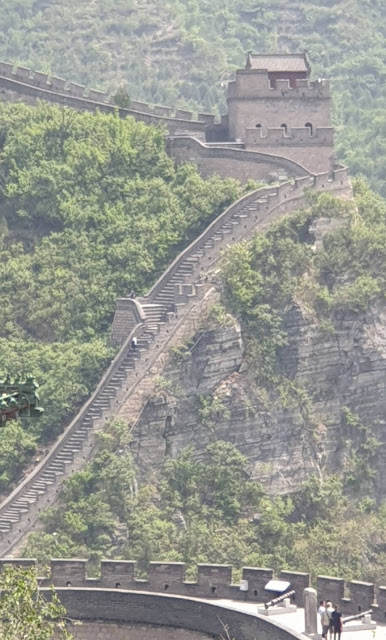
This is in a very scenic area and on the first impression; it is absolutely stunning in concept and in viewing.

As for the idea of walking on it, well, that first view of the mountain climb when getting off the bus, my first question was where the elevator is?  Sorry, there is none.  It’s walk on up or stay down the bottom.

Walk it is.  As far as you feel you are able.  There are quite a few who don’t make it to the top.  I didn’t.  I only made it to the point where the steps narrowed.

But as for the logistics, there’s the gradual incline to the starting point, and what will be the end meeting place.  From there, it’s a few steps up to the guard station no 7, and a few more to get up to the start of the main climb.  The top of the wall is guard station no 12.

Ok, those first few steps are a good indication of what it’s was going to be like and it’s more the awkwardness of the uneven heights of the steps that’s the killer, some as high as about 15 inches.  This photo paints an illusion, that it’s easy.  It’s not.

If you make it to the first stage, then it augers well you will get about 100 steps before you both start feeling it in your legs, particularly the knees, and then suffering from the height if you have a problem with heights as the air is thinner.  And if you have a thing with heights, never look down.

This was from where we stopped, about a third of the way up.  The one below, from almost at the bottom.  One we’re looking almost down on the buildings, the other, on the same level.

It requires rest before you come down, and that’s when you start to feel it in the knees, our tour guide called it jelly legs, but it’s more in the knees down.  Descending should be slow, and it can be more difficult negotiating the odd height steps, and particularly those high ones.  You definitely need to hang onto the rail, even try going backward.

And, no, that rail hasn’t been there as long as the wall.

While you are waiting for the guide to return to the meeting place at the appointed time, there should be time to have some jasmine tea.  Highly refreshing after the climb.

That light at the end of the tunnel

It’s a long-standing joke that the light at the end of the tunnel is the headlight of an express train coming right at you.
Metaphorically speaking this is quite often true if you are a pessimist, but since I’ve converted to being an optimist, a bit like changing religions, l think I’ve seen the ‘light’.
It’s a lot like coming up from the bottom of a deep pool, breaking the surface, and taking that first long gulp of air.
Along with that elated feeling that you’re not going to drown.
What’s this got to do with anything, you ask.
Perhaps nothing.
As an allegory, it represents to me as a time when l finally get over a period of self-doubt, where a series of events started to make me question why l want to be a writer.
I mean why put yourself through rejections, sometimes scathing criticism, snd the have the people whom you thought were your friends suddenly start questions your choices after initially wholeheartedly supporting you.
Are we only a success or supportable if we are earning a sufficient wage?
Is this why so many people don’t give up their day job, and then find themselves plying this ‘other trade’ during the dark hours of the night, only to find themselves being criticized for other but no less subjective reasons.
It seems like a no-win situation but these are the times when your mettle is tested severely.
But in the end, it is worth it when the book is finished and it is published, even if it is only on Amazon, not that publishing on Amazon is any less important that if it was with a mainstream publisher.
You can sit back and say with pride l did that.
And that metaphorical light, you ask.
When you make a sale.