Searching for locations: Hutongs, Beijing, China

What are Hutongs?

In Beijing Hutongs are formed by lines of traditional courtyard residences, called siheyuan.  Neighborhoods were formed by joining many hutongs together. These siheyuan are the traditional residences, usually occupied by a single or extended family, signifying wealth, and prosperity. 

Over 500 of these still exist.Many of these hutongs have been demolished, but recently they have become protected places as a means of preserving some Chinese cultural history.  They were first established in the Yuan Dynasty (1279-1368)Many of these Hutongs had their main buildings and gates built facing south, and lanes connecting them to other hutongs also ran north to south.

Many hutongs, some several hundred years old, in the vicinity of the Bell Tower and Drum Tower and Shichahai Lake are preserved and abound with tourists, many of which tour the quarter in pedicabs.

The optional tour also includes a visit to Shichahai, a historic scenic area consisting of three lakes (Qianhai, meaning Front Sea; Houhai, meaning Back Sea and Xihai, meaning West Sea), surrounding places of historic interest and scenic beauty and remnants of old-style local residences, Hutong and Courtyard.  

First, we had a short walk through the more modern part of the Hutong area and given some free time for shopping, but we prefer just to meander by the canal.  
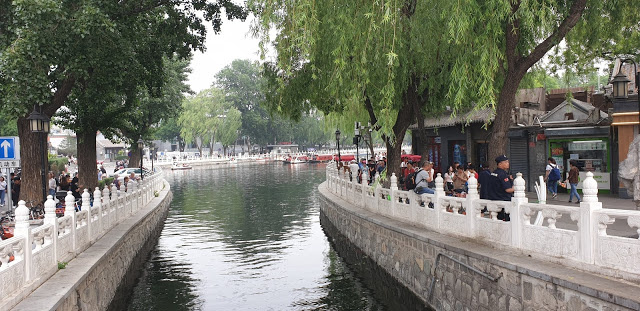
There is a lake, and if we had the time, there were boats you could take.
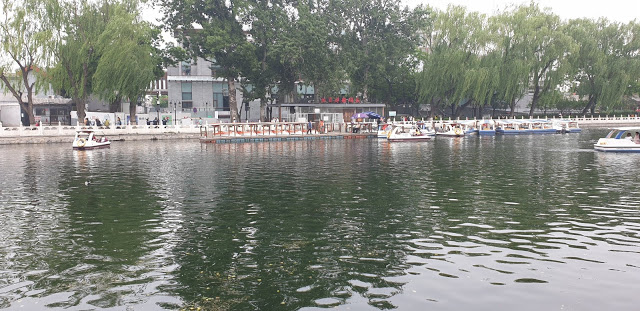
With some time to spare, we take a quick walk down one of the alleyways where on the ground level are small shops, and above, living quarters.

Then we go to the bell and drum towers before walking through some more alleys was to where the rickshaws were waiting.
The Bell tower

And the Drum tower. Both still working today.

The rickshaw ride took us through some more back streets where it was clear renovations were being made so that the area could apply for world heritage listing.  Seeing inside some of the houses shows that they may look dumpy outside but that’s not the case inside.

The rickshaw ride ends outside the house where dinner will be served, and is a not so typical hose but does have all the elements of how the Chinese live, the boy’s room, the girl’s room, the parent’s room, the living area, and the North-south feng shui.

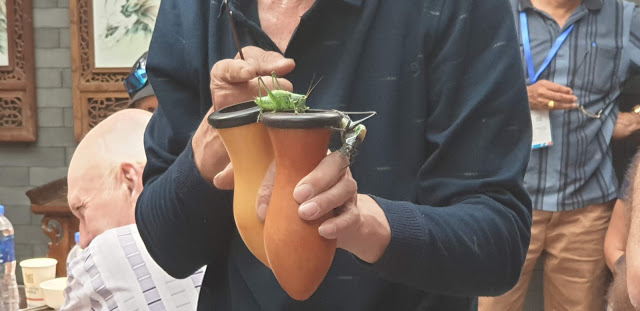
Shortly after we arrive, the cricket man, apparently someone quite famous in Beijing arrives and tells us all about crickets and then grasshoppers, then about cricket racing.  He is animated and clearly enjoys entertaining us westerners.

I’m sorry but the cricket stuff just didn’t interest me.  Or the grasshoppers.
As for dinner, it was finally a treat to eat what the typical Chinese family eats, and everything was delicious, and the endless beer was a nice touch.

And the last surprise, the food was cooked by a man.

Searching for locations: Hutongs, Beijing, China

What are Hutongs?

In Beijing Hutongs are formed by lines of traditional courtyard residences, called siheyuan.  Neighborhoods were formed by joining many hutongs together. These siheyuan are the traditional residences, usually occupied by a single or extended family, signifying wealth, and prosperity. 

Over 500 of these still exist.Many of these hutongs have been demolished, but recently they have become protected places as a means of preserving some Chinese cultural history.  They were first established in the Yuan Dynasty (1279-1368)Many of these Hutongs had their main buildings and gates built facing south, and lanes connecting them to other hutongs also ran north to south.

Many hutongs, some several hundred years old, in the vicinity of the Bell Tower and Drum Tower and Shichahai Lake are preserved and abound with tourists, many of which tour the quarter in pedicabs.

The optional tour also includes a visit to Shichahai, a historic scenic area consisting of three lakes (Qianhai, meaning Front Sea; Houhai, meaning Back Sea and Xihai, meaning West Sea), surrounding places of historic interest and scenic beauty and remnants of old-style local residences, Hutong and Courtyard.  

First, we had a short walk through the more modern part of the Hutong area and given some free time for shopping, but we prefer just to meander by the canal.  

There is a lake, and if we had the time, there were boats you could take.

With some time to spare, we take a quick walk down one of the alleyways where on the ground level are small shops, and above, living quarters.

Then we go to the bell and drum towers before walking through some more alleys was to where the rickshaws were waiting.
The Bell tower

And the Drum tower. Both still working today.

The rickshaw ride took us through some more back streets where it was clear renovations were being made so that the area could apply for world heritage listing.  Seeing inside some of the houses shows that they may look dumpy outside but that’s not the case inside.

The rickshaw ride ends outside the house where dinner will be served, and is a not so typical hose but does have all the elements of how the Chinese live, the boy’s room, the girl’s room, the parent’s room, the living area, and the North-south feng shui.

Shortly after we arrive, the cricket man, apparently someone quite famous in Beijing arrives and tells us all about crickets and then grasshoppers, then about cricket racing.  He is animated and clearly enjoys entertaining us westerners.

I’m sorry but the cricket stuff just didn’t interest me.  Or the grasshoppers.

As for dinner, it was finally a treat to eat what the typical Chinese family eats, and everything was delicious, and the endless beer was a nice touch.

And the last surprise, the food was cooked by a man.

Searching for locations: Terracotta Warriors and Horses Museum, X’ian, China

Terracotta Warriors and Horses Museum

A little history, and anecdotal advice first:

In 1974 a 26-year-old farmer, Yang Jide, was drilling a well and found fragments of the terracotta soldiers and bronze weapons.

What was discovered later was one of the biggest attended burial pits of China’s first feudal Emperor, Qin Shi Huang.  In the following years remains had been found in 3 pits, yielding at least 8,000 soldiers and horses, and over 100 chariots.  The soldiers were infantry, cavalry, and others.

Emperor Qin was born in 259 BC and died in 210 BC.  He began building a mausoleum for himself at the foot of Mount Li when he was 13.  Construction took 38 years, from 247 BC to 208 BC.  It was divided into 3 stages and involved 720,000 conscripts.

The pits of pottery figures are 1.5 km east of Emperor Qin’s mausoleum.  Pit 1 has about 6,000 terracotta armored warriors and horses and 40 wooden chariots.  Pit 2 is estimated to have over 900 terracotta warriors and 350 terracotta horses with about 90 wooden chariots.  Pit 3 had so far yielded only 66 pottery figures and one chariot drawn by four horses.

Official records say it was discovered later that it was likely Xiang Yu, a rebel, intentionally damaged the Mausoleum and the soldiers in the pits, by setting fire to the wooden roof rafters, and these fell on and broke the warriors into pieces.

However, we were told that after the terracotta warriors were completed, the Emperor ordered the builders to be killed so that they would not tell anyone about the warriors, and then of those that remained alive deliberately smashed all of the artifacts.

The thing is, all of the terracotta figures that have been found are in pieces, and they need computers to piece them back together again.

The visit:
The first impression is the size of the car park and the number of buses parked in the lot, and a hell of a lot more outside up the road an off on side streets.  Obviously, it costs money to park in the parking lot.

The other first impressions; the numbers waiting to get in were not as many as yesterday outside the forbidden city, in fact, a lot less.

Be warned there’s a long walk from the entrance gate where your bags are scanned and a body scan as well, before admittance.  This walk is through a landscaped area which it is expect might sometime in the future reveal more soldiers, or other artifacts.

At the end of the walk that takes about ten minutes, you can get a one-way ride to the second checkpoint, but we opted not to as no one else in our group did.

That walk is the warm-up exercise to an organized viewing of the exhibits after going through a second ticket checkpoint.  On the other side, we had to hand our tickets back to the tour guide which was disappointing not to end up with a memento of actually having been there.

So, on the other side in the courtyard, the guide told us the most important parts of the exhibition, that we should spend most of the time looking at pit 1, and then spent a little time in 2 which is only there in the first stages of excavation.  Then move onto the museum if only to see the replica chariots.

We do.

The chariots were small but interesting

The horses were better and intricately detailed

These are soldiers, perhaps complete examples of those types found in the end pit.

This is one of the archers.  You can tell by the way he wears his hair.

Pit 2

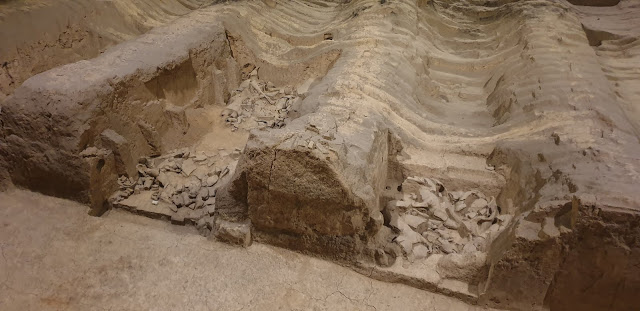
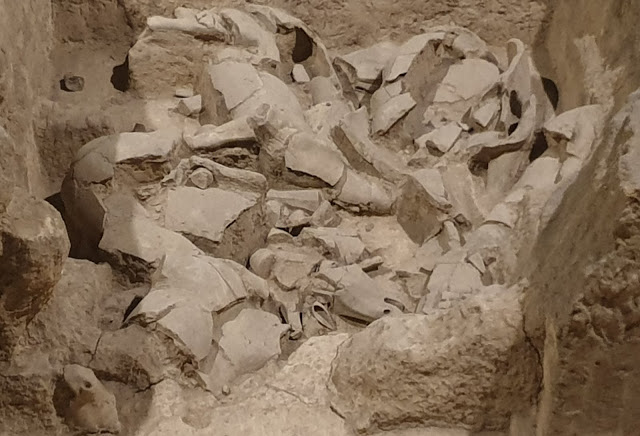
The excavation of this pit has only just begun, so it is possible to see where they have carefully removed the top cover, and you can see the broken parts of the warriors lying in a heap.

Some parts of the warriors are more discernible closer up

These parts are carefully extracted and taken to the ‘hospital’ where they are digitised and the computer will match each part with the warrior it belongs to.

Pit 1

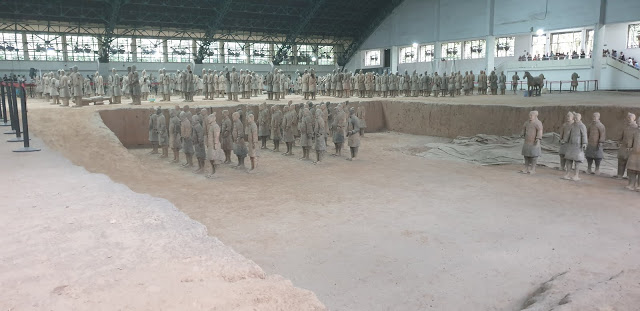
This has quite a number of standing soldiers that have been glued back together, but not necessarily complete and I notice a number if the statues were incomplete. And if they cannot find the missing pieces, then they are not added to or filled in.

The scale of the pit is enormous, and they have hardly scratched the surface in the restoration process.

What is there is a number of horses as well.

That’s at the front of the pit, a long line of statues, and what is clear is the location of the well where the first fragments were found by a farmer.

There are about eight lines of soldiers, and some lining the sides.

Midway down there is a large area currently under excavation

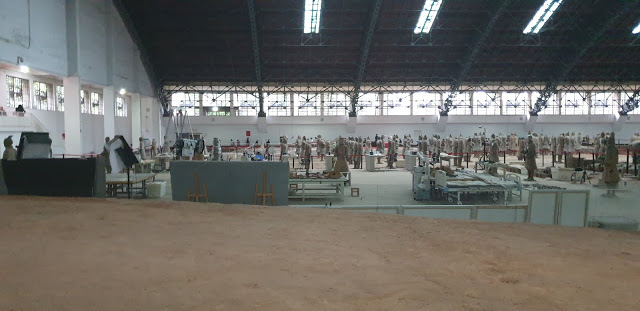
At the back is the hospital where the soldiers are reassembled.  There’s nearly a hundred in the various stages of rebuilding.  These days the soldiers are rebuilt using computer imaging.

The hospital area is where they are put back together

And these are some of the statues in various stages of reconstruction

Another two views of the size and scale of the reconstruction project

The coffee shop is also a sales centre, but there are too many people waiting for coffee and too few places to sit down.

Searching for locations: Terracotta Warriors and Horses Museum, X’ian, China

Terracotta Warriors and Horses Museum

A little history, and anecdotal advice first:

In 1974 a 26-year-old farmer, Yang Jide, was drilling a well and found fragments of the terracotta soldiers and bronze weapons.

What was discovered later was one of the biggest attended burial pits of China’s first feudal Emperor, Qin Shi Huang.  In the following years remains had been found in 3 pits, yielding at least 8,000 soldiers and horses, and over 100 chariots.  The soldiers were infantry, cavalry, and others.

Emperor Qin was born in 259 BC and died in 210 BC.  He began building a mausoleum for himself at the foot of Mount Li when he was 13.  Construction took 38 years, from 247 BC to 208 BC.  It was divided into 3 stages and involved 720,000 conscripts.

The pits of pottery figures are 1.5 km east of Emperor Qin’s mausoleum.  Pit 1 has about 6,000 terracotta armored warriors and horses and 40 wooden chariots.  Pit 2 is estimated to have over 900 terracotta warriors and 350 terracotta horses with about 90 wooden chariots.  Pit 3 had so far yielded only 66 pottery figures and one chariot drawn by four horses.

Official records say it was discovered later that it was likely Xiang Yu, a rebel, intentionally damaged the Mausoleum and the soldiers in the pits, by setting fire to the wooden roof rafters, and these fell on and broke the warriors into pieces.

However, we were told that after the terracotta warriors were completed, the Emperor ordered the builders to be killed so that they would not tell anyone about the warriors, and then of those that remained alive deliberately smashed all of the artifacts.

The thing is, all of the terracotta figures that have been found are in pieces, and they need computers to piece them back together again.

The visit:
The first impression is the size of the car park and the number of buses parked in the lot, and a hell of a lot more outside up the road an off on side streets.  Obviously, it costs money to park in the parking lot.

The other first impressions; the numbers waiting to get in were not as many as yesterday outside the forbidden city, in fact, a lot less.

Be warned there’s a long walk from the entrance gate where your bags are scanned and a body scan as well, before admittance.  This walk is through a landscaped area which it is expect might sometime in the future reveal more soldiers, or other artifacts.

At the end of the walk that takes about ten minutes, you can get a one-way ride to the second checkpoint, but we opted not to as no one else in our group did.

That walk is the warm-up exercise to an organized viewing of the exhibits after going through a second ticket checkpoint.  On the other side, we had to hand our tickets back to the tour guide which was disappointing not to end up with a memento of actually having been there.

So, on the other side in the courtyard, the guide told us the most important parts of the exhibition, that we should spend most of the time looking at pit 1, and then spent a little time in 2 which is only there in the first stages of excavation.  Then move onto the museum if only to see the replica chariots.

We do.

The chariots were small but interesting

The horses were better and intricately detailed

These are soldiers, perhaps complete examples of those types found in the end pit.

This is one of the archers.  You can tell by the way he wears his hair.

Pit 2

The excavation of this pit has only just begun, so it is possible to see where they have carefully removed the top cover, and you can see the broken parts of the warriors lying in a heap.

Some parts of the warriors are more discernible closer up

These parts are carefully extracted and taken to the ‘hospital’ where they are digitised and the computer will match each part with the warrior it belongs to.

Pit 1

This has quite a number of standing soldiers that have been glued back together, but not necessarily complete and I notice a number if the statues were incomplete. And if they cannot find the missing pieces, then they are not added to or filled in.

The scale of the pit is enormous, and they have hardly scratched the surface in the restoration process.

What is there is a number of horses as well.

That’s at the front of the pit, a long line of statues, and what is clear is the location of the well where the first fragments were found by a farmer.

There are about eight lines of soldiers, and some lining the sides.

Midway down there is a large area currently under excavation

At the back is the hospital where the soldiers are reassembled.  There’s nearly a hundred in the various stages of rebuilding.  These days the soldiers are rebuilt using computer imaging.

The hospital area is where they are put back together

And these are some of the statues in various stages of reconstruction

Another two views of the size and scale of the reconstruction project

The coffee shop is also a sales centre, but there are too many people waiting for coffee and too few places to sit down.

Searching for locations: Smith Street, Fitzroy (Once part of what was known as Marvellous Melbourne)

Of course, it could easily be Collingwood depending on who you barrack for in the local football competition, as it is Fitzroy, but the map and my GPS tells me the street is, for all intents and purposes, in Fitzroy.

Not that there is a football team for Fitzroy any more, that moved north to Queensland a long, long time ago.

But…

Going for a wander up and down the street shows two or three very different sides to inner suburban living, and the effect that comes from a diverse range of cultures, the city has acquired over the past few decades.

Once viewed as almost the slums of Melbourne, these inner suburban areas have moved upscale to become havens for the more wealthy middle classes and a home for many diverse outlets, not the least of which are eateries.

And. In just this small section of Smith Street, there are a lot of eating establishments, from the Old Kingdom Peking duck restaurant to a small place selling Falafel, and then everything in between. It says a lot about how Australian eating habits have changed in a single generation, where back in those infamous old days you would be lucky to have a fish and chips/ hamburger shop and one or two Chinese restaurants.

Now, intermingled with gourmet bakeries and cozy coffee shops, there are a plethora of other eating establishments that cater to any cuisine you can imagine.  In fact, it’s possible to dine out on a different cuisine every night for a fortnight and only traverse about half a kilometre up and down the street.  It could be ideal if you lived in one of the small fronted houses just off the main carriageway in a leafy narrow side street or laneway.

And, as you would expect in an inner-city suburb,  the streets are narrow and made more hazardous for traffic because of the trams, a familiar sight in many of the streets in this area, and a much-used form of transport for workers making the short trip into the city.  It’s almost possible to take the extra half hour, and walk.

The street is lined with old buildings, some dating back to about 1868, there’s around the turn of the century, but most are not inhabited except for the street level where there is an eclectic mixture of furniture, haberdashery, and clothing stores catering to a particular group of people, what some call yuppies or upwardly mobile men and women who are between 25-35, with high paying jobs, and preferably no children.

Then there a subgroup walking there streets, homosexual men, some wheeling adopted children in pushers, others walking hand in hand out for a Saturday afternoon stroll where they can feel safe among many others.  It’s very different from other places I’ve been, but one can imagine there are places like this in every city all over the world.

But as a backdrop to the appearance of wealth, the shopfronts that cater to those upwardly mobile upper middle classes, there’s that exact opposite in full view, the homeless, and beggars, sitting on the ground outside the more run down shops soliciting alms, asking for a spare dollar, and even one asking for a cigarette.

Everyone walks past them, imagining no doubt there are not there, or that if they ignore them, they will go away.  I think not.  And, I suspect, more will come out of their daytime hiding places and take up residence in Smith Street itself.

The only surprise is that the local council has not asked the police to move them on. It’s an interesting juxtaposition of inhabitants in an area that no doubt can only attract the upper middle classes, as anything and everything is relatively expensive, particularly real estate, and permit driven parking spaces.

Would I live here?  No.

Would I come here to wine and dine?

Maybe, if I could get parking, which there appear to be very few spots or any other form of parking such as under the local supermarket which can be very expensive.  And if you are lucky enough to find a spot, who has the time or the memory if continually feeding a parking meter every two hours, particularly if you’re having a good time.

Equally, it’s a place I would not feel comfortable, even if it was once a safe haven, which up to a few years ago, I’d probably think it not.  In fact, at times I was not sure what to make of some of the people on the street, but I guess if I lived here, it would no doubt be the norm.

Would I recommend people to come here?

Of course.  One of the more interesting places in Melbourne to experience grassroots cuisine that is incredibly diverse in it range and price, and even from a place with tables and chairs that may have seen better days, but you haven’t come to see the furniture.

And to my mind, the dining is definitely better, here than perhaps Carlton, which in itself is Mecca to a plethora of university types, both teachers and students alike, and the coffee culture that pervade that area of Melbourne.

I have no doubt you will come and leave with a very good opinion of the place.

As for me, I came here for an engagement party held at the Hotelito de Jesus, a Mexican restaurant, serving a variety of Mexican dishes.  As I’m no expert of that particular cuisine, everything was going to be new.

It was.  It’s spicy but not too spicy, the pork belly excellent, the canapés delicious, and both the mushroom-based and shredded beef based mini tacos were equally scrumptious.

All of this was washed down with two particular Mexican beers, two of several available in bottles, cans, or by the glass.

Oh, and you can get sangria by the jug too if you like.  I would have, but my passion for trying different beers won out.

Searching for locations: Smith Street, Fitzroy (Once part of what was known as Marvellous Melbourne)

Of course, it could easily be Collingwood depending on who you barrack for in the local football competition, as it is Fitzroy, but the map and my GPS tells me the street is, for all intents and purposes, in Fitzroy.

Not that there is a football team for Fitzroy any more, that moved north to Queensland a long, long time ago.

But…

Going for a wander up and down the street shows two or three very different sides to inner suburban living, and the effect that comes from a diverse range of cultures, the city has acquired over the past few decades.

Once viewed as almost the slums of Melbourne, these inner suburban areas have moved upscale to become havens for the more wealthy middle classes and a home for many diverse outlets, not the least of which are eateries.

And. In just this small section of Smith Street, there are a lot of eating establishments, from the Old Kingdom Peking duck restaurant to a small place selling Falafel, and then everything in between. It says a lot about how Australian eating habits have changed in a single generation, where back in those infamous old days you would be lucky to have a fish and chips/ hamburger shop and one or two Chinese restaurants.

Now, intermingled with gourmet bakeries and cozy coffee shops, there are a plethora of other eating establishments that cater to any cuisine you can imagine.  In fact, it’s possible to dine out on a different cuisine every night for a fortnight and only traverse about half a kilometre up and down the street.  It could be ideal if you lived in one of the small fronted houses just off the main carriageway in a leafy narrow side street or laneway.

And, as you would expect in an inner-city suburb,  the streets are narrow and made more hazardous for traffic because of the trams, a familiar sight in many of the streets in this area, and a much-used form of transport for workers making the short trip into the city.  It’s almost possible to take the extra half hour, and walk.

The street is lined with old buildings, some dating back to about 1868, there’s around the turn of the century, but most are not inhabited except for the street level where there is an eclectic mixture of furniture, haberdashery, and clothing stores catering to a particular group of people, what some call yuppies or upwardly mobile men and women who are between 25-35, with high paying jobs, and preferably no children.

Then there a subgroup walking there streets, homosexual men, some wheeling adopted children in pushers, others walking hand in hand out for a Saturday afternoon stroll where they can feel safe among many others.  It’s very different from other places I’ve been, but one can imagine there are places like this in every city all over the world.

But as a backdrop to the appearance of wealth, the shopfronts that cater to those upwardly mobile upper middle classes, there’s that exact opposite in full view, the homeless, and beggars, sitting on the ground outside the more run down shops soliciting alms, asking for a spare dollar, and even one asking for a cigarette.

Everyone walks past them, imagining no doubt there are not there, or that if they ignore them, they will go away.  I think not.  And, I suspect, more will come out of their daytime hiding places and take up residence in Smith Street itself.

The only surprise is that the local council has not asked the police to move them on. It’s an interesting juxtaposition of inhabitants in an area that no doubt can only attract the upper middle classes, as anything and everything is relatively expensive, particularly real estate, and permit driven parking spaces.

Would I live here?  No.

Would I come here to wine and dine?

Maybe, if I could get parking, which there appear to be very few spots or any other form of parking such as under the local supermarket which can be very expensive.  And if you are lucky enough to find a spot, who has the time or the memory if continually feeding a parking meter every two hours, particularly if you’re having a good time.

Equally, it’s a place I would not feel comfortable, even if it was once a safe haven, which up to a few years ago, I’d probably think it not.  In fact, at times I was not sure what to make of some of the people on the street, but I guess if I lived here, it would no doubt be the norm.

Would I recommend people to come here?

Of course.  One of the more interesting places in Melbourne to experience grassroots cuisine that is incredibly diverse in it range and price, and even from a place with tables and chairs that may have seen better days, but you haven’t come to see the furniture.

And to my mind, the dining is definitely better, here than perhaps Carlton, which in itself is Mecca to a plethora of university types, both teachers and students alike, and the coffee culture that pervade that area of Melbourne.

I have no doubt you will come and leave with a very good opinion of the place.

As for me, I came here for an engagement party held at the Hotelito de Jesus, a Mexican restaurant, serving a variety of Mexican dishes.  As I’m no expert of that particular cuisine, everything was going to be new.

It was.  It’s spicy but not too spicy, the pork belly excellent, the canapés delicious, and both the mushroom-based and shredded beef based mini tacos were equally scrumptious.

All of this was washed down with two particular Mexican beers, two of several available in bottles, cans, or by the glass.

Oh, and you can get sangria by the jug too if you like.  I would have, but my passion for trying different beers won out.

Searching for locations: Toowoomba Flower Festival, Toowoomba, Queensland, Australia

The Toowoomba Carnival of Flowers is held in September, and generally runs for ten days at the end of the month.

We visited the Laurel Bank Park, where there are beds of many colorful flowers,

open spaces,

statues,

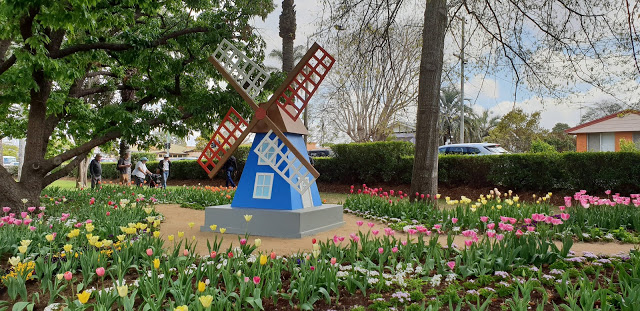
an area set aside for not only tulips but a model windmill

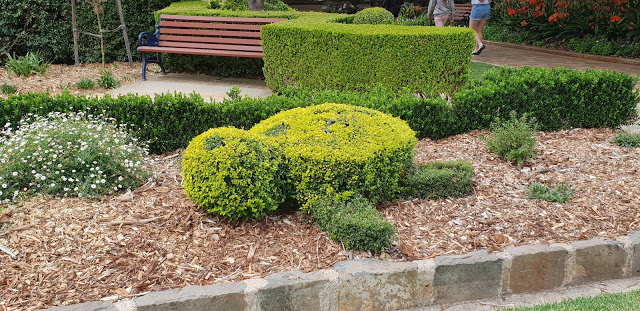
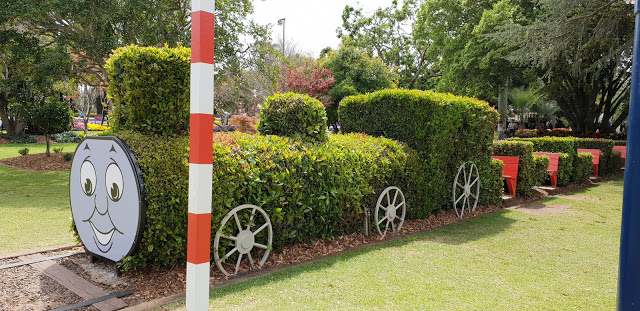
and quite a number of hedge sculptures

There was also the opportunity to go on a morning or afternoon garden tour which visited a number of private gardens of residences in Toowoomba.

Searching for locations: Toowoomba Flower Festival, Toowoomba, Queensland, Australia

The Toowoomba Carnival of Flowers is held in September, and generally runs for ten days at the end of the month.

We visited the Laurel Bank Park, where there are beds of many colorful flowers,

open spaces,

statues,

an area set aside for not only tulips but a model windmill

and quite a number of hedge sculptures

There was also the opportunity to go on a morning or afternoon garden tour which visited a number of private gardens of residences in Toowoomba.

I never thought it would be so difficult…

To get a decent cup of coffee.

Yes, something as simple as that.

We all have our favourite places, ours is a coffee franchise called Zaraffas. It has a giraffe as its logo, and an African motif to remind us of something, perhaps that they make good coffee, or the coffee comes from Africa.

Problem is, it’s been going downhill. It’s happened before, and I suspect it’s all in the name of making more money, and not being interested in the customer’s desire for a good cup of coffee.

It started out as being the best compared to a lot of other places, like Coffee Club, like Starbucks, and others. I never liked Starbucks, and my hate affair began in New York, and spread back home. Their coffee is far to weak for a double shot. Perhaps only in China does Starbucks shine, or the fact it was the only coffee franchise we could believe was safe.

But, back to Zaraffas, recently the coffee has been getting weaker, which for a double shot, is odd. You might put it down to the fact staff turnover was high, and some were still learning to be baristas, but then, the people we used to rely on made the coffee, and it was still weak.

A double shot went to a triple shot. Slight improvement, but it gradually got worse. There’s only two excuses, they changed coffee beans to a cheaper brand, or they’re not putting as much coffee in the strainer. That, I learned, when looking up the making of coffee, can be critical. It needs to be tamped down tightly to get a good brew.

So, we went elsewhere, a place called Merlo. It’s cheaper, but the results are completely different. A double shot is a true double shot, it tastes better, much better. Different beans.

There’s another place just around the corner, that had organic coffee. More expensive, but you can really taste the difference.

I’m sad, but we don’t go to our usual place unless it’s on the way home. Life’s too short to be compromising, especially where coffee is concerned.

And, just as a matter of interest, while in New York for a week, I went to the same coffee shop every morning, and never got the same cup of coffee for each of the days. A double shot, latte with two sugars had so many different connotations, by the third day, it became a game, until I realised they didn’t make coffee the same as we have in Australia. There they just push a button.

Perhaps that’s part of the coffee drinkers adventure there, you never know what you’re going to get. In the end, I settled for the brewed coffee and vanilla milk in the hotel’s breakfast bar.

I never thought it would be so difficult…

To get a decent cup of coffee.

Yes, something as simple as that.

We all have our favourite places, ours is a coffee franchise called Zaraffas. It has a giraffe as its logo, and an African motif to remind us of something, perhaps that they make good coffee, or the coffee comes from Africa.

Problem is, it’s been going downhill. It’s happened before, and I suspect it’s all in the name of making more money, and not being interested in the customer’s desire for a good cup of coffee.

It started out as being the best compared to a lot of other places, like Coffee Club, like Starbucks, and others. I never liked Starbucks, and my hate affair began in New York, and spread back home. Their coffee is far to weak for a double shot. Perhaps only in China does Starbucks shine, or the fact it was the only coffee franchise we could believe was safe.

But, back to Zaraffas, recently the coffee has been getting weaker, which for a double shot, is odd. You might put it down to the fact staff turnover was high, and some were still learning to be baristas, but then, the people we used to rely on made the coffee, and it was still weak.

A double shot went to a triple shot. Slight improvement, but it gradually got worse. There’s only two excuses, they changed coffee beans to a cheaper brand, or they’re not putting as much coffee in the strainer. That, I learned, when looking up the making of coffee, can be critical. It needs to be tamped down tightly to get a good brew.

So, we went elsewhere, a place called Merlo. It’s cheaper, but the results are completely different. A double shot is a true double shot, it tastes better, much better. Different beans.

There’s another place just around the corner, that had organic coffee. More expensive, but you can really taste the difference.

I’m sad, but we don’t go to our usual place unless it’s on the way home. Life’s too short to be compromising, especially where coffee is concerned.

And, just as a matter of interest, while in New York for a week, I went to the same coffee shop every morning, and never got the same cup of coffee for each of the days. A double shot, latte with two sugars had so many different connotations, by the third day, it became a game, until I realised they didn’t make coffee the same as we have in Australia. There they just push a button.

Perhaps that’s part of the coffee drinkers adventure there, you never know what you’re going to get. In the end, I settled for the brewed coffee and vanilla milk in the hotel’s breakfast bar.