NaNoWriMo – 2023 – Day 0

Before it all begins

…

Anyone can write a book.

It’s an extravagant statement and not necessarily true, but often used by relatives when one of their numbers says they’ve written a book.

My brother said that when I told him I’d written one

I didn’t tell him that I’d written a dozen and published five, it seemed irrelevant at the time.

But as easy or hard as it may be to write one, writing a second is so much harder.

This year, I’m tackling a book I started nearly 35 years ago when I first married my wife and discovered she liked reading Mills and Boon Romance stories.

There was always a stack of them in the restroom, so I took to reading one, and after a few chapters, I decided I could write one for her to read.

Of course, writing the first 100 pages was easy. Then it got hard, because I’m a thriller writer, not a romance writer, and suddenly it veered off into thriller land.

And the end result left it on the shelf.

Then, things happened, the book was put to one side, and over the years other stories became the focus.

Yes, I did keep writing, and yes, I eventually finished it, but it sat in a box for nearly 15 years before I brought it out.

In the last few years, with COVID preventing me from leaving the house, the story got moved to the top of the pile, underwent three rewrites, and now just needs to be finished.

It recently acquired the title ‘The Things We Do For Love’, and is the project for this year’s April NaNoWriMo.

The cinema of my dreams – I always wanted to go on a treasure hunt – Episode 29

Here’s the thing…

Every time I close my eyes, I see something different.

I’d like to think the cinema of my dreams is playing a double feature but it’s a bit like a comedy cartoon night on Fox.

But these dreams are nothing to laugh about.

Once again there’s a new instalment of an old feature, and we’re back on the treasure hunt.


“Where is he?” I asked, hardly disguising the annoyance in my tone.

“In the toilet.”

A minor relief, but what the hell was she doing in his room?

“You do know Vince is responsible for Boggs being attacked, and me too, by the way.  There was no mistaking that thug even if he was hiding behind a balaclava.

“You’re not telling me anything I didn’t know already.  And it might be my fault.  I told him, no, he all but beat it out of me, about the map and Boggs, and you, and Alex.”

“So, I can expect to see Alex in here sometime soon?”

“No.  The Benderby’s have their own private hospital.  No one will get to hear about it, except maybe when there is the retaliation.  This who map and treasure thing is about to get a whole lot more problematical.”

Boggs chose to return from the bathroom and stopped dead in his tracks when he saw me.  “How did you manage to get past the head of Gestapo, Nurse Jamieson?”

“I had an angel show me the way.  How are you?”

“This is a hospital; how do you think I feel.”

The nurse was right, he looked worse than he was.  The bruising was going to be very colourful in the coming days, before everything settled down.

“Vince?”

“Like I could tell who it was.  Only Vince can sound like Vince even where he’s trying not to sound like Vince.”

“Did he get the map.”

“One of them, but not necessarily the right one, just a better one.”

Boggs got back onto the bed and lay back.  I got the impression he was putting on a brave face for Nadia.  But it didn’t explain why she was there.

“What are you doing here,” I asked, with just a shade less annoyance.

“I heard what Vince did and I cam to apologise.  You were next,.” She said to me, “But, seriously guys, you were the masters of your own destinies with this map thing.  You don’t even know if it’s real or just another of a host of hoaxes.  Old man Cossatino reckons that Boggs’s dad created a lot of different variations, in the hope of selling them as the real thing.  He was, after all, just a common con man, and not very good at it.”

The patriarch of the Cossatino’s the one she referred to as Old Man Cossatino, was Nadia’s grandfather, and although Nadia’s father was nominally in charge of the clan, everyone knew who the real leader was.  And Old Man Cossatino was someone you didn’t cross, and that went for the Benderby’s too.

Boggs’s dad had worked for the Cossatino’s at one time, and it would not surprise me if it was Cossatino’s idea to create all the bogus maps, just to make money.  I couldn’t see Boggs’s dad having the brains to mount a scheme such as Nadia described.

It surprised me that I had forgotten about that.  Way back, when my father was still picking a side, he had said there’d been a rumour going around that a new map for the treasure had been found, and that both the Cossatino’s and the Benderby’s were in a bidding war for it, along with some other unsavoury characters.

And the rumour died as fast as it had risen, and not long after Boggs’s dad disappeared, later to turn up dead.  One rumour, he had gone looking for the treasure, though no one proffered an answer as to how he might have come across the original map which he had, at one time, claimed, and another, Cossatino had him make it up, then killed him so he would never reveal the truth.

That original map had never seen the light of day, nor mentioned since.

It didn’t explain why Vince was on the warpath.

“What’s Vince up to?  I thought you guys had the original map?”

She looked surprised.  “First I’m hearing about it.”

I realised then she would have been as young as I was, and Boggs, which was about five or six.  Precognitive memories.  She might have been too young to remember.  I only remembered it because my father had continually bagged Boggs’s father as a fool who should have got a real job and support his family, rather than let others do it for him, a veiled reference about the times Boggs stayed over and ate with us.

But it was not lost on Boggs.

“There’s any number of maps, yes.  I found a lot of them in Dad’s stuff in the shed.  I suspect those were the ones created for the Cossatino’s to sell privately, and I also think he double-crossed them and kept one particular map, the one he called ‘the map’ for himself, which may have been the original.”

That I was guessing, was the map Boggs had now.  “And you’re telling me that’s the one you said you found, and…”

“I still have it.  Vince has one of the half dozen that all seem to be slightly different, different enough from the original to keep him happy for a while.”

“What was the point of sending him to me?”

“I needed more time to figure out which variation to give him.  I’m hoping now, if he thinks it’s the original, he’ll start looking for it.  Save us a lot of time and effort if he does the groundwork.  And I’m sorry about what happened to you.  If it’s any consolation, I knew he wouldn’t hurt you.”

It seemed to me, judging from the expression on Nadia’s face, that discussing the fact Vince didn’t have the right may prompt her to tell him.  She was a Cossatino first, after all, and had for years toed the family line.

Maybe she’d changed, but I wish Boggs was not so trusting.

“That’s nonsense Boggs,” Nadia said.  “My brother doesn’t go easy on anyone.”

“How did you get in here?”

No mistaking that voice of authority.  The head of the hospital Gestapo had arrived.  She glared at me.  “You’d better leave before I call both the hospital security staff and the police.”  Then she looked at Nadia, who was getting out of the seat.  “You should know better.”  Much kinder voice for Nadia, suggesting they were acquainted.

She probably helped old man Cossatino with his interrogations.

“Had you told me how Boggs was, I would not be here.”  I’m not sure why I decided to take a stand with her.

“Don’t be impertinent.  You can see how he is, now leave while I’m in a good mood.”

I’d hate to see her when she was in a bad mood.

“Tomorrow,” Boggs said.  “I’m sure they’ll let me have visitors by then.”

I waved and left.  Nadia stayed back for a moment, then joined me in the passage.

“What were you really doing here,” I asked her.  “It’s bot as if you had any reason to visit Boggs, other than to cause trouble.”

“I came to apologise.  My brother can be a moron sometimes.”

“Does he know you’re here?”

“No.  And I want to keep it that way.”

“It’s Vince we’re talking about, or has he gone soft.  From what I witness during our encounter, it seems he’s got worse.”

“Which is why I don’t want to see him.  You want to come back to the room and have a few drinks.  Maybe we could talk about old times, you know, trash Alex?”

“Sounds good to me.”

A nightcap with Nadia.  I would never have thought that possible, even in my wildest dreams.  Had she changed, or was she up to something?

Time would tell.


© Charles Heath 2019

The cinema of my dreams – Was it just another surveillance job – Episode 32

I’m back home and this story has been sitting on a back burner for a few months, waiting for some more to be written.

The trouble is, there are also other stories to write, and I’m not very good at prioritizing.

But, here we are, a few minutes opened up and it didn’t take long to get back into the groove.

Chasing leads, maybe


I ordered breakfast to be brought to my room, then sat back and read the paper, culminating in a second cup of coffee and a half-hearted attempt at the crossword.

My mind was not sufficiently clear of all the implications of what I’d seen last night, and before that.

The first task was to go back to the office and get onto the computer to track down the address the car was registered to.  It was not the flat.  My guess that it was a sort of safe house.  He may not have had reservations about Jan, or who she worked for, not until he became the prey.

Then it occurred to me that if Jan didn’t know where the USB was, then she had to realize he might have rumbled her perfidy.  Maybe he was not as easily fooled as I first thought.

But it didn’t explain why Nobbin was in the dark over the USB’s whereabouts, as he had told me to give Nobbin a message.  Perhaps there’s been a secret message behind that message.

Now, my mind was spinning out of control.

Like O’Connell/Quinley, and in accordance with more lessons on tradecraft, I too, had what I would like to have called a safe house, a small flat on the outskirts of Wimbledon.  

I also had an off-site parking space that was a reasonable distance from the flat, so that if I was being hunted, the car would not lead them to my hiding spot.

There I had a shower, changed, and headed for the underground.

I took the train to Charing Cross, getting there around nine, to take the short walk to the hotel.

Not expecting to find her in the room, I used my key to let myself in.

I was wrong.

She was in bed, still asleep.  Or was until I let the door slam shut.

She didn’t exactly come out from under the covers with a gun pointing at me, but I would be willing to be there was one under her pillow and her hand was on it.

“Sam?”  It was uttered sleepily, the sort that would normally send a shiver down my spine.  Not now.

“I hope you’re not intending to shoot me?”

“No.”

I could see her hand moving slowly withdrawing, and then watched her sit up and swing her legs over the side.

Still in basic clothes.  Obviously, no time to go and get some pyjamas then.

“What happened to you?”

“Got side-tracked on what I thought might be a lead, and it wasn’t.  Just a waste of time and a long night.  Thought I’d come here and get some shuteye.  Perhaps not.  Are you going to order breakfast?”

“Of course.”

“I’ll have a pot of coffee and a paper, preferably one with a crossword.”

She rang down a breakfast order, full English, then said she was having a quick shower.  I heard the water running and wondered if she was giving Severin a short report.  Old trick, running water hides conversations.

Breakfast arrived at the same time as she came out of the bathroom, hair up in a towel, and in one of the hotel dressing gowns.  My imagination got a five-second workout before I grabbed the paper and the coffee and sat in the corner.

She could have the desk.

“Do we know where Maury is?” I asked suddenly.

“Who?”

She hesitated before answering, a moment to give herself time to process the question, and if there were any hidden meanings.

“You know?  You dropped a tracker on him.”

“Oh, him.  He must have found and dumped it.  It was pinging about 100 yards from the flat.”

Of course.  There probably wasn’t one in the first place.

“Pity.  I’d like to turn up unannounced, give him a bit of a scare.”

I went back to the crossword, keeping an eye on her, noticing every now and then giving me a sideways glance.

“Did you go anywhere after the flat?”  Again sudden, out of left field.

“No.  Just come straight back here.  Do you want to keep the room for a few days?  See what happens.”

“Sounds like a good idea.  Look, I have to run an errand this morning, unfortunately, it’s not a work matter, so I’ll give you a call on my way back.  You must want to talk to your people and let them know what’s happening if you haven’t already.”

I finished the coffee, folded the paper, and stood.

“At the very least,” I added, “I have to go back into the office and report to Nobbin.  I’m sure he’ll be impressed with the lack of progress.”

“Won’t you run into that other fellow, what’s his name?”

“Severin?”

“Him, yes.”

“I don’t think so.  His name will probably be very high on the ‘we’d like to talk to you’ list if he shows his face.  Anyway, I’ve got your number.”

I deliberately waved the phone where she could see it, and the implication she could probably use it to track my movements.  That might have been the case if there was a sim card in it, and it was similar to the phone she last saw me with.

It was not.

Where I was going, no one was going to follow me or find me.

© Charles Heath 2020

An excerpt from “One Last Look”: Charlotte is no ordinary girl

This is currently available at Amazon here:  http://amzn.to/2CqUBcz

…

I’d read about out-of-body experiences, and like everyone else, thought it was nonsense.  Some people claimed to see themselves in the operating theatre, medical staff frantically trying to revive them, and being surrounded by white light.

I was definitely looking down, but it wasn’t me I was looking at.

It was two children, a boy and a girl, with their parents, in a park.

The boy was Alan.  He was about six or seven.  The girl was Louise, and she was five years old.  She had long red hair and looked the image of her mother.

I remember it now, it was Louise’s birthday and we went down to Bournemouth to visit our Grandmother, and it was the last time we were all together as a family.

We were flying homemade kites our father had made for us, and after we lay there looking up at the sky, making animals out of the clouds.  I saw an elephant, Louise saw a giraffe.

We were so happy then.

Before the tragedy.

When I looked again ten years had passed and we were living in hell.  Louise and I had become very adept at survival in a world we really didn’t understand, surrounded by people who wanted to crush our souls.

It was not a life a normal child had, our foster parents never quite the sort of people who were adequately equipped for two broken-hearted children.  They tried their best, but their best was not good enough.

Every day it was a battle, to avoid the Bannister’s and Archie in particular, every day he made advances towards Louise and every day she fended him off.

Until one day she couldn’t.

Now I was sitting in the hospital, holding Louise’s hand.  She was in a coma, and the doctors didn’t think she would wake from it.  The damage done to her was too severe.

The doctors were wrong.

She woke, briefly, to name her five assailants.  It was enough to have them arrested.  It was not enough to have them convicted.

Justice would have to be served by other means.

I was outside the Bannister’s home.

I’d made my way there without really thinking, after watching Louise die.  It was like being on autopilot, and I had no control over what I was doing.  I had murder in mind.  It was why I was holding an iron bar.

Skulking in the shadows.  It was not very different from the way the Bannister’s operated.

I waited till Archie came out.  I knew he eventually would.  The police had taken him to the station for questioning, and then let him go.  I didn’t understand why, nor did I care.

I followed him up the towpath, waiting till he stopped to light a cigarette, then came out of the shadows.

“Wotcha got there Alan?” he asked when he saw me.  He knew what it was, and what it was for.

It was the first time I’d seen the fear in his eyes.  He was alone.

“Justice.”

“For that slut of a sister of yours.  I had nuffing to do with it.”

“She said otherwise, Archie.”

“She never said nuffing, you just made it up.”  An attempt at bluster, but there was no confidence in his voice.

I held up the pipe.  It had blood on it.  Willy’s blood.  “She may or may not have Archie, but Willy didn’t make it up.  He sang like a bird.  That’s his blood, probably brains on the pipe too, Archie, and yours will be there soon enough.”

“He dunnit, not me.  Lyin’ bastard would say anything to save his own skin.”  Definitely scared now, he was looking to run away.

“No, Archie.  He didn’t.  I’m coming for you.  All of you Bannisters.  And everyone who touched my sister.”

It was the recurring nightmare I had for years afterwards.

I closed my eyes and tried to shut out the thoughts, the images of Louise, the phone call, the visit to the hospital and being there when she succumbed to her injuries.  Those were the very worst few hours of my life.

She had asked me to come to the railway station and walk home with her, and I was running late.  If I had left when I was supposed to, it would never have happened and for years afterwards, I blamed myself for her death.

If only I’d not been late…

When the police finally caught the rapists, I’d known all along who they’d be; antagonists from school, the ring leader, Archie Bannister, a spurned boyfriend, a boy whose parents, ubiquitously known to all as ‘the Bannister’s, dealt in violence and crime and who owned the neighbourhood.  The sins of the father had been very definitely passed onto the son.

At school, I used to be the whipping boy, Archie, a few grades ahead of me, made a point of belting me and a few of the other boys, to make sure the rest did as they were told.  He liked Louise, but she had no time for a bully like him, even when he promised he would ‘protect’ me.

I knew the gang members, the boys who tow-kowed to save getting beaten up, and after the police couldn’t get enough information to prosecute them because everyone was too afraid to speak out, I went after Willy.  There was always a weak link in a group, and he was it.

He worked in a factory, did long hours on a Wednesday and came home after dark alone.  It was a half mile walk, through a park.  The night I approached him, I smashed the lights and left it in darkness.  He nearly changed his mind and went the long way home.

He didn’t.

It took an hour and a half to get the names.  At first, when he saw me, he laughed.  He said I would be next, and that was four words more than he knew he should have said.

When I found him alone the next morning I showed him the iron bar and told him he was on the list.  I didn’t kill him then, he could wait his turn, and worry about what was going to happen to him.

When the police came to visit me shortly after that encounter, no doubt at the behest of the Bannister’s, the neighbourhood closed ranks and gave me an ironclad alibi.  The Bannister’s then came to visit me and threatened me.  I told them their days were numbered and showed them the door.

At the trial, he and his friends got off on a technicality.  The police had failed to do their job properly, but it was not the police, but a single policeman, corrupted by the Bannisters.

Archie could help but rub it in my face.  He was invincible.

Joe Collins took 12 bullets and six hours to bleed out.  He apologized, he pleaded, he cried, he begged.  I didn’t care.

Barry Mills, a strong lad with a mind to hurting people, Archie’s enforcer, almost got the better of me.  I had to hit him more times than I wanted to, and in the end, I had to be satisfied that he died a short but agonizing death.

I revisited Willy in the hospital.  He’d recovered enough to recognize me, and why I’d come.  Suffocation was too good for him.

David Williams, second in command of the gang, was as tough and nasty as the Bannisters.  His family were forging a partnership with the Bannister’s to make them even more powerful.  Outwardly David was a pleasant sort of chap, affable, polite, and well mannered.  A lot of people didn’t believe he could be like, or working with, the Bannisters.

He and I met in the pub.  We got along like old friends.  He said Willy had just named anyone he could think of, and that he was innocent of any charges.  We shook hands and parted as friends.

Three hours later he was sitting in a chair in the middle of a disused factory, blindfolded and scared.  I sat and watched him, listened to him, first threatening me, and then finally pleading with me.  He’d guessed who it was that had kidnapped him.

When it was dark, I took the blindfold off and shone a very bright light in his eyes.  I asked him if the violence he had visited upon my sister was worth it.  He told me he was just a spectator.

I’d read the coroner’s report.  They all had a turn.  He was a liar.

He took nineteen bullets to die.

Then came Archie.

The same factory only this time there were four seats.  Anna Bannister, brothel owner, Spike Bannister, head of the family, Emily Bannister, sister, and who had nothing to do with their criminal activities.  She just had the misfortune of sharing their name.

Archie’s father told me how he was going to destroy me, and everyone I knew.

A well-placed bullet between the eyes shut him up.

Archie’s mother cursed me.  I let her suffer for an hour before I put her out of her misery.

Archie remained stony-faced until I came to Emily.  The death of his parents meant he would become head of the family.  I guess their deaths meant as little to him as they did me.

He was a little more worried about his sister.

I told him it was confession time.

He told her it was little more than a forced confession and he had done nothing to deserve my retribution.

I shrugged and shot her, and we both watched her fall to the ground screaming in agony.  I told him if he wanted her to live, he had to genuinely confess to his crimes.  This time he did, it all poured out of him.

I went over to Emily.  He watched in horror as I untied her bindings and pulled her up off the floor, suffering only from a small wound in her arm.  Without saying a word she took the gun and walked over to stand behind him.

“Louise was my friend, Archie.  My friend.”

Then she shot him.  Six times.

To me, after saying what looked like a prayer, she said, “Killing them all will not bring her back, Alan, and I doubt she would approve of any of this.  May God have mercy on your soul.”

Now I was in jail.  I’d spent three hours detailing the deaths of the five boys, everything I’d done; a full confession.  Without my sister, my life was nothing.  I didn’t want to go back to the foster parents; I doubt they’d take back a murderer.

They were not allowed to.

For a month I lived in a small cell, in solitary, no visitors.  I believed I was in the queue to be executed, and I had mentally prepared myself for the end.

Then I was told I had a visitor, and I was expecting a priest.

Instead, it was a man called McTavish. Short, wiry, and with an accent that I could barely understand.

“You’ve been a bad boy, Alan.”

When I saw it was not the priest I told the jailers not to let him in, I didn’t want to speak to anyone.  They ignored me.  I’d expected he was a psychiatrist, come to see whether I should be shipped off to the asylum.

I was beginning to think I was going mad.

I ignored him.

“I am the difference between you living or dying Alan, it’s as simple as that.  You’d be a wise man to listen to what I have to offer.”

Death sounded good.  I told him to go away.

He didn’t.  Persistent bugger.

I was handcuffed to the table.  The prison officers thought I was dangerous.  Five, plus two, murders, I guess they had a right to think that.  McTavish sat opposite me, ignoring my request to leave.

“Why’d you do it?”

“You know why.”  Maybe if I spoke he’d go away.

“Your sister.  By all accounts, the scum that did for her deserved what they got.”

“It was murder just the same.  No difference between scum and proper people.”

“You like killing?”

“No-one does.”

“No, I dare say you’re right.  But you’re different, Alan.  As clean and merciless killing I’ve ever seen.  We can use a man like you.”

“We?”

“A group of individuals who clean up the scum.”

I looked up to see his expression, one of benevolence, totally out of character for a man like him.  It looked like I didn’t have a choice.

Trained, cleared, and ready to go.

I hadn’t realized there were so many people who were, for all intents and purposes, invisible.  People that came and went, in malls, in hotels, trains, buses, airports, everywhere, people no one gave a second glance.

People like me.

In a mall, I became a shopper.

In a hotel, I was just another guest heading to his room.

On a bus or a train, I was just another commuter.

At the airport, I became a pilot.  I didn’t need to know how to fly; everyone just accepted a pilot in a pilot suit was just what he looked like.

I had a passkey.

I had the correct documents to get me onto the plane.

That walk down the air bridge was the longest of my life.  Waiting for the call from the gate, waiting for one of the air bridge staff to challenge me, stepping onto the plane.

Two pilots and a steward.  A team.  On the plane early before the rest of the crew.  A group that was committing a crime, had committed a number of crimes and thought they’d got away with it.

Until the judge, the jury and their executioner arrived.

Me.

Quick, clean, merciless.  Done.

I was now an operational field agent.

I was older now, and I could see in the mirror I was starting to go grey at the sides.  It was far too early in my life for this, but I expect it had something to do with my employment.

I didn’t recognize the man who looked back at me.

It was certainly not Alan McKenzie, nor was there any part of that fifteen-year-old who had made the decision to exact revenge.

Given a choice; I would not have gone down this path.

Or so I kept telling myself each time a little more of my soul was sold to the devil.

I was Barry Gamble.

I was Lenny Buckman.

I was Jimmy Hosen.

I was anyone but the person I wanted to be.

That’s what I told Louise, standing in front of her grave, and trying to apologize for all the harm, all the people I’d killed for that one rash decision.  If she was still alive she would be horrified, and ashamed.

Head bowed, tears streamed down my face.

God had gone on holiday and wasn’t there to hand out any forgiveness.  Not that day.  Not any day.

New York, New Years Eve.

I was at the end of a long tour, dragged out of a holiday and back into the fray, chasing down another scumbag.  They were scumbags, and I’d become an automaton hunting them down and dispatching them to what McTavish called a better place.

This time I failed.

A few drinks to blot out the failure, a blonde woman who pushed my buttons, a room in a hotel, any hotel, it was like being on the merry-go-round, round and round and round…

Her name was Silvia or Sandra, or someone I’d met before, but couldn’t quite place her.  It could be an enemy agent for all I knew or all I cared right then.

I was done.

I’d had enough.

I gave her the gun.

I begged her to kill me.

She didn’t.

Instead, I simply cried, letting the pent up emotion loose after being suppressed for so long, and she stayed with me, holding me close, and saying I was safe, that she knew exactly how I felt.

How could she?  No one could know what I’d been through.

I remembered her name after she had gone.

Amanda.

I remembered she had an imperfection in her right eye.

Someone else had the same imperfection.

I couldn’t remember who that was.

Not then.

I had a dingy flat in Kensington, a place that I rarely stayed in if I could help it.  After five-star hotel rooms, it made me feel shabby.

The end of another mission, I was on my way home, the underground, a bus, and then a walk.

It was late.

People were spilling out of the pub after the last drinks.  Most in good spirits, others slightly more boisterous.

A loud-mouthed chap bumped into me, the sort who had one too many, and was ready to take on all comers.

He turned on me, “Watch where you’re going, you fool.”

Two of his friends dragged him away.  He shrugged them off, squared up.

I punched him hard, in the stomach, and he fell backwards onto the ground.  I looked at his two friends.  “Take him home before someone makes mincemeat out of him.”

They grabbed his arms, lifted him off the ground and took him away.

Out of the corner of my eye, I could see a woman, early thirties, quite attractive, but very, very drunk.  She staggered from the bar, bumped into me, and finished up sitting on the side of the road.

I looked around to see where her friends were.  The exodus from the pub was over and the few nearby were leaving to go home.

She was alone, drunk, and by the look of her, unable to move.

I sat beside her.  “Where are your friends?”

“Dunno.”

“You need help?”

She looked up, and sideways at me.  She didn’t look the sort who would get in this state.  Or maybe she was, I was a terrible judge of women.

“Who are you?” she asked.

“Nobody.”  I was exactly how I felt.

“Well Mr Nobody, I’m drunk, and I don’t care.  Just leave me here to rot.”

She put her head back between her knees, and it looked to me she was trying to stop the spinning sensation in her head.

Been there before, and it’s not a good feeling.

“Where are your friends?” I asked again.

“Got none.”

“Perhaps I should take you home.”

“I have no home.”

“You don’t look like a homeless person.  If I’m not mistaken, those shoes are worth more than my weekly salary.”  I’d seen them advertised, in the airline magazine, don’t ask me why the ad caught my attention.

She lifted her head and looked at me again.  “You a smart fucking arse are you?”

“I have my moments.”

“Have them somewhere else.”

She rested her head against my shoulder.  We were the only two left in the street, and suddenly in darkness when the proprietor turned off the outside lights.

“Take me home,” she said suddenly.

“Where is your place?”

“Don’t have one.  Take me to your place.”

“You won’t like it.”

“I’m drunk.  What’s not to like until tomorrow.”

I helped her to her feet.  “You have a name?”

“Charlotte.”

The wedding was in a small church.  We had been away for a weekend in the country, somewhere in the Cotswolds, and found this idyllic spot.  Graves going back to the dawn of time, a beautiful garden tended by the vicar and his wife, an astonishing vista over hills and down dales.

On a spring afternoon with the sun, the flowers, and the peacefulness of the country.

I had two people at the wedding, the best man, Bradley, and my boss, Watkins.

Charlotte had her sisters Melissa and Isobel, and Isobel’s husband Giovanni, and their daughter Felicity.

And one more person who was as mysterious as she was attractive, a rather interesting combination as she was well over retirement age.  She arrived late and left early.

Aunt Agatha.

She looked me up and down with what I’d call a withering look.  “There’s more to you than meets the eye,” she said enigmatically.

“Likewise I’m sure,” I said.  It earned me an elbow in the ribs from Charlotte.  It was clear she feared this woman.

“Why did you come,” Charlotte asked.

“You know why.”

Agatha looked at me.  “I like you.  Take care of my granddaughter.  You do not want me for an enemy.”

OK, now she officially scared me.

She thrust a cheque into my hand, smiled, and left.

“Who is she,” I asked after we watched her depart.

“Certainly not my fairy godmother.”

Charlotte never mentioned her again.

Zurich in summer, not exactly my favourite place.

Instead of going to visit her sister Isobel, we stayed at a hotel in Beethovenstrasse and Isobel and Felicity came to us.  Her husband was not with her this time.

Felicity was three or four and looked very much like her mother.  She also looked very much like Charlotte, and I’d remarked on it once before and it received a sharp rebuke.

We’d been twice before, and rather than talk to her sister, Charlotte spent her time with Felicity, and they were, together, like old friends.  For so few visits they had a remarkable rapport.

I had not broached the subject of children with Charlotte, not after one such discussion where she had said she had no desire to be a mother.  It had not been a subject before and wasn’t once since.

Perhaps like all Aunts, she liked the idea of playing with a child for a while and then give it back.

Felicity was curious as to who I was, but never ventured too close.  I believed a child could sense the evil in adults and had seen through my facade of friendliness.  We were never close.

But…

This time, when observing the two together, something quite out of left field popped into my head.  It was not possible, not by any stretch of the imagination, but I thought she looked like my mother.

And Charlotte had seen me looking in their direction.  “You seem distracted,” she said.

“I was just remembering my mother.  Odd moment, haven’t done so for a very long time.”

“Why now?”  I think she had a look of concern on her face.

“Her birthday, I guess,” I said, the first excuse I could think of.

Another look and I was wrong.  She looked like Isobel or Charlotte, or if I wanted to believe it possible, Melissa too.

I was crying, tears streaming down my face.

I was in pain, searing pain from my lower back stretching down into my legs, and I was barely able to breathe.

It was like coming up for air.

It was like Snow White bringing Prince Charming back to life.  I could feel what I thought was a gentle kiss and tears dropping on my cheeks, and when I opened my eyes, I saw Charlotte slowly lifting her head, a hand gently stroking the hair off my forehead.

And in a very soft voice, she said, “Hi.”

I could not speak, but I think I smiled.  It was the girl with the imperfection in her right eye.  Everything fell into place, and I knew, in that instant that we were irrevocably meant to be together.

“Welcome back.”

© Charles Heath 2016-2019

onelastlookcoverfinal2

In a word: Right

Am I right?  Or is that correct?

In the moral sense, or in answering a question?

Do I have a right to …

As an entitlement?

Maybe

But right means generally to be correct, but the word itself can be used, like many others in a variety of ways

Such as, do we have any rights any more, since the government is slowly shutting down our freedoms, and, you guessed it, allegedly taking away our rights.

What about a right angle, we know this as being an angle of 90 degrees

How about I right a wrong, returning a bad situation to a good one?

Are you left-handed or right-handed?

Are you one of those people who can’t tell their left from their right?

And who was it that decided what was your left or your right, ever thought about that?  I didn’t until just now.  Good luck finding an answer on Google.

And how many times have you wished you were in the right place at the right time???

Then, of course, if English is a second language, how about confusing right with write.

Means something quite different, doesn’t it?

How about rite?  Yes, I guess if we were in the habit of chopping chicken heads off and dancing around a fire, that might be its meaning,

But…

It too has a lot of different meanings

Are you confused yet?

The A to Z Challenge – 2023

As I was last year, I’m hard at work getting 26 stories done

And I have to ask myself, why?

It is a great deal of work to write 26 stories of about 2,000 words in 30 days, but I have managed to do it for the last two years.

It takes a lot of people a month, sometimes, to write just 2,000 words.

Others will tell you they get 500 to 2,000 words down every day, but sometimes the quality or the relevance is sometimes questionable.

Over the last two years, I’ve been rather slack, and the desire to sit down and write has taken a back seat. On the whole, I’ve been feeling rather lazy and would rather find something else to do.

However, the last three months have seen an attitude readjustment, and I’m writing again more than one book at a time, and a series of episodic stories.

It seems my mind functions better when it has to juggle a lot of different stories.

So, look out, sometimes a character from one will turn up in another.

A bit like where FBI, FBI Most Wanted, and FBI International use the same characters across the three series, something I think is called a ‘crossover’.

So, expect to see a story every day but Sunday

Questions, sometimes without answers

At what point does a writer become a journalist?

Quite often journalists become writers because of their vast experience in observing and writing about the news, sometimes in the category of ‘truth is stranger than fiction’.

I did journalism at University and thought I would never get to use it.  I had to interview people, write articles, and act as an editor.  The hardest part was the headlines.

How much does that resemble the job of coming up with a title for your book?

Well, several opportunities arose over the last few months to dig out the journalist hat, put it on, and go to work.

Where?

Hospital.  I’ve had to go there a few times more in the last few months than I have in recent years.

And I’d forgotten just how hospitals are interesting places, especially the waiting room in Emergency.

After the second or third visit, I started to observe the people who were waiting and ran through various scenarios as to the reason for their visit.  None may have been true, but it certainly was an exercise in creative writing and would make an excellent article.

Similarly, once we got inside the inner sanctum, where the real work is done, there is any number of crises and operations going on, and plenty of material for when I might need to include a hospital scene in one of my stories.

Or I could write a volume in praise of the people who work there and what they have to endure.  Tending the sick, injured and badly injured is not a job for the faint-hearted.

Research, if it could be called that, turns up in the unlikeliest of places.  Doctors who answer questions, not necessarily about the malady, nurses who tell you about what it’s like in Emergency on nights you really don’t want to be there, and other patients and their families, all of whom have a story to tell, or just wait patiently for a diagnosis and then treatment so they can go home.

We get to go this time at about four in the morning.  Everyone is tired.  More people are waiting.  Outside it is cool and the first rays of light are coming over the horizon as dawn is about to break.

I ponder the question without an answer, a question one of the nurses asked a youngish doctor, tossed out in conversation, but was there a more intent to it; what he was doing on Saturday night.

He didn’t answer.  Another crisis, another patient.

I suspect he was on duty in Emergency.

Writers need to have many alter egos, don’t they?

I have often wondered just how much or how little of the author’s personality and experiences end up in a fictional character.

Have they climbed mountains,

Have they escaped from what is almost the inescapable,

Have they been shot, tortured, or worse,

Have they been dumped, or divorced,

Have they travelled to dangerous places, or got locked up in a foreign jail?

We research, read, and I guess experience some or all of the above on the way to getting the book written, but it’s perhaps an interesting fundamental question.

Who am I today?  Or, more to the point, who do I want to be today?

Or it can be a question, out of left field, in an interview; “Who are you?”

My initial reaction was to say, “I’m a writer.”  But that wasn’t the answer the interviewer is looking for.

Perhaps if she had asked, “Who are you when you’re writing your latest story?” it would make more sense.

Am I myself today?

Am I some fictional character an amalgam of a lot of other people?

Have I got someone definite in mind when I start writing the story?

The short answer might be, “I usually want to be someone other than what I am now.  It’s fiction.  I can be anyone or anything I want, provided, of course, I know the limitations of the character.”

“So,” she says, “what if you want to be a fireman?”

“I don’t want to be a fireman.”

“But if the story goes in the direction where you need a fireman…”

“What is this thing you have with firemen?”  I’m shaking my head.  How did we get off track?

“Just saying.”

“Then I’d have to research the role, but I’m not considering adding a fireman anytime soon.”

She sighs.  “Your loss.”

Moving on.

And there is that other very interesting question; “Who would you like to be if you could be someone else?”

A writer in that period between the wars, perhaps like an F Scott Fitzgerald or Ernest Hemingway, in Paris, or if it is a fictional character, Jay Gatsby.

He’s just the sort of person who is an enigma wrapped up in a mystery.

A photograph from the inspirational bin – 8

A picture can paint a thousand words, or more, or less, but…

…

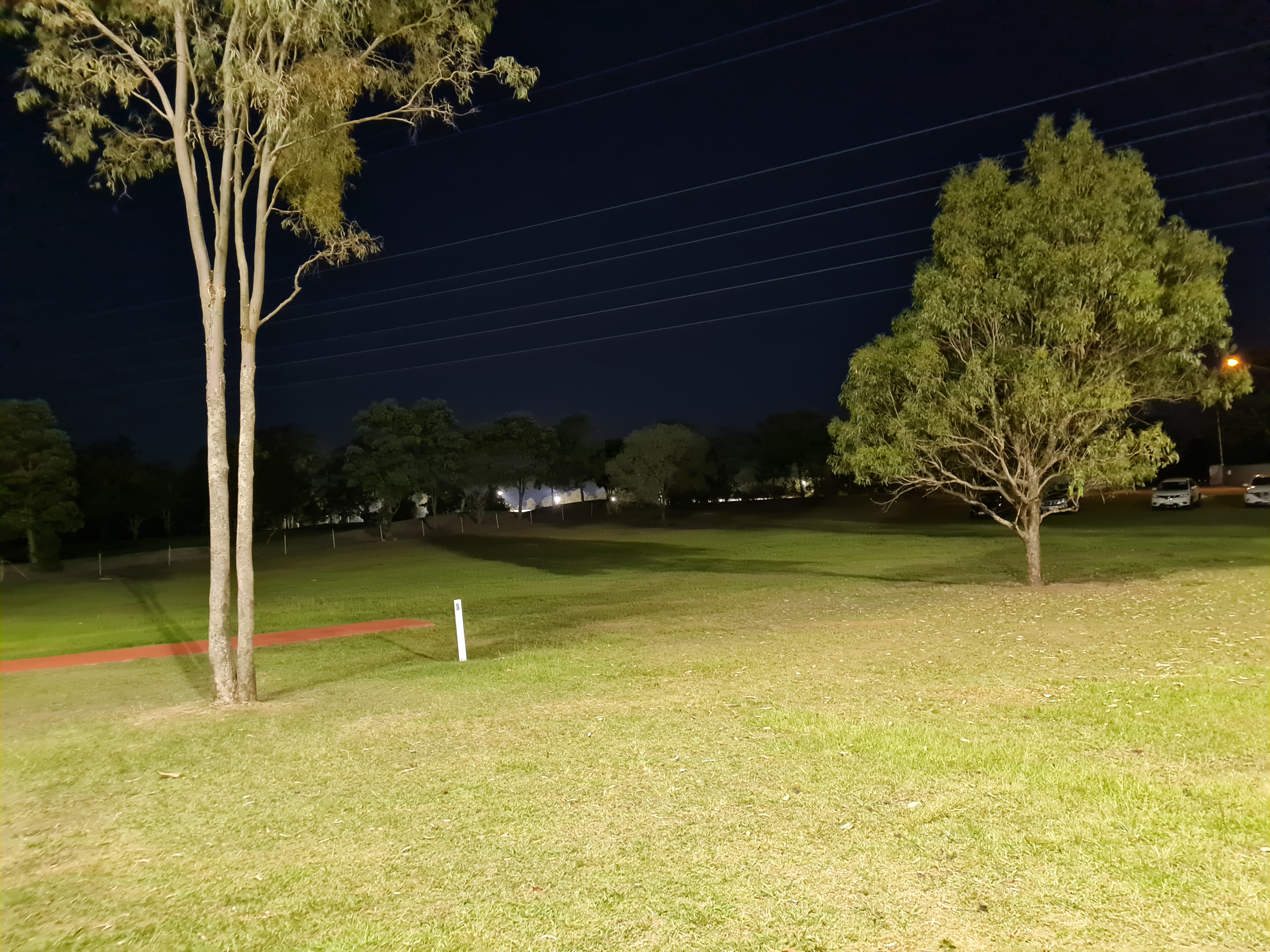
The interesting thing about a place in the dark, in the distance, and behind a chain wire fence usually means something. Especially when there are mysterious lights involved.

We were at a night sports event, watching over a thousand screaming and yelling kids from five to eighteen pretending to compete in a variety of athletic events.

I was there to nominally to support my granddaughter in her endeavours, but right at that moment, on the far side of the track, what I was really there to see was what was behind the wire fence

“Are you watching, Poppy?”

Well, at that moment I wasn’t, but I did turn just in time to see her clear a meter high high jump and execute an elegent backflip, a result no doubt of the ballet training she had since the age of four. Seven years later those lessons had transformed into a high jumper with a great future.

Except, she couldn’t really care less. It was more about the parents and athletic organisers expectations, than hers. I was there, she told me in a secretive tone, to tell everyone to back off.

if you think spying was a dangerous occupation, then let me tell you trying to navigate a safe path between child and parents, and then the rest of the word, forget it.

So, with my trusty phone camera, slightly modified, I was pretending to take pictures of surrounding trees in the high density lighting for the athletics oval, whilst zooming in on the real target.

And, about to take the money shot, I could feel a tugging on the side of my jacket.

I looked down to see the petulant face of a child not happy.

“You said you were coming to see me perform.”

I had. I looked over at the woman the boss had assigned as my ‘date’, Nancy, and whom I’d introduced as a long time friend who deigned to suffer my invitation so she could meet the girl I was always talking about.

“Yes, Poppy,” she said with an evil undertone. “You said you wanted to see her high jumps. You’d better get over there, while I take some pictures of the trees for you.”

“Why do you want pictures of dumb old trees?” That was a question I would have asked myself, and I didn’t quite have an answer for it.

Nancy did. “Because he’s odd like that. It’s one of the quirks I like about him.” She took the camera out of my hand and shooed us off.

And, heading back to the high jump, she asked, “What’s a quirk?”

“Just ask your father later. He knows all about quirks.”

…

© Charles Heath 2021

“Quickly, quickly…” – a short story


It was odd having a voice in your head, well, not really in your head as such, but in your ear, and sounding like it was in your head.

You could truthfully say you were hearing voices.

It was the next step after going through some very intensive training, having someone else as your eyes and ears when breaching a secure compound, and avoiding the enemy.

I’d signed on for this extra training thinking one day it would land me in the thick of the action. Some of the others thought I was mad, but someone had to do it, and the fact it was quite dangerous added just that extra bit to it.

But as they say, what you learn in training, and practise in a non-hostile environment, is nothing like being in that same situation in reality.

Now on was on my first assignment, part of an elite team, packed and taken to what was to everyone else, an unspecified location, but to us, it was the point of incursion.

The mission?

To rescue a government official (that was how he was described to us) who had been illegally detained in a foreign prison.

Our job?

To break him out and get out without the knowledge of the prison staff, or anyone representing that government. Yes, what we were doing was highly illegal, and yes, if we were caught it was more likely than not we would be executed as spies.

…

We were under cover in an abandoned farmhouse about three miles from the prison. We had been brought in under cover of darkness, and had only a few hours to set up, and then wait it out until the following night.

It was now or never, the weather people predicting that there would be sufficient cloud cover to make us invisible. Two of us were going in, and two remaining strategically placed outside to monitor the inside of the prison through a system of infrared scanners. We also had a floor plan of the building in which the prisoner was being held, and intelligence supplied, supposedly, by one of the prison guards who had been paid a lot of money for information on guard movements.

To me, it was a gigantic leap of faith to trust him, but I kept those thoughts to myself.

We had been over the plan a dozen times, and I’d gone through the passageways, rooms, and doors so many times I’d memorised where they were and would be able to traverse the building as if I had worked there for a lifetime. Having people outside, talking me through it was just an added benefit, along with alerts on how near the guards were to our position.

I was sure the other person going with me, a more seasoned professional who had a number of successful missions under his belt, was going through the same motions I was. After all, it was he who had devised and conducted the training.

There was a free period of several hours before departure, time to listen to some music, empty the head of unwanted thoughts, and get into the right mindset. It was no place to get tangled up in what-ifs, if anything went wrong, it was a simple matter of adapting.

Our training had reinforced the necessity to instantly gauge a situation and make changes on the fly. There would literally be no time to think.

I listened to the nuances of Chopin’s piano concertos, pretending to play the piano myself, having translated every note onto a piano key, and observing it in my mind’s eye.

My opposite number played games of chess in his head. We all had a different method of relaxing.

Until it was 22:00 hours, and time to go.

…

“Go left, no, hang on, go right.” The voice on my ear sounded confused and it was possible to get lefts and rights mixed up, if you were not careful.

It didn’t faze me, I knew from my study of the plans that once inside the perimeter fence, I had to go right, and head towards a concrete building the roof of which was barely above the ground.

It was once used as a helipad, and underneath, before the site became a prison, the space was used to make munitions. And it was an exceptionally large space that practically ran under the whole of the prison, built above ground.

All that had happened was the lower levels were sealed, covered over and the new structures built on top. Our access was going to be from under the ground.

Quite literally, they would not see, or hear, us coming.

The meteorological people had got it right, there was cloud cover, the moon hidden from view, and the whole perimeter was in inky darkness. Dressed in black from head to foot, the hope was we would be invisible.

There were two of us heading to the same spot, stairs that led down to a door that was once one of the entrances to the underground bunker. We were going separate ways in case one of the other was intercepted in an unforeseen event.

But, that part of the plan worked seamlessly, and we both arrived at the same place nearly at the same time.

Without the planning, we might easily have missed it because I didn’t think it would be discernable even in daylight.

I followed the Sergeant downstairs, keeping a watchful eye behind us. I stooped at the point where I could see down, and across the area we had just traversed.

Nothing else was stirring.

As expected, the door was seamless and without an apparent handle. It may have had one once, but not anymore, so anyone who did stumble across it, couldn’t get in.

Except us. We had special explosives that were designed to break the lock, and once set, would not make a lot of noise. Sixty seconds later we were inside, and the door closed so no one would know we’d broken in.

I was carrying a beacon so that the voice in my head could follow my progress. The sergeant had one too, and he led.

“Straight ahead, 200 yards, then another door. It shouldn’t be locked, but it might be closed.”

In other words, we had no way of knowing. Our informant had said no one had been down in the dungeons, as he called them, since the munition factory closed, and had been sealed up soon after the prison building had been handed over for use.

We were using night goggles, and there was a lot of rubbish strewn over the floor area so we had to carefully pick our way through which took time we really didn’t have. It looked as though our informant was right, no one had been down there for a long time. We were leaving boot prints in the dust.

We reached the door ten minutes later than estimated. Losing time would have a flow-on effect, and this operation was on a very tight time constraint.

“Once you are through the door, there’s a passage. Turn left and go about 50 paces. There should be another passage to your right.”

“Anyone down here?”

“No, but there is a half dozen prison officers above you. Standard patrol, from guardhouse to guardhouse. Unless they can hear you through five feet of solid concrete, you’re safe.”

My instincts told me five feet of concrete were not enough, but I’ll let it ride for the moment.

The door was slightly ajar and it took the two of us to pull it open so that we could get past. Behind it was the passage, going left and right. Trusting my invisible guide was not getting mixed up again, I motioned right, and we headed down the passage.

Despite the fact we should be alone, both of us were careful not to make any noise, and trod carefully.

At 50 or so paces, the passage came into sight. The sergeant went ahead. I stayed back and kept an eye in both directions. The passage before us was the one that would take us under the cell of the captive we were sent to retrieve.

There would be no blasting our way in. The floor to the cell had a grate, and when removed, a person could drop down into the ‘dungeon’. Currently, the grate was immovable, but we had the tools to fix that.

The sergeant would verify the grate was where it was supposed to be, then come back to get me.

Five minutes passed, then ten. It was not that far away.

I was about to go search when the voice in my head returned, but with panic. “We’ve been compromised. Get the hell out of there, now. Quickly…”

Then I heard what sounded like gunshots, then nothing.

A minute later there was a new voice. “I don’t know who you are, but I’d strongly advise you give yourself up to the guards. Failure to do so within one hour, I’ll execute the two men I now have in custody.”

Ahead of me there was a sudden explosion, followed by a cloud of dust and fine debris.

Hand grenade, or mine, it didn’t matter. The sergeant wouldn’t be coming back.

I sighed.

Plan B it was.

…

© Charles Heath 2021