“Uncanny good luck shines upon me…” – a short story


I never did take advice very seriously.  Especially when they were issued by old man Taggard, a man of some mystery that we all, adults and children alike wanted to know about.

Everyone in the street knew him as he had lived in the almost derelict mansion at the end of the cul-de-sac forever, way longer than anyone else in the neighbourhood had.  In fact, it was rumoured he had owned all the land around and sold it off bit by bit over time, the reason why there were so many houses of varying age in the estate.

Ours was one of the older houses, a few doors up from it.  We were close enough to observe Taggard’s habit, like sitting on the porch on an old swing chair in the afternoons, to the late-night wanderings in the street.  Some said he was accompanied by the ghost of his long-dead wife, which led to stories being told of the house he lived in being haunted.

As children, we had been brought up on a diet of TV shows such as ‘The Munsters’ and ‘The Addams Family’, and had invented our own make-believe show called ‘The Taggard Mansion’, the house with ghosts, and the neighborhood center for strange goings-on.

And as children were wont to do, we had to ‘investigate’.

There was a ‘gang’ even though we didn’t refer to it as such, about seven of us who lived in nearby houses, and all of whom had very active imaginations.  We also met in the cubby house out the back of our house to plan forays to find out whether the rumours were true.  The thing is we never got very far as he seemed to know when we were sneaking in and scared us off, so for years, the rumours remained just that, rumours.

But as grown-ups, and by that I mean, middle teens, our plans became bolder and more sophisticated, based on a whole new breed of TV shows, where the seemingly impossible was no longer that.  And Andy Boswell, my older brother’s best friend, his father was a private detective, or so he told us, and he had managed to ‘secure’ some of his father’s tools of the trade; a camera on the end of a wire that could connect to a cell phone, a listening device that could hear through walls, and in-ear communicators.  We could now, if we were close enough, see under doors, and hear if anyone was in.  We could all keep in touch, though I couldn’t see how this would help.

But a plan was formulated.  All seven of us had a role to play.  My brother Ron and Delilah, his girlfriend, were taking point, whatever that meant, Andy and I were going to take point, while Jack, Jill, and Kim were going to run distraction.  The theory was, they’d make enough noise to keep the old man occupied chasing them.  No one had been inside the house, ever.  Andy and I were going to be the first.

Andy had drawn up a plan and it was up on the wall.  He had charted the house, and had a very accurate picture of the house’s footprint, where doors and windows were, likely entrance points, including a hatchway down into what he assumed was a basement, though he preferred to call it the dungeon, and a layout of the grounds.  Apparently under the undergrowth were paths and gardens, even a large fountain that once graced the grounds of the three-story mansion made of sandstone, and built sometime during the middle of the 1800s.

Andy had done some research, mostly from old newspapers, and also discovered that the old man had once been married, they had a half dozen children, three of whom had died, the others scattered around the world.  It explained why no one ever visited the place.

The distraction team would be going in through the front gate, easy enough because it had come off its hinges and just needed a shove to open.  The old man usually emerged from the house via the driveway, or what was once a drive where cars could enter one side of the property, stop under a huge canopy, and emerge onto the road further along.  But it’s overgrown stare, the width of the pathway was now about six feet.  The fact it was once an amazing feature was the roadside lights, now all but disappearing behind the undergrowth.

Andy had found a photograph in the paper of it, and it had looked magnificent, as had the gardens, the overhanging canopy, and all the lights.  To think such magnificence was now lost.  And having seen it for what it once was, it was not hard to imagine any number of scenarios, my favourite, rescuing a damsel in distress from the tower.  Yes, it even had a tower, two, in fact, at each end of the house.  My brother always said I had an overactive imagination.

Andy and I would be going in by the less-used car exit, and heading for the left side of the building where Andy said were several floor-to-ceiling windows that looked to him like French doors.  Of course, none of us knew what French doors were, and my brother cut Andy short when he tried to explain.

Failing that, there was a door at the rear that seemed to be open, and we’d try that next.  We would get into position, advise the distraction team, and the operation would be a go.  The only debate was about what time of the day were we going to do it.  My brother preferred late in the afternoon.  Andy said it was better at dawn, or soon after if we were looking for maximum confusion about the target.

Dawn, confusion, tactics, target, Andy was in his element.  He was going to be a spy when he grew up.  My brother said he would never grow up, but then, my brother said I was a dreamer and would never amount to anything.  We ignored his advice, well, we pretty much ignored everything he said.

We were going in at dawn.

At 5 a.m. on Saturday morning, we gathered at the cubby house ready for action.  We all took a communicator and put it in our ears, and then had fun saying stupid stuff, and hearing it through the earpieces.  It was weird but added an exciting element to the adventure.  I know my heart was beating faster in anticipation.  Andy was pretending to be cool and failing.  I suspected my brother and Delilah had other plans when we left them alone in the cubby house.  The distraction team was ready to go.

Shortly after the sun came up, it was cool and the air still.  It was going to be a hot day, and in that first hour, everything was almost perfect.  It seemed a waste to do anything but let the early morning serenity settle over us.  Not today.  Andy and I went to our position, slowly feeling our way through the bushes, taking bearings from the light poles, and every now and then seeing the guttering and what looked to be a concrete path.  Beyond that was once a garden, and I tried, more than once, to imagine what it was like.

In my ear I could hear the others in the distraction team setting up at the start of the driveway, ready to go.  We reached our position, about twenty feet from the so-called French windows, the view into the house blocked by curtains, but beyond that, what we could see was darkness inside the house.  Taking in the whole side of the house, there were no lights on behind any of the windows.  If we didn’t know better, we could have assumed the house was empty.

I heard Andy say, “Ready.  Start making noise.”

A minute later we could both hear the distraction team in the distance and through the communicators.  It took two minutes before we heard the old man, yelling, “What the hell do you think you’re doing?”  Their job done, getting him out of the house, all they had to do was retreat.

Time for Andy and I to go.

Working on the basis that no one else was at the house, and the fact we had no evidence there was, we were not overly worried about making a stealthy approach.  I could hear in my earpiece, the gasping of those in the distraction team, having just made it outside the gate, and to tell us the old man had stopped them at the gate.  I doubt he had been running, but his yelling was just as effective.

That had stopped, and a sort of silence fell over the area.

We were now at the French doors, and Andy produced another tool that he’d forgotten to tell us about, a lock pick.  The fact it didn’t take long to unlock the door told me he was either very talented, or the lock was old and presented no problems.  Either way, he opened the door and ushered me in.

I brushed the curtains aside for him to follow, then moved in as he followed, closing the door behind him.

I’d taken five steps before I heard a woman’s voice say.  “Uncanny good luck shines upon me.  My knights in shining armour.  You’ve come to rescue me, no?”

…

© Charles Heath 2020-2023

Short Story writing – don’t try this at home! – Part 1

This is not a treatise, but a tongue in cheek, discussion on how to write short stories.   Suffice to say this is not the definitive way of doing it, just mine.  It works for me – it might not work for you.

Everyone has one in them, possibly more, and me, well, it’s how I keep the wolves from the door.

Yes, I read my stories to them and they fall asleep.

Or maybe not, I’m never quite sure what effect anything I write has on anyone.  And, reading a lot of the posts on how to handle bad reviews and rejection, such a recurrent theme, I don’t think I want to.

Ignorance is bliss, is it not?

Well, one day I’m sure something will happen.  It’s probably in the seven stages of writing:

Euphoria

Planning

Research

Writing

Failure

Search for the guilty

Distinction for the uninvolved

I guess you don’t fail if you don’t put it out there.  Searching for the guilty, well, there’s only one person to blame, the editor, and distinction for the uninvolved, didn’t your friend, relation, confidente, significant other, say it wasn’t going to work?

But, despite everything, I like writing short stories and try to produce one in a single sitting.  I try to keep the word count down, but the stories, somehow they just evolve in my head and don’t want to end the main character’s story.

In reality, there is no end to the story unless they die, and then, of course, the story branches off, just like a family tree,

Some stories are so intricate, they need another story to fill in the gaps, and then another because the plot is running through your head at a thousand miles an hour and your fingers won’t stop typing, because if you do, it will all dissipate into thin air like smoke.

Stories can, you know, dissipate like smoke, one minute your mining a rich vein the next, you’ve hit a ton of worthless quartz.

Then all the constraints come into play, nagging at the back of your mind, and you find yourself waking up in a bath of sweat crying out, I didn’t do it, the crime that is, not lose the best 2,000 words you’ve ever written.

But that’s all of those words you write, isn’t it?

But I digress, and I’ll write some more on the subject, what was it again?

The cinema of my dreams – I always wanted to go on a treasure hunt – Episode 31

Here’s the thing…

Every time I close my eyes, I see something different.

I’d like to think the cinema of my dreams is playing a double feature but it’s a bit like a comedy cartoon night on Fox.

But these dreams are nothing to laugh about.

Once again there’s a new instalment of an old feature, and we’re back on the treasure hunt.


Was she insinuating that Alex Benderby killed Jacob Stravinsky?

“Alex is a bully but he’s not a murderer,” I said, and wondering, at the same time, if he had finally graduated to a full-blown bad guy.

“He wouldn’t do it.  Like his old man, they get others to do their dirty work.  I’m sure the significance of Alex being out on his father’s boat was not lost on you.  You asked the questions, and now that I’ve thought about it, it’s possible those divers could have planted the body on Rico’s boat.”

It’s one thing to come up with theories, but it was entirely another to suddenly realize they might be true.  Until this point, I was happy to let Boggs have his dream that one day we might uncover a treasure trove, thinking that it was more fiction than the truth.  It made a good story, one of hope for a person who had had very little of it in the past.

Now, it was becoming horribly true.  What might amount to proof there might be treasure buried somewhere along this coast, an expert being interrogated and then killed, and a pair of what could only be described as gangsters about to start fighting over the spoils and not afraid of killing anyone who got in their way, these were omens, omens not to be ignored.

“Then don’t you think this is far too dangerous to get involved in?  Look what happened to Boggs and I.  We got off lightly if what you say is true.  I’m surprised if this Stravinsky is dead, then why isn’t Boggs?  He had the map, there’s no doubt Vice would assume he had made a copy.  What to stop him from doing the same to Boggs and Benderby did for Stravinsky?”

“Vince is not a clever as Alex.  Vince will never take over the Cossatino clan.  Alex, on the other hand, is the next generation of Benderby thugs.  But I suspect the older Benderby doesn’t know what’s going on.  Not yet anyway.”

My bottle of beer was empty.  Now I think I needed something stronger.  A lot stronger.

There was a knock on the door, which caught us both by surprise.

Are you expecting anyone?” I asked, and in the next second suspected it might be Vince, and I’d been led down the garden path to a place where I really didn’t want to be.

“No.”  She went over to the door and peered through the peephole.

“Damn,” she muttered.

Another, more demanding, knock.

She turned to look at me, “It’s Vince and my father.  I didn’t ask them to come here, and no, I didn’t tell them anything, whatever you might be thinking.”

All I was thinking right then was the coincidence of their arrival and being very afraid.

She opened the door.

Vince barged in almost pushing the door into his sister and stopped when he saw me.  At a more sedate speed, Giuliano Cossatino, Nadia’s father came into the room, and also stopped when he saw me.

There was no mistaking the malice on Vince’s face.   Nadia was right.  He was all muscle and no brain.

The older Cossatino spoke first.  “I see you have a new friend, though I would have thought you’d have better taste in men.”

“Your days of telling me what I can do and not do were over the moment you sent me away.”

“And yet you come back, slinking about like a thief in the night.  Your mother was most upset when you didn’t tell her.”

“The fact I have to, as you call it, slink back, should tell you a lot.”

“That you’re still the idiotic child you were before you went away.”

OK, now I was in the middle of a domestic family standoff.  I was waiting for the order for Vince to throw me out, quite possibly over the balcony for good measure.

“I should leave,” I said standing, “and let you two work it out.”

Vince took another step forward and was now only two paces away.  I’d have to go through him to leave.

“Stay,” Cossatino said.  “I have nothing against you.  Yet.”

“If you’re thinking this is anything but reminiscing about the old days, Mr Cossatino, then you’d be wrong.  There’s nothing between your daughter and I but air.  And,” mustering more bravado than I felt, “call your attack dog off.”

“Or what?”

“You don’t want to find out.”  Where was this coming from?  I was saying the words, but they were not my words.

“I hardly think…”

“That’s probably your biggest fault,” Nadia said, in a tone that suggested she was rapidly losing patience with her father.  

It was clear to me now, she had a hard time of it as a child, not unlike the rest of us, but for different reasons.  The bullying didn’t have to happen at school, but I could see why she had been like she was back then. 

“You never gave me any attention except to treat e like garbage, no, worse than garbage.  I can see nothing has changed.”  Then she switched her attention to Vince.  “And look at you, daddy’s little attack dog, as Sam says.  I’d start worrying Vince, because one day someone’s going to beat the crap out of you, and then you’ll be nothing, just like me.”

Vince only had one expression, so it was difficult to tell if he was worried or not.

Back to her father, “Why are you here?”

I doubt anyone had spoken to him like Nadia just did, and he looked angry.  If I hadn’t been there, I was not sure what would have happened to her.

“Your mother would like to see you.”

“You tell her to grow a backbone first, then when she does, I’ll think about it.  Now get out of my room, or I’ll call the sheriff.  At least he’s not in your back pocket.”

She picked up her phone and made ready to call.

A flick of his head got Vince to back up to the door and open it.

“You will regret this, young lady.”

“And don’t you forget I know where the skeletons are buried, so I’d leave now before some of them start rattling.”

A look of suffused anger flashed across his face, and he took a step forward.  I was not sure what to expect, but Nadia did take a step back.  She knew what he was capable of.

“We need to talk.  Don’t make me wait too long or there’ll be consequences.”

A glare at me, another for his daughter along with a shake of his head, then he left closing the door quietly after him.

I sat down before I fell down.  Nadia visibly wilted.

“I’m sorry about that.  You might have thought twice about threatening Vince.  You know he’ll come after you now.”

“Let him.  I always thought you were close to your father.”

“Daddy’s girl I was not.  Daddy’s biggest disappointment, maybe.”

“You didn’t ask him to come?”

“No.”

“But he didn’t come here to ask you to visit your mother.  It sounded like a last-minute invention.”

“It was.  My real mother is dead, and my stepmother was the reason why I was sent away.  Among other things.  No.  He was here to tell me to get closer to Alex.  It means only one thing.  This treasure hunt is about to get very, very ugly.”


© Charles Heath 2019

The cinema of my dreams – Was it just another surveillance job – Episode 34

I’m back home and this story has been sitting on a back burner for a few months, waiting for some more to be written.

The trouble is, there are also other stories to write, and I’m not very good at prioritizing.

But, here we are, a few minutes opened up and it didn’t take long to get back into the groove.

Chasing leads, maybe

…

She had brought a file.  It looked the same as the last one she brought with her, the one with my name on it.

This time it was thicker.

Intelligence gathering at its finest.  There’d be stuff in there that even I didn’t know about me.

She didn’t open it, just looked at me.

“What have you been doing?”

“Working?”

“For whom?”

“Nobbin, of course.  I am now assigned to his section.  Did you do that?”

“He did.  He tells me you’re working on the O’Connell investigation.”

“Is that what it’s called.  He never told me that.  And I had to find out where I’d been assigned by logging onto a computer.  An email or a letter would have made my life a little easier.”

“You’re just lucky you’re still working here.  Now, tell me more about this Severin character.”

“I told you everything I knew the last time you spoke to me.  Apparently, you seemed to know who it was.  Perhaps you might tell me, too.”

“It’s…”

“And,” I interrupted, “don’t tell me it’s above my pay grade.  I was potentially working for traitors and could have finished up in jail for treason.”

“You might still get there.”

Then why hadn’t she had me arrested and thrown in a dungeon the last time we met?  There was an easy answer to that question.  She needed me out in the field.  Nobbin needed me in the field.  They presumably needed me to remain available to Severin for whatever reason.

“What do you want?”

She opened the file, turned a few pages, and stopped at a yellow sheet of paper.  I wasn’t able to read it upside down, but it had very small spidery writing on it.

Then she looked at me again.

“Some secret documents appear to have gone missing.  We believe that is to say Director Dobbin thinks these may have been on a USB drive that was in the possession of O’Connell at the time of his death.  You were there at the time of his death.  You can see where this is going…”

No matter which answers I gave it was the wrong one, which led to do not pass go and do not collect two hundred dollars, or pounds as the case may be.

“I haven’t got it, and he didn’t tell me where it was, and I saw him die.”

“If you say so.”  She went back to the file and turned some more pagers.

“What do you mean?”

She looked up.  “So far, there’s no body been recovered, or any evidence there was a shooting where you said it was.”

“Are you trying to tell me he’s alive, because if you are, then I must be a very poor judge of people who have no pulse.  He was not about to get up and walk away.”

“Did you see the body removed?”

Now there’s an interesting point.  I had done as I was told and left when told to.  I assumed Severin would sort the problem out, in fact, hadn’t he called in the cleaners?  I saw a white van.

Actually, when I thought about it, I had no idea what happened after I left.  And, now that I remember, I didn’t see anyone get out of the white van.

Could bodies get up and walk?

I was beginning to think they could.

…

© Charles Heath 2020-2022

“The Things We Do For Love” – Coming soon

Is love the metaphorical equivalent to ‘walking the plank’; a dive into uncharted waters?

For Henry the only romance he was interested in was a life at sea, and when away from it, he strived to find sanctuary from his family and perhaps life itself.  It takes him to a small village by the sea, a place he never expected to find another just like him, Michelle, whom he soon discovers is as mysterious as she is beautiful.

Henry had long since given up the notion of finding romance, and Michelle couldn’t get involved for reasons she could never explain, but in the end both acknowledge that something happened the moment they first met.  

Plans were made, plans were revised, and hopes were shattered.

A chance encounter causes Michelle’s past to catch up with her, and whatever hope she had of having a normal life with Henry, or anyone else, is gone.  To keep him alive she has to destroy her blossoming relationship, an act that breaks her heart and shatters his.

But can love conquer all?

It takes a few words of encouragement from an unlikely source to send Henry and his friend Radly on an odyssey into the darkest corners of the red-light district in a race against time to find and rescue the woman he finally realizes is the love of his life.

The cover, at the moment, looks like this:

lovecoverfinal1

An excerpt from “If Only” – a work in progress

Investigation of crimes doesn’t always go according to plan, nor does the perpetrator get either found or punished.

That was particularly true in my case.  The murderer was incredibly careful in not leaving any evidence behind, to the extent that the police could not rule out whether it was a male or a female.

At one stage the police thought I had murdered my own wife though how I could be on a train at the time of the murder was beyond me.  I had witnesses and a cast-iron alibi.

The officer in charge was Detective First Grade Gabrielle Walters.  She came to me on the day after the murder seeking answers to the usual questions like, when was the last time you saw your wife, did you argue, the neighbors reckon there were heated discussions the day before.

Routine was the word she used.

Her fellow detective was a surly piece of work whose intention was to get answers or, more likely, a confession by any or all means possible.  I could sense the raging violence within him.  Fortunately, common sense prevailed.

Over the course of the next few weeks, once I’d been cleared of committing the crime, Gabrielle made a point of keeping me informed of the progress.

After three months the updates were more sporadic, and when, for lack of progress, it became a cold case, communication ceased.

But it was not the last I saw of Gabrielle.

The shock of finding Vanessa was more devastating than the fact she was now gone, and those images lived on in the same nightmare that came to visit me every night when I closed my eyes.

For months I was barely functioning, to the extent I had all but lost my job, and quite a few friends, particularly those who were more attached to Vanessa rather than me.

They didn’t understand how it could affect me so much, and since it had not happened to them, my tart replies of ‘you wouldn’t understand’ were met with equally short retorts.  Some questioned my sanity, even, for a time, so did I.

No one, it seemed, could understand what it was like, no one except Gabrielle.

She was by her own admission, damaged goods, having been the victim of a similar incident, a boyfriend who turned out to be an awfully bad boy.  Her story varied only in she had been made to witness his execution.  Her nightmare, in reliving that moment in time, was how she was still alive and, to this day, had no idea why she’d been spared.

It was a story she told me one night, some months after the investigation had been scaled down.  I was still looking for the bottom of a bottle and an emotional mess.  Perhaps it struck a resonance with her; she’d been there and managed to come out the other side.

What happened become our secret, a once-only night together that meant a great deal to me, and by mutual agreement, it was not spoken of again.  It was as if she knew exactly what was required to set me on the path to recovery.

And it had.

Since then, we saw each about once a month in a cafe.   I had been surprised to hear from her again shortly after that eventful night when she called to set it up, ostensibly for her to provide me with any updates on the case, but perhaps we had, after that unspoken night, formed a closer bond than either of us wanted to admit.

We generally talked for hours over wine, then dinner and coffee.  It took a while for me to realize that all she had was her work, personal relationships were nigh on impossible in a job that left little or no spare time for anything else.

She’d always said that if I had any questions or problems about the case, or if there was anything that might come to me that might be relevant, even after all this time, all I had to do was call her.

I wondered if this text message was in that category.  I was certain it would interest the police and I had no doubt they could trace the message’s origin, but there was that tiny degree of doubt, about whether or not I could trust her to tell me what the message meant.

I reached for the phone then put it back down again.  I’d think about it and decide tomorrow.

© Charles Heath 2018-2020

Writers need to have many alter egos, don’t they?

I have often wondered just how much or how little of the author’s personality and experiences end up in a fictional character.

Have they climbed mountains,

Have they escaped from what is almost the inescapable,

Have they been shot, tortured, or worse,

Have they been dumped, or divorced,

Have they travelled to dangerous places, or got locked up in a foreign jail?

We research, read, and I guess experience some or all of the above on the way to getting the book written, but it’s perhaps an interesting fundamental question.

Who am I today?  Or, more to the point, who do I want to be today?

Or it can be a question, out of left field, in an interview; “Who are you?”

My initial reaction was to say, “I’m a writer.”  But that wasn’t the answer the interviewer is looking for.

Perhaps if she had asked, “Who are you when you’re writing your latest story?” it would make more sense.

Am I myself today?

Am I some fictional character an amalgam of a lot of other people?

Have I got someone definite in mind when I start writing the story?

The short answer might be, “I usually want to be someone other than what I am now.  It’s fiction.  I can be anyone or anything I want, provided, of course, I know the limitations of the character.”

“So,” she says, “what if you want to be a fireman?”

“I don’t want to be a fireman.”

“But if the story goes in the direction where you need a fireman…”

“What is this thing you have with firemen?”  I’m shaking my head.  How did we get off track?

“Just saying.”

“Then I’d have to research the role, but I’m not considering adding a fireman anytime soon.”

She sighs.  “Your loss.”

Moving on.

And there is that other very interesting question; “Who would you like to be if you could be someone else?”

A writer in that period between the wars, perhaps like an F Scott Fitzgerald or Ernest Hemingway, in Paris, or if it is a fictional character, Jay Gatsby.

He’s just the sort of person who is an enigma wrapped up in a mystery.

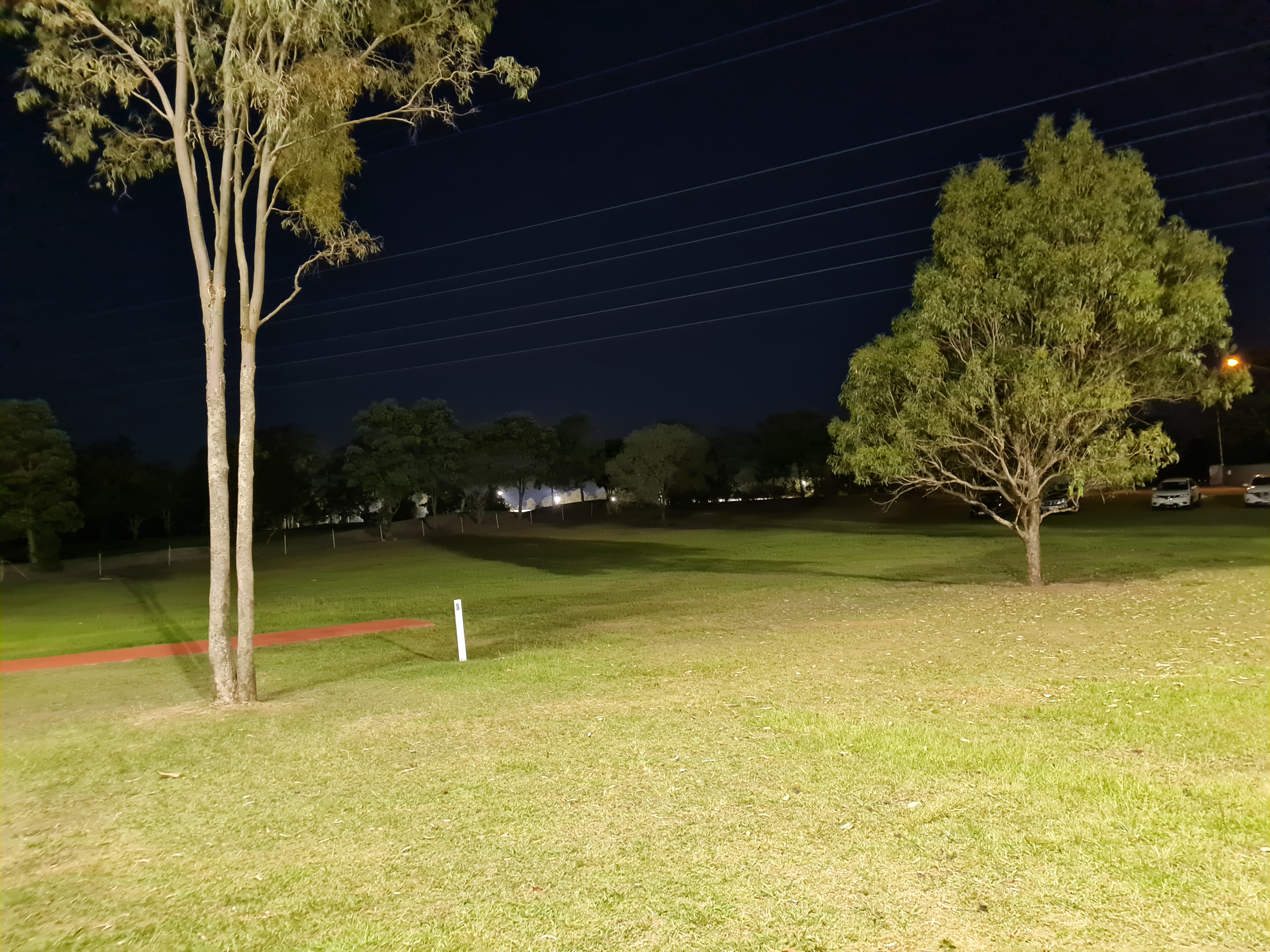
A photograph from the inspirational bin – 8

A picture can paint a thousand words, or more, or less, but…

…

The interesting thing about a place in the dark, in the distance, and behind a chain wire fence usually means something. Especially when there are mysterious lights involved.

We were at a night sports event, watching over a thousand screaming and yelling kids from five to eighteen pretending to compete in a variety of athletic events.

I was there to nominally to support my granddaughter in her endeavours, but right at that moment, on the far side of the track, what I was really there to see was what was behind the wire fence

“Are you watching, Poppy?”

Well, at that moment I wasn’t, but I did turn just in time to see her clear a meter high high jump and execute an elegent backflip, a result no doubt of the ballet training she had since the age of four. Seven years later those lessons had transformed into a high jumper with a great future.

Except, she couldn’t really care less. It was more about the parents and athletic organisers expectations, than hers. I was there, she told me in a secretive tone, to tell everyone to back off.

if you think spying was a dangerous occupation, then let me tell you trying to navigate a safe path between child and parents, and then the rest of the word, forget it.

So, with my trusty phone camera, slightly modified, I was pretending to take pictures of surrounding trees in the high density lighting for the athletics oval, whilst zooming in on the real target.

And, about to take the money shot, I could feel a tugging on the side of my jacket.

I looked down to see the petulant face of a child not happy.

“You said you were coming to see me perform.”

I had. I looked over at the woman the boss had assigned as my ‘date’, Nancy, and whom I’d introduced as a long time friend who deigned to suffer my invitation so she could meet the girl I was always talking about.

“Yes, Poppy,” she said with an evil undertone. “You said you wanted to see her high jumps. You’d better get over there, while I take some pictures of the trees for you.”

“Why do you want pictures of dumb old trees?” That was a question I would have asked myself, and I didn’t quite have an answer for it.

Nancy did. “Because he’s odd like that. It’s one of the quirks I like about him.” She took the camera out of my hand and shooed us off.

And, heading back to the high jump, she asked, “What’s a quirk?”

“Just ask your father later. He knows all about quirks.”

…

© Charles Heath 2021

“Quickly, quickly…” – a short story


It was odd having a voice in your head, well, not really in your head as such, but in your ear, and sounding like it was in your head.

You could truthfully say you were hearing voices.

It was the next step after going through some very intensive training, having someone else as your eyes and ears when breaching a secure compound, and avoiding the enemy.

I’d signed on for this extra training thinking one day it would land me in the thick of the action. Some of the others thought I was mad, but someone had to do it, and the fact it was quite dangerous added just that extra bit to it.

But as they say, what you learn in training, and practise in a non-hostile environment, is nothing like being in that same situation in reality.

Now on was on my first assignment, part of an elite team, packed and taken to what was to everyone else, an unspecified location, but to us, it was the point of incursion.

The mission?

To rescue a government official (that was how he was described to us) who had been illegally detained in a foreign prison.

Our job?

To break him out and get out without the knowledge of the prison staff, or anyone representing that government. Yes, what we were doing was highly illegal, and yes, if we were caught it was more likely than not we would be executed as spies.

…

We were under cover in an abandoned farmhouse about three miles from the prison. We had been brought in under cover of darkness, and had only a few hours to set up, and then wait it out until the following night.

It was now or never, the weather people predicting that there would be sufficient cloud cover to make us invisible. Two of us were going in, and two remaining strategically placed outside to monitor the inside of the prison through a system of infrared scanners. We also had a floor plan of the building in which the prisoner was being held, and intelligence supplied, supposedly, by one of the prison guards who had been paid a lot of money for information on guard movements.

To me, it was a gigantic leap of faith to trust him, but I kept those thoughts to myself.

We had been over the plan a dozen times, and I’d gone through the passageways, rooms, and doors so many times I’d memorised where they were and would be able to traverse the building as if I had worked there for a lifetime. Having people outside, talking me through it was just an added benefit, along with alerts on how near the guards were to our position.

I was sure the other person going with me, a more seasoned professional who had a number of successful missions under his belt, was going through the same motions I was. After all, it was he who had devised and conducted the training.

There was a free period of several hours before departure, time to listen to some music, empty the head of unwanted thoughts, and get into the right mindset. It was no place to get tangled up in what-ifs, if anything went wrong, it was a simple matter of adapting.

Our training had reinforced the necessity to instantly gauge a situation and make changes on the fly. There would literally be no time to think.

I listened to the nuances of Chopin’s piano concertos, pretending to play the piano myself, having translated every note onto a piano key, and observing it in my mind’s eye.

My opposite number played games of chess in his head. We all had a different method of relaxing.

Until it was 22:00 hours, and time to go.

…

“Go left, no, hang on, go right.” The voice on my ear sounded confused and it was possible to get lefts and rights mixed up, if you were not careful.

It didn’t faze me, I knew from my study of the plans that once inside the perimeter fence, I had to go right, and head towards a concrete building the roof of which was barely above the ground.

It was once used as a helipad, and underneath, before the site became a prison, the space was used to make munitions. And it was an exceptionally large space that practically ran under the whole of the prison, built above ground.

All that had happened was the lower levels were sealed, covered over and the new structures built on top. Our access was going to be from under the ground.

Quite literally, they would not see, or hear, us coming.

The meteorological people had got it right, there was cloud cover, the moon hidden from view, and the whole perimeter was in inky darkness. Dressed in black from head to foot, the hope was we would be invisible.

There were two of us heading to the same spot, stairs that led down to a door that was once one of the entrances to the underground bunker. We were going separate ways in case one of the other was intercepted in an unforeseen event.

But, that part of the plan worked seamlessly, and we both arrived at the same place nearly at the same time.

Without the planning, we might easily have missed it because I didn’t think it would be discernable even in daylight.

I followed the Sergeant downstairs, keeping a watchful eye behind us. I stooped at the point where I could see down, and across the area we had just traversed.

Nothing else was stirring.

As expected, the door was seamless and without an apparent handle. It may have had one once, but not anymore, so anyone who did stumble across it, couldn’t get in.

Except us. We had special explosives that were designed to break the lock, and once set, would not make a lot of noise. Sixty seconds later we were inside, and the door closed so no one would know we’d broken in.

I was carrying a beacon so that the voice in my head could follow my progress. The sergeant had one too, and he led.

“Straight ahead, 200 yards, then another door. It shouldn’t be locked, but it might be closed.”

In other words, we had no way of knowing. Our informant had said no one had been down in the dungeons, as he called them, since the munition factory closed, and had been sealed up soon after the prison building had been handed over for use.

We were using night goggles, and there was a lot of rubbish strewn over the floor area so we had to carefully pick our way through which took time we really didn’t have. It looked as though our informant was right, no one had been down there for a long time. We were leaving boot prints in the dust.

We reached the door ten minutes later than estimated. Losing time would have a flow-on effect, and this operation was on a very tight time constraint.

“Once you are through the door, there’s a passage. Turn left and go about 50 paces. There should be another passage to your right.”

“Anyone down here?”

“No, but there is a half dozen prison officers above you. Standard patrol, from guardhouse to guardhouse. Unless they can hear you through five feet of solid concrete, you’re safe.”

My instincts told me five feet of concrete were not enough, but I’ll let it ride for the moment.

The door was slightly ajar and it took the two of us to pull it open so that we could get past. Behind it was the passage, going left and right. Trusting my invisible guide was not getting mixed up again, I motioned right, and we headed down the passage.

Despite the fact we should be alone, both of us were careful not to make any noise, and trod carefully.

At 50 or so paces, the passage came into sight. The sergeant went ahead. I stayed back and kept an eye in both directions. The passage before us was the one that would take us under the cell of the captive we were sent to retrieve.

There would be no blasting our way in. The floor to the cell had a grate, and when removed, a person could drop down into the ‘dungeon’. Currently, the grate was immovable, but we had the tools to fix that.

The sergeant would verify the grate was where it was supposed to be, then come back to get me.

Five minutes passed, then ten. It was not that far away.

I was about to go search when the voice in my head returned, but with panic. “We’ve been compromised. Get the hell out of there, now. Quickly…”

Then I heard what sounded like gunshots, then nothing.

A minute later there was a new voice. “I don’t know who you are, but I’d strongly advise you give yourself up to the guards. Failure to do so within one hour, I’ll execute the two men I now have in custody.”

Ahead of me there was a sudden explosion, followed by a cloud of dust and fine debris.

Hand grenade, or mine, it didn’t matter. The sergeant wouldn’t be coming back.

I sighed.

Plan B it was.

…

© Charles Heath 2021

The fourth attempt, other factors, and people

There are two other characters that will be used in this rewrite, the second an addition to give the main character a means of letting the reader get to know a bit about him.

His name is Milt, an African American that’s always been on the fringe.  Another who is a victim of his circumstances but not letting it get the better of him, the sort of man who makes the best of a bad situation.

He’s seen active service in the army, honourably discharged, but still affected though not as bad as some of those he served with.  He is in fact the ideal man for the job, with combat experience, so he’s not likely to get flustered in a shit storm.

And probably not the man you want on this site.  Being in desperate circumstances doesn’t mean you do desperate things.

He is one of a team of four and our main character drew the straw to partner him.  There are two others, based on the other side of the park, neither of whom are trustworthy, Smithy, the overall leader, to whom they all report at shift start and end, and Carruthers, an Englishman reputed to be ex SAS, but no one is inclined to believe him. 

The scars on his neck tell a story, but it was left to the other’s imagination, as he doesn’t talk about it.  Milt was of the opinion he was captured in Afghanistan and tortured, but that could be just be canteen scuttlebutt.

Whatever the circumstances, Graham kept away from him as much as possible, and was glad when he didn’t have to partner him for the shift.

The other character. Penelope has featured in the earlier versions of the story.  Over the changes her background has changed, but I’ve settled on a medical surgeon career, renown for doing tricky procedures with a high success rate, and in doing so gained a reputation, some not always good.

Wealth and ego don’t always make a good pair, and marrying wealth brings its own rewards and pitfalls, particularly when you discover the man you married isn’t exactly whom you thought he was.

It is of course a typical scenario, but I’m going to try and weave it differently.  There will be no more teasers until the story starts.

But she will be introduced earlier than in the previous iterations because she needs some backstory too, otherwise just arriving at Graham’s work and getting shot, while provoking a volatile situation that drags the reader in, out of left field is not exactly the best start.

So, let’s begin.

© Charles Heath 2022