What I found was the moon out in the late afternoon, a phenomenon that might happen on a regular basis, but this one of the few times I’ve seen it.
And it reminds me of something I was told a long time ago. Shoot for the moon. I never quite understood what the person meant, not until a long time later when I realised that I was being told nothing was impossible.
Had I ever achieved the impossible?
The thing is, each of us define what is possible and what is impossible ourselves, and is therefore different for every person. If you tell yourself it is impossible, then it requires a mind shift to get past that barrier.
But, the question still remains the same, did I achieve the impossible?
I never thought I’d write a book, or have it published. Some would say I still haven’t achieved that goal because I self published it on Amazon.
I think I achieved what I set out to do.
I never thought I’d get a university degree, but people had faith in me, and yes, I got it in the end.
I never thought, when I was younger, I would be a father, and sometimes I wonder whether it was worth it, but having grandchildren dispelled any perceived disappointment.
And what is on the impossible list now?
Not a lot. At my age, I don’t think it’s possible I will travel to the moon, nor afford to skirt the edge of space, as much as it would be amazing to look back at the planet.
I don’t think I’ll ever become a CEO, but then I don’t want to. Too much responsibility.
What’s left that is achievable?
Tracing my family history, and going back to where my ancestors came from, and, hopefully finding someone who was ‘famous’.
I’m back home and this story has been sitting on the back burner for a few months, waiting for some more to be written.
The trouble is, there are also other stories to write, and I’m not very good at prioritizing.
But, here we are, a few minutes opened up and it didn’t take long to get back into the groove.
Chasing leads, maybe
—
I gave it about five minutes before I think I started breathing again and then headed back to Jennifer.
Or where I thought I had left her.
She wasn’t there. I think, in the end, it didn’t surprise me. She had been reluctant from the start so if I had to guess, she had done a bunk. This was not her fight, nor mine, but she had a ticket out. Why would you want to come back after being betrayed by the likes of Severin and Maury?
I hope she left the car behind.
Now that I was here there was no point leaving, so I took a few minutes to search the surrounding area, just in case she was still here, just someplace else, and when she wasn’t, I quickly and silently made my way back to the side of the house with the open door from a different direction.
There was another set of French doors, these curtained, and with an overhead light above the doorway, so I kept my distance in case there was a movement activator, another which looked to be a servant’s entrance at the back. Neither door looked to be an easy viable entrance.
The original side door was still unlocked, with no lights or movement inside.
I waited, then opened the door wide enough to slip through. Again, I waited in case there was a silent alarm, then when nothing stirred, slipped through and closed the door behind me.
On the other side of the door, it was quite dark, except now I could see, on one wall, the dying embers of a fire. Someone had been in the room earlier and most likely gone to bed.
It meant the house was occupied.
It also meant I had to be careful.
On the other side of the doors, it was a lot warmer. Again I waited a few minutes, just in case someone came, and, when they didn’t, I pulled out a small torch and turned it on.
In front of me were two chairs and a table, one I would have walked into without a light. The walls had shelves and those shelves were filled with books. Some behind glass doors, others not. There was another chair by the fire, and beside it, a stack of cooks, and a table with had an empty glass and a bottle, and a pair of reading glasses.
The downstairs reading room.
I cross the room slowly, hoping there were no squeaky floorboards, to be expected in an old house like this one. The timber flooring was exposed only at the edges of the room, the rest of the floor covered in a large, discolored, and fraying carpet square.
It was old, like everything else in the room.
I was tempted to have a look at how far the books dated back to but resisted the urge. I was looking for information on the owner.
At the doorway to what looked like a passage, I turned off the torch and peered out. It was not exactly dark, my eyes had adjusted to the low-level light from low wattage lights about a foot above the floor.
Lights to help guide the way at night.
Left, rooms, right, rooms, at the end of the passage a wide doorway leading towards the other side of the house. Larger rooms perhaps.
I turned right and headed towards the front, and they stopped at the doorway to the next room. I’d deliberately walked on the carpet runner in the middle of the passage, and just managed to catch my foot when one part of the floor creaked softly.
The room next door was almost the same as the one I’d entered by, with chairs and shelves but only on two sides. This room had a long window and no French doors.
On one side there was a writing desk, open, with papers scatted on the writing surface. I quickly crossed the room to it, switched on the light, and checked.
Bills. In the name of Mrs. Marianne Quigley. This had to be Adam Quigley’s mother, and by deduction, O’Connell’s mother.
Proof I was in the right place.
Then I heard the squeak of a floorboard followed by the clicking sound of a gun being cocked.
“Don’t move, or I’ll shoot. Hands in the air. And don’t make me ask twice.”
The Paradox of Poetry: Unpacking Elizabeth Bishop’s Insight
Elizabeth Bishop, a Pulitzer Prize-winning poet, once astutely observed, “Writing poetry is an unnatural act. It takes great skill to make it seem natural.” This statement may seem counterintuitive, as poetry is often associated with spontaneity and emotional expression. However, Bishop’s words reveal a profound truth about the craft of poetry, one that warrants closer examination. In this blog post, we’ll delve into the complexities of writing poetry, exploring why it can be considered an unnatural act, and what it takes to make it seem natural.
The Unnatural Act of Writing Poetry
On the surface, poetry appears to be a natural extension of human language, a way to express thoughts, emotions, and experiences through words. However, the process of crafting a poem is often a deliberate and calculated one. Poets must carefully select and arrange words, considering factors like meter, rhyme, imagery, and syntax, to convey their intended meaning. This self-conscious process can feel unnatural, as it requires a level of manipulation and control that doesn’t always come easily.
Furthermore, poetry often involves distilling complex emotions and ideas into concise, precise language, which can be a challenging and artificial process. Poets must navigate the tension between authenticity and artifice, striving to capture the essence of their subject matter while also shaping it into a cohesive, aesthetically pleasing form. This balancing act can make writing poetry feel like an unnatural act, as it demands a high degree of craftsmanship and attention to detail.
The Skill of Making it Seem Natural
So, how do poets overcome the unnatural aspects of writing poetry and make it seem natural? According to Bishop, it takes great skill. This skill encompasses a range of abilities, including:
Mastering form and technique: Poets must develop a deep understanding of poetic forms, such as sonnets, free verse, or haikus, and learn to wield them effectively. This involves experimenting with different structures, rhythms, and language patterns to find the right fit for their message.
Developing a unique voice: A poet’s voice is the distinctive tone, style, and perspective they bring to their work. Cultivating a unique voice requires a deep understanding of one’s own experiences, emotions, and observations, as well as the ability to express them in a way that feels authentic and relatable.
Using language effectively: Poets must be skilled in the use of language, able to select words, images, and metaphors that evoke the desired response in the reader. This involves a keen sense of observation, a rich vocabulary, and a willingness to experiment with language.
Editing and revision: The process of writing poetry is often iterative, with poets refining their work through multiple drafts and revisions. This involves being willing to cut, reshape, and rework lines, stanzas, and entire poems to achieve the desired effect.
By honing these skills, poets can create poetry that seems natural, effortless, and spontaneous, even when it’s the result of careful crafting and revision. The best poetry appears to flow from the poet’s heart and mind with ease, concealing the hard work and dedication that went into its creation.
Conclusion
Elizabeth Bishop’s observation that “writing poetry is an unnatural act” may seem paradoxical, but it highlights the complex, nuanced nature of the craft. While poetry is often associated with natural expression and spontaneity, the process of writing it can be deliberate, calculated, and artificial. However, with great skill and dedication, poets can overcome these challenges and create work that seems natural, authentic, and beautiful. By embracing the unnatural aspects of writing poetry and developing the skills necessary to master the craft, poets can produce poetry that resonates with readers and leaves a lasting impression.
It’s another reminder that we should never give up, despite the advice that’s sometimes given by our peers, not exactly saying it, but alluding to the fact that some do, and some don’t and that the talented should not.
But … do we know we’re talented, and even if we are, after a myriad or plethora of rejections, the temptation to walk away might be there.
Except…
If you’re like me, you’re not in it for the wealth and fame. Yes, wealth and fame would be nice; just an adequate living would be better, but most of us aren’t likely to give up our day jobs any time soon.
I write because I love writing. I like inventing characters and throwing everything, but the kitchen sink, at them. Maybe that’s where I’m going wrong. I should throw in the kitchen sink.
Kidding.
And I publish a lot of those stories on this blog, and people are reading them because I get a few comments every day, and most of them are positive, and even if they are not, yes, you can’t please everyone, I take them as constructive criticism.
So the next time someone advises you that writing just might not be your vocation, write them a story and tell them they’re wrong.
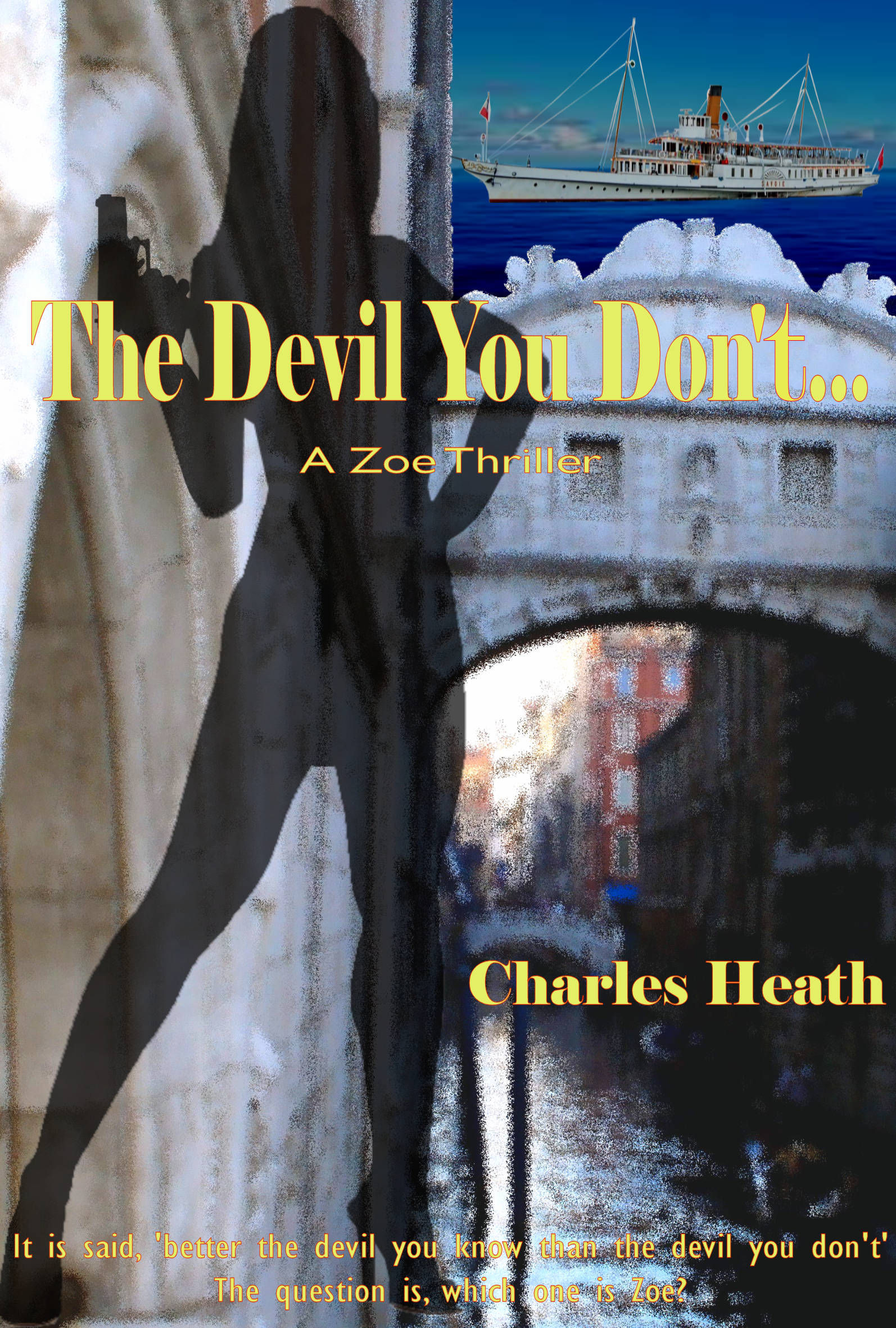
John Pennington’s life is in the doldrums. Looking for new opportunities, and prevaricating about getting married, the only joy on the horizon was an upcoming visit to his grandmother in Sorrento, Italy.
Suddenly he is left at the check-in counter with a message on his phone telling him the marriage is off, and the relationship is over.
If only he hadn’t promised a friend he would do a favour for him in Rome.
At the first stop, Geneva, he has a chance encounter with Zoe, an intriguing woman who captures his imagination from the moment she boards the Savoire, and his life ventures into uncharted territory in more ways than one.
That ‘favour’ for his friend suddenly becomes a life-changing event, and when Zoe, the woman who he knows is too good to be true, reappears, danger and death follow.
Shot at, lied to, seduced, and drawn into a world where nothing is what it seems, John is dragged into an adrenaline-charged undertaking, where he may have been wiser to stay with the ‘devil you know’ rather than opt for the ‘devil you don’t’.
It was the first time in almost a week that I made the short walk to the cafe alone. It was early, and the chill of the morning was still in the air. In summer, it was the best time of the day. When Susan came with me, it was usually much later, when the day was much warmer and less tolerable.
On the morning of the third day of her visit, Susan said she was missing the hustle and bustle of London, and by the end of the fourth she said, in not so many words, she was over being away from ‘civilisation’. This was a side of her I had not seen before, and it surprised me.
She hadn’t complained, but it was making her irritable. The Susan that morning was vastly different to the Susan on the first day. So much, I thought, for her wanting to ‘reconnect’, the word she had used as the reason for coming to Greve unannounced.
It was also the first morning I had time to reflect on her visit and what my feelings were towards her. It was the reason I’d come to Greve: to soak up the peace and quiet and think about what I was going to do with the rest of my life.
I sat in my usual corner. Maria, one of two waitresses, came out, stopped, and there was no mistaking the relief in her manner. There was an air of tension between Susan and Maria I didn’t understand, and it seemed to emanate from Susan rather than the other way around. I could understand her attitude if it was towards Alisha, but not Maria. All she did was serve coffee and cake.
When Maria recovered from the momentary surprise, she said, smiling, “You are by yourself?” She gave a quick glance in the direction of my villa, just to be sure.
“I am this morning. I’m afraid the heat, for one who is not used to it, can be quite debilitating. I’m also afraid it has had a bad effect on her manners, for which I apologise. I cannot explain why she has been so rude to you.”
“You do not have to apologise for her, David, but it is of no consequence to me. I have had a lot worse. I think she is simply jealous.”
It had crossed my mind, but there was no reason for her to be. “Why?”
“She is a woman, I am a woman, she thinks because you and I are friends, there is something between us.”
It made sense, even if it was not true. “Perhaps if I explained…”
Maria shook her head. “If there is a hole in the boat, you should not keep bailing but try to plug the hole. My grandfather had many expressions, David. If I may give you one piece of advice, as much as it is none of my business, you need to make your feelings known, and if they are not as they once were, and I think they are not, you need to tell her. Before she goes home.”
Interesting advice. Not only a purveyor of excellent coffee, but Maria was also a psychiatrist who had astutely worked out my dilemma. What was that expression, ‘not just a pretty face’?
“Is she leaving soon?” I asked, thinking Maria knew more about Susan’s movements than I did.
“You would disappoint me if you had not suspected as much. Susan was having coffee and talking to someone in her office on a cell phone. It was an intense conversation. I should not eavesdrop, but she said being here was like being stuck in hell. It is a pity she does not share your love for our little piece of paradise, is it not?”
“It is indeed. And you’re right. She said she didn’t have a phone, but I know she has one. She just doesn’t value the idea of getting away from the office. Perhaps her role doesn’t afford her that luxury.”
And perhaps Alisha was right about Maria, that I should be more careful. She had liked Maria the moment she saw her. We had sat at this very table, the first day I arrived. I would have travelled alone, but Prendergast, my old boss, liked to know where ex-employees of the Department were, and what they were doing.
She sighed. “I am glad I am just a waitress. Your usual coffee and cake?”
“Yes, please.”
Several months had passed since we had rescued Susan from her despotic father; she had recovered faster than we had thought, and settled into her role as the new Lady Featherington, though she preferred not to use that title, but go by the name of Lady Susan Cheney.
I didn’t get to be a Lord, or have any title, not that I was expecting one. What I had expected was that Susan, once she found her footing as head of what seemed to be a commercial empire, would not have time for details like husbands, particularly when our agreement made before the wedding gave either of us the right to end it.
There was a moment when I visited her recovering in the hospital, where I was going to give her the out, but I didn’t, and she had not invoked it. We were still married, just not living together.
This visit was one where she wanted to ‘reconnect’ as she called it, and invite me to come home with her. She saw no reason why we could not resume our relationship, conveniently forgetting she indirectly had me arrested for her murder, charges both her mother and Lucy vigorously pursued, and had the clone not returned to save me, I might still be in jail.
It was not something I would forgive or forget any time soon.
There were other reasons why I was reluctant to stay with her, like forgetting small details, an irregularity in her character I found odd. She looked the same, she sounded the same, she basically acted the same, but my mind was telling me something was not right. It was not the Susan I first met, even allowing for the ordeal she had been subjected to.
But, despite those misgivings, there was no question in my mind that I still loved her, and her clandestine arrival had brought back all those feelings. But as the days passed, I began to get the impression my feelings were one-sided and she was just going through the motions.
Which brought me to the last argument, earlier, where I said if I went with her, it would be business meetings, social obligations, and quite simply her ‘celebrity’ status that would keep us apart. I reminded her that I had said from the outset I didn’t like the idea of being in the spotlight, and when I reiterated it, she simply brushed it off as just part of the job, adding rather strangely that I always looked good in a suit. The flippancy of that comment was the last straw, and I left before I said something I would regret.
I knew I was not a priority. Maybe somewhere inside me, I had wanted to be a priority, and I was disappointed when I was not.
And finally, there was Alisha. Susan, at the height of the argument, had intimated she believed I had an affair with her, but that elephant was always in the room whenever Alisha was around. It was no surprise when I learned Susan had asked Prendergast to reassign her to other duties.
At least I knew what my feelings for Alisha were, and there were times when I had to remember she was persona non grata. Perhaps that was why Susan had her banished, but, again, a small detail; jealousy was not one of Susan’s traits when I first knew her.
Perhaps it was time to set Susan free.
When I swung around to look in the direction of the lane where my villa was, I saw Susan. She was formally dressed, not in her ‘tourist’ clothes, which she had bought from one of the local clothing stores. We had fun that day, shopping for clothes, a chore I’d always hated. It had been followed by a leisurely lunch, lots of wine and soul searching.
It was the reason why I sat in this corner; old habits die hard. I could see trouble coming from all directions, not that Susan was trouble or at least I hoped not, but it allowed me the time to watch her walking towards the cafe in what appeared to be short, angry steps; perhaps the culmination of the heat wave and our last argument.
She glared at me as she sat, dropping her bag beside her on the ground, where I could see the cell phone sitting on top. She followed my glance down, and then she looked unrepentant back at me.
Maria came back at the exact moment she was going to speak. I noticed Maria hesitate for a second when she saw Susan, then put her smile in place to deliver my coffee.
Neither spoke nor looked at each other. I said, “Susan will have what I’m having, thanks.”
Maria nodded and left.
“Now,” I said, leaning back in my seat, “I’m sure there’s a perfectly good explanation as to why you didn’t tell me about the phone, but that first time you disappeared, I’d guessed you needed to keep in touch with your business interests. I thought it somewhat unwisethat you should come out when the board of one of your companies was trying to remove you, because of what was it, an unexplained absence? All you had to do was tell me there were problems and you needed to remain at home to resolve them.”
My comment elicited a sideways look, with a touch of surprise.
“It was unfortunate timing on their behalf, and I didn’t want you to think everything else was more important than us. There were issues before I came, and I thought the people at home would be able to manage without me for at least a week, but I was wrong.”
“Why come at all. A phone call would have sufficed.”
“I had to see you, talk to you. At least we have had a chance to do that. I’m sorry about yesterday. I once told you I would not become my mother, but I’m afraid I sounded just like her. I misjudged just how much this role would affect me, and truly, I’m sorry.”
An apology was the last thing I expected.
“You have a lot of work to do catching up after being away, and of course, in replacing your mother and gaining the requisite respect as the new Lady Featherington. I think it would be for the best if I were not another distraction. We have plenty of time to reacquaint ourselves when you get past all these teething issues.”
“You’re not coming with me?” She sounded disappointed.
“I think it would be for the best if I didn’t.”
“Why?”
“It should come as no surprise to you that I’ve been keeping an eye on your progress. You are so much better doing your job without me. I told your mother once that when the time came I would not like the responsibilities of being your husband. Now that I have seen what it could possibly entail, I like it even less. You might also want to reconsider our arrangement, after all, we only had a marriage of convenience, and now that those obligations have been fulfilled, we both have the option of terminating it. I won’t make things difficult for you if that’s what you want.”
It was yet another anomaly, I thought; she should look distressed, and I would raise the matter of that arrangement. Perhaps she had forgotten the finer points. I, on the other hand, had always known we would not last forever. The perplexed expression, to me, was a sign she might have forgotten.
Then, her expression changed. “Is that what you want?”
“I wasn’t madly in love with you when we made that arrangement, so it was easy to agree to your terms, but inexplicably, since then, my feelings for you changed, and I would be sad if we parted ways. But the truth is, I can’t see how this is going to work.”
“In saying that, do you think I don’t care for you?”
That was exactly what I was thinking, but I wasn’t going to voice that opinion out loud. “You spent a lot of time finding new ways to make my life miserable, Susan. You and that wretched friend of yours, Lucy. While your attitude improved after we were married, that was because you were going to use me when you went to see your father, and then almost let me go to prison for your murder.”
“I had nothing to do with that, other than to leave, and I didn’t agree with Lucy that you should be made responsible for my disappearance. I cannot be held responsible for the actions of my mother. She hated you; Lucy didn’t understand you, and Millie told me I was stupid for not loving you in return, and she was right. Why do you think I gave you such a hard time? You made it impossible not to fall in love with you, and it nearly changed my mind about everything I’d been planning so meticulously. But perhaps there was a more subliminal reason why I did because after I left, I wanted to believe, if anything went wrong, you would come and find me.”
“How could you possibly know that I’d even consider doing something like that, given what you knew about me?”
“Prendergast made a passing comment when my mother asked him about you; he told us you were very good at finding people and even better at fixing problems.”
“And yet here we are, one argument away from ending it.”
I could see Maria hovering, waiting for the right moment to deliver her coffee, then go back and find Gianna, the café owner, instead. Gianna was more abrupt and, for that reason, was rarely seen serving the customers. Today, she was particularly cantankerous, banging the cake dish on the table and frowning at Susan before returning to her kitchen. Gianna didn’t like Susan either.
Behind me, I heard a car stop, and when she looked up, I knew it was for her. She had arrived with nothing, and she was leaving with nothing.
She stood. “Last chance.”
“Forever?”
She hesitated and then shook away the look of annoyance on her face. “Of course not. I wanted you to come back with me so we could continue working on our relationship. I agree there are problems, but it’s nothing we can’t resolve if we try.”
I had been trying. “It’s too soon for both of us, Susan. I need to be able to trust you, and given the circumstances, and all that water under the bridge, I’m not sure if I can yet.”
She frowned at me. “As you wish.” She took an envelope out of her bag and put it on the table. “When you are ready, it’s an open ticket home. Please make it sooner rather than later. Despite what you think of me, I have missed you, and I have no intention of ending it between us.”
That said, she glared at me for a minute, shook her head, then walked to the car. I watched her get in and the car drive slowly away.
The Paradox of Poetry: Unpacking Elizabeth Bishop’s Insight
Elizabeth Bishop, a Pulitzer Prize-winning poet, once astutely observed, “Writing poetry is an unnatural act. It takes great skill to make it seem natural.” This statement may seem counterintuitive, as poetry is often associated with spontaneity and emotional expression. However, Bishop’s words reveal a profound truth about the craft of poetry, one that warrants closer examination. In this blog post, we’ll delve into the complexities of writing poetry, exploring why it can be considered an unnatural act, and what it takes to make it seem natural.
The Unnatural Act of Writing Poetry
On the surface, poetry appears to be a natural extension of human language, a way to express thoughts, emotions, and experiences through words. However, the process of crafting a poem is often a deliberate and calculated one. Poets must carefully select and arrange words, considering factors like meter, rhyme, imagery, and syntax, to convey their intended meaning. This self-conscious process can feel unnatural, as it requires a level of manipulation and control that doesn’t always come easily.
Furthermore, poetry often involves distilling complex emotions and ideas into concise, precise language, which can be a challenging and artificial process. Poets must navigate the tension between authenticity and artifice, striving to capture the essence of their subject matter while also shaping it into a cohesive, aesthetically pleasing form. This balancing act can make writing poetry feel like an unnatural act, as it demands a high degree of craftsmanship and attention to detail.
The Skill of Making it Seem Natural
So, how do poets overcome the unnatural aspects of writing poetry and make it seem natural? According to Bishop, it takes great skill. This skill encompasses a range of abilities, including:
Mastering form and technique: Poets must develop a deep understanding of poetic forms, such as sonnets, free verse, or haikus, and learn to wield them effectively. This involves experimenting with different structures, rhythms, and language patterns to find the right fit for their message.
Developing a unique voice: A poet’s voice is the distinctive tone, style, and perspective they bring to their work. Cultivating a unique voice requires a deep understanding of one’s own experiences, emotions, and observations, as well as the ability to express them in a way that feels authentic and relatable.
Using language effectively: Poets must be skilled in the use of language, able to select words, images, and metaphors that evoke the desired response in the reader. This involves a keen sense of observation, a rich vocabulary, and a willingness to experiment with language.
Editing and revision: The process of writing poetry is often iterative, with poets refining their work through multiple drafts and revisions. This involves being willing to cut, reshape, and rework lines, stanzas, and entire poems to achieve the desired effect.
By honing these skills, poets can create poetry that seems natural, effortless, and spontaneous, even when it’s the result of careful crafting and revision. The best poetry appears to flow from the poet’s heart and mind with ease, concealing the hard work and dedication that went into its creation.
Conclusion
Elizabeth Bishop’s observation that “writing poetry is an unnatural act” may seem paradoxical, but it highlights the complex, nuanced nature of the craft. While poetry is often associated with natural expression and spontaneity, the process of writing it can be deliberate, calculated, and artificial. However, with great skill and dedication, poets can overcome these challenges and create work that seems natural, authentic, and beautiful. By embracing the unnatural aspects of writing poetry and developing the skills necessary to master the craft, poets can produce poetry that resonates with readers and leaves a lasting impression.
Would you give up everything to be with the one you love?
…
Is love the metaphorical equivalent to ‘walking the plank’; a dive into uncharted waters?
For Henry, the only romance he was interested in was a life at sea, and when away from it, he strived to find sanctuary from his family and perhaps life itself. It takes him to a small village by the sea, a place he never expected to find another just like him, Michelle, whom he soon discovers is as mysterious as she is beautiful.
Henry had long since given up the notion of finding romance, and Michelle couldn’t get involved for reasons she could never explain, but in the end, both acknowledge that something happened the moment they first met.
Plans were made, plans were revised, and hopes were shattered.
A chance encounter causes Michelle’s past to catch up with her, and whatever hope she had of having a normal life with Henry, or anyone else, is gone. To keep him alive she has to destroy her blossoming relationship, an act that breaks her heart and shatters his.
But can love conquer all?
It takes a few words of encouragement from an unlikely source to send Henry and his friend Radly on an odyssey into the darkest corners of the red-light district in a race against time to find and rescue the woman he finally realizes is the love of his life.
The cover, at the moment, looks like this:
Is love the metaphorical equivalent to ‘walking the plank’; a dive into uncharted waters?
For Henry, the only romance he was interested in was a life at sea, and when away from it, he strived to find sanctuary from his family and perhaps life itself. It takes him to a small village by the sea, s place he never expected to find another just like him, Michelle, whom he soon discovers is as mysterious as she is beautiful.
Henry had long since given up the notion of finding romance, and Michelle couldn’t get involved for reasons she could never explain, but in the end, both acknowledge that something happened the moment they first met.
Plans were made, plans were revised, and hopes were shattered.
A chance encounter causes Michelle’s past to catch up with her, and whatever hope she had of having a normal life with Henry, or anyone else, is gone. To keep him alive she has to destroy her blossoming relationship, an act that breaks her heart and shatters his.
But can love conquer all?
It takes a few words of encouragement from an unlikely source to send Henry and his friend Radly on an odyssey into the darkest corners of the red-light district in a race against time to find and rescue the woman he finally realizes is the love of his life.
Investigation of crimes doesn’t always go according to plan, nor does the perpetrator get either found or punished.
That was particularly true in my case. The murderer was incredibly careful in not leaving any evidence behind, to the extent that the police could not rule out whether it was a male or a female.
At one stage the police thought I had murdered my own wife though how I could be on a train at the time of the murder was beyond me. I had witnesses and a cast-iron alibi.
The officer in charge was Detective First Grade Gabrielle Walters. She came to me on the day after the murder seeking answers to the usual questions like, when was the last time you saw your wife, did you argue, the neighbors reckon there were heated discussions the day before.
Routine was the word she used.
Her fellow detective was a surly piece of work whose intention was to get answers or, more likely, a confession by any or all means possible. I could sense the raging violence within him. Fortunately, common sense prevailed.
Over the course of the next few weeks, once I’d been cleared of committing the crime, Gabrielle made a point of keeping me informed of the progress.
After three months the updates were more sporadic, and when, for lack of progress, it became a cold case, communication ceased.
But it was not the last I saw of Gabrielle.
The shock of finding Vanessa was more devastating than the fact she was now gone, and those images lived on in the same nightmare that came to visit me every night when I closed my eyes.
For months I was barely functioning, to the extent I had all but lost my job, and quite a few friends, particularly those who were more attached to Vanessa rather than me.
They didn’t understand how it could affect me so much, and since it had not happened to them, my tart replies of ‘you wouldn’t understand’ were met with equally short retorts. Some questioned my sanity, even, for a time, so did I.
No one, it seemed, could understand what it was like, no one except Gabrielle.
She was by her own admission, damaged goods, having been the victim of a similar incident, a boyfriend who turned out to be an awfully bad boy. Her story varied only in she had been made to witness his execution. Her nightmare, in reliving that moment in time, was how she was still alive and, to this day, had no idea why she’d been spared.
It was a story she told me one night, some months after the investigation had been scaled down. I was still looking for the bottom of a bottle and an emotional mess. Perhaps it struck a resonance with her; she’d been there and managed to come out the other side.
What happened become our secret, a once-only night together that meant a great deal to me, and by mutual agreement, it was not spoken of again. It was as if she knew exactly what was required to set me on the path to recovery.
And it had.
Since then, we saw each about once a month in a cafe. I had been surprised to hear from her again shortly after that eventful night when she called to set it up, ostensibly for her to provide me with any updates on the case, but perhaps we had, after that unspoken night, formed a closer bond than either of us wanted to admit.
We generally talked for hours over wine, then dinner and coffee. It took a while for me to realize that all she had was her work, personal relationships were nigh on impossible in a job that left little or no spare time for anything else.
She’d always said that if I had any questions or problems about the case, or if there was anything that might come to me that might be relevant, even after all this time, all I had to do was call her.
I wondered if this text message was in that category. I was certain it would interest the police and I had no doubt they could trace the message’s origin, but there was that tiny degree of doubt, about whether or not I could trust her to tell me what the message meant.
I reached for the phone then put it back down again. I’d think about it and decide tomorrow.
The only things moving on this upcoming voyage out into the unknown, is the planets on our screen.
When we were last on the bridge, the chief engineer, yes, we still have them in the 24th century, was telling us it was a no go.
When you’re standing on a ship that cost more money than you can imagine, then double that unimaginable amount, and realise it would normally build two other smaller ships, then you can be assured that someone very high up in the chain of command, sitting in an office somewhere safe back on the planet, who may or may not be wishing they were in your place, would be anything but happy.
I was lucky that I didn’t meet that someone during the recruitment process, only later on an inspection of the ship just before the handover from the builder to Space Command.
This was not the first, but the first of a new class. Bigger, better, faster, more suitable to space travel than those that came before.
And, having several junior officers with a passion for history, one of them came up with a simile for our predicament. When new cars were created, way back in the 20th century, the first of the series always had teething problems. That’s why you wouldn’t buy the first of a series.
We didn’t have that luxury, but here’s the thing, it was based on an earlier model with a few new enhancements. It was one of those enhancements that was the problem.
A few minutes after the captain went to his quarters, his voice came over the speaker system. “Number One?”
Ok, I have a name, but trying to get the captain to use it might be difficult, what with regulations, and his rather stiff manner, each of which might get in the way.
“Sir?”
“Go down to engineering and get a report on progress.”
I could do that over the internal comms. What was going on? Belay that thought, I was not going to question an order.
“Yes sir.”
I glanced in the direction of the second officer, and he nodded, getting out of his seat. He would take charge of the bridge, even though we were going nowhere.
He walked over to my position, and I headed for the lift.
Automatic doors. It was not an innovation, but when I came aboard a week ago, they were not working properly, so using the lift to me was a leap of faith.
A few seconds later and what might have been from the top to the bottom in a skyscraper, the lift slowed, then stopped. The doors didn’t open.
Don’t panic. Just wait and breathe. There you go. The doors opened…



 Thrills, Spills, and just a dash of Romance