An excerpt from “Mistaken Identity” – a work in progress

The odds of any one of us having a doppelganger are quite high. Whether or not you got to meet him or her, or be confronted by them was significantly lower. Except of course, unless you are a celebrity.

It was a phenomenon remarkable only for the fact, at times, certain high-profile people, notorious or not, had doubles if only to put off enemies or the general public. Sometimes we see people in the street, people who look like someone we knew, and made the mistake of approaching them like a long lost friend, only to discover an embarrassed individual desperately trying to get away for what they perceive is a stalker or worse.

And then sometimes it is a picture that looms up on a TV screen, an almost exact likeness of you. At first, you are fascinated, and then according to the circumstances, and narrative that is attached to that picture, either flattered or horrified.

For me one turned to the other when I saw an almost likeness of me flash up on the screen when I turned the TV on in my room. What looked to be my photo, with only minor differences, was in the corner of the screen, the newsreader speaking in rapid Italian, so fast I could only translate every second or third word.

But the one word I did recognize was murder. The photo of the man up on the screen was the subject of an extensive manhunt. The crime, the murder of a woman in the very same hotel I was staying, and it was being played out live several floors above me. The gist of the story, the woman had been seen with, and staying with the man who was my double, and, less than an hour ago, the body had been discovered by a chambermaid.

The killer, the announcer said, was believed to be still in the hotel because the woman had died shortly before she had been discovered.

I watched, at first fascinated at what I was seeing. I guess I should have been horrified, but at that moment it didn’t register that I might be mistaken for that man.

Not until another five minutes had passed, and I was watching the police in full riot gear, with a camera crew following behind, coming up a passage towards a room. Live action of the arrest of the suspected killer the breathless commentator said.

Then, suddenly, there was a pounding on the door. On the TV screen, plain to see, was the number of my room.
I looked through the peephole and saw an army of police officers. It didn’t take much to realize what had happened. The hotel staff identified me as the man in the photograph on the TV and called the police.

Horrified wasn’t what I was feeling right then.

It was fear.

My last memory was the door crashing open, the wood splintering, and men rushing into the room, screaming at me, waving guns, and when I put my hands up to defend myself, I heard a gunshot.

And in one very confused and probably near-death experience, I thought I saw my mother and thought what was she doing in Rome?

…

I was the archetypal nobody.

I lived in a small flat, I drove a nondescript car, had an average job in a low profile travel agency, was single, and currently not involved in a relationship, no children, and according to my workmates, no life.

They were wrong. I was one of those people who preferred their own company, I had a cat, and travelled whenever I could. And I did have a ‘thing’ for Rosalie, one of the reasons why I stayed at the travel agency. I didn’t expect anything to come of it, but one could always hope.

I was both pleased and excited to be going to the conference. It was my first, and the glimpse I had seen of it had whetted my appetite for more information about the nuances of my profession.

Some would say that a travel agent wasn’t much of a job, but to me, it was every bit as demanding as being an accountant or a lawyer. You were providing a customer with a service, and arguably more people needed a travel agent than a lawyer. At least that was what I told myself, as I watched more and more people start using the internet, and our relevance slowly dissipating.

This conference was about countering that trend.

The trip over had been uneventful. I was met at the airport and taken to the hotel where the conference was being held with a number of other delegates who had arrived on the same plane. I had mingled with a number of other delegates at the pre conference get together, including one whose name was Maryanne.

She was an unusual young woman, not the sort that I usually met, because she was the one who was usually surrounded by all the boys, the life of the party. In normal circumstances, I would not have introduced myself to her, but she had approached me. Why did I think that may have been significant? All of this ran through my mind, culminating in the last event on the highlight reel, the door bursting open, men rushing into my room, and then one of the policemen opened fire.

I replayed that last scene again, trying to see the face of my assailant, but it was just a sea of men in battle dress, bullet proof vests and helmets, accompanied by screaming and yelling, some of which I identified as “Get on the floor”.

Then came the shot.

Why ask me to get on the floor if all they were going to do was shoot me. I was putting my hands up at the time, in surrender, not reaching for a weapon.

Then I saw the face again, hovering in the background like a ghost. My mother. Only the hair was different, and her clothes, and then the image was going, perhaps a figment of my imagination brought on by pain killing drugs. I tried to imagine the scene again, but this time it played out, without the image of my mother.

I opened my eyes took stock of my surroundings. What I felt in that exact moment couldn’t be described. I should most likely be dead, the result of a gunshot wound. I guess I should be thankful the shooter hadn’t aimed at anything vital, but that was the only item on the plus side.

I was in a hospital room with a policeman by the door. He was reading a newspaper, and sitting uncomfortably on a small chair. He gave me a quick glance when he heard me move slightly, but didn’t acknowledge me with either a nod, or a greeting, just went back to the paper.

If I still had a police guard, then I was still considered a suspect. What was interesting was that I was not handcuffed to the bed. Perhaps that only happened in TV shows. Or maybe they knew I couldn’t run because my injuries were too serious. Or the guard would shoot me long before my feet hit the floor. I knew the police well enough now to know they would shoot first and ask questions later.

On the physical side, I had a large bandage over the top left corner of my chest, extending over my shoulder. A little poking and prodding determined the bullet had hit somewhere between the top of my rib cage and my shoulder. Nothing vital there, but my arm might be somewhat useless for a while, depending on what the bullet hit on the way in, or through.

It didn’t feel like there were any broken or damaged bones.

That was the good news.

On the other side of the ledger, my mental state, there was only one word that could describe it. Terrified. I was looking at a murder charge and jail time, a lot of it. Murder usually had a long time in jail attached to it.

Whatever had happened, I didn’t do it. I know I didn’t do it, but I had to try and explain this to people who had already made up their minds. I searched my mind for evidence. It was there, but in the confused state brought on by the medication, all I could think about was jail, and the sort of company I was going to have.

I think death would have been preferable.

…

Half an hour later, maybe longer, I was drifting in an out of consciousness, a nurse, or what I thought was a nurse, came into the room. The guard stood, checked her ID card, and then stood by the door.

She came over and stood beside the bed. “How are you?” she asked, first in Italian, and when I pretended I didn’t understand, she asked the same question in accented English.

“Alive, I guess,” I said. “No one has come and told what my condition is yet. You are my first visitor. Can you tell me?”

“Of course. You are very lucky to be alive. You will be fine and make a full recovery. The doctors here are excellent at their work.”

“What happens now?”

“I check you, and then you have a another visitor. He is from the British Embassy I think. But he will have to wait until I have finished my examination.”

I realized then she was a doctor, not a nurse.

…

My second visitor was a man, dressed in a suit the sort of which I associated with the British Civil Service.  He was not very old which told me he was probably a recent graduate on his first posting, the junior officer who drew the short straw.

The guard checked his ID but again did not leave the room, sitting back down and going back to his newspaper.

My visitor introduced himself as Alex Jordan from the British Embassy in Rome and that he had been asked by the Ambassador to sort out what he labelled a tricky mess.

For starters, it was good to see that someone cared about what happened to me.  But, equally, I knew the mantra, get into trouble overseas, and there is not much we can do to help you.  So, after that lengthy introduction, I had to wonder why he was here.

I said, “They think I am an international criminal by the name of Jacob Westerbury, whose picture looks just like me, and apparently for them it is an open and shut case.”  I could still hear the fragments of the yelling as the police burst through the door, at the same time telling me to get on the floor with my hands over my head.

“It’s not.  They know they’ve got the wrong man, which is why I’m here.  There is the issue of what had been described as excessive force, and the fact you were shot had made it an all-round embarrassment for them.”

“Then why are you here?  Shouldn’t they be here apologizing?”

“That is why you have another visitor.  I only took precedence because I insisted I speak with you first.  I have come, basically to ask you for a favour.  This situation has afforded us with an opportunity.  We would like you to sign the official document which basically indemnifies them against any legal proceedings.”

Curious.  What sort of opportunity was he talking about?  Was this a matter than could get difficult and I could be charged by the Italian Government, even if I wasn’t guilty, or was it one of those hush hush type deals, you do this for us, we’ll help you out with that.  “What sort of opportunity?”

“We want to get our hands on Jacob Westerbury as much as they do.  They’ve made a mistake, and we’d like to use that to get custody of him if or when he is arrested in this country.  I’m sure you would also like this man brought into custody as soon as possible so you will stop being confused with him.  I can only imagine what it was like to be arrested in the manner you were.  And I would not blame you if you wanted to get some compensation for what they’ve done.  But.  There are bigger issues in play here, and you would be doing this for your country.”

I wondered what would happen if I didn’t agree to his proposal.  I had to ask, “What if I don’t?”

His expression didn’t change.  “I’m sure you are a sensible man Mr Pargeter, who is more than willing to help his country whenever he can.  They have agreed to take care of all your hospital expenses, and refund the cost of the Conference, and travel.  I’m sure I could also get them to pay for a few days at Capri, or Sorrento if you like, before you go home.  What do you say?”

There was only one thing I could say.  Wasn’t it treason if you went against your country’s wishes?

“I’m not an unreasonable man, Alex.  Go do your deal, and I’ll sign the papers.”

“Good man.”

…

After Alex left, the doctor came back to announce the arrival of a woman, by the way she had announced herself, the publicity officer from the Italian police. When she came into the room, she was not dressed in a uniform.

The doctor left after giving a brief report to the civilian at the door. I understood the gist of it, “The patient has recovered excellently and the wounds are healing as expected. There is no cause for concern.”

That was a relief.

While the doctor was speaking to the civilian, I speculated on who she might be. She was young, not more than thirty, conservatively dressed so an official of some kind, but not necessarily with the police. Did they have prosecutors? I was unfamiliar with the Italian legal system.

She had long wavy black hair and the sort of sultry looks of an Italian movie star, and her presence made me more curious than fearful though I couldn’t say why.

The woman then spoke to the guard, and he reluctantly got up and left the room, closing the door behind him.
She checked the door, and then came back towards me, standing at the end of the bed. Now alone, she said, “A few questions before we begin.” Her English was only slightly accented. “Your name is Jack Pargeter?”

I nodded. “Yes.”

“You are in Rome to attend the Travel Agents Conference at the Hilton Hotel?”

“Yes.”

“You attended a preconference introduction on the evening of the 25th, after arriving from London at approximately 4:25 pm.”

“About that time, yes. I know it was about five when the bus came to collect me, and several others, to take us to the hotel.”

She smiled. It was then I noticed she was reading from a small notepad.

“It was ten past five to be precise. The driver had been held up in traffic. We have a number of witnesses who saw you on the plane, on the bus, at the hotel, and with the aid of closed circuit TV we have established you are not the criminal Jacob Westerbury.”

She put her note book back in her bag and then said, “My name is Vicenza Andretti and I am with the prosecutor’s office. I am here to formally apologize for the situation that can only be described as a case of mistaken identity. I assure you it is not the habit of our police officers to shoot people unless they have a very strong reason for doing so. I understand that in the confusion of the arrest one of our officers accidentally discharged his weapon. We are undergoing a very thorough investigation into the circumstances of this event.”

I was not sure why, but between the time I had spoken to the embassy official and now, something about letting them off so easily was bugging me. I could see why they had sent her. It would be difficult to be angry or annoyed with her.

But I was annoyed.

“Do you often send a whole squad of trigger happy riot police to arrest a single man?” It came out harsher than I intended.

“My men believed they were dealing with a dangerous criminal.”

“Do I look like a dangerous criminal?” And then I realized if it was mistaken identity, the answer would be yes.

She saw the look on my face, and said quietly, “I think you know the answer to that question, Mr. Pargeter.”

“Well, it was overkill.”

“As I said, we are very sorry for the circumstances you now find yourself in. You must understand that we honestly believed we were dealing with an armed and dangerous murderer, and we were acting within our mandate. My department will cover your medical expenses, and any other amounts for the inconvenience this has caused you. I believe you were attending a conference at your hotel. I am very sorry but given the medical circumstances you have, you will have to remain here for a few more days.”

“I guess, then, I should thank you for not killing me.”

Her expression told me that was not the best thing I could have said in the circumstances.

“I mean, I should thank you for the hospital and the care. But a question or two of my own. May I?”

She nodded.

“Did you catch this Jacob Westerbury character?”

“No. In the confusion created by your arrest he escaped. Once we realized we had made a mistake and reviewed the close circuit TV, we tracked him leaving by a rear exit.”

“Are you sure it was one of your men who shot me?”

I watched as her expression changed, to one of surprise.

“You don’t think it was one of my men?”

“Oddly enough no. But don’t ask me why.”

“It is very interesting that you should say that, because in our initial investigation, it appeared none of our officer’s weapons had been discharged. A forensic investigation into the bullet tells us it was one that is used in our weapons, but…”

I could see their dilemma.

“Have you any enemies that would want to shoot you Mr Pargeter?”

That was absurd because I had no enemies, at least none that I knew of, much less anyone who would want me dead.

“Not that I’m aware of.”

“Then it is strange, and will perhaps remain a mystery. I will let you know if anything more is revealed in our investigation.”

She took an envelope out of her briefcase and opened it, pulling out several sheets of paper.

I knew what it was. A verbal apology was one thing, but a signed waiver would cover them legally. They had sent a pretty girl to charm me. Perhaps using anyone else it would not have worked. There was potential for a huge litigation payout here, and someone more ruthless would jump at the chance of making a few million out of the Italian Government.

“We need a signature on this document,” she said.

“Absolving you of any wrong doing?”

“I have apologized. We will take whatever measures are required for your comfort after this event. We are accepting responsibility for our actions, and are being reasonable.”

They were. I took the pen from her and signed the documents.

“You couldn’t add dinner with you on that list of benefits?” No harm in asking.

“I am unfortunately unavailable.”

I smiled. “It wasn’t a request for a date, just dinner. You can tell me about Rome, as only a resident can. Please.”

She looked me up and down, searching for the ulterior motive. When she couldn’t find one, she said, “We shall see once the hospital discharges you in a few days.”

“Then I’ll pencil you in?”

She looked at me quizzically. “What is this pencil me in?”

“It’s an English colloquialism. It means maybe. As when you write something in pencil, it is easy to erase it.”

A momentary frown, then recognition and a smile. “I shall remember that. Thank-you for your time and co-operation Mr. Pargeter. Good morning.”

…

© Charles Heath 2015-2021

In a word: Air

Yep, another of those interesting little words that mean more than it appears.

Aside from the fact it is the air that we breathe, it can also be used to describe music.

It can be a breath of fresh air, though it’s hard to say where in this ever increasingly polluted atmosphere than we could literally draw one, except on a mountain top, where conversely it would be hard to breathe at all.

Have the air sucked out of us, well, that literally isn’t possible unless some madman comes up with a weird sort of vacuum cleaner, but that might be an episode for the X-Files.

He had an air about him, or her, as the case might be, which might refer to a sort of deference or manner.   There again that air might be one of boredom, which is what a lot of students seem to have in class.

Sorry, been a teacher, and know well the expressions on their faces.  Had one myself once, and finished up on the end of a chalkboard eraser.  Yep, in the good old day’s teachers used to chuck stuff at us recalcitrant students to get our attention, and not undergo a storm of protest from irate parents.

These days those same parents would most likely air their grievance, opinion, or view to the headmaster.

I’m guessing that same headmaster would be wishing those same parents to vanish into thin air, though I’m not sure how that would be possible.

And lastly, television stations air shows.

Weird, eh, how such a simple word can be used in so many contexts.

“Trouble in Store” – Short Stories my way: The end of the story

The stage is set for the big finale, though I’m not quite sure how ‘big’ it’s going to be.

Jack is ready to go having been given the green light by the girl with the gun.  It seems collateral damage is not on the agenda for her, though he does admit to himself she is between that proverbial rock and a hard place.

The storekeeper still has a plan, shaky at best, to regain hold of the situation, once the customer is out of the shop.  Nervy or not, he doesn’t think she had the capability to pull the trigger.  He knows what sort of person it takes to do that, and she isn’t one of them.

The policewoman is not sure what to expect but thinks that surprise is on her side, and whatever is going on, she will be able to resolve it.  She has her weapon drawn and ready to use.  She had yet to shoot anyone with it

The girl is at the point of no return, that point where she had nothing left to lose.  Anything she had before was gone, destroyed by the choices she’d made.  No one ever handed out a manual on how you should live your life, or provide a list of people you should avoid, and her father’s prophetic words the last time they men came home with a thud, ‘your life is defined by the choices you make’.

She was not going to jail so it was going to be death or glory.


Now read on:


Jack had heard there were moments where, in a split second, your whole life flashes before your eyes.  He did, and what he saw he didn’t like.

But, then, neither was he very happy about the fact he was nearly out the door before the policewoman on the other side crashed into him and sent him sprawling to the floor.

That was about the same fraction of a second he heard the gun go off, twice, or so he thought and knew he was a dead man, waiting for the bullet.

Another fraction of a second passed as the policewoman tried to unravel the mess they’d become, and at that moment in time felt the tugging at his sleeve and then, as if in slow motion, the sound of the glass door disintegrating behind him.


Annalisa was quite prepared to let the customer go.

She kept one eye on the shopkeeper and one on the customer, sidling towards the door.  The gun was ready to shoot the first person who made a wrong move.

Or so she told herself.  It was getting heavy in her hand, she was shaking almost uncontrollably now, and was getting more and more frightened of the consequences.  She didn’t think, if she aimed, she could hit the side of a barn let alone a person standing ten feet away from her.

The customer reached the door.

At exactly the moment he put his hand 0on the door handle to open the door, another person was pushing the door, trying to make their way in.

With force.

She saw the blue cap, guess it was the police, though she hadn’t heard the siren, but also guessed the shopkeeper might have a silent alarm.

Damn.

A single shot, instantly in the direction of the door, not necessarily aimed at the two people now collapsing to the floor in a tangled mess, but at the door itself.

The impact, yet another guess, might shatter the glass and make it easier to escape.

After one more job.

The hell with Simmo.  He’d dragged her down the rabbit hole far enough.  Simmo knew her first name, that she had rich parents, but nothing else.  Besides, he was in such bad shape she didn’t think he’d recover.

The shopkeeper had no idea who she was, it was the first time she’d been to his shop, and now, after a few weeks with Simmo, not ever her mother would recognize her.

She swiveled the gun and aimed it at the shopkeeper and pulled the trigger.,  One less dealer in the city was good news not bad.

She saw it hit, not exactly where, but it caused him to twist and start falling to the ground, at the same time letting out a very loud scream.  Panic or anger?

She wasn’t waiting to find out.

A last glance at Simmo, now down for the count, she ran for the door, past the two on the floor, what she could now see was a policewoman with her weapon drawn, but unable to use it.

She crashed through the remainder of the glass shards put into the street and ran.

In the distance she could hear a police car coming, siren blaring.  A warning if there was ever one to run harder, up the road, down an alley, out into another street, then down into the subway.

Gone.


It took fifteen seconds to disentangle herself from the customer, pushing him away, and getting to her feet, weapon aimed.

At nothing but air.

The girl had gone, and then she had the vague recollection of a shadow passing her as she was facing the other way getting to her feet.

And running out the door.

Five more valuable seconds as her brain processed this piece of information before it issued the command to go out the door and see which way she went.

Another ten seconds to get out the door, and see the police car coming from the same direction she had earlier, screeching to a halt outside the shop, a car door opening, and an officer getting out.

Margaret was guessing at the driver to drive down the road where she guessed the girl had run, managing to yell breathlessly at the office getting out, “She’s gone that way,” and pointing.

The officer relayed the message and closed the door as the car sped off.

“What happened?”

“Shots fired by a woman, more a girl, in the process of a robbery.”

She ran back inside the officer following.

The customer had moved to a corner and was standing, testing his limbs, with an expression that said he was amazed he was still alive.

“Over behind the counter.  She shopkeeper.  He was standing there.”

The policeman rounded the end of the counter and looked down.  “He’s here.  It’s not looking good.”

Margaret didn’t hear him.  She was calling an ambulance.


Next:  Perhaps some editing


© Charles Heath 2016-2020


The fourth attempt, let’s look at the location

Equally important is the location.  Dark and brooding characters need dark and brooding locations.  It’s undeniable that there’s evil everywhere, we just have to look for it.

Of course, that’s not what I do, but …

I have been in a few tight corners, with some possibly dark and brooding characters where my heart rate has increased exponentially, and was saved by quick thinking, and a desire not to hang around and see what happens (for the purposes of a writable experience – no,, I’m not that stupid).

As the story stands, we move from a small staff room or restroom, and then we move out to the car park of … what?  It’s not exactly clear where it is, only that Graham is leaving work to go home.

Whether it’s clear or not, Graham is a security guard, part of a team that works on an industrial estate where there’s a number of factories and office blocks. 

Some of those buildings are empty, for a variety of reasons, so a back story for this might be created so that I can convey a clearer picture of not only the bricks and mortar but what it’s like there.

Ergo the first descriptive line, stepping outside into the epicenter of the south pole.  There is snow everywhere, which meant it was falling while he was inside at work, but now, the moment he leaves, it’s stopped.  Cold, then, and clear.

So it begins…

Now, as a secondary theme, it might not be obvious the owners are lax in the hiring of security staff to watch over their assets, staff that are relatively dubious in character, which might, in turn, mean that the notion of using cut-price security might mean something else is going on.

Are the empty factories empty?  Or have they been repurposed, and the guards are not sure what they’re guarding?  Do they want to know?  A job is a job, and in this situation, either from a hint from the employer, or the words of an old hand, and it doesn’t pay to poke a nose in where it’s not wanted.

So, as you can see, when starting the story I didn’t give proper thought to the background story, the fact that I could weave another or several storylines intertwined with what will be the master plotline.

What is the master plotline?

I have an idea or two, but let’s not get to ahead of ourselves.

Let’s stitch together a scenario or two for the back story and see where it takes us.  Remember that this was more or less part of the storyline originally in my mind but may not have been articulated in what I wrote at the time.

Basically, then, we’re dealing with a large industrial site on the outskirts of a city in decline.  Everyone can relate to the problematic times we’re in now, but this was written at the height of the last global financial meltdown about fifteen years ago, which caused a deep recession.

Within that framework, a lot of businesses and people went to the wall.  Graham, and others, lost a decent paying job, as well as his house, having finally got on the property ladder, only to find he couldn’t pay for it.

At the time he was not alone in that respect.  And lenders were not immune either, so there’s the possibility of one or two industrial park owners not exactly being legit in some of their business dealings, not after taking heavy hits financially.

In that scenario, there’s always the possibility of insurance fraud as a means of cutting losses, hence the need for security that might be asked to look the other way.

Another possibility could be that empty buildings and enterprising men, or women, fit the category of ‘the devil finds work for idle hands’. 

Or someone who recognizes an opportunity to make some money.  That particular scenario opens the door to a plethora of ideas.

…

© Charles Heath 2021

The cinema of my dreams – I always wanted to write a war story – Episode 16

For a story that was conceived during those long boring hours flying in a steel cocoon, striving to keep away the thoughts that the plane and everyone in it could just simply disappear as planes have in the past, it has come a long way.

Whilst I have always had a fascination in what happened during the second world war, not the battles or fighting, but in the more obscure events that took place, I decided to pen my own little sidebar to what was a long and bitter war.

And, so, it continues…

The message I sent to Forster, in London, was short and to the point,

‘Castle in hands of Germans led by Thompson, others, and a further 12 soldiers parachuted in.  Defectors, our original soldiers? and villagers held captive in dungeons.  Resistance is limited to five plus self.  Available resources cannot retake the castle and will have difficulty in intercepting incoming package.  Suggestions?’

Marina read it and added her name before it was sent.  Now, all we could do was wait for a reply, though I was not sure what Forster would make of my request for suggestions.  I was supposed to make decisions in the field, but that was when we had a full complement of resistance fighters.  What I’d discovered was the worst-case scenario, and everyone in London was hoping that would not be the case.

I wondered what happened to the two men who had been following me, hoping I would lead them to what were now the remaining resistance members.

“Did you see the two men from the castle that had been following me?  I told the two who had captured me, a man and a woman, though the man emphatically denied he worked for the resistance, about them before the woman shot me with a tranquillizer gun.”

Martina looked puzzled.  It was obvious the two hadn’t mentioned anything about my situation to her.

“That did not come up in the debriefing.  The man is, in fact, a farmer, Leonardo, who doesn’t advertise his involvement, and only works with us if we need him.  Chiara tends to shoot first and ask questions later.  You were lucky her gun wasn’t loaded with bullets.  What is this story of yours, then?”

“One of the guards released me from my cell, and then set me free with the intention of following, not too close, to see if I led them to you.  I was hiding from them when they passed by, shortly before you people turned up.  They would have had to see them if they came from the village.”

The implications of what I just said only dawned on me after I said it.

“That might mean…” I said.

She put her hand up, not wanting me to continue.

“It doesn’t necessarily mean anything, but I will have to talk to them.  If anything, they would have avoided them or ignored them.  We don’t use that track from the village to the castle for the simple reason we might run into any of them.  Whether they were originally our allies, or not, we never trusted them.”

“Did they bring me here?”

“No.  We have a separate meeting point for intercepts like yourself and the defectors.  Then, if we think it’s safe to do so, we bring them here.  Only three of us know about this place, and two of us are here now.”

“The third?”

“You’ll meet him later when he brings some food and wine.  His name is Carlo.  He used to be a gardener at the castle, and his mother was the cook.  The Germans killed her the first time they were here, and now he hates Germans.”

Good for us, very bad for anyone at the castle, particularly if they are German.

“Pity we didn’t know about that earlier so we could organise a trap for them  We could do with two fewer adversaries, and quite possibly we might get some information out of them.  They might be still in the village.”

She stood, put on her coat, and put a gun in the coat pocket where she could easily reach it.  “I’m going to have a word with Chiara, and warn Carlo that you’re here.  He’s a little trigger happy too.  Nothing much is going to happen until we hear back from the Colonel.  I suggest you get some rest, we have a few long days ahead.”

Carlo was a surprise.  Six foot ten, over 250 pounds, and carrying a sten gun over his shoulder, not a man to become an enemy of.  He came into the room without warning, and it was clear he was expecting to see me, and equally that I might be the enemy.

It was clear that he knew how to use the weapon, and had it ready in case he had to use it.

“You this Anderson character?”

He was more English than Italian, but could certainly pass for an Italian.

“I am.”

“From up yon castle?”

“Escaped?”

“How?”

“The lower level, where there are a few storerooms turned into cells.  The passage ran alongside the outer wall to a room that had a door to the outside.  Not one you’d easily pick.”

“Neat the communications room?”

“Probably above there.”

“You know the castle?”

“A little.  I used to be an archaeologist before this war came along, and had been to the castle before the war.  I’m familiar with the above-ground parts, but not so much below.  You were, I was told, a gardener?”

“Once.”

“Then you’d know your way around?”

“Possibly.  Why?”

“Because at some point we’re going to have to retake the place, and it would be good to have someone who knows their way around.  At least, better than I do.”

“Taking prisoners?”

“No.    We will be assuming anyone there who’s not a prisoner is hostile.”

“Good.  Count me in.”

He dropped a basket he’d brought with him on the table in the corner.  “Dinner.”  Marina will be back shortly.

“You’re not staying?”

“Guard duty.  So you can eat in peace.”

With that, he was gone.  A large man, but a very quiet one.  I didn’t hear him arrive, and it was very nearly the same when he left.  A useful man in a fight indeed.

© Charles Heath 2019-2022

Mistaken Identity – The Editor’s Draft – Day 9

I have been working on the story, the editor is asking for a second draft after making suggested changes – and I’m now working on it

…

Today Jack is about to become as confused as he ever will be. Well, maybe not as ever, but it’s the start of a time when he will not know what is happening.

Firstly, there’s Maryanne. Whilst the full extent of the enigma she will be for nearly three-quarters of the book, may need a little adjustment when it comes to the first edit, I know something about her now, and those characteristics will gradually be dropped in front of the reader.

Some will say, after this chapter, that she is in trouble. Jack has known that from the start, but that assessment really comes from a distinct lack of understanding of women in general. Yes, he had had girlfriends, but not like Maryanne.

And, before you asked, yes, she is, in part, modelled on a woman I once knew, and she was nothing like any other woman I had known. She was genuinely a beautiful soul, and very much misunderstood.

Jack is fortunate in that he is hesitant to take that last step, though I suspect he might want to, but there are reasons for holding back.

These will be more apparent in the next chapter … I hope.

It’s written in my head, and I’m tempted to stay up and write it, but it’s late, and life other than being a writer will impinge on my time tomorrow.

Today’s effort amounts to 2,018 words, for a total, so far, of 22,612.

More tomorrow.

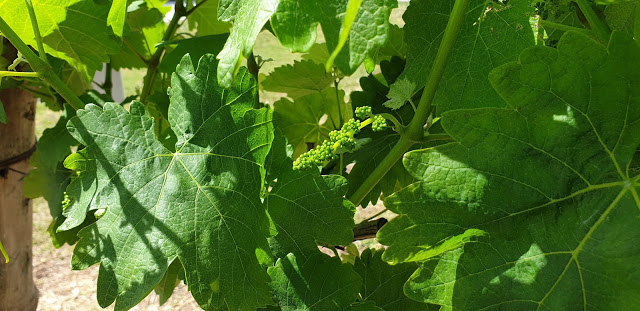
Searching for locations: O’Reilly’s Vineyard, Canungra, Queensland, Australia

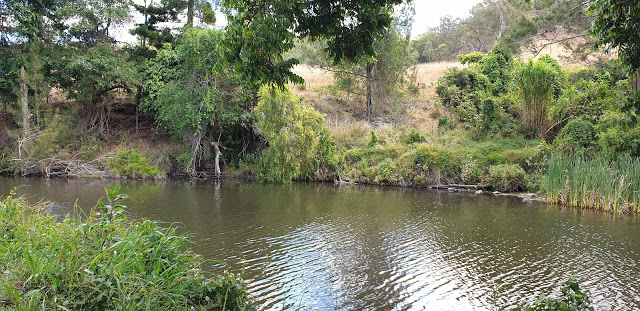
O’Reilly’s Canungra Valley Vineyards located on Lamington National Park Road, Canungra, Queensland, is a 15-acre vineyard with the 163-year-old historic homestead ‘Killowen’ set up with dining rooms and long verandahs, and extensive grounds that are next to the Canungra creek where it is possible to find Platypus and turtles while partaking in a picnic.

There are about 6,000 vines of the (white) Semillon, Verdelho and (red) Chambourcin, Shiraz and Petit Vedot varieties.

We visited there in December when the vines were just starting to produce fruit. 

That fruit is usually harvested in February and then turned into wine.
The setting for picnics is, on a warm Summer’s day is idyllic, where you can wade in the creek, or go looking for a platypus.  We did not see one there the day we visited but did spend some time sitting beside the creek.

Do you do any armchair travelling?

Once upon a time…

It was impossible to travel to any destination you would like to go to in the world.

Except perhaps if you had a travel guide, a book about a particular place, or watch a geographical documentary, which was limited to one person’s point of view.

Now, with the internet, it’s possible to go anywhere, read up on any place, and even see what it looks like.

I have been along many a street in several towns or cities, over 12,000 miles away, as if I was actually there.

I can construct a path from one part of a city to another, and know exactly what there will be along the way.

The thing is, I can be thoroughly at home in a place I’ve never been to, and this is invaluable for writers.

And travellers.

I can’t tell you how many times I’ve researched my way around a city long before I got there, and then know exactly where to go and what to do, even how much it costs.

It’s why I’ve never been lost in New York, London, Paris, or any of the cities, and it was particularly invaluable in Philadelphia when we only had an afternoon to see the sights.

Now, whenever I have a part of a story to write, I hit the internet.

In a story I’m currently writing, I’m flying from Djoubuti to an airstrip in Northern Uganda, where I’ll be leading a team along a river that is the defacto border between Uganda and the Democratic Republic of the Congo, to a possible plantation that was once an airfield.

Or that might change, but in this particular case, I know exactly what the terrain is like where the river is navigable, where I need to go and how long it will take.

Certain you would have to agree that’s better than having to go there in person and run the risk of being killed or worse.

The cinema of my dreams – I never wanted to go to Africa – Episode 41

Our hero knows he’s in serious trouble.

The problem is, there are familiar faces and a question of who is a friend and who is foe made all the more difficult because of the enemy, if it was the enemy, simply because it didn’t look or sound or act like the enemy.

Now, it appears, his problems stem from another operation he participated in, and because of it, he has now been roped into what might be called a suicide mission.


“That was far to bloody easy.”  I heard Monroe’s voice come over the radio, not long after we left the camp.

“It was a bit easier than I thought.  But I did make it quite clear if we didn’t all leave in one piece we’d reduce his camp to rubble with everyone in it.”

“He knows the territory.  Something’s waiting for us out here.”

Something indeed.

Back at the camp, not only had the commander’s men search for the hidden weapons, and, when everyone checked, were still there, they had also taken off the crates with the film equipment.  I was not sure what the commander was intending to do with the equipment, but what disappointed me was the fact we hadn’t taken the time to rescue the rocket launcher.

Now the commander had it.

If he bothered to search the crates properly.  I suspect he was yet to do so.  What we had rescued and successfully hidden were the C4 explosives and detonators.  They might come in useful at the airstrip.

Just before we reached the fork in the road, where we would be turning left to head towards the airfield, and surprisingly had not run into any of the commander’s men, we stopped and let Monroe and Shurl out to make a sweep towards the airstrip, not too far away.

I also called up Mobley to see how he was.

The Colonel answered.  “Everything is under control now.”

I didn’t like the sound of that.  “What happened?”

“The kidnappers send out a team to intercept us on the way to the airstrip.  It wasn’t a stretch to imagine they would know what we were planning because they’d know we would not be retracing out steps to Uganda.  Got them before they got a shot off.  I suspect there are Government troops at the airstrip, it’s too important to let anything happen to rich foreigners coming to see their wildlife reserve.  There are several troop carriers, and we’ve seen a few men on the outskirts patrolling.  There’s several at the gate if you could call it that.”

“Is there a plane there?”

“As it happens there is.  A grand old DC3.  It’s not a charter plane, so I’m guessing it belongs to an overentitled American big game hunter or the photographic variety.  At least I’m hoping that’s the case.”

“What do you recommend?”

“Not to storm the field.  You’re going to have to find another means of getting here, preferably without any fanfare.”

My first choice was to go in and get out, with as little firefight as possible, particularly in case they started shooting at the plane.  If I was reading between the lines properly, the Colonel was telling me there were more troops there than we could handle quickly and quietly.

“Very good.  Can you get sight on just how many troops are there, and if you can see who’s in charge?”

“Will try.”

Monroe had been standing next to me during the exchange.

“Three in place, two more on the perimeter, if we can cover as many as possible, you might be able to take the rest from the inside.”

Secreting the weapons again, maybe.  It was a possibility, but going in with hidden weapons, and then found by the guards at the gate, who would be more efficient and careful searchers than the kidnappers, it would create hostility and itchy trigger fingers.

“No.  We have to find some way of letting them feel as though they have complete control of the situation.  They know we’re coming; the commander would have told them.”  The only reason why he was still the cat who ate the canary.  He might even have told them he had some men waiting as the first line of defense.

The airstrip commander would then know we were armed and relatively dangerous.

It was time for yet another dangerous gambit.

I picked up the radio.  “Colonel?”

A second later, “Sergeant?”

“Whatever happens in the next twenty minutes or so, just ignore it.  It’s not much of a plan, but it will get us onto the field.”

“And then?”

“Hopefully some divine intervention.”

Monroe looked skeptical.  “You’re going to just drive up to the gate and surrender?”

“Not exactly.  It won’t be fait accompli until we reach the terminal, or hanger, or whatever the commander has set up as headquarters.  They’ll have most of our weapons, yes.  But they won’t have all of us.”

“No.  But they’ll know we have a sniper, so one of you are going to have to allow yourself to be captured, just to ease their minds.”

“Leaving one of us and Mobley and the Ugandans.  Can we trust them?”

“I hope so, otherwise this could go badly.  But, today, I’m an optimist.  We’ve got this far.”

Trying to show more confidence in the plan that I had.  It was always a worry when you had to trust people you didn’t know.  That had been the problem the last time.  At least this time we had managed to get the hostages.  It was always going to be a problem getting them out.

Monroe gave me one of her special, you’re a fool, looks.  “I hope you know what you’re doing.”  She then nodded in Shurl’s direction and they disappeared into the bush again.

I gestured to Davies to come over.

“Did you find out what sort of plane it is?”

“Hopefully.  The Colonel tells men there’s a DC3 off the airstrip.  I assume you can fly one.”

She smiled, the first time since this operation had started.  “Sure can.  I spent three summers putting one back together.  My dad has a sort of airplane museum.  A DC3, a DC4, and a Lancaster, a very sorry looking Lancaster at that.  Shouldn’t be a problem.”

“Then try to not get shot.”

“Do my very best not to.”

Once again, it was time to go.  Going into the unknown was getting to be the norm, but hopefully, this would be the last time.  I didn’t consider it wise to advise the hostages, they had their own problems to worry about.


© Charles Heath 2020

Inspiration, maybe – Volume 1

50 photographs, 50 stories, of which there is one of the 50 below.

They all start with –

A picture paints … well, as many words as you like.  For instance:

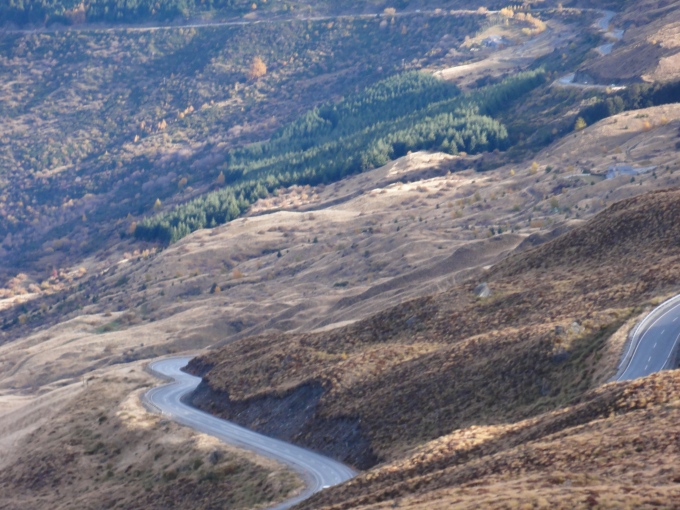
lookingdownfromcoronetpeak

And the story:

It was once said that a desperate man has everything to lose.

The man I was chasing was desperate, but I, on the other hand, was more desperate to catch him.

He’d left a trail of dead people from one end of the island to the other.

The team had put in a lot of effort to locate him, and now his capture was imminent.  We were following the car he was in, from a discrete distance, and, at the appropriate time, we would catch up, pull him over, and make the arrest.

There was nowhere for him to go.

The road led to a dead-end, and the only way off the mountain was back down the road were now on.  Which was why I was somewhat surprised when we discovered where he was.

Where was he going?

“Damn,” I heard Alan mutter.  He was driving, being careful not to get too close, but not far enough away to lose sight of him.

“What?”

“I think he’s made us.”

“How?”

“Dumb bad luck, I’m guessing.  Or he expected we’d follow him up the mountain.  He’s just sped up.”

“How far away?”

“A half-mile.  We should see him higher up when we turn the next corner.”

It took an eternity to get there, and when we did, Alan was right, only he was further on than we thought.”

“Step on it.  Let’s catch him up before he gets to the top.”

Easy to say, not so easy to do.  The road was treacherous, and in places just gravel, and there were no guard rails to stop a three thousand footfall down the mountainside.

Good thing then I had the foresight to have three agents on the hill for just such a scenario.

Ten minutes later, we were in sight of the car, still moving quickly, but we were going slightly faster.  We’d catch up just short of the summit car park.

Or so we thought.

Coming quickly around another corner we almost slammed into the car we’d been chasing.

“What the hell…” Aland muttered.

I was out of the car, and over to see if he was in it, but I knew that it was only a slender possibility.  The car was empty, and no indication where he went.

Certainly not up the road.  It was relatively straightforward for the next mile, at which we would have reached the summit.  Up the mountainside from here, or down.

I looked up.  Nothing.

Alan yelled out, “He’s not going down, not that I can see, but if he did, there’s hardly a foothold and that’s a long fall.”

Then where did he go?

Then a man looking very much like our quarry came out from behind a rock embedded just a short distance up the hill.

“Sorry,” he said quite calmly.  “Had to go if you know what I mean.”

I’d lost him.

It was as simple as that.

I had been led a merry chase up the hill, and all the time he was getting away in a different direction.

I’d fallen for the oldest trick in the book, letting my desperation blind me to the disguise that anyone else would see through in an instant.

It was a lonely sight, looking down that road, knowing that I had to go all that way down again, only this time, without having to throw caution to the wind.

“Maybe next time,” Alan said.

“We’ll get him.  It’s just a matter of time.”

© Charles Heath 2019-2021

Find this and other stories in “Inspiration, maybe”  available soon.

InspirationMaybe1v1