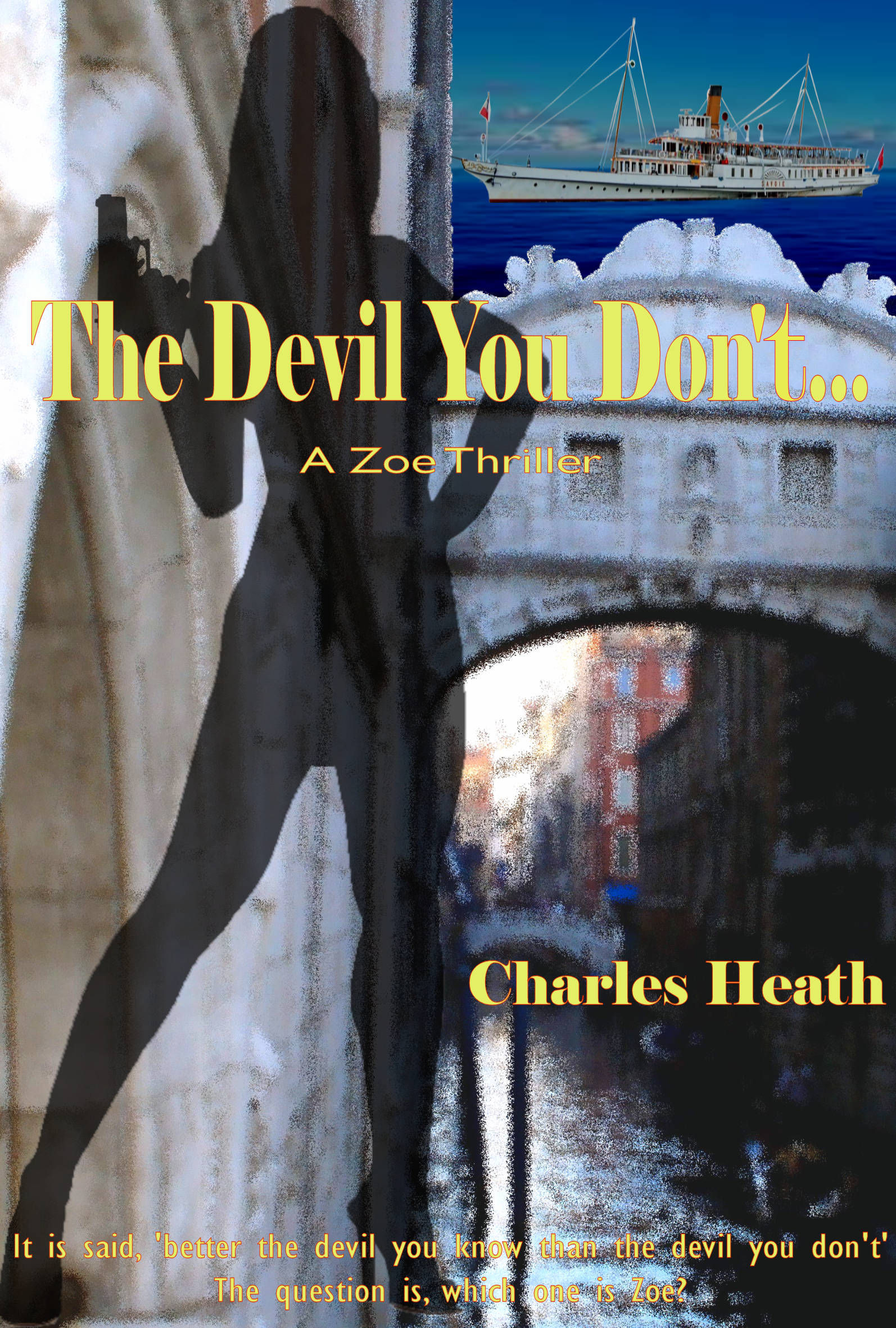
Harry Walthenson, Private Detective – the second case – A case of finding the “Flying Dutchman”

What starts as a search for a missing husband soon develops into an unbelievable story of treachery, lies, and incredible riches.

It was meant to remain buried long enough for the dust to settle on what was once an unpalatable truth, when enough time had passed, and those who had been willing to wait could reap the rewards.

The problem was, no one knew where that treasure was hidden or the location of the logbook that held the secret.

At stake, billions of dollars’ worth of stolen Nazi loot brought to the United States in an anonymous tramp steamer and hidden in a specially constructed vault under a specifically owned plot of land on the once docklands of New York.

It may have remained hidden and unknown to only a few, if it had not been for a mere obscure detail being overheard …

… by our intrepid, newly minted private detective, Harry Walthenson …

… and it would have remained buried.

Now, through a series of unrelated events, or are they, that well-kept secret is out there, and Harry will not stop until the whole truth is uncovered.

Even if it almost costs him his life.  Again.

An excerpt from “Mistaken Identity” – a work in progress

The odds of any one of us having a doppelganger are quite high. Whether or not you got to meet him or her, or be confronted by them was significantly lower. Except of course, unless you are a celebrity.

It was a phenomenon remarkable only for the fact, at times, certain high-profile people, notorious or not, had doubles if only to put off enemies or the general public. Sometimes we see people in the street, people who look like someone we knew, and made the mistake of approaching them like a long lost friend, only to discover an embarrassed individual desperately trying to get away for what they perceive is a stalker or worse.

And then sometimes it is a picture that looms up on a TV screen, an almost exact likeness of you. At first, you are fascinated, and then according to the circumstances, and narrative that is attached to that picture, either flattered or horrified.

For me one turned to the other when I saw an almost likeness of me flash up on the screen when I turned the TV on in my room. What looked to be my photo, with only minor differences, was in the corner of the screen, the newsreader speaking in rapid Italian, so fast I could only translate every second or third word.

But the one word I did recognize was murder. The photo of the man up on the screen was the subject of an extensive manhunt. The crime, the murder of a woman in the very same hotel I was staying, and it was being played out live several floors above me. The gist of the story, the woman had been seen with, and staying with the man who was my double, and, less than an hour ago, the body had been discovered by a chambermaid.

The killer, the announcer said, was believed to be still in the hotel because the woman had died shortly before she had been discovered.

I watched, at first fascinated at what I was seeing. I guess I should have been horrified, but at that moment it didn’t register that I might be mistaken for that man.

Not until another five minutes had passed, and I was watching the police in full riot gear, with a camera crew following behind, coming up a passage towards a room. Live action of the arrest of the suspected killer the breathless commentator said.

Then, suddenly, there was a pounding on the door. On the TV screen, plain to see, was the number of my room.
I looked through the peephole and saw an army of police officers. It didn’t take much to realize what had happened. The hotel staff identified me as the man in the photograph on the TV and called the police.

Horrified wasn’t what I was feeling right then.

It was fear.

My last memory was the door crashing open, the wood splintering, and men rushing into the room, screaming at me, waving guns, and when I put my hands up to defend myself, I heard a gunshot.

And in one very confused and probably near-death experience, I thought I saw my mother and thought what was she doing in Rome?

I was the archetypal nobody.

I lived in a small flat, I drove a nondescript car, had an average job in a low profile travel agency, was single, and currently not involved in a relationship, no children, and according to my workmates, no life.

They were wrong. I was one of those people who preferred their own company, I had a cat, and travelled whenever I could. And I did have a ‘thing’ for Rosalie, one of the reasons why I stayed at the travel agency. I didn’t expect anything to come of it, but one could always hope.

I was both pleased and excited to be going to the conference. It was my first, and the glimpse I had seen of it had whetted my appetite for more information about the nuances of my profession.

Some would say that a travel agent wasn’t much of a job, but to me, it was every bit as demanding as being an accountant or a lawyer. You were providing a customer with a service, and arguably more people needed a travel agent than a lawyer. At least that was what I told myself, as I watched more and more people start using the internet, and our relevance slowly dissipating.

This conference was about countering that trend.

The trip over had been uneventful. I was met at the airport and taken to the hotel where the conference was being held with a number of other delegates who had arrived on the same plane. I had mingled with a number of other delegates at the pre conference get together, including one whose name was Maryanne.

She was an unusual young woman, not the sort that I usually met, because she was the one who was usually surrounded by all the boys, the life of the party. In normal circumstances, I would not have introduced myself to her, but she had approached me. Why did I think that may have been significant? All of this ran through my mind, culminating in the last event on the highlight reel, the door bursting open, men rushing into my room, and then one of the policemen opened fire.

I replayed that last scene again, trying to see the face of my assailant, but it was just a sea of men in battle dress, bullet proof vests and helmets, accompanied by screaming and yelling, some of which I identified as “Get on the floor”.

Then came the shot.

Why ask me to get on the floor if all they were going to do was shoot me. I was putting my hands up at the time, in surrender, not reaching for a weapon.

Then I saw the face again, hovering in the background like a ghost. My mother. Only the hair was different, and her clothes, and then the image was going, perhaps a figment of my imagination brought on by pain killing drugs. I tried to imagine the scene again, but this time it played out, without the image of my mother.

I opened my eyes took stock of my surroundings. What I felt in that exact moment couldn’t be described. I should most likely be dead, the result of a gunshot wound. I guess I should be thankful the shooter hadn’t aimed at anything vital, but that was the only item on the plus side.

I was in a hospital room with a policeman by the door. He was reading a newspaper, and sitting uncomfortably on a small chair. He gave me a quick glance when he heard me move slightly, but didn’t acknowledge me with either a nod, or a greeting, just went back to the paper.

If I still had a police guard, then I was still considered a suspect. What was interesting was that I was not handcuffed to the bed. Perhaps that only happened in TV shows. Or maybe they knew I couldn’t run because my injuries were too serious. Or the guard would shoot me long before my feet hit the floor. I knew the police well enough now to know they would shoot first and ask questions later.

On the physical side, I had a large bandage over the top left corner of my chest, extending over my shoulder. A little poking and prodding determined the bullet had hit somewhere between the top of my rib cage and my shoulder. Nothing vital there, but my arm might be somewhat useless for a while, depending on what the bullet hit on the way in, or through.

It didn’t feel like there were any broken or damaged bones.

That was the good news.

On the other side of the ledger, my mental state, there was only one word that could describe it. Terrified. I was looking at a murder charge and jail time, a lot of it. Murder usually had a long time in jail attached to it.

Whatever had happened, I didn’t do it. I know I didn’t do it, but I had to try and explain this to people who had already made up their minds. I searched my mind for evidence. It was there, but in the confused state brought on by the medication, all I could think about was jail, and the sort of company I was going to have.

I think death would have been preferable.

Half an hour later, maybe longer, I was drifting in an out of consciousness, a nurse, or what I thought was a nurse, came into the room. The guard stood, checked her ID card, and then stood by the door.

She came over and stood beside the bed. “How are you?” she asked, first in Italian, and when I pretended I didn’t understand, she asked the same question in accented English.

“Alive, I guess,” I said. “No one has come and told what my condition is yet. You are my first visitor. Can you tell me?”

“Of course. You are very lucky to be alive. You will be fine and make a full recovery. The doctors here are excellent at their work.”

“What happens now?”

“I check you, and then you have a another visitor. He is from the British Embassy I think. But he will have to wait until I have finished my examination.”

I realized then she was a doctor, not a nurse.

My second visitor was a man, dressed in a suit the sort of which I associated with the British Civil Service.  He was not very old which told me he was probably a recent graduate on his first posting, the junior officer who drew the short straw.

The guard checked his ID but again did not leave the room, sitting back down and going back to his newspaper.

My visitor introduced himself as Alex Jordan from the British Embassy in Rome and that he had been asked by the Ambassador to sort out what he labelled a tricky mess.

For starters, it was good to see that someone cared about what happened to me.  But, equally, I knew the mantra, get into trouble overseas, and there is not much we can do to help you.  So, after that lengthy introduction, I had to wonder why he was here.

I said, “They think I am an international criminal by the name of Jacob Westerbury, whose picture looks just like me, and apparently for them it is an open and shut case.”  I could still hear the fragments of the yelling as the police burst through the door, at the same time telling me to get on the floor with my hands over my head.

“It’s not.  They know they’ve got the wrong man, which is why I’m here.  There is the issue of what had been described as excessive force, and the fact you were shot had made it an all-round embarrassment for them.”

“Then why are you here?  Shouldn’t they be here apologizing?”

“That is why you have another visitor.  I only took precedence because I insisted I speak with you first.  I have come, basically to ask you for a favour.  This situation has afforded us with an opportunity.  We would like you to sign the official document which basically indemnifies them against any legal proceedings.”

Curious.  What sort of opportunity was he talking about?  Was this a matter than could get difficult and I could be charged by the Italian Government, even if I wasn’t guilty, or was it one of those hush hush type deals, you do this for us, we’ll help you out with that.  “What sort of opportunity?”

“We want to get our hands on Jacob Westerbury as much as they do.  They’ve made a mistake, and we’d like to use that to get custody of him if or when he is arrested in this country.  I’m sure you would also like this man brought into custody as soon as possible so you will stop being confused with him.  I can only imagine what it was like to be arrested in the manner you were.  And I would not blame you if you wanted to get some compensation for what they’ve done.  But.  There are bigger issues in play here, and you would be doing this for your country.”

I wondered what would happen if I didn’t agree to his proposal.  I had to ask, “What if I don’t?”

His expression didn’t change.  “I’m sure you are a sensible man Mr Pargeter, who is more than willing to help his country whenever he can.  They have agreed to take care of all your hospital expenses, and refund the cost of the Conference, and travel.  I’m sure I could also get them to pay for a few days at Capri, or Sorrento if you like, before you go home.  What do you say?”

There was only one thing I could say.  Wasn’t it treason if you went against your country’s wishes?

“I’m not an unreasonable man, Alex.  Go do your deal, and I’ll sign the papers.”

“Good man.”

After Alex left, the doctor came back to announce the arrival of a woman, by the way she had announced herself, the publicity officer from the Italian police. When she came into the room, she was not dressed in a uniform.

The doctor left after giving a brief report to the civilian at the door. I understood the gist of it, “The patient has recovered excellently and the wounds are healing as expected. There is no cause for concern.”

That was a relief.

While the doctor was speaking to the civilian, I speculated on who she might be. She was young, not more than thirty, conservatively dressed so an official of some kind, but not necessarily with the police. Did they have prosecutors? I was unfamiliar with the Italian legal system.

She had long wavy black hair and the sort of sultry looks of an Italian movie star, and her presence made me more curious than fearful though I couldn’t say why.

The woman then spoke to the guard, and he reluctantly got up and left the room, closing the door behind him.
She checked the door, and then came back towards me, standing at the end of the bed. Now alone, she said, “A few questions before we begin.” Her English was only slightly accented. “Your name is Jack Pargeter?”

I nodded. “Yes.”

“You are in Rome to attend the Travel Agents Conference at the Hilton Hotel?”

“Yes.”

“You attended a preconference introduction on the evening of the 25th, after arriving from London at approximately 4:25 pm.”

“About that time, yes. I know it was about five when the bus came to collect me, and several others, to take us to the hotel.”

She smiled. It was then I noticed she was reading from a small notepad.

“It was ten past five to be precise. The driver had been held up in traffic. We have a number of witnesses who saw you on the plane, on the bus, at the hotel, and with the aid of closed circuit TV we have established you are not the criminal Jacob Westerbury.”

She put her note book back in her bag and then said, “My name is Vicenza Andretti and I am with the prosecutor’s office. I am here to formally apologize for the situation that can only be described as a case of mistaken identity. I assure you it is not the habit of our police officers to shoot people unless they have a very strong reason for doing so. I understand that in the confusion of the arrest one of our officers accidentally discharged his weapon. We are undergoing a very thorough investigation into the circumstances of this event.”

I was not sure why, but between the time I had spoken to the embassy official and now, something about letting them off so easily was bugging me. I could see why they had sent her. It would be difficult to be angry or annoyed with her.

But I was annoyed.

“Do you often send a whole squad of trigger happy riot police to arrest a single man?” It came out harsher than I intended.

“My men believed they were dealing with a dangerous criminal.”

“Do I look like a dangerous criminal?” And then I realized if it was mistaken identity, the answer would be yes.

She saw the look on my face, and said quietly, “I think you know the answer to that question, Mr. Pargeter.”

“Well, it was overkill.”

“As I said, we are very sorry for the circumstances you now find yourself in. You must understand that we honestly believed we were dealing with an armed and dangerous murderer, and we were acting within our mandate. My department will cover your medical expenses, and any other amounts for the inconvenience this has caused you. I believe you were attending a conference at your hotel. I am very sorry but given the medical circumstances you have, you will have to remain here for a few more days.”

“I guess, then, I should thank you for not killing me.”

Her expression told me that was not the best thing I could have said in the circumstances.

“I mean, I should thank you for the hospital and the care. But a question or two of my own. May I?”

She nodded.

“Did you catch this Jacob Westerbury character?”

“No. In the confusion created by your arrest he escaped. Once we realized we had made a mistake and reviewed the close circuit TV, we tracked him leaving by a rear exit.”

“Are you sure it was one of your men who shot me?”

I watched as her expression changed, to one of surprise.

“You don’t think it was one of my men?”

“Oddly enough no. But don’t ask me why.”

“It is very interesting that you should say that, because in our initial investigation, it appeared none of our officer’s weapons had been discharged. A forensic investigation into the bullet tells us it was one that is used in our weapons, but…”

I could see their dilemma.

“Have you any enemies that would want to shoot you Mr Pargeter?”

That was absurd because I had no enemies, at least none that I knew of, much less anyone who would want me dead.

“Not that I’m aware of.”

“Then it is strange, and will perhaps remain a mystery. I will let you know if anything more is revealed in our investigation.”

She took an envelope out of her briefcase and opened it, pulling out several sheets of paper.

I knew what it was. A verbal apology was one thing, but a signed waiver would cover them legally. They had sent a pretty girl to charm me. Perhaps using anyone else it would not have worked. There was potential for a huge litigation payout here, and someone more ruthless would jump at the chance of making a few million out of the Italian Government.

“We need a signature on this document,” she said.

“Absolving you of any wrong doing?”

“I have apologized. We will take whatever measures are required for your comfort after this event. We are accepting responsibility for our actions, and are being reasonable.”

They were. I took the pen from her and signed the documents.

“You couldn’t add dinner with you on that list of benefits?” No harm in asking.

“I am unfortunately unavailable.”

I smiled. “It wasn’t a request for a date, just dinner. You can tell me about Rome, as only a resident can. Please.”

She looked me up and down, searching for the ulterior motive. When she couldn’t find one, she said, “We shall see once the hospital discharges you in a few days.”

“Then I’ll pencil you in?”

She looked at me quizzically. “What is this pencil me in?”

“It’s an English colloquialism. It means maybe. As when you write something in pencil, it is easy to erase it.”

A momentary frown, then recognition and a smile. “I shall remember that. Thank-you for your time and co-operation Mr. Pargeter. Good morning.”

© Charles Heath 2015-2021

The cinema of my dreams – I always wanted to write a war story – Episode 30

For a story that was conceived during those long boring hours flying in a steel cocoon, striving to keep away the thoughts that the plane and everyone in it could just simply disappear as planes have in the past, it has come a long way.

Whilst I have always had a fascination with what happened during the second world war, not the battles or fighting, but in the more obscure events that took place, I decided to pen my own little sidebar to what was a long and bitter war.

And, so, it continues…


It was a good plan.

Wallace, once he discovered his search team had gone missing would send another group to find them, and we would dispatch them in the same manner.

Each foray would reduce his group at the castle until it became, for us, a manageable size.  Currently, it was 35, with four already killed.  There was also the Leonardo factor, and his men, according to Martina, numbered seven.

If I was Wallace, who would realize once he discovered the body on the road to Chiara’s, that sending his own men out to be picked off was a bad idea, would eventually send Leonardo and his men as the first foray to resolve the problem.  

That, of course, would present the same problem as Wallace’s men, there would be deadly retribution.  The villages had all hated Leonardo, and he had dislike them for not selecting him as the local head of the resistance.  That had fallen to Martina, a more popular person, and one more capable.

It seemed to me, from what she had told me, Leonardo was more a mercenary, one who would work for the highest bidder, and that was the sort of man Wallace would have no trouble employing.

Martina was right to round up the villagers to keep them safe

But, for Carlo and I, we needed to pre-emp their strike, and the safest assumption was that they would return to Chiara’s, looking for her, and for answers.  

There was some discussion as to who would be in the attack group, and I agreed that the more we had the better chances we had of beating them, but in the end, we also needed people with the villagers, just in case the worst-case scenario happened, Leonardo knew of the underground wine storage facility and came there instead.

As far as Martina was concerned, he didn’t.  Very few people knew of its existence. 

In the end, it was decided that Carlo and I should go.  He had no doubt he could take Leonardo’s seven by himself, and I didn’t doubt him, so I went along just in case he needed some help.

I took the distant ground with the sniper rifle, and when I saw them, I was not to hesitate to shoot them.  Carlo would be closer and clean up what I missed.  We had enough ammunition to take out at least twenty.

And that’s where we were, from dusk until the following morning, waiting for the search team to arrive.  It did not occur to Carlo, or me, that there was a possibility they might not come, or that Leonardo might have something else in mind.


Alone, in the dark, and surrounded by what could only be described as an eerie stillness, it was hard to imagine that a deadly war was being waged.

In this part of the world, it was not so intense, that according to our intelligence, the Germans were getting stretched very thin on the ground, and were withdrawing soldiers from the extremities of Europe to bolster the fighting closer to home, and the imminent attack in France by the allies.

Of course, there was no way the Germans could know where and when, even I didn’t know that, but it was coming.  It seemed odd to me, by way of contrast, that the Germans high command had basically wasted a formidable and hitherto undetected group of double agents to rescue a rocket scientist which, in my mind, was hardly going to save or lose the war for them.

Perhaps that’s why it had not been up to me, and I hoped that our people knew exactly what they were doing.  Those that had been filtering through the castle were not exactly the sort of people Thompson had been expecting to defect, but once he learned of Meyer’s desire to leave, that assessment had changed.

It also caused a reassessment of the operation at the castle, which led to the discovery people were not making it beyond that point and became the reason for my mission.  The fact I’d been attacked before I reached my objective was coincidental, but it didn’t take long to realize why.

From that to here had been the proverbial hop, step, and jump.

I had not anticipated having to join the resistance, not be involved in becoming a guerrilla.

Not had I expected a dog for a companion.  Jack was lying on the ground next to me, and it looked like he was getting a well-earned rest.

Then he heard something, and lifted his head, ears pricked up.

Then I heard it.

The sound of an airplane passing overhead, but some distance away.

It was not the clearest night so all we could do was hear it, not see it.  A patrol?  A plane that had lost its way.  It was a bit south of where the action was, or where I’d expect the Germans to have either fighters or bombers.

Perhaps the allies then, but late at night surrounded by darkness, there would be little to see.

A minute later, nothing.

Jack put his head down, and I was struggling to keep my eyes open.  Something had better happen soon, or I would miss it.

© Charles Heath 2020

A long short story that can’t be tamed – I always wanted to rescue a damsel in distress – 3

Three

It was dark, the curtains had been closed, but even in that light, we could see the flat was a mess.

Emily went in first, then I followed.  She switched on the light, and that mess we had seen, was the product of one or more people systematically searching and basically trashing the place.

Emily was shocked, muttering, “What the hell happened here?”  She then went to look at the other rooms.

I made a closer inspection of the room.  None of the furniture, some moved, some overturned, showed signs of there being a fight, as there was no blood anywhere.  If she had left before this, even after it, she had not been physically assaulted enough to cause bleeding.

I was not sure if that was a consolation.

Emily returned.  “Just as bad everywhere else.  I need to call the police.  Dad gave me a number to call.”  She pulled out her mobile phone, and then searched for the note with the number, going into the other room.

That was the moment there was a knock on the door.  It wouldn’t be Cecile knocking on her own door, but hopefully someone who knew her.

I opened the door to see a middle-aged woman who looked like she had rushed to get there.  Her face was flushed, and her breathing was heavy.  And there was a flustered air about her.

Before I could get a word in, she asked, “Are you James Bentley?”

How could she possibly know who I was?  I nodded.

“Then this is for you.”  She rummaged in her bag and pulled out a letter-size envelope and held it out.

“Did you know her?”  It was possible she might be able to help us finding her.

“No.  Two days ago, she pounded on my door and gave me that letter and said a man of your description would arrive within three days.  Here you are, and here it is.”  She shoved the envelope in my hand.  “That’s all I know, don’t bother me again.”

With that she was gone, apparently from a downstairs flat judging by the sound of her feet on the stairwell steps.  I closed the door.

“Who was that?” Emily asked, coming back from the other room, phone call finished.

“A woman with a letter from Cecile.”  I held it up.

“Did she have anything else to say?”

“Just that giving me the letter was the extent of her involvement.  I’m guessing by her manner; she was scared doing even that.  It just reinforces the notion that Cecile is probably in serious trouble.  What did the policeman have to say?”

“He’s sending a couple of detectives to look into the matter, and that we shouldn’t touch anything.  You should read the letter.”

I opened the envelope and took out a single page.  It had been haphazardly folded in haste then straightened out again, and the writing that I could see was hers and had been written in haste.  The paper had been ripped crookedly off a pad.  I looked around the room and saw the pad on the floor, near the table where the phone had sat.

I picked it up off the floor and kept it to one side, thinking it might have something useful hidden on the top page running a pencil over the paper to see if there was writing on the previous page, a trick I’d learned from watching TV.

Emily was waiting impatiently for me to read the letter, and I could see her restraining herself from snatching it out of my hand.

It said, and reading it out aloud for Emily,

Jimmy,

If you are reading this then it’s the worst possible scenario.

I began to suspect Jake was not what he seemed to be about a month ago, and then, one night, he came home, bleeding from a bullet wound.  He said it was not serious and refused to go to a hospital.

He left two days later and didn’t come back.

I then went looking for him, only to discover he didn’t work where he said he did, his parents were not who he said they were, and none of his friends didn’t really know anything about him.

Two days after he went missing, some men came to the door and told me, quite emphatically, to stop asking questions.

Or else.

After they left, I wrote this and gave it to Mrs Williams with specific instructions to give it to you when you came to the flat, in case something happened to me.

Since you’re reading this, it has.

I will be packing an overnight bag and going to the hotel you and I once said we would stay at if we ever came to London.  I will leave another note there if I’m able.  Just ask at the front desk first.

I will try to send a text if and when I can.

Cee

So, text sent, it was a serious situation.  And, I noted, she had called me Jimmy, knowing how much I hated being called that.

Emily fired the first question, “What the name of this hotel?”

“We will be going there, right after we deal with the police when they arrive.”

“We have to go now, while the trail is still hot.”

The trail was anything but hot.  This mess looked to me like it had been here for a few days, or more.

“Patience.  The fact she texted us tells me that she will not be at the hotel, and there might not be another letter waiting.  And, if there is, it’s not likely to help us much, unless she gives us the name and details of this Jake character.  Perhaps the police might know something about him.  Whatever the case may be, we will have to report her as missing.”

“Might that be wise in the circumstances?”

Were there circumstances I missed, or did Emily know something I didn’t.  After all, she had insisted, before I got the text message that we should go to Cecile’s flat and check if she was there.

“What did I miss?”

“She is trying to tell us the fewer people who know about this the better.  That’s what I inferred.  She didn’t give us the police contact, her mother did.”

It was something I hadn’t considered.  That said, was there also an inference we couldn’t trust the police.

“We’d better be careful what we say when the police arrive then.”

“Agreed.  Also, you check the pad, I’m going to look in her secret hiding spot.  She might have left something for me.”

A secret hiding spot.  Cecile had never told me about that.  I tried not to look disappointed.  Perhaps I failed.

“It’s a sister thing.”  Then she disappeared into the bedroom.

Emily, I knew from the past, wasn’t the most patient of people, and Cecile often said she often ventured where others feared to tread.  I was going to have two battles on my hands, the first, trying to find Cecile, and the second, curbing Emily’s self-destructive streak.

Fortunately, there was another knock on the door.

Hopefully, it was the police.

©  Charles Heath  2024

The cinema of my dreams – Was it just another surveillance job – Episode 13

I’m back home and this story has been sitting on a back burner for a few months, waiting for some more to be written.

The trouble is, there are also other stories to write, and I’m not very good at prioritising.

But, here we are, a few minutes opened up and it didn’t take long to get back into the groove.

Am I working for anyone now?


So, there I was, walking along the street, hands in pockets, trying to look like my whole world hadn’t come crashing down on me when a car pulled over to the side of the road.

I may have been down in the dumps but not that far that I wasn’t still aware of what was going on around me, the training had been that good, so I hung back a little from the curb and waited to see if was me they were after, or just some lucky rich person being dropped off.

And ready to disappear into the crowd, not that there was one, but there were three exits available and within momentary reach if necessary.

I watched the rear window go down slowly then saw a familiar face.

Nobbin.

“Get in Mr Jackson.  We have more to talk about.”

I hesitated like anyone with the training I had would, as any person with common sense would too, I guess.

“It’s perfectly safe, I assure you.”  He sounded reassuring.

A glance into the car showed only him and the driver, who was getting out of the car.  I watched him come around to the curbside and put his hand on the door handle.

“Sir,” he said.

He opened the door.  Nobbin had moved to the other side.

I shrugged, then got in.  A thought: how many people had got into cars such as this, and were never seen again?”

It was not a statistic that reached any of the newspapers.  Only the end result, a body washed down the Thames, with no indication of who it was, or where they came from, and no identification, or means of identification available.

The door closed, the driver went back to the front of the car, and then gently eased the car out into the traffic.

“I’m sorry for the theatrics surrounding this meeting, but it is necessary.  I’m sure you were told of the need for secrecy in this matter, and I’m just reinforcing that.”

“Just who are you?  And, for that matter, those people back in that building?  Or, if it’s not too hard to wrap your head around, who the hell have I been working for?”

“Good questions, all.  At least now I can speak freely.  As you can, Mr Jackson.”

“Except I have no idea who’s side you’re on, I’m on, or anyone for that matter.  This is not what I signed up for.”

“Well, to put some perspective on your situation, Mr Jackson, you were not supposed to live to tell about it.  It was an operation that was created with one purpose in mind, to find an agent named

William O’Connor, and kill him.  And everyone in the team assigned to the task.”

“By Severin and Maury?  If so, why didn’t they kill me in the alley along with this O’Connor?”

“That is a mystery to all of us.”

“And those people back in the room.  Who the hell were they?”

“Operations.  Trying to find out how a sub-section could be created and function within their purview and not be detected.  That’s what it was, run by two agents who had been expelled a few months back, but who were clever enough to work around all of the safeguards, recruit four agents, and then go after the man who caused the end of their careers.”

“Simple, it seems.”

“Very.  And, if it had not been for you, we would never have known who or why.”

“Perhaps we should be thankful there was an explosion then, otherwise we’d all be dead.”

“Or not, because as far as I know, that was part of the operation, designed to take the target, you and the surveillance member behind you.  It only did a third the job.  It didn’t go off at the critical moment.  No one was seriously hurt, by the way.”

“The policeman?”

“Critical but stable.  He’ll survive.”

“The police who were accusing me of being the bomber?”

“Our people trying to delay you, so our man could get away.  Seems they trained you better than we expected.  Did O’Connor say anything to you?”

“There wasn’t much time before I found him, and Severin shot him.”

“Anything at all?”

“He knew who I was.”

“Then he knew the whole team, and who was running it.”

“He killed two of them.”

“In self-defence.  They were not only surveillance but also assassins.  Different training before they joined your group.”

I had thought there was something odd about them.

“Anything else,” he asked again.

“Yes.  He said to tell you he found something he should, and that the evidence is…  And that’s when he was shot.  He didn’t tell me where it was.”

“He didn’t have to.  We had set up three prearranged drop sites, so it must be in one of those.  Here’s my card.”

He handed me a white card with a name and a phone number.  The name was not Nobbin.

“If this Severin contacts you again, call me.  I am available any hour of the day or night on that number.”

“If he doesn’t?”

“Then you will hear from me in the not too distant future.  The fact you’re a survivor tells me you are resourceful and have the makings of a good agent, one I can use in my department.”

“And those others back at the office?”

“You won’t hear from them again.”

The car stopped outside an underground staircase.

“This is your stop, Mr Jackson.  Thank you for your co-operation.”

Perhaps my career wasn’t in tatters.  I got out of the car, and watched it leave before heading for the underground, his card safely tucked away in my pocket.


© Charles Heath 2019

365 Days of writing, 2026 – 7

Day 7 – Dealing with contentious issues

The Hot-Topic Tightrope: How to Take a Stand on Sensitive Issues Without Losing Your Following

You see it trending. A sensitive, divisive issue is lighting up social media, and a knot forms in your stomach. You have an opinion. A strong one. You feel a pull—a responsibility, even—to use your platform to say something.

But then the doubt creeps in. What if I say the wrong thing? What if half my followers unsubscribe overnight? What if I start a firestorm in my comments that I can’t control?

This is the modern public figure’s dilemma. You want to be authentic and engaged, but you fear the fallout. So, let’s get real about the question everyone is asking: Will taking a stand on a contentious issue cost you readers?

The uncomfortable answer is yes, it probably will. But that’s not the whole story.

The Inevitable (and Good) Loss of Readers

Here’s the thing about taking a stand on something that matters: it’s an act of clarification. You are drawing a line in the sand and saying, “This is what I believe in. This is what I stand for.”

The moment you do that, you create a filter. People who fundamentally disagree with your core values on that issue may indeed leave. They might unfollow, unsubscribe, or simply tune you out. And that’s okay.

In fact, it can be a good thing.

Chasing universal appeal is a recipe for being bland and forgettable. A smaller, deeply engaged audience that shares your values is infinitely more valuable than a massive list of passive followers who feel no real connection to you. The “readers” you lose were likely never your true community to begin with. They were just passers-by.

Think of it this way: you’re not losing followers; you’re refining your community. You’re attracting the people who will champion your work because they see themselves in it. You’re building a tribe, not just a crowd.

How to Avoid Problems: A 5-Step Strategic Framework

While losing some readers may be a natural consequence, starting an unnecessary war is not. You can engage with sensitive topics in a way that is thoughtful, constructive, and minimizes needless drama. The key is to be strategic, not reactive.

Before you hit “publish,” walk through this framework:

1. The ‘Why’ Check: Before You Post

Ask yourself a few critical, honest questions. Your motivation is everything.

  • Why do I need to say this? Is it to educate, to support a community, to share my unique perspective, or just to vent?
  • Am I adding value? Is what I’m about to say a new take, a personal story that illuminates the issue, or am I just echoing the noise?
  • Am I emotionally triggered? If you’re posting from a place of pure rage or fear, take a beat. A considered response is always more powerful than a knee-jerk reaction.

2. Know Your Audience and Your Brand

Context is king. A statement from a political commentator is expected; the same statement from a food blogger might seem jarring. This doesn’t mean you can’t speak out, but it does mean you should be aware of your audience’s expectations. Acknowledge the shift if you need to: “You know me for talking about baking, but today I need to talk about something else that’s on my heart…” This shows self-awareness and respects your audience.

3. Focus on Principles, Not Personalities

This is the golden rule of constructive debate. Frame your argument around your values and principles, not around attacking a person or group.

  • Instead of: “I can’t believe how ignorant Person X is!”
  • Try: “I believe in a world where everyone has access to healthcare. Here’s why that principle is so important to me.”

The first statement invites a fight. The second invites a conversation. It’s much harder to argue against someone’s deeply held principles than it is to hurl insults back and forth.

4. Embrace Nuance and Acknowledge Complexity

Few issues are truly black and white. Using absolutist, all-or-nothing language will immediately alienate people who might otherwise be receptive. Show that you’ve considered the complexity of the issue.

Phrases like:

  • “I know this is a complicated issue with many valid perspectives, but…”
  • “I’m still learning about this, but my current thinking is…”
  • “From my personal experience…”

These phrases don’t weaken your argument; they build credibility and show humility. They invite thoughtful discussion rather than a flame war.

5. Prepare for the Pushback (and Have a Plan)

Don’t post and run. Decide in advance how you’ll engage with the response.

  • Define the line: What constitutes a healthy debate versus harassment or hate speech? Have a clear comment policy in mind.
  • Decide your level of engagement: Will you reply to questions? Will you correct misinformation? Will you ignore trolls?
  • Protect your peace: It is 100% acceptable to block, mute, or delete abusive comments. Your platform is your home; you don’t have to entertain vandals.

Knowing your plan beforehand prevents you from being dragged into a draining, unproductive argument in the heat of the moment.

The Power of Knowing When Not to Speak

Finally, one of the most powerful skills you can develop is knowing when silence is the strongest statement. You do not have to comment on everything. Choosing not to speak is a valid and often wise strategic choice.

Consider staying silent if:

  • You are not deeply informed on the topic and would be adding noise rather than insight.
  • The issue doesn’t intersect with your expertise or lived experience, and your voice would end up centring yourself instead of amplifying those most affected.
  • You are not in the right headspace to engage constructively.

Your platform is a tool, not an obligation. Use it intentionally.

Walk the Tightrope with Confidence

Taking a stand as a public figure is a tightrope walk, but it doesn’t have to be a reckless one. Yes, you risk losing some followers, but in doing so, you gain something far more valuable: a clarified brand, a more loyal community, and the integrity that comes from speaking your truth.

The goal isn’t to keep everyone happy. It’s to build something meaningful around what you believe. Be thoughtful, be strategic, and be brave. Your right readers will be right there with you.

What I learned about writing – I prefer happy endings

Does a Happy Ending Sell Better Than a Tragic One?

In the world of storytelling—be it novels, films, or viral Instagram captions—one timeless truth persists: people love a good joke more than a good poem. Why? Laughter is instant, accessible, and leaves us feeling lighter. A clever punchline slips past our defences; it doesn’t demand melancholy reflection or emotional labour. It simply disarms us with joy.

This raises an intriguing question: Does the happy ending to a story sell better than one that doesn’t?

Let’s explore the art—and business—of conclusions.

The Allure of the Happy Ending

From fairy tales to rom-coms, the template is familiar: trials, tribulations, and—against all odds—love, triumph, or redemption. The hero gets the girl. The villain is vanquished. The lost is found.

Why do these endings dominate mainstream media? Simple: they feel good. In a world brimming with uncertainty, a happy ending offers closure, comfort, and a kind of emotional reassurance. It’s the narrative equivalent of a warm blanket on a rainy day.

Market data supports this. Box office hits like The Avengers: EndgameCrazy Rich Asians, and even animated films like Frozen lean heavily on uplifting conclusions. Romantic comedies—despite critical eye-rolls—are enduringly popular because audiences crave that final scene: the airport sprint, the heartfelt confession, the kiss in the rain.

Happy endings sell because they affirm hope. They whisper: No matter how dark it gets, things can get better.

The Power of the Unhappy—or Ambiguous—Ending

But let’s not write off the melancholy, the unresolved, or the devastating. Some of the most iconic and impactful stories in history end not with a bow, but with a gasp.

Consider The Great Gatsby1984Requiem for a Dream, or Chinatown. These stories don’t comfort—they challenge. They linger. They haunt. They leave readers and viewers wrestling with questions long after the final page or frame.

Artists like Cormac McCarthy, Lars von Trier, and Sally Rooney have built careers on bittersweet or bleak conclusions—and their work sells. Critically acclaimed. Academically studied. Culturally influential.

Why? Because tragedy moves us. It speaks to the human condition with unflinching honesty. A sad ending can feel more true, more resonant in a world where not every problem has a solution and not every love story lasts.

And let’s not forget the ambiguity. Shows like The Sopranos or Inception end without clear resolution—and yet, they generate massive engagement, endless debates, and cult followings. Sometimes, not knowing is the point.

So, Which Sells Better?

It depends on the audience, the genre, and the purpose of the story.

  • Mainstream, mass-market stories—especially in film, TV, and commercial fiction—tend to favour endings that uplift. Happy endings dominate bestseller lists and blockbuster charts because they are broadly appealing, emotionally satisfying, and easy to recommend.
  • Literary fiction, arthouse films, and niche genres often thrive on complexity. These stories aren’t just selling entertainment—they’re selling insight, introspection, and emotional depth. In these realms, a tragic or ambiguous ending isn’t a risk—it’s a statement.

In truth, it’s less about what the ending is and more about how well it’s earned. A happy ending feels hollow if the journey lacks stakes. A tragic ending feels manipulative if it serves shock over substance. The best endings—joyful or sorrowful—are inevitable in hindsight. They resonate because they are truthful to the story that came before.

The Joke vs. The Poem Revisited

Going back to our original observation: a good joke sells better than a good poem. Jokes are immediate. Poems linger. The same applies to endings.

A happy ending is the joke: satisfying, gratifying, widely shared.

A tragic (or ambiguous) ending is the poem: layered, lasting, often underappreciated at first glance.

But the most enduring stories? They find the balance. They make us laugh, then ache. They give us joy tinged with sorrow—or sorrow pierced by hope.

And perhaps that’s what truly sells: not happiness or heartbreak alone, but the courage to be honest.

Whether your story ends with a laugh, a tear, or a quiet sigh, make it real. Because authenticity—more than any plot twist or punchline—is what readers will remember, and return to, again and again.

The story behind the story – Echoes from the Past

The novel ‘Echoes from the past’ started out as a short story I wrote about 30 years ago, titled ‘The birthday’.

My idea was to take a normal person out of their comfort zone and led on a short but very frightening journey to a place where a surprise birthday party had been arranged.

Thus the very large man with a scar and a red tie was created.

So was the friend with the limousine who worked as a pilot.

So were the two women, Wendy and Angelina, who were Flight Attendants that the pilot friend asked to join the conspiracy.

I was going to rework the short story, then about ten pages long, into something a little more.

And like all re-writes, especially those I have anything to do with, it turned into a novel.

There was motivation.  I had told some colleagues at the place where I worked at the time that I liked writing, and they wanted a sample.  I was going to give them the re-worked short story.  Instead, I gave them ‘Echoes from the past’

Originally it was not set anywhere in particular.

But when considering a location, I had, at the time, recently been to New York in December, and visited Brooklyn and Queens, as well as a lot of New York itself.  We were there for New Years, and it was an experience I’ll never forget.

One evening we were out late, and finished up in Brooklyn Heights, near the waterfront, and there was rain and snow, it was cold and wet, and there were apartment buildings shimmering in the street light, and I thought, this is the place where my main character will live.

It had a very spooky atmosphere, the sort where ghosts would not be unexpected.  I felt more than one shiver go up and down my spine in the few minutes I was there.

I had taken notes, as I always do, of everywhere we went so I had a ready supply of locations I could use, changing the names in some cases.

Fifth Avenue near the Rockefeller center is amazing at first light, and late at night with the Seasonal decorations and lights.

The original main character was a shy and man of few friends, hence not expecting the surprise party.  I enhanced that shyness into purposely lonely because of an issue from his past that leaves him always looking over his shoulder and ready to move on at the slightest hint of trouble.  No friends, no relationships, just a very low profile.

Then I thought, what if he breaks the cardinal rule, and begins a relationship?

But it is also as much an exploration of a damaged soul, as it is the search for a normal life, without having any idea what normal was, and how the understanding of one person can sometimes make all the difference in what we may think or feel.

And, of course, I wanted a happy ending.

Except for the bad guys.

Get it here:  https://amzn.to/2CYKxu4

newechocover5rs

365 Days of writing, 2026 – 7

Day 7 – Dealing with contentious issues

The Hot-Topic Tightrope: How to Take a Stand on Sensitive Issues Without Losing Your Following

You see it trending. A sensitive, divisive issue is lighting up social media, and a knot forms in your stomach. You have an opinion. A strong one. You feel a pull—a responsibility, even—to use your platform to say something.

But then the doubt creeps in. What if I say the wrong thing? What if half my followers unsubscribe overnight? What if I start a firestorm in my comments that I can’t control?

This is the modern public figure’s dilemma. You want to be authentic and engaged, but you fear the fallout. So, let’s get real about the question everyone is asking: Will taking a stand on a contentious issue cost you readers?

The uncomfortable answer is yes, it probably will. But that’s not the whole story.

The Inevitable (and Good) Loss of Readers

Here’s the thing about taking a stand on something that matters: it’s an act of clarification. You are drawing a line in the sand and saying, “This is what I believe in. This is what I stand for.”

The moment you do that, you create a filter. People who fundamentally disagree with your core values on that issue may indeed leave. They might unfollow, unsubscribe, or simply tune you out. And that’s okay.

In fact, it can be a good thing.

Chasing universal appeal is a recipe for being bland and forgettable. A smaller, deeply engaged audience that shares your values is infinitely more valuable than a massive list of passive followers who feel no real connection to you. The “readers” you lose were likely never your true community to begin with. They were just passers-by.

Think of it this way: you’re not losing followers; you’re refining your community. You’re attracting the people who will champion your work because they see themselves in it. You’re building a tribe, not just a crowd.

How to Avoid Problems: A 5-Step Strategic Framework

While losing some readers may be a natural consequence, starting an unnecessary war is not. You can engage with sensitive topics in a way that is thoughtful, constructive, and minimizes needless drama. The key is to be strategic, not reactive.

Before you hit “publish,” walk through this framework:

1. The ‘Why’ Check: Before You Post

Ask yourself a few critical, honest questions. Your motivation is everything.

  • Why do I need to say this? Is it to educate, to support a community, to share my unique perspective, or just to vent?
  • Am I adding value? Is what I’m about to say a new take, a personal story that illuminates the issue, or am I just echoing the noise?
  • Am I emotionally triggered? If you’re posting from a place of pure rage or fear, take a beat. A considered response is always more powerful than a knee-jerk reaction.

2. Know Your Audience and Your Brand

Context is king. A statement from a political commentator is expected; the same statement from a food blogger might seem jarring. This doesn’t mean you can’t speak out, but it does mean you should be aware of your audience’s expectations. Acknowledge the shift if you need to: “You know me for talking about baking, but today I need to talk about something else that’s on my heart…” This shows self-awareness and respects your audience.

3. Focus on Principles, Not Personalities

This is the golden rule of constructive debate. Frame your argument around your values and principles, not around attacking a person or group.

  • Instead of: “I can’t believe how ignorant Person X is!”
  • Try: “I believe in a world where everyone has access to healthcare. Here’s why that principle is so important to me.”

The first statement invites a fight. The second invites a conversation. It’s much harder to argue against someone’s deeply held principles than it is to hurl insults back and forth.

4. Embrace Nuance and Acknowledge Complexity

Few issues are truly black and white. Using absolutist, all-or-nothing language will immediately alienate people who might otherwise be receptive. Show that you’ve considered the complexity of the issue.

Phrases like:

  • “I know this is a complicated issue with many valid perspectives, but…”
  • “I’m still learning about this, but my current thinking is…”
  • “From my personal experience…”

These phrases don’t weaken your argument; they build credibility and show humility. They invite thoughtful discussion rather than a flame war.

5. Prepare for the Pushback (and Have a Plan)

Don’t post and run. Decide in advance how you’ll engage with the response.

  • Define the line: What constitutes a healthy debate versus harassment or hate speech? Have a clear comment policy in mind.
  • Decide your level of engagement: Will you reply to questions? Will you correct misinformation? Will you ignore trolls?
  • Protect your peace: It is 100% acceptable to block, mute, or delete abusive comments. Your platform is your home; you don’t have to entertain vandals.

Knowing your plan beforehand prevents you from being dragged into a draining, unproductive argument in the heat of the moment.

The Power of Knowing When Not to Speak

Finally, one of the most powerful skills you can develop is knowing when silence is the strongest statement. You do not have to comment on everything. Choosing not to speak is a valid and often wise strategic choice.

Consider staying silent if:

  • You are not deeply informed on the topic and would be adding noise rather than insight.
  • The issue doesn’t intersect with your expertise or lived experience, and your voice would end up centring yourself instead of amplifying those most affected.
  • You are not in the right headspace to engage constructively.

Your platform is a tool, not an obligation. Use it intentionally.

Walk the Tightrope with Confidence

Taking a stand as a public figure is a tightrope walk, but it doesn’t have to be a reckless one. Yes, you risk losing some followers, but in doing so, you gain something far more valuable: a clarified brand, a more loyal community, and the integrity that comes from speaking your truth.

The goal isn’t to keep everyone happy. It’s to build something meaningful around what you believe. Be thoughtful, be strategic, and be brave. Your right readers will be right there with you.

The first case of PI Walthenson – “A Case of Working With the Jones Brothers”

This case has everything, red herrings, jealous brothers, femme fatales, and at the heart of it all, greed.

See below for an excerpt from the book…

Coming soon!

PIWalthJones1

An excerpt from the book:

When Harry took the time to consider his position, a rather uncomfortable position at that, he concluded that he was somehow involved in another case that meant very little to him.

Not that it wasn’t important in some way he was yet to determine, it was just that his curiosity had got the better of him, and it had led to this: sitting in a chair, securely bound, waiting for someone one of his captors had called Doug.

It was not the name that worried him so much, it was the evil laugh that had come after the name was spoken.

Doug what? Doug the ‘destroyer’, Doug the ‘dangerous’, Doug the ‘deadly’; there was any number of sinister connotations, and perhaps that was the point of the laugh, to make it more frightening than it was.

But there was no doubt about one thing in his mind right then: he’d made a mistake. A very big. and costly, mistake. Just how big the cost, no doubt he would soon find out.

His mother, and his grandmother, the wisest person he had ever known, had once told him never to eavesdrop.

At the time he couldn’t help himself and instead of minding his own business, listening to a one-sided conversation which ended with a time and a place. The very nature of the person receiving the call was, at the very least, sinister, and, because of the cryptic conversation, there appeared to be, or at least to Harry, criminal activity involved.

For several days he had wrestled with the thought of whether he should go. Stay on the fringe, keep out of sight, observe and report to the police if it was a crime. Instead, he had willingly gone down the rabbit hole.

Now, sitting in an uncomfortable chair, several heat lamps hanging over his head, he was perspiring, and if perspiration could be used as a measure of fear, then Harry’s fear was at the highest level.

Another runnel of sweat rolled into his left eye, and, having his hands tied, literally, it made it impossible to clear it. The burning sensation momentarily took his mind off his predicament. He cursed and then shook his head trying to prevent a re-occurrence. It was to no avail.

Let the stinging sensation be a reminder of what was right and what was wrong.

It was obvious that it was the right place and the right time, but in considering his current perilous situation, it definitely was the wrong place to be, at the worst possible time.

It was meant to be his escape, an escape from the generations of lawyers, what were to Harry, dry, dusty men who had been in business since George Washington said to the first Walthenson to step foot on American soil, ‘Why don’t you become a lawyer?” when asked what he could do for the great man.

Or so it was handed down as lore, though Harry didn’t think Washington meant it literally, the Walthenson’s, then as now, were not shy of taking advice.

Except, of course, when it came to Harry.

He was, Harry’s father was prone to saying, the exception to every rule. Harry guessed his father was referring to the fact his son wanted to be a Private Detective rather than a dry, dusty lawyer. Just the clothes were enough to turn Harry off the profession.

So, with a little of the money Harry inherited from one of his aunts, he leased an office in Gramercy Park and had it renovated to look like the Sam Spade detective agency, you know the one, Spade and Archer, and The Maltese Falcon.

There’s a movie and a book by Dashiell Hammett if you’re interested.

So, there it was, painted on the opaque glass inset of the front door, ‘Harold Walthenson, Private Detective’.

There was enough money to hire an assistant, and it took a week before the right person came along, or, more to the point, didn’t just see his business plan as something sinister. Ellen, a tall cool woman in a long black dress, or so the words of a song in his head told him, fitted in perfectly.

She’d seen the movie, but she said with a grin, Harry was no Humphrey Bogart.

Of course not, he said, he didn’t smoke.

Three months on the job, and it had been a few calls, no ‘real’ cases, nothing but missing animals, and other miscellaneous items. What he really wanted was a missing person. Or perhaps a beguiling, sophisticated woman who was as deadly as she was charming, looking for an errant husband, perhaps one that she had already ‘dispatched’.

Or for a tall, dark and handsome foreigner who spoke in riddles and in heavily accented English, a spy, or perhaps an assassin, in town to take out the mayor. The man was such an imbecile Harry had considered doing it himself.

Now, in a back room of a disused warehouse, that wishful thinking might be just about to come to a very abrupt end, with none of the romanticized trappings of the business befalling him. No beguiling women, no sinister criminals, no stupid policemen.

Just a nasty little man whose only concern was how quickly or how slowly Harry’s end was going to be.

© Charles Heath 2019-2024