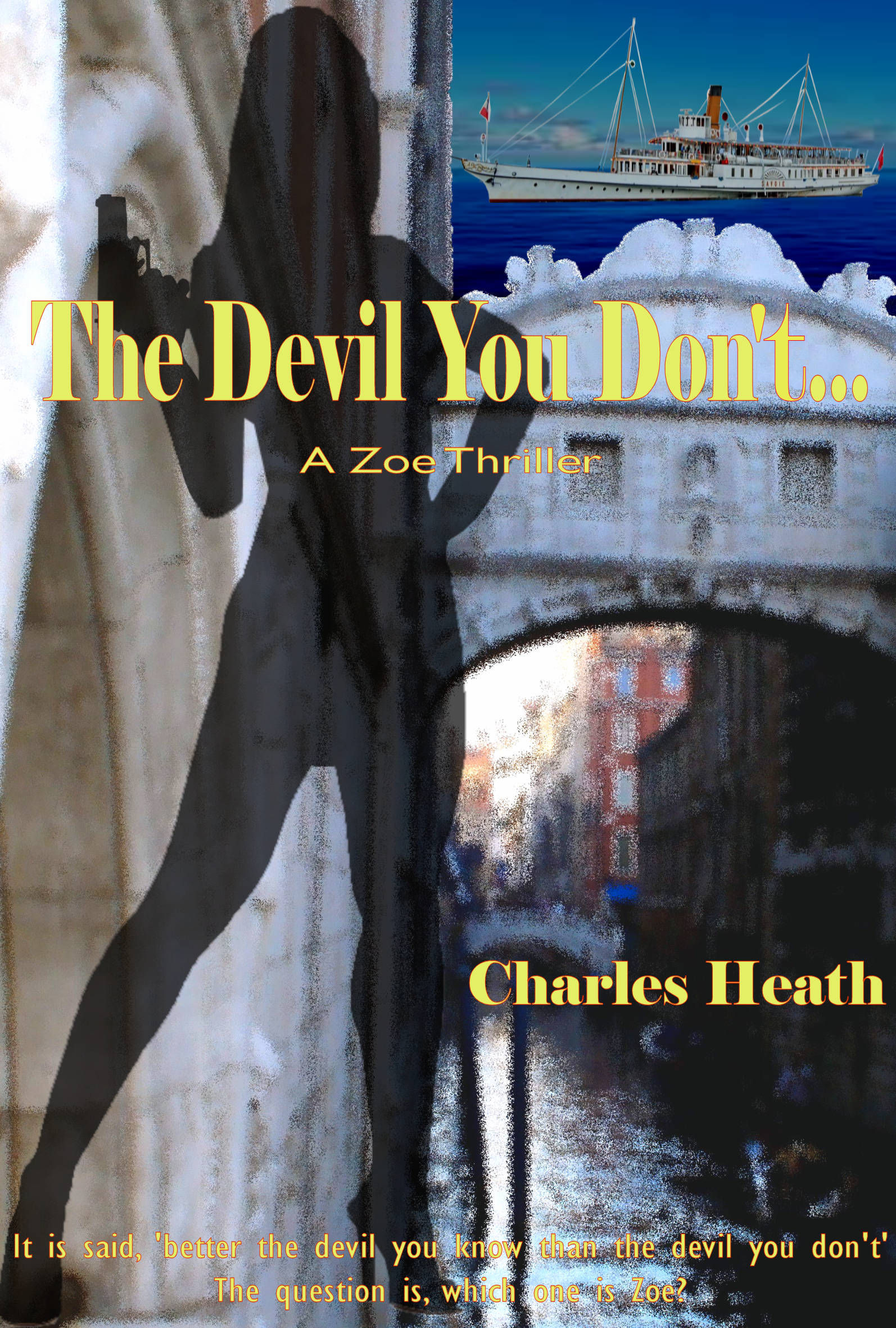
The cinema of my dreams – Was it just another surveillance job – Episode 9

I’m back home and this story has been sitting on a back burner for a few months, waiting for some more to be written.

The trouble is, there are also other stories to write, and I’m not very good at prioritising.

But, here we are, a few minutes opened up and it didn’t take long to get back into the groove.

An interrogation and a revelation.

I think I just about reached that same conclusion just seconds before she uttered it.  But, I didn’t think this was the time to air my own thoughts on the matter.

The question I did ask was, “It appears our service has been compromised.”

She glanced at me almost condescendingly.  “It appears so.  Have you got your cell phone?”

I had it with me and gave it to her.  I had it ready because I knew they would ask for it.  It had a record of orders given, and phone conversations made, before, during, and after the operation.

For a review, or in this case, a search for the guilty.

I watched her put in the passcode, and go to the messages, and bring up the one sent to me, to attend the briefing.  It was all in order, no different to the previous five, with all the right designations and protocols.

“There was no reason to suspect it was anything but a real callout.”

Another glance at the screen, she put it on the desk next to the file.  “No, it looks real enough.”

Thought best kept to myself; how the hell did someone outside our organisation, know so well our inner workings?  I wanted to ask the question but refrained from doing so.

It also explained, now that I thought about it, the reason why the target had said he was one of us.  We had been hunting him so someone else, and enemy organisation perhaps, so they could kill him.  The question was, why?  Had he made a discovery, the evidence he was referring to that a certain Alfred Nobbin might have.

Perhaps a good idea, for the time being, to keep that snippet of information to myself.  After all, this new person in front of me could be one of Severin’s people.

Where I was sitting was not a familiar place to me, though I had been to the building before, which is why I knew where to go for this interview.  AS for the people, everyone I’d met so far, other than the other team members, bar one, I’d known from training.

So, now another expected question from me, or at least, if I was on the other side of the table, it’s one I’d expect to be asked.  “Just who was I working for, if it was not for us?”

Assuming she was one of us.

“That’s what we intend to find out.  Who was the target?”

I gave her the description we’d been given, and a copy of his photograph that had been circulated at the briefing.  I’d kept one of them, and luckily no one noticed it missing.  It was fortuitous that’s I’d copied the photo before I had to give it to her, which was right then.

There was not a flicker of recognition in her eyes.

“So, not one of us?” I asked.

For an interrogation, she wasn’t asking many relevant questions.

She looked up.  “Why would you say that, if your mission was to keep him under surveillance?”

“Which we now know was not sanctioned, so we have to assume that we had been persuaded to find and track one of our own agents.  You look as though you didn’t recognise him?”

“I don’t try to remember every agent we have in the field, here and overseas.  There a few too many for that.  But I’ve got a request out for his identity.  He didn’t say who he was?”

“No.”

“Anything at all that might be useful?”

“That he was one of us, who’d made a mistake, and feared we’d set the dogs on him.”

“Yes.  Someone definitely did that.”

© Charles Heath 2019

365 Days of writing, 2026 – My second novel 1

That dreaded second novel

Beyond the First Draft: How to Survive and Thrive with Your Second Novel

You typed the two most beautiful words in the English language: “The End.”

After months, maybe years, of blood, coffee, and a thousand tiny miracles, you did it. You wrote a novel. You navigated the treacherous waters of the middle, wrestled with a climax, and gave your characters the ending they deserved. There’s a euphoria that comes with that moment, a dizzying, wonderful high.

And then, a quiet question begins to echo in the silence where your keyboard’s clatter used to be.

“So… what’s next?”

For many writers, the prospect of the second novel is more terrifying than the first. The first was fueled by naivete and a story burning so hot it had to be told. It was a great learning curve, the discovery of your own voice. The second novel… that’s different. That’s the one with expectations. The one where you have to prove it wasn’t a fluke.

They say we all have one book in us. But what’s required to start the second one? It’s not just about finding a new idea. It’s about a fundamental shift in your approach as a writer.

1. Give the First Book Its Wings

Before you can even think about Book Two, you have to let Book One go.

This is harder than it sounds. Your first novel is your baby. You’ve obsessed over every sentence, every piece of dialogue. But holding onto it too tightly creates a creative bottleneck. The pressure to replicate its success—or avoid its perceived failures—can be paralysing.

Think of your first book as a beautiful bird you’ve nurtured. It’s time to open the window and let it fly. It has its own life now. Your job is not to clone it. Your job is to move on to the next nest.

2. Be a Beginner Again (Seriously)

You finished a novel. You know what a turning point is. You understand the three-act structure. You’re a veteran, right?

Wrong.

Welcome back to square one.

The sophomore slump is real because writers mistakenly believe they should be experts now. They think this next book should be easier. It won’t be. Every story is a new mountain to climb, and the terrain is always different. The only way to approach it is with a beginner’s mind: curious, open to failure, and ready to learn.

Give yourself permission to not have all the answers. The process that got you through the first draft of your first book might not work this time. Be willing to be a student again.

3. Refill the Creative Well

Writing a novel is an act of extreme emotional and creative output. It is draining. Chances are, your well is looking a little dusty and dry right now. You can’t draw water from an empty well.

You need to refill it. This isn’t a passive act; it’s a crucial part of the process.

  • Read. Read voraciously and widely. Read outside your genre. Read bad books and figure out why they don’t work. Read great books and let them remind you why you wanted to do this in the first place.
  • Live. You cannot just be a writer. You have to be a human first. Go to museums. Take a different route home. Eavesdrop on conversations in a coffee shop. Have new experiences. Your second novel’s inspiration is hiding in the living of your life, not in staring at a blank page.
  • Rest. Your brain has been running a marathon. Let it recover. Take a week—or a month—away from writing. Your story will be there when you get back, and you’ll see it with fresher eyes.

4. Find a New “Why”

Your first novel was likely driven by a story you had to tell. It was a personal demon, a lifelong dream, a world you couldn’t escape. That kind of passion is a powerful engine. It’s hard to manufacture.

The secret to starting the second novel is finding a new “why.” It can’t be about deadlines or agents or reader expectations. It has to be a story that excites you on a fundamental level. A character who intrigues you, a question that won’t leave you alone, a theme you’re burning to explore.

When you find that, the external pressure fades. You’re not just writing a “second novel”; you’re writing your next novel.

5. Embrace the Ugly First Draft (All Over Again)

You know this, but you need to hear it again: the first draft is allowed to be terrible.

Anne Lamott’s concept of the “shitty first draft” is a gift for every writer, but it’s a lifeline for the second-time author. You know what a polished final product looks like now, which makes the messy, chaotic first draft even more discouraging.

Resist the urge to edit as you go. Silence the inner critic that compares this new, messy work to the finished product of your last. Give yourself the freedom to write poorly, to write scenes that will get cut, to follow a plot into a dead end.

The magic isn’t in the first draft. The magic is in the revision. That’s a skill you honed with your first book. Trust it.

Your Next Chapter

The first novel proved you could do it. The second novel proves you are a writer. It’s the transition from a single, magnificent effort to a sustainable practice. It’s about building a career, one word at a time.

So yes, the pressure is real. But so is the experience you’ve gained. You are more capable than you were before. Be kind to your beginner self, find the story that sets your soul on fire, and start climbing.

The view from the top of this next mountain will be worth it.


What’s your biggest fear or excitement for writing a second novel? Share in the comments below!

Top 5 sights on the road less travelled – Nairobi

Nairobi’s Hidden Gems: 5 Incredible Attractions Without the Crowds

When you think of Nairobi, the mind often leaps to the iconic sights: the silhouettes of giraffes at the Giraffe Centre, the heart-warming sight of orphaned elephants at the Sheldrick Trust, or the breathtaking skyline viewed from a safari in Nairobi National Park.

And for good reason—these are world-class attractions. But they are also, well, popular. If you’re looking to swap the bustling queues for a more intimate, unique, and equally memorable experience, you’re in luck. Nairobi is a city of layers, and just beneath the surface of the main tourist trail lies a treasure trove of hidden gems.

Here are the top five visitor attractions in Nairobi that are rarely crowded but burst with distinctive character and unforgettable stories.


1. The Kenya National Archives: A Treasure Trove of Culture and History

Tucked away in a grand building right in the heart of the city’s central business district, the Kenya National Archives is one of Nairobi’s most-underestimated attractions. While the ground floor is a bustling hive of document services, head upstairs and step into another world.

What Makes It Distinctive: The second floor houses the incredible Murumbi African Heritage Collection. This is a jaw-dropping assortment of artifacts, ethnographic material, books, and art collected by Kenya’s second Vice President, Joseph Murumbi, and his wife, Sheila. From ancient tribal jewelry and textiles to intricate masks and powerful contemporary art, it’s a comprehensive and beautifully curated journey through the art and culture of Kenya and beyond.

Why It’s Not Crowded: Most tourists walk right past it, assuming it’s just a place for official records. It’s a serene, air-conditioned escape from the city heat where you can spend hours lost in the exhibits, often sharing the space with just a handful of local students.

Pro-Tip: Give yourself at least two hours. Don’t miss the stunning collection of African postage stamps or the powerful portraits in the art gallery. The entrance fee is a bargain for the sheer volume of world-class history on display.


2. The Nairobi Railway Museum: A Journey to the City’s Birth

Ever wondered why Nairobi exists in the first place? The answer lies on the tracks. The Nairobi Railway Museum, located right next to the main railway station, is a charming and nostalgic ode to the “Lunatic Express,” the railway line that gave birth to the city.

What Makes It Distinctive: This museum is an open-air gallery of majestic, rusting giants. You can climb aboard historic steam and diesel locomotives, explore royal carriages (including one used for Queen Elizabeth’s visit!), and delve into the fascinating, and often dramatic, history of the railway’s construction. It’s a tangible link to a bygone era of colonial ambition, engineering marvels, and the man-eating lions of Tsavo.

Why It’s Not Crowded: In a city obsessed with wildlife, the history of a railway is often overlooked. It feels like a well-kept secret, offering a peaceful and fascinating stroll through the very machines that shaped the nation.

Pro-Tip: Hire one of the on-site guides. Their personal stories and detailed knowledge bring the old engines and carriages to life in a way that plaques never could. On weekdays, you might even see modern trains rolling past, creating a surreal contrast between past and present.


3. Kazuri Beads Factory: Where Art and Empowerment Meet

For a truly special souvenir and a feel-good experience, leave the city centre and head to the leafy suburb of Karen for a visit to the Kazuri Beads Factory. “Kazuri” means “small and beautiful” in Swahili, and that perfectly describes the handcrafted ceramic beads and pottery made here.

What Makes It Distinctive: This isn’t just a shop; it’s a working factory with a powerful social mission. Kazuri employs over 300 single mothers, providing them with a sustainable livelihood and healthcare. You can take a free tour to see the entire process—from the kiln firing to the meticulous hand-painting—and chat with the talented artisans. It’s a vibrant, colourful, and inspiring place that supports local Kenyan women directly.

Why It’s Not Crowded: It’s slightly off the beaten path compared to the Karen Blixen Museum down the road. Tour groups tend to rush in and out, leaving plenty of space for independent travellers to browse at their own pace without feeling pressured.

Pro-Tip: Go in the morning to see the factory buzzing with activity. The “seconds” section, where you can buy slightly imperfect pieces at a huge discount, is fantastic for finding unique treasures.


4. The Ngong Hills: Nairobi’s Iconic Escape

While the Nairobi National Park offers a safari on the city’s doorstep, the Ngong Hills offer a spectacular escape above it. These iconic, four-ridged peaks are the rolling, green giants immortalised in Karen Blixen’s “Out of Africa.”

What Makes It Distinctive: The views are, simply put, epic. On a clear day, you can see the entire Nairobi skyline to the north and the vast expanse of the Great Rift Valley to the west. A hike along the ridges is a fantastic way to get some exercise, feel the wind on your face, and appreciate the natural beauty that frames the city. It’s a spiritual and rejuvenating experience.

Why It’s Not Crowded: While it gets busy with local hikers and picnickers on weekends, you’ll rarely find international tour buses here. Go on a weekday, and you might have large sections of the trail entirely to yourself, with only the sound of the wind for company.

Pro-Tip: Start early in the morning to avoid the midday sun. It’s an exposed hike, so bring plenty of water, a hat, and sunscreen. You don’t need a guide for the main trail, but hiring one from the local community at the entrance gate can provide fascinating insights and support the local economy.


5. Olorgesailie Prehistoric Site: A Glimpse into Human Origins

For the ultimate off-the-beaten-path adventure, take a day trip south of the city to Olorgesailie. This is not your average tourist attraction; it’s a world-class, paleoanthropological site and a UNESCO World Heritage contender.

What Makes It Distinctive: This dry, dusty basin was once a lakeside prehistoric camp. The ground is literally littered with fossilised bones and, most astoundingly, hundreds of hand-axe tools created by early human ancestors (Homo erectus) over a million years ago. The small, excellent museum and guided walk take you through the incredible discoveries made here, offering a mind-bending perspective on the deep history of humanity in the very place it unfolded.

Why It’s Not Crowded: It’s a drive (about 90 minutes from Nairobi) and requires a dedicated trip. This geological and historical marvel is simply too remote and niche for the standard tourist itinerary, making it one of the most peaceful and profound places you can visit in the region.

Pro-Tip: A 4×4 vehicle is recommended, especially after rain. Combine the trip with a visit to Lake Magadi, a spectacular soda lake often tinged pink with flamingos. Pack a picnic and make a full day of it—the journey is as spectacular as the destination.


So next time you find yourself in Nairobi, I urge you to venture beyond the well-trodden path. Ditch the crowds for a morning at the Railway Museum, find your cultural bearings at the National Archives, and discover that the city’s most distinctive features are often its quietest. Happy travels

What I learned about writing – Our stories may be guided dreams


We are told sometimes that it’s possible our writing is nothing more than a guided dream. So says Jorge Luis Borges in Doctor Brodies report.

Wow! If only I could guide my dreams.

They are a mess at the best of times and always end before I get to the good part.

That’s why I am writing a series called The Cinema of My Dreams. I lie awake at night staring at the ceiling, and instead of seeing darkness, I see the plots of my stories playing out. They never go where I want them to, but that’s because life doesn’t always play ball.

It’s the way my stories are written, an episode at a time, and not fully knowing what’s going to happen. As I write, I am writing like I’m the reader, hanging on every word, leaping from cliffhanger to cliffhanger.

Admittedly, it can be nerve-wracking, especially when an idea for the next episode doesn’t materialise, but I get there. Inspiration sometimes comes from anywhere at any time.

But most people like to have a plan, and that, to me, means you know every aspect of the story before you write it. I don’t like that because it would take too long to create the outline.

“The Things we do for Love”, the story behind the story

This story has been ongoing since I was seventeen, and just to let you know, I’m 72 this year.

Yes, it’s taken a long time to get it done.

Why, you might ask.

Well, I never gave it much interest because I started writing it after a small incident when I was 17, and working as a book packer for a book distributor in Melbourne

At the end of my first year, at Christmas, the employer had a Christmas party, and that year, it was at a venue in St Kilda.

I wasn’t going to go because at that age, I was an ordinary boy who was very introverted and basically scared of his own shadow and terrified by girls.

Back then, I would cross the street to avoid them

Also, other members of the staff in the shipping department were rough and ready types who were not backwards in telling me what happened, and being naive, perhaps they knew I’d be either shocked or intrigued.

I was both adamant I wasn’t coming and then got roped in on a dare.

Damn!

So, back then, in the early 70s, people looked the other way when it came to drinking, and of course, Dutch courage always takes away the concerns, especially when normally you wouldn’t do half the stuff you wouldn’t in a million years

I made it to the end, not as drunk and stupid as I thought I might be, and St Kilda being a salacious place if you knew where to look, my new friends decided to give me a surprise.

It didn’t take long to realise these men were ‘men about town’ as they kept saying, and we went on an odyssey.  Yes, those backstreet brothels where one could, I was told, have anything they could imagine.

Let me tell you, large quantities of alcohol and imagination were a very bad mix.

So, the odyssey in ‘The things we do’ was based on that, and then the encounter with Diana. Well, let’s just say I learned a great deal about girls that night.

Firstly, not all girls are nasty and spiteful, which seemed to be the case whenever I met one. There was a way to approach, greet, talk to, and behave.

It was also true that I could have had anything I wanted, but I decided what was in my imagination could stay there.  She was amused that all I wanted was to talk, but it was my money, and I could spend it how I liked.

And like any 17-year-old naive fool, I fell in love with her and had all these foolish notions.  Months later, I went back, but she had moved on, to where no one was saying or knew.

Needless to say, I was heartbroken and had to get over that first loss, which, like any 17-year-old, was like the end of the world.

But it was the best hour I’d ever spent in my life and would remain so until I met the woman I have been married to for the last 48 years.

As Henry, he was in part based on a rebel, the son of rich parents who despised them and their wealth, and he used to regale anyone who would listen about how they had messed up his life

If only I’d come from such a background!

And yes, I was only a run away from climbing up the stairs to get on board a ship, acting as a purser.

I worked for a shipping company and they gave their junior staff members an opportunity to spend a year at sea working as a purser on a cargo ship that sailed between Melbourne, Sydney and Hobart in Australia.

One of the other junior staff members’ turn came, and I would visit him on board when he would tell me stories about life on board, the officers, the crew, and other events. These stories, which sounded incredible to someone so impressionable, were a delight to hear.

Alas, by that time, I had tired of office work and moved on to be a tradesman at the place where my father worked.

It proved to be the right move, as that is where I met my wife.  Diana had been right; love would find me when I least expected it.

lovecoverfinal1

Top 5 sights on the road less travelled – Accra

The Accra You Haven’t Seen: 5 Unique & Uncrowded Tourist Spots

Accra, Ghana’s dazzling coastal capital, is a city that pulses with life. From the vibrant beats of highlife music to the aromatic symphony of street food, every corner offers an adventure. But with adventure often comes a crowd. The usual suspects—the Kwame Nkrumah Mausoleum, the bustling Arts Centre, the sun-soaked Labadi Beach on a Sunday—are rightfully famous, but they can sometimes feel overwhelming.

What if you could peel back a layer of the city and find the spaces where its true, quiet soul resides? Places brimming with distinctive character, history, and beauty, yet blissfully free from the tourist throngs?

Forget the long lines and the jostling crowds. Here are the top five visitor attractions in Accra that offer a richer, more intimate encounter with the city.


1. For the Soulful Historian: The W.E.B. Du Bois Centre

Tucked away in the serene residential neighbourhood of Cantonments is a place of profound historical significance and hushed reverence: The W.E.B. Du Bois Memorial Centre for Pan-African Culture. This isn’t just a museum; it was the final home of Dr. William Edward Burghardt Du Bois, the iconic American civil rights activist and Pan-Africanist who spent his final years in Ghana.

What Makes It Distinctive: The centre offers a deeply personal journey into the life of a giant. You can walk through his preserved study, see his personal library, and visit his simple yet moving grave, which lies in the peaceful courtyard alongside the tomb of his wife, Shirley Graham Du Bois. It’s a place for quiet reflection, not just sightseeing, offering a powerful connection to the global quest for African liberation.

Why It’s Not Crowded: It’s often overshadowed by the larger, more centrally located monuments. Its scholarly nature naturally attracts a more contemplative crowd, meaning you can often have the entire space to yourself to absorb its powerful history.

Pro Tip: Give yourself at least an hour. The exhibits are detailed and the atmosphere invites you to slow down and read, reflect, and appreciate the legacy of this incredible figure.

2. For the Art Lover: Artists Alliance Gallery

If the chaotic, beautiful energy of the Arts Centre market feels like too much, there is a sublime alternative. Located near the Tetteh Quarshie Interchange, the Artists Alliance Gallery is a magnificent three-story haven for Ghanaian art.

What Makes It Distinctive: This is not a market; it’s a curated gallery experience. Housed in a beautiful, traditional-style building, it features an astounding collection of high-quality art, from intricate contemporary paintings and sculptures to stunning Ashanti kente cloth and ancient beads. All pieces are for sale, and there’s no pressure to buy. You can simply wander through the airy rooms and appreciate the sheer breadth of Ghanaian creative talent.

Why It’s Not Crowded: Many tourists flock to the bargain-hunting vibe of the main Arts Centre, leaving this gallery as a hidden gem for those in the know. Its tranquil, almost museum-like atmosphere is a welcome escape.

Pro Tip: Even the building itself is a work of art. Be sure to explore the courtyards and every floor, as each one hosts different styles and mediums of work.

3. For the Nature Seeker: Legon Botanical Gardens

Need a break from the concrete and traffic? Head to the Legon Botanical Gardens, a sprawling green oasis located within the University of Ghana campus. This isn’t your typical “garden”; it’s a vast, natural reserve offering a genuine breath of fresh air.

What Makes It Distinctive: The gardens are a destination for both relaxation and light adventure. You can wander through the lush forests, spot exotic birds, and enjoy the serene scenery around the central lake. For the more active, there are rope courses, canopy walks, and canoeing. It’s the perfect place for a family picnic, a romantic stroll, or some peaceful solo time with a book.

Why It’s Not Crowded: Its sheer size means that even on a busy day, the crowds dissipate across the lawns and trails. It feels less like a tourist spot and more like a local’s secret escape from the city heat.

Pro Tip: Go in the late afternoon when the sun is less intense. The golden light filtering through the trees is absolutely magical.

4. For the Beach Escapist: Bojo Beach

While Labadi and Kokrobite beaches have their charms, they can get packed. For a truly unique seaside experience, take a short trip to Bojo Beach Resort. What makes it special is its location—it sits on a pristine strip of land between a lagoon and the Atlantic Ocean.

What Makes It Distinctive: The adventure begins the moment you arrive. You are taken across the calm waters of the Densu Delta in a small wooden boat to reach the beach resort. This short journey immediately sets a festive, exclusive tone. On one side, you have the tranquil lagoon, and on the other, the roaring Atlantic. It’s the best of both worlds, with cleaner sand and a far more relaxed vibe than the main city beaches.

Why It’s Not Crowded: The boat crossing naturally filters the crowds, creating a more intimate and exclusive atmosphere. It feels like you’ve discovered your own private island paradise just minutes from the city.

Pro Tip: Plan to spend a few hours. Rent a relaxing beach hut, enjoy a freshly prepared meal at the restaurant, and take a dip in both the lagoon and the ocean.

5. For the Inquisitive Explorer: The Forts of Ussher Town

Everyone knows about Jame Town’s vibrant street art and boxing gyms, but fewer take the time to explore its deep, layered history. Beyond the iconic lighthouse lie the Forts of Ussher Town: James Fort and Ussher Fort.

What Makes It Distinctive: These forts are a poignant and powerful reminder of Ghana’s role in the transatlantic slave trade. While not as large as the castles in Cape Coast or Elmina, their history is just as significant. Walking through the dungeons and standing on the ramparts, with the crashing waves of the Atlantic below, is an incredibly moving experience. They also offer some of the most stunning, uncrowded panoramic views of Accra’s coastline.

Why It’s Not Crowded: They are often missed by standard tour itineraries that focus on the more monumental sites. The forts can sometimes be under renovation or have limited access, adding to their mysterious, overlooked quality. Always check if they are open to visitors before you go.

Pro Tip: Hire a local guide from the Jamestown community. Their personal stories and historical knowledge will bring the stones of these forts to life in a way no guidebook ever could.


Discover Your Accra

The true heart of Accra isn’t found only in its busiest plazas or on its most popular beaches. It lives in these quiet corners, these spaces of reflection, creativity, and natural beauty. By stepping off the beaten path, you’re not just avoiding a queue; you’re choosing to connect with the city on a deeper, more authentic level.

So next time you’re in Accra, dare to explore. Your greatest adventure might just be where the crowds aren’t.

Happy exploring

An excerpt from “Sunday in New York”

Now available on Amazon at:  https://amzn.to/2H7ALs8

Williams’ Restaurant, East 65th Street, New York, Saturday, 8:00 p.m.

We met the Blaine’s at Williams’, a rather upmarket restaurant that the Blaine’s frequently visited, and had recommended.

Of course, during the taxi ride there, Alison reminded me that with my new job, we would be able to go to many more places like Williams’.  It was, at worst, more emotional blackmail, because as far as Alison was concerned, we were well on our way to posh restaurants, the Trump Tower Apartments, and the trappings of the ‘executive set’.

It would be a miracle if I didn’t strangle Elaine before the night was over.  It was she who had filled Alison’s head with all this stuff and nonsense.

Aside from the half frown half-smile, Alison was looking stunning.  It was months since she had last dressed up, and she was especially wearing the dress I’d bought her for our 5th anniversary that cost a month’s salary.  On her, it was worth it, and I would have paid more if I had to.  She had adored it, and me, for a week or so after.

For tonight, I think I was close to getting back on that pedestal.

She had the looks and figure to draw attention, the sort movie stars got on the red carpet, and when we walked into the restaurant, I swear there were at least five seconds silence, and many more gasps.

Even I had a sudden loss of breath earlier in the evening when she came out of the dressing room.  Once more I was reminded of how lucky I was that she had agreed to marry me.  Amid all those self-doubts, I couldn’t believe she had loved me when there were so many others ‘out there’ who were more appealing.

Elaine was out of her seat and came over just as the Head Waiter hovered into sight.  She personally escorted Alison to the table, allowing me to follow like the Queen’s consort, while she and Alison basked in the admiring glances of the other patrons.

More than once I heard the muted question, “Who is she?”

Jimmy stood, we shook hands, and then we sat together.  It was not the usual boy, girl, boy, girl seating arrangement.  Jimmy and I on one side and Elaine and Alison on the other.

The battle lines were drawn.

Jimmy was looking fashionable, with the permanent blade one beard, unkempt hair, and designer dinner suit that looked like he’d slept in it.  Alison insisted I wear a tuxedo, and I looked like the proverbial penguin or just a thinner version of Alfred Hitchcock.

The bow tie had been slightly crooked, but just before we stepped out she had straightened it.  And took the moment to look deeply into my soul.  It was one of those moments when words were not necessary.

Then it was gone.

I relived it briefly as I sat and she looked at me.  A penetrating look that told me to ‘behave’.

When we were settled, Elaine said, in that breathless, enthusiastic manner of hers when she was excited, “So, Harry, you are finally moving up.”  It was not a question, but a statement.

I was not sure what she meant by ‘finally’ but I accepted it with good grace.  Sometimes Elaine was prone to using figures of speech I didn’t understand.  I guessed she was talking about the new job.  “It was supposed to be a secret.”

She smiled widely.  “There are no secrets between Al and I, are there Al?”

I looked at ‘Al’ and saw a brief look of consternation.

I was not sure Alison liked the idea of being called Al.  I tried it once and was admonished.  But it was interesting her ‘best friend forever’ was allowed that distinction when I was not.  It was, perhaps, another indicator of how far I’d slipped in her estimation.

Perhaps, I thought, it was a necessary evil.  As I understood it, the Blaine’s were our mentors at the Trump Tower, because they didn’t just let ‘anyone’ in.  I didn’t ask if the Blaine’s thought we were just ‘anyone’ before I got the job offer.

And then there was that look between Alison and Elaine, quickly stolen before Alison realized I was looking at both of them.  I was out of my depth, in a place I didn’t belong, with people I didn’t understand.  And yet, apparently, Alison did.  I must have missed the memo.

“No,” Alison said softly, stealing a glance in my direction, “No secrets between friends.”

No secrets.  Her look conveyed something else entirely.

The waiter brought champagne, Krug, and poured glasses for each of us.  It was not the cheap stuff, and I was glad I brought a couple of thousand dollars with me.  We were going to need it.

Then, a toast.

To a new job and a new life.

“When did you decide?”  Elaine was effusive at the best of times, but with the champagne, it was worse.

Alison had a strange expression on her face.  It was obvious she had told Elaine it was a done deal, even before I’d made up my mind.  Perhaps she’d assumed I might be ‘refreshingly honest’ in front of Elaine, but it could also mean she didn’t really care what I might say or do.

Instead of consternation, she looked happy, and I realized it would be churlish, even silly if I made a scene.  I knew what I wanted to say.  I also knew that it would serve little purpose provoking Elaine, or upsetting Alison.  This was not the time or the place.  Alison had been looking forward to coming here, and I was not going to spoil it.

Instead, I said, smiling, “When I woke up this morning and found Alison missing.  If she had been there, I would not have noticed the water stain on the roof above our bed, and decide there and then how much I hated the place.” I used my reassuring smile, the one I used with the customers when all hell was breaking loose, and the forest fire was out of control.  “It’s the little things.  They all add up until one day …”  I shrugged.  “I guess that one day was today.”

I saw an incredulous look pass between Elaine and Alison, a non-verbal question; perhaps, is he for real?  Or; I told you he’d come around.

I had no idea the two were so close.

“How quaint,” Elaine said, which just about summed up her feelings towards me.  I think, at that moment, I lost some brownie points.  It was all I could come up with at short notice.

“Yes,” I added, with a little more emphasis than I wanted.  “Alison was off to get some study in with one of her friends.”

“Weren’t the two of you off to the Hamptons, a weekend with some friends?” Jimmy piped up, and immediately got the ‘shut up you fool’ look, that cut that line of conversation dead.  Someone forgot to feed Jimmy his lines.

It was followed by the condescending smile from Elaine, and “I need to powder my nose.  Care to join me, Al?”

A frown, then a forced smile for her new best friend.  “Yes.”

I watched them leave the table and head in the direction of the restroom, looking like they were in earnest conversation.  I thought ‘Al’ looked annoyed, but I could be wrong.

I had to say Jimmy looked more surprised than I did.

There was that odd moment of silence between us, Jimmy still smarting from his death stare, and for me, the Alison and Elaine show.  I was quite literally gob-smacked.

I drained my champagne glass gathering some courage and turned to him.  “By the way, we were going to have a weekend away, but this legal tutorial thing came up.  You know Alison is doing her law degree.”

He looked startled when he realized I had spoken.  He was looking intently at a woman several tables over from us, one who’d obviously forgotten some basic garments when getting dressed.  Or perhaps it was deliberate.  She’d definitely had some enhancements done.

He dragged his eyes back to me.  “Yes.  Elaine said something or other about it.  But I thought she said the tutor was out of town and it had been postponed until next week.  Perhaps I got it wrong.  I usually do.”

“Perhaps I’ve got it wrong.”  I shrugged, as the dark thoughts started swirling in my head again.  “This week or next, what does it matter?”

Of course, it mattered to me, and I digested what he said with a sinking heart.  It showed there was another problem between Alison and me; it was possible she was now telling me lies.  If what he said was true and I had no reason to doubt him, where was she going tomorrow morning, and had she really been with a friend studying today?

We poured some more champagne, had a drink, then he asked, “This promotion thing, what’s it worth?”

“Trouble, I suspect.  Definitely more money, but less time at home.”

“Oh,” raised eyebrows.  Obviously, the women had not talked about the job in front of him, or, at least, not all the details.  “You sure you want to do that?”

At last the voice of reason.  “Me?  No.”

“Yet you accepted the job.”

I sucked in a breath or two while I considered whether I could trust him.  Even if I couldn’t, I could see my ship was sinking, so it wouldn’t matter what I told him, or what Elaine might find out from him.  “Jimmy, between you and me I haven’t as yet decided one way or another.  To be honest, I won’t know until I go up to Barclay’s office and he asks me the question.”

“Barclay?”

“My boss.”

“Elaine’s doing a job for a Barclay that recently moved in the tower a block down from us.  I thought I recognized the name.”

“How did Elaine get the job?”

“Oh, Alison put him onto her.”

“When?”

“A couple of months ago.  Why?”

I shrugged and tried to keep a straight face, while my insides were churning up like the wake of a supertanker.  I felt sick, faint, and wanting to die all at the same moment.  “Perhaps she said something about it, but it didn’t connect at the time.  Too busy with work I expect.  I think I seriously need to get away for a while.”

I could hardly breathe, my throat was constricted and I knew I had to keep it together.  I could see Elaine and Alison coming back, so I had to calm down.  I sucked in some deep breaths, and put my ‘manage a complete and utter disaster’ look on my face.

And I had to change the subject, quickly, so I said, “Jimmy, Elaine told Alison, who told me, you were something of a guru of the cause and effects of the global economic meltdown.  Now, I have a couple of friends who have been expounding this theory …”

Like flicking a switch, I launched into the well-worn practice of ‘running a distraction’, like at work when we needed to keep the customer from discovering the truth.  It was one of the things I was good at, taking over a conversation and pushing it in a different direction.  It was salvaging a good result from an utter disaster, and if ever there was a time that it was required, it was right here, right now.

When Alison sat down and looked at me, she knew something had happened between Jimmy and I.  I might have looked pale or red-faced, or angry or disappointed, it didn’t matter.  If that didn’t seal the deal for her, the fact I took over the dining engagement did.  She knew well enough the only time I did that was when everything was about to go to hell in a handbasket.  She’d seen me in action before and had been suitably astonished.

But I got into gear, kept the champagne flowing and steered the conversation, as much as one could from a seasoned professional like Elaine, and, I think, in Jimmy’s eyes, he saw the battle lines and knew who took the crown on points.  Neither Elaine nor Jimmy suspected anything, and if the truth be told, I had improved my stocks with Elaine.  She was at times both surprised and interested, even willing to take a back seat.

Alison, on the other hand, tried poking around the edges, and, once when Elaine and Jimmy had got up to have a cigarette outside, questioned me directly.  I chose to ignore her, and pretend nothing had happened, instead of telling her how much I was enjoying the evening.

She had her ‘secrets’.  I had mine.

At the end of the evening, when I got up to go to the bathroom, I was physically sick from the pent up tension and the implications of what Jimmy had told me.  It took a while for me to pull myself together; so long, in fact, Jimmy came looking for me.  I told him I’d drunk too much champagne, and he seemed satisfied with that excuse.  When I returned, both Alison and Elaine noticed how pale I was but neither made any comment.

It was a sad way to end what was supposed to be a delightful evening, which to a large degree it was for the other three.  But I had achieved what I set out to do, and that was to play them at their own game, watching the deception, once I knew there was a deception, as warily as a cat watches its prey.

I had also discovered Jimmy’s real calling; a professor of economics at the same University Alison was doing her law degree.  It was no surprise in the end, on a night where surprises abounded, that the world could really be that small.

We parted in the early hours of the morning, a taxi whisking us back to the Lower East Side, another taking the Blaine’s back to the Upper West Side.  But, in our case, as Alison reminded me, it would not be for much longer.  She showed concern for my health, asked me what was wrong.  It took all the courage I could muster to tell her it was most likely something I ate and the champagne, and that I would be fine in the morning.

She could see quite plainly it was anything other than what I told her, but she didn’t pursue it.  Perhaps she just didn’t care what I was playing at.

And yet, after everything that had happened, once inside our ‘palace’, the events of the evening were discarded, like her clothing, and she again reminded me of what we had together in the early years before the problems had set in.

It left me confused and lost.

I couldn’t sleep because my mind had now gone down that irreversible path that told me I was losing her, that she had found someone else, and that our marriage was in its last death throes.

And now I knew it had something to do with Barclay.

© Charles Heath 2015-2020

Sunday In New York

365 Days of writing, 2026 – My second novel 1

That dreaded second novel

Beyond the First Draft: How to Survive and Thrive with Your Second Novel

You typed the two most beautiful words in the English language: “The End.”

After months, maybe years, of blood, coffee, and a thousand tiny miracles, you did it. You wrote a novel. You navigated the treacherous waters of the middle, wrestled with a climax, and gave your characters the ending they deserved. There’s a euphoria that comes with that moment, a dizzying, wonderful high.

And then, a quiet question begins to echo in the silence where your keyboard’s clatter used to be.

“So… what’s next?”

For many writers, the prospect of the second novel is more terrifying than the first. The first was fueled by naivete and a story burning so hot it had to be told. It was a great learning curve, the discovery of your own voice. The second novel… that’s different. That’s the one with expectations. The one where you have to prove it wasn’t a fluke.

They say we all have one book in us. But what’s required to start the second one? It’s not just about finding a new idea. It’s about a fundamental shift in your approach as a writer.

1. Give the First Book Its Wings

Before you can even think about Book Two, you have to let Book One go.

This is harder than it sounds. Your first novel is your baby. You’ve obsessed over every sentence, every piece of dialogue. But holding onto it too tightly creates a creative bottleneck. The pressure to replicate its success—or avoid its perceived failures—can be paralysing.

Think of your first book as a beautiful bird you’ve nurtured. It’s time to open the window and let it fly. It has its own life now. Your job is not to clone it. Your job is to move on to the next nest.

2. Be a Beginner Again (Seriously)

You finished a novel. You know what a turning point is. You understand the three-act structure. You’re a veteran, right?

Wrong.

Welcome back to square one.

The sophomore slump is real because writers mistakenly believe they should be experts now. They think this next book should be easier. It won’t be. Every story is a new mountain to climb, and the terrain is always different. The only way to approach it is with a beginner’s mind: curious, open to failure, and ready to learn.

Give yourself permission to not have all the answers. The process that got you through the first draft of your first book might not work this time. Be willing to be a student again.

3. Refill the Creative Well

Writing a novel is an act of extreme emotional and creative output. It is draining. Chances are, your well is looking a little dusty and dry right now. You can’t draw water from an empty well.

You need to refill it. This isn’t a passive act; it’s a crucial part of the process.

  • Read. Read voraciously and widely. Read outside your genre. Read bad books and figure out why they don’t work. Read great books and let them remind you why you wanted to do this in the first place.
  • Live. You cannot just be a writer. You have to be a human first. Go to museums. Take a different route home. Eavesdrop on conversations in a coffee shop. Have new experiences. Your second novel’s inspiration is hiding in the living of your life, not in staring at a blank page.
  • Rest. Your brain has been running a marathon. Let it recover. Take a week—or a month—away from writing. Your story will be there when you get back, and you’ll see it with fresher eyes.

4. Find a New “Why”

Your first novel was likely driven by a story you had to tell. It was a personal demon, a lifelong dream, a world you couldn’t escape. That kind of passion is a powerful engine. It’s hard to manufacture.

The secret to starting the second novel is finding a new “why.” It can’t be about deadlines or agents or reader expectations. It has to be a story that excites you on a fundamental level. A character who intrigues you, a question that won’t leave you alone, a theme you’re burning to explore.

When you find that, the external pressure fades. You’re not just writing a “second novel”; you’re writing your next novel.

5. Embrace the Ugly First Draft (All Over Again)

You know this, but you need to hear it again: the first draft is allowed to be terrible.

Anne Lamott’s concept of the “shitty first draft” is a gift for every writer, but it’s a lifeline for the second-time author. You know what a polished final product looks like now, which makes the messy, chaotic first draft even more discouraging.

Resist the urge to edit as you go. Silence the inner critic that compares this new, messy work to the finished product of your last. Give yourself the freedom to write poorly, to write scenes that will get cut, to follow a plot into a dead end.

The magic isn’t in the first draft. The magic is in the revision. That’s a skill you honed with your first book. Trust it.

Your Next Chapter

The first novel proved you could do it. The second novel proves you are a writer. It’s the transition from a single, magnificent effort to a sustainable practice. It’s about building a career, one word at a time.

So yes, the pressure is real. But so is the experience you’ve gained. You are more capable than you were before. Be kind to your beginner self, find the story that sets your soul on fire, and start climbing.

The view from the top of this next mountain will be worth it.


What’s your biggest fear or excitement for writing a second novel? Share in the comments below!

Skeletons in the closet, and doppelgangers

A story called “Mistaken Identity”

How many of us have skeletons in the closet that we know nothing about? The skeletons we know about generally stay there, but those we do not, well, they have a habit of coming out of left field when we least expect it.

In this case, when you see your photo on a TV screen with the accompanying text that says you are wanted by every law enforcement agency in Europe, you’re in a state of shock, only to be compounded by those same police, armed and menacing, kicking the door down.

I’d been thinking about this premise for a while after I discovered my mother had a boyfriend before she married my father, a boyfriend who was, by all accounts, the man who was the love of her life.

Then, in terms of coming up with an idea for a story, what if she had a child by him that we didn’t know about, which might mean I had a half brother or sister I knew nothing about. It’s not an uncommon occurrence from what I’ve been researching.

There are many ways of putting a spin on this story.

Then, in the back of my mind, I remembered a story an acquaintance at work was once telling us over morning tea, that a friend of a friend had a mother who had a twin sister and that each of the sisters had a son by the same father, without each knowing of the father’s actions, both growing up without the other having any knowledge of their half brother, only to meet by accident on the other side of the world.

It was an encounter that in the scheme of things might never have happened, and each would have remained oblivious of the other.

For one sister, the relationship was over before she discovered she was pregnant, and therefore had not told the man he was a father. It was no surprise the relationship foundered when she discovered he was also having a relationship with her sister, a discovery that caused her to cut all ties with both of them and never speak to either from that day.

It’s a story with more twists and turns than a country lane!

And a great idea for a story.

That story is called ‘Mistaken Identity’.

The cinema of my dreams – I always wanted to write a war story – Episode 25

For a story that was conceived during those long boring hours flying in a steel cocoon, striving to keep away the thoughts that the plane and everyone in it could just simply disappear as planes have in the past, it has come a long way.

Whilst I have always had a fascination with what happened during the second world war, not the battles or fighting, but in the more obscure events that took place, I decided to pen my own little sidebar to what was a long and bitter war.

And, so, it continues…

Rolf Mayer had always had a dream to travel to other planets, and when he heard that the government was putting together a team of scientists with the express intention of building rockets, he gathered up his few belongings and traveled to Pennemunde to join the group being led by Werner von Braun.

At first, he had been turned away, but a chance meeting with von Braun changed his fortune.  

But, when Adolf Hitler came to power, it seemed that quest to reach the other planets became a quest to build a military weapon that would devastate an enemy city.  He had expressed his opposition to the project, but that was silenced when some Nazi party officials came from Berlin to give those scientists with reservations an ‘attitude readjustment’.

From then on all of the scientists knew when their allegiances lay and that there would be no time for traveling to the stars, even though, secretly, he drew on the experience and knowledge of the rockets they were building and testing to design his own rocket.  One day.

Then, as if only weeks had passed, the war had been declared, and the scientists had to work harder on creating a weapon which, in its first instance became known as the V1 flying bomb.  V, of course, stood for vengeance.

Later, when the enemy had bombed Pennemunde out of existence they moved to Nordhausen.  This place was different, underground where it could not be bombed, but there was something rather sinister about it.  Slave labor, prisoners from a local concentration camp were forced to work there, and the souls that he saw were not fit for work, or for anything else.

At Nordhausen, they worked on the V2 rockets, rockets in the true sense of the word, and it was abhorrent to him that they should be used for wholesale murder rather than their true purpose.  A promotion to Haupsturnfuhere in the SS and making him responsible for the horrific crimes being committed against humanity was the last straw.

He had enough information to create his own rocket based on the success of the V2, and it was time to leave, get away from this place before it killed him too.  There was only one problem, the real SS was watching, everyone and everything.  They trusted no-one, not even their own fellow officers.

Mayer was one of the scientists lucky enough to get a billet to the town nearby.  It was quiet enough, but he believed everyone living there knew what was going on, and worse, they knew about the concentration camp and the evil that went on inside.  Worse still, he knew everyone was watching everyone else, and reporting back to the SS anything out of the ordinary, including newcomers.

One such man came into the town, dressed as Obersturnfurer with one other SS officer in a car.  Everyone knew how impossible it was to get fuel, or if you had a car, a permit to use it except for essential services, or if it was requisitioned.

They were SS, so no one questioned why they were there.  But that didn’t mean that whispers of their presence didn’t filter around the town.  Just the very mention of the SS gave most people cold shivers.

Mayer heard about the two mysterious visitors when he arrived downstairs where he was lodging.  

“They were asking about the people staying here and wanted to see their papers.  I think they’re looking for someone, someone from the factory.”

“Nonsense.  They’re probably here to see some of their friends up at the camp.”

With that, he dismissed the visitors from his mind and went up to his room.  He unlocked the door and went in.  A moment later he realized his room had been thoroughly searched, and the mess left as a warning.  Had someone told the SS of his discontent.  He hadn’t said as much, but attitude and body language would have told a different story.

Then the door closed behind him with a bang, and the moment a hand touched his shoulder he jumped in fright.

There’s been a man behind the door.

“I suggest you do not speak or do anything that might bring attention to us.  Am I clear?”

Mayer nodded.

“Good.”

Another man, dressed in the uniform of a SS Standartenfuhrer, stepped out of the shadows in front of him holding a folder, the folder that contained his drawings and specifications for a more advanced V2 rocket,

Condemning evidence of him being a traitor to the Reich unless he could put a different spin on it.  He waited to see what the Standartenfuher had to say.

“This is damning evidence of your traitorous behavior.  We received information that you were stealing secrets from the Reich?  For whom, Mayer?  The British or the Americans?”

“I did not steal anything.  I work on the plans here in my spare time, away from that place.”  He realized the moment he said it, it might not be the best idea to be critical of anything, because it was always taken as a criticism of the Reich itself.

“Are you displeased with your working environment.  No one else has raised such issues.”

“No, no,” he added hastily, “it was not what I meant.  It’s just difficult to think clearly on problems when we’re under so much pressure.”

The Standartenfuhrer shook his head.  “Enough Mayer.  You are coming with us to explain yourself.”

“You need to clear this….”

“We don’t need anyone’s permission, Mayer.  We walk out of here, into the car, and not a word to anyone.  Any trouble I will not hesitate to shoot you.  Understand?”

Mayer nodded.

This wasn’t good.  Arrested by the SS.  There could be only one outcome.  It wouldn’t matter what he said, it would be the cells and then the firing squad.  He’d heard the rumors.

The other SS officer went first, the Mayer, then the Standartenfuhrer, down the stairs and past the owner of the boarding house.  The Standartenfuhrer stopped, and said, “This man’s papers, now.”

The owner stepped back into a room and came out a minute later and handed the Standartenfuhrer the document.

“No one is to be told what happened here.  Not unless you want us to come back and arrest your family.”

“Yes sir,” the owner said, very scared.

The proceeded to the car, got in, Mayer in the back with the Standartenfuhrer, and they drove off.  Only two people saw the whole event, and because it was by the SS, they were not going to tell anyone.

“Where are we going?” Mayer asked.

“Headquarters.  You will be wise to sit, be quiet and say nothing under any circumstances.”

Headquarters was in Berlin, at least that’s where he went to be made an officer of the SS, as a Hauptsturmfuhrer to give him the necessary authority to take charge of certain aspects of the production process of the V2 rockets.

And that included work on improving the guidance system.

But, he noticed they were not going north, but south.

© Charles Heath 2020