In a word: Sheet

Well, we all know what a sheet is, it’s one of those things you put on a bed.  A bottom sheet, a fitted sheet, a top sheet, and a flannelette sheet.

It could also be a piece of paper, e.g. pass me a sheet of paper, please, only to get in reply, what size?

There can be a sheet of flames. It’s best if you see one get away as fast as you can.

Of course, that fire can be put out by rain sheeting down.

You can have a sheet map, which is one that opens out.  Funny how you can never get them folded back the same way.  And a problem when you’re in a car and open it out – hang on, I can’t see out the window!

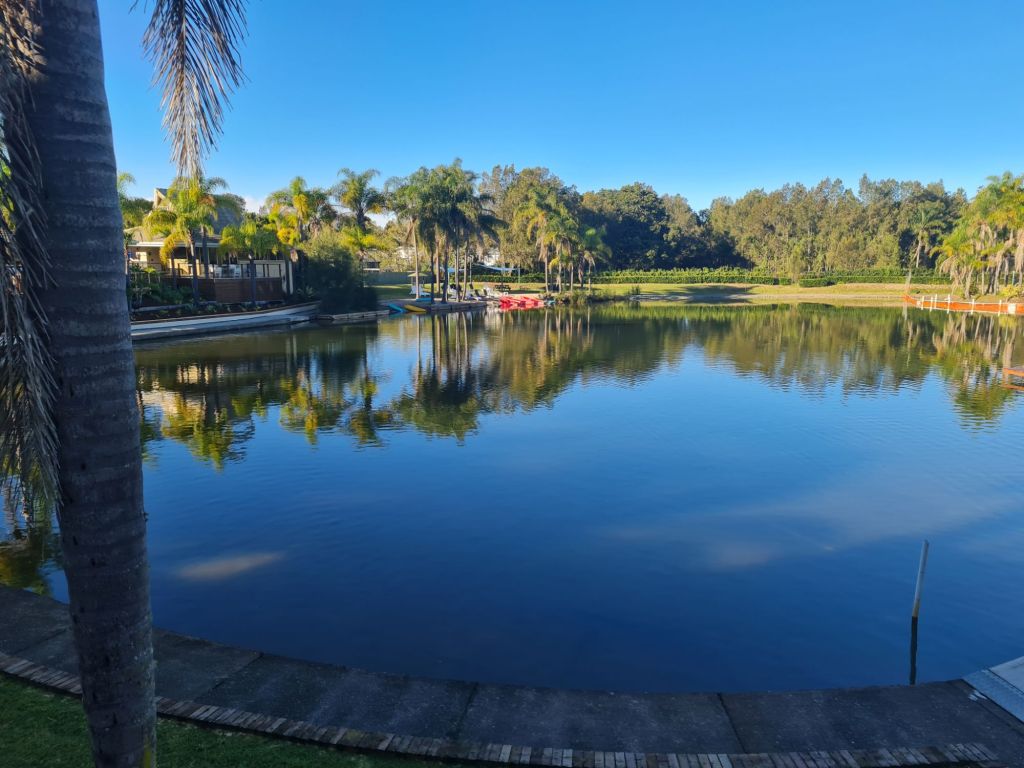
That lake is a lovely sheet of water, very still just as the sun comes up, and then, what a reflection.  Great if you are a landscape painter.

Then there’s sheet metal, which I did in school and wasn’t very good at.

If you’re a philatelist, then there’s always a sheet of stamps that might be worth something in a hundred years.

Then, if it is worth millions, you might turn white as a sheet with shock.

But the best of all, if you drink too much, it is said you are ‘two sheets to the wind’.

When you’re given another chance, it is like being given a clean sheet.

And another form might be to do with sailing, when you sheet a sail, which is to say you are making it either tauter or less taut.

English can be confusing sometimes, can’t it?

“One Last Look”, nothing is what it seems

A single event can have enormous consequences.

A single event driven by fate, after Ben told his wife Charlotte he would be late home one night, he left early, and by chance discovered his wife having dinner in their favourite restaurant with another man.

A single event where it could be said Ben was in the wrong place at the wrong time.

Who was this man? Why was she having dinner with him?

A simple truth to explain the single event was all Ben required. Instead, Charlotte told him a lie.

A single event that forces Ben to question everything he thought he knew about his wife and the people who are around her.

After a near-death experience and forced retirement into a world he is unfamiliar with, Ben finds himself once again drawn back into that life of lies, violence, and intrigue.

From London to a small village in Tuscany, little by little, Ben discovers who the woman he married is, and the real reason why fate had brought them together.

It is available on Amazon here:  http://amzn.to/2CqUBcz

The cinema of my dreams – I always wanted to see the planets – Episode 25

Are we there yet?

Even being in the fastest ship we had in the fleet, it still felt like it would take a lifetime to catch up to the alien ship, and I had to wonder at the pioneers of space travel who had to hibernate for the better part of a year, and sometimes a lot longer, to get to the other planets.

For us, time versus distance was measured a lot less that it used to be, but it would still take a long time, and we were prepared for it. What the real problem was, how long it would take us to be in a position to rescue our crew members.

Or how they felt being prisoners on an alien space craft, and how they were being treated, or even whether the aliens were either willing or capable of looking after them.

It was going to be a very interesting conversation I would have with the captain if or when we finally found them.

But knowing we might be in a fruitless chase to rescue our crew members just added to the frustration. I divided my time between the day room and pacing the bridge, looking out into the inky blackness, at times wishing something, anything, would appear to break the monotony

The science department on the other hand had a plethora of data, and no shortage of theories, but little concrete evidence of what they were calling space corridors, which were much like elevators only horizontal.

Chalmers still stuck to his belief in what he called worm hole, but was unable to advance a theory of whether the pre existed, or whether the alien ships created them as a means if getting quickly from one part if the universe to the other.

My report to the Admiral was scant on facts, except for one, that we were not alone in the universe. It Waldo precipitated a meeting of the brightest scientific minds back on the planet on the subject of alien life, and the universe itself.

At least some people were happy.

Meanwhile, the question of the ship’s speed became another topic, and it was being suggested that with a little tinkering, we could push more out of the propulsion unit, ‘tinkering’ being the operative word.

The subject was quite technical and although I had some knowledge of the mechanics, it was not enough, and I felt a little out of my depth when included in the discussions, relying heavily on the expertise of the Chief Engineer and his staff.

It was quite daunting that they were mentioning speeds up to the speed of light, now that they knew the structural integrity of the ship was not affected by the higher speed. I was not aware that it could have been a factor, but then I hadn’t known the ship was made out of an alloy that some said came from alien technology found on our planet.

Like most I believed the story that the compound that enabled us to get onto space was a freak discovery, even despite the rumours. Now, within the confines of a select group on board the ship and back at space command, those rumours had become a reality.

It was a lot to take in and I had to wonder how much the previous captain knew, and whether he was ever going to tell me. Sometimes ignorance was bliss, or so the saying went.

We’d been hurtling through space for three days when the Chief Engineer called me. I was in the day room reading up on the protocols we were supposed to adopt if or when we met new entities, and at a point where I couldn’t believe some of what I was reading.

“Sir, we think we might be able the squeeze a little more out of the engines.”

I wondered how much that little more was.

“How so?”

“The technical explanation would probably take a week, but with a few adjustments we might get a hundred percent improvement.”

“Risk factor?”

“Nothing comes without a risk, sir, but more or less as it was explained at the last conference “

In other words, any risk was worth it.

“The downside being we could be stuck in space until someone could come and rescue us.”

“Provided life support remains up and running, yes. But I believe the risk is minimal. We all signed up knowing that in all likelihood it might be a one way trip.”

Stating the obvious didn’t make the decision Amy easier. That responsibility for over 2,000 others on board weighed heavily.

“OK. I’ll make an announcement to the crew. Be on the bridge in fifteen minutes.”

“Aye, sir.”

Fifteen minutes precisely, we were looking out into the inky blackness, everyone battened down. For the first time, I sat in the captains chair with the feeling that I should be there rather than just keeping the seat warm for when the real captain returned.

A strange phrase came into my head, just seconds before I gave the order, death or glory.

“Helmsman?”

He turned. “Sir?”

“Let’s go.”

© Charles Heath 2021

The cinema of my dreams – Was it just another surveillance job – Episode 62

This story is now on the list to be finished so over the new few weeks, expect a new episode every few days.

The reason why new episodes have been sporadic, there are also other stories to write, and I’m not very good at prioritizing.

But, here we are, a few minutes opened up and it didn’t take long to get back into the groove.

Things are about to get complicated…


I was straight back to the scenario where O’Connell was expendable after performing his role, and that Anna was cleaning up before leaving, or she had already gone.

O’Connell had no doubt told her about the Peasdale address, and the fact he’d told me, and she might have assumed that there would be a window of opportunity to get some belongings at her flat.

Would she be there?

I switched off the light, backtracked to the door, and then went back outside into the passage.  Jennifer appeared beside me.

“O’Connell’s in there, dead.  Shot in the head.”

“Your friend?”

I’m not sure how she came up with the designation, ‘Your Friend’, but after the shortened version of my time with Josephine, and the fact we had a hotel room together, could have inspired such a thought.

I went to her flat and listened at the door.

Nothing.  There was no light showing under the door, so this could be a fruitless exercise.  The same operation as before, Jennifer waited outside, and I would go in.  It didn’t take as long to pick her lock.  Practise.

I opened the door, the gun in hand, and went slowly into the room.

There was a glow from what might be a night light coming from the end of the passage where the bedroom was.

She was in, or she forgot to turn off the light.

It was also not so dark in this flat, with several pilot lights casting red, blue or green hues over the furniture and floor.  It took a few seconds for my eyes to adjust.

“Drop the gun, Sam.”

Josephine, now just discernible across the room, a gun of her own aimed at me.

I shot her.  Without hesitation.

She was taken utterly by surprise, dropping her own weapon and spinning sideways into the arm of the chair, lost balance and crashed down to the floor.

Jennifer was in the door and had it closed behind her, and switched on the light.  We were both blinded for a second, enough time for Josephine to reach for her weapon which hadn’t fallen very far from her and for Jennifer to shoot her gun hand.

I remembered in that instant, that Jennifer scored the highest in gun training.  She would be ‘deadly’ Maury had said.

“OK, enough, what the hell was that for?” Jo said, stretching out on the floor and holding the hand that Jennifer shot.

“You played me, Anna.”

“Operation necessity.  I had to know what you were up to.  O’Connell said you were going to be a problem.”

“Did you kill him?”

“Me?  No.  He was dead when I got here.  We were here just to get our away bags.  How did you guess?”

“Lucky.  I was going to the other flat, but I figured it was too new for O’Connell to probably tell you.  He may have been planning to double-cross you too.  It seems the way of things in this op.  Where are the USBs?”

“What makes you think I have them?”

“The fact you just said them, when all we knew for sure was there was only one. I assume you have one each for safety’s sake, and coming back here, one or other of you was going to pull a double cross.”

“Until someone else got another idea.  Right now, you have a window of opportunity, Sam.  A big payday, for the two of you.”

“Tempting, but no.  I’m not in this for the money.”

“Then you’re a fool.  No one does anything except line their own pockets.  If you give the USBs to your chief, what do you think they’re going to do?  O’Connell got five million, the person who gave him the money will get ten at the very least.  They’re not interested in saving the world, Sam.”

She was probably right.

I looked at Jennifer.  “Are you in this for the money, Jennifer?”

“I just want my old life back.”

“Then keep an eye on the door, we’ll be having visitors very soon.  Anyone who comes through it using a key, disarm them.  Don’t hesitate.”

Back to Anna.  “Where are they?  Bear in mind I have no qualms about shooting you until you do tell me, so make it easy on yourself, because the next thing I shoot at is your knees.”

A moment’s thought, and a shot into the wall that just missed her head, decided the matter.

“In the backpack pocket.”

She nodded her head in the direction of the backpack sitting on the kitchen bench.

I went over and in the third pocket I opened there were two USBs in a plastic bag.

“What are you going to do with them?”

“Destroy them.  The world doesn’t need any more pandemics any time soon.”  I went over to the microwave oven and put them in and set it running.

“You’re only delaying the inevitable.”

“We’ve got company,” Jennifer said.

“You know what to do.”

© Charles Heath 2020-2023

365 Days of writing, 2026 – 57

Day 57 – Can your interests as a writer interest others

Does Writing About What You Think and Feel Capture Readers’ Attention?


Introduction: The Age‑Old Paradox

We live in an era of endless content—tweets, TikToks, newsletters, podcasts, and blog posts flood every corner of the internet. Yet, despite the sheer volume, the pieces that rise to the top often share a surprising commonality: they are personal.

But does baring your thoughts and emotions really interest others, or are we just indulging in a form of digital diary? In this post, I’ll dig into the psychology behind vulnerability, explore data from the world of content marketing, and give you concrete strategies to turn your inner monologue into magnetic copy that resonates with readers.


1. The Science of “Self‑Disclosure”

Psychological InsightWhat It Means for Writers
The Social Mirror Effect – People are wired to assess themselves against others’ experiences.Readers automatically compare your feelings to their own, creating instant relevance.
Neurochemical Reward – Sharing personal stories releases oxytocin, the “bonding hormone,” in both speaker and listener.Your authenticity can literally make readers feel more connected and trust you.
Reciprocity Principle – When someone reveals something personal, we feel compelled to respond in kind.A genuine confession can spark comments, shares, and even user‑generated content.

Bottom line: Human brains are primed to gravitate toward authentic, emotionally‑charged narratives. When you write about what you think or feel, you’re tapping into a built‑in neurological shortcut that draws people in.


2. When Vulnerability Becomes a Strategic Asset

2️⃣️⃣ Case Study: The “Storytelling” Blog that Grew 400% in Six Months

The Situation: A lifestyle blog that traditionally stuck to listicles (“10 Ways to Save Money”) saw stagnant traffic.

The Pivot: The editor started a weekly column called “My Messy Monday” where she wrote openly about procrastination, imposter syndrome, and even a failed attempt at a vegan diet.

The Results

MetricBeforeAfter (6 mo)
Avg. Time on Page1:453:20
Social Shares150/mo1,200/mo
Email Sign‑Ups200/mo1,050/mo
Comments per Post1278

Why it worked: Readers saw a real person behind the brand, felt validated in their own struggles, and were motivated to engage.

3️⃣ Data Point: The “Emotions‑Driven Content” Study (HubSpot, 2023)

  • 70% of consumers say they would purchase from a brand that “shares personal stories.”
  • 56% of B2B decision‑makers say they prefer vendors who “show their human side.”
  • 45% of top‑performing blog posts contain at least one personal anecdote.

These numbers confirm that authenticity isn’t just a feel‑good add‑on; it’s a measurable driver of engagement.


3. The Risks: Oversharing vs. Insightful Sharing

RiskWarning SignsMitigation
Oversharing – Dumping raw diary entries without context.Lengthy, rambling posts; limited take‑away.Keep a clear purpose: What should the reader learn or feel?
Self‑Centricity – Making the post only about you, no relevance to the audience.No mention of the reader’s problem or desire.Use the “you‑first” formula: I felt X → which means you might experience Y → here’s how to handle it.
Emotional Exhaustion – Constantly mining personal trauma can be draining.Writer feels drained, readers notice lack of enthusiasm.Schedule “self‑care” posts (e.g., reflections) vs. “value‑add” posts (e.g., actionable tips).

4. How to Turn Your Thoughts & Feelings into Reader‑Magnet Content

✅ Step 1 – Identify the Universal Core
Every personal story contains a universal thread (fear, ambition, love, failure). Ask yourself: What human need does this illustrate?

Example: “I’m terrified of public speaking.” → Universal core = fear of judgment.

✅ Step 2 – Add a Tangible Takeaway

Readers value both the emotional connection and a concrete benefit. Pair the feeling with a lesson, tip, or resource.

Format: “I felt ___ → Here’s the three‑step method that helped me ___.”

✅ Step 3 – Use the “Show, Don’t Tell” Technique

Instead of saying “I was anxious,” describe the physical sensations, the inner dialogue, or the environment.

Bad: “I was anxious.”
Good: “My heart raced, my palms slick, and the cursor blinked on an empty email draft.”

✅ Step 4 – Invite Interaction

End with a call‑to‑action that encourages readers to share their own experiences.

“What’s one moment you turned a fear into a win? Drop a comment below—I’ll reply to every story!”

✅ Step 5 – Edit for Balance

After the first draft, trim any sections that don’t serve the reader’s journey. Aim for a 70/30 split: 70% value, 30% personal narrative.


5. Sample Outline: A Mini‑Blog Post on “Why I Write About My Failures”

SectionPurpose
Hook – A vivid anecdote (e.g., “The night I missed my deadline and watched my inbox explode…”)Grab attention instantly
Feelings – Raw emotions (panic, embarrassment)Humanize the author
Universal Insight – “Everyone fears making a mistake that’s public.”Connect with reader
Lesson – 3 strategies you used to recover (communication, time‑boxing, post‑mortem)Provide actionable value
Reflection – How the failure reshaped your approach to workShow growth
CTA – “What’s the biggest professional mishap you’ve turned into a lesson?”Prompt engagement

6. Frequently Asked Questions

QuestionShort Answer
Will sharing personal opinions alienate readers?Only if the opinion is presented without empathy. Frame it as your perspective, invite dialogue, and respect differing views.
Can I write about feelings without being “emotional”?Absolutely. Pair emotional honesty with clear logic—explain why the feeling matters and how it influences actions.
Is it okay to disclose sensitive topics (e.g., mental health)?Yes, if you’re comfortable and it serves a purpose. Add a disclaimer and, when appropriate, provide resources for readers who might be triggered.

7. The Bottom Line

Writing about what you think and feel **does interest others—**but only when you turn that raw material into meaningful content. Authenticity is the magnet; relevance, structure, and actionable insight are the steel that holds it in place.

Your next post should be a two‑part equation:

(Personal Thought + Universal Feeling) × (Clear Takeaway + Invitation to Share) = Reader Engagement

Give it a try today. Write that honest paragraph you’ve been holding onto, shape it with the framework above, and watch the comments roll in.


Ready to Test the Theory?

If you’ve ever wondered whether your own musings could spark conversation, hit the Publish button now and share a snippet in the comments below. I’ll read each one and reply with a quick “read‑ability” score—just for fun!

Happy writing, and remember: your voice is the bridge that connects you to the world.

Searching for locations: Port Macquarie – Day 1 – Part 1

In keeping with the new travel plan, we are picking places in Australia, where we can exchange our timeshare week.

Some people consider timeshares as a waste of time and money, and the process of getting one is very painful, which it can be. 

Certainly, in some of the places we have gone, they tried hard to sell you another which can be a downside to staying, but the fact we get to stay in a three-bedroom fully kitted apartment of bungalow for $200 for the week far outweighs the small inconveniences.

Previously, we stayed at Coffs Harbour, but this time, we decided to stay at Port Macquarie.

Our bungalow, as they are called, is on the edge of the lagoon, which has an island and has been stocked with fish, though I doubt we would be allowed to go fishing in it.

For the more adventurous, there are canoes.  I think I would prefer the BBQ, and watch the planes taking off and landing at the airport just on the other side of the tree line on the other side of the lagoon.

At least they are only smaller planes like the De Havilland Dash 8.

And, knowing the airport was only minutes away, we dropped in for a quick photo op and got the following

What I learned about writing – Don’t give up your day job

OK, I know some of you do, and lock yourself away until the next bestseller is written, but that’s only an option if you saved up a million dollars so you could take the year off.

And if you are like me, you’d probably be out partying every day rather than put words on paper. Sometimes it is easier to just party.

However, for the more serious of us, our day job could work in our favour in several ways. Firstly, it gives us time away from the project so that we can dwell on how the story might progress the moment we get back in the door at home.

Besides that, the job may be so utterly stultifying that you can have the time to work through plotting and planning during the day, and writing by night.

There again, you might have exactly the job that provides the inspiration for writing the story, and it is very useful.

That aspect worked for me because I was in the exact place that was a company like the one I was writing about, in a remote location, on an island with isolation and native people. And I had photos of the operations running since 1898.

All the more reason to seriously consider whether or not to give up your day job.

Oh, and there is one other thing. If you’re not living with your parents, you still need to pay the bills.

Harry Walthenson, Private Detective – the second case – A case of finding the “Flying Dutchman”

What starts as a search for a missing husband soon develops into an unbelievable story of treachery, lies, and incredible riches.

It was meant to remain buried long enough for the dust to settle on what was once an unpalatable truth, when enough time had passed, and those who had been willing to wait could reap the rewards.

The problem was, no one knew where that treasure was hidden or the location of the logbook that held the secret.

At stake, billions of dollars’ worth of stolen Nazi loot brought to the United States in an anonymous tramp steamer and hidden in a specially constructed vault under a specifically owned plot of land on the once docklands of New York.

It may have remained hidden and unknown to only a few, if it had not been for a mere obscure detail being overheard …

… by our intrepid, newly minted private detective, Harry Walthenson …

… and it would have remained buried.

Now, through a series of unrelated events, or are they, that well-kept secret is out there, and Harry will not stop until the whole truth is uncovered.

Even if it almost costs him his life.  Again.

If I only had one day to stop over in – Canberra, Australia – what would I do?

One Day in Canberra? Make It Unforgettable With a Visit to the Australian War Memorial

You’ve just landed in Australia’s capital for a brief stop‑over. You’ve got 24 hours, a suitcase that’s still half‑packed, and a craving for a slice of “real” Aussie culture. Where do you go?

There are a dozen museums, a couple of formal gardens, and a parliamentary building that looks like it was lifted straight out of a 1970s postcard. But if you have only one place to squeeze into a single day, the Australian War Memorial (AWM) is the only answer that truly captures the spirit, history, and soul of Canberra—all in one unforgettable experience.


Why the Australian War Memorial Beats All the Rest

FeatureWhat It Gives YouWhy It Matters on a One‑Day Stopover
Iconic LocationSet on a hill with panoramic views over Lake Burley Griffin and the city skyline.Perfect backdrop for that Instagram‑ready shot you’ll be bragging about later.
History Meets ArtOver 100,000 artifacts, 1.5 million photographs, and a stunning collection of war‑time paintings and sculpture.You can walk through three centuries of Australian stories in just a couple of hours.
The Last Post CeremonyA nightly 10‑minute tribute with the haunting “Last Post” bugle call and a candle‑lit procession.A moving, free‑of‑charge experience that leaves an emotional imprint you’ll carry home.
Free EntryNo ticket price, just a suggested donation.Travel budgets love it—save your cash for an Aussie meat pie!
AccessibilityWheelchair‑friendly, audio guides in 12 languages, and plenty of signage.No matter your pace or travel style, you’ll be able to enjoy it fully.

In short: the Memorial is a micro‑cosm of Canberra. It merges the city’s design‑forward layout, its national identity, and its deep respect for service—all within a compact, easily navigable campus.


How to Turn a Few Hours at the AWM into a Full‑Day Adventure

1. Arrive Early – 9:00 am is Ideal

  • How to Get There: From Canberra Airport, hop on the ACTION bus Route 29 (≈ 15 min, $3.20) or grab a rideshare to the Memorial. Parking is plentiful if you’re driving.
  • First Stop: The Sculpture Garden. Stroll among pieces like “The Digger” and “Pacific Dancers” while the morning light hits the lake. It’s a tranquil introduction that eases you into the day.

2. Dive Into the Galleries (≈ 2 hours)

  • The Hall of Memory: Begin with the solemn Hall of Memory, where the Roll of Honour lists every Australian who has died in war. Take a moment—silence here is powerful.
  • The Galleries: Follow the chronological path: The First World War GalleryThe Second World War Gallery, and The Contemporary Conflicts Gallery. Look for:
    • The “Anzac” Diorama that recreates Gallipoli’s rough terrain.
    • The 1945 B-24 Liberator—a massive aircraft that fills an entire hall.
    • Personal letters and diaries displayed in glass cases; they bring the global conflicts down to intimate human stories.

3. Lunch With a View

  • Lunch Spot: Head to the Café Terrace on the Memorial grounds. Order the “Warrior’s Plate”—a hearty Aussie beef pie, side salad, and a glass of locally brewed coffee.
  • Alternative: Walk a few minutes to Lake Burley Griffin and picnic on the grassy knoll overlooking the water. Pack a sandwich from Café Italia at the nearby Old Bus Depot Markets (if it’s a Saturday).

4. The Memorial’s “Hidden Gem” – The Underground Chapel

  • Why Go? Tucked beneath the Hall of Memory, the Underground Chapel is a quiet, candle‑lit space where families leave poppies and notes. It’s the most contemplative spot in the whole complex—perfect for a reflective pause before you head out.

5. Catch the Last Post Ceremony (10 pm, or 5 pm on Sundays)

  • Insider Tip: Arrive about 15 minutes early to snag a good spot on the lawn. Bring a light jacket; evenings can be chilly even in summer.
  • What Happens: A lone bugler sounds the Last Post, followed by a 30‑second silence, the sounding of the Reveille, and the lighting of a wreath of candles. The ceremony ends with the national anthem—no better way to feel the heartbeat of Australia.

Quick Practical Checklist

✅Item
TransportACTION bus 29 or rideshare from the airport.
Timing9 am – 6 pm for galleries + 10 pm ceremony (or 5 pm on Sunday).
What to WearComfortable shoes, layers (the Memorial’s indoor climate can be cool).
FoodCafé Terrace for lunch; bring water and a snack for the ceremony.
Photo GearWide‑angle lens for the hilltop panorama; respectful etiquette inside galleries (no flash).
AccessibilityFree wheelchair hire at the information desk; audio guide in English & Mandarin (others on request).
BudgetFree entry; optional donation $10–$20 for the museum; café meal $15–$20.

The Takeaway

If you have one day in Canberra, you can’t go wrong with the Australian War Memorial. It’s not just a museum; it’s a narrative tapestry that weaves together the nation’s past, present, and future—all while offering stunning vistas, moving ceremonies, and a deep sense of humility that many travelers never experience elsewhere.

So, when your layover clock starts ticking, set your compass for AWM. Walk its halls, listen to the distant echo of the Last Post, and leave Canberra carrying not just a postcard, but an indelible story of a country that honors its past and looks forward with resolve.

Ready to make the most of that fleeting stop? Pack a camera, bring an open heart, and let the Australian War Memorial turn a single day into a lifetime memory.

An excerpt from “Mistaken Identity” – a work in progress

The odds of any one of us having a doppelganger are quite high. Whether or not you got to meet him or her, or be confronted by them was significantly lower. Except of course, unless you are a celebrity.

It was a phenomenon remarkable only for the fact, at times, certain high-profile people, notorious or not, had doubles if only to put off enemies or the general public. Sometimes we see people in the street, people who look like someone we knew, and made the mistake of approaching them like a long lost friend, only to discover an embarrassed individual desperately trying to get away for what they perceive is a stalker or worse.

And then sometimes it is a picture that looms up on a TV screen, an almost exact likeness of you. At first, you are fascinated, and then according to the circumstances, and narrative that is attached to that picture, either flattered or horrified.

For me one turned to the other when I saw an almost likeness of me flash up on the screen when I turned the TV on in my room. What looked to be my photo, with only minor differences, was in the corner of the screen, the newsreader speaking in rapid Italian, so fast I could only translate every second or third word.

But the one word I did recognize was murder. The photo of the man up on the screen was the subject of an extensive manhunt. The crime, the murder of a woman in the very same hotel I was staying, and it was being played out live several floors above me. The gist of the story, the woman had been seen with, and staying with the man who was my double, and, less than an hour ago, the body had been discovered by a chambermaid.

The killer, the announcer said, was believed to be still in the hotel because the woman had died shortly before she had been discovered.

I watched, at first fascinated at what I was seeing. I guess I should have been horrified, but at that moment it didn’t register that I might be mistaken for that man.

Not until another five minutes had passed, and I was watching the police in full riot gear, with a camera crew following behind, coming up a passage towards a room. Live action of the arrest of the suspected killer the breathless commentator said.

Then, suddenly, there was a pounding on the door. On the TV screen, plain to see, was the number of my room.
I looked through the peephole and saw an army of police officers. It didn’t take much to realize what had happened. The hotel staff identified me as the man in the photograph on the TV and called the police.

Horrified wasn’t what I was feeling right then.

It was fear.

My last memory was the door crashing open, the wood splintering, and men rushing into the room, screaming at me, waving guns, and when I put my hands up to defend myself, I heard a gunshot.

And in one very confused and probably near-death experience, I thought I saw my mother and thought what was she doing in Rome?

I was the archetypal nobody.

I lived in a small flat, I drove a nondescript car, had an average job in a low profile travel agency, was single, and currently not involved in a relationship, no children, and according to my workmates, no life.

They were wrong. I was one of those people who preferred their own company, I had a cat, and travelled whenever I could. And I did have a ‘thing’ for Rosalie, one of the reasons why I stayed at the travel agency. I didn’t expect anything to come of it, but one could always hope.

I was both pleased and excited to be going to the conference. It was my first, and the glimpse I had seen of it had whetted my appetite for more information about the nuances of my profession.

Some would say that a travel agent wasn’t much of a job, but to me, it was every bit as demanding as being an accountant or a lawyer. You were providing a customer with a service, and arguably more people needed a travel agent than a lawyer. At least that was what I told myself, as I watched more and more people start using the internet, and our relevance slowly dissipating.

This conference was about countering that trend.

The trip over had been uneventful. I was met at the airport and taken to the hotel where the conference was being held with a number of other delegates who had arrived on the same plane. I had mingled with a number of other delegates at the pre conference get together, including one whose name was Maryanne.

She was an unusual young woman, not the sort that I usually met, because she was the one who was usually surrounded by all the boys, the life of the party. In normal circumstances, I would not have introduced myself to her, but she had approached me. Why did I think that may have been significant? All of this ran through my mind, culminating in the last event on the highlight reel, the door bursting open, men rushing into my room, and then one of the policemen opened fire.

I replayed that last scene again, trying to see the face of my assailant, but it was just a sea of men in battle dress, bullet proof vests and helmets, accompanied by screaming and yelling, some of which I identified as “Get on the floor”.

Then came the shot.

Why ask me to get on the floor if all they were going to do was shoot me. I was putting my hands up at the time, in surrender, not reaching for a weapon.

Then I saw the face again, hovering in the background like a ghost. My mother. Only the hair was different, and her clothes, and then the image was going, perhaps a figment of my imagination brought on by pain killing drugs. I tried to imagine the scene again, but this time it played out, without the image of my mother.

I opened my eyes took stock of my surroundings. What I felt in that exact moment couldn’t be described. I should most likely be dead, the result of a gunshot wound. I guess I should be thankful the shooter hadn’t aimed at anything vital, but that was the only item on the plus side.

I was in a hospital room with a policeman by the door. He was reading a newspaper, and sitting uncomfortably on a small chair. He gave me a quick glance when he heard me move slightly, but didn’t acknowledge me with either a nod, or a greeting, just went back to the paper.

If I still had a police guard, then I was still considered a suspect. What was interesting was that I was not handcuffed to the bed. Perhaps that only happened in TV shows. Or maybe they knew I couldn’t run because my injuries were too serious. Or the guard would shoot me long before my feet hit the floor. I knew the police well enough now to know they would shoot first and ask questions later.

On the physical side, I had a large bandage over the top left corner of my chest, extending over my shoulder. A little poking and prodding determined the bullet had hit somewhere between the top of my rib cage and my shoulder. Nothing vital there, but my arm might be somewhat useless for a while, depending on what the bullet hit on the way in, or through.

It didn’t feel like there were any broken or damaged bones.

That was the good news.

On the other side of the ledger, my mental state, there was only one word that could describe it. Terrified. I was looking at a murder charge and jail time, a lot of it. Murder usually had a long time in jail attached to it.

Whatever had happened, I didn’t do it. I know I didn’t do it, but I had to try and explain this to people who had already made up their minds. I searched my mind for evidence. It was there, but in the confused state brought on by the medication, all I could think about was jail, and the sort of company I was going to have.

I think death would have been preferable.

Half an hour later, maybe longer, I was drifting in an out of consciousness, a nurse, or what I thought was a nurse, came into the room. The guard stood, checked her ID card, and then stood by the door.

She came over and stood beside the bed. “How are you?” she asked, first in Italian, and when I pretended I didn’t understand, she asked the same question in accented English.

“Alive, I guess,” I said. “No one has come and told what my condition is yet. You are my first visitor. Can you tell me?”

“Of course. You are very lucky to be alive. You will be fine and make a full recovery. The doctors here are excellent at their work.”

“What happens now?”

“I check you, and then you have a another visitor. He is from the British Embassy I think. But he will have to wait until I have finished my examination.”

I realized then she was a doctor, not a nurse.

My second visitor was a man, dressed in a suit the sort of which I associated with the British Civil Service.  He was not very old which told me he was probably a recent graduate on his first posting, the junior officer who drew the short straw.

The guard checked his ID but again did not leave the room, sitting back down and going back to his newspaper.

My visitor introduced himself as Alex Jordan from the British Embassy in Rome and that he had been asked by the Ambassador to sort out what he labelled a tricky mess.

For starters, it was good to see that someone cared about what happened to me.  But, equally, I knew the mantra, get into trouble overseas, and there is not much we can do to help you.  So, after that lengthy introduction, I had to wonder why he was here.

I said, “They think I am an international criminal by the name of Jacob Westerbury, whose picture looks just like me, and apparently for them it is an open and shut case.”  I could still hear the fragments of the yelling as the police burst through the door, at the same time telling me to get on the floor with my hands over my head.

“It’s not.  They know they’ve got the wrong man, which is why I’m here.  There is the issue of what had been described as excessive force, and the fact you were shot had made it an all-round embarrassment for them.”

“Then why are you here?  Shouldn’t they be here apologizing?”

“That is why you have another visitor.  I only took precedence because I insisted I speak with you first.  I have come, basically to ask you for a favour.  This situation has afforded us with an opportunity.  We would like you to sign the official document which basically indemnifies them against any legal proceedings.”

Curious.  What sort of opportunity was he talking about?  Was this a matter than could get difficult and I could be charged by the Italian Government, even if I wasn’t guilty, or was it one of those hush hush type deals, you do this for us, we’ll help you out with that.  “What sort of opportunity?”

“We want to get our hands on Jacob Westerbury as much as they do.  They’ve made a mistake, and we’d like to use that to get custody of him if or when he is arrested in this country.  I’m sure you would also like this man brought into custody as soon as possible so you will stop being confused with him.  I can only imagine what it was like to be arrested in the manner you were.  And I would not blame you if you wanted to get some compensation for what they’ve done.  But.  There are bigger issues in play here, and you would be doing this for your country.”

I wondered what would happen if I didn’t agree to his proposal.  I had to ask, “What if I don’t?”

His expression didn’t change.  “I’m sure you are a sensible man Mr Pargeter, who is more than willing to help his country whenever he can.  They have agreed to take care of all your hospital expenses, and refund the cost of the Conference, and travel.  I’m sure I could also get them to pay for a few days at Capri, or Sorrento if you like, before you go home.  What do you say?”

There was only one thing I could say.  Wasn’t it treason if you went against your country’s wishes?

“I’m not an unreasonable man, Alex.  Go do your deal, and I’ll sign the papers.”

“Good man.”

After Alex left, the doctor came back to announce the arrival of a woman, by the way she had announced herself, the publicity officer from the Italian police. When she came into the room, she was not dressed in a uniform.

The doctor left after giving a brief report to the civilian at the door. I understood the gist of it, “The patient has recovered excellently and the wounds are healing as expected. There is no cause for concern.”

That was a relief.

While the doctor was speaking to the civilian, I speculated on who she might be. She was young, not more than thirty, conservatively dressed so an official of some kind, but not necessarily with the police. Did they have prosecutors? I was unfamiliar with the Italian legal system.

She had long wavy black hair and the sort of sultry looks of an Italian movie star, and her presence made me more curious than fearful though I couldn’t say why.

The woman then spoke to the guard, and he reluctantly got up and left the room, closing the door behind him.
She checked the door, and then came back towards me, standing at the end of the bed. Now alone, she said, “A few questions before we begin.” Her English was only slightly accented. “Your name is Jack Pargeter?”

I nodded. “Yes.”

“You are in Rome to attend the Travel Agents Conference at the Hilton Hotel?”

“Yes.”

“You attended a preconference introduction on the evening of the 25th, after arriving from London at approximately 4:25 pm.”

“About that time, yes. I know it was about five when the bus came to collect me, and several others, to take us to the hotel.”

She smiled. It was then I noticed she was reading from a small notepad.

“It was ten past five to be precise. The driver had been held up in traffic. We have a number of witnesses who saw you on the plane, on the bus, at the hotel, and with the aid of closed circuit TV we have established you are not the criminal Jacob Westerbury.”

She put her note book back in her bag and then said, “My name is Vicenza Andretti and I am with the prosecutor’s office. I am here to formally apologize for the situation that can only be described as a case of mistaken identity. I assure you it is not the habit of our police officers to shoot people unless they have a very strong reason for doing so. I understand that in the confusion of the arrest one of our officers accidentally discharged his weapon. We are undergoing a very thorough investigation into the circumstances of this event.”

I was not sure why, but between the time I had spoken to the embassy official and now, something about letting them off so easily was bugging me. I could see why they had sent her. It would be difficult to be angry or annoyed with her.

But I was annoyed.

“Do you often send a whole squad of trigger happy riot police to arrest a single man?” It came out harsher than I intended.

“My men believed they were dealing with a dangerous criminal.”

“Do I look like a dangerous criminal?” And then I realized if it was mistaken identity, the answer would be yes.

She saw the look on my face, and said quietly, “I think you know the answer to that question, Mr. Pargeter.”

“Well, it was overkill.”

“As I said, we are very sorry for the circumstances you now find yourself in. You must understand that we honestly believed we were dealing with an armed and dangerous murderer, and we were acting within our mandate. My department will cover your medical expenses, and any other amounts for the inconvenience this has caused you. I believe you were attending a conference at your hotel. I am very sorry but given the medical circumstances you have, you will have to remain here for a few more days.”

“I guess, then, I should thank you for not killing me.”

Her expression told me that was not the best thing I could have said in the circumstances.

“I mean, I should thank you for the hospital and the care. But a question or two of my own. May I?”

She nodded.

“Did you catch this Jacob Westerbury character?”

“No. In the confusion created by your arrest he escaped. Once we realized we had made a mistake and reviewed the close circuit TV, we tracked him leaving by a rear exit.”

“Are you sure it was one of your men who shot me?”

I watched as her expression changed, to one of surprise.

“You don’t think it was one of my men?”

“Oddly enough no. But don’t ask me why.”

“It is very interesting that you should say that, because in our initial investigation, it appeared none of our officer’s weapons had been discharged. A forensic investigation into the bullet tells us it was one that is used in our weapons, but…”

I could see their dilemma.

“Have you any enemies that would want to shoot you Mr Pargeter?”

That was absurd because I had no enemies, at least none that I knew of, much less anyone who would want me dead.

“Not that I’m aware of.”

“Then it is strange, and will perhaps remain a mystery. I will let you know if anything more is revealed in our investigation.”

She took an envelope out of her briefcase and opened it, pulling out several sheets of paper.

I knew what it was. A verbal apology was one thing, but a signed waiver would cover them legally. They had sent a pretty girl to charm me. Perhaps using anyone else it would not have worked. There was potential for a huge litigation payout here, and someone more ruthless would jump at the chance of making a few million out of the Italian Government.

“We need a signature on this document,” she said.

“Absolving you of any wrong doing?”

“I have apologized. We will take whatever measures are required for your comfort after this event. We are accepting responsibility for our actions, and are being reasonable.”

They were. I took the pen from her and signed the documents.

“You couldn’t add dinner with you on that list of benefits?” No harm in asking.

“I am unfortunately unavailable.”

I smiled. “It wasn’t a request for a date, just dinner. You can tell me about Rome, as only a resident can. Please.”

She looked me up and down, searching for the ulterior motive. When she couldn’t find one, she said, “We shall see once the hospital discharges you in a few days.”

“Then I’ll pencil you in?”

She looked at me quizzically. “What is this pencil me in?”

“It’s an English colloquialism. It means maybe. As when you write something in pencil, it is easy to erase it.”

A momentary frown, then recognition and a smile. “I shall remember that. Thank-you for your time and co-operation Mr. Pargeter. Good morning.”

© Charles Heath 2015-2021