Over the years, I have traveled extensively and kept journals, with the idea that one day all of those places would become locations in books. Notebooks filled with odd characters, people and incidents observed, and whole tracts of stories written when the on the spot inspiration has been a driving force.
All of this is the basis of the first three novels, Sunday In New York, set, of course, in New York, probably my favorite city in the world, “Echoes From The Past’ equally set in New York, Brooklyn Heights and Philadelphia. The third, The Devil You Don’t, travels through Europe, starting in Geneva, moving to Rome, then Sorrento, and then to Venice.
Now, my passion to write is fuelled by travel and fine dining. When I take a break from these, I get to torment my three wonderful grandchildren whom I actively encourage to read as much as they can, and more recently to also write.
As for almost every other writer, I would not be able to do any of this without my wife who has put up with my moodiness, the times when I'm locked away in a room trying to push out another 2,000 words, and yet despite everything still puts up with me.
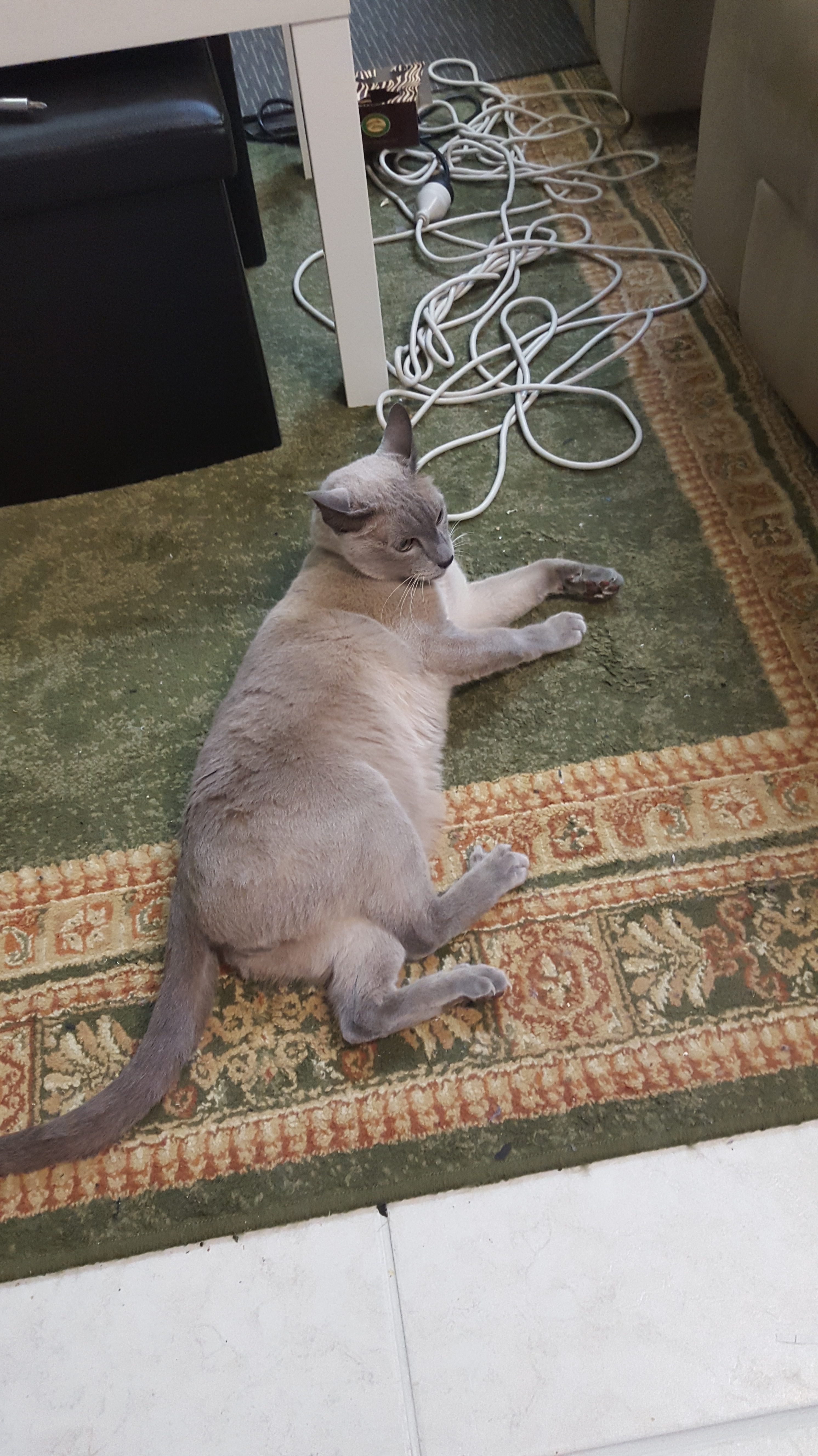
I wish I could say the same for our cat. Alas, I am still trying to work out how to be his friend!
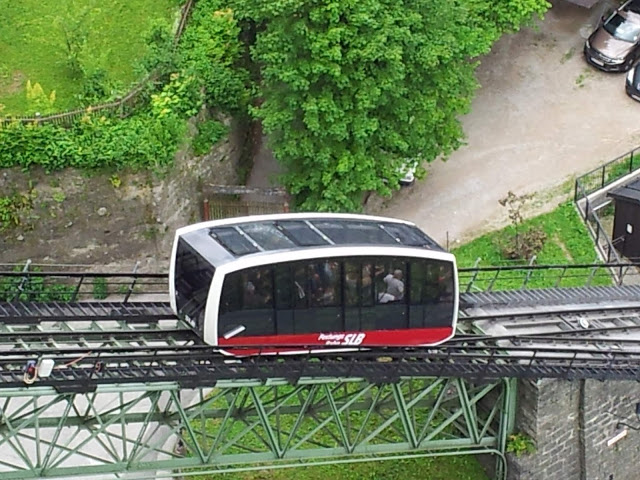
Hohensalzburg Castle sits atop the Festungsberg, accessed by a cable car.
The castle itself dominates the Salzburg skyline.
Below is a view down into Salzburg from the castle walls.
We had lunch at a café, the Salzburg Fortress Café, that overlooked the countryside. This was where we were introduced to Mozart Gold Chocolate Cream added to our coffee.
The square below featured in the Sound of Music.
Among the more interesting objects to be seen, the gun below shows what some of the castle’s armaments might have been. These cannons, in the ‘Firing Gallery’ date back to the thirty years war in the early 1600’s.
50 photographs, 50 stories, of which there is one of the 50 below.
They all start with –
A picture paints … well, as many words as you like. For instance:
And, the story:
Have you ever watched your hopes and dreams simply just fly away?
Everything I thought I wanted and needed had just left in an aeroplane, and although I said I was not going to, i came to the airport to see the plane leave. Not the person on it, that would have been far too difficult and emotional, but perhaps it was symbolic, the end of one life and the start of another.
But no matter what I thought or felt, we had both come to the right decision. She needed the opportunity to spread her wings. It was probably not the best idea for her to apply for the job without telling me, but I understood her reasons.
She was in a rut. Though her job was a very good one, it was not as demanding as she had expected, particularly after the last promotion, but with it came resentment from others on her level, that she, the youngest of the group would get the position.
It was something that had been weighing down of her for the last three months, and if noticed it, the late nights, the moodiness, sometimes a flash of temper. I knew she had one, no one could have such red hair and not, but she had always kept it in check.
And, then there was us, together, and after seven years, it felt like we were going nowhere. Perhaps that was down to my lack of ambition, and though she never said it, lack of sophistication. It hadn’t been an issue, well, not until her last promotion, and the fact she had to entertain more, and frankly I felt like an embarrassment to her.
So, there it was, three days ago, the beginning of the weekend, and we had planned to go away for a few days and take stock. We both acknowledged we needed to talk, but it never seemed the right time.
It was then she said she had quit her job and found a new one. Starting the following Monday.
Ok, that took me by surprise, not so much that it something I sort of guessed might happen, but that she would just blurt it out.
I think that right then, at that moment, I could feel her frustration with everything around her.
What surprised her was my reaction. None.
I simply asked where who, and when.
A world-class newspaper, in New York, and she had to be there in a week.
A week.
It was all the time I had left with her.
I remember I just shrugged and asked if the planned weekend away was off.
She stood on the other side of the kitchen counter, hands around a cup of coffee she had just poured, and that one thing I remembered was the lone tear that ran down her cheek.
Is that all you want to know?
I did, yes, but we had lost that intimacy we used to have when she would have told me what was happening, and we would have brainstormed solutions. I might be a cabinet maker but I still had a brain, was what I overheard her tell a friend once.
There’s not much to ask, I said. You’ve been desperately unhappy and haven’t been able to hide it all that well, you have been under a lot of pressure trying to deal with a group of troglodytes, and you’ve been leaning on Bentley’s shoulder instead of mine, and I get it, he’s got more experience in that place, and the politics that go with it, and is still an ally.
Her immediate superior and instrumental in her getting the position, but unlike some men in his position he had not taken advantage of a situation like some men would. And even if she had made a move, which I doubted, that was not the sort of woman she was, he would have politely declined.
One of the very few happily married men in that organisation, so I heard.
So, she said, you’re not just a pretty face.
Par for the course for a cabinet maker whose university degree is in psychology. It doesn’t take rocket science to see what was happening to you. I just didn’t think it was my place to jump in unless you asked me, and when you didn’t, well, that told me everything I needed to know.
Yes, our relationship had a use by date, and it was in the next few days.
I was thinking, she said, that you might come with me, you can make cabinets anywhere.
I could, but I think the real problem wasn’t just the job. It was everything around her and going with her, that would just be a constant reminder of what had been holding her back. I didn’t want that for her and said so.
Then the only question left was, what do we do now?
Go shopping for suitcases. Bags to pack, and places to go.
Getting on the roller coaster is easy. On the beginning, it’s a slow easy ride, followed by the slow climb to the top. It’s much like some relationships, they start out easy, they require a little work to get to the next level, follows by the adrenaline rush when it all comes together.
What most people forget is that what comes down must go back up, and life is pretty much a roller coaster with highs and lows.
Our roller coaster had just come or of the final turn and we were braking so that it stops at the station.
There was no question of going with her to New York. Yes, I promised I’d come over and visit her, but that was a promise with crossed fingers behind my back. After a few months in t the new job the last thing shed want was a reminder of what she left behind. New friends new life.
We packed her bags, three out everything she didn’t want, a free trips to the op shop with stiff she knew others would like to have, and basically, by the time she was ready to go, there was nothing left of her in the apartment, or anywhere.
Her friends would be seeing her off at the airport, and that’s when I told her I was not coming, that moment the taxi arrived to take her away forever. I remember standing there, watching the taxi go. It was going to be, and was, as hard as it was to watch the plane leave.
So, there I was, finally staring at the blank sky, around me a dozen other plane spotters, a rather motley crew of plane enthusiasts.
Already that morning there’s been 6 different types of plane depart, and I could hear another winding up its engines for take-off.
People coming, people going.
Maybe I would go to New York in a couple of months, not to see her, but just see what the attraction was. Or maybe I would drop in, just to see how she was.
As one of my friends told me when I gave him the news, the future is never written in stone, and it’s about time you broadened your horizons.
She believed every one of his lies, the gaudier and more divorced from any semblance of possibility, the better.
….
Listening to her subject, John Terrance Wilkins Jamieson, the third, if you will, a name that in any other situation would have been one held in utter reverence, Amy quickly remembered the instructions of her handler.
‘Make him feel like you have his complete confidence, flatter him, feed the ego, draw the story out of him, it will come in layers, the first few, like topsoil, to be dug out and put aside, the next, the hard cover, the clay if you will. This will be hard to extract and require prompting, but not too much, and then, well, we shall see what we shall see.’
It hadn’t been that difficult. She knew the type, knew the levers to pull and the buttons to push, ever so gently. He was a man with a story, and he would tell it in his time, not hers, but it would come. It was not her job to sort the wheat from the chaff, just to be the one to dig.
They had been sitting in that room for an hour, she asking questions and he dodging them, making her the focus of the interview, and her bringing it back on track. Then it was time for a metaphorical yank…
“So, the people I represent are willing to pay, and pay a lot, for your story. But, and let me stress this one important point, they will pay only if I believe you have told me the truth. You’re probably thinking, I could tell this silly girl anything, and if I put just the right amount of emphasis and heart into it, I can make her believe anything. You probably could, if you wanted to, but you have to wonder, does she know anything about this? Is there more than one source? Does she know enough from all the peripheral information that is out there, truth and fiction?”
A little hardening of the tone, a little wariness creeping into his eyes. “Do you?”
“That’s for me to know and for you to find out. After all, you did ask for me, and I assume you believe that I have the credibility from previous stories that will give your story credence, set the narrative, as it were. You need me more than I need you, Mr Jamieson.”
He regarded her now with a degree of respect. “Call me John, please.”
“Wait an hour, and if I think you deserve it, I will.”
…
Jackson Jamieson, estranged father, said in an earlier interview when she was seeking background on the only son, one whom his father had hoped would take over the family business, not burn it to the ground. Shortly after that, his son had disappeared a few years back, but he still believed he was out there, somewhere. He did not recognise the man in the photo Amy had shown him, even though he had the same name. He didn’t have the scar running along the hairline on the left side of the forehead.
That was because it was not his son. Only a week before, the police had discovered that Jackson’s real son had died in a boating accident when John had been on holiday, and his remains, recently discovered and stored unidentified in a box in a lab, had a DNA test run on them, quite by accident. They had tested the wrong set of remains in another cold case. They were holding details of the remains’ identity until the fake Jackson was in custody.
As a result, the fake Jackson had been arrested, but only on the charge of impersonating a dead person, and by a quirk of fate, had been released from jail, and he had then disappeared. An APB went out, came across Amy’s desk, and she recognised Jackson as a man working as a barista at her usual coffee haunt.
She had gone to the police, but instead of arresting him, the devised a plan that would use her to get his story, and after a week, there were now in a special room, which she had described as an interview room for the media outlet she worked for, and she was going to record his story, just to make sure she didn’t get anything wrong.
And for the lead Detective on the case to step in in things got problematic.
They didn’t.
He simply wove a very believable story, woven into the fabric of the truth, what he believed to be the truth, and a set of lies, particularly well woven, from the moment he had gone overboard, hit his head, lost his memory, finally remembered who he was, and the everything that had happened from that point on was not his fault. He just happened to be in the same place at the same time, and there was nothing he could have done differently.
He took no responsibility, cursed his father as an angry, greedy, law-breaking monster who had perpetrated everything and dumped the blame on him. The only evidence the police had was his lies, and it was all circumstantial.
She believed him. She had one of those faces. And the training over the course of her career to make a subject feel at home, and safe, to tell their story in their own words, in their own time.
The story: complete and utter fairytale stuff, but she had to admit he was one of the best liars she had ever met. But as the saying goes, liars need to have good memories. It was clear that he and the real Jackson had spoken at length over the dealings with the father, and the feelings of inadequacy and inferiority forced upon him by the father; to an extent, it was almost like talking to the real Jackson.
But it was what he didn’t know about the real Jackson. The details his father and mother knew, the sort of detail the real Jackson would never have shared with anyone.
They reached the end of the interview, and Amy closed her notebook. She had been making notes and had a list of details and questions in her own particular brand of shorthand listed in it. She had seen him trying to read it, without looking like he could.
He was, nevertheless, quite confident he had won her over.
The door opened, and a man came into the room. John was immediately wary. “What are you?”
“The publisher’s Chief Editor. Just for the record, it everything you just told us the truth, the whole truth and nothing but the truth?”
“Of course, why would I lie?”
“To save yourself from life imprisonment for murder. We found the real John’s body, and he was definitely murdered. Since you were the only two in the boat, which you claim he fell out of, we can assume you were there at the time of his death. A confession, Richard. That’s your real name, Richard Watkins. I am arresting you on the suspicion of murdering John Jamieson….”
Amy got her story, just not the one Richard hoped it would be.
It could be said that of all the women one could meet, whether contrived or by sheer luck, what are the odds it would turn out to be the woman who was being paid a very large sum to kill you.
John Pennington is a man who may be lucky in business, but not so lucky in love. He has just broken up with Phillipa Sternhaven, the woman he thought was the one, but relatives and circumstances, and perhaps because she was a ‘princess’, may also have contributed to the end result.
So, what do you do when you are heartbroken?
That is a story that slowly unfolds, from the first meeting with his nemesis on Lake Geneva, all the way to a hotel room in Sorrento, where he learns the shattering truth.
What should have been solace after disappointment, turns out to be something else entirely, and from that point, everything goes to hell in a handbasket.
He suddenly realizes his so-called friend Sebastian has not exactly told him the truth about a small job he asked him to do, the woman he is falling in love with is not quite who she says she is, and he is caught in the middle of a war between two men who consider people becoming collateral damage as part of their business.
The story paints the characters cleverly displaying all their flaws and weaknesses. The locations add to the story at times taking me back down memory lane, especially to Venice where, in those back streets I confess it’s not all that hard to get lost.
All in all a thoroughly entertaining story with, for once, a satisfying end.
Oncoming headlights, a bright light flashed in our eyes or walking into a dark room and a halogen light suddenly snaps on.
You’re still seeing red flashes for hours afterwards.
Literally, blind means you’re not able to see anything, i.e. you are visually impaired. That’s the first meaning of the word people will think of.
But…
It’s another of those words with a few other meanings, such as,
A blind is a window covering; usually it goes up and down, and some you can see through slats. Very good for nosey parkers, and subplots in stories.
Being blind to the truth means that you refuse to accept it for specific reasons, generally brought on by a belief or a prejudice
It can be a hidden enclosure from which to observe or shoot animals
And for the more interesting uses
Blind drunk, I think a lot of people have been there
Flying blind, pilots do it at night, but some of us have figuratively done it a few times, but not in a plane
And lastly, a blind tasting, where you’re not sure what you’re going to get, but usually it’s for a wine tasting, to see if you can tell what’s good and what’s swill.
Sadly I can never tell the difference, which is why I usually stick to beer.
It could have been anywhere in the world, she thought, but it wasn’t. It was in a city where if anything were to go wrong…
She sighed and came away from the window and looked around the room. It was quite large and expensively furnished. It was one of several she had been visiting in the last three months.
Quite elegant too, as the hotel had its origins dating back to before the revolution in 1917. At least, currently, there would not be a team of KGB agents somewhere in the basement monitoring everything that happened in the room.
There was no such thing as the KGB anymore, though there was an FSB, but such organisations were of no interest to her.
She was here to meet with Vladimir.
She smiled to herself when she thought of him, such an interesting man whose command of English was as good as her command of Russian, though she had not told him of that ability.
All he knew of her was that she was American, worked in the Embassy as a clerk, nothing important, whose life both at work and at home was boring. Not that she had blurted that out the first they met, or even the second.
That first time, at a function in the Embassy, was a chance meeting, a catching of his eye as he looked around the room, looking, as he had told her later, for someone who might not be as boring as the function itself.
It was a celebration, honouring one of the Embassy officials on his service in Moscow, and the fact he was returning home after 10 years. She had been there once, and still hadn’t met all the staff.
They had talked, Vladimir knew a great deal about England, having been stationed there for a year or two, and had politely asked questions about where she lived, her family, and of course what her role was, all questions she fended off with an air of disinterested interest.
It fascinated him, as she knew it would, a sort of mental sparring as one would do with swords if this was a fencing match.
They had said they might or might not meet again when the party was over, but she suspected there would be another opportunity. She knew the signs of a man who was interested in her, and Vladimir was interested.
The second time came in the form of an invitation to an art gallery, and a viewing of the works of a prominent Russian artist, an invitation she politely declined. After all, invitations issued to Embassy staff held all sorts of connotations, or so she was told by the Security officer when she told him.
Then, it went quiet for a month. There was a party at the American embassy and along with several other staff members, she was invited. She had not expected to meet Vladimir, but it was a pleasant surprise when she saw him, on the other side of the room, talking to several military men.
A pleasant afternoon ensued.
And it was no surprise that they kept running into each other at the various events on the diplomatic schedule.
By the fifth meeting, they were like old friends. She had broached the subject of being involved in a plutonic relationship with him with the head of security at the embassy. Normally for a member of her rank, it would not be allowed, but in this instance it was.
She did not work in any sensitive areas, and, as the security officer had said, she might just happen upon something that might be useful. In that regard, she was to keep her eyes and ears open and file a report each time she met him.
After that discussion, she got the impression her superiors considered Vladimir more than just a casual visitor on the diplomatic circuit. She also formed the impression that he might consider her an ‘asset’, a word that had been used at the meeting with security and the ambassador.
It was where the word ‘spy’ popped into her head and sent a tingle down her spine. She was not a spy, but the thought of it, well, it would be fascinating to see what happened.
A Russian friend. That’s what she would call him.
And over time, that relationship blossomed, until, after a visit to the ballet, late and snowing, he invited her to his apartment not far from the ballet venue. It was like treading on thin ice, but after champagne and an introduction to caviar, she felt like a giddy schoolgirl.
Even so, she had made him promise that he remain on his best behaviour. It could have been very easy to fall under the spell of a perfect evening, but he promised, showed her to a separate bedroom, and after a brief kiss, their first, she did not see him until the next morning.
So, it began.
It was an interesting report she filed after that encounter, one where she had expected to be reprimanded.
She wasn’t.
It wasn’t until six weeks had passed when he asked her if she would like to take a trip to the country. It would involve staying in a hotel, that they would have separate rooms. When she reported the invitation, no objection was raised, only a caution; keep her wits about her.
Perhaps, she had thought, they were looking forward to a more extensive report. After all, her reports on the places, and the people, and the conversations she overheard, were no doubt entertaining reading for some.
But this visit was where the nature of the relationship changed, and it was one that she did not immediately report. She had realised at some point before the weekend away, that she had feelings for him, and it was not that he was pushing her in that direction or manipulating her in any way.
It was just one of those moments where, after a grand dinner, a lot of champagne, and delightful company, things happen. Standing at the door to her room, a lingering kiss, not intentional on her part, and it just happened.
And for not one moment did she believe she had been compromised, but for some reason she had not reported that subtle change in the relationship to the powers that be, and so far, no one had any inkling.
She took off her coat and placed it carefully of the back of one of the ornate chairs in the room. She stopped for a moment to look at a framed photograph on the wall, one representing Red Square.
Then, after a minute or two, she went to the mini bar and took out the bottle of champagne that had been left there for them, a treat arranged by Vladimir for each encounter.
There were two champagne flutes set aside on the bar, next to a bowl of fruit. She picked up the apple and thought how Eve must have felt in the garden of Eden, and the temptation.
Later perhaps, after…
She smiled at the thought and put the apple back.
A glance at her watch told her it was time for his arrival. It was if anything, the one trait she didn’t like, and that was his punctuality. A glance at the clock on the room wall was a minute slow.
The doorbell to the room rang, right on the appointed time.
She put the bottle down and walked over to the door.
It was 2 am, the ideal time to assemble a team that would be clandestinely boarding a vessel.
Dark and moonless, it was fortuitous rather than planned, and, dressed in black from head to toe, it was hard to see the others in the inky darkness. At least something was on our side.
Up until this point, we’d had nothing but bad luck, though I was more of the opinion that we had a traitor in our midst because some of the events could not have any other explanation.
It had caused me to be far more selective in who I gave details of the mission to.
Each of the four team members had arrived and let themselves into the shed. It was not far from the ocean, and a small pier where there was a landing craft waiting. From there, it would be a half-hour trip out to the ship in question, where, if we got close enough, we would either have to go over the side and swim or pull alongside, but either way, we’d have to go up a rope.
A lot depended on the crew member we had recruited getting a rope overboard, and given the luck we had so far, if there was a flaw in the plan, that was it.
Aside from the four people sitting in front of me, there were only three others privy to what was about to happen. Now, with recent events, it was hard to imagine that one of them could betray us. That’s why I hadn’t completely told them what they were about to do, just that they needed to be prepared to get wet.
“I’m sure, now we’re here, you can tell us what’s going on.” Robert was the most trusted of my team and my best friend.
“And why all the hush-hush?” Linda added. She had been amused at the secrecy and my explanation.
I was never very good at spinning a story. She knew that but had not questioned why.
“It’s been touch and go for the last week. It’s why we’ve all been on standby, with this last-minute call out. We’ve been waiting for a particular ship to leave port, and now it has. So, without further ado, let’s get to it. A boat ride, just enough time to gather the courage to the sticking point, and then with any luck we won’t have to go into the water and swim, but a short shimmy up a rope. I hope you’ve all been working out.”
The boat ride was in silence. I’d worked with this group before, and they were not big on talking. Aside from the fact that noise travelled over water, and since we had a specially silenced motor on the boat, there was not going to be any unnecessary conversation.
We could see the ship once we reached the headland, and aside from its running lights, there were lights where I presumed the bridge was, and several in the crew quarters. Closer again, I got the impression it was not moving, or if it was, it was very slow. It was difficult to make out in the darkness. That same darkness aided our approach.
When we were within several hundred yards, I could see that the ship was not moving and, in fact, had the anchor out.
That was not expected. Were they waiting for us? Had they discovered the crew member who was working with us? We’d know soon enough if there was no rope in the designated point, not far forward of the stern, a spot where we could maneuver the boat under the hull curvature.
The driver piloted the boat slowly to the designated point, and the rope was there. He would stay with the boat and wait. The four of us would go up and collect what we came for.
I watched the three go up the rope before me, waiting for the last to stop at the top and then go over the side onto the deck. It took nearly a minute before I got the signal that it was clear to follow.
It had been too easy.
I went up the rope slowly, slower than the others, something other than the object of the exercise on my mind. Not three days before, I had a conversation with my boss, telling him that I’d been doing the job too long and that it was time to retire. Approaching forty wasn’t exactly retirement age, but in this job, lasting that long was almost a miracle. The places I’d been, the sights I’d seen, and the people I’d met. And how many lives I’d used up.
It was a dangerous thing, thinking about anything other than the job when you’re on the job.
I reached the top and pulled myself over the railing and onto the deck. A little off balance, it took a moment to stand. By then, it was too late.
Two of the three other members of the team were sitting by the superstructure, hands on their heads, two members of the crew were watching them, guns at the ready, and Linda had one pointing at me.
“I can’t imagine how MacIntyre thought he was going to convince Petra to defect. Or how this charade of a rescue attempt was ever going to work.”
I put my hands up. Not entirely unexpected. “It was not the mission objective.”
“What…”
I was surprised that she had made her move so early. If it were my operation, I would wait until we were well into the superstructure, heading to the cabin where Petra would be waiting, and then make the move.
Three seconds, three shots, two guards taken out, and Linda incapacitated. She would not be moving or fighting back any time soon. Then Petra came out of the shadows, and I collected Linda’s gun and stood near her, just in case Petra missed the target.
Petra cut the two others’ bindings and said, “Get to the side and jump now.”
Linda looked up at me. “What now?”
I shrugged. “Time for us to leave.” I gave Petra a nod, and she went over to the side, took one look back at Linda, shook her head, then jumped.
“You’re just going to leave me here?”
“If it were up to me, I’d shoot you, but MacIntire is getting a little soft in his old age. But yes, I’m leaving you here. Now, I really must go.”
I took a last look at Linda, who realised that if she moved, it would only worsen her injury, and jumped, not exactly my preferred way of leaving the ship.
The boat came up alongside me, and two hands dragged me on board. At the same time, we could hear the sound of the anchor chain being pulled up, and the propellers creating a wash as the ship started moving.
Job done, and not one that pleased me. “Let’s go home,” I told the driver, “it’s past my bedtime.”
As some may be aware, but many not, Chester, my faithful writing assistant, mice catcher, and general pain in the neck, passed away some months ago.
Recently I was running a series based on his adventures, under the title of Past Conversations with my cat.
For those who have not had the chance to read about all of his exploits I will run the series again from Episode 1
These are the memories of our time together…
This is Chester. Somehow he has worked out it’s Christmas.
He comes down to the office and discovers I’m not there. I can hear him wandering around until suddenly I realise there is a presence in the kitchen doorway.
Chester, a mischievous look on his face, sitting and waiting.
Waiting for what? I stupidly ask why, and almost instantly regret it because I know what’s coming.
You’ve blocked off the path to my basket, again. Why have you got a tree growing in the house?
You know why.
You mean to say it’s Christmas again. I thought we got that over with years ago.
No, it happens every year.
So, what’s in the pretty coloured paper boxes?
Presents.
Oh, is there one for me?
Several actually. Everyone decided to get you something this year. Especially since you decided to let the grandchildren pat you.
I see him visibly shudder.
Once doesn’t mean forever.
You want those presents?
He wanders off towards the tree, and I can see he’s working out if he can climb it. He had tried before with another tree, and I will not detail the mess that turned out to be.
I come out of the kitchen, and see him sitting a few feet away.
Chester, I say sternly, there will be no climbing the tree, am I understood.
He turns his head. OK. No climbing the tree. He heads off towards the new location for his basket.
Next morning, questions need to be asked. Decorative balls on the ground, and tinsels bits in his bed.
Good thing then he’s missing. I’ll be just another problem to deal with Christmas morning.
I’m back home and this story has been sitting on a back burner for a few months, waiting for some more to be written.
The trouble is, there are also other stories to write, and I’m not very good at prioritizing.
But, here we are, a few minutes opened up and it didn’t take long to get back into the groove.
Chasing leads, maybe
…
Darkness fell in a noticeably short time, and we left the pub at about six. In the hour so we have been there I’d been keeping a close eye on the comings and goings, and in particular, if O’Connell came in, or someone else that might look like him.
He hadn’t, nor had any mythical family members. Well, it had been a long shot.
Jennifer hadn’t volunteered anything more to the conversation and sat working her way through a piece of fried fish and a bowl of chips. Neither had looked appetizing. I would have bet she’d have the chicken, but I was wrong, and probably it wasn’t going to be the first time.
“Do you have a gun?”
It was after ten minutes of silence. It worried me that she didn’t ask how far it was or how long it would take. And then, out of nowhere, the gun question.
“No. Why would I have a gun.?”
“We were issued with weapons. I still have mine.”
“Did you bring it with you?”
“No. Like I told you, I didn’t think I was still working for the Department. They didn’t ask for it back, so I didn’t give it to them.”
“Or the identities?”
“No. It was odd though; they didn’t ask about them either.”
“Maybe they were going to wait a while and then ask you back.”
This was a weird conversation to be having. By this time we were in Peaslake Lane, and not far from the house I pulled over to the side of the road, under a tree.
The houses were set back in a rural setting. Between the darkness and the undergrowth, the chances were we could get to the house without being seen. From where I was sitting, no windows or doors were visible.
I made sure the car’s internal light didn’t go on the moment the door was open.
“Are you bringing your cell phone?”
“Why. I’m not envisaging having to call anyone, nor am I expecting a call.”
I shrugged, and slipped mine into a pocket where I could easily reach it I needed to.
I got out of the car, and she followed. She left he bag in the car. The first sign of training kicking in; eave all un-necessary baggage behind. Perhaps having a gun might have been a good option if we ran into trouble.
Oddly enough, now that I thought about it, Monica hadn’t asked for mine back either, but it was sitting at home in a safe, along with the five other identities Severin had issued each of us with.
I locked the car, equally as silent and invisible as she joined me.
“Which house?”
“Three along. Follow me and keep your eyes and ears peeled.”
I didn’t have to tell her, but it didn’t hurt to emphasize the importance of stealth. There were people home in other houses, lights in windows just discernible through the trees, one house a window without a curtain, a view into the dining room, but there was no one at the table.
If we were visiting them, perhaps we’d be in time for dinner.
The house we were looking for was in darkness from our approach.
“You keep an eye open this side, and I’ll go around the other, then come back. I’ll see if there’s an easy entry point.”
“What if someone is home?”
“Doesn’t look like it from here, and I’ll be surprised if there is.”
A moment later she had disappeared into the shrub line and I was heading across the front of the house, heading for the other side. I kept well away from the front door, just in case there was a motion light, or worse, a motion detector that might set off a silent alarm.
But, that might already have happened, and if it had, no one had made a move inside.
Down the side was walls and windows, no doors or French doors leading out into the garden. None of the windows were at a decent height for us to clamber through, and if we had to, it was going to be difficult.
I continued on, around the back, where there was more success. French doors leading onto a patio, and then the lawn. In the corner was a greenhouse, and next to that a rose garden. Or at least that was what both looked like in the dark.
The moon, for the moment, was hidden by dark clouds.
Perhaps it would rain, though it had not been in the forecast, but, this was England, and it could rain at any time, especially when you didn’t want or need it. There was no light, or motion sensor over the French doors, so I crossed the patio and looked through the doors.
I had expected curtains, but these hadn’t been completely drawn. No large light or lamp on, but there were indicator lights, several red and one a particularly bright blue, casting a rather long shadow over furniture and what looked to be a carpet square.
Out of curiosity, I tried the door.
It was open.
Then I had the blind panic moment of thinking it might be alarmed.
Working on what pays, not necessarily what you would like to be working on
…
The Writer’s Dilemma: Why the Money-Paying Tale Often Takes Center Stage (and What It Means for Your Craft)
Every writer knows this internal monologue. It’s late, the house is quiet, and the cursor blinks expectantly. Before you, on one screen, is the outline for that sprawling, genre-bending novel that called you to writing in the first place – your magnum opus, your heart project. On another tab, emails from a client remind you of the looming deadline for that article on “The Top 10 Uses for Biodegradable Sponges” or that ghostwritten piece on “Modern Pet Grooming Techniques.”
And if you’re like many authors, the biodegradable sponges often win.
It’s a source of quiet guilt for some, a pragmatic acceptance for others, but the question remains: Why is it often postulated that it’s better to work on the money-paying tales, rather than the serious writing that sparked your passion, or that beloved pet project? Let’s peel back the layers of this very real writer’s dilemma.
1. The Unsexy Truth: Bills Don’t Pay Themselves
This is, overwhelmingly, the primary driver. Writing, for most, isn’t a guaranteed goldmine, especially when you’re starting out or delving into niche literary fiction. While the dream is to live off your art, the reality is that rent, groceries, internet bills, and – let’s be honest – that ever-growing coffee habit, require immediate, tangible income.
Money-paying tales – be it freelance articles, copywriting gigs, ghostwriting assignments, or even genre fiction with a reliable market – offer a more predictable cash flow. They keep the lights on, the laptop charged, and food on the table. Without this foundational stability, the mental and emotional space required for deeply serious, often financially unrewarding, creative work becomes almost impossible to cultivate.
2. Sharpening the Axe: Professionalism and Practice
Think of money-paying projects not as a distraction, but as a different kind of training. Even if the subject matter isn’t your passion, these gigs offer invaluable professional development:
Meeting Deadlines: A crucial skill for any published author, even in the literary world.
Adhering to Briefs/Guidelines: Learning to work within constraints hones your precision and adaptability.
Understanding Your Audience: Every paying gig requires you to write for a specific reader, which is a transferable skill for any type of writing.
Honing Craft: Whether it’s crafting compelling sentences, structuring arguments, or developing clear prose, every word you write is practice. Even “mundane” writing can teach you about flow, conciseness, and impact.
Building a Reputation: Delivering quality work consistently, even on commercial projects, establishes you as a reliable and professional writer. This professional goodwill can open doors later.
Sometimes, the very act of writing anything takes the pressure off. Your “serious” work can feel monumental, intimidating. A paying gig, while perhaps less creatively fulfilling, can be a welcome change of pace, a chance to simply put words on a page without the intense emotional investment.
3. Building the Foundation (and the Platform)
For many, the “money tales” are a strategic investment in their larger writing career.
Financial Runway: Earning money now means you might save up enough to take dedicated time off later to really immerse yourself in your passion project without immediate financial pressure.
Publishing Credits: Even if it’s not the type of writing you ultimately want to be famous for, any published work builds a portfolio. It shows you’re a working writer, capable of producing content.
Networking: Commercial projects often connect you with editors, publishers, and other industry professionals. These connections can be invaluable when you eventually pitch your more serious work.
Market Intelligence: Working on commercially viable projects gives you a direct line to understanding what sells, what the market demands, and how publishing houses operate. This insight, while not dictating your art, can be useful for strategizing the release of your passion project.
4. The Creative Tug-of-War: Balancing Act, Not Betrayal
It’s natural to feel a pang of guilt or a sense of creative betrayal when you prioritize a paying gig over your deep-seated artistic ambitions. However, many authors view this not as an either/or, but as a strategic balancing act.
Allocate Time: Dedicate specific hours or days to your passion project, even if it’s just 30 minutes a day. Consistency is key.
Refuel Your Muse: Sometimes, the “light” work of a commercial gig can be less creatively draining than wrestling with your masterpiece, leaving you with more energy for your passion project when you do turn to it.
Remember Your “Why”: Keep a tangible reminder of your larger goal – a sticky note, a vision board, a printed outline. This helps combat the feeling of drift.
In essence, for many, working on money-paying tales isn’t a surrender of artistic integrity, but a practical, often necessary, step on the path to sustaining a writing life. It’s about building a solid foundation, sharpening the tools of the trade, and sometimes, simply ensuring you have the time and resources to eventually tell the stories that truly matter most to your heart.
It’s a marathon, not a sprint, and sometimes the best way to keep running is to earn a little cash along the way.
What’s your take on this writer’s dilemma? How do you balance the demands of paying work with your passion projects? Share your strategies and insights in the comments below!



 Thrills, Spills, and just a dash of Romance