An excerpt from “What Sets Us Apart”, a mystery with a twist

See the excerpt from the story below, just a taste of what’s in store…

http://amzn.to/2Eryfth

whatsetscover

McCallister was old school, a man who would most likely fit in perfectly campaigning on the battlefields of Europe during the Second World War. He’d been like a fish out of water in the army, post-Falklands, and while he retired a hero, he still felt he’d more to give.

He’d applied and was accepted as head of a SWAT team, and, watching him now as he and his men disembarked from the truck in almost military precision, a look passed between Annette, the police liaison officer, and I that said she’d seen it all before. I know I had.

There was a one in four chance his team would be selected for this operation, and she had been hoping it would be one of the other three. While waiting for them to arrive she filled me in on the various teams. His was the least co-operative, and the more likely to make ad-hoc decisions rather than adhere to the plan, or any orders that may come from the officer in charge.

This, she said quite bluntly, was going to end badly.

I still had no idea why Prendergast instructed me to attend the scene of what looked to be a normal domestic operation, but as the nominated expert in the field in these types of situations, it was fairly clear he wasn’t taking any chances. It was always a matter of opinion between us, and generally I lost.

In this case, it was an anonymous report identifying what the authorities believed were explosives in one of the dockside sheds where explosives were not supposed to be.

The only reason why the report was given any credence was the man, while not identifying himself by name, said he’d been an explosive expert once and recognized the boxes. That could mean anything, but the Chief Constable was a cautious man.

With his men settled and preparing their weapons, McCallister came over to the command post, not much more than the SUV my liaison and I arrived in, with weapons, bulletproof vests, and rolls of tape to cordon off the area afterward. We both had coffee, steaming in the cold early morning air. Dawn was slowly approaching and although rain had been forecast it had yet to arrive.

A man by the name of Benson was in charge. He too had groaned when he saw McCallister.

“A fine morning for it.” McCallister was the only enthusiastic one here.

He didn’t say what ‘it’ was, but I thought it might eventually be mayhem.

“Let’s hope the rain stays away. It’s going to be difficult enough without it,” Benson said, rubbing his hands together. We had been waiting for the SWAT team to arrive, and another team to take up their position under the wharf, and who was in the final stages of securing their position.

While we were waiting we drew up the plan. I’d go in first to check on what we were dealing with, and what type of explosives. The SWAT team, in the meantime, were to ensure all the exits to the shed were covered. When I gave the signal, they were to enter and secure the building. We were not expecting anyone inside or out, and no movement had been detected in the last hour since our arrival and deployment.

“What’s the current situation?”

“I’ve got eyes on the building, and a team coming in from the waterside, underneath. Its slow progress, but they’re nearly there. Once they’re in place, we’re sending McKenzie in.”

He looked in my direction.

“With due respect sir, shouldn’t it be one of us?” McCallister glared at me with the contempt that only a decorated military officer could.

“No. I have orders from above, much higher than I care to argue with, so, McCallister, no gung-ho heroics for the moment. Just be ready to move on my command, and make sure you have three teams at the exit points, ready to secure the building.”

McCallister opened his mouth, no doubt to question those orders, but instead closed it again. “Yes sir,” he muttered and turned away heading back to his men.

“You’re not going to have much time before he storms the battlements,” Benson quietly said to me, a hint of exasperation in his tone. “I’m dreading the paperwork.”

It was exactly what my liaison officer said when she saw McCallister arriving.

The water team sent their ‘in position’ signal, and we were ready to go.

In the hour or so we’d been on site nothing had stirred, no arrivals, no departures, and no sign anyone was inside, but that didn’t mean we were alone. Nor did it mean I was going to walk in and see immediately what was going on. If it was a cache of explosives then it was possible the building was booby-trapped in any number of ways, there could be sentries or guards, and they had eyes on us, or it might be a false alarm.

I was hoping for the latter.

I put on the bulletproof vest, thinking it was a poor substitute for full battle armor against an exploding bomb, but we were still treating this as a ‘suspected’ case. I noticed my liaison officer was pulling on her bulletproof vest too.

“You don’t have to go. This is my party, not yours,” I said.

“The Chief Constable told me to stick to you like glue, sir.”

I looked at Benson. “Talk some sense into her please, this is not a kindergarten outing.”

He shrugged. Seeing McCallister had taken all the fight out of him. “Orders are orders. If that’s what the Chief Constable requested …”

Madness. I glared at her, and she gave me a wan smile. “Stay behind me then, and don’t do anything stupid.”

“Believe me, I won’t be.” She pulled out and checked her weapon, chambering the first round. It made a reassuring sound.

Suited up, weapons readied, a last sip of the coffee in a stomach that was already churning from nerves and tension, I looked at the target, one hundred yards distant and thought it was going to be the longest hundred yards I’d ever traversed. At least for this week.

A swirling mist rolled in and caused a slight change in plans.

Because the front of the buildings was constantly illuminated by large overhead arc lamps, my intention had been to approach the building from the rear where there was less light and more cover. Despite the lack of movement, if there were explosives in that building, there’d be ‘enemy’ surveillance somewhere, and, after making that assumption, I believed it was going to be easier and less noticeable to use the darkness as a cover.

It was a result of the consultation, and studying the plans of the warehouse, plans that showed three entrances, the main front hangar type doors, a side entrance for truck entry and exit and a small door in the rear, at the end of an internal passage leading to several offices. I also assumed it was the exit used when smokers needed a break. Our entry would be by the rear door or failing that, the side entrance where a door was built into the larger sliding doors. In both cases, the locks would not present a problem.

The change in the weather made the approach shorter, and given the density of the mist now turning into a fog, we were able to approach by the front, hugging the walls, and moving quickly while there was cover. I could feel the dampness of the mist and shivered more than once.

It was nerves more than the cold.

I could also feel rather than see the presence of Annette behind me, and once felt her breath on my neck when we stopped for a quick reconnaissance.

It was the same for McCallister’s men. I could feel them following us, quickly and quietly, and expected, if I turned around, to see him breathing down my neck too.

It added to the tension.

My plan was still to enter by the back door.

We slipped up the alley between the two sheds to the rear corner and stopped. I heard a noise coming from the rear of the building, and the light tap on the shoulder told me Annette had heard it too. I put my hand up to signal her to wait, and as a swirl of mist rolled in, I slipped around the corner heading towards where I’d last seen the glow of a cigarette.

The mist cleared, and we saw each other at the same time. He was a bearded man in battle fatigues, not the average dockside security guard.

He was quick, but my slight element of surprise was his undoing, and he was down and unconscious in less than a few seconds with barely a sound beyond the body hitting the ground. Zip ties secured his hands and legs, and tape his mouth. Annette joined me a minute after securing him.

A glance at the body then me, “I can see why they, whoever they are, sent you.”

She’d asked who I worked for, and I didn’t answer. It was best she didn’t know.

“Stay behind me,” I said, more urgency in my tone. If there was one, there’d be another.

Luck was with us so far. A man outside smoking meant no booby traps on the back door, and quite possibly there’d be none inside. But it indicated there were more men inside, and if so, it appeared they were very well trained. If that were the case, they would be formidable opponents.

The fear factor increased exponentially.

I slowly opened the door and looked in. A pale light shone from within the warehouse itself, one that was not bright enough to be detected from outside. None of the offices had lights on, so it was possible they were vacant. I realized then they had blacked out the windows. Why hadn’t someone checked this?

Once inside, the door closed behind us, progress was slow and careful. She remained directly behind me, gun ready to shoot anything that moved. I had a momentary thought for McCallister and his men, securing the perimeter.

At the end of the corridor, the extent of the warehouse stretched before us. The pale lighting made it seem like a vast empty cavern, except for a long trestle table along one side, and, behind it, stacks of wooden crates, some opened. It looked like a production line.

To get to the table from where we were was a ten-yard walk in the open. There was no cover. If we stuck to the walls, there was equally no cover and a longer walk.

We needed a distraction.

As if on cue, the two main entrances disintegrated into flying shrapnel accompanied by a deafening explosion that momentarily disoriented both Annette and I. Through the smoke and dust kicked up I saw three men appear from behind the wooden crates, each with what looked like machine guns, spraying bullets in the direction of the incoming SWAT members.

They never had a chance, cut down before they made ten steps into the building.

By the time I’d recovered, my head heavy, eyes watering and ears still ringing, I took several steps towards them, managing to take down two of the gunmen but not the third.

I heard a voice, Annette’s I think, yell out, “Oh, God, he’s got a trigger,” just before another explosion, though all I remember in that split second was a bright flash, the intense heat, something very heavy smashing into my chest knocking the wind out of me, and then the sensation of flying, just before I hit the wall.

I spent four weeks in an induced coma, three months being stitched back together and another six learning to do all those basic actions everyone took for granted. It was twelve months almost to the day when I was released from the hospital, physically, except for a few alterations required after being hit by shrapnel, looking the same as I always had.

But mentally? The document I’d signed on release said it all, ‘not fit for active duty; discharged’.

It was in the name of David Cheney. For all intents and purposes, Alistair McKenzie was killed in that warehouse, and for the first time ever, an agent left the Department, the first to retire alive.

I was not sure I liked the idea of making history.

© Charles Heath 2016-2020

The cinema of my dreams – I never wanted to go to Africa – Episode 7

Alone, and awaiting your fate, minutes become hours, hours become a lifetime

Now that I’ve gone down the rabbit hole, it’s time to find out what sort of trouble is waiting.  It might be hot in the desert, but I think it’s going to get hotter in the underground lair.

“We can do this the easy way or the hard way, your choice.”

There was always a choice, I’m sure, but at the end of the day, it always ended up being the hard way.

It had been a long, and somewhat sleepless, night, pondering the whys and wherefores of what just happened.

I’m guessing I was supposed to die, like the pilot; now I was a thorn in their side.

The two men sent to collect me were purposefully selected for terror value, a sign that if I was contemplating anything other than full co-operation, these were the sort of men I would have to deal with.

The reality, on the other hand, was sometimes completely different.

I still hadn’t got proof that this was an enemy or rogue unit, so no point panicking yet.

“Let’s try the easy way first,” I said, getting off the stretcher and standing.

One remained outside the room, the other, after unlocking the door, ventured as far as the doorway.  He seemed disappointed at my choice.

I walked between them further into the labyrinth until we reached another doorway, this with an opaque glass window, and through it I could see there was someone already in the room.

He opened the door, ushered me in, giving that little push in the back that was to remind me of the controlled force he had and would unleash.  A nod in the direction of the room’s occupant, he withdrew and closed the door.

The occupant was an older man, in his 60s, the sort one would mistake as a university professor, but on reality was a master torturer in the guise of an interrogator.

We had them, I’d heard about them, but this was a first.

“Sit, Mr James.”

All this politeness was a front; it had to be, designed perhaps to take me off my guard.

There was a table on one side with two chairs opposite each other.  It wasn’t much of a table, and the chairs looked cheap and uncomfortable for both of us.

There was nothing else in the room and nothing on the table.  The discussion, no doubt, would be recorded, or perhaps the man had a very good memory.

To make a good first impression, I sat.

For five minutes, I could feel him looking at me, trying to make me feel uncomfortable.  It was disconcerting, but I had decided to speak when spoken to.

And wait.

What happens next, not even I know.

Yet.

© Charles Heath 2019-2025

An excerpt from “The Things We Do for Love”; In love, Henry was all at sea!

In the distance, he could hear the dinner bell ringing and roused himself.  Feeling the dampness of the pillow and fearing the ravages of pent-up emotion, he considered not going down but thought it best not to upset Mrs Mac, especially after he said he would be dining.

In the event, he wished he had reneged, especially when he discovered he was not the only guest staying at the hotel.

Whilst he’d been reminiscing, another guest, a young lady, had arrived.  He’d heard her and Mrs Mac coming up the stairs and then shown to a room on the same floor, perhaps at the other end of the passage.

Henry caught his first glimpse of her when she appeared at the door to the dining room, waiting for Mrs Mac to show her to a table.

She was in her mid-twenties, slim, with long brown hair, and the grace and elegance of a woman associated with countless fashion magazines.  She was, he thought, stunningly beautiful with not a hair out of place, and make-up flawlessly applied.  Her clothes were black, simple, elegant, and expensive, the sort an heiress or wife of a millionaire might condescend to wear to a lesser occasion than dinner.

Then there was her expression; cold, forbidding, almost frightening in its intensity.  And her eyes, piercingly blue and yet laced with pain.  Dracula’s daughter was his immediate description of her.

All in all, he considered, the only thing they had in common was, like him, she seemed totally out of place.

Mrs Mac came out of the kitchen, wiping her hands on her apron.  She was, she informed him earlier, chef, waitress, hotelier, barmaid, and cleaner all rolled into one.  Coming up to the new arrival, she said, “Ah, Miss Andrews, I’m glad you decided to have dinner.  Would you like to sit with Mr Henshaw, or would you like to have a table of your own?”

Henry could feel her icy stare as she sized up his appeal as a dining companion, making the hair on the back of his neck stand up.  He purposely didn’t look back.  In his estimation, his appeal rating was minus six.  Out of a thousand!

“If Mr Henshaw doesn’t mind….”  She looked at him, leaving the query in mid-air.

He didn’t mind and said so.  Perhaps he’d underestimated his rating.

“Good.”  Mrs Mac promptly ushered her over.  Henry stood, made sure she was seated properly and sat.

“Thank you.  You are most kind.”  The way she said it suggested snobbish overtones.

“I try to be when I can.”  It was supposed to nullify her sarcastic tone, but it made him sound a little silly, and when she gave him another of her icy glares, he regretted it.

Mrs Mac quickly intervened, asking, “Would you care for the soup?”

They did, and, after writing the order on her pad, she gave them each a look, imperceptibly shook her head, and returned to the kitchen.

Before Michelle spoke to him again, she had another quick look at him, trying to fathom who and what he might be.  There was something about him.

His eyes mirrored the same sadness she felt, and, yes, there was something else, that it looked like he had been crying.  There was a tinge of redness.

Perhaps, she thought, he was here for the same reason she was.

No.  That wasn’t possible.

Then she said, without thinking, “Do you have any particular reason for coming here?”  Seconds later, she realised she’d spoken it out loud, hadn’t meant to actually ask, it just came out.

It took him by surprise, obviously not the first question he was expecting her to ask of him.

“No, other than it is as far from civilisation, and home as I could get.”

At least we agree on that, she thought.

It was obvious he was running away from something as well.

Given the isolation of the village and lack of geographic hospitality, it was, from her point of view, ideal.  All she had to do was avoid him, and that wouldn’t be difficult.

After getting through this evening first.

“Yes,” she agreed.  “It is that.”

A few seconds passed, and she thought she could feel his eyes on her and wasn’t going to look up.

Until he asked, “What’s your reason?”

Slightly abrupt in manner, perhaps, because of her question and how she asked it.

She looked up.  “Rest.  And have some time to myself.”

She hoped he would notice the emphasis she had placed on the word ‘herself’ and take due note.  No doubt, she thought, she had completely different ideas of what constituted a holiday than he, not that she had said she was here for a holiday.

Mrs Mac arrived at a fortuitous moment to save them from further conversation.

Over the entree, she wondered if she had made a mistake coming to the hotel.  Of course, there had been no conceivable way she could know that anyone else might have booked the same hotel, but she realised it was foolish to think she might end up in it by herself.

Was that what she was expecting?

Not a mistake then, but an unfortunate set of circumstances, which could be overcome by being sensible.

Yet, there he was, and it made her curious, not that he was a man, by himself, in the middle of nowhere, hiding like she was, but for quite varied reasons.

On discreet observation, whilst they ate, she gained the impression his air of light-heartedness was forced, and he had no sense of humour.

This feeling was engendered by his looks, unruly dark hair, and permanent frown.  And then there was his abysmal taste in clothes on a tall, lanky frame.  They were quality but totally unsuited to the wearer.

Rebellion was written all over him.

The only other thought crossing her mind, and incongruously, was that he could do with a decent feed.  In that respect, she knew now from the mountain of food in front of her, he had come to the right place.

“Mr Henshaw?”

He looked up.  “Henshaw is too formal.  Henry sounds much better,” he said, with a slight hint of gruffness.

“Then my name is Michelle.”

Mrs Mac came in to take their order for the only main course, gather up the entree dishes, and then return to the kitchen.

“Staying long?” she asked.

“About three weeks.  Yourself?”

“About the same.”

The conversation dried up.

Neither looked at the other, but rather at the walls, out the window, towards the kitchen, anywhere.  It was, she thought, unbearably awkward.

Mrs Mac returned with a large tray with dishes on it, setting it down on the table next to theirs.

“Not as good as the usual cook,” she said, serving up the dinner expertly, “but it comes a good second, even if I do say so myself.  Care for some wine?”

Henry looked at Michelle.  “What do you think?”

“I’m used to my dining companions making the decision.”

You would, he thought.  He couldn’t help but notice the cutting edge of her tone.  Then, to Mrs Mac, he named a particular White Burgundy he liked, and she bustled off.

“I hope you like it,” he said, acknowledging her previous comment with a smile that had nothing to do with humour.

“Yes, so do I.”

Both made a start on the main course, a concoction of chicken and vegetables that were delicious, Henry thought when compared to the bland food he received at home and sometimes aboard my ship.

It was five minutes before Mrs Mac returned with the bottle and two glasses.  After opening it and pouring the drinks, she left them alone again.

Henry resumed the conversation.  “How did you arrive?  I came by train.”

“By car.”

“Did you drive yourself?”

And he thought, a few seconds later, that was a silly question; otherwise, she would not be alone, and certainly not sitting at this table. With him.

“After a fashion.”

He could see that she was formulating a retort in her mind, then changed it, instead, smiling for the first time, and it served to lighten the atmosphere.

And in doing so, it showed him she had another, more pleasant side despite the fact she was trying not to look happy.

“My father reckons I’m just another of ‘those’ women drivers,” she added.

“Whatever for?”

“The first and only time he came with me, I had an accident.  I ran up the back of another car.  Of course, it didn’t matter to him that the other driver was driving like a startled rabbit.”

“It doesn’t help,” he agreed.

“Do you drive?”

“Mostly people up the wall.”  His attempt at humour failed.  “Actually,” he added quickly, “I’ve got a very old Morris that manages to get me where I’m going.”

The apple pie and cream for dessert came and went, and the rapport between them improved as the wine disappeared and the coffee came.  Both had found, after getting to know each other better, that their first impressions were not necessarily correct.

“Enjoy the food?” Mrs Mac asked, suddenly reappearing.

“Beautifully cooked and delicious to eat,” Michelle said, and Henry endorsed her remarks.

“Ah, it does my heart good to hear such genuine compliments,” she said, smiling.  She collected the last of the dishes and disappeared yet again.

“What do you do for a living?” Michelle asked in an offhand manner.

He had a feeling she was not particularly interested, and it was just making conversation.

“I’m a purser.”

“A what?”

“A purser.  I work on a ship doing the paperwork, that sort of thing.”

“I see.”

“And you?”

“I was a model.”

“Was?”

“Until I had an accident, a rather bad one.”

“Oh, I’m sorry.”

So that explained the odd feeling he had about her.

As the evening wore on, he began to think there might be something wrong, seriously wrong with her because she didn’t look too well.  Even the carefully applied makeup, from close, didn’t hide the very pale, tired look, or the sunken, dark-ringed eyes.

“I try not to think about it, but it doesn’t necessarily work.  I’ve come here for peace and quiet, away from doctors and parents.”

“Then you will not have to worry about me annoying you.  I’m one of those fall-asleep-reading-a-book types.”

Perhaps it would be like ships passing in the night, and then he smiled to himself about the analogy.

Dinner over, they separated.

Henry went back to the lounge to read a few pages of his book before going to bed, and Michelle went up to her room to retire for the night.

But try as he might, he was unable to read, his mind dwelling on the unusual, yet compellingly mysterious person he would be sharing the hotel with.

Overlaying that original blurred image of her standing in the doorway was another of her haunting expressions that had, he finally conceded, taken his breath away, and a look that had sent more than one tingle down his spine.

She may not have thought much of him, but she had certainly made an impression on him.

© Charles Heath 2015-2024

lovecoverfinal1

The cinema of my dreams – It continued in London – Episode 29

Cecelia and I make a plan

Ceceilia had the need for a decent cup of coffee, not the wishy-washy stuff they had in the canteen.  I got tea, and very nearly ordered toast and marmalade.  It was a nostalgia thing, it was where Violetta and I had our first date, according to her.

“You’re looking a little distracted?” Cecilia said, sitting down after going over to the cake display and picking out a French pastry.

“I just had an old memory pop up.  Now it’s gone.  How did you get roped into this caper?”

“We’re both in Rodby’s bad books.  He wasn’t pleased with the way the Larry thing ended.  Did you ever get to see Juliet?”

“Once.  It might have been a thing, if she wasn’t aiding and abetting the man trying to kill me.”

“That does put a bit of downer on things.  I thought you had retired again.”

“So did I?  Seems Mrs Rodby was trying to do a bit of match making with an old school chum and didn’t know she’d end up in the middle of a family brawl.  I thought I was going to the opera as a plus one.”

“Well, I didn’t get to punish that producer, so you might get a call, after this gig.  What’s first?”

“Tea, and coffee.  Read the files, see what they tell us.”

It was clear she was like me, she hated reading papers.  It rarely matched the reality.

My understanding, an hour later, was that the brother the inheritance would go to if the countess went missing, was too obvious a choice for the guilty party.

What also piqued my interest was Juliet.  Again.  Yes, she was the daughter of Vittoria, the wronged and vengeful mistress, but she and her mother had been parted not long after that photo was taken and neither had seen the other since.

There was also the international lawyer’s assessment that the brother did not have the first claim on the inheritance, that went to either the spouse, or the first child of the count, whether it was by his legitimate wife, or not.  It was the first time I had seen a ruling where an illegitimate child could get anything, given how tightly some countries worded their inheritance rules.

But Vittoria was a nasty piece of work and probably was guided by some fortune-hunting half lawyer who had told her she had rights and interpreted it as meaning if the countess was no longer in the running.

The brother, on the other hand, was most likely oblivious to the fact his older brother didn’t have children, based on the fact that his brother’s marriage did not produce any heirs.  It was probably mentioned in the will that if there were no heirs …

A report from the surveillance team of Vittoria advised that she was spending a lot of time schmoosing Alessandro, possibly believing that he would, in the end, inherit a fortune, and if she landed that fish, well, there was going to be flow-on effects.

She didn’t seem to think that her long-lost daughter was a viable means of getting the fortune.  Yet.

“I think I’ll dress up and apply for a loan.”

“I don’t think it’s that type of bank.”

“They have branches.  It says so in the brief.”

“Merchant bank.  They handle much larger clients than mums and dads and small business.”

“Well, it was a good idea.  Perhaps I’ll just crash their circle of friends and ingratiate myself into their society.  I did an audition for a society bitch who was wronged and was going to kill the whole family.  It was an interesting role, but unfortunately, I didn’t look deranged enough.”

“A posh hotel, expensive clothes, an aloof manner, and, just a thought, you could set your cap for Alessandro.  If Vittoria is chasing him, maybe you could cut across her bow.”

“Do you always speak in idioms?”

“When I can.  Violetta never understood them and frowned at me all the time.  Sorry.  Bad habits never go away.”

“But a good idea.  I’ll insert myself into the surveillance team for a few days and them make a play.  You going to see your girlfriend?”

I can see she was not going to let go of that relationship, even if there wasn’t one.

“It might be interesting to see if she remembers her mother, or if she has seen her recently.”

“She’s going to think it a bit suspicious if you just turn up on her doorstep.  You’re going to need an angle.”

“Or just bump into her.  I said I was going to be in London.”

‘Right.  Do you know how big London is?  Running accidentally into her in Stowe-on-Wold would work, but not here.”

“Stowe-on-Wold?  What’s there?  Where is it?”

“Cotswolds.  I shot a few scenes there.  Memorable only for swimming naked in the stream.  Not my finest hour, but it paid well.”

I shook my head, trying to get that image of her out of my mind.

“We’ll talk tomorrow,” I said.

© Charles Heath 2023

The 2 am Rant: When everything goes according to plan, or has it?

We managed to arrive early at the airport.  Rather than wait three hours for our flight, we decided to try to get on an earlier departure.  This will depend on our ticket type and whether there are seats available, preferably together.

We line up in the service queue, which by its very description means you have a long wait, as service is mostly between difficult to impossible, depending on the request.  We wait for twenty minutes.  There’s a long queue behind us.  Our request is taken care of quickly and efficiently, making it almost seamless, certainly painless.  I’m sure our request was one of the very few easy ones the staff will get.

Today, it seems it is our lucky day.  The transfer to an earlier flight is free, and there are two seats available together.  All we have to do is alert the pickup driver at our destination that we are going to be an hour earlier.  Done.

Checking in bags is usually the bane of the traveller’s existence.  No matter which airport in whatever country you are departing from, the only difference is the length of the queue, from incredibly long with a half-hour wait to the head of the line, up to an hour.  Our queue is 15 to 20 minutes.

One assumes this is why intending passengers are asked to go to the airport two hours ahead of their flight.  There are times of the day when the queues are horrendous, and that not only applies to Heathrow.

And if you are late, just panic.

And if your bags are overweight, be prepared to have your credit card hammered.  Especially if you’re flying Air France from Venice to Paris.

Now it’s time to relax.  There is an hour before we have to be at the gate, so just enough time to get coffee and a doughnut.

And be horrified at what shops charge for simple items like sandwiches.  I think $10 is very expensive.  But if you’re hungry and forgot to eat before getting to the airport, then be prepared to pay more than you usually would for the same fare.

It’s also time to observe our fellow passengers, and there is always the one who has a last-minute dash for a plane that is just about to leave, passengers with panic-stricken looks.  We all know what happens if you miss the flight even as you’re downing that last cocktail in the airline lounge while thinking, yes, they’ll hold the flight for me!

Apparently not, these days, because airlines want to keep their ‘on time’ record.

Even so, there are still three more calls for the missing passengers and then nothing.  If they missed the plane, then their problems are just beginning.  It’s the same feeling you have when your name is called out before the flight starts loading.  Only once have we been called up and given an upgrade, and once in the US, to be told we could take another flight because our flight was overbooked.  Business class was greatly appreciated and was worth the extra hour we had to wait.

The next bottleneck is the scanners, and sometimes the queue here is very long and moving slowly because the scanners are set to pick up belts and shoes, so people are scattered everywhere getting redressed and putting shoes on.  Today, being a weekday, the queue is not so bad.

Loading is painless and reasonably organised except when the passengers in high-numbered rows try to board by the front door instead of the rear door and clash midway in the plane.  After they untangle themselves and get to their seats, we’re ready to go.

This flight still has a manual safety demonstration, which most people ignore, but it is slightly better than the video demonstration.  Let’s hope we don’t go down over the water.  I’ve charted my path to the emergency exit, and I have quite a few people before me.  I guess there’s more than one way to be last off the plane.

Sometimes you get to pick who you get to sit next to, especially if you are travelling with your partner, which this time I am, but in a three-seat arrangement, you have no control over who takes that third seat.  We are lucky this time because it will not become a tight squeeze, but unfortunately, our fellow traveller has a cold and in a confined space for several hours, it could turn out to be a problem.

But, in the end, the flight is smooth, and the snacks are edible.  Unfortunately, there is no liquor service like the full-service rival, but that might be a good thing.  No air rage on this flight.

Time flies, pardon the pun, and we have arrived.  Even though it took forever for the baggage to be delivered, we still got home early.

Until the next time we fly.

What I learned about writing – Populism or dedication?

So, who wants to be a New York Times No. 1 best-selling author?

Me!

Who wants to be compared to the likes of Dickens, Hemingway, Tolstoy, or any of the classic authors and write a story that is a literary treasure?

Me, too!

Shall the twain ever meet?

Here’s the rub.  If you want to make a living out of writing, you need to write at least one or two books a year, have them become ‘must-reads’ like those of James Patterson or Clive Cussler.

That’s writing to a formula and taking the populist path.  It is much easier, to a certain degree, to write a novel like a romance, a war story, a spy story, or a period piece like the Regency romances.

It is a lot more difficult to write a definitive literary novel.  I keep thinking that one day I will, and I even started one about forty years ago.

I happened to read several novels by the author R.F. Delderfield, and one in particular, A Horseman Riding By.  To me, at the time, it was the modern era equivalent of those classics by Dickens or Eliot.

It was a three-volume life history, and it captivated my imagination.  At the time, I was working for a company whose history went back to the late 1800s and had a great many old records of how things were done, particularly mining on a remote island in the Pacific and a shipping line that carried the ore and passengers, stores and supplies.

That first volume ran from the 1930s to the start of the Second World War, and I spent a lot of time studying the people and processes of the time itself.  It was as far as I got, but I still harbour the notion I will get it written.

One day.

Until then, populism rules! 

365 Days of writing, 2026 – My Second Story 16

More about my second novel

We’ve reached the point where it’s time to take Worthington’s desire for revenge and turn it into a homicidal obsession, particularly after the last ‘easy’ exercise of killing her at the railway station failed so spectacularly.

Worthington is about to become a ‘by any means necessary’ person who will use anyone or anything at his disposal, and is about to use the one person John will least expect to appear on his horizon, one who will make him think twice about keeping Zoe from him.

However, our intrepid trio of Sebastian, Isobel, and Rupert is also on the trail, who, when leaving the airport, just happened to see Worthington with this particular person, and realised what was about to happen. Sebastian also discovers why he is being sidelined and is not determined to stop Worthington.

Oblivious to all of this is John, who has hired a car and is heading to Lucern, where he is going to rendezvous with Zoe and hopefully get a briefing on what she intends to do next.

Needless to say, no matter what she says, he will ignore all that good advice and do his usual arrival in a nick of time to rescue the damsel in distress.

Of course, there are only so many times he can do this before he is actually killed for real.

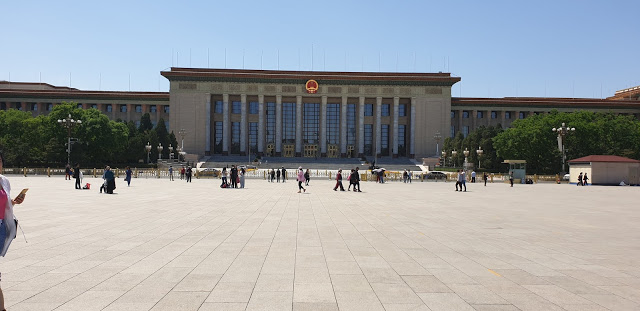
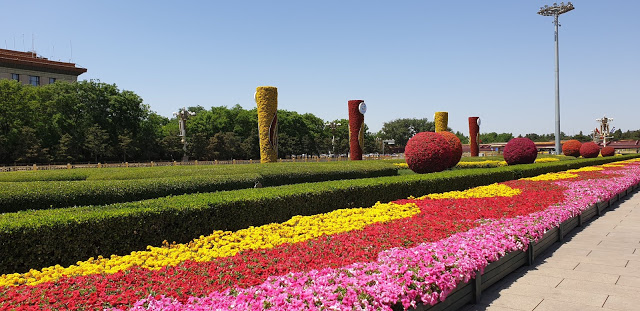
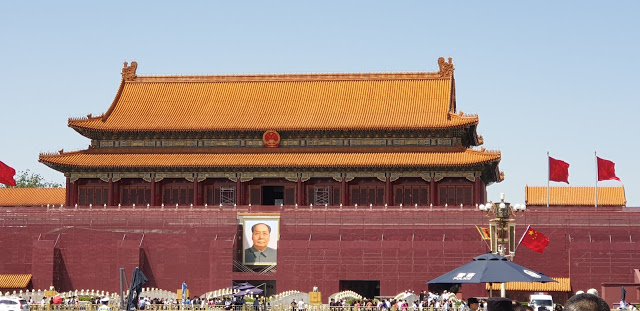
Searching for locations: The Golden Mask Dynasty Show, Beijing, China

The Golden Mask Dynasty Show was located at the OCT Theatre in Beijing’s Happy Valley. 

The theatre was quite full and the seats we had were directly behind the VIP area; as our guide told us, we had the best seats in the house. 

The play has 20 different dance scenes that depict war, royal banquets, and romance.  There are eight chapters and over 200 actors, and throughout the performance we were entertained by dancers, acrobats, costumes, lighting, and acoustics.

The story:

It is of romantic legend and historical memories, the Golden Mask Queen leads her army in defeating the invading Blue Mask King’s army, and afterwards the lands return to a leisurely pastoral life until the Queen forges a ‘mysterious tree’.  When the tree has grown, the Queen has a grand celebration, and releases the captured Blue soldiers, much to the admiration of the Blue Mask King.
This is followed by monstrous floods, and to save her people, and on the advice from the ‘mysterious tree’, the Queen sacrifices herself to save her people.  The Queen then turns into a golden sunbird flying in the sky blessing the people and that of the dynasty.

Billed as the best live show in China, described as a large scale dramatic musical, “The Golden Mask Dynasty” it lived up to its reputation and was thoroughly enjoyed by all.

It was not just singing dancing and acrobatics, it had a story and it was told so that language and cultural issues aside, it worked.  There was a narration of the story running beside the stage, but it was hard to divide attention between what was happening, and what was being related.

Then came the peacock dance, with live peacocks

And this was followed by a waterfall, well, I don’t think anyone in that audience could believe what they were seeing.

I know I was both astonished and in awe of the performance.

What a way to finish off our first day in Beijing.

Oh, sorry, that high was dented slightly when we had to go back to our room.

In a word: Second

It would be very interesting if duelling was still allowed.  There are a few people I’d like to stand toe to toe with, take ten paces, and then test my ability to shoot with an old-style flint duelling pistol.

What’s this got to do with anything?

It’s where our word of the day comes in.  If I lose my nerve, or I know my opposite number is a better shot, my second would have to stand in my place.

It’s,  if anything, an older use of the word.

Of course, it mainly means, on one hand, coming second in a race or a competition, not exactly the place you really want to be, simply because no one really remembers who came second.

It plays host to a plethora of statements using second as part of the saying, such as,

Second rate, second hand, even if it had more than one owner, second best.

But then there’s a few more that mean something else like a second look, mainly because you didn’t trust your eyes, second nature, it’s been drilled into you (a rather painful idiom if it truly was) and second sight, though this might not necessarily be a verifiable attribute.

And, of lesser note, I’m not necessarily sure I’m second to none.

On the other hand, and pardon the pun using this definition, it also describes a length of time, very short in fact, and it takes 60 of them to make a minute.

Hang on, it’ll only take a second.  Yes, we often use the word in vain.  I doubt there is any one of us who could do anything useful in a second.

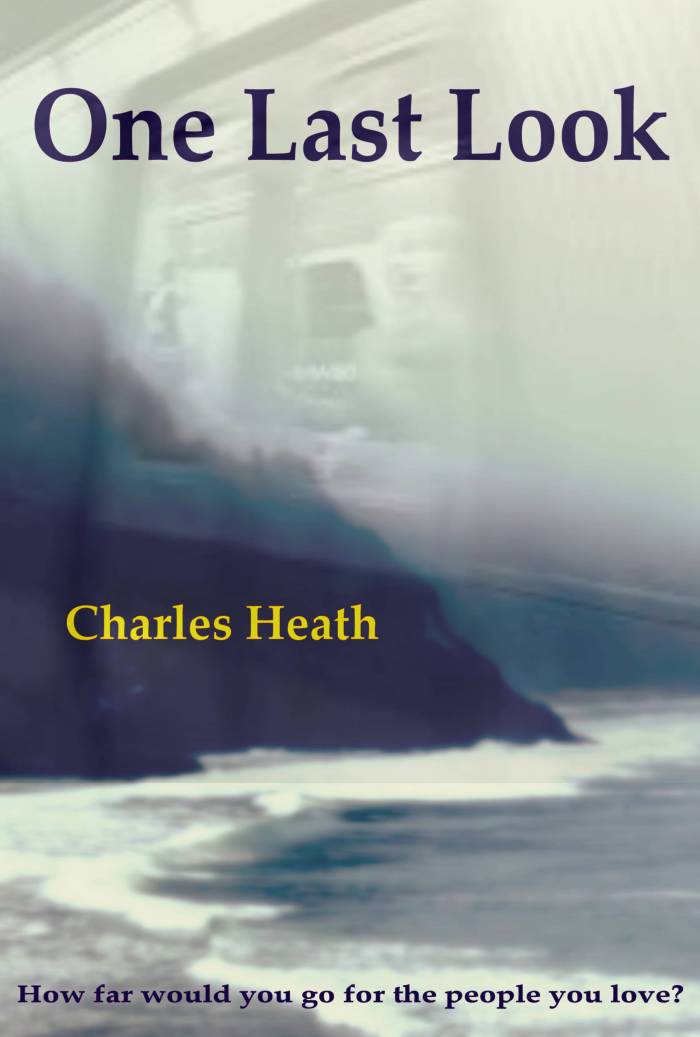
“One Last Look”, nothing is what it seems

A single event can have enormous consequences.

A single event driven by fate, after Ben told his wife Charlotte he would be late home one night, he left early, and by chance discovered his wife having dinner in their favourite restaurant with another man.

A single event where it could be said Ben was in the wrong place at the wrong time.

Who was this man? Why was she having dinner with him?

A simple truth to explain the single event was all Ben required. Instead, Charlotte told him a lie.

A single event that forces Ben to question everything he thought he knew about his wife and the people who are around her.

After a near-death experience and forced retirement into a world he is unfamiliar with, Ben finds himself once again drawn back into that life of lies, violence, and intrigue.

From London to a small village in Tuscany, little by little, Ben discovers who the woman he married is, and the real reason why fate had brought them together.

It is available on Amazon here:  http://amzn.to/2CqUBcz