The cinema of my dreams – I never wanted to go to Africa – Episode 33

Our hero knows he’s in serious trouble.

The problem is, there are familiar faces and a question of who is a friend and who is foe made all the more difficult because of the enemy, if it was the enemy, simply because it didn’t look or sound or act like the enemy.

Now, it appears, his problems stem from another operation he participated in, and because of it, he has now been roped into what might be called a suicide mission.

Onboard the plane shortly after it took off, I watched Monroe go to each of the team and give them a folder with their role, and, no doubt, instructions on what they had to do, and to handle the equipment they were assigned.  The list I’d seen required a sound technician, a grip, a cameraman, his assistant, the director, the producer, which I took to be Monroe, and a few other production assistants.

None looked happy, and probably already knew what the cover story would be.  I didn’t see or hear any objections, each just took their folder and started on their homework.

She didn’t spend much time with Jacobi, just enough to tell him he was going to be the guide.  It was a role he was most suited to, and that of local liaison.  At least it would explain why he was with us.

After that, she came to see me.

“Was it your idea or Lallo’s?” I asked.  

“Lallo’s.  I’m as surprised as you, but you have to admit it’s a great cover story.”

“For a group who wouldn’t know one end of the camera from the other.”

“Plenty of time to learn.  You don’t have to worry.  All you have to do is be perennially bad-tempered and yell a lot.  I’m sure you can do that without having me tell you how to.”

“No. probably not.  Bamfield said it all the equipment worked.”

“When we take the C4, detonators, grenades, and a few other assorted armaments out it will.”

“You know where the other stuff is,” I said, hoping she understood that it was the diamonds I was talking about.

“Somewhere in one of the boxes.  It was best not to tell anyone, so if anything happens, we can’t give it away.  We can worry about that once we get past the border.  I suggest you get your head down.  At least one of us has to be sharp at the other end when we land.”

With that, she went back to her corner, ran her eye over the team now deep in their studies, then looked like she was going to get some sleep.

After a few hours, the enthusiasm to learn had died down, and each of the team members made themselves comfortable.  There would be more time to study on the other side of the fuel stop.  Everyone on board got what sleep they could, not that it was the best of places in the cargo hold of a C-130.  One destination we were all familiar with was that of Djibouti when we would set down to refuel at the airbase there.

It was a half-hour stop, and, as Monroe advised, we didn’t leave the plane.  It was best no one knew we were aboard or what we were doing, a feat I thought quite remarkable because if it was my airbase, I’d want to know.

But, as airbases went, it was the same as the rest.

Back in the air, we were heading for Uganda.  It was another 6 or 7 hours, so it was a good time to get some more rest before we landed.  I had no idea when the next time would be that there would be time for some shuteye.

I’d been keeping an eye on Monroe.  She appeared to be the liaison for everything, and had accompanied the pilot to the base tower, most likely to file the flight plan, one of several I imagine, and to report back to Bamfield.  It explained why the pilot returned without her, and she didn’t get back until 15 minutes before we were due to leave.

Should I be worried?  There wasn’t much point.

After an hour, I went up the back of the plane and sat next to Jacobi.  He had been ostracised by the rest of the team; an order given by Monroe for them to leave him alone.  He’d been escorted onto the plane by two burly military policemen, and his bag of equipment given to Monroe for safekeeping, so we were sure from the time he left the cell at the black site to getting on the plane he had communicated with anyone.

Even so, I was sure he had been in similar situations before, and he was still alive to tell about it.  If he had a plan, whatever that plan was, we would soon find out.

In the meantime, I thought he might have an interesting story to tell, and I had a few hours to kill.

He sullenly watched me come down the fuselage, and then sit next to him, loosely putting what passed as a seat belt on just in case we hit an air pocket.  The flight was not as smooth as it might be on a commercial airliner and was certainly a lot noisier.

“Have you spoken to the right people yet?” I almost had to yell in his ear.  

Lallo had said he was going to get Jacobi to call his friendly General in the Congo army to smooth the way, and it would be interesting to know under what circumstances Jacobi had explained our arrival at his border.  And another to tell the kidnappers we were on our way.  Monroe said he had made several supervised phone calls, but not exactly who to.

We had to pray that the General would be among those to also help us locate the targets and, once the exchange was made, assist us in our departure, for a small sum to compensate them for the inconvenience.

He knew why I’d come to see him.  “The captors know we are coming, and hopefully before the time limit has passed.  They will kill them this time if we don’t get there in time.”

“I’m sure they’d like us to think that, but you know as well as I do they need the ransom for their ongoing operations.  Let’s hope it doesn’t come down to plan f which is where they kill us, the hostages, and just take the ransom.  Either way, I hate to be the one who is only going to make things worse, but I don’t get to decide what’s right or wrong.”

“It’s how it works out there.  Everyone is available for a price.  If it wasn’t this lot, it’d be another or another.”

“Or the military, maybe, looking to cash in because the state doesn’t pay them enough.  That’s why we’re putting you at the head of the procession.  If we’re ambushed, you’ll be the first to go.”

“I admire your lack of faith in me.”

“You haven’t done anything to inspire faith, Jacobi.  But so long as you keep your word, and do everything right, I won’t have to shoot you.”

There was no horrified look.  He knew the score of being in the ‘Mr. In-Between’ business.  He would no doubt get a share of the diamonds for brokering the deal, on top of whatever Lallo offered him, and a cut of the General and his men’s fees for guaranteeing our safety.  I guess his business also had its hazards, wasn’t for the faint-hearted, and for those working all sides of the fence, a particularly exciting time.

Generals, soldiers, kidnappers, rebels, practically every man and his dog had an itchy trigger finger.

“It’s not me you have to worry about.”

“How so?”

“I didn’t betray them the last time, and that person was never identified.”

A good point.  “Then let’s hope no one else knows we’re coming, or what we’re bringing as ransom.”

He looked at me, a look that told me I thought he might just make a play for the diamonds himself and forget about the targets.  It was a very tempting ransom.

“You know how it is.  Spies are everywhere.”

“Just make sure you’re not one of them.”

I think I said it with just enough sincerity that he believed me.

“It’s not worth my while, I assure you.  Once you’re involved in a double-cross, you cease to be of worth to anyone.  I will not be the source of your problems if there are any.”

For a man who’d already been caught out in a raft of lies, there was nothing he could say that would make me trust him.  He was going to require an escort once we landed.

I had two perfect candidates for the job.  Williamson and Shurl.  From what I had observed on the ground before we boarded the plane, and in the plane, they stuck together.  I got the impression they knew each other.

After I left Jacobi, I told them what I wanted them to do.

It was the day for sullen responses.  They didn’t want to be babysitters.  Tough.

Next, I went and visited Mobley, sitting closer to the front of the plane, by himself.  Monroe had sat with him for an hour or so before we reached Djibouti, and it had raised a small flag.

I staggered towards him, the pilots deciding to take the rough path through the sky, and almost fell into the seat next to him.

He didn’t look at me the whole time, even when I’d sat down.  Was he pretending to ignore me, or had he decided he was above taking my orders?

“I’ve got a few hours to waste so if you think I’m going away forget it,” I said, loud enough to get his attention.

A slight flutter of an eyelid.  Not asleep.

“Monroe tells me you’re in charge of this motley crew,” he said, still not looking at me.

“Not because I want to be.  I’m not sure what your reason is to be here, and, frankly, I don’t care, but I really don’t want to be here.  I wasn’t given a choice.  I’m guessing you did from what I’ve been told.  We don’t have time to debate the issue.  What I want you to do is when we arrive at the base, is hang back, come up with whatever excuse will fly, and give us several hours head start.  You’ll be with one of Chiswick’s men.  What’s important is to check no one follows us.”

“You think someone might?”  A look of almost interest.

“I’m sure of it.  There’s no way we will get to the base in Uganda, no matter how far from civilization it is, and not be noticed, or worse, that someone already knows we’re coming.”

“What’s the ultimate rendezvous?”

“Over the border in the Congo.”  I passed him a hand-drawn map of the area, from the landing strip to the GPS co-ordinates of the exchange point in the Congo, but not the track that we would be taking, some of which I hoped might be by the river.  I think Monroe had given him as much detail of the job as she could, as she probably had all of them.

“Monroe in the loop?”

“She will be by the time we land.”

“Good.”

Eyes closed again; the conversation was over.

Time to have a talk to Monroe.

“Got some good news,” she said when I sat next to her.

“We’re turning around and going home?”

“Where is home?”

It was an interesting question.  I’d been bounced around so many airbases, I don’t think I’d had a permanent fixed address from the day I signed up.  Was it where I used to live?  No point going back, everyone I’d known back then had either moved on or died.  Technically I was now an orphan, and unlike others, I had no family of my own to go home to.

“No idea anymore, I’m afraid.  So, what’s this good news.”

“We have an exit strategy.  Bamfield told me to tell you everything is in place.  All we have to do is liberate a plane and we’re on our way home.  It’s the reason why Davies is on the mission, Bamfield says she can fly anything.”

“I’ve never heard of a plane called ‘anything’.”

“You know what I mean.”

“Any other details?”

“We’ll know exactly what the score is when we get there.  That’s all I know at the moment.”

“There’s more?”

“Hopefully through the pilot’s last contact with Bamfield.  Otherwise, it’s going to be just another boring day at the office.”

© Charles Heath 2019-2021

The cinema of my dreams – Was it just another surveillance job – Episode 65

This story is now on the list to be finished so over the new few weeks, expect a new episode every few days.

The reason why new episodes have been sporadic, there are also other stories to write, and I’m not very good at prioritizing.

But, here we are, a few minutes opened up and it didn’t take long to get back into the groove.

Things are about to get complicated…


I had no idea how long I had before Monica or someone else turned up to take charge, so it was time for questions.

To Anna, “Were you having an affair with Severin back at the lab, before you hatched this plan, or was it Severin’s idea?”

“Are we playing truth or dare now?”  She was trying to be detached, but the pain must be excruciating by now.

“We’re playing how to save your life.  You can live or you can die, it’s your choice, but my patience is very thing at the moment.”

“I liked Severin.  At the time I thought he was just a security guard.  And yes, after a few months, he did suggest, in a kidding sort of way, that money could be made by stealing the formulas.  A lot of money.”

To Dobbin, “Either you or someone else had sent Severin and Maury to the lab after a mock discharge from the service and given them glowing resumes to get jobs there.  It was an odd choice given Severin had a rather interesting career, particularly in his handling of women operatives.  Was that you?”

“I don’t have to answer your questions.”

“I don’t have to shoot you in various painful places when you test my patience, but I will if I have to.”

“Do you know who you’re talking to?”

“Yes.  An inveterate liar who had been leading me down the garden path for far too long.  I will ask once more, was that you.  Don’t make me count to three.”

He glared at me, the sort of glare that mean there was going to be hell to pay eventually.

“No.  I did not.  But I was interested in the fact they were sent to Arche Laboratories.  It wasn’t until the data came up for sale on the dark web did I put two and two together.”

“That’s when you got O’Connell to handle the purchase and delivery of the data?”

“Yes.”

“Why the six-month delay between negotiation and delivery?”

“Anna’s husband in his infinite wisdom must have guessed he was going to be double-crossed and put a security protocol in place.  We made arrangements to keep her safe until the exchange.  At the appropriate time when the six months had lapsed, O’Connell was tasked to go to a specified meeting place, pay the money and collect the USB.”

“In the meantime, you arranged for Severin and Maury to put a surveillance team together.  I assume Severin came clean about what had happened, and you gave him a chance to redeem himself.”

“Yes.”

“At what point did you realize the operation was compromised?  My guess, is when O’Connell was running late, and the bomb went off on time, but before the exchange could take place.  Surely you knew O’Connell couldn’t have the USB.”

“True, so we arranged for an extraction and led him to the alley where you cornered him.  Total unexpected.  As was the sniper, who I believe had tapped into our communications with O’Connell.  I’m not sure why Severin and Maury were there, but once they saw O’Connell get shot they left.  They, for some reason, believed O’Connell had the USB and passed it to you before they got there, hence the visit you had from Severin.  Their usefulness ended at the alley.”

“Who was the sniper working for?”

“No idea.  Another interested party perhaps, that Anna forgot to tell us about.  It would be no surprise to know she had other buyers waiting.”

“I didn’t.  O’Connell was the only one as per our agreement.  You don’t think I was going to screw up a five-million-pound payday.”  Anna sounded indignant.

To Anna, “When did you and O’Connell get together, after the explosion.  Or did you think he set you up?”

“I waited a few days then called him and asked what we should do.  He said he got the impression he’d been set up, that we were both in danger and to individually go into hiding until he could find out who was after us.  He said he couldn’t trust his boss after what had happened, both at the café and then in the alley.  He mentioned that I should find you and insinuate myself into your investigation because he knew you’d find out eventually.  He was right, by the way,:” she said to no one in particular.

Back to Dobbin, “Why did O’Connell suddenly no longer trust you and for all intents and purposes disappear?”

“He didn’t say, but I suspect nearly getting killed may have pushed him in that direction.  I did not sanction that bomb, by the way.”

“What was the purpose of the surveillance team?”

“To find out where the exchange point was because it was always agreed that they should be the only two to preserve their safety.  He was not supposed to find out about the surveillance.  It’s the reason why we were not responsible for the bomb in the café because we didn’t know where the exchange was taking place.”

“If he didn’t know, and then discovered people following him, I’m not surprised he killed most of them.  That’s on you, Dobbin.”

“It was a calculated risk, but the stakes were very high, and the operation was justified.  It also afforded us the opportunity to discover a new and very accomplished agent, namely you.”

“Flattery will not stop me from shooting you if I have to.”

His look of disdain went to utter disdain.

“I’ve answered your questions, now what?”

“Anna will now give me the USBs, the real USBs with the data on them.  I will destroy them, and then we can all go about our business.”

“You…”

“If you say anything other than, Sam, here they are, you will die.  They are in this room, and I will find them, whether you are dead or alive.  Personally, if I were you I’d want to live, but then, you might have a death wish you want fulfilled.  I’ll be happy to count to three if you like?”

She thought about it, but not for too long.  She reached into a pocket and pulled out another plastic bag.

I went over and took it from her. 

Two more USBs.

“I’ll take those, thank you.”  Jennifer.  “Don’t make me do something I don’t want to.”

© Charles Heath 2020-2023

“The Enemy Within” – the editor’s third draft – Day 1

This book has been sitting in the ‘to-be-done’ tray, so this month it is going to get the third revision.

And so it begins…

After spending a number of harrowing days trying to plan, plot, and replot, sort out the characters and their characteristics, discover locations and read up on them, and learn as much as possible about the props, it was time to let loose the pencil.

But, sadly, all the plotting in the world does not translate to instant words on a page.

I started revising.  Great.

I hated what I amended.

Deleted it.

Started again.

The page was staring back at me, daring me to write more of those terrible words, disorganized thoughts, and random passages that had no connection.

No, it’s not writer’s block.

It’s pressure, the pressure of having to revise 1,800 odd words in a day, this day, and tomorrow, and the day after that.

Enough!

I go outside and look at the mess in the backyard, the one I’ve been promising to do something about for the last 10 years.  Perhaps it’s now time.

As rubbish goes into the bin, ideas form, passages start writing themselves in my mind, and plot lines seem to materialize and make sense.

I go back in and get on with the revision.

Just think, come tomorrow I have to go through all this again.  Sigh!

Searching for locations: – Lake Louise, Canada, ice, snow, and cold

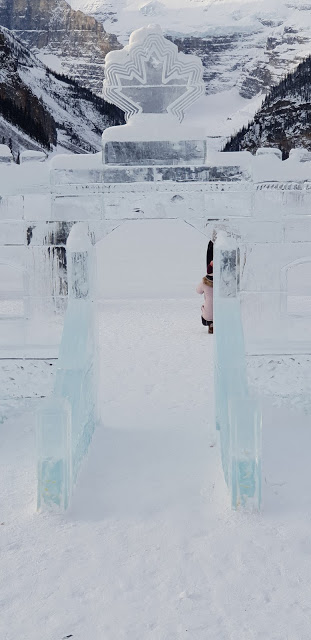
The Fairmont at Lake Louise, in Canada, is noted for its ice castle in winter.  This has been created by the ice sculptor, Lee Ross since 2007, using about 150 blocks of ice, each weighing roughly 300 pounds.

When I first saw it, from a distance, looked like it was made out of plastic  It’s not.  Venturing out into the very, very cold, a close inspection showed it was made of ice.


And, it’s not likely to melt in a hurry given the temperature when I went down to look at it was hovering around minus 10 degrees Fahrenheit.


And that was the warmest part of the day.

Using Hollywood as a source of inspiration

I’m not one for writing Western, I’ll leave the honours for that to Louis L’Amore, whose acquaintance I made when I saw How The West Was Won on the big screen, and then read the book.

That led to reading a few more by Zane Grey, but it was not in the reading of the stories but in the visual splendour of the west depicted in these films that made the actors almost secondary.

But my interest in watching Westerns had been fuelled by the fact my parents watched them on TV, though back in those days, they were in black and white, and starred John Wayne, Gary Cooper, Alan Ladd and, later on, Clint Eastwood among a great many others.

But the mainstay of my interest in the archetypal Western centred on John Wayne whose movies may have almost the same plot line, just a substitution of actors and locations.

Often it was not so much that John Wayne was in it, but the actors he surrounded himself with, like Dean Martin, Ricky Nelson, Walter Brennan, and Robert Mitcham, all of whom made the experience all the better.

Films like The Sons of Katie Elder, True Grit, Rio Bravo, and El Dorado.

Who can forget the vast open spaces, the dry dusty stresses lines with wooden buildings and endless walkways that substituted for footpaths?  Bars in hotels, rooms overlooking the street, havens for sharpshooters, when bad guys outnumber the good guys, and typically the Sherrif who always faced insurmountable odds.

Or the attacks staged by Indians who were routinely killed, in fact, there was not one film I saw where they ended up winning any battle. Only in recent years did they get a more sympathetic role, one film that comes to mind is Soldier Blue, which may have painted them as savages, but a possible reason why they ended up so.

But for those without Indians, there were plenty of others whose intentions were anything but for the good of the settlers.

A lot of films ended in a classic gunfight.  High Noon, 3:10 to Yuma are two, where the story led to gun fights between good and bad in unlikely places like El Dorado or Rio Bravo.

There are countless others I could name, like Shane, or became to be called, the spaghetti westerns with Clint Eastwood, or last but not least, The Magnificent Seven, or Once Upon a time in the west.

All have contributed to a picture in my mind of how the American West was, fearsome men, beleaguered sheriffs, people with good intentions, and those driven by greed and power. All of this plays out in the harshest of conditions where life and death could be determined by a wrong word or a stray bullet.

And let’s not forget the role of the guns, Colt, Winchester, and Remington.  And Smith and Wesson, and the gunslingers of the day. Some were good, but most according to the film world were bad.

So, against the lifelong interest of watching and reading about the archetypal view of the old West, shall I attempt to put pen to paper. Thank God it will be a work of fiction because I don’t think there are many who knew what it was really like.

Skeletons in the closet, and doppelgangers

A story called “Mistaken Identity”

How many of us have skeletons in the closet that we know nothing about? The skeletons we know about generally stay there, but those we do not, well, they have a habit of coming out of left field when we least expect it.

In this case, when you see your photo on a TV screen with the accompanying text that says you are wanted by every law enforcement agency in Europe, you’re in a state of shock, only to be compounded by those same police, armed and menacing, kicking the door down.

I’d been thinking about this premise for a while after I discovered my mother had a boyfriend before she married my father, a boyfriend who was, by all accounts, the man who was the love of her life.

Then, in terms of coming up with an idea for a story, what if she had a child by him that we didn’t know about, which might mean I had a half brother or sister I knew nothing about. It’s not an uncommon occurrence from what I’ve been researching.

There are many ways of putting a spin on this story.

Then, in the back of my mind, I remembered a story an acquaintance at work was once telling us over morning tea, that a friend of a friend had a mother who had a twin sister and that each of the sisters had a son by the same father, without each knowing of the father’s actions, both growing up without the other having any knowledge of their half brother, only to meet by accident on the other side of the world.

It was an encounter that in the scheme of things might never have happened, and each would have remained oblivious of the other.

For one sister, the relationship was over before she discovered she was pregnant, and therefore had not told the man he was a father. It was no surprise the relationship foundered when she discovered he was also having a relationship with her sister, a discovery that caused her to cut all ties with both of them and never speak to either from that day.

It’s a story with more twists and turns than a country lane!

And a great idea for a story.

That story is called ‘Mistaken Identity’.

Searching for locations: Lake Louise, Canada

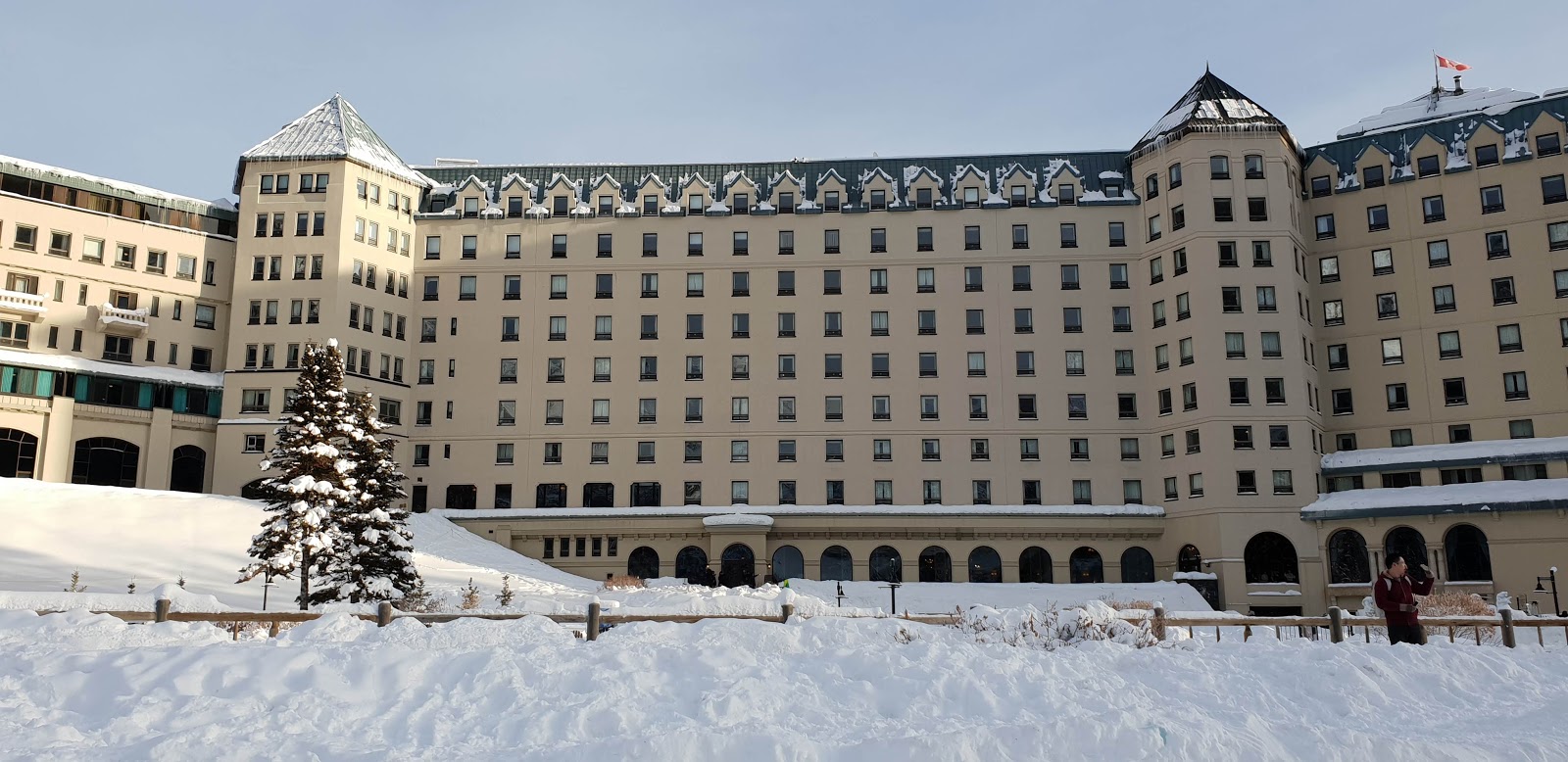
I was not sure what I was expecting to see when we first arrived at the Fairmont Hotel at Lake Louise, Alberta, Canada.

I’d seen endless photographs both in Winter and in Summer, and the problem with photos is that they never quite prepare you for reality.

That’s not to say that our first impression was of incredible scenery, it was of the front door if it could be called that, where we pulled up in the car, and then, if the sub-zero temperatures, a mad rush to get the baggage out, and get into the warmth of the foyer, which was almost the size of several football fields, and then some.

Check-in was quick and easy, and then to our room on the first floor.  I had hoped to be higher up but, being a corner room, when we got there, the views could not be more majestic.

I could not believe there were people who were willing to take a sleigh ride in the minus degree temperatures.  Don’t let the sunny aspect fool you, it’s freezing cold, literally, outside.

The lake had frozen over, and a closer look showed there was a skating rink an ice castle, and a hockey rink as well.  People were skating, and walking over the frozen surface of the lake.

No skating, or walking, on thin ice here.

Venturing outside into the cold, you have to be rugged up, and definitely, have both a hat and gloves.  It was minus six degrees.

There’s this amazing hotel, just like you would see in the movies

A frozen lake where you’re half expecting to open up and a huge spaceship, or something else, come out

Mountainsides to climb, but only if you are stark staring mad.  And, of course, if you don’t freeze to death before you get there.

Our room, believe it or not, is on the extreme right-hand side, just above the first roofline.

Tomorrow we will venture further out onto the lake.

Tonight, it’s dinner in the main restaurant.

An excerpt from “Amnesia”, a work in progress

I remembered a bang.

I remembered the car slewing sideways.

I remember another bang, and then it was lights out.

When I opened my eyes again, I saw the sky.

Or I could be underwater.

Everything was blurred.

I tried to focus but I couldn’t. My eyes were full of water.

What happened?

Why was I lying down?

Where was I?

I cast my mind back, trying to remember.

It was a blank.

What, when, who, why and where, are questions I should easily be able to answer. These are questions any normal person could answer.

I tried to move. Bad, bad mistake.

I did not realise the scream I heard was my own. Just before my body shut down.

“My God! What happened?”

I could hear, not see. I was moving, lying down, looking up.

I was blind. Everything was black.

“Car accident; hit a tree, sent the passenger flying through the windscreen. Pity to poor bastard didn’t get the message that seat belts save lives.”

Was I that poor bastard?

“Report?” A new voice, male, authoritative.

“Multiple lacerations, broken collar bone, broken arm in three places, both legs broken below the knees, one badly. We are not sure of internal injuries, but ruptured spleen, cracked ribs and pierced right lung are fairly evident, x-rays will confirm that and anything else.”

“What isn’t broken?”

“His neck.”

“Then I would have to say we are looking at the luckiest man on the planet.”

I heard the shuffling of pages.

“OR1 ready?”

“Yes. On standby since we were first advised.”

“Good. Let’s see if we can weave some magic.”

Magic.

It was the first word that popped into my head when I surfaced from the bottom of the lake. That first breath, after holding it for so long, was sublime, and, in reality, agonising.

Magic, because it seemed like I’d spent a long time underwater.

Or somewhere.

I tried to speak but couldn’t. The words were just in my head.

Was it night or was it day?

Was it hot, or was it cold?

Where was I?

Around me, it felt cool.

It was incredibly quiet. No noise except for the hissing of air through an air-conditioning vent. Or that was the sound of pure silence.  And with it the revelation that silence was not silent. It was noisy.

I didn’t try to move.

Instinctively, somehow, I knew not to.

A previous unpleasant experience?

I heard what sounded like a door opening, and noticeably quiet footsteps slowly came into the room. They stopped. I could hear breathing, slightly laboured, a sound I’d heard before.

My grandfather.

He had smoked all his life until he was diagnosed with lung cancer. But for years before that he had emphysema. The person in the room was on their way, down the same path. I could smell the smoke.

I wanted to tell whoever it was the hazards of smoking.

I couldn’t.

I heard a metallic clanging sound from the end of the bed. A moment later the clicking of a pen, then writing.

“You are in a hospital.” A female voice suddenly said. “You’ve been in a bad accident. You cannot talk, or move, all you can do, for the moment, is listen to me. I am a nurse. You have been here for 45 days and just came out of a medically induced coma. There is nothing to be afraid of.”

She had a very soothing voice.

Her fingers stroked the back of my hand.

“Everything is fine.”

Define fine, I thought. I wanted to ask her what ‘fine’ meant.

“Just count backwards from 10.”

Why?

I didn’t reach seven.

Over the next ten days, that voice became my lifeline to sanity. Every morning, I longed to hear it, if only for the few moments she was in the room, those few waking moments when I believed she, and someone else who never spoke, were doing tests. I knew it had to be someone else because I could smell the essence of lavender. My grandmother had worn a similar scent.

It rose above the disinfectant.

She was another doctor, not the one who had been there the day I arrived. Not the one who had used some ‘magic’ and kept me alive.

It was then, in those moments before she put me under again, that I thought, what if I was paralysed? It would explain a lot. A chill went through me.

The next morning, she was back.

“My name is Winifred. We don’t know what your name is, not yet. In a few days, you will be better, and you will be able to ask us questions. You were in an accident, and you were very severely injured, but I can assure you there will be no lasting damage.”

More tests, and then when I expected the lights to go out, they didn’t. Not for a few minutes more. This was how I would be integrated back into the world. A little bit at a time.

The next morning, she came later than usual, and I’d been awake for a few minutes. “You have bandages over your eyes and face. You had bad lacerations to your face, and glass in your eyes. We will know more when the bandages come off in a few days. Your face will take longer to heal. It was necessary to do some plastic surgery.”

Lacerations, glass in my eyes, car accidents, plastic surgery. By logical deduction, I knew I was the poor bastard thrown through the windscreen. It was a fleeting memory from the day I was admitted.

How could that happen?

That was the first of many startling revelations. The second was the fact I could not remember the crash. Equally shocking, in that same moment was the fact I could not remember before the crash either, or only vague memories after.

But the most shattering of all these revelations was the one where I realised, I could not remember my name.

I tried to calm down, sensing a rising panic.

I was just disoriented, I told myself. After 45 days in an induced coma, it had messed with my mind, and it was only a temporary lapse. Yes, that’s what it was, a temporary lapse. I will remember tomorrow. Or the next day.

Sleep was a blessed relief.

The next day I didn’t wake up feeling nauseous. I think they’d lowered the pain medication. I’d heard that morphine could have that effect. Then, how could I know that but not who I am?

Now I knew Winifred the nurse was preparing me for something unbelievably bad. She was upbeat, and soothing, giving me a new piece of information each morning. This morning, “You do not need to be afraid. Everything is going to be fine. The doctor tells me you are going to recover with little scarring. You will need some physiotherapy to recover from your physical injuries, but that’s in the future. We need to let you mend a little bit more before then.”

So, I was not going to be able to leap out of bed and walk out of the hospital any time soon. I don’t suppose I’d ever leapt out of bed, except as a young boy. I suspect I’d sustained a few broken bones. I guess learning to walk again was the least of my problems.

But there was something else. I picked it up in the timbre of her voice, a hesitation, or reluctance. It sent another chill through me.

This time I was left awake for an hour before she returned.

This time sleep was restless.

Scenes were playing in my mind, nothing I recognised, and nothing lasting longer than a glimpse. Me. Others, people I didn’t know. Or I knew them and couldn’t remember them.

Until they disappeared, slowly like the glowing dot in the centre of the computer screen, before finally fading to black.

The morning the bandages were to come off she came in early and woke me. I had another restless night, the images becoming clearer, but nothing recognisable.

“This morning the doctor will be removing the bandages over your eyes. Don’t expect an immediate effect. Your sight may come back quickly, or it may come back slowly, but we believe it will come back.”

I wanted to believe I was not expecting anything, but I was. It was human nature. I did not want to be blind as well as paralysed. I had to have at least one reason to live.

I dozed again until I felt a gentle hand on my shoulder. I could smell the lavender; the other doctor was back. And I knew the hand on my shoulder was Winifred’s. She told me not to be frightened.

I was amazed to realise at that moment, I wasn’t.

I heard the scissors cutting the bandages.

I felt the bandage being removed, and the pressure coming off my eyes. I could feel the pads covering both eyes.

Then a moment when nothing happened.

Then the pads are gently lifted and removed.

Nothing.

I blinked my eyes, once, twice. Nothing.

“Just hold on a moment,” Winifred said. A few seconds later I could feel a cool towel wiping my face, and then gently wiping my eyes. There was ointment or something else in them.

Then a flash. Well, not a flash, but like when a light is turned on and off. A moment later, it was brighter, not the inky blackness of before, but a shade of grey.

She wiped my eyes again.

I blinked a few more times, and then the light returned, and it was like looking through water, at distorted and blurry objects in the distance.

I blinked again, and she wiped my eyes again.

Blurry objects took shape. A face looking down on me, an elderly lady with a kindly face, surely Winifred, who was smiling. And on the opposite side of the bed, the doctor, a Chinese woman of indescribable beauty.

I nodded.

“You can see?”

I nodded again.

“Clearly?”

I nodded.

“Very good. We will just draw the curtains now. We don’t want to overdo it. Tomorrow we will be taking off the bandages on your face. Then, it will be the next milestone. Talking.”

I couldn’t wait.

When morning came, I found myself afraid. Winifred had mentioned scarring, there were bandages on my face. I knew, but wasn’t quite sure how I knew, I wasn’t the most handsome of men before the accident, so this might be an improvement.

I was not sure why I didn’t think it would be the case.

They came at mid-morning, the nurse, Winifred, and the doctor, the exquisite Chinese. She was the distraction, taking my mind off the reality of what I was about to see.

Another doctor came into the room before the bandages were removed, and he was introduced as the plastic surgeon who had ‘repaired’ the ravages of the accident. It had been no easy job, but, with a degree of egotism, he did say he was one of the best in the world.

I found it hard to believe, if he were, that he would be at a small country hospital.

“Now just remember, what you might see now is not how you will look in a few months.”

Warning enough.

The Chinese doctor started removing the bandages. She did it slowly and made sure it did not hurt. My skin was very tender, and I suspect still bruised, either from the accident or the surgery, I didn’t know.

Then it was done.

The plastic surgeon gave his work a thorough examination and seemed pleased with his work. “Coming along nicely,” he said to the other doctor. He issued some instructions on how to manage the skin, nodded to me, and I thanked him before he left.

I noticed Winifred had a mirror in her hand and was reticent in using it. “As I said,” she said noticing me looking at the mirror, “what you see now will not be the result. The doctor said it was going to heal with little scarring. You have been extremely fortunate he was available. Are you ready?”

I nodded.

She showed me.

I tried not to be reviled at the red and purple mess that used to be my face. At a guess, I would have to say he had to put it all back together again, but not knowing what I looked like before, I had no benchmark. All I had was a snippet of memory that told me I was not the tall, dark, and handsome type.

And I still could not talk. There was a reason, he had worked in that area too. Just breathing hurt. I think I would save up anything I had to say for another day. I could not even smile. Or frown. Or grimace.

“We’ll leave you for a while. Everyone needs a little time to get used to the change. I suspect you are not sure if there has been an improvement in last year’s model. Well, time will tell.”

A new face?

I could not remember the old one.

My memory still hadn’t returned.

©  Charles Heath  2024

“The Enemy Within” – the editor’s third draft – Day 1

This book has been sitting in the ‘to-be-done’ tray, so this month it is going to get the third revision.

And so it begins…

After spending a number of harrowing days trying to plan, plot, and replot, sort out the characters and their characteristics, discover locations and read up on them, and learn as much as possible about the props, it was time to let loose the pencil.

But, sadly, all the plotting in the world does not translate to instant words on a page.

I started revising.  Great.

I hated what I amended.

Deleted it.

Started again.

The page was staring back at me, daring me to write more of those terrible words, disorganized thoughts, and random passages that had no connection.

No, it’s not writer’s block.

It’s pressure, the pressure of having to revise 1,800 odd words in a day, this day, and tomorrow, and the day after that.

Enough!

I go outside and look at the mess in the backyard, the one I’ve been promising to do something about for the last 10 years.  Perhaps it’s now time.

As rubbish goes into the bin, ideas form, passages start writing themselves in my mind, and plot lines seem to materialize and make sense.

I go back in and get on with the revision.

Just think, come tomorrow I have to go through all this again.  Sigh!

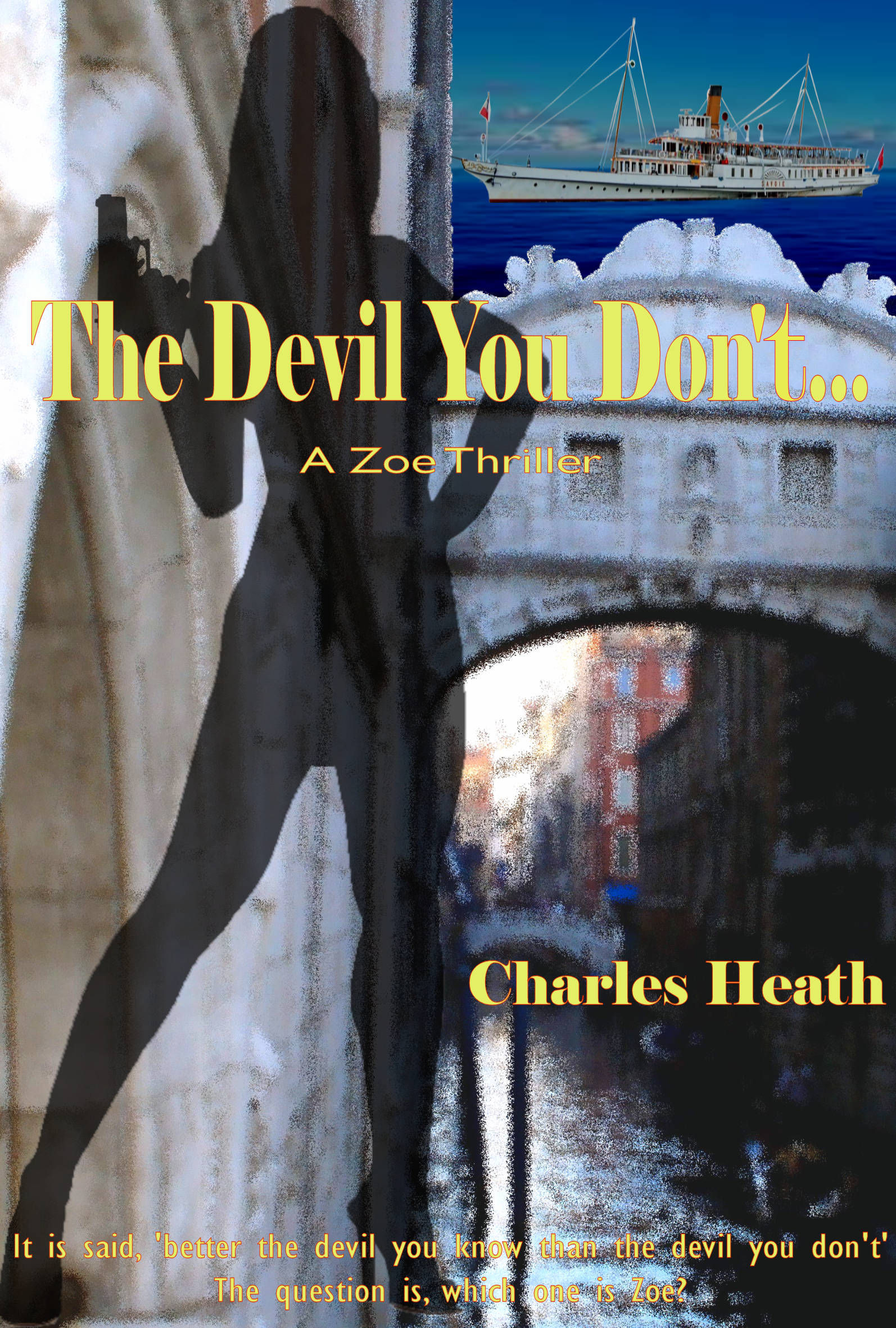
“The Devil You Don’t”, she was the girl you would not take home to your mother!

Now only $0.99 at https://amzn.to/2Xyh1ow

John Pennington’s life is in the doldrums. Looking for new opportunities, and prevaricating about getting married, the only joy on the horizon was an upcoming visit to his grandmother in Sorrento, Italy.

Suddenly he is left at the check-in counter with a message on his phone telling him the marriage is off, and the relationship is over.

If only he hadn’t promised a friend he would do a favour for him in Rome.

At the first stop, Geneva, he has a chance encounter with Zoe, an intriguing woman who captures his imagination from the moment she boards the Savoire, and his life ventures into uncharted territory in more ways than one.

That ‘favour’ for his friend suddenly becomes a life-changing event, and when Zoe, the woman who he knows is too good to be true, reappears, danger and death follow.

Shot at, lied to, seduced, and drawn into a world where nothing is what it seems, John is dragged into an adrenaline-charged undertaking, where he may have been wiser to stay with the ‘devil you know’ rather than opt for the ‘devil you don’t’.

newdevilcvr6