An excerpt from “The Things We Do For Love”; In love, Henry was all at sea!

In the distance he could hear the dinner bell ringing and roused himself.  Feeling the dampness of the pillow, and fearing the ravages of pent up emotion, he considered not going down but thought it best not to upset Mrs. Mac, especially after he said he would be dining.

In the event, he wished he had reneged, especially when he discovered he was not the only guest staying at the hotel.

Whilst he’d been reminiscing, another guest, a young lady, had arrived.  He’d heard her and Mrs. Mac coming up the stairs, and then shown to a room on the same floor, perhaps at the other end of the passage.

Henry caught his first glimpse of her when she appeared at the door to the dining room, waiting for Mrs. Mac to show her to a table.

She was about mid-twenties, slim, long brown hair, and the grace and elegance of a woman associated with countless fashion magazines.  She was, he thought, stunningly beautiful with not a hair out of place, and make-up flawlessly applied.  Her clothes were black, simple, elegant, and expensive, the sort an heiress or wife of a millionaire might condescend to wear to a lesser occasion than dinner.

Then there was her expression; cold, forbidding, almost frightening in its intensity.  And her eyes, piercingly blue and yet laced with pain.  Dracula’s daughter was his immediate description of her.

All in all, he considered, the only thing they had in common was, like him, she seemed totally out of place.

Mrs. Mac came out of the kitchen, wiping her hands on her apron.  She was, she informed him earlier, chef, waitress, hotelier, barmaid, and cleaner all rolled into one.  Coming up to the new arrival she said, “Ah, Miss Andrews, I’m glad you decided to have dinner.  Would you like to sit with Mr. Henshaw, or would you like to have a table of your own?”

Henry could feel her icy stare as she sized up his appeal as a dining companion, making the hair on the back on his neck stand up.  He purposely didn’t look back.  In his estimation, his appeal rating was minus six.  Out of a thousand!

“If Mr. Henshaw doesn’t mind….”  She looked at him, leaving the query in mid-air.

He didn’t mind and said so.  Perhaps he’d underestimated his rating.

“Good.”  Mrs. Mac promptly ushered her over.  Henry stood, made sure she was seated properly and sat.

“Thank you.  You are most kind.”  The way she said it suggested snobbish overtones.

“I try to be when I can.”  It was supposed to nullify her sarcastic tone but made him sound a little silly, and when she gave him another of her icy glares, he regretted it.

Mrs. Mac quickly intervened, asking, “Would you care for the soup?”

They did, and, after writing the order on her pad, she gave them each a look, imperceptibly shook her head, and returned to the kitchen.

Before Michelle spoke to him again, she had another quick look at him, trying to fathom who and what he might be.  There was something about him.

His eyes, they mirrored the same sadness she felt, and, yes, there was something else, that it looked like he had been crying?  There was a tinge of redness.

Perhaps, she thought, he was here for the same reason she was.

No.  That wasn’t possible.

Then she said, without thinking, “Do you have any particular reason for coming here?”  Seconds later she realized she’s spoken it out loud, had hadn’t meant to actually ask, it just came out.

It took him by surprise, obviously not the first question he was expecting her to ask of him.

“No, other than it is as far from civilization, and home, as I could get.”

At least we agree on that, she thought.

It was obvious he was running away from something as well.

Given the isolation of the village and lack of geographic hospitality, it was, from her point of view, ideal.  All she had to do was avoid him, and that wouldn’t be difficult.

After getting through this evening first.

“Yes,” she agreed.  “It is that.”

A few seconds passed, and she thought she could feel his eyes on her and wasn’t going to look up.

Until he asked, “What’s your reason?”

Slight abrupt in manner, perhaps as a result of her question, and the manner in which she asked it.

She looked up.  “Rest.  And have some time to myself.”

She hoped he would notice the emphasis she had placed on the word ‘herself’ and take due note.  No doubt, she thought,  she had completely different ideas of what constituted a holiday than he, not that she had actually said she was here for a holiday.

Mrs. Mac arrived at a fortuitous moment to save them from further conversation.

Over the entree, she wondered if she had made a mistake coming to the hotel.  Of course, there had been no possible way she could know than anyone else might have booked the same hotel, but realized it was foolish to think she might end up in it by herself.

Was that what she was expecting?

Not a mistake then, but an unfortunate set of circumstances, which could be overcome by being sensible.

Yet, there he was, and it made her curious, not that he was a man, by himself, in the middle of nowhere, hiding like she was, but for very different reasons.

On discreet observance whilst they ate, she gained the impression his air of light-heartedness was forced and he had no sense of humor.

This feeling was engendered by his looks, unruly dark hair, and permanent frown.  And then there was his abysmal taste in clothes on a tall, lanky frame.  They were quality but totally unsuited to the wearer.

Rebellion was written all over him.

The only other thought crossing her mind, and rather incongruously, was he could do with a decent feed.  In that respect, she knew now from the mountain of food in front of her, he had come to the right place.

“Mr. Henshaw?”

He looked up.  “Henshaw is too formal.  Henry sounds much better,” he said, with a slight hint of gruffness.

“Then my name is Michelle.”

Mrs. Mac came in to take their order for the only main course, gather up the entree dishes, then return to the kitchen.

“Staying long?” she asked.

“About three weeks.  Yourself?”

“About the same.”

The conversation dried up.

Neither looked at the other, rather at the walls, out the window, towards the kitchen, anywhere.  It was, she thought, almost unbearably awkward.

Mrs. Mac returned with a large tray with dishes on it, setting it down on the table next to theirs.

“Not as good as the usual cook,” she said, serving up the dinner expertly, “but it comes a good second, even if I do say so myself.  Care for some wine?”

Henry looked at Michelle.  “What do you think?”

“I’m used to my dining companions making the decision.”

You would, he thought.  He couldn’t help but notice the cutting edge of her tone.  Then, to Mrs. Mac, he named a particular White Burgundy he liked and she bustled off.

“I hope you like it,” he said, acknowledging her previous comment with a smile that had nothing to do with humor.

“Yes, so do I.”

Both made a start on the main course, a concoction of chicken and vegetables that were delicious, Henry thought, when compared to the bland food he received at home and sometimes aboard my ship.

It was five minutes before Mrs. Mac returned with the bottle and two glasses.  After opening it and pouring the drinks, she left them alone again.

Henry resumed the conversation.  “How did you arrive?  I came by train.”

“By car.”

“Did you drive yourself?”

And he thought, a few seconds later, that was a silly question, otherwise she would not be alone, and certainly not sitting at this table. With him.

“After a fashion.”

He could see that she was formulating a retort in her mind, then changed it, instead, smiling for the first time, and it served to lighten the atmosphere.

And in doing so, it showed him she had another more pleasant side despite the fact she was trying not to look happy.

“My father reckons I’m just another of ‘those’ women drivers,” she added.

“Whatever for?”

“The first and only time he came with me I had an accident.  I ran up the back of another car.  Of course, it didn’t matter to him the other driver was driving like a startled rabbit.”

“It doesn’t help,” he agreed.

“Do you drive?”

“Mostly people up the wall.”  His attempt at humor failed.  “Actually,” he added quickly, “I’ve got a very old Morris that manages to get me where I’m going.”

The apple pie and cream for dessert came and went and the rapport between them improved as the wine disappeared and the coffee came.  Both had found, after getting to know each other better, their first impressions were not necessarily correct.

“Enjoy the food?” Mrs. Mac asked, suddenly reappearing.

“Beautifully cooked and delicious to eat,” Michelle said, and Henry endorsed her remarks.

“Ah, it does my heart good to hear such genuine compliments,” she said, smiling.  She collected the last of the dishes and disappeared yet again.

“What do you do for a living,” Michelle asked in an off-hand manner.

He had a feeling she was not particularly interested and it was just making conversation.

“I’m a purser.”

“A what?”

“A purser.  I work on a ship doing the paperwork, that sort of thing.”

“I see.”

“And you?”

“I was a model.”

“Was?”

“Until I had an accident, a rather bad one.”

“Oh, I’m sorry.”

So that explained the odd feeling he had about her.

As the evening had worn on, he began to think there might be something wrong, seriously wrong with her because she didn’t look too well.  Even the carefully applied makeup, from close up, didn’t hide the very pale, and tired look, or the sunken, dark ringed eyes.

“I try not to think about it, but it doesn’t necessarily work.  I’ve come here for peace and quiet, away from doctors and parents.”

“Then you will not have to worry about me annoying you.  I’m one of those fall-asleep-reading-a-book types.”

Perhaps it would be like ships passing in the night and then smiled to himself about the analogy.

Dinner now over, they separated.

Henry went back to the lounge to read a few pages of his book before going to bed, and Michelle went up to her room to retire for the night.

But try as he might, he was unable to read, his mind dwelling on the unusual, yet the compellingly mysterious person he would be sharing the hotel with.

Overlaying that original blurred image of her standing in the doorway was another of her haunting expressions that had, he finally conceded, taken his breath away, and a look that had sent more than one tingle down his spine.

She may not have thought much of him, but she had certainly made an impression on him.

© Charles Heath 2015-2020
lovecoverfinal1

First Dig Two Graves – The Final Draft – Day 5

The second Zoe thriller.

Talk about rescue missions gone wrong.

John is not very good at this, though who’s to say Sebastian isn’t as good as he thinks he is.

So, tossed in a basement awaiting his fate, who should he discover: Zoe

Mission accomplished.

Of course, no good deed goes unpunished as she tears strips off him for being a fool, firstly to come after her, and second, for trusting Sebastian.

But, they’ve been in tighter scrapes before, and the fun is just about to begin.

After a few minutes of catching up!

And, no doubt, Sebastian is somewhere near plotting his own operation to fix up the first operation.

Today’s writing, with Zoe and John equally surprised to see each other, 3,050 words, for a total of 11,921.

An excerpt from “The Devil You Don’t”

Available on Amazon Kindle here:  https://amzn.to/2Xyh1ow

By the time I returned to the Savoie, the rain had finally stopped, and there was a streak of blue sky to offer some hope the day would improve.

The ship was not crowded, the possibility of bad weather perhaps holding back potential passengers.  Of those I saw, a number of them would be aboard for the lunch by Phillippe Chevrier.  I thought about it, but the Concierge had told me about several restaurants in Yvoire and had given me a hand-drawn map of the village.  I think he came from the area because he spoke with the pride and knowledge of a resident.

I was looking down from the upper deck observing the last of the boarding passengers when I saw a woman, notable for her red coat and matching shoes, making a last-minute dash to get on board just before the gangway was removed.  In fact, her ungainly manner of boarding had also captured a few of the other passenger’s attention.  Now they would have something else to talk about, other than the possibility of further rain.

I saw her smile at the deckhand, but he did not smile back.  He was not impressed with her bravado, perhaps because of possible injury.  He looked at her ticket then nodded dismissively, and went back to his duties in getting the ship underway.  I was going to check the departure time, but I, like the other passengers, had my attention diverted to the woman in red.

From what I could see there was something about her.  It struck me when the light caught her as she turned to look down the deck, giving me a perfect profile.  I was going to say she looked foreign, but here, as in almost anywhere in Europe, that described just about everyone.  Perhaps I was just comparing her to Phillipa, so definitively British, whereas this woman was very definitely not.

She was perhaps in her 30’s, slim or perhaps the word I’d use was lissom, and had the look and manner of a model.  I say that because Phillipa had dragged me to most of the showings, whether in Milan, Rome, New York, London, or Paris.  The clothes were familiar, and in the back of my mind, I had a feeling I’d seen her before.

Or perhaps, to me, all models looked the same.

She looked up in my direction, and before I could divert my eyes, she locked on.  I could feel her gaze boring into me, and then it was gone as if she had been looking straight through me.  I remained out on deck as the ship got underway, watching her disappear inside the cabin.  My curiosity was piqued, so I decided to keep an eye out for her.

I could feel the coolness of the air as the ship picked up speed, not that it was going to be very fast.  With stops, the trip would take nearly two hours to get to my destination.  It would turn back almost immediately, but I was going to stay until the evening when it returned at about half eight.  It would give me enough time to sample the local fare, and take a tour of the medieval village.

Few other passengers ventured out on the deck, most staying inside or going to lunch.  After a short time, I came back down to the main deck and headed forward.  I wanted to clear my head by concentrating on the movement of the vessel through the water, breathing in the crisp, clean air, and let the peacefulness of the surroundings envelope me.

It didn’t work.

I knew it wouldn’t be long before I started thinking about why things hadn’t worked, and what part I played in it.  And the usual question that came to mind when something didn’t work out.  What was wrong with me?

I usually blamed it on my upbringing.

I had one of those so-called privileged lives, a nanny till I was old enough to go to boarding school, then sent to the best schools in the land.  There I learned everything I needed to be the son of a Duke, or, as my father called it in one of his lighter moments, nobility in waiting.

Had this been five or six hundred years ago, I would need to have sword and jousting skills, or if it had been a few hundred years later a keen military mind.  If nothing else I could ride a horse, and go on hunts, or did until they became not the thing to do.

I learned six languages, and everything I needed to become a diplomat in the far-flung British Empire, except the Empire had become the Commonwealth, and then, when no-one was looking, Britain’s influence in the world finally disappeared.  I was a man without a cause, without a vocation, and no place to go.

Computers were the new vogue and I had an aptitude for programming.  I guess that went hand in hand with mathematics, which although I hated the subject, I excelled in.  Both I and another noble outcast used to toss ideas around in school, but when it came to the end of our education, he chose to enter the public service, and I took a few of those ideas we had mulled over and turned them into a company.

About a year ago, I was made an offer I couldn’t refuse.  There were so many zeroes on the end of it I just said yes, put the money into a very grateful bank, and was still trying to come to terms with it.

Sadly, I still had no idea what I was going to do with the rest of my life.  My parents had asked me to come back home and help manage the estate, and I did for a few weeks.  It was as long as it took for my parents to drive me insane.

Back in the city, I spent a few months looking for a mundane job, but there were very few that suited the qualifications I had, and the rest, I think I intimidated the interviewer simply because of who I was.  In that time I’d also featured on the cover of the Economist, and through my well-meaning accountant, started involving myself with various charities, earning the title ‘philanthropist’.

And despite all of this exposure, even making one of those ubiquitous ‘eligible bachelor’ lists, I still could not find ‘the one’, the woman I wanted to spend the rest of my life with.  Phillipa seemed to fit the bill, but in time she proved to be a troubled soul with ‘Daddy’ issues.  I knew that in building a relationship compromise was necessary, but with her, in the end, everything was a compromise and what had happened was always going to be the end result.

It was perhaps a by-product of the whole nobility thing.  There was a certain expectation I had to fulfill, to my peers, contemporaries, parents and family, and those who either liked or hated what it represented.  The problem was, I didn’t feel like I belonged.  Not like my friend from schooldays, and now obscure acquaintance, Sebastian.  He had been elevated to his Dukedom early when his father died when he was in his twenties.  He had managed to fade from the limelight and was rarely mentioned either in the papers or the gossip columns.  He was one of the lucky ones.

I had managed to keep a similarly low profile until I met Phillipa.  From that moment, my obscurity disappeared.  It was, I could see now, part of a plan put in place by Phillipa’s father, a man who hogged the limelight with his daughter, to raise the profile of the family name and through it their businesses.  He was nothing if not the consummate self-advertisement.

Perhaps I was supposed to be the last piece of the puzzle, the attachment to the establishment, that link with a class of people he would not normally get in the front door.  There was nothing refined about him or his family, and more than once I’d noticed my contemporaries cringe at the mention of his name, or any reference of my association with him.

Yet could I truthfully say I really wanted to go back to the obscurity I had before Phillipa?  For all her faults, there were times when she had been fun to be with, particularly when I first met her when she had a certain air of unpredictability.  That had slowly disappeared as she became part of her father’s plan for the future.  She just failed to see how much he was using her.

Or perhaps, over time, I had become cynical.

I thought about calling her.  It was one of those moments of weakness when I felt alone, more alone than usual.

I diverted my attention back to my surroundings and the shoreline.  Out of the corner of my eye, I could see the woman in the red coat, making a move.  The red coat was like a beacon, a sort of fire engine red.  It was not the sort of coat most of the women I knew would wear, but on her, it looked terrific.  In fact, her sublime beauty was the one other attribute that was distinctly noticeable, along with the fact her hair was short, rather than long, and jet black.

I had to wrench my attention away from her.

A few minutes later several other passengers came out of the cabin for a walk around the deck, perhaps to get some exercise, perhaps checking up on me, or perhaps I was being paranoid.  I waited till they passed on their way forward, and I turned and headed aft.

I watched the wake sluicing out from under the stern for a few minutes, before retracing my steps to the front of the ship and there I stood against the railing, watching the bow carve its way through the water.  It was almost mesmerizing.  There, I emptied my mind of thoughts about Phillipa, and thoughts about the woman in the red coat.

Until a female voice behind me said, “Having a bad day?”

I started, caught by surprise, and slowly turned.  The woman in the red coat had somehow got very close me without my realizing it.  How did she do that?  I was so surprised I couldn’t answer immediately.

“I do hope you are not contemplating jumping.  I hear the water is very cold.”

Closer up, I could see what I’d missed when I saw her on the main deck.  There was a slight hint of Chinese, or Oriental, in her particularly around the eyes, and of her hair which was jet black.  An ancestor twice or more removed had left their mark, not in a dominant way, but more subtle, and easily missed except from a very short distance away, like now.

Other than that, she was quite possibly Eastern European, perhaps Russian, though that covered a lot of territory.  The incongruity of it was that she spoke with an American accent, and fluent enough for me to believe English was her first language.

Usually, I could ‘read’ people, but she was a clean slate.  Her expression was one of amusement, but with cold eyes.  My first thought, then, was to be careful.

“No.  Not yet.”  I coughed to clear my throat because I could hardly speak.  And blushed, because that was what I did when confronted by a woman, beautiful or otherwise.

The amusement gave way to a hint of a smile that brightened her demeanor as a little warmth reached her eyes.  “So that’s a maybe.  Should I change into my lifesaving gear, just in case?”

It conjured up a rather interesting image in my mind until I reluctantly dismissed it.

“Perhaps I should move away from the edge,” I said, moving sideways until I was back on the main deck, a few feet further away.  Her eyes had followed me, and when I stopped she turned to face me again.  She did not move closer.

I realized then she had removed her beret and it was in her left side coat pocket.  “Thanks for your concern …?”

“Zoe.”

“Thanks for your concern, Zoe.  By the way, my name is John.”

She smiled again, perhaps in an attempt to put me at ease.  “I saw you earlier, you looked so sad, I thought …”

“I might throw myself overboard?”

“An idiotic notion I admit, but it is better to be safe than sorry.”

Then she tilted her head to one side then the other, looking intently at me.  “You seem to be familiar.  Do I know you?”

I tried to think of where I may have seen her before, but all I could remember was what I’d thought earlier when I first saw her; she was a model and had been at one of the showings.  If she was, it would be more likely she would remember Phillipa, not me.  Phillipa always had to sit in the front row.

“Probably not.”  I also didn’t mention the fact she may have seen my picture in the society pages of several tabloid newspapers because she didn’t look the sort of woman who needed a daily dose of the comings and goings, and, more often than not, scandal associated with so-called celebrities.

She gave me a look, one that told me she had just realized who I was.  “Yes, I remember now.  You made the front cover of the Economist.  You sold your company for a small fortune.”

Of course.  She was not the first who had recognized me from that cover.  It had raised my profile considerably, but not the Sternhaven’s.  That article had not mentioned Phillipa or her family.  I suspect Grandmother had something to do with that, and it was, now I thought about it, another nail in the coffin that was my relationship with Phillipa.

“I wouldn’t say it was a fortune, small or otherwise, just fortunate.”  Each time, I found myself playing down the wealth aspect of the business deal.

“Perhaps then, as the journalist wrote, you were lucky.  It is not, I think, a good time for internet-based companies.”

The latter statement was an interesting fact, one she read in the Financial Times which had made that exact comment recently.

“But I am boring you.”  She smiled again.  “I should be minding my own business and leaving you to your thoughts.  I am sorry.”

She turned to leave and took a few steps towards the main cabin.

“You’re not boring me,” I said, thinking I was letting my paranoia get the better of me.  It had been Sebastian on learning of my good fortune, who had warned me against ‘a certain element here and abroad’ whose sole aim would be to separate me from my money.  He was not very subtle when he described their methods.

But I knew he was right.  I should have let her walk away.

She stopped and turned around.  “You seem nothing like the man I read about in the Economist.”

A sudden and awful thought popped into my head.  Those words were part of a very familiar opening gambit.  “Are you a reporter?”

I was not sure if she looked surprised, or amused.  “Do I look like one?”

I silently cursed myself for speaking before thinking, and then immediately ignored my own admonishment.  “People rarely look like what they are.”

I saw the subtle shake of the head and expected her to take her leave.  Instead she astonished me.

“I fear we have got off on the wrong foot.  To be honest, I’m not usually this forward, but you seemed like you needed cheering up when probably the opposite is true.  Aside from the fact this excursion was probably a bad idea.  And,” she added with a little shrug, “perhaps I talk too much.”

I was not sure what I thought of her after that extraordinary admission. It was not something I would do, but it was an interesting way to approach someone and have them ignoring their natural instinct.  I would let Sebastian whisper in my ear for a little longer and see where this was going.

“Oddly enough, I was thinking the same thing.  I was supposed to be traveling with my prospective bride.  I think you can imagine how that turned out.”

“She’s not here?”

“No.”

“She’s in the cabin?”  Her eyes strayed in that direction for a moment then came back to me.  She seemed surprised I might be traveling with someone.

“No.  She is back in England, and the wedding is off.  So is the relationship.  She dumped me by text.”

OK, why was I sharing this humiliating piece of information with her?  I still couldn’t be sure she was not a reporter.

She motioned to an empty seat, back from the edge.  No walking the plank today.  She moved towards it and sat down.  She showed no signs of being cold, nor interested in the breeze upsetting her hair.  Phillipa would be having a tantrum about now, being kept outside, and freaking out over what the breeze might be doing to her appearance.

I wondered, if only for a few seconds if she used this approach with anyone else.  I guess I was a little different, a seemingly rich businessman alone on a ferry on Lake Geneva, contemplating the way his life had gone so completely off track.

She watched as I sat at the other end of the bench, leaving about a yard between us.  After I leaned back and made myself as comfortable as I could, she said, “I have also experienced something similar, though not by text message.  It is difficult, the first few days.”

“I saw it coming.”

“I did not.”  She frowned, a sort of lifeless expression taking over, perhaps brought on by the memory of what had happened to her.  “But it is done, and I moved on.  Was she the love of your life?”

OK, that was unexpected.

When I didn’t answer, she said, “I am sorry.  Sometimes I ask personal questions without realizing what I’m doing.  It is none of my business.”  She shivered.  “Perhaps we should go back inside.”

She stood, and held out her hand.  Should I take it and be drawn into her web?  I thought of Sebastian.  What would he do in this situation?

I took her hand in mine and let her pull me gently to my feet.  “Wise choice,” she said, looking up at the sky.

It just started to rain.

© Charles Heath 2015-2023

newdevilcvr6

In a word: Anonymous

Which is how I feel sometimes.

It can be a paradox in that an ordinary man may strive to be recognised, that is, to rise above his inherent anonymity simply because he feels he has something more to offer mankind than just making up the numbers.

But sadly, that desire will often be met with staunch resistance, not because there’s an active campaign against him, it’s just the way of the world.

The fact is, most of us will always be anonymous to the rest of the world, but in being so in that respect it’s that anonymity we can live with.  However, it’s far more significant if we become anonymous to those around us.  And, sadly, it can happen.

It’s when we take someone for granted.

At the other end of the scale, there is the celebrity, who has finally found fame, discovers that fame is not all it’s cracked up to be.  You find that meteoric rise from obscurity an adrenaline rush, and you’re no longer anonymous.

But all that changes when you are constantly bailed up in the street by well-meaning but annoying fans when you are being chased by the paparazzi and magazine reporters who thrive not on the fact that you are famous but watching and waiting for you to stumble.

Some often forget that there’s always a camera on them, or there’s a reporter lurking in the shadows, looking for the next scoop, capturing that awkward inexplicable moment when the celebrity is seen with someone who’s not their spouse, or worse, if it could be that, they get drunk and make a fool of themselves.

Do I really want to lose that anonymity that I have?

Not really.  It seems to me like it might be the lesser of two evils.

A Long Day’s Journey into Night

That was the name of a play, the script of which I once took out of a library, but never got around to reading it.

It sparked a momentary interest in Eugene O’Neill’s work, but I found it a little hard to understand.  Of course, back then, when I knew little about anything, it was basically a mystery.

It did fuel a brief dalliance with books with a deeper meaning for a short time, one of which was Alan Sillitoe’s Saturday Night and Sunday Morning, but more intriguing of his works was called The Loneliness of the Long-Distance Runner.

While it could be said the literal meaning of that title was rather true, having done a little long-distance running mostly in the final years of school, and realizing it was a lonely sport, it was probably the first time I discovered allegory.

But aside from all that, it led to a foray into more salacious books such as The Postman Always Rings Twice.

And, don’t get me started on D H Lawrence’s Lady Chatterley’s Lover.

However, I’m doing my usual digression, so back to the point…

Taking it in the literal sense, you can do a long day’s work, not get finished by the time you are supposed to go home, and then decide to burn the midnight oil, i.e., work on into the night.

And some days, you know the ones, where time literally drags, and it feels like forever before it’s time to go home, sometimes in darkness, for a variety of reasons, not just the obvious!

Other times, like when reading a good book, you pick it up in the morning, and the next thing you know, it’s night, and the day is gone.  That was a ‘journey’ but a pleasant one.  Long ago, that used to happen to me a lot.

Now, I hardly get time to read, let alone write, and for some strange reason, retirement is much harder than being at work.

Perhaps I should have taken those time management courses when they were offered.

First Dig Two Graves – The Final Draft – Day 6

The second Zoe thriller.

It’s a recap of how John and Zoe survived the first year of their relationship. Zoe could take only so much downtime, so it was back to work – for different people, she just had to find them.

And, so far, those who are seeking her are still out there.

Fast forward three months: John is trying to figure out what he wants to do next because the easy life is getting to him too.

There’s the possibility of getting a job with Sebastian, after all, he didn’t do that badly the first time around.

There’s languishing with his grandmother, but two visits in a year were one too many.

And yes, he has a seminal moment!

Start a private investigation agency, with himself the first client – he is beginning to believe Zoe will not be coming back so he was going to find her and find out once and for all if they were over.

How hard could it be?

Today’s writing, with John searching the property market for appropriate offices, 1,666 words, for a total of 13,587.

The cinema of my dreams – I always wanted to see the planets – Episode 30

Sometimes not knowing can be an advantage

“They’re hailing us,” the communications officer said, then turned expecting an order to open a channel.

“What’s the speakers tone?”

I got a blank look in return.

“Does he sound agitated, angry, arrogant…?

“Like a person of authority.”

Not much help in gauging their mood.

“OK, put him on the viewer.” I had one of the crew bring up the data we had on the vessel class.

It was once a personnel transport, one of a dozen that had been taken to the edge of space and dumped, if that was a word that could be used to describe what happened. They should have been destroyed, but another contractor took the cheap option, and abandoned them off Neptune.

The spokesman was dressed in the same suit as those I’d seen before, on the cargo ship, and in the Captains day room. Clearly he didn’t want to be identified.

“What can I do for you,” I asked, after waiting a minute or so after realising he was waiting for me to speak.

“Surrender your ship.”

Of course. They had three ships, we had one. A junior officer came over and gave me a sheet of paper. The names of the ship’s, how many life signs on each, and scans indicating possible weaponry.

Weapons needed power, and if they were anything like ours, they would need auxiliary power sources. No indication yet they intended to use any.

Life signs was interesting, six on each of the smaller ships, roughly half the crew when the ships were commercially used, and 34 for the larger vessel, including the nuclear scientist.

“Why would I do that?”

Number one’s expression was one of surprise, the Lt Colonel not so much.

“We have superior fire power, and will disable the ship if you don’t. That means taking out the life support. You can save your crew an ignominious death.”

No alien would use the word ‘ignominious’.

The two smaller ships were the closest, acting as guards for the bigger ship. I suspect they had the weapons, being smaller and more manoeuvrable.

I’d spoken to the Lt Colonel and the gunnery sergeant when he arrived on the bridge, and we agreed that the best action would be to target the bridges of the enemy vessels. After we retrieved the scientist.

“You do realise you’re targeting a research vessel, not a man of war.”

“Is that what they told you?”

“Define ‘they’.”

“Space command, that bunch on nincompoops who think the rest of the planets believes their lies.”

Well, that was the statement that proved they were not aliens, but working for one of the other countries no so happy with the deal that had been struck over space exploration. The Admiral could work out which one in his own time.

For the operation of removing our crew member, I had a direct line to the cargo bay where ? was setting up the parameters for the transport. All I had to do was keep the ship as steady as possible.

“Ready when you are,” his voice was in my ear.

“Now.”

Ten seconds later, “she’s aboard, safe.”

From the side, “There’s activity…”

“Gunnery sergeant, now,” I said.

The viewer cleared of my counterpart, and showed two explosions, where I would have said were the command centres of the two ships, and then the sudden movement of the larger ship, moving away, and at speed, to a point where it disappeared.

“Can we track that escaping ship?”

“We have sufficient information about it to send it back to HQ and let them deal with it. We achieved what we set out to do.”

The Lt Colonel was right, but it would be good to know where our enemy was.

A crew member said, “we can track it if you like, but it just jumped to high speed and out of scanner range.”

“Life signs?” I asked, looking at the two ships adrift, if that was possible. I didn’t like the idea of using force, and it was going to create a mountain of paperwork, and an investigation, but they were going to attack

“Eleven remaining on board, all deceased “

“Eleven?”

“One transported to the larger ship just before we attacked.”

Number one appeared beside me. “Do you think we should go over to the other ships and verify that the dead crew were the escaped prisoners.”

“For your report? Yes. Take a medical team, and the military.” The Lt Colonel looked over at the mention of the military. “You can arrange a squad,” I asked him.

“Yes sir.”

The third officer, Jacobs, like myself, crossing over from captaining cargo vessels, recently promoted to Second had been at his station for the duration, instead of resting, a man who wanted more experience. And spent as much time as he could on the bridge.

“Jacobs?”

“Sir.” He jumped up out of his seat, whether from fright or enthusiasm I wasn’t sure.

“You have the bridge. Try not to run into those ships out there.”

“Yes sir, I mean, no sir, no crashing sir.”

“I’ll be in medical if there’s any problems.”

© Charles Heath 2021

A photograph from the inspirational bin – 48

What story does it inspire?

This photograph represents an idyllic scene, a pool at the bottom of a waterfall, which on a fine day would be perfect.

The fact it looks to be in the middle of nowhere is neither here nor there because…

That’s where the writer’s inventiveness kicks in.

So…

How do we get there? If it’s below the waterfall, then we came up the river, which is basically how you would go anyway, it’s just the depth of the river that determines how far you can go.

We had a situation like that where the depth of the river nearly stopped us from getting far enough up the river into the mountains to discover some amazing territory.

You could also go downriver, but since this river might start up in the mountains, it might be a long way.

Why would we be there?

The boring answer, we are on holiday.

The better answer, we’re searching for gold, and so are others who are trying to get us to move on, or we’re searching for something, just insert what you want to find. I was thinking: an intrepid brother or sister who has gone missing, and the waterfall was the last place they were seen.

And, what if there’s a secret entrance behind the waterfall, that opens into an underground complex with sophisticated, very strange and never seen before equipment, that hasn’t been used in a very long time.

Somehow I like the last one best.

And, just to add a new twist, you find a human-like body in a pod, and when someone accidentally leans on a button, it comes to life. Is it human, or is it a robot?

Or, is it….?

We all change over time

The other day when visiting a friend I was asked if I would like some camomile tea. I said it was something I had tried once and didn’t like, which prompted the comment ‘you don’t seem to like very much’.

It was not a comment made in malice, we have known each other a long time, but I didn’t realize it until then that our individual tastes had changed over time, more particularly in my case.

I used to drink tea with milk and three, sometimes more, sugars once, drink the archetypal Australian beer like Fosters Lager and Carlton Draught, but in recent years found I could no longer drink it and had switched to European beers such as Peroni or Heineken.

It got me thinking about how our likes and dislikes change over time, sometimes through a bad experience (as is the case with a type of alcohol – mine is tequila), sometimes for other reasons, like for dietary or health reasons (one is having diabetes).

My steak preference has changed from medium to medium-rare to rare, I no longer have tea with milk and sugar, and drastically cut down on chocolate.

Another phenomenon I have noticed particularly in my and my wife’s case is how our tastes have changed together, so I’m assuming that is from familiarity.

In the case of friends, you do not necessarily see them all that often, so it would be possible for them to change and you do not know about it, and no doubt eventually prompt a comment.

There is also the case of external influences on each of us that bring changes, such as those who have children and those who do not, those who travel to particular places and those who travel to different places, even having a different job can affect our lives.

This is why, over time, our friends come and go, going off in different directions for one or many reasons.

I guess that’s why the saying ‘change is not always for the better’ came into being, but, there again, for some the exact opposite might be true.

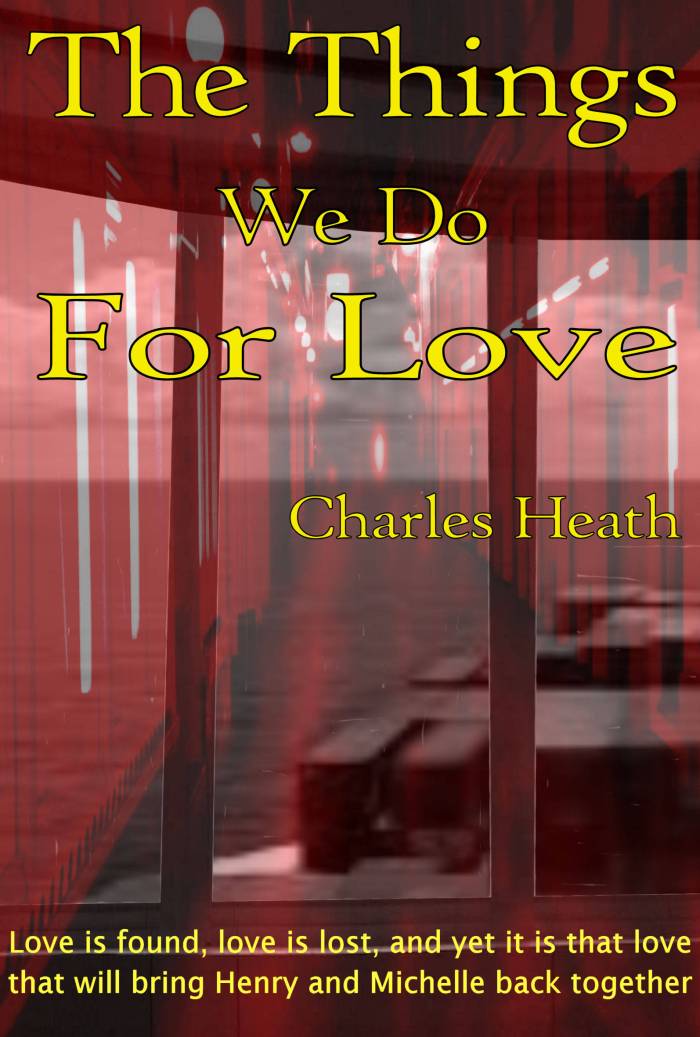
“The Things We Do For Love” – Coming soon

Is love the metaphorical equivalent to ‘walking the plank’; a dive into uncharted waters?

For Henry the only romance he was interested in was a life at sea, and when away from it, he strived to find sanctuary from his family and perhaps life itself.  It takes him to a small village by the sea, s place he never expected to find another just like him, Michelle, whom he soon discovers is as mysterious as she is beautiful.

Henry had long since given up the notion of finding romance, and Michelle couldn’t get involved for reasons she could never explain, but in the end both acknowledge that something happened the moment they first met.  

Plans were made, plans were revised, and hopes were shattered.

A chance encounter causes Michelle’s past to catch up with her, and whatever hope she had of having a normal life with Henry, or anyone else, is gone.  To keep him alive she has to destroy her blossoming relationship, an act that breaks her heart and shatters his.

But can love conquer all?

It takes a few words of encouragement from an unlikely source to send Henry and his friend Radly on an odyssey into the darkest corners of the red light district in a race against time to find and rescue the woman he finally realizes is the love of his life.

The cover, at the moment, looks like this:

lovecoverfinal1