In a word: Can

Yes, another three letter word with a multitude of meanings, like

I can do this, it’s what we tell ourselves when faced with an impossible mission

You might want to carry a can, perhaps of drink, once made out of steel but now from aluminium.  It can also hold food, like baked beans

You might have a jerry can, which holds petrol, mighty handy if you are driving and run out.  It’s happened to me once

There’s the can-can, but that’s a dance

Can you do this, can I have a drink, you can park over there, it seems we can seek or be given permission

It is an informal name for either prison or a toilet, though it depends on where you are

And in the United States, a ‘tin can’ can also be used to describe a navy vessel

If you get canned from your job, it really means you got fired

In the can means the film has been completed

Of course, there is always a trash can which makes both a mess and a loud noise when they tip over, particularly at night

And, which also make a good set of wickets, painted on, when playing backyard cricket with your friends


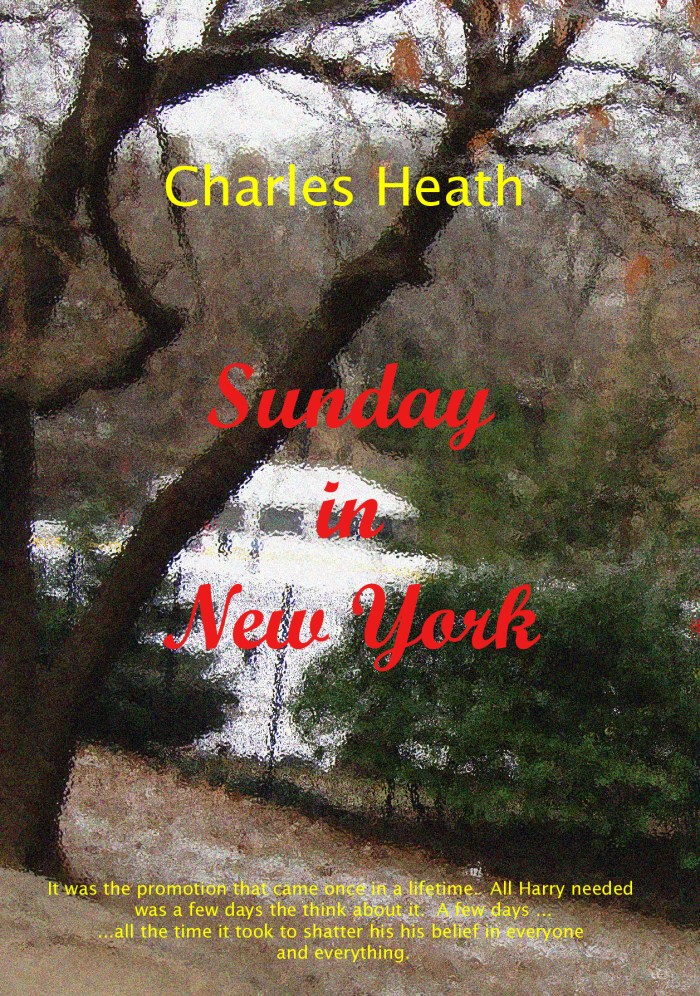
“Sunday in New York”, a romantic adventure that’s not a walk in the park!

“Sunday in New York” is ultimately a story about trust, and what happens when a marriage is stretched to its limits.

When Harry Steele attends a lunch with his manager, Barclay, to discuss a promotion that any junior executive would accept in a heartbeat, it is the fact his wife, Alison, who previously professed her reservations about Barclay, also agreed to attend, that casts a small element of doubt in his mind.

From that moment, his life, in the company, in deciding what to do, his marriage, his very life, spirals out of control.

There is no one big factor that can prove Harry’s worst fears, that his marriage is over, just a number of small, interconnecting events, when piled on top of each other, points to a cataclysmic end to everything he had believed in.

Trust is lost firstly in his best friend and mentor, Andy, who only hints of impending disaster, Sasha, a woman whom he saved, and who appears to have motives of her own, and then in his wife, Alison, as he discovered piece by piece damning evidence she is about to leave him for another man.

Can we trust what we see with our eyes or trust what we hear?

Haven’t we all jumped to conclusions at least once in our lives?

Can Alison, a woman whose self-belief and confidence is about to be put to the ultimate test, find a way of proving their relationship is as strong as it has ever been?

As they say in the classics, read on!

Purchase:

http://tinyurl.com/Amazon-SundayInNewYork

The cinema of my dreams – I always wanted to write a war story – Episode 35

For a story that was conceived during those long boring hours flying in a steel cocoon, striving to keep away the thoughts that the plane and everyone in it could just simply disappear as planes have in the past, it has come a long way.

Whilst I have always had a fascination with what happened during the second world war, not the battles or fighting, but in the more obscure events that took place, I decided to pen my own little sidebar to what was a long and bitter war.

And, so, it continues…


Leonardo was a happy man.

It was quite a by coincidence that they had run into Chiara, and it hadn’t taken long to break her.  He had thought of taking her to the castle to let Jackerby extract the information, but he was tired of them telling him what to do.

He would get the information, and then act, taking the ringleaders of the remnants of the resistance back to the castle, and expect to get that well-earned pat on the back for a job well done.

He’d said he would take care of the rabble, and he had.

Until Wallace had asked him where Atherton was.

And there was that small problem of Carlo, too, though he was not going to mention that in his report to Jackerby.

Francesco had softened the three leaders of the resistance up before taking them to the castle, taking particular pleasure in attending to Martina himself.  The three could barely walk and were almost dragged up to the castle.

The first question Jackerby asked was why he had beaten them when he’d expressly been told to bring them to the castle alive and in a fit state to be questioned.  None of the three was in any sort of state to do anything other than collapse.

Jackerby’s men took them to the dungeons.

The second question Jackerby asked was where Atherton was.

“That was basically the whole point of the exercise,” he yelled at Leonardo, who, by this time was getting annoyed himself.

“He’s still out there, and you can be assured he will be causing us trouble.  Those three you dragged back, whilst a nuisance, hardly compare to what Atherton can do.”

“There’s only one of him.  There’s no way he’s going to be able to break into this castle, by himself, and do anything.”

Jackerby shook his head.  It would not matter what he said, Leonardo was just a fool, a petty little thug who quite rightly had been ostracised by the rest of the village.  And when this exercise was over and Mayer was recaptured, he was going to take extreme pleasure in killing Leonardo and his followers.

“Go get something to eat, rest, then get back out there.  I want Atherton found.  Surely there is nowhere left where he can hide.”

There was a dozen, or more, places, Leonardo thought but he wasn’t going to tell Jackerby that.  Instead, he had made up his mind to do as Jackerby asked, rest, then take a few hours the check all the entrances and exits to the castle before going back out to find Atherton.

Or at least that was what he was going to tell Jackerby.

In reality, he had had enough of these interlopers, and it was time he removed them from the castle.  It was time he took over.  The war was not going to end any time soon according to his sources further north, and there were worse places than a castle to hole up in until the war ended.  Especially considering how much wine was being stored in the cellars.


Wallace was in the dining room and had been in the middle of lunch when Leonardo came back.  Rather than talk to him, he sent Jackerby to deal with it.

Johannsen was sitting at the other end of the table, contemplating the wine.  It was not a good idea to be drinking wine in the middle of the day when trouble could arrive from any number of quarters.

In fact, he was surprised that the other resistance hadn’t made an all-out attack on them.  It seemed unlikely to him that those that hadn’t followed Leonardo up the hill, were of little consequence.

If anything, and of his experience of the resistance in France, one resistance fighters was worth 10 or more enemy soldiers.  They had a reason to fight, for their country, and liberation for the Nazis.

Of course, Leonardo and his men were oblivious to the fact that they were working for the Germans, not the British, but to them, he thought, anyone other than an Italian was worth working for if they were prepared to pay.

Leonardo and his men were mercenaries.  Guns for hire.  They didn’t care who they worked for.  But there was something else.  Leonardo hated the villagers, and it wasn’t difficult to convince him they needed to be kept in line and report any newcomers to the castle.

Adding the reward was a bonus.

“Atherton’s not going to come and present himself at the front door, you know that,” he said to Wallace.

Then he decided to have some wine.  It’s not as if the war would be arriving any time soon.

“You know him best.  A fighter, an organizer, or office boy.”

“Paper pusher, by all accounts.  I’m not sure why Thompson would send him other than he was desperately out of good agents.  You saw how much resistance he put up.”

“Jackerby seems to think there’s more to him.”

“Jackerby sees shadows where there are none.  Where did you say he came from?”

“North Africa.”

“Then he’s had too much sun.”

“A little advice then.  I wouldn’t say that to his face.”

© Charles Heath 2020

Writing about writing a book – Day 14 Continues

Whilst Davenport’s backstory is now coming together, I’m back with the main character, and working on a bit of his backstory too, mainly what he is about to remember of his past, locked away for many years, most likely caused by the trauma he suffered at the hands of the enemy, though the definition of ‘enemy’ here will have a number of different meanings.

These first dreams are disjointed but point to one certainty, Bill was, for a time, a prisoner, whether it was as a prisoner of war, or something else, he is yet to discover.

Another certainty he will learn in time is that he holds a secret, a secret several people would like to find out about, and who will go to extreme lengths to get it from him.

This memory fragment confirms he was a prisoner, despite the assurances to the contrary:


I woke suddenly, tense, eyes open, and alert.  I could feel the fear coursing through my veins, every nerve end tingling.

I had only one thought in mind.

Escape.

Now.

Before it started again.

I moved my hand and found it strapped down as was my other hand and my legs.  I was barely able to move.

A sudden jolt of pain went through me, starting at my shoulder where the knife had been dug in and twisted, the memory of which was very clear in my mind.  It increased as I struggled against the restraints, the fear of it happening again stirring me to try harder.

I’d been here before and the result was bad.

Very bad.

I struggled harder.

I looked around and saw no one or anything else.  The room seemed different from the one I last remembered, more closed in, claustrophobic.  The light came on, bright neon lights, blinding me.  The flash I got before I closed my eyes, it was a hospital room.  I was captive, and it was after the torture session, where the doctors put me back together just enough to last the next session.

Torture, recovery, torture, recovery, over and over, night, day, light, dark, warm, cold.  I had no idea where I was, what day, week, month, or year it was, when I’d last eaten, or eaten at all.

And I didn’t know why.

Why they didn’t kill me and get it over with.  I didn’t know anything.

The door opened and I opened my eyes, now a little more adjusted to the bright light.  He came over and looked down at me.

Chinese.

The enemy.

One of the insidious men keeping me alive.

I kept my eyes on him as he looked at the folder beside the bed, and checked my vital signs.

“How are we this morning?”

English, with only a trace of a Chinese accent.  They all spoke nearly perfect English, confusing me, making me think I was safe.  That I would talk to them.  Confide in them.

I didn’t feel safe and I had nothing to say.

“You had a very bad night.”

Tell me something I didn’t know.  I struggled against the restraints.

“They’re for your own protection.  You tried to get out of bed and reopened your wound.  I’m sorry, but we have had to restrain you.”

“Let me go,” I hissed, “or kill me.”

“I assure you no one wants to kill you.”

I didn’t believe him.  He was trying to trick me.  Trying to allay my fears.  I knew all of their tricks now.

I had to escape.  I had to get away or die trying.  I could not take another session.  Not in that dark, dank, evil room.

I tried harder to escape, felt the restraining hands of his friends, holding me down as he administered another injection, silence, and darkness closing in once again.


Still not sure where this is going, but it’s defining the past of our main character, and will become a lot clearer as the story progresses.

I am intending for these dreams, if extracted and put in order, will be the basis of the missing past the main character has not been able to remember, and given how horrific some of them are, it’s no surprise they’ve been buried very deep in his subconscious.


© Charles Heath 2015-2020

Searching for locations: A trip to New Jersey

That meant we had to make the journey from New York to New Jersey, by train.  It involved the underground, or as New Yorkers call it, the subway, from Columbus Circle which by any other name was really, 80th street, to 34th street which apparently was the New Jersey jump-off point for us to get overground, well a lot of it was overground. So, were we going uptown or downtown?

Apparently, it was downtown, and to 34th Street on the A train.

You would not think this to be a difficult task, but for people not used to the subway, and where they were going other than some internet-derived instructions, without the help of a man at the station, just getting tickets may have stopped us dead in our tracks.  With his help, we determined the return fare for the three of us and then get through the turnstile onto the platform.

We get on the A train, but soon discover it was not stopping at all stations.  There was for a few minutes, a little apprehension we might just simply bypass our station.  Luckily we did not.

Now, finding your way to the New Jersey transit part of Penn station might appear to be easy, on paper, but once there, on the ground, and mingling with the other passengers which all seemed to be purpose going somewhere, it took a few moments to realize we had to follow the New Jersey transit signs.

This led to a booking hall where luckily we realized we needed to buy more tickets, then find the appropriate platform, and then get on the right train, all of which, in the end, was not difficult at all.

Maybe on the return trip, it might be.

At Newark Penn station it was momentarily confusing because the exit was not readily in sight, so it was a case of following the majority of other passengers who’d gotten off the train.

This led us to exit onto the street under the train tracks.  Luckily, having been before to Prudential Stadium to buy the tickets, we knew what the stadium looked like and roughly where it was, so it was a simple task to walk towards it.

We were early, so it was a case of finding a restaurant to get dinner before the game. So was a great many others, and we passed about 6 different restaurants that looked full to overflowing before we stopped at one called Novelty Burger and Bar.

It looked inviting, and it was not crowded.

It was yet another excuse to have a hamburger and beer, both of which seemed to be a specialty in America.  I could not fault either.

And soon after we arrived, this restaurant too was full to overflowing.  Thankfully there were other Maple Leaf fans there because being in a room full of opposition team supporters can be quite harrowing.

That was yet to come when we finally got to the stadium.  I was not expecting a lot of Maple Leaf fans.

We went to this game with high hopes.  New Jersey Devils were not exactly at the top of the leaderboard, and coming off the loss in Toronto, this was make or break for whether we would ever go to another game.

It’s remarkable that all the Ice Hockey stadiums are the same.  Everyone has an excellent view of the game, the sound systems are loud, and the fans are passionate. Here it seems to be a thing to ride on the Zambonis.

At the front door, they were handing out figurines of a Devil’s past player, and it seems a thing that you get a handout of some sort at each game.  At Toronto we got towels. And, finally, we were in luck.

The Maple Leafs won.

And it was an odd feeling to know that even though their team lost, there did not seem to be any rancour amount the fans and that any expectation of being assaulted by losing fans was totally unfounded, unlike some sporting events I’ve been to.

Perhaps soccer should take a leaf out of the ice hockey playbook.

That also went for taking public transport late at night.  I did not have any fears about doing so, which is more than I can say about travelling at night on our own transport system back home.

Oh, and by the way, there are train conductors who still come to every passenger to collect or stamp their tickets.  No trusting the passenger has paid for his trip here.  And, if you don’t have a ticket, I have it on good authority they throw you off the train and into the swamp.  Good thing then, we had tickets.

It was, all in all, a really great day.

“Strangers We’ve Become” – Countdown to publishing in 10 Days

Staring at the ceiling

David has time on his hands, and time to be alone with his thoughts can have a strange effect on the mind, and in David’s case, it gave him time to think about the new Susan.

Yes, it was Susan on the outside, and mostly on the inside, but with a few modifications, some brought on by the elevation to Lady Featherington, in charge of a conglomeration of businesses, others from the treatment her father meted out in the process of creating a clone to steal everything her family owned.

That in itself could be life-changing.

But…

There was something about the new Susan that was odd, because as far as David was concerned, people didn’t change that much, despite circumstances.

Like, she was much less inhibited, the old Susan was, if anything, a person who, even in pyjamas, would have no more than soft indirect lighting.  Not anymore.

The old Susan didn’t like the idea of having a personal assistant, did everything for herself, and had a disdain for all men.  Now, it seemed she had two personal assistants, and a gaggle of men in two wherever she went, even flirted with them.

She had a home office that hadn’t been specifically declared out of bounds, but when he breached it, she moved everything to a new office.  It surprised him that she thought he would not find it.

She professed in the beginning that he would be enough for her security, but that changed, for some reason, after the stay in Greve, and he deduced something had happened relating to him that changed her mind, something put in her head by Prendergast, the godfather who was seemingly more in her life the David was.

There was no doubt in David’s mind that Prendergast had recommended the new security team.  Why, when he knew David’s capabilities were far superior to the new guy?

David’s mind ran through the details and came to the deduction that Prendergast didn’t want Davis spending 24/7 time with his wife.  Prendergast obviously knew some of the detail of the arrangement David had with Susan, that he would walk away if she wanted him to, but she hadn’t.

The opposite was true.  And flirting with danger, David decided to call her and make dates, telling her back to before they were married, meeting in strange places, staying in sleazy hotel rooms, and sneaking out under the noses of the security team.

She did this willingly, so it was not Susan who wanted him to stay away, it was Prendergast.

And by default, Prendergast didn’t want David too close to the new security team, which meant that was not squeaky clean.  A job for Alisha’s research team, just who was he, and every member of that team.  Dossiers were requested.

Prendergast was up to something like he always was, and David was going to find out what it was.

There ain’t no mountain high enough

If only it was as easy to write one line of a song as it is to write a sentence, a paragraph, or a page of a book.  Of course, if you were to ask a songwriter the same question, he or she would probably twist it around, and not without reason.

The bottom line in all scenarios, whether writing a story, writing a song, or writing a letter, at times it feels like it is like climbing a mountain.

It’s why we have waste paper bins, and imaginary shooting practice sessions.  By the way, I don’t get very many scrunched paper balls in.

Curiously, we seem to categorize almost insurmountable problems in terms of climbing mountains.  Of course, I’ve yet to attempt to climb the north face of Mount Everest, but I suspect I’ll have to do a lot of practice to do so.

Maybe that’s what I need to do as a writer.  Practice, not climbing mountains.

Mountains have always been part of the metaphor for overcoming obstacles.  So, metaphorically, to overcome this ‘obstacle’, we can choose to climb over it, blow it up, or tunnel through it.

But the salient point is the same in all cases, obstacles, metaphorical or not, are not insurmountable, they just need time to find a solution.

So, in my case, there are two items to note when it comes to mountains, the first, I prefer to go through a tunnel, and the second, there’s not a mountain I’ve been up that hasn’t had a magnificent view.  Of course, getting to the top has been easy, I just hopped on the tram or the gondola.

After all, isn’t that what they’re there for?

Ok, flippancy aside, I have had to climb a few mountains of my own over the years, and, yes, it’s hard work, and, at times, I’ve wanted to give up.

But, not today.  Today is a good day.

And as the title says, ‘There ain’t no mountain high enough!’


In a word: Freeze

Yes, if the temperature was 20 degrees below zero and the forecast for the net week was the same, then that would be the big freeze.

In a more understandable way of putting it, to freeze something is to preserve it at a temperature below zero.

Some things don’t freeze, like petrol.

And you want to hope that you put antifreeze in your radiator otherwise you are going to have big problems with your car in winter.

It also means to stand still.

You can also isolate someone by freezing them out.

And freeze in fear, unable to move, like a deer in headlights.

But the worst example of a freeze is when your computer stops, and you forgot to save that 200-page novel, thereby being lost forever.

No.  That would never happen, you had autosave on, didn’t you?

Didn’t you??????????

Freeze is not to be confused with a frieze which is a broad horizontal band of sculpted or painted decoration, especially on a wall near the ceiling.

Or frees, which in some countries type of football described multiple free kicks, in one sense, and, in another, what you do when you let them go, e.g. he frees the dog.

The cinema of my dreams – I always wanted to see the planets – Episode 51

We have a possible situation

I was walking slowly along the passage leading to the elevator on my way back to the bridge when the First Officer’s voice broke my thoughts.

“Captain?”

“Number one?”

“Could you come to the bridge; we have a possible situation.”

“On my way.”

A ‘possible situation’ for Number One that could mean almost anything, from an engineering calamity to a standoff with 100 alien battleships.  I was hoping for the calamity in engineering.

When I arrived on the bridge it was calm.  Was I expecting panic?

Number one stood, relinquishing the captain’s chair.

“On screen,” he said as I crossed the deck to join him.

A magnified vision of three alien spaceships appeared ahead.

“Between us and the Princesses home planet.  If we can see them, they can see us.  I suspect they knew we were coming.  I’ve slowed down to give us some preparation time.”

Of course.  Given her reservations about going home, the time she’d been away, the fact she had been living with the enemy, and the changing of power, it was not dissimilar to events that had happened through history on our own homework.

Was it too much to expect things would be different, and better than what we had?

“What do you think, friendly or hostile?”

“We should treat every encounter as hostile until proven otherwise.  A friendly response would not be three ships blocking our path.”

My sentiments exactly.  “General and team to the bridge.”

A few seconds later, “Acknowledged.”

“How far away are they?”

“We could be there in 30 minutes,” the navigator said.

“Can we scan for life signs, weapons, anything?”

“Not until we’re closer.  From here all we can see is their ships.”

The General and three others that made up his bridge attack team arrived on the bridge.

“What do we have?” He asked as he crossed to his station.

“Three ships waiting for us.”

“Same as the last vessel we encountered?”

“We have to get closer.  You better get ready for a fight.  I don’t think these people are going to be as friendly as the others.”

“You have information on these people.”

“Only from what the princess told me.  They have been constantly at war with themselves and others, with ever-changing governments.”  It had painted an interesting picture and one that might leave them battle-hardened or battle weary.

“Same old same old then.” 

It was, at times, no different from where we came.  Even with lessons learned from the past we still had pockets of war between stronger and weaker countries, these days mostly over dwindling resources.

“Let’s just hope their weapons are not superior to ours.”  It was a thought that I should have kept to myself.

“I’m sure we are as well-equipped as we possibly can be, given we had no idea if or what we would or could be up against.  The weapons are far superior to anything we have back home.”

Which had been the reason why in the first instance we didn’t know about, and once out here, could not get close enough back in each orbit to use them.  Our masters had theoretically considered everything.

Those weapons included nuclear-tipped torpedoes designed to travel through space, high-intensity laser beams that would cut through almost anything, including the alien alloy that this ship was constructed of, and a defensive tool, the ability to absorb shock waves and explosions and laser beams, what might be called shields.

The limited tests back home showed they worked, but out here in space against aliens with superior technology, w we were you to prove their worth.

Perhaps today would be the day.

“You have the bridge Number one.  Stay on course and speed and let me know when we are either hailing range.”

That would give me about a half hour.  I had more questions for the princess.

© Charles Heath 2021-2022

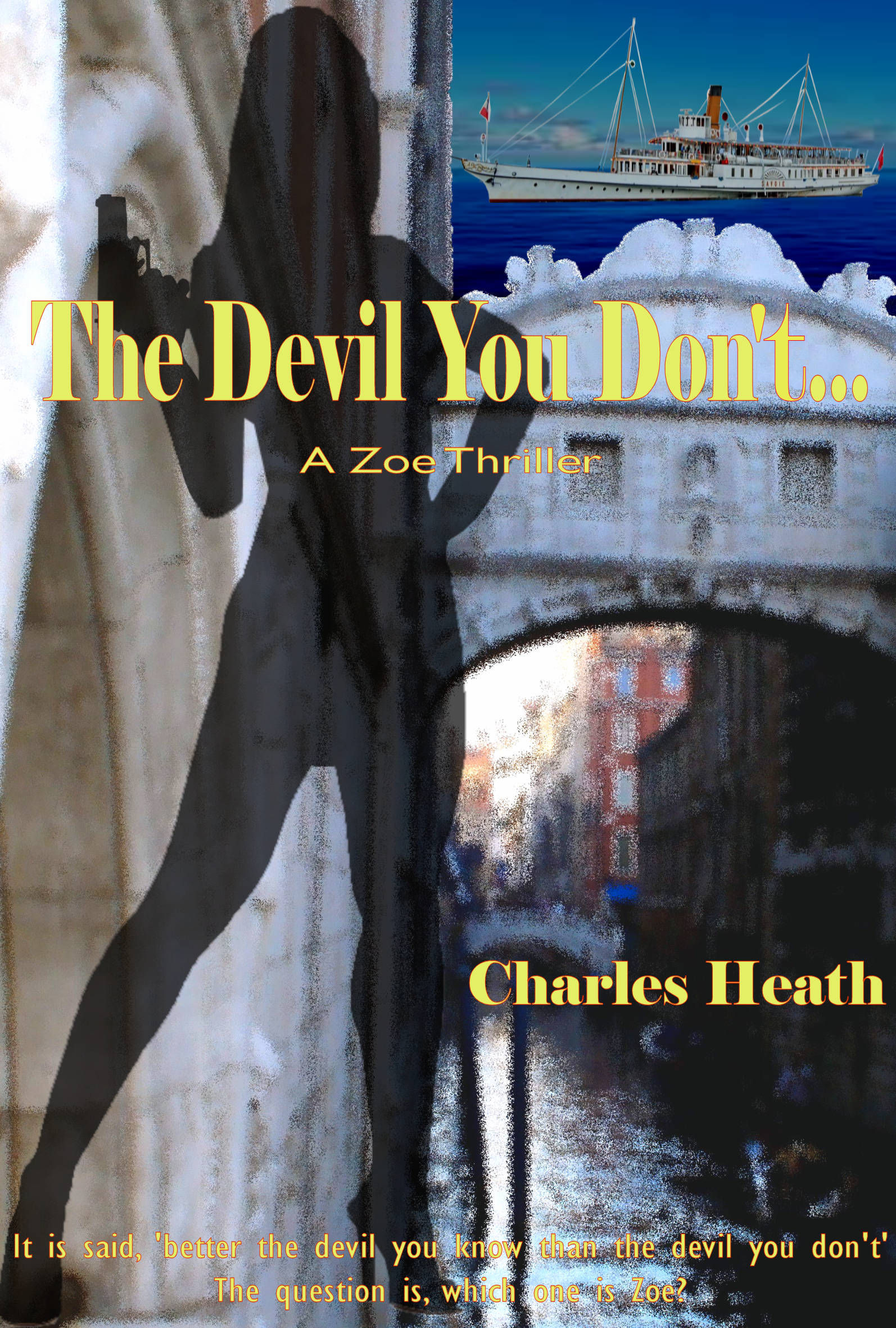
An excerpt from “The Devil You Don’t”

Available on Amazon Kindle here:  https://amzn.to/2Xyh1ow

By the time I returned to the Savoie, the rain had finally stopped, and there was a streak of blue sky to offer some hope the day would improve.

The ship was not crowded, the possibility of bad weather perhaps holding back potential passengers.  Of those I saw, a number of them would be aboard for the lunch by Phillippe Chevrier.  I thought about it, but the Concierge had told me about several restaurants in Yvoire and had given me a hand-drawn map of the village.  I think he came from the area because he spoke with the pride and knowledge of a resident.

I was looking down from the upper deck observing the last of the boarding passengers when I saw a woman, notable for her red coat and matching shoes, making a last-minute dash to get on board just before the gangway was removed.  In fact, her ungainly manner of boarding had also captured a few of the other passenger’s attention.  Now they would have something else to talk about, other than the possibility of further rain.

I saw her smile at the deckhand, but he did not smile back.  He was not impressed with her bravado, perhaps because of possible injury.  He looked at her ticket then nodded dismissively, and went back to his duties in getting the ship underway.  I was going to check the departure time, but I, like the other passengers, had my attention diverted to the woman in red.

From what I could see there was something about her.  It struck me when the light caught her as she turned to look down the deck, giving me a perfect profile.  I was going to say she looked foreign, but here, as in almost anywhere in Europe, that described just about everyone.  Perhaps I was just comparing her to Phillipa, so definitively British, whereas this woman was very definitely not.

She was perhaps in her 30’s, slim or perhaps the word I’d use was lissom, and had the look and manner of a model.  I say that because Phillipa had dragged me to most of the showings, whether in Milan, Rome, New York, London, or Paris.  The clothes were familiar, and in the back of my mind, I had a feeling I’d seen her before.

Or perhaps, to me, all models looked the same.

She looked up in my direction, and before I could divert my eyes, she locked on.  I could feel her gaze boring into me, and then it was gone as if she had been looking straight through me.  I remained out on deck as the ship got underway, watching her disappear inside the cabin.  My curiosity was piqued, so I decided to keep an eye out for her.

I could feel the coolness of the air as the ship picked up speed, not that it was going to be very fast.  With stops, the trip would take nearly two hours to get to my destination.  It would turn back almost immediately, but I was going to stay until the evening when it returned at about half eight.  It would give me enough time to sample the local fare, and take a tour of the medieval village.

Few other passengers ventured out on the deck, most staying inside or going to lunch.  After a short time, I came back down to the main deck and headed forward.  I wanted to clear my head by concentrating on the movement of the vessel through the water, breathing in the crisp, clean air, and let the peacefulness of the surroundings envelope me.

It didn’t work.

I knew it wouldn’t be long before I started thinking about why things hadn’t worked, and what part I played in it.  And the usual question that came to mind when something didn’t work out.  What was wrong with me?

I usually blamed it on my upbringing.

I had one of those so-called privileged lives, a nanny till I was old enough to go to boarding school, then sent to the best schools in the land.  There I learned everything I needed to be the son of a Duke, or, as my father called it in one of his lighter moments, nobility in waiting.

Had this been five or six hundred years ago, I would need to have sword and jousting skills, or if it had been a few hundred years later a keen military mind.  If nothing else I could ride a horse, and go on hunts, or did until they became not the thing to do.

I learned six languages, and everything I needed to become a diplomat in the far-flung British Empire, except the Empire had become the Commonwealth, and then, when no-one was looking, Britain’s influence in the world finally disappeared.  I was a man without a cause, without a vocation, and no place to go.

Computers were the new vogue and I had an aptitude for programming.  I guess that went hand in hand with mathematics, which although I hated the subject, I excelled in.  Both I and another noble outcast used to toss ideas around in school, but when it came to the end of our education, he chose to enter the public service, and I took a few of those ideas we had mulled over and turned them into a company.

About a year ago, I was made an offer I couldn’t refuse.  There were so many zeroes on the end of it I just said yes, put the money into a very grateful bank, and was still trying to come to terms with it.

Sadly, I still had no idea what I was going to do with the rest of my life.  My parents had asked me to come back home and help manage the estate, and I did for a few weeks.  It was as long as it took for my parents to drive me insane.

Back in the city, I spent a few months looking for a mundane job, but there were very few that suited the qualifications I had, and the rest, I think I intimidated the interviewer simply because of who I was.  In that time I’d also featured on the cover of the Economist, and through my well-meaning accountant, started involving myself with various charities, earning the title ‘philanthropist’.

And despite all of this exposure, even making one of those ubiquitous ‘eligible bachelor’ lists, I still could not find ‘the one’, the woman I wanted to spend the rest of my life with.  Phillipa seemed to fit the bill, but in time she proved to be a troubled soul with ‘Daddy’ issues.  I knew that in building a relationship compromise was necessary, but with her, in the end, everything was a compromise and what had happened was always going to be the end result.

It was perhaps a by-product of the whole nobility thing.  There was a certain expectation I had to fulfill, to my peers, contemporaries, parents and family, and those who either liked or hated what it represented.  The problem was, I didn’t feel like I belonged.  Not like my friend from schooldays, and now obscure acquaintance, Sebastian.  He had been elevated to his Dukedom early when his father died when he was in his twenties.  He had managed to fade from the limelight and was rarely mentioned either in the papers or the gossip columns.  He was one of the lucky ones.

I had managed to keep a similarly low profile until I met Phillipa.  From that moment, my obscurity disappeared.  It was, I could see now, part of a plan put in place by Phillipa’s father, a man who hogged the limelight with his daughter, to raise the profile of the family name and through it their businesses.  He was nothing if not the consummate self-advertisement.

Perhaps I was supposed to be the last piece of the puzzle, the attachment to the establishment, that link with a class of people he would not normally get in the front door.  There was nothing refined about him or his family, and more than once I’d noticed my contemporaries cringe at the mention of his name, or any reference of my association with him.

Yet could I truthfully say I really wanted to go back to the obscurity I had before Phillipa?  For all her faults, there were times when she had been fun to be with, particularly when I first met her when she had a certain air of unpredictability.  That had slowly disappeared as she became part of her father’s plan for the future.  She just failed to see how much he was using her.

Or perhaps, over time, I had become cynical.

I thought about calling her.  It was one of those moments of weakness when I felt alone, more alone than usual.

I diverted my attention back to my surroundings and the shoreline.  Out of the corner of my eye, I could see the woman in the red coat, making a move.  The red coat was like a beacon, a sort of fire engine red.  It was not the sort of coat most of the women I knew would wear, but on her, it looked terrific.  In fact, her sublime beauty was the one other attribute that was distinctly noticeable, along with the fact her hair was short, rather than long, and jet black.

I had to wrench my attention away from her.

A few minutes later several other passengers came out of the cabin for a walk around the deck, perhaps to get some exercise, perhaps checking up on me, or perhaps I was being paranoid.  I waited till they passed on their way forward, and I turned and headed aft.

I watched the wake sluicing out from under the stern for a few minutes, before retracing my steps to the front of the ship and there I stood against the railing, watching the bow carve its way through the water.  It was almost mesmerizing.  There, I emptied my mind of thoughts about Phillipa, and thoughts about the woman in the red coat.

Until a female voice behind me said, “Having a bad day?”

I started, caught by surprise, and slowly turned.  The woman in the red coat had somehow got very close me without my realizing it.  How did she do that?  I was so surprised I couldn’t answer immediately.

“I do hope you are not contemplating jumping.  I hear the water is very cold.”

Closer up, I could see what I’d missed when I saw her on the main deck.  There was a slight hint of Chinese, or Oriental, in her particularly around the eyes, and of her hair which was jet black.  An ancestor twice or more removed had left their mark, not in a dominant way, but more subtle, and easily missed except from a very short distance away, like now.

Other than that, she was quite possibly Eastern European, perhaps Russian, though that covered a lot of territory.  The incongruity of it was that she spoke with an American accent, and fluent enough for me to believe English was her first language.

Usually, I could ‘read’ people, but she was a clean slate.  Her expression was one of amusement, but with cold eyes.  My first thought, then, was to be careful.

“No.  Not yet.”  I coughed to clear my throat because I could hardly speak.  And blushed, because that was what I did when confronted by a woman, beautiful or otherwise.

The amusement gave way to a hint of a smile that brightened her demeanor as a little warmth reached her eyes.  “So that’s a maybe.  Should I change into my lifesaving gear, just in case?”

It conjured up a rather interesting image in my mind until I reluctantly dismissed it.

“Perhaps I should move away from the edge,” I said, moving sideways until I was back on the main deck, a few feet further away.  Her eyes had followed me, and when I stopped she turned to face me again.  She did not move closer.

I realized then she had removed her beret and it was in her left side coat pocket.  “Thanks for your concern …?”

“Zoe.”

“Thanks for your concern, Zoe.  By the way, my name is John.”

She smiled again, perhaps in an attempt to put me at ease.  “I saw you earlier, you looked so sad, I thought …”

“I might throw myself overboard?”

“An idiotic notion I admit, but it is better to be safe than sorry.”

Then she tilted her head to one side then the other, looking intently at me.  “You seem to be familiar.  Do I know you?”

I tried to think of where I may have seen her before, but all I could remember was what I’d thought earlier when I first saw her; she was a model and had been at one of the showings.  If she was, it would be more likely she would remember Phillipa, not me.  Phillipa always had to sit in the front row.

“Probably not.”  I also didn’t mention the fact she may have seen my picture in the society pages of several tabloid newspapers because she didn’t look the sort of woman who needed a daily dose of the comings and goings, and, more often than not, scandal associated with so-called celebrities.

She gave me a look, one that told me she had just realized who I was.  “Yes, I remember now.  You made the front cover of the Economist.  You sold your company for a small fortune.”

Of course.  She was not the first who had recognized me from that cover.  It had raised my profile considerably, but not the Sternhaven’s.  That article had not mentioned Phillipa or her family.  I suspect Grandmother had something to do with that, and it was, now I thought about it, another nail in the coffin that was my relationship with Phillipa.

“I wouldn’t say it was a fortune, small or otherwise, just fortunate.”  Each time, I found myself playing down the wealth aspect of the business deal.

“Perhaps then, as the journalist wrote, you were lucky.  It is not, I think, a good time for internet-based companies.”

The latter statement was an interesting fact, one she read in the Financial Times which had made that exact comment recently.

“But I am boring you.”  She smiled again.  “I should be minding my own business and leaving you to your thoughts.  I am sorry.”

She turned to leave and took a few steps towards the main cabin.

“You’re not boring me,” I said, thinking I was letting my paranoia get the better of me.  It had been Sebastian on learning of my good fortune, who had warned me against ‘a certain element here and abroad’ whose sole aim would be to separate me from my money.  He was not very subtle when he described their methods.

But I knew he was right.  I should have let her walk away.

She stopped and turned around.  “You seem nothing like the man I read about in the Economist.”

A sudden and awful thought popped into my head.  Those words were part of a very familiar opening gambit.  “Are you a reporter?”

I was not sure if she looked surprised, or amused.  “Do I look like one?”

I silently cursed myself for speaking before thinking, and then immediately ignored my own admonishment.  “People rarely look like what they are.”

I saw the subtle shake of the head and expected her to take her leave.  Instead she astonished me.

“I fear we have got off on the wrong foot.  To be honest, I’m not usually this forward, but you seemed like you needed cheering up when probably the opposite is true.  Aside from the fact this excursion was probably a bad idea.  And,” she added with a little shrug, “perhaps I talk too much.”

I was not sure what I thought of her after that extraordinary admission. It was not something I would do, but it was an interesting way to approach someone and have them ignoring their natural instinct.  I would let Sebastian whisper in my ear for a little longer and see where this was going.

“Oddly enough, I was thinking the same thing.  I was supposed to be traveling with my prospective bride.  I think you can imagine how that turned out.”

“She’s not here?”

“No.”

“She’s in the cabin?”  Her eyes strayed in that direction for a moment then came back to me.  She seemed surprised I might be traveling with someone.

“No.  She is back in England, and the wedding is off.  So is the relationship.  She dumped me by text.”

OK, why was I sharing this humiliating piece of information with her?  I still couldn’t be sure she was not a reporter.

She motioned to an empty seat, back from the edge.  No walking the plank today.  She moved towards it and sat down.  She showed no signs of being cold, nor interested in the breeze upsetting her hair.  Phillipa would be having a tantrum about now, being kept outside, and freaking out over what the breeze might be doing to her appearance.

I wondered, if only for a few seconds if she used this approach with anyone else.  I guess I was a little different, a seemingly rich businessman alone on a ferry on Lake Geneva, contemplating the way his life had gone so completely off track.

She watched as I sat at the other end of the bench, leaving about a yard between us.  After I leaned back and made myself as comfortable as I could, she said, “I have also experienced something similar, though not by text message.  It is difficult, the first few days.”

“I saw it coming.”

“I did not.”  She frowned, a sort of lifeless expression taking over, perhaps brought on by the memory of what had happened to her.  “But it is done, and I moved on.  Was she the love of your life?”

OK, that was unexpected.

When I didn’t answer, she said, “I am sorry.  Sometimes I ask personal questions without realizing what I’m doing.  It is none of my business.”  She shivered.  “Perhaps we should go back inside.”

She stood, and held out her hand.  Should I take it and be drawn into her web?  I thought of Sebastian.  What would he do in this situation?

I took her hand in mine and let her pull me gently to my feet.  “Wise choice,” she said, looking up at the sky.

It just started to rain.

© Charles Heath 2015-2023

newdevilcvr6