“Do you believe in g..g..ghosts…?”, a short story

Inside the old building, it was very quiet and almost cold.

Strange, perhaps, because outside the temperature was bordering on the record hottest day ever, nearly 45 degrees centigrade.

The people who’d built this building nearly a hundred years before must have known how to keep that heat at bay, using sandstone.

Back then, the sandstone would have looked very impressive, but now after many years of being closed off and left abandoned, the outside was stained by modern-day pollutants giving it a black streaky look, and inside layers of dust, easily stirred up as we walked slowly into the main foyer.

It was huge, the roof, ornate, with four huge chandelier lights hanging down, and wood paneling, giving way to a long counter with brass serving cages highlighting its former use; a bank.

In its day it would have conveyed the power and wealth so that its customers could trust the money to. Of course, that was before the global economy, online banking, and a raft of the new and different institutions all vying for that same money.

Then it was a simple choice of a few, now it was a few thousand.

“How many years had this been closed up?” I asked.

“Close to twenty, maybe twenty-five. It was supposed to be pulled down, but someone got it on the heritage list, and that put an end to it. “

Phil was the history nut. He’s spent a month looking into the building, finding construction plans, and correspondence dating back to before and during the construction.

Building methods, he said, that didn’t exist today and were far in advance of anything of its type for the period. It was the reason we were standing in the foyer now.

We were budding civil engineers, and the university had managed to organize a visit, at our own risk. The owner of the building had made sure we’d signed a health and safety waiver before granting access.

And the caretaker only took us as far as the front door. He gave us his cell number to call when we were finished. When we asked him why he didn’t want to come in with us, he didn’t say but it was clear to me he was afraid of something.

But neither of us believed in ghosts.

“You can see aspects of cathedrals in the design,” Phil said. ” You could quite easily turn this space into a church.”

“Or a very large wine cellar.” I brought a thermometer with me, and inside where we were standing it was the ideal temperature to store wine.

Behind the teller cages were four large iron doors to the vaults. They were huge, and once contained a large amount of cash, gold, and whatever else was deemed valuable.

They were all empty now, the shelves and floor had scattered pieces of bank stationery, and in a corner, several cardboard boxes, covered in even more dust.

Behind the vaults were offices, half-height with glass dividers, the desks and chairs still in place, and some with wooden filing cabinets drawers half-open.

Others had benches, and one, set in the corner, very large, and looked like the manager’s office. Unlike the other office which had linoleum tiles, this one had carpet. In a corner was a large mirror backed cabinet, with several half-empty bottles on it.

“Adds a whole new meaning to aged whiskey, don’t you think.” Phil looked at it but didn’t pick it up.

“I wonder why they left it,” I muttered. The place had the feel of having been left in a hurry, not taking everything with them.

I shivered, but it was not from the cold.

We went back to the foyer and the elevator lobby. They were fine examples of the sort of caged elevators that belonged in that time, and which there were very few working examples these days.

The elevators would have a driver, he would pull back an inner and outer door when the car arrived on a floor, and close both again when everyone was aboard.

Both cars were on the ground floor, with the shutter doors closed, and when I tried to open one, I found it had been welded shut. The other car was not sitting level with the floor and the reason for that, the cable that raised and lowered it was broken.

Restoring them would be a huge job and would not be in their original condition due to occupational health and safety issues.

The staircase wound around the elevator cage, going up to the mezzanine floor or down to the basement.

“Up or down?” He asked.

“Where do you want to go first?”

“Down. There’s supposed to be a large vault, probably where the safety deposit boxes are.”

And the restrooms I thought. Not that I was thinking of going.

As we descended the stairs it was like going down into a mine shaft, getting darker, and the rising odor of damp, and mustiness. I suspect it would have been the same back when it was first built being so close to the shoreline of the bay, not more than half a mile away.

The land this building and a number of others in a similar style, was built on was originally a swamp, and it was thought that the seawater still found its way this far inshore. But the foundations were incredibly strong and extensive which was why there’d been no shifting or cracking anywhere in the ten-story structure.

At the bottom, there was a huge arch, with built-in brass caging with two huge gates, both open. It was like the entrance to a mythical Aladdin’s cave.

There was also an indefinable aura coming from the depths of that room. That, and a movement of cold air. Curiously, the air down there was not musty but had a tinge of saltiness to it.

Was there a natural air freshener effect coming from somewhere within that vault.

“Are we going in?”

I checked my torch beam, still very bright. I pointed it into the blackness and after a minute checking, I said, “We’re here, so why not.”

We had to walk down a dozen steps then pass under through the open gates into the room. There was a second set of gates, the same as the first, about thirty feet from the first, and, in between, a number of cubicles where customers collected their boxes.

Beyond the second set of gates was a large circular reinforced safe door high enough for us to walk through.

This cavernous space stretched back quite a distance, and along the walls, rows, and rows of safety deposit boxes, some half hanging out of their housing, and a lot more stacked haphazardly on the floor.

I checked a few but they were all empty.

I shivered again. It felt like there was a presence in the room. I turned to ask Phil, but he wasn’t there. I hadn’t heard him walk away, and there were only two sets of footprints on the floor, his and mine, and both ended where I was standing.

It was as if he had disappeared into thin air.

I called out his name, and it echoed off the walls in the confined space. No answer from him.

I went further into the room, thinking he might have ventured towards the end while my back was turned, but he hadn’t. Nor had he left because there were only footprints coming in, not going out.

I turned to retrace my steps and stopped suddenly. An old man, in clothes that didn’t belong to this era, was standing where Phil had last been.

He was looking at me, but not inclined to talk.

“Hello. I didn’t see you come down.”

Seconds later the figure dissolved in front of me and there was no one but me standing in the room.

“Joe.”

Phil, from behind me. I turned and there he was large as life.

“Where were you?”

“I’ve been here all the time. Who were you just talking to?”

“There was an old man, standing just over there,” I said pointing to somewhere between Phil and the entrance.

“I didn’t see anyone. Are you sure you’re not having me on?”

“No. He’s right behind you.” The old man had reappeared.

Phil shook his head, believing I was trying to fool him.

That changed when the man touched his shoulder, and Phil shrieked.

And almost ran out of the room. It took a few minutes for him to catch his breath and steady the palpitating heart.

“Are you real?” I asked, not quite sure what to say.

“To me, I am. To anyone else, let’s just say you are the first not got faint, or run away.”

“Are you a ghost?” Phil wasn’t exactly sure what he was saying.

“Apparently I am and will be until you find out who killed me “

Ok, so what was it called, stuck in the afterlife or limbo until closure?

“When?”

“25 years ago, just before the bank closed. It’s the reason why it’s empty now.”

“And you’re saying we find the killer and you get to leave?”

“Exactly. Now shoo. Go and find him.”

We looked at each other in surprise, or more like shock, then back to the man. Only he was no longer there.

“What the…” Phil sail. “It’s time to go.”

“What about the man and finding his killer?”

“What man? We saw nothing. We’re done here.”

I shrugged. Phil turned to leave, but only managed to take three steps before the gates at the entrance closed with a loud clang.

When he crossed the room to stand in front, he tried pulling them open.

“Locked,” he said. Flat, and without panic, he added, “I guess it looks like we have a murder to solve.”

© Charles Heath 2019-2020
*** On special – $0.99 – On Special ***

Two novels are on special for $0.99 for the next few weeks.

They are

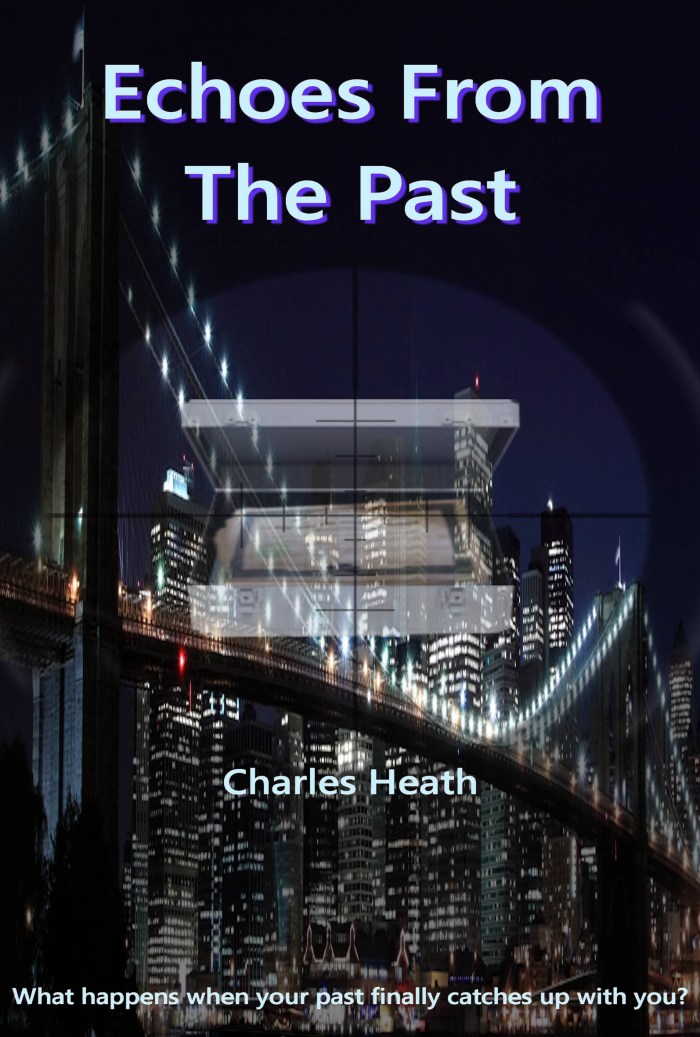
newechocover5rs

for “Echoes from the Past” go to

https://amzn.to/2CYKxu4

newdevilcvr3

for “The Devil You Don’t” go to

https://amzn.to/2Xyh1ow

In a word: Happy

“I’m happy to be being here.”

Yes, I actually heard that answer given in a television interview, and thought, at the time, it was a quaint expression.

But in reality, this was a person for whom English was a second language, and that was, quite literally, their translation from their language to English.

Suffice to say, that person was not happy when lost the event she was participating in.

But that particular memory was triggered by another event.

Someone asked me how happy I was.

Happy is another of those words like good, thrown around like a rag doll, used without consequence, or regard for its true meaning.

“After everything that’s happened, you should be the happiest man alive!”

I’m happy.

I should be, to them.

A real friend might also say, “Are you sure, you don’t look happy.”

I hesitate but say, “Sure.  I woke up with a headache,” or some other lame reason.

But, in reality, I’m not ‘happy’.  Convention says that we should be happy if everything is going well.  In my case, it is, to a certain extent, but it is what’s happening within that’s the problem.  We say it because people expect it.

I find there is no use complaining because no one will listen, and definitely, no one likes serial complainers.

True.

But somewhere in all those complaints will be the truth, the one item that is bugging us.

It is a case of whether we are prepared to listen.  Really listen.

And not necessarily take people at their word.


An excerpt from “Strangers We’ve Become” – Coming Soon

I wandered back to my villa.

It was in darkness.  I was sure I had left several lights on, especially over the door so I could see to unlock it.

I looked up and saw the globe was broken.

Instant alert.

I went to the first hiding spot for the gun, and it wasn’t there.  I went to the backup and it wasn’t there either.  Someone had found my carefully hidden stash of weapons and removed them.

Who?

There were four hiding spots and all were empty.  Someone had removed the weapons.  That could only mean one possibility.

I had a visitor, not necessarily here for a social call.

But, of course, being the well-trained agent I’d once been and not one to be caught unawares, I crossed over to my neighbor and relieved him of a weapon that, if found, would require a lot of explaining.

Suitably armed, it was time to return the surprise.

There were three entrances to the villa, the front door, the back door, and a rather strange escape hatch.  One of the more interesting attractions of the villa I’d rented was its heritage.  It was built in the late 1700s, by a man who was, by all accounts, a thief.  It had a hidden underground room which had been in the past a vault but was now a wine cellar, and it had an escape hatch by which the man could come and go undetected, particularly if there was a mob outside the door baying for his blood.

It now gave me the means to enter the villa without my visitors being alerted, unless, of course, they were near the vicinity of the doorway inside the villa, but that possibility was unlikely.  It was not where anyone could anticipate or expect a doorway to be.

The secret entrance was at the rear of the villa behind a large copse, two camouflaged wooden doors built into the ground.  I move aside some of the branches that covered them and lifted one side.  After I’d discovered the doors and rusty hinges, I’d oiled and cleaned them, and cleared the passageway of cobwebs and fallen rocks.  It had a mildew smell, but nothing would get rid of that.  I’d left torches at either end so I could see.

I closed the door after me, and went quietly down the steps, enveloped in darkness till I switched on the torch.  I traversed the short passage which turned ninety degrees about halfway to the door at the other end.  I carried the key to this door on the keyring, found it and opened the door.  It too had been oiled and swung open soundlessly.

I stepped in the darkness and closed the door.

I was on the lower level under the kitchen, now the wine cellar, the ‘door’ doubling as a set of shelves which had very little on them, less to fall and alert anyone in the villa.

Silence, an eerie silence.

I took the steps up to the kitchen, stopping when my head was level with the floor, checking to see if anyone was waiting.  There wasn’t.  It seemed to me to be an unlikely spot for an ambush.

I’d already considered the possibility of someone coming after me, especially because it had been Bespalov I’d killed, and I was sure he had friends, all equally as mad as he was.  Equally, I’d also considered it nigh on impossible for anyone to find out it was me who killed him because the only people who knew that were Prendergast, Alisha, a few others in the Department, and Susan.

That raised the question of who told them where I was.

If I was the man I used to be, my first suspect would be Susan.  The departure this morning, and now this was too coincidental.  But I was not that man.

Or was I?

I reached the start of the passageway that led from the kitchen to the front door and peered into the semi-darkness.  My eyes had got used to the dark, and it was no longer an inky void.  Fragments of light leaked in around the door from outside and through the edge of the window curtains where they didn’t fit properly.  A bone of contention upstairs in the morning, when first light shone and invariably woke me up hours before I wanted to.

Still nothing.

I took a moment to consider how I would approach the visitor’s job.  I would get a plan of the villa in my head, all entrances, where a target could be led to or attacked where there would be no escape.

Coming in the front door.  If I was not expecting anything, I’d just open the door and walk-in.  One shot would be all that was required.

Contract complete.

I sidled quietly up the passage staying close to the wall, edging closer to the front door.  There was an alcove where the shooter could be waiting.  It was an ideal spot to wait.

Crunch.

I stepped on some nutshells.

Not my nutshells.

I felt it before I heard it.  The bullet with my name on it.

And how the shooter missed, from point-blank range, and hit me in the arm, I had no idea.  I fired off two shots before a second shot from the shooter went wide and hit the door with a loud thwack.

I saw a red dot wavering as it honed in on me and I fell to the floor, stretching out, looking up where the origin of the light was coming and pulled the trigger three times, evenly spaced, and a second later I heard the sound of a body falling down the stairs and stopping at the bottom, not very far from me.

Two assassins.

I’d not expected that.

The assassin by the door was dead, a lucky shot on my part.  The second was still breathing.

I checked the body for any weapons and found a second gun and two knives.  Armed to the teeth!

I pulled off the balaclava; a man, early thirties, definitely Italian.  I was expecting a Russian.

I slapped his face, waking him up.  Blood was leaking from several slashes on his face when his head had hit the stairs on the way down.  The awkward angle of his arms and legs told me there were broken bones, probably a lot worse internally.  He was not long for this earth.

“Who employed you?”

He looked at me with dead eyes, a pursed mouth, perhaps a smile.  “Not today my friend.  You have made a very bad enemy.”  He coughed and blood poured out of his mouth.  “There will be more …”

Friends of Bespalov, no doubt.

I would have to leave.  Two unexplainable bodies, I’d have a hard time explaining my way out of this mess.  I dragged the two bodies into the lounge, clearing the passageway just in case someone had heard anything.

Just in case anyone was outside at the time, I sat in the dark, at the foot of the stairs, and tried to breathe normally.  I was trying not to connect dots that led back to Susan, but the coincidence was worrying me.


A half-hour passed and I hadn’t moved.  Deep in thought, I’d forgotten about being shot, unaware that blood was running down my arm and dripping onto the floor.

Until I heard a knock on my front door.

Two thoughts, it was either the police, alerted by the neighbors, or it was the second wave, though why would they be knocking on the door?

I stood, and immediately felt a stabbing pain in my arm.  I took out a handkerchief and turned it into a makeshift tourniquet, then wrapped a kitchen towel around the wound.

If it was the police, this was going to be a difficult situation.  Holding the gun behind my back, I opened the door a fraction and looked out.

No police, just Maria.  I hoped she was not part of the next ‘wave’.

“You left your phone behind on the table.  I thought you might be looking for it.”  She held it out in front of her.

When I didn’t open the door any further, she looked at me quizzically, and then asked, “Is anything wrong?”

I was going to thank her for returning the phone, but I heard her breathe in sharply, and add, breathlessly, “You’re bleeding.”

I looked at my arm and realized it was visible through the door, and not only that, the towel was soaked in blood.

“You need to go away now.”

Should I tell her the truth?  It was probably too late, and if she was any sort of law-abiding citizen she would go straight to the police.

She showed no signs of leaving, just an unnerving curiosity.  “What happened?”

I ran through several explanations, but none seemed plausible.  I went with the truth.  “My past caught up with me.”

“You need someone to fix that before you pass out from blood loss.  It doesn’t look good.”

“I can fix it.  You need to leave.  It is not safe to be here with me.”

The pain in my arm was not getting any better, and the blood was starting to run down my arm again as the tourniquet loosened.  She was right, I needed it fixed sooner rather than later.

I opened the door and let her in.  It was a mistake, a huge mistake, and I would have to deal with the consequences.  Once inside, she turned on the light and saw the pool of blood just inside the door and the trail leading to the lounge.  She followed the trail and turned into the lounge, turned on the light, and no doubt saw the two dead men.

I expected her to scream.  She didn’t.

She gave me a good hard look, perhaps trying to see if I was dangerous.  Killing people wasn’t something you looked the other way about.  She would have to go to the police.

“What happened here?”

“I came home from the cafe and two men were waiting for me.  I used to work for the Government, but no longer.  I suspect these men were here to repay a debt.  I was lucky.”

“Not so much, looking at your arm.”

She came closer and inspected it.

“Sit down.”

She found another towel and wrapped it around the wound, retightening the tourniquet to stem the bleeding.

“Do you have medical supplies?”

I nodded.  “Upstairs.”  I had a medical kit, and on the road, I usually made my own running repairs.  Another old habit I hadn’t quite shaken off yet.

She went upstairs, rummaged, and then came back.  I wondered briefly what she would think of the unmade bed though I was not sure why it might interest her.

She helped me remove my shirt, and then cleaned the wound.  Fortunately, she didn’t have to remove a bullet.  It was a clean wound but it would require stitches.

When she’d finished she said, “Your friend said one day this might happen.”

No prizes for guessing who that friend was, and it didn’t please me that she had involved Maria.

“Alisha?”

“She didn’t tell me her name, but I think she cares a lot about you.  She said trouble has a way of finding you, gave me a phone and said to call her if something like this happened.”

“That was wrong of her to do that.”

“Perhaps, perhaps not.  Will you call her?”

“Yes.  I can’t stay here now.  You should go now.  Hopefully, by the time I leave in the morning, no one will ever know what happened here, especially you.”

She smiled.  “As you say, I was never here.”


© Charles Heath 2018-2020

How about this for a plotline?

No matter how hard you try, how seamless, on paper the plan is, the odds are something will go wrong. That is not to say I am a fatalist, or a glass half empty kind of traveler, because most of the trips I have planned, and taken, have been relatively painless.

Except our good luck had to finally run out.

It was not a matter of bad planning; it was just one of those times when events didn’t quite go according to plan. It happens.

For instance, the simple objective was to get from Brisbane in Australia to Florence in Italy. There is no direct flight. Booking on an airline site is a horrendous experience, fares are ridiculously high, and there is no accommodating stopovers.

This is a trip that only a travel agent can handle.

The objective, travel to London via Hong Kong, or Singapore, or any medium distant airport, then on to London, or Paris, or where-ever, then to Florence. No overnight stopover, staying in a hotel, not this time, in either of Hong Kong or London.

Simple.

Not.

It was as horrendous for the agent as it was navigating the airline’s internet site. It was not something that could be done, sitting opposite her as she deftly navigated the highways and byways of the travel system on her computer. This was a longer, more intricate job.

Two days later she had the solution for the Brisbane, Hong Kong, London, and thence Florence trip. It would require a stay of 10 hours in Hong Kong, the connections didn’t align according to price constraints, and then a 14 hour layover in London as flights to Florence were not aligned either. All well and good. Cathay Pacific for the trip to London and Vueling Airlines for the Florence leg. At least we would arrive in Florence at a reasonable hour, about 6pm.

On paper, it was the most practical solution in the circumstances.

Reality proved it to be something else entirely.

At Brisbane airport, we were given boarding passes for the flights through to London, but by some quirk of fate had our baggage checked through to Florence. How this could be done without boarding passes for the London to Florence flight was a surprise. Back in Brisbane, the check-in person told us she could not give us a boarding pass for the London to Florence leg because the system would not issue it. We could she said, get it easy enough when we arrived in London.

The first leg went smoothly enough, though we did not realize until we got on the plane that it stopped over in Cairns for an hour or so. This was not a problem, just made the time between Brisbane and Hong Kong longer than we anticipated.

In Hong Kong, we had no trouble getting into the lounge I’d booked. The problem came with the interpretation of using the bathroom facilities, and it took several hours before we finally realized that the bathroom facilities were not part of the lounge but operated independently and you had to book your place. By that time there were a large number of people ahead of us (who obviously knew the problems associated with these facilities) and it annoyed me that the lounge staff did not mention it when we arrived.

The Hong Kong to London leg was as all long haul flights are. We knew what to expect, and arrived in London around 6 am. We arrived at terminal three and the lounge we’d booked was in terminal three. All we needed was a boarding pass to get in.

Oops.

That was not the case.

Because we could not get back into terminal three without a forward boarding pass we had to exit and go through customs and immigration. We were told that the only way to get a boarding pass for the Florence flight was to go to the airline counter.

The problem was Vueling did not have an airline counter.

This is where tempers started to flare. 7:30 in the morning, no means of getting into the lounge which we had paid a lot on money for, and no one in the terminal being helpful.

The Vueling web site was impossible to use.

The telephone number rang out.

At this point, I was beginning to believe the airline didn’t exist and we had been ripped off.

Only by a quirk of fate, reading the departures board, did I see a flight for Vueling leaving at 10 am, with the check-in counter displayed.

By this time we had spent two very frustrating hours and I was nothing short of angry.
At the gate, the head of the check-in counter, a representative of Vueling was surprised we had any problems, particularly in Brisbane, but happily issued the boarding passes.

When we mentioned the baggage she advised us it was lucky we did, otherwise it would have gone missing. She took the tag numbers and sorted that problem out.

The airline, it seems, is well respected, and based on the service I received, I had to say I agreed

The problem was back in Brisbane with an inexperienced check in person.

There was only one problem in getting to the lounge, now four hours later than we had advised, the fact we had to go back through customs, and in doing so, the duty-free that we had brought from Hong Kong was now outside the limits allowed, and the customs staff were adamant despite the circumstances we could not take it with us. $400 worth of goods finished up in the bin.

It would be true to say that day the customs staff at Heathrow were not the best ambassadors for their country, and one, in particular, would be best doing service elsewhere where human contact was not a requirement. As for the others, they were as helpful as they could be, but rules unfortunately were rules.

At last, rather distressed over the duty-free, and the lateness of our arrival at the lounge, there was no possibility of getting a short sleep before going to Florence. At least we did not have the same problems using the bathroom facilities, our room I’d book had them included in the room.

We rested, and figured nothing else could go wrong.

Not. Again!

The plane was advertised to leave London at about 3 pm. We left the lounge expecting to get to the gate on time. We checked on the departure board for the flight to get the gate number, only to see a notice ‘delayed’. When that delay passed 5 pm, two hours later, we decided to go to the counter and find out what was happening.

Only to find there was no airline counter. Again!

We asked at least a dozen people, including the special helpers the airport who there is plenty of signage to say to go to if you have a problem, but not one of them knew where the counter was or who was looking after the affairs of the airline. By this time other irate passengers of the delayed flight were massing, also seeking answers. One discovered who the agent was, and we descended on the counter as a large group.

The first person I saw at the counter was the woman who had checked us in that morning. For her, it had been a long day, and it was getting longer.

The problem, the plane had been delayed on an earlier leg, yes it would be arriving, having just left the lat airport, and we would be embarking about 7:30. For our trouble, we got a meal voucher, and at least we could have a reasonably good dinner.

The plane arrived, we embarked, the service was good and the people on board as cheerful as they could be given the delays and the discontented passengers.

We arrived in Florence just before midnight, our driver to take us to the hotel was waiting for us, and the hotel upgraded us to a very nice room.

All in all a harrowing journey, but at the end, basically a six-hour delay, and two very tired, but happy people. And we were in Florence, in summer. What more could anyone want?

Was it just another surveillance job – Episode 32

I’m back home and this story has been sitting on a back burner for a few months, waiting for some more to be written.

The trouble is, there are also other stories to write, and I’m not very good at prioritizing.

But, here we are, a few minutes opened up and it didn’t take long to get back into the groove.

Chasing leads, maybe


I ordered breakfast to be brought to my room, then sat back and read the paper, culminating in a second cup of coffee and a half-hearted attempt at the crossword.

My mind was not sufficiently clear of all the implications of what I’d seen last night, and before that.

The first task was to go back to the office and get onto the computer to track down the address the car was registered to.  It was not the flat.  My guess that it was a sort of safe house.  He may not have had reservations about Jan, or who she worked for, not until he became the prey.

Then it occurred to me that if Jan didn’t know where the USB was, then she had to realize he might have rumbled her perfidy.  Maybe he was not as easily fooled as I first thought.

But it didn’t explain why Nobbin was in the dark over the USB’s whereabouts, as he had told me to give Nobbin a message.  Perhaps there’s been a secret message behind that message.

Now, my mind was spinning out of control.

Like O’Connell/Quinley, and in accordance with more lessons on tradecraft, I too, had what I would like to have called a safe house, a small flat on the outskirts of Wimbledon.  

I also had an off-site parking space that was a reasonable distance from the flat, so that if I was being hunted, the car would not lead them to my hiding spot.

There I had a shower, changed, and headed for the underground.

I took the train to Charing Cross, getting there around nine, to take the short walk to the hotel.

Not expecting to find her in the room, I used my key to let myself in.

I was wrong.

She was in bed, still asleep.  Or was until I let the door slam shut.

She didn’t exactly come out from under the covers with a gun pointing at me, but I would be willing to be there was one under her pillow and her hand was on it.

“Sam?”  It was uttered sleepily, the sort that would normally send a shiver down my spine.  Not now.

“I hope you’re not intending to shoot me?”

“No.”

I could see her hand moving slowly withdrawing, and then watched her sit up and swing her legs over the side.

Still in basic clothes.  Obviously, no time to go and get some pyjamas then.

“What happened to you?”

“Got side-tracked on what I thought might be a lead, and it wasn’t.  Just a waste of time and a long night.  Thought I’d come here and get some shuteye.  Perhaps not.  Are you going to order breakfast?”

“Of course.”

“I’ll have a pot of coffee and a paper, preferably one with a crossword.”

She rang down a breakfast order, full English, then said she was having a quick shower.  I heard the water running and wondered if she was giving Severin a short report.  Old trick, running water hides conversations.

Breakfast arrived at the same time as she came out of the bathroom, hair up in a towel, and in one of the hotel dressing gowns.  My imagination got a five-second workout before I grabbed the paper and the coffee and sat in the corner.

She could have the desk.

“Do we know where Maury is?” I asked suddenly.

“Who?”

She hesitated before answering, a moment to give herself time to process the question, and if there were any hidden meanings.

“You know?  You dropped a tracker on him.”

“Oh, him.  He must have found and dumped it.  It was pinging about 100 yards from the flat.”

Of course.  There probably wasn’t one in the first place.

“Pity.  I’d like to turn up unannounced, give him a bit of a scare.”

I went back to the crossword, keeping an eye on her, noticing every now and then giving me a sideways glance.

“Did you go anywhere after the flat?”  Again sudden, out of left field.

“No.  Just come straight back here.  Do you want to keep the room for a few days?  See what happens.”

“Sounds like a good idea.  Look, I have to run an errand this morning, unfortunately, it’s not a work matter, so I’ll give you a call on my way back.  You must want to talk to your people and let them know what’s happening if you haven’t already.”

I finished the coffee, folded the paper, and stood.

“At the very least,” I added, “I have to go back into the office and report to Nobbin.  I’m sure he’ll be impressed with the lack of progress.”

“Won’t you run into that other fellow, what’s his name?”

“Severin?”

“Him, yes.”

“I don’t think so.  His name will probably be very high on the ‘we’d like to talk to you’ list if he shows his face.  Anyway, I’ve got your number.”

I deliberately waved the phone where she could see it, and the implication she could probably use it to track my movements.  That might have been the case if there was a sim card in it, and it was similar to the phone she last saw me with.

It was not.

Where I was going, no one was going to follow me or find me.

© Charles Heath 2020

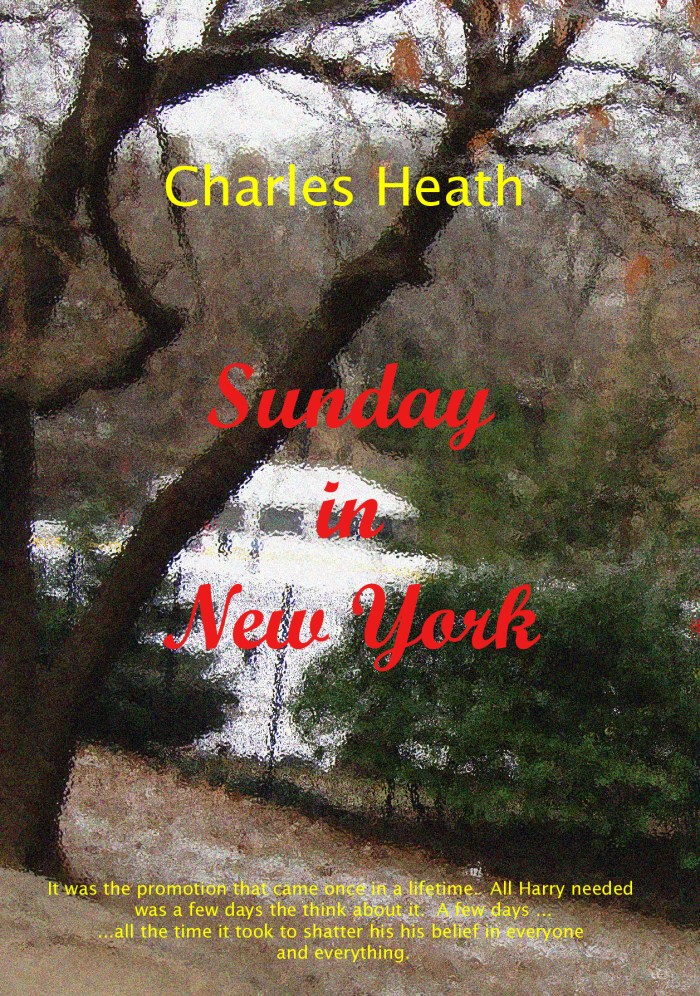
“Sunday in New York”, it’s a bumpy road to love

“Sunday in New York” is ultimately a story about trust, and what happens when a marriage is stretched to its limits.

When Harry Steele attends a lunch with his manager, Barclay, to discuss a promotion that any junior executive would accept in a heartbeat, it is the fact his wife, Alison, who previously professed her reservations about Barclay, also agreed to attend, that casts a small element of doubt in his mind.

From that moment, his life, in the company, in deciding what to do, his marriage, his very life, spirals out of control.

There is no one big factor that can prove Harry’s worst fears, that his marriage is over, just a number of small, interconnecting events, when piled on top of each other, points to a cataclysmic end to everything he had believed in.

Trust is lost firstly in his best friend and mentor, Andy, who only hints of impending disaster, Sasha, a woman whom he saved, and who appears to have motives of her own, and then in his wife, Alison, as he discovered piece by piece damning evidence she is about to leave him for another man.

Can we trust what we see with our eyes or trust what we hear?

Haven’t we all jumped to conclusions at least once in our lives?

Can Alison, a woman whose self-belief and confidence is about to be put to the ultimate test, find a way of proving their relationship is as strong as it has ever been?

As they say in the classics, read on!

Purchase:

http://tinyurl.com/Amazon-SundayInNewYork

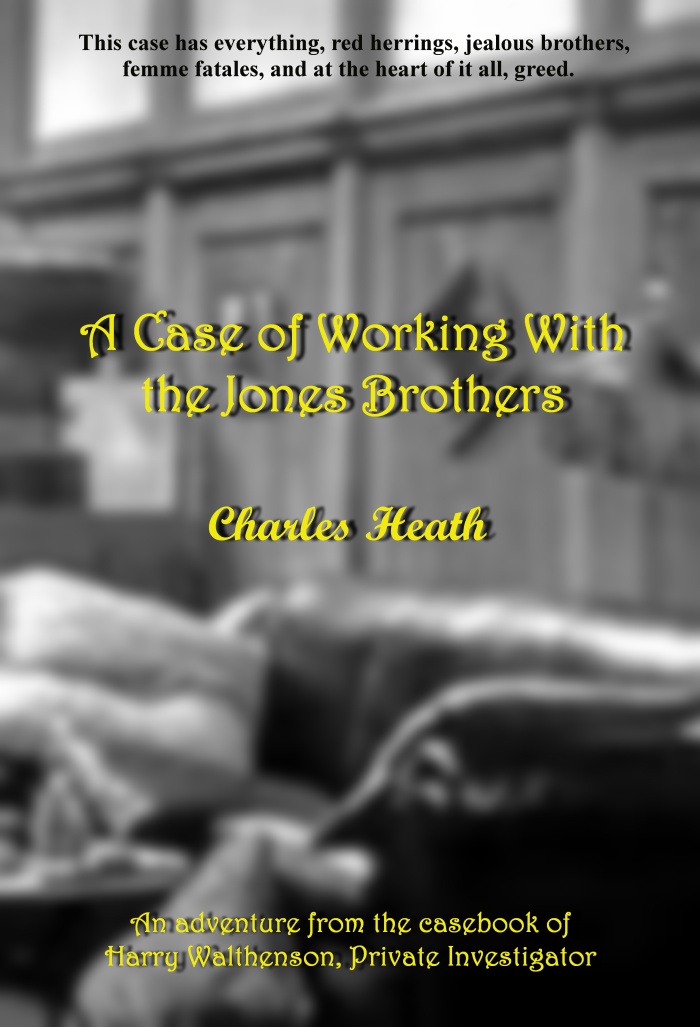
The story behind the story: A Case of Working With the Jones Brothers

To write a private detective serial has always been one of the items at the top of my to-do list, though trying to write novels and a serial, as well as a blog, and maintain a social media presence, well, you get the idea.

But I made it happen, from a bunch of episodes I wrote a long, long time ago, used these to start it, and then continue on, then as now, never having much of an idea where it was going to end up, or how long it would take to tell the story.

That, I think is the joy of ad hoc writing, even you, as the author, have as much idea of where it’s going as the reader does.

It’s basically been in the mill since 1990, and although I finished it last year, it looks like the beginning to end will have taken exactly 30 years.  Had you asked me 30 years ago if I’d ever get it finished, the answer would be maybe?


My private detective, Harry Walthenson

I’d like to say he’s from that great literary mold of Sam Spade, or Mickey Spillane, or Phillip Marlow, but he’s not.

But, I’ve watched Humphrey Bogart play Sam Spade with much interest, and modeled Harry and his office on it.  Similarly, I’ve watched Robert Micham play Phillip Marlow with great panache, if not detachment, and added a bit of him to the mix.

Other characters come into play, and all of them, no matter what period they’re from, always seem larger than life.  I’m not above stealing a little of Mary Astor, Peter Lorre or Sidney Greenstreet, to breathe life into beguiling women and dangerous men alike.


Then there’s the title, like

The Case of the Unintentional Mummy – this has so many meanings in so many contexts, though I image back in Hollywood in the ’30s and ’40s, this would be excellent fodder for Abbott and Costello

The Case of the Three-Legged Dog – Yes, I suspect there may be a few real-life dogs with three legs, but this plot would involve something more sinister.  And if made out of plaster, yes, they’re always something else inside.

But for mine, to begin with, it was “The Case of the …”, because I had no idea what the case was going to be about, well, I did, but not specifically.

Then I liked the idea of calling it “The Case of the Brother’s Revenge” because I began to have a notion there was a brother no one knew about, but that’s stuff for other stories, not mine, so then went the way of the others.


Now it’s called ‘A Case of Working With the Jones Brothers’, finished the first three drafts, and at the editor for the last.

I have high hopes of publishing it in May 2020.  It even has a cover.


PIWalthJones1

Searching for locations: Queenstown Gardens, Queenstown, New Zealand

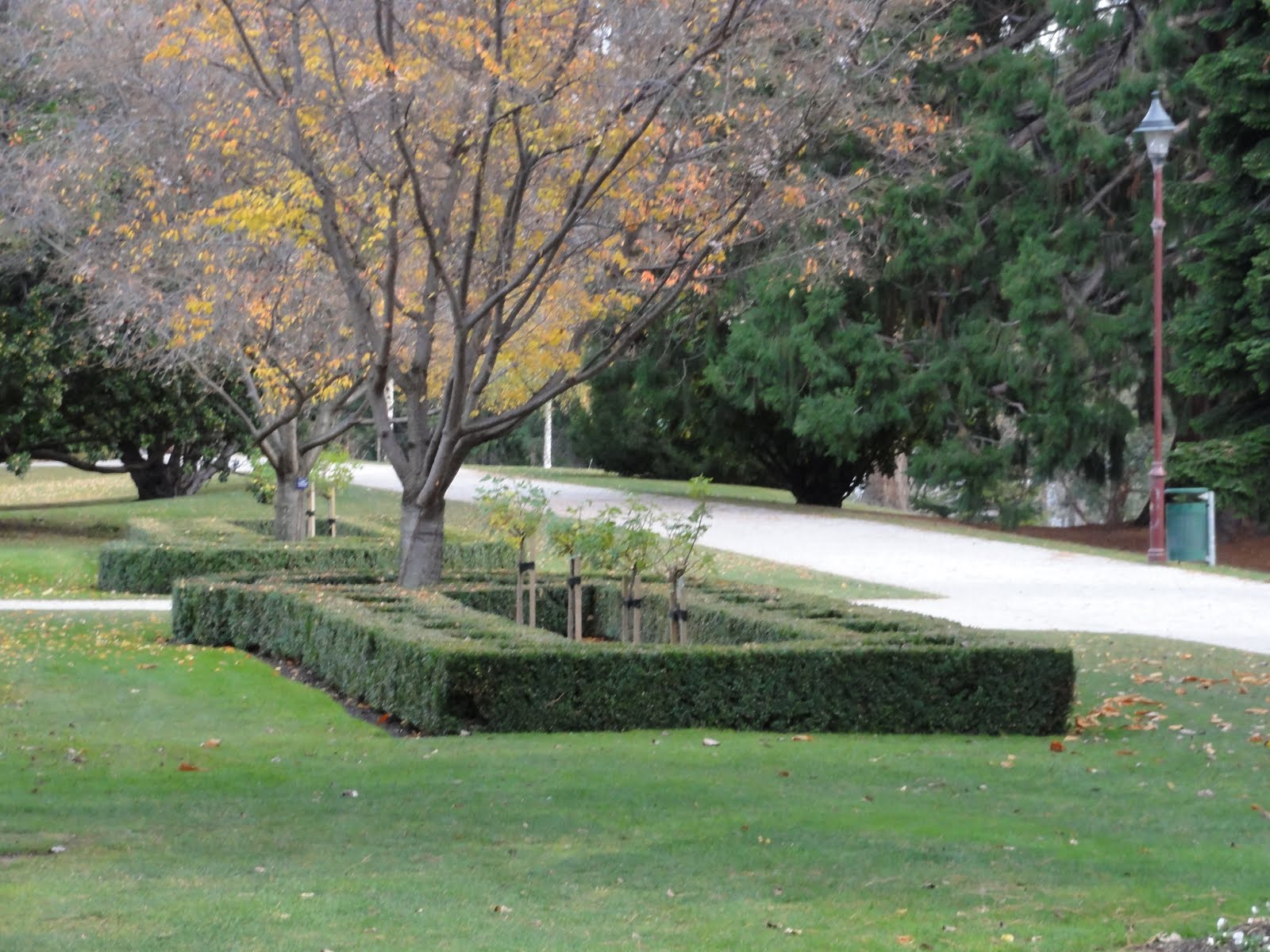
Queenstown Gardens are not far from the center of Queenstown.  They are just down the hill from where we usually stay at Queenstown Mews.

More often than not we approach the Gardens from the lakeside during our morning walk from the apartment to the coffee shop.  You can walk alongside the lake, or walk through the Gardens, which, whether in summer or winter, is a very picturesque walk.

There’s a bowling club, and I’m afraid I will never be that sort of person to take it up (not enough patience) and an Ice Arena, where, in winter I have heard players practicing ice hockey.

I’m sure, at times, ice skating can also be done.

There is a stone bridge to walk across, and in Autumn/Winter the trees can add a splash of color.

There is a large water feature with fountain, and plenty of seating around the edge of the lake, to sit and absorb the tranquility, or to have a picnic.

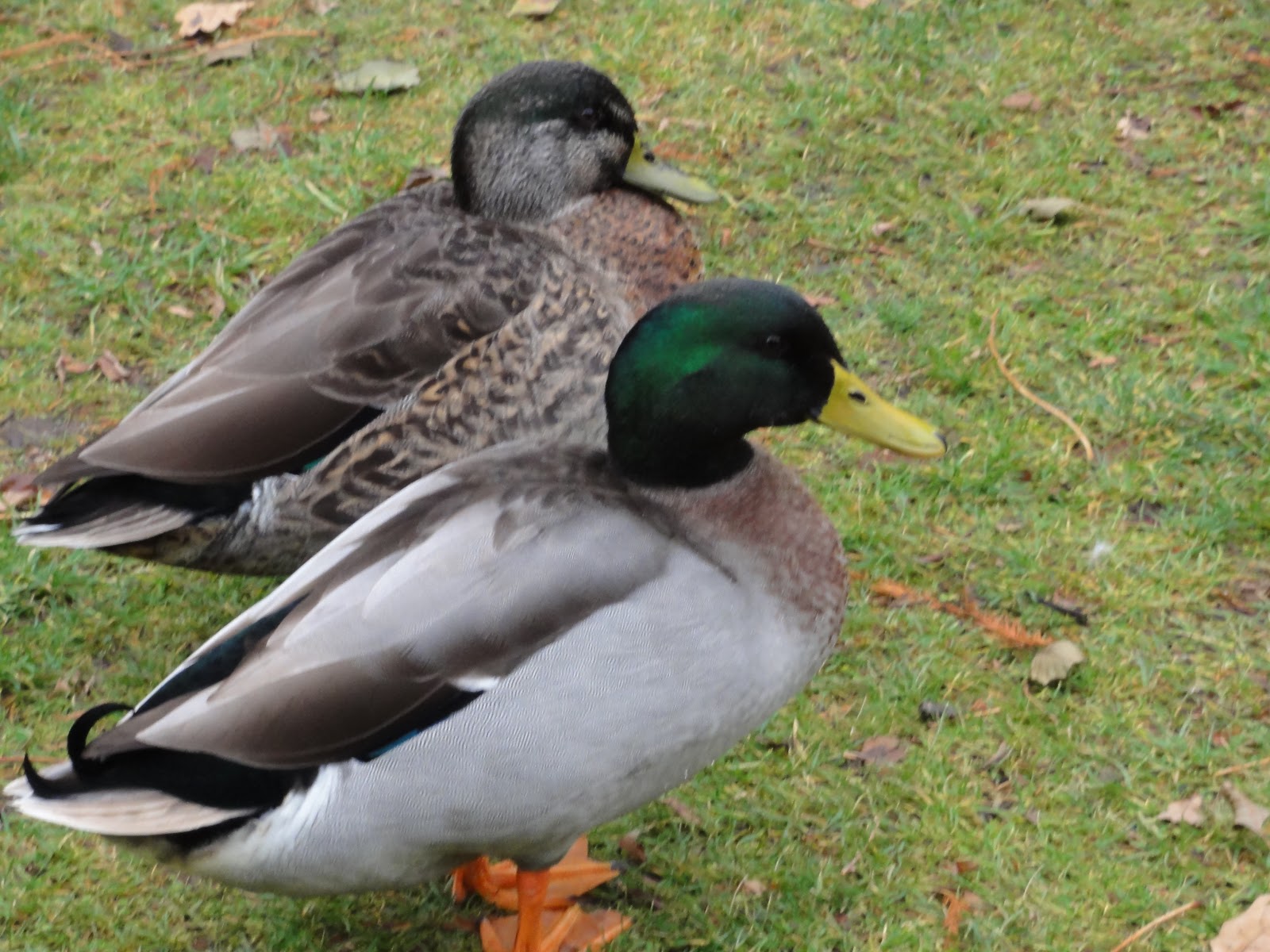
There are ducks in the pond

and out of the pond

and plenty of grassed areas with flower beds which are more colorful in summer.  I have also seen the lawns covered in snow, and the fir trees that line the lake side of the gardens hang heavy with icicles.

The story behind the story – Echoes from the Past

The novel ‘Echoes from the past’ started out as a short story I wrote about 30 years ago, titled ‘The birthday’.

My idea was to take a normal person out of their comfort zone and led on a short but very frightening journey to a place where a surprise birthday party had been arranged.

Thus the very large man with a scar and a red tie was created.

So was the friend with the limousine who worked as a pilot.

So were the two women, Wendy and Angelina, who were Flight Attendants that the pilot friend asked to join the conspiracy.

I was going to rework the short story, then about ten pages long, into something a little more.

And like all re-writes, especially those I have anything to do with, it turned into a novel.

There was motivation.  I had told some colleagues at the place where I worked at the time that I liked writing, and they wanted a sample.  I was going to give them the re-worked short story.  Instead, I gave them ‘Echoes from the past’

Originally it was not set anywhere in particular.

But when considering a location, I had, at the time, recently been to New York in December, and visited Brooklyn and Queens, as well as a lot of New York itself.  We were there for New Years, and it was an experience I’ll never forget.

One evening we were out late, and finished up in Brooklyn Heights, near the waterfront, and there was rain and snow, it was cold and wet, and there were apartment buildings shimmering in the street light, and I thought, this is the place where my main character will live.

It had a very spooky atmosphere, the sort where ghosts would not be unexpected.  I felt more than one shiver go up and down my spine in the few minutes I was there.

I had taken notes, as I always do, of everywhere we went so I had a ready supply of locations I could use, changing the names in some cases.

Fifth Avenue near the Rockefeller center is amazing at first light, and late at night with the Seasonal decorations and lights.

The original main character was a shy and man of few friends, hence not expecting the surprise party.  I enhanced that shyness into purposely lonely because of an issue from his past that leaves him always looking over his shoulder and ready to move on at the slightest hint of trouble.  No friends, no relationships, just a very low profile.

Then I thought, what if he breaks the cardinal rule, and begins a relationship?

But it is also as much an exploration of a damaged soul, as it is the search for a normal life, without having any idea what normal was, and how the understanding of one person can sometimes make all the difference in what we may think or feel.

And, of course, I wanted a happy ending.

Except for the bad guys.


Get it here:  https://amzn.to/2CYKxu4

newechocover5rs