Month: June 2020
“The Devil You Don’t”, be careful what you wish for
Now only $0.99 for a short time at https://amzn.to/2Xyh1ow
John Pennington’s life is in the doldrums. Looking for new opportunities, prevaricating about getting married, the only joy on the horizon was an upcoming visit to his grandmother in Sorrento, Italy.
Suddenly he is left at the check-in counter with a message on his phone telling him the marriage is off, and the relationship is over.
If only he hadn’t promised a friend he would do a favor for him in Rome.
At the first stop, Geneva, he has a chance encounter with Zoe, an intriguing woman who captures his imagination from the moment she boards the Savoire, and his life ventures into uncharted territory in more ways than one.
That ‘favor’ for his friend suddenly becomes a life-changing event, and when Zoe, the woman who he knows is too good to be true, reappears, danger and death follow.
Shot at, lied to, seduced, and drawn into a world where nothing is what it seems, John is dragged into an adrenaline-charged undertaking, where he may have been wiser to stay with the ‘devil you know’ rather than opt for the ‘devil you don’t’.

In a Word: Egg
This is another of those words that can be used for manly different situations.
But…
What happened to it being just an egg, you know the sort you can have for breakfast, fried, scrambled or boiled. Or eggs Benedict.
Or…
We can go down that path where the discussion is about what came first, the chicken or the egg? Don’t ask me, it could be both.
So, now it seems egg has a few other meanings that could be considered somewhat obscure, such as,
He is a good egg.
Wow, comparing someone to an egg? I guess I’d hate to be compared to a rotten egg.
What about, the crowd egged the man on to start a fight.
Well, perhaps a couple of rowdy schoolboys looking for some action behind the shelter shed, or at least that’s what we called it when I went to school (when I’m told, dinosaurs walked the earth)
Then,
If you do something embarrassing, then you are said to finish up with egg on your face.
Oh dear, been there a few times.
Or…
If you were to put all your money into that match tree forest in Ecuador, that’s the equivalent to putting all your eggs in one basket.
In other words, when you discover that the match tree forest in Ecuador was really your financial advisor’s private bank account and he’s now living in a non-extradition country, you understand just what that expression means.
In other words, diversify.
And lastly, if the above happens to you, then it’s time to go on an expedition, to find the goose that laid the golden egg.
Inspiration, maybe
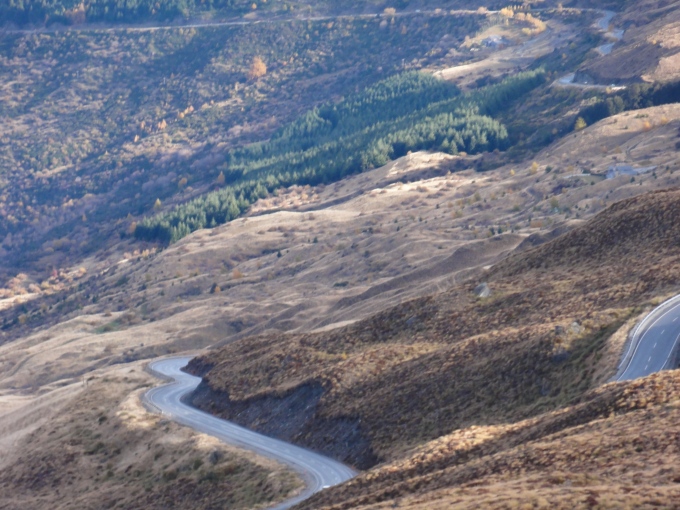
A picture paints … well, as many words as you like. For instance:

And the story:
It was once said that a desperate man has everything to lose.
The man I was chasing was desperate, but I, on the other hand, was more desperate to catch him.
He’d left a trail of dead people from one end of the island to the other.
The team had put in a lot of effort to locate him, and now his capture was imminent. We were following the car he was in, from a discrete distance, and, at the appropriate time, we would catch up, pull him over, and make the arrest.
There was nowhere for him to go.
The road led to a dead-end, and the only way off the mountain was back down the road were now on. Which was why I was somewhat surprised when we discovered where he was.
Where was he going?
“Damn,” I heard Alan mutter. He was driving, being careful not to get too close, but not far enough away to lose sight of him.
“What?”
“I think he’s made us.”
“How?”
“Dumb bad luck, I’m guessing. Or he expected we’d follow him up the mountain. He’s just sped up.”
“How far away?”
“A half-mile. We should see him higher up when we turn the next corner.”
It took an eternity to get there, and when we did, Alan was right, only he was further on than we thought.”
“Step on it. Let’s catch him up before he gets to the top.”
Easy to say, not so easy to do. The road was treacherous, and in places just gravel, and there were no guard rails to stop a three thousand footfall down the mountainside.
Good thing then I had the foresight to have three agents on the hill for just such a scenario.
Ten minutes later, we were in sight of the car, still moving quickly, but we were going slightly faster. We’d catch up just short of the summit car park.
Or so we thought.
Coming quickly around another corner we almost slammed into the car we’d been chasing.
“What the hell…” Aland muttered.
I was out of the car, and over to see if he was in it, but I knew that it was only a slender possibility. The car was empty, and no indication where he went.
Certainly not up the road. It was relatively straightforward for the next mile, at which we would have reached the summit. Up the mountainside from here, or down.
I looked up. Nothing.
Alan yelled out, “He’s not going down, not that I can see, but if he did, there’s hardly a foothold and that’s a long fall.”
Then where did he go?
Then a man looking very much like our quarry came out from behind a rock embedded just a short distance up the hill.
“Sorry,” he said quite calmly. “Had to go if you know what I mean.”
I’d lost him.
It was as simple as that.
I had been led a merry chase up the hill, and all the time he was getting away in a different direction.
I’d fallen for the oldest trick in the book, letting my desperation blind me to the disguise that anyone else would see through in an instant.
It was a lonely sight, looking down that road, knowing that I had to go all that way down again, only this time, without having to throw caution to the wind.
“Maybe next time,” Alan said.
“We’ll get him. It’s just a matter of time.”
© Charles Heath 2019
Find this and other stories in “Inspiration, maybe” available soon.

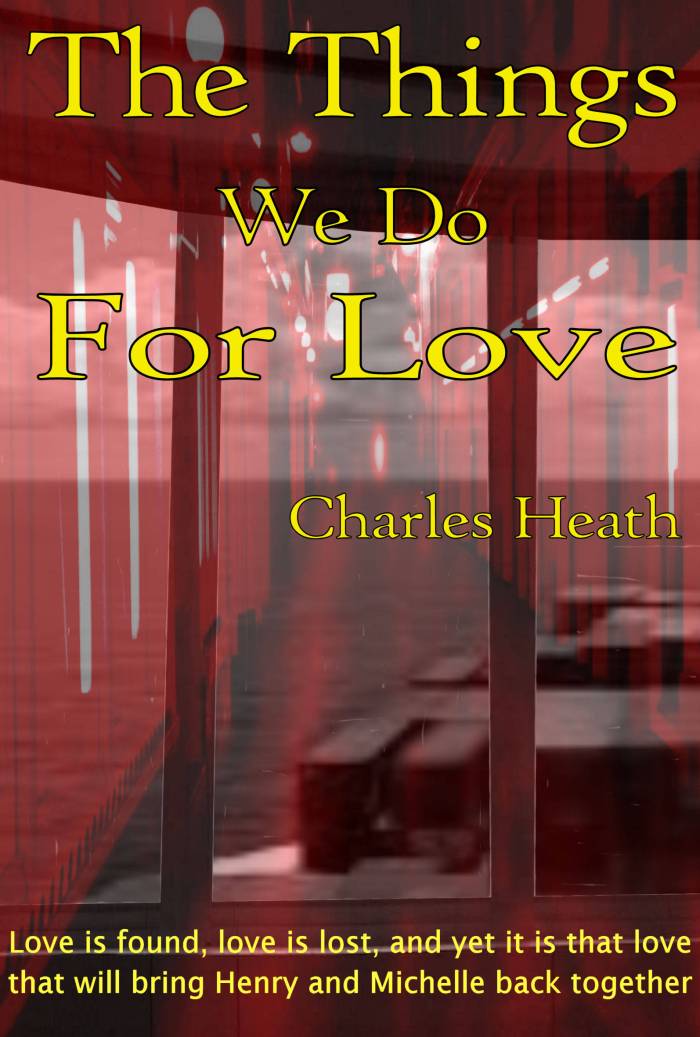
An excerpt from “The Things We Do For Love”
In the distance he could hear the dinner bell ringing and roused himself. Feeling the dampness of the pillow, and fearing the ravages of pent up emotion, he considered not going down but thought it best not to upset Mrs. Mac, especially after he said he would be dining.
In the event, he wished he had reneged, especially when he discovered he was not the only guest staying at the hotel.
Whilst he’d been reminiscing, another guest, a young lady, had arrived. He’d heard her and Mrs. Mac coming up the stairs, and then shown to a room on the same floor, perhaps at the other end of the passage.
Henry caught his first glimpse of her when she appeared at the door to the dining room, waiting for Mrs. Mac to show her to a table.
She was about mid-twenties, slim, long brown hair, and the grace and elegance of a woman associated with countless fashion magazines. She was, he thought, stunningly beautiful with not a hair out of place, and make-up flawlessly applied. Her clothes were black, simple, elegant, and expensive, the sort an heiress or wife of a millionaire might condescend to wear to a lesser occasion than dinner.
Then there was her expression; cold, forbidding, almost frightening in its intensity. And her eyes, piercingly blue and yet laced with pain. Dracula’s daughter was his immediate description of her.
All in all, he considered, the only thing they had in common was, like him, she seemed totally out of place.
Mrs. Mac came out of the kitchen, wiping her hands on her apron. She was, she informed him earlier, chef, waitress, hotelier, barmaid, and cleaner all rolled into one. Coming up to the new arrival she said, “Ah, Miss Andrews, I’m glad you decided to have dinner. Would you like to sit with Mr. Henshaw, or would you like to have a table of your own?”
Henry could feel her icy stare as she sized up his appeal as a dining companion, making the hair on the back on his neck stand up. He purposely didn’t look back. In his estimation, his appeal rating was minus six. Out of a thousand!
“If Mr. Henshaw doesn’t mind….” She looked at him, leaving the query in mid-air.
He didn’t mind and said so. Perhaps he’d underestimated his rating.
“Good.” Mrs. Mac promptly ushered her over. Henry stood, made sure she was seated properly and sat.
“Thank you. You are most kind.” The way she said it suggested snobbish overtones.
“I try to be when I can.” It was supposed to nullify her sarcastic tone but made him sound a little silly, and when she gave him another of her icy glares, he regretted it.
Mrs. Mac quickly intervened, asking, “Would you care for the soup?”
They did, and, after writing the order on her pad, she gave them each a look, imperceptibly shook her head, and returned to the kitchen.
Before Michelle spoke to him again, she had another quick look at him, trying to fathom who and what he might be. There was something about him.
His eyes, they mirrored the same sadness she felt, and, yes, there was something else, that it looked like he had been crying? There was a tinge of redness.
Perhaps, she thought, he was here for the same reason she was.
No. That wasn’t possible.
Then she said, without thinking, “Do you have any particular reason for coming here?” Seconds later she realized she’s spoken it out loud, had hadn’t meant to actually ask, it just came out.
It took him by surprise, obviously not the first question he was expecting her to ask of him.
“No, other than it is as far from civilization, and home, as I could get.”
At least we agree on that, she thought.
It was obvious he was running away from something as well.
Given the isolation of the village and lack of geographic hospitality, it was, from her point of view, ideal. All she had to do was avoid him, and that wouldn’t be difficult.
After getting through this evening first.
“Yes,” she agreed. “It is that.”
A few seconds passed, and she thought she could feel his eyes on her and wasn’t going to look up.
Until he asked, “What’s your reason?”
Slight abrupt in manner, perhaps as a result of her question, and the manner in which she asked it.
She looked up. “Rest. And have some time to myself.”
She hoped he would notice the emphasis she had placed on the word ‘herself’ and take due note. No doubt, she thought, she had completely different ideas of what constituted a holiday than he, not that she had actually said she was here for a holiday.
Mrs. Mac arrived at a fortuitous moment to save them from further conversation.
Over the entree, she wondered if she had made a mistake coming to the hotel. Of course, there had been no possible way she could know than anyone else might have booked the same hotel, but realized it was foolish to think she might end up in it by herself.
Was that what she was expecting?
Not a mistake then, but an unfortunate set of circumstances, which could be overcome by being sensible.
Yet, there he was, and it made her curious, not that he was a man, by himself, in the middle of nowhere, hiding like she was, but for very different reasons.
On discreet observance whilst they ate, she gained the impression his air of light-heartedness was forced and he had no sense of humor.
This feeling was engendered by his looks, unruly dark hair, and permanent frown. And then there was his abysmal taste in clothes on a tall, lanky frame. They were quality but totally unsuited to the wearer.
Rebellion was written all over him.
The only other thought crossing her mind, and rather incongruously, was he could do with a decent feed. In that respect, she knew now from the mountain of food in front of her, he had come to the right place.
“Mr. Henshaw?”
He looked up. “Henshaw is too formal. Henry sounds much better,” he said, with a slight hint of gruffness.
“Then my name is Michelle.”
Mrs. Mac came in to take their order for the only main course, gather up the entree dishes, then return to the kitchen.
“Staying long?” she asked.
“About three weeks. Yourself?”
“About the same.”
The conversation dried up.
Neither looked at the other, rather at the walls, out the window, towards the kitchen, anywhere. It was, she thought, almost unbearably awkward.
Mrs. Mac returned with a large tray with dishes on it, setting it down on the table next to theirs.
“Not as good as the usual cook,” she said, serving up the dinner expertly, “but it comes a good second, even if I do say so myself. Care for some wine?”
Henry looked at Michelle. “What do you think?”
“I’m used to my dining companions making the decision.”
You would, he thought. He couldn’t help but notice the cutting edge of her tone. Then, to Mrs. Mac, he named a particular White Burgundy he liked and she bustled off.
“I hope you like it,” he said, acknowledging her previous comment with a smile that had nothing to do with humor.
“Yes, so do I.”
Both made a start on the main course, a concoction of chicken and vegetables that were delicious, Henry thought, when compared to the bland food he received at home and sometimes aboard my ship.
It was five minutes before Mrs. Mac returned with the bottle and two glasses. After opening it and pouring the drinks, she left them alone again.
Henry resumed the conversation. “How did you arrive? I came by train.”
“By car.”
“Did you drive yourself?”
And he thought, a few seconds later, that was a silly question, otherwise she would not be alone, and certainly not sitting at this table. With him.
“After a fashion.”
He could see that she was formulating a retort in her mind, then changed it, instead, smiling for the first time, and it served to lighten the atmosphere.
And in doing so, it showed him she had another more pleasant side despite the fact she was trying not to look happy.
“My father reckons I’m just another of ‘those’ women drivers,” she added.
“Whatever for?”
“The first and only time he came with me I had an accident. I ran up the back of another car. Of course, it didn’t matter to him the other driver was driving like a startled rabbit.”
“It doesn’t help,” he agreed.
“Do you drive?”
“Mostly people up the wall.” His attempt at humor failed. “Actually,” he added quickly, “I’ve got a very old Morris that manages to get me where I’m going.”
The apple pie and cream for dessert came and went and the rapport between them improved as the wine disappeared and the coffee came. Both had found, after getting to know each other better, their first impressions were not necessarily correct.
“Enjoy the food?” Mrs. Mac asked, suddenly reappearing.
“Beautifully cooked and delicious to eat,” Michelle said, and Henry endorsed her remarks.
“Ah, it does my heart good to hear such genuine compliments,” she said, smiling. She collected the last of the dishes and disappeared yet again.
“What do you do for a living,” Michelle asked in an off-hand manner.
He had a feeling she was not particularly interested and it was just making conversation.
“I’m a purser.”
“A what?”
“A purser. I work on a ship doing the paperwork, that sort of thing.”
“I see.”
“And you?”
“I was a model.”
“Was?”
“Until I had an accident, a rather bad one.”
“Oh, I’m sorry.”
So that explained the odd feeling he had about her.
As the evening had worn on, he began to think there might be something wrong, seriously wrong with her because she didn’t look too well. Even the carefully applied makeup, from close up, didn’t hide the very pale, and tired look, or the sunken, dark ringed eyes.
“I try not to think about it, but it doesn’t necessarily work. I’ve come here for peace and quiet, away from doctors and parents.”
“Then you will not have to worry about me annoying you. I’m one of those fall-asleep-reading-a-book types.”
Perhaps it would be like ships passing in the night and then smiled to himself about the analogy.
Dinner now over, they separated.
Henry went back to the lounge to read a few pages of his book before going to bed, and Michelle went up to her room to retire for the night.
But try as he might, he was unable to read, his mind dwelling on the unusual, yet the compellingly mysterious person he would be sharing the hotel with.
Overlaying that original blurred image of her standing in the doorway was another of her haunting expressions that had, he finally conceded, taken his breath away, and a look that had sent more than one tingle down his spine.
She may not have thought much of him, but she had certainly made an impression on him.
© Charles Heath 2015-2020
In a word: Fire
I have not yet had the privilege, or otherwise of being fired yet, but that meaning of the word fire is to get removed unceremoniously from your job.
Donald Trump used to use it a lot on the Apprentice, eg, “Your fired”. And, believe it or not, I used to like that show.
But…
Fire can be quite hot, something you can sit in front of on those cold winter nights, whether it be a gas fire, or a wood fire, my preference.
Then there’s a phrase, set fire to, which can be good or bad depending on what eventually gets burned.
I have on the odd occasion had someone fire my imagination, probably a good thing being a writer.
To feel the fire of drinking neat whiskey, or in your heart driving patriotism, is something we have asked of us.
If you have a gun, then when you pull the trigger you fire it. Just be sure not to be pointing it the wrong way or any anyone.
A good indication is when you hear the words, ready, aim, fire. Especially if you are in the wrong place at the wrong time.
You can,
fire off a message, hopefully, a nice one
fire questions rapidly at someone (but not a politician, they have to have time to answer anything but the question asked)
or accidentally fire someone up by saying the wrong thing.
And what was the inspiration behind the story “[Any title you’ve written]”
As accomplished as we can be at putting words on paper, what is it that makes it so difficult to sit in a chair with a camera on you, and saying words rather than writing them?
Er and um seem to crop up a lot in verbal speech.
OK, it was a simple question; “What motivates you to write?”
Damn.
My brain just turned to mush, and the words come out sounding like a drunken sailor after a night out on the town.
The written answer to the question is simple; “The idea that someone will read what I have written, and quite possibly enjoy it; that is motivation enough.”
It highlights the difficulties of the novice author.
Not only are there the constant demands of creating a ‘brand’ and building a ‘following’, there is also the need to market oneself, and the interview is one of the more effective ways of doing this.
If only I can settle the nerves.
I mean, really, it is only my granddaughter who is conducting the interview, and the questions are relatively simple.
The trouble is, I’ve never had to do it before, well, perhaps in an interview for a job, but that is less daunting. That usually sticks to a predefined format.
Here the narrative can go in any direction. There are set questions, but the interviewer, in her inimitable manner, can sometimes slide a question in out of left field.
For instance, “Your character Zoe the assassin, is she based on someone you know, or an amalgam of other characters you’ve read about or seen in movies?”
That was an interesting question, and one that has several answers, but the one most relevant was; “It was the secret alter ego of one of the women I used to work with. I asked her one day if she wasn’t doing what she was, what she would like to do. It fascinated me that other people had a desire to be something more exotic in an alter ego.”
Of course, the next question was about what I wanted to be in an alter ego.
Maybe I’ll tell you next time.
“One Last Look”, nothing is what it seems
A single event can have enormous consequences.
A single event driven by fate, after Ben told his wife Charlotte he would be late home one night, he left early, and by chance discovers his wife having dinner in their favourite restaurant with another man.
A single event where it could be said Ben was in the wrong place at the wrong time.
Who was this man? Why was she having dinner with him?
A simple truth to explain the single event was all Ben required. Instead, Charlotte told him a lie.
A single event that forces Ben to question everything he thought he knew about his wife, and the people who are around her.
After a near-death experience and forced retirement into a world he is unfamiliar with, Ben finds himself once again drawn back into that life of lies, violence, and intrigue.
From London to a small village in Tuscany, little by little Ben discovers who the woman he married is, and the real reason why fate had brought them together.
“Do you believe in g..g..ghosts…?”, a short story
Inside the old building, it was very quiet and almost cold.
Strange, perhaps, because outside the temperature was bordering on the record hottest day ever, nearly 45 degrees centigrade.
The people who’d built this building nearly a hundred years before must have known how to keep that heat at bay, using sandstone.
Back then, the sandstone would have looked very impressive, but now after many years of being closed off and left abandoned, the outside was stained by modern-day pollutants giving it a black streaky look, and inside layers of dust, easily stirred up as we walked slowly into the main foyer.
It was huge, the roof, ornate, with four huge chandelier lights hanging down, and wood paneling, giving way to a long counter with brass serving cages highlighting its former use; a bank.
In its day it would have conveyed the power and wealth so that its customers could trust the money to. Of course, that was before the global economy, online banking, and a raft of the new and different institutions all vying for that same money.
Then it was a simple choice of a few, now it was a few thousand.
“How many years had this been closed up?” I asked.
“Close to twenty, maybe twenty-five. It was supposed to be pulled down, but someone got it on the heritage list, and that put an end to it. “
Phil was the history nut. He’s spent a month looking into the building, finding construction plans, and correspondence dating back to before and during the construction.
Building methods, he said, that didn’t exist today and were far in advance of anything of its type for the period. It was the reason we were standing in the foyer now.
We were budding civil engineers, and the university had managed to organize a visit, at our own risk. The owner of the building had made sure we’d signed a health and safety waiver before granting access.
And the caretaker only took us as far as the front door. He gave us his cell number to call when we were finished. When we asked him why he didn’t want to come in with us, he didn’t say but it was clear to me he was afraid of something.
But neither of us believed in ghosts.
“You can see aspects of cathedrals in the design,” Phil said. ” You could quite easily turn this space into a church.”
“Or a very large wine cellar.” I brought a thermometer with me, and inside where we were standing it was the ideal temperature to store wine.
Behind the teller cages were four large iron doors to the vaults. They were huge, and once contained a large amount of cash, gold, and whatever else was deemed valuable.
They were all empty now, the shelves and floor had scattered pieces of bank stationery, and in a corner, several cardboard boxes, covered in even more dust.
Behind the vaults were offices, half-height with glass dividers, the desks and chairs still in place, and some with wooden filing cabinets drawers half-open.
Others had benches, and one, set in the corner, very large, and looked like the manager’s office. Unlike the other office which had linoleum tiles, this one had carpet. In a corner was a large mirror backed cabinet, with several half-empty bottles on it.
“Adds a whole new meaning to aged whiskey, don’t you think.” Phil looked at it but didn’t pick it up.
“I wonder why they left it,” I muttered. The place had the feel of having been left in a hurry, not taking everything with them.
I shivered, but it was not from the cold.
We went back to the foyer and the elevator lobby. They were fine examples of the sort of caged elevators that belonged in that time, and which there were very few working examples these days.
The elevators would have a driver, he would pull back an inner and outer door when the car arrived on a floor, and close both again when everyone was aboard.
Both cars were on the ground floor, with the shutter doors closed, and when I tried to open one, I found it had been welded shut. The other car was not sitting level with the floor and the reason for that, the cable that raised and lowered it was broken.
Restoring them would be a huge job and would not be in their original condition due to occupational health and safety issues.
The staircase wound around the elevator cage, going up to the mezzanine floor or down to the basement.
“Up or down?” He asked.
“Where do you want to go first?”
“Down. There’s supposed to be a large vault, probably where the safety deposit boxes are.”
And the restrooms I thought. Not that I was thinking of going.
As we descended the stairs it was like going down into a mine shaft, getting darker, and the rising odor of damp, and mustiness. I suspect it would have been the same back when it was first built being so close to the shoreline of the bay, not more than half a mile away.
The land this building and a number of others in a similar style, was built on was originally a swamp, and it was thought that the seawater still found its way this far inshore. But the foundations were incredibly strong and extensive which was why there’d been no shifting or cracking anywhere in the ten-story structure.
At the bottom, there was a huge arch, with built-in brass caging with two huge gates, both open. It was like the entrance to a mythical Aladdin’s cave.
There was also an indefinable aura coming from the depths of that room. That, and a movement of cold air. Curiously, the air down there was not musty but had a tinge of saltiness to it.
Was there a natural air freshener effect coming from somewhere within that vault.
“Are we going in?”
I checked my torch beam, still very bright. I pointed it into the blackness and after a minute checking, I said, “We’re here, so why not.”
We had to walk down a dozen steps then pass under through the open gates into the room. There was a second set of gates, the same as the first, about thirty feet from the first, and, in between, a number of cubicles where customers collected their boxes.
Beyond the second set of gates was a large circular reinforced safe door high enough for us to walk through.
This cavernous space stretched back quite a distance, and along the walls, rows, and rows of safety deposit boxes, some half hanging out of their housing, and a lot more stacked haphazardly on the floor.
I checked a few but they were all empty.
I shivered again. It felt like there was a presence in the room. I turned to ask Phil, but he wasn’t there. I hadn’t heard him walk away, and there were only two sets of footprints on the floor, his and mine, and both ended where I was standing.
It was as if he had disappeared into thin air.
I called out his name, and it echoed off the walls in the confined space. No answer from him.
I went further into the room, thinking he might have ventured towards the end while my back was turned, but he hadn’t. Nor had he left because there were only footprints coming in, not going out.
I turned to retrace my steps and stopped suddenly. An old man, in clothes that didn’t belong to this era, was standing where Phil had last been.
He was looking at me, but not inclined to talk.
“Hello. I didn’t see you come down.”
Seconds later the figure dissolved in front of me and there was no one but me standing in the room.
“Joe.”
Phil, from behind me. I turned and there he was large as life.
“Where were you?”
“I’ve been here all the time. Who were you just talking to?”
“There was an old man, standing just over there,” I said pointing to somewhere between Phil and the entrance.
“I didn’t see anyone. Are you sure you’re not having me on?”
“No. He’s right behind you.” The old man had reappeared.
Phil shook his head, believing I was trying to fool him.
That changed when the man touched his shoulder, and Phil shrieked.
And almost ran out of the room. It took a few minutes for him to catch his breath and steady the palpitating heart.
“Are you real?” I asked, not quite sure what to say.
“To me, I am. To anyone else, let’s just say you are the first not got faint, or run away.”
“Are you a ghost?” Phil wasn’t exactly sure what he was saying.
“Apparently I am and will be until you find out who killed me “
Ok, so what was it called, stuck in the afterlife or limbo until closure?
“When?”
“25 years ago, just before the bank closed. It’s the reason why it’s empty now.”
“And you’re saying we find the killer and you get to leave?”
“Exactly. Now shoo. Go and find him.”
We looked at each other in surprise, or more like shock, then back to the man. Only he was no longer there.
“What the…” Phil sail. “It’s time to go.”
“What about the man and finding his killer?”
“What man? We saw nothing. We’re done here.”
I shrugged. Phil turned to leave, but only managed to take three steps before the gates at the entrance closed with a loud clang.
When he crossed the room to stand in front, he tried pulling them open.
“Locked,” he said. Flat, and without panic, he added, “I guess it looks like we have a murder to solve.”
© Charles Heath 2019-2020
*** On special – $0.99 – On Special ***
Two novels are on special for $0.99 for the next few weeks.
They are

for “Echoes from the Past” go to

for “The Devil You Don’t” go to