My NaNoWriMo project is …

Nanowrimo graphic

I was going to say, it was sinking like the Titanic, but that’s a joke going to far.

Last night I was working on some ideas about how the start will take shape, but the problem was, everything I wrote was terrible.

In fact, I was beginning to think I was losing the plot, a rather interesting turn of phrase for a writer to use, don’t you think.

Or a pathetic joke.

So, after about an hour of putting ideas to paper, I looked at it, and then tore it up.  Figuratively, that is, because it’s on the computer and unless I delete it, it will still be there to haunt me.

we all know that deleting a file doesn’t necessarily mean it’s deleted.

OK, getting off track.

This morning I’ve been mulling over it, or more like stressing over it because I need to get an outline on paper if I’m going to get 50,000 words written.

How will I do this if I can’t get the start right?

So, I came up with a subtitle, “what happens in Moscow doesn’t necessarily stay in Moscow”.

Well, it sounded good in my head, not so much now that I’ve put it down on paper.

But…

In essence, that’s what the start is about, and the character it involves is in a great deal of trouble.

Of course, the other character, who is a long way from the event that spawns the subtitle, doesn’t know it yet, but he will be the one who will be looking for the cause because events like these don’t happen unless there’s a reason.

Of course, you’re no doubt, as confused as I am for the moment.

The subtitle stays, the plot needs more work, and there are just seven days to get it sorted.

Back to work then!

In a word: Might

We might have to use some might to beat the mite.  Confused?

Might is force, so expending might is much the same as what Thor does with his hammer.

We might expend some force, we this might is a maybe.  You’re never quite sure when someone uses the word might, whether or not they will actually do it.

I might do a lot of things, but somehow I never seem to get around to actually doing them,

Of and just for the record, it’s the past tense of the word may.  You know, you may do something, or you might not.

You might also use the word might when being polite, which seems to be a rarity these days because everyone is terse, tense, and it a hurry.

So might I go to the movie will aways get a resounding no if it means you get home late at night.   And you’re only 10 years old.

I might be interested, but I don’t think so.  Let me think about it.  Which also means no.

Of course, if you’re slack in doing homework, you might want to try a little harder next time.

What might have been if only you tried harder?

Then there’s that little pest called a mite, though it goes by a lot of other names, one of which is everywhere, a termite.

Or a dust mite.

It also could be used slangily for a child in distress, that is, look at that poor little mite, he looks so tired.

Or another word for slightly, for example, the girl seemed a mite embarrassed.


“The Things We Do For Love” – Coming soon

Is love the metaphorical equivalent to ‘walking the plank’; a dive into uncharted waters?

For Henry the only romance he was interested in was a life at sea, and when away from it, he strived to find sanctuary from his family and perhaps life itself.  It takes him to a small village by the sea, s place he never expected to find another just like him, Michelle, whom he soon discovers is as mysterious as she is beautiful.

Henry had long since given up the notion of finding romance, and Michelle couldn’t get involved for reasons she could never explain, but in the end both acknowledge that something happened the moment they first met.  

Plans were made, plans were revised, and hopes were shattered.

A chance encounter causes Michelle’s past to catch up with her, and whatever hope she had of having a normal life with Henry, or anyone else, is gone.  To keep him alive she has to destroy her blossoming relationship, an act that breaks her heart and shatters his.

But can love conquer all?

It takes a few words of encouragement from an unlikely source to send Henry and his friend Radly on an odyssey into the darkest corners of the red light district in a race against time to find and rescue the woman he finally realizes is the love of his life.

The cover, at the moment, looks like this:

lovecoverfinal1

“At The End of the Road”, A short story

The man who had said that we would never make the distance was right.

It had been my idea to go ‘troppo’, forsake everything, hop on a motorbike and go around Australia.  I was, at that stage fed up with everything and, catching Harry in one of his low spots, he decided there and then he would join me.

For the first few days we believed we were stark staring mad and talked about calling it quits, but perseverance made all the difference.  After two months we were glad we had the resolve to keep going, and in that time we had managed to see more of the Australian countryside than we’d seen all our lives.

That was until this particular morning when we arrived in Berrigum, what could have been called a one-horse town.  It consisted of one hotel, one general store (that sold everything from toothpicks to petrol) and an agricultural machinery depot.  It also had a station and some wheat silos, and this appeared to be the only reason for a town in this particular spot in the middle of nowhere.

And it was the railway station that interested Harry, who was, by this time, getting a little homesick and fed up with his motorbike.

After coughing and spluttering for the last week it had finally died, and the five-mile walk to Berrigum had not helped either his temper, or his disposition, and had only served to firm his resolve to return home.

It was hot but not unbearably so, unlike a hot summer’s day in the city, and even worse still in public transport.  For miles around as we tramped those five miles all we could see was acres and acres of wheat, but no sign of life.  It was the same when we reached the town.  It appeared all the people were either hiding or had left.  Harry suspected the latter given the state of the road, and the buildings, more or less the epitome of a ghost town.

Standing at the end of what could have been called the main street with only our own dust for company, one look took in the whole town.  In a car, one wouldn’t have given it a second look, if one had time to give it a first.  I didn’t remember seeing neither any speed restriction signs nor signpost advertising a town ahead.

And since no amount of argument could sway him from his resolve, the first objective was to get a train timetable, if such a thing existed, and make arrangements for Harry’s return.

The station was as deserted as the town itself, and a quick glance in the stationmaster’s office showed no sign of life.

Leaving the bikes on the platform outside the office, we headed for the hotel for both a drink and make enquiries about rail services.  Being a hot day and the morning’s tramp somewhat hot and dusty, we were looking forward to a cold glass (or two) of beer.

The hotel looked as though it was a hundred years old though there was no doubting a few relentless summers would reduce it to the same state.  It was as bad inside as out, though the temperature was several degrees lower, and we could sit down in what appeared to be the main bar.  We were the only occupants and still to find any sign of life.  Overhead, two fans were struggling to move the hot air around.

More than once Harry reckoned it was a ghost town and I was beginning to believe him when, after five minutes, no one arrived.

After ten, we stood, ready to leave, only to stop halfway out of our chairs when a voice behind us said, “Surely you’re not going back out there without refreshment?”

“I was beginning to think the town was deserted,” I said.

“It is during the day, but when the sun goes down…”

I didn’t ask.  We followed him to the bar where he had stationed himself behind the counter.  “The name is Jack.”  He stretched out his hand towards us.  “We don’t bother with last names here.”

“Bill,” I said, shaking it, and nodding to Harry, “Harry.”

Harry nodded and shook his hand too.

“The first one’s on the house.”  He poured three glasses and put ours in front of us.  “Cheers.”

In all cases, it went down without touching the sides (as they say) and he poured a second, at the same time asking, “What brings you to our little corner of the earth?”

“Just passing through,” I said, “Or at least for me.”

“And you?”  Jack looked at Harry.

“I can’t hack the pace.  I can truthfully say I have thoroughly enjoyed the trip so far, except for a few mishaps, but for me, it’s time to get back to the big smoke.  My ‘do your own thing’ has run out of momentum.  Do you know if there is a train that goes anywhere important?”

The publican looked at him almost pityingly.  “Important, eh?”  He rubbed his chin feigning thought.  “You make it sound like you are in purgatory.”

“Aren’t we?”

I suppose one could hardly blame Harry for his attitude.  After all, in the beginning, he had numerous accidents, caught a virus that stayed with him (and a couple of torrential downpours had done little to help it), and now his motorbike had finally died.  No wonder his humour was at an all-time low.

For a moment I thought the publican was going to tell Harry what he thought of him, but then he smiled and the tension passed.  “Perhaps to a city fellow like you it might be,” he said.  “The mail train which has a passenger carriage comes through once a week, and, my good man, you’re in luck.  Today’s the day.”

“Good.  How do I get a ticket?”

“You’d have to see the Station Master.”

“And where might he be at the moment?  We were at the station a while back and there was no sign of life.”

“Nor will there be until the train comes.  Meanwhile, there’s time enough for lunch.  I’m sure you will stay?”  He looked questioningly at us.

I looked at Harry, who nodded.

“Why not.”


Over lunch, we talked.

I remember not so long ago when I had to attend a large number of lunches where the talk was of business, or, if anything, mostly about subjects that I had no interest in.  It was always some posh restaurant, time seemed important, the atmosphere never really relaxed, and to get into a relaxed state it took a large amount of alcohol to deaden the despair and distaste of those one had to fete in order to secure their business.

How different it was here.

We talked about the country, and, after seeing as much of it, and worked on it as we had to fund our odyssey, we could talk about it authoritatively.  And, most of all, it was interesting.

The atmosphere too was entirely different than it had been in the city.  Out here the people were always friendly, people always willing to stop and talk, particularly farmers; share a drink or some food.

There was none of this carefree purposefulness in the city, and more than once I’d thought of the fact one could travel in the same train with the same people for year after year and still not know any of them.  It was the same at work.  Even after five years I still hadn’t known three-quarters of the office staff, and most of them probably didn’t want to know me.  Harry was virtually the only real friend I’d had at work.

But here, in ‘the middle of nowhere’ as Harry had called it, I felt as though I’d known the publican all of my life instead of the few short hours.


Some hours later and after much argument, where Jack and I tried to talk Harry into staying (Jack said he knew someone who could fix anything including Harry’s bike), Harry remained unconvinced and resolute.  Jack, to round off the occasion (we were the first real guests from outside he had had in a week) provided another on-the-house ale and then saw us to the station.  “After all”, he had said, “I’ve nothing else to do at the moment.”

By that time the station was showing a little more life than it had before.  A station assistant, moving several parcels with a hand trolley, slowly ambled towards the end of the platform.

And whether it could be called a platform was a debatable point.  It was a gravel and grass affair that looked more like part of a cutting through a hill than a station.

At the station, Jack portentously announced he was also the stationmaster and would be only too happy to take care of Harry’s requirements.  It would be, he added, “the first passenger ticket sold for several months.”  Certainly, the ticket he handed Harry bore witness to that.  It had yellowed with age.

One would have thought with the imminent arrival of the train there would be more people, but no.  The only event had been the station assistant’s stroll to the end of the platform and back.  Now both he and Jack had disappeared into the office and we were left alone on the platform.  Very little in the whole town stirred, nor had it the whole time we’d been there.

“Well,” I said to break the silence.  “I’m sorry to see you going through with it.  I thought I might have been able to talk you out of it…”  I shrugged, leaving the sentence unfinished.

“I’m sorry to be going too, but a body can take only so much bad luck, and God knows that’s all I’ve had.”

“Yes.”  I couldn’t think of much else to say.  “But it’s been good to have your company these last few months.”

“And you.  When do you think you’ll get back?”

“When I get sick of it I suppose.”

“Look us up then when you get back.”

“I will.”

Thankfully the appearance of the train in the distance broke off the conversation.  I had begun to think of what it was going to be like out on the road with no one to talk to but myself.  The thought was a little depressing and I tried not to let it show.

We said little else until the train pulled in, three flat cars, seven enclosed wagons, a passenger carriage and the guard’s van.  The train stopped with only part of the passenger carriage and the guard’s van at the station.

The guard took aboard the parcels the station assistant had left for him earlier, and then put those that were for Berrigum on the trolley.

I shook Harry’s hand and said I’d see him around.  Then he, the motorbike, and the guard were aboard and the train was off, disappearing slowly into the afternoon haze.

The station assistant then repeated his amble to the end of the platform to collect the hand trolley.

“Staying or moving on.”  Jack had come up behind me and gave me a bit of a start.

“Staying I guess, until tomorrow or maybe later.”

“I had heard one of the farmhands is leaving tomorrow heading back to Sydney.  There could be a vacancy.”

“Sounds like a plan,” I said.

“I could put in a word for you.”

“Thanks.”

Jack just grinned and we headed for the hotel.


© Charles Heath 2016-2019
I think I’m in an alternate reality…

You know how it is, you’re sitting in a chair working on the computer, much like reading a boring book, and you nod off.

And, then, suddenly you wake up…

There’s that moment when you wake up when you’re suddenly disorientated, and it takes a few seconds for the blurriness in both mind and eyes to go away.

That was me, right then.

It worried me, in a sense that in that moment of disorientation, I was not sure what I was doing before I found myself in that chair.

As the fuzziness diminished, I remembered I’d been working on the next chapter of my second novel but ideas wouldn’t come.  Staring at a blank sheet of paper had basically put me to sleep.  In front of me was the computer screen, but it was black.  It had switched off.

Moving in the chair slightly I accidentally moved the mouse, and the screen comes to life.

There was a document on the screen, that same blank sheet of paper, blank except for four words typed in the middle of the page:

You are not alone

Ok, did I typed that, and if I did, why?  I had an idea which had come to me in one of those flashes out of left field.  The one where the protagonist is alone at home, sitting in front of a computer, when…

Reality meets fiction …

A bright light comes on and stayed at the window behind me for a few seconds, the moved on, heading towards the rear of the house.

And then it happened, outside my window.  I saw the bright light come on, move slightly in both directions, before moving further away.

How could that be?  If anyone had come in the back gate the alarm would have gone off.

I got up and went over to the control panel for the alarm system, just inside the doorway to the room, and checked.

Yes, the alarm was still set.

I went into the dining room further towards the rear of the house, one that had a sliding door that led onto the patio.  The light was still there, oddly moving from side to side.

As I opened the sliding door, the light suddenly went out.  Was it the sound of the door opening with a slight screech warning whoever was out there.

I stepped out onto the deck and looked around.  There was an inky like darkness, and with overcast conditions and no moon, it was darker than usual.

I took another two steps towards the edge and stopped.  It was deathly quiet.

A minute, two, passed.  Nothing.  I shook my head thinking I was seeing things again and headed back to the doorway.

A sound.

I stopped and turned.  In that same second, I felt a hand on my shoulder and jumped in fright.

“You fell asleep again.”  A familiar voice.

Still sitting in my chair in front of the computer, dreaming.

Until light suddenly flooded the window.

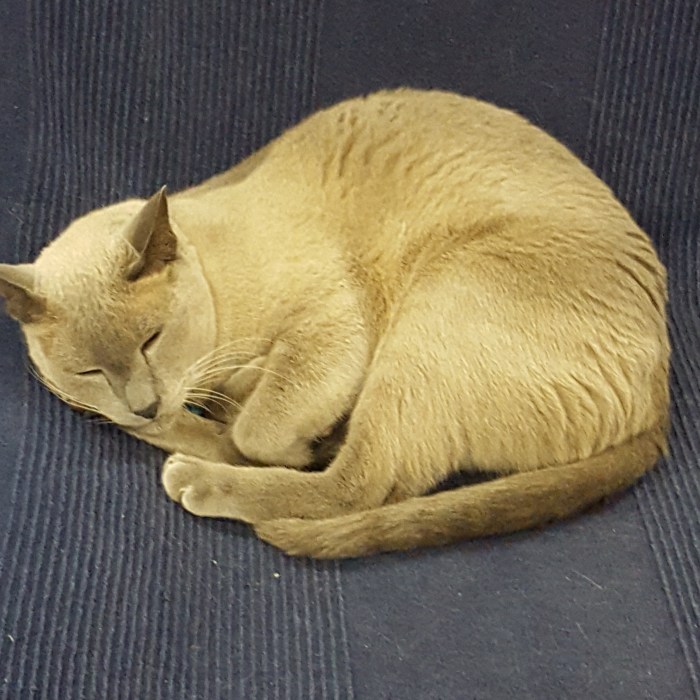
Past conversations with my cat – 20

IMG_20160823_164129

This is Chester.  He’s about as bored a cat can get.

Why?

I’m reading a section of one of my stories that I know is terrible, and I’m using him as a measure of how boring.

I think both you and I would agree.

This story needs re-writing.

In fact, just as I reached the end, I saw some movement.

Is it a mouse, or is it relief?

Reading time over, it’s time for some classical music.

At least I know he likes that!


Is there ever enough time for reading?

It’s a good question.

Between everything else I have to do around the house, the time set aside for writing, the time set aside for maintaining social media, the time set aside for family, is there any time left?

About an hour before I go to sleep, though that time is considerably shortened if the book is boring.

Fortunately, quite often they are not.

The other problem is the intervals between new books from my favourite authors is getting less as they take on co-writers, such as James Patterson and Clive Cussler.   And even more authors are now getting co-authors which means my to be read list is getting longer and longer.

It seems the only time I can steal more than an hour away is when I go away on holidays.  This we try to do several times a year, and this year I’m hoping that we’ll be able to spend a week in New Zealand.

Damn.  It’s a never-ending cycle.

But, at the moment, the list reads like this,

James Patterson, The Inn, Killer Instinct

Clive Cussler, The Rising Sea, Mirage

Steve Berry, The Lincoln Myth, The Lost Order

David Baldacci, Redemption

And, of course, about a hundred others.

As odd as it sounds I’m looking forward to the time in the plane.  Aside from eating, or avoiding eating, there’s little else to do other than read.

The where part of the story

A lot of locations for stories are based on places that I’ve visited.  So, any time I’m on holiday, I’m also discreetly observing, and noting, the places with an ulterior motive.

At some point in time, they’ll finish up in a story.

Places like Florence, London, Paris, and Venice have all been used in recent stories.

Of course, places change, and there are some that I can’t get to, so it’s useful having Google Maps and Street View.  These can either make up for lack of memory and a refresher.

Especially if you need to visit Africa.  Parts of my stories are set in Nigeria, not exactly a place I would go, no matter how much I wanted to get the lie of the land, nor would I go to the Democratic Republic of Congo.

Rwanda, maybe, but in investigating locations, it is interesting to discover that places like Kenya and Rwanda are reasonably safe.  Uganda is more or less the same, but whether I’d visit, as inviting as it might be to see the wildlife (animals that is) I’m thinking Google Maps will do for now.

And as a matter of curiosity when I was a child in school most of those countries were British colonies and held a deep fascination for any child.

How much has changed since?

Do you ever think about…

And probably it is a matter of being better off not thinking

But…

I’m sitting here and writing a piece for a novel about one of my characters, and all of a sudden I stop, right in the middle of where he’s about to get violently murdered if he lets his guard down.

Why have I stopped right there?

A strange through goes through my mind.

Did he remember to have breakfast, did he make the bed and tidy up after he got up?  Did he have to arrange to have his clothes cleaned, or were they cleaned for him?

Does he have a maid and a butler and a cook to do all those things?

The problem is, we don’t know what happened before he finished up in that precarious position.

We may know that he was taught to fight by a zen master, a swordsman, though I’m not sure if there is a requirement for fencing, to drive defensively, to kill people in more ways than you’ve had hot dinners.

We may know that he was in a similar fight the day before, and his energy has been depleted and may be running on painkilling drugs.  Of course, if that’s the case, and knowing the side effect of some of those drugs, he may be impaired, and slower in reaction time, which might mean premature death.

But we don’t know if he ate anything, whether he slept well, or not at all (though sometimes it rates a mention more often than not as an afterthought or an excuse), whether he has any distracting thoughts, like what the hell am I doing here?

Everyday things which all of us, and I’m sure even the most successful of spies, have to deal with.

Just a thought.

Back to the fight, yes he wins, got a couple of slashes and there’s a copious amount of blood on his shirt.

Let’s not worry about whose going to clean up the mess, or do the washing.

A few running repairs with needle and thread, including the requisite grimaces in pain, someone else will clean the shirt, and yes, there’s always a cupboard full of clean clothes to change into.

Moving on…

From a writer’s perspective

What do you make of this lot:

What happened at a Russian missile site?  This is also tinged with nuclear fallout.

The US is consulting with allies in Asia about missile sites.  Nothing more inflammatory to a country like China, with whom relations are deteriorating at a rapid rate of knots.

Investors rush to buy bonds.  OK, that’s short term bonds not long term bonds, and that, of course, caused an inverted curve, or a preclusion to a recession.

Gold and silver investment is booming, and in times past, this could be a precursor to war.

China has survey vessels in the South China Sea.  Why no one knows.

China is also planning naval exercises in the same area.  Are they flexing muscles or sending a warning?

They’ve also got problems in Hong Kong, and, so far, there have been some violent scuffles, but nothing like what could be done, like at Tiananmen Square.  They have a large military force just outside Hong Kong, conducting exercises, perhaps waiting for the order to quell the challenges to business, travellers, and it’s sovereignty.

And, of course, there’s another flashpoint in Kashmir, which everyone seems to have an opinion, but that had been simmering for a long, long time.

And as for the former world power, the UK, they cannot get past internecine fighting over Brexit.

So, from a thriller writer’s perspective, it means that Russia is rearming, the US is trying to pre-empt missile strikes from China, or is it North Korea, it seems the savvier investors have a notion the world might be on the brink of war, and the US is right in the middle of it all.

The US appears:

  • to be in a trade war with China, or perhaps a war of words
  • are selling billions worth of arms to Taiwan, a red rag to a bull if there was ever one
  • are offering to help out in Kashmir
  • are sending ships to the South China sea to show the ‘flag’
  • are standing back and watching North Korea launch missiles
  • are emphatically denying there will be a recession, at least at home

Can we get a plot line out of all this?

Title:  Flashpoint

Synopsis:

A leaked report on a Russian missile base suggests a recent ‘mishap’ with disarming ‘old nuclear missiles’, was more than just routine issue, and a flyover by satellite shows there are more sinister and unexplainable operations in play.

Meanwhile, the arrival of a Russian nuclear specialist and a group of Chinese scientists in North Korea is quickly followed by several missile tests a week later.  Are the North Koreans, with the help of the Chinese, looking to arm their missiles with Russian nuclear warheads?

The CIA has sent two of their best operatives to find out what is really going on, one, Sam Stockton, borne of Russian parents, and who has yet to exorcise his demons from the last failed mission, and the other, Elizabeth Chen, a North Korean expert who is coming out of retirement for this particular delicate assignment.

Will they discover the truth before the world descends into a nuclear holocaust?