Searching for locations: Washington DC, USA

Washington is a city with bright shiny buildings and endless monuments, each separated by a long walk or a taxi ride if you can find one.

We might have picked the wrong day, shortly after New Year’s Day when the crowds were missing along with everything else.  Or, conversely, it was probably the right time to go, when we didn’t have to battle the crowds.

Sunny but very cold, the walking warmed us up.

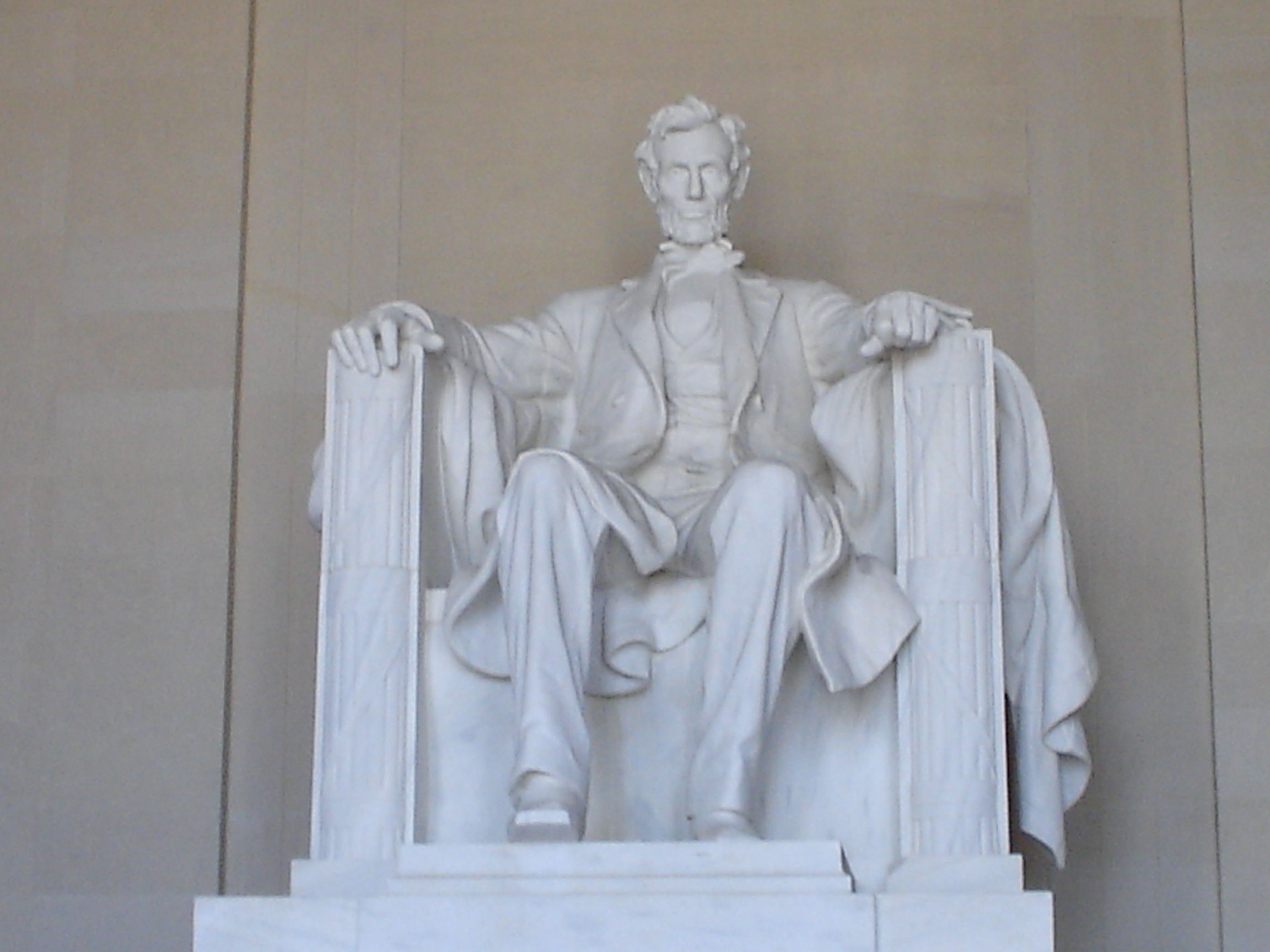
First stop was the Lincoln Memorial

DSC00833

It was built to honor the 16th President of the United States, Abraham Lincoln.

It is located on the western end of the National Mall in Washington, D.C., across from the Washington Monument.

DSC00834

The building is in the form of a Greek Doric temple and contains a large seated sculpture of Abraham Lincoln and inscriptions of two well-known speeches by Lincoln.

The next stop was the Washington Monument

DSC00840

The Washington Monument is an obelisk on the National Mall in Washington, D.C., built to commemorate George Washington. Construction of the monument began in 1848 and not completed until 1888.  It was officially opened October 9, 1888.


We then took a taxi ride to the Jefferson Memorial

DSC00851

This monument is dedicated to Thomas Jefferson (1743–1826), one of the most important of the American Founding Fathers as the main drafter and writer of the Declaration of Independence.

Construction of the building began in 1939 and was completed in 1943.

The bronze statue of Jefferson was added in 1947.

Writing a book in 365 days – 258

Day 258

The use of real people as characters.

The Muse Next Door: Weaving Real Life into Your Fiction (Pros & Cons)

As writers, we’re constantly searching for inspiration. Sometimes it strikes like lightning, a fully formed idea bursting forth. More often, though, our wellspring of creativity is much closer than we think: it’s the rich, messy, beautiful tapestry of real life itself.

The question then becomes: how much of that life – the people we know, the experiences we’ve had – should we actually weave into our stories? It’s a powerful tool, but like any powerful tool, it comes with a user manual that highlights both its immense benefits and its potential pitfalls.

Let’s explore the pros and cons of drawing directly from real people and personal experiences for your characters and plots.

The Allure of Authenticity: The Pros

There’s a reason so many authors look to their own lives and the people around them. The benefits are substantial:

  1. Authenticity and Relatability: Real life has a texture that’s hard to invent. When you base a character on someone you know, or a plot on an event you’ve lived through, you bring an immediate sense of truth and lived experience to the page. Readers are incredibly astute; they can often feel when a character or situation rings true, and this fosters a deeper connection.
  2. Rich Detail and Nuance: Ever tried to describe a facial twitch or an odd habit from scratch? It’s tough. But if you’re picturing your eccentric Aunt Carol, those details come naturally. Real people are complex, contradictory, and full of fascinating quirks that can make your fictional characters leap off the page in a way pure invention sometimes struggles to achieve.
  3. Emotional Resonance: When you write about an experience you’ve had, or channel the emotions you’ve witnessed in someone else, that raw feeling seeps into your words. This can create powerful, moving scenes that deeply affect your readers because the emotion is rooted in a genuine place.
  4. Overcoming Writer’s Block: Stuck on character motivation? Can’t figure out how a scene should unfold? Sometimes, recalling how a real person reacted in a similar situation, or remembering the actual sequence of events, can provide the perfect springboard to get your story moving again.
  5. A Wellspring of Conflict: Life is full of conflict – big and small. The annoying neighbor, the family squabble, the quiet tension in a relationship. These everyday conflicts, when amplified or subtly altered, can form the backbone of incredibly compelling plots.

The Treacherous Territory: The Cons

While the well of reality is deep, it’s also fraught with potential dangers.

  1. Ethical & Privacy Concerns: This is the biggest hurdle. When you base characters on real people, you risk:
    • Hurting Feelings: Friends, family, or even acquaintances might recognize themselves – or parts of themselves – and feel exposed, misrepresented, or betrayed.
    • Legal Repercussions: While less common for fiction, if you depict someone in a negative, identifiable way that could be proven false and damaging, you could face libel or defamation charges. (Though usually, fiction is protected if it’s not directly claiming to be fact).
    • Breaching Trust: Once you start writing about people you know, they might become wary of sharing personal details with you in the future.
  2. Creative Constraints: Sticking too close to reality can actually limit your creativity.
    • Lack of Arc: Real people don’t always have satisfying story arcs. Their lives are often meandering, and if you simply copy, your character might feel directionless or flat in a fictional context.
    • Predictability: If you’re too faithful to a real person, your character might act exactly as that person would, making their choices and the plot predictable for both you and your readers.
  3. Personal Bias and Emotional Baggage: You can’t write about people you know or experiences you’ve had with true objectivity.
    • Vengeful Writing: It’s tempting to use fiction to “settle scores” or air grievances, but this usually results in one-dimensional characters and a preachy, unengaging narrative.
    • Emotional Overwhelm: Writing about highly personal or traumatic experiences can be emotionally draining and difficult, sometimes re-traumatizing the writer.
  4. Lack of Transformation: The goal of fiction isn’t to create a perfect mirror of reality, but to transform it into something meaningful. Simply transplanting a person or an event often misses the opportunity for deeper exploration, metaphor, or thematic development.
  5. “Who’s That?” Dilemma: For those close to you, reading your work can become a game of “spot the real person,” detracting from their immersion in the story you’re trying to tell.

The Art of Transformation: Making it Work

So, how do you harness the power of real life without falling into its traps? The key is transformation, not transcription.

  1. Mix and Match: Don’t base a character on just one person. Take the biting wit of your colleague, the fashion sense of your cousin, and the deep-seated insecurity of your old high school teacher, and blend them into a completely new entity.
  2. Exaggerate and Subvert: Take a real trait and dial it up to eleven, or flip it on its head. Did your uncle always tell tall tales? What if your character is pathologically honest to a fault?
  3. Change Circumstances: Put familiar people in unfamiliar situations. What would your overly cautious friend do if suddenly faced with an impossible life-or-death choice?
  4. Shift Perspectives: If you’re drawing from a personal experience, try writing it from the perspective of another person involved, or even an outside observer. This creates distance and allows for more objective storytelling.
  5. Focus on the Universal: Instead of replicating a specific argument you had, identify the universal themes within it: miscommunication, pride, fear. Then, build a fictional scenario around those themes.
  6. Ask “What If?”: This is your greatest tool. “What if that person I know, with that specific trait, found themselves in this completely different, fictional situation?”

Conclusion

Our lives are the richest source material we possess. The people we meet, the places we go, and the emotions we feel are the raw ingredients of compelling stories. But like a skilled chef, a writer must know how to select, prepare, and transform those ingredients into something entirely new – a dish that nourishes the reader, stands on its own merits, and respects the origins without being bound by them.

So, open your eyes to the muse next door, but always wield your pen with thought, creativity, and a healthy dose of ethical consideration.

Writing a book in 365 days – 256/257

Days 256 and 257

Writing exercise

“The only thing standing between them and disaster was…”

Under the harsh studio lights, and the glare of a specially selected audience who had been firing questions at me for at least half an hour, and longer than I was told to expect, I felt a runnel of sweat run down the side of my face and into the gap between my neck and the collar of the shirt.

I was told that the audience wanted to know exactly how we had pulled off a miracle. The moderator had told the story, and a story it was, because I hardly recognised it as what had actually happened. It was not the story that had been approved. I had been given twenty minutes’ notice, the story had changed, given a script to read, and then I protested that it was nothing like what had happened.

I was told the truth was too unpalatable, and the audience would not like it.

Of course not. No one did. But someone had to cut the head off the snake, and the team I was assigned to had that job. We were one of ten. Everyone had a job to do that was vital to the end result. Ours was not that important; six of the eight members died, and the other living member declined to come on the show. I now knew why.

“Should I repeat the question?” The moderator was exuding calm, but I could see that she was getting impatient.

She had survived the purge, the person who had been the previous regime’s media spokesperson, who, not three months before, was standing up at press conferences trying to explain away the various nefarious events in what had been described as ‘simple speak’, so called because us citizens were basically ‘simple’.

I was very aware of the contribution this person had made, despite the lies and grovelling, telling everyone that she was a victim, much the same as all of us. A victim married to a high-up official in the previous regime, who lived in a mansion, ate the best food, and had holidays at the finest international resorts. We knew exactly who she was.

“Before this circus began, you asked me if I thought being a murderer was the best way to achieve a change of government.”

“I beg your pardon?”

“Emmaline Wharton. That is your real name, isn’t it?”

“No. I don’t know who this Emmaline Wharton is, but it isn’t me.”

There was a screen behind us, one that displayed the name of the show, and her most recent name, “Janice Saunders.” She had reverted to one of her pre-marriage names, considering that reminding people she was married to a tyrant wasn’t good for her new public image.

During the introduction monologue, a series of photographs showed the groups, the planning, and various shots taken during the operation in which I had participated. I had no idea until now when those photographs were shown that we had an embedded media representative along; he was certainly not introduced to us, and we would have declined because of the danger.

Uppermost in my mind was how he survived when six of us didn’t.

When I mentioned her name, the screen changed, and a photograph of the moderator, much younger but easily recognisable, was flashed on the screen. When she heard several gasps from the audience, she looked around.

“That’s…”

“Not you? Since you’ve been telling lies for nearly six years now, it’s no surprise that you can’t stop. When you specifically asked for one of the two remaining survivors of our operation to come on this show, you knew the other chap wouldn’t, which left me. I refused, but you had insisted. Why?”

I gave her my curious expression. I should have been angry, but after I thought about it, I decided it would be an interesting exercise. She had not been home with her husband when the designated team had arrived to take him into custody. There was just a single suitcase at the door, and no one else in the house, leading to the conclusion that she had been tipped off and had made her getaway earlier.

Imagine our surprise when she turned up at headquarters and proclaimed she had been working for us all the time. Yes, someone had, but we had believed that person had been found and killed a few days before the takeover. She had the credentials and materials to prove it was her, and no one, having seen the spy in their midst, only her communications, had taken her at her word.

I didn’t believe it for one moment. I knew she was the one responsible for the death of six very good people and the attempt on the other person’s life. It took me three months to convince them she was a traitor, still working for her previous masters in exile, the ones who had also been tipped off and escaped.

“Your story of bravery under extreme circumstances needs to be rejoiced.”

She said it so glibly. I was astonished by how quickly her tune had changed, from a puppet for an evil regime, to the voice of the people in the new.

“Even though it was me who killed your husband?”

Yes, there was just a flicker of recognition, that look behind those hooded eyes, of pure hatred.

“Because he was evil, yes. He forced me to say all those things, you know my story.”

“Your story is just that, Emmaline. A story. Just to be clear, my government wants to take you into custody. For some crazy reason, they believe you’ll give up the location of the fifteen members of the previous government who escaped. You and I both know that will never happen.”

On both sides of the stage, several members of the police had moved into position to prevent her escape.

“You’re wrong. I am not that person. I am the one who helped you; all of you make the change happen.”

The calm facade was starting to crumble.

“OK,” I said, “If that is the case, tell me your real name, the name of the spy within their midst.”

“No one knew my real name. It was one of the requirements I insisted on before joining your organisation. No way I could be tracked, because if you did, they would find out.”

“I know your real name. It’s not Emmaline Wharton, though that was one of about twenty you used when younger. You had a criminal record that read like a James Patterson thriller. So, once again, what is the real name of our spy?”

She was now in full-blown panic. If she did know the name, then it would be proof that she had been at the poor girl’s interrogation. We had only recently found her remains outside the prison block in an unmarked grave under freshly laid concrete, along with thirty others.

“Emily McGovern. They will find me and kill me. I need protection from them.”

I shook my head. An anonymous tip had been received a week before the takeover, that the creature sitting next to me had been the one to put a bullet in the real Emily’s head when she hadn’t given them anything about the upcoming takeover.

An eye for an eye.

A shot rang out, and I watched her die. It didn’t make me feel any better, but at last my sister, Emily, had got her justice.

©  Charles Heath  2025

Searching for locations: Washington DC, USA

Washington is a city with bright shiny buildings and endless monuments, each separated by a long walk or a taxi ride if you can find one.

We might have picked the wrong day, shortly after New Year’s Day when the crowds were missing along with everything else.  Or, conversely, it was probably the right time to go, when we didn’t have to battle the crowds.

Sunny but very cold, the walking warmed us up.

First stop was the Lincoln Memorial

DSC00833

It was built to honor the 16th President of the United States, Abraham Lincoln.

It is located on the western end of the National Mall in Washington, D.C., across from the Washington Monument.

DSC00834

The building is in the form of a Greek Doric temple and contains a large seated sculpture of Abraham Lincoln and inscriptions of two well-known speeches by Lincoln.

The next stop was the Washington Monument

DSC00840

The Washington Monument is an obelisk on the National Mall in Washington, D.C., built to commemorate George Washington. Construction of the monument began in 1848 and not completed until 1888.  It was officially opened October 9, 1888.


We then took a taxi ride to the Jefferson Memorial

DSC00851

This monument is dedicated to Thomas Jefferson (1743–1826), one of the most important of the American Founding Fathers as the main drafter and writer of the Declaration of Independence.

Construction of the building began in 1939 and was completed in 1943.

The bronze statue of Jefferson was added in 1947.

What I learned about writing: Even my Grandmother’s eerie house was fuel for the imagination

The Highway to Yesterday: When Progress Paves Over Memory

There’s a phrase we hear often: “the march of progress.” It conjures images of innovation, growth, and moving forward. And often, it’s a good thing, bringing advancements that improve our lives. But sometimes, this relentless march brings with it a different kind of change – one that paves over the past, transforming what we held dear into something unrecognizable.

I’ve been thinking a lot about this lately, prompted by a landscape that used to be… something else entirely.

I remember a time, long ago now, when ‘country’ truly meant country. Our holidays at my grandmother’s house, nestled just outside Melbourne, were expeditions into a different world. The drive itself was part of the magic. A comfortable half-hour journey, winding through stretches of open farmland, punctuated by small, charming towns – Beaconsfield, Officer, Berwick – each an oasis amidst the green. Today? That same route is a continuous sprawl of houses, a testament to metropolitan expansion, where those ‘oases’ are now just another indistinguishable part of the urban fabric.

But it was Grandma’s house that truly held the enchantment. A rambling, grand old place on extensive grounds, it was a universe waiting to be explored. Gardens, multiple garages overflowing with forgotten treasures, a huge workshop – it was a child’s paradise. One Christmas, my brother and I, armed with a sense of adventure and a few rusty tools, decided to become archaeological explorers. We unearthed a magnificent fountain, hidden beneath years of overgrowth, clearly once the centerpiece of a grand display. It felt like discovering our very own secret garden, complete with a sprawling, mysterious fernery.

Then there were the internal explorations. A whole wing of bedrooms, each a time capsule. I recall an ancient iron bedstead, so high off the ground we had to climb into it, easily a century old. And in another, the faint, lingering presence of my Uncle – a formidable, towering man whom, in our youthful imaginations, we first mistook for an ogre straight out of a Grimm’s fairy tale. The way his heavy footsteps would ‘clomp’ through the silent house after dark still sends a shiver of delicious apprehension down my spine.

But the march, as it always does, continued. And today, all of it is gone. That sprawling house, those secret gardens, the workshop, the echoes of my uncle’s footsteps – replaced. Not by new homes, not by another suburb, but by the relentless concrete and asphalt of a multi-lane highway, carving an alternate coastal route between Melbourne and Sydney. The very ground where those precious memories were made now carries the weight of countless cars, indifferent to the history beneath their tires.

All that remains are the vivid, precious memories of a time that will never return. They are treasures far more valuable than any physical object, etched permanently in the mind’s eye.

The march of progress is inevitable. It brings necessary change, growth, and sometimes, undeniable improvements. But it also exacts a cost, often unseen by those building the future. It’s a powerful reminder to cherish the present, to imbue the places we love with meaning, and to hold onto the stories that define us, because one day, they might be all that’s left.

And for me? It’s provided a rich soil, a fertile ground, for a whole new pile of stories, waiting to be told.

Searching for locations: New York, USA

After arriving latish from Toronto, and perhaps marginally disappointed that while in Toronto, the ice hockey didn’t go our way, we slept in.

Of course, the arrival was not without its own problems. The room we were allocated was on the 22nd floor and was quite smallish. Not a surprise, but we needed space for three, and with the fold-out bed, it was tight but livable.

Except…

We needed the internet to watch the Maple Leafs ice hockey game. We’d arrive just in time to stream it to the tv.

But…

There was no internet. It was everywhere else in the hotel except our floor.

First, I went to the front desk and they directed me to call tech support.

Second, we called tech support and they told us that the 22nd-floor router had failed and would get someone to look at it.

When?

It turns out it didn’t seem to be a priority. Maybe no one else on the floor had complained

Third, I went downstairs and discussed the lack of progress with the night duty manager, expressing disappointment with the lack of progress.

I also asked if they could not provide the full service that I would like a room rate reduction or a privilege in its place as compensation.

He said he would check it himself.

Fourth, after no further progress, we called the front desk to advise there was still no internet. This time we were asked if we wanted a room on another floor, where the internet is working. We accepted the offer.

The end result, a slightly larger, less cramped room, and the ability to watch the last third of the Maple Leaf’s game. I can’t remember if we won.

We all went to bed reasonably happy.

After all, we didn’t have to get up early to go up or down to breakfast because it was not included in the room rate, a bone of contention considering the cost.

I’ll be booking with them directly next time, at a somewhat cheaper rate, a thing I find after using a travel wholesaler to book it for me.

As always every morning while Rosemary gets ready, I go out for a walk and check out where we are.

It seems we are practically in the heart of theaterland New York. Walk one way or the other you arrive at 7th Avenue or Broadway.

Walk uptown and you reach 42nd Street and Times Square, little more than a 10-minute leisurely stroll. On the way down Broadway, you pass a number of theatres, some recognizable, some not.

Times Square is still a huge collection of giant television screens advertising everything from confectionary to TV shows on the cable networks.

A short walk along 42nd street takes you to the Avenue of the Americas and tucked away, The Rockefeller center and its winter ice rink.

A few more steps take you to 5th Avenue and the shops like Saks of Fifth Avenue, shops you could one day hope to afford to buy something.

In the opposite direction, over Broadway and crossing 8th Avenue is an entrance to Central Park. The approach is not far from what is called the Upper West Side, home to the rich and powerful.

Walk one way in the park, which we did in the afternoon, takes you towards the gift shop and back along a labyrinth of laneways to 5th Avenue. It was a cold, but pleasant, stroll looking for the rich and famous, but, discovering, they were not foolish enough to venture out into the cold.

Before going back to the room, we looked for somewhere to have dinner and ended up in Cassidy’s Irish pub. There was a dining room down the back and we were one of the first to arrive for dinner service.

The first surprise, our waitress was from New Zealand.

The second, the quality of the food.

I had a dish called Steak Lyonnaise which was, in plain words, a form of mince steak in an elongated patty. It was cooked rare as I like my steak and was perfect. It came with a baked potato.

As an entree, we had shrimp, which in our part of the world are prawns, and hot chicken wings, the sauce is hot and served on the side.

The beer wasn’t bad either. Overall given atmosphere, service, and food, it’s a nine out of ten.

It was an excellent way to end the day.

Writing a book in 365 days – 256/257

Days 256 and 257

Writing exercise

“The only thing standing between them and disaster was…”

Under the harsh studio lights, and the glare of a specially selected audience who had been firing questions at me for at least half an hour, and longer than I was told to expect, I felt a runnel of sweat run down the side of my face and into the gap between my neck and the collar of the shirt.

I was told that the audience wanted to know exactly how we had pulled off a miracle. The moderator had told the story, and a story it was, because I hardly recognised it as what had actually happened. It was not the story that had been approved. I had been given twenty minutes’ notice, the story had changed, given a script to read, and then I protested that it was nothing like what had happened.

I was told the truth was too unpalatable, and the audience would not like it.

Of course not. No one did. But someone had to cut the head off the snake, and the team I was assigned to had that job. We were one of ten. Everyone had a job to do that was vital to the end result. Ours was not that important; six of the eight members died, and the other living member declined to come on the show. I now knew why.

“Should I repeat the question?” The moderator was exuding calm, but I could see that she was getting impatient.

She had survived the purge, the person who had been the previous regime’s media spokesperson, who, not three months before, was standing up at press conferences trying to explain away the various nefarious events in what had been described as ‘simple speak’, so called because us citizens were basically ‘simple’.

I was very aware of the contribution this person had made, despite the lies and grovelling, telling everyone that she was a victim, much the same as all of us. A victim married to a high-up official in the previous regime, who lived in a mansion, ate the best food, and had holidays at the finest international resorts. We knew exactly who she was.

“Before this circus began, you asked me if I thought being a murderer was the best way to achieve a change of government.”

“I beg your pardon?”

“Emmaline Wharton. That is your real name, isn’t it?”

“No. I don’t know who this Emmaline Wharton is, but it isn’t me.”

There was a screen behind us, one that displayed the name of the show, and her most recent name, “Janice Saunders.” She had reverted to one of her pre-marriage names, considering that reminding people she was married to a tyrant wasn’t good for her new public image.

During the introduction monologue, a series of photographs showed the groups, the planning, and various shots taken during the operation in which I had participated. I had no idea until now when those photographs were shown that we had an embedded media representative along; he was certainly not introduced to us, and we would have declined because of the danger.

Uppermost in my mind was how he survived when six of us didn’t.

When I mentioned her name, the screen changed, and a photograph of the moderator, much younger but easily recognisable, was flashed on the screen. When she heard several gasps from the audience, she looked around.

“That’s…”

“Not you? Since you’ve been telling lies for nearly six years now, it’s no surprise that you can’t stop. When you specifically asked for one of the two remaining survivors of our operation to come on this show, you knew the other chap wouldn’t, which left me. I refused, but you had insisted. Why?”

I gave her my curious expression. I should have been angry, but after I thought about it, I decided it would be an interesting exercise. She had not been home with her husband when the designated team had arrived to take him into custody. There was just a single suitcase at the door, and no one else in the house, leading to the conclusion that she had been tipped off and had made her getaway earlier.

Imagine our surprise when she turned up at headquarters and proclaimed she had been working for us all the time. Yes, someone had, but we had believed that person had been found and killed a few days before the takeover. She had the credentials and materials to prove it was her, and no one, having seen the spy in their midst, only her communications, had taken her at her word.

I didn’t believe it for one moment. I knew she was the one responsible for the death of six very good people and the attempt on the other person’s life. It took me three months to convince them she was a traitor, still working for her previous masters in exile, the ones who had also been tipped off and escaped.

“Your story of bravery under extreme circumstances needs to be rejoiced.”

She said it so glibly. I was astonished by how quickly her tune had changed, from a puppet for an evil regime, to the voice of the people in the new.

“Even though it was me who killed your husband?”

Yes, there was just a flicker of recognition, that look behind those hooded eyes, of pure hatred.

“Because he was evil, yes. He forced me to say all those things, you know my story.”

“Your story is just that, Emmaline. A story. Just to be clear, my government wants to take you into custody. For some crazy reason, they believe you’ll give up the location of the fifteen members of the previous government who escaped. You and I both know that will never happen.”

On both sides of the stage, several members of the police had moved into position to prevent her escape.

“You’re wrong. I am not that person. I am the one who helped you; all of you make the change happen.”

The calm facade was starting to crumble.

“OK,” I said, “If that is the case, tell me your real name, the name of the spy within their midst.”

“No one knew my real name. It was one of the requirements I insisted on before joining your organisation. No way I could be tracked, because if you did, they would find out.”

“I know your real name. It’s not Emmaline Wharton, though that was one of about twenty you used when younger. You had a criminal record that read like a James Patterson thriller. So, once again, what is the real name of our spy?”

She was now in full-blown panic. If she did know the name, then it would be proof that she had been at the poor girl’s interrogation. We had only recently found her remains outside the prison block in an unmarked grave under freshly laid concrete, along with thirty others.

“Emily McGovern. They will find me and kill me. I need protection from them.”

I shook my head. An anonymous tip had been received a week before the takeover, that the creature sitting next to me had been the one to put a bullet in the real Emily’s head when she hadn’t given them anything about the upcoming takeover.

An eye for an eye.

A shot rang out, and I watched her die. It didn’t make me feel any better, but at last my sister, Emily, had got her justice.

©  Charles Heath  2025

Writing a book in 365 days – My story 38

More about my story

At the heart of the story is the fictional Coup d’état, sometimes used by nefarious elements, but in this case, it is orchestrated by a group of people who wish to rid themselves of a corrupt and brutal regime. It is useful to look at some of the elements and weave these into the story.

This is not a blueprint for executing such a process; it is merely a guide to understanding what it is and why the people in the story felt they had to resort to it.

The Tumultuous Path of a Coup d’état: Understanding Its Mechanics, Motivations, and Risks

The phrase “coup d’état” – a sudden, often violent, seizure of power from a government – conjures images of military might and political upheaval. While usually associated with historical events, understanding its core mechanics, the reasons behind such desperate gambits, and the factors that contribute to their success or failure is crucial for comprehending political instability and the fragility of power.

What Exactly is a Coup d’état?

At its heart, a coup d’état (French for “stroke of state”) is an illegal and unconstitutional overthrow of a government, typically by a small group, most often from within the existing state apparatus. Unlike a revolution, which involves widespread popular participation and aims for fundamental societal change, a coup is generally swift, decisive, and carried out by an elite faction – often military officers, but sometimes political figures or intelligence agencies.

Key characteristics include:

  • Speed and Surprise: Coups rely on catching the existing leadership off guard.
  • Limited Scope: They usually target the top echelons of power, aiming to replace leaders rather than dismantle the entire system immediately.
  • Use of Force or Threat of Force: While not always bloody, the potential for violence is inherent.
  • Internal Actors: The plotters are typically insiders who have access to state resources and institutions.

Why Might a Coup Be Pursued?

The motivations behind attempting a coup d’état can be varied and often deeply rooted in perceived grievances and aspirations. Some common drivers include:

  • Discontent with the Current Leadership: This can stem from perceived corruption, incompetence, authoritarianism, or failure to address national crises (economic, social, or security).
  • Desire for Political Power: Ambitious individuals or factions may see a coup as the fastest and most direct route to seizing control.
  • Ideological Differences: A group may believe the current government’s policies or ideology are detrimental to the nation and seek to impose their own vision.
  • Ethnic or Regional Grievances: In diverse nations, a particular group might feel marginalized or oppressed and attempt to seize power to assert their dominance or secure their interests.
  • External Influence: Foreign powers may sometimes support or instigate coups to install friendly regimes or destabilize adversaries.

What is Needed to Make a Coup d’état Work?

A successful coup d’état is a meticulously planned and executed operation that requires a confluence of specific elements:

  • A Committed and Organized Core Group: This is the engine of the coup. They need a clear plan, leadership, and a unity of purpose.
  • Control of Key State Institutions: This is paramount. Access to and control over the military, police, intelligence agencies, and vital communication networks are essential for neutralizing opposition and projecting authority.
  • Disruption of Communications: Cutting off or controlling communication channels prevents the existing government from rallying support or issuing counter-orders.
  • Neutralization of Key Leaders: The swift arrest, detention, or elimination of the head of state, key ministers, and loyal military commanders is crucial to preventing organized resistance.
  • Public Apathy or Support (or at least acquiescence): While coups are not revolutions, the general populace’s reaction can be a significant factor. If the public is indifferent, divided, or even sympathetic to the coup plotters’ initial message, it can significantly ease their path.
  • Rapid Consolidation of Power: Once the initial seizure is complete, the plotters must quickly establish their authority, issue decrees, and begin to govern to prevent a vacuum or counter-coup.
  • Legitimizing Narrative: Even in an illegal act, plotters often try to frame their actions as necessary for the greater good, using propaganda to justify their takeover.

What Lets a Coup d’état Work or Fail?

The success or failure of a coup d’état is a delicate balance, with numerous factors tipping the scales:

Factors Contributing to Success:

  • Overwhelming Military Support: If the majority of the armed forces, especially elite units, back the coup, it’s very difficult for the existing government to resist.
  • Weakness of the Current Regime: A government that is already unpopular, fractured, and lacking in popular legitimacy is more vulnerable.
  • Effective Intelligence and Secrecy: The element of surprise is a powerful weapon. If the plot is kept secret until the last moment, the government has little time to react.
  • Swift and Decisive Action: Hesitation or botched initial moves can give the government time to regroup and retaliate.
  • Lack of Coordinated Opposition: If loyalist forces are disorganized or divided, they are less likely to mount an effective counter-attack.
  • International Non-Intervention: If major global powers remain neutral or even tacitly support the coup, it can increase its chances of survival.

Factors Leading to Failure:

  • Loyalist Resistance: If a significant portion of the military or security forces remains loyal to the government and can effectively organize resistance, the coup can be crushed.
  • Popular Uprising: While not a direct cause, widespread popular mobilization against the coup can create significant challenges and force the plotters to overextend their resources.
  • Internal Divisions Among Plotters: Disagreements within the coup leadership can lead to indecision, infighting, and ultimately, collapse.
  • Infiltration and Betrayal: If the plot is discovered prematurely or key members betray the plan, it can lead to the arrest of the plotters.
  • Ineffective Planning and Execution: Poorly organized coups, marked by confusion and disarray, are easily thwarted.
  • International Condemnation and Intervention: Strong international opposition, sanctions, or even direct intervention can undermine a coup’s legitimacy and effectiveness.
  • Failure to Consolidate Power: If the plotters fail to quickly establish control over essential services and institutions, they can find themselves in a precarious position.

In conclusion, a coup d’état is a high-stakes gamble that, while seemingly decisive in its initial moments, is fraught with uncertainty. Its success hinges on a complex interplay of internal political dynamics, military loyalty, strategic execution, and the ever-unpredictable reaction of the population and the international community. Understanding these elements provides a critical lens through which to analyze political instability and the enduring struggle for power in various nations.

Searching for locations: New York, USA

After arriving latish from Toronto, and perhaps marginally disappointed that while in Toronto, the ice hockey didn’t go our way, we slept in.

Of course, the arrival was not without its own problems. The room we were allocated was on the 22nd floor and was quite smallish. Not a surprise, but we needed space for three, and with the fold-out bed, it was tight but livable.

Except…

We needed the internet to watch the Maple Leafs ice hockey game. We’d arrive just in time to stream it to the tv.

But…

There was no internet. It was everywhere else in the hotel except our floor.

First, I went to the front desk and they directed me to call tech support.

Second, we called tech support and they told us that the 22nd-floor router had failed and would get someone to look at it.

When?

It turns out it didn’t seem to be a priority. Maybe no one else on the floor had complained

Third, I went downstairs and discussed the lack of progress with the night duty manager, expressing disappointment with the lack of progress.

I also asked if they could not provide the full service that I would like a room rate reduction or a privilege in its place as compensation.

He said he would check it himself.

Fourth, after no further progress, we called the front desk to advise there was still no internet. This time we were asked if we wanted a room on another floor, where the internet is working. We accepted the offer.

The end result, a slightly larger, less cramped room, and the ability to watch the last third of the Maple Leaf’s game. I can’t remember if we won.

We all went to bed reasonably happy.

After all, we didn’t have to get up early to go up or down to breakfast because it was not included in the room rate, a bone of contention considering the cost.

I’ll be booking with them directly next time, at a somewhat cheaper rate, a thing I find after using a travel wholesaler to book it for me.

As always every morning while Rosemary gets ready, I go out for a walk and check out where we are.

It seems we are practically in the heart of theaterland New York. Walk one way or the other you arrive at 7th Avenue or Broadway.

Walk uptown and you reach 42nd Street and Times Square, little more than a 10-minute leisurely stroll. On the way down Broadway, you pass a number of theatres, some recognizable, some not.

Times Square is still a huge collection of giant television screens advertising everything from confectionary to TV shows on the cable networks.

A short walk along 42nd street takes you to the Avenue of the Americas and tucked away, The Rockefeller center and its winter ice rink.

A few more steps take you to 5th Avenue and the shops like Saks of Fifth Avenue, shops you could one day hope to afford to buy something.

In the opposite direction, over Broadway and crossing 8th Avenue is an entrance to Central Park. The approach is not far from what is called the Upper West Side, home to the rich and powerful.

Walk one way in the park, which we did in the afternoon, takes you towards the gift shop and back along a labyrinth of laneways to 5th Avenue. It was a cold, but pleasant, stroll looking for the rich and famous, but, discovering, they were not foolish enough to venture out into the cold.

Before going back to the room, we looked for somewhere to have dinner and ended up in Cassidy’s Irish pub. There was a dining room down the back and we were one of the first to arrive for dinner service.

The first surprise, our waitress was from New Zealand.

The second, the quality of the food.

I had a dish called Steak Lyonnaise which was, in plain words, a form of mince steak in an elongated patty. It was cooked rare as I like my steak and was perfect. It came with a baked potato.

As an entree, we had shrimp, which in our part of the world are prawns, and hot chicken wings, the sauce is hot and served on the side.

The beer wasn’t bad either. Overall given atmosphere, service, and food, it’s a nine out of ten.

It was an excellent way to end the day.

First Dig Two Graves

A sequel to “The Devil You Don’t”

Revenge is a dish best served cold – or preferably so when everything goes right

Of course, it rarely does, as Alistair, Zoe’s handler, discovers to his peril. Enter a wildcard, John, and whatever Alistair’s plan for dealing with Zoe was dies with him.

It leaves Zoe in completely unfamiliar territory.

John’s idyllic romance with a woman who is utterly out of his comfort zone is on borrowed time. She is still trying to reconcile her ambivalence, after being so indifferent for so long.

They agree to take a break, during which she disappears. John, thinking she has left without saying goodbye, refuses to accept the inevitable, calls on an old friend for help in finding her.

After the mayhem and being briefly reunited, she recognises an inevitable truth: there is a price to pay for taking out Alistair; she must leave and find them first, and he would be wise to keep a low profile.

But keeping a low profile just isn’t possible, and enlisting another friend, a private detective and his sister, a deft computer hacker, they track her to the border between Austria and Hungary.

What John doesn’t realise is that another enemy is tracking him to find her too. It could have been a grand tour of Europe. Instead, it becomes a race against time before enemies old and new converge for what will be an inevitable showdown.