What happens after the action-packed start – Part 28

Our hero knows he’s in serious trouble.

The problem is, there are familiar faces and a question of who is a friend and who is foe made all the more difficult because of the enemy, if it was the enemy, simply because it didn’t look or sound or act like the enemy.

Now, it appears, his problems stem from another operation he participated in.


I was escorted to a small room that adjoined the interview room, and I was separated from the main event by a one-way mirror.

It was a cliché, but not surprising.

The interrogation room was much the same as an office, with a table, two chairs, and on the side, a cabinet, closed up, and an interesting addition to what might be called a boring room.

It was currently empty, and I was the only one in this small room, sitting at a counter, looking in.  In front of me was a stack of writing pads, pens and pencils.  I wondered if I was the only party that was about to observe Lallo and the new arrival.

Five minutes passed before the door to the room next door opened and a hooded man was led in.  His hands were cuffed, and his legs had chains, standard prisoner gear.  

From the man’s manner and body language, it appeared to me as though he was surprised he was being treated so badly, and was not forcefully resistant, but wasn’t making it easy for his captors.

He was asked to sit, and when he didn’t he was forced to sit, with some force, and then his hands were locked onto the metal bar at the table.  His legs were locked to a lower bar.  A precaution in case he decided to attack his interrogator.

One thing I knew for sure, this man would not give up information willingly.

Once he was secured, one guard took up station inside the door, the other left.  That’s when Lallo made his appearance.  He came in, put a file on the desk, nodded to the guard who remove3d the hood, and then he sat.

I’d expected to see Lallo in full uniform.  He was not.  He was, if anything, dressed casually.  The man on the other side was in a cream suit, very crumpled and slightly stained as if he had not changed during the entire journey from capture to this room.

No doubt part of his conditioning.

“Mr Jacobi, that is your name isn’t it?”

The man stared at him sullenly.  I got the impression he was usually the one asking the questions, not the other way around.

The man lifted his head and stared straight at Lallo.  It was not a look I’d want to be on the end of, but Lallo, I suspect, had been on the end of a lot worse.  And a closer inspection of his face, and features, I noticed that someone had already started the harsher form of interrogation.

“You know this already.  I am an employee of the United States Government, your Government, and you will regret treating me like this.”

“That may be so, but you have failed to define what part of the Government it is you work for.  Is it the CIA?”

Another withering stare, followed by, “You people are so incompetent, the left-hand does not know what the right hand is doing.  I require a telephone so that I can contact my liaison, and this farce will stop, and you will be reprimanded very severely.”

“I seriously doubt anyone knows you are missing yet.  Maybe after a week or so, but we know you keep to yourself, and very few people know your business, a situation, I assure you, the benefits us more than it benefits you.  So I will assume you are Jacobi.”

There was a knock on the door, and Monroe came in with a small box, handed it to Lallo, and then left again.

Lallo looked in the box, then pulled out a plastic evidence bag with a mobile phone in it, and put it on the table.  “This is the phone you use to call General Bahti, your contact inside the current government.  It seems it is not registered with a telephone network in your country, but another, shall we say neutral, country.

He reached into the box and pulled out another plastic evidence bag also with mobile phone in it.  “This phone,” he held it up, “is the one you use to talk to the, shall we call them the local resistance.  It’s so much nicer than calling them rebels.”

The man’s eyes followed each bag from the box to the table.  He was almost expressionless.

Then Lallo pulled out another bag, with another phone, “This is the phone which you make and receive calls from your American contact.  It is what we call a burner phone, and was given to you, we think, on a recent visit to this country, by that contact.  I am assuming this is the person you wish to call and who will stop this farce.”

If Lallo was expecting the man to break down there and then, he was sadly mistaken.  There was little if any movement in his expression, perhaps just enough for Lallo to assume he’d got the men behind the phones correct.  That he was basically unmoved at Lallo’s revelations told me this man had a resolve Lallo was going to find hard to shake.

Lallo took the third phone out of the evidence bag and pushed it across the table towards the man.  “You can call your contact now, and you can tell him I would like to speak to him.”


© Charles Heath 2019
Just when you think you’ve found the right wordprocessor

It was as if Microsoft Word was sent down from that place in the universe where a group of torturers sit around a table to find new ways of making our lives just that little bit more difficult.

I mean, most of the time it works really well and behaves itself.

But…

Then there are the times, usually when you are stressed about a deadline, or you are nearly at the end of what you believe to be the most brilliant writing you have ever put on paper.

Then…

Disaster strikes.

It could be the power goes off, even for just a few seconds, but it’s enough to kill the computer.  It could be that you have reached the end and closed Word down, thinking that it had autosaved, all the while ignoring that little pop up that says, ‘do you want to save your work’?

It’s been a long day, night, or session.  You’re tired and your mind is elsewhere, as it always is at the end.

You always assume that autosave is on.  It was the last time, it has been since the day you installed it however long ago that was.

So…

When the power comes back on, you start the computer, go into Word, and it brings back all the windows you had open when the power failed, and the one with the brilliant piece you just wrote, it’s just a blank sheet.

Or up to where it last autosaved, which is nowhere near the end.

Or it didn’t save at all.

You forget the software updated recently and that always brings changes.  Usually unwanted changes.

By which time you have that sinking feeling that all is lost, deadline missed, brilliant work lost, it’s the end of the world.

You promise yourself you’re going to get Scrivener, or something else, where this doesn’t happen.

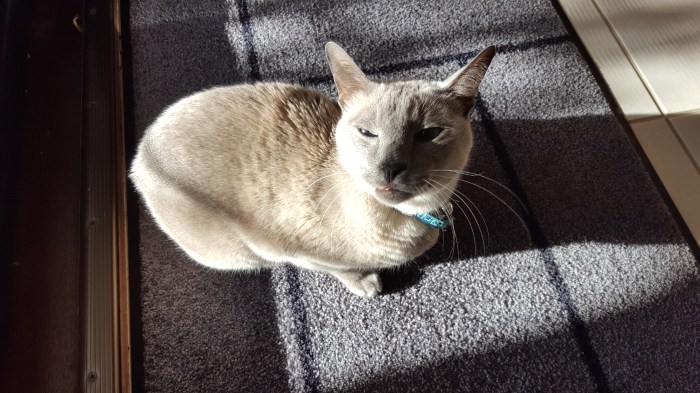
Or if you’re like me, you put the cat on the keyboard and tell him to sort the mess out.

A matter of life and … what’s worse than death – Episode 16

For a story that was conceived during those long boring hours flying in a steel cocoon, striving to keep away the thoughts that the plane and everyone in it could just simply disappear as planes have in the past, it has come a long way.

Whilst I have always had a fascination in what happened during the second world war, not the battles or fighting, but in the more obscure events that took place, I decided to pen my own little sidebar to what was a long and bitter war.

And, so, it continues…


The message I sent to Forster, in London, was short and to the point,

‘Castle in hands of Germans led by Thompson, others, and a further 12 soldiers parachuted in.  Defectors, our original soldiers? and villagers held captive in dungeons.  Resistance limited to five plus self.  Available resources cannot retake castle and will have difficulty in intercepting incoming package.  Suggestions?’

Marina read it and added her name before it was sent.  Now, all we could do was wait for a reply, though I was not sure what Forster would make of my request for suggestions.  I was supposed to make decisions in the field, but that was when we had a full complement of resistance fighters.  What I’d discovered was the worst-case scenario, and everyone in London was hoping that would not be the case.

I wondered what happened to the two men who had been following me, hoping I would lead them to what were now the remaining resistance members.

“Did you see the two men from the castle that had been following me?  I told the two who had captured me, a man and a woman, though the man emphatically denied he worked for the resistance, about them before the woman shot me with a tranquilizer gun.”

Martina looked puzzled.  It was obvious the two hadn’t mentioned anything about my situation to her.

“That did not come up in the debriefing.  The man is, in fact, a farmer, Leonardo, who doesn’t advertise his involvement, and only works with us if we need him.  Chiara tends to shoot first and ask questions later.  You were lucky her gun wasn’t loaded with bullets.  What is this story of yours, then?”

“One of the guards released me from my cell, and then set me free with the intention of following, not too close, to see if I led them to you.  I was hiding from them when they passed by, shortly before you people turned up.  They would have had to see them if they came from the village.”

The implications of what I just said only dawned on me after I said it.

“That might mean…” I said.

She put her hand up, not wanting me to continue.

“It doesn’t necessarily mean anything, but I will have to talk to them.  If anything, they would have avoided them or ignored them.  We don’t use that track from the village to the castle for the simple reason we might run into any of them.  Whether they were originally our allies, or not, we never trusted them.”

“Did they bring me here?”

“No.  We have a separate meeting point for intercepts like yourself and the defectors.  Then, if we think it’s safe to do so, we bring them here.  Only three of us know about this place, and two of us are here now.”

“The third?”

“You’ll meet him later when he brings some food and wine.  His name is Carlo.  He used to be a gardener at the castle, and his mother was the cook.  The Germans killed her the first time they were here, and now he hates Germans.”

Good for us, very bad for anyone at the castle, particularly if they are German.

“Pity we didn’t know about that earlier so we could organise a trap for them  We could do with two fewer adversaries, and quite possibly we might get some information out of them.  They might be still in the village.”

She stood, and put on her coat, and put a gun in the coat pocket where she could easily reach it.  “I’m going to have a word with Chiara, and warn Carlo that you’re here.  He’s a little trigger happy too.  Nothing much is going to happen until we hear back from the Colonel.  I suggest you get some rest, we have a few long days ahead.”

Carlo was a surprise.  Six foot ten, over 250 pounds, and carrying a sten gun over his shoulder, not a man to become an enemy of.  He came into the room without warning, and it was clear he was expecting to see me, and equally that I might be the enemy.

It was clear that he knew how to use the weapon, and had it ready in case he had to use it.

“You this Anderson character?”

He was more English than Italian, but could certainly pass for an Italian.

“I am.”

“From up yon castle?”

“Escaped?”

“How?”

“The lower level, where there are a few storerooms turned into cells.  The passage ran alongside the outer wall to a room that had a door to the outside.  Not one you’d easily pick.”

“Neat the communications room?”

“Probably above there.”

“You know the castle?”

“A little.  I used to be an archaeologist before this war came along, and had been to the castle before the war.  I’m familiar with the above-ground parts, but not so much below.  You were, I was told, a gardener?”

“Once.”

“Then you’d know your way around?”

“Possibly.  Why?”

“Because at some point we’re going to have to retake the place, and it would be good to have someone who knows their way around.  At least, better than I do.”

“Taking prisoners?”

“No.    We will be assuming anyone there whose not a prisoner is hostile.”

“Good.  Count me in.”

He dropped a basket he’d brought with him on the table in the corner.  “Dinner.”  Marina will be back shortly.

“You’re not staying?”

“Guard duty.  So you can eat in peace.”

With that, he was gone.  A large man, but a very quiet one.  I didn’t hear him arrive, and it was very nearly the same when he left.  A useful man in a fight indeed.


© Charles Heath 2019

Past conversations with my cat – 10

20160922_162007

This is Chester.  He’s got his ‘I want to go outside now’ face.

We’ve had this discussion many times in the past.

The answer is ‘No!’

Why?

Several of his predecessors thought it would be a great idea to go outside, chase some birds, frolic in the grass, chase some cars.

Yes, cars.

And finished up road kill.

After the second such fatality, we decided the next cat, Chester, was going to be an indoors cat.

He goes outside, when we hold him.

He knows the rules.

20160922_162027

Any, yes, he’s still waiting, just in case I change my mind.

Being Inspired – the book

Over the past year or so I have been selecting photographs I’ve taken on many travels, and put a story to them.

When I reached a milestone of 50, I decided to make them into a book, and, in doing so, I have gone through each and revised them, making some longer, and almost a short story.

50 photographs, 50 stories.  I’ve called it, “Inspiration, Maybe”

It will be available soon.

InspirationMaybe1v1

In a word: Park

We mostly understand that a park is an area set aside for recreation, and can have trees, flowers, a lake, and vast lawns.  These parks are also sometimes called ‘gardens’.

A great example of a park is Central Park in New York.

Nearly every city has a park or some sort, some have more than one.

But the word park has a number of other uses.  For instance,

You can park a car, or bike, or yourself; in other words, it’s a place where you stop for a while.  For cars, it is a carpark.

You could say ‘it’s just a walk in the park’, which means that the job is going to be easy.  I never understood that analogy because quite a lot of parks have walks that are difficult, and not so much ‘a walk in the park’.

It is also used to describe a place where animals are kept, other than calling it a zoo, it can go by the name of a wildlife park.  Zoos though are more for cities.  Wildlife parks can be quite huge and many are found in Africa.

A park can also be used to describe a sporting arena or field.

You can park a bag in a locker.

You can park an idea in the back of your mind and come back to it later, or if you are like me, it disappears into the ether.

It can be an area of land around a manor house, but there are very few of those left now.  The most notable of these are in England, and were designed by a man called Capability Brown.


“What Sets Us Apart”, a mystery with a twist

David is a man troubled by a past he is trying to forget.

Susan is rebelling against a life of privilege and an exasperated mother who holds a secret that will determine her daughter’s destiny.

They are two people brought together by chance. Or was it?

When Susan discovers her mother’s secret, she goes in search of the truth that has been hidden from her since the day she was born.

When David realizes her absence is more than the usual cooling off after another heated argument, he finds himself being slowly drawn back into his former world of deceit and lies.

Then, back with his former employers, David quickly discovers nothing is what it seems as he embarks on a dangerous mission to find Susan before he loses her forever.

http://amzn.to/2Eryfth

whatsetscover

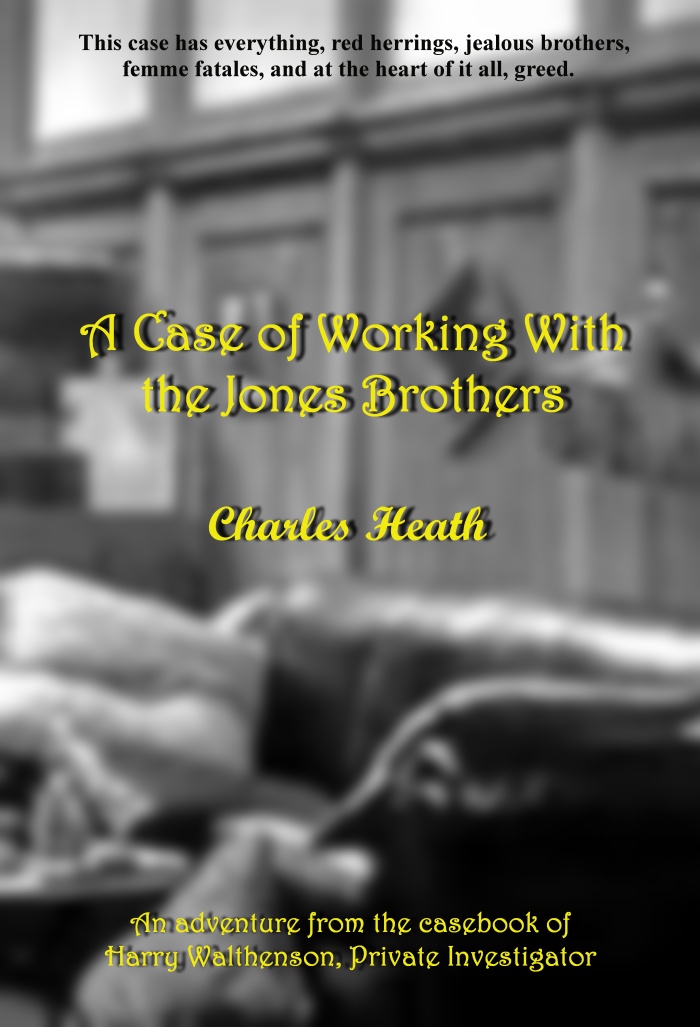
The first case of PI Walthenson – “A Case of Working With the Jones Brothers”

This case has everything, red herrings, jealous brothers, femme fatales, and at the heart of it all, greed.

Coming soon!

PIWalthJones1

Was it just another surveillance job – Episode 14

I’m back home and this story has been sitting on a back burner for a few months, waiting for some more to be written.

The trouble is, there are also other stories to write, and I’m not very good at prioritising.

But, here we are, a few minutes opened up and it didn’t take long to get back into the groove.

Was I working for a ghost?


Training sometimes was one of those things that went in one ear and came out the other.  That accounted for the boring bits, but our instructors called it tradecraft. 

I guess I should have taken more notice at the time.

Home was a bedsit in Bloomsbury, Not far from the Russell Square underground station, on the ground floor overlooking the small park.  Sometimes, in summer I would sit there and watch the world go by, thinking there had to be more to life than waiting for an opportunity.

To do what, at the time, I didn’t know.  But, when this opportunity presented itself, oddly as a rather strange ad in the help wanted pages of the newspaper, I guess the people who put it there were looking for the curious sort, with a sense of adventure.

My first impression of the job was that of a courier who would be required to travel a lot.  It said, in part, “must be prepared to travel to different locations worldwide, understand the requirement of confidentiality, and must be able to respond to emergencies that might occur in the carrying out of your duties.”

To me, it spelled courier, though I rather hoped it wasn’t the briefcase handcuffed to a wrist sort and no guns.

After the first interview, I think I had guessed correctly, though, in subsequent training, the word tradecraft put a slightly different slant to the job.  That, and the surveillance module, sold to us as “you need to know if you are being followed, recognise hostiles, and be able to deal with them.”

But, it was the notion that we should get out of any habits we had, those that made us predictable to an enemy, yes, they actually used the word, enemy.  Like for instance, if we caught the same train, or bus, into the city.  If we went to the same cafe for coffee, restaurant for lunch or dinner, met people in a pub on the same day, same time, each week.

Before all this, I found comfort in a regular schedule.  I hated being late, except when the transport system let me down.  I had a regular stop off on the way to the office for coffee, and usually went to the same cafe for lunch at the same time.

Inevitably I would leave home at the same time and quite often return home at the same time.  OK, I was boring and predictable.  Now it was a little different, with some variation in departure and arrival times, as well as the places I stopped for coffee, and lunch or dinner.

This day I was very late, after dark in fact, getting back to the flat.

I went in after checking for mail, not that anyone ever sent letters these days, unlocked my door, went in and switched on the light.

The whole of the living space had been trashed.  Well, more to the point, someone had checked everywhere it was possible to hide anything, which I didn’t, and hadn’t bothered cleaning up after them.

Had they been interrupted?

If that had happened the landlady would be down in a flash the moment I walked in the door, not to commiserate on my bad luck, but to issue me with an eviction notice.  Very little was tolerated in her establishment.

That she hadn’t told me that whoever did this had done it very quietly, and without anyone knowing.  We had been taught the same procedures which is why I recognised the signs.  This had to be done by my previous employers.  The only question I had was why?

I had nothing they could possibly want.

I took a few minutes to clean up the mess so that instead of a thorough trashing, it just looked like the aftermath of a wild party, then went out to get a coffee and think about why this had happened.

Not far up the road was a cafe I went to for dinner if I wasn’t doing something else, and, lo and behold, the minute I walked in the door, there was Severin, sitting at the back half disguised by the evening newspaper.

Obviously, he’d been waiting for me.

Yes, now I understood the implications of being someone who did the same thing over and over.

There was no mistaking the invitation, and, after briefly considering ignoring him, realised that was not going to work.  After seeing what happened to O’Connor at their hand, I didn’t want to join him.

I sat down.  “I have to say this is an unexpected surprise.”

He put the paper down.  “For both of us, I can assure you.  I’ll get straight to the point.  I want the USB.”

“What USB?”

“That your target was carrying, it wasn’t on him, so by elimination, not being anywhere at the crime scene, you must have it.  He either gave it to you, or you took it from him.  Where is it?”

I took a minute to process what he was saying.  I had not seen a USB, not had he given me one, not was there one nearby.  I would have seen it.  No need to pretend to be surprised.  I was.

“I haven’t got it.”

“He didn’t give you anything?”

“How could he, you were there just about the same time as I was.  And after you shot him, he had nothing on him.  Whatever you’re looking for, it must still be in the alley, or he hid it somewhere else.  And since you shot him, I doubt whether you’ll ever find out.”

He shook his head and folded his paper.  “If you’ve got it we’ll find out. and it will not bode well for you.  And if you accidentally find it, here’s my card.  Call me.”

He dropped a card on the table as he got up.

I picked it up just as he stopped and turned to give me a last look before walking out the door.  There was no mistaking the intent, if they thought I had it, I’d be dead now.”

And it meant that the evidence O’Conner was referring to was on a USB.  All I had to do was find it.  Or Nobbin did.


© Charles Heath 2019

Writers need to have many alter egos, don’t they?

I have often wondered just how much or how little of the author’s personality and experiences end up in a fictional character.

Have they climbed mountains,

Have they escaped from what is almost the inescapable,

Have they been shot, tortured, or worse,

Have they been dumped, or divorced,

Have they travelled to dangerous places, or got locked up in a foreign jail?

We research, read, and I guess experience some or all of the above on the way to getting the book written, but it’s perhaps an interesting fundamental question.

Who am I today?  Or, more to the point, who do I want to be today?

Or it can be a question, out of left field, in an interview; “Who are you?”

My initial reaction was to say, “I’m a writer.”  But that wasn’t the answer the interviewer is looking for.

Perhaps if she had asked, “Who are you when you’re writing your latest story?” it would make more sense.

Am I myself today?

Am I some fictional character an amalgam of a lot of other people?

Have I got someone definite in mind when I start writing the story?

The short answer might be, “I usually want to be someone other than what I am now.  It’s fiction.  I can be anyone or anything I want, provided, of course, I know the limitations of the character.”

“So,” she says, “what if you want to be a fireman?”

“I don’t want to be a fireman.”

“But if the story goes in the direction where you need a fireman…”

“What is this thing you have with firemen?”  I’m shaking my head.  How did we get off track?

“Just saying.”

“Then I’d have to research the role, but I’m not considering adding a fireman anytime soon.”

She sighs.  “Your loss.”

Moving on.

And there is that other very interesting question; “Who would you like to be if you could be someone else?”

A writer in that period between the wars, perhaps like an F Scott Fitzgerald or Ernest Hemingway, in Paris, or if it is a fictional character, Jay Gatsby.

He’s just the sort of person who is an enigma wrapped up in a mystery.