“Trouble in Store” – Short stories my way: Revisiting the first section

First drafts are always a little messy.  The words spill out onto the page, and it’s rare that any or all of them are perfect.  Sometimes you get lucky, but most of the time you don’t.

That’s why there’s revision, or by the more dreaded name, editing.

Editing conjures up a lot of different images in my mind, from completely re-writing, to cutting the mss down in size.  Or where you discover the main character’s name has changed from Bill to Fred after a bad night.

Usually, though, as stories progress, they go through a number of rewrites, and sometimes because of what follows.  It depends on how long a period the story is written.  Some of mine take days, others quite a lot longer.

This is the rewrite of the first section of the short story I’m undertaking, adding some new details:


Jack was staring down the barrel of a gun.

He had gone down to the corner shop to get a pack of cigarettes.

He had to hustle because he knew the shopkeeper, Alphonse, liked to close at 11:00 pm sharp.  His momentum propelled him through the door, causing the customer warning bell to ring loudly as the door bashed into it, and before the sound had died away, he knew he was in trouble.

It took a second, perhaps three, to sum up the situation. 

Young girl, about 16 or 17, scared, looking sideways at a man on the ground, then Alphonse, and then Jack.  He recognized the gun, a Luger, German, relic of WW2, perhaps her father’s souvenir, now pointing at him then Alphonse, then back to him.

Jack to another second or two to consider if he could disarm her.  No, the distance was too great.  He put his hands out where she could see them.  No sudden movements, try to remain calm, his heart rate up to the point of cardiac arrest.

Pointing with the gun, she said, “Come in, close the door, and move towards the counter.”

Everything but her hand steady as a rock.  The only telltale sign of stress, the beads of perspiration on her brow.  It was 40 degrees Fahrenheit in the shop.

Jack shivered, and then did as he was told.  She was in the unpredictable category.

“What’s wrong with your friend?”  Jack tried the friendly approach, as he took several slow steps sideways towards the counter.

The shopkeeper, Alphonse, seemed calmer than usual, or the exact opposite spoke instead, “I suspect he’s an addict, looking for a score.  At the end of his tether, my guess, and came to the wrong place.”

Wrong time, wrong place, in more ways than one Jack thought, now realizing he had walked into a very dangerous situation.  She didn’t look like a user.  The boy on the ground, he did, and he looked like he was going through the beginnings of withdrawal.

 “Simmo said you sell shit.  You wanna live, ante up.”  She was glaring at Alphonse. 

The language, Jack thought, was not her own, she had been to a better class of school, a good girl going through a bad boy phase. Caught in a situation she was not equipped to deal with.


© Charles Heath 2016-2020

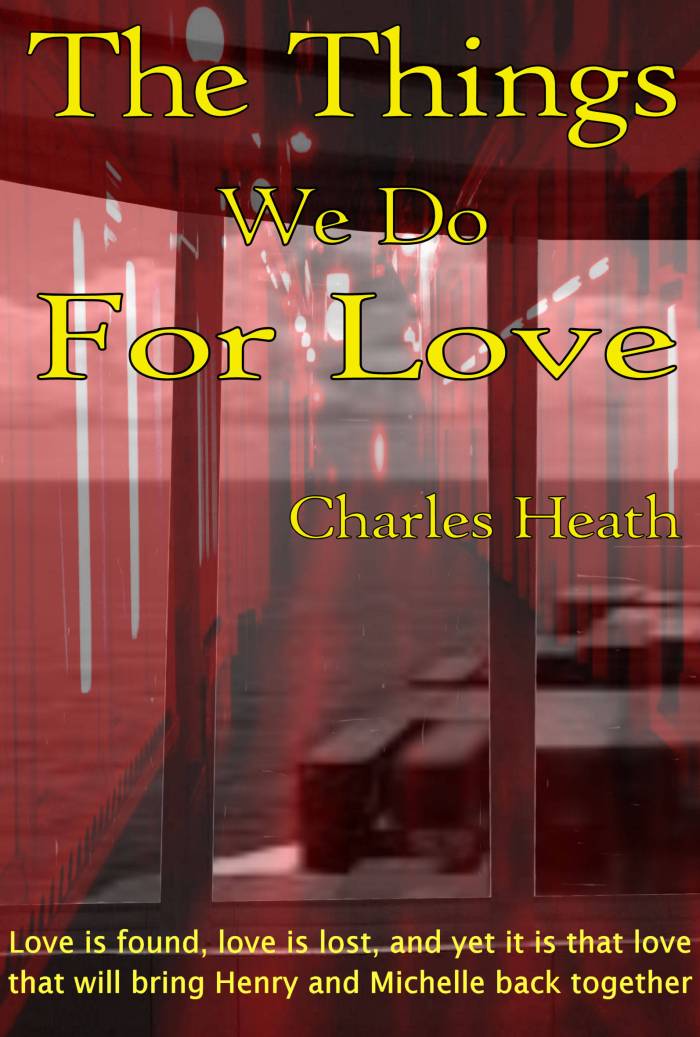
An excerpt from “The Things We Do For Love”; In love, Henry was all at sea!

In the distance he could hear the dinner bell ringing and roused himself.  Feeling the dampness of the pillow, and fearing the ravages of pent up emotion, he considered not going down but thought it best not to upset Mrs. Mac, especially after he said he would be dining.

In the event, he wished he had reneged, especially when he discovered he was not the only guest staying at the hotel.

Whilst he’d been reminiscing, another guest, a young lady, had arrived.  He’d heard her and Mrs. Mac coming up the stairs, and then shown to a room on the same floor, perhaps at the other end of the passage.

Henry caught his first glimpse of her when she appeared at the door to the dining room, waiting for Mrs. Mac to show her to a table.

She was about mid-twenties, slim, long brown hair, and the grace and elegance of a woman associated with countless fashion magazines.  She was, he thought, stunningly beautiful with not a hair out of place, and make-up flawlessly applied.  Her clothes were black, simple, elegant, and expensive, the sort an heiress or wife of a millionaire might condescend to wear to a lesser occasion than dinner.

Then there was her expression; cold, forbidding, almost frightening in its intensity.  And her eyes, piercingly blue and yet laced with pain.  Dracula’s daughter was his immediate description of her.

All in all, he considered, the only thing they had in common was, like him, she seemed totally out of place.

Mrs. Mac came out of the kitchen, wiping her hands on her apron.  She was, she informed him earlier, chef, waitress, hotelier, barmaid, and cleaner all rolled into one.  Coming up to the new arrival she said, “Ah, Miss Andrews, I’m glad you decided to have dinner.  Would you like to sit with Mr. Henshaw, or would you like to have a table of your own?”

Henry could feel her icy stare as she sized up his appeal as a dining companion, making the hair on the back on his neck stand up.  He purposely didn’t look back.  In his estimation, his appeal rating was minus six.  Out of a thousand!

“If Mr. Henshaw doesn’t mind….”  She looked at him, leaving the query in mid-air.

He didn’t mind and said so.  Perhaps he’d underestimated his rating.

“Good.”  Mrs. Mac promptly ushered her over.  Henry stood, made sure she was seated properly and sat.

“Thank you.  You are most kind.”  The way she said it suggested snobbish overtones.

“I try to be when I can.”  It was supposed to nullify her sarcastic tone but made him sound a little silly, and when she gave him another of her icy glares, he regretted it.

Mrs. Mac quickly intervened, asking, “Would you care for the soup?”

They did, and, after writing the order on her pad, she gave them each a look, imperceptibly shook her head, and returned to the kitchen.

Before Michelle spoke to him again, she had another quick look at him, trying to fathom who and what he might be.  There was something about him.

His eyes, they mirrored the same sadness she felt, and, yes, there was something else, that it looked like he had been crying?  There was a tinge of redness.

Perhaps, she thought, he was here for the same reason she was.

No.  That wasn’t possible.

Then she said, without thinking, “Do you have any particular reason for coming here?”  Seconds later she realized she’s spoken it out loud, had hadn’t meant to actually ask, it just came out.

It took him by surprise, obviously not the first question he was expecting her to ask of him.

“No, other than it is as far from civilization, and home, as I could get.”

At least we agree on that, she thought.

It was obvious he was running away from something as well.

Given the isolation of the village and lack of geographic hospitality, it was, from her point of view, ideal.  All she had to do was avoid him, and that wouldn’t be difficult.

After getting through this evening first.

“Yes,” she agreed.  “It is that.”

A few seconds passed, and she thought she could feel his eyes on her and wasn’t going to look up.

Until he asked, “What’s your reason?”

Slight abrupt in manner, perhaps as a result of her question, and the manner in which she asked it.

She looked up.  “Rest.  And have some time to myself.”

She hoped he would notice the emphasis she had placed on the word ‘herself’ and take due note.  No doubt, she thought,  she had completely different ideas of what constituted a holiday than he, not that she had actually said she was here for a holiday.

Mrs. Mac arrived at a fortuitous moment to save them from further conversation.


Over the entree, she wondered if she had made a mistake coming to the hotel.  Of course, there had been no possible way she could know than anyone else might have booked the same hotel, but realized it was foolish to think she might end up in it by herself.

Was that what she was expecting?

Not a mistake then, but an unfortunate set of circumstances, which could be overcome by being sensible.

Yet, there he was, and it made her curious, not that he was a man, by himself, in the middle of nowhere, hiding like she was, but for very different reasons.

On discreet observance whilst they ate, she gained the impression his air of light-heartedness was forced and he had no sense of humor.

This feeling was engendered by his looks, unruly dark hair, and permanent frown.  And then there was his abysmal taste in clothes on a tall, lanky frame.  They were quality but totally unsuited to the wearer.

Rebellion was written all over him.

The only other thought crossing her mind, and rather incongruously, was he could do with a decent feed.  In that respect, she knew now from the mountain of food in front of her, he had come to the right place.

“Mr. Henshaw?”

He looked up.  “Henshaw is too formal.  Henry sounds much better,” he said, with a slight hint of gruffness.

“Then my name is Michelle.”

Mrs. Mac came in to take their order for the only main course, gather up the entree dishes, then return to the kitchen.

“Staying long?” she asked.

“About three weeks.  Yourself?”

“About the same.”

The conversation dried up.

Neither looked at the other, rather at the walls, out the window, towards the kitchen, anywhere.  It was, she thought, almost unbearably awkward.


Mrs. Mac returned with a large tray with dishes on it, setting it down on the table next to theirs.

“Not as good as the usual cook,” she said, serving up the dinner expertly, “but it comes a good second, even if I do say so myself.  Care for some wine?”

Henry looked at Michelle.  “What do you think?”

“I’m used to my dining companions making the decision.”

You would, he thought.  He couldn’t help but notice the cutting edge of her tone.  Then, to Mrs. Mac, he named a particular White Burgundy he liked and she bustled off.

“I hope you like it,” he said, acknowledging her previous comment with a smile that had nothing to do with humor.

“Yes, so do I.”

Both made a start on the main course, a concoction of chicken and vegetables that were delicious, Henry thought, when compared to the bland food he received at home and sometimes aboard my ship.

It was five minutes before Mrs. Mac returned with the bottle and two glasses.  After opening it and pouring the drinks, she left them alone again.

Henry resumed the conversation.  “How did you arrive?  I came by train.”

“By car.”

“Did you drive yourself?”

And he thought, a few seconds later, that was a silly question, otherwise she would not be alone, and certainly not sitting at this table. With him.

“After a fashion.”

He could see that she was formulating a retort in her mind, then changed it, instead, smiling for the first time, and it served to lighten the atmosphere.

And in doing so, it showed him she had another more pleasant side despite the fact she was trying not to look happy.

“My father reckons I’m just another of ‘those’ women drivers,” she added.

“Whatever for?”

“The first and only time he came with me I had an accident.  I ran up the back of another car.  Of course, it didn’t matter to him the other driver was driving like a startled rabbit.”

“It doesn’t help,” he agreed.

“Do you drive?”

“Mostly people up the wall.”  His attempt at humor failed.  “Actually,” he added quickly, “I’ve got a very old Morris that manages to get me where I’m going.”

The apple pie and cream for dessert came and went and the rapport between them improved as the wine disappeared and the coffee came.  Both had found, after getting to know each other better, their first impressions were not necessarily correct.

“Enjoy the food?” Mrs. Mac asked, suddenly reappearing.

“Beautifully cooked and delicious to eat,” Michelle said, and Henry endorsed her remarks.

“Ah, it does my heart good to hear such genuine compliments,” she said, smiling.  She collected the last of the dishes and disappeared yet again.

“What do you do for a living,” Michelle asked in an off-hand manner.

He had a feeling she was not particularly interested and it was just making conversation.

“I’m a purser.”

“A what?”

“A purser.  I work on a ship doing the paperwork, that sort of thing.”

“I see.”

“And you?”

“I was a model.”

“Was?”

“Until I had an accident, a rather bad one.”

“Oh, I’m sorry.”

So that explained the odd feeling he had about her.

As the evening had worn on, he began to think there might be something wrong, seriously wrong with her because she didn’t look too well.  Even the carefully applied makeup, from close up, didn’t hide the very pale, and tired look, or the sunken, dark ringed eyes.

“I try not to think about it, but it doesn’t necessarily work.  I’ve come here for peace and quiet, away from doctors and parents.”

“Then you will not have to worry about me annoying you.  I’m one of those fall-asleep-reading-a-book types.”

Perhaps it would be like ships passing in the night and then smiled to himself about the analogy.

Dinner now over, they separated.

Henry went back to the lounge to read a few pages of his book before going to bed, and Michelle went up to her room to retire for the night.

But try as he might, he was unable to read, his mind dwelling on the unusual, yet the compellingly mysterious person he would be sharing the hotel with.

Overlaying that original blurred image of her standing in the doorway was another of her haunting expressions that had, he finally conceded, taken his breath away, and a look that had sent more than one tingle down his spine.

She may not have thought much of him, but she had certainly made an impression on him.


© Charles Heath 2015-2020
lovecoverfinal1

‘Sunday in New York’ – A beta reader’s view

I’m not a fan of romance novels but …

There was something about this one that resonated with me.

This is a novel about a world generally ruled by perception, and how people perceive what they see, what they are told, and what they want to believe.

I’ve been guilty of it myself as I’m sure we all gave one time or another.

For the the main characters Harry and Alison there is others issues driving their relationship.

For Alison, it is a loss of self worth through losing her job and from losing her mother and, in a sense, her sister.

For Harry it is the fact he has a beautiful and desirable wife, and his belief she is the object of other men’s desires, and one in particular, his immediate superior.

Between observation, the less than honest motives of his friends, a lot of jumping to conclusions based on very little fact, and you have the basis of one very interesting story.

When it all come to a head, Alison finds herself in a desperate situation, she realises only the truth will save their marriage.

But is it all the truth?

What would we do in similar circumstances?

Rarely does a book have me so enthralled that I could not put it down until I knew the result. They might be considered two people who should have known better, but as is often the case, they had to get past what they both thought was the truth.

And the moral of this story, if it could be said there is one, nothing is ever what it seems.

…

Available on Amazon here: amzn.to/2H7ALs8

…

A story inspired by Castello di Briolio – Episode 47

For a story that was conceived during those long boring hours flying in a steel cocoon, striving to keep away the thoughts that the plane and everyone in it could just simply disappear as planes have in the past, it has come a long way.

Whilst I have always had a fascination with what happened during the second world war, not the battles or fighting, but in the more obscure events that took place, I decided to pen my own little sidebar to what was a long and bitter war.

And, so, it continues…

——

Johannesen went to find Wallace.  He had seen Jackerby leave the castle alone, which couldn’t be a good thing.  He had also noticed most of the Resistance members had gone too and had considered going back to the dungeons,

If he had been picking team members, Jackerby would not have been one of them.  He might act British and speak perfect British English, but he was a Nazi at heart, perhaps more Nazi than the Nazis’

It was not unsurprising.  The file Wallace had on him along with one for all of them, wasn’t exactly describing a life of roses.  His grandparents were German, and the British had killed them during the first world war.  There was no doubting he had based his whole life on one day avenging them, and this war had given him the opportunity.

To be a wolf in sheep’s clothing.

Johannesen guessed that was an apt description of him.  He was a devoted follower of Mosley and the English Fascists, openly supporting Hitler until it came to choosing a side.  That was easy, become part of a fifth column, Worthing from within.

And when the Reich became the all-powerful country when they won the war, there would be a position for him, a war hero.

Losing the war hadn’t figured in the story, but despite the successes, there were more failures, and tactical errors, like trying to invade Russia, and he could see that it was going to be the reason Germany lost.  Superior weapons were not going to staunch the losses, and it was only a matter of time.

The time he would use to figure out how not to get shot as a spy and somehow get back on the other side.

But, not today.

Wallace was trying a new wine, have the same thirst for wine, but not as swill as those Resistance members like Leonardo, a deep-colored red.

“You should try a glass, Johannes.  It’s an exceptional vintage.”  He picked up the bottle and looked at the label, then cleaning the dust off the label, said, “1907 no less.  Bastards never sold any of this to us to try.  We should liberate the cellar, and share it with our compatriots after the war.  At a price, of course.”

Like all the soldiers he’d met along the way, always looking to make a profit.  Goering and Hitler steal all the paintings, they were talking about the wine.  What did the people finish up with?

“Not really a red man, sir.”

“That’s because you’ve never had one like this.”

“Why not.”

Wallace poured him a glass.

Johannesen sipped it.  Wallace was right, it was better than any other he had tasted, not that he could really remember the last time he had the opportunity.

“It is quite good, sir.”

“It is.  You know Jackerby says you are a double agent, which is pretty rich coming from him.  Strictly speaking, if wouldn’t be a double agent, but a triple agent, if that was the case.  You’re not, are you?”

The smile on Wallace’s face didn’t extend to the eyes.  He was not amused, or annoyed.

Just fishing.

“That’s the problem with our situation.  We’ve been lying to everyone for so long, that it’s hard t tell what is the truth and what isn’t.  At the moment, the British don’t know where my allegiances lie, they think I’m the sleeper in this group, and Atherton, well, he’s not sure if that’s the case or not.  No doubt Jackerby told you about my trip to the dungeons to get the woman to talk.  Jackerby offers the big stick and that isn’t going to work on these people.  She’ll die before she gives up any secrets.  They all will.  And by all accounts that breute Leonardo was executing her compatriots in front of her to make her talk, and all they are is dead, and we’re no closer to anything.  What do you think I am?”

“Clever.  But that isn’t going to be my problem in,” he looked at his watch, “two hours.  We have a new commander, and a few more people arriving to weed out this elusive Atherton and the few resistance that’s left.  People higher than me want Meyer returned to Germany.  Whatever you are, Johannesen, you might have to plead your case to someone else far less understanding.”  He stood.  “Enjoy the wine.  It might be your last.”

Reading between the lines, Johannesen got the impression Wallace no longer cared what happened.  For all of them, it had been a long war, and it was dragging on with no success in sight.

And it was becoming abundantly clear he picked the wrong side.  Now, all that was going to happen was that he would end up in the crossfire.  Perhaps he had known all along that the German notion that no one could ever be trusted, that everyone should be treated as a traitor first, was going to be the death of all of them.

He had no doubt the new arrivals would be Waffen SS, battle-hardened, and sent on this mission as a sort of holiday.  They would find Atherton and the remnants very quickly and snuff out a problem Jackerby couldn’t.

Or, if Jackerby knew the Waffen SS was coming, had he left, knowing his loyalties would be called into question.  Pure German soldiers versus double agents, Johannesen knew who’d he believe first.

For the first time, Johannesen knew he was not going to see the end of this war, or that Germany had any hope of winning.

He needed a plan of escape, and that woman in the dungeons was the only one who could help him.

——-

© Charles Heath 2020-2022

Searching for locations: Castello di Monterinaldi, Tuscany, Italy

As part of a day tour by Very Tuscany Tours, we came to this quiet corner of Tuscany to have a look at an Italian winery, especially the Sangiovese grapes, and the Chianti produced here.

And what better way to sample the wine than to have a long leisurely lunch with matched wines.  A very, very long lunch.

But first, a wander through the gardens to hone the appetite:

2013-06-18 11.56.18
2013-06-18 11.56.32
2013-06-18 11.56.51

And a photo I recognize from many taken of the same building:

2013-06-18 11.57.26

Then a tour of the wine cellar:

2013-06-18 11.50.08
2013-06-18 11.52.08

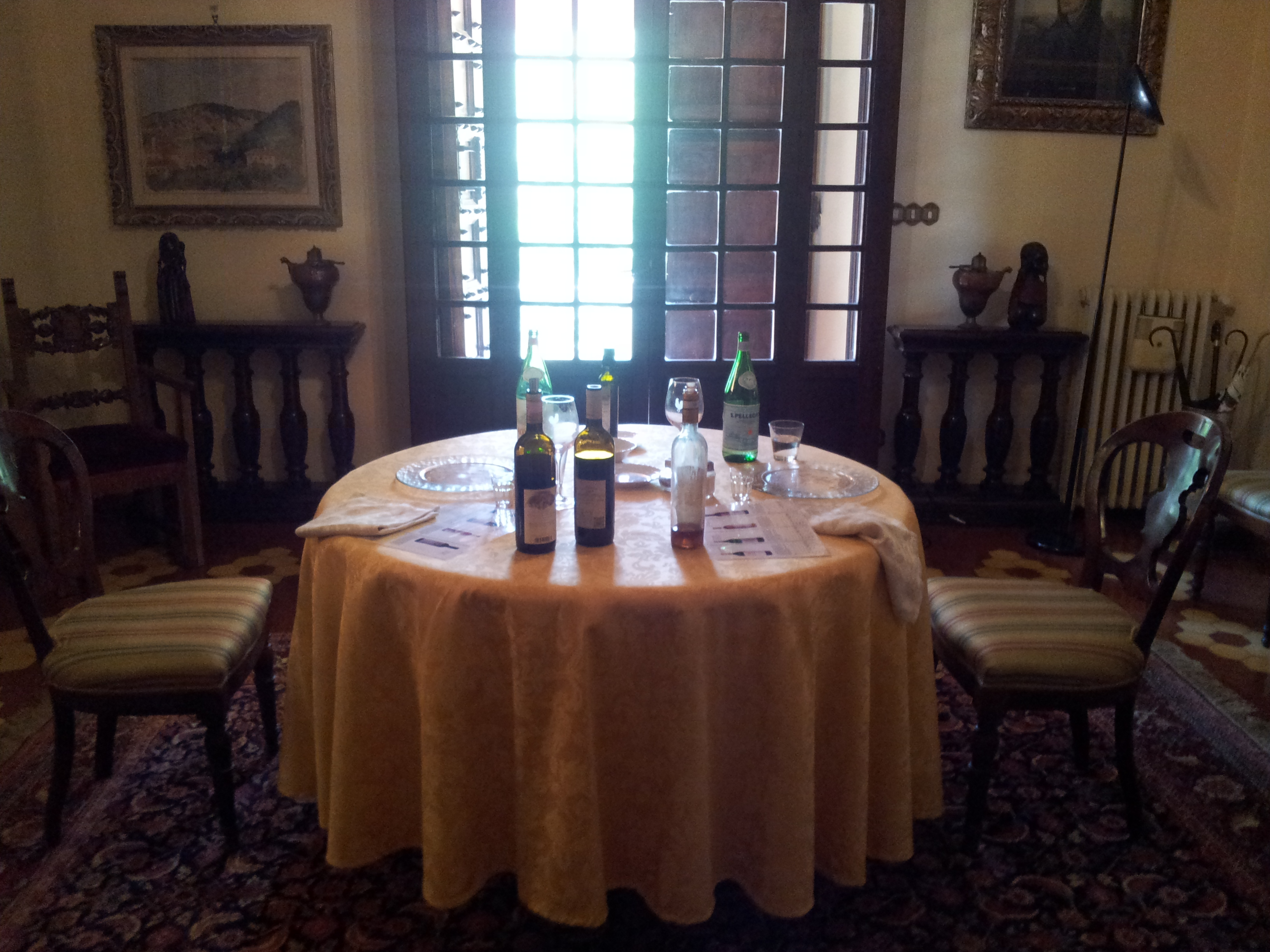
Then on to the most incredible and exquisite lunch and wine we have had.  It was the highlight of our stay in Tuscany.  Of course, we had our own private dining room:

2013-06-18 13.22.40

And time to study the paintings and prints on the walls while we finished with coffee and a dessert wine.

2013-06-18 13.23.15

And of course, more wine, just so we could remember the occasion.

A photograph from the inspirational bin – 5

I found this:

The innocuous explanation for this photo is that I took it at my grand daughter’s little athletics competition, now most sensibly being held on Friday evenings.

For those who don’t know how the weather can be in Brisbane, Queensland, it is generally hot, particularly from November when temperatures are between 35 and 40 degrees centigrade.

But not only is it hot but humidity, the real problem, is around 100 percent.

So at the moment we have reasonably cool evenings, ideal conditions for the young athletes.

But, where a photo could be innocuous there can a more interesting, if not sinister description.

Lurking in the back of my mind, and perhaps a lot of others, that there might be an unidentified flying object somewhere in the sky.

Of course, there might not be any, but it doesn’t mean that we stop looking, or assume, sometimes that a moving light in the sky isn’t a UFO.

And its been said that humans are quite arrogant in thinking that we are the only people in the universe.

Personally, I don’t think we are, and I keep an eye on the sky every time I’m out at night, perhaps the most likely time we might see one.

The only issue I might have is that if I am that lucky to see one, or that it lands nearby, what I would do when confronted by an alien.

And, yes, there’s definitely a story in that.

I always wanted to see the planets – Episode 5

We managed to get out of the space dock without a scratch…

…

We’re moving slowly beyond the space dock, heading through clear space.

We had seen people inside the wings of the dock, lining the passage windows watching the big ship depart. In olden days, on earth, when a ship left port, people on the dock would remain connected to the passengers by streamers, until the ship started to move away.

It was impossible to do that in space.

But, it was a notable day, the first of its type, heading out into the known, and, later, the unknown if the shakedown worked out.

The captain had decided despite the success of the trials, that he wanted to have one more trial, this time putting the crew through their paces.

I looked sideways, one eye still on the screen, now showing three possible midrange destinations, and on the Captain, also looking at the screen.

Uranus was about 2.8 billion kilometres.

Neptune, where our orders were to go, was 4.5 billion kilometres.

I had done the rough calculations on time to destination, in round numbers, basing the speed of light, what we regarded as SSPD 1,000. That was in km’s about 1.8 billion kilometres an hour, give or take.

Our first ships were under SSPD 1, and the series before this ship had a maximum of SSPD 1.25, which in understandable numbers was about 1,349,063 km per hour. Our ship was capable of SSPD 5.

So, given that our previous fastest ship could move at a maximum of SSPD 1.25, the time it would take to the first destination at SSPD 2 (no one ever travelled at maximum) was a little over 86 days, and to Neptune about 139 days.

In this ship if we were to hit SSPD 4.5, the same time frames would be 24 days and just over 38.5 days.

“Check the co-ordinates for Neptune and once we’re clear of the dock and given clearance, let’s start her out slowly on SSPD 2.

The helmsman checked the co-ordinates and set the speed. “Co-ordinates and speed set, awaiting clearance.”

“Very good. Best have a seat Number One, just in case.”

“Yes, sir.” I took a last glance at the screen, now only showing Neptune on the long-range scanner, and sat.

“Adventurer, you’re cleared for departure.” The voice of the dock master came over the speakers.

No need for further orders, the helmsman pushed the button below his screen, there was a slight lurch, and we were under way.

Next stop Neptune.

…

© Charles Heath 2021

“Echoes From The Past”, a past buried, but not deep enough


What happens when your past finally catches up with you?

Christmas is just around the corner, a time to be with family. For Will Mason, an orphan since he was fourteen, it is a time for reflection on what his life could have been, and what it could be.

Until a chance encounter brings back to life the reasons for his twenty years of self-imposed exile from a life only normal people could have. From that moment Will’s life slowly starts to unravel and it’s obvious to him it’s time to move on.

This time, however, there is more at stake.

Will has broken his number one rule, don’t get involved.

With his nemesis, Eddie Jamieson, suddenly within reach, and a blossoming relationship with an office colleague, Maria, about to change everything, Will has to make a choice. Quietly leave, or finally, make a stand.

But as Will soon discovers, when other people are involved there is going to be terrible consequences no matter what choice he makes.

https://amzn.to/2CYKxu4

newechocover5rs

“Trouble in Store” – Short stories my way: Adding more to the second part

The story fleshed out for the second section, discussed in Point of View


Annalisa looked at the two men facing her, a shopkeeper who, despite his protestations, was a dealer, and the other man, a customer scared shitless.

The poor bastard was not the only one scared. 

It was meant to be simple, arrive at the shop just before closing, force the shopkeeper to hand over the shit, and leave.

What had happened?

The shopkeeper laughed at them and  told them to get out.  Simmo started ranting and waving the gun around, then all of a sudden collapsed. 

There was a race for the gun which spilled out of Simmo’s hand, and she won.  No more arguments, the shopkeeper was getting the stuff when the customer burst into the shop.

This was worse than any bad hair day, or getting out of the wrong side of bed day, this was, she was convinced, the last day of her life.

Her mother said she would never amount to anything, and here she was with a drug addict coming apart because she had been cut off from her money and could no longer pay for his supply, which had led them to this inevitable ending.

She heard a strange sound come from beside her and looked down.  Simmo was getting worse, like he had a fever, and was moaning.


If Alphonse had thought his day was going to get any better after the delivery disaster earlier that day, he was wrong.

If he thought he could maintain his real business and his under the counter business with no one finding out, in that he was wrong too.  He’s know, inevitably, some useless punk would come and do exactly what Simmo was doing.

It might have been salvageable before the customer came in the door, but now it was not.  The customer had heard the words, and given him ‘the look’.  A drug addict telling the cops he was a dealer, it was his word against an  unreliable addict, but this local chap, he had that air of respectability the cops would listen too.

Damn.

But he had to try and salvage the situation, there was a lot of money involved, and other people depending on him.  He looked at the boy, on the floor, then  the girl.

“Listen to me, young lady, I have no idea what you are talking about.  Please, put the gun down before someone gets hurt.  Your friend needs medical help and I can call an ambulance.”

The girl switched her attention back to him.  “Shut up, let me think.  Shit.”

The storekeeper glanced over at the customer.  He’s been in once or twice, probably lived in the neighborhood, but looked the sort who’d  prefer to be anywhere but in his shop.  More so now.  If only he hadn’t burst in when he did.  He would have the gun, called the police, and brazened his way out of trouble.  Now, that remedy was off the table.

Now he had to deal with the fallout, especially if the girl started talking.


© Charles Heath 2016-2020

“Sunday in New York”, a romantic adventure that’s not a walk in the park!

“Sunday in New York” is ultimately a story about trust, and what happens when a marriage is stretched to its limits.

When Harry Steele attends a lunch with his manager, Barclay, to discuss a promotion that any junior executive would accept in a heartbeat, it is the fact his wife, Alison, who previously professed her reservations about Barclay, also agreed to attend, that casts a small element of doubt in his mind.

From that moment, his life, in the company, in deciding what to do, his marriage, his very life, spirals out of control.

There is no one big factor that can prove Harry’s worst fears, that his marriage is over, just a number of small, interconnecting events, when piled on top of each other, points to a cataclysmic end to everything he had believed in.

Trust is lost firstly in his best friend and mentor, Andy, who only hints of impending disaster, Sasha, a woman whom he saved, and who appears to have motives of her own, and then in his wife, Alison, as he discovered piece by piece damning evidence she is about to leave him for another man.

Can we trust what we see with our eyes or trust what we hear?

Haven’t we all jumped to conclusions at least once in our lives?

Can Alison, a woman whose self-belief and confidence is about to be put to the ultimate test, find a way of proving their relationship is as strong as it has ever been?

As they say in the classics, read on!

Purchase:

http://tinyurl.com/Amazon-SundayInNewYork