“The Document” – a thirty-day revision – Day 15

This book has been written for some time and the manuscript was sitting in a box with half a dozen others gathering dust and not quite as complete, so this month it is going to get the makeover, a first draft for the editor.

And so it begins…

Half way there

Yes, 15 days down and 15 days to go.

At this point my hand is starting to cramp from the toils of writing, yes, I’m one of those writers who often puts words to paper longhand.

Two weeks is a long time, but I think this sort of exercise is what’s needed if you want to write a novel every year, though this one is going to come out with more than 50,000 words.

I think there are about three more chapters to go to end part two, then I can get onto the big finale in part three.

It has turned out to be a bigger project than I originally thought, and I didn’t think I could stretch it to 50,000 words. Now, I’m hoping to keep it to about 60,000.

Still, no need to get ahead of myself. Murphy’s law may yet rear its ugly head.

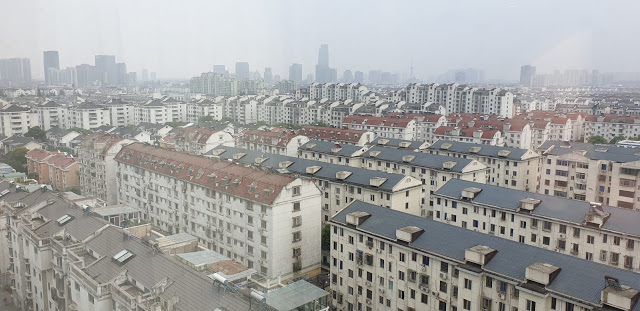
Searching for locations: Hutongs, Beijing, China

What are Hutongs?

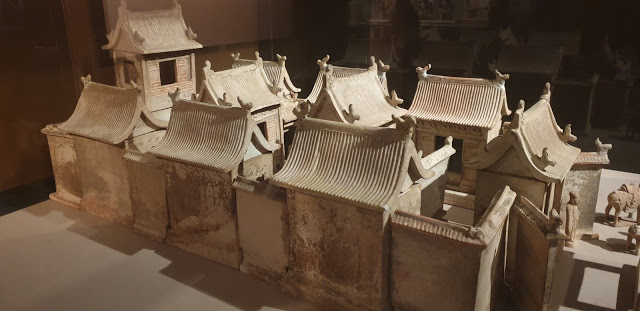
In Beijing, Hutongs are formed by lines of traditional courtyard residences, called siheyuan.  Neighbourhoods were formed by joining many hutongs together. These siheyuan are the traditional residences, usually occupied by a single or extended family, signifying wealth, and prosperity. 

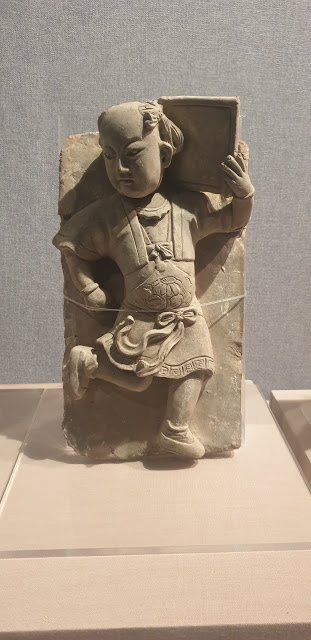
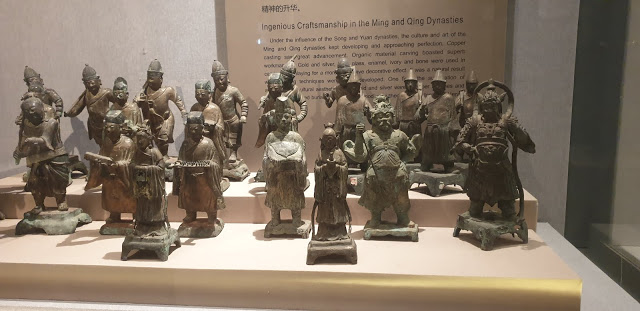
Over 500 of these still exist. Many of these hutongs have been demolished, but recently they have become protected places as a means of preserving some Chinese cultural history.  They were first established in the Yuan Dynasty (1279-1368)Many of these Hutongs had their main buildings and gates built facing south, and lanes connecting them to other hutongs also ran north to south.

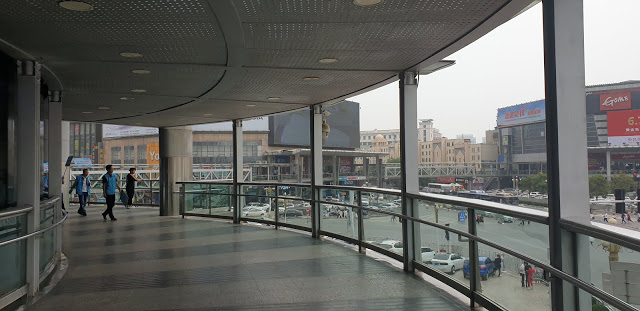
Many hutongs, some several hundred years old, in the vicinity of the Bell Tower and Drum Tower and Shichahai Lake are preserved and abound with tourists, many of which tour the quarter in pedicabs.

The optional tour also includes a visit to Shichahai, a historic scenic area consisting of three lakes (Qianhai, meaning Front Sea; Houhai, meaning Back Sea and Xihai, meaning West Sea), surrounding places of historic interest and scenic beauty and remnants of old-style local residences, Hutong and Courtyard.  

First, we had a short walk through the more modern part of the Hutong area and given some free time for shopping, but we prefer just to meander by the canal.  

There is a lake, and if we had the time, there were boats you could take.

With some time to spare, we take a quick walk down one of the alleyways where on the ground level are small shops, and above, living quarters.

Then we go to the bell and drum towers before walking through some more alleys was to where the rickshaws were waiting.
The Bell tower

And the Drum tower. Both still working today.

The rickshaw ride took us through some more back streets where it was clear renovations were being made so that the area could apply for world heritage listing.  Seeing inside some of the houses shows that they may look dumpy outside but that’s not the case inside.

The rickshaw ride ends outside the house where dinner will be served, and is a not so typical hose but does have all the elements of how the Chinese live, the boy’s room, the girl’s room, the parent’s room, the living area, and the North-south feng shui.

Shortly after we arrive, the cricket man, apparently someone quite famous in Beijing arrives and tells us all about crickets and then grasshoppers, then about cricket racing.  He is animated and clearly enjoys entertaining us westerners.

I’m sorry but the cricket stuff just didn’t interest me.  Or the grasshoppers.

As for dinner, it was finally a treat to eat what the typical Chinese family eats, and everything was delicious, and the endless beer was a nice touch.

And the last surprise, the food was cooked by a man.

“The Document” – a thirty-day revision – Day 14

This book has been written for some time and the manuscript was sitting in a box with half a dozen others gathering dust and not quite as complete, so this month it is going to get the makeover, a first draft for the editor.

And so it begins…

I’m ahead of target so time for more serious revision

Whenever I’m writing, especially when I’m working on a plan, things never quite go the way I’d originally envisaged.

You get so far, and an idea pops into your head, and then, thinking it will work well, often it requires a little extra in previously written work.

Of course, when also writing under a time constraint, that’s not always possible, so your desk, computer keyboard or monitor becomes a repository for endless yellow Post-it notes reminding you of the plot holes to be fixed.

I have time, and today I will be fixing them.

I also suspect this might make my word count for the project exceed the required 50,000.

We shall see!

The cinema of my dreams – I always wanted to write a war story – Episode 51

For a story that was conceived during those long boring hours flying in a steel cocoon, striving to keep away the thoughts that the plane and everyone in it could just simply disappear as planes have in the past, it has come a long way.

Whilst I have always had a fascination in what happened during the second worlds war, not the battles or fighting, but in the more obscure events that took place, I decided to pen my own little sidebar to what was a long and bitter war.

And, so, it continues…

Wallace had not returned upstairs by the normal stairs, but the one by the radio room, far removed from the basement area where the prisoners were kept.

If he had, he might have realised that something was very, very wrong.

There were no more prisoners, except for Martina.  The other defectors that had been captured had, on Johannsen’s orders, taken away by the three remaining resistance fighters, to be executed in the woods not far from the castle.

They had gone an hour before Schmidt’s men had departed, but in a different path, and would avoid running into the others.  Johannesen had given Fernando’s second-in-command a silenced luger and told him to only use that gun for the execution.  And to make as little noise as possible.

When they had left an eerie silence fell over the cellar.

Johannsen passed by Martina’s cell and looked in.  She was lying on the ground, still badly injured from the beating Fernando had given her.  She let him look at her for a minute, then said, “When is this going to be over.  I’m not going to tell you anything.”

“I don’t doubt that for a moment?”

“Where did you send the rest of the prisoners?”

“Back to Germany.  Someone else can deal with them.”

She didn’t believe him for one moment, but let it pass. “Why betray your country?”

“England?  England wasn’t my country, it’s just where I ended up before the war.  Then it seemed a good idea to become a double agent.”

“Germany isn’t winning the war, you know, despite what the fools in Berlin keep telling you.”

“I could have you shot for saying that.”

“Then get on with it.  I’m over waiting for whatever you’re going to do to me.”

“All in good time.  The new people have brought some very good interrogators and they promise they’ll have you singing like a canary in no time.”

She shrugged, and it hurt.

“Fools.”

“Actually, I’m inclined to agree with you.  So much so, I believe, if I can get you out of here, you might put in a good word for me.  Atherton is out there, and he’s coming, isn’t he?”

“Atherton is just a boy pretending to be a soldier.”

He smiled.  “That’s what he wants everyone to think, but Thompson, the man you take orders from, he thinks Atherton is one of his best agents.  And he will have a plan, and being the archaeological major that he was, he’ll know how to breach this place.”

And the fact she didn’t argue or deny what he was suggesting told him she was waiting.

“You expect too much, there are no more resistance fighters except for a few young lads, and that dog of his.”  She laughed.  “Rescued by three children and a dog.  I wonder if Germany will record that piece of history if it comes to pass.  Go away, whoever you are, and leave me to die in peace.”

“When the time comes, I’ll be back.”

She ignored him, and rolled over to face the wall.

The two guards had been watching him, though they had not been following the conversation.  The officer in charge, Wallace, had told them to keep an eye on everyone who came and went, and though Johannesen was on that watch list because he treated them better than Jackerby or the commandant did, they simply ignored him.

At their peril.

Johannesen wandered up to them, bade them a good evening, and then shot them.  He dragged the bodies to a place where no one would look and then headed along to the radio room.  The guards and radio men would not be changed for another eight hours, so no one was going to miss them.  Unless someone came down top check, but Johannesen had done several nights observation, and no one had.

The two radio men disposed of, it was time to block off the entrances to the basement so no one could come down.  These exits or entrances were large iron gates bolted and locked with ancient locks.  There was only one key to each, and Johannsen had the key ring with them on it.  He’d taken that of one of the dead guards.

Once the entrances were locked, he went back to Martina’s cell and unlocked the door.

At the sound of the key, she turned back.

“Time to go,” he said.  “We have a very small wind to escape before they find out upstairs.”

“I cannot save you, if Atherton thinks you are a traitor.”

“Atherton is probably the only level headed person in this area.  He’ll appreciate what I;ve done and give me a second chance.”

She shook her head.

“Once a traitor, always a traitor.”

“Be that as it may, just hold that thought.  I’m giving you a gun, and I’m hoping you won’t use it on me.”

He went into the cell and assisted her to stand.  She was weak, but the thought of escaping death put a little life into her limbs.

“It will not be a quick getaway,” she said.

“Just as long as it is a getaway,” he said, as they headed for the exit.

At the same time, there was a very large explosion from above, the percussive sound almost deafening them.

“What the hell was that?” Johannesen muttered.

“Most likely the diversion we needed, that you forgot to arrange.”

© Charles Heath 2021-2023

“The Document” – a thirty-day revision – Day 14

This book has been written for some time and the manuscript was sitting in a box with half a dozen others gathering dust and not quite as complete, so this month it is going to get the makeover, a first draft for the editor.

And so it begins…

I’m ahead of target so time for more serious revision

Whenever I’m writing, especially when I’m working on a plan, things never quite go the way I’d originally envisaged.

You get so far, and an idea pops into your head, and then, thinking it will work well, often it requires a little extra in previously written work.

Of course, when also writing under a time constraint, that’s not always possible, so your desk, computer keyboard or monitor becomes a repository for endless yellow Post-it notes reminding you of the plot holes to be fixed.

I have time, and today I will be fixing them.

I also suspect this might make my word count for the project exceed the required 50,000.

We shall see!

“The Document” – a thirty-day revision – Day 13

This book has been written for some time and the manuscript was sitting in a box with half a dozen others gathering dust and not quite as complete, so this month it is going to get the makeover, a first draft for the editor.

And so it begins…

It’s that unlucky number


Hopefully, it won’t hex my writing.

It’s day 13 and I’m over halfway in that devil on the shoulder word count, 27, 275 words to be exact.

That is if Microsoft Word is not playing ‘Friday the Thirteenth’ tricks on me. Good thing it’s not Friday.

Part 2 is proceeding as expected with no surprises, and the characters are behaving themselves, well, in the writing sense.

I’ve found that I now need to write another chapter, before the end of the first part, to help explain, later on, some of the plot nuances. This sort of issue often arises for me when getting to a particular point in a later section, I realize the reader needs a pointer or a nuance earlier on so that the revelation makes sense, not come out of left field.

Sorry, I have to get back to work, I don’t know where the time goes.

The cinema of my dreams – I always wanted to write a war story – Episode 50

For a story that was conceived during those long boring hours flying in a steel cocoon, striving to keep away the thoughts that the plane and everyone in it could just simply disappear as planes have in the past, it has come a long way.

Whilst I have always had a fascination in what happened during the second worlds war, not the battles or fighting, but in the more obscure events that took place, I decided to pen my own little sidebar to what was a long and bitter war.

And, so, it continues…

Meyer was cramping, having been confined to a relatively small space in the box car for far too long.

He had considered when the train was moving to come out to stretch, but then the train had stopped several times for lengthy periods when soldiers had searched all of the cars.

There had been one time when he had almost been discovered, a soldier getting a little too close for comfort, and had been called away a few moments before he lifted the palings that covered his hiding spot.

Then, at another siding, the soldiers brought dogs, and one had stopped near the carriage sniffing and making moaning sounds before then doing what dogs do against the wheels.

Expletives and laughter from the soldiers, relief from Meyer.  He knew if he was caught, the chances were he’d be shot.

Now, it was night, very, very late and the train had arrived at Florence and some time was spent unconnected the wagons then reconnecting to a shunting engine and pushed into a siding one across from the last.  From the crack in the back wall, he could see the station platforms in the distance, where only a few lights were on.

Next to where the boxcar sat was a wall, or houses or warehouses he didn’t know, but safety was just 30 meters away.  All he had to do was get from the car, and through or over that wall.

He waited, and during the next hour there was a train arrival, where the lights were turned on just before, during and after it left, back the way it had come, most of the time taken putting the locomotive on the other end.

It was going to be a problem if he chose to leave, and a train was arriving.  All the advance notice was the whistle.

The other problem was the sporadic nature of the patrols, two German soldiers wandering up and down the tracks, aiming their torches at walls and windows, loading telling each other war stories and crude stories.  They were bored, which would work in his favour.

There was, he noted, about an hour between each one.

Figuring it was about three in the morning after the second patrol had returned to the station, he came out of his hiding spot.  He tried not to make any noise which meant the harder he tried, the more it happened.

Once out he peered through the rear guard’s window at the station and it was deserted.  There were no lights up the lines where the wagons were parked.  There was no sign of the shunting locomotive.

He went over to the door and pulled.  It was stiff and at first, didn’t move.  A harder tug loosened the track and the door slid sideways about 30 centimetres.  He put his head out to check.  The moon was out, and it was quite light, light enough to see up and down the track.

There were about 20 wagons on the siding.  The wall ran for most of that distance, with what appeared to be an opening opposite the tenth or eleventh wagon.  That’s where he would go.

He pushed the door open wide enough to squeeze through and climbed down onto the tracks.  Once down he closed the door.  If anyone had checked, it had been closed before.  Keeping close to the side of the wagons, he headed away from the station.

About three wagons along, a light came on almost opposite him, illuminating the tracks,, the wagons and him.  Several seconds later, a whistle sounded, not a train whistle but one like a guard.

Then a man yelled out “Halt!”

He looked back towards the station and could see two soldiers running awkwardly in the middle of the tracks towards him.

Meyer started running for the gap in the wall, keeping as close to the wagons as he could.

When he looked back over his shoulder, he could see they were gaining on him.  He was still stiff and sore from being in that confined space for so long.

Another light came on further along.

He stopped and looked around.  The soldiers were raising their guns.

He saw only one way out, and climbed under the train and over to the other side of the train, away from his objective.

He ran harder and was nearly at the end of the wagons when a man stepped out in front of him.  He was not in a uniform.

Meyer almost stumbled and fell trying to stop crashing into him.

“Meyer?”

The man knew his name.  He looked Italian, was he from the resistance?

“Who are you?” he asked in halting Italian.

“What is the doe word?”

Code word?  What code word?  The piece of paper in his pocket, given to him by the British officer.  He pulled it out.  “Winston.”

“Right, you’re the one I’m here for.  Follow me if you want to live.”

The man then ran across the tracks to the opposite side, and Meyer followed as quickly as he could.  Then just short of the stone wall, there was an opening in the ground where another man was half in, half out.

“This way,” he said, then disappeared down the hole.

The soldiers had been held up crossing under the train to follow and were now so far behind they were out of sight. 

Meyer saw the hold, with a ladder and climbed down.  The man who had led him there followed and put the lid back over the top.

“Where are we?” Meyer asked.

“The sewers.  A little smelly, but you’re safe.  For the moment.”

© Charles Heath 2021-2023

“The Document” – a thirty-day revision – Day 13

This book has been written for some time and the manuscript was sitting in a box with half a dozen others gathering dust and not quite as complete, so this month it is going to get the makeover, a first draft for the editor.

And so it begins…

It’s that unlucky number


Hopefully, it won’t hex my writing.

It’s day 13 and I’m over halfway in that devil on the shoulder word count, 27, 275 words to be exact.

That is if Microsoft Word is not playing ‘Friday the Thirteenth’ tricks on me. Good thing it’s not Friday.

Part 2 is proceeding as expected with no surprises, and the characters are behaving themselves, well, in the writing sense.

I’ve found that I now need to write another chapter, before the end of the first part, to help explain, later on, some of the plot nuances. This sort of issue often arises for me when getting to a particular point in a later section, I realize the reader needs a pointer or a nuance earlier on so that the revelation makes sense, not come out of left field.

Sorry, I have to get back to work, I don’t know where the time goes.

“The Document” – a thirty-day revision – Day 12

This book has been written for some time and the manuscript was sitting in a box with half a dozen others gathering dust and not quite as complete, so this month it is going to get the makeover, a first draft for the editor.

And so it begins…

I’m heading into uncharted territory

It could equally describe a place or my emotions, though in this case, it is the emotional side.

I’m taking on the persona of the main character, and trying to sort through the emotions of, firstly wondering what it might be like to want the unobtainable, and secondly, what it might be like if circumstances, albeit unfortunate, bring you together.

Yes, it’s the girl. You know how the standard love story goes, boy meets girl, boy loses the girl, boy somehow manages to save the day and win her back. That’s the male side, for women, it might be the other way around.

However, sometimes the unobtainable is just that for a reason. We shall see how this turns out.

On a more interesting note, I have hit the halfway mark for the number of words, 25,118.

I’d like to say it’s all downhill from here, but that’s never the case, is it?

Writing is easy compared to the rest of the stuff

Like cover design.

And, of course, the description.

Probably one of the hardest things for a first-time author is not so much the writing but what is needed after the book is written.

You need a good description.  Short, sharp, incisive!

There’s a ream of advice out there, I’ve read it all, and, still, I got it wrong.

I wanted simplistic, a short description to give the reader a taste of what’s in store, and let the story speak for itself.

No.

Apparently, a good cover will attract the reader to the book.

When I tendered my books on various sites to advertise them, sites such as Goodreads, and ThirdScribe, all was well with what I had done.

Then I submitted my books to a third site and they rejected the books because the covers were too simplistic and the descriptions mundane, and wouldn’t post them.

Wow.

There’s a huge blow to the ego., and just the sort of reaction that would make a writer think twice about even bothering to continue.

But…

Perhaps the person who wrote that critique was being cruel to be kind.

At any rate, I am changing the covers, and rewording the descriptions.

Will it be a case of ‘what a difference a cover makes’?