Searching for locations: The Jade Factory, Beijing, China

The first stop is at a Jade Museum to learn the history of jade. In Chinese, jade is pronounced as “Yu” and it has a history in China of at least four thousand years.  On the way there, we are given a story about one of the guide’s relatives who had a jade bracelet, and how it has saved her from countless catastrophes.It is, quite literally ‘the’ good luck charm.  Chinese gamblers are known to have small pieces of jade in their hands when visiting the casinos, for good luck.  I’m not sure anything could provide a gambler with any sort of luck given how the odds are always slanted towards the house.

At any rate, this is neither the time of the place to debunk a ‘well-known fact’.

 On arrival, our guide hands us over to a local guide, a real staff member, and she begins with a discussion on jade while we watch a single worker working on an intricate piece, what looks to be a globe within a globe, sorry, there are two workers, and the second is working on a dragon.

At the end of the passage that passes by the workers, and before you enter the main showroom, you are dazzled by the ship and is nothing short of magnificent.

Then it’s into a small room just off the main showroom where we are taken through the colors, and the carving process in the various stages, without really being told how the magic happens.

Then it’s out into the main showroom where the sales are made, and before dispersing to look at the jade collection, she briefly tells us how to tell real and fake jade, and she does the usual trick of getting one of the tour group to model a piece.

Looks good, let’s move on.  To bigger and better examples.

What interested me, other than the small zodiac signs and other smallish pieces on the ‘promotion’ table, was the jade bangle our tour guide told us about on the bus.  If anyone needs one, it is my other half, with all the medical issues and her sometimes clumsiness, two particular maladies this object is supposed to prevent.
Jade to the Chinese is Diamonds to westerners, and the jade bangle is often handed down to the females of the family from generation to generation, often as an engagement present, to be worn on the left hand, the one closest to the heart.

There are literally thousands of them, but, they have to be specially fitted to your wrist because if it’s too large, you might lose it if it slips off and I didn’t think it could be too small.  
Nor is it cheap, and needing a larger size, it is reasonably expensive.  But it is jadeite, the more expensive of the types of jade, and it can only appreciate in value, not that we are interested in the monetary value, it’s more the good luck aspect.

We could use some of that.

But, just to touch on something that can be the bugbear of traveling overseas, is the subject of happy houses, a better name for toilets, and has become a recurrent theme on this tour.  It’s better than blurting out the word toilet and it seems there can be some not so happy houses given that the toilets in China are usually squat rather than sit, even for women.
And apparently, everyone has an unhappy house story, particularly the women, and generally in having to squat over a pit.  Why is this a discussion point, it seems the jade factory had what we have come to call happy, happy houses which have more proper toilets, and a stop here before going on the great wall was recommended, as the ‘happy house’ at the wall is deemed to be not such a happy house.

Not even this dragon was within my price range.  Thank heaven they had smaller more affordable models.  The object of having a dragon, large or small, is that it should be placed inside the main door to the house so that money can come in.

It also seems that stuffing the dragon’s mouth with money is also good luck.  We passed on doing that.

After spending a small fortune, there was a bonus, free Chinese tea.  Apparently, we will be coming back, after the Great Wall visit, to have lunch upstairs.


Searching for locations: The Jade Factory, Beijing, China

The first stop is at a Jade Museum to learn the history of jade. In Chinese, jade is pronounced as “Yu” and it has a history in China of at least four thousand years.  On the way there, we are given a story about one of the guide’s relatives who had a jade bracelet, and how it has saved her from countless catastrophes.It is, quite literally ‘the’ good luck charm.  Chinese gamblers are known to have small pieces of jade in their hands when visiting the casinos, for good luck.  I’m not sure anything could provide a gambler with any sort of luck given how the odds are always slanted towards the house.

At any rate, this is neither the time of the place to debunk a ‘well-known fact’.

 On arrival, our guide hands us over to a local guide, a real staff member, and she begins with a discussion on jade while we watch a single worker working on an intricate piece, what looks to be a globe within a globe, sorry, there are two workers, and the second is working on a dragon.

At the end of the passage that passes by the workers, and before you enter the main showroom, you are dazzled by the ship and is nothing short of magnificent.

Then it’s into a small room just off the main showroom where we are taken through the colors, and the carving process in the various stages, without really being told how the magic happens.

Then it’s out into the main showroom where the sales are made, and before dispersing to look at the jade collection, she briefly tells us how to tell real and fake jade, and she does the usual trick of getting one of the tour group to model a piece.

Looks good, let’s move on.  To bigger and better examples.

What interested me, other than the small zodiac signs and other smallish pieces on the ‘promotion’ table, was the jade bangle our tour guide told us about on the bus.  If anyone needs one, it is my other half, with all the medical issues and her sometimes clumsiness, two particular maladies this object is supposed to prevent.
Jade to the Chinese is Diamonds to westerners, and the jade bangle is often handed down to the females of the family from generation to generation, often as an engagement present, to be worn on the left hand, the one closest to the heart.

There are literally thousands of them, but, they have to be specially fitted to your wrist because if it’s too large, you might lose it if it slips off and I didn’t think it could be too small.  
Nor is it cheap, and needing a larger size, it is reasonably expensive.  But it is jadeite, the more expensive of the types of jade, and it can only appreciate in value, not that we are interested in the monetary value, it’s more the good luck aspect.

We could use some of that.

But, just to touch on something that can be the bugbear of traveling overseas, is the subject of happy houses, a better name for toilets, and has become a recurrent theme on this tour.  It’s better than blurting out the word toilet and it seems there can be some not so happy houses given that the toilets in China are usually squat rather than sit, even for women.
And apparently, everyone has an unhappy house story, particularly the women, and generally in having to squat over a pit.  Why is this a discussion point, it seems the jade factory had what we have come to call happy, happy houses which have more proper toilets, and a stop here before going on the great wall was recommended, as the ‘happy house’ at the wall is deemed to be not such a happy house.

Not even this dragon was within my price range.  Thank heaven they had smaller more affordable models.  The object of having a dragon, large or small, is that it should be placed inside the main door to the house so that money can come in.

It also seems that stuffing the dragon’s mouth with money is also good luck.  We passed on doing that.

After spending a small fortune, there was a bonus, free Chinese tea.  Apparently, we will be coming back, after the Great Wall visit, to have lunch upstairs.


Searching for Locations: The Eiffel Tower, Paris, France

Sorry, reminiscing again…

It was a cold but far from a miserable day.  We were taking our grandchildren on a tour of the most interesting sites in Paris, the first of which was the Eiffel Tower.

We took the overground train, which had double-decker carriages, a first for the girls, to get to the tower.

We took the underground, or Metro, back, and they were fascinated with the fact the train carriages ran on road tires.

Because it was so cold, and windy, the tower was only open to the second level. It was a disappointment to us, but the girls were content to stay on the second level.

There they had the French version of chips.

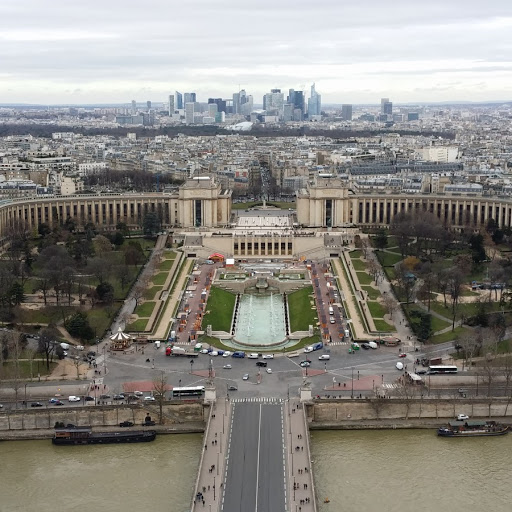
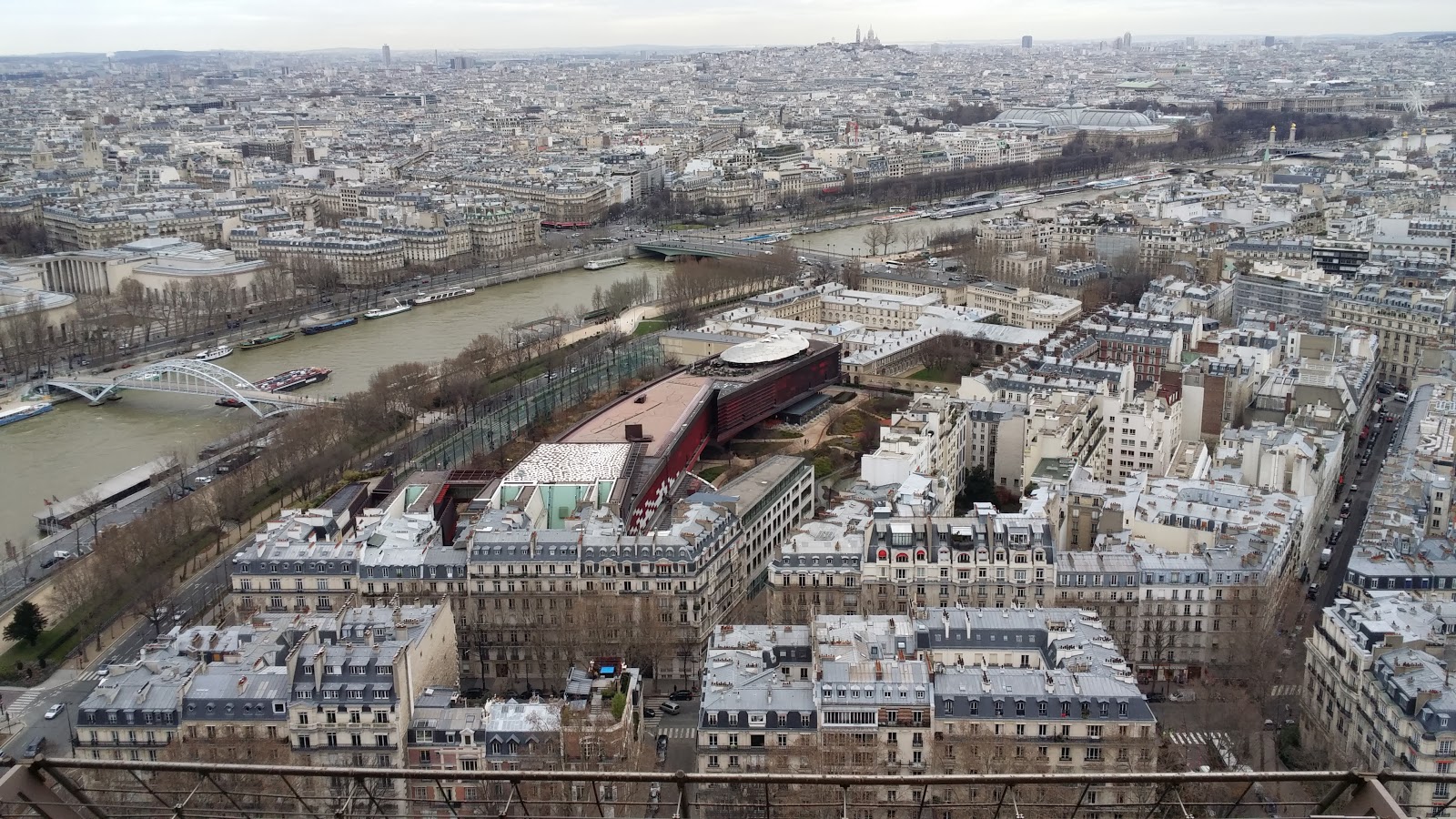
It was a dull day, but the views were magnificent.

20140107_132225

A view of the Seine

20140107_132859

20140107_132208

Sacre Coeur church at Montmartre in the distance.

Another view along the river Seine

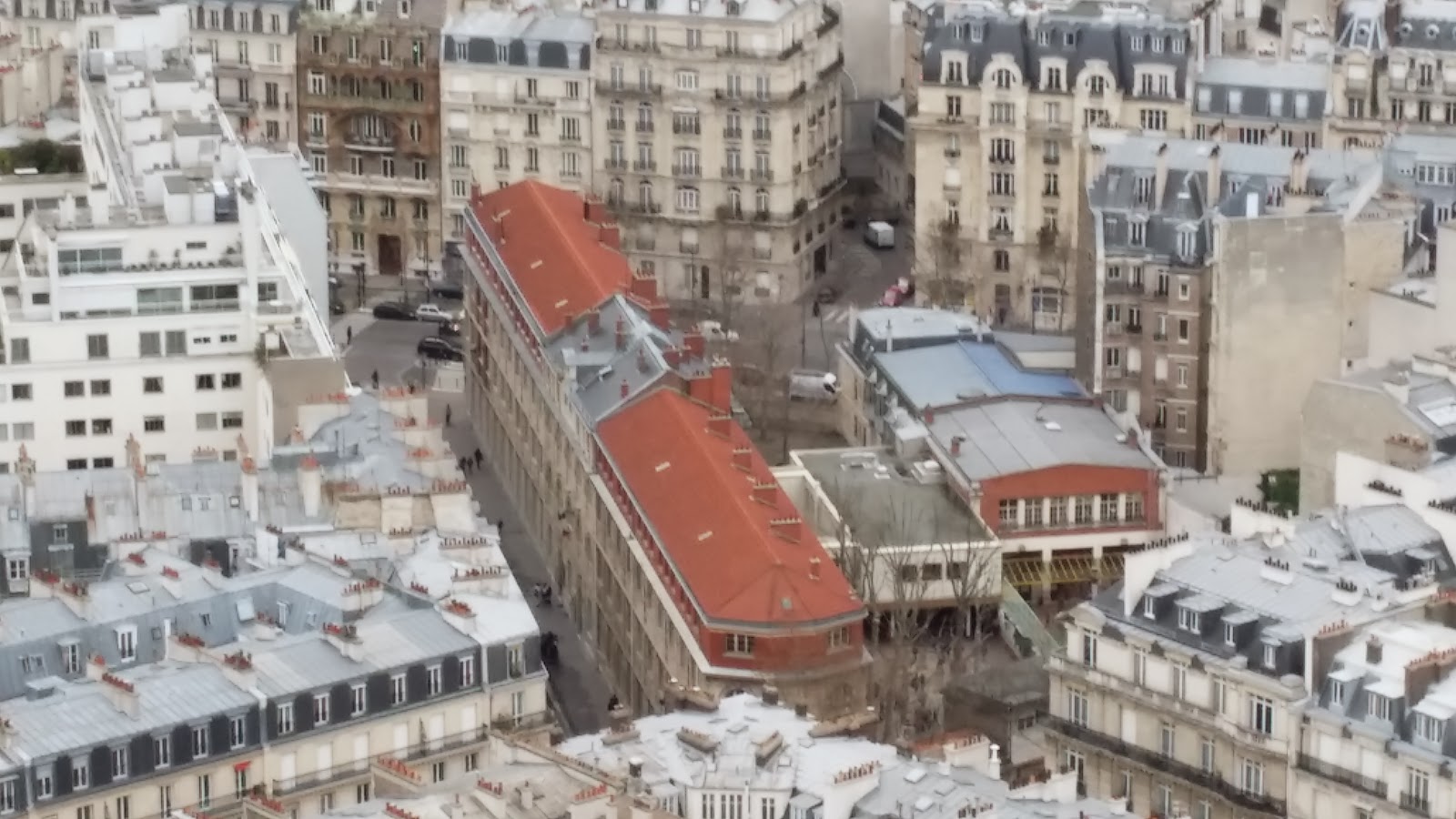
Overlooking the tightly packed apartment buildings

Looking along the opposite end of the river Seine

Searching for Locations: The Eiffel Tower, Paris, France

Sorry, reminiscing again…

It was a cold but far from a miserable day.  We were taking our grandchildren on a tour of the most interesting sites in Paris, the first of which was the Eiffel Tower.

We took the overground train, which had double-decker carriages, a first for the girls, to get to the tower.

We took the underground, or Metro, back, and they were fascinated with the fact the train carriages ran on road tires.

Because it was so cold, and windy, the tower was only open to the second level. It was a disappointment to us, but the girls were content to stay on the second level.

There they had the French version of chips.

It was a dull day, but the views were magnificent.

20140107_132225

A view of the Seine

20140107_132859

20140107_132208

Sacre Coeur church at Montmartre in the distance.

Another view along the river Seine

Overlooking the tightly packed apartment buildings

Looking along the opposite end of the river Seine

Searching for locations: Oreti Village – No two sunrises are the same – 1

Oreti village, Pukawa Bay, North Island, New Zealand

On the southern tip of Lake Taupo

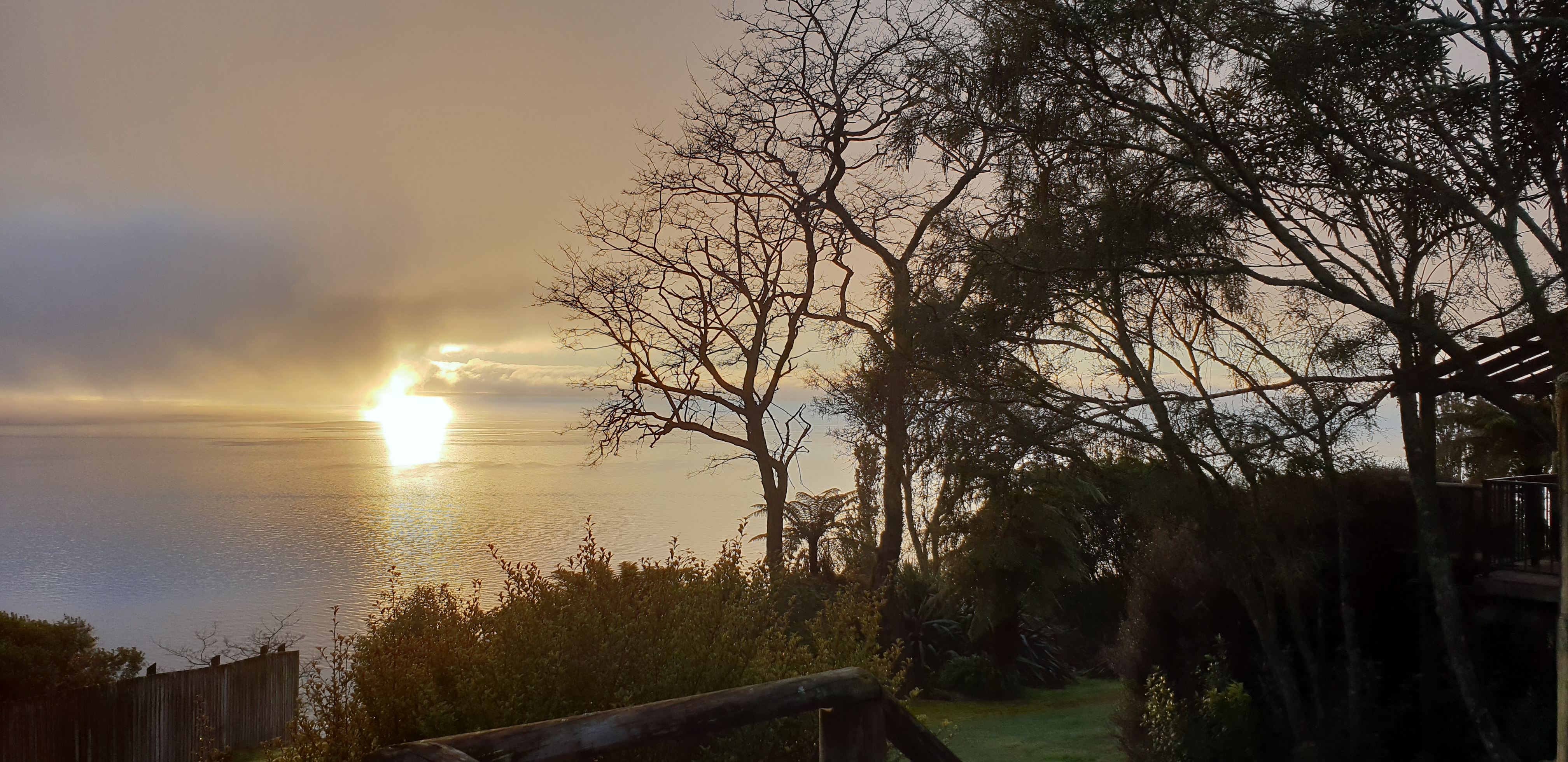
Our first morning there, a Saturday.  Winter.  Cold.  And a beautiful sunrise.

20180812_073230

This was taken from the balcony, overlooking the lake.

The sun is just creeping up over the horizon

20180812_073241

It gradually gets lighter, and then the sun breaks free of the low cloud

It lights up the balcony

20180811_074651

And the trees just beyond, a cascade of colorful ferns.

20180811_074622

It looks like its going to be a fine day, our first for this trip, and we will be heading to the mountains to see snow, for the first time for two of our granddaughters.

Searching for locations: Oreti Village – No two sunrises are the same – 1

Oreti village, Pukawa Bay, North Island, New Zealand

On the southern tip of Lake Taupo

Our first morning there, a Saturday.  Winter.  Cold.  And a beautiful sunrise.

20180812_073230

This was taken from the balcony, overlooking the lake.

The sun is just creeping up over the horizon

20180812_073241

It gradually gets lighter, and then the sun breaks free of the low cloud

It lights up the balcony

20180811_074651

And the trees just beyond, a cascade of colorful ferns.

20180811_074622

It looks like its going to be a fine day, our first for this trip, and we will be heading to the mountains to see snow, for the first time for two of our granddaughters.

Searching for locations – Coramba – Lowanna, New South Wales, Australia

Once a bustling railway

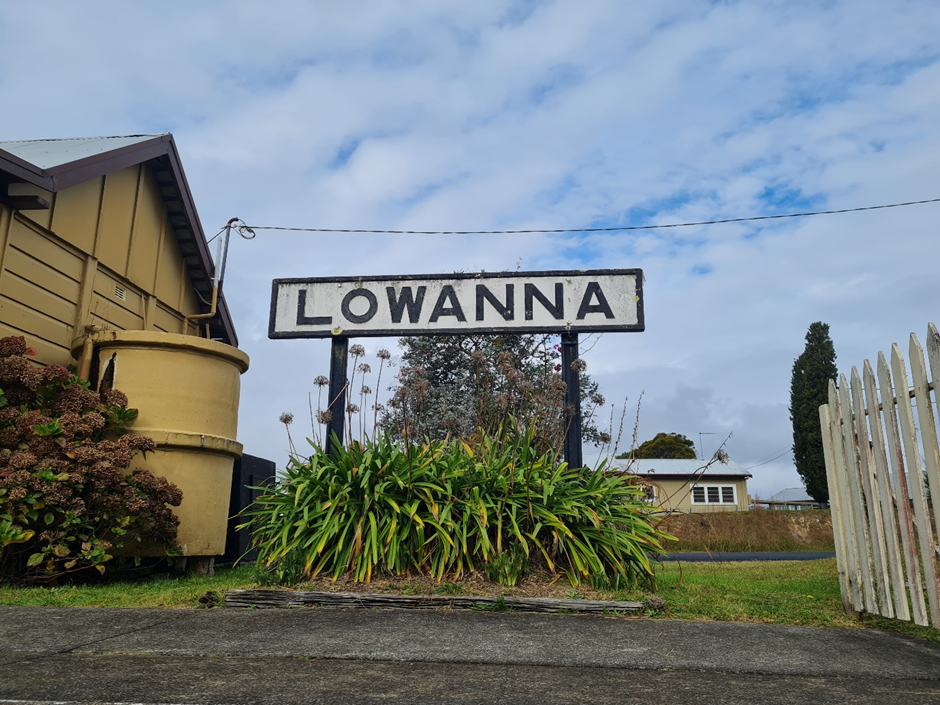
When You pick up a document that describes tourist attractions in Coffs Harbour, there’s one about the Orara Valley, and what caught my eye was firstly the Lowanna Railway Station.

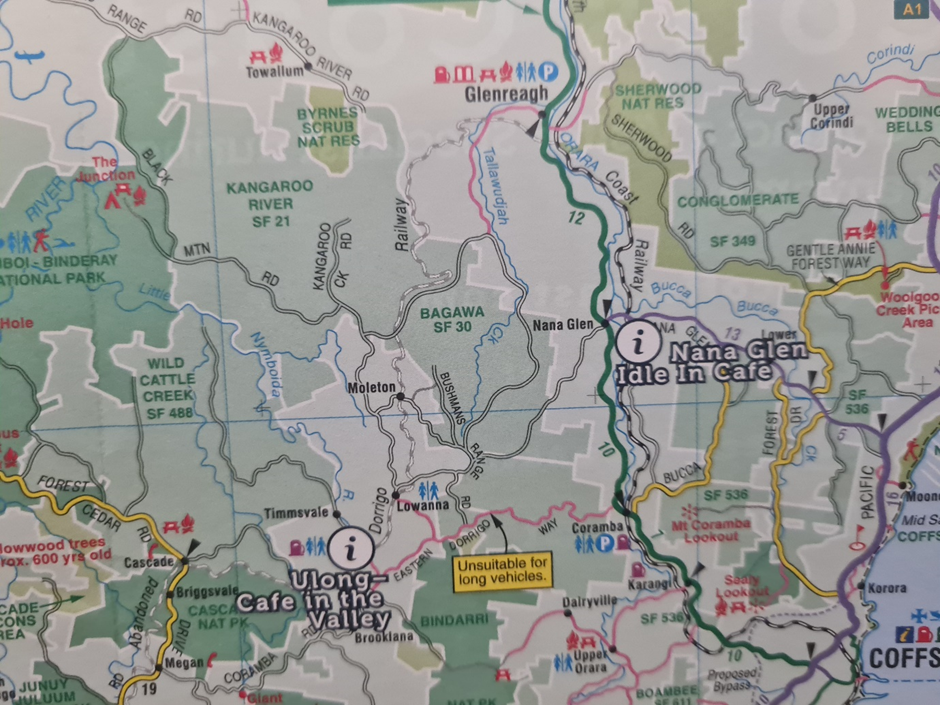
To get there, you pass through Coramba, which has a railway line running through it, but any attempt to find the railway station will be met with disappointment.

But …

That’s not the railway story, that is the Glenreagh to Dorrigo line, first mooted in 1906, but not getting started until 1910, then halted because of the First World War and not completed until December 1924, and ran until October 1972.

However, back to Coramba…

The North Coast railway (the primary rail route in the Mid North Coast and Northern Rivers regions of New South Wales) passes through Coramba, which had a now-closed railway station from 1922.  An attempt to find the station took us to a private residence, which obviously was once the station.

And then to the right historic station, in Lowanna…

Lowanna was the largest of the intermediate stations. It was an attended station, with a crossing loop and siding. Most of the timber was loaded at this location. 

Opened  23-Dec-1924 and Closed 20-Sep-1975

What we were really looking for was the Lowanna Railway Station, which, when we put it in the GPS almost got us lost.  We eventually found the refurbished station, and a rather run down platform, and rail tracks.

Lowanna was on the Dorrigo branch and lies on the north coast of NSW.  It branches off the North Coast Line at Glenreagh and climbs up to the Dorrigo Plateau.

The Dorrigo area was settled in the early 1900s by pastoralists and tree fellers. Due to the steep terrain, it was decided to build a railway to allow products to be brought to nearby port towns. Several routes were surveyed, with the route from Glenreagh eventually chosen. The line climbs 664m over a length of 69km.

Apart from the endpoints of Dorrigo and Glenreagh, the station on this line was very small, often consisting of a short platform with a small shelter. The major traffic on this line was timber.

Searching for locations – Coramba – Lowanna, New South Wales, Australia

Once a bustling railway

When You pick up a document that describes tourist attractions in Coffs Harbour, there’s one about the Orara Valley, and what caught my eye was firstly the Lowanna Railway Station.

To get there, you pass through Coramba, which has a railway line running through it, but any attempt to find the railway station will be met with disappointment.

But …

That’s not the railway story, that is the Glenreagh to Dorrigo line, first mooted in 1906, but not getting started until 1910, then halted because of the First World War and not completed until December 1924, and ran until October 1972.

However, back to Coramba…

The North Coast railway (the primary rail route in the Mid North Coast and Northern Rivers regions of New South Wales) passes through Coramba, which had a now-closed railway station from 1922.  An attempt to find the station took us to a private residence, which obviously was once the station.

And then to the right historic station, in Lowanna…

Lowanna was the largest of the intermediate stations. It was an attended station, with a crossing loop and siding. Most of the timber was loaded at this location. 

Opened  23-Dec-1924 and Closed 20-Sep-1975

What we were really looking for was the Lowanna Railway Station, which, when we put it in the GPS almost got us lost.  We eventually found the refurbished station, and a rather run down platform, and rail tracks.

Lowanna was on the Dorrigo branch and lies on the north coast of NSW.  It branches off the North Coast Line at Glenreagh and climbs up to the Dorrigo Plateau.

The Dorrigo area was settled in the early 1900s by pastoralists and tree fellers. Due to the steep terrain, it was decided to build a railway to allow products to be brought to nearby port towns. Several routes were surveyed, with the route from Glenreagh eventually chosen. The line climbs 664m over a length of 69km.

Apart from the endpoints of Dorrigo and Glenreagh, the station on this line was very small, often consisting of a short platform with a small shelter. The major traffic on this line was timber.

Searching for locations: West Lake, Hangzhou, China

West Lake is a freshwater lake in Hangzhou, China. It is divided into five sections by three causeways. There are numerous temples, pagodas, gardens, and artificial islands within the lake.

Measuring 3.2 kilometers (2 miles) in length, 2.8 kilometers (1.7 miles) in width, and 2.3 meters (7.5 feet) in average depth, the lake spreads itself in an area totaling 6.5 square kilometers (2.5 square miles).

The earliest recorded name for West Lake was the “Wu Forest River”, but over time it changed to two distinct names.  One is “Qiantang Lake”, due to the fact that Hangzhou was called “Qiantang” in ancient times.  The other, “West Lake”, due to the lake being west of the city

It’s about to get busy, with a number of activities planned, and the warmth of the day is starting to make an impact.

The tour starts in the car park about a kilometer away, but the moment we left the car park we were getting a taste of the park walking along a tree-lined avenue.

When we cross the road, once again dicing with death with the silent assassins on motor scooters.

We are in the park proper, and it is magnificent, with flowers, mostly at the start hydrangeas and then any number of other trees and shrubs, some carved into other flower shapes like a lotus.

Then there was the lake and the backdrop of bridges and walkways.

.

And if you can tune out the background white noise the place would be great for serenity and relaxation.

That, in fact, was how the boat ride panned out, about half an hour or more gliding across the lake in an almost silent boat, by an open window, with the air and the majestic scenery.

No, not that boat, which would be great to have lunch on while cruising, but the boat below:

Not quite in the same class, but all the same, very easy to tune out and soak it in.

It was peaceful, amazingly quiet, on a summery day

A pagoda in the hazy distance, an island we were about to circumnavigate.

Of all the legends, the most touching one is the love story between Bai Suzhen and Xu Xi’an. Bai Suzhen was a white snake spirit and Xu Xi’an was a mortal man.

They fell in love when they first met on a boat on the West Lake, and got married very soon after.

However, the evil monk Fa Hai attempted to separate the couple by imprisoning Xu Xi’an. Bai Suzhen fought against Fa Hai and tried her best to rescue her husband, but she failed and was imprisoned under the Leifeng Pagoda by the lake.

Years later the couple was rescued by Xiao Qing, the sister of Baisuzhen, and from then on, Bai Suzhen and Xu Xi’an lived together happily.

The retelling of the story varied between tour guides, and on the cruise boat, we had two.  Our guide kept to the legend, the other tour guide had a different ending.

Suffice to say it had relevance to the two pagodas on the far side of the lake.

There was a cafe or restaurant on the island, but that was not our lunch destination.

Nor were the buildings further along from where we disembarked.

All in all the whole cruise took about 45 minutes and was an interesting break from the hectic nature of the tour.

Oh yes, and the boat captain had postcards for sale.  We didn’t buy any.

Lunch

At the disembarkation point there was a mall that sold souvenirs and had a few ‘fast food’ shops, and a KFC, not exactly what we came to China for, but it seemed like the only place in town a food cautious Australian could eat at.

And when tried to get in the door, that’s where at least 3 busloads were, if they were not in the local Starbucks.  Apparently, these were the places of first choice wherever we went.

The chicken supply by the time we got to the head of the line amounted to pieces at 22.5 RMB a piece and nuggets.  Everything else had run out, and for me, there were only 5 pieces left.  Good thing there were chips.

And Starbucks with coffee and cheesecake.

At least the setting for what could have been a picnic lunch was idyllic.

Searching for locations: West Lake, Hangzhou, China

West Lake is a freshwater lake in Hangzhou, China. It is divided into five sections by three causeways. There are numerous temples, pagodas, gardens, and artificial islands within the lake.

Measuring 3.2 kilometers (2 miles) in length, 2.8 kilometers (1.7 miles) in width, and 2.3 meters (7.5 feet) in average depth, the lake spreads itself in an area totaling 6.5 square kilometers (2.5 square miles).

The earliest recorded name for West Lake was the “Wu Forest River”, but over time it changed to two distinct names.  One is “Qiantang Lake”, due to the fact that Hangzhou was called “Qiantang” in ancient times.  The other, “West Lake”, due to the lake being west of the city

It’s about to get busy, with a number of activities planned, and the warmth of the day is starting to make an impact.

The tour starts in the car park about a kilometer away, but the moment we left the car park we were getting a taste of the park walking along a tree-lined avenue.

When we cross the road, once again dicing with death with the silent assassins on motor scooters.

We are in the park proper, and it is magnificent, with flowers, mostly at the start hydrangeas and then any number of other trees and shrubs, some carved into other flower shapes like a lotus.

Then there was the lake and the backdrop of bridges and walkways.

.

And if you can tune out the background white noise the place would be great for serenity and relaxation.

That, in fact, was how the boat ride panned out, about half an hour or more gliding across the lake in an almost silent boat, by an open window, with the air and the majestic scenery.

No, not that boat, which would be great to have lunch on while cruising, but the boat below:

Not quite in the same class, but all the same, very easy to tune out and soak it in.

It was peaceful, amazingly quiet, on a summery day

A pagoda in the hazy distance, an island we were about to circumnavigate.

Of all the legends, the most touching one is the love story between Bai Suzhen and Xu Xi’an. Bai Suzhen was a white snake spirit and Xu Xi’an was a mortal man.

They fell in love when they first met on a boat on the West Lake, and got married very soon after.

However, the evil monk Fa Hai attempted to separate the couple by imprisoning Xu Xi’an. Bai Suzhen fought against Fa Hai and tried her best to rescue her husband, but she failed and was imprisoned under the Leifeng Pagoda by the lake.

Years later the couple was rescued by Xiao Qing, the sister of Baisuzhen, and from then on, Bai Suzhen and Xu Xi’an lived together happily.

The retelling of the story varied between tour guides, and on the cruise boat, we had two.  Our guide kept to the legend, the other tour guide had a different ending.

Suffice to say it had relevance to the two pagodas on the far side of the lake.

There was a cafe or restaurant on the island, but that was not our lunch destination.

Nor were the buildings further along from where we disembarked.

All in all the whole cruise took about 45 minutes and was an interesting break from the hectic nature of the tour.

Oh yes, and the boat captain had postcards for sale.  We didn’t buy any.

Lunch

At the disembarkation point there was a mall that sold souvenirs and had a few ‘fast food’ shops, and a KFC, not exactly what we came to China for, but it seemed like the only place in town a food cautious Australian could eat at.

And when tried to get in the door, that’s where at least 3 busloads were, if they were not in the local Starbucks.  Apparently, these were the places of first choice wherever we went.

The chicken supply by the time we got to the head of the line amounted to pieces at 22.5 RMB a piece and nuggets.  Everything else had run out, and for me, there were only 5 pieces left.  Good thing there were chips.

And Starbucks with coffee and cheesecake.

At least the setting for what could have been a picnic lunch was idyllic.