Taking the headlines and conjuring up the plot of a novel

What do you make of this lot:

What happened at a Russian missile site?  This is also tinged with nuclear fallout.

The US is consulting with allies in Asia about missile sites.  Nothing more inflammatory to a country like China, with whom relations are deteriorating at a rapid rate of knots.

Investors rush to buy bonds.  OK, that’s short term bonds not long term bonds, and that, of course, caused an inverted curve, or a preclusion to a recession.

Gold and silver investment is booming, and in times past, this could be a precursor to war.

China has a huge fishing fleet in the South China Sea.  Why, no one knows.

China is also planning naval exercises in the same area.  Are they flexing muscles or sending a warning?

They’ve also had problems in Hong Kong, but it didn’t escalate into what happened at Tiananmen Square.  But, bottom line, Hong Kong is not a place to go to or stop over any more because of a constant threat of being arrested.  I’m certainly never going there again, which is a shame because it was my second favorite Asian city after Singapore.

And, of course, there’s another flashpoint in Kashmir, which everyone seems to have an opinion, but that had been simmering for a long, long time, and probably will for years to come.

And as for the former world power, the UK, they have got past Brexit, or have they?

So, from a thriller writer’s perspective, it means that if Russia is rearming, the US is trying to pre-empt missile strikes from China, or anything is simmering in North Korea which currently doesn’t seem to be the case, it seems the savvier investors have a notion the world might be on the brink of war, and the US might be in the middle of it all.

The US appears:

  • to be in a trade war with China, or perhaps a war of words
  • are selling billions worth of arms to Taiwan, a red rag to a bull if there was ever one
  • are offering to help out in Kashmir
  • are sending ships to the South China sea to show the ‘flag’
  • are standing back and watching North Korea launch missiles
  • are emphatically denying there will be a recession, at least at home

Can we get a plot line out of all this?

Title:  Flashpoint

Synopsis:

A leaked report on a Russian missile base suggests a recent ‘mishap’ with disarming ‘old nuclear missiles’, was more than just routine issue, and a flyover by satellite shows there are more sinister and unexplainable operations in play.

Meanwhile, the arrival of a Russian nuclear specialist and a group of Chinese scientists in North Korea is quickly followed by several missile tests a week later.  Are the North Koreans, with the help of the Chinese, looking to arm their missiles with Russian nuclear warheads?

The CIA has sent two of their best operatives to find out what is really going on, one, Sam Stockton, borne of Russian parents, and who has yet to exorcise his demons from the last failed mission, and the other, Elizabeth Chen, a North Korean expert who is coming out of retirement for this particular delicate assignment.

Will they discover the truth before the world descends into a nuclear holocaust?

The cinema of my dreams – I always wanted to write a war story – Episode 7

This is a story inspired by a visit to an old castle in Italy. It was, of course, written while travelling on a plane, though I’m not sure if it was from Calgary to Toronto, or New York to Vancouver.

But, there’s more to come. Those were long flights…

And sadly when I read what I’d written, off the plane and in the cold hard light of dawn, there were problems, which now in the second draft, should provide the proper start.


If it had been Jackerby in charge and not Johansson, I had no doubt I’d be at the end of a firing squad now.

Jackerby was not Army, nor a man of honour.  His gait, his manner gave him away, despite the fact he was out of his usual uniform.  I suspect now I had been taken care of, that would change, and we’d get to see his true colours.

After leaving the hall, I was escorted downstairs to the cellar, and where I knew there were a number of rooms with iron gated fronts, places I suspected, in olden days, enemies of the castle were held, enslaved or executed in these cells.

There were several male prisoners is the first two cells, awaiting their fate, one which would not include escaping to the other side, but perhaps something a lot worse than death.

At the end, there was another corridor, and several smaller cells, where second from the end, I was roughly shoved by one of the guards.  He was going to add the butt of his rifle to the back of my head for good measure, but Jackerby stopped him.

I was sure it wasn’t out of respect for Johansson.  It appeared that Johansson needed me for something else.

After the door closed I yelled out, “All the rooms upstairs filled?”

“Yes.  It’s high season.”  So Jackerby had a semblance of a sense of humour.


The room, if it could be called that, had a camp stretcher, a seat, and a bucket.  The light came from a burning torch out in the corridor, an interesting touch that electricity had not made it down this far.

The floor was cobbled, and, like the walls, damp.  There was an overbearing odour of mustiness in the room.

It was also cold, so these cells must be located not only under the old castle but underground.  That meant centuries of history, and probably a ghost or two.  I was sure terrible things had happened, down in these cells, not just back then but also recently.

Outside the wall, I could hear the sound of running water, so the back wall must border onto the stream.  And there must be a gap, or hole somewhere for the sound to reach me, but it was too dark to see.

When night fell, it was going to be a lot worse; the light wouldn’t be affected, but it was going to get a lot colder.  As it was the torchlight from the passage barely made an impact, and it took a few minutes for my eyes to adjust.  And I was sure there were rats, just waiting for the dark to come out to play.

I moved the seat to beside the door and sat down, trying to make myself comfortable, in a position where I might hear them coming if they came back.

Then a voice quite near, said, “What are you here for?”


© Charles Heath 2019

Searching for locations: Venice, Italy (Again)

We have visited Venice twice, in 2006 and not so long ago.

Not much had changed from visit to visit.

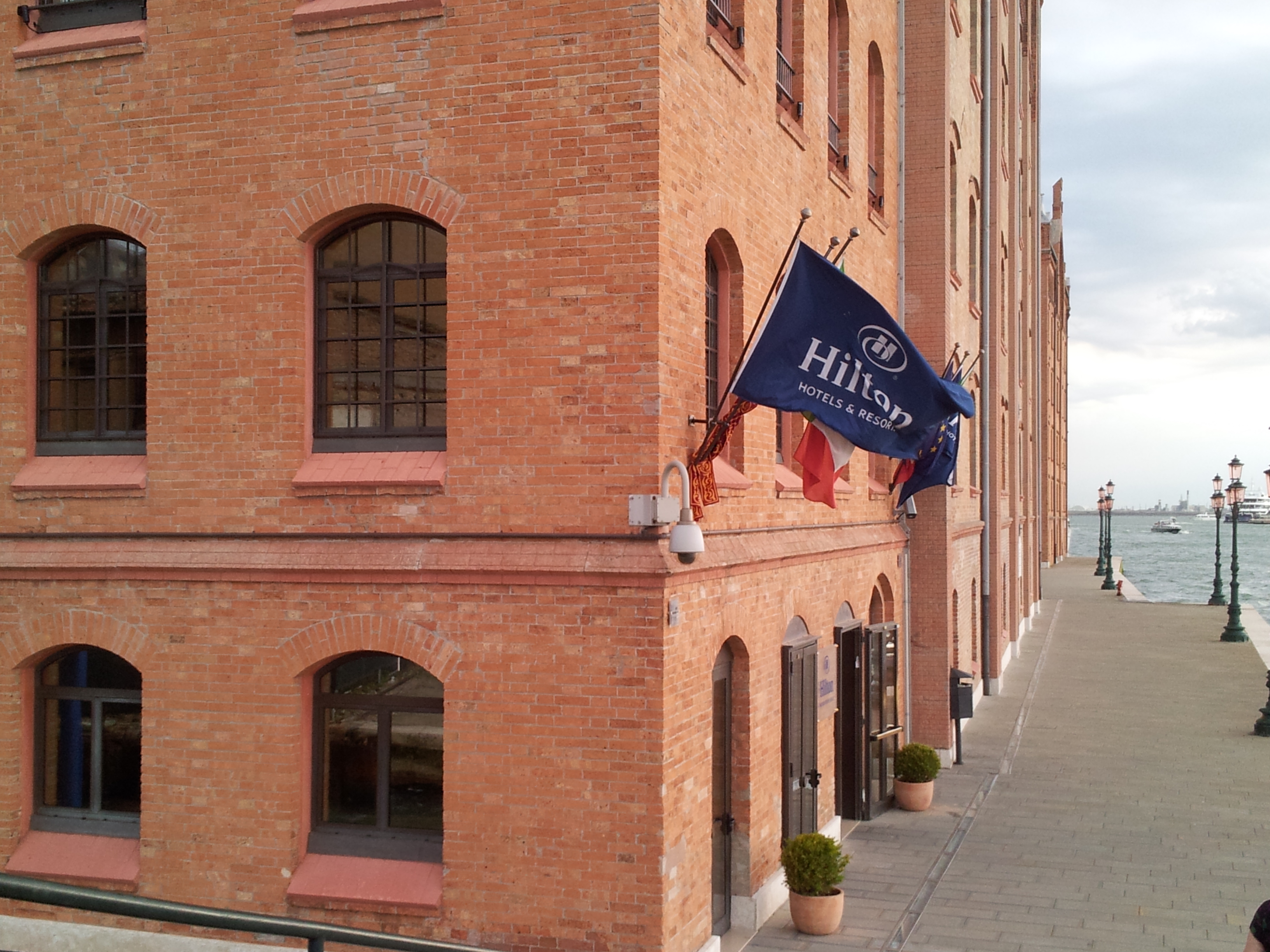
Instead of staying in a hotel selected by a travel agent, the Savoia and Jolanda on the waterfront of Riva Degli Schiavoni, because I’m a Hilton Honors member, more recently we stayed at the Hilton Molino Stucky.  It was located on an island, Giudecca, and had its own transport from the hotel to St Mark’s Square for a very reasonable one-off charge for the stay.

hiltonmolinostuckey2

On our first visit, we traveled from Florence to Venice.  We were advised to take a water taxi to the hotel, not only the most direct route but to see some of Venice from the water.  The only drawback, you have to negotiate a price with the driver.

We were not very good negotiators, and it cost 60 Euros.

But, despite the cost, it was worth every Euro because the taxi driver took us by the scenic route, directly from the Station to the doorstep of our hotel.  For a first time in Venice, and you want to see it from the water, a water taxi is the best option.

2013-06-25 17.09.16

The first time we stayed at the Savoia and Jolanda Hotel, which was at the time quite old, and the room we had, on the ground floor, was comfortable enough, but being November, they had just stopped using the air conditioning, it was still quite warm and at times uncomfortable.

There were better rooms, but this was beyond the knowledge of the travel agent, and one of the reasons we stopped using agents to book hotels.

The most recent visit we had driven down from Salzburg to Venice airport where we had to return the hire car.  From there we were intending to take a private water taxi from the airport to the hotel, for an estimated 120 Euros.

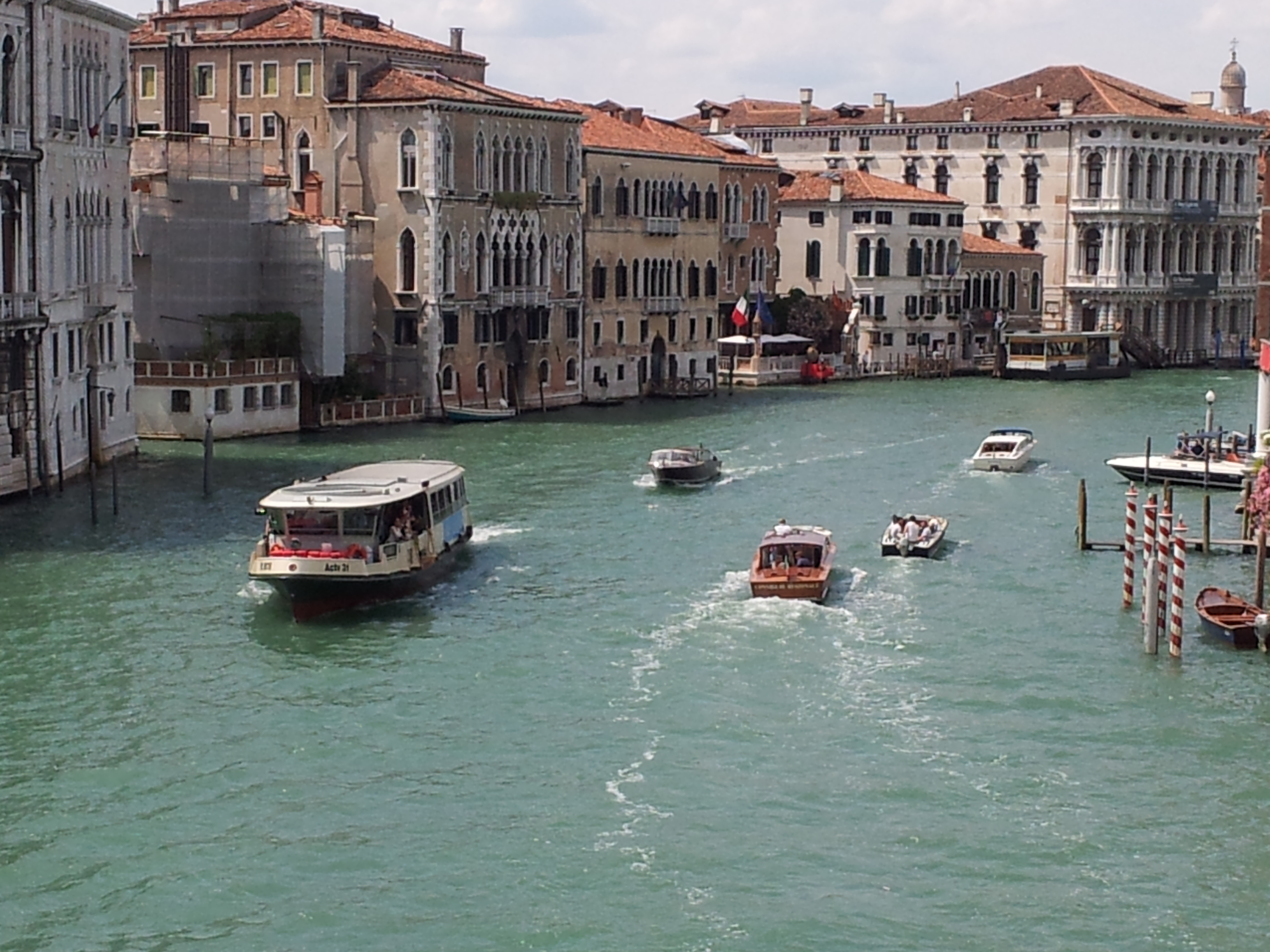
We saved our money and took the ACTV public waterbus, from the airport to the hotel, with one stop.  It took a little over an hour and was equally as scenic.

venicecanals1

Our room in the Hilton was on one of the upper levels, floor four, and had a view of the canal, the large passenger ships coming and going, as well as a remarkable view of Venice itself as far up the canal to St Marks Square in one direction, and the port for the passenger ships in the other.

20130627_081601

We got to see three or four very large passenger ships come and go, along with a lot of other craft.  I hadn’t realized how busy the waterways, and the Grand Canal, were.

20130627_174408

Each evening after a day’s exploring we would end up in the Executive Lounge, and then one of the many restaurants, usually Il Molino for breakfast, and the Rialto Lobby Bar and Lounge for dinner.  After that, it was a stroll down the waterfront taking in the night air, and perhaps to walk off the delicious dinner.

Searching for Locations: Venice, Italy

Venice is definitely a city to explore.  It has an incredible number of canals and walkways, and each time we would start our exploration at St Marks square when it’s not underwater

Everyone I have spoken to about exploring Venice has told me how easy it is to get lost.  It has not happened to me, but with the infinite number of ways you can go, I guess it is possible.

We started our exploration of Venice in St Marks square, where, on one side there was the Museo di Palazzo Ducale and, next door, the Basilica di San Marco.  Early morning and/or at high tide, water can be seen bubbling up from under the square, partially flooding it.  I have seen this happen several times.  Each morning as we walked from the hotel (the time we stayed in the Savoia and Jolanda) we passed the Bridge of Sighs.

Around the other three sides of the square are archways and shops.  We have bought both confectionary and souvenirs from some of these stores, albeit relatively expensive.  Prices are cheaper in stores that are away from the square and we found some of these when we walked from St Marks square to the Railway station, through many walkways, and crossing many bridges, and passing through a number of small piazzas.

That day, after the trek, we caught the waterbus back to San Marco, and then went on the tour of the Museo di Palazzo Du which included the dungeons and the Bridge of Sighs from the inside.  It took a few hours, longer than I’d anticipated because there was so much to see.

The next day, we caught the waterbus from San Marco to the Ponte di Rialto bridge.  Just upstream from the wharf there was a very large passenger ship, and I noticed there were a number of passengers from the ship on the waterbus, one of whom spoke to us about visiting Venice.  I didn’t realize we looked like professional tourists who knew where we were going.

After a pleasant conversation, and taking in the views up and down the Grand Canal, we disembarked and headed for the bridge, looking at the shops, mostly selling upmarket and expensive gifts, and eventually crossing to the other side where there was a lot of small market type stalls selling souvenirs as well as clothes, and most importantly, it being a hot day, cold Limonata.  This was my first taste of Limonata and I was hooked.

Continuing on from there was a wide street at the end and a number of restaurants where we had lunch.  We had a map of Venice and I was going to plot a course back to the hotel, taking what would be a large circular route that would come out at the Accademia Bridge, and further on to the Terminal Fusina Venezia where there was another church to explore, the Santa Maria del Rosario.

This is a photo of the Hilton Hotel from the other side of the canal.

It was useful knowledge for the second time we visited Venice because the waterbus from the Hilton hotel made its first stop, before San Marco, there.  We also discovered on that second visit a number of restaurants on the way from the terminal and church to the Accademia Bridge.

This is looking back towards San Marco from the Accademia Bridge:

And this, looking towards the docks:

Items to note:

Restaurants off the beaten track were much cheaper and the food a lot different to that in the middle of the tourist areas.

There are a lot of churches, big and small, tucked away in interesting spots where there are small piazza’s.  You can look in all of them, though some asked for a small fee.

Souvenirs, coffee, and confectionary are very expensive in St Marks square.

“Do you believe in g..g..ghosts…?”, a short story

Inside the old building, it was very quiet and almost cold.

Strange, perhaps, because outside the temperature was bordering on the record hottest day ever, nearly 45 degrees centigrade.

The people who’d built this building nearly a hundred years before must have known how to keep that heat at bay, using sandstone.

Back then, the sandstone would have looked very impressive, but now after many years of being closed off and left abandoned, the outside was stained by modern-day pollutants giving it a black streaky look, and inside layers of dust, easily stirred up as we walked slowly into the main foyer.

It was huge, the roof, ornate, with four huge chandelier lights hanging down, and wood panelling, giving way to a long counter with brass serving cages highlighting its former use; a bank.

In its day it would have conveyed the power and wealth so that its customers could trust the money to. Of course, that was before the global economy, online banking, and a raft of the new and different institutions all vying for that same money.

Then it was a simple choice of a few, now it was a few thousand.

“How many years had this been closed up?” I asked.

“Close to twenty, maybe twenty-five. It was supposed to be pulled down, but someone got it on the heritage list, and that put an end to it. “

Phil was the history nut. He’s spent a month looking into the building, finding construction plans, and correspondence dating back to before and during the construction.

Building methods, he said, that didn’t exist today and were far in advance of anything of its type for the period. It was the reason we were standing in the foyer now.

We were budding civil engineers, and the university had managed to organize a visit, at our own risk. The owner of the building had made sure we’d signed a health and safety waiver before granting access.

And the caretaker only took us as far as the front door. He gave us his cell number to call when we were finished. When we asked him why he didn’t want to come in with us, he didn’t say but it was clear to me he was afraid of something.

But neither of us believed in ghosts.

“You can see aspects of cathedrals in the design,” Phil said. ” You could quite easily turn this space into a church.”

“Or a very large wine cellar.” I brought a thermometer with me, and inside where we were standing it was the ideal temperature to store wine.

Behind the teller cages were four large iron doors to the vaults. They were huge, and once contained a large amount of cash, gold, and whatever else was deemed valuable.

They were all empty now, the shelves and floor had scattered pieces of bank stationery, and in a corner, several cardboard boxes, covered in even more dust.

Behind the vaults were offices, half-height with glass dividers, the desks and chairs still in place, and some with wooden filing cabinets drawers half-open.

Others had benches, and one, set in the corner, very large, and looked like the manager’s office. Unlike the other office which had linoleum tiles, this one had carpet. In a corner was a large mirror backed cabinet, with several half-empty bottles on it.

“Adds a whole new meaning to aged whiskey, don’t you think.” Phil looked at it but didn’t pick it up.

“I wonder why they left it,” I muttered. The place had the feel of having been left in a hurry, not taking everything with them.

I shivered, but it was not from the cold.

We went back to the foyer and the elevator lobby. They were fine examples of the sort of caged elevators that belonged in that time, and which there were very few working examples these days.

The elevators would have a driver, he would pull back an inner and outer door when the car arrived on a floor, and close both again when everyone was aboard.

Both cars were on the ground floor, with the shutter doors closed, and when I tried to open one, I found it had been welded shut. The other car was not sitting level with the floor and the reason for that, the cable that raised and lowered it was broken.

Restoring them would be a huge job and would not be in their original condition due to occupational health and safety issues.

The staircase wound around the elevator cage, going up to the mezzanine floor or down to the basement.

“Up or down?” He asked.

“Where do you want to go first?”

“Down. There’s supposed to be a large vault, probably where the safety deposit boxes are.”

And the restrooms I thought. Not that I was thinking of going.

As we descended the stairs it was like going down into a mine shaft, getting darker, and the rising odor of damp, and mustiness. I suspect it would have been the same back when it was first built being so close to the shoreline of the bay, not more than half a mile away.

The land this building and a number of others in a similar style, was built on was originally a swamp, and it was thought that the seawater still found its way this far inshore. But the foundations were incredibly strong and extensive which was why there’d been no shifting or cracking anywhere in the ten-story structure.

At the bottom, there was a huge arch, with built-in brass caging with two huge gates, both open. It was like the entrance to a mythical Aladdin’s cave.

There was also an indefinable aura coming from the depths of that room. That, and a movement of cold air. Curiously, the air down there was not musty but had a tinge of saltiness to it.

Was there a natural air freshener effect coming from somewhere within that vault.

“Are we going in?”

I checked my torch beam, still very bright. I pointed it into the blackness and after a minute checking, I said, “We’re here, so why not.”

We had to walk down a dozen steps then pass under through the open gates into the room. There was a second set of gates, the same as the first, about thirty feet from the first, and, in between, a number of cubicles where customers collected their boxes.

Beyond the second set of gates was a large circular reinforced safe door high enough for us to walk through.

This cavernous space stretched back quite a distance, and along the walls, rows, and rows of safety deposit boxes, some half hanging out of their housing, and a lot more stacked haphazardly on the floor.

I checked a few but they were all empty.

I shivered again. It felt like there was a presence in the room. I turned to ask Phil, but he wasn’t there. I hadn’t heard him walk away, and there were only two sets of footprints on the floor, his and mine, and both ended where I was standing.

It was as if he had disappeared into thin air.

I called out his name, and it echoed off the walls in the confined space. No answer from him.

I went further into the room, thinking he might have ventured towards the end while my back was turned, but he hadn’t. Nor had he left because there were only footprints coming in, not going out.

I turned to retrace my steps and stopped suddenly. An old man, in clothes that didn’t belong to this era, was standing where Phil had last been.

He was looking at me, but not inclined to talk.

“Hello. I didn’t see you come down.”

Seconds later the figure dissolved in front of me and there was no one but me standing in the room.

“Joe.”

Phil, from behind me. I turned and there he was large as life.

“Where were you?”

“I’ve been here all the time. Who were you just talking to?”

“There was an old man, standing just over there,” I said pointing to somewhere between Phil and the entrance.

“I didn’t see anyone. Are you sure you’re not having me on?”

“No. He’s right behind you.” The old man had reappeared.

Phil shook his head, believing I was trying to fool him.

That changed when the man touched his shoulder, and Phil shrieked.

And almost ran out of the room. It took a few minutes for him to catch his breath and steady the palpitating heart.

“Are you real?” I asked, not quite sure what to say.

“To me, I am. To anyone else, let’s just say you are the first not got faint, or run away.”

“Are you a ghost?” Phil wasn’t exactly sure what he was saying.

“Apparently I am and will be until you find out who killed me “

Ok, so what was it called, stuck in the afterlife or limbo until closure?

“When?”

“25 years ago, just before the bank closed. It’s the reason why it’s empty now.”

“And you’re saying we find the killer and you get to leave?”

“Exactly. Now shoo. Go and find him.”

We looked at each other in surprise, or more like shock, then back to the man. Only he was no longer there.

“What the…” Phil sail. “It’s time to go.”

“What about the man and finding his killer?”

“What man? We saw nothing. We’re done here.”

I shrugged. Phil turned to leave, but only managed to take three steps before the gates at the entrance closed with a loud clang.

When he crossed the room to stand in front, he tried pulling them open.

“Locked,” he said. Flat, and without panic, he added, “I guess it looks like we have a murder to solve.”

© Charles Heath 2019-2020
The cinema of my dreams – I always wanted to write a war story – Episode 3

This is a story inspired by a visit to an old castle in Italy. It was, of course, written while travelling on a plane, though I’m not sure if it was from Calgary to Toronto, or New York to Vancouver.

But, there’s more to come. Those were long flights…
And sadly when I read what I’d written, off the plane and in the cold hard light of dawn, there were problems, which now in the second draft, should provide the proper start.

There were eleven stormtroopers and Wallace, eighteen in Johansson and Jackerby’s group. One of those would be in the communications centre, leaving, at worst, twenty-nine men out looking for me.

I also assumed that Jackerby would approach the search in much the same manner as I would, the men in pairs, as singly, he knew that I would have an advantage.

Eight pairs would be inside, doing a room-to-room search, from the top down.

Five pairs would be outside, one group in the centre, one group at each of the corners, all working the perimeter, all in constant communication with each other.

In normal circumstances, I would be caught.

These were not normal circumstances.

Jack padded his way just ahead of me, stopping every few yards and both sniffing and listening.  At a junction he would stop, wait, and then make a decision about which way to go.

I had to trust his instincts.

Just ahead of me there was a cracking sound followed by falling rocks and a shaft of light.

An opening in the roof where it was too close to the surface.

Jack went quite still.  Voices.

“Be careful.”  German.

Followed immediately by “Speak in English you fool.  You were saying,”

The man switched to careful English, “Be careful, or you’ll fall down that hole.  They should have told us the ground around here is on top of an old mineshaft.”

“Better, Corporal.  Remember. English at all times.”

“Could be where they buried the bodies hastily before they left.”

The man was referring to the story the previous custodians of the castle had killed about a hundred of the nearby villagers and buried them in a mass grave near the castle.  No one had been able to verify the account, nor had anyone found any skeletal evidence.

Yet.

“Let’s get out of here.  The last thing I want to see is a ghost.”

© Charles Heath 2019-2022

The cinema of my dreams – I always wanted to write a war story – Episode 3

This is a story inspired by a visit to an old castle in Italy. It was, of course, written while traveling on a plane, though I’m not sure if it was from Calgary to Toronto, or New York to Vancouver.

But, there’s more to come. Those were long flights…
And sadly when I read what I’d written, off the plane and in the cold hard light of dawn, there were problems, which now in the second draft, should provide the proper start.

There were eleven stormtroopers and Wallace, eighteen in Johansson and Jackerby’s group. One of those would be in the communications center, leaving, at worst, twenty-nine men out looking for me.

I also assumed that Jackerby would approach the search in much the same manner as I would, the men in pairs, as singly, he knew that I would have an advantage.

Eight pairs would be inside, doing a room to room search, from the top down.

Five pairs would be outside, one group in the center, one group at each of the corners, all working the perimeter, all in constant communication with each other.

In normal circumstances, I would be caught.

These were not normal circumstances.

Jack padded his way just ahead of me, stopping every few yards and both sniffing and listening.  At a junction he would stop, waiting, then make a decision which way to go.

I had to trust his instincts.

Just ahead of me there was a cracking sound followed by falling rocks and a shaft of light.

An opening in the roof where it was too close to the surface.

Jack went quite still.  Voices.

“Be careful.”  German.

Followed immediately by “Speak in English you fool.  You were saying,”

The man switched to careful English, “Be careful, or you’ll fall down that hole.  They should have told us the ground around here is on top of an old mineshaft.”

“Better, Corporal.  Remember. English at all times.”

“Could be where they buried the bodies hastily before they left.”

The man was referring to the story the previous custodians of the castle had killed about a hundred of the nearby villagers and buried them in a mass grave near the castle.  No one had been able to verify the account, nor had anyone found any skeletal evidence.

Yet.

“Let’s get out of here.  The last thing I want to see is a ghost.”

© Charles Heath 2019-2022

The cinema of my dreams – I always wanted to write a war story – Episode 1

It’s the story that was inspired by the Castello di Briolio, which had small aspirations when first conceived, but now it’s reached a point where we need to fill in a few blanks at the start.

“You have got the guards set up on the back wall,” I asked Jackerby, the officer in charge of the rearguards.

“Can you see them?” he said in a tone that dripped sarcasm.

I didn’t like Jackerby, he seemed far too sure of himself and his men, and so far, we hadn’t had to rely on them.

But I expected that time was coming, and sooner than both of us wanted to believe.

“No.”

“Then no one else will either.  Trust me; no one will be coming over the back wall.”

That was a matter of opinion, and, in my assessment of the fortifications, and the security precautions, the only way the enemy could attack us, was from the sky.

And that was, given the current situation the enemy was in, practically impossible.  But, as my old commander used to say, ‘This is war, anything is possible, and when you least expect it.’

I’d survived four years of it, and didn’t want to be one of those who didn’t make it to the end.  For that reason, I trusted no one, particularly people who said ‘trust me’.

I glanced along the back wall again, just to make sure, but it didn’t make me feel any safer.

“I’ll be in the command post if you need me, and it has a clear view of anything coming.”

“Excellent,” I said, trying to sound more confident than I felt.

We were in an old castle, though not strictly speaking a real castle, built only a few hundred years ago.  It was an enemy stronghold up until a month ago when, acting on advice from the local resistance that the enemy strength had dropped as they had begun to retreat, a strike force came and liberated it.

And, given its strategic position between the front line and the sea, it became a gateway for anyone who wanted to escape the Germans and what was left of the Italians.

That also included departing boffins from the Reich, looking to bargain their way to a new home in England or the US.

To oversee that operation was a Colonel called Johansson, along with a dozen or so specialist soldiers, and the operation had been running smoothly.

Then came an attempted incursion, where a group of enemy soldiers who were fighting to the end, made a brave attempt to take the castle back.,  They failed, because of a twelfth-hour arrival of a Major called Jackerby, and a small motley crew of men.

When I read the report after the battle, it seemed odd.

As a result of his help, Jackerby was recruited by Johansson, in circumstances that seemed a little too coincidental for my liking.  Johansson was too easygoing for me, and although he had not made a mistake, yet, I felt sure one was going to happen on my watch.

I came later, sent by Command to ‘lend assistance where possible’ to the operation, assistance the good Colonel took no pains to tell command he didn’t need.  But they didn’t give him a choice.

Except…

On my way there, my driver and I had almost reached the castle when we were caught in a roadside bomb.  The driver was killed, and I’d been saved by a dog, one we had found on the side of the road, badly in need of water, and food.

I had brought him with me.  The thought of doing so, at the time, had been on the end of a single idea, a dog could not betray me, men and women could.  And the fact its name was Jack seemed to me to be rather poetic, if not somewhat ironic in the circumstances.

There was a communication in my pocket, one I’d received earlier in the afternoon, sent in a one-time code no one but I could decode.

A warning of a second attempt on the castle by the enemy, but for reasons unknown.

Tonight.

Jack and I were in the guard tower at the southwestern corner of the castle.  It overlooked the valley and gave a clear view of anyone or anything coming from that quadrant.  If I was going to retake the castle, that’s where I’d launch an attack from.

Of course, if it came by air, you’d expect to hear it.

I didn’t, but Jack did.  He suddenly stood and made a small moaning noise, as if he knew quiet communication was needed.  The stiffness in his body told me there was danger lurking.

Then I saw it, just as I came out of the guardhouse onto the gravel path, the moonlight shining of very large wings, and for a moment it didn’t make sense until I realized it was a glider.

Silent.  It passed, and behind I could see parachutes, then the sound of boots on the gravel walkways just down from the tower.  A precision flight and precision landing of a dozen stormtroopers.

And Jackerby’s guards were nowhere to be seen.

© Charles Heath 2018-2022

The cinema of my dreams – Was it just another surveillance job – Episode 7

I’m back home and this story has been sitting on a back burner for a few months, waiting for some more to be written.

The trouble is, there are also other stories to write, and I’m not very good at prioritising.

But, here we are, a few minutes opened up and it didn’t take long to get back into the groove.

A body and a whole bunch of questions.


A full minute passed, with only one car passing, the rest of the time there was a strange sort of silence.

The man on the ground didn’t move.  Whoever shot him had shot to kill.  I took the few steps to stand beside him and could see the hole and the bloodstain of the wound.  Shot in the heart, instant death.

Usually, if it was a sniper, it was a head shot.  Less chance of missing a vital organ and leaving the target alive.

Odd too that it was just before he told me where some ‘evidence’ was located.  And who the hell was this Alfred Nobbin?

I heard a car turn into the alley and come towards me.  Halfway, it stopped, the engine switched off, and the doors opened.

Two men.  Maury, my handler, and Severin, the instructor.  Neither was carrying a gun, so neither had shot him.  That meant someone else was still in play.

I said, “I had him, but someone shot him.”

Stating the obvious, Maury’s expression told me.

“You’re not dead.”

“Perhaps I wasn’t a target.”

“Today.  Did he say who he was?”

“No.”

No hesitation or they’ll think I’m lying, which I am.  I was not sure why, but was it because I detected a note of sincerity in the target’s tone?

“Checked for identification yet?”

“Just about to.”  I knelt down and went through his pockets.  Nothing.  I told Maury that.

“Pity.”  He hadn’t moved from where he stopped.  Severin had been looking back up the alley, no doubt looking for where the bullet came from.

Had he reached the same conclusion I had, a balcony on the third floor of the left-hand building?  The shooter would be long gone by now.

A white van pulled into the lane and pulled up behind Maury’s car.  The cleaners.

It raided questions.  How did Maury know we’d be here, and that the target would be shot dead?  Or had he assumed I’d all but kill him in revenge for what had happened to the others.

What had happened to the others?

“The rest of the team,” I asked.

“Two dead, one critical.  One safe.  Let’s go.  We need to have a debriefing.”

I took a last look at the body, the joined Maury and Severin in the car.  I had questions of my own.

“A bad day’s work,” Severin muttered, as he drove off.

“But conclusive proof we have a traitor, the last thing we need right now.”

I was surprised they were discussing high-level matters that I considered above my pay grade.  And, I had to say, it worried me.


© Charles Heath 2019

The cinema of my dreams – Was it just another surveillance job – Episode 4

I didn’t get the last part of the opening sequence sorted until after we arrived in Vancouver.  I made a start on it before breakfast was served, though it was rather odd calling it breakfast when outside the plane it was nearly six in the afternoon.

In finishing it much later, I think I’ve come up with a different direction to the one I planned, but in truth, I was never happy with where it was going from the start.

That’s why I prefer to plot on the run so that it doesn’t necessarily get bogged down with a certain result in mind.  For me, that is the biggest bugbear is writing to a plan.  For some, though, I’m sure it works.  For me, not so much.

So, what happened to the rest of the team?


Just in case I’d made a mistake, I kept one eye on the target, who seemed to be consumed by the events unfolding, and another taking a wider search of the surrounding area to make doubly sure the team was still in control of the mission.

They were not.

A hundred yards back in the direction I’d first seen the target heading when the explosion took me out of play, I found one of the team, Jack, a relatively new member of the surveillance division, roughly hidden behind a dumpster, dead, a victim of a clean, accurate, and methodical stab wound to the heart.  No noise from the weapon, or the victim.

The target knew we were onto him.  It also meant that it was likely the other two members of the team were also out of play, I preferred not to think they might be equally dead, and I didn’t think the chances were good that he might not know about me.

It wasn’t a good sign that he had come back to the site of the explosion because I doubted someone of his stature had time to stand around and watch a search and rescue.

And if he was looking for me I had to make sure he didn’t find me.  Good thing then it was exactly what I was thinking when he turned and started to scan the outer perimeter, as I had, and just managed to miss his gaze in my direction.

Yes, he was definitely looking for me, so it was a good bet he had tortured one of the others to get the information he needed.

All the more reason for me to take him down.

I moved closer, all the time keeping him under surveillance and avoiding his searching eyes. 

Then, satisfied I was not at this location, he started moving to the next, before I’d last seen him in the distance.  It was the epicentre of the explosion and the one where there was a high concentration of police and rescue workers.

He stopped.  I used the cover of the confusion, and in a way, a very efficient organization, to move closer.

I saw him take another look around, perhaps he suspected I might be near, then again satisfied, moved on.

It was clear I was not going to be able to take him on while we were in the immediate vicinity of the explosion, there were too many witnesses.  Perhaps he was hoping that the abundance of cover would aid his mission.

He stopped again, among a smaller group of observers, and checked both sides of the line.  From there he had two choices, to consider if I had retraced my steps, or gone ahead thinking I might catch up to him.  Obviously, he’d realized I’d not kept up, and it had been due to the explosion.

Just as he was about to see me on another sweep, a minor explosion of sorts came from the main disaster site, what sounded like part of the structure collapsing, which explained dust rising into the air, and when my attention returned to the spot I’d last seen him, he was gone.

Not a good sign.  He could be anywhere.

But he wasn’t just anywhere.

“Sam?”

It was an unfamiliar voice, not expected, but I’d been more or less wary from the moment I lost sight of him.  And because I had been alert, it saved me from a far worse injury.  I felt the knife thrust through the fleshy part of my side and caught him with my elbow to the side of his head which sent him sprawling and knocking the knife out of his hand and sliding into the area where three bystanders were.

The scuffled turned their attention to him first on the ground, and then hastily getting to his feet and running away, leaving the weapon behind and me chasing after him.

No one said a word.

And this time he didn’t have a very big break on me and driven by rage at what he had done to the members of my team, it didn’t take long to catch up, in a place where we were alone.

In those few steps I’d made up my mind, he was not going to walk away from this.


So, is revenge on the menu, or something else?


©  Charles Heath 2019