Was it just another surveillance job – Episode 15

I’m back home and this story has been sitting on a back burner for a few months, waiting for some more to be written.

The trouble is, there are also other stories to write, and I’m not very good at prioritising.

But, here we are, a few minutes opened up and it didn’t take long to get back into the groove.

Was I working for a ghost?


The question that was foremost in my mind was whether I should call Nobbin, and let him know that I’d met Severin and that his ‘information’ was on a USB.

When I’d mentioned the fact O’Connor said the evidence was somewhere, I knew this evidence was on a USB and could be in one of the hiding places O’Connor had set up with Nobbin.  If not, then it had to be somewhere else, somewhere only O’Connor would know about.

Somehow, I got the impression O’Connor had not trusted either side.  Yes, he was about to tell me where the evidence was, but if that was the case, it meant it was not anywhere where anyone else would know about.

Severin should have curbed his desire for execution a little, and taken O’Connor into custody, and then interrogated him.  It made me wonder, briefly, why Severin would want him dead.  In cases like that, it was because Severin didn’t want O’Connor to talk to me, or anyone else.

Still, he could have tranquilized O’Connor.  I would not have known the difference.

That meant I had to find out more information on O’Connor.

Of course, in just saying that out loud, over a half-full glass of scotch, just to steady the nerves after seeing Severin again, made it sound almost like a running joke.

As if I would be able to find someone who was, for all intents and purposes, a ghost.  That was how we were supposed to be, ghosts, to everyone we knew, including family.  We could no longer talk to anyone because they might become a target used as leverage against us.

That part of my training had been the scariest.  I didn’t have any friends, not real friends anyway, and no family, other than a half-brother who hated me.  I had toyed with the idea of meeting him, after I’d completed the training, just to see if anyone would try to use him as leverage, and then tell them he meant nothing to me.

It was an idea, I doubt if I could do it in reality.  But the thought of it gave me some measure of revenge for all the bullying he had inflicted on me when I was young.  Perhaps that was why I took this job, to prove I was nothing like the person he considered me to be.

Enough of the delving into the shadowy past.

I had a problem that needed solving.  How to find O’Connor.

After a long night of fitful sleep, I woke the next morning with the shreds of a plan.  I’d go into the office and use their computer system to look for him.  Of course, I didn’t expect that there would be any information available to an agent with my security clearance, which was basically to get in and out of the front door and log on to the computer to fill out reports and a timesheet.

It was a surprise, after what Nobbin had said about my employment, that my pass got me in the door.  It did, but I had no doubt somewhere it had register my name in a log somewhere.  I figured I had about half an hour before someone came checking up on me.

The same went for the computer system.  There was a bank of about a dozen computers in a room where the agents could do information searches, and private work, such as reports.  Three others were occupied, and none of those using them looked up when I entered the room.

Not a surprise.  We were taught to keep to ourselves and say nothing about the missions we were attached to anyone else.  In our line of work, secrets were paramount.  We were to become consummate liars because we could never tell anyone the truth about what we did.  If we wanted a cover story, we were to say we were international confidential couriers of documents for legal institutions.

It sounded interesting, but it was quite boring, or at least that was how I described it if anyone asked.

So, ignoring the others, I logged in and found I was still on the employee list.  And, I still had the same level of access I had before.

I ran a search on the name O’Connor.

It came back with five documents, the first of which was his personnel record.  First name, Donald.  A date of birth that made him 27 years old, and an address, in Putney.  I wrote it down.  Marital status, single.  Status, deceased.  Section worked for:  Eight.

There were supposedly eight sections, and the one I worked for was Seven.  Out of interest, I brought up my records.  It was how Severin had found me because my address was on file.  But more interesting was my status, transferred, and my section, three.  Was Nobbin’s section three?

I would ask if I got an opportunity to.

The other four documents were reports, most of which were redacted, or marked restricted.  Or above my pay grade, whatever that was.

But, at least one thing was clear, I had not been fired, just transferred.  I guess I would have to call Nobbin after all.  After I visited O’Connor’s last known residence.

I wasn’t holding my breath expecting to find anything.


© Charles Heath 2019

A pleasant Sunday morning in suburbia


All I wanted was a cup of coffee.

OK, I could have made one, I have a Nespresso machine, purchased after watching an inspiring George Clooney advertisement (well, my wife bought it) but I was after something with a little more oomph!

We have a small shopping centre just up the road about a kilometer and I thought, what’s five minutes and a short drive against a cup of hot, steaming, delicious to the last drop, coffee?

That’s where any semblance of sanity ends.

I walked out the back door, and forgot the car keys, so I had to go back in.  The door opens and the cat gets out.  Not so bad you think, but no, after three road kills, the cat getting out is a major catastrophe (pardon the pun).

Ten minutes later, cornered like a rat in a trap, he is back inside, I have the keys, and out in the car.  It’s a hot day, and the air conditioning isn’t working.  Damn.  It’s like 45 degrees Celsius in the car.

This is the time to give up and go back inside.  The omens are telling!

I don’t.

Our driveway is up a slight hill and usually we back the cars up so it’s easier to drive out onto the street.  We live in a corner house, and whilst it is not a busy intersection, it has been known for cars to treat it like the third chicane of a grand prix.  Late at night cars have rolled trying to make that tight corner.

I’m reversing off the driveway, too lazy the previous day to back it up, and you guessed it, Enzo Ferrari’s brother is making heavy weather in the third chicane and takes the corner wide, sliding across to the other side of the street, a) because he’s going too fast, and b) because he just saw me backing out of my driveway.

I’m having a heart attack and waiting for the bang, and he’s rapidly accelerating, smoke pouring from streaming tyres, and engine roaring in first or second as the revs pass 9000 and are redlining.

Disaster averted.  One speed junkie and daredevil happy, one old man shaken to the core.

So far I’ve travelled 10 metres.

On the radio the station is playing the James Bond theme from ‘You Only Live Twice’.

Apt, very apt.

I am now very sedately driving to the shopping centre, the road following a wide curve.  Nothing can go wrong here, until I reach the T intersection.  I stop like I do every time, and look.  No cars from the left, and one opposite me, turning into my street.

I start to turn.  The car opposite decides to do a U Turn, and I slam the foot on the brakes.  The driver of the other car is oblivious to me, happily chatting on her mobile phone.  Didn’t stop, didn’t look, didn’t care.

My heart rate is now 170 over 122, and perhaps I should be clinically dead.

Coffee is the last thing I need.

But I persevere.  How much worse can it get?

The shopping centre is not far, up to the roundabout and a right turn into the shopping centre car part.  Usually there are plenty of parking spots, today there a none.  I drive down one of the lanes, and nearly get hit but a reversing driver.  Again, not looking, or perhaps distracted by four children in the back seat.

Or the very, very loud music coming from the car.

I thought at first it was the pounding of my headache, brought on by high blood pressure.

I back up the car a) top give the driver more room to reverse out, and b) so I could turn into the spot when he vacates it.

More fool me.  The car backs out, another driver swoops in and takes the spot.

I get out to remonstrate, but he’s three feet wide and seven feet tall with a scarred face and tattoos on both arms.  Time to move on.

Yes, there’s nothing like a tall hot steaming cup of coffee on a pleasant Sunday morning.

In hell!

“The Devil You Don’t”, be careful what you wish for

John Pennington’s life is in the doldrums.  Looking for new opportunities, prevaricating about getting married, the only joy on the horizon was an upcoming visit to his grandmother in Sorrento, Italy.

Suddenly he is left at the check-in counter with a message on his phone telling him the marriage is off, and the relationship is over.

If only he hadn’t promised a friend he would do a favor for him in Rome.

At the first stop, Geneva, he has a chance encounter with Zoe, an intriguing woman who captures his imagination from the moment she boards the Savoire, and his life ventures into uncharted territory in more ways than one.

That ‘favor’ for his friend suddenly becomes a life-changing event, and when Zoe, the woman who he knows is too good to be true, reappears, danger and death follows.

Shot at, lied to, seduced, and drawn into a world where nothing is what it seems, John is dragged into an adrenaline-charged undertaking, where he may have been wiser to stay with the ‘devil you know’ rather than opt for the ‘devil you don’t’.

Purchase:

http://amzn.to/2o7ZtxZ


newdevilcvr3

What happens after the action-packed start – Part 28

Our hero knows he’s in serious trouble.

The problem is, there are familiar faces and a question of who is a friend and who is foe made all the more difficult because of the enemy, if it was the enemy, simply because it didn’t look or sound or act like the enemy.

Now, it appears, his problems stem from another operation he participated in.


I was escorted to a small room that adjoined the interview room, and I was separated from the main event by a one-way mirror.

It was a cliché, but not surprising.

The interrogation room was much the same as an office, with a table, two chairs, and on the side, a cabinet, closed up, and an interesting addition to what might be called a boring room.

It was currently empty, and I was the only one in this small room, sitting at a counter, looking in.  In front of me was a stack of writing pads, pens and pencils.  I wondered if I was the only party that was about to observe Lallo and the new arrival.

Five minutes passed before the door to the room next door opened and a hooded man was led in.  His hands were cuffed, and his legs had chains, standard prisoner gear.  

From the man’s manner and body language, it appeared to me as though he was surprised he was being treated so badly, and was not forcefully resistant, but wasn’t making it easy for his captors.

He was asked to sit, and when he didn’t he was forced to sit, with some force, and then his hands were locked onto the metal bar at the table.  His legs were locked to a lower bar.  A precaution in case he decided to attack his interrogator.

One thing I knew for sure, this man would not give up information willingly.

Once he was secured, one guard took up station inside the door, the other left.  That’s when Lallo made his appearance.  He came in, put a file on the desk, nodded to the guard who remove3d the hood, and then he sat.

I’d expected to see Lallo in full uniform.  He was not.  He was, if anything, dressed casually.  The man on the other side was in a cream suit, very crumpled and slightly stained as if he had not changed during the entire journey from capture to this room.

No doubt part of his conditioning.

“Mr Jacobi, that is your name isn’t it?”

The man stared at him sullenly.  I got the impression he was usually the one asking the questions, not the other way around.

The man lifted his head and stared straight at Lallo.  It was not a look I’d want to be on the end of, but Lallo, I suspect, had been on the end of a lot worse.  And a closer inspection of his face, and features, I noticed that someone had already started the harsher form of interrogation.

“You know this already.  I am an employee of the United States Government, your Government, and you will regret treating me like this.”

“That may be so, but you have failed to define what part of the Government it is you work for.  Is it the CIA?”

Another withering stare, followed by, “You people are so incompetent, the left-hand does not know what the right hand is doing.  I require a telephone so that I can contact my liaison, and this farce will stop, and you will be reprimanded very severely.”

“I seriously doubt anyone knows you are missing yet.  Maybe after a week or so, but we know you keep to yourself, and very few people know your business, a situation, I assure you, the benefits us more than it benefits you.  So I will assume you are Jacobi.”

There was a knock on the door, and Monroe came in with a small box, handed it to Lallo, and then left again.

Lallo looked in the box, then pulled out a plastic evidence bag with a mobile phone in it, and put it on the table.  “This is the phone you use to call General Bahti, your contact inside the current government.  It seems it is not registered with a telephone network in your country, but another, shall we say neutral, country.

He reached into the box and pulled out another plastic evidence bag also with mobile phone in it.  “This phone,” he held it up, “is the one you use to talk to the, shall we call them the local resistance.  It’s so much nicer than calling them rebels.”

The man’s eyes followed each bag from the box to the table.  He was almost expressionless.

Then Lallo pulled out another bag, with another phone, “This is the phone which you make and receive calls from your American contact.  It is what we call a burner phone, and was given to you, we think, on a recent visit to this country, by that contact.  I am assuming this is the person you wish to call and who will stop this farce.”

If Lallo was expecting the man to break down there and then, he was sadly mistaken.  There was little if any movement in his expression, perhaps just enough for Lallo to assume he’d got the men behind the phones correct.  That he was basically unmoved at Lallo’s revelations told me this man had a resolve Lallo was going to find hard to shake.

Lallo took the third phone out of the evidence bag and pushed it across the table towards the man.  “You can call your contact now, and you can tell him I would like to speak to him.”


© Charles Heath 2019

A matter of life and … what’s worse than death – Episode 16

For a story that was conceived during those long boring hours flying in a steel cocoon, striving to keep away the thoughts that the plane and everyone in it could just simply disappear as planes have in the past, it has come a long way.

Whilst I have always had a fascination in what happened during the second world war, not the battles or fighting, but in the more obscure events that took place, I decided to pen my own little sidebar to what was a long and bitter war.

And, so, it continues…


The message I sent to Forster, in London, was short and to the point,

‘Castle in hands of Germans led by Thompson, others, and a further 12 soldiers parachuted in.  Defectors, our original soldiers? and villagers held captive in dungeons.  Resistance limited to five plus self.  Available resources cannot retake castle and will have difficulty in intercepting incoming package.  Suggestions?’

Marina read it and added her name before it was sent.  Now, all we could do was wait for a reply, though I was not sure what Forster would make of my request for suggestions.  I was supposed to make decisions in the field, but that was when we had a full complement of resistance fighters.  What I’d discovered was the worst-case scenario, and everyone in London was hoping that would not be the case.

I wondered what happened to the two men who had been following me, hoping I would lead them to what were now the remaining resistance members.

“Did you see the two men from the castle that had been following me?  I told the two who had captured me, a man and a woman, though the man emphatically denied he worked for the resistance, about them before the woman shot me with a tranquilizer gun.”

Martina looked puzzled.  It was obvious the two hadn’t mentioned anything about my situation to her.

“That did not come up in the debriefing.  The man is, in fact, a farmer, Leonardo, who doesn’t advertise his involvement, and only works with us if we need him.  Chiara tends to shoot first and ask questions later.  You were lucky her gun wasn’t loaded with bullets.  What is this story of yours, then?”

“One of the guards released me from my cell, and then set me free with the intention of following, not too close, to see if I led them to you.  I was hiding from them when they passed by, shortly before you people turned up.  They would have had to see them if they came from the village.”

The implications of what I just said only dawned on me after I said it.

“That might mean…” I said.

She put her hand up, not wanting me to continue.

“It doesn’t necessarily mean anything, but I will have to talk to them.  If anything, they would have avoided them or ignored them.  We don’t use that track from the village to the castle for the simple reason we might run into any of them.  Whether they were originally our allies, or not, we never trusted them.”

“Did they bring me here?”

“No.  We have a separate meeting point for intercepts like yourself and the defectors.  Then, if we think it’s safe to do so, we bring them here.  Only three of us know about this place, and two of us are here now.”

“The third?”

“You’ll meet him later when he brings some food and wine.  His name is Carlo.  He used to be a gardener at the castle, and his mother was the cook.  The Germans killed her the first time they were here, and now he hates Germans.”

Good for us, very bad for anyone at the castle, particularly if they are German.

“Pity we didn’t know about that earlier so we could organise a trap for them  We could do with two fewer adversaries, and quite possibly we might get some information out of them.  They might be still in the village.”

She stood, and put on her coat, and put a gun in the coat pocket where she could easily reach it.  “I’m going to have a word with Chiara, and warn Carlo that you’re here.  He’s a little trigger happy too.  Nothing much is going to happen until we hear back from the Colonel.  I suggest you get some rest, we have a few long days ahead.”

Carlo was a surprise.  Six foot ten, over 250 pounds, and carrying a sten gun over his shoulder, not a man to become an enemy of.  He came into the room without warning, and it was clear he was expecting to see me, and equally that I might be the enemy.

It was clear that he knew how to use the weapon, and had it ready in case he had to use it.

“You this Anderson character?”

He was more English than Italian, but could certainly pass for an Italian.

“I am.”

“From up yon castle?”

“Escaped?”

“How?”

“The lower level, where there are a few storerooms turned into cells.  The passage ran alongside the outer wall to a room that had a door to the outside.  Not one you’d easily pick.”

“Neat the communications room?”

“Probably above there.”

“You know the castle?”

“A little.  I used to be an archaeologist before this war came along, and had been to the castle before the war.  I’m familiar with the above-ground parts, but not so much below.  You were, I was told, a gardener?”

“Once.”

“Then you’d know your way around?”

“Possibly.  Why?”

“Because at some point we’re going to have to retake the place, and it would be good to have someone who knows their way around.  At least, better than I do.”

“Taking prisoners?”

“No.    We will be assuming anyone there whose not a prisoner is hostile.”

“Good.  Count me in.”

He dropped a basket he’d brought with him on the table in the corner.  “Dinner.”  Marina will be back shortly.

“You’re not staying?”

“Guard duty.  So you can eat in peace.”

With that, he was gone.  A large man, but a very quiet one.  I didn’t hear him arrive, and it was very nearly the same when he left.  A useful man in a fight indeed.


© Charles Heath 2019

“What Sets Us Apart”, a mystery with a twist

David is a man troubled by a past he is trying to forget.

Susan is rebelling against a life of privilege and an exasperated mother who holds a secret that will determine her daughter’s destiny.

They are two people brought together by chance. Or was it?

When Susan discovers her mother’s secret, she goes in search of the truth that has been hidden from her since the day she was born.

When David realizes her absence is more than the usual cooling off after another heated argument, he finds himself being slowly drawn back into his former world of deceit and lies.

Then, back with his former employers, David quickly discovers nothing is what it seems as he embarks on a dangerous mission to find Susan before he loses her forever.

http://amzn.to/2Eryfth

whatsetscover

Writers need to have many alter egos, don’t they?

I have often wondered just how much or how little of the author’s personality and experiences end up in a fictional character.

Have they climbed mountains,

Have they escaped from what is almost the inescapable,

Have they been shot, tortured, or worse,

Have they been dumped, or divorced,

Have they travelled to dangerous places, or got locked up in a foreign jail?

We research, read, and I guess experience some or all of the above on the way to getting the book written, but it’s perhaps an interesting fundamental question.

Who am I today?  Or, more to the point, who do I want to be today?

Or it can be a question, out of left field, in an interview; “Who are you?”

My initial reaction was to say, “I’m a writer.”  But that wasn’t the answer the interviewer is looking for.

Perhaps if she had asked, “Who are you when you’re writing your latest story?” it would make more sense.

Am I myself today?

Am I some fictional character an amalgam of a lot of other people?

Have I got someone definite in mind when I start writing the story?

The short answer might be, “I usually want to be someone other than what I am now.  It’s fiction.  I can be anyone or anything I want, provided, of course, I know the limitations of the character.”

“So,” she says, “what if you want to be a fireman?”

“I don’t want to be a fireman.”

“But if the story goes in the direction where you need a fireman…”

“What is this thing you have with firemen?”  I’m shaking my head.  How did we get off track?

“Just saying.”

“Then I’d have to research the role, but I’m not considering adding a fireman anytime soon.”

She sighs.  “Your loss.”

Moving on.

And there is that other very interesting question; “Who would you like to be if you could be someone else?”

A writer in that period between the wars, perhaps like an F Scott Fitzgerald or Ernest Hemingway, in Paris, or if it is a fictional character, Jay Gatsby.

He’s just the sort of person who is an enigma wrapped up in a mystery.

From a writer’s perspective

What do you make of this lot:

What happened at a Russian missile site?  This is also tinged with nuclear fallout.

The US is consulting with allies in Asia about missile sites.  Nothing more inflammatory to a country like China, with whom relations are deteriorating at a rapid rate of knots.

Investors rush to buy bonds.  OK, that’s short term bonds not long term bonds, and that, of course, caused an inverted curve, or a preclusion to a recession.

Gold and silver investment is booming, and in times past, this could be a precursor to war.

China has survey vessels in the South China Sea.  Why no one knows.

China is also planning naval exercises in the same area.  Are they flexing muscles or sending a warning?

They’ve also got problems in Hong Kong, and, so far, there have been some violent scuffles, but nothing like what could be done, like at Tiananmen Square.  They have a large military force just outside Hong Kong, conducting exercises, perhaps waiting for the order to quell the challenges to business, travellers, and it’s sovereignty.

And, of course, there’s another flashpoint in Kashmir, which everyone seems to have an opinion, but that had been simmering for a long, long time.

And as for the former world power, the UK, they cannot get past internecine fighting over Brexit.

So, from a thriller writer’s perspective, it means that Russia is rearming, the US is trying to pre-empt missile strikes from China, or is it North Korea, it seems the savvier investors have a notion the world might be on the brink of war, and the US is right in the middle of it all.

The US appears:

  • to be in a trade war with China, or perhaps a war of words
  • are selling billions worth of arms to Taiwan, a red rag to a bull if there was ever one
  • are offering to help out in Kashmir
  • are sending ships to the South China sea to show the ‘flag’
  • are standing back and watching North Korea launch missiles
  • are emphatically denying there will be a recession, at least at home

Can we get a plot line out of all this?

Title:  Flashpoint

Synopsis:

A leaked report on a Russian missile base suggests a recent ‘mishap’ with disarming ‘old nuclear missiles’, was more than just routine issue, and a flyover by satellite shows there are more sinister and unexplainable operations in play.

Meanwhile, the arrival of a Russian nuclear specialist and a group of Chinese scientists in North Korea is quickly followed by several missile tests a week later.  Are the North Koreans, with the help of the Chinese, looking to arm their missiles with Russian nuclear warheads?

The CIA has sent two of their best operatives to find out what is really going on, one, Sam Stockton, borne of Russian parents, and who has yet to exorcise his demons from the last failed mission, and the other, Elizabeth Chen, a North Korean expert who is coming out of retirement for this particular delicate assignment.

Will they discover the truth before the world descends into a nuclear holocaust?

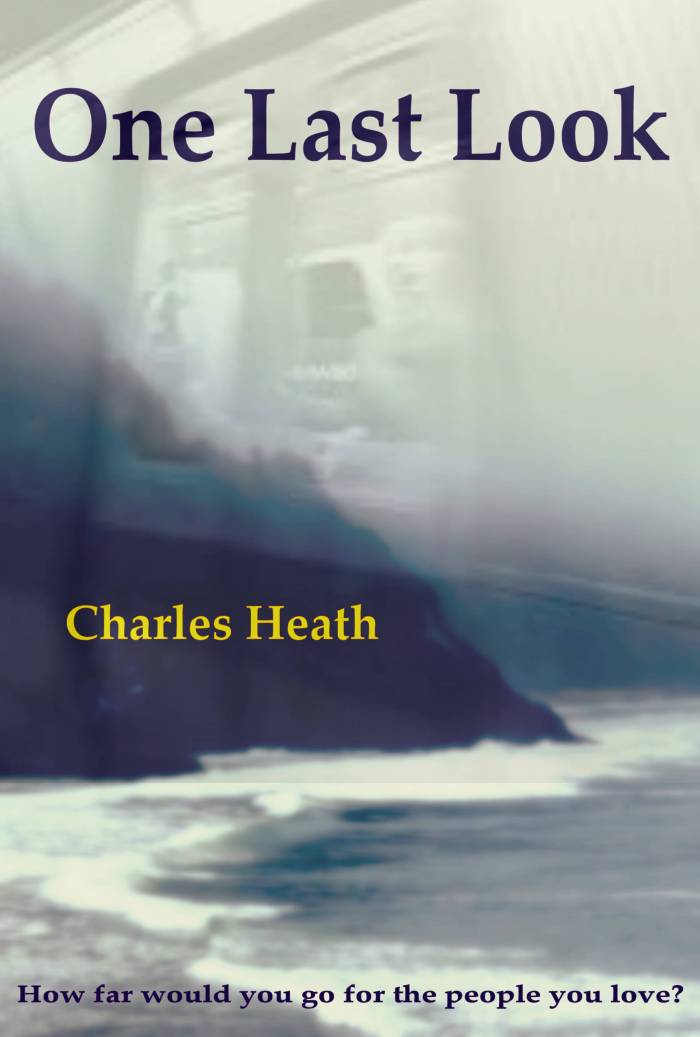
“One Last Look”, nothing is what it seems

A single event can have enormous consequences.

A single event driven by fate, after Ben told his wife Charlotte he would be late home one night, he left early, and by chance discovers his wife having dinner in their favourite restaurant with another man.

A single event where it could be said Ben was in the wrong place at the wrong time.

Who was this man?  Why was she having dinner with him?

A simple truth to explain the single event was all Ben required.  Instead, Charlotte told him a lie.

A single event that forces Ben to question everything he thought he knew about his wife, and the people who are around her.

After a near-death experience and forced retirement into a world he is unfamiliar with, Ben finds himself once again drawn back into that life of lies, violence, and intrigue.

From London to a small village in Tuscany, little by little Ben discovers who the woman he married is, and the real reason why fate had brought them together.

http://amzn.to/2CqUBcz

onelastlookcoverfinal2

Betwixt metaphorical houses

It’s like working in two offices, one uptown, and one downtown.

I have two blogs, this one, and another which is purely for writing, and generally, a lot of starts and not a lot of finishes.  I get ideas, and it’s a place to store them, and give a few people some amusement at my, sometimes, improbable situations and far-fetched stories.

Here I try to be more serious.

I have the ceiling, the cinema of my dreams.  Here anything is possible, like jumping from a helicopter about to explode, and survive, and get out of a sinking ship, like Houdini.  Of course, there is always one time when it doesn’t work, and Houdini knows that all too well.

Over there, I have a series which I started here, long ago, where I take a photograph and write a story inspired by it.  The interesting thing about that is I could probably use the same photograph over and over, and it would inspire a different tale.

I know, if I was running a writing class, everyone would see that photograph differently.

But what amazes me sometimes is the fact the story is not directly related to the theme.  It got me thinking about how we view our experiences, and what triggers memories.  I’ve discovered that it doesn’t necessarily happen by correlation, say, for instance, a memory of being in New York might be triggered by a visit to a cafe in Cloncurry.

I try to do one of these every day, but sometimes it’s hard work.  Writing itself can be some days, particularly when the words are lurking there, behind that invisible, impenetrable, rock wall.

OK, so I’m stuck in the middle of writing a piece over there, and I’ve come over here to whinge.

But, enough.  I’ll let you know what the cinema of my dreams is showing, later.