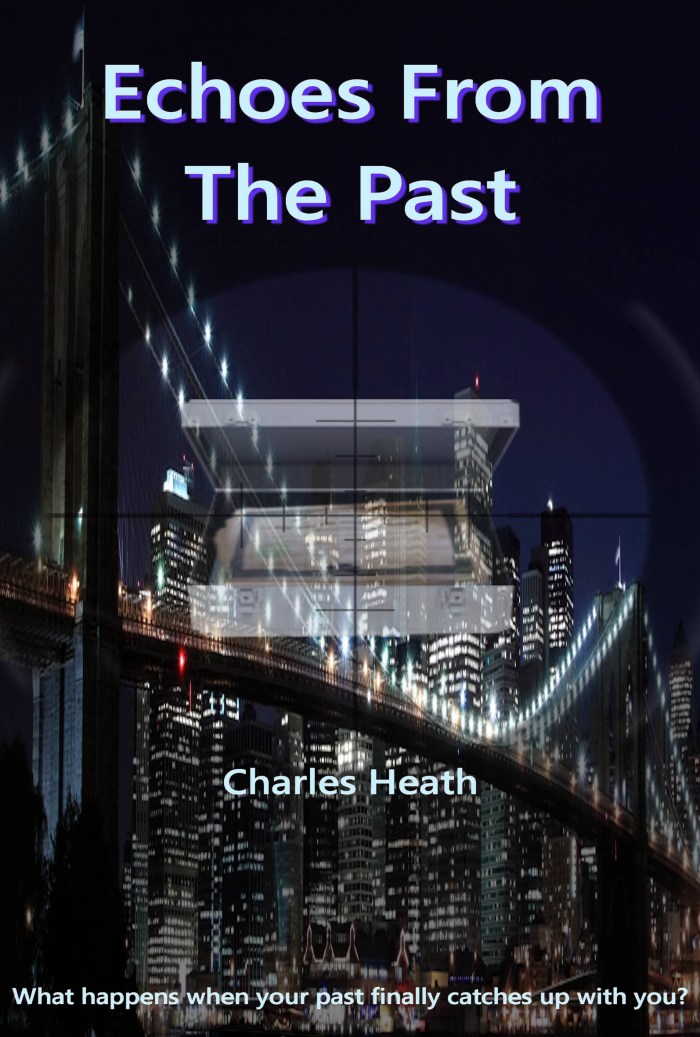
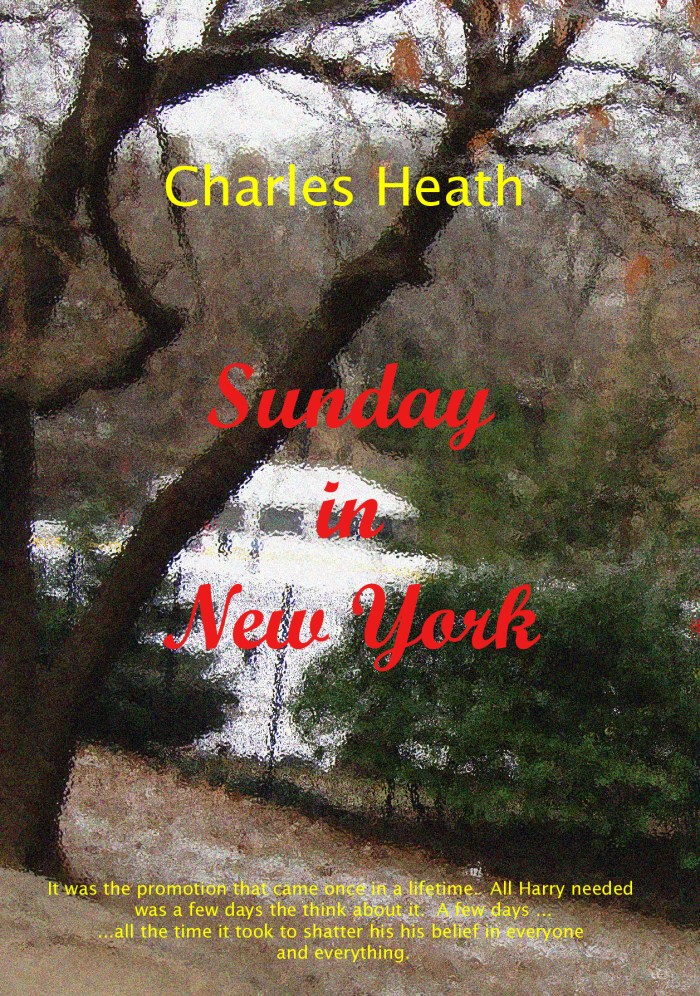
Two novels are on special for $0.99 for the next two weeks.
They are

for “Echoes from the Past” go to

for “The Devil You Don’t” go to
Two novels are on special for $0.99 for the next two weeks.
They are

for “Echoes from the Past” go to

for “The Devil You Don’t” go to
Here’s the thing…
Every time I close my eyes, I see something different.
I’d like to think the cinema of my dreams is playing a double feature but it’s a bit like a comedy cartoon night on Fox.
But these dreams are nothing to laugh about.
Once again there’s a new installment of an old feature, and we’re back on the treasure hunt.
It was an understatement to say I was dreading going to Boggs’ place.
In fact, in the hour it took to get through the morning chores I had time to consider how and why I was in this position. Boggs was a friend. We were friends at school and as best we could we had each other’s back when the bullies came out to play.
At times that didn’t amount to much because as everyone knows, bullies hunt in packs. Six against two wasn’t much of an equation. And it those days, the teachers spent more time hiding from the students than being in front of them.
It was simply a case of what doesn’t kill you makes you stronger.
It didn’t feel like that, not for a very long time.
But, in the end, misfortune can make strange bedfellows, and in a town that depended on a single industry, it soon became apparent that there were more people against the Benderby’s and the Cossatino’s than for, and in small-town politics, that was more than an evening up. Out of school and separated from their acolytes, both Alex and Vince found that whatever influence they had once, was now gone, and all that was left was a grunt, and we were basically left alone.
Boggs was the dreamer.
He had idolized his father and when he went missing it broke him.
This map thing was the first signs of Boggs finally coming back to life, but the problem was, it was all pinned on false hopes. The Sherriff was right. Boggs was in over his head, playing with the two most vicious families from around here, and it was bad enough that his father had fallen foul of them, the Sherriff was not about to see his son go the same way. I was going to try and talk Boggs out of it.
Yet, on the other hand, it was people like us who needed a win, just to show there was still hope in this place. With threats every day that the factory might have to close, there were dark clouds hanging over everyone’s head.
If the factory closed, there was going to be a very large hole in the local economy and a lot of people in financial trouble. I’m not sure how finding the treasure might solve all of that, but I suspect Boggs’ had something up his sleeve.
I knocked on the door and his mother answered. She looked harried. She was a nurse and looked as though she just got home from the night shift at the hospital.
“Boggs is in his room.”
“How are you this morning?”
“Tired. And an afternoon shift, which I might not get to if I don’t get some sleep. You know where he is. Try not to make any noise.”
“Will do.”
I came in and closed the door, watching her dash off down the passage to the other end of the house.
She could not work endless double shifts for much longer, but like all of us, it was not out of desire but necessity. She had implored Boggs to get a job and help, but he seemed oblivious to the problem. I’d tried to speak to him, but he had that insufferable way of just not listening.
Boggs was in his room, sitting on the bed and staring at the ceiling.
I looed up too, but there was nothing there.
“Don’t tell me,” I said, “but you’ve suddenly discovered you’ve got X-Ray vision.”
“If only. I could use it right now to find something that’s missing>”
“Your cell phone?” Boggs was always misplacing something, of forgetting it. I’d lost count how many times he’d misplaced his phone.
“No. An underground river.”
OK. That was out of left field. I had no idea any rivers were missing, or, in fact, they could actually go missing.
Apparently, they could.
“There’s two,” he said. 300 years ago five or take this part of the coastline had several rivers that ran down from the mountain range. What we now call the hills on the edge of the coastal plain. There was also a lake, not very large, but it used to have several streams flow into it all year round and had an aqua flow that came out along the coastline.”
“And you figured all of this out from what? A copy of the treasure map.”
The moment he started quoting rivers, streams, and lakes, I remembered each of those geographical features appeared on several of the map versions. I had suggested, rather comically, that it would be funny if the treasure was buried in the lake.
It wasn’t all that funny. It was also possible.
“Imagine this. Drop anchor out to sea, in other words on the other side of the natural sandbar that formed at the seaward side of the river, get in the longboats and row inshore to the lake, across the lake, up another river to the base of the hills. Then do a little exploring, north or south, and find a cave. I reckon the treasure was buried in a cave. We know there are caves up there, not many, but I think there used to be more.”
“Someone already did a survey with some rather fancy electronic equipment with the same idea in mind. He found three, not very long, and certainly without treasure. Two had substantial falls inside, which is why they were buried.”
“There’s more.”
He jumped up off the bed and went over to the robe and opened the door. Tacked on the back was a copy of an ordnance survey map of this part of the coastline, and a tracing of the treasure map, to the same scale on top.
“As you can see, I think ‘I’ve found the correlation between the real, and what was real 300 years ago.”
Except there’s no rivers and no lake. And no sand bar as I recall. There was a small marina in what might have been where the river met the sea, but that’s gone. They filled it in and build a shopping mall on it. A huge, now half empty, shopping mall. A modern wonder 40 years ago that was supposed to bring business and shoppers to the town. For a few years it did, until another town 50 miles away got the same idea, sold the land for half the price, and made the rents a quarter of what they were here.
They called it progress.
We called it piracy.
“Then we can hardly row our boat inshore and up the stream, if it’s not there.”
I hated to state the obvious.
“But,” he said, looking like the cat who’d swallowed the canary. “What if it is still there, but we just can’t see it?”
© Charles Heath 2020
This case has everything, red herrings, jealous brothers, femme fatales, and at the heart of it all, greed.
See below for an excerpt from the book…
Coming soon!

An excerpt from the book:
When Harry took the time to consider his position, a rather uncomfortable position at that, he concluded that he was somehow involved in another case that meant very little to him.
Not that it wasn’t important in some way he was yet to determine, it was just that his curiosity had got the better of him, and it had led to this: sitting in a chair, securely bound, waiting for someone one of his captors had called Doug.
It was not the name that worried him so much, it was the evil laugh that had come after the name was spoken.
Doug what? Doug the ‘destroyer’, Doug the ‘dangerous’, Doug the ‘deadly’; there was any number of sinister connotations, and perhaps that was the point of the laugh, to make it more frightening than it was.
But there was no doubt about one thing in his mind right then: he’d made a mistake. A very big. and costly, mistake. Just how big the cost, no doubt he would soon find out.
His mother, and his grandmother, the wisest person he had ever known, had once told him never to eavesdrop.
At the time he couldn’t help himself and instead of minding his own business, listening to a one-sided conversation which ended with a time and a place. The very nature of the person receiving the call was, at the very least, sinister, and, because of the cryptic conversation, there appeared to be, or at least to Harry, criminal activity involved.
For several days he had wrestled with the thought of whether he should go. Stay on the fringe, keep out of sight, observe and report to the police if it was a crime. Instead, he had willingly gone down the rabbit hole.
Now, sitting in an uncomfortable chair, several heat lamps hanging over his head, he was perspiring, and if perspiration could be used as a measure of fear, then Harry’s fear was at the highest level.
Another runnel of sweat rolled into his left eye, and, having his hands tied, literally, it made it impossible to clear it. The burning sensation momentarily took his mind off his predicament. He cursed and then shook his head trying to prevent a re-occurrence. It was to no avail.
Let the stinging sensation be a reminder of what was right and what was wrong.
It was obvious that it was the right place and the right time, but in considering his current perilous situation, it definitely was the wrong place to be, at the worst possible time.
It was meant to be his escape, an escape from the generations of lawyers, what were to Harry, dry, dusty men who had been in business since George Washington said to the first Walthenson to step foot on American soil, ‘Why don’t you become a lawyer?” when asked what he could do for the great man.
Or so it was handed down as lore, though Harry didn’t think Washington meant it literally, the Walthenson’s, then as now, were not shy of taking advice.
Except, of course, when it came to Harry.
He was, Harry’s father was prone to saying, the exception to every rule. Harry guessed his father was referring to the fact his son wanted to be a Private Detective rather than a dry, dusty lawyer. Just the clothes were enough to turn Harry off the profession.
So, with a little of the money Harry inherited from one of his aunts, he leased an office in Gramercy Park and had it renovated to look like the Sam Spade detective agency, you know the one, Spade and Archer, and The Maltese Falcon.
There’s a movie and a book by Dashiell Hammett if you’re interested.
So, there it was, painted on the opaque glass inset of the front door, ‘Harold Walthenson, Private Detective’.
There was enough money to hire an assistant, and it took a week before the right person came along, or, more to the point, didn’t just see his business plan as something sinister. Ellen, a tall cool woman in a long black dress, or so the words of a song in his head told him, fitted in perfectly.
She’d seen the movie, but she said with a grin, Harry was no Humphrey Bogart.
Of course not, he said, he didn’t smoke.
Three months on the job, and it had been a few calls, no ‘real’ cases, nothing but missing animals, and other miscellaneous items. What he really wanted was a missing person. Or perhaps a beguiling, sophisticated woman who was as deadly as she was charming, looking for an errant husband, perhaps one that she had already ‘dispatched’.
Or for a tall, dark and handsome foreigner who spoke in riddles and in heavily accented English, a spy, or perhaps an assassin, in town to take out the mayor. The man was such an imbecile Harry had considered doing it himself.
Now, in a back room of a disused warehouse, that wishful thinking might be just about to come to a very abrupt end, with none of the romanticized trappings of the business befalling him. No beguiling women, no sinister criminals, no stupid policemen.
Just a nasty little man whose only concern was how quickly or how slowly Harry’s end was going to be.
© Charles Heath 2019
John Pennington’s life is in the doldrums. Looking for new opportunities, prevaricating about getting married, the only joy on the horizon was an upcoming visit to his grandmother in Sorrento, Italy.
Suddenly he is left at the check-in counter with a message on his phone telling him the marriage is off, and the relationship is over.
If only he hadn’t promised a friend he would do a favour for him in Rome.
At the first stop, Geneva, he has a chance encounter with Zoe, an intriguing woman who captures his imagination from the moment she boards the Savoire, and his life ventures into uncharted territory in more ways than one.
That ‘favour’ for his friend suddenly becomes a life-changing event, and when Zoe, the woman who he knows is too good to be true, reappears, danger and death follows.
Shot at, lied to, seduced, and drawn into a world where nothing is what it seems, John is dragged into an adrenaline-charged undertaking, where he may have been wiser to stay with the ‘devil you know’ rather than opt for the ‘devil you don’t’.

Perhaps it’s about time I started writing what may or may not be the first chapter.
Bill’s past life can go on hold. For now.
A cool breeze blew briskly across meadows of tall grass, giving the impression of the ocean in a storm. High above, clouds scudded across the sky, occasionally allowing the sun to shine through to bathe the ground in the sunshine, intensifying the richness of the greens and browns.
It was spring. Trees were displaying new growth, and flowers were starting to show the promise of summery delight. An occasional light shower of rain added to the delightful aromas, particularly where the grass had recently been mowed.
I was there, too, with my grandmother, the woman who had, for the most part, brought me up at her country residence. But, as I got older, the dream changed and sometimes there were storm clouds on the horizon, or I was caught in the rain, alone and frightened, or lost in the woods in the dark.
There were other visions like these from my childhood, now a million years away somewhere in a distant past that was hard to remember or say where and when they belonged. It was a pity some were now based on images stolen from the start of a movie seen on TV late at night as I was trying to get to sleep. Or that the psychiatrist had said there was some trauma from my early childhood, trying to work its way out.
Like every other morning, these images came to me as I was hovering somewhere between conscious and unconscious, just before the alarm went off. Then it did, filling the room with a shrill noise that would have woken the dead.
I cursed, and then dragged myself over to the other side of the bed where I’d put the alarm clock, and hit it, killing the shrill sound. I’d put it there so I would have to wake up to turn it off. And, worse, I’d forgotten to turn it off the night before because it was, technically, the first day of my holiday.
Not that I really wanted one because since Ellen left, my life consisted of work, work, and more work. It kept my mind off being alone, and in an empty apartment except for the books, a bed, a table, and two chairs, a desk, and a well-worn lounge chair. I’d been there for years and still hadn’t bought any new furniture or anything else for that matter.
And the last holiday I’d gone on had been organized by Ellen fifteen years ago in Italy after our two daughters had finished school and graduated almost top of their class. We’d been happier then, but happiness was fleeting for me, and soon after the rot had set in, and it was the beginning of the end.
I remembered it only too clearly, coming home, opening a letter addressed to her, and finding proof of what I think I’d known all along. She was having an affair, had been for quite some time.
It should not have been a surprise given what I had put her through over the years, since my discharge from the Army, and the nightmares active service had fueled, but it was and sent me spiraling to a new low.
But that was five years ago. I came out of the fog a year after that. Ellen was gone, the girls came to see me from time to time, and all I had left were memories.
I rolled over and tried to go back to sleep. I was on holiday. No work, no pressure, nothing. I could go back to my grandmother’s house and visit. I had been promising myself I’d do that soon, even if it was now a country hotel. From the advertising it had not changed one bit, the house and grounds intact.
Or I could throw a dart at a map and get on the next plane there, though knowing my ability with a dart, it would be in the middle of the ocean.
I could do almost anything I wanted.
© Charles Heath 2016-2020
A single event can have enormous consequences.
A single event driven by fate, after Ben told his wife Charlotte he would be late home one night, he left early, and by chance discovers his wife having dinner in their favourite restaurant with another man.
A single event where it could be said Ben was in the wrong place at the wrong time.
Who was this man? Why was she having dinner with him?
A simple truth to explain the single event was all Ben required. Instead, Charlotte told him a lie.
A single event that forces Ben to question everything he thought he knew about his wife, and the people who are around her.
After a near-death experience and forced retirement into a world he is unfamiliar with, Ben finds himself once again drawn back into that life of lies, violence, and intrigue.
From London to a small village in Tuscany, little by little Ben discovers who the woman he married is, and the real reason why fate had brought them together.

The stage is set for the big finale, though I’m not quite sure how ‘big’ it’s going to be.
Jack is ready to go having been given the green light by the girl with the gun. It seems collateral damage is not on the agenda for her, though he does admit to himself she is between that proverbial rock and a hard place.
The storekeeper still has a plan, shaky at best, to regain hold of the situation, once the customer is out of the shop. Nervy or not, he doesn’t think she had the capability to pull the trigger. He knows what sort of person it takes to do that, and she isn’t one of them.
The policewoman is not sure what to expect but thinks that surprise is on her side, and whatever is going on, she will be able to resolve it. She has her weapon drawn and ready to use. She had yet to shoot anyone with it
The girl is at the point of no return, that point where she had nothing left to lose. Anything she had before was gone, destroyed by the choices she’d made. No one ever handed out a manual on how you should live your life, or provide a list of people you should avoid, and her father’s prophetic words the last time they men came home with a thud, ‘your life is defined by the choices you make’.
She was not going to jail so it was going to be death or glory.
Now read on:
Jack had heard there were moments where, in a split second, your whole life flashes before your eyes. He did, and what he saw he didn’t like.
But, then, neither was he very happy about the fact he was nearly out the door before the policewoman on the other side crashed into him and sent him sprawling to the floor.
That was about the same fraction of a second he heard the gun go off, twice, or so he thought and knew he was a dead man, waiting for the bullet.
Another fraction of a second passed as the policewoman tried to unravel the mess they’d become, and at that moment in time felt the tugging at his sleeve and then, as if in slow motion, the sound of the glass door disintegrating behind him.
Annalisa was quite prepared to let the customer go.
She kept one eye on the shopkeeper and one on the customer, sidling towards the door. The gun was ready to shoot the first person who made a wrong move.
Or so she told herself. It was getting heavy in her hand, she was shaking almost uncontrollably now, and was getting more and more frightened of the consequences. She didn’t think, if she aimed, she could hit the side of a barn let alone a person standing ten feet away from her.
The customer reached the door.
At exactly the moment he put his hand 0on the door handle to open the door, another person was pushing the door, trying to make their way in.
With force.
She saw the blue cap, guess it was the police, though she hadn’t heard the siren, but also guessed the shopkeeper might have a silent alarm.
Damn.
A single shot, instantly in the direction of the door, not necessarily aimed at the two people now collapsing to the floor in a tangled mess, but at the door itself.
The impact, yet another guess, might shatter the glass and make it easier to escape.
After one more job.
The hell with Simmo. He’d dragged her down the rabbit hole far enough. Simmo knew her first name, that she had rich parents, but nothing else. Besides, he was in such bad shape she didn’t think he’d recover.
The shopkeeper had no idea who she was, it was the first time she’d been to his shop, and now, after a few weeks with Simmo, not ever her mother would recognize her.
She swiveled the gun and aimed it at the shopkeeper and pulled the trigger., One less dealer in the city was good news not bad.
She saw it hit, not exactly where, but it caused him to twist and start falling to the ground, at the same time letting out a very loud scream. Panic or anger?
She wasn’t waiting to find out.
A last glance at Simmo, now down for the count, she ran for the door, past the two on the floor, what she could now see was a policewoman with her weapon drawn, but unable to use it.
She crashed through the remainder of the glass shards put into the street and ran.
In the distance she could hear a police car coming, siren blaring. A warning if there was ever one to run harder, up the road, down an alley, out into another street, then down into the subway.
Gone.
It took fifteen seconds to disentangle herself from the customer, pushing him away, and getting to her feet, weapon aimed.
At nothing but air.
The girl had gone, and then she had the vague recollection of a shadow passing her as she was facing the other way getting to her feet.
And running out the door.
Five more valuable seconds as her brain processed this piece of information before it issued the command to go out the door and see which way she went.
Another ten seconds to get out the door, and see the police car coming from the same direction she had earlier, screeching to a halt outside the shop, a car door opening, and an officer getting out.
Margaret was guessing at the driver to drive down the road where she guessed the girl had run, managing to yell breathlessly at the office getting out, “She’s gone that way,” and pointing.
The officer relayed the message and closed the door as the car sped off.
“What happened?”
“Shots fired by a woman, more a girl, in the process of a robbery.”
She ran back inside the officer following.
The customer had moved to a corner and was standing, testing his limbs, with an expression that said he was amazed he was still alive.
“Over behind the counter. She shopkeeper. He was standing there.”
The policeman rounded the end of the counter and looked down. “He’s here. It’s not looking good.”
Margaret didn’t hear him. She was calling an ambulance.
Next: Perhaps some editing
© Charles Heath 2016-2020
It’s time for the policewoman to arrive.
There is such a thing as pure dumb luck.
If she did not walk through the door when she did then Jack would have walked away.
From the policewoman’s perspective:
She crossed the street from the corner instead of remaining on the same side of the street as she did every other night. When she reached the other sidewalk, she was about 20 yards from the nearest window of the store.
As she crossed, she got a better view of the three people in the store and noticed the woman, or girl, was acting oddly as if she had something in her hand, and, from time to time looked down beside her.
A yard or two from the window she stopped, took a deep breath, and then moved slowly, getting a better view of the scene with each step.
Then she saw the gun in the girl’s hand, and the two men, the shopkeeper and a customer facing her, hands up.
It was a convenience store robbery in progress.
She reached for her radio, but it wasn’t there. She was off duty. Instead, she withdrew, and called the station on her mobile phone, and reported the robbery. The officer at the end of the phone said a car would be there in five minutes.
In five minutes there could be dead bodies.
She had to do something, and reached into her bag and pulled out a gun. Not her service weapon, but one she carried in case of personal danger.
Guns are dangerous weapons in the hands of professional and amateur alike. You would expect a professional who has trained to use a gun to not have a problem but consider what might happen in exceptional circumstances.
People freeze under pressure. Alternately, some shoot first and ask questions later.
We have an edgy and frightened girl with a loaded gun, one bullet or thirteen in a magazine, it doesn’t matter. It only takes one bullet to kill someone.
Then there’s the trigger pressure, light or heavy, the recoil after the shot and whether it causes the bullet to go into or above the intended target, especially if the person has never used a gun.
The policewoman, with training, will need two hands to take the shot, but in getting into the shop she will need one to open the door, and then be briefly distracted before using that hand to steady the other.
It will take a lifetime, even if it is only a few seconds.
Actions have consequences:
The policewoman crouched below the window shelf line so the girl wouldn’t see her, and made it to the door before straightening. She was in dark clothes so the chances were the girl would not see her against the dark street backdrop.
Her hand was on the door handle about to push it inwards when she could feel in being yanked hard from the other side, and the momentum and surprise of it caused her to lose balance and crash into the man who was trying to get out.
What the hell…
A second or two later both were on the floor in a tangled mess, her gun hand caught underneath her, and a glance in the direction of the girl with the gun told her the situation had gone from bad to worse.
The girl had swung the gun around and aimed it at her and squeezed the trigger twice.
The two bangs in the small room were almost deafening and definitely disorientating.
Behind her, the glass door disintegrated when the bullet hit it.
Neither she nor the man beside her had been hit.
Yet.
She felt a kick in the back and the tickling of glass then broke free as the man she’d run into rolled out of the way.
Quickly on her feet, she saw the girl had gone, and wasted precious seconds getting up off the floor, then out the door to find she had disappeared.
She could hear a siren in the distance. They’d find her.
If the policewoman had not picked that precise moment to enter the shop, maybe the man would have got away.
Maybe.
If he’d been aware of the fact he was allowed to leave.
He was lucky not to be shot.
Yet there were two shots, and we know at least one of them broke the door’s glass panel.
Next – the epilog
© Charles Heath 2016-2020
Sunday in New York” is ultimately a story about trust, and what happens when a marriage is stretched to its limits.
When Harry Steele attends a lunch with his manager, Barclay, to discuss a promotion that any junior executive would accept in a heartbeat, it is the fact his wife, Alison, who previously professed her reservations about Barclay, also agreed to attend, that casts a small element of doubt in his mind.
From that moment, his life, in the company, in deciding what to do, his marriage, his very life, spirals out of control.
There is no one big factor that can prove Harry’s worst fears, that his marriage is over, just a number of small, interconnecting events, when piled on top of each other, points to a cataclysmic end to everything he had believed in.
Trust is lost firstly in his best friend and mentor, Andy, who only hints of impending disaster, Sasha, a woman whom he saved, and who appears to have motives of her own, and then in his wife, Alison, as he discovered piece by piece damning evidence she is about to leave him for another man.
Can we trust what we see with our eyes or trust what we hear?
Haven’t we all jumped to conclusions at least once in our lives?
Can Alison, a woman whose self-belief and confidence is about to be put to the ultimate test, find a way of proving their relationship is as strong as it has ever been?
As they say in the classics, read on!
Purchase:
http://tinyurl.com/Amazon-SundayInNewYork

I’d read about out of body experiences, and like everyone else, thought it was nonsense. Some people claimed to see themselves in the operating theatre, medical staff frantically trying to revive them, and being surrounded by white light.
I was definitely looking down, but it wasn’t me I was looking at.
It was two children, a boy and a girl, with their parents, in a park.
The boy was Alan. He was about six or seven. The girl was Louise, and she was five years old. She had long red hair and looked the image of her mother.
I remember it now, it was Louise’s birthday and we went down to Bournemouth to visit our Grandmother, and it was the last time we were all together as a family.
We were flying homemade kites our father had made for us, and after we lay there looking up at the sky, making animals out of the clouds. I saw an elephant, Louise saw a giraffe.
We were so happy then.
Before the tragedy.
When I looked again ten years had passed and we were living in hell. Louise and I had become very adept at survival in a world we really didn’t understand, surrounded by people who wanted to crush our souls.
It was not a life a normal child had, our foster parents never quite the sort of people who were adequately equipped for two broken-hearted children. They tried their best, but their best was not good enough.
Every day it was a battle, to avoid the Bannister’s and Archie in particular, every day he made advances towards Louise and every day she fended him off.
Until one day she couldn’t.
Now I was sitting in the hospital, holding Louise’s hand. She was in a coma, and the doctors didn’t think she would wake from it. The damage done to her was too severe.
The doctors were wrong.
She woke, briefly, to name her five assailants. It was enough to have them arrested. It was not enough to have them convicted.
Justice would have to be served by other means.
I was outside the Bannister’s home.
I’d made my way there without really thinking, after watching Louise die. It was like being on autopilot, and I had no control over what I was doing. I had murder in mind. It was why I was holding an iron bar.
Skulking in the shadows. It was not very different from the way the Bannister’s operated.
I waited till Archie came out. I knew he eventually would. The police had taken him to the station for questioning, and then let him go. I didn’t understand why, nor did I care.
I followed him up the towpath, waiting till he stopped to light a cigarette, then came out of the shadows.
“Wotcha got there Alan?” he asked when he saw me. He knew what it was, and what it was for.
It was the first time I’d seen the fear in his eyes. He was alone.
“Justice.”
“For that slut of a sister of yours. I had nuffing to do with it.”
“She said otherwise, Archie.”
“She never said nuffing, you just made it up.” An attempt at bluster, but there was no confidence in his voice.
I held up the pipe. It had blood on it. Willy’s blood. “She may or may not have Archie, but Willy didn’t make it up. He sang like a bird. That’s his blood, probably brains on the pipe too, Archie, and yours will be there soon enough.”
“He dunnit, not me. Lyin’ bastard would say anything to save his own skin.” Definitely scared now, he was looking to run away.
“No, Archie. He didn’t. I’m coming for you. All of you Bannisters. And everyone who touched my sister.”
It was the recurring nightmare I had for years afterwards.
I closed my eyes and tried to shut out the thoughts, the images of Louise, the phone call, the visit to the hospital and being there when she succumbed to her injuries. Those were the very worst few hours of my life.
She had asked me to come to the railway station and walk home with her, and I was running late. If I had left when I was supposed to, it would never have happened and for years afterwards, I blamed myself for her death.
If only I’d not been late…
When the police finally caught the rapists, I’d known all along who they’d be; antagonists from school, the ring leader, Archie Bannister, a spurned boyfriend, a boy whose parents, ubiquitously known to all as ‘the Bannister’s, dealt in violence and crime and who owned the neighbourhood. The sins of the father had been very definitely passed onto the son.
At school, I used to be the whipping boy, Archie, a few grades ahead of me, made a point of belting me and a few of the other boys, to make sure the rest did as they were told. He liked Louise, but she had no time for a bully like him, even when he promised he would ‘protect’ me.
I knew the gang members, the boys who tow-kowed to save getting beaten up, and after the police couldn’t get enough information to prosecute them because everyone was too afraid to speak out, I went after Willy. There was always a weak link in a group, and he was it.
He worked in a factory, did long hours on a Wednesday and came home after dark alone. It was a half mile walk, through a park. The night I approached him, I smashed the lights and left it in darkness. He nearly changed his mind and went the long way home.
He didn’t.
It took an hour and a half to get the names. At first, when he saw me, he laughed. He said I would be next, and that was four words more than he knew he should have said.
When I found him alone the next morning I showed him the iron bar and told him he was on the list. I didn’t kill him then, he could wait his turn, and worry about what was going to happen to him.
When the police came to visit me shortly after that encounter, no doubt at the behest of the Bannister’s, the neighbourhood closed ranks and gave me an ironclad alibi. The Bannister’s then came to visit me and threatened me. I told them their days were numbered and showed them the door.
At the trial, he and his friends got off on a technicality. The police had failed to do their job properly, but it was not the police, but a single policeman, corrupted by the Bannisters.
Archie could help but rub it in my face. He was invincible.
Joe Collins took 12 bullets and six hours to bleed out. He apologized, he pleaded, he cried, he begged. I didn’t care.
Barry Mills, a strong lad with a mind to hurting people, Archie’s enforcer, almost got the better of me. I had to hit him more times than I wanted to, and in the end, I had to be satisfied that he died a short but agonizing death.
I revisited Willy in the hospital. He’d recovered enough to recognize me, and why I’d come. Suffocation was too good for him.
David Williams, second in command of the gang, was as tough and nasty as the Bannisters. His family were forging a partnership with the Bannister’s to make them even more powerful. Outwardly David was a pleasant sort of chap, affable, polite, and well mannered. A lot of people didn’t believe he could be like, or working with, the Bannisters.
He and I met in the pub. We got along like old friends. He said Willy had just named anyone he could think of, and that he was innocent of any charges. We shook hands and parted as friends.
Three hours later he was sitting in a chair in the middle of a disused factory, blindfolded and scared. I sat and watched him, listened to him, first threatening me, and then finally pleading with me. He’d guessed who it was that had kidnapped him.
When it was dark, I took the blindfold off and shone a very bright light in his eyes. I asked him if the violence he had visited upon my sister was worth it. He told me he was just a spectator.
I’d read the coroner’s report. They all had a turn. He was a liar.
He took nineteen bullets to die.
Then came Archie.
The same factory only this time there were four seats. Anna Bannister, brothel owner, Spike Bannister, head of the family, Emily Bannister, sister, and who had nothing to do with their criminal activities. She just had the misfortune of sharing their name.
Archie’s father told me how he was going to destroy me, and everyone I knew.
A well-placed bullet between the eyes shut him up.
Archie’s mother cursed me. I let her suffer for an hour before I put her out of her misery.
Archie remained stony-faced until I came to Emily. The death of his parents meant he would become head of the family. I guess their deaths meant as little to him as they did me.
He was a little more worried about his sister.
I told him it was confession time.
He told her it was little more than a forced confession and he had done nothing to deserve my retribution.
I shrugged and shot her, and we both watched her fall to the ground screaming in agony. I told him if he wanted her to live, he had to genuinely confess to his crimes. This time he did, it all poured out of him.
I went over to Emily. He watched in horror as I untied her bindings and pulled her up off the floor, suffering only from a small wound in her arm. Without saying a word she took the gun and walked over to stand behind him.
“Louise was my friend, Archie. My friend.”
Then she shot him. Six times.
To me, after saying what looked like a prayer, she said, “Killing them all will not bring her back, Alan, and I doubt she would approve of any of this. May God have mercy on your soul.”
Now I was in jail. I’d spent three hours detailing the deaths of the five boys, everything I’d done; a full confession. Without my sister, my life was nothing. I didn’t want to go back to the foster parents; I doubt they’d take back a murderer.
They were not allowed to.
For a month I lived in a small cell, in solitary, no visitors. I believed I was in the queue to be executed, and I had mentally prepared myself for the end.
Then I was told I had a visitor, and I was expecting a priest.
Instead, it was a man called McTavish. Short, wiry, and with an accent that I could barely understand.
“You’ve been a bad boy, Alan.”
When I saw it was not the priest I told the jailers not to let him in, I didn’t want to speak to anyone. They ignored me. I’d expected he was a psychiatrist, come to see whether I should be shipped off to the asylum.
I was beginning to think I was going mad.
I ignored him.
“I am the difference between you living or dying Alan, it’s as simple as that. You’d be a wise man to listen to what I have to offer.”
Death sounded good. I told him to go away.
He didn’t. Persistent bugger.
I was handcuffed to the table. The prison officers thought I was dangerous. Five, plus two, murders, I guess they had a right to think that. McTavish sat opposite me, ignoring my request to leave.
“Why’d you do it?”
“You know why.” Maybe if I spoke he’d go away.
“Your sister. By all accounts, the scum that did for her deserved what they got.”
“It was murder just the same. No difference between scum and proper people.”
“You like killing?”
“No-one does.”
“No, I dare say you’re right. But you’re different, Alan. As clean and merciless killing I’ve ever seen. We can use a man like you.”
“We?”
“A group of individuals who clean up the scum.”
I looked up to see his expression, one of benevolence, totally out of character for a man like him. It looked like I didn’t have a choice.
Trained, cleared, and ready to go.
I hadn’t realized there were so many people who were, for all intents and purposes, invisible. People that came and went, in malls, in hotels, trains, buses, airports, everywhere, people no one gave a second glance.
People like me.
In a mall, I became a shopper.
In a hotel, I was just another guest heading to his room.
On a bus or a train, I was just another commuter.
At the airport, I became a pilot. I didn’t need to know how to fly; everyone just accepted a pilot in a pilot suit was just what he looked like.
I had a passkey.
I had the correct documents to get me onto the plane.
That walk down the air bridge was the longest of my life. Waiting for the call from the gate, waiting for one of the air bridge staff to challenge me, stepping onto the plane.
Two pilots and a steward. A team. On the plane early before the rest of the crew. A group that was committing a crime, had committed a number of crimes and thought they’d got away with it.
Until the judge, the jury and their executioner arrived.
Me.
Quick, clean, merciless. Done.
I was now an operational field agent.
I was older now, and I could see in the mirror I was starting to go grey at the sides. It was far too early in my life for this, but I expect it had something to do with my employment.
I didn’t recognize the man who looked back at me.
It was certainly not Alan McKenzie, nor was there any part of that fifteen-year-old who had made the decision to exact revenge.
Given a choice; I would not have gone down this path.
Or so I kept telling myself each time a little more of my soul was sold to the devil.
I was Barry Gamble.
I was Lenny Buckman.
I was Jimmy Hosen.
I was anyone but the person I wanted to be.
That’s what I told Louise, standing in front of her grave, and trying to apologize for all the harm, all the people I’d killed for that one rash decision. If she was still alive she would be horrified, and ashamed.
Head bowed, tears streamed down my face.
God had gone on holiday and wasn’t there to hand out any forgiveness. Not that day. Not any day.
New York, New Years Eve.
I was at the end of a long tour, dragged out of a holiday and back into the fray, chasing down another scumbag. They were scumbags, and I’d become an automaton hunting them down and dispatching them to what McTavish called a better place.
This time I failed.
A few drinks to blot out the failure, a blonde woman who pushed my buttons, a room in a hotel, any hotel, it was like being on the merry-go-round, round and round and round…
Her name was Silvia or Sandra, or someone I’d met before, but couldn’t quite place her. It could be an enemy agent for all I knew or all I cared right then.
I was done.
I’d had enough.
I gave her the gun.
I begged her to kill me.
She didn’t.
Instead, I simply cried, letting the pent up emotion loose after being suppressed for so long, and she stayed with me, holding me close, and saying I was safe, that she knew exactly how I felt.
How could she? No one could know what I’d been through.
I remembered her name after she had gone.
Amanda.
I remembered she had an imperfection in her right eye.
Someone else had the same imperfection.
I couldn’t remember who that was.
Not then.
I had a dingy flat in Kensington, a place that I rarely stayed in if I could help it. After five-star hotel rooms, it made me feel shabby.
The end of another mission, I was on my way home, the underground, a bus, and then a walk.
It was late.
People were spilling out of the pub after the last drinks. Most in good spirits, others slightly more boisterous.
A loud-mouthed chap bumped into me, the sort who had one too many, and was ready to take on all comers.
He turned on me, “Watch where you’re going, you fool.”
Two of his friends dragged him away. He shrugged them off, squared up.
I punched him hard, in the stomach, and he fell backwards onto the ground. I looked at his two friends. “Take him home before someone makes mincemeat out of him.”
They grabbed his arms, lifted him off the ground and took him away.
Out of the corner of my eye, I could see a woman, early thirties, quite attractive, but very, very drunk. She staggered from the bar, bumped into me, and finished up sitting on the side of the road.
I looked around to see where her friends were. The exodus from the pub was over and the few nearby were leaving to go home.
She was alone, drunk, and by the look of her, unable to move.
I sat beside her. “Where are your friends?”
“Dunno.”
“You need help?”
She looked up, and sideways at me. She didn’t look the sort who would get in this state. Or maybe she was, I was a terrible judge of women.
“Who are you?” she asked.
“Nobody.” I was exactly how I felt.
“Well Mr Nobody, I’m drunk, and I don’t care. Just leave me here to rot.”
She put her head back between her knees, and it looked to me she was trying to stop the spinning sensation in her head.
Been there before, and it’s not a good feeling.
“Where are your friends?” I asked again.
“Got none.”
“Perhaps I should take you home.”
“I have no home.”
“You don’t look like a homeless person. If I’m not mistaken, those shoes are worth more than my weekly salary.” I’d seen them advertised, in the airline magazine, don’t ask me why the ad caught my attention.
She lifted her head and looked at me again. “You a smart fucking arse are you?”
“I have my moments.”
“Have them somewhere else.”
She rested her head against my shoulder. We were the only two left in the street, and suddenly in darkness when the proprietor turned off the outside lights.
“Take me home,” she said suddenly.
“Where is your place?”
“Don’t have one. Take me to your place.”
“You won’t like it.”
“I’m drunk. What’s not to like until tomorrow.”
I helped her to her feet. “You have a name?”
“Charlotte.”
The wedding was in a small church. We had been away for a weekend in the country, somewhere in the Cotswolds, and found this idyllic spot. Graves going back to the dawn of time, a beautiful garden tended by the vicar and his wife, an astonishing vista over hills and down dales.
On a spring afternoon with the sun, the flowers, and the peacefulness of the country.
I had two people at the wedding, the best man, Bradley, and my boss, Watkins.
Charlotte had her sisters Melissa and Isobel, and Isobel’s husband Giovanni, and their daughter Felicity.
And one more person who was as mysterious as she was attractive, a rather interesting combination as she was well over retirement age. She arrived late and left early.
Aunt Agatha.
She looked me up and down with what I’d call a withering look. “There’s more to you than meets the eye,” she said enigmatically.
“Likewise I’m sure,” I said. It earned me an elbow in the ribs from Charlotte. It was clear she feared this woman.
“Why did you come,” Charlotte asked.
“You know why.”
Agatha looked at me. “I like you. Take care of my granddaughter. You do not want me for an enemy.”
OK, now she officially scared me.
She thrust a cheque into my hand, smiled, and left.
“Who is she,” I asked after we watched her depart.
“Certainly not my fairy godmother.”
Charlotte never mentioned her again.
Zurich in summer, not exactly my favourite place.
Instead of going to visit her sister Isobel, we stayed at a hotel in Beethovenstrasse and Isobel and Felicity came to us. Her husband was not with her this time.
Felicity was three or four and looked very much like her mother. She also looked very much like Charlotte, and I’d remarked on it once before and it received a sharp rebuke.
We’d been twice before, and rather than talk to her sister, Charlotte spent her time with Felicity, and they were, together, like old friends. For so few visits they had a remarkable rapport.
I had not broached the subject of children with Charlotte, not after one such discussion where she had said she had no desire to be a mother. It had not been a subject before and wasn’t once since.
Perhaps like all Aunts, she liked the idea of playing with a child for a while and then give it back.
Felicity was curious as to who I was, but never ventured too close. I believed a child could sense the evil in adults and had seen through my facade of friendliness. We were never close.
But…
This time, when observing the two together, something quite out of left field popped into my head. It was not possible, not by any stretch of the imagination, but I thought she looked like my mother.
And Charlotte had seen me looking in their direction. “You seem distracted,” she said.
“I was just remembering my mother. Odd moment, haven’t done so for a very long time.”
“Why now?” I think she had a look of concern on her face.
“Her birthday, I guess,” I said, the first excuse I could think of.
Another look and I was wrong. She looked like Isobel or Charlotte, or if I wanted to believe it possible, Melissa too.
I was crying, tears streaming down my face.
I was in pain, searing pain from my lower back stretching down into my legs, and I was barely able to breathe.
It was like coming up for air.
It was like Snow White bringing Prince Charming back to life. I could feel what I thought was a gentle kiss and tears dropping on my cheeks, and when I opened my eyes, I saw Charlotte slowly lifting her head, a hand gently stroking the hair off my forehead.
And in a very soft voice, she said, “Hi.”
I could not speak, but I think I smiled. It was the girl with the imperfection in her right eye. Everything fell into place, and I knew, in that instant that we were irrevocably meant to be together.
“Welcome back.”
© Charles Heath 2016-2019