An excerpt from “The Things We Do For Love”

In the distance he could hear the dinner bell ringing and roused himself.  Feeling the dampness of the pillow, and fearing the ravages of pent up emotion, he considered not going down but thought it best not to upset Mrs. Mac, especially after he said he would be dining.

In the event, he wished he had reneged, especially when he discovered he was not the only guest staying at the hotel.

Whilst he’d been reminiscing, another guest, a young lady, had arrived.  He’d heard her and Mrs. Mac coming up the stairs, and then shown to a room on the same floor, perhaps at the other end of the passage.

Henry caught his first glimpse of her when she appeared at the door to the dining room, waiting for Mrs. Mac to show her to a table.

She was about mid-twenties, slim, long brown hair, and the grace and elegance of a woman associated with countless fashion magazines.  She was, he thought, stunningly beautiful with not a hair out of place, and make-up flawlessly applied.  Her clothes were black, simple, elegant, and expensive, the sort an heiress or wife of a millionaire might condescend to wear to a lesser occasion than dinner.

Then there was her expression; cold, forbidding, almost frightening in its intensity.  And her eyes, piercingly blue and yet laced with pain.  Dracula’s daughter was his immediate description of her.

All in all, he considered, the only thing they had in common was, like him, she seemed totally out of place.

Mrs. Mac came out of the kitchen, wiping her hands on her apron.  She was, she informed him earlier, chef, waitress, hotelier, barmaid, and cleaner all rolled into one.  Coming up to the new arrival she said, “Ah, Miss Andrews, I’m glad you decided to have dinner.  Would you like to sit with Mr. Henshaw, or would you like to have a table of your own?”

Henry could feel her icy stare as she sized up his appeal as a dining companion, making the hair on the back on his neck stand up.  He purposely didn’t look back.  In his estimation, his appeal rating was minus six.  Out of a thousand!

“If Mr. Henshaw doesn’t mind….”  She looked at him, leaving the query in mid-air.

He didn’t mind and said so.  Perhaps he’d underestimated his rating.

“Good.”  Mrs. Mac promptly ushered her over.  Henry stood, made sure she was seated properly and sat.

“Thank you.  You are most kind.”  The way she said it suggested snobbish overtones.

“I try to be when I can.”  It was supposed to nullify her sarcastic tone but made him sound a little silly, and when she gave him another of her icy glares, he regretted it.

Mrs. Mac quickly intervened, asking, “Would you care for the soup?”

They did, and, after writing the order on her pad, she gave them each a look, imperceptibly shook her head, and returned to the kitchen.

Before Michelle spoke to him again, she had another quick look at him, trying to fathom who and what he might be.  There was something about him.

His eyes, they mirrored the same sadness she felt, and, yes, there was something else, that it looked like he had been crying?  There was a tinge of redness.

Perhaps, she thought, he was here for the same reason she was.

No.  That wasn’t possible.

Then she said, without thinking, “Do you have any particular reason for coming here?”  Seconds later she realized she’s spoken it out loud, had hadn’t meant to actually ask, it just came out.

It took him by surprise, obviously not the first question he was expecting her to ask of him.

“No, other than it is as far from civilization, and home, as I could get.”

At least we agree on that, she thought.

It was obvious he was running away from something as well.

Given the isolation of the village and lack of geographic hospitality, it was, from her point of view, ideal.  All she had to do was avoid him, and that wouldn’t be difficult.

After getting through this evening first.

“Yes,” she agreed.  “It is that.”

A few seconds passed, and she thought she could feel his eyes on her and wasn’t going to look up.

Until he asked, “What’s your reason?”

Slight abrupt in manner, perhaps as a result of her question, and the manner in which she asked it.

She looked up.  “Rest.  And have some time to myself.”

She hoped he would notice the emphasis she had placed on the word ‘herself’ and take due note.  No doubt, she thought,  she had completely different ideas of what constituted a holiday than he, not that she had actually said she was here for a holiday.

Mrs. Mac arrived at a fortuitous moment to save them from further conversation.


Over the entree, she wondered if she had made a mistake coming to the hotel.  Of course, there had been no possible way she could know than anyone else might have booked the same hotel, but realized it was foolish to think she might end up in it by herself.

Was that what she was expecting?

Not a mistake then, but an unfortunate set of circumstances, which could be overcome by being sensible.

Yet, there he was, and it made her curious, not that he was a man, by himself, in the middle of nowhere, hiding like she was, but for very different reasons.

On discreet observance whilst they ate, she gained the impression his air of light-heartedness was forced and he had no sense of humor.

This feeling was engendered by his looks, unruly dark hair, and permanent frown.  And then there was his abysmal taste in clothes on a tall, lanky frame.  They were quality but totally unsuited to the wearer.

Rebellion was written all over him.

The only other thought crossing her mind, and rather incongruously, was he could do with a decent feed.  In that respect, she knew now from the mountain of food in front of her, he had come to the right place.

“Mr. Henshaw?”

He looked up.  “Henshaw is too formal.  Henry sounds much better,” he said, with a slight hint of gruffness.

“Then my name is Michelle.”

Mrs. Mac came in to take their order for the only main course, gather up the entree dishes, then return to the kitchen.

“Staying long?” she asked.

“About three weeks.  Yourself?”

“About the same.”

The conversation dried up.

Neither looked at the other, rather at the walls, out the window, towards the kitchen, anywhere.  It was, she thought, almost unbearably awkward.


Mrs. Mac returned with a large tray with dishes on it, setting it down on the table next to theirs.

“Not as good as the usual cook,” she said, serving up the dinner expertly, “but it comes a good second, even if I do say so myself.  Care for some wine?”

Henry looked at Michelle.  “What do you think?”

“I’m used to my dining companions making the decision.”

You would, he thought.  He couldn’t help but notice the cutting edge of her tone.  Then, to Mrs. Mac, he named a particular White Burgundy he liked and she bustled off.

“I hope you like it,” he said, acknowledging her previous comment with a smile that had nothing to do with humor.

“Yes, so do I.”

Both made a start on the main course, a concoction of chicken and vegetables that were delicious, Henry thought, when compared to the bland food he received at home and sometimes aboard my ship.

It was five minutes before Mrs. Mac returned with the bottle and two glasses.  After opening it and pouring the drinks, she left them alone again.

Henry resumed the conversation.  “How did you arrive?  I came by train.”

“By car.”

“Did you drive yourself?”

And he thought, a few seconds later, that was a silly question, otherwise she would not be alone, and certainly not sitting at this table. With him.

“After a fashion.”

He could see that she was formulating a retort in her mind, then changed it, instead, smiling for the first time, and it served to lighten the atmosphere.

And in doing so, it showed him she had another more pleasant side despite the fact she was trying not to look happy.

“My father reckons I’m just another of ‘those’ women drivers,” she added.

“Whatever for?”

“The first and only time he came with me I had an accident.  I ran up the back of another car.  Of course, it didn’t matter to him the other driver was driving like a startled rabbit.”

“It doesn’t help,” he agreed.

“Do you drive?”

“Mostly people up the wall.”  His attempt at humor failed.  “Actually,” he added quickly, “I’ve got a very old Morris that manages to get me where I’m going.”

The apple pie and cream for dessert came and went and the rapport between them improved as the wine disappeared and the coffee came.  Both had found, after getting to know each other better, their first impressions were not necessarily correct.

“Enjoy the food?” Mrs. Mac asked, suddenly reappearing.

“Beautifully cooked and delicious to eat,” Michelle said, and Henry endorsed her remarks.

“Ah, it does my heart good to hear such genuine compliments,” she said, smiling.  She collected the last of the dishes and disappeared yet again.

“What do you do for a living,” Michelle asked in an off-hand manner.

He had a feeling she was not particularly interested and it was just making conversation.

“I’m a purser.”

“A what?”

“A purser.  I work on a ship doing the paperwork, that sort of thing.”

“I see.”

“And you?”

“I was a model.”

“Was?”

“Until I had an accident, a rather bad one.”

“Oh, I’m sorry.”

So that explained the odd feeling he had about her.

As the evening had worn on, he began to think there might be something wrong, seriously wrong with her because she didn’t look too well.  Even the carefully applied makeup, from close up, didn’t hide the very pale, and tired look, or the sunken, dark ringed eyes.

“I try not to think about it, but it doesn’t necessarily work.  I’ve come here for peace and quiet, away from doctors and parents.”

“Then you will not have to worry about me annoying you.  I’m one of those fall-asleep-reading-a-book types.”

Perhaps it would be like ships passing in the night and then smiled to himself about the analogy.

Dinner now over, they separated.

Henry went back to the lounge to read a few pages of his book before going to bed, and Michelle went up to her room to retire for the night.

But try as he might, he was unable to read, his mind dwelling on the unusual, yet the compellingly mysterious person he would be sharing the hotel with.

Overlaying that original blurred image of her standing in the doorway was another of her haunting expressions that had, he finally conceded, taken his breath away, and a look that had sent more than one tingle down his spine.

She may not have thought much of him, but she had certainly made an impression on him.


© Charles Heath 2015-2020
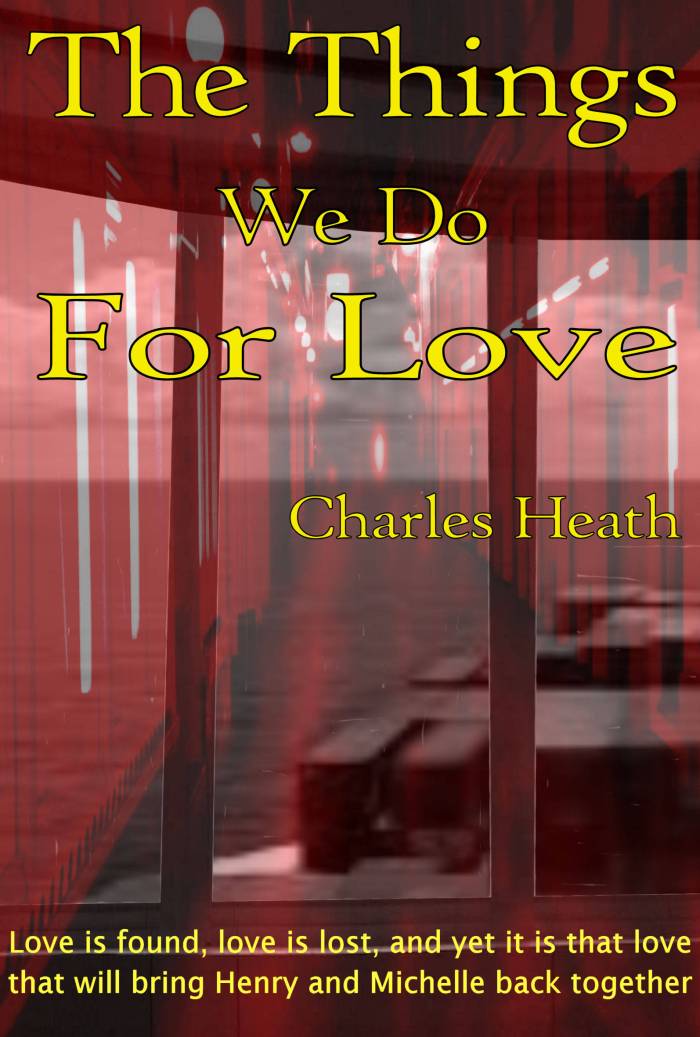
lovecoverfinal1

NaNoWriMo (April) – Day 3

My writing effort for the two days, yesterday and today amounted to about 6,000 words, which by any stretch of the imagination is a good two days.

But, here’s the thing. I went over if briefly yesterday, and reworked about 2,000 words, and then today I looked at the rest.

Yesterday was a bad day for continuity, and I found myself beset with innumerable distractions. Being Good Friday probably had a lot to do with it.

Today, there were also distractions, but not as bad, and at least from the outset, I got to read the words from start to end.

And, yes, they needed a little work, and, yes, I realise we should not be editing, but writing.

Sorry, but not sorry. It had to be done, and now I feel better about it.

Today’s effort amounts to 4,454 words, for a total, so far, of 8,368.

More tomorrow.

“The Devil You Don’t”, be careful what you wish for

Now only $0.99 at https://amzn.to/2Xyh1ow

John Pennington’s life is in the doldrums. Looking for new opportunities, prevaricating about getting married, the only joy on the horizon was an upcoming visit to his grandmother in Sorrento, Italy.

Suddenly he is left at the check-in counter with a message on his phone telling him the marriage is off, and the relationship is over.

If only he hadn’t promised a friend he would do a favor for him in Rome.

At the first stop, Geneva, he has a chance encounter with Zoe, an intriguing woman who captures his imagination from the moment she boards the Savoire, and his life ventures into uncharted territory in more ways than one.

That ‘favor’ for his friend suddenly becomes a life-changing event, and when Zoe, the woman who he knows is too good to be true, reappears, danger and death follow.

Shot at, lied to, seduced, and drawn into a world where nothing is what it seems, John is dragged into an adrenaline-charged undertaking, where he may have been wiser to stay with the ‘devil you know’ rather than opt for the ‘devil you don’t’.

newdevilcvr6

The A to Z Challenge – C is for “Call me!”

You know what it’s like on Monday morning, especially if it’s very cold and the double glazing is failing miserably to keep the cold out.

It was warm under three blankets thick sheets and a doona, and I didn’t want to get up.

It doesn’t help if in the last few months, the dream job you once had had turned into a drudge, and there was any number of reasons to stay home rather than go into the office. Once, that was trying to find an excuse to stay home because you’d rather go to work.

That was a long time ago or felt like it.

My cell phone vibrated, an incoming message, or more likely a reminder. I reached out into the icy wasteland that was the distance from under the covers to my phone on the bedside table. It was very cold out there, and for a moment I regretted that impulse to check.

It was a reminder; I had a meeting at HR with the manager. I had thought I might be eligible for redundancy since the company was in the throes of a cost cutting exercise. Once I might have been apprehensive, but now, given my recent change in department and responsibility, I was kind of hoping now that it was.

I felt a hand on my shoulder. “Time to get up sleepy head. You have a meeting to go to, not one to be late.”

It felt strange to wake up with someone else in the bed. My luck in that department hadn’t been all that hood lately, but something changed, and at the usual Friday night after work drinks at the pub I ran into one of the PA’s I’d seen around, one who was curious to meet me as much as I was to meet her.

One thing had led to another and when I asked her if she wanted to drop in on the way home, she did.

“I’d prefer not to. I can think of better things to do.”

“So, could I but that’s not the point. Five more minutes, then I’m pushing you out.”

She snuggled into my back, and I could feel the warmth of her body, and having the exact opposite effect than she intended. But she was right. It was important, and I had to go. But, in the meantime it was four more minutes and counting.

When you get a call from the head of HR it usually means one of two things, a promotion, or those two dreaded words, ‘you’re fired’, though not usually said with the same dramatic effect.

This year had already been calamitous enough getting sidelined from Mergers and Acquisitions because I’d been usurped. That was the word I was going with, but it was to a certain extent, my fault. I took my eye off the ball, and allowed someone else to make their case.

Of course, it helped that the person was connected to all the right people in the company, and, with the change in Chairman, it was also a matter of removing some of the people who were appointed by the previous incumbent.

I and four of my equivalent managers had been usurped and moved to places where they would have less impact. I had finished up in sales and marketing, and to be quite honest, it was such a step down, I had already decided to leave when the opportunity presented itself.

My assistant manager, who had already put in his resignation, was working out his final two weeks. I told him to take leave until the contract expired, but he was more dedicated than that. He had got in before me and was sitting at his desk a cup of coffee in his hand and another on the desk.

“How many days?”

“Six and counting. What about you? You should be out canvassing. There’s at least three other places I know would be waiting to hear from you.”

“It’s still in the consideration phase.”

“You’re likely to get the chop anyway, with this thing you have with Sharky.”

Sharkey was the HR manager.

You know something I don’t?” I picked up the coffee, removed the lid and took in the aroma.
“They’re downsizing. Broadham had decided to go on a cost cutting exercise, and instead of the suggested efficiencies we put up last year, they’re going with people. I don’t think he quite gets it.”

“You mean my replacement doesn’t know anything about efficiency. He makes a good yes man though, telling Broadham exactly what he wants to hear.”

Broadham, the new Chairman, never did understand that people appointed to important positions needed to have the relevant qualifications and experience. My replacement had neither. That was when the employees loyal to the previous Chairman had started leaving.

We had called it death, whilst Broadham had called it natural attrition. He didn’t quite understand that so far, over 300 years of experience had left, and as much again was in the process of leaving.

“Are you going to tell Sharky you’re leaving?”

“I’ll wait and see what he has to say. I think he knows the ship is sinking.”

There wasn’t much I didn’t know about the current state of the company, and with the departures, I knew it was only a matter of time. Sharky was a good man, but he couldn’t stem the tide.

He also knew the vagaries of profits and share prices, and we had been watching the share price, and the market itself. It was teetering, and in the last few months, parcels of shares were being unloaded, not a lot at one time, but a steady trickle.

That told me that Broadham and his cronies were cashing in while the going was good, and quite possibly were about to steer the ship onto the rocks. The question was who was buying, and that, after some hard research I found to be certain board members. Why, I suspected, was to increase their holdings and leverage, but I don’t think they quite realised that there would be nothing left but worthless stock certificates.

It was evidence, when I finally left, that I would pass on to the relevant authorities.

In the meantime, I had a meeting to go to.

“Best of luck,” my assistant muttered as I passed his desk.

“If I don’t return, I’ll will have been escorted from the building. If that happens, Call me.”

It had happened before. When people were sacked, they were escorted to their office, allowed to pack their belongings, and were then escorted to the front door. It would be an ignominious end to an illustrious career, or so I’d been told by the girl who was no doubt still asleep in my bed.

She had heard the whispers.

The walk to the lift, the traversing of the four floors to the executive level, and then to the outer office where Sharky’s PA sat took all of three minutes. I had hoped it would be longer.

“He’s waiting for you,” she said, “go on in.”

I knocked on the door, then went in, closing it behind me. “Now, sir, what on earth could you want to see me about?


© Charles Heath 2021

“Sunday in New York”, it’s a bumpy road to love

“Sunday in New York” is ultimately a story about trust, and what happens when a marriage is stretched to its limits.

When Harry Steele attends a lunch with his manager, Barclay, to discuss a promotion that any junior executive would accept in a heartbeat, it is the fact his wife, Alison, who previously professed her reservations about Barclay, also agreed to attend, that casts a small element of doubt in his mind.

From that moment, his life, in the company, in deciding what to do, his marriage, his very life, spirals out of control.

There is no one big factor that can prove Harry’s worst fears, that his marriage is over, just a number of small, interconnecting events, when piled on top of each other, points to a cataclysmic end to everything he had believed in.

Trust is lost firstly in his best friend and mentor, Andy, who only hints of impending disaster, Sasha, a woman whom he saved, and who appears to have motives of her own, and then in his wife, Alison, as he discovered piece by piece damning evidence she is about to leave him for another man.

Can we trust what we see with our eyes or trust what we hear?

Haven’t we all jumped to conclusions at least once in our lives?

Can Alison, a woman whose self-belief and confidence is about to be put to the ultimate test, find a way of proving their relationship is as strong as it has ever been?

As they say in the classics, read on!

Purchase:

http://tinyurl.com/Amazon-SundayInNewYork

NaNoWriMo (April) – Day 2

Writing proceeds apace and the next chapter seems to have gone on a bit longer than I wanted, but that was because I was having fun.

These two are going to be together, not exactly by choice, but the result of circumstances.

I have also been making notes at the same time, of situations that will arise from their being together, and what happens later on that causes the mistaken identity.

I have also created a timeline with actions that stretch further into the story, and wrote a few little sections at the same time because the story was almost writing itself, and moments like those, I find it best to get it down on paper, no matter how roughly it turns out.

I am also doing a quick edit of this section of writing because it will be most likely two or three chapters, not just one.

Today’s effort amounts to 2,214 words, for a total, so far, of 3,914.

More tomorrow.

The A to Z Challenge – B is for “Because it’s not me”

If the was one fault I had, it was prevarication.

For a long time, I had always been afraid of making a mistake, after I had done exactly that.  They said our mistakes didn’t define us, but that one had.  I had lost the trust of everyone, from my parents to friends.

It was only a small lie, or so I told myself, but it had far reaching ramifications, and almost cost someone their life.  But whilst I believed it was not all that bad, and the police had agreed that anyone who had been put in the same position would have done the same, there were those who didn’t agree.

It was a moment in time I often relived in my mind, over and over, and eventually led to several outcomes.

The first, I left home, the town where up till then I’d lived all of my life, walking away from family and those who used to be friends, knowing that what they said and what they felt were two entirely different things.  For all concerned, it was better that I left, cutting all ties, and make a fresh start, away from those whom I knew would never forget, even though they forgave me.

The second, and most dire, I changed my name, and my history, even how I looked.  Today, I was a very different person to that of thirty years ago.

The third, I moved to another country, and vowed never to return, always looking constantly over my shoulder, expecting someone from the past to find me.  I instinctively knew that I would never escape, that one day a stark reminder would come back and destroy everything.

I picked the one occupation that would keep me both occupied and invisible.

Journalist.

I had started at the bottom, literally writing death notices, and worked my way up to what is ubiquitously known as ‘foreign correspondent’, going to places where no one else would go, those hotbeds of unrest, and war zones, reporting from both sides.

Perhaps it could say I had a death wish, a statement my editor had once said when he came to see me in hospital back in London after I’d been caught up in a rocket attack and repatriated.  He had come to offer me a job back home, to tell me my tour was over.

I declined the opportunity, and he left, shaking his head.

But that was not the only visitor that came to the hospital that day.  The other visitor was an elderly man, immaculately dressed in a pin stripe suit and bowler hat.  It screamed public servant, and the moment I saw him wandering up the passage, a chill ran down my spine.

Although he looked like he was looking for someone else, I knew he would eventually finish up in my doorway.

Five minutes after I first saw him.

When he appeared at the door, I thought about ignoring him, but realised that wasn’t going to change anything.  Besides that, I guess I wanted to know why he would want to see me.

“James Wilson?”

“Would it make any difference if I said no?”  Well, it didn’t mean I couldn’t spar with him, just a little.  “Who are you.”

“Do you mind if I come in?”

I got the impression he would do it anyway, irrespective of what I said.  I said no, and as I suspected he came in anyway, closing the door behind him, then took a minute or two to make himself comfortable in the visitor’s chair, what was an impossible task.

Then, settled, he said, “I understand you have just been repatriated from Syria.”

“I was in the wrong place at the wrong time.”

It wasn’t common knowledge where I’d come from, so this person knew something about me, which was immediate cause for concern.

“The bane of a reporter trying to cover a dangerous situation,” he said, with just the right amount of levity in his tone.  “I get it, by the way.  I once had that devil may care attitude you need to get the story.  I was chasing a Pulitzer, believe it or not, and used a few of those nine lives in the process.  Which one are you up to?”

I was going to say that awards didn’t matter but among those whom made up the press pack in those God forsaken places, there was an unwritten desire to be rewarded other than by pay.  For me, though, it was not a defining factor.

“Lost count.  But why would that interest you, or whoever it is you represent?  By the way, just who do you represent?”

Second attempt at finding out who this man was.  If he was dodging and weaving, it would suggest a clandestine organisation.

“People who would like to use your unique talent in getting into trouble spots around the world.  We’re not asking you to come work for us exclusively, rather piggyback on the job that you already do so well.”

An unnamed man from an unnamed organisation.  What he was offering wasn’t unheard of, and I had been warned, more than once, that jobs like he was suggesting were more often than not offered to people like me.  With that came one line of advice, turn around and run like hell.

But, with nothing to amuse me in hospital, I was curious.  “Doing what exactly?”

The fact his expression changed indicated my response had taken him by surprise.  Perhaps he was used to being told where to go.  Not yet.  I had this fanciful notion in the back of my mind that what he might offer might get me closer to the story.

“Keeping your eyes and ears open.  We’ll tell you what to look for, all you’ll be doing is looking for evidence.  There will be no need to go looking for trouble, if there’s evidence we ask you to report it, if not, no harm done.”

Not so hard.  If that was all it was.  The trouble was, if something sounds simple, which that did, but inevitably, it was going to be anything but.  I’d heard stories, and the consequences.

“You’re presuming that my editor will send me back.  He just offered me a job at home.”

“I think both of us know you’re not interested in domesticity.  If he isn’t willing to adhere to your wishes, I’m sure we could find someone else who would be willing to take you on.  You have had several offers recently, have you not?”

So, without a doubt, he knew a lot about me, especially if he asked around.  I had had several offers, but I was happy where I was.  I liked the no questions about your past that my current employer had promised.

Yes, looking at the determination on this man’s face, I had no doubt they or he could do what he said.  No one comes to a meeting like this without holding all the cards.  Also, not that I wanted it to be so, It told me that my agreement was not necessarily going to be optional.

But I was happy to dither and find out.  “Since I’m not sure when the hospital is going to discharge me, and the fact I’m not exactly very mobile at the moment, can I consider the proposal.  Right now, as you can imagine, getting back to work is not exactly a priority.”

“Of course.”  He took a card out of his coat pocket and put it on the bedside table.  “By all means.  Call me on that number when you’ve decided.”

He stood.  “It will be a great opportunity.  Thank you for your time.”

Of course, the two impressions I was left with were, one, he had me mixed up with someone else, and two, that I would never see him again.

It was an impossible task, for me at least, because I did not have a poker face, and could rarely carry a lie.  I would be the last person they’d want for the job.

And thinking that, I rolled over, put it out of my mind, and went back to sleep.


© Charles Heath 2021

An excerpt from “If Only” – a work in progress

Investigation of crimes don’t always go according to plan, nor does the perpetrator get either found or punished.

That was particularly true in my case.  The murderer was very careful in not leaving any evidence behind, to the extent that the police could not rules out whether it was a male or a  female.

At one stage the police thought I had murdered my own wife though how I could be on a train at the time of the murder was beyond me.  I had witnesses and a cast-iron alibi.

The officer in charge was Detective Inspector Gabrielle Walters.  She came to me on the day after the murder seeking answers to the usual questions when was the last time you saw your wife, did you argue, the neighbors reckon there were heated discussions the day before.

Routine was the word she used.

Her Sargeant was a surly piece of work whose intention was to get answers or, more likely, a confession by any or all means possible.  I could sense the raging violence within him.  Fortunately, common sense prevailed.

Over the course of the next few weeks, once I’d been cleared of committing the crime, Gabrielle made a point of keeping me informed of the progress.

After three months the updates were more sporadic, and when, for lack of progress, it became a cold case, communication ceased.

But it was not the last I saw of Gabrielle.

The shock of finding Vanessa was more devastating than the fact she was now gone, and those images lived on in the same nightmare that came to visit me every night when I closed my eyes.

For months I was barely functioning, to the extent I had all but lost my job, and quite a few friends, particularly those who were more attached to Vanessa rather than me.

They didn’t understand how it could affect me so much, and since it had not happened to them, my tart replies of ‘you wouldn’t understand’ were met with equally short retorts.  Some questioned my sanity, even, for a time, so did I.

No one, it seemed, could understand what it was like, no one except Gabrielle.

She was by her own admission, damaged goods, having been the victim of a similar incident, a boyfriend who turned out to be a very bad boy.  Her story varied only in she had been made to witness his execution.  Her nightmare, in reliving that moment in time, was how she was still alive and, to this day, had no idea why she’d been spared.

It was a story she told me one night, some months after the investigation had been scaled down.  I was still looking for the bottom of a bottle and an emotional mess.  Perhaps it struck a resonance with her; she’d been there and managed to come out the other side.

What happened become our secret, a once-only night together that meant a great deal to me, and by mutual agreement, it was not spoken of again.  It was as if she knew exactly what was required to set me on the path to recovery.

And it had.

Since then we saw each about once a month in a cafe.   I had been surprised to hear from her again shortly after that eventful night when she called to set it up, ostensibly for her to provide me with any updates on the case, but perhaps we had, after that unspoken night, formed a closer bond than either of us wanted to admit.

We generally talked for hours over wine, then dinner and coffee.  It took a while for me to realize that all she had was her work, personal relationships were nigh on impossible in a job that left little or no spare time for anything else.

She’d always said that if I had any questions or problems about the case, or if there was anything that might come to me that might be relevant, even after all this time, all I had to do was call her.

I wondered if this text message was in that category.  I was certain it would interest the police and I had no doubt they could trace the message’s origin, but there was that tiny degree of doubt, whether or not I could trust her to tell me what the message meant.

I reached for the phone then put it back down again.  I’d think about it and decide tomorrow.

© Charles Heath 2018-2021

NaNoWriMo (April) – Day 2

Writing proceeds apace and the next chapter seems to have gone on a bit longer than I wanted, but that was because I was having fun.

These two are going to be together, not exactly by choice, but the result of circumstances.

I have also been making notes at the same time, of situations that will arise from their being together, and what happens later on that causes the mistaken identity.

I have also created a timeline with actions that stretch further into the story, and wrote a few little sections at the same time because the story was almost writing itself, and moments like those, I find it best to get it down on paper, no matter how roughly it turns out.

I am also doing a quick edit of this section of writing because it will be most likely two or three chapters, not just one.

Today’s effort amounts to 2,214 words, for a total, so far, of 3,914.

More tomorrow.

Inspiration, Maybe – Volume Two

50 photographs, 50 stories, of which there is one of the 50 below.

They all start with –

A picture paints … well, as many words as you like.  For instance:

And, the story:

Have you ever watched your hopes and dreams simply just fly away?

Everything I thought I wanted and needed had just left in an aeroplane, and although I said I was not going to, i came to the airport to see the plane leave.  Not the person on it, that would have been far too difficult and emotional, but perhaps it was symbolic, the end of one life and the start of another.

But no matter what I thought or felt, we had both come to the right decision.  She needed the opportunity to spread her wings.  It was probably not the best idea for her to apply for the job without telling me, but I understood her reasons.

She was in a rut.  Though her job was a very good one, it was not as demanding as she had expected, particularly after the last promotion, but with it came resentment from others on her level, that she, the youngest of the group would get the position.

It was something that had been weighing down of her for the last three months, and if noticed it, the late nights, the moodiness, sometimes a flash of temper.  I knew she had one, no one could have such red hair and not, but she had always kept it in check.

And, then there was us, together, and after seven years, it felt like we were going nowhere.  Perhaps that was down to my lack of ambition, and though she never said it, lack of sophistication.  It hadn’t been an issue, well, not until her last promotion, and the fact she had to entertain more, and frankly I felt like an embarrassment to her.

So, there it was, three days ago, the beginning of the weekend, and we had planned to go away for a few days and take stock.  We both acknowledged we needed to talk, but it never seemed the right time.

It was then she said she had quit her job and found a new one.  Starting the following Monday.

Ok, that took me by surprise, not so much that it something I sort of guessed might happen, but that she would just blurt it out.

I think that right then, at that moment, I could feel her frustration with everything around her.

What surprised her was my reaction.  None.

I simply asked where who, and when.

A world-class newspaper, in New York, and she had to be there in a week.

A week.

It was all the time I had left with her.

I remember I just shrugged and asked if the planned weekend away was off.

She stood on the other side of the kitchen counter, hands around a cup of coffee she had just poured, and that one thing I remembered was the lone tear that ran down her cheek.

Is that all you want to know?

I did, yes, but we had lost that intimacy we used to have when she would have told me what was happening, and we would have brainstormed solutions. I might be a cabinet maker but I still had a brain, was what I overheard her tell a friend once.

There’s not much to ask, I said.  You’ve been desperately unhappy and haven’t been able to hide it all that well, you have been under a lot of pressure trying to deal with a group of troglodytes, and you’ve been leaning on Bentley’s shoulder instead of mine, and I get it, he’s got more experience in that place,  and the politics that go with it, and is still an ally.

Her immediate superior and instrumental in her getting the position, but unlike some men in his position he had not taken advantage of a situation like some men would.  And even if she had made a move, which I doubted, that was not the sort of woman she was, he would have politely declined.

One of the very few happily married men in that organisation, so I heard.

So, she said, you’re not just a pretty face.

Par for the course for a cabinet maker whose university degree is in psychology.  It doesn’t take rocket science to see what was happening to you.  I just didn’t think it was my place to jump in unless you asked me, and when you didn’t, well, that told me everything I needed to know.

Yes, our relationship had a use by date, and it was in the next few days.

I was thinking, she said, that you might come with me,  you can make cabinets anywhere.

I could, but I think the real problem wasn’t just the job.  It was everything around her and going with her, that would just be a constant reminder of what had been holding her back. I didn’t want that for her and said so.

Then the only question left was, what do we do now?

Go shopping for suitcases.  Bags to pack, and places to go.

Getting on the roller coaster is easy.  On the beginning, it’s a slow easy ride, followed by the slow climb to the top.  It’s much like some relationships, they start out easy, they require a little work to get to the next level, follows by the adrenaline rush when it all comes together.

What most people forget is that what comes down must go back up, and life is pretty much a roller coaster with highs and lows.

Our roller coaster had just come or of the final turn and we were braking so that it stops at the station.

There was no question of going with her to New York.  Yes, I promised I’d come over and visit her, but that was a promise with crossed fingers behind my back.  After a few months in t the new job the last thing shed want was a reminder of what she left behind.  New friends new life.

We packed her bags, three out everything she didn’t want, a free trips to the op shop with stiff she knew others would like to have, and basically, by the time she was ready to go, there was nothing left of her in the apartment, or anywhere.

Her friends would be seeing her off at the airport, and that’s when I told her I was not coming, that moment the taxi arrived to take her away forever.  I remember standing there, watching the taxi go.  It was going to be, and was, as hard as it was to watch the plane leave.

So, there I was, finally staring at the blank sky, around me a dozen other plane spotters, a rather motley crew of plane enthusiasts.

Already that morning there’s been 6 different types of plane depart, and I could hear another winding up its engines for take-off.

People coming, people going.

Maybe I would go to New York in a couple of months, not to see her, but just see what the attraction was.  Or maybe I would drop in, just to see how she was.

As one of my friends told me when I gave him the news, the future is never written in stone, and it’s about time you broadened your horizons.

Perhaps it was.


© Charles Heath 2020-2021

Coming soon.  Find the above story and 49 others like it in: