Writing about writing a book – Day 14 starts

Colonel Davenport, the evil mastermind as I like to think of him, but in reality, he was a tortured soul on a number of fronts.

I’d like to say what happened to him was not his fault, but to a certain extent, people can go one way or the other, choose between right and wrong, choose the easy path or the hard path, and most of all, never take advantage of a situation for personal gain.

Most people.

But try having a reputation to live up to, and the expectations of everyone put on your shoulders, and you knew you would never be able to carry the load?

That was Archibald Davenport, first son of General Horace Davenport, the great, great, great, so many times grandson of the fearless and famous Walter Davenport, who was with General Grant, serving with honor and valor in the Civil War.

No such weight was ever passed on to his younger brother, Leslie, so, free to live his own life, and in doing so, far surpassing his older brother in respect and accomplishment.

Archibald Davenport managed to miss the Second World War, much to the disappointment of his father, kept to the fringes of the Korean War, but unluckily was in the wrong place at the wrong time when serving officers were sought to go over as advisors to the Vietnamese in the years before the conflict escalated.

Or, speaking plainly, his commander wanted to move the problem on by obtaining a promotion to Major and recommending him for service in Vietnam.  It was either that or dishonorable discharge and a few years in the stockade.

Knowing how it would affect his father, he took the commission.

But for an operator like Davenport, a man who could seek out and at the same time have trouble finding him, saw the conflict as a means to an end, and has latched onto an operative that he assumed was working covertly with the CIA, realized the potential for a man of his talents.

It didn’t take long before he was unofficially attached to the CIA, his army commander willingly signing the orders to ‘get rid of what will become a major (pardon the pun) problem’.  So began the empire, arms, drugs, information, whatever was needed by whoever had the wherewithal, he was the man to see.

How did Bill find himself under Davenport’s command?

You’ll have to wait and see.

The cinema of my dreams – I never wanted to go to Africa – Episode 11

It’s still a battle of wits, but our hero knows he’s in serious trouble.

The problem is, there are familiar faces and a question of who is a friend and who is foe made all the more difficult because the enemy if it is the enemy, doesn’t look or sound or act like the enemy.
Old friends, new tricks.

Genial tone, trying to win my confidence.  I wasn’t going to ask, but wait for an explanation.  Asking would be like leaving the door ajar.

He sat after pulling the chair closer to the table and put his clasped hands on the table.

“This is a secret military operation known only to very few, apart from the team that is in situ.  Commander Breeman has been, against very specific direct orders, trying to find out what we are doing here.”  He stopped.

I think this was the moment I was supposed to ask, what was going on here.

If it was secret, then I didn’t want to know, and he was not going to tell me anyway.

I just looked attentive.

“You have been caught up in a jurisdictional issue.  It’s not hard to assume that you were sent here, with the pilot of that helicopter, to do an off the book search for this camp.  That, in itself, would be impossible, but the flyover coincided with a provedore run.  Just plain bad luck.”

For Joe, the pilot, it was.  Or not, if he had been given specific verbal orders, making it out to be a training run.  And the odds of me being on board at the same time, given my association with Breeman?

One coincidence too many.

And if it was as the man before had said, they knew everything, then Bamfield would know of my connection to her.

“You said you had no idea where you were when you were shot down?”

Time, I guess, to speak.  “No, I didn’t.  The desert looks all the same to me.”

“You will forgive me if I say I find that hard to believe.  I know you are better than that, Alan.  Who sent you out here?”

“I was along for the ride.  Standard operating procedure.  A helo goes up, someone like me has to be on board in case of trouble.  More conventional trouble than rockets.”

“But you specifically?”

“I don’t make the rosters, I just go where they tell me.”

Bamfield frowned.  I think he’d finally noticed I was not addressing him as ‘sir’.  Until I knew what side he was on, I considered myself a prisoner of war.


© Charles Heath 2019

Writing about writing a book – Day 13 extra

There’s nothing worse than an interrogation by children, particularly when they are brutally honest.  To make matters worse, I had two inquisitors, and it was clear they had spent some time before getting in the car to organize a coordinated plan of attack.

But, first, a little history.

Back in happier times, in other words before the eventual separation and divorce, we were known as nanna and poppy. I was, most of the time, referred to as grumpy poppy, and the two, girls adored their nanna.

She always had a way with children, and, it was also the case, with our own two sons.  They preferred her to me, for obvious reasons, I had to be bad cop all the time.

When we separated, and this was an eventuality that we both agreed on, and it was, I thought, quite amicable.  There was no underlying reason, like one or other of us cheating, but that we had, over time, simply drifted apart because we had separate ideas about life.

Since I was the nonpreferred grandparent, I decided to see less of the children and allow them more time to be with their nanna.  Sometimes we appeared together, like at birthdays and Christmas, but normally I kept my distance.

No one seemed to complain about my absences, least of all my own children, which spoke volumes, to me, about what they thought of me.

Now, out of the blue, I get this call to pick up my granddaughters from school. It was not as if their nanna was as so overloaded with things to so, so it seemed to me it was some sinister plot, but to what end, I could hardly imagine.

I’d find out soon enough.

The girls were waiting in the drop zone and got in the car.  It didn’t phase them that it was me, and I had thought they may have a problem since I was in a different car. But they seemed to know what to look for.

There was silence until we exited the school grounds, they went to a church primary school and perhaps they didn’t want to risk God’s judgment on me.

The older child fired the first salvo, “Nanna says you have a girlfriend.”

Ok, not the first question I was expecting.

Then the younger girl followed up with the second salvo, “is she going to become our new nanna?”

To them, these were serious questions.  But had they been inspired by their current nanna, and they were to get answers.  She’d know I wouldn’t lie to them.

I stopped at the traffic lights.

“If your nanna saw me with a friend having lunch the other day, then it’s quite possible it may have looked like that, but, no, I don’t have a girlfriend, and for what it’s worth, I’m not ready to embark on that journey again for a while.  As for the other question, there will never be a new or any other sort of nanna other than the one you have already.”

Speech timed to perfection.  The lights changed to green.

I let that sink in and then after a minute asked a question of my own.  “How come your nanna is not picking you up today?”

I notice the two give each other a look and wonder how young does a child have to be to understand what a lie is or be able to keep a secret.

“We were told that you would be collecting us today, that’s all.”

A question then for whoever is at home when I drop them off.

I notice a rather prolonged look from the younger girl, perhaps searching for a truth of her own in my expression, or that she was trying to read my thoughts.  Whatever she saw, she asked, “Do you still go to work?”

“In a manner of speaking.  I work for myself these days.”

“With computers?”

“Not anymore.  I thought I might try writing a novel.  Before, there never seemed to be enough time in a day to do anything, but now things are a little easier.”

Then the older girl chimed in, “Nanna says that it’s a bit late for you to become a writer.”

Yes, I can see it now, the rest of the family sitting around the dinner table saying that I’d finally lost my marbles doing what I always wanted to rather than what I had to.

And my ex had always said I would be wasting my time from the very first time I’d mentioned it to her.  So much for confiding your hopes and dreams in your so-called lifelong partner who is supposed to support you.  I know I had supported her through various career changes, no matter what the consequences.

“What do you think I should do?”

It would be interesting to get their perspective.

“If you don’t have a real job, how do you pay the bills?”

A practical question.  Just the sort my ex would have posed if she was here.

“You’d be surprised what you can do when you put your mind to it.  I manage.”

There was no doubt a dozen other questions to be asked, but the capacity for a child to remember was about three or four.  And then they had to remember my answers so they could relay them.

Hopefully, the interrogation was over.

The cinema of my dreams – I wonder what it was like in the wild west – Part 3

Because despite all the self warnings, and trepidation…

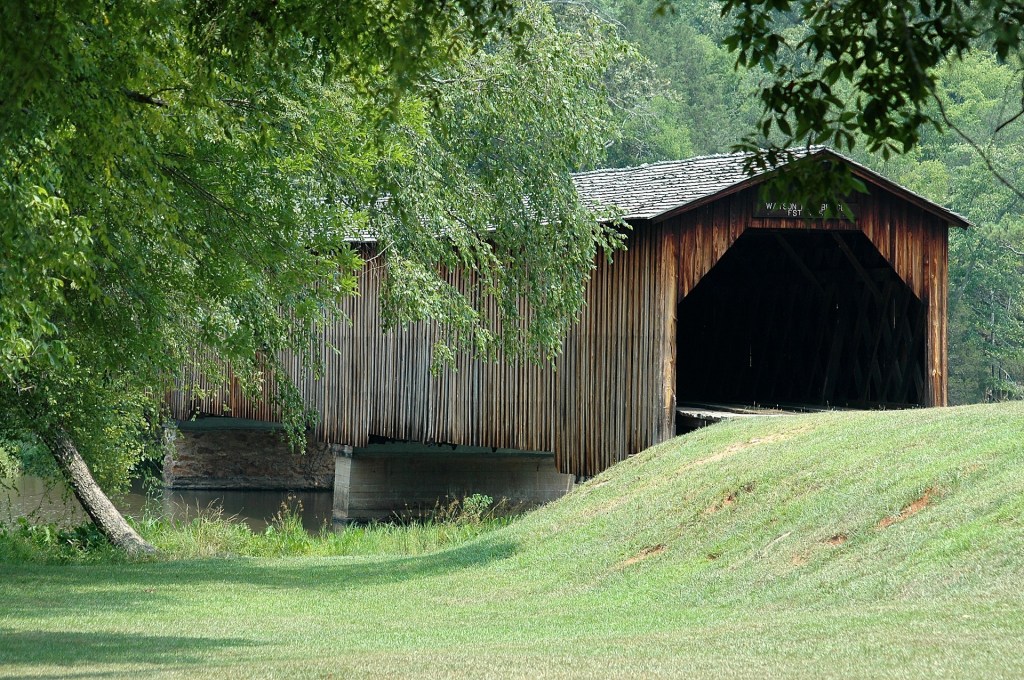
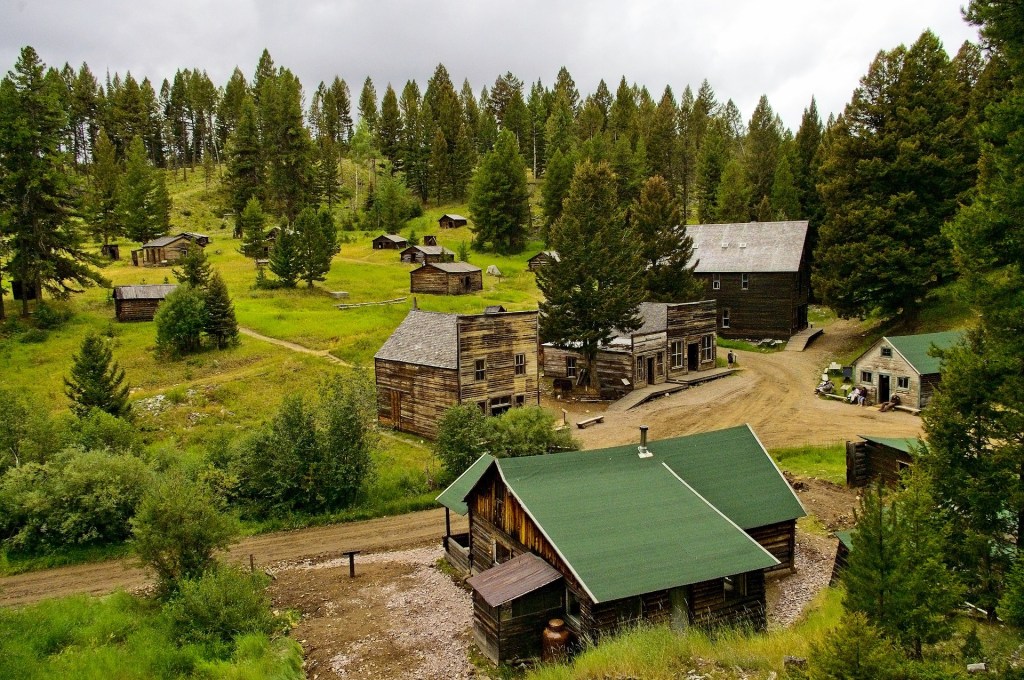
…I crossed that bridge and found this:

Yes, we went back in time, and when I pulled over, and got out of the car the first thing that crossed my mind, I was either in an old gold mining town, or it was a mid way settlement to somewhere else.

Of course, it was deserted.

So, next thought was that this was a ghost town. But, the fact it’s late in the afternoon and everything looks as though it’s locked up, this might also quite easily be a tourist attraction, done for the day.

But, it was off the main road, down a track that led to what I thought might have been a settlement.

I go for a walk and look at some of the buildings. They have been kept in good order, but are showing signs of age, and no sign of modernization.

Does this mean I’ve gone back in time?

“Hey?”

I hear a voice behind me, that of a man, and turn around.

He’s about 80 wearing well-worn clothes and a raggedy beard, wrinkled eyes, and leathery skin. A miner? A cowboy? Someone who lived here, like perhaps the last remaining resident.

“Who are you?” he asks stopping about 20 feet away. He looks annoyed, or maybe that was his perpetual angry face.

“A visitor?”

“From?”

“Back east.”

A knowing look crosses his face. “City slicker eh?”

Language right out of an old Hollywood western. Any minute now I might see John Wayne or a troop of Union soldiers.

“Perhaps.” I had no idea why I used the expression, back east.

“Then you’d better go back. No place for the likes of people like you. The last fellow that came from the city got run out of town.”

Friendly town then. A sideways glance showed movement, and another man alongside one of the buildings, with a rifle, pointed straight at me.

“I guess I’m not welcome. I’m leaving. You might tell that to the man with the gun on me.”

“He knows.”

I turned and walked slowly and steadily back to where I thought I left the car. Instead, there was a saddled horse tied to a fence.

That’s when I had a very bad feeling…

© Charles Heath 2020-2022

The cinema of my dreams – I never wanted to go to Africa – Episode 10

It’s still a battle of wits, but our hero knows he’s in serious trouble.

The problem is, there are familiar faces and a question of who is a friend and who is foe made all the more difficult because the enemy if it is the enemy, doesn’t look or sound or act like the enemy.

Nor does it help when his old mentor walks through the door.


I don’t like surprises.  This dislike had started with a surprise birthday party about 10 years ago and since then I’ve assiduously tried to avoid them.

Of course, there are also surprises you have no control over, and I liked them even less.

Bluff and bravado would only carry me so far.  These people whoever they were would not accept that I knew nothing about what had just happened.

Which I didn’t.

It was not the A interrogation team with a chest full of torture tools and dressed in hazmat suits, but when the harbinger of my fate walked into the room, it was something a lot scarier.

A man I knew well or thought I did until he walked in the door, I had the utmost respected for.

Colonel Bamfield.  My first Commanding Officer, the man who cut me some slack, and made me into a soldier.

Now, all I had was questions, but I was on the wrong side of the table.

The first, what the hell was going on here?

My first inclination was to stand and salute a superior officer, but he was not wearing the uniform, not the proper uniform I was used to seeing him in.  My second inclination was to ask him what he was doing in that room with me, but I didn’t.

Speak when spoken to, and don’t volunteer information.

He too tried the silent treatment, or maybe it was that he was as surprised to see me as I was to see him.

Then, still standing behind the table, looking down on me, he said, “That was some jump you made from a moving helicopter.”  Was there a touch of admiration in his tone?

“Life or death.  Anyone one else is that situation would do the same.”

“Less than you’d think.”

Establishing camaraderie.  Or trying to.  I waited for the next question.

It wasn’t a question but a statement, “We have a problem Alan, and it’s not just with you.”


© Charles Heath 2019

Is it a problem to get lost in your make-believe world for a while?

It seems that we can be completely focussed on a single task to the detriment of all else, and, when that task is complete, suddenly we feel totally drained.

That’s how I feel right now.

The end of one year, and soon the start of another…

All I have to do is get past the publication of my next two books, take a few days off, and then I should be invigorated.  Perhaps COVID will have something to do with it because it will be more of the same, rather than a brave new world, we will be counteracting new surges and variations with resultant isolations, so it will be more of a case of head down, tail up, with nowhere to go, no travel to plan, and not able to go anywhere other than the shops, the doctor or the chemist.

For computer programmers who never leave their semi darkened lair, ordering in pizza and Coke, it must have been a Godsend.

Given that I prefer to be at home, working on any number of stories, it usually is for me.

But, have I been working too hard, and it’s finally got to me.  I mean, you can only write so much before the brain starts to fry?

But, at the very least. I have been working on two novels that needed to be completed, not that they are exactly there yet, and other that NaNoWriMo kicked along, and I’m still writing a few pages a night, and two others that are now ready for the final edit.

This has all happened to the detriment of my episodic stories, which have lain idle since October, and then I picked up one, and wrote two or three more episodes, just to keep it ticking over.  The other two still have five spare to publish soon.

And I know it might show signs of panic but April is coming rapidly into focus, and there will be the A to Z Challenge, 26 more stories in 30 days.  I’d like to get a head start on this, but time….

Something else that pleases me, and is entirely unexpected, is that I have sold a number of copies of my books in the last month or so.  I know I’m not about to be vying for the top of the bestseller list, but it’s satisfying.

The cinema of my dreams – I wonder what it was like in the wild west – Part 2

I guess I have seen too many westerns, film fodder my parents liked to watch on TV, and especially with John Wayne, and later on Clint Eastwood.

In this day and age there are only scant reminders of a time that may have bristled with excitement, or so dangerous you would be lucky to survive if you got on the wrong side of a gunslinger.

But, for argument’s sake, what if there was a way to actually step back in time?

So, here’s the start of a story…

There are hundreds of places in the midwest, where you could see miles of plains, hills, winding rivers, and sleepy towns. Places with old-fashioned motels and hotels, general stores, farmers’ supplies, and everything else in between.

These are the towns where the young, fresh out of school and full of ideas and enthusiasm get on the bus to go to the big cities, promising to return.

Some do, some don’t.

For others who live in the cities, driving through the midwest would be a welcome change from the clogged highways, freeways, turnpikes, and the 14 hour days. Where a person could wind back the hectic to the sedate, and perhaps for a while, to the mundane. It was a dream to cling to, something that just barely kept a man sane in an insane world. And a dream that was about to become a reality.

Jack was on the verge of burnout, having spent the last year doing 80 hour weeks, gunning for the manager’s role that he had been promised, if he put in the time. That he had, and then some.

But the man who made the promise died suddenly, and it all came to naught, passed over by the replacement boss who had his own selection for the role, younger, better educated, but utterly no experience.

It was the straw that broke the proverbial camel’s back.

The next day he resigned, spoke not one word to anyone after handing in his keycard and resignation letter, and left. Perhaps the only consolation, no one else knew the complex plant operation systems, and when it broke down, as it always did, there was no one who could fix it.

There was one more ceremonial job he had to do before getting in his car, and that was to toss his cell phone in the bin. That done, the drive home took 20 minutes instead of the usual two hours, he threw what he needed into an overnight bag, and after taking a 30-second look back in the place he had called home for 25 years, shrugged, and closed the door.

There would be no coming back.

Of course, there were moments where the resolve was tested, those tendrils of loyalty to a company he had worked at for a long time, and who had treated him reasonably well.

The first night, in a quaint motel, was the hardest. Alone with his thoughts, without anyone to talk to, not that there were many back home, the idea of striking out on his own seemed drastic, even silly.

The second night, spent at a surprisingly rural town, he had supper in a diner that had few customers and a waitress his own age who was a talker. She recommended a guest house, one she stayed at herself, a runaway like he was, but for more desperate reasons, and liking the company stayed for a week.

It was difficult to move on, but he did.

Which was why, five days later, in another small town by a river, he had reached the bridge.

The road went in two directions. West or north. North crossed the river, and the minor roads wound their way through hills and dales to Canada. West headed towards San Francisco, and he had no desire to visit another large city. Not for a while.

Over the bridge it was.

After a night in another interesting motel that had a small room that passed as a museum, and related the history of the area, a story in itself.

….

© Charles Heath 2022

An excerpt from “What Sets Us Apart”, a mystery with a twist

See excerpt from the story below, just a taste of what’s in store…

http://amzn.to/2Eryfth

whatsetscover

McCallister was old school, a man who would most likely fit in perfectly campaigning on the battlefields of Europe during the Second World War. He’d been like a fish out of water in the army, post-Falklands, and while he retired a hero, he still felt he’d more to give.

He’d applied and was accepted as head of a SWAT team, and, watching him now as he and his men disembarked from the truck in almost military precision, a look passed between Annette, the police liaison officer, and I that said she’d seen it all before. I know I had.

There was a one in four chance his team would be selected for this operation, and she had been hoping it would be one of the other three. While waiting for them to arrive she filled me in on the various teams. His was the least co-operative, and the more likely to make ad-hoc decisions rather than adhere to the plan, or any orders that may come from the officer in charge.

This, she said quite bluntly, was going to end badly.

I still had no idea why Prendergast instructed me to attend the scene of what looked to be a normal domestic operation, but as the nominated expert in the field in these types of situations, it was fairly clear he wasn’t taking any chances. It was always a matter of opinion between us, and generally I lost.

In this case, it was an anonymous report identifying what the authorities believed were explosives in one of the dockside sheds where explosives were not supposed to be.

The only reason why the report was given any credence was the man, while not identifying himself by name, said he’d been an explosive expert once and recognized the boxes. That could mean anything, but the Chief Constable was a cautious man.

With his men settled and preparing their weapons, McCallister came over to the command post, not much more than the SUV my liaison and I arrived in, with weapons, bulletproof vests, and rolls of tape to cordon off the area afterward. We both had coffee, steaming in the cold early morning air. Dawn was slowly approaching and although rain had been forecast it had yet to arrive.

A man by the name of Benson was in charge. He too had groaned when he saw McCallister.

“A fine morning for it.” McCallister was the only enthusiastic one here.

He didn’t say what ‘it’ was, but I thought it might eventually be mayhem.

“Let’s hope the rain stays away. It’s going to be difficult enough without it,” Benson said, rubbing his hands together. We had been waiting for the SWAT team to arrive, and another team to take up their position under the wharf, and who was in the final stages of securing their position.

While we were waiting we drew up the plan. I’d go in first to check on what we were dealing with, and what type of explosives. The SWAT team, in the meantime, were to ensure all the exits to the shed were covered. When I gave the signal, they were to enter and secure the building. We were not expecting anyone inside or out, and no movement had been detected in the last hour since our arrival and deployment.

“What’s the current situation?”

“I’ve got eyes on the building, and a team coming in from the waterside, underneath. Its slow progress, but they’re nearly there. Once they’re in place, we’re sending McKenzie in.”

He looked in my direction.

“With due respect sir, shouldn’t it be one of us?” McCallister glared at me with the contempt that only a decorated military officer could.

“No. I have orders from above, much higher than I care to argue with, so, McCallister, no gung-ho heroics for the moment. Just be ready to move on my command, and make sure you have three teams at the exit points, ready to secure the building.”

McCallister opened his mouth, no doubt to question those orders, but instead closed it again. “Yes sir,” he muttered and turned away heading back to his men.

“You’re not going to have much time before he storms the battlements,” Benson quietly said to me, a hint of exasperation in his tone. “I’m dreading the paperwork.”

It was exactly what my liaison officer said when she saw McCallister arriving.

The water team sent their ‘in position’ signal, and we were ready to go.

In the hour or so we’d been on site nothing had stirred, no arrivals, no departures, and no sign anyone was inside, but that didn’t mean we were alone. Nor did it mean I was going to walk in and see immediately what was going on. If it was a cache of explosives then it was possible the building was booby-trapped in any number of ways, there could be sentries or guards, and they had eyes on us, or it might be a false alarm.

I was hoping for the latter.

I put on the bulletproof vest, thinking it was a poor substitute for full battle armor against an exploding bomb, but we were still treating this as a ‘suspected’ case. I noticed my liaison officer was pulling on her bulletproof vest too.

“You don’t have to go. This is my party, not yours,” I said.

“The Chief Constable told me to stick to you like glue, sir.”

I looked at Benson. “Talk some sense into her please, this is not a kindergarten outing.”

He shrugged. Seeing McCallister had taken all the fight out of him. “Orders are orders. If that’s what the Chief Constable requested …”

Madness. I glared at her, and she gave me a wan smile. “Stay behind me then, and don’t do anything stupid.”

“Believe me, I won’t be.” She pulled out and checked her weapon, chambering the first round. It made a reassuring sound.

Suited up, weapons readied, a last sip of the coffee in a stomach that was already churning from nerves and tension, I looked at the target, one hundred yards distant and thought it was going to be the longest hundred yards I’d ever traversed. At least for this week.

A swirling mist rolled in and caused a slight change in plans.

Because the front of the buildings was constantly illuminated by large overhead arc lamps, my intention had been to approach the building from the rear where there was less light and more cover. Despite the lack of movement, if there were explosives in that building, there’d be ‘enemy’ surveillance somewhere, and, after making that assumption, I believed it was going to be easier and less noticeable to use the darkness as a cover.

It was a result of the consultation, and studying the plans of the warehouse, plans that showed three entrances, the main front hangar type doors, a side entrance for truck entry and exit and a small door in the rear, at the end of an internal passage leading to several offices. I also assumed it was the exit used when smokers needed a break. Our entry would be by the rear door or failing that, the side entrance where a door was built into the larger sliding doors. In both cases, the locks would not present a problem.

The change in the weather made the approach shorter, and given the density of the mist now turning into a fog, we were able to approach by the front, hugging the walls, and moving quickly while there was cover. I could feel the dampness of the mist and shivered more than once.

It was nerves more than the cold.

I could also feel rather than see the presence of Annette behind me, and once felt her breath on my neck when we stopped for a quick reconnaissance.

It was the same for McCallister’s men. I could feel them following us, quickly and quietly, and expected, if I turned around, to see him breathing down my neck too.

It added to the tension.

My plan was still to enter by the back door.

We slipped up the alley between the two sheds to the rear corner and stopped. I heard a noise coming from the rear of the building, and the light tap on the shoulder told me Annette had heard it too. I put my hand up to signal her to wait, and as a swirl of mist rolled in, I slipped around the corner heading towards where I’d last seen the glow of a cigarette.

The mist cleared, and we saw each other at the same time. He was a bearded man in battle fatigues, not the average dockside security guard.

He was quick, but my slight element of surprise was his undoing, and he was down and unconscious in less than a few seconds with barely a sound beyond the body hitting the ground. Zip ties secured his hands and legs, and tape his mouth. Annette joined me a minute after securing him.

A glance at the body then me, “I can see why they, whoever they are, sent you.”

She’d asked who I worked for, and I didn’t answer. It was best she didn’t know.

“Stay behind me,” I said, more urgency in my tone. If there was one, there’d be another.

Luck was with us so far. A man outside smoking meant no booby traps on the back door, and quite possibly there’d be none inside. But it indicated there were more men inside, and if so, it appeared they were very well trained. If that were the case, they would be formidable opponents.

The fear factor increased exponentially.

I slowly opened the door and looked in. A pale light shone from within the warehouse itself, one that was not bright enough to be detected from outside. None of the offices had lights on, so it was possible they were vacant. I realized then they had blacked out the windows. Why hadn’t someone checked this?

Once inside, the door closed behind us, progress was slow and careful. She remained directly behind me, gun ready to shoot anything that moved. I had a momentary thought for McCallister and his men, securing the perimeter.

At the end of the corridor, the extent of the warehouse stretched before us. The pale lighting made it seem like a vast empty cavern, except for a long trestle table along one side, and, behind it, stacks of wooden crates, some opened. It looked like a production line.

To get to the table from where we were was a ten-yard walk in the open. There was no cover. If we stuck to the walls, there was equally no cover and a longer walk.

We needed a distraction.

As if on cue, the two main entrances disintegrated into flying shrapnel accompanied by a deafening explosion that momentarily disoriented both Annette and I. Through the smoke and dust kicked up I saw three men appear from behind the wooden crates, each with what looked like machine guns, spraying bullets in the direction of the incoming SWAT members.

They never had a chance, cut down before they made ten steps into the building.

By the time I’d recovered, my head heavy, eyes watering and ears still ringing, I took several steps towards them, managing to take down two of the gunmen but not the third.

I heard a voice, Annette’s I think, yell out, “Oh, God, he’s got a trigger,” just before another explosion, though all I remember in that split second was a bright flash, the intense heat, something very heavy smashing into my chest knocking the wind out of me, and then the sensation of flying, just before I hit the wall.

I spent four weeks in an induced coma, three months being stitched back together and another six learning to do all those basic actions everyone took for granted. It was twelve months almost to the day when I was released from the hospital, physically, except for a few alterations required after being hit by shrapnel, looking the same as I always had.

But mentally? The document I’d signed on release said it all, ‘not fit for active duty; discharged’.

It was in the name of David Cheney. For all intents and purposes, Alistair McKenzie was killed in that warehouse, and for the first time ever, an agent left the Department, the first to retire alive.

I was not sure I liked the idea of making history.


© Charles Heath 2016-2020
Writing about writing a book – Day 12 continues

Digging deeper into the war.

There is always something to be found that can be very interesting, and sometimes, when following more obscure links in web pages, you can either finish up having your computer trashed, or you find a gem.

As you can imagine, when I saw the CIA, I thought, OK, this fits my penchant for conspiracies and subterfuge, and when I stumbled across this thing called the Phoenix Program.  Whether it existed or not, one can never sure when reading about CIA activities, its premise gives me an avenue to attach a few shady characters and let them run with it.

Then, of course, there was a film which I noticed was on cable TV, so I watched it.  Air America, and whether that was true or not, it gave me another idea, and so the characterization of Colonel Davenport will fit into both these scenarios.

I suspect there may have been one or two more enterprising officers who saw an opportunity to not only appear to fulfill the parameters of their mission, but also make a little money on the side, setting up an operation within an operation, whether it’s to move into a black market arms supply, or moving and selling drugs from what was called the golden triangle that may or may not have included Cambodia.

That also lends itself to Davenport, when Bill finally catches on to what he is up to, arranging for his capture and removal to a prisoner of war campo over the border in Cambodia.  It could also probably have been in Laos, at the CIA may or may not have been running an operation there as well.

There is so much now to consider.

I now have to find out about airbases and personnel, come up with a suitable band of misfits, find out what sort of aircraft and land transport could be involved in moving the contraband, and a little more about Saigon back in the mid-sixties.


‘Sunday in New York’ – A beta reader’s view

I’m not a fan of romance novels but …

There was something about this one that resonated with me.

This is a novel about a world generally ruled by perception, and how people perceive what they see, what they are told, and what they want to believe.

I’ve been guilty of it myself as I’m sure we all gave one time or another.

For the the main characters Harry and Alison there is others issues driving their relationship.

For Alison, it is a loss of self worth through losing her job and from losing her mother and, in a sense, her sister.

For Harry it is the fact he has a beautiful and desirable wife, and his belief she is the object of other men’s desires, and one in particular, his immediate superior.

Between observation, the less than honest motives of his friends, a lot of jumping to conclusions based on very little fact, and you have the basis of one very interesting story.

When it all come to a head, Alison finds herself in a desperate situation, she realises only the truth will save their marriage.

But is it all the truth?

What would we do in similar circumstances?

Rarely does a book have me so enthralled that I could not put it down until I knew the result. They might be considered two people who should have known better, but as is often the case, they had to get past what they both thought was the truth.

And the moral of this story, if it could be said there is one, nothing is ever what it seems.

Available on Amazon here: amzn.to/2H7ALs8